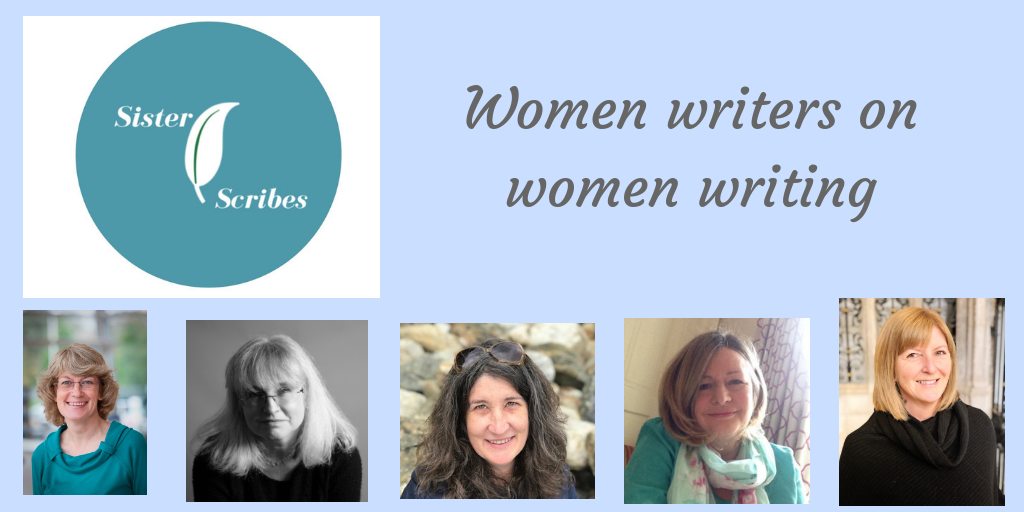
SISTER SCRIBES: JANE CABLE ON BOOK BIRTHDAYS

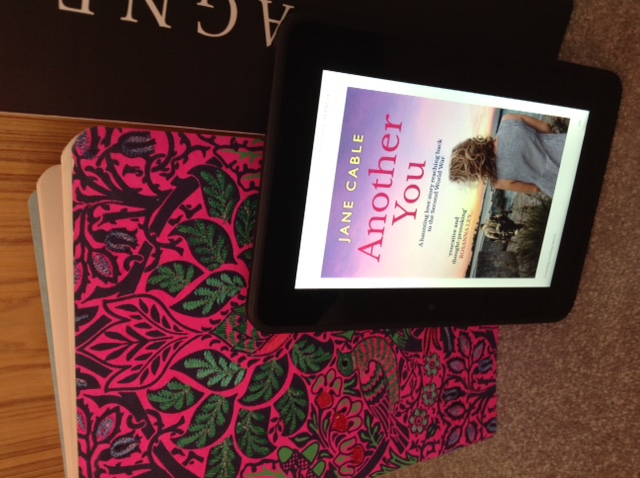
My latest book, Another You, was published at the end of last month. Actually, it was re-issued, but the experience was so different this time, it’s hardly felt as though it was ever out there before.

With its previous publisher, it slipped into the world unnoticed. I was given no prior warning then suddenly, there it was on Amazon. For a few days I told no-one, then somebody noticed and the cat was out of the bag. The week before Christmas. Not great timing for what is essentially a summer book.

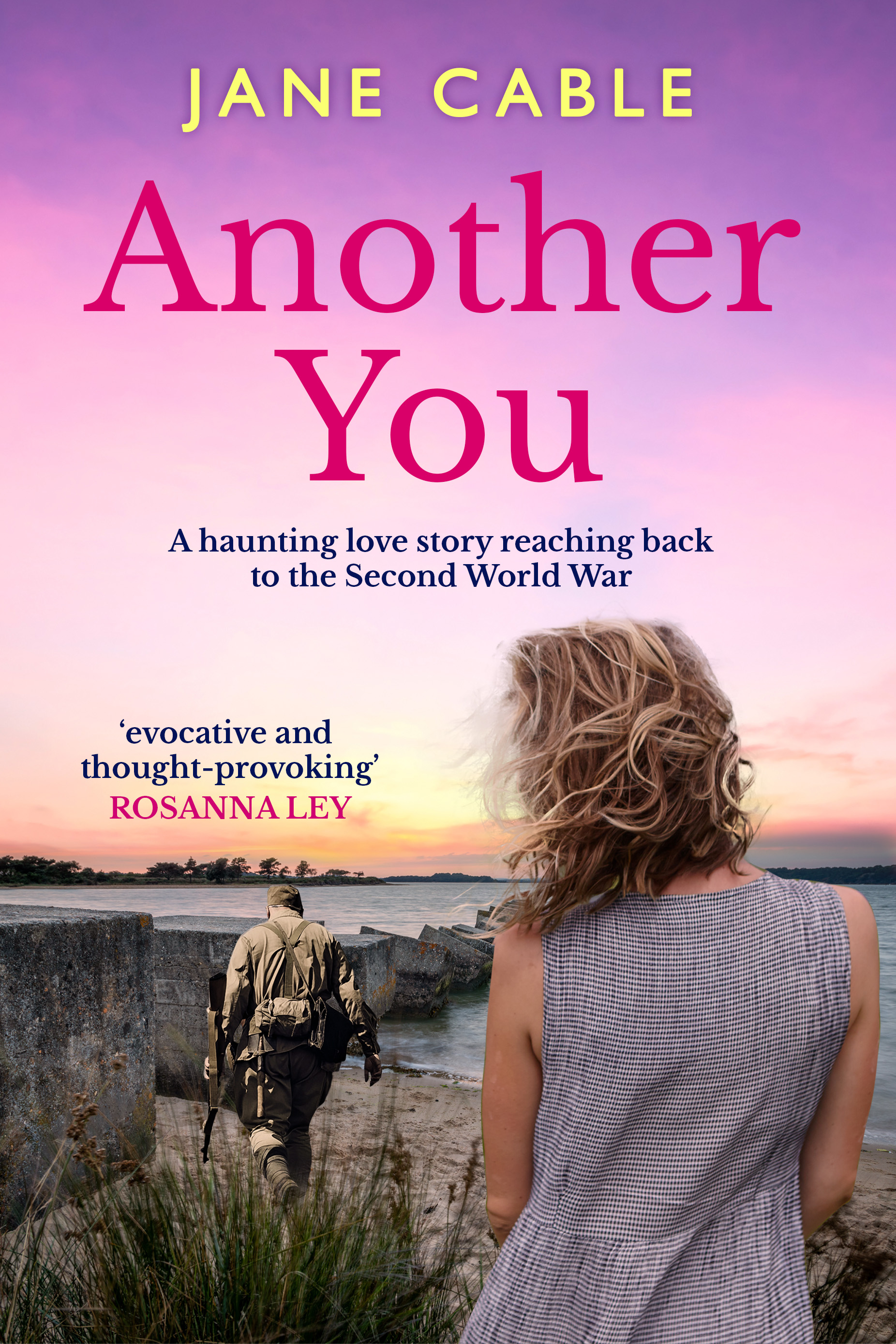
Of course I had a certain trepidation signing with another publisher after that, but I could already see from the outside looking in that things would be different with Sapere. There was proper editing, for a start, and although the story is the same it is tighter, neater, with their input. And although last time the cover was good, this time it is knockout. When I saw the image of the soldier walking away, head bent, I cried. Because whoever had briefed the designer totally got the story.

Next there was a decent pre-order period with a boost of advertising and a mailer to kick it off. The result was it rocketed up the Amazon charts and although things have calmed down a little now I know the book is selling. And its presence on Netgalley has been skilfully used to generate reviews from trusted readers, which has not only raised Another You’s profile but has also given me a rich vein of content for social media.
With the pre-orders having gone so well I didn’t expect too much from publication day itself, but I was knocked out by the support I received on social media, especially from members of the Romantic Novelists’ Association. They are a generous hearted bunch and I seemed to spend much of the day saying thank you, which was only right. There was considerable support from my buddies at Chindi Authors too.

The day before some lovely flowers had arrived from my Sister Scribes and they were looking glorious in their vase in the sunshine. There was also a parcel, which contained a gorgeous embroidered notebook and pencil case, in colours that toned beautifully with my book cover. Next an email popped into my inbox with a voucher for a spa day at the marvellous Scarlet on my beloved north Cornwall coast. To say I was overwhelmed is a bit of an understatement.

The day became even stranger, when no doubt prompted by all this activity my husband downloaded the book. To put this into context, he has never before read anything I’ve written outside the world of cricket journalism. To be fair, he’d been talking about downloading Another You for a while, but there wasn’t any point if he had no intention of reading it. This time, he says he will, but I have to say I’ve seen no moves to do so yet.

Then, just when I thought all the fuss was over, the doorbell rang again and a bottle of champagne turned up – again, courtesy of my Sister Scribes. These amazing, amazing, women. I am truly humbled to have them as my friends.

The point is – they get it. They’re writers too, so they know how publication day should feel. They know it should be special enough to mark the fruition of what is months, and sometimes years, of work. Every book needs a proper birthday, and this is one I will never forget.
SISTER SCRIBES: JUNE READING ROUND UP

Susanna:

Since our own Jane Cable’s Another You has been reissued, I’d like to celebrate the gorgeous new cover by sharing my review – and please be aware that I first read this book long before the Sister Scribes were even thought of.

In places I found Another You painful to read, because the heroine’s unhappy marriage, which is inextricably linked to her work life, was depicted with such understated realism. This is an intriguing read from start to finish, blending romance, domestic problems and a mystery that kept me turning the pages. Present and past seem to merge together… or do they? Above all, this is a story about the long shadows that can be cast by war. It is skillfully written and kept me guessing right to the end. Every time I thought I had worked out the answer to the mystery, something happened to make me question it again, including an unexpected final twist. This is that very rare thing – a book that makes you think.

Of the four books Maddie Please has written so far, Come Away With Me is my favourite. The characterisation feels deeper and more rounded, especially as the two sisters, Alexa and India, come to know and appreciate one another fully as the story develops. The plot is clever, fast-moving and often funny, the humour being derived from descriptions of life on board a cruise ship. Trust me – this story will make you want to enrol for towel-folding lessons! An uplifting, feel-good read with laugh-out-loud moments as well as moments of true poignancy.


Jane:

I am fast coming to the conclusion there are two sorts of books in my world; books I absolutely adore and books I read because they are rip roaring successes in the world of mainstream romance. And with a few notable exceptions, rarely the twain shall meet. I’ve been busy trying to analyse why, and I guess it’s the same reason that I’ll probably never write one of those rip-roaring romantic fiction successes – there’s just not enough ‘meat’ in them for me.

Lorna Cook’s The Forgotten Village was a case in point. Don’t get me wrong – it’s a good book and I enjoyed it, but it didn’t make me go ‘wow’. It’s well written with all the best-seller ingredients and if you want a great, light read for the beach then I would urge you to buy it. But to me it all seemed a bit inevitable – I guessed more or less what would happen in both timelines early on, but let me stress again – I still enjoyed the journey. I guess what I’m trying to say is it didn’t challenge me, which was why it earned four stars from me on Amazon and not five.

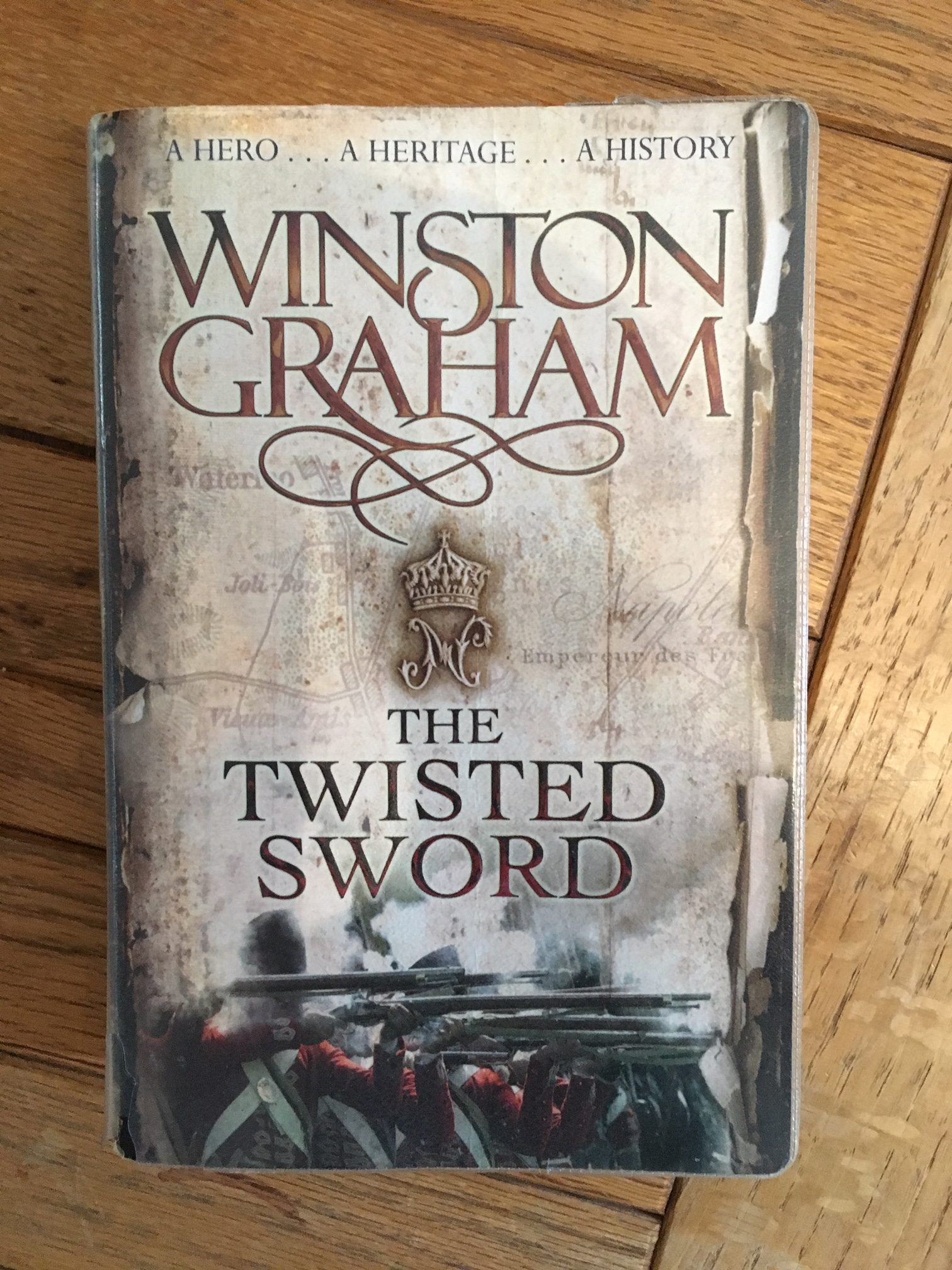
Other than that my reading has taken a bit of a back seat as I launch one book, complete the manuscript for a second, and start to research a third. But research has led me into a glorious place – the eleventh book of the Poldark series, The Twisted Sword. Set in Cornwall, France and Belgium in 1815 it was perfect for my background reading and I know Winston Graham’s research to be precise so I can rely on his realistic portrayal of the era.

It meant I skipped a large chunk of the series but it was actually quite easy to pick up what was going on – with the help of a family tree in the front of the book. Ross and Demelza travel to Paris during the brief return of the Bourbon regime and the adventure unfolds from there, interwoven with the lives of their older children in Cornwall and Brussels. So far it’s a great read – I reckon one of the best.


SISTER SCRIBES GUEST: GABRIELLE MALCOLM ON THE MYTHS OF A WRITING LIFE

I’m delighted to welcome author, Gaby Malcolm as our guest! She’s an inspiration to me, and here she’s sharing her thoughts on juggling being a writer with home life!


When I was asked if I would contribute a guest post I was very eager. When I thought about it for a bit I became less eager, and then plagued with doubts, and then I realised I was running out of time, and then I thought ‘commit something to paper, Gaby, get on with it,’ and then I put the kettle on, and then the cat distracted me, and then I woke up at four o’clock in the morning, and then there was a really interesting item on Woman’s Hour (Jenni Murray is SUCH a good interviewer!), and then …. and then ….

This will be a very skittish and disjointed piece, therefore. Forgive me.

See what I did there? Classic. I call it the ‘Visitor from Porlock’ effect. That’s when you explain how you would have done a lot more, only you were interrupted and you lost your flow, but it was going to be utterly brilliant. Thanks, Coleridge!

There is also the ‘Shakespeare In Love’ Syndrome. That’s when writers depict to the rest of the world how the work just flows from their pen as they sit in their little room, once inspiration strikes. That inspiration does not have to involve sex with Gwyneth Paltrow disguised as a boy. Fortunately, or unfortunately, depending on how you look at it.

It’s great when writers portray their process as something strange, easy, or magical.

As a tutor of writing students one of my main jobs is to debunk all these myths about the process. Budding writers sometimes believe they have failed at it if they can’t create a perfect, clean manuscript with the first draft. They think they lack the skills to write if it doesn’t just flow out. LOL is all I have to add to that.

The day I knew I could be a writer was the day I found out I realised I loved re-writes and editing. It’s just the best. I love composition, but when I get to re-writing my brilliant prose, I am happier than a pig in poop! It took me a while. For years I had an academic teaching and writing career. I wrote my PhD thesis during that time and it was then I understood the sheer level of effort and time it took to produce 80-90,000 words. When it was all over, however, I missed it something terrible!

When my life changed, personally and professionally, and the time came to try and reinvent myself, writing was the logical choice. I set myself goals to establish a proper career plan. I aimed to get a full-length book published and find an agent within the first four years, that would see my littlest boy ready to go to school. However, I achieved it within the first two years. A book rapidly followed by representation.

So, I had to juggle and do as much as I could with the children in childcare or at school. That has shaped the kind of writer I have become, needs must. I hit the ground running by 9.15am, once I have the house to myself and work through until 3pm. In that way I have conquered any lack of confidence I had, and developed a ‘get it done’, finisher attitude. I have also grown a really thick skin! I ignore anything other than constructive criticism and have come to admire my own work. Hence, the ‘brilliant prose’ comment above. I like to read me.


Gabrielle Malcolm is a freelance writer and artist. She edited ‘Fan Phenomena: Jane Austen’ (Intellect Books), wrote three plays for Moon On A Stick children’s theatre company, and writes scripts for web series and short films for international clients. Her forthcoming non-fiction book, about Mr Darcy, is due for publication in December 2019 with Endeavour Quill.


SISTER SCRIBES: SUSANNA BAVIN ON INSPIRATION


It’s best if I come straight out with it.

I’m a thief.

Don’t be shocked. It’s because I used to be a teacher. I can’t speak for secondary school teachers, but, as a former infant teacher, I can assure you that in primary schools, the staff are a bunch of thieves.

You see a display in another classroom –  in a library – in a gallery – a shop – on Pinterest – anywhere at all – and your first thought is: I could adapt that idea.…

You see another teacher’s lesson and you think: I never thought of doing it that way. I’ll have a go at that. You open birthday and Christmas cards, thinking: Could 6-year-olds make this?

So, yes, I’ve been pinching ideas for years. I’m no longer a teacher, but I haven’t lost the habit. I’m still on the look-out for good ideas, as all writers are.

And they can pop up in the oddest places. Listening to This Morning on Radio 4 last autumn, I heard a piece about the criminal activity of “crossing county lines,” which inspired a plot-thread in a novel set in 1922. Likewise, an unexpected clause in a family will some years ago was adapted to pile all kinds of difficulties onto Greg Rawley’s financial problems in The Poor Relation.

The thing about writers gathering ideas is that you have no control over what will spark off an idea or how that idea will grow. Readers often ask, “Where do you get your ideas from?” I know that some writers have a jokey answer about buying ideas in the corner shop; but the real answer is that they come from all over the place – an overheard snippet of conversation, a photograph, something on the news, something that happens to you or a friend…. But what isn’t generally understood is that the idea is just a spark, not a whole book. You don’t lift your entire plot from real life. A single idea, or a couple of ideas, can be all it takes to make the plot grow. And the final plot will very probably bear no resemblance whatsoever to the original spark.

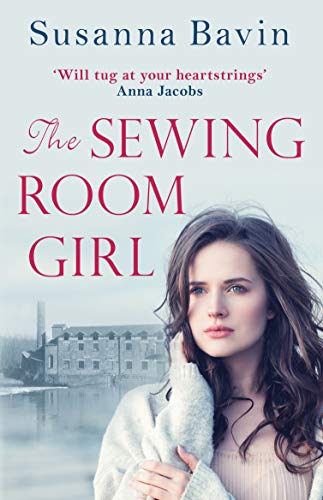
Take The Sewing Room Girl. As I said, I used to be a primary school teacher. The most important job done by any school is safeguarding the children in its care. To this end, teachers undergo regular training sessions to help them understand what they need to be aware of.

Ten years ago, my school gave a training day to safeguarding. Sad to say, much of the training on these occasions is based around discussing real cases. On this training day, an example was given of the way in which a particular adult had kept control of a vulnerable child. Let’s just say that a certain piece of household technology was used as a means of keeping the child in a state of fear.

Out of that single idea came Juliet’s story in The Sewing Room Girl. I should like to make it clear that the household object in the real example did not exist in the 1890s, the time when the book is set. Neither did anything from the real-life case appear in any form whatsoever in the book. But hearing of that frankly appalling and distressing case sparked off the original idea, which over time grew into a complete novel.

Another feature of these ideas that spark off books is that they don’t always get used. The single spark that started me writing The Deserter’s Daughter was an idea for something that would happen in the plot. But no sooner had I created the Armstrongs’ antiques shop in the book than I realised I couldn’t possibly use the original plot-point because the shop was just too posh!

But that’s the other thing about writers’ ideas. Nothing is ever wasted. You will be able to read that particular plot-point in a book that will be published next year….

SISTER SCRIBES GUEST: ALEXANDRA WALSH ON HER WONDERFUL FRIENDS

I’ve come to know Alexandra because we’re both signed to Sapere Books and when she told me how much her wonderful friends had helped her on her journey to publication I just had to ask her to write about it. It’s a proper Sister Scribe story.


“I’ll be there for you…” sang The Rembrants in the 1990s on the US sitcom, Friends. It was a great concept because friends are universal and I am very lucky to have some wonderful friends.

In June, Sapere Books, published my second novel The Elizabeth Tudor Conspiracy. It is part two of The Marquess House Trilogy and it is dedicated to four friends: Jo, Deborah, Gemma and Dawn. This particular four have been my lifeline while I have been writing this series. Their support has been invaluable but what they do not know is that it is their friendships that have formed the inspiration for the relationships in my historical novels.

During my research, one of my enduring irritations was the isolation in which historical women are portrayed. They are usually placed with people who are instrumental in their downfall. Yet, I find it hard to believe that women in the fifteenth and sixteenth centuries did not turn to each other as women do today.

In my first book, The Catherine Howard Conspiracy, the fifth bride of Henry VIII is my historical protagonist. The only women ever linked to Catherine are those who betrayed her. I created a group of close friends around the young queen, all of whom were real historical figures who had been part of her court. The core of their banter and support was inspired by Deborah, Gemma, Dawn and Jo.

The second book, The Elizabeth Tudor Conspiracy, has Elizabeth I as the driving force. She is often presented as being at odds with the women in her court. There probably were personality clashes but it seems unlikely that she  loathed her ladies-in-waiting as is often suggested. I re-imagined her friendships, particularly those with her Boleyn cousins who were with her throughout her reign, again based on the strength and support provided by my friends.

All four, I met at work: Jo and I became friends on the launch of the women’s magazine Now; Gemma and I met at more!, while Deborah, Dawn and I worked together on Chat and Pick Me Up!.

Each of them is wonderful and they all helped me to get through the many years of sitting alone, writing. First with endless encouragement, then in indignation on my behalf as my books were rejected, before the day I finally had a publishing deal. Cards, flowers and champagne arrived the following day!

Deborah, Gemma and I email each other nonsense most days. Dawn and I have long rambling conversations when she drags me back me from the brink of “I’m-so-rubbish-it’ll-be-a-massive-failure”. Jo and I have so many years history, we can ring each other and rant without even saying hello, while we calm each other down.

So, yes, I’ll be there for them, as they’re there for me and I hope hundreds of years ago, the women I write about were there for each other, too.

And, to all my other friends, I love you too. You bunch of awesome, incredible, wonderful, insane women. You make my life a brighter place!


Alexandra Walsh is the author of The Catherine Howard Conspiracy and The Elizabeth Tudor Conspiracy, published by Sapere Books. Alexandra was a journalist for over 25 years writing for a variety of publications including Cosmopolitan, Chat, more!, Now, Shine, The Daily Mirror, The Sunday Times, loaded and Goal. History is her passion and she loves exploring a good ruin or museum. She usually has her nose in a book but, if you can distract her, she does make a mean curry.

SISTER SCRIBES GUEST: ALISON KNIGHT & JENNY KANE ON CREATIVE CONFIDENCE

I’m so pleased to be able to welcome two fabulous writers to Frost today.  Alison and Jenny have come on to tell us all about their latest venture  Imagine, a creative writing business that encourages new writers to have confidence in their work. With a huge (and I mean huge) breadth of experience and wisdom, they are two of the nicest women you could ever hope to meet. 


Writing is a solitary occupation so it’s good to have a permanent cheerleader to help you through the bad days and celebrate the good days (and friends and relatives don’t count because they tell you what you want to hear). We’re really lucky because when we met at a Romantic Novelists’ Association meeting, we hit it off immediately and have since become business partners.

Imagine Creative Writing Workshops was born amid much laughter and copious quantities of mint tea and black coffee. For the past two years we’ve been teaching courses and workshops in Wiltshire, Somerset, Devon, Cornwall, Wales and London and have gathered together over one hundred regular students aged from six to one hundred and four!

Our aim is not just to teach people to write but to give them the confidence to write. So many talented people don’t follow their dream of being a writer just because they lack confidence. For us, there’s a certain magical quality in seeing our students develop their skills and produce work they can be proud of. It’s a privilege to be able to watch new writers go from their first writing exercise to completing the first draft of their novel.

The highlight of our year is our residential writing retreat every October at the splendid Northmoor House, a Victorian manor with lots of original features on the edge of Exmoor. There, everyone has the time and space to write with our support and the camaraderie of other writers as well as excellent food and visiting guest speakers.

Between the two of us we write nine different genres, including historical crime, contemporary fiction, YA adventures, family drama and romance. To avoid confusion (or is it to confuse ourselves?) we use five different pen names! We like to think that our broad range helps us to help our students.

When it comes to our own writing it’s nice to be able to depend upon each other for honest opinions, beta reading, and a firm kick up the backside as and when is necessary. We haven’t come to blows yet and are looking forward to the continuing Imagine adventure.


Alison’s Bio

I’ve always enjoyed writing and in my forties decided I wanted to learn more about the craft. I studied at Bath Spa University and Oxford Brookes University, achieving a first class degree and an MA in Creative Writing. I’ve been teaching for four years now and have had three books published – two contemporary romances and a YA time-travel adventure. I’ve two further books completed – a second YA book and a family drama set in 1960s London – and I’m currently working on more contemporary romances. I also work as a freelance editor. I live in Somerset, within sight of Glastonbury Tor.

Jenny’s Bio
Lucky enough to be a Costa writer in residence, I spend my days in Devon within easy reach of coffee, writing contemporary fiction, romance, and children’s picture books. I also write medieval mystery novels and audio scripts for ITV as Jennifer Ash. Occasionally I masquerade as award winning erotica writer, Kay Jaybee. Over the past 14 years I’ve accumulated over 200 publications, including 21 novels. I’m published by Accent Press, LittwitzPress, Mammoth, Penguin, and Spiteful Puppet.

Imagine: www.imaginecreativewriting.co.uk


SISTER SCRIBES: MAY READING ROUND UP

Jane:

My book club selection for May was Monica Ali’s Brick Lane. Now I know most of the world read it when it first came out in 2003 but it somehow passed me by – and I have to say that it’s aged very well. Which I suppose is the sign of a true classic.

It’s a book that threw me into a culture that was on my doorstep when I lived in London in the 1980s but I knew nothing of. It tells the story of Nazneen, a young Bangladeshi woman who comes to England in an arranged marriage to an older man and charts the changes both in her life and that of the immigrant community around her. It’s a richly painted tapestry of experiences which, while not surprising to me, were worlds – if not miles – away from my life. Sometimes that can be an uncomfortable experience, but the characters were so rounded and real the book was an absolute joy and I thoroughly recommend it.

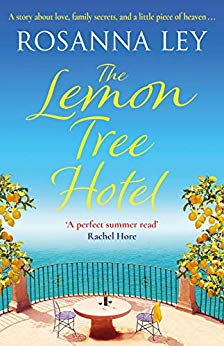
By way of setting, Rosanna Ley’s The Lemon Tree Hotel was a complete contrast. Rosanna is one of my favourite authors so this book was always going to be a pleasure. The story wraps itself around the lives of four Italian women; a grandmother, mother, daughter and close family friend, and although there are secrets and love and a few surprises along the way, it is the bonds that unite – and divide – them, which give the story its impetus.

The relationships between the women in The Lemon Tree Hotel are real, not saccharine in any way. The issues that arise within families, the conflicting loyalties, the misunderstandings but overall the love, whether easily expressed or not. All these and more play out between the generations as change creeps into the beautiful village of Vernazza.

In many ways this book was as different as it was possible to be from Brick Lane, but in both the women stand centre stage across the generations and the skilful way their lives are played out by both authors is what keeps you reading to the end.


Susanna:

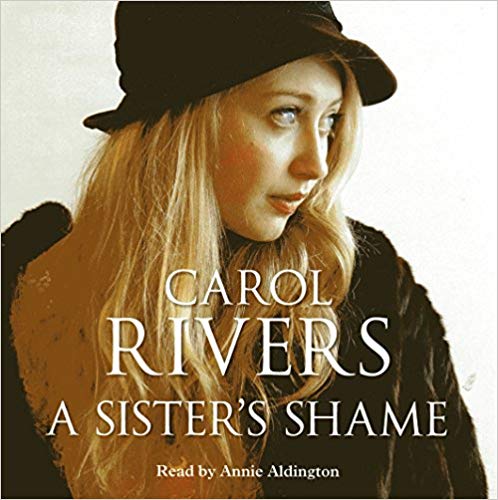
With A Sister’s Shame Carol Rivers has constructed a dramatic and involving plot in a detailed and atmospheric setting. There is an undercurrent of menace throughout and my fingers itched to give Vesta a good shake as, blinded by love and ambition, she threw herself headlong into the new life everyone warned her against.

This is also a tale of relationships in various forms – the bond between twins; long-lasting friendship that turns friends in family; and romance, both real and imagined, one leading to lasting love, the other to a relationship based on control.

Having read and enjoyed A Sister’s Shame some time ago, this time round I listened to it, read by Annie Aldington, who is an experienced and skilled narrator, who brings character and atmosphere to the telling.


Kitty:

This month I haven’t read as much I would like but I have discovered the joy of the audiobook, which I’m finding so addictive that I’m not getting much else done. That, of course, is Susanna Bavin’s fault for her excellent new book, The Sewing Room Girl, which I can’t stop listening to.

I did however have the pleasure of reading the second in Terri Nixon’s Penhaligon series, Penhaligon’s Pride and once again loved the way she describes the elemental nature of Cornwall and the strength of communities within it. A fabulous book.

I also read Mary Jane Baker’s A Bicycle Made for Two, a romcom set in Yorkshire and written with such sharp wit that she had me giggling loudly. She is now one of my favourite authors within the genre.


A PUBLISHER’S YEAR: MAY – CRIME, CONTRACTS, ASSISTANCE

May saw Caoimhe and I head off to represent Sapere Books at our first ever CrimeFest in Bristol. Two of our lovely authors were speaking on panels; newly-appointed Chair of the Crime Writers’ Association, Linda Stratmann, and co-founder of Crime Cymru, Alis Hawkins. The Friday evening saw the announcement of the longlist for the first ever Sapere Books Historical Dagger Award. I can’t wait to get stuck into them all! You can see the longlists for all of the CWA Daggers here: https://thecwa.co.uk/wp-content/uploads/2016/05/CWA-Dagger-2019-Longlists-3.pdf

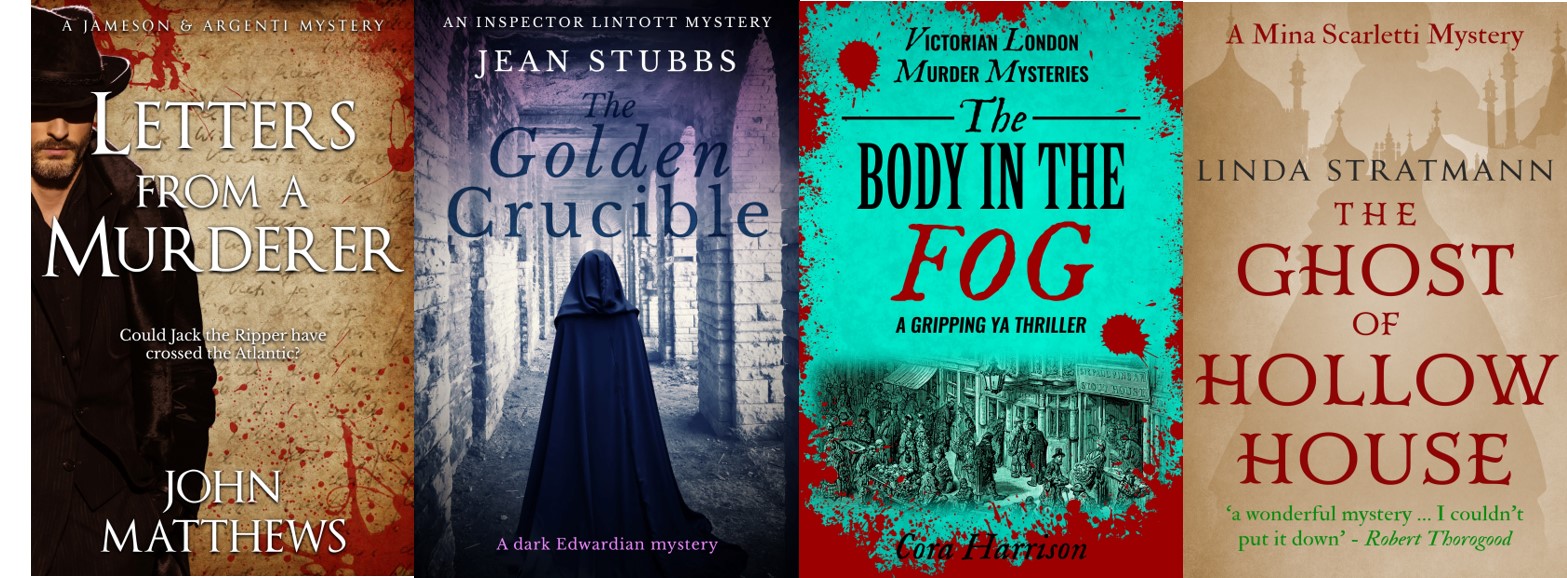
May saw the release of eight of our books: four books in Cora Harrison’s Victorian London Mystery series; Linda Stratmann’s latest mystery, THE GHOST OF HOLLOW HOUSE; the first in John Matthew’s historical thrillers, LETTERS FROM A MURDERER; the third Inspector Lintott mystery by Jean Stubbs, THE GOLDEN CRUCIBLE; and the penultimate cosy crime novel from Elizabeth Lemarchand, WHO GOES HOME?

We also signed two new authors to our family. We’ve contracted Sean Gibbons for a three-book deal of a series of crime books set in Galway City. We also signed a four-book detail with Natalie Kleinmann for her Regency romance novels.

And we can finally reveal our new Editorial Assistant! Natalie Linh Bolderston will be joining us from June 10th, and we can’t wait! We have lots of books in various stages of production, so she won’t be short of work – but we’ll try not to scare her off! Hopefully I can persuade her to check in with next month’s blogpost to let you know how she’s getting on!


Amy Durant

Follow Natalie on Twitter @NatBolderston