The Business of Books: Writer as Reader

the-business-of-books-interviewswithjanecableJane Cable admits to sometimes having a slightly uneasy relationship with other writers’ books


Writers are by our very nature readers. We tend to have fallen in love with stories at an early age and as children at least devoured every book we could lay our hands on or persuade someone to read to us. We disappeared into the magic of lives so very different to our own, travelling time and the globe with the carelessness of youth. Except that I was terrified of swings for a long time after reading What Katy Did.

I suppose it is no surprise that one of the first characters I can remember really relating to was Jo in Little Women. When Amy burnt her story I felt real anger and cried bitter tears. I guess I was already sucking my own pencil and waiting for the words to come.

From teenage years onwards real life started to intervene in my bookish world. In sixth form I still bought a paperback every week with the money I earned from my Saturday job at BHS and wherever I moved to for college and in early working years the first thing I did was join the local library. But as life became busier time to read became increasingly rare and I relished holidays where in pre-Kindle days my husband and I would almost literally pack a case full of books.

In my forties I started writing my first story which turned into a full length novel and here the dilemmas began. First, there was time: I really didn’t have enough to read and to write. Secondly was the fact that my head was so full of my characters there just wasn’t room for anyone else’s.

Now most writers read voraciously (apparently) and certainly everyone tells you that as a writer you should, but I have to admit to struggling. While I am living and breathing my story, how can I do anyone else’s justice? I suppose I never could read more than one book at once and it used to completely do my head in that my mother always used to have two on the go; one upstairs for light relief and nodding off to sleep with and another, normally something a little more demanding, by her chair in the living room.
The Business of Books- Writer as Reader

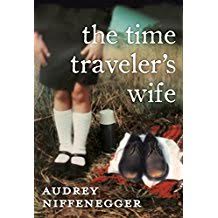
So reading has been pushed to the margins of my life, to the rare times when I’m not working on anything new. An advantage of this is that the great books, such as The Time Traveler’s Wife, really stand out. This one in particular opened new doors creatively speaking because it showed me that if your characters were strong enough you could take your readers anywhere. As a writer, it made me brave and I do wonder what else I would learn if I had more bandwidth to read.

I’m also aware of the need to read successful authors in my genre and books which break out of the ordinary and get talked about. Then there’s the guilt-induced consumption of books by authors you know and feel you should review. So is reading purely for pleasure a thing of the past for me?

Thankfully, no. I have learnt to be incredibly selective and not to finish a book if I’m not enjoying it. There is a difference between books I read for research and books I read for pure joy. And in the last few weeks I actually became very excited about the launch of a new novel for the first time in years. But more about that anon, because Su Bristow’s Sealskin deserves an article all of its own.


Business of Books: Jane Cable talks to Lucy Williams of Honno

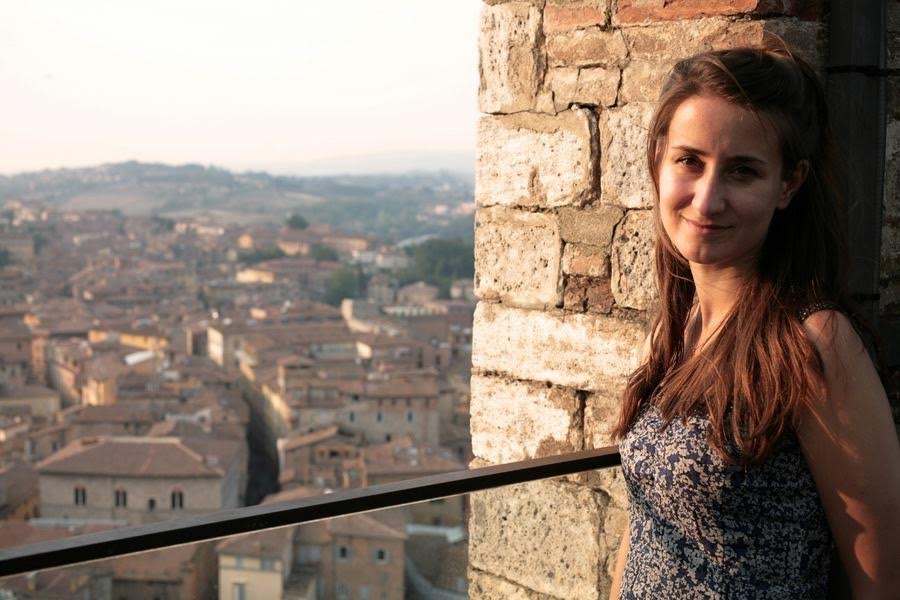
the-business-of-books-interviewswithjanecableThis week Jane Cable talks to Lucy Williams, a committee member of Honno, the independent co-operative run by women to publish the best of Welsh women’s writing. Honno has recently celebrated its thirtieth anniversary.


What is your book related job or business?


In my day job I am an in-house technical author and a freelance Italian translator and copywriter. I am also a published creative writer.  As well as being on the committee for Honno, I volunteer with the National Autistic Society helping autistic children and adults with their written communication.

I have been a committee member of Honno Welsh Women’s Press since August 2014, and have been involved in a variety of work with them including, in 2016 alone, attending Tenby Book Fair, representing Honno at the New Welsh Review’s Travel Writing Awards at Hay Festival, and being at the very special Honno 30th birthday celebrations in Aberystwyth.


As well as face to face promotion of the Press and getting to know other publishers and authors, I have had the chance to read a number of manuscripts to comment on their suitability for publication with Honno, and my fair share of proofreading.


What is the most rewarding part of it?


I think it has to be seeing a published author’s face when they see their work in print and on the shelves. I met a couple of Honno’s authors at the Tenby Book Fair, and to be able to be involved in the behind-the-scenes process which helps authors get their stories out to the world is a real privilege. I have also found it fascinating to meet the other member of the committee who come from all different walks of life but who share the same passion for creating a platform for Welsh women writers.

Business of Books Jane Cable talks to Lucy Williams of Honno

What do you consider to be your major successes?


Honno has seen many successes:  We celebrated our 30th anniversary last year and were interviewed on Woman’s Hour. Over that 30 years our success has been recognised in a number of literary awards from the Pandora Award to CWA dagger nominations, Wales Book of the Year and the Bread and Roses Award for Radical Publishing. Several of our books have been dramatised on Radio 4, and we recently sold the TV rights for Walking to Greenham. We are very proud of our investment of time and effort on behalf of beginning women writers who go on to achieve mainstream success. Writers such as Tessa Hadley – Booker nominated author – Julia Gregson and Kitty Sewell have moved from publication with Honno, to houses such as Vintage, Orion and Simon & Schuster. We may be small but we are determined!


Have you always loved books and what are you reading at the moment?

Books have been an important part of my professional and personal life for a long time. I have loved them since I finished my first book by myself as a child, and always knew I wanted a career which involved reading them, selling them, editing them, translating them, anything to do with literature really, and I always knew I wanted to work with others who feel the same way. I have worked for Elsevier in the Global Rights Department drawing up author contracts, and for Oxford University Press as an International Sales Rep selling their work to schools in Europe, and have proofread for the University of Wales Press. And in case I was in danger of not having enough books in my life I set up a book club called Reading Between the Wines who meet every month in South Wales.


I am currently reading The Hungry Tide by Amitav Ghosh, a wonderfully rich novel set in Bangladesh, and The White Camelliaby Juliet Greenwood, a Honno novel about the search for freedom and self-fulfilment, set in 1900s Cornwall.


About Lucy:

Lucy currently lives in Wales and spends her time as an Italian translator, technical author, and creative writer. She has had poetry published by The Emma Press, and Hysteria, and was recently a judge for the Hysteria Short Story competition.

As well as being on the committee for Honno, Lucy volunteers with the National Autistic Society as an e-befriender where she helps autistic children and adults with their written communication. When not in front of the computer with writer’s block Lucy can be found hosting her tipsy bookclub Reading Between the Wines.

www.lucyrosewilliams.com


The Business of Books: Back to Basics

the-business-of-books-interviewswithjanecableJane Cable reaches a scary moment with her next manuscript

More often than not my own blogs for The Business of Books focus on the process of being published and on marketing, marketing, and more marketing. For any writer, particularly one clinging onto a day job as well, it sometimes seems that the actual business of creating something new is relegated to the margins.

That doesn’t mean it isn’t important. In fact writing the next novel is the most important thing an author can do. If readers don’t love your book then no amount of marketing is going to put that right. And all the time I’m up to my neck in marketing Another You, my agent Felicity Trew has been waiting patiently for my next manuscript.

The working title has changed a few times so I’ve taken to calling it my Lincolnshire novel because it tells the story of an archaeologist who is sent to work in that wonderful county and discovers more about herself than she does about the site she’s digging. The settings came to me on a weekend away to celebrate our twentieth wedding anniversary when we stayed first in Lincoln itself (which oozes history from every brick) and then at the amazing Winteringham Fields restaurant and rooms on the banks of the Humber.

Getting the manuscript to a fit state to share with Felicity has taken about eighteen months. I desperately needed clear space in my diary and in my head to finish it and make sure that the plot hung together and the main characters at least were well drawn. The obvious answer was to do it on holiday.

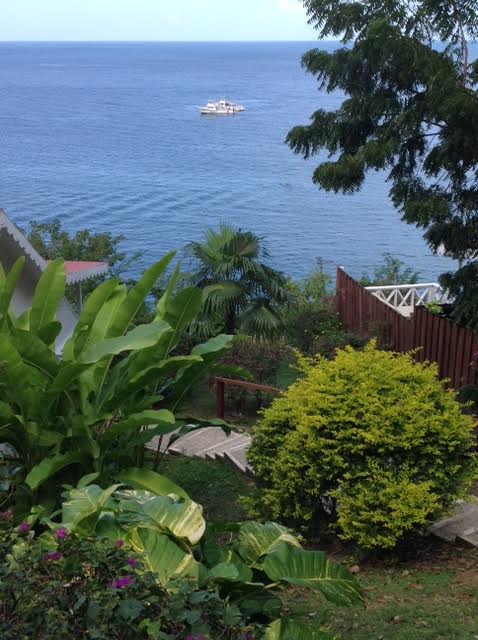
Now I understand this wouldn’t suit everyone but it worked for me. I am blessed with an undemanding husband who is more than happy to do his own thing while I write. Even better we’d booked a two week chill break in St Lucia in preparation for what is going to be a hectic and potentially stressful year so suddenly the time I needed was there.

The Business of Books- Back to Basics

When the domestic and workaday issues are removed from your life (even temporarily) it is easy to feel creative. I’d been struggling with a final twist for the book (Felicity wasn’t keen on my initial idea) and something came along which while not perfect, is good enough for a draft and at least points in the right direction. Without this I hadn’t been able to finish the manuscript – I knew where I was heading but I was a few chapters short. But as I sat on my terrace overlooking the sea chapters kept falling off the ends of my fingertips and the story ended up about 10,000 words longer than I intended.

At this point, length doesn’t actually matter. This draft is so early that it will be unrecognisable by the time the book is ready to be presented to potential publishers. But nevertheless the manuscript had to be polished, the story had to be coherent, and the characters’ journeys real. I found myself almost living inside the mind of one of them, trying to see and feel the world through his eyes, and sure enough he came alive on my keyboard too.

It was almost the end of the holiday before I was ready to send the manuscript to Felicity. Much as she was dying to read it this is the scariest moment for me and I felt sick to my stomach as I pressed send. What will I do if she doesn’t like it, or doesn’t think it’s sufficiently commercial? I feel a little queasy thinking about it now, to be honest. But one thing’s for sure – whatever may be wrong with it I need to trust her judgment and work as hard as I can to put it right.


The Business of Books With Jane Cable: David Ledain

the-business-of-books-interviewswithjanecableThis week Jane Cable interviews David Ledain about why he believes he can sell more self-help than fiction and why he decided to turn his own experiences into a book. Find out more about David at www.gaydad.co.uk.

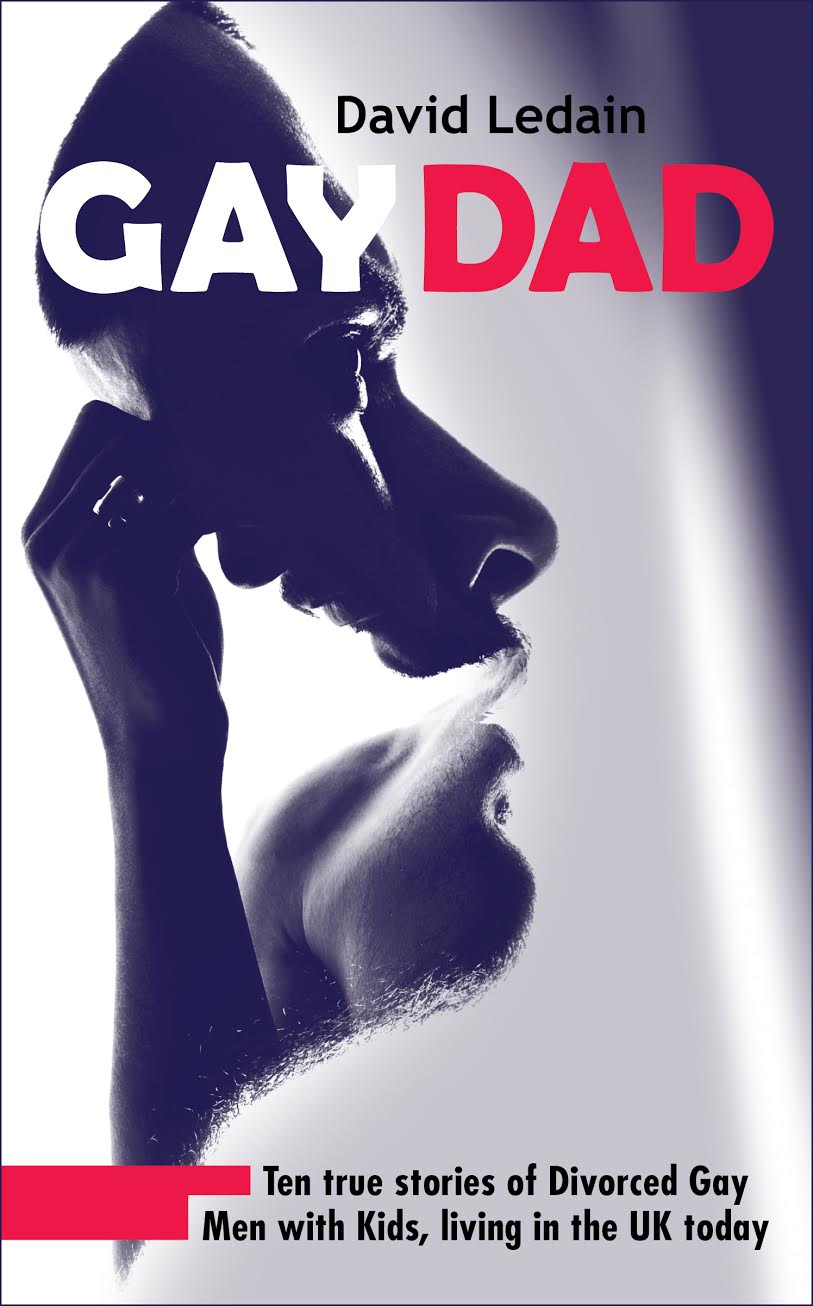
I am a gay dad and to protect those I love I write using the penname – David Ledain. I live on the south coast of England and have two sons. When I was going through the process of coming out and separating from my wife, I couldn’t find anything about other gay dads like me, so I wrote a book: Gay Dad – 10 true stories of divorced gay men with kids, living in the UK today.

How much of your working life does the business of books take up?

I write fiction as well, and the two different sides to my writing take up a lot of time, but mostly that is marketing and promoting, which some people find dreadful and they are uneasy with. I love the new challenges and surprises that meeting interesting people and talking about my work brings. The first radio interview I did was very daunting, but the presenters are there to get you to talk about your topic, not to bamboozle you as they might a politician. I do try and write something every day, even if it’s only a paragraph or two, or just go back and do some editing.

writing, publishing, writers. david ledain, jane cable

What’s your business model to earn a living from writing?

I realised quite quickly, after I had written and published my first book, that I wasn’t about to be giving up the day job to spend my precious time doing what I love, which is writing and researching, as a full-time occupation. What I also learned, having published Gay Dad, was that non-fiction, especially when it concerns true life stories, sells much better than fiction, and this got me to think about how other self-published writers might benefit from telling their own stories and personal experiences to engage more with their audience. I am currently developing this idea with two fellow self-published authors who have also found a much more receptive market in their non-fiction work than they have in their fiction.

What do you consider to be your major successes?

Gay Dad has been, and will continue to be, successful. But I measure success not only in the number of sales and royalties I make, but in the number of times I get approached by radio presenters to come on their shows, editors asking me to write pieces for their magazines, or people wanting to set-up LGBT courses and ask for my input. The greatest feeling is when guys send messages of gratitude for the support they’ve gained from reading Gay Dad and the other men’s stories, and for bringing the subject into the open and making the public more aware of what I believe, is a far more common thing than we realise.

Tell me about your latest project.

I am happiest when I’ve got many irons in the fire and lots going on. Consequently, I have just launched the Gay Dad website www.gaydad.co.uk ; I’m in the process of writing a self-help guide for independent authors to tell their personal stories; I’m writing the third novel in my fiction series and have drafted the storyline for a new series about a gay FBI agent set in the 1950’s. Lots going on, and the different income streams also means I am getting nearer to my dream of being able to make a living from doing the thing I love – writing.

The Business of Books: Giving it all Away

the-business-of-books-interviewswithjanecableJane Cable’s Another You goes on free download on Amazon…

Two weeks ago I wrote about trying to be empirical in judging the results of marketing – and also that Another You would be on free promotion. While an ideal opportunity to see if I could actually learn what worked and what didn’t, it felt a nerve-wracking and risky time, because if you can’t give your book away, what hope do you have of actually selling it?

Another You proved in spades that it could be given away. The entire week of the promotion it stayed in the Kindle UK top 200, most of that time in the top 100, rising to a highest position of number 20 and topping the free women’s historical fiction chart. Far, far, beyond my wildest dreams. So what did I do to achieve this?

First, the day before the promotion I sent round robin emails and used lead generation software for linkedin to all my friends and contacts who have shown an interest in my books. It was flattering that many of them had already bought it but I am sure there were a few who downloaded during offer week.

It was also a case of extending my network to people I used to know and I used Facebook and Linkedin to reach the alumni pages of both my secondary schools and the large accounting firm I trained with. From my former sixth form in particular the response was most enthusiastic, but then we always were a rather bookish lot.

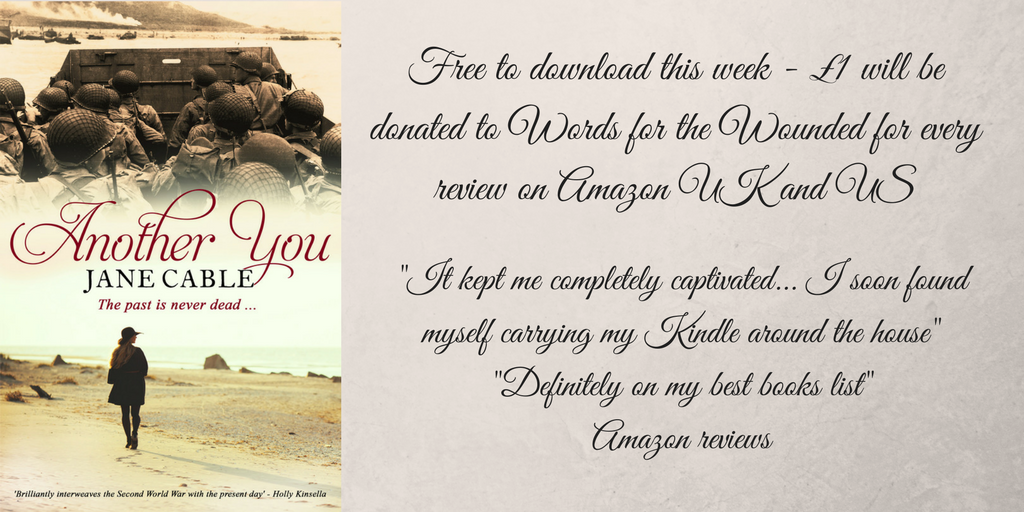
I devised a number of campaign graphics on Canva, some with review quotes from other authors, another pushing reviews in aid of Words for the Wounded. I used a different one each day on Twitter, Facebook and Linkedin. I also did some paid advertising and post boosts on Facebook. This included a ‘shop now’ promotion with a link to the Kindle UK download page which received 42 click throughs and cost £18. I messed up another boost later in the week by not noticing I’d reach the spend limit on my account, but by that time the book was flying and it didn’t seem to matter very much.

publishing, Jane Cable, writing

I also spent a little money (around £10-£15 each) on three free book promotion sites. For the UK market I tried Book Bongo but I have to say I was disappointed with the amount of coverage on social media and the book didn’t appear in their newsletter until after the free period was over. There was also a free listing on Book Angel.

For the US market I tried Awesome Gang and Pretty Hot on different days. The jump up the free chart was far more impressive on Awesome Gang day when Another You rose to number 671. The main Amazon.com marketing came from my publisher, Endeavour Press, who sent out hourly promotional tweets with a link to the site throughout US book buying hours. I can only think this was hugely successful because at the end of the week the book reached the dizzy heights of number 68. Amazing – as a quintessentially British author I never expected to have such appeal in the USA.

Overall the key must have been to reach enough downloads early in the promotion for the Amazon algorithms to kick in. Endeavour advises getting as many people as possible to download on the first morning and I suspect this is the reason.

Although I wish I’d had more time to prepare for the free offer period I really couldn’t knock the results and in the week since it ended Another You has continued to sell well and remained in Kindle UK top 20 women’s historical fiction. Now I need to somehow launch it closer to number one and that coveted bestseller label.


The Bookshop Owner Jane Cable talks to Sandra Foy

the-business-of-books-interviewswithjanecableThis week Jane Cable talks to Sandra Foy, a bookseller living in Manchester who is also a book blogger, blogging at readingwrites.wordpress.com. She love crime books and watching cricket.


What is your writing related job or business?

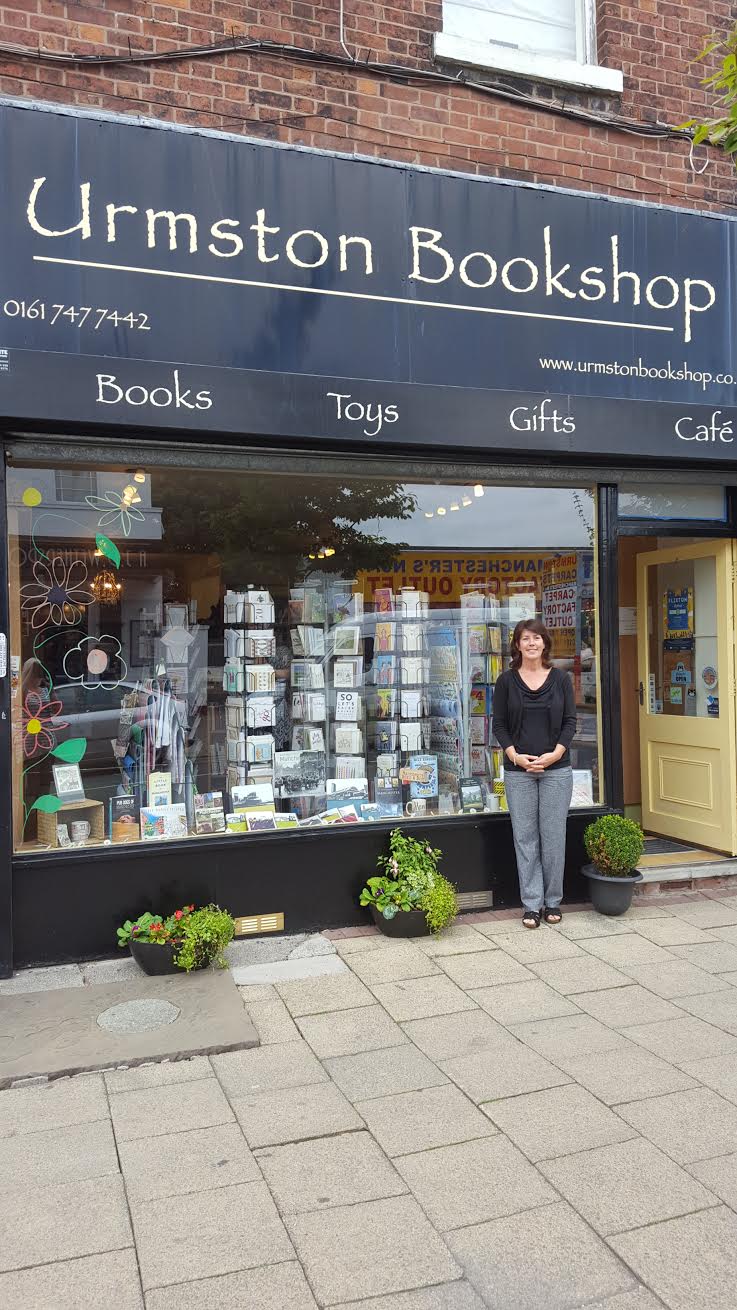
I am a bookseller who owns a shop in Urmston Manchester. This time last year my only connection with the publishing world was through my blog and the occasional advanced reading copy that I was offered in return for an honest review.

I was in the book club at Urmston Bookshop, but then, in March, quite by chance, I saw that the shop was for sale: it seemed like divine providence. I had always wanted to own a bookshop but never imagined that it would happen. At first together with my husband we made tentative enquiries about the business which then just snowballed and everything just seemed to slot into place incredibly well.

The previous owner really wanted someone who loved books to take over, so I had the advantage over the other potential buyers who had no interest in books and just wanted a shop. They were fabulously helpful to me during the sale and also afterwards, teaching me everything they knew.

I was also incredibly lucky that during the sale a lady walked into the shop looking for a job, she has worked in many libraries and is now a fantastic colleague and friend.

The Bookshop Owner Jane Cable talks to Sandra Foy
What is the most rewarding part of it?

There are so many rewarding parts of owning a bookshop.

Being a huge part of the community and bringing them together for author events and film nights and hearing them say how much they have enjoyed them and look forward to more is enormously rewarding.

Putting a book into someone’s hands who wouldn’t otherwise read such a book and have them come back and ask for more because they so enjoyed it is just fabulous.

And a massive reward is being able to take authors into local schools and seeing the children’s faces light up with delight and enthusiasm.


What do you consider to be your major successes?

I have only been in the shop for seven months, but I feel the successes are the book clubs. We now have three adult book clubs and one children’s club (Talking Tales) for 8-11 year olds, with membership growing all the time. Seeing adults come together to discuss books is great, but to be able to enthuse children and see them want to read is beyond wonderful.


Have you always loved books and what are you reading at the moment?

I have loved books from being a very young child. Enid Blyton was my first love, I even created my own Secret Seven with friends. She gave me a life-long love of the crime genre.

At the moment I am reading Some Luck by Jane Smiley for one of our book clubs and also Intrusions by Stav Sherez (really good!) as we are doing an event at the bookshop with Stav and Sarah Ward in February.


The Business of Books – 18.1.17

the-business-of-books-interviewswithjanecableSince Another You saw the light of day almost a month ago much of my writing life has been taken over by marketing, interspersed with periods of panic that I’m not marketing enough, or that I’m doing the wrong things. It’s actually very hard to tell what works, however empirical you try to be, so one of my first priorities has been to start the reviews ticking over. That really matters.

Reviews are not all about an ego trip for the author – although I have to say with some of the initial comments about Another You my head could swell more than one hat size. In the cold light of day – rather than the warm glow of knowing someone really loved your book – reviews are about Amazon algorithms. Once you pass a certain number (said to be 50, but for The Faerie Tree it was somewhere in the low 60s) your book will be featured more and more in Amazon customer mailings and suggestions. It’s certainly worth it – I went from selling a few copies of The Faerie Tree each day to selling a thousand or so over a three week period. It just takes a little while – and a lot of work – to get there.

Some lovely reviewers will post on Amazon on the UK, in the US and on Goodreads – as well as their own blogs if they have them. There’s an extra dimension to the Amazon reviews for Another You because for each one in the UK and the US I’m donating £1 to Frost’s favourite charity, Words for the Wounded.

Over the last few years I’ve met some lovely book bloggers online. Most of them have full time jobs and/or are busy mums as well as reading, reviewing and writing and I have a huge admiration for their work rate. I try to be as helpful to them as I can by sharing and tweeting things which I think will be of interest to my followers too and taking part in their special events, so over time relationships build. That means I don’t feel bad about asking if they’ll review Another You or take part in the blog tour but it also means it’s a pleasure to work with them.

The Business of Books – 18.1.17topbookboggersinDorset

Some really go the extra mile, putting together graphics for the book to go with their reviews. Making these graphics – especially useful for saying more in Twitter posts – is something I’ve started to do myself, using a website called Canva. I have no design skills at all but even I can manage to knock up something which looks quite professional. Here’s one I prepared earlier to showcase some review quotes.

Something I haven’t been able to do before is offer a free ebook on Amazon to generate downloads and reviews. On Friday I had an email from Endeavour saying that Another You will be on free promotion from 16th – 20thJanuary. I was really excited by the possibilities but a little phased by the lack of notice. Having canvassed a few writer friends they advised me to get everyone possible to share the news – and the download link – and to look at a few well-chosen free book promotion sites. Sadly most of them need a lead time of at least five days but I have picked three and I’ll let you know well they work in due course.

To end my post with something completely different… I am absolutely made up that my first novel, The Cheesemaker’s House, has been selected by Books on the Underground for 1st February. I really believe in sharing books and this is an amazing way to do it. I’m hugely grateful to the book fairies for allowing me to join the fun.

To download your free copy of Another You before Friday please visit:
https://www.amazon.co.uk/Another-You-Jane-Cable-ebook/dp/B01N9HINKI/
https://www.amazon.com/Another-You-Jane-Cable-ebook/dp/B01N9HINKI/


Business of Books: Claire Dyer

the-business-of-books-interviewswithjanecableClaire Dyer is a novelist and poet from Reading, Berkshire. Her novels are published by Quercus and her poetry collections are published by Two Rivers Press. She likes love stories and cheese!

How much of your working life does the business of books take up?

I’d say all of it. Until recently I balanced my writing life with a part-time job in London and bringing up my family. However, now that my kids have grown up and left home and my husband is happily ensconced in a new business venture, I am in the very fortunate position of being able to live a full-time writing life.

It’s interesting that you use the phrase ‘business of books’ in the question though, because I do very much consider what I do as a job. My working week comprises of days when I’m at my desk by 9.00 am and finish around 5.00 pm and then two nights a week I teach Creative Writing for Bracknell & Wokingham College. I also attend a regular poetry class in London and am out most other evenings at writing-related events, including workshops, book launches, poetry readings, etc., etc.

However, if you were to ask what I do during those hours at my desk I’d struggle to give it definition because it’s so varied. There’s a lot of networking to do, of course, and lesson planning and I do try and set aside chunks of time to write, but my commitments as Chair of Reading Writers, Poets’ Café Rep for Reading’s Poets’ Café and the work I do for my Fresh Eyes clients also keep me busy. No two days are ever the same and I never quite know what will come through on email or what poem might insist on being written, and if and when I’m involved in writing, editing or rewriting a novel then that’s a whole different kettle of fish altogether!

So I hope I’ve answered the question OK because, for me, being a novelist and poet is a full-time job even though I don’t write novels or poems all the time!

What’s your business model to earn a living from writing?

I guess that unless you’re a regular best-selling author (preferably with a film deal!) or a poet whose work wins major prizes or secures lectureships at high-ranking academic institutions, it’s hard to make a living from writing as many will testify, and I’m afraid I’m not very hard-nosed when it comes to financial things.

I have been lucky enough to earn some money from my fiction, including advances, royalties and the sale of foreign rights, and poetry competition wins and fees earned from Fresh Eyes clients and running workshops have brought in some other income, but my teaching role is done more for love than money, as are the voluntary roles I have within the local writing community.

So I would say overall that my business model is very ad hoc, not thought-through and definitely would not sustain even the lowliest of writing garrets! However, I live in hope that one day I’ll become a regular best-selling author (with a film deal) AND a poet whose work wins major prizes, secures lectureships, etc. etc.!

Claire Dyer - credit Dale Strickland-Clark

Claire Dyer – credit Dale Strickland-Clark

What do you write and what do you consider to be your major successes?

I write novels which I hope would appeal to quite a wide range of readers and which are probably better defined by what they’re not, than what they are. They aren’t really light commercial women’s fiction, nor are they literary fiction but they do (I hope) tell convincing stories about emotional dilemmas in a prose style which is both succinct yet lyrical!

With regard to my poetry, again I would say I’m more of a lyric poet than anything else. I do, however, believe very strongly in the crossover between poetry and fiction; both tell stories and both need the careful placing of just the right words in the right order!

My major successes must be my published works which include (so far, she says hopefully!) 2 novels and 2 poetry collections and my academic qualifications (I have 3 degrees but alas can’t sing nor do I own a sparkly dress!)

However, success in the writing world is a strange thing to quantify. As I say above it isn’t always (and can’t be) about money; it can be about reputation though and about being supportive to other writers; it can also be about stretching yourself to write more honed and precise poems and novels which could in time prove memorable.

As a novelist and poet I feel I’m always learning and am always challenging myself and I would consider myself successful if I could become a better writer and poet, a better champion for the written word in whatever form this takes and to continue to love what I do.

Tell me about your latest project.

I have a couple of projects ongoing at the moment.

I’ve just finished rewriting a novel in concert with my wonderful agent and have had a huge amount of fun and have learned heaps during the process. I will also be putting together a new collection of poetry over the next few years (the last one took 4 years to complete) and in the meantime am working on a collaborative poetry project with two amazing poets and have started a new novel (with I’m glad to say the approval of my aforementioned wonderful agent)!

I’m not sure what 2017 will bring because the writing life is nothing but unpredictable: good news and/or bad news could be on their way, the only thing for sure is that what any writer needs is a big heart, a huge amount of courage, a thick skin and plenty of chocolate!