Words For The Wounded Writing Prize Closes On 11 March

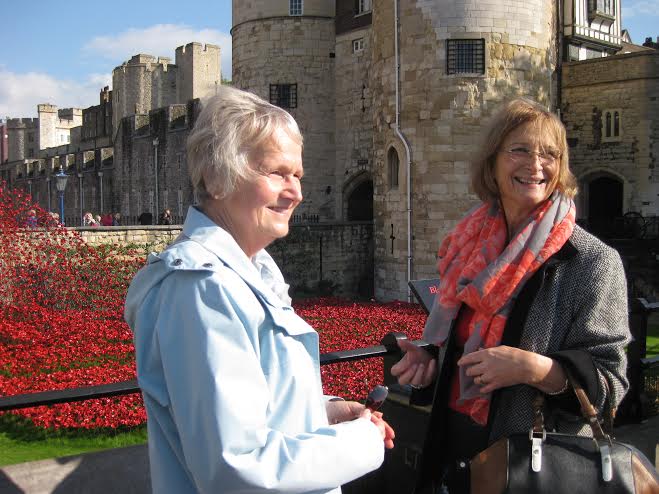
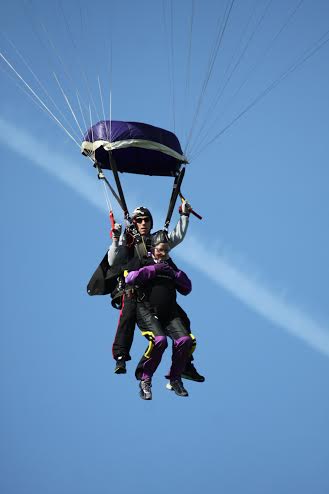
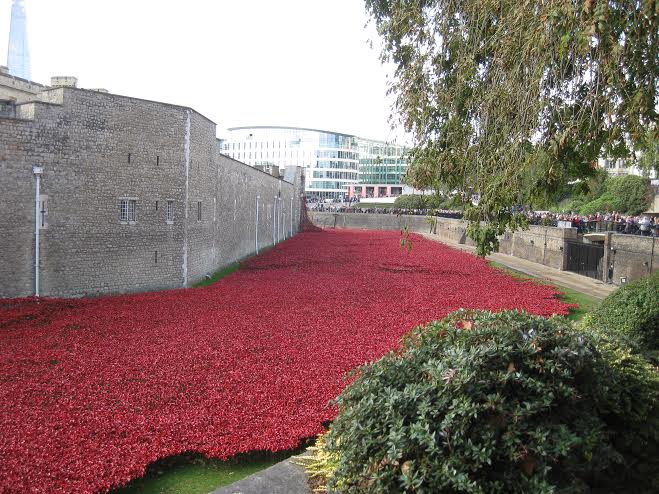
W4WLogoAlt3 Words for the Wounded writing prize closes on 11 March. two grannies Why on earth do three grannies (two shown above) throw themselves out of a plane, strapped to a fit young man, hoping their parachutes open? Well, OK, the fit young man is a bit of a clue. But seriously, why? pic2 janairborne The reasons lie in the past and the present. In the past, both my grandfathers survived the first world war, so just as there were thankful villages who had lost no men, so too there were thankful families. But life isn’t that simple, is it? Gentle Percy, my mother’s father survived but took his own life in 1923. War has long, relentless tentacles which reach out and destroy families, just as surely as bullets do. pic3 poppies Then, about four years ago I met a young  man and his wife. They were both under twenty five. She was pushing him in his wheelchair; his portable ventilator lay on his chest. He’d been shot through the neck in Helmand and is tetraplegic, (paralysed from the neck down). They were both smiling and cheerful but their hopes and dreams were very different now, and everyday life was a mountain in itself.   I decided that, as writers, my two granny friends and I could help not just the wounded, but also aspiring writers. We founded Words for the Wounded and were enormously lucky in our patrons, amongst whom are Julian Fellowes, Louis de Berniers, Katie Fforde, Paddy Ashdown and many others. Julian Fellowes   We decided also that we would earn our donations, not just appeal to the generosity of others; hence the skydive, and hence the Mud Challenge Obstacle Course in August, and hence the LitFest to be held at High Wycombe on 18th April  2015 with Katie Fforde and two Midsomer Murders writers amongst others.   katie-fforde Our main thread, however, is our writing prizes. We have the short category for poetry/fiction/memoir – up to 400 words, with prize money of £400. Entry fee £4.50   This year we are launching The Independent Author Book Award for fiction or memoir, with a 1st prize of a Palamedes PR professional press release. pic 6 palamedes.jpg And a biography and review in Frost Magazine.  Entry fee £12.50 pic7Frost The WforW grannies absorb ALL the costs themselves, so every penny raised goes to the wounded. Our troops put their lives on the line for us, some are killed, many, many,  more sustain life-changing injuries. To help them is the aim of Words for the Wounded. They deserve the best.


For more information: www.wordsforthewounded.co.uk 
Short Story Workshops Across Dorset by Margaret Graham

writing

One of Frost’s favourites, author Kate Kelly, who wrote of her experiences at the Edinburgh Festival is featuring as a tutor at one of the free Workshops taking place across Dorset over the next two months.

Short Story Workshops Across Dorset  by Margaret Graham

In an effort to reach aspiring writers living in rural communities a series of free-entry creative writing workshops for adults has been devised and take place at twelve venues across Dorset between 12 January to 14th February.

Amongst the tutors is another familiar name. Frances Colville who arranged the Bridport Slam, won by one of Frost’s most fun writers, Wendy Bracken, is teaching. Frances herself has featured in Frost in A Day in the Life. In addition, there is Tracy Baines who I taught, and who is a successful short story writer, so lots for the aspiring writer to enjoy.

Perhaps they would like to enter the Words for the Wounded writing prizes? www.wordsforthewounded.co.uk
writing, writing workshops, short, workshops, writing, Dorset, Margaret Graham

The short story workshops will kick-start DWN’s first e-book anthology. For anyone and everyone who enjoys writing or would like to learn to write short fiction check out the communities listed here: Winfrith Newburgh, Sturminster Marshall, Cerne Abbas, Askerswell, Durweston Horton & Chalbury, Martinstown, Stalbridge, Verwood, Crossways, Upwey, Bourton

To book a place, email sue@dorsetwritersnetwork.co.uk
Taking part gives you free entry to Dorset Writers Network e-book competition. Competition launch event is on Saturday 24th January – 2.30pm – at Dorchester Library.

Come along to hear Natasha Solomons reading from her work and celebrate the launch of Dorset Writers Network’s e-book competition.  Advance booking essential, telephone Dorchester Library on 01305 224440.


The Wellington: Margaret Graham’s Local in The Heart of London

pic a exterior

OK, so it’s the middle of winter, the wind is hurtling along the Thames, and you’re crossing Waterloo Bridge, head down, unaware that the bridge was rebuilt in the 2nd World War, and the workforce included women. The only thought in your head is food and shelter.


Such was the situation a couple of years ago as Penny Deacon and I (writers and organisers of Words for the Wounded) reached the Strand, and there it was; this beacon in a sea of misery, the fantastic, fantabulous Wellington on the Strand. Straight across the road we powered, and hit the stairs to the restaurant at a run, resembling nothing as much as drowned rats.

pic 1 Wellie interior

That was the start of our Wellie adventure: within a few months it was the Graham’s London ‘local’. Penny lives in the West Country so looks on enviously, but I’m in High Wycombe, which is just a hop skip and jump from town. Often I meet Jan Speedie (besties since we were nine and she is also an organiser of Words for the Wounded). We spend an inordinate amount of time in the National or Portrait Galleries, in St Martin’s in the Fields poking about, or at the theatre, or exploring the City. Where do we eat? The Wellie of course.

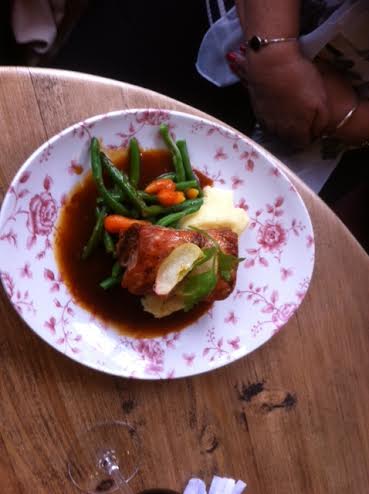
pic2 Wellie porkSticky slow-braised pork belly.


But why? Isn’t one pub much like another? I think, quite frankly, that whoever said that, needs to go and wash out her/his mouth with soap, as my mother would say.

pic 3 wellie

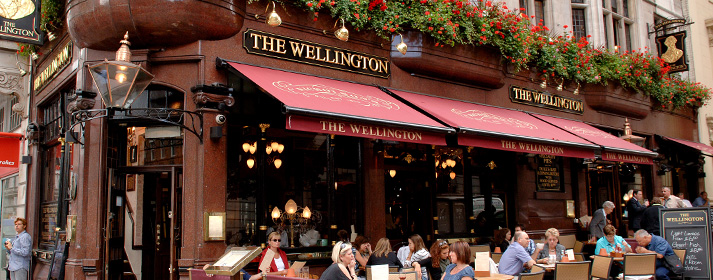
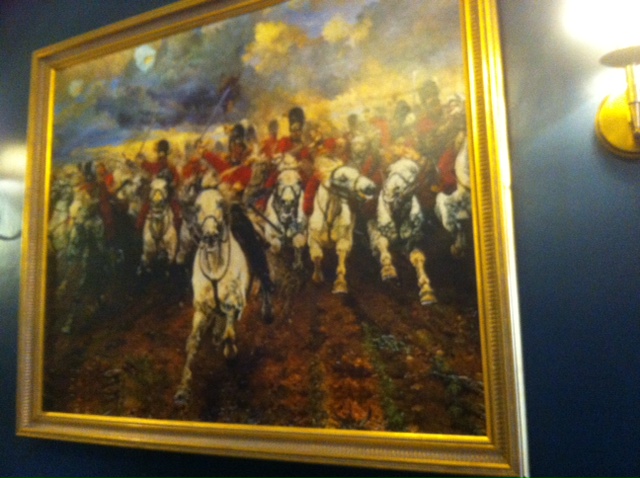
The Wellington has the knack of becoming special to everyone we’ve brought along; the ‘grands’ love it, our friends too. It dates from 1903 and its neo-gothic exterior is a bit of a landmark. It is named after Arthur Wellesley, Duke of Wellington whose historic victory over Napoleon in 1815 ended the Napoleonic Wars. (If you haven’t been to Apsley House, home of the first Duke of Wellington and his descendants, you should. It stands right in the heart of London at Hyde Park Corner.)

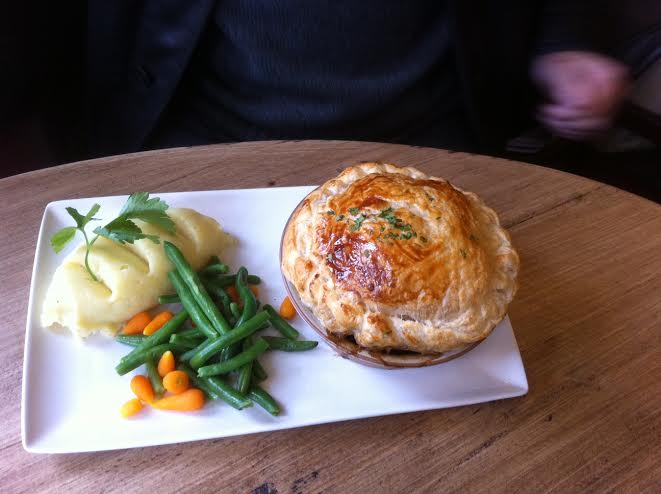
pic4 wellie pie

The Wellingon sits next to Covent Garden, a name derived from the Convent Garden, which belonged to Westminster Abbey. It was to Covent Garden that I went to buy a gift for my granddaughter with money presented by Jose on behalf of the staff, as she was having a serious operation that day.

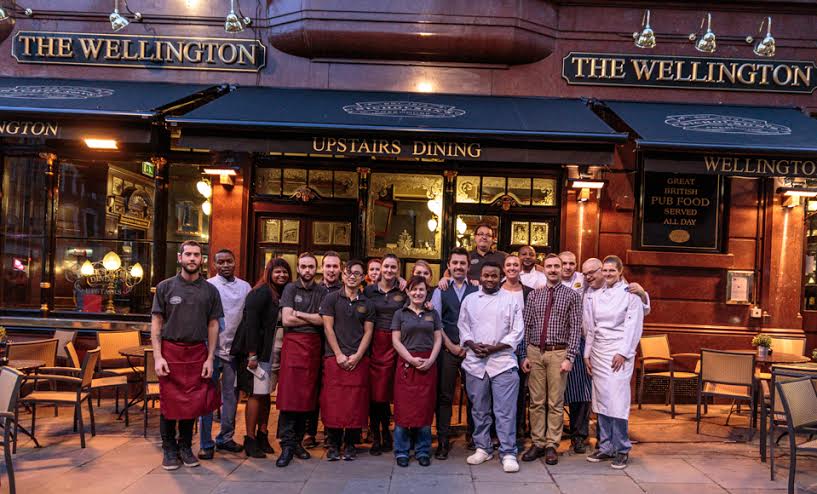
pic 5 Wellie staff

The staff are gorgeous. There’s the manager, Ruth, from Australia, Jose the team leader, (Spanish) who wins the rosette for character. There’s Michal, assistant manager, who grows a moustache for charity from time to time and who has read Maeve’s Afternoon Delight, so has a big tick from me. There’s our lovely pal Eszter from Budapest who we love because of her great kindness, and Thomas from Krakow who I’m trying to get to write a feature with me about Krakow for Frost Magazine.

pic 6 Art Nouveau

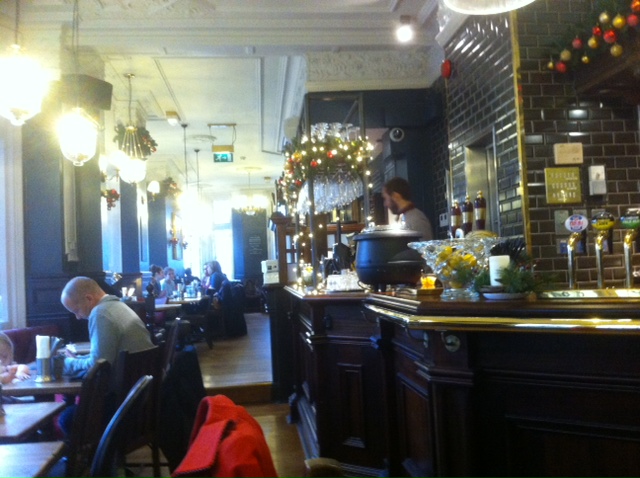
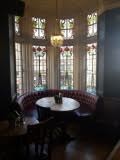
The ambiance is smart as a button, especially after its recent makeover but so many of the original features are still there that it’s hard to go wrong. One of the highlights for me is the Art Nouveau windows.


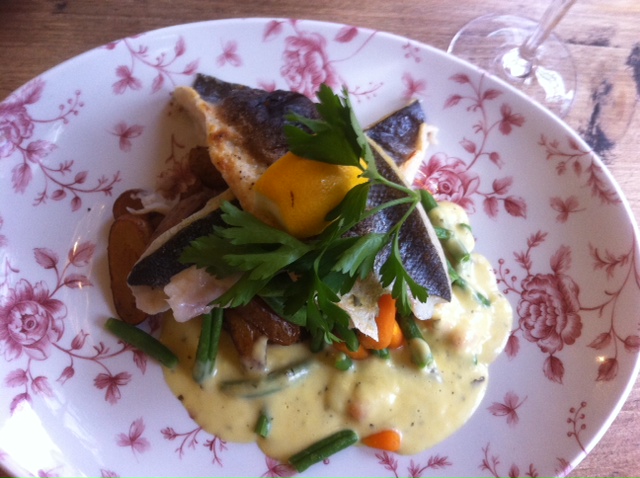
So, now we come to the food, of course. My favourite is the belly pork, Dick seldom strays from the sausage and mash, but Jan plumps for the fish fillets or seafood pie. We invariably add a large glass of Pino Grigio each. It’s always the right temperature, always rather too nice.

pic 7 wellie fishfillets

Let’s not forget the bar… The Wellington boasts a gorgeous long bar, and that brings me to the ales, which Dick and his bestie, Tim Norman, swear by.

pic 8 wellie bar


The ales change seasonally so the Wellie rotates between 18 seasonal ales 4 times per year and also rotates between 19 National favourite ales. Nicholsons Pale Ale is always stocked – it is a classic English-style Pale Ale and brewed exclusively for Nicholson’s by St Austell Brewery. It is brewed with the finest Cornish Maris Otter barley.


pic9 wellie ales


If you’re after a super friendly attractive venue, with great food and drink, you don’t need to be freezing. Just head to the Wellie (The Wellington on the Strand, 351 Strand. London) www.nicholsonspubs.co.uk/thewellingtonstrandlondon


Joo Yeon Sir in Concert at St Martin’s in the Fields 9th January by Margaret Graham

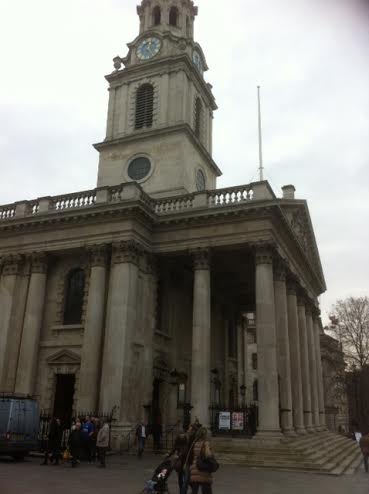
Some years ago I was honoured to be invited to speak at the commemoration  of Vera Brittain’s life, at St. Martin’s in the Fields. I was delighted to pay homage to the author of Testament of Youth, (soon to be released as a film) who wrote with an eye to the social and political context of the time, as indeed do I. So, on went the hat, and off I went.

pic1 exterior

In the front pews were the great and the good, rewardingly attentive. At the back, secure in the knowledge they were welcome at St. Martin’s whatever else was going on, were the sleeping, snoring homeless. St. Martin’s has endeared itself to me ever since; with its balance of religion, and community.


Part of this ethos had led, 65 years ago, to the free lunchtime concerts. At last I caught one, featuring Joo Yeon Sir and what a treat.

JooYeonSir Joo Yeon Sir  photograph by www.benjaminharte.com


Joo Yeon Sir (violin), acclaimed and award winning Korean born British violinist, has performed as soloist, recitalist and chamber musician at major venues across the UK. At the concert on 9th January she was accompanied by Russian born Irina Andrievshy .So there I was, sitting in St. Martin’s again: did it disappoint?

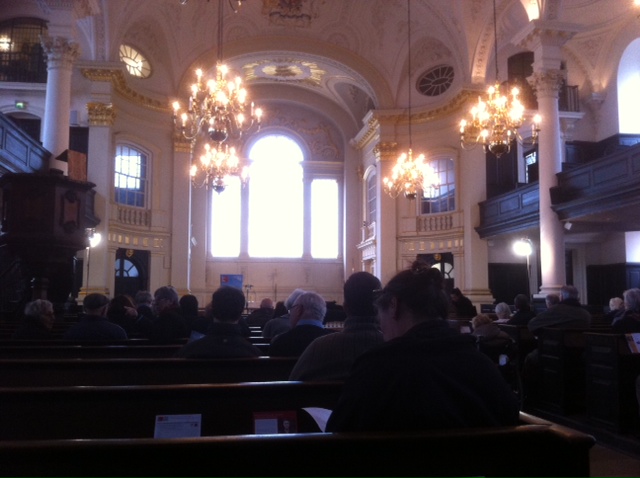
pic interior

Absolutely not, it was a tour de force.


As I sat towards the back, pre-concert, admiring the East Window created by Shirazeh Houshiary and Pip Horne with its etched mouth blown clear glass, I wondered if St Martin’s ethos of ‘all welcome’ still held good; especially in such a full house. Then I heard it… A homeless gentleman sitting in a pew across from me, asking where was God, loudly, and then rather more vehemently where the …. was he? Security arrived, a kindly security, who had a little chat, and the visitor left, amicably, to return halfway through the concert. A frisson ran round our area. He plonked himself in a congested pew, (they all were) getting everyone to shove up, and then settled to listen to the marvelous music, along with the rest of us. Perfection at all levels  – again.


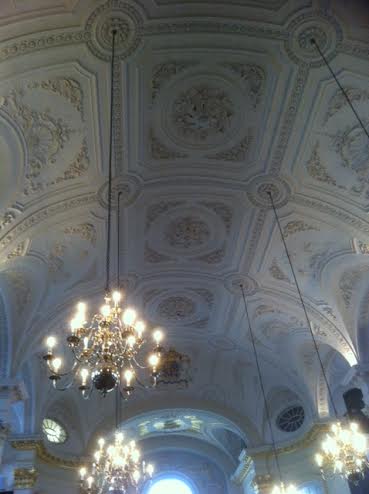
Joo Leon Sir had chosen to open the concert with Grave in style of F. Bach. I’m a great weeper when listening to the violin, because I find it the most beautiful of instruments, if played well. It was played, more than well, so things became blurred. What enhanced the piece was the glorious building. Both the playing and the architecture inspired awe.

pic4 ceiling

Then it was the Sonata No 3 in C minor for Violin and Piano, which was beautifully and empathetically imagined and finally a Concert Fantasy on Gershwin’s Opera ‘Porgy and Bess’, which was cheeky, energetic and as haunting, as Gershwin always is.

Joo Yeon Sir plays not just with her fingers, but her whole body. She is a joy to listen to, and to watch. So, take the upcoming opportunity: Joo Yeon performs all ten of Beethoven’s sonatas for violin and piano, in a series of four rush-hour recitals at the Royal College of Music, starting 3rd March.

Again, all recitals are free but tickets are required from the RCM Box Office. 020 7591 4314/ www.rcm.ac.uk/events  Royal College of Music, Prince Consort Road, SW7 2BS.

Italian Festival – Come With Me & Meet Bafana By Amanda Brake, Frost’s Le Marche correspondent

6th January Italian Festival – Come with me and meet Bafana.  By Amanda Brake, Frost’s Le Marche correspondent.

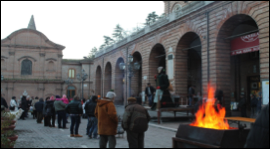
photo1Italy

We got up early on this glorious morning to do our normal hour of chopping wood for the fires. We have two fires.  One heats the radiators, the other heats the hot water and is situated in the centre of our house keeping us warm. Our chopping and other chores finished, we relaxed, seduced by the warmth into staying inside. By mid-afternoon it really was time for us to kit up, and find where Bafana may be flying. But hang on, we were all feeling too cosy to adventure out into the cold, so stayed put for yet half hour.

Finally, shaking off our reluctance, we hurried into coats and boots, and we set off for our small town of Amandola . By the time we arrived things were just about getting started; in fact witches were everywhere.

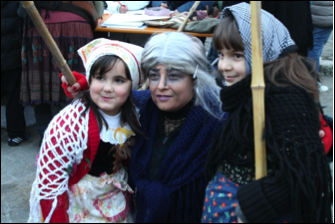
phto2italy

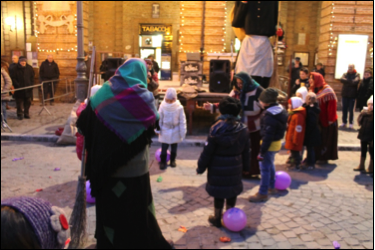
There were many activities: balloon blowing, drawing for the children who created many and varied pictures of Bafana and over it all,  music played. The walk had warmed us and we were all in the party mood as the atmosphere became more and more lively. As well as the games, which had begun for the kids, many of the girls had dressed as Befana,  the witch.

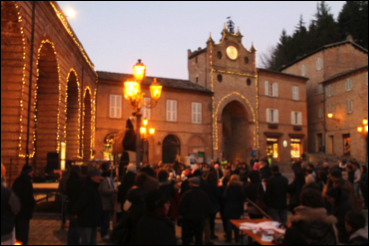
It was a shame our boys were too shy to join at first but as more arrived and joined in the festivities so did they.  Toys and sweets were finally given to all the children, and the band played their music into the night until reluctantly, we headed home.

3italySo what is this festival? In Italy the festival is known as La Befana after the legendary old woman who delivers gifts on her broomstick. She is said to visit children on the eve of January 6 to fill their socks with sweets and presents if they have been good or a lump of coal or dark candy if they have been bad.

4italyThere are many versions. In Milan, authorities set up what they touted as the world’s longest Epiphany stocking – two kilometres long, it was made with thread derived from recycled bottles in the colours of this year’s world’s fair, Milan Expo 2015.

In Venice, a regatta is held in the Grand Canal with rowers dressed up as old women competing for best costume.
In Rome’s Piazza Navona, the holiday is focused on children with activities aimed at kids and the arrival of the three kings on horseback.
In the seafaring port city of Genoa, the Befana arrives on a water scooter, and Befana divers deposit a crown on the sea floor near Gallinara Island. Florence celebrates with a procession down the Arno River by 100 vessels from the city’s rowing club, while in Naples fire fighters organize a feast for children that also taught them about fire safety. In the southern city of Brindisi, the Hellenic Community carries out a traditional blessing of the port.

We look forward to next year’s local Bafana, at which we will meet our friends, and welcome in the New Year.  I do hope that 2015 is a good one for all Frost readers.


Return Ticket To Ireland Please by Wendy Breckon

The year is 1968, September, in the gentle mist on the dark, dark, sea.  There I stand, age fifteen, on the top deck, watching the twinkling lights of Belfast harbour slowly vanishing.  With an Ulster accent, a case crammed full of Irish potato bread and some ‘cracking’ memories, I am on my way to England’s green and pleasant land.

1

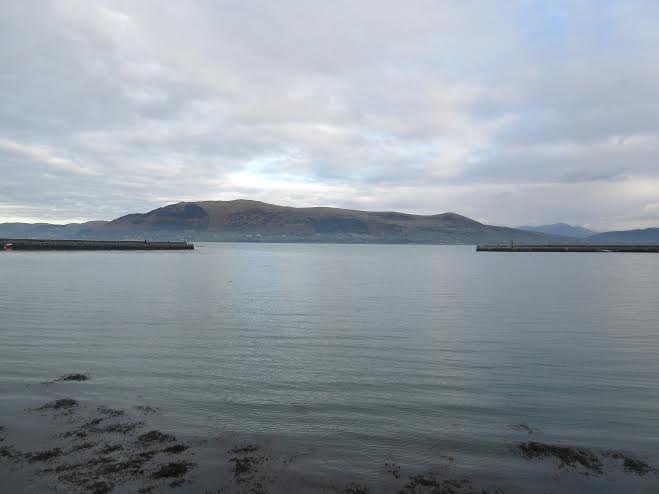
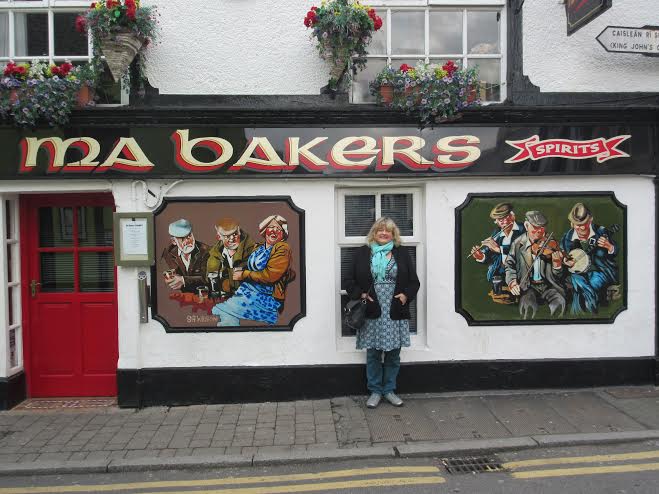
My return visits over the years have been frequent and much documented.  Lingering walks by Loch Neigh, and gazing upon the beautiful Mourne Mountains.  Ambling through Carlingford in search of the perfect Irish coffee.  Following the haunting sound of the fiddle and an Irish voice or two to the nearest pub.

2 3

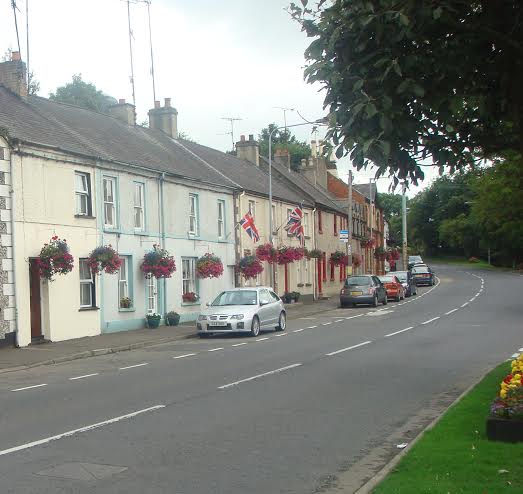
There is one place though that is more than magical.  The small village of my roots,  Scarva, (Scarbhach in Irish), in County Down.  It is placed on the map beside County Armagh and marked by the Newry canal.

4pic

Visitors come by bike or foot, or the humble motor car, to relax by the water, to take refreshments or maybe like me, to people watch with a notebook not too far away.  It’s a delightful way to spend a day.

My grandparents lived in a cottage with a small holding up a nearby lane.  They grappled with mucky pigs, squawking hens, belligerent cows and needy sheep.  Paradise!. Eventually they moved down to the village in the main street minus the livestock and the early hours.  Here their new window on the world gave me many opportunities for writing a story or two., but I missed the early sound of the cockerel and the clanking of the milk churns. though I’m sure they didn’t.

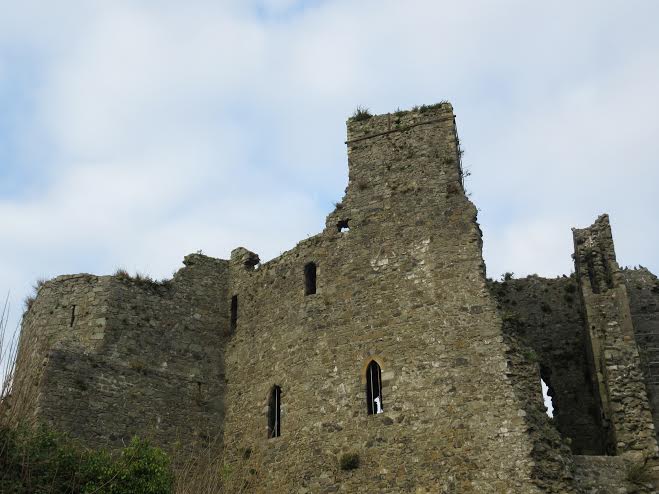
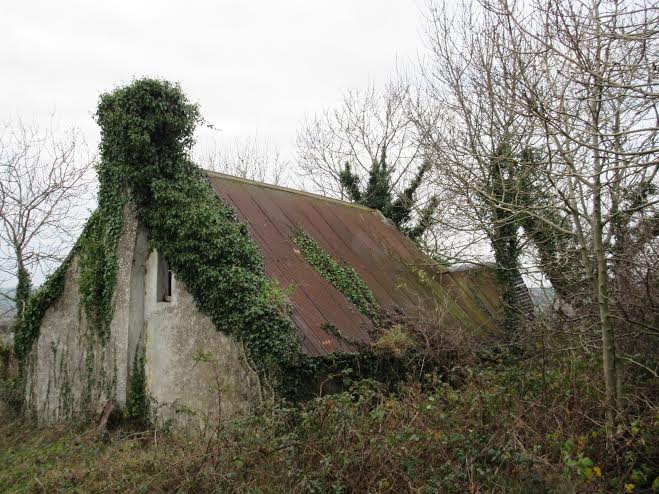
In search of nostalgia, I recently revisited the now tumbled down and derelict Drumilla Cottage where the seeds of my writing first appeared.  There it was … a crumbling reminder of a childhood spent amongst the fields and lanes of the delightful County Down.

5

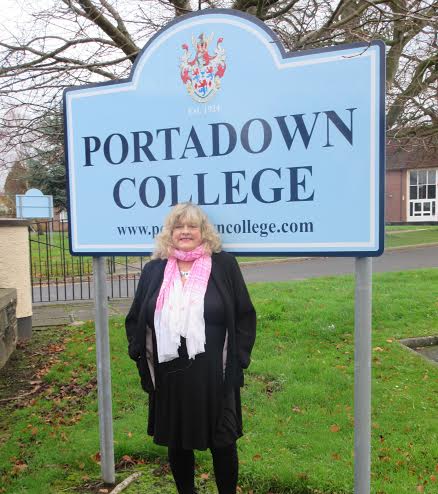
We decided to take the winding road to Portadown, eight miles from Scarva in County Armagh.  This used to be a small market town in the fifties and sixties, where I attended secondary school, Portadown College, until the age of fifteen.

6

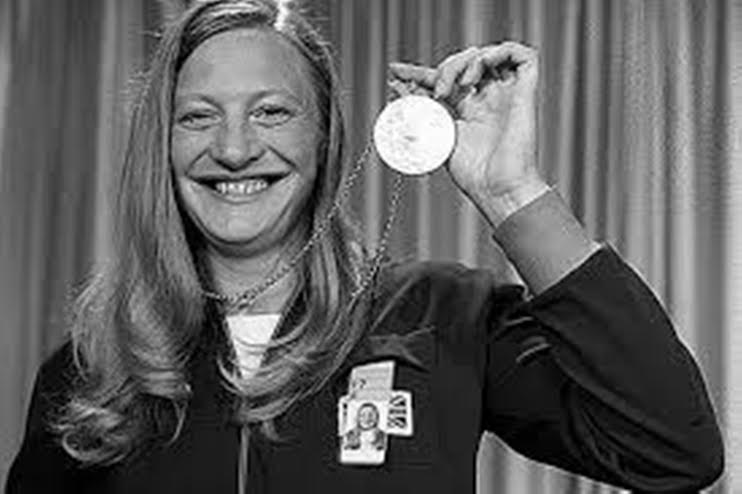
One of the defining moments for me will always be the morning that Mary Peters (our ex Head Girl) hid behind the curtain on the school stage.  Curious?  So were we young first years.  She had recently won a medal for Great Britain and Northern Ireland in the Pentathlon, so how on earth did she have the time to be here?

“Well, I’m sure you have no idea who is behind the curtain children?”  Said our headmaster, mischievously.

“Could it be Jesus Christ sir?” said a brave lad in the front row.

Mary appeared with her warm, friendly grin clutching her medal. Everyone cheered.

7

“Go for what you want in life.  Aim high.  Never give up” she told us with great passion.  We all nodded like a hundred puppy dogs in the back of a vintage camper van.

Later that morning, Mary visited my cookery class to judge a pastry rolling competition.

“Now then class, who can roll the longest piece of pastry for our local champion and there’s a prize …”.

I was off… the class were completely mesmerised.  The long, thin, discoloured snake of pastry touched the ground, sweeping up the fluff at the bottom.

“And the shilling goes to Wendy, it’s a  really good effort.  Well done”.

“But it’s a wee bit dirty miss,” said one girl in a disgruntled manner.

“Colour doesn’t matter dear.  It’s all about the attitude”, said the teacher passing me the shilling.

Mary Peters kissed me on the cheek and I got to hold the shiny medal.

As the car ambles through the winding roads on the way back to the ferry, there was much laughter as I recall this and other moments, to him beside me.  We both agree, not just because I was born there, that Ireland is magical, mystical and magnificent.  If you haven’t been before why not cross over the Irish Sea this year.  Drive to the North or to the South for a short while or even longer.  Just say, “RETURN TICKET TO IRELAND PLEASE”.

8


Lyme From The Outside…By Philippa Brewer

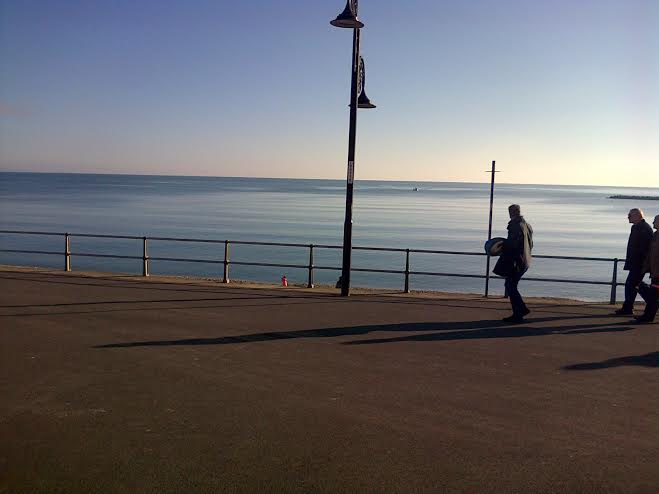
We decided we needed a post Christmas escape to shift the lethargy that settles in between the over indulgence of Christmas and the start of the new year: I suggested Lyme Regis.

pic1

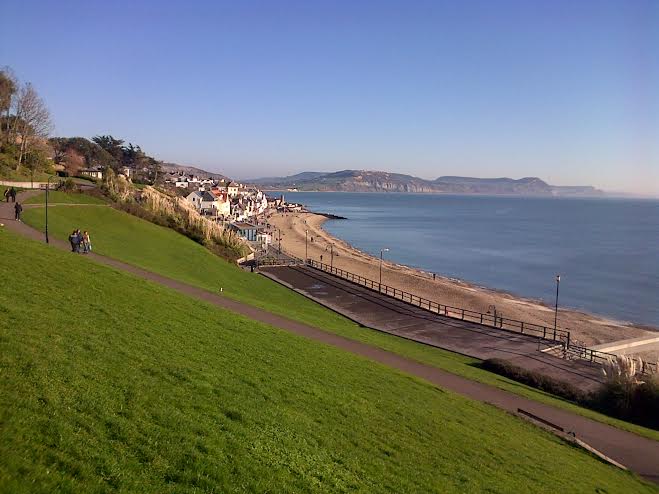
I’ve visited Lyme several times, so I thought I knew what to expect: a beautiful English beach resort, basically unspoilt but with just enough kitsch to keep everyone happy.  If you’ve been to Fowey in Cornwall, Lyme has a similar feel but is closer to London – and has (a key factor where I’m concerned) a good deal more vegetarian food.

I was looking forward to it until I tried to book into a hotel.

There was literally no room at the inn: every guesthouse and hotel in Lyme declared no vacancies loud and clear. I remembered the received wisdom that holiday towns are dead from October till the end of April: clearly this meant that even the guest house owners and hoteliers had shut up for the winter and headed for sunnier climes. Trying to put this to the back of my mind (after all, we could still enjoy ourselves walking on deserted beeches, couldn’t we?), I eventually managed to reserve a room in Illminster, Somereset, some 12 miles inland.

2

So it was that on the 28th December 2014, we headed for the West Country, wondering what would we do in deserted Lyme? And even more importantly, what could we eat?

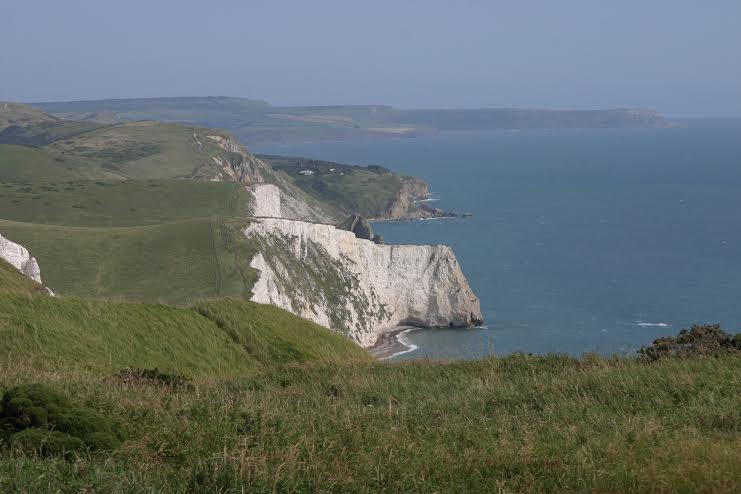
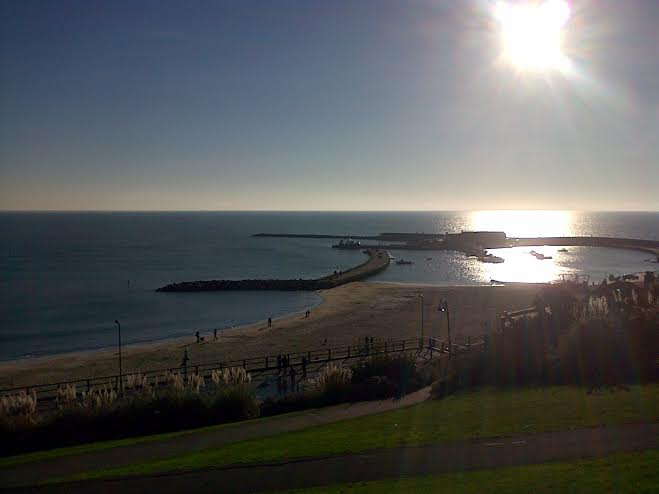
For those not familiar with the town, there are many, many interesting small and medium sized shops, tea houses galore, restaurants, a quaint old cinema, the beautiful cob and beach. We loved Ilminster but nonetheless we headed to Lyme. It was a beautiful day, and to our utter surprise the town was full to bursting and everything was open.

3

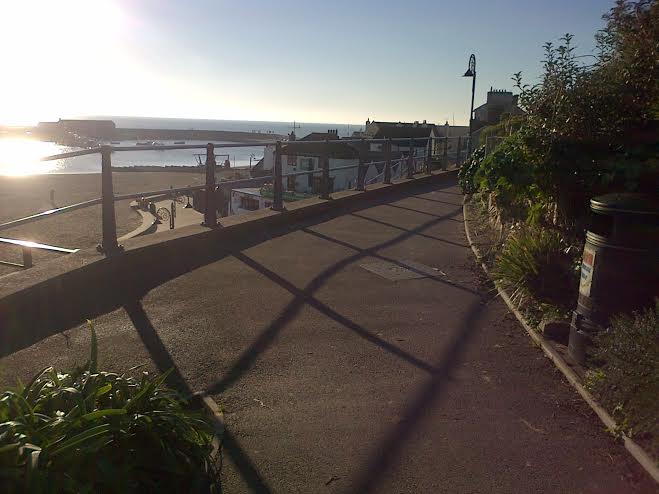
We took our breakfast next morning in the beachfront cafe, sitting outside warmly wrapped up against the sea breeze, but in the sun; at the end of December, in England.

We strolled around the town, walked on the beach. Everywhere was busy, everyone was enjoying the sunshine. But I was still puzzled: how had the businesses known that there would be good weather and that it would be worth their while opening? When we stopped for lunch, I asked our waiter. Apparently, Christmas in Lyme is always lovely and always busy: all the businesses know it and cater accordingly.

4

So now we know. I love living near London most of the time – but every so often a trip to a place like Lyme is a real tonic – I’ll just need to remember to book early next time.  Definitely the place for a winter weekend break.


A House in Italy by Amanda Brake, Frost’s Le Marche Correspondent

At the stroke of midnight, an explosion of fireworks cascaded over the medieval village of Force, in Le March on the east coast of Italy, marking the end of one year and the start of the next. My family and I remained in our house, relaxing and drinking our local wine while we watched the display.

It was the best way for us to enjoy the celebrations this year, because, after a Christmas with lots of friends and relatives, the children were whacked. They loved the skating on the rink put on this year in the town square particularly, so the local bars and restaurants will have to wait for next year, before we join them for their fabulous New Year celebrations.

So what brought me to Italy in the first place?

pic 1 Le Marche

I suppose it was the same as so many other people: the stunning countryside, the wine, the food, the lyrical language, and of course the Mediterranean warmth. Italy is full of history and culture and this is what intrigued me when I first visited the country at the age of eighteen. I was introduced to the Le Marche area, by friends. It was the up and coming place to buy, ‘the new Tuscany it was labeled, but a lot cheaper

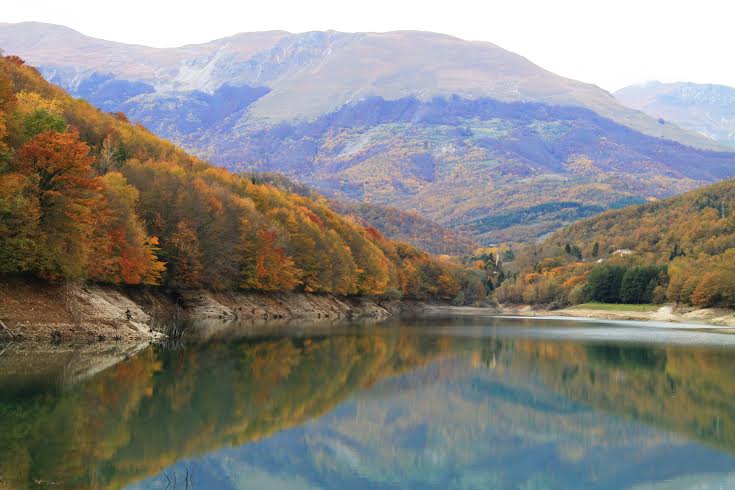
On my first morning in the area, I threw open the slatted shutters of my rental accommodation and the view was more than breathtaking: the mauve coloured mountains stood out like giants in front of me stretching out from the valley. Even to this day, though I live here, and could become careless of its charms, this stunning area never ceases to impress, especially with the changing seasons and weather.

Today, in early new year, we have the magical deep snow of winter contrasting with the deep blue skies, or the tumble of snow clouds, before moving onto the rich greens of the rolling hillsides, in the hazy heat of the summer.

pic 2 Le Marche

I won’t say the twelve years here have not been challenging with Le Marche’s old antiquated ways, which often make us feel that we are living in a world that is closer to the UK fifty or sixty years ago. But of course, that is part of the reason for be being here in the first place.

Things are so different. If a house starts to crumble, a house that has been in the same family for generations, the family just build another next to it.

‘Piano, Piano’ is the common expression meaning ‘slowly, slowly’ everything in good time, which gives you time ‘to smell the roses’. You have to learn a completely different pace, and to remain laid back when the work that needs to be done for you, takes forever.

Here, in Le Marche, they inhabitants grow their own food, and breed their own animals. The small hamlets and villages are full of culture, their individual history not to mention a long line of local families. Each area has its own dialect, which makes learning the language challenging.

pic 3 le marche

Those native to Le Marche are slow to embrace you but if you, in turn, embrace the local environment and activities, you one become part of their community more quickly than you would have thought possible.

So, come, if you are thinking of a new life at the start of 2015. Just remember that you are not living in an ex-pat community. You will need to live as the Le Marche people do. Live, drive (an experience) work and local schooling can all help one to settle

I still struggle to adapt sometimes, but trust me, letting the old ways go and doing things the Italian way instead opens up your life more than you could ever hope.

So, what do we do, here, to earn a living? My boys have taken up most of my time up while my partner has found some building work, some house maintenance, or gardening. Whatever is about reallya little house maintains, gardening whatever is about really. As time has passed and the house has become more together, we have decided to start adventure holidays.

The area is packed with activities: mountain bike tracks, 4×4 off-roading, climbing, horse riding, rafting, beaches. This coming year we are hoping to provide accommodation above and beyond our existing self-catering apartment for back-packers, as the hiking potential in this area is limitless, in addition to our self-catering apartment.

You can see that our life here is a work in progress, but it is such a good life, though a hard working one. Like I always say to our two boys nothing is easy without a little effort.