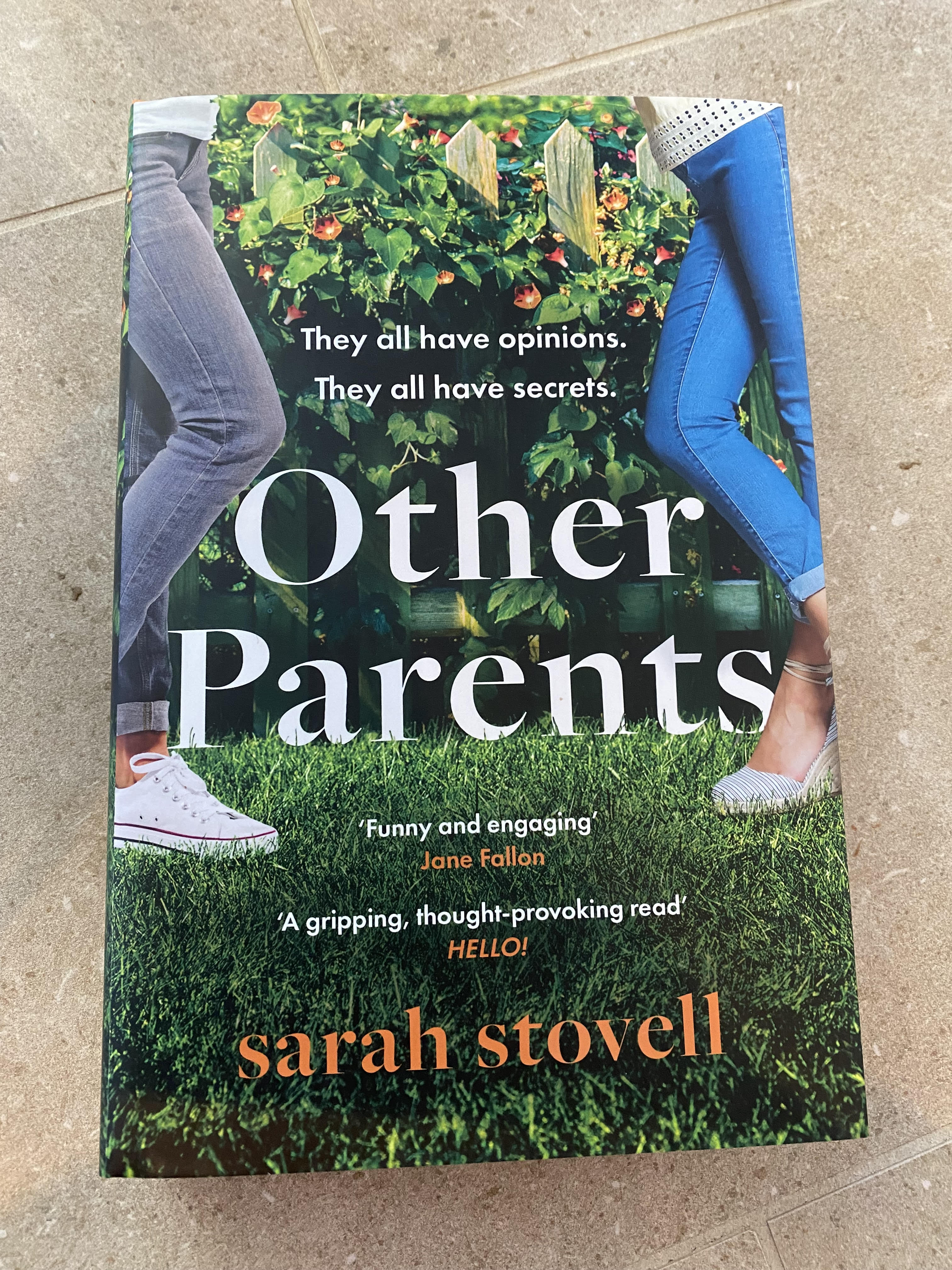
Other Parents by Sarah Stovell Book Review

Some books make you think not only while you are reading them, but also long after you have finished. Other Parents is such a book. Other Parents is a multi-layered book that delves deep into people and their motives. I felt every emotion while reading Other Parents. It is a book that opens your mind to how other people live and what might make them act the way they do.

I found myself both respecting Rachel, while being infuriated with her. I was equally infuriated with Laura, but also felt for her. We live in an unequal society and Sarah Stovell is an outstanding talent who has captured the class disparates in our society and laid them bare. Other Parents is a fascinating novel that I did not want to put down for a moment. It is clever and entertaining. With characters who are vivid and real, and a plot that doesn’t let you go. Loved it.

other parents, sarah stovell,

In a small town like West Burntridge, it should be impossible to keep a secret.

Rachel Saunders knows gossip is the price you pay for a rural lifestyle and outstanding schools. The latest town scandal is her divorce – and the fact that her new girlfriend has moved into the family home.

Laura Spence lives in a poky bedsit on the wrong side of town. She and her son Max don’t really belong, and his violent tantrums are threatening to expose the very thing she’s trying to hide.

When the local school introduces a new inclusive curriculum, Rachel and Laura find themselves on opposite sides of a fearsome debate.

But the problem with having your nose in everyone else’s business is that you often miss what is happening in your own home.

Other Parents is available here.


SUNDAY SCENE: LYNDA EDWARDS ON HER FAVOURITE SCENE FROM FRIENDSHIP ESTATE

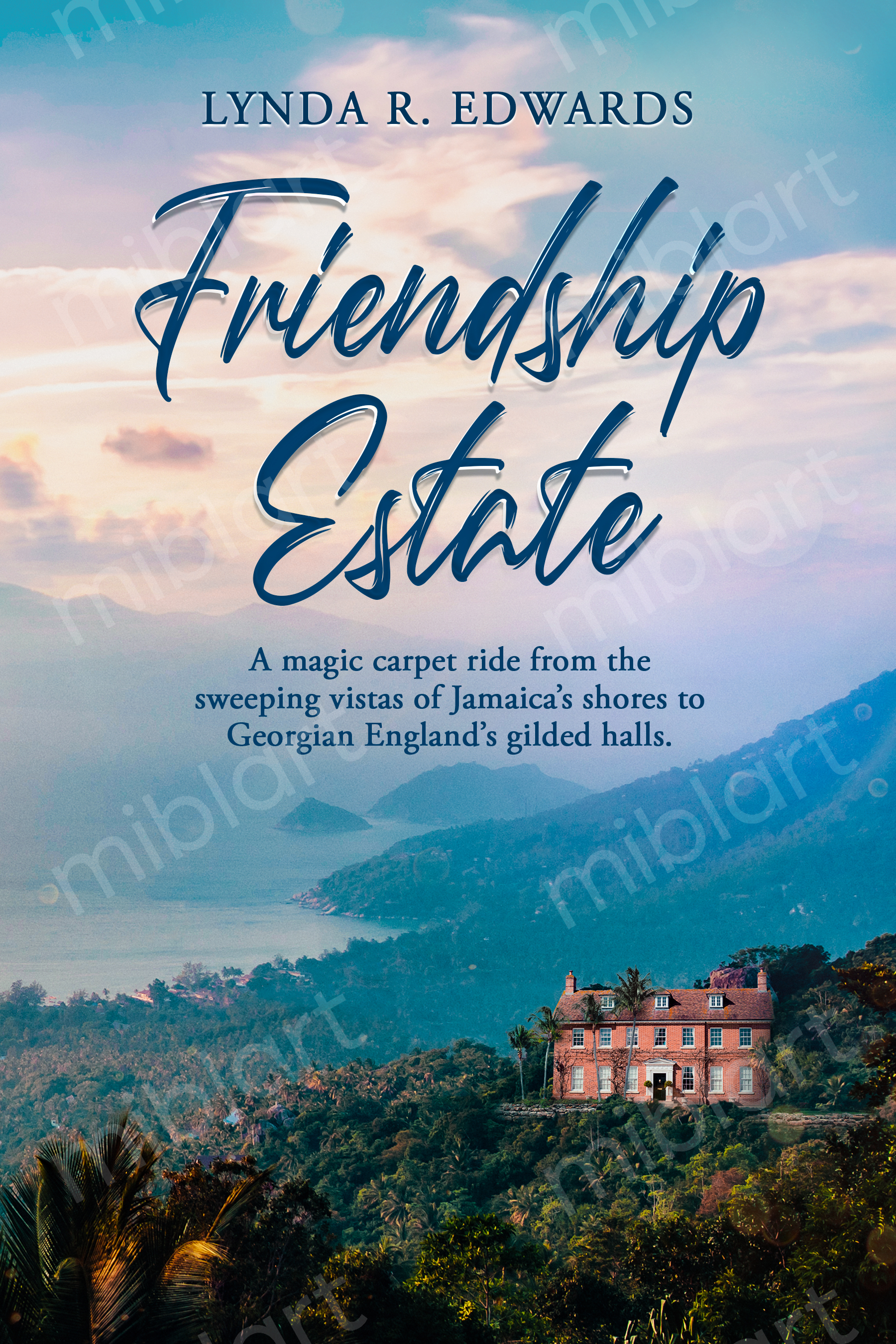
My latest book, Friendship Estate, is set on the island of Jamaica, where I was born and raised.  In the late 1700s and early 1800s, the Caribbean Islands were at a crossroads.  The abolition of slavery was on the horizon.  In the colonies, the white and black races had been mixing for generations.  They had formed a new society with a culture born of oppression, harboring a deep desire to mix freely while charting a new course for themselves.  In Friendship Estate, we witness the intricate romances and elegant customs of a bygone age while meeting a captivating array of characters.

The story is very personal because eight generations of my family are buried on the island.  The story is based on one of many passed down through the generations.  But this one has always intrigued me, causing my imagination to take flight.

I loved writing this scene because I saw the scene unfolding in my mind’s eye.  I envisioned Sabine’s anger and felt her pain as she looked out at the beautiful scene unfolding in front of her, marred by the hatred she felt.  Sabine’s father is dying.  She is hurting and comes across her nemesis Brixton as he is swimming in the sea.

Sabine Holborn stood alone on the hill overlooking the white sand below her.  She watched as the sea turned from turquoise to dark blue.  The wind picked up the waves and crashed them against the shore, matching the anguish in her heart.  Her father was dying.  It was no longer if but when, and the unshed tears made the scene in front of her shimmer.  The loud sobs that racked her body had subsided as she rode to her favorite spot overlooking the endless expanse of the Caribbean Sea.  She loved Mount Sion, but it belonged to that hateful Brixton Dunbarton.

She had known Brixton Dunbarton all her life.  A few years older than she was, she watched as he flirted his way through all the eligible girls on the island.  All except her.  She had listened as her friends prattled on about how handsome he was, his blond hair kissed by the sun, they romanticized.  He was lean with long legs, hardened by years of riding and working his estate.  No one seemed to care that his clothes were last year’s fashions, slightly frayed and worn, or that his shoes were scuffed, and his dress stockings all had runs in them.  He was so beautiful; everyone overlooked his financial shortcomings.  As they grew older, a few girls had whispered of their romantic escapades with him.  He was always polite but never flirted with her and had proposed no romantic assignations.  It hadn’t taken long for her friends to notice.  They did not comment to her face, but she knew her standing with some of them had fallen, all because Brixton Dunbarton did not think she was important enough to flirt with her.  She hated him for it.

She watched as Brixton frolicked in the waves, not a care in the world.  He swam and splashed around, secure in his place in this world.  She did not have that luxury now, and it shook her natural confidence to its core.  She watched Brixton, and her resentment grew.  Why was his hateful father still enjoying his life while hers clung to his? 

Lynda Edwards is a Jamaican writer. To date, she has written two novels, Redemption Songs and her latest release, Friendship Estate.

Find out more about Lynda and her other books at www.lyndaredwards.com

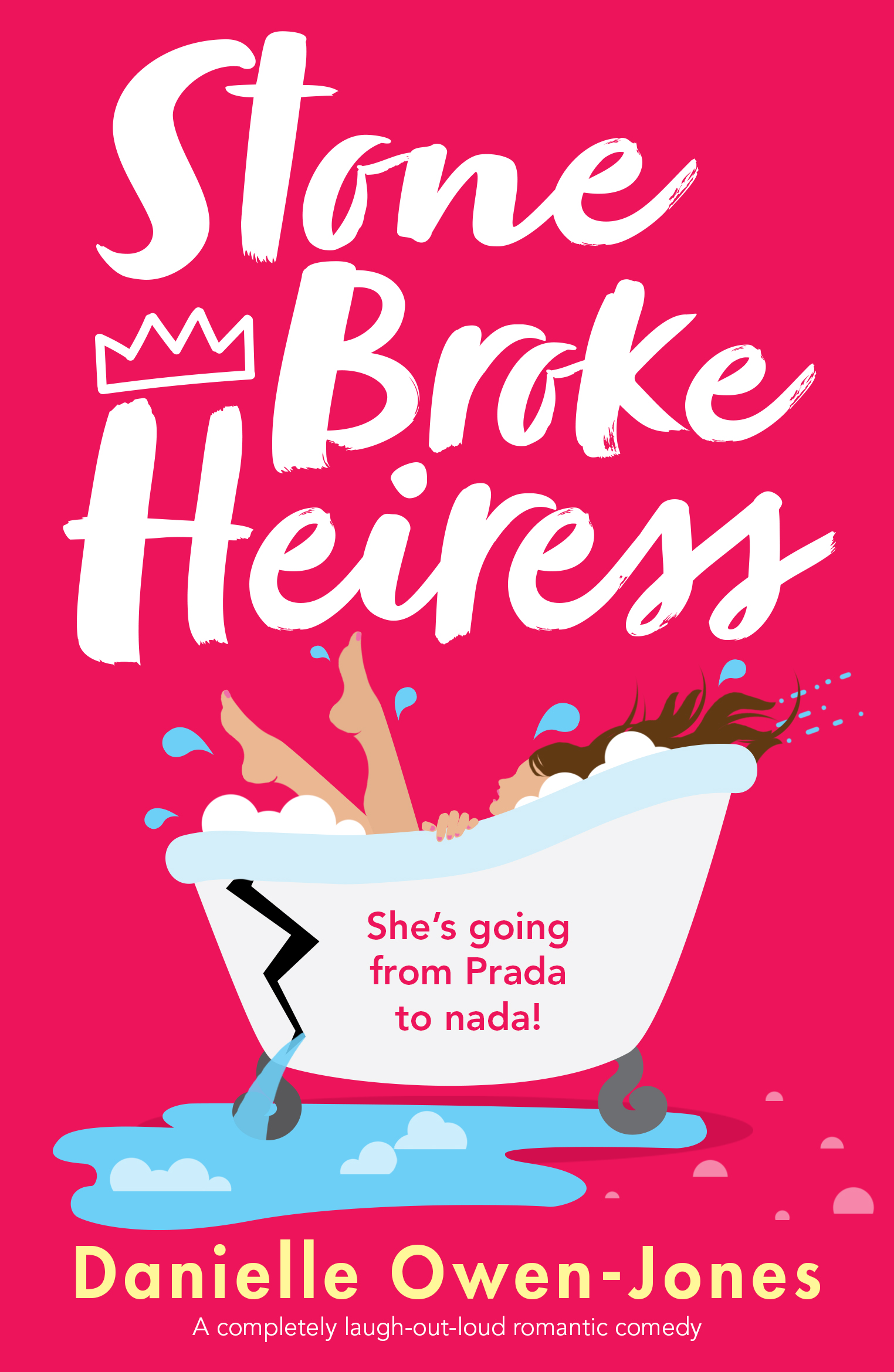
SUNDAY SCENE: DANIELLE OWEN-JONES ON HER FAVOURITE SCENE FROM STONE BROKE HEIRESS

It was as I walked along the tree-lined Princes Boulevard, a leafy avenue in the heart of Toxteth, while the warm sunshine dappled the emerald leaves, that I admitted defeat – I was seeing the area with new, sober eyes and I was ashamed of how fast I was to judge it at first.

The boulevard was a hive of activity on such a beautiful day. Cyclists pulled over from the designated cycle lanes and gulped from fluorescent sports bottles. Visitors stopped to marvel at the art installations and read the plaques that revealed the history of the area. I stood alongside the groups and pored over the amazing heritage. Each plaque explored a different topic – the religious buildings reflecting its multi-faith community, its once thriving nightlife, the history of activism and the legacy of Liverpool’s role as a major port city.

Through my ignorance, all I’d associated Toxteth with was the riots, but here it was, resplendent in its regeneration and the proud community basking in its glory.

An installation at one end of the boulevard – just before the inviting, gold adorned gates of leafy Princes Park – was especially eye-catching, with striking golden text and gilded patterns inscribed in the stone stating: ‘Our Home, Our Life, Our Future’. Would it be my home, my life and my future too?

The freshly laid, pastel grey pavement was decorated with the occasional mosaic showcasing inspirational quotes. I stood above the one featuring words once spoken by Nelson Mandela: ‘The greatest glory in living is not in never falling, but in rising every time we fall.’

I had my answer; Toxteth had given it to me. I turned and headed back to my flat – back home.

My debut novel, Stone Broke Heiress, was originally set in London. It was my agent’s brilliant idea during pre-submission edits to change the location to Liverpool, Toxteth specifically. It sounds like a total cliché, but that really was a lightbulb moment. The new, Northern setting that I knew so well transformed the book in every way. From a pitch perspective, it gave the book an interesting angle for publishers when Clare took it out on sub (it was picked up by Bookouture in a two-book deal). But the setting also affected every aspect of the book and the more I wrote about the city I loved, the more the ideas flowed and the story grew stronger.

There was something else important to consider too. Unfortunately, the first thought that springs to a lot of minds when people hear ‘Toxteth’ is the 1981 riots. When I was researching the area for my book, I knew I had to include a reference to the riots forty years ago, together with the challenging years the area experienced afterwards. However, Toxteth has undergone an exciting period of transformation over recent years and I made a conscious effort to highlight the positive changes when writing those scenes.

A significant development in the area is the £4million, newly renovated Princes Boulevard – a leafy, tree-lined avenue that runs through the centre of Toxteth. The history of the area, both good and bad, is told through installations and information plaques dotted along the stunning boulevard. This example of regeneration is a vital part of Toxteth – combining both its history and its future. That’s why I chose the boulevard as the backdrop to a key scene in my book, when the protagonist, Bella, sees the area through new eyes and regrets how fast she was to judge it based on first impressions.


www.danielleowenjones.com


TWO EVOCATIVE AND INNOVATIVE DUAL TIMELINE ROMANCES FROM ONE MORE CHAPTER

Dual timeline romances based around the First and Second World Wars are tremendously popular, but these two new summer releases from One More Chapter break the mould: Deborah Carr’s moved between WW1 and WW2, and Eva Glyn’s is set in the former Yugoslavia, a theatre of war in the 1940s that is barely mentioned in modern fiction.


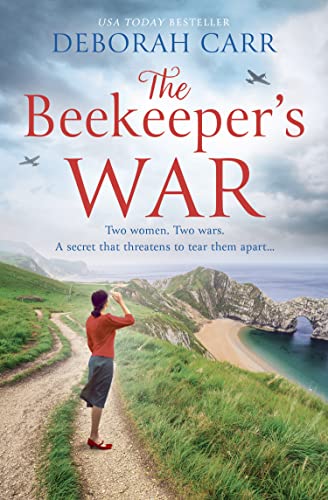
The Beekeeper’s War by Deborah Carr, reviewed by Eva Glyn

An unusual dual timeline in that it is set during the First and Second World Wars, but I enjoyed The Beekeeper’s War all the most because of it.

I have read Deborah Carr books before and she is so skilled at recreating believable and accurate historical settings and characters, without ever beating you over the head with it. The history just flows as the natural backdrop for her story, which is of course how it should be but is nonetheless not easy to achieve.

The novel opens in 1916 when two friends from Jersey, Pru and Jean, are nursing wounded soldiers. Despite herself, Pru begins to fall for a handsome airman Jack who visits Ashbury Manor and is a close friend of the son of the house, Monty, who is a patient there. Jack is still very much on active service and the book opens with a scene of him escaping his German captors a year later, so we know this affair is not going to run smoothly.

In 1940 Pru’s daughter Emma finds herself at Ashbury to stay with her mother’s friends, determined to unlock some secrets from the past. To say more would spoil this story and that I don’t want to do, because it is such an enjoyable read I’d like you to find out for yourself.


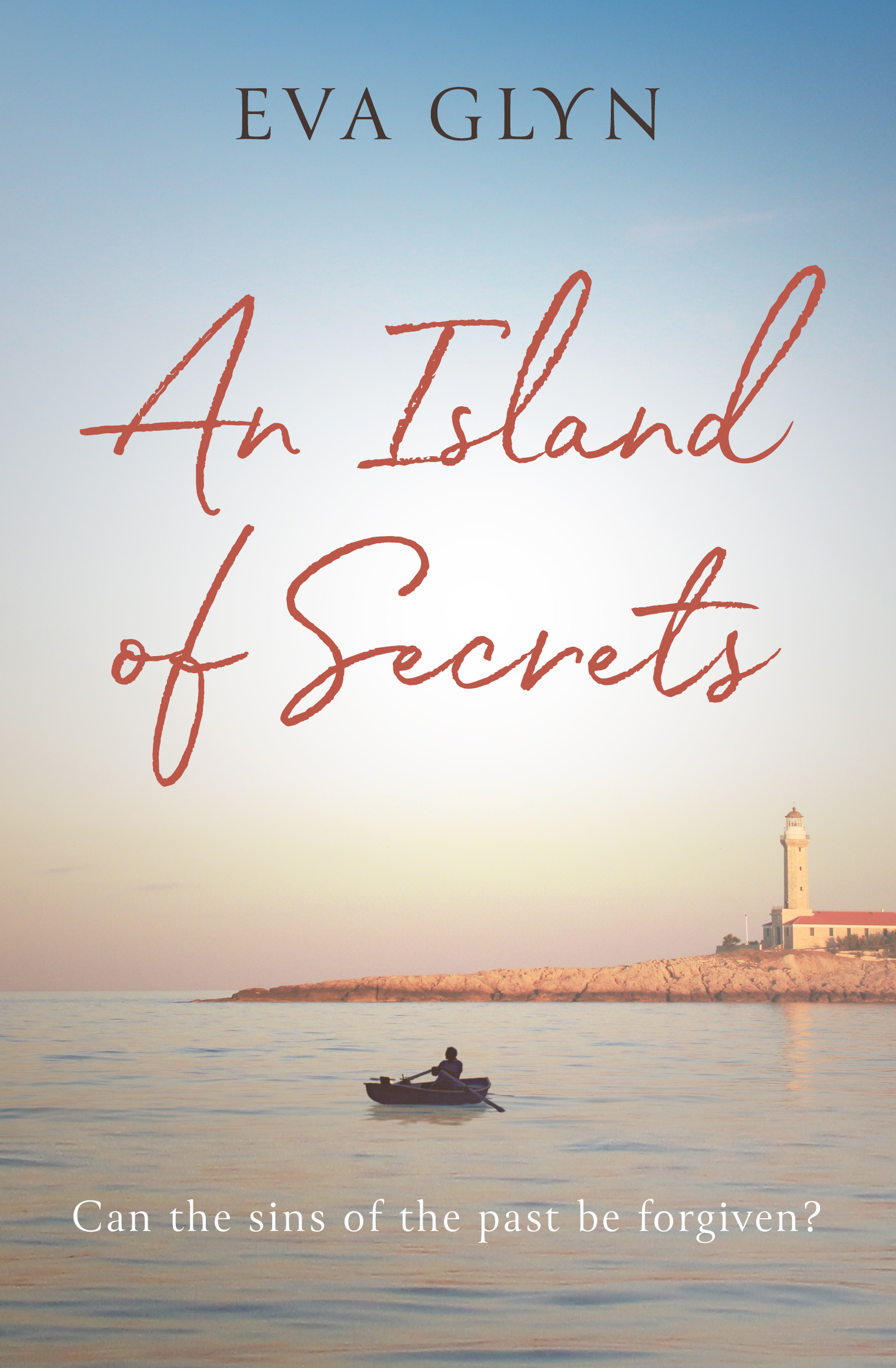
An Island of Secrets by Eva Glyn, reviewed by Kitty Wilson

I raced through this novel over the course of two days and was thoroughly swept into the story of Guy and Ivka, as well as that of Leo and Andrej. The only drawback being that it ended too quickly and I should have savoured it.

It is written as a dual timeline and is seamlessly woven together as Leo goes in search of answers to outstanding questions her elderly grandfather has about his time in Yugoslavia (as it was) in the Second World War. I found the story of Guy as an SOE operative on the isle of Vis truly compelling and Eva Glyn writes with a sensitivity and insight that comes across on every single page. She truly bought home the scenes where Guy witnessed the horrors of war and I was totally pulled into the story as he battled with the choices he had to make.

From the very start of his first meeting with Ivka I was so invested in their relationship, they seemed like a natural good fit and I couldn’t help but respect the courage both of them showed on a daily basis. In fact, all the characters were written in a way that had you aware of their flaws but thoroughly rooting for their success.

But for me the most outstanding element of this fabulous novel was Eva Glyn’s way of conjuring the isle of Vis in the reader’s mind, she had me there seeing and smelling and feeling the scenery and made me feel that I could truly inhabit her characters’ world.

Overall, I found this novel to expertly crafted and cannot recommend it highly enough, it is a deeply impactful and emotionally powerful read and the story of Guy and Ivka in particular will stay with me for a very long time.


Mark Ellis My Writing Process


Q1: I took up writing when I sold my computer services business in the early 2000s, having always had an ambition to be an author. I have so far written 5 books in the DCI Frank Merlin World War 2 detective series. The four published books are Princes Gate (set in January 1940), Stalin’s Gold (September 1940), Merlin At War (June 1941) and A Death In Mayfair (December 1941). Merlin At War was nominated for a CWA Dagger in 2018. My aim is to continue to follow Merlin’s adventures through to the end of the Mark Ellis, author

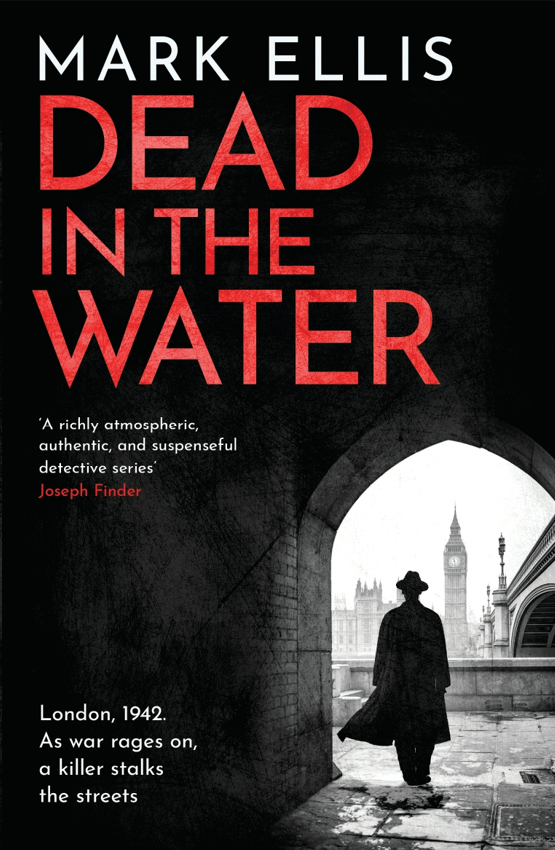
Q2: The book I am promoting now is the 5th in the series, Dead In The Water, which will be published by Hachette (Headline) on May 19th. It is set in August 1942 and revolves around two artistic masterpieces stolen from an Austrian Jewish family before the war and which end up in London with fatal consequences.


Q3: As I am writing a historical series set in a specific period, my principal framework is the timeline. As you can see above, all books are separated in time by 6 to 9 months, so when I finish the latest I know roughly when the next one will be set.When I’m starting work on the new book, I focus intently on the exact time slot of the story. I research that heavily and that process often prompts plot ideas. I am already working on Frank Merlin 6, which I have decided to set in Spring 1943, and plot ideas are beginning to occur to me. When I have roughly formulated what ideas to pursue, I just start writingand see where they take me. I usually do not know who did what until I am about two thirds of the way through the book. I write a first draft straight off without stopping to edit. Then I do many edits before sending the manuscript off to the publishers. I did about 15 edits of Dead In The Water which is about the norm.


Q4: As is clear from above, I am not really a planner. I rather think of myself as a sculptor, except that I don’t have a piece of stone or marble to work with. My first draft is the working material. Once I’ve created that I start chipping away.


Q5: The word count of the new book is approximately 110,000. The word count of my first draft was over 200,000 so you can see a significant editing job was done. My plots tend to be quite complex and I don’t think I could manage anything much shorter but I think 110,000 to 130,000 is a good length for a thriller.


Q6: I am conscious as I write my first draft of teeing up various characters and situations but as I say don’t formally plan a structure in advance. After a while, I tend to find everything comes together in its own way. I seldom make major structural changes when I get down to editing.


Q7: I find writing the first draft very hard work. Also waiting for comments on the submitted manuscript is tough.


Q8: Editing is good fun. Also I love creating a fictional world all of my own and then sharing it with my readers.

Dead In The Water by Mark Ellis is out now in paperback by Headline Accent, £9.99.


CARIADS’ CHOICE: MAY 2022 BOOK REVIEWS

K T Dady’s Lemon Drop Cottage reviewed by Carol Thomas

This is the first book by K T Dady that I have read and, therefore, my first visit to Pepper Bay. As each book in the series is standalone, this didn’t spoil my understanding of the story.

I enjoyed meeting Scott and Dolly and spending time in this close, friendly community as their feelings developed. Dolly’s son, Dexter, is a great character who shone through; it was nice to see a teenage boy represented in a positive, caring way. There is an interesting sub-plot with the local retirement home being under threat and a good cast of secondary characters – I liked Giles, who has a close link to Scott and his secretive past. Having visited the Isle of Wight, I enjoyed the setting. Overall, this is a warm-hearted novel full of kind, caring characters who will make you smile.


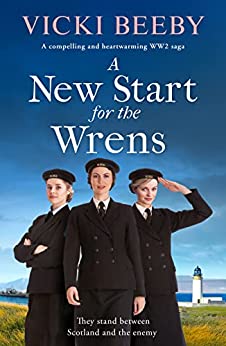
Vicki Beeby’s A New Start for the Wrens reviewed by Morton S Gray

Loved this book! I binge read it as I wanted to know what would happen. The three main female characters Iris, Mary and Sally are all so easy to relate to and care about, as is Rob. Love the glimpses of Orkney and the poignant history. Cottoned on to the baddie early on and kept shouting warnings at my Kindle lol. Loved Vicki Beeby’s Ops Room Girls series and was worried this might not be as good but it is! Can’t wait for the next instalment in this series.


Rosemary Noble’s Sadie’s Wars reviewed by Jessie Cahalin

I have been idle for two days and it is Rosemary Noble’s fault. I travelled from innocence to experience with her character, Sadie.  She had my ear as soon as I walked into this thrilling family saga.  This hard-hitting, realistic document of challenging times deals with: propaganda, inequality, domestic violence and loss. Insight into Australia and England placed me in the centre of the historical periods.

Strategic juxtaposition of Sadie’s life during World War One Australia and World War Two Grimsby is brilliant.  Noble explores how our experiences make us react in the future thus providing depth to Sadie’s character.  Wounded by past troubles, Sadie makes decisions that made me want to sit her down and give her advice.  Tempting questions hang artfully in each chapter of this novel. Noble shows the inequalities between men and woman at the turn of the century and contrasts it with changing attitudes in post Second World War Britain.  Historical events, attitudes and politics are artfully woven into the narrative fabric of the novel. Noble explores love so beautifully in the novel.

An intelligent, powerful and deeply moving novel from Rosemary Noble.


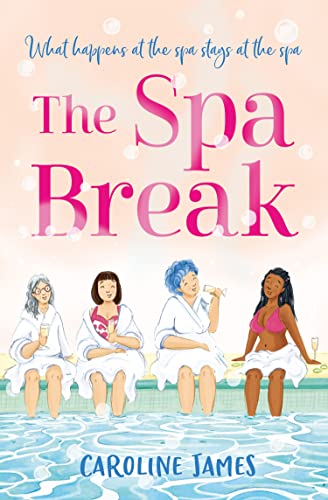
Caroline James’s The Spa Break reviewed by Jane Cable

How marvellous to have a book about four women in their sixties going away on a girls’ weekend. It happens in real life quite a lot (some young people would be amazed to hear), but rarely between the pages of a book, and frankly I’d like more of it.

Caroline James’ characters are brilliant; fully rounded, far from perfect and never, ever, falling into the trap of being stereotyped. Each of the four women has their own story to tell, their own future to grab hold of and change, and it seems that a spa break is the best place to do it.

This is a gorgeously warm, witty book and I would totally recommend it as a feelgood weekend or holiday read.


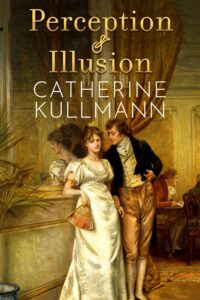
SUNDAY SCENE: CATHERINE KULLMANN ON HER FAVOURITE SCENE FROM PERCEPTION & ILLUSION

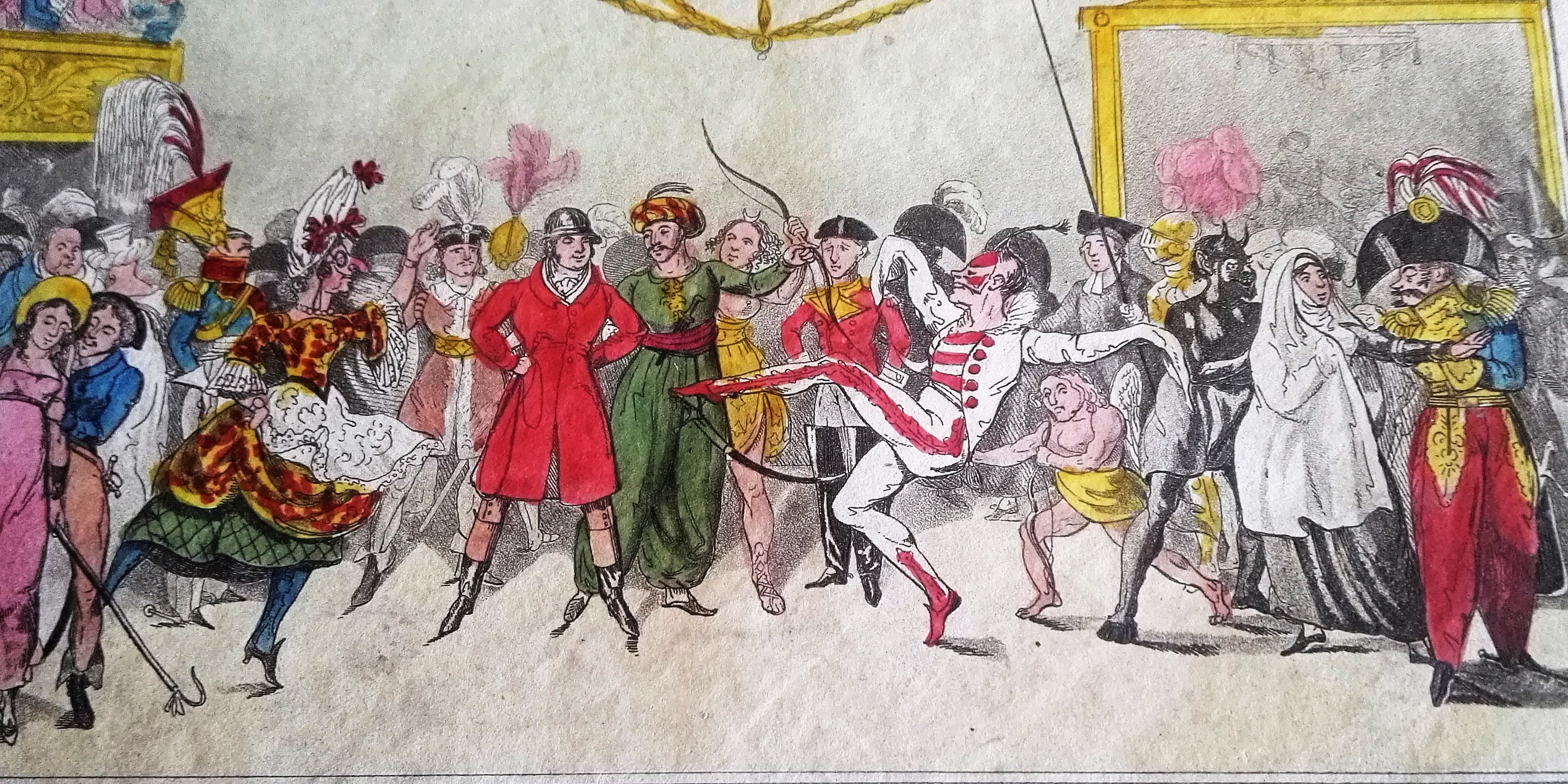
Burlington House, London, 1 July 1814

 We are guests at that famous masquerade given by the members of Watier’s club to the cream of the English nobility and demi-monde in honour of peace between Great Britain and France.

This is a favourite scene of mine for two reasons. First, it is a pivotal scene in my Perception & Illusion. Lallie’s and Hugo’s marriage is in difficulties. Here, they dance together, although he does not know who she is.


Lallie hastily inspected the surrounding gentlemen. There was Luke Fitzmaurice, dressed as Hamlet with a skull-mask on a stick—poor Yorick, she assumed. He would be a good choice, but before she could gather her courage and beckon him to her, a sister Muse called imperiously, “Prince Hamlet,” and he immediately obeyed the summons.

Others had also chosen their partners and, panicking a little, Lallie sought Hugo’s eye. She did not know whether to be pleased or annoyed when a coquettish glance paired with a seductive curve of her finger brought him to her side.

“Clio,” he bowed. “I am honoured.”
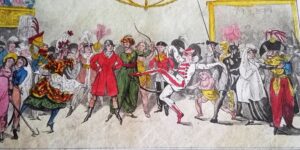
It was different dancing with him when she didn’t have to conceal her reactions. The Grecian gown permitted only the lightest of stays and she shivered when his hands clasped her waist and she had to mirror the position for the jetées of the valse sauteuse. She felt his every movement beneath her fingers and had to resist the temptation to pull him closer to her. To her relief the music slowed and they could move again into more open attitudes, revolving about one another in seductive harmony.

Who was she? Although the fast waltz did not permit much conversation, her voice was tantalisingly familiar but Hugo could not match it to any woman of that height. She danced very lightly and followed his lead so exquisitely that he conjectured she had come from the ballet. If only he could waltz like this with Lallie. Then he felt guilty for thinking of his wife with another woman in his arms. He didn’t know what impulse had made him obey the unspoken invitation. Perhaps it was because the Muses’ entrance had provided a welcome distraction from his cheerless thoughts. He was sick of London, sick and tired of the Season, but dreading the return to Tamm. How would he and Lallie fare once back in its cold halls? If it were not for that cursed duel, he might have had some hope, but she still held herself aloof. He had never thought he would miss that little sigh of hers.

“Ah, Clio,” he said as they took a turn about the room afterwards, “how fortunate we would be if you only recorded our victories, but sadly our defeats and lack of judgement must also be noted in your scrolls.”

“If I were to remember only his victories, man would look continuously to the past, seeking to repeat it. But he may learn from his mistakes, sir, and perhaps even earn forgiveness or, at least, a second chance.”
“To err is human?” he asked seriously.

“Indeed, sir and are we not all called upon to forgive? But see, my sister comes for me.” As she spoke, another Muse took her hand and pulled her from him to disappear into the crowd.

“The carriage is outside if you still wish to leave early,” Thalia whispered.

“I do. And you?”

“I think I’ll stay awhile.”


This brief exchange between Lallie and Thalia is the other reason I love this scene. I simply had to know what happened when Thalia returned to the party. This led to The Murmur of Masks. Although written after Perception & Illusion, it was published first as my debut novel.


www.catherinekullmann.com

The World’s Smallest Publisher Fair Is Coming to London This June

The Uncorrected Independent Publishers’ Fair

Peckham Pelican | Saturday 11 June, 11am-6pm | Free admission

Tangerine Press is delighted to announce the return of The Uncorrected Independent Publishers’ Fair (TUIPF), the world’s smallest publisher fair, showcasing a selected number of independent presses from across the UK. The fifth Uncorrected Independent Publishers’ Fair will take place on 11 June 2022 at Peckham Pelican, as part of the Camberwell Arts Festival.

Featuring seven of the most exciting and innovative indie publishers operating in the UK, the line-up features the following presses: flipped eye publishing (powerful poetry, fiction and prose in affordable volumes), Les Fugitives(contemporary literary fiction & non-fiction translated from the French), Prototype (fiction, poetry and interdisciplinary projects), Repeater Books (radical books for a wide readership), Rough Trade Books (sister to the pioneering independent record label), Strange Attractor (celebrating unpopular culture) and Tangerine Press.


Taking place at the café and art space the Peckham Pelican – an open, friendly bar serving good quality beers, ciders, wine, coffee and food available all day – TUIPF is free to attend and open to all. This unique literary feast caters for all genres and needs: prose, poetry, fiction and photography books will all be on sale, with special event prices on paperbacks, hardback limited editions, artist books, broadsides, screen-prints and letterpress gems.


In addition to book sales and general merriment, TUIPF is proud to present a line-up of indie entertainment: live readings by authors published by the seven indie publishers will start from 2pm, including Erica Van Horn (Les Fugitives), Astrid Alben (Prototype) and Arianna Reiche (Tangerine Press). From 4pm, the special guest Unexplained Podcast, the popular story-based podcast in which host and creator Richard MacLean Smith explores a different unexplained mystery each week, will perform a live reading of their episode “Hexham Heads”, examining strange events in 1970s Northumberland. From 4.30pm, there will be an acoustic set by the alternative indie UK-based band Lilies in by Brain.


Michael Curran, Founder of Tangerine Press, said: “It’s wonderful to be back at the Peckham Pelican with The Uncorrected Independent Publishers’ Fair for the first time since 2019. We have seven of the best indie presses in the country all under one roof in relaxed surroundings. It isn’t a stuffy hall! You can order a beer, chill out and listen the readings from authors and poets representing each of the publishers. Then perhaps sit up and be drawn into a rare live performance of the Unexplained podcast. Finally round it off with an acoustic set by promising indie newcomers Lilies in my Brain. All the while you can browse at your leisure through the stunning selection of books on sale, at special event prices. And it’s a free event!”


Find out more about The Uncorrected Independent Publishers’ Fair here, and for the latest updates follow #TUIPF22 and @TangerinePress


Event details:


The Uncorrected Independent Publishers’ Fair


Date:               Saturday 11 June, 11am – 6pm

Venue:             Peckham Pelican, 92 Peckham Rd SE15

Tickets:           Free

Social:             #TUIPF  |  TW: @TangerinePress  |  IG: @Tangerine_Press

Website:         https://thetangerinepress.com/TUIPF/