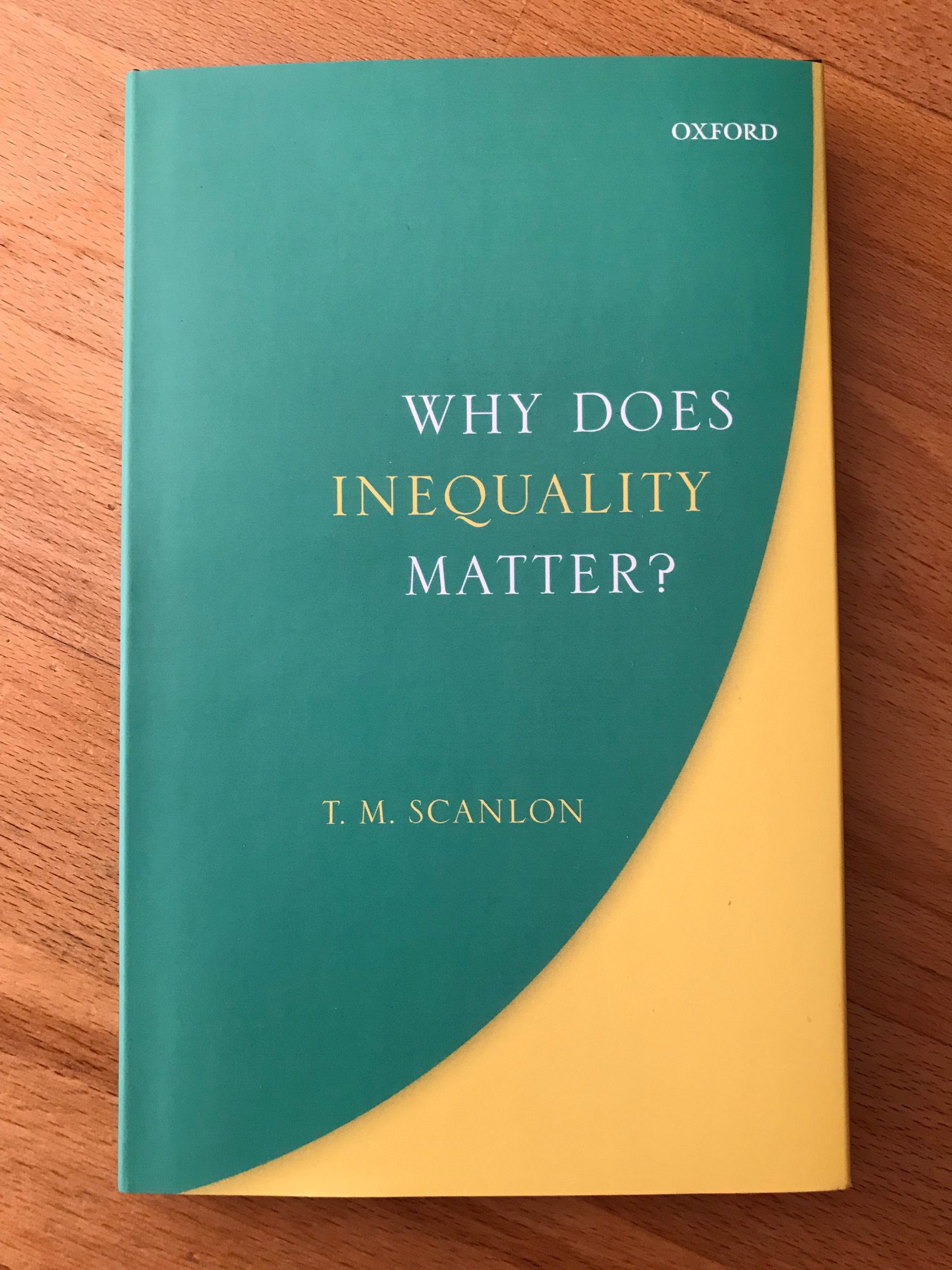
Why Does Inequality Matter? By T. M. Scanlon Book Review

Inequality is widely regarded as morally objectionable: T. M. Scanlon investigates why it matters to us. Demands for greater equality can seem puzzling, because it can be unclear what reason people have for objecting to the difference between what they have and what others have, as opposed simply to wanting to be better off. This book examines six such reasons. Inequality can be objectionable because it arises from a failure of some agent to give equal concern to the interests of different parties to whom it is obligated to provide some good. It can be objectionable because it involves or gives rise to objectionable inequalities in status. It can be objectionable because it gives the rich unacceptable forms of control over the lives of those who have less.

It can be objectionable because it interferes with the procedural fairness of economic institutions, or because it deprives some people of substantive opportunity to take part in those institutions. Inequality can be objectionable because it interferes with the fairness of political institutions. Finally, inequality in wealth and income can be objectionable because it is unfair: the institutional mechanisms that produce it cannot be justified in the relevant way. Scanlon’s aims is to provide a moral anatomy of these six reasons, and the ideas of equality that they involve. He also examines objections to the pursuit of equality on the ground that it involves objectionable interference with individual liberty, and argues that ideas of desert do not provide a basis either for justifying significant economic inequality or for objecting to it.

Why Does Inequality Matter? is an important book which asks the right questions. It is intelligent without being condescending and full of facts while still being entertaining.

Why Does Inequality Matter? By T. M. Scanlon is available here.
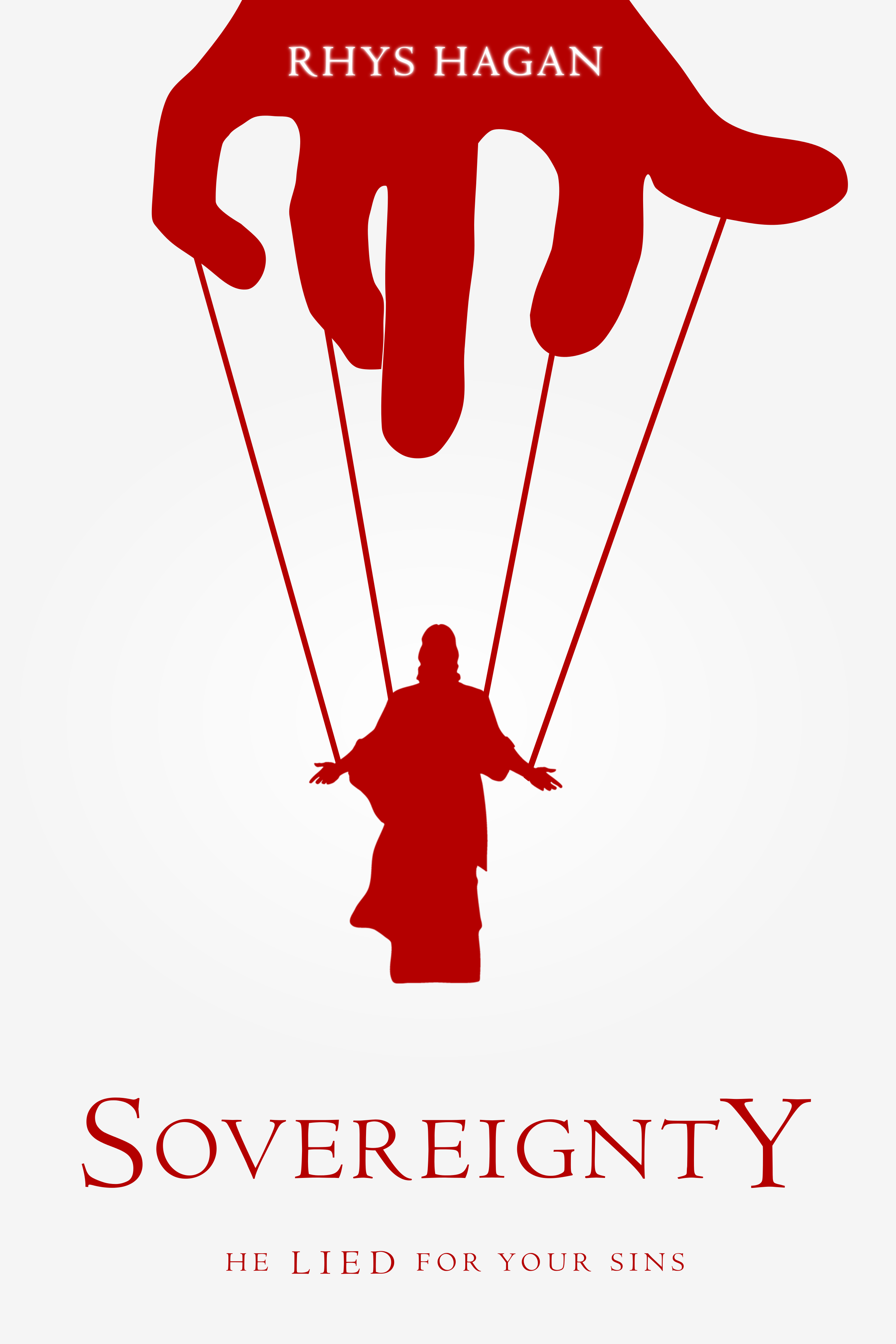
REBORN SURVIVOR: WHAT SIX YEARS IN A CHRISTIAN CULT TAUGHT ME

Rhys Hagan was drawn into an alleged Christian cult which left him broke and alienated from friends and family. He finally cut ties and rebuilt his life after surviving six “long years of hell” but the emotional scars remain. Here, he explains how it feels to be brainwashed and warns of the destruction that cults can cause. His new book, Sovereignty, is out now.

When most people hear the word cult their minds’ probably jump to a scene from a movie of hooded figures chanting around a cauldron, not a small Baptist church with singing and a potluck. While that first scene would most definitely depict a cult, the second can be just as likely a culprit. Don’t get me wrong, there are plenty of community churches which provide a support network that’s healthy and beneficial for all, but there are those—tucked away in a remote part of town—masquerading as a harmless, almost apathetic congregation which dismiss the wellbeing of its members for the sake of power and wealth.

Only a few years ago I was a member and youth leader in one such church, but once my family and I witnessed the leader physically attack a small boy, we were forced to confront the nature of what we’d become a part of. In the coming years, the rehabilitation I underwent set me on a path of critical thought and independent living which has resulting in me writing my novel, Sovereignty.

While I managed to fit my most valuable philosophies into my novel, I could write volumes on the lessons I took away from my time in the church, but they all have a common theme. It’s that theme I’d like to share with you now. And it’s a tale as old as time, or at least as old as John Dalberg-Acton: Power corrupts.

To have power over your own life is self-control. To have power over another’s is oppression. Now, I’m not saying you should go to your boss and tell them to stick their authority up their holiest of holies; after all, they don’t have power over your life, only your work. No, the power I’m talking about is the power for one person to dictate what another will believe. The power to insist a child stop associating with their parent or for a parent to kick their child to the streets for not conforming to the leader’s demands. The power to make a single statement and say it means one thing while also meaning the opposite (a principle called ‘doublethink’ by George Orwell in 1984).

When someone establishes this kind of control, or even desires to, a group crosses the line from being a community gathering to a cult. How do you tell? In a fair community anyone can challenge anything and anyone if they choose without formal consequence. In a cult, any criticism of the leader(s) or the ideals they uphold ends in reprisal or excommunication.

I know, it sounds confusing, as if I’m suggesting you be involved in your community while being sceptical of everyone in it. But, like monitoring what you eat, it’s important to have balance. A healthy level of scepticism goes a long way and, if you’re ever unsure about whether or not someone in your circle is healthy or radical, just remember what the bible says, “Judge a tree by its fruit.”

Sovereignty by Rhys Hagan is out now in print and as an eBook priced £11.97 and £4.79. It is available from Amazon . For more information about Rhys’s story, go to www.rhyshagan.com/


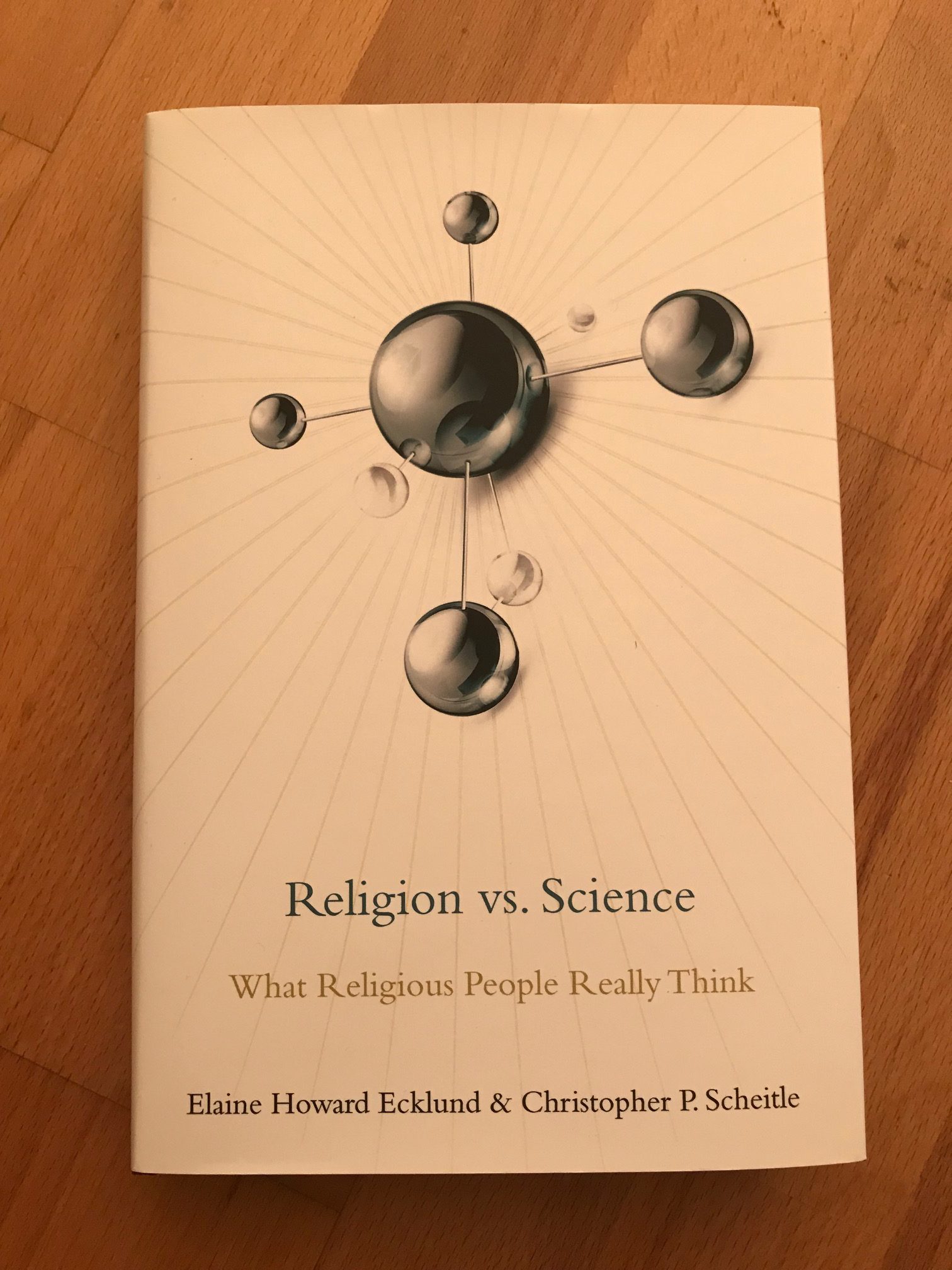
Religion vs. Science: What Religious People Really Think

At the end of a five-year journey to find out what religious Americans think about science, Ecklund and Scheitle emerge with the real story of the relationship between science and religion in American culture. Based on the most comprehensive survey ever done-representing a range of religious traditions and faith positions-Religion vs. Science is a story that is more nuanced and complex than the media and pundits would lead us to believe.

The way religious Americans approach science is shaped by two fundamental questions: What does science mean for the existence and activity of God? What does science mean for the sacredness of humanity? How these questions play out as individual believers think about science both challenges stereotypes and highlights the real tensions between religion and science. Ecklund and Scheitle interrogate the widespread myths that religious people dislike science and scientists and deny scientific theories.

Religion vs. Science is a definitive statement on a timely, popular subject. Rather than a highly conceptual approach to historical debates, philosophies, or personal opinions, Ecklund and Scheitle give readers a facts-on-the-ground, empirical look at what religious Americans really understand and think about science.

Religion and science have always had an uneasy relationship. In fact, there are times when the two have been at war. But the two can coincide. This book is a myth-busting, highly accessible and well-written book. It is US centric but still very interesting. A fascinating read. 

Religion vs. Science: What Religious People Really Think is available here.


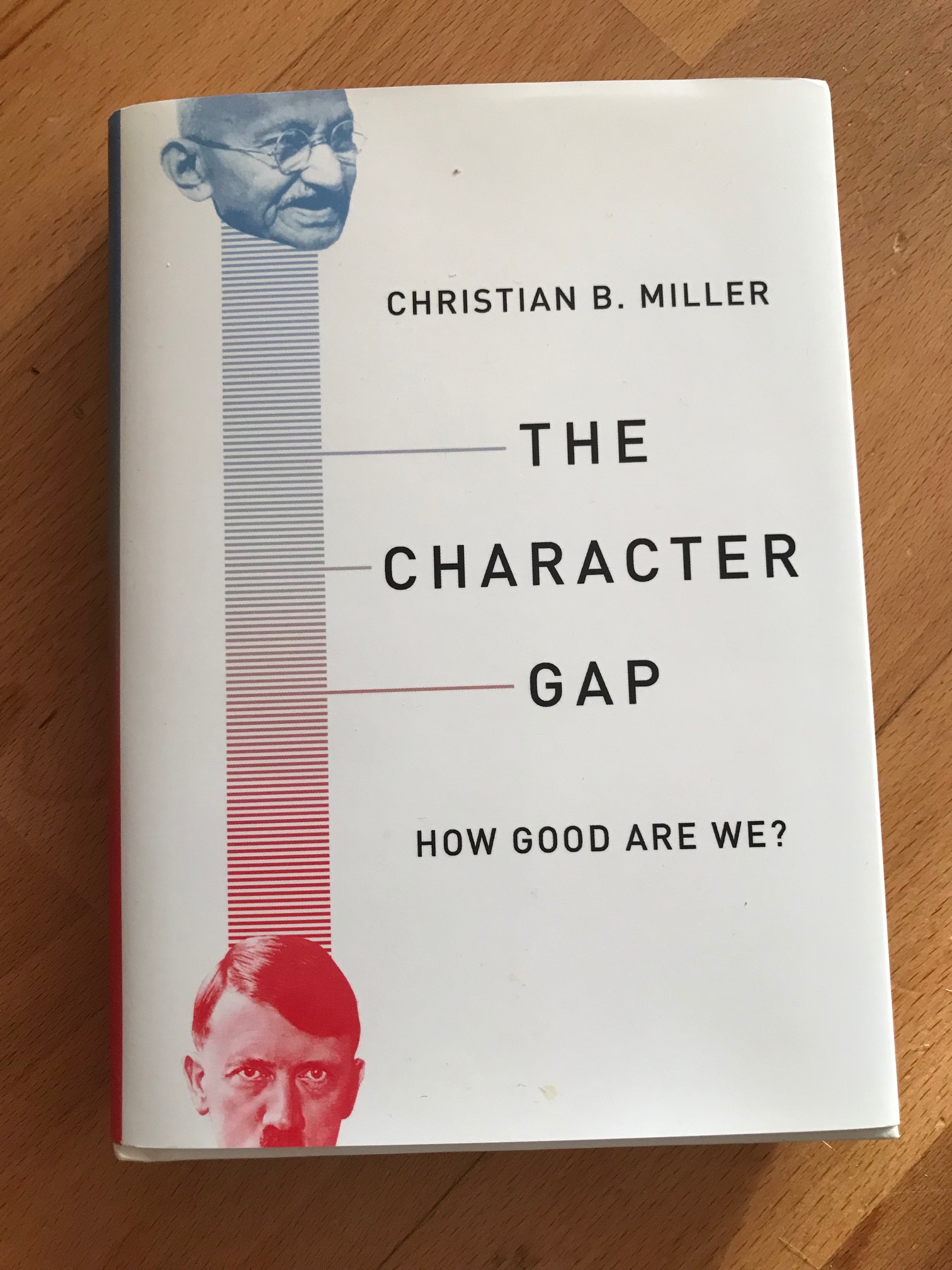
The Character Gap: How Good Are We?

how good are we. character We like to think of ourselves, our friends, and our families as decent people. We may not be saints, but we are still honest, relatively kind, and mostly trustworthy. Miller argues here that we are badly mistaken in thinking this. Hundreds of recent studies in psychology tell a different story: that we all have serious character flaws that prevent us from being as good as we think we are – and that we do not even recognize that these flaws exist. But neither are most of us cruel or dishonest. Instead, Miller argues, we are a mixed bag. On the one hand, most of us in a group of bystanders will do nothing as someone cries out for help in an emergency. Yet it is also true that there will be many times when we will selflessly come to the aid of a complete stranger – and resist the urge to lie, cheat, or steal even if we could get away with it. Much depends on cues in our social environment. Miller uses this recent psychological literature to explain what the notion of “character” really means today, and how we can use this new understanding to develop a character better in sync with the kind of people we want to be.

I really loved this book. It is accessible and it makes you think. It engages and entertains. It tells you what character is and lets you know how you can cultivate it. This book is a must read. Full of facts that will stay with you. It is well researched and the author really knows his stuff. Brilliant. 

The Character Gap: How Good Are We?  by Christian B. Miller is available here.

Behind the Lawrence Legend: The Forgotten Few Who Shaped the Arab Revolt Book Review

T. E. Lawrence became world-famous as ‘Lawrence of Arabia’, after helping Sherif Hussein of Mecca gain independence from Turkey during the Arab Revolt of 1916-18. His achievements, however, would have been impossible without the unsung efforts of a forgotten band of fellow officers and spies. This groundbreaking account by Philip Walker interweaves the compelling stories of Colonel Cyril Wilson and a colourful supporting cast with the narrative of Lawrence and the desert campaign. These men’s lost tales provide a remarkable and fresh perspective on Lawrence and the Arab Revolt.

While Lawrence and others blew up trains in the desert, Wilson and his men carried out their shadowy intelligence and diplomatic work. His deputies rooted out anti-British jihadists who were trying to sabotage the revolt. Meanwhile, Lieutenant Lionel Gray, a cipher officer, provided a gateway into unknown aspects of the revolt through his previously unpublished photographs and eyewitness writings. Wilson’s crucial influence underpinned all these missions and steadied the revolt on a number of occasions when it could have collapsed. Without Wilson and his circle there would have been no ‘Lawrence of Arabia’.

Yet Wilson’s band mostly fell through the cracks of history into obscurity. “Behind the Lawrence Legend” reveals their vital impact and puts Lawrence’s efforts into context, thus helping to set the record straight for one of the most beguiling and iconic characters of the twentieth century.

Philip Walker is an historian and a retired archaeologist who spent many years working for English Heritage. He has travelled in Libya, Palestine, Morocco, Xinjiang (the Muslim far west of China), and other parts of Central Asia. He lives in Cambridge and this is his first book.

This is an enlightening and riveting read. Fascinating and fun. 

Behind the Lawrence Legend: The Forgotten Few Who Shaped the Arab Revolt is available here.


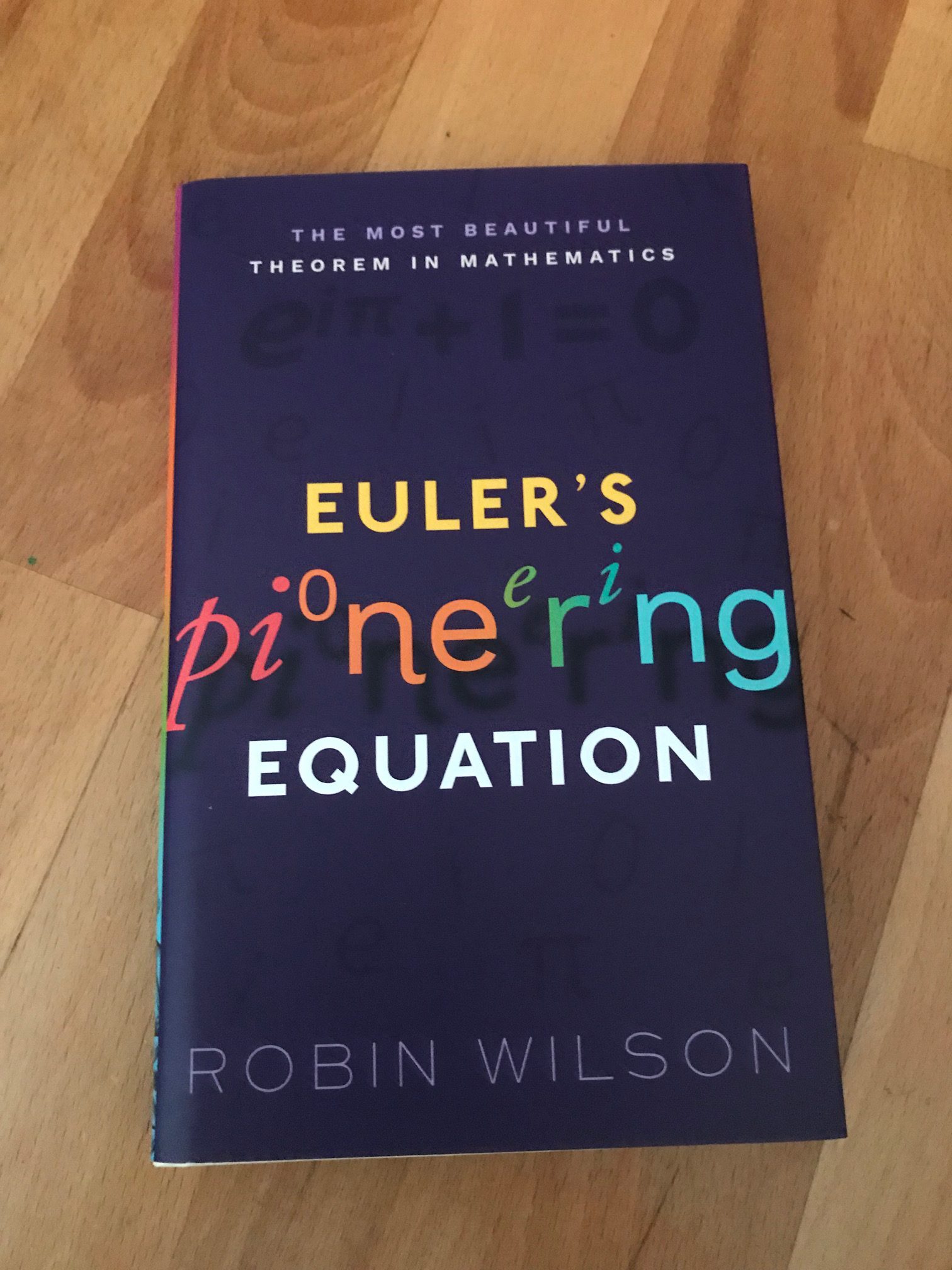
Euler’s Pioneering Equation: The most beautiful theorem in mathematics

In 1988 The Mathematical Intelligencer, a quarterly mathematics journal, carried out a poll to find the most beautiful theorem in mathematics. Twenty-four theorems were listed and readers were invited to award each a ‘score for beauty’. While there were many worthy competitors, the winner was ‘Euler’s equation’. In 2004 Physics World carried out a similar poll of ‘greatest equations’, and found that among physicists Euler’s mathematical result came second only to Maxwell’s equations. The Stanford mathematician Keith Devlin reflected the feelings of many in describing it as “like a Shakespearian sonnet that captures the very essence of love, or a painting which brings out the beauty of the human form that is far more than just skin deep, Euler’s equation reaches down into the very depths of existence”.

What is it that makes Euler’s identity, e]iPi + 1 = 0, so special?

In Euler’s Pioneering Equation Robin Wilson shows how this simple, elegant, and profound formula links together perhaps the five most important numbers in mathematics, each associated with a story in themselves: the number 1, the basis of our counting system; the concept of zero, which was a major development in mathematics, and opened up the idea of negative numbers; π an irrational number, the basis for the measurement of circles; the exponential e, associated with exponential growth and logarithms; and the imaginary number i, the square root of -1, the basis of complex numbers. Following a chapter on each of the elements, Robin Wilson discusses how the startling relationship between them was established, including the several near misses to the discovery of the formula.

A beautiful book which is a love letter to Euler’s Pioneering Equation. The book is not for beginners but if you have a love of maths this is a well-written and imaginative book. 

Euler’s Pioneering Equation: The most beautiful theorem in mathematics is available here.


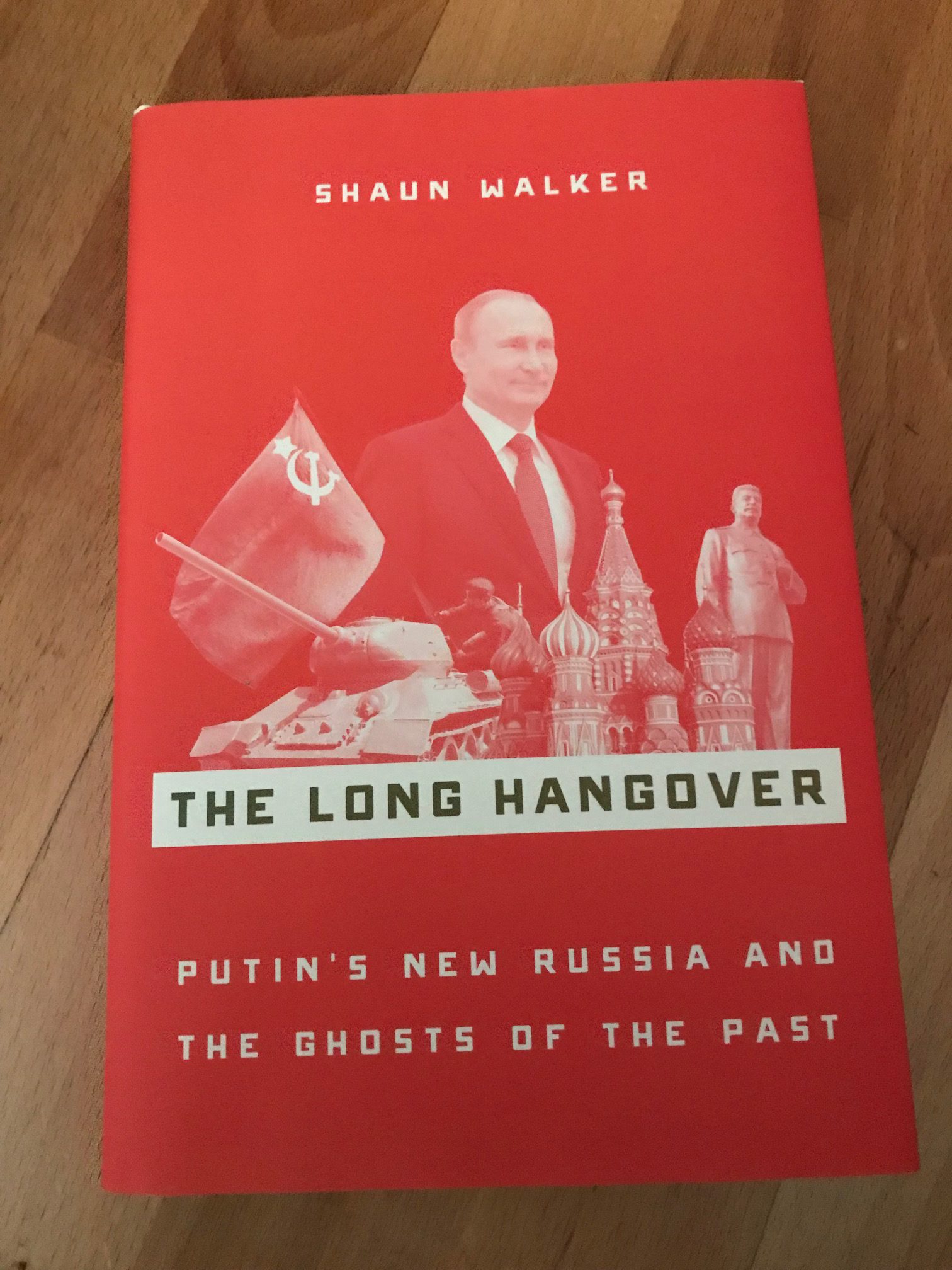
The Long Hangover: Putin’s New Russia and the Ghosts of the Past

In The Long Hangover, Shaun Walker provides a deeply reported, bottom-up explanation of Russia’s resurgence under Putin. By cleverly exploiting the memory of the Soviet victory over fascism in World War II, Putin’s regime has made ordinary Russians feel that their country is great again.

Shaun Walker provides new insight into contemporary Russia and its search for a new identity, telling the story through the country’s troubled relationship with its Soviet past. Walker not only explains Vladimir Putin’s goals and the government’s official manipulations of history, but also focuses on ordinary Russians and their motivations. He charts how Putin raised victory in World War II to the status of a national founding myth in the search for a unifying force to heal a divided country, and shows how dangerous the ramifications of this have been.

The book explores why Russia, unlike Germany, has failed to come to terms with the darkest pages of its past: Stalin’s purges, the Gulag, and the war deportations. The narrative roams from the corridors of the Kremlin to the wilds of the Gulags and the trenches of East Ukraine. It puts the annexation of Crimea and the newly assertive Russia in the context of the delayed fallout of the Soviet collapse.

The Long Hangover is a book about a lost generation: the millions of Russians who lost their country and the subsequent attempts to restore to them a sense of purpose. Packed with analysis but told mainly through vibrant reportage, it is a thoughtful exploration of the legacy of the Soviet collapse and how it has affected life in Russia and Putin’s policies.

This is a brilliant and exhaustive book which tells you all you need to know about Russia and Putin. History with heart.
 

The Long Hangover: Putin’s New Russia and the Ghosts of the Past is available here.

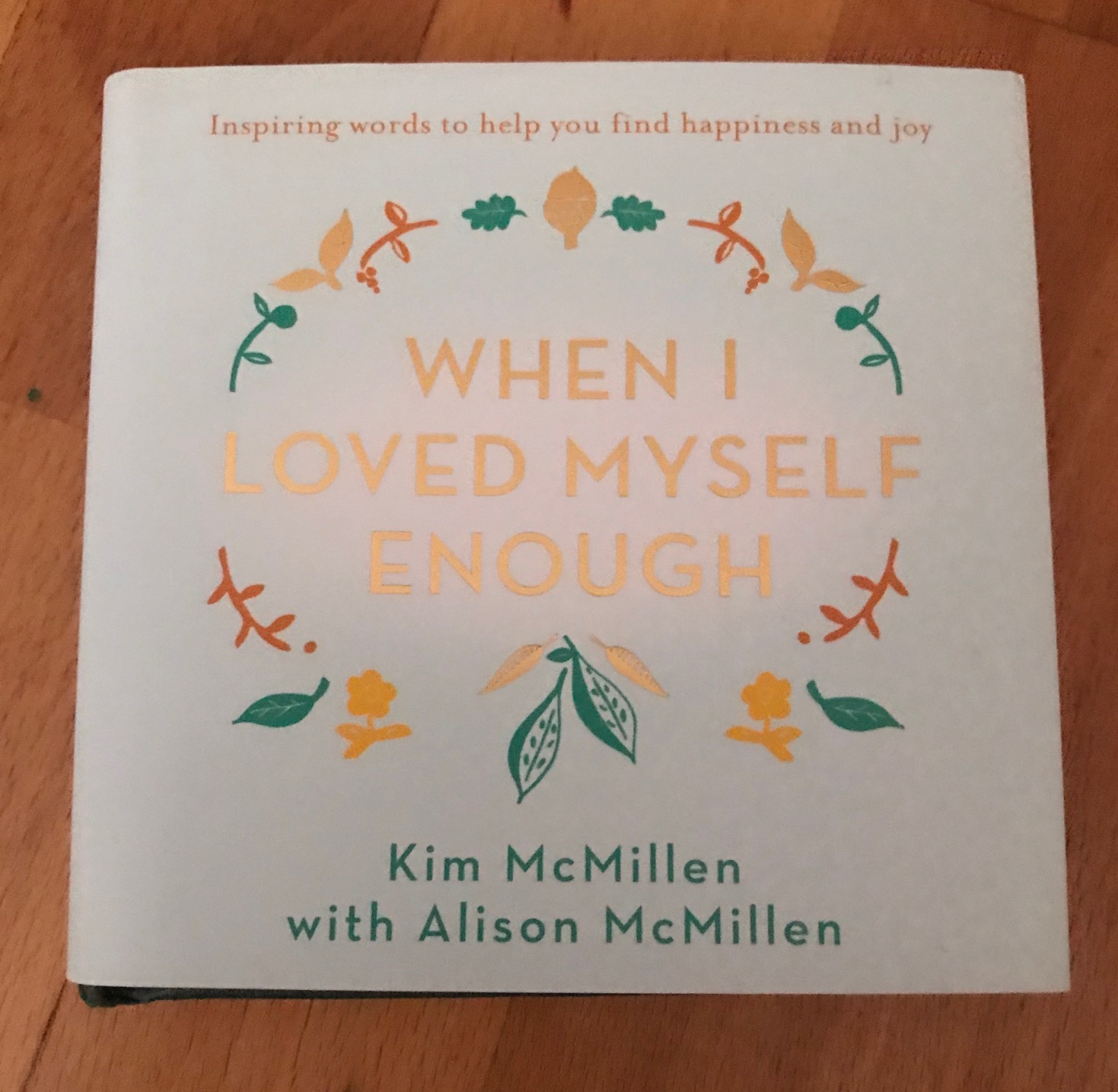
When I Loved Myself Enough: Inspiring words to help you find happiness and joy

I really loved When I Loved Myself Enough. We live in a world where too many people are struggling to love themselves. Not everyone is good at knowing their own self worth. This book has a lot of beautiful collections of wisdom which make you really think. A brilliant book which should be kept to hand for when you need a pep talk. It is even more poignant as the author Kim McMillen died before finishing the book and her daughter finished it for her. It has many beautiful and honest points about life. This would make a wonderful present for someone you love who is struggling to love themselves.

When I Loved Myself Enough is a beautiful collection of wisdom that is startling in its simplicity. By the end of the book the message becomes clear: loving yourself holds the key to loving others and having others love you. By sharing her insights, the author also shows us how to feel the same sense of peace and quiet joy that illuminated her life.

This book began as one woman’s gift to the world, hand-made by Kim McMillen and handed out to friends. After Kim’s death her daughter Alison continued making the books – and word of mouth turned this into an underground bestseller in America. Today, over two decades later, it brings comfort and inspiration to readers around the world.

When I Loved Myself Enough: Inspiring words to help you find happiness and joy is available here.