Cornish Writing Challenge 2017 Winner: Christopher Joyce

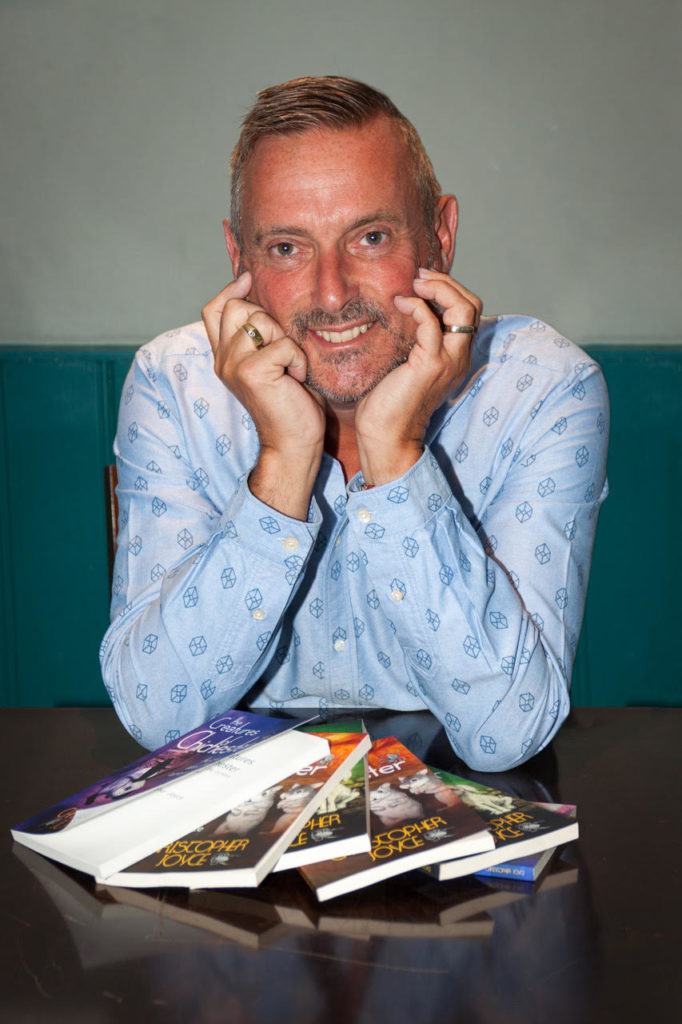
So The Cornish Writing Challenge 2017 is done and Frost wants to thank Vikki Patis for including us. Frost’s own Jane Cable and Catherine Balavage were two of the judges. Along with Vikki- of course, and Cornish author Angela Britnell. We are now proud to publish the winner: Christopher Joyce.


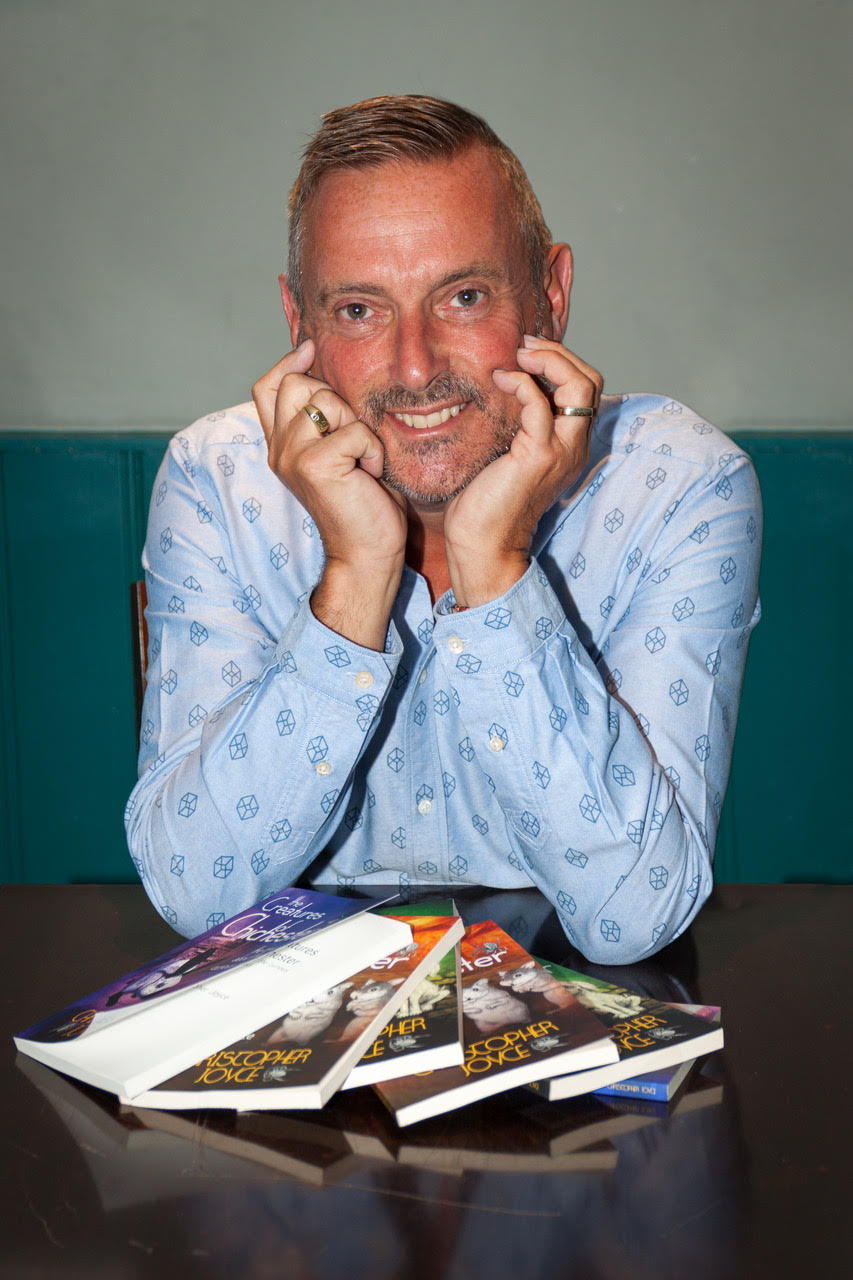
Christopher Joyce from Chichester in West Sussex has been a teacher, waiter, once made Venetian blinds and has worked in a steel works. He is best known for his series of children’s books, ‘The Creatures of Chichester’, where the city’s animals solve the problems created by the Twolegs living there. See www.creaturesofchichester.com for more information.

Read his excellent winning entry below.


Mama’s Gonna Float The Gypsum


“Hello, what service do you require?”

“All of them. Police, ambulance; there’s someone trapped in the car. Maybe fire brigade. I dunno – send them all!”

I slammed down the phone after giving my directions and threw up in the phone box. I was amazed it was still working as locals had turned it into a mini library. Thank God I was able to get through.

The stench of petrol filled the air mixing with the musty smell of autumn. They’d be here soon.

Breathe, relax.

It had started out quite a normal sort of day. I’d had a delicious lunch at the Waterside restaurant in Flushing, opting for the catch of the day as always. The plan was then to go for a walk along Trefusis Point. We had a lot to talk about.

Kelly was late. She was always bloody late. It drove me mad. After university we’d moved down to Cornwall to run a small pub. It failed miserably in the recession of 2017, but if I’m honest it would have failed anyway. We just didn’t want the same thing anymore. We tried running a mobile coffee shop that toured the festivals, which just drove us even further apart. Being with Kelly twenty-four hours a day was not the answer to resolve our differences.

I checked my watch. 2:35, Where the hell was she? The waiter brought me the dessert menu for the fifth time and I once again pushed it aside. He looked offended. Well, tough. Get over it. I’ve got more to worry about than your tip pal. He muttered to his manager and I wanted to go over and punch him in the face there and then. I counted to ten. Breathe, relax. That’s what the anger management person had taught me. She was as useful as a chocolate teapot. Kelly loved her of course. In fact it was Kelly’s idea. Typical of her new found, hippy-dressing, cosmic-ordering sort of view on life.

The spotty chinned waiter returned again. This time with a piece of paper folded in half. “There’s a message for you, sir,’ he said. I didn’t like the way he stressed the word sir, but I let it go. Another whinging apology from Kelly, no doubt. I opened it and read:

Mama’s gonna float the gypsum.

What sort of bollocks was that? I turned it over and even held it up to the light, half expecting to see a message from Kelly written on the other side, but that’s all it said. Mama’s gonna float the gypsum. Was she playing stupid games? We’d arranged this meeting weeks ago, after endless blocked text messages and unanswered calls she’d agreed to stroll around the headland to talk things through. I bet one of her trendy therapists had put her up to this. I could hear them whispering in her ear. Challenge him. Surprise him. They made me sick.

I didn’t have time for these stupid games. I had to get back to the garden centre. It’s not that I was the boss or anything, but since the break up I’d found some peace amongst the clematis and hydrangeas. I seem to remember that gypsum was a plant food of some sort. It was supposed to improve acid soil. Was she trying to make a reference to my work? That would be typical. She never wanted me to be successful. Ever since I got a first at uni and she got a Desmond. She hated me referring to her 2:2 like that. Yes, she’d studied soil sciences. I bet it’s something to do with that.

Or maybe it’s an anagram? When we first met we’d spend hours in bed going through the puzzle page in the local paper. I rummaged through my backpack for a pencil. There were so many zipped pockets. Why was it always the last one you looked in? I checked my mobile phone in vain. Still no sign of life. I shoved the half eaten peppermints and loose change back into the bag and drew a circle on the piece of paper. I arranged the letters in a random order around the circle. It’s just the sort of thing Kelly used to do. Oh God, I’ll be worshipping bloody crystals next.

After ten minutes of scratching my head. Nothing. Not a Scooby. I stormed out of the restaurant and headed for the woods. It was only when I was half way to the beach that I realised I hadn’t paid my bill. Well, sod him. He shouldn’t have brought me her ridiculous note in the first place.

I pulled up the collar of my down jacket as the ferry from Falmouth spewed out the last remaining emmets with their selfie sticks and iPads already in their hands. I strode on into Kilnquay Woods kicking up the beech mast and relaxing a little as the smell of pine needles and salty sea air filled my lungs. Before long I was clambering along the rocks on the shore line towards the cave where Kelly and I had frolicked in better days. My shoulders relaxed and I undid my jacket. The beach always had this effect on me. I felt at home. I pulled out the scrap of paper from my jacket and read the message again. Mama’s gonna float the gypsum. Was it an old folk song? I vaguely remember a school trip to a gypsum mine in Redruth. Were there once shanty songs sung by full-bosomed lasses as they loaded the gypsum on to boats bound for distant lands? I doubted it.

The sun was dipping below the horizon when I left the shore. The views of Falmouth across the crystal clear water and the sight of kids searching the rock pools for crabs had lifted my spirits. I didn’t care what the note was supposed to mean. I had to admit that although she drove me mad at times I still could not get her out of my head. I decided to stroll back into town and have a long cold pint of Gold Cyder at the Seven Stars.

The cold, golden liquid cleared my mind and I felt the happiest I’d been in months. It was time to put the past behind us and start again. I was on my second, or maybe third pint when I heard the screech of brakes followed by the unmistakeable thud of metal crushing bones. I leapt to my feet knocking the table and half finished cider on to the floor.

‘For God’s sake call an ambulance,’ I screamed at the top of my voice. Nobody moved. The red-headed barmaid continued to flirt with the young men at the bar. The family of four by the door carried on ignoring each other with their eyes glued to their mobile phones. The guys playing darts chalked up another score.

I ran out into the street alone. A woman’s body was crushed in the front seat of the mangled Fiesta. Just her legs with torn tights covered in blood were visible though the smashed windscreen. Another body was slumped beside her, a male in his late twenties, clearly dead at the scene. A young girl pushed her bike down the street as a lady in her later years nervously crossed the road hugging an ugly pug to her chest.

For Christ’s sake what’s wrong with these people. I dashed to the phone box hoping beyond hope that it was still working. It was piled high with books; there was a laminated note stuck to the wall.
This phone box was decommissioned in 2014. Please help yourself to these books dedicated to Kelly and Simon Edgerton, dear to this village. New books are added on a regular basis. This month:

Mama’s Misbehaving (not suitable for children) J Stone
Gonna Make You Mine (young adult) Kay Littleham
Float Fishing for Pike. S B Carter
The Gypsum Mines in the UK Andy McNarble



The Business of Books: Jane Cable Gets Distracted But Finds She is Not Alone

Jane Cable gets distracted but finds she is not alone

It’s a small miracle you are reading this article at all, to be honest – and great credit to writer friends who have rallied around to provide me with some content. The thing is, last week I moved house. Long distance and for the first time in over twenty years. Not only did time become an issue, but the mental effort turned my brain into a huge mass of Cornish clotted cream.

I am not the only author suffering from a life event at the moment. Frost’s own Margaret Graham has been in the wars but in typical fashion is seeing the positive: “Falling into a wall recently and breaking my shoulder not only put one hand out of use but a whole brain, it seems to me. I feel that actually giving it a rest is probably not a bad thing. You will find that creativity is better for a bit of a holiday.”

Writer of historical fiction, Rosemary Noble, is also good at seeing the upside of potentially distracting events. “Sometimes you can avoid the stress by burying yourself in writing. I’m thinking of trying to sell my mother’s flat to pay for her care home. The only way I got through that 12 months was writing,” she told me.

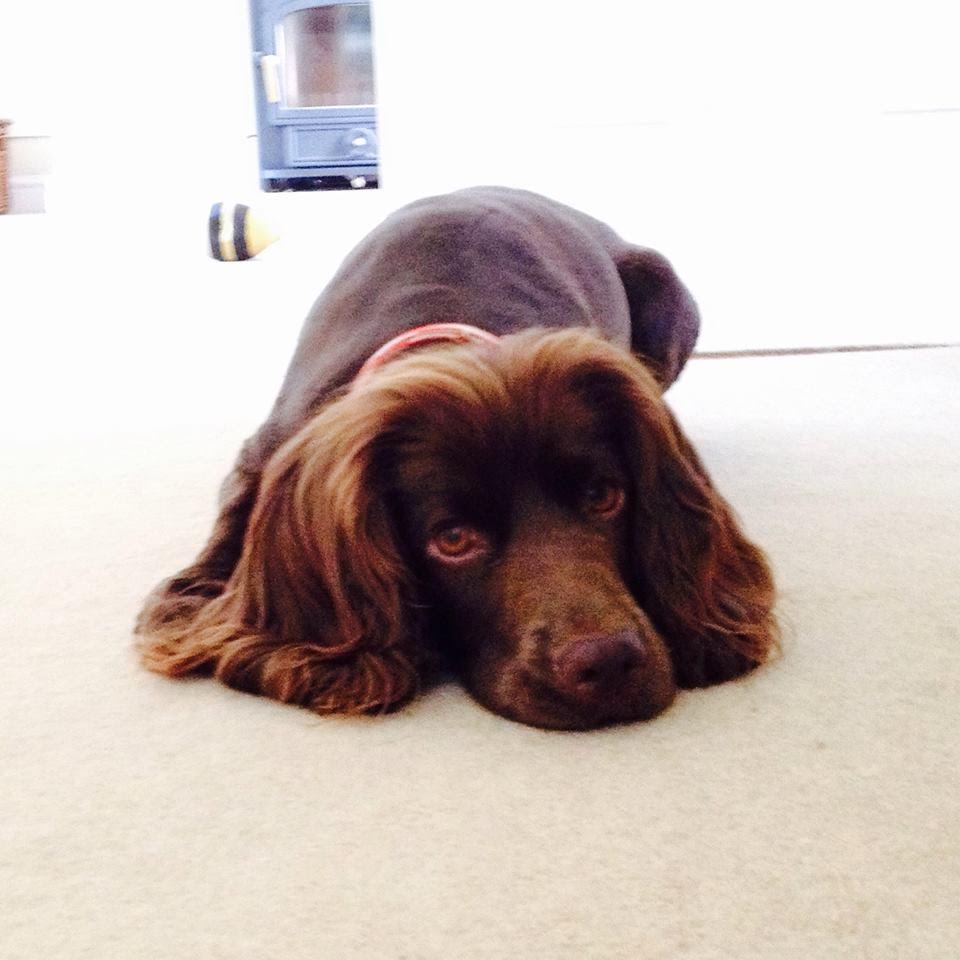
There are some everyday distractions which make the list too. Day jobs (most writers have them), family commitments, lack of sleep, paying the bills – even social media – all sap creative energy. Sometimes the good things do as well. Ghost writer and freelance wordsmith Sue Kelso Ryan cited her dog as the biggest culprit – and it was a great excuse to use her lovely picture as well.

Which just goes to show that good things interrupt our writing too. “Having twins,” says media medic and women’s fiction author Carol Cooper. “That knocked writing on the head for a few months. And illness/surgery. You resent having to rest or slow down because it stops you writing.” Although she did manage to create a top-selling practical parenting guide about her experiences once she was able to find the time.

Crises involving other family members which hit without warning seem to have the biggest effect, as fantasy & romance writer and brand strategist Amy Tipper-Hale has just found out: “My boyfriend breaking his leg in Milan after being run over by a motorcyclist, and me having to fly over to be with him so he wasn’t entirely stranded…I thought I’d have plenty of time to write, but it ended up being stressful and exhausting – my mind all over the place, and not a single word written…except this.” Luckily the patient is now at home – and hopefully Amy will get back to writing again soon too.

As for me, now I have unpacked my desk and settled it into its new location, I need to have a plan. I’ve been sitting on the edit notes for my current manuscript for a month or so and my brain is just starting to tick over them. And one thing this house move is meant to achieve is more time to write. Fingers crossed I can make it happen.

As well as those mentioned above, my thanks also go to Barbara Copperthwaite, Victoria Cornwall, Morton S Gray, Wersha Bharadwa, Carol Thomas and Clare Ruel for their contributions.


One Summer In Tuscany By Domenica De Rosa Book Review

One Summer In Tuscany By Domenica De Rosa Book Review

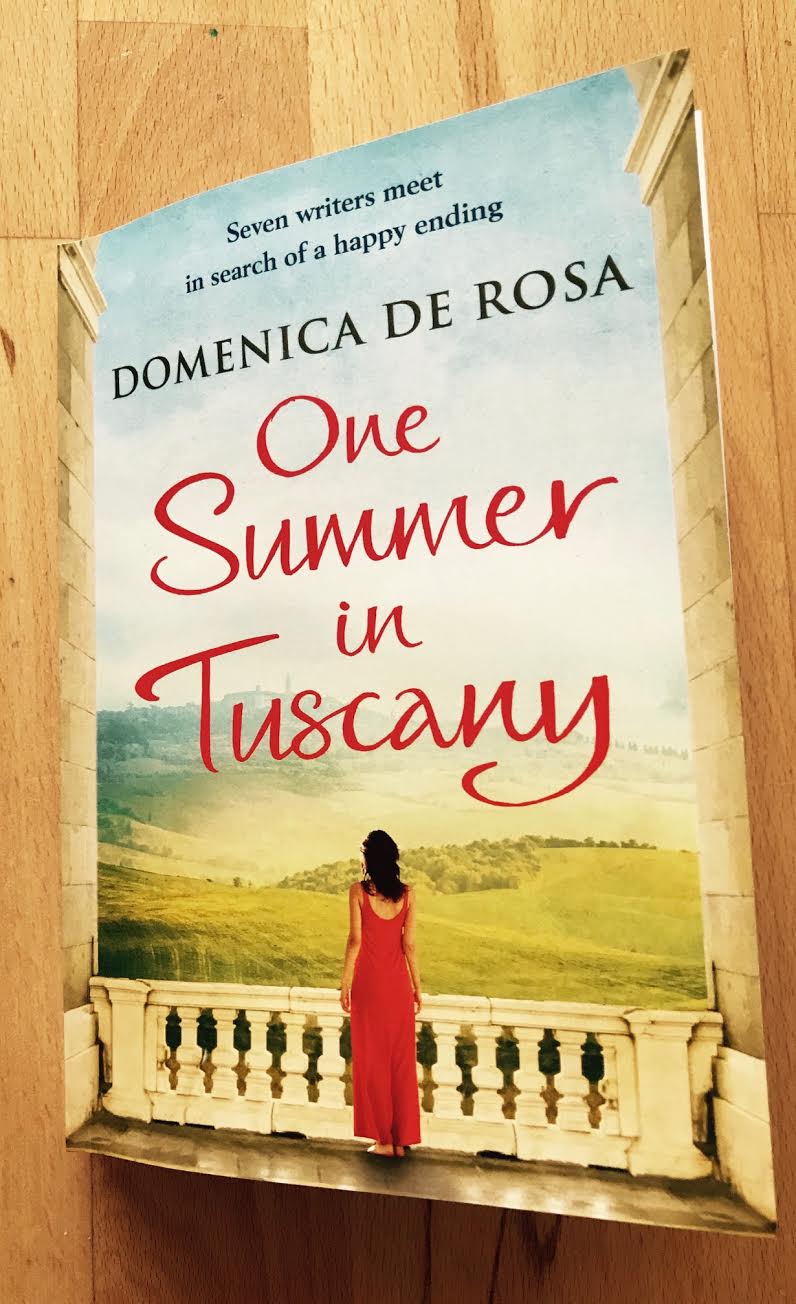
It is always interesting reading a book about writers as a writer. I always find it fascinating. I loved the way One Summer in Tuscany is written. It is easy to read and flows very well. Each writer who is heading to Patricia Wilson’s writers’ retreat is a great character, and each is introduced in a quick biography at the beginning. From the mothers who want more from life, to the older people who want to finally publish that book. The setting- an idilic writers retreat in Tuscany- is a good one. It made me want to go on holiday. Domenica de Rosa also has a gift when it comes to writing about food. I was constantly hungry reading about all of the delicious Italian food in this book.

One Summer in Tuscany has all of the ingredients of a great book: a good plot with enough mystery, interesting, well-written characters and good observations. Add in Italy and the food and this book is a winner. The perfect holiday read.


Rivalries and romance in a Tuscan paradise. A relaxing writers’ retreat? If only! Perfect holiday reading from Domenica de Rosa, author of the bestselling Dr Ruth Galloway series under the name Elly Griffiths. Previously published as SUMMER SCHOOL.

Patricia Wilson’s carefully composed ads for the writers’ retreat she runs at her thirteenth-century Italian castle promise so much. But while the splendour of their surroundings and chef Aldo’s melanzane never fail to wow the guests, huge maintenance bills and bad news from the bank threaten to close Patricia down. It’s make or break time for the Castello.

Each of her seven aspiring authors arrives with the inevitable baggage alongside their unpublished manuscripts. But this August something is different, and soon lifelong spinster Mary is riding on the back of Aldo’s vespa, and smouldering odd-job man Fabio has set more than one heart racing.

As temperatures rise, the writers gossip, flirt and gently polish their prose by the pool. But with ghosts, scorpions, and some unexpected visitors to contend with, one thing’s for sure: neither the Castello, nor Patricia, has ever seen a summer like this.


One Summer In Tuscany By Domenica De Rosa is available here.

Business of Books: Jane Cable talks to Barbara Copperthwaite, Bookouture’s latest best-selling author

Business of Books: Planning for successJane Cable talks to Barbara Copperthwaite, Bookouture’s latest best-selling author

How much of your working life does the business of books take up?

It’s almost a 50/50 split. A huge part of the business of books is social media activity. Networking with fellow authors and bloggers, and interacting with readers is so important. It builds relationships, and ultimately I believe that the business of books is about people. Marketing takes up a huge chunk of time, be it generating original content for your own website and blog (I have both, as I find they service slightly different purposes and appeal to different people) or writing guest posts for others to use. Of course, the rest of the time is spend actually writing the books!


What’s your business model to earn a living from writing?

I always remember my dad telling me that a new business takes an average of two years to make a profit. I went into self-publishing my books with that in the back of my mind, and very much thinking of it as an entrepreneurial venture. I ensured I had enough money behind me to survive for two years without making any profit at all. It’s been tough, but I had a three-year plan in mind – self-publish for two years, make a name for myself, make contacts, then get a publishing deal.

I was stupidly naïve though. I’d never had a Twitter or Facebook account, and no clue that book reviewers even existed online, let alone had such huge influence. Despite that, my first book, Invisible, became a genre bestseller on Amazon. Flowers For The Dead, my second novel, built on that success, becoming not just a genre bestseller but a bestseller, proper – largely because I had by then built up a small but genuine following on social media. Incidentally, for those who dismiss social media as unimportant, you are missing its point. It is not about shouting continually about how great your book is and why people must buy it. It’s about genuinely engaging with people.

All of this begs the question: if I was doing so well, why did I want a publishing deal? Because I know enough about business to realise I am not a natural business person. I have the knowledge and drive to get me so far, but I’m not capable of pushing myself to the next level. The most successful self-published authors I know are not just brilliant writers, but brilliant business people, too. They are great with numbers, marketing, and all manner of other things. I’m not – I’m a writer. Of all the publishers, the one that appealed most to me was Bookouture, a digital only publisher that is growing quickly, has a reputation for picking winners, and is really making waves in the industry (so much so that they were recently acquired by Hachette). I was lucky enough to be taken on by them after submitting my third novel, The Darkest Lies.

I have to add that the fact everything in my three-year plan has actually happened has taken me hugely by surprise, as I honestly thought it was probably a pipe dream.


What do you write and what do you consider to be your major successes?


I write psychological thrillers with a dark edge. I like to explore how ordinary people cope when they find themselves in extraordinary circumstances, what can push someone to kill, how a person can be manipulated without them realizing it. I always say that I write ‘whydunits’ rather than ‘whodunits’.


My major successes don’t necessarily have anything to do with selling a lot of books. It might sound cheesy, but every single time someone tells me they’ve enjoyed one of my books, is a success. Becoming a bestseller for the first time was absolutely incredible, as was being signed by my agent, and being offered my book deal (there was a lot of shouting and jumping up and down in excitement when I got that email!). Beating Lee Child to be chosen as the Sunday Mirror’s Choice Read was definitely a feather in my cap – little old indie author me, beating a multi-million selling, global author. Being contacted by a number of women who have told me how realistic my portrayal of an emotionally abusive relationship is in Invisible. All those things mean the world to me. They are the sort of thing I used to day dream about, and hoped might happen, but never dared believe they would. In which case, fact that my dreams are coming true has to be my biggest success.

Tell me about your latest project.

The Darkest Lies has just been published. When teenager Beth Oak is found beaten almost to the point of death, her mother, Melanie is determined to find the attacker. Someone in the village must have seen something. Why won’t they talk?

I’ve just finished writing a psychological thriller set within a seemingly normal family in the run up to Christmas. As the festive day draws closer, tension grows towards an explosive ending where nothing is as it seems. That will be out in September.

And, because I like to keep busy, I’ve just started a novel featuring a journalist who finds herself drawn reluctantly into investigating a serial killer who seems to be linked to her.


Barbara Copperthwaite is the best-selling author of psychological thrillers Invisible, Flowers For The Dead, and The Darkest Lies. Her first two novels were self-published, and she has now signed with Bookouture, an imprint of Hachette. When not writing, she likes to hide behind a camera and photograph wildlife.


GAWP: New Writing Prize Launched

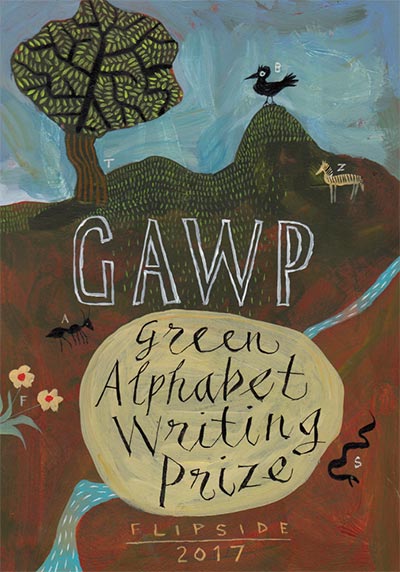
FLIPSIDE LAUNCHES GREEN ALPHABET WRITING COMPETITION
The deadline is July 31

writing-competitionFlipSide, East Anglia’s leading literary and arts festival, has launched an enviromentally-themed competition aimed at writers of all ages and for which entries are now open.

The competition, which carries cash prizes, will be judged by leading authors Jackie Kay, the Scots Makar (poet laureate), Blake Morrison, writer and Professor of Creative and Life Writing at Goldsmiths College and Jon Canter, novelist and playwright.

“We are looking for inspirational writing about the environment,” says Liz Calder, co-founder of FlipSide. “We hope to encourage writers to think creatively about their surroundings and how to care for them.”

Submissions must take any letter of the alphabet and use it in a piece of writing on a green theme – poetry, fiction or non-fiction. Prose entries should be no more than 500 words and poems no more than 40 lines. Entries could include some visual art. The deadline is 31st July, 2017. All entries will be considered for inclusion in a forthcoming anthology.

The competition is split into adults (First prize: £500) and under 16s (First prize: £200). The deadline is July 31.

Full competition details and instructions on how to enter can be found on the FlipSide website : www.flipsidefestival.org

The Business of Books: Publish and Don’t be Damned

Jane Cable’s big lessons from self publishing

At the moment I’m juggling. Even more than ever with a house move and Chindi’s talks at the Festival of Chichester both approaching at a frightening pace. And juggling means making the best use of my time, so when I was thinking about the biggest lessons I’ve learnt for Chindi’s self publishing workshop I thought they would make a good article as well.

Put simply, they fall into two categories.

  1. Your book may be self published but it has to be as good as anything brought out by a major house – if not better. You can’t afford for it to look out of place in a bookshop or on people’s shelves at home. Cover design, shape and size are hugely important.The content has to be perfect too – and I mean perfect. You are asking people to pay for your work and this is a total game-changer. How would you feel if you picked up badly stitched shirt – or a book full of typos where the plot didn’t hang together?The best single piece of advice I can give any would-be author is that if you are tempted to publish your book without anyone else looking at it first, then don’t. Even the super-talented have lapses of concentration and mistakes creep in. At least have some sort of edit or proof read. Follow your gut instinct as to which would be the most important for you.

    Basically there are three main sorts of edit: structural (which evaluates the whole manuscript and how well it works as a novel); copy (studies the manuscript line by line for spelling, grammar and consistency); proof read (works on the print or ebook ready version for formatting and a final check on spelling and grammar).

    It’s always best to pay a professional but if you really can’t afford it and/or have a super-careful relative or friend at least get them to proof it. You’ve spent so long nurturing your manuscript you just won’t see all the mistakes yourself.

  2. You will spend at least as much time marketing as writing and you need to do it. You have no-one else to do it for you, unless you can afford professional help.Before your book comes out, cover the basics: think about who your target audience are, how you are going to reach them and how/where they are going to buy your book. You will be in a very crowded market. How is your book different? How can you make it sound unique and enticing?Although I had some background in PR and promotion, when my first novel, The Cheesemaker’s House, came out I was clueless about book publicity. I had arranged for a former colleague to do some PR for me, but that was it. Pretty soon I had to learn about social media, book bloggers, AI sheets, collateral. Because I had chosen an assisted publishing route with Matador it was easier, but I still needed to invest a huge amount of time.

    There are, however, great resources available: books (such as Chindi’s Before You Press Publish), online (ALLi – The Alliance of Independent Authors), blogs and of course groups like Chindi which exist to help you and provide mutual support. When I joined Chindi my marketing came on in leaps and bounds and as the group becomes more online we welcome authors from around the world.Even if you move into the world of traditional publishing these skills are hugely important and it’s always worth remembering that ultimately you are responsible for your book’s success.Find out more about Chindi’s author resources here: http://www.chindi-authors.co.uk/for-writers/


Michael Palin Donates Archive of His Literary Career to the British Library

Michael Palin and Rachel Foss at the British Library – photo by Tony Antoniou 

The British Library is delighted to announce the acquisition of the archive of writer, actor, comedian and television presenter Michael Palin.

The archive, which has been generously donated to the British Library by Palin, covers his literary and creative life during the years 1965-1987. It includes over 50 ‘Python Notebooks’ containing drafts, working material and personal reflections relating to Palin’s Monty Python writing. It also includes his personal diaries kept during this period, and project files comprising material relating to his film, television and literary work, including correspondence, drafts and annotated scripts relating to subsequent Python projects.

Rachel Foss, Head of Contemporary Archives and Manuscripts at the British Library, said of the donation:

“We are thrilled that Michael Palin has chosen to donate this fascinating and wide-ranging collection to join the British Library’s holdings of contemporary archives. Michael’s contribution to comedy, film and television over the past 50 years has been enormous, in particular through Monty Python which has had an unparalleled influence on British comedy and internationally. We’re looking forward to making it available for researchers, students and everyone with an interest in post war popular culture. It’s particularly exciting to think that the comedy talent of tomorrow may find inspiration from this collection.”

Michael Palin said of donating his archive:

“My work has been inspired by, and created in, this country, so I’m very pleased that my archive has been accepted by the British Library, and that they will make it publicly available, so that future generations will know not to make the same mistakes again.”

The collection will be available to view in the British Library Reading Rooms from spring 2018. For more information on how to become a Reader, please visit the British Library website.

You can see Michael Palin in conversation with Joan Bakewell at the British Library on Wednesday 6 September 2017, discussing his wide-ranging career. To buy tickets, please visit our What’s On pages.


5 Reasons You Should Avoid Celebrity

Do you dream of becoming rich and famous? You might want to stop at “rich” and leave fame alone. Being a sought-after celeb might look glamorous and exciting — who doesn’t want to be adored by millions? — but the truth is that fame can be a lonely, confusing, and even frightening condition.

Paparazzi

reasons to avoid celebrity

Image via Flickr by Gribiche

How would your day have been different today if a team of photographers had been waiting outside your house when you woke up this morning, hoping to grab an unflattering or compromising photo of you? They’re ready to swarm you if you try to go for a walk, or run to the store for milk, or if you’re just tired of being cooped up inside. Want to go out for a few cocktails? They’re standing ready to capture and publish anything you do, so be careful. And this isn’t just happening occasionally; this is your new daily reality now and it never ends.

Rumor Mills

Now imagine that your old flame, or your new beau, calls and asks you out to lunch. Those photographers are waiting to sell photos of your lunch date to a tabloid. If you become famous, everything you do (and a lot of things you don’t do) will be written about, discussed, repeated, analyzed, and picked to death by the press and your fans. Are you ready to have your dirty laundry aired in public every day? That’s the celebrity’s reality.

A Target for Hackers

Do you worry about identity theft and cyber crime? If you become famous, your data becomes a highly lucrative target for hackers. While these criminals might want your bank account numbers, they are even more interested in your private messages, intimate photos, and other personal business. Your most private moments become valuable when you are famous, and they are always under siege.

Superfan… or Stalker?

Many celebrities have had scary run-ins with fans, and a few have even been murdered. Miley Cyrus’s stalker tried to enter her house with scissors and told police that he was married to the singer. A woman claiming to be God once showed up at Justin Timberlake’s house, claiming they were destined to rule together. Madonna’s superfan stalker jumped a fence at her home and said he was going to either marry her or slit her throat. He went to jail and later to a mental hospital, but Madonna had to fear for her life again when he escaped the hospital and was missing for a while.

Trust No One

Would you like to be surrounded by friends who might just be using you to get close to fame and fortune? So-called friends of famous people often sell stories to gossip magazines or lead scandals to the press. Celebs often don’t know who to trust and have a lot of trouble maintaining friendships and relationships.

Public life seems glittery and alluring, but the truth is fame has a dark side, too. Isolation, mistrust, fear, and complete lack of privacy are a high price to pay for celebrity status.