The Business of Books: Jane Cable meets Sunday Times bestseller, Elaine Everest

THE BUSINESS OF BOOKS: SPREADSHEETS & SAGAS

Jane Cable meets Sunday Times bestseller, Elaine Everest

How much of your working life does the business of books take up?


I can honestly say that books take up all my life. When I’m not writing I’m teaching novel writing to my talented students at The Mick Jagger Centre in Dartford, Kent. I’m also a committee member of the Romantic Novelists’ Association so you’ll find me organising social media and blogging for the Association. I would say that over 50% of my working day I’d be working on writing although I’m not creating words. Authors also need to be aware of Public Lending Rights, ALCS and other organisations where we need to keep our book details up to date as this will generate much needed funds,


What’s your business model to earn a living from writing?


I’ve been a freelance writer for the past twenty years so from the days when I was selling short stories, pitching features to magazines and organizing workshops for writers I’ve been conscious that I have to earn a certain number of pounds each month. Working in accountancy since leaving college, until moving into the writing world, I am addicted to number crunching so spreadsheets and cash flow predictions were part of my daily life. I could always tell at the push of a button if there were lean months ahead and would know to pitch more – and to write more fiction! This has changed slightly since moving onto writing novels as these days I’m aware when royalties and other payments are due and can plan accordingly. Those spreadsheets still come in handy!


What do you write and what do you consider to be your major successes?


These days I write historical fiction set in the 1930s and 1940s. It is a fascinating period to cover and when not writing I will have my nose in a non-fiction book researching social history, looking for fresh plot settings and generally fleshing out the world where my characters live.


My major successes are my novels with Pan Macmillan. Readers have taken my Woolworths Girls to their hearts making the first book a Sunday Times bestseller.


Tell me about your latest project.


The Butlins Girls was published in May so I’m still busy promoting and blogging about my girls at the end of World War Two. As I write this I’m looking at the final book edits for Christmas At Woolworths, which will be published in November, and these have to be completed by – tomorrow! I know there’s an email notifying me that first edits will be with me in two days for Carols at Christmas, a novella that will be published a few weeks before CAW. Writing wise I’m working on Wartime at Woolworths, which will take my girls through to the end of 1944. This will be published in May 2018. I’ve found the trick is to stay focused on the current work in progress while trying to fit all other aspects of my writing around it – and remembering to stop and eat occasionally. I can recommend writing retreats where I find working whilst gazing out to sea from my desk can be a welcome rest from my desk at home!


Elaine Everest has written widely for women’s magazines, with both short stories and features. When she isn’t writing, Elaine runs The Write Place creative writing school in Dartford, Kent, and runs social media for the Romantic Novelists’ Association. Follow Elaine on Twitter @ElaineEverest.


Give Me The Child By Mel McGrath Book Review

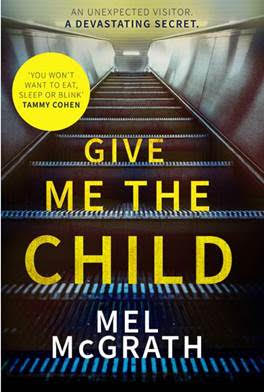
Give Me The Child drew my in immediately from the cover. Then the blurb drew my in further. As a mother I worried it might be horrible and depressing, but Give Me The Child is a clever and riveting psychological thriller. It leaves you guessing and is well written by an author who is clearly at the top of her game. Gripping and addictive: you will probably sacrifice sleep to race through it. A great book indeed.


Give Me the Child is an explosive thriller set against the backdrop of the 2011 London riots

Mel McGrath is the co-founder of the UKs top all-female London-based writing collective, The Killer Women, which has 19 members including Paula Hawkins and Erin Kelly http://www.killerwomen.org/who/

An unexpected visitor.

Dr Cat Lupo aches for another child, despite the psychosis which marked her first pregnancy. So when Ruby Winter, a small girl in need of help, arrives in the middle of the night, it seems like fate.

A devastating secret.

But as the events behind Ruby’s arrival emerge – her mother’s death, her connection to Cat – Cat questions whether her decision to help Ruby has put her own daughter at risk.

Do we get the children we deserve?

Cat’s research tells her there’s no such thing as evil. Her history tells her she’s paranoid. But her instincts tell her different. And as the police fight to control a sudden spate of riots raging across the capital, Cat faces a race against time of her own…

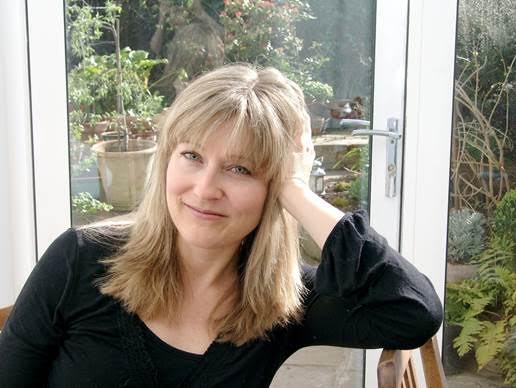
Mel McGrath is an Essex girl, the author of the critically acclaimed and bestselling family memoir Silvertown. She won the John Llewellyn-Rhys/Mail on Sunday award for Best Writer Under 35 for her first book, Motel Nirvana. She has published three Arctic mysteries featuring the Inuit detective Edie Kiglatuk under the name MJ McGrath, the first of which, The Boy in the Snow, was shortlisted for a CWA Gold Dagger.

In the last year she has been one of the founders and moving lights of the website Killer Women, which has rapidly established itself as one of the key forums for crime writing in the UK. This new standalone marks a change in direction

Give Me The Child By Mel McGrath is published on the 27th July and is available here. http://amzn.to/2tFKiAR


Review: The House They Grew Up In

The House They Grew Up In
Minerva Theatre, Chichester
Until 5 August
Box Office: 01243 781312 www.cft.org.uk

Photo Credit: Johan Persson

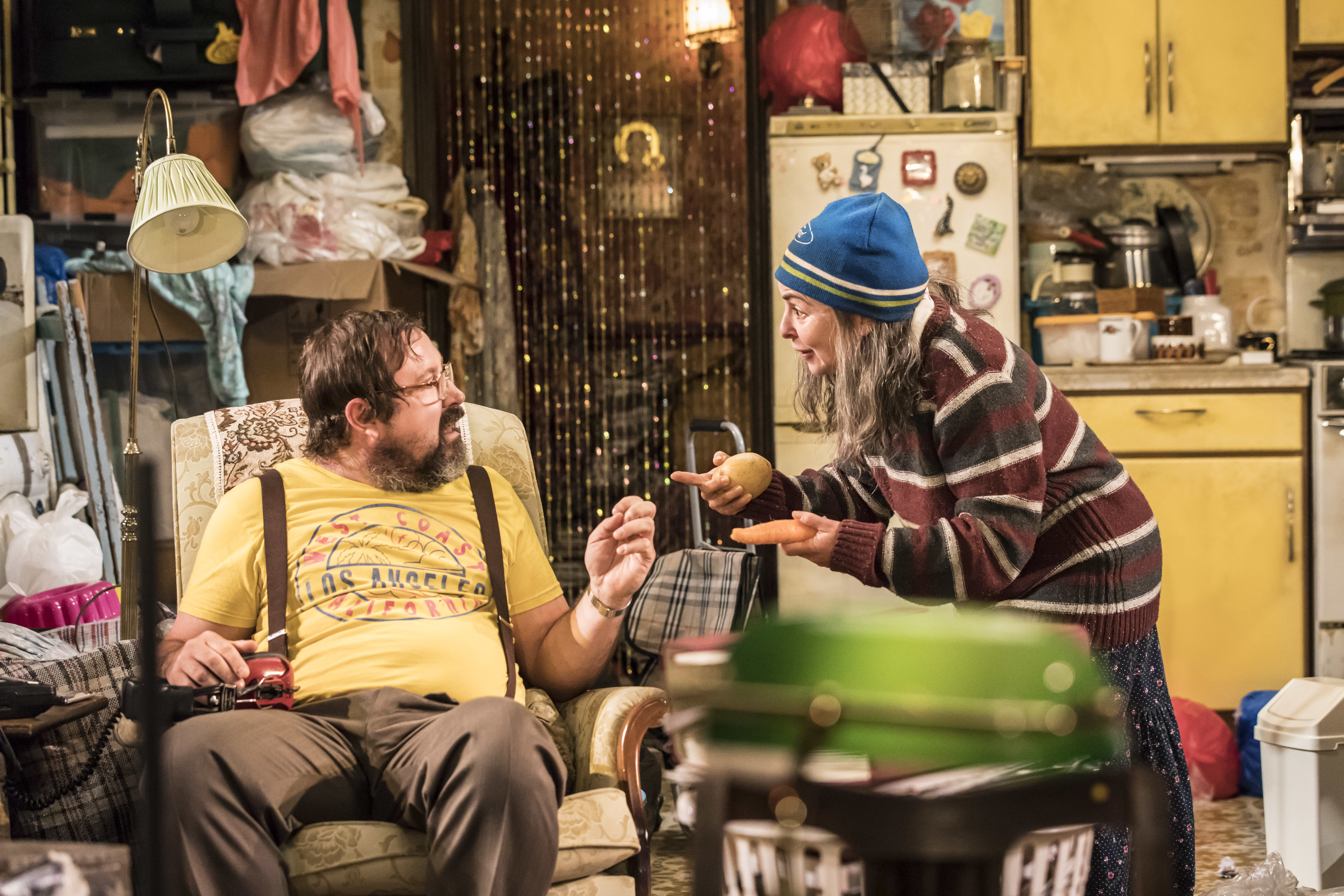
Deborah Bruce’s new play, a co-production with Headlong, manages to be both entertaining and deeply moving. It’s a tale of our time. Middle-aged brother and sister Peppy (Samantha Spiro) and Daniel (Daniel Ryan) live in the house they grew up in amid floor-to-ceiling clutter (Max Jones’s claustrophobic set design is marvelous). Isolating themselves, autistic Daniel spends his days recording a precise log of every passing moment in his diary. Highly strung and obsessed with art history and Cambridge University, Peppy leaves the safety of their nest only for food and, later, to visit Uncle Manny to try to find out why he didn’t make his regular Christmas visit. But the arrival of the little boy next door into their co-dependent lives (superbly played by Rudi Millard on press night) triggers a terrifying change in their reclusive existence, with the police, social workers, neighbours and journalists forcing the much-feared outside world upon them.

Remarkably, what seems certain to be the inevitable conclusion takes a happier turn. Jeremy Herrin’s thoughtful direction and Bruce’s accomplished writing allow Peppy and Daniel to be heard and understood, ultimately earning our compassion and making us feel uncomfortable at failing to feel and extend it sooner.

Beautiful and bitter sweet, the tragedy of the optimistic ending is that in the real world Peppy and Daniel would be the exception rather than the rule.

With superb performances, especially from Spiro and Ryan, this a thought-provoking and fascinating play that deserves a wider audience than its short run in Chichester will generate.

Give Me The Child Extract: The Hot New Thriller of The Summer

We have a treat for you: an exclusive extract of Give Me The Child. A stunning thriller from Mel McGrath. You can read our review tomorrow.

CHAPTER ONE

My first thought when the doorbell woke me was that someone had died. Most likely Michael Walsh. I turned onto my side, pulled at the outer corners of my eyes to rid them of the residue of sleep and blinked myself awake. It was impossible to tell if it was late or early, though the bedroom was as hot and muggy as it had been when Tom and I had gone to bed. Tom was no longer beside me. Now I was alone.

We’d started drinking not long after Freya had gone upstairs. The remains of a bottle of Pinot Grigio for me, a glass or two of red for Tom. (He always said white wine was for women.) Just before nine I called The Mandarin Hut. When the crispy duck arrived I laid out two trays in the living room, opened another bottle and called Tom in from the study. I hadn’t pulled the curtains and through the pink light of the London night sky a cat’s claw of moon appeared. The two of us ate, mostly in silence, in front of the TV. A ballroom dance show came on. Maybe it was just the booze but something about the tight-muscled men and the frou-frou’d women made me feel a little sad. The cosmic dance. The grand romantic gesture. At some point even the tight-muscled men and the frou-frou’d women would find themselves slumped together on a sofa with the remains of a takeaway and wine enough to sink their sorrows, wondering how they’d got there, wouldn’t they?


Not that Tom and I really had anything to complain about except, maybe, a little malaise, a kind of falling away. After all, weren’t we still able to laugh about stuff most of the time or, if we couldn’t laugh, at least have sex and change the mood?

‘Let’s go upstairs and I’ll show you my cha-cha,’ I said, rising and holding out a hand.

Tom chuckled and pretended I was joking, then, wiping his palms along his thighs as if he were ridding them of something unpleasant, he said, ‘It’s just if I don’t crack this bloody coding thing…’

I looked out at the moon for a moment. OK, so I knew how much making a success of Labyrinth meant to Tom, and I’d got used to him shutting himself away in the two or three hours either side of midnight. But this one time, with the men and women still twirling in our minds? Just this one time? Stupidly, I said, ‘Won’t it wait till tomorrow?’ and in an instant
I saw Tom stiffen. He paused for a beat and, slapping his hands on his thighs in a gesture of busyness, he slugged down the last of his wine, rose from the sofa and went to the door. And so we left it there with the question still hanging.

I spent the rest of the evening flipping through the case notes of patients I was due to see that week. When I turned in for the night, the light was still burning in Tom’s study. I murmured ‘goodnight’ and went upstairs to check on Freya. Our daughter was suspended somewhere between dreaming and deep sleep. All children look miraculous when they’re asleep, even the frighten- ing, otherworldly ones I encounter every day. Their bodies soften, their small fists unfurl and dreams play behind their eyelids. But Freya looked miraculous all the time to me. Because she was. A miracle made at the boundary where human desire meets science. I stood and watched her for a while, then, retrieving her beloved Pippi Longstocking book from the floor and straightening her duvet, I crept from the room and went to bed.


Sometime later I felt Tom’s chest pressing against me and his breath on the nape of my neck. He was already aroused and for a minute I wondered what else he’d been doing on screen besides coding, then shrugged off the thought. A drowsy, half-hearted bout of lovemaking followed before we drifted into our respective oblivions. Next thing I knew the doorbell was ringing and I was alone.

Under the bathroom door a beam of light blazed. I threw off the sheet and swung from the bed.

‘Tom?’

No response. My mind was scrambled with sleep and an anxious pulse was rising to the surface. I called out again.

There was a crumpling sound followed by some noisy vomiting but it was identifiably my husband. The knot in my throat loosened. I went over to the bathroom door, knocked and let myself in. Tom was hunched over the toilet and there was a violent smell in the room.

‘Someone’s at the door.’
Tom’s head swung round.
I said, ‘You think it might be about Michael?’
Tom’s father, Michael Walsh, was a coronary waiting to happen, a lifelong bon vivant in the post-sixty-five-year-old death zone, who’d taken the recent demise of his appalling wife pretty badly.

Tom stood up, wiped his hand across his mouth and moved over to the sink. ‘Nah, probably just some pisshead.’ He turned on the tap and sucked at the water in his hand and, in an oddly casual tone, he added, ‘Ignore it.’

As I retreated into the bedroom, the bell rang again. Whoever it was, they weren’t about to go away. I went over to the window and eased open the curtain. The street was still and empty of people, and the first blank glimmer was in the sky. Directly below the house a patrol car was double parked, hazard lights still on but otherwise dark. For a second my mind filled with the terrible possibility that something had happened to Sally. Then I checked myself. More likely someone had reported a burglary or a prowler in the neighbourhood. Worst case it was Michael.

‘It’s the police,’ I said.

Tom appeared and, lifting the sash, craned out of the window. ‘I’ll go, you stay here.’
I watched him throw on his robe over his boxers and noticed his hands were trembling. Was that from having been sick or was he, too, thinking about Michael now? I listened to his footsteps disappearing down the stairs and took my summer cover-up from its hook. A moment later, the front door swung open and there came the low murmur of three voices, Tom’s and those of two women. I froze on the threshold of the landing and held my breath, waiting for Tom to call me down, and when, after a few minutes, he still hadn’t, I felt myself relax a little. My parents were dead. If this was about Sally, Tom would have fetched me by now. It was bound to be Michael. Poor Michael.

I went out onto the landing and tiptoed over to Freya’s room. Tom often said I was overprotective, and maybe I was, but I’d seen enough mayhem and weirdness at work to give me pause. I pushed open the door and peered in. A breeze stirred from the open window. The hamster Freya had brought back from school for the holidays was making the rounds on his wheel but in the aura cast by the Frozen- the midnight light I could see my tender little girl’s face closed in sleep. Freya had been too young to remember my parents and Michael had always been sweet to her in a way that


his wife,who called her‘ my little brown granddaughter’,never was, but it was better this happened now, in the summer holidays, so she’d have time to recover before the pressures of school started up again. We’d tell her in the morning once we’d had time to formulate the right words.

At the top of the landing I paused, leaning over the bannister. A woman in police uniform stood in the glare of the security light. Thirties, with fierce glasses and a military bearing. Beside her was another woman in jeans and a shapeless sweater, her features hidden from me. The policewoman’s face was brisk but unsmiling; the other woman was dishevelled, as though she had been called from her bed. Between them I glimpsed the auburn top of what I presumed was a child’s head – a girl, judging from the amount of hair. I held back, unsure what to do, hoping they’d realise they were at the wrong door and go away. I could see the police officer’s mouth moving without being able to hear what was being said. The conversation went on and after a few moments Tom stood to one side and the two women and the child stepped out of the shadows of the porch and into the light of the hallway.

The girl was about the same age as Freya, taller but small-boned, legs as spindly as a deer’s and with skin so white it gave her the look of some deep sea creature. She was wearing a grey trackie too big for her frame which bagged at the knees from wear and made her seem malnourished and unkempt. From the way she held herself, stiffly and at a distance from the dishevelled woman, it was obvious they didn’t know one another. A few ideas flipped through my mind. Had something happened in the street, a house fire perhaps, or a medical emergency, and a neighbour needed us to look after her for a few hours? Or was she a school friend of Freya’s who had run away and for some reason given our address to the police? Either way, the situation obviously didn’t have anything much to do with us. My heart went out to the kid but I can’t say I wasn’t relieved. Michael was safe, Sally was safe.


I moved down the stairs and into the hallway. The adults remained engrossed in their conversation but the girl looked up and stared. I tried to place the sharp features and the searching, amber eyes from among our neighbours or the children at Freya’s school but nothing came. She showed no sign of recognising me. I could see she was tired – though not so much from too little sleep as from a lifetime of watchfulness. It was an expression familiar to me from the kids I worked with at the clinic. I’d probably had it too, at her age. An angry, cornered look. She was clasping what looked like a white rabbit’s foot in her right hand. The cut end emerged from her fist, bound crudely with electrical wire which was attached to a key. It looked home-made and this lent it – and her – an air that was both outdated and macabre, as if she’d been beamed in from some other time and had found herself stranded here, in south London, in the second decade of the twenty-first century, in the middle of the night, with nothing but a rabbit’s foot and a key to remind her of her origins. ‘What’s up?’ I said, more out of curiosity than alarm. I smiled and waited for an answer.
The two women glanced awkwardly at Tom and from the way he was standing, stiffly with one hand slung on his hip in an attempt at relaxed cool, I understood they were waiting for him to respond and I instinctively knew that everything I’d been thinking was wrong. A dark firework burst inside my chest. The girl in the doorway was neither a neighbour’s kid nor a friend of our daughter. She was trouble.I took a step back. ‘Will someone tell me what’s going on?’ When no one spoke I crouched to the girl’s level and, summoning as much friendliness as I could, said, ‘What’s your name? Why are you here?’

The girl’s eyes flickered to Tom, then, giving a tiny, contemptuous shake of the head, as if by her presence all my questions had already been answered and I was being obstructive or just plain dumb, she said, ‘I’m Ruby Winter.’

I felt Tom’s hands on my shoulder. They were no longer trem- bling so much as hot and spasmic.

‘Cat, please go and make some tea. I’ll come in a second.’

There was turmoil in his eyes. ‘Please,’ he repeated. And so, not knowing what else to do, I turned on my heels and made for the kitchen. While the kettle wheezed into life, I sat at the table in a kind of stupor; too shocked to gather my thoughts, I stared at the clock as the red second hand stuttered towards the upright. Tock, tock, tock. There were voices in the hallway, then I heard the living room door shut. Time trudged on. I began to feel agitated. What was taking all this time? Why hadn’t Tom come? Part of me felt I had left the room already but here I was still. Eventually,foot steps echoed in the hallway.The door moved and Tom appeared. I stood up and went over to the counter where, what now seemed like an age ago, I had laid out a tray with the teapot and some mugs.‘Sit down, darling, we need to talk.’ Darling. When was the last time he’d called me that? I heard myself saying, idiotically, ‘But I made tea!’ ‘It’ll wait.’ He pulled up a chair directly opposite me.
When he spoke, his voice came to me like the distant crackle of a broken radio in another room. ‘I’m so sorry, Cat, but however I say this it’s going to come as a terrible shock, so I’m just going to say what needs to be said, then we can talk. There’s no way round this. The girl, Ruby Winter, she’s my daughter.’


Review: Fabulous Fiddler

Review
Fiddler on the Roof (until 2 September)
Chichester Festival Theatre
Box Office: 01243 781312 www.cft.org.uk


Photo credit: Johan Persson

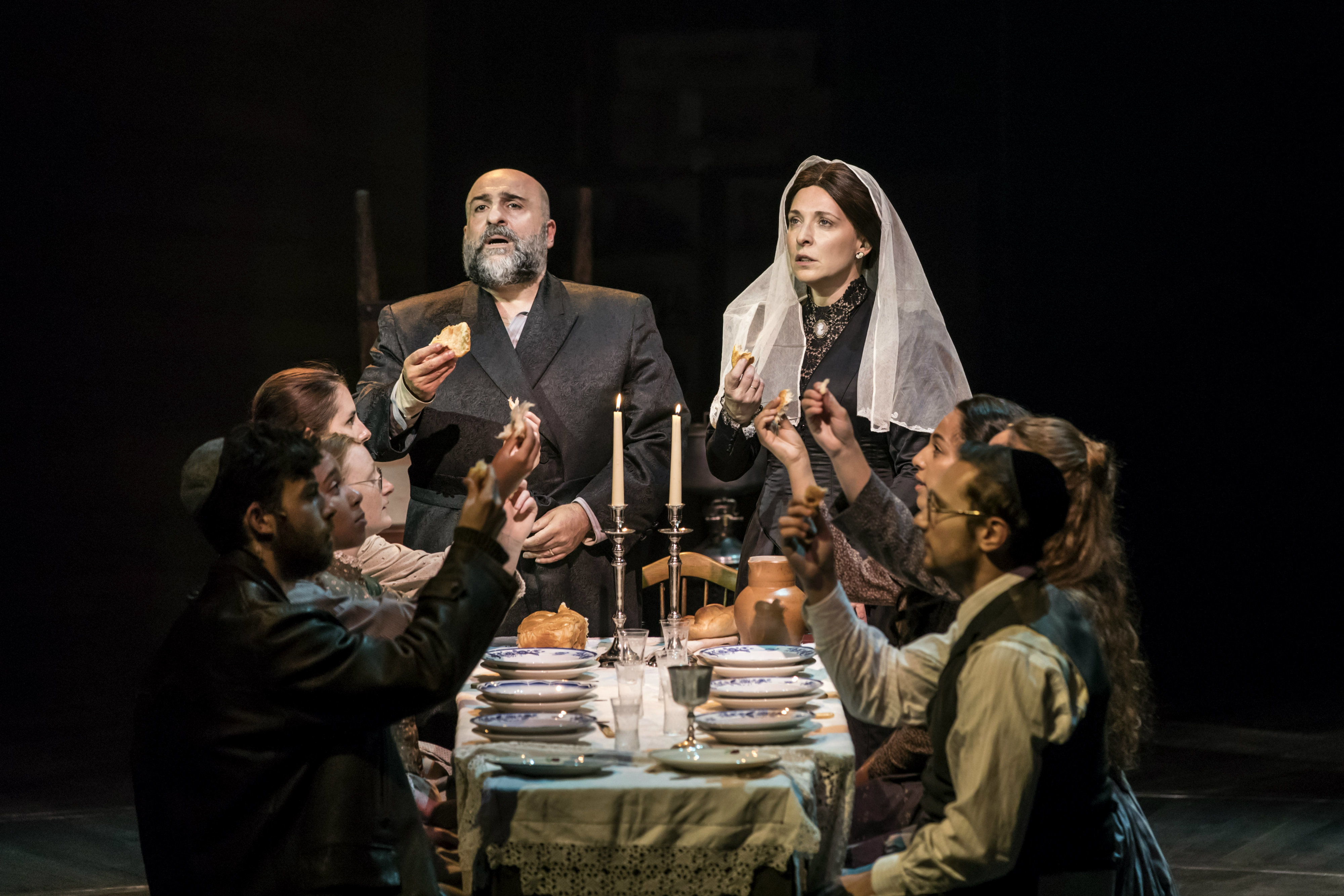
Heart, humour and world-class performances are just some of the elements that make Daniel Evans’s big summer musical an absolute belter. Add to that terrific musicians, Alistair David’s thrilling choreography and Lez Brotherston’s cleverly conceived set, which makes the very best use of Chichester’s unique stage, and you have a show that has all the hallmarks of a West End transfer.

The story of Tevye, a poor dairyman with five daughters, it is 1905 and in Russia an uneasy sense of impending change is in the air. But on a poor shtetl Tevye is more immediately concerned with finding husbands for the three eldest of his girls. Alas, despite his best efforts to keep with tradition, it seems that they are determined to follow their hearts rather than their heads, or indeed the advice of Matchmaker Yente (gloriously played by Liza Sadovy).

Omid Djalili is superb as Tevye. Radiating warmth sufficient to melt a Moscow frost in January, he convinces absolutely as the ordinary family man who is not without his shortcomings. In his regular exchanges with God (Dajalili’s stand-up career is much in evidence here), and later as he sings the touching Do You Love Me? to his wife, he reveals a touching vulnerability.

Tracy-Ann Oberman as his wife Golde is equally impressive. A feisty lioness who knows her old man better than he knows himself, it is an inspired pairing.

The singing overall is outstanding. From sweet and soaring to joyous and rousing, Tradition, the opening number, is nothing short of an emotional musical wallop to the gut.

A stupendous ensemble effort, this is a revival that feels both fresh and relevant. Delivering the theatrical triple of laughter (the dream scene is as clever as it is riotous), tears, and food for thought, it is the latter of the whole shebang that is the production’s ultimate strength.

A sharp reminder of how political and social unrest continues to throw lives into disarray, the final moments are heartbreakingly poignant.

Business of Books: Jane Cable writes from the Romantic Novelists’ Association Conference

Business of Books: State of the Nation
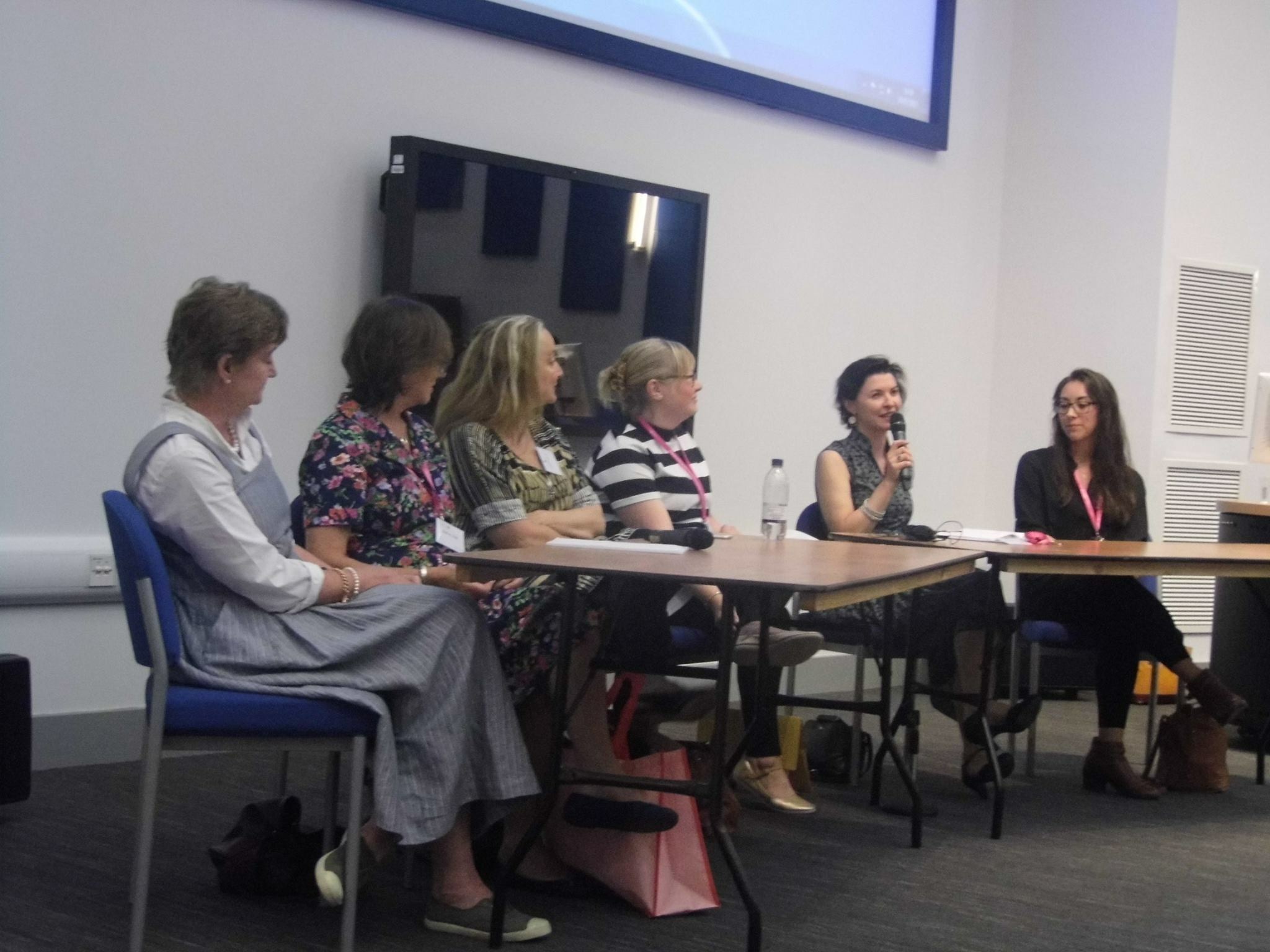
Jane Cable writes from the Romantic Novelists’ Association ConferenceI’m conferenced out. There, I’ve said it now. Suffering from serious information overload but in a very good way. So many fascinating sessions, so many interesting new people to meet. And so much wine to drink – the organisers ordered a mere 600 bottles for the weekend. Not to mention the stocks in the fridges in our own kitchens. Yes, it was a little like rolling back the years and being a student again.The first session after the official conference opening was a state of the industry address and the key messages have interest for writers in every genre, not just romance. Major trends seem to be for shorter books – gone are the doorstops of yesteryear, despite the increase in audio and ebook meaning we don’t have to carry them around anymore. And genres are blurring too – thanks to the rise and rise of indie publishing, even the major houses are beginning to understand that readers are becoming more adventurous.But of particular interest to me was the advice each panellist gave to the assembled authors. Here’s who they were and what they said.

Isobel Dixon (Head of Books and Director of the Blake Friedmann Literary Agency):
Persevere – there is much more flexibility in the market in every way. And once your book is out there, be generous with your readers.

Sam Missingham (former digital project manager at Harper Collins who has just founded @lounge_books, which she describes as a home for book lovers)
Build your own audience platforms, whatever the stage of your career. You can’t waste your time on social media.

Broo Doherty (literary agent at DHH)
Don’t take rejection personally. Believe in yourself.

Rosie de Courcy (fiction publisher at Head of Zeus)
Try to create your own world, somewhere you can write the same but different year after year.

Emily Yau (commissioning editor on fiction lists at Ebury Publishing)
Read as much as you can – in and out of your genre. Understand where your book sits in the market and why it’s special.

Well that’s the words of wisdom – and my thanks goes to John Jackson, the RNA’s unofficial photographer, for the picture.

Now I’m off to plough through pages and pages of notes for more interesting blog content – and some wonderful new people to interview about the business of books.

Three Top Books

hilaryboydaperfecthusband

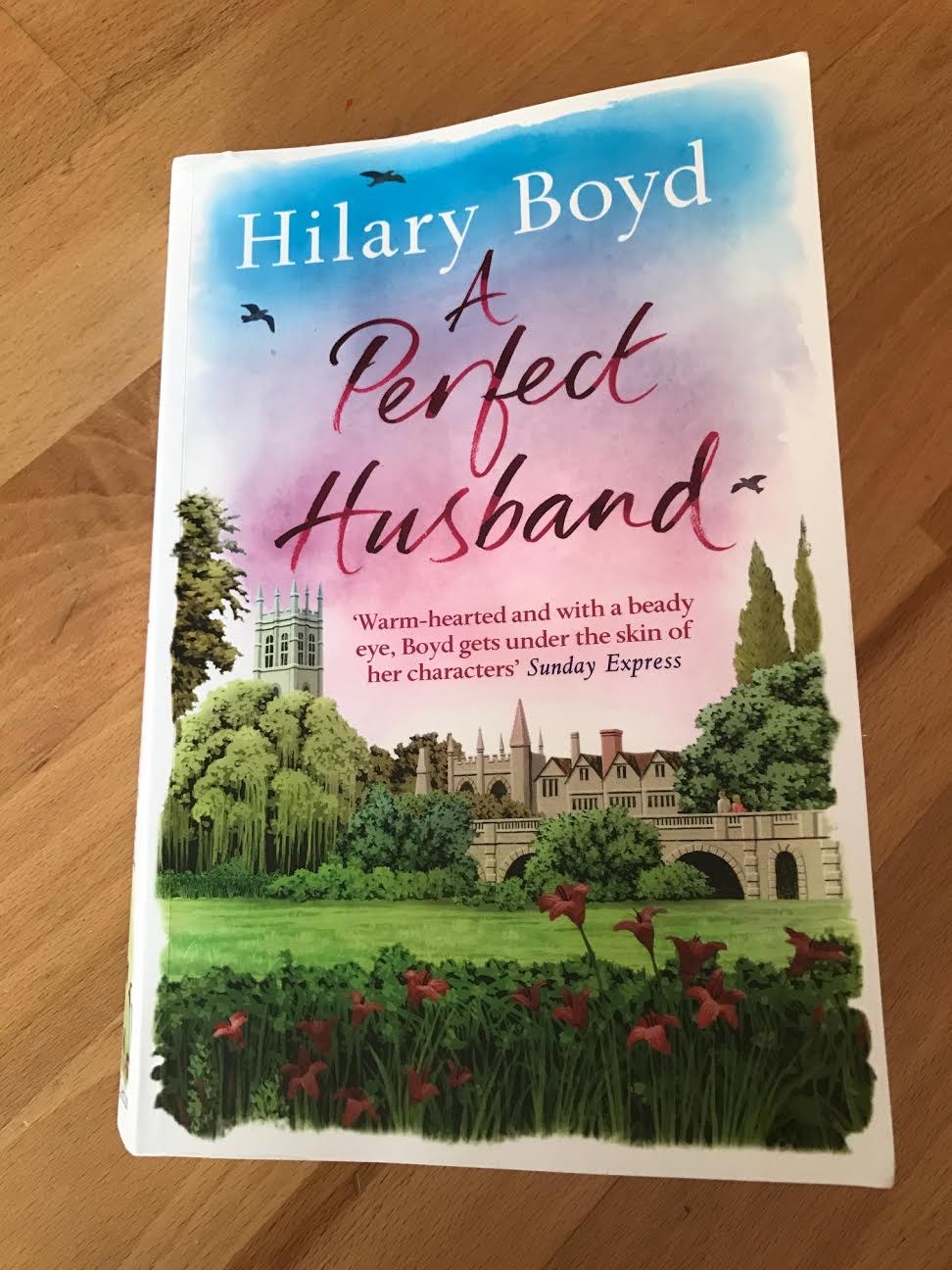
A Perfect Husband by Hilary Boyd

Hardback, 13th July 2017, £16.99

We really loved this. The characters are so vivid and it is so well written. A great book that you will not be able to put down.

 What would it take for you to give up on the man you love, the man you thought was the perfect husband – until you discovered just how much he was hiding from you? 

Lily and Freddy have a wonderful relationship: passionate and fun. Freddy taught her to love again after the death of her first husband. But then Freddy becomes tense, snappy and distracted. Is he having an affair? The truth turns out to be much worse…

Freddy is addicted to gambling. He owes hundreds of thousands of pounds to loan companies; he’s been helping himself to money from his own company, which has now gone bust; and worst of all, his wife’s money – given to him to invest – is gone. Devastated, Lily leaves him, and moves to stay with her sister in Oxford. There, among the dreaming spires, she will clear her head of Freddy and try to figure out how to move on.

 But being away from Freddy is far harder than she’d thought. He promises to get help, but can he really ever be cured of his addiction? How can Lily trust him again – surely, after the heartache he’s caused her, she would be far better off walking away and starting again? The truth is, she is as addicted to Freddy as he is to gambling – and she’s not sure she even wants to be free.

A Perfect Husband is available here.

theupstairsroom
The Upstairs Room by Kate Murray-Browne

Published hardback 27th July

This is a brilliant, atmospheric thriller. Engaging until the very last page. Brilliant.

Eleanor, Richard and their two young daughters recently stretched themselves to the limit to buy their dream home, a four-bedroom Victorian townhouse in East London. But the cracks are already starting to show. Eleanor is unnerved by the eerie atmosphere in the house and becomes convinced it is making her ill. Whilst Richard remains preoccupied with Zoe, their mercurial twenty-seven-year-old lodger, Eleanor becomes determined to unravel the mystery of the house’s previous owners – including Emily, whose name is written hundreds of times on the walls of the upstairs room.

The Upstairs Room is available here.


analmondforaparrotreview
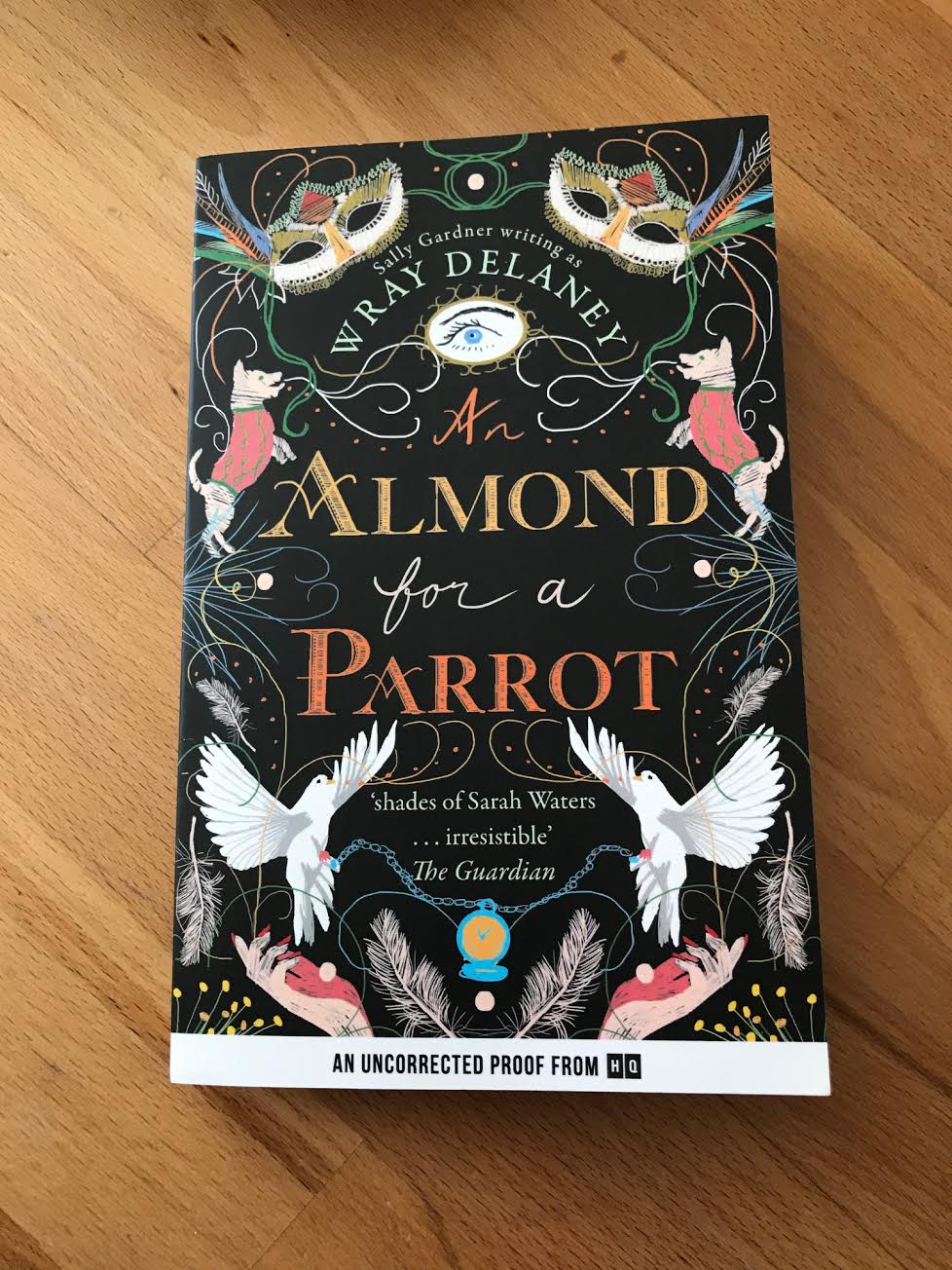
An Almond For a Parrot by Wray Delaney

Published on 13th July

A bawdy and exciting historical read. Fun, naughty and full of intrigue.

‘I would like to make myself the heroine of this story – an innocent victim led astray. But alas sir, I would be lying…’

London, 1756: In Newgate prison, Tully Truegood awaits trial. Her fate hanging in the balance, she tells her life-story. It’s a tale that takes her from skivvy in the back streets of London, to conjuror’s assistant, to celebrated courtesan at her stepmother’s Fairy House, the notorious house of ill-repute where decadent excess is a must…

Tully was once the talk of the town. Now, with the best seats at Newgate already sold in anticipation of her execution, her only chance of survival is to get her story to the one person who can help her avoid the gallows.

She is Tully Truegood.

Orphan, whore, magician’s apprentice.

Murderer? Written by Sally Gardner writing as Wray Delaney

An Almond For a Parrot is available here.


Half a Sixpence by Evie Grace Book Review


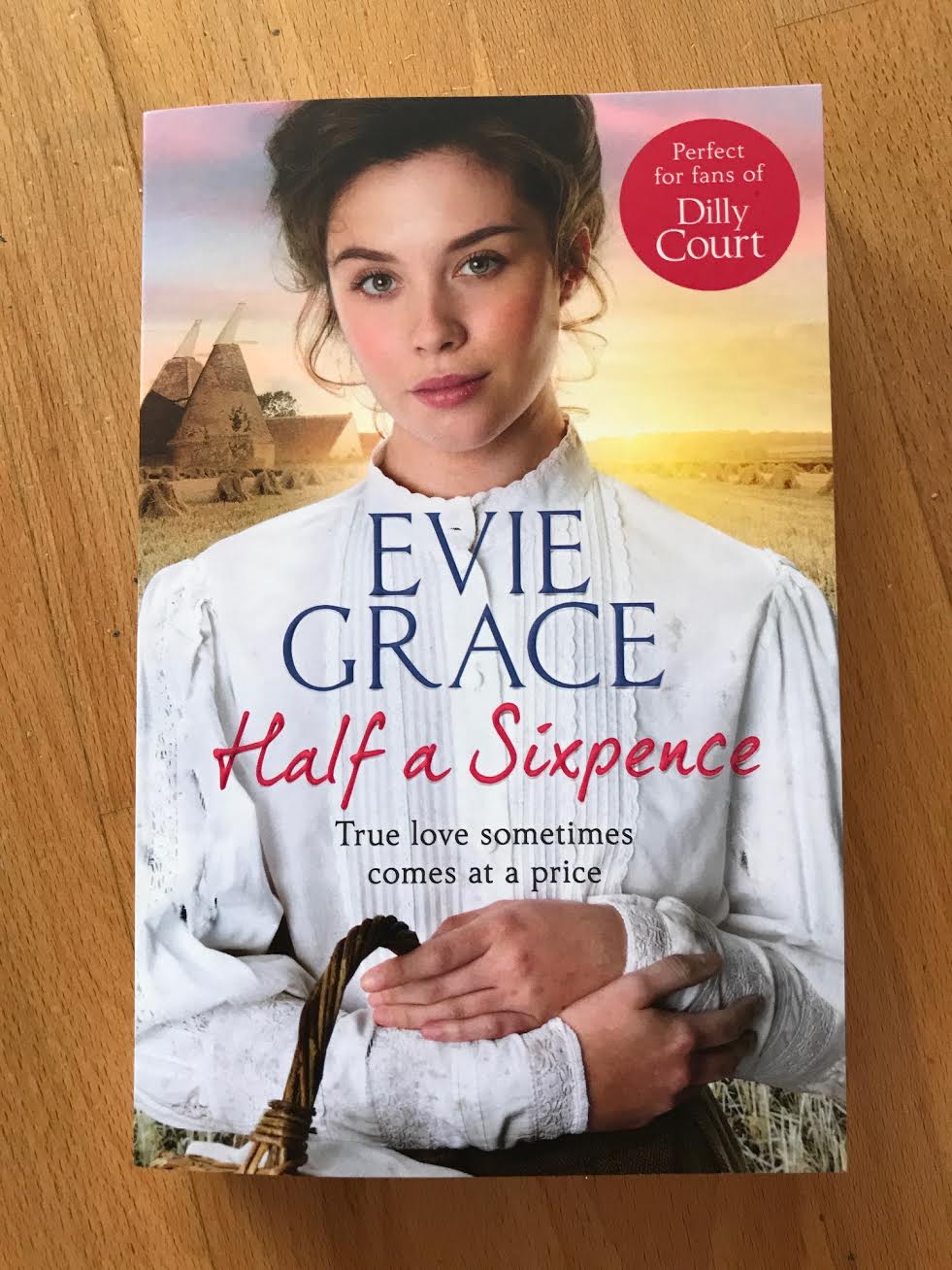
Frost is always excited to discover a new author and our excitement was huge upon the discovery of Evie Grace. Her debut novel Half a Sixpence is a dazzling debut that remined me of the Catherine Cookson books I have loved so much. Brilliant historical fiction that draws you in and does not let you go. Even better, this is the first book in a trilogy. We can’t wait until the next instalment.


Set in Kent in the 1830s, Half a Sixpence by Evie Grace is the first in the Maids of Kent trilogy, published on 13th July. Described as Catherine Cookson meets The Darling Buds of May, Half a Sixpence marks the change in rural life on Rook Farm as the mechanisation of the industrial revolution sweeps across the countryside and changes the fate of families forever.

HALF A SIXPENCE

by

EVIE GRACE

Published by Arrow

Paperback

13th July 2017

Priced £5.99

True love sometimes comes at a price

East Kent, 1830

Catherine Rook takes her peaceful life for granted. Her days are spent at the village school and lending a hand on her family’s farm. Life is run by the seasons, and there’s little time for worry.

But rural unrest begins sweeping through Kent, and when Pa Rook buys a threshing machine it brings turbulence and tragedy to Wanstall Farm. With the Rooks’ fortunes forever changed, Catherine must struggle to hold her family together.

She turns to her childhood companion, Matty Carter, for comfort, and finds more than friendship in his loving arms. But Matty has his own family to protect, and almost as quickly as their love blossomed their future begins to unravel.

With the threat of destitution nipping at her heels, Catherine must forge a way out of ruin . . .

Evie Grace was born in Kent, and one of her earliest memories is of picking cherries with her grandfather who managed a fruit farm near Selling. Holidays spent in the Kent countryside and the stories passed down through her family inspired her to write Half a Sixpence.

She loves researching the history of the nineteenth century and is very grateful for the invention of the washing machine, having discovered how the Victorians struggled to do their laundry.

Half a Sixpence is Evie’s first novel in her Maids of Kent trilogy. Half a Heart and Half a Chance will follow.