Young Voices

Frost is delighted that Megan Cannell has agreed to be the editor of Young Voices. Megan is fifteen. She aspires to be a Forensic Scientist and loves reading and writing. After a holiday sailing off Greece, she has added that sport to her list of likes. Megan lives near London and hopes that more young writers will add their voices to Frost magazine’s new column. Just send to Frost@margaret-graham.com

young-voicesmegforfrost
For our first contribution we are excited to have Rowan’s story of his Chinnor six-a-side team’s success.


Perhaps this sport should make the Olympics?  By Rowan Evans aged 12


Our manager thought it would be a good idea to put me in the top team for our annual Chinnor six-a-side football tournament. But was it?


We’d already played in the Risborough Tournament, and hadn’t been successful. In fact neither of the Chinnor teams made it past the group stages. What made it doubly disappointing was that we had won the Risborough Tournament for the past three years. All right, the weather hadn’t been good for training, but it had been much the same for everyone. So would we do any better this time?


As the six-a-side tournament was only a week away it was going to be tricky. The manager chose his team, and the coaches chose theirs. We had time for just one more training session. The day arrived. It was raining but by now we were used to it. We had to play four matches as there were five teams in our group. We won two, drew one, lost one, which brought us to second place.


We were so pleased as we were through to the quarter-finals. Now we had to play the group leaders from another group. The score at the end of the game was… 2-0 to us!  We were in the semi-finals.


Our manager gave us a team talk, and told us to keep on doing what we were doing – so we did.


We played a Risborough side – and it was the side we could never beat. Believe it or not, Chinnor Six a Side Team were into the final. Another team talk, the same advice as last time – keep doing what you’re doing. So yet again – we did.


We played Chalfont. The weather was cloudy and a bit cold. The game was nerve wracking. We scored first but they equalised one minute before the final whistle. Arghhh. It was a draw, which meant we had to go into extra time. Extra time didn’t alter the score, so it would go down to penalties. But not before I was subbed off in favour of a good penalty taker with a rocket of a left foot.


But would this late substitution be enough?


Chalfont scored their first penalty, but we equalised. Chalfont took again… but our goalkeeper made a great fingertip save. If we scored with out next penalty kick we would win the tournament…  Goal. Yes, yes. We’d done it.


The trophy was ours. We were soaked, muddy but the winners of the Chinnor Six-a-Side tournament 2016. We were sprayed with champagne as we celebrated – what could be better.


National Trust ‘opens’ the Danish, Portuguese and French London embassies to celebrate Heritage Open Days

Friday 9th– Saturday 10th September 2016


Yesterday Frost Magazine’s Margaret Graham and Dr Kathleen Thompson had a treat– a look behind the scenes of the Portuguese Embassy in London, as part of the National Trust’s Europe & Us programme. I must declare a particular interest: my uncle and aunt, and their numerous children lived in Lisbon for much of their lives, (something to do with the trams) and some are still there. They love it, even those over here.

The Portuguese Ambassador’s home is situated in Belgrave Square, an area that was bomb damaged in the war. No 12 was no exception, but walking around, as you can all do tomorrow and Saturday, you would never guess. Entering through imposing double doors we were faced with an airy hall into which led  graceful marble staircase and a ceiling imported from a church – just like that, as Tommy Cooper would have said. It was impressive, but not too large or ostentatious. What was particularly marked was the silence. Behind these doors the bustle of London was just a memory.

Margaret Graham in the Catherine Room
We were able to look around the Catherine of Braganza room. Catherine was married to Charles II; it is often said that their marriage would lead to Britain becoming the largest empire in history because, as part of Catherine’s dowry, Charles was given the seven islands in Bombay, which he would later rent to the East India Company.Even more importantly, dare I say, Catherine liked her cup of tea, and soon, so did the British. So when any of us next sit down to tea and buns, let’s give a heartfelt vote of thanks to Catherine .

There was to be no toddling up the wooden hill as they say in children’s books, but instead we swanned up the marble staircase, the walls of which were hung tapestries. How on earth were these physically worked? I mean, how did they get to the middle? Something to ask on your own tour.


In all the rooms interesting art hung, and my own love, ancient globes, were in evidence: I love to see how the world has changed.
The tour opened my eyes to the inner sanctums of diplomacy, just as the blurb said it would. The strictly limited openings, as part of Heritage Open days, will indeed allow you insights into how these important government buildings are used to allow envoys to entertain while promoting their countries’ interests to the ‘Court of St James’.  Visitors will get to explore these fascinating buildings on guided tours and view the furniture and decorative art that reflects each nation.


National Trust Creative Director Ivo Dawnay comments, In this year when our relationship with Europe has been front and centre of our thoughts, the National Trust is running a programme, dubbed ‘Europe & Us’, that seeks to gain insights into our long relationship with the continent.

Hurry. Make sure you visit one of these Embassies. It really is fascinating. To be honest, I could live in the Portuguese Embassy: it managed to be a home, as well as a showpiece. Sadly, this is unlikely but so glad I managed to get behind the double doors.
For security reasons applicants will be asked to apply with their full names, addresses and contact details and will be admitted only with photo ID.

Tickets are available by application at www.nationaltrust.org.uk/embassy-openings.


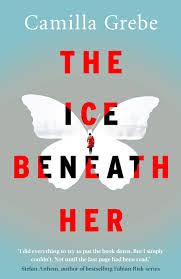
The Ice Beneath Her by Camilla Grebe Review by Margaret Graham

the-ice-beneath-her-by-camilla-grebe-review-by-margaret-graham
Does anyone out there enjoy the plethora of Scandinavian noir on the television? Or is enjoy the wrong word?  After all, noir is not an idle threat. If you do, or even if you don’t, you should try this novel.

Grebe has been compared with Jo Nesbo – you know the thing ‘if you like Jo Nesbo you’ll love this’. Well, I think that Swedish Camilla Grebe stands alone.

With The Ice Beneath Her,  we have a craftswoman at work. Camilla Grebe’s clarity of language  reminds me of my friend Nikki Gemmell’s writing, who reworks, and reworks  to present a vivid empathy that is almost too inclusive, because all that happens to her characters, happens to the reader. I use her regularly as an example of an author for those aspiring to write. I think I will now add Grebe.

Now, I’m not comparing Grebe with Nikki but I am saying that I felt her writing to be   as finely tuned as Nikki’s. Perhaps while waxing lyrical I should include Elizabeth Clark Wessel, who translated the novel from Swedish to English, and in so doing, faithfully stayed as close as anyone could, to the  author’s vision.

So, what is this vision? What is this novel about, the one that is already making waves with film rights sold to Warner Brothers’ New Line Cinema, and international rights that have already sold in 20 territories?

A thriller, or perhaps crime novel, that introduces us to Emma, a mousey sales assistant who is swept off her feet by a charismatic CEO and whose life is opened up to love. But life ceases to be peachy after her lover runs off (perhaps). It is then that  the mouse transforms into a welter of furies. A murder is then lobbed into the mix, the detectives use a brilliant criminal profiler who is in the early stages of dementia. Soon Emma, the transformed mouse and the detectives are on the heels of the mystery man and it is clear their paths will cross.

I know, I know, I’m not making this easy to follow, but it isn’t. It’s complex, and as you read it, it is hard to even guess at what’s going on under the surface. This isn’t a weakness, it’s just a puzzle, and the power of the writing. plotting and general structure is such that you more than stick with it, sure the writer is leading you somewhere. It was disturbing, and exercises the grey matter, but was unputdownable. I didn’t read it before I needed to go to sleep. BEcause I would be tossing, turning, and fretting.

A must read book about obsession, betrayal and of course, love.  Highly recommended.

Published on 8th September  by Zaffre at £12.99  E-book available.

Next week, Camilla Grebe will be telling us of A Day in her Life. Make a date to be with us.


Best Foot Forward: Jane Cable’s blog about what happens once that digital publishing deal is in the bag continues

Jane Cable, publishing, writing
BEST ENDEAVOURS

Jane Cable’s blog about what happens once that digital publishing deal is in the bag continues.

BEST FOOT FORWARD

Editing involves a great deal of sitting down. Far more than my slightly dodgy back can manage at the moment anyway. So after being glued to my office chair for a few hours I balanced my laptop on a box file on the ironing board and tried that (standing at your desk being all the rage). It helped, but not a great deal as I found it slightly awkward to type.

What does work is going for a walk in the middle of the day and I am hugely blessed to live in a small village tucked under the South Downs so peace and quiet and country air are only ever a few steps outside my front door. And while tramping around the lanes is freeing up my back muscles it does exactly the same for my mind.

Agent Felicity has cleverly crafted my elevator pitch as a writer as “love with a ghostly element in a beautiful setting” and I’ll go with that. Completely. And beautiful settings inevitably require walking.

publishing, what happens when you get a publishing deal

The Seahorse Summer is set in Studland Bay in Dorset and opens on the sixtieth anniversary of a rehearsal for D-Day which went horribly wrong. I visited the village exactly ten years later and on my walk up to the cliffs made special note of the wonderful countryside around me; the daffodils dying back on the banks, slowly being replaced by primroses; the tractor rumbling across the fields; tiny birds swarming the hawthorn hedges; enticing glimpses of the sea below. Minute observation helps me to create a credible world for my characters to inhabit.

Every day, as I walk, I do the same thing. It’s a great discipline for a writer. I always say that to write good dialogue you need to remember you have two ears and one mouth. To write great descriptions you need all five senses.

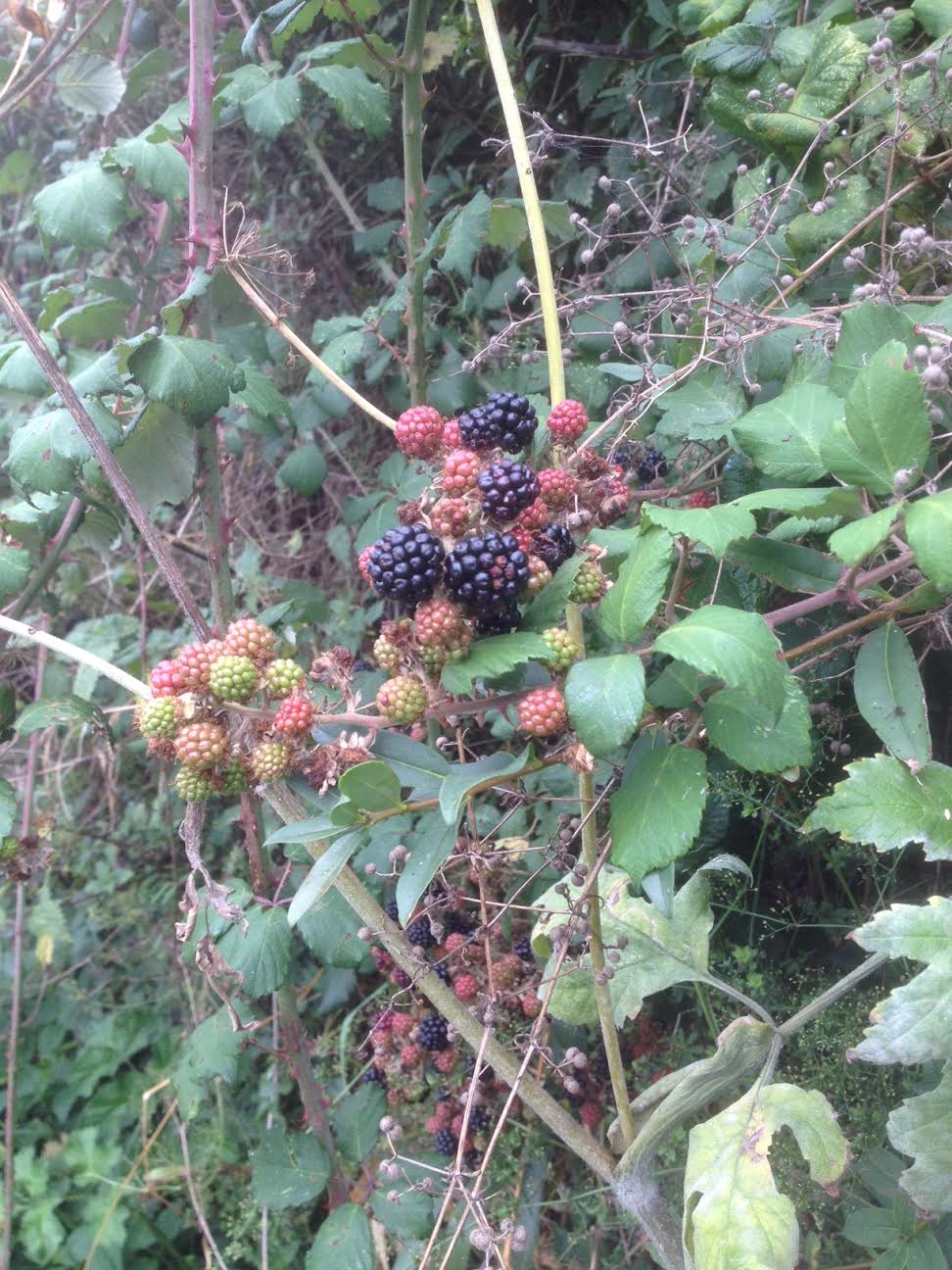
Yesterday the earliest touches of autumn were making themselves felt. Cow parsley dying back to reveal blackberries – some fruits ripe and squashy between my fingers, others in tight green fists. The tiniest hint of chill on the breeze which carried the pheasants’ calls and the wood smoke from a distant bonfire across the valley. The strict definition of meteorological autumn starting on 1st September becoming a reality before my eyes.

Time is, indeed, marching on. But I have finished the character edits for all but Marie and next I need to review each paragraph, making sure it is essential to the story. The book has changed so much since its first iteration I need to remove the distracting loose ends – and in the process make sure that every scene is adding something for the reader.

Jane Cable is the author of two independently published romantic suspense novels, The Cheesemaker’s House and The Faerie Tree, and a sporadic contributor to Frost. The Seahorse Summer tells the tale of how two American soldiers born sixty years apart help forty-something Marie Johnson to rebuild her shattered confidence and find new love. Discover more at www.janecable.com.


WforW Short Story Workshop

short story workshop, short story, writing Words for the Wounded is a charity founded by Margaret Graham, author and contributing editor for Frost Magazine. WforW raises funds through writing events   to help wounded ex-service personnel, with 100% of everything raised going to the wounded. To this end, WforW is holding an inaugural writing workshop on 24th September. There are just a few places left on the:

Short Story Workshop.

Short stories can earn you cash as well as being your calling card. Learn how to turn those rejections into sales.

We will ground you in the basics of short story structure, and provide you with the ability to target your work towards a market of your choice. It will be fun; Margaret and Tracy’s workshops always are.

Tracy Baines has been selling her short stories for almost twenty years. Her stories have appeared in Woman’s Weekly, Take a break, My Weekly and The People’s friend and many others in the UK as well as overseas markets.     www.tracybaines.co.uk

Margaret Graham is a best selling author with Arrow. She also writes short stories and features. She is a creative writing tutor,mentor, editor, and also contributing editor for Frost Magazine. She is founder and administrator of WforW.  www.margaret-graham.com

Saturday 24th September:  10:00 – 16:30   ( Registration 09:30 )

Venue: Downley Community Centre, Old School Close, Downley, High Wycombe, HP13 5TR.  (trains run regularly from London to High Wycombe, Downley is about 2 miles and there’s a taxi rank  at the station )  There is parking at the venue.
Cost: £45

Book online www.wordsforthewounded.co.uk


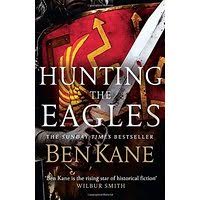
Hunting The Eagles By Ben Kane Review by Jan Speedie

HUNTING THE EAGLES BY BEN KANE Review by Jan Speedie book reviews, books, reading

This is Ben Kane’s second book in his trilogy about the Roman invasion of Germania.  Following his first book covering the invasion of AD9 in which the Roman’s were ambushed and defeated in the Teutoburg Forest. Carefully researched military history, passionate and violent perhaps not for the squeamish or weak hearted.

The first part of ‘Hunting the Eagles’ is planning the revenge for the ambush and the loss of the legions gold Standards. Centurion Tullus, a veteran of many battles, is determined to avenge the loss of 15,000 soldiers and regain his Eagle.

Part 2: Germanicus is now in charge of the Roman forces and planning an invasion of Germania in the autumn of AD14.  In Germania, Arminius and the local warriors are determined to repulse the Romans once again.  Legions and tribes clash in bloody battle, who will survive, who will conqueror……….

Immerse yourself in this story of Roman legions; it’s cruel, relentless and compelling reading.

Ben Kane was born in Kenya. The family moved to Ireland where Ben completed his education and then studied veterinary medicine at University College, Dublin.  Ben always had a passion for ancient history and travelled the world visiting and collecting facts and incredible stores about Roman history. Ben lives in North Somerset with his wife and children.

Published by Arrow in Paperback £6.99


The Bunker – a New Theatre

A brand new theatre, named The Bunker, is opening in a former underground car park in Southwark Street and is set to be the capital’s newest contemporary Off-West End venue. Behind this exciting venture are Joel Fisher and Joshua McTaggart – two up-and-coming, emerging creatives set to take the theatre world by storm.

Alongside the theatre programme, The Bunker will curate art installations, film showings and one-off performances encompassing work-in-development, poetry, music, dance, and discussions. A night at The Bunker will be an event in itself that extends beyond an ordinary evening at the theatre.

The autumn season, which runs from October 2016 until January 2017, includes the exciting transfer of a new Philip Ridley production and a transfer of Isley Lynn’s award-winning sell-out show from the 2016 VAULT Festival. The Bunker will also host a brand new musical during the Christmas period, and present a double bill of Irish plays in the new year.

Executive Producer Joel Fisher comments, The Bunker offers a chance for audiences to tell us what they want and what matters to them. Being in the heart of Southwark in this incredible creative hub means that we can start to pinpoint who our audience are and what shows they want to be seeing. This part of London is quickly becoming a cultural hub with developments at Tate Modern and the Globe and the London Theatre Company taking up residency at One Tower Bridge, and The Bunker joins this cultural movement. We want to share ideas with the theatres around us and find new and exciting ways of collaborating.

The renovated space includes a 110-seat auditorium, bar space, office space, technical booth, and dressing rooms.

The inaugural autumn season is as follows:

Rive Productions and The Bunker presents
 Skin a Cat (12th October – 5th November

Metal Rabbit Productions presents
 Tonight with Donny Stixx (8th November – 3rd December)

Interval Productions present
 Muted (7th December – 7th January) 
New musical Muted, written by Sarah Henley, composed by Tim Pottery-Jones, with additional lyrics by Tori Allen-Martin,

Abigail and Come on Over (10th January – 4th February 2017)
For the final production of the season, The Bunker will present a double bill of Irish plays by two of the country’s most exciting writers.

All main house shows run from Tuesday to Sunday with matinees on Saturday and Sunday afternoons.

The Bunker, 53A Southwark Street London SE1 1RU

http://bunkertheatre.com/

Twitter @BunkerTheatreUK
 Facebook www.facebook.com/bunkertheatreuk Instagram @BunkerTheatreUK


BEST ENDEAVOURS: Jane Cable’s blog about what happens once that digital publishing deal is in the bag continues

BEST ENDEAVOURS: Jane Cable’s blog about what happens once that digital publishing deal is in the bag continues , writing, getting published, am writing
BEST LAID PLANS

The email came on Monday, via Agent Felicity, with the impeccable timing only achieved by a communication containing deadlines which arrives at the beginning of a holiday. And not a plenty-of-time, relaxing-on-the-beach sort of holiday – a full on archaeological tour of Orkney, with just about every waking hour accounted for.

It was a holiday we’d been looking forward to for over a year: a small group led by a real live archaeologist (a dead, or even half dead one would have been of limited use) around the amazing array of Orkney’s historical sites (see www.orkneyarchaeologytours.co.uk). In just six days we travelled from the Neolithic to World War 2 and back again. Via the ephemeral Picts and the rather more visceral Vikings. We crawled into Stone Age tombs and gazed in wonder at homes lived in 4,500 years ago at Skara Brae. The novelist in me was bitterly disappointed to find the story of the Italian PoWs who built a beautiful chapel from scrap had already been fictionalised, while at the same time storing away nuggets about life as an archaeologist for my current work in progress.

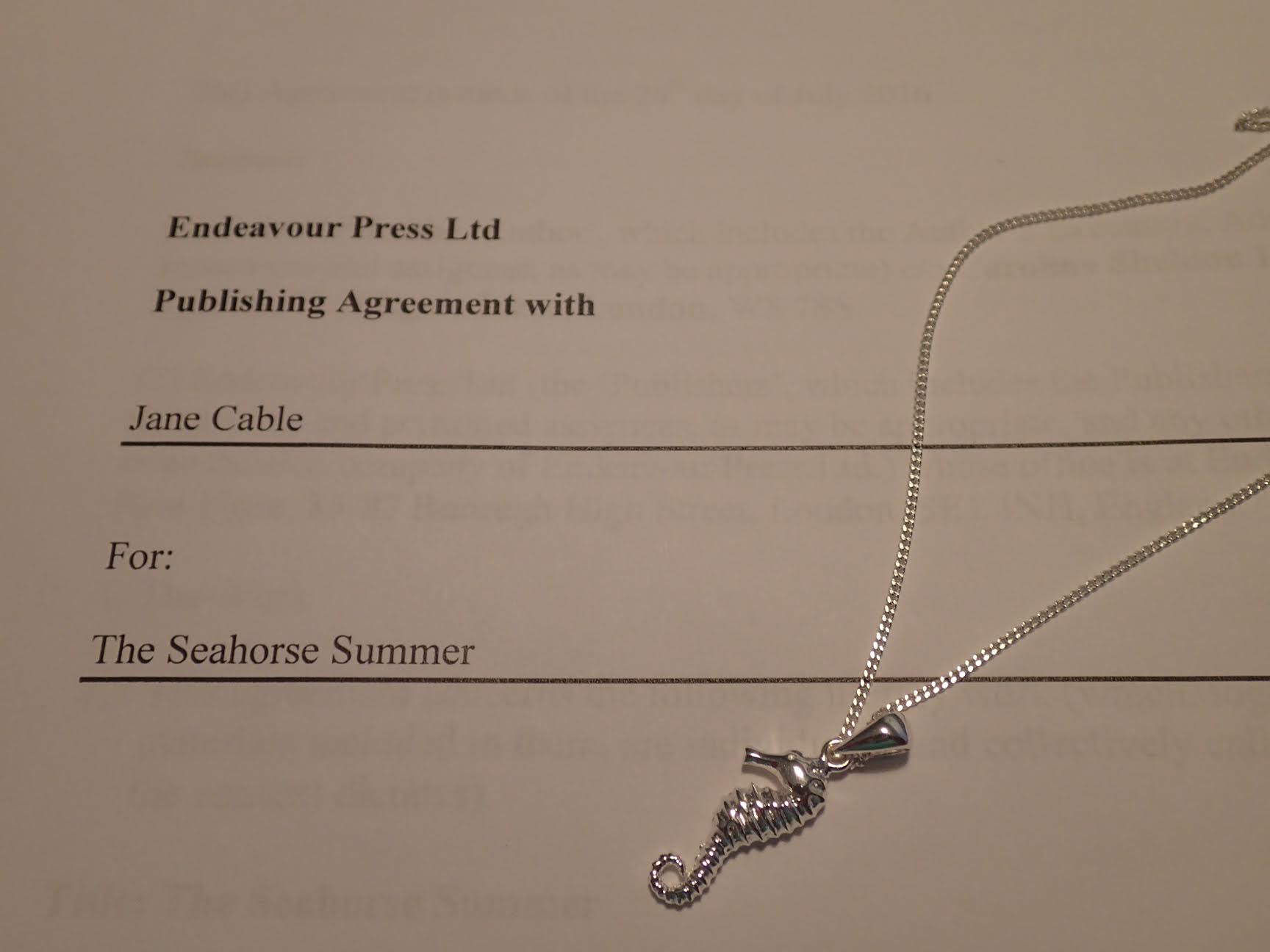
But I digress. The email forwarded to me was from my publisher, Endeavour Press, with an outline timetable for the production phase of The Seahorse Summer: finish the manuscript over the next few weeks, then four to six weeks later they would send me proofs and edit notes. Together? I consulted a writer friend who is published by a rival digital house and yes, that’s the way things are done. Proofs are not final proofs; she received five sets in all and great emphasis was placed on getting things right.

So what I need to get right now is my manuscript. I am delighted to be left to my own devices to do this but at the same time I just know that the “two days’ work” suggested by Endeavour at the pre-contract stage will take me so much longer. Readers are going to part with hard earned cash to buy my book (I hope!) so I owe it to them to make it as perfect as possible.
I guess every writer has their own method of editing. The Seahorse Summer, as a story, is complete. The characters are fully formed but the words aren’t as polished as I’d like them to be. So that’s the first thing I’ll do. Trusty filofax in hand I pencil in Monday and Tuesday next week for this vital task.

Please understand that I am not a full time writer – I also have a business to run. Thankfully my husband (when he gets over his post holiday grump) will be on hand to help, but even so on Wednesday I need to be at a client to deal with their month end – and on Thursday I need to deal with our own. And catch up on all the little tasks that didn’t get done while we were away.

Once these jobs are complete I can return to my editing. Next I’ll work through the manuscript from the point of view of each character, making sure their stories progress logically and their external and internal journeys are sound. For this I’ve booked in five to six days over the next fortnight – each one diarised in between client commitments, training courses, a hair cut and what will doubtless be a much needed massage.

The final read through I’m leaving until I have a clear week later in the month. I can deal with all the loose ends I’ve unearthed (why did the strange rumbling and roaring Marie hears disappear?) and make sure every word is where it should be. All 80,000 of them. And that’s where my meticulous planning should all pay off.

Jane Cable is the author of two independently published romantic suspense novels, The Cheesemaker’s House and The Faerie Tree, and a sporadic contributor to Frost. The Seahorse Summer tells the tale of how two American soldiers born sixty years apart help forty-something Marie Johnson to rebuild her shattered confidence and find new love.

Discover more at www.janecable.com