Teresa Mills’ Mosaics Review by Margaret Graham

At Frost we love to see something just that bit different, and Teresa Mills’s products certainly fit the bill.

teresa-mills-mosaics-review-by-margaret-graham1
Teresa is the author of four best selling books on mosaic art which I found interesting  even before I laid eyes on the Pixelated Mosaic Kits, because I have had  a fascination with mosaics ever since I saw my first Ancient Roman floor. But wouldn’t Teresa’s kits be a fiddle? Wouldn’t any child end up having a tantrum as they struggled to cut and grout the tiles?

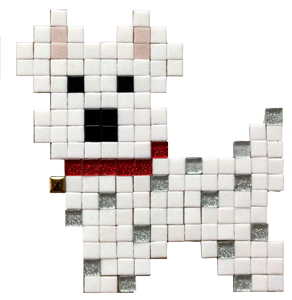
No, actually, that’s the beauty of the kits. The tiles fit the pixelated design exactly without cutting and grouting so absolutely no need to run screaming from the room with grout in your hair, pursued by your child, or grandchild who has been driven to fury by the fiddle of it all.

These tiles are a manageable size, and the quality is excellent. My favourite (because I like them)  is the butterfly. Everything comes in a cotton bag, the base board is wooden, and the tiles are glass, glitter and silver.

Megan Cannell, who edits our Young Voices thread, had a go. She is 15 but you’re never to old to be creative and she found, as did I, that the tiles are not too small, and are easy to fix. The colours are vibrant, and we felt they’d be just right for Mabel, who is eight, or for a young lad we know.
teresa-mills-mosaics-review2
I do like quality products and I hope that Teresa is on to a winner here, especially with winter and Christmas not too far away. Grannies, who seem to do a fair bit of child care these days, will welcome these kits with open arms. I just feel that anyone, young or old, who produced the finished article would find a sense of satisfaction – a piece of creative craft well done. Let’s face it, it must encourage the creativity that lies within everyone, and that is always a good thing.

teresa-mills-mosaics-3
These Pixelated Mosaic Kits are handmade in the UK, and the team at Frost highly recommend them. They are reasonably priced too. The three above are £11 each.

Available in a variety of designs, from insects and animals to shapes and letters, they are an ideal way to delve into the wonderful world of mosaics.  Each kits contains all you need to make your very own mosaic masterpiece.  Handmade in the UK from high quality materials, each kit comes in its own beautiful cotton bag with the design printed on the front.  They are suitable for all ages and are perfect for keeping the kids busy or as a boredom buster.

For more details: www.teresamillsmosaics.com

 

Great Fire of London 350th Anniversary by Margaret Graham

Frost Magazine is always concerned about the safety of children and felt we must share this with our readers. It’s 350 years since the Great Fire of London broke out, and educating our youngsters about fire safety has certainly come a long way since then. It’s so important that children know what to do in an emergency, outside of the home as well as in.

In honour of their 150th year, the London Fire Brigade (LFB) have teamed up with much-loved toy brand PLAYMOBIL to teach young children about fire safety through play. Free station open days are being held throughout 2016, with limited-edition LFB versions of the PLAYMOBIL fire engine and a catchy sing-a-long fire safety video available to watch and play along at home.

great-fire-of-london-350th-anniversary-by-margaret-graham1

Does your child know what the Brigade can help with outside of the home? LFB have recruited a specialist crew of firefighters to ensure children know who to call when they are in danger with a fun sing-a-long fire safety video, available here: http://bit.ly/PLAYMOBIL_LondonFireBrigade_Video. Why not settle down to watch it with your little ones and play along with our special quiz?1. What is the second emergency our PLAYMOBIL firefighters are called to?

  1. What do the firefighters use to put out the fire at the outdoor campfire?
  2. What catches fire at the PLAYMOBIL castle?
  3. What is the name of the colourful clown last to be rescued by the Brigade from the road accident?


What really happened during the Great Fire of London? Find out how much your budding little heroes really know about what happened during the Great Fire of 1666, with our online quiz here: http://www.london-fire.gov.uk/Flash/great-fire-of-london-quiz.asp


Can you spot the fire hazards? It’s important to teach your children how to spot hazards just as well as you do. Get them started with this interactive game: http://www.london-fire.gov.uk/Flash/EscapePlanningGame.asp

great-fire-of-london-350th-anniversary-by-margaret-graham2Play firefighter at home: It could help your children to learn what firefighters do if on their next birthday, granny could give them Limited-edition LFB versions of PLAYMOBIL’s fire toys created for little ones to learn through play at home. 10% of proceeds will be donated to the Brigade’s charities of choice.


Toys available to purchase at the LFB open days, online at Kerrison Toys and from PLAYMOBIL customer services.


Best Endeavours Technical Best: Jane Cable On What Happens After You Sign That Digital Publishing Contract

Jane Cable, publishing, writingBEST ENDEAVOURS

Jane Cable’s blog about what happens once that digital publishing deal is in the bag continues.

TECHNICAL BEST

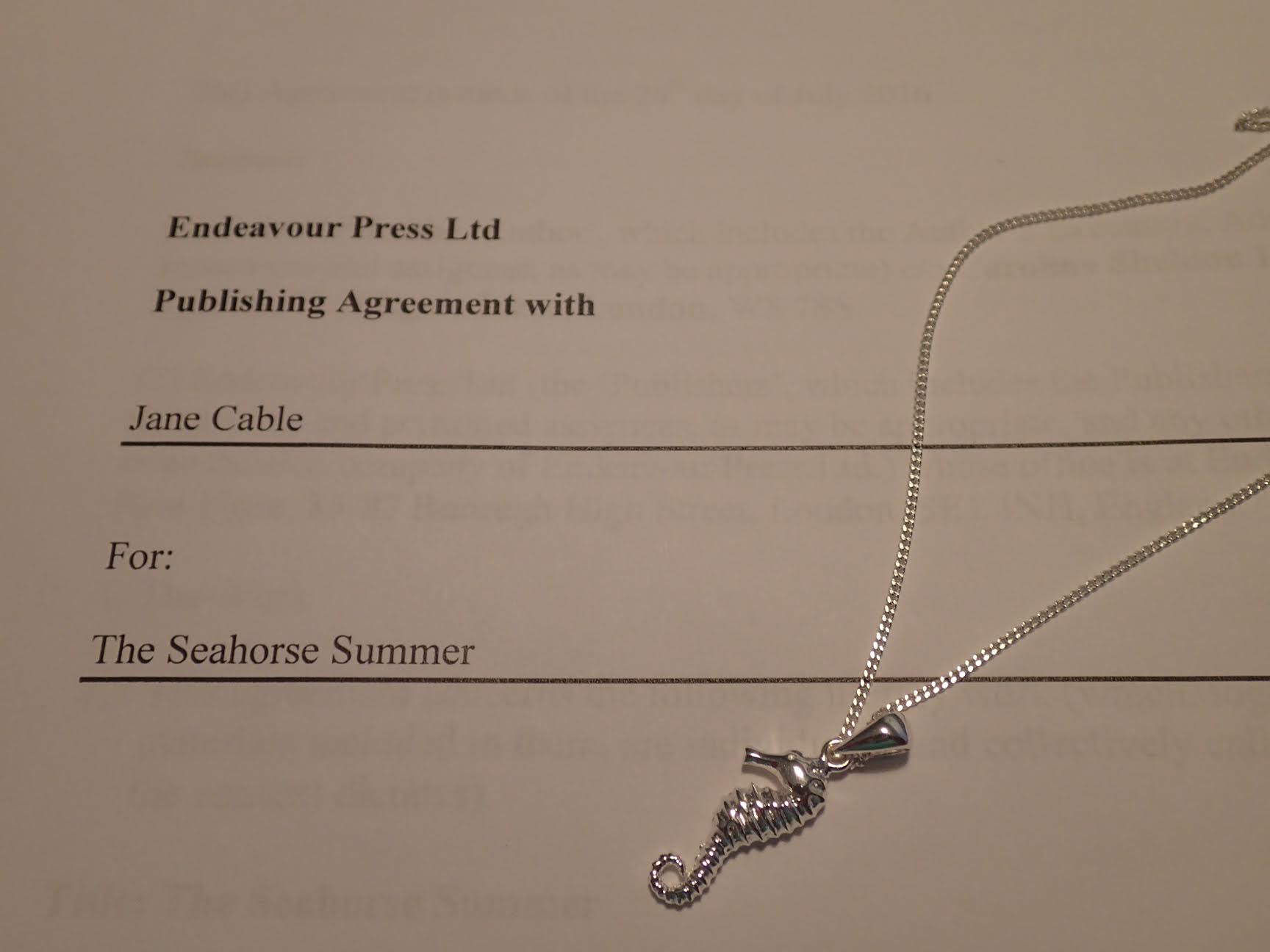
I feel as though I know every word of The Seahorse Summer off by heart. And that can’t be a good thing. My real battle with editing over a short period of time is coming to the manuscript fresh and able to concentrate on what’s actually on the page, not what I think is there.

It’s just as well I’m on the last lap now, the technical points which are often overlooked. None of them rocket science but mistakes which are all too easy to make and not so simple to spot: a ‘by’ for a ‘my’; a missing indefinite article; and the multiple perils (for me at least) of punctuating dialogue. Yes, I could leave that to the proof reader but I’d like to submit a manuscript which is as perfect as possible.

I have another task for this week too. Quite some months ago I was asked to judge the Autumn Writing competition for one of the better writing groups. The subject matter – A Ghost Story – poetry or prose – and now the entries are sitting in my inbox. To be honest they will be a welcome distraction.

Best Endeavours Technical Best: Jane Cable On What Happens After You Sign That Digital Publishing Contract writing, amwriting, publishing

Most helpfully the group’s website gives a critique guide which can double as a framework when editing your own manuscript and for anyone embarking on the process I thought it would be useful to summarise:

Plot
Is the plot believable? Is it too fast or too slow? Too simple or too complex?

Characters
Too many characters or too few? Are they real people, or flat cutouts? Is it easy to confuse one with another?

Setting
Too many locations or too few? Too much description or too little?

Dialogue
Too much or too little? Do the characters have different voices? Are their words believable?

Viewpoint
Do we stay in one viewpoint, or change? Does the chosen viewpoint work?

Ending
Is the ending too sudden or too slow? Does it follow logically from the story? Does it leave the reader satisfied?

Technical Points
Are there errors in grammar, spelling, layout or punctuation? Are there factual mistakes?

Having some sort of structure helps you to step back from your own work and see it more as others do. Not an easy task, by any means, but an essential part of the writing process. If you don’t belong to a writers’ group you may well have completed your manuscript in glorious isolation. If you aren’t against a deadline, put it down for a few weeks, read something else, get out into the real world for a while so you come back to it fresh.

At the very least, pick up a few ghost stories and settle down with a cup of tea to enjoy them.

Jane Cable is the author of two independently published romantic suspense novels, The Cheesemaker’s House and The Faerie Tree, and a sporadic contributor to Frost. The Seahorse Summer tells the tale of how two American soldiers born sixty years apart help forty-something Marie Johnson to rebuild her shattered confidence and find new love. Discover more at www.janecable.com.


The Inheritance by Katie Agnew Review by Frances Colville

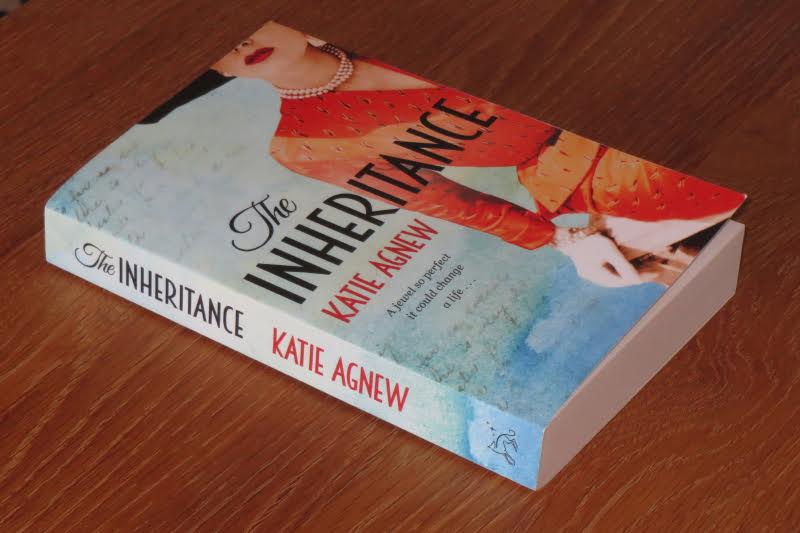
  Pic 1   If you like a good story with a variety of locations and some interesting characters, you'll love this new novel from Katie Agnew, whose first novel Drop Dead Gorgeous won a WH Smith Fresh Talent Award.    The Inheritance is essentially the story of Sophia Beaumont-Brown who used to be an IT girl, but is currently single, cut off from her family and reduced to sofa-surfing.  An appeal for help from her dying grandmother offers her the opportunity to turn her life around and to make sense of the past. Can she unravel the stories of her family's history and find what her grandmother wants her to find before it is too late?   But The Inheritance is not just Sophia's story.  Several different threads draw us into the lives of other characters in the book with settings ranging from pearl diving communities in Japan through pre-war and wartime England to 21st century London and New York.  The plot is well handled and you'll be kept guessing until the last chapters as to exactly how it is all going to work out.  An easy-to-read but fascinating story with some intriguing twists.   The Inheritance by Katie Agnew was published in trade paperback by Orion on 21 July 2016 priced at £13.99.If you like a good story with a variety of locations and some interesting characters, you’ll love this new novel from Katie Agnew, whose first novel Drop Dead Gorgeous won a WH Smith Fresh Talent Award.


The Inheritance is essentially the story of Sophia Beaumont-Brown who used to be an IT girl, but is currently single, cut off from her family and reduced to sofa-surfing.  An appeal for help from her dying grandmother offers her the opportunity to turn her life around and to make sense of the past. Can she unravel the stories of her family’s history and find what her grandmother wants her to find before it is too late?


But The Inheritance is not just Sophia’s story.  Several different threads draw us into the lives of other characters in the book with settings ranging from pearl diving communities in Japan through pre-war and wartime England to 21st century London and New York.  The plot is well handled and you’ll be kept guessing until the last chapters as to exactly how it is all going to work out.  An easy-to-read but fascinating story with some intriguing twists.


The Inheritance by Katie Agnew was published in trade paperback by Orion on 21 July 2016 priced at £13.99.


99 objects about Europe & us by Margaret Graham

In this year when our political relationship with the continent has been so hotly debated, the National Trust have put together a selection of objects from their vast collections that help examine our nation’s rich and ancient cultural connections to our neighbours. This is a fascinating digital diary, and we’ve included a couple of excerpts here. It is a great idea to check in each weekday to find out what stories our objects have to tell.  But here are a couple to be getting on with.

Day 35. Campi phlegræi. Observations on the volcanoes of the Two Sicilies as they have been communicated to the Royal Society by Sir William Hamilton … Date 1776 Place of origin Italy. On show at Wimpole, Cambridgeshire, East of England, National Trust.

Not sure that I’d hang about as a live volcano does what it likes to do, but Lady Emma Hamiliton’s husband, Sir William Hamilton was made of sterner stuff. Campi Phlegraei or ‘Flaming Fields’ is a first-hand report of the spectacular eruptions of Mount Vesuvius written by Sir William Hamilton, the British envoy to the Neapolitan royal court and expert volcanologist. Perhaps he saw it as a metaphor for his wife’s raging affair with Lord Nelson which was burning strongly at the time? As a diplomat, Hamilton entertained many visitors and frequently accompanied them on the perilous ascent of the live volcano without a hard hat or flame-proof jacket in sight.  The area’s history of volcanic activity, including the recently excavated nearby classical sites of Pompeii and Herculaneum, made it a popular tourist destination for wealthy travellers making the Grand Tour.   Hamilton’s text is a wonderful example of a beautifully illustrated treatise from the Age of Enlightenment – when science clearly came before health and safety.

Day 8  Harp. Sebastion Erard 1732 – 1851 On show at Lyme Park, Cheshire.

The maker of this particular harp was the Frenchman, Sébastien Erard. Prior to establishing his firm in London, Erard was closely associated with the Bourbon court including the harp-playing Marie Antoinette, whose arrival to Versailles in 1770 fuelled the rage for the instrument amongst the French elite.   But by the early 1790s, with many of his clients facing certain death by guillotine, Erard fled France for London where he established a shop on Great Marlborough Street. There he honed his craft to such a degree that by 1794 he took out the first British patent for the harp to protect his innovations. In 1800, the Princess of Wales bought one of his harps and the success of his firm was ensured; by 1810 he had sold nearly 1400 of his stringed instruments from his London outlet alone.

http://www.nationaltrustcollections.org.uk/.


A Day in the Life of Camilla Grebe – author of The Ice Beneath Her

Frost is delighted Camilla has found the time to write A Day in the Life for our readers. Her books is excellent, and her advice to aspiring writers, is too. Read on.

a-day-in-the-life-of-camilla-grebe-author-of-the-ice-beneath-herI’m equally fascinated and amused by the misconceptions about life as a writer. You know, all the talk about creative anxiety, the booze and the glamorous lifestyle. To be honest, my life is nothing like that, although I consider myself extremely privileged to be able to work with what I love. And yes, I get to travel a lot and meet really cool people.

As a mother-of-two (and a dog owner), I wake up quite early to prepare breakfast and walk my nine-year-old Dalmatian, Ella. We live by the sea in downtown Stockholm – a beautiful location. As we walk pass the old ships we often stop for a coffee on one of the piers and watch people (me) and bark at dogs (Ella).

I mostly work from home, although I sometimes visit the Royal Library to write, surrounded by thousands of books – the library’s collection includes all works published in Sweden since 1661.

Before lunch I’ll go for a quick run or hit the gym – sitting in front of a computer all day can be really tough on your neck and back, so I need to work out. Also, I’ve discovered that the best way to solve a creative problem is to go for a run, as it really clears your thoughts.

I usually have lunch with a friend. Writing is solitary work, so I need to socialize during lunch or dinner, or else I fear I might turn into a hermit.

After lunch I spend another four to five hours working. Apart from the actual writing, I work on plots and do research into all kinds of strange subjects. For The Ice Beneath Her

a-day-in-the-life-of-camilla-grebe-author-of-the-ice-beneath-hercamillagrebebook

I talked to a medical examiner about beheading (!), read articles on Inuit mythology and had a long e-mail correspondence with a man in Greenland to find out exactly how one would dig a grave when the ground is frozen solid. If someone should overhear me on the phone when I did research, chances are they’d think I’m a serial killer.

I have dinner with my family and always end up watching TV on the sofa afterwards. I’m a big fan of British and Scandinavian crime series and movies. If someone disturbs me in the middle of a movie, I’ll calmly explain that, hey, I’m working, not just relaxing in the sofa (since I need to watch TV in order to be a good writer!).

It is, at least partly, true.

Before I go to sleep I always read for an hour or two in bed. When it comes to books, I don’t exclusively focus on crime. I try to read different genres – everything from historical novels to horror and biographies. In fact, that would be my best advice to anyone who wants to become a writer: Read a lot. Read all kinds of books, good ones and bad. And learn to tell the difference.
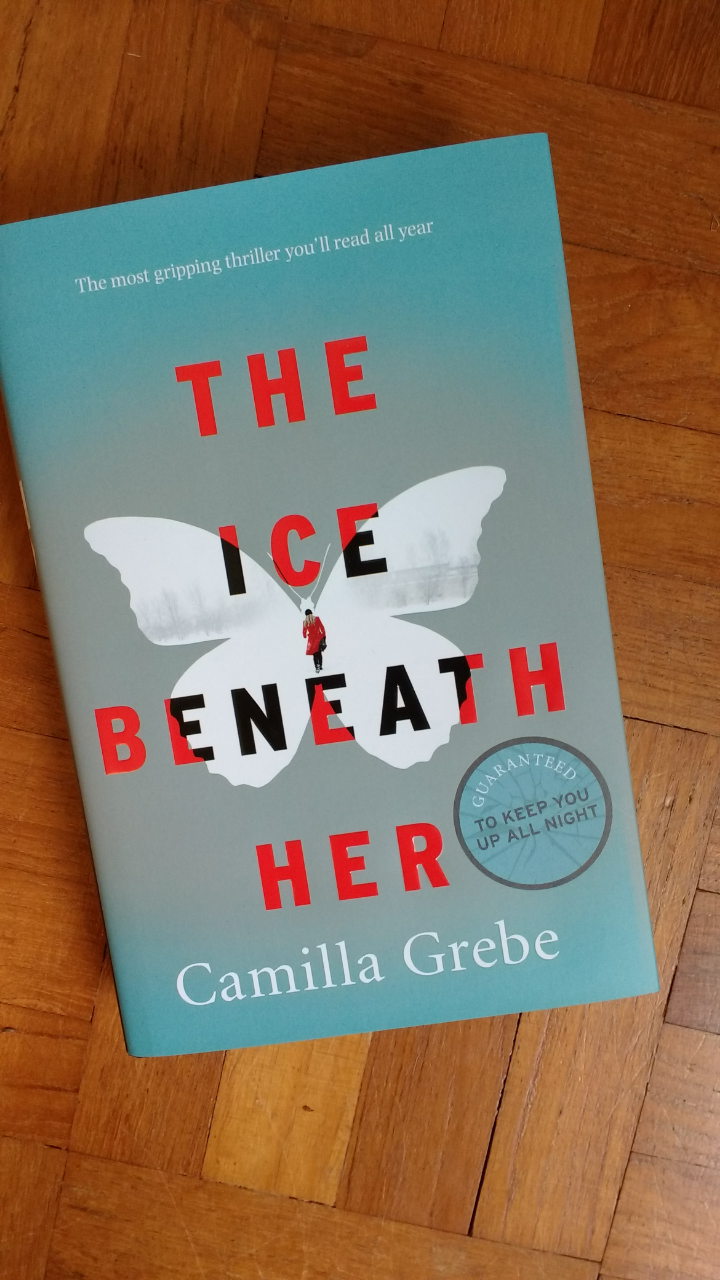
The Ice Beneath Her is available now. Published  by Zaffre at £12.99  E-book available.


The Stylist by Rosie Nixon Book Review

Absolutely the novel for all those who love a really good romp with a bit of an edge.

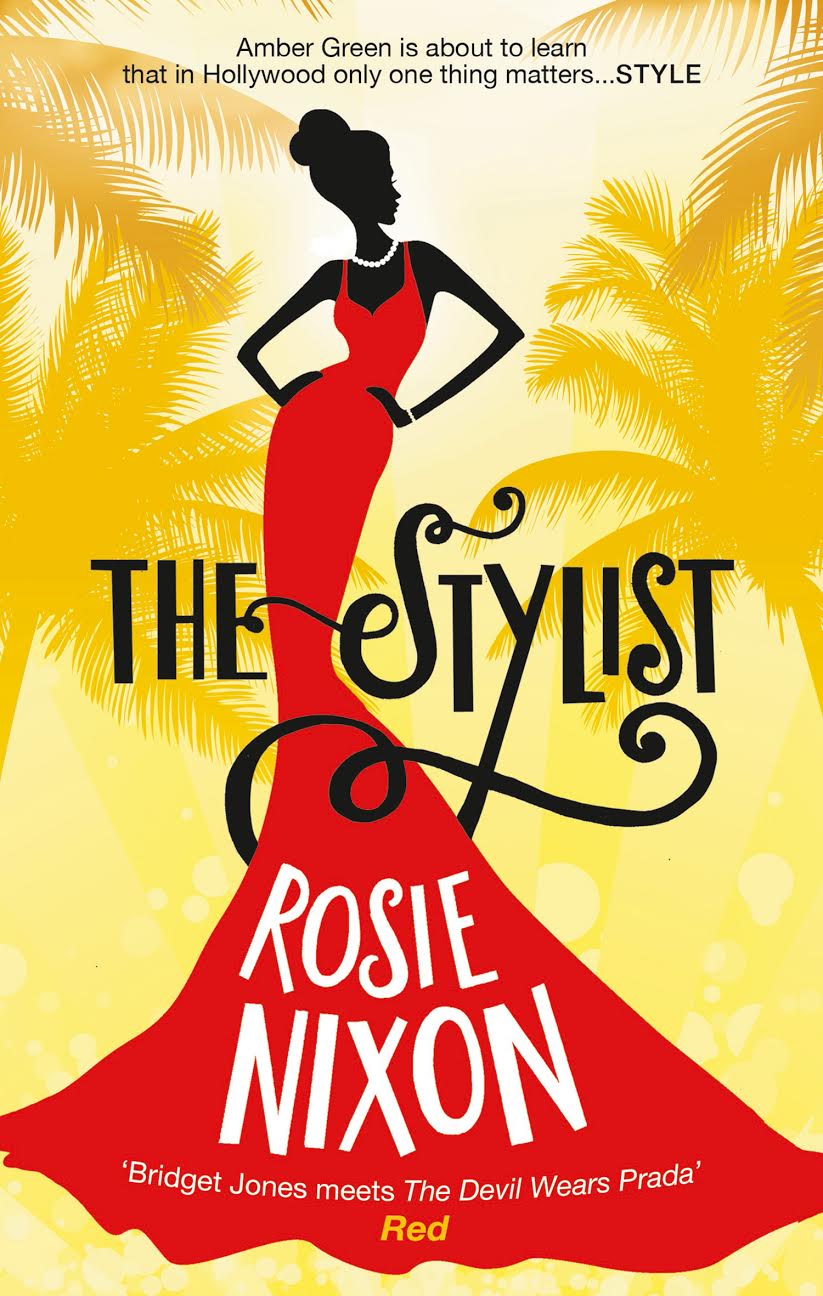
 Absolutely the novel for all those who love a really good romp with a bit of an edge. Pic 1 Written by Rosie Nixon, the Editor-in-Chief of HELLO! The Stylist is the Cinderella story for our time. Amber Green is an ordinary sales assistant in an exclusive London boutique – so admittedly she doesn’t slog away in a kitchen, but the girl needs a few princes in her life. Then lo! Amber is mistakenly offered a job with Mona Armstrong who seems to exist on coffee, water and champagne, with not a morsel of food passing her lips. Mona is a ‘stylist to the stars’. Written in the first person, Rosie Nixon whooshes Amber into the exotic world of the glamorous and famous where she has to style some of Hollywood’s hottest celebrity stars at the LA Award Season. (Though she travels in economy while Mona doesn’t, of course) The pace of The Stylist must replicate the frenetic life of just such a stylist, and Rosie Nixon with her experience of women’s glossy magazines, will know all about that. I thought the juxtaposition of Amanda, unspoilt by her life with the stars, longing to be home, the Eastenders theme tune playing through her mind as she struggles to sleep on her return to Britain, was touching amongst the glitz. This normality does actually keep us empathising with her. Clever, I thought. The Stylist is a serving of sun, fun and a real look behind the scenes. But it is a novel that doesn’t ignore the core of the protagonist. Does Amber find her prince? Ah well, read it, enjoy the ride, and find out for yourselves. A really fun read. A success. Keep your eye on Frost Magazine next week, because Rosie Nixon’s A Day in the Life will be published. See if the glitz extends into this extraordinary young woman’s every day life. Crikey, she’s busy, and quite lovely. Life ain’t fair, says Granny Graham. The Stylist available now, published by HQ in paperback £7.99.Written by Rosie Nixon, the Editor-in-Chief of HELLO! The Stylist is the Cinderella story for our time. Amber Green is an ordinary sales assistant in an exclusive London boutique – so admittedly she doesn’t slog away in a kitchen, but the girl needs a few princes in her life.


Then lo! Amber is mistakenly offered a job with Mona Armstrong who seems to exist on coffee, water and champagne, with not a morsel of food passing her lips. Mona is a ‘stylist to the stars’.


Written in the first person, Rosie Nixon whooshes Amber into the exotic world of the glamorous and famous where she has to style some of Hollywood’s hottest celebrity stars at the LA Award Season. (Though she travels in economy while Mona doesn’t, of course)


The pace of The Stylist must replicate the frenetic life of just such a stylist, and Rosie Nixon with her experience of women’s glossy magazines, will know all about that. I thought the juxtaposition of Amber, unspoilt by her life with the stars, longing to be home, the Eastenders theme tune playing through her mind as she struggles to sleep on her return to Britain, was touching amongst the glitz. This normality does actually keep us empathising with her. Clever, I thought.


The Stylist is a serving of sun, fun and a real look behind the scenes. But it is a novel that doesn’t ignore the core of the protagonist.


Does Amber find her prince? Ah well, read it, enjoy the ride, and find out for yourselves.


A really fun read. A success.


Keep your eye on Frost Magazine next week, because Rosie Nixon’s A Day in the Life will be published. See if the glitz extends into this extraordinary young woman’s every day life. Crikey, she’s busy, and quite lovely. Life ain’t fair, says Granny Graham.


The Stylist available now, published by HQ in paperback    £7.99.


Best Endeavours: Jane Cable on her digital publishing deal journey: Sunday Best

Jane Cable, publishing, writingBEST ENDEAVOURS
Jane Cable’s blog about what happens once that digital publishing deal is in the bag continues.
SUNDAY BEST
On Sunday I went to Studland. Not simply because I needed to, but because I wanted to. Walk where my characters walk; see what my characters see; breathe the same air.
The plot of The Seahorse Summer takes place almost exclusively in Studland Bay and the on the beaches and cliffs which surround it. Centered on the village pub (not The Bankes Arms, albeit my fictional Smugglers shares a similar position) the haunting claustrophobia of the bay echoes Marie’s world as she wonders how she will ever escape.
Having spent so long on one side of the bar in The Smugglers it felt slightly odd to sit on the either side of it in The Bankes Arms. As well as the location I’ve borrowed a few other things; the grey stone of the building itself, the basic L-shaped layout; the huge fireplace and the garden overlooking the sea. But the real pub is very much a vibrant business with its own brewery, B&B rooms and armies of staff – the poor old Smugglers could never compete, relying as it does simply on Marie’s marvelous food.

janecable
As a writer you tweak your locations to fit your story, but in the case of Studland the location is changing all by itself. The Seahorse Summer is set just twelve years ago, but all the same coastal erosion has taken its toll. My original position for Marie’s beach hut was at the bottom of a wooden staircase onto the sand not far from Fort Henry. It was there when I first visited in 2009, but not any more. The incredibly wet winter of 2012/13 caused many landslips in the area and the steps were just one of the casualties.
The beach itself is changing too, constantly with every tide. Where there were rocks under Redend Point, now there is sand. One day, the sand will disappear and the rocks will be revealed once again. Up on the cliffs the gorse is almost completely covered with brambles and ferns. The landscape outlives us all, and nature can be a powerful adversary – or ally – as Marie discovers.
The essence of Studland on a sunny Sunday remains. Pleasure boats filling the bay, children playing on the narrow strip of sand as the tide drops, the pub garden filling as lunchtime draws closer. And a writer, wandering slowly through it all, drinking it in, storing it away. Refreshed for the final assault on her editing.

Jane Cable is the author of two independently published romantic suspense novels, The Cheesemaker’s House and The Faerie Tree, and a sporadic contributor to Frost. The Seahorse Summer tells the tale of how two American soldiers born sixty years apart help forty-something Marie Johnson to rebuild her shattered confidence and find new love. Discover more at www.janecable.com.