CARIADS’ CHOICE: JULY 2022 BOOK REVIEWS

Nita Prose’s The Maid reviewed by Kitty Wilson

This is my favourite audiobook in ages. I absolutely loved it and found myself racing through it over the course of a weekend, deliberately choosing activities that meant I could keep listening. A delightful heroine surrounded by a fab cast of characters, you cannot help but fall in love with Molly the maid as she navigates a world full of social cues, clues and language that she doesn’t always understand. On the surface this is a simple whodunnit with a neurodiverse detective heroine, but it’s also a witty, refreshing look at society, how we communicate and what we prioritise. Highly recommended.


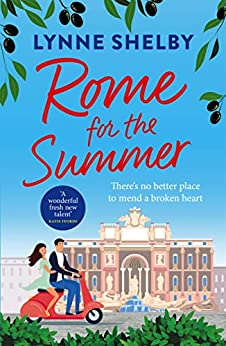
Lynne Shelby’s Rome for the Summer reviewed by Carol Thomas

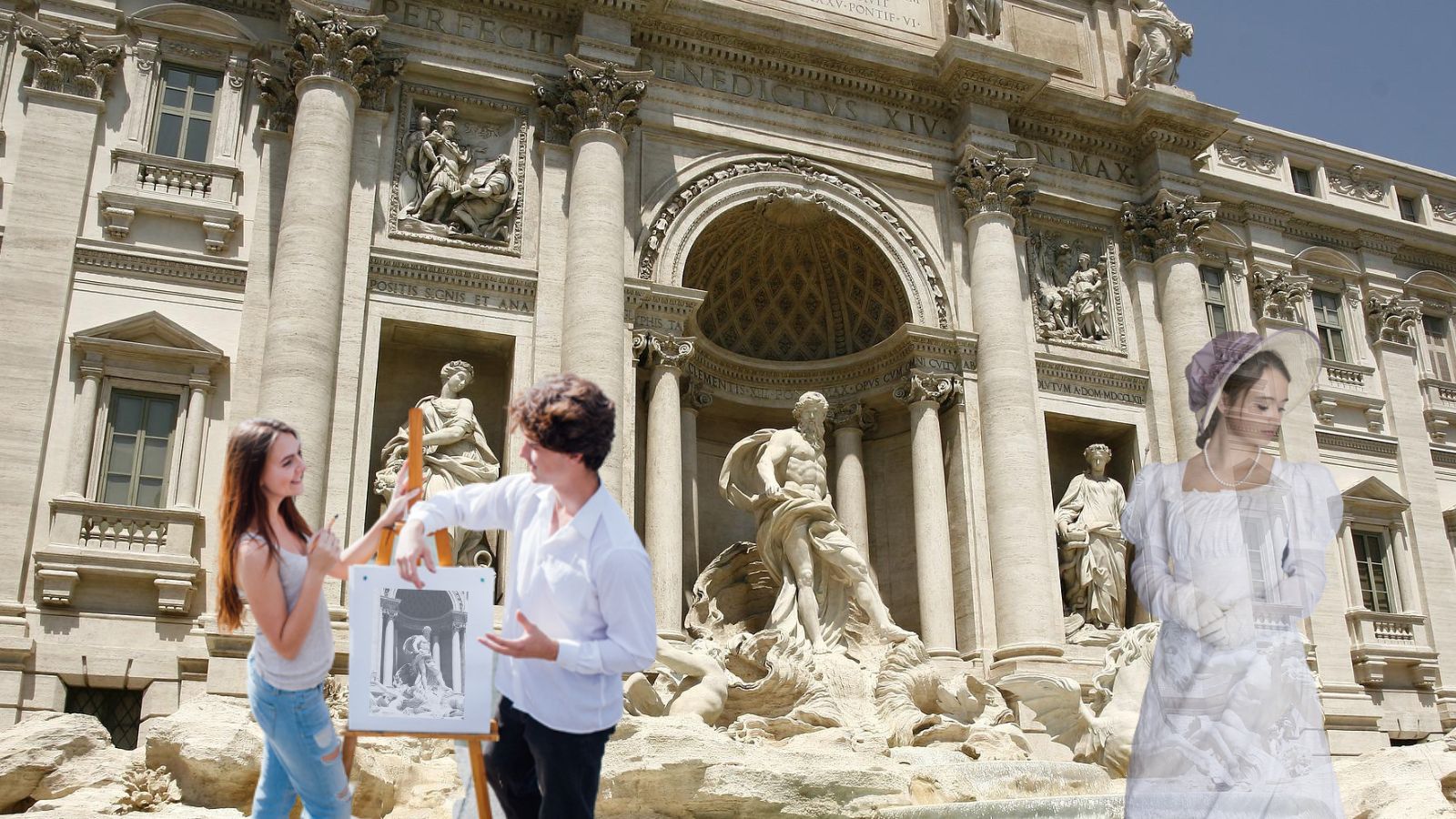
What a lovely, uplifting read! I read the novel on holiday; it was the perfect book to relax and unwind with. Kate was a likeable heroine, her family were wonderful, and her newfound life and love interest in Rome was perfect. For a novel filled with artistic fervour, Jamie was the ideal hero; his passion for both the art exhibited in Rome and that created by his hand was evident throughout. The insights into the past worked well, and I enjoyed discovering more about Kate’s Italian girl (depicted in a painting). Overall it is a lovely escapist read that will whisk you off to Rome for the Summer, fill you with warmth and leave you with a big satisfied smile.


Anne Booth’s Small Miracles reviewed by Jane Cable

I can absolutely see why this book is published under Random House’s Vintage label, because it is just that. Quaint, charming and a little old-fashioned, not just because it is set in 1995; it transports the readers back to simpler times, before the world was glued to its mobile phone.

Set in an English catholic convent down on its luck, the book follows the remaining three nuns, the local priest and a small cast of parishioners and friends, as after a modest lottery win, a series of other ‘small miracles’ begin to occur.

Although I quite enjoyed the journey, there was something missing from the book for me. I wanted it to be either funnier, or tug at my heart-strings more, and I had problems relating to the three main characters. However if you yearn for fiction akin to the Miss Read books, this may very well be exactly to your taste. It was in no way a ‘bad’ book (whatever that is), just not for me.


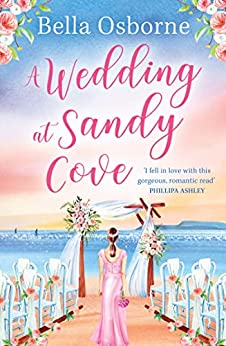
Bella Osborne’s A Wedding at Sandy Cove, parts 1 and 2 reviewed by Morton S Gray

I have loved all of Bella Osborne’s books and wasn’t surprised that I loved this one too. I sat and read the first part of Ella’s story in one sitting and didn’t want it to finish. Can’t wait for the next part.

Like Ella, I was a bridesmaid numerous times and never thought I would be a bride, but to work in the bridal industry must make that thought even harder. Love her cat and her friends, who can see her flaws but want the best for her.

Easy to read, easy to relate to, left me wanting more …

Part two of A Wedding at Sandy Cove didn’t disappoint and I found myself laughing and even shouting at my kindle, so I guess that means I was involved in the story!

Ella’s adventures continue. I’m glad I wasn’t at her friend’s hen party event but there is plenty to read about and I even spat my mouthful of tea out at one point when I laughed totally unexpectedly!

Waiting for Part Three…


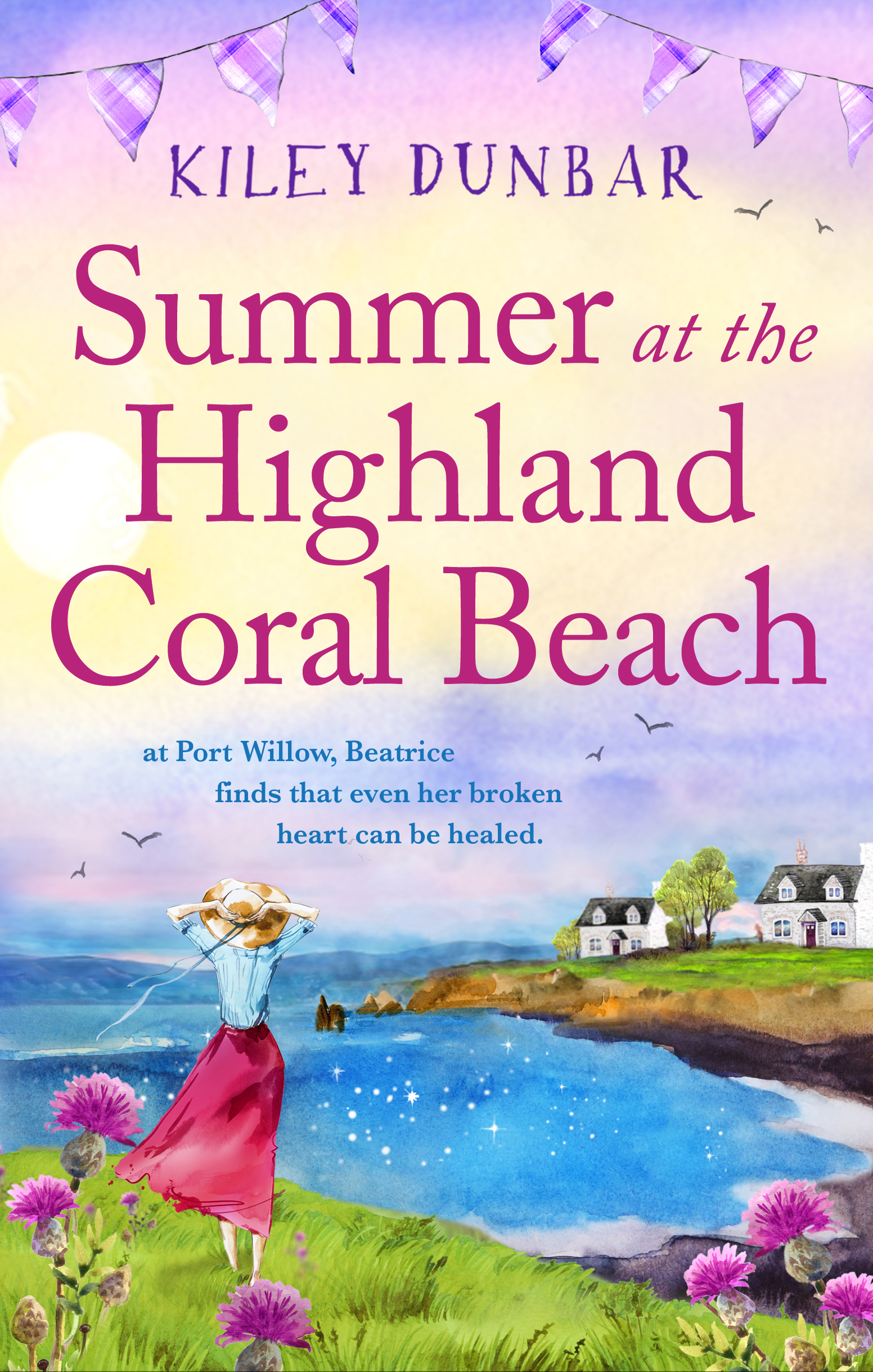
SUNDAY SCENE: KILEY DUNBAR ON HER FAVOURITE SCENE FROM SUMMER AT THE HIGHLAND CORAL BEACH

I call my third novel, Summer at the Highland Coral Beach, ‘the book of my heart’ as it was deeply emotional to write.

The story follows Bea six months after the miscarriage of her longed-for baby. She’s approaching her fortieth birthday, her marriage has ended, and she’s spiralling. Bea books a spur-of-the-moment crafting holiday in the highlands at the eccentric Princess and the Pea Inn (complete with towering fairy-tale bed). Here, Bea has time to wild swim off the coral beach, make beautiful things, and process her grief a little, helped by willow weaving tutor, Atholl.

Having grown used to keeping her grief to herself (so often grieving parents find they have no outlet for their sadness), the words spill from her during a panic attack witnessed by Atholl. He strikes upon a way of helping Bea begin to say goodbye.

I love this scene because it depicts things not all that often discussed in ‘light’, cosy romances.

He produced a parcel from under his arm and unwrapped the brown paper that protected it. ‘I thought maybe, if you want, you could make use of this wee thing?’

He handed her the intricately weaved hollow bassinette shaped curiously like a Russian doll or an ancient Egyptian sarcophagus with a round hole where the face would be.

‘I made it myself of the spring’s youngest willow back in March.’
‘It’s lovely. What is it?’ Bea asked.
‘It was for a talk Seth was giving about old Highland customs. It’s a swaddling basket. You’d wrap the baby in cloths and bands, tucking them up tight so they could sleep, and then they’d be placed inside the basket and worn over the parent’s back while they worked in the fields or at the fishes.’
‘It’s beautiful. It’s tiny, though. Too small for a newborn.’
‘It was only a model, to show what the real thing would be like.’

Beatrice turned it over in her hands, her eyes misting, and she looked up at him, hesitatingly, still unsure of what he intended her to do.

‘There’s another Highland custom, an ancient one, going back to the earliest folk on the land,’ he said softly. ‘When a loved one passed, they would swaddle them too like a bairn, placing them in the water, letting the tides carry them home.’

Beatrice took his meaning and she bobbed her head as the silent tears came again.

‘Do you want to do it now? There’s a braw moon lighting the harbour.’
‘All right.’

Those were the last words they said to each other that night as Beatrice, the mother of a loved son, threaded the Highland posy of forget-me-nots, heather and white campion into the loose basket work, weaving each flower in amongst the shoots from the sappy willows as Atholl watched on.

When her work was done she left the inn, crossing the dark road and leaning over the sea wall. Atholl stayed by the inn porch, close enough to see her kiss the little bundle before lowering the empty bassinette onto the surface of the gentle waters.

Neither could tell how long it took for the horizon to claim the floating focus of so much of her grief but by sunrise it was gone and Beatrice was asleep soundly in her bed.


Despite the sadness, there’s love and laughter in store for Bea and Atholl. I’ve received many messages from parents saying how Bea’s story helped them. I hope it continues to offer a wee bit of brightness to yet more readers when Summer at the Highland Coral Beach comes out on paperback this July.

One in four pregnancies end in miscarriage, the miscarriage association is there to help: https://www.miscarriageassociation.org.uk/


6 Habits Every Writer Should Follow for Efficient Work


It is the ultimate goal of all writers to knock out thousands of words every day. You dream of touching new heights of success and top the bestseller lists all over the world. However, this process requires you to put your heart and soul into fulfilling your purpose.

As Stephen King once said, “You can, you should, and if you’re brave enough to start, you will. Writing is magic, as much the water of life as any other creative art. The water is free, so drink. Drink and be filled up.” This is why writing is also therapeutic for many authors.

It is an activity that not only gives you a chance to express your feelings but also provides a great opportunity to explore new worlds of your imagination. Every writer dreams of showcasing their skills and talent in front of the whole world, but only a few end up doing so.

So, if you want to be one of the most successful writers and fulfill your dream, here are some of the many important habits you need to adopt.


Read More Often

You might be confused about how it is exactly relevant to writing? What you might not be aware of is that reading is part of the process. Yes, you heard it right! Just like music is food for your soul, reading turns out to be the fuel for your writing skills.

Reading your favorite authors and genres more often can give you a chance to enhance your innovation and let you delve into new worlds of different perspectives. It is also a great way to improve your writing skills by identifying several writing styles.

Reading a wide variety of books of different genres gives you better exposure to enhanced vocabulary as well as helps you get your inspiration for your storyline. By reading more interesting books, you will also be able to increase your knowledge about your favorite topics.


Write Every Day

We all have our own set of responsibilities and hectic routines, but that should never be the reason for you to skip writing. Taking out time from your daily life and focusing on your writing can not only help you to achieve your goals without having to get into much hassle.

No matter how intimidating and overwhelming it might sound, dedicating a certain time of your day to writing is necessary if you want to be like one of your top favorite authors. This will also turn out to be quite beneficial in keeping things organized.

To fulfill this purpose, you can set up a proper space and time where you can easily focus on your writing. Another easy solution is to give yourself a small, realistic task and try to finish what you started once you start writing.


Set Your Deadlines

All writers deal with a mental block, also commonly known as “writer’s block,” every once in a while. However, this should never distract you from your real goal. This means that you need to find out strategies to deal with such situations in an effective manner.

For this, one of the easiest ways to keep working at a consistent pace is by trying to make sure to set reasonable and realistic deadlines for your tasks. You can also divide your work into small sections and give yourself a certain time limit to be able to efficiently work on it.

You can also block a certain time for your tasks to make sure to complete your work within deadlines. However, make sure not to get too hard on yourself, as this can limit your creativity and might not let you get the best out of yourself.


Edit After You Write

One of the most common mistakes that most authors might make is editing their work when writing. While it is great to multitask, it is not quite the case when it comes to writing. Since it is a creative process, it comes at its own time.

Instead of that, what you can do is to first complete your draft and then dedicate a certain time to thoroughly edit and proofread your work. Whether it is about the quality of your work or the cover design of your book, you can also take help from professionals to easily achieve your goals.

Just like you can hire a sci-fi book cover designer, you can also get yourself an expert editor. This will help you to check your work with a fresh pair of eyes and from a different perspective. It will also improve the clarity and readability of your book.


Embrace Research

Whether you are planning to write fiction, non-fiction, or any other genre, one thing that can certainly play a vital role in your success is research. Believe it or not, even the famous writers have been there once and invested their time in succession.

While it might sound like a long struggle at first, identifying your target audience and market helps you to address the pain points of your potential readers. This lets you understand the likes and dislikes of your target audience as well.

Unlike what most people think, research is not a distraction, and it rather puts you on the right path to success. It also gives your writing a proper direction by letting you know what kind of content you need to shift your focus to.


Utilize Technology

With the advancement in technology, we have got plenty of options available for us to complete our work. Especially when it comes to writing, with the internet at your fingertips, you can use a number of different tools and tricks to increase your creativity.

With a vast variety of things available on the internet, you can use this knowledge to speed up the process of your writing. Whether it is about research, writing, editing, or anything else, these tools can help you to easily achieve your goals without having to get into much hassle.

All you need to do is to find the right tools that work for you and utilize them according to your requirements. This will help you to save a lot of time, energy, and money as well and make writing a happier and smoother process for you.


SUNDAY SCENE: NANCY PEACH ON HER FAVOURITE SCENE FROM LOVE LIFE

My debut novel Love Life is set in and around a hospice (admittedly an unusual choice for a romantic comedy) but one of my favourite moments in the book is when the heroine, Tess Carter (a palliative care doctor) visits the home of her patient, Mary Russel. Tess has a complicated relationship with the Russel family. Mary’s son Edward is in denial about his mother’s terminal illness and remains conflicted about the hospice and everything it stands for, including Tess. On this occasion she is visiting the house to return a scarf to Edward but is not sure what to expect. She knows that the Russel family are wealthy, but the family home is a bit more substantial than she’d anticipated.

‘Tess was entirely unprepared for the view of the Russell residence, which was indeed just up the hill from the vet’s practice. As she cornered round the leafy lane that circumnavigated the estate she caught a glimpse of the main house, a Georgian manor in mellow stone nestled amongst smaller outbuildings, including a carriage house and stable block. She pulled to a stop on the gravel drive, half expecting a butler from a Merchant Ivory production to emerge from the main portico and open her passenger door. She sat for a moment in the car just gazing in awe at her surroundings; the lawn rolling down away from the house towards a thicket of trees, the neatly trimmed box hedges that bordered the drive, the sash windows reflecting the early sunlight and lending a cheerful openness to the façade.’

The novel is set in Bristol and has a Pride and Prejudice theme, featuring a Jane Austen character as one of Tess’s internal narrators, and a hero with hints of Mr Darcy. I love the architecture of this period and the Russel house combines elements of Georgian splendour with the warmth of a family home, complete with canine companions.

‘She made her way round to the back of the house, where she found a weathered rear door with iron boot scrapers at either side. She knocked hard against the door panel and found that it was ajar. With some trepidation she nudged it open and called out “Hello?” Almost immediately there was a cacophony of noise from within the house, barking and the scrabbling of claws across tiles, and she was nearly knocked off her feet by a pack of dogs hurtling into her, tails wagging. The first three dogs were rangy setters, their knobbly heads knocking into her thighs as she fussed over them. A few moments later an elderly cocker spaniel with cloudy eyes shuffled into view and the setters backed off to allow the senior member of the party to greet the visitor.

“Hello?” Edward’s familiar voice shouted through from the next room, “I’m just in here, come through.”

Tess made her way into the kitchen accompanied by the enthusiastic canines and discovered Edward, clad in damp running gear holding his ankle behind him with one hand to stretch out his quads whilst supporting himself on the back of a chair with his other hand. He looked up at her in surprise.

“Dr Carter! How nice.” He was smiling, although she couldn’t tell if it was genuine pleasure at seeing her or more of a grimace as his muscles relaxed into the stretch. He released his right ankle and repeated the move with the left whilst trying to fend off the dogs who were all trying to get involved in the warm down. Tess was mortified.’


www.nancy-peach.com

My Writing Process Tetyana Denford

I remember when my mother called me, because the weather had been mild and the air smelled of the coming Spring. It was 2015, and we were living in the UK, so the 5 hour time difference meant that it was already late in New York when I heard her voice on the phone. Her tone was tender, and not a little bit numb and distant, and I would soon understand why: a family secret.

I had grown up in a relatively standard Ukrainian family: I was raised within the language, the traditions, and as I was an only child, my parents would make sure Ukrainian was the world that I knew and flourished within. We lived with my maternal grandmother, Yulia, and whilst her stories of wartime Ukraine were harrowing, nothing was ever out of the ordinary.

And then, we all learned something about her past that seemed more like a movie script than anything we’d ever imagined in real life. For me, my status as an only child, and a writer, meant that it was up to me to write the story down, for the family, for myself, and for my children to know our family story in detail. But could I do it justice? The impostor syndrome was very real, as most writers can attest to on their best days.

The first thing that I learned about writing a book is that the first few drafts are always the story, not the ‘book’; chronological, sometimes painful, but always the purest form. Once I started researching Ukraine, World War II, passenger lists on post-war ships heading to Australia, and New York in the 1960s… the book started coming to life. I’ll admit it felt like it took a solid two years to finish the first few drafts because at the time, my three children were all under eight years old, and my husband was travelling for work constantly, so I had very little time to write apart from very early in the morning or very late at night. It wasn’t easy, but I knew in my bones that this story was an important one to memorialize, because if I didn’t, it would disappear with the passage of time, like so many other family stories.
My grandmother was still alive and still had a semblance of memories stitching her life together in her mind whilst I was writing this, so old photographs and conversations were priceless for me to be able to place myself in her mindset when she was living through all of these painful periods in her life, and what fascinates me now, looking back, is that the current newsreel detailing the war in Ukraine runs in stark parallel to what she and generations of her family had lived through and fought against in the early 1900s and all through the second world war. And we are reminded now that history has a long pattern of repeating itself, because no one seems to remember how hard people fought for their sovereignty.

And now, now I feel proud of knowing that as a younger generation Ukrainian, I have written a story, a whole book, of what people are discovering about Ukraine and its people: their pride, their loyalty to the country that made them, their generosity in standing up for any people who are marginalized and forgotten, their fierce love for their family and friends, and their stubborn refusal to ever back down in their music, their art, their willingness to hope.

I am not an anomaly: there are so many Ukrainian writers and authors and translators who are now taking up the fight and using their voices as a war effort, when they are living all across the world worrying about their friends and their families in danger. We are the future, our stories begin with emotional phone calls, our writings are stitched together with anger and hope, and our platforms are flooded with calls to action from not only Ukrainians but anyone who chooses to stand on the right side of humanity and amplify the stories that make us who we are.

Our words are the weapons we choose to affect the hearts and minds of the entire world, not just to support Ukraine but to remember that all of our family stories are the threads that bind us and remind us to wish for a better future. 

Author Bio

Tetyana Denford grew up in a small town in New York, and is a Ukrainian-American author, translator, and freelance writer. She grew up with her Ukrainian heritage at the forefront of her childhood, and it led to her being fascinated with how storytellers in various cultures passed down their lives to future generations; life stories are where we learn about ourselves, each other, and are the things that matter most, in a world where things move so quickly.

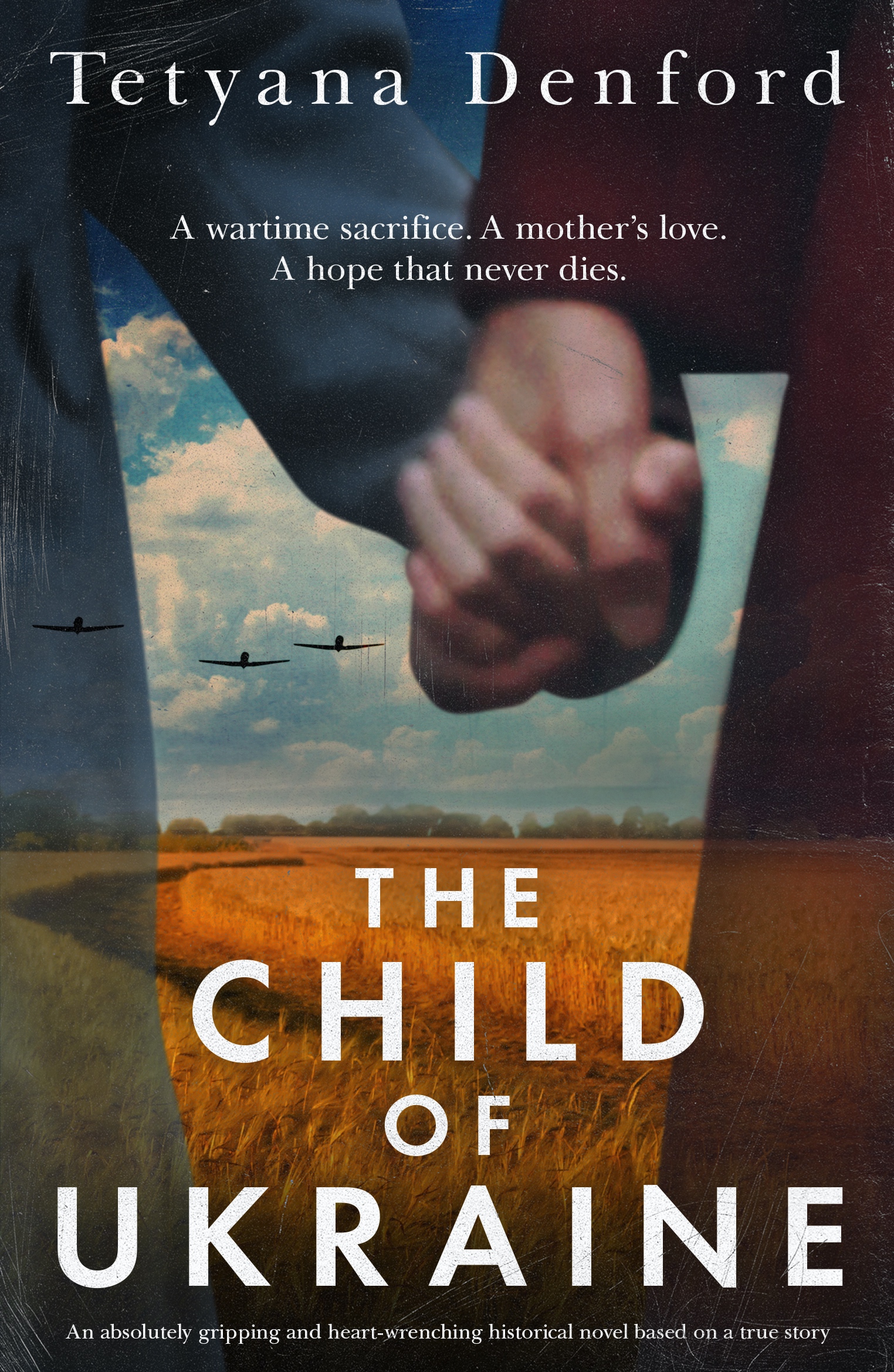
Her debut novel, Motherland was self-published in March 2020 to critical success and longlisted for The Readers Digest Self Published Book Awards. It was based on an incredible family secret that was revealed by her maternal grandmother, Julia, only recently, and has been described by people as ‘haunting’, ‘powerful and devastating’, and ‘a fragile and hopeful story of an immigrant family’. In March 2022, Tetyana signed a 2-book deal with Bookcouture, an imprint of Hachette, and Motherland will be re-released in July 2022 with a new title and cover.

She also works with Frontline News as a translator, has been featured in The New York Times, The Telegraph, The Flock Magazine and Mother Tongue Magazine, and speaks several languages. She also hosts a YouTube show called ‘The Craft and Business of Books’ that helps writers understand both the creative side and the business side of the book world. Her series of ‘conversation books’, collections of poetry and prose about Grief, Motherhood, and Love, were published in 2021.

Tetyana currently lives in New York with her husband and three children.

About the Book

Ukraine, 1940. She cups her daughter’s face with her trembling hands, imprinting it on her mind. ‘I love you. Be brave, ’she whispers through her tears, her heart breaking into a thousand pieces. Sending her child away is the only way to keep her safe. But will she ever see her again?

When war rips their country apart, Julia is sent away by her tearful parents in the dead of night, clutching her mother’s necklace and longing for one last embrace. But soon she is captured by Nazi soldiers and forced into a German labour camp, where behind a tall fence topped with cruel barbed wire, she has never felt more alone.

Just as she begins to give up on all hope, Julia meets Henry, a young man from her village who shares her heart full of dreams. And when she feels a fluttering in her belly that grows and grows, she longs to escape the camp and begin a new life with their child. But then Julia is forced to make a terrible choice. A choice no mother should have to make.

New York2011. With her heart shattered and her life changed forever by the shadows of war, as the years go by Julia thinks she will never be whole again. For decades she has been carrying a terrible secret with her, her every moment tainted by tragedy and loss since those dark days of the war.

But when she receives a phone call in the middle of the night, far away from the home and family she lost in the war, will Julia finally be reunited with the missing piece of her heart? Or is it too late for her wounds to heal?

Based on the incredible true story of the author’s grandparents, The Child of Ukraine is a breathtakingly powerful tale of love, loss and family secrets, perfect for fans of The Four WindsThe Last Green Valley, and The Nightingale.

 
This novel was previously published under the name Motherland.
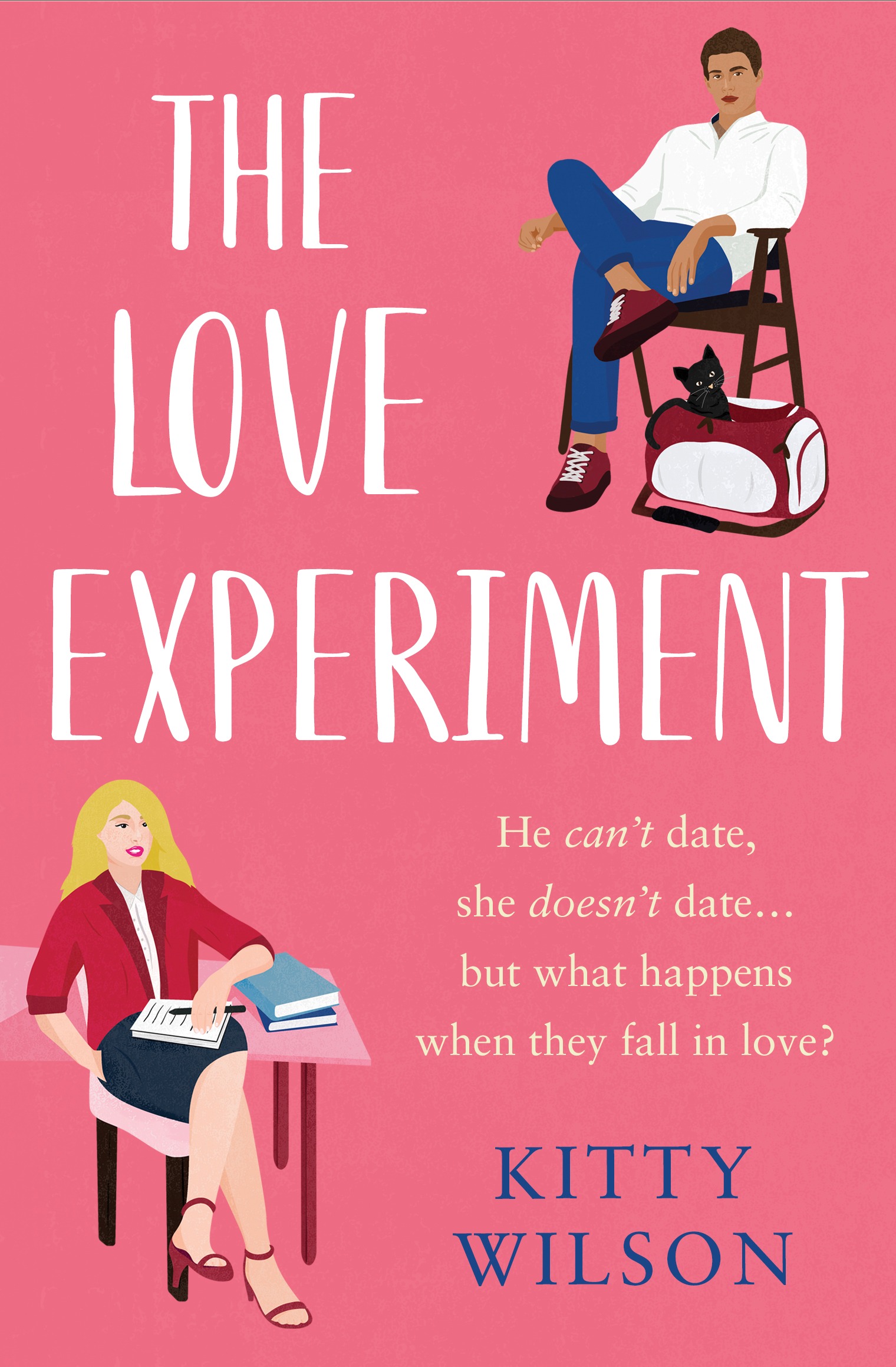
PUBLICATION DAY SPECIAL: THE LOVE EXPERIMENT BY KITTY WILSON

Sometimes I fall in love with a book instantly, and sometimes it takes a little while. This was one of the latter, but let me tell you, by the final chapters I was laughing and sobbing at more or less the same time, which isn’t the best of looks in a busy Starbucks branch.

The premise of The Love Experiment is deceptively simple; Lily won’t date – even staying the night after a hook up is too much like commitment, and Jay can’t date – he’s promised his sister he won’t in an attempt to show her that changing the habits of a lifetime is possible. But there the cliches end.

All the characters, large and larger than life, are drawn with an incredible eye for detail and a roundness that is often missing in romantic comedy. They were real and will stay with me for a very long time. And laugh? Did I mention a fair chunk of the action is set in a drag club? The names of the artists alone was enough to make me cackle. And don’t even get me started on the harpist…

This book is laugh out loud funny while at the same time dealing with serious issues and the horrendous scars they leave. The more I came to know about Lily’s past the more I ached for her to be able to move forwards. The more I understood what made her the way she is. The more I wanted to be her friend.

Lily’s backstory and what happened to her as a teenager really got to me. So much so I had to ask Kitty Wilson why she decided to shape her character that way:

Thank you. Lily is far from my usual heroine and is polished, successful and on the surface has it all but, underneath, is a scared young girl desperate for a sense of control.

When I was creating her, I initially wanted to highlight women’s health, I know so many women with periods that are completely incapacitating[1] and yet I haven’t seen it mentioned often in novels. That was my starting point but, as an author, it is hard not to be shaped by the things around you. As I wrote the first draft, the discussion of women’s safety was at its peak with the subsequent growth of Everybody’s Invited illustrating how schools and universities were often far from the places of safety that every parent hopes. This awareness worked its way into Lily’s story and when her body changes as a teen, things take a dark turn as name-calling in school morphs into something more sinister.

I did consider carefully whether these themes should be included but they are so frequent in women’s lives it felt wrong to cut them, so Lily was born, a high achiever who is privately carrying the weight of gynaecological issues and a related history of childhood bullying. These two things then shape all her life decisions; decisions that on the surface look like they are healthy, empowered choices but are actually indicators of deep-rooted scars.

But I love a happy ending – I write romance after all – and adore weaving through the joys in our lives, and hopefully The Love Experiment brings many, many moments of light and laughter to brighten Lily’s path as she learns to defeat the dark and open herself to life and love at its fullest.


[1] One in ten women in the UK have endometriosis and another one in ten have PCOS. https://www.endometriosis-uk.org/information

https://www.nhs.uk/conditions/polycystic-ovary-syndrome-pcos/


SKINTELLIGENT: What you really need to know to get great skin

SKINTELLIGENT

What you really need to know to get great skin

By Dr Natalia Spierings


Published by Vermilion.

Trade Paperback priced £16.99

The first entirely evidence-based skincare guide written by a real expert that explains how skin actually works, how to navigate the confusing world of Big Skincare and what you really need to do to achieve healthy, glowing skin – throughout your life.


This is the first book about skincare based on fact, not fiction

 There is no such thing as ‘essential’ skincare; almost all skincare should be viewed as a ‘luxury good’ and therefore, in fact, absolutely not essential!

  • Scared of using Vaseline? Don’t be – it’s the best moisturiser on the market, also the cheapest, it doesn’t ‘clog pores’ or cause pimples and it is totally safe to use. Plus, it is in every single moisturiser on the market anyway.
  • You don’t need to buy a separate product to use around your eyes, just use your regular moisturiser around your eyes; ‘eye creams’ are a scam
  • Facials are a waste of time and money
  • When it comes to skincare, less is always more
  • Expensive skincare is never better than cheaper skincare


Consultant Dermatologist Dr Natalia Spierings of Channel 5’s Skin A&E has announced the launch of her new book, Skintelligent: what you really need to know to get great skin, published by Vermilion. Dr Natalia Spierings is here to shake things up in the skincare world and isn’t afraid to tell the truth and call out the BS about all things related to skincare. Drawing on a decade of work as a practicing consultant dermatologist, helping thousands of people achieve great skin, she will empower you with the knowledge to navigate the confusing world of skincare so you never get fooled into buying hundreds of pounds of disappointing cosmetic skincare products again. If you have a problem with your skin – whether it is pimples, pigmentation, overly dry skin, large pores or whatever – the problem you have needs to be viewed as a skin abnormality or even a disease and therefore cannot be corrected with a three-step skincare regime you buy at a department store.


Dr Natalia Spierings said: “I wrote this book with the aim of answering all the hundreds of questions I get every day from my patients and through social media about skincare; there is too much misinformation being thrown at us about skincare from people who just don’t know what they are talking about, merely to sell products. It’s time to empower the skincare consumer with facts and the correct information so we all stopping wasting our money (and our hope) on products that don’t deliver on their (often outlandish) claims.”

Using an unbiased, evidence-based approach and cutting through the pseudo-science, she explains:

–        how skin actually works

–        which skincare products are proven to be effective for all of major facial skin complaints

–        what trendy skincare ingredients do or don’t do what they promise and why

–        what you can do to manage everything from acne to rosacea to melasma as well as wrinkles and sun-damage


Bringing together years of experience treating a huge range of skin problems, Skintelligent is the only book you will ever need to read to get great skin.


“Buying this book will be a great investment; following Natalia’s advice will save you money on your skincare whilst helping you to look your best.”

Dr Andrew Birnie, Consultant Dermatologist & Founder of Altruist Sunscreen


“Dr Natalia Spierings is a terrific consultant dermatologist with a very clear – and utterly science-based — approach to skincare which many people will find refreshing.”

Alice Hart-Davis, founder of thetweakmentsguide.com


About the Author


Dr Natalia Spierings is a Consultant Dermatologist with a Master’s Degree in Aesthetic Medicine. A unique combination of technical skill, depth of knowledge, aesthetic sensibility and communication skills has positioned her globally as a leading dermatologist. She currently splits her clinical time between both the NHS and private sector in London, and at Kings College Hospital in Dubai. @drnataliaspierings


SUNDAY SCENE: AUDREY HARRISON ON HER FAVOURITE SCENE FROM THE SPINSTER’S CAPTAIN

I have been writing and publishing Regency romances since 2011, being fortunate enough to be a finalist in the Amazon Kindle Storyteller competition and the Romantic Novelists Association Award. I never thought I would write anything other than my regencies, but there was a story in my husband’s family history which has niggled in the background as I wrote in my genre. I had resisted it as it was set in the Victorian era and although close to the Regency, there were still differences which could be stumbling blocks for me.

The story was that In 1846, a spinster travelled to America from Scotland to be a housekeeper for her brother. Domestic staff were hard to come by, so what was more perfect than a spinster sister? Unfortunately for the brother in America, there was also a handsome captain on the ship which was to bring his sister to him.

Researching the story was fascinating, when I (finally) gave in to family requests to write it. Most of the action had to take part onboard ship and so I started down the rabbit hole which was seafaring life.

We consider history as a different world, the language, manners, and rules, but throw in life on the water and there is even more to contend with! In my view sailors were so brave stepping aboard ship, let alone spending their lives onboard. Even within the family history, there is more than one shipwreck. It was a harsh life, but one which could reap rewards, as in the case of our captain.

I do love research, it is the part that I have to contain myself, only so much factual detail can be put into a romance before it becomes a non-fiction book! It doesn’t matter that readers don’t know the hours of research which can go into one sentence.

My resources were hundreds of books I own, and visits to various Maritime Museums all give me the buzz to create the little snapshots of life onboard ship as in this extract:

The call “Who’s for the shore?” had rung out across the ship and through the levels below deck. There had been a final scurry of activity before Robert was approached by David as he stood at the helm.
“We’re ready, Capt’n.”
“Without a moment to spare,” Robert responded.
“Perfect timing then.”
“I was beginning to think we would be stuck in port another day.”
“Oh ye of little faith. As if I would be so tardy.”
“In that case, all hands to weigh anchor and make sail,” Robert instructed.
“Aye, aye, Capt’n.”

The story turned into a trilogy, using two of the other siblings of the spinster. In a family of eleven, they were at the forefront of moving because of the real changes caused by the industrial revolution and it was fascinating enough to keep my research flowing.

The final in the trilogy is set in America, when land was being developed and for the first time men could own the land they worked on, rather than be tenants. So, although I was hesitant to start these stories, I loved writing them.

I have now returned to my regencies, I love taking a snippet of history, whether the Foundling Hospital, the Napoleonic Wars or how they dealt with injuries and disabilities and weaving a romance around that. Always being one who has hovered on the edge of society because of shyness and chronic illness, I will always fight for the underdog to get their happy ever after. It just has to be set in the time in history that I love.


www.audreyharrison.co.uk