My Writing Process Helen E Field

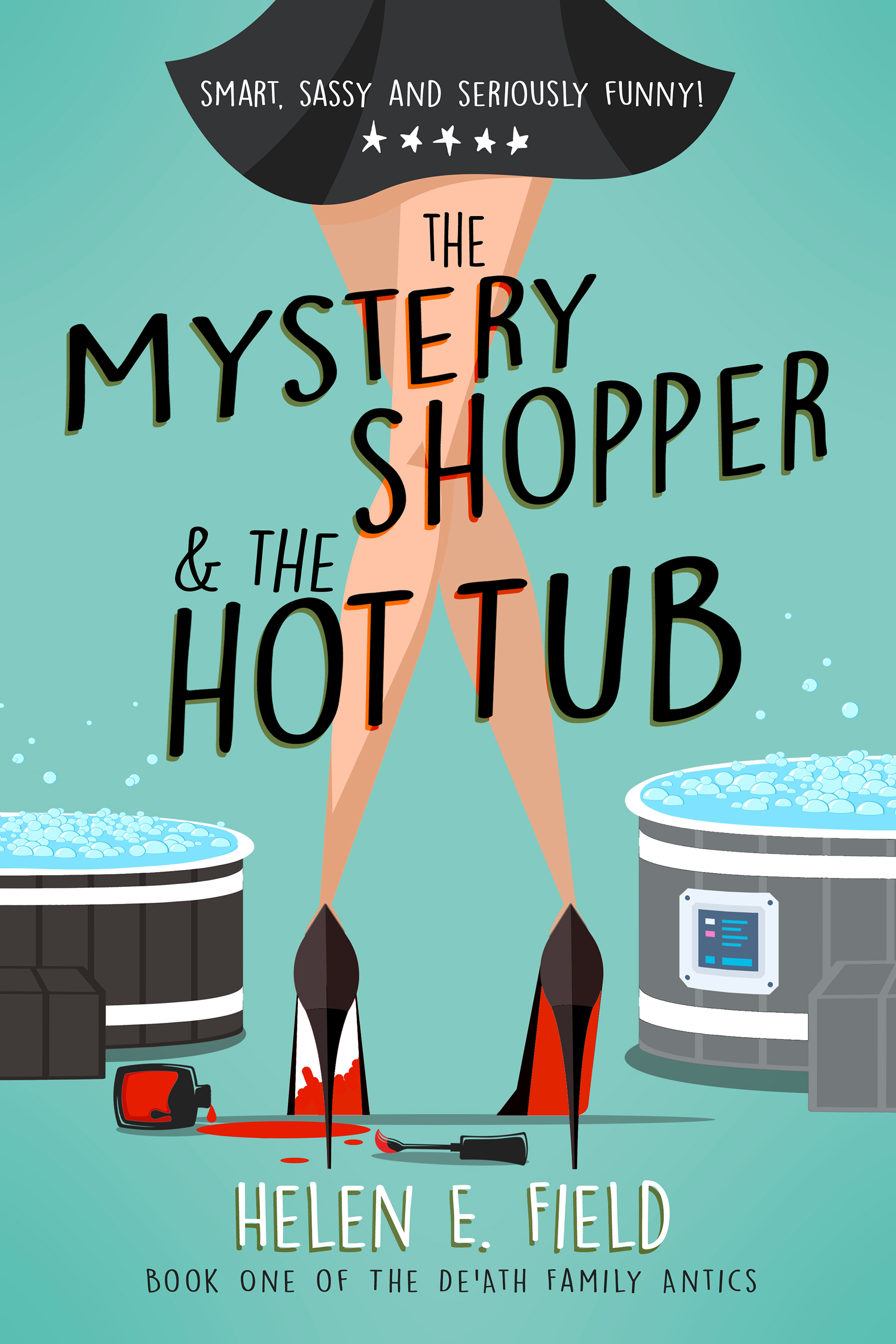
The Mystery Shopper & The Hot Tub , Helen E Field, writing, writer, how I write. My mother once told me that when I was 10yrs old I informed her I was not going to have a ‘boring life.’ Well, I guess I must have succeeded because according to most people I know, I have led a very interesting life. Important for a writer I think. To me, I’ve just lived it exactly how I wanted – a free spirit if you will. ‘work hard, play hard’ could well be my motto. I started writing funny poems about all my classmates at school from the age of ten and I haven’t stopped writing them ever since. I have a business writing bespoke funny poems for and about people and I used my ability to write these funny poems to publish a range of greetings cards. I also began a journal at ten and nearly 50 years later I am still writing it – I have an old sea chest full of them! At school I was often picked out by my English teacher to stand up in front of the class and read the essay I had written; the one that I recall even now, was entitled ‘The Goldfish Who Could Speak.’  The class were in stitches!

I left school at sixteen and worked in retailing and hospitality. I started my own hospitality training consultancy in 1998, training managers and staff all over the UK, Europe and USA and speaking at conferences. One strand of the business was to design and implement mystery shopper programmes. It was the trigger for my debut novel ‘The Mystery Shopper & The Hot Tub.’

I have three incredibly talented grown-up children and a saintly husband! Pre-Covid, we embarked on some serious travelling around the world – clearly curtailed for the past ten months but we’ll be off again as soon as we are permitted! 

What you have written, past and present.

I have had numerous professional articles published in various hospitality publications over the years. One article in particular when published was deemed ‘an important academic paper’ which thrilled me, given I’d never gone to university. I wrote the entire article in one hit of 8,000 words in one evening and they didn’t change a single word! 

I completed The Mystery Shopper & The Hot Tub last Autumn and am currently writing the second book in the series, which I hope will be out by late Spring.

What you are promoting now.

I am promoting my debut novel The Mystery Shopper & The Hot Tub, for which I also wrote a free download called ‘The Big Dilemma’ that readers can access at the end of the book. It is women’s humorous fiction. I would say that you have to have a sense of humour and not be overly politically correct to enjoy it!

I do not have social media – my choice – which makes promoting a bit more challenging. I’m a face-to-face kinda gal and would much prefer to talk about the book in person or on the radio, but Covid has put a stop to that.

A bit about your process of writing. 

I don’t honestly think I have a process. I just write when I feel like it for as long as I want to. When I’m really in the flow, I can write for hours at a time without stopping. If I don’t feel like it, I don’t write. It’s pointless. When both my brothers were diagnosed with prostate cancer and my mother developed Alzheimer’s all in the same year, I was very flat and exhausted. I just couldn’t write ‘funny’, so I left my manuscript for a year and went back to it, when I felt more in control of things.

Do you plan or just write?

I would say I was more of a ‘seat of the pants’ writer. The only thing I could remotely describe as planning, is that I decide what I want the ending to be and kind of work out how to get there! My stories are very visual – a number of readers commented that they thought the book would make a great TV/film. I often think of ‘scenes’ that I know I want to include – particularly the mystery shopping assignments, which have been based on real life assignments that I have actually done myself or been de-briefed about by an assessor. They are very funny, not least because they have actually happened.

What about word count?

I never even considered word count when I started writing my first book. I literally just wrote it exactly as I wanted. When I finished it was around 120,000 words. I discovered afterwards that that was a lot of words for a book of my genre. I had to do some ruthless editing that made me weep as I removed whole chapters and chunks of writing to get it down – even now it’s around 105,000 and 443 pages long.

This has provided me with a problem I hadn’t anticipated.The print cost of a book of this size is significant, but to sell at a price similar to ‘competing’ novels I will be making very little money indeed on paperbacks.

Big lesson for me for book number two – keep an eye on word count!

How do you do your structure?

I am a story teller and I think my book reflects that. I never sat down and thought ‘how am I going to structure this novel?’ I just wrote the story it as it came to me. I would get to the end of a section and think, OK so what would be really funny to happen now? Then I wrote it. On editing, I made a few changes if I thought that the flow of the story wasn’t quite right, but really nothing major.

What do you find hard about writing?

I really don’t find anything about writing hard. I genuinely don’t understand writers who say they sit at their laptops struggling to get words out. I write so prolifically and easily it’s a mystery to me.

What do you love about writing? 

I love making up stories. It’s a bit like being a child again I suppose. In the real world we can’t pretend, but in stories you can create whatever crazy characters and wild incidents you like. It’s like creating escapism for yourself and for others to enjoy and I do like making people laugh.

Advice for other writers. 

My genuine advice to other writers is likely to get me into trouble from the many organisations that offer writing courses, advice, manuscript assessment etc etc. It is easy to forget that it is in all these people’s financial interests to tell you your writing isn’t good enough. For me there is only one group of people who have the authority to tell me that and that’s my readers. No-one else matters.

I can truthfully say that if I had read all the articles and advice about how to write before I started my book, I would never have written it. I would have been paralysed by indecision over absolutely everything. Never in my life have I come across such contradictions, nonsense rules, imposition of politically correct notions or subjectivity,  in an industry. This became the main reason I decided to go down the self-published route. 

I came across a quote many years ago, which I had printed on cards and gave them to my children as a good rule to live their lives by. It’s not a bad one for writers either.

“It had long since come to my attention that people of accomplishment rarely sat back and let things happen to them. They went out and happened to things.” 

Leonardo da Vinci

The Mystery Shopper & The Hot Tub is out on the 14th of January and is available from amazon.co.uk


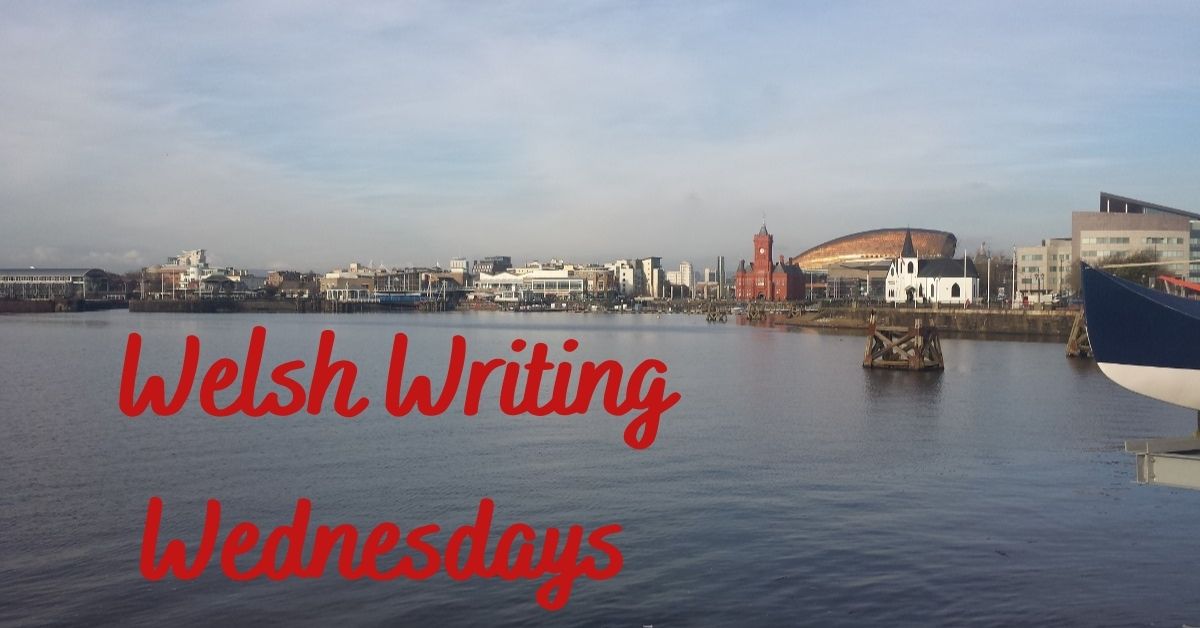
INTRODUCING WELSH WRITING WEDNESDAYS

Although it isn’t often mentioned in Frost, I am very proud of my Welsh heritage. I was born in Cardiff and my father was an Anglo-Welsh poet and literary critic, so it is inevitable I have an affinity with other writers with connections to the principality. So much so, I am a member of the Cariad chapter of the Romantic Novelists’ Association, and it is to these wonderful women I looked first when I was considering Welsh Writing Wednesdays.

The idea is simple; on the second and fourth Wednesdays of each month one of us will bring you an article about writing in Wales. And replacing the ever-popular Sister Scribes’ Reading Round Up on the last Monday will be Cariads’ Choice.

So here are some of the wonderful authors you will be meeting through Frost this year.

Judith Barrow

Originally from Saddleworth, a group of villages on the edge of the Pennines, Judith has lived in Pembrokeshire, Wales, for over forty years.

She has an MA in Creative Writing with the University of Wales Trinity St David’s College, Carmarthen, BA (Hons) in Literature with the Open University, and a Diploma in Drama from Swansea University. She is a Creative Writing tutor for Pembrokeshire County Council and holds private one to one workshops on all genres.

Jill Barry

Jill began her writing career with short stories for magazines and anthologies, winning prizes and being both long-listed and short-listed. She is a multi-published romantic novelist who also writes Pocket Novels for D C Thomson and who draws on her varied career and her travels for inspiration. She has also written one psychological suspense novel which is published by Headline Accent. A member of the Romantic Novelists’ Association and the Society of Authors, Jill enjoys mentoring new writers and is convinced she will never stop learning.

Jan Baynham

Originally from mid-Wales, Jan lives in Cardiff. As well as short stories and flash fiction, she writes full-length novels that deal with family secrets and explore the bond between mothers and daughters. Her debut novel, Her Mother’s Secret, was published by Ruby Fiction in April 2020. This was followed by Her Sister’s Secret in September 2020 and book three will be out next July.

A member of the Romantic Novelists Association, she values the friendship and support from other members and regularly attends conferences, workshops, talks and get-togethers. She is co-organiser of Cariad, her local RNA Chapter.

Jessie Cahalin

Jessie is a Yorkshire author living in Wales. Wales and words have a special place in her heart, and she wants everyone to meet the characters who’ve been hassling her for years. Penning women’s fiction is Jessie’s dream job, but she also writes travel articles and features for her blog and magazines.

You Can’t Go It Alone, her debut novel, was a bestseller in the UK and Canada. For Jessie, a good natter with other authors and readers is a special treat as she usually lives in her tiny writing room with Paddington Bear and a collection of handbags.

Alexandra Walsh

Alexandra is the author of The Catherine Howard Conspiracy, The Elizabeth Tudor Conspiracy and The Arbella Stuart Conspiracy, known collectively as The Marquess House Trilogy. A series of a dual timeline Tudor conspiracy thrillers, published by Sapere Books, the novels explore a secret hidden within history and the potential havoc its revelation could wreak. Her new book with Sapere, The Windchime, is due out in 2021. Another dual timeline story, set in present day and late Victorian times, it explores mental health issues, grief and rebuilding lives after the worst has happened.

Evonne Wareham

Evonne is an award winning Welsh author of romantic suspense – more crime and dead bodies than your average romance. She likes to set her book in her native Wales, or for a touch of glamorous escapism, in favourite holiday destinations in Europe. She is a Doctor of Philosophy and an historian, and a member of both the Romantic Novelists’ Association and the Crime Writers’ Association.


What I Have Been Reading By Catherine Balavage

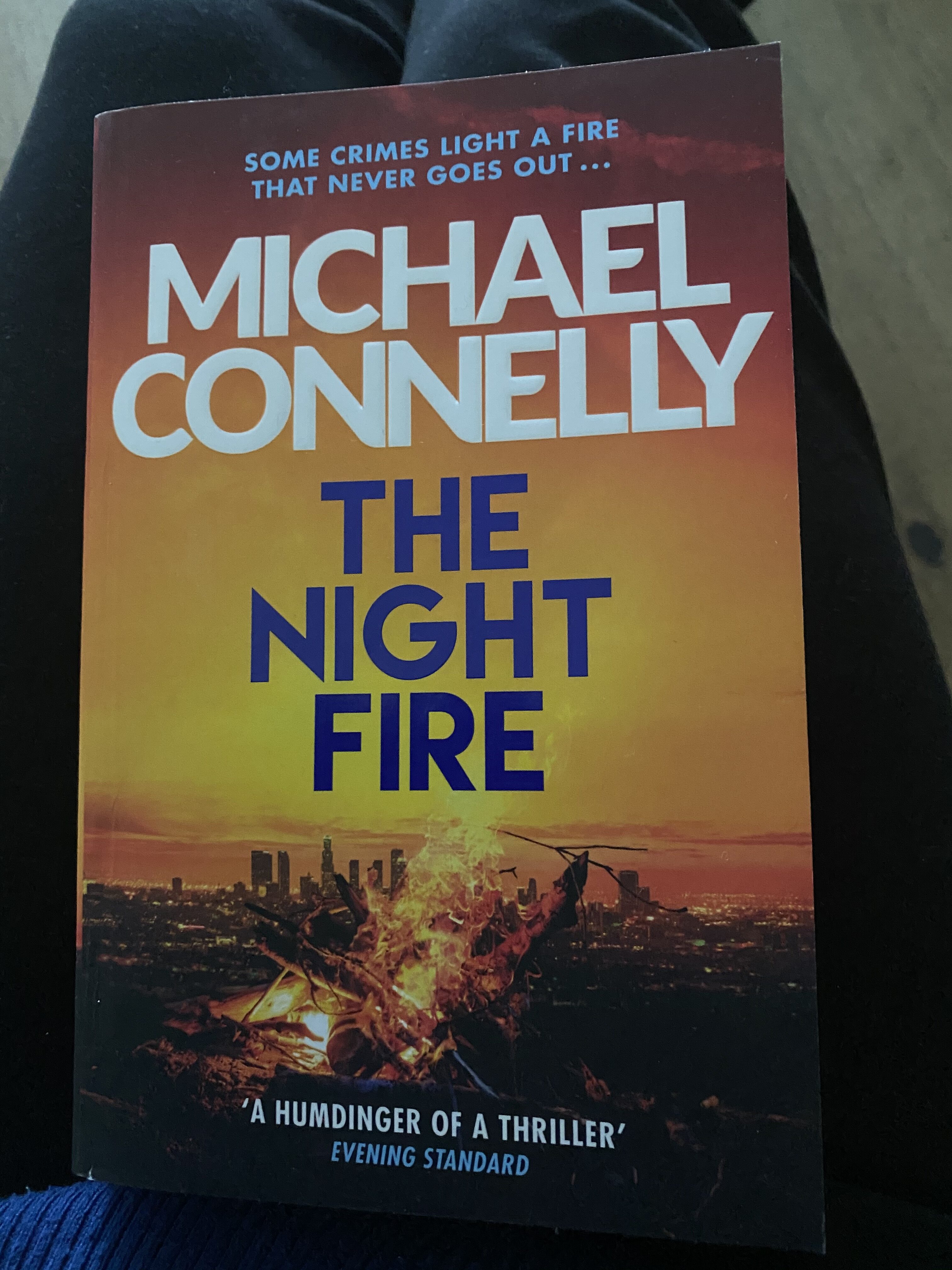
michael connelly the night fire

Michael Connelly The Night Fire. 

Michael Connelly is without doubt one of the best crime writers ever. He makes it look easy to write a crime novel because his books flow so well. More fool anyone who tries to imitate him. This one from his Harry Bosch series is a novel to really get your teeth into. An epic thriller. The prisoner's wife. maggie brookes

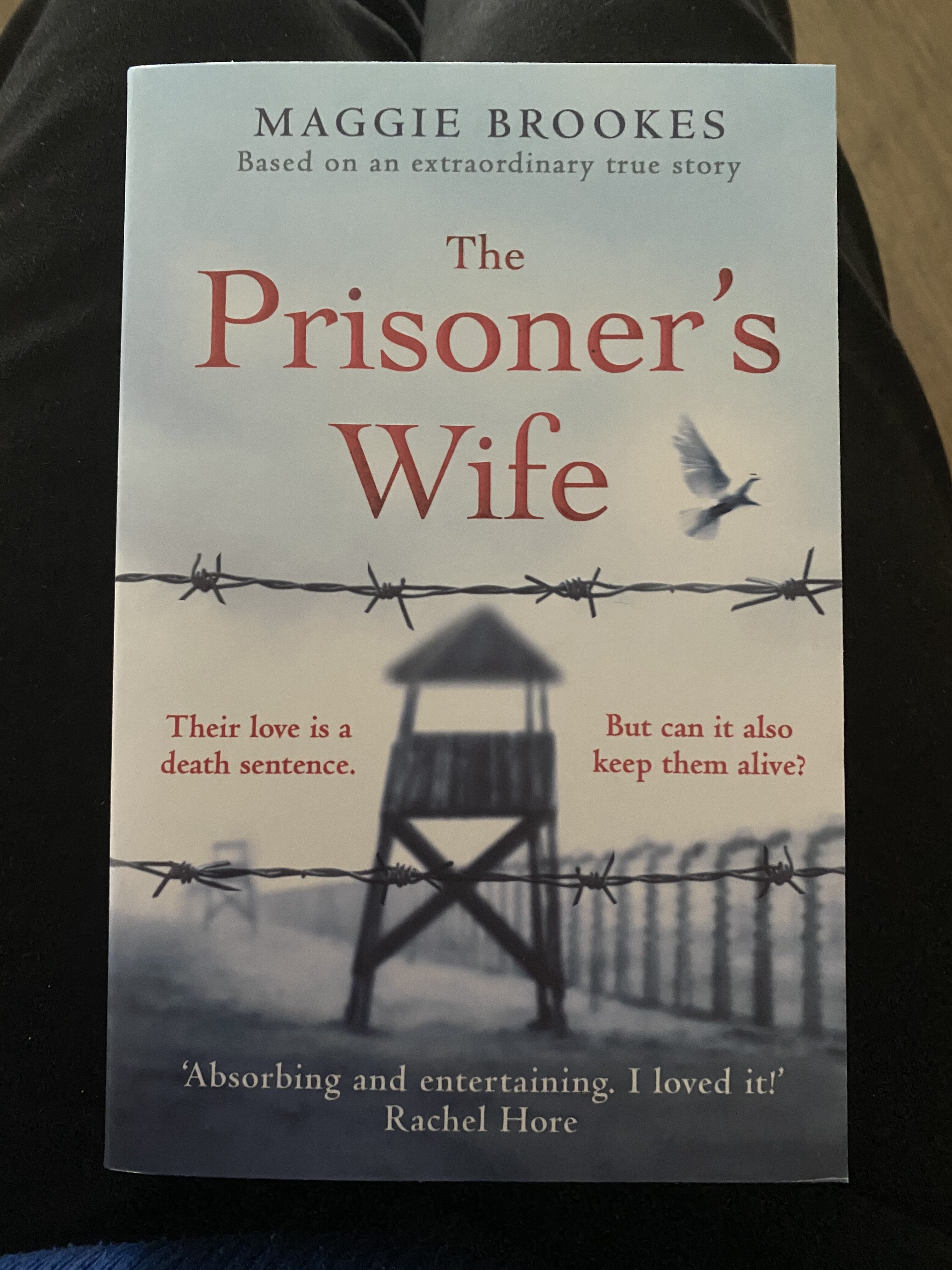
The Prisoner’s Wife by Maggie Brookes.

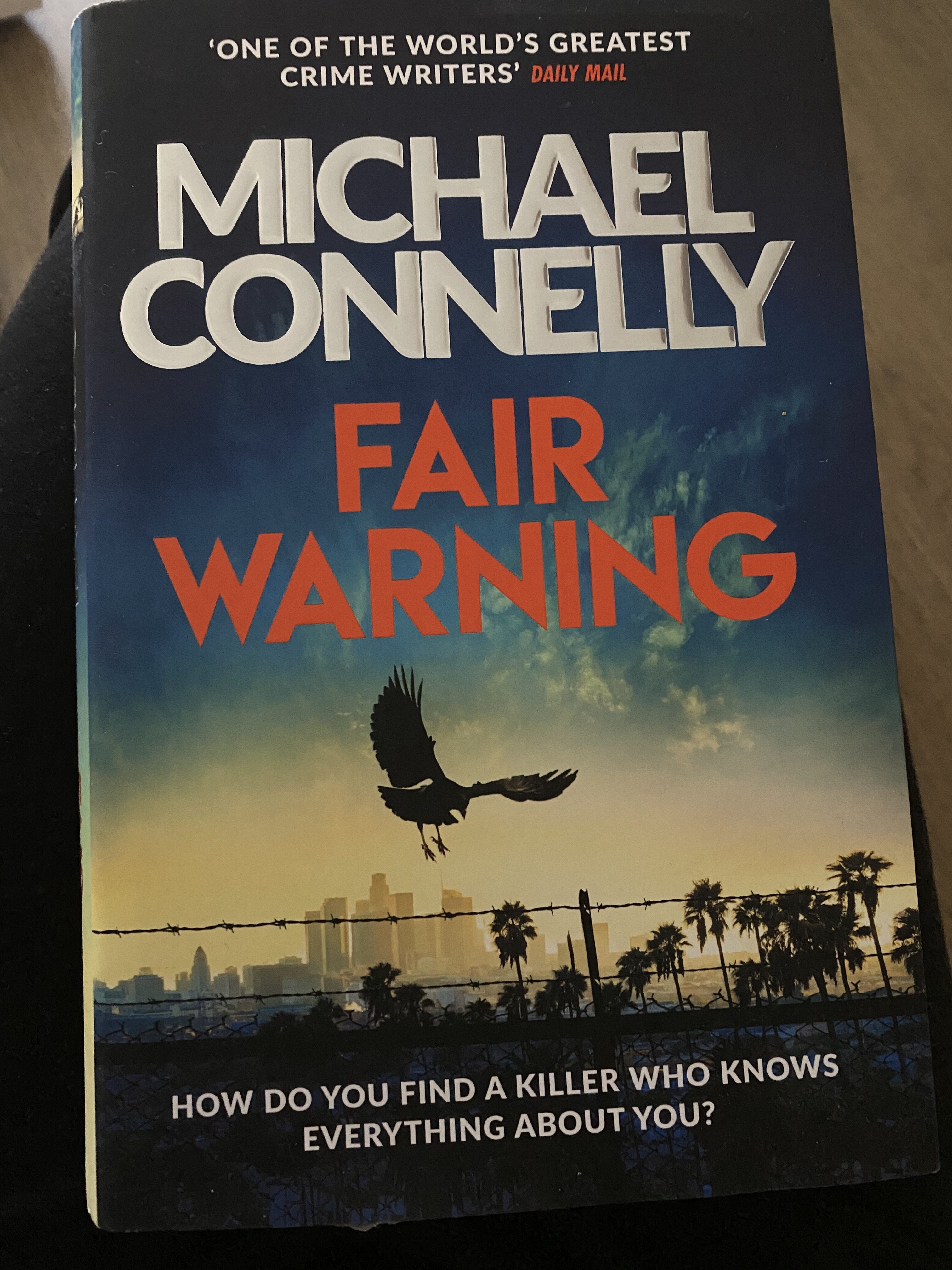
This is an absolute triumph of a book. It is based on a true story of a Czech woman who posed as a man in a Nazi prisoner of war camp to stay with her British husband. It is riveting and the stuff of Hollywood films. It is well-researched like all the best historical fiction. It can be heart-breaking, but it is also a story of courage and hope. michael connelly fair warning Fair Warning by Michael Connelly. 

Another Connelly novel. This one I loved more than the other. It was sleek, smart and just perfect. It throws up interesting questions about DNA ancestry sites too. Connelly is a master of his craft and his novels are absolute perfection.
when you see me lisa gardner,

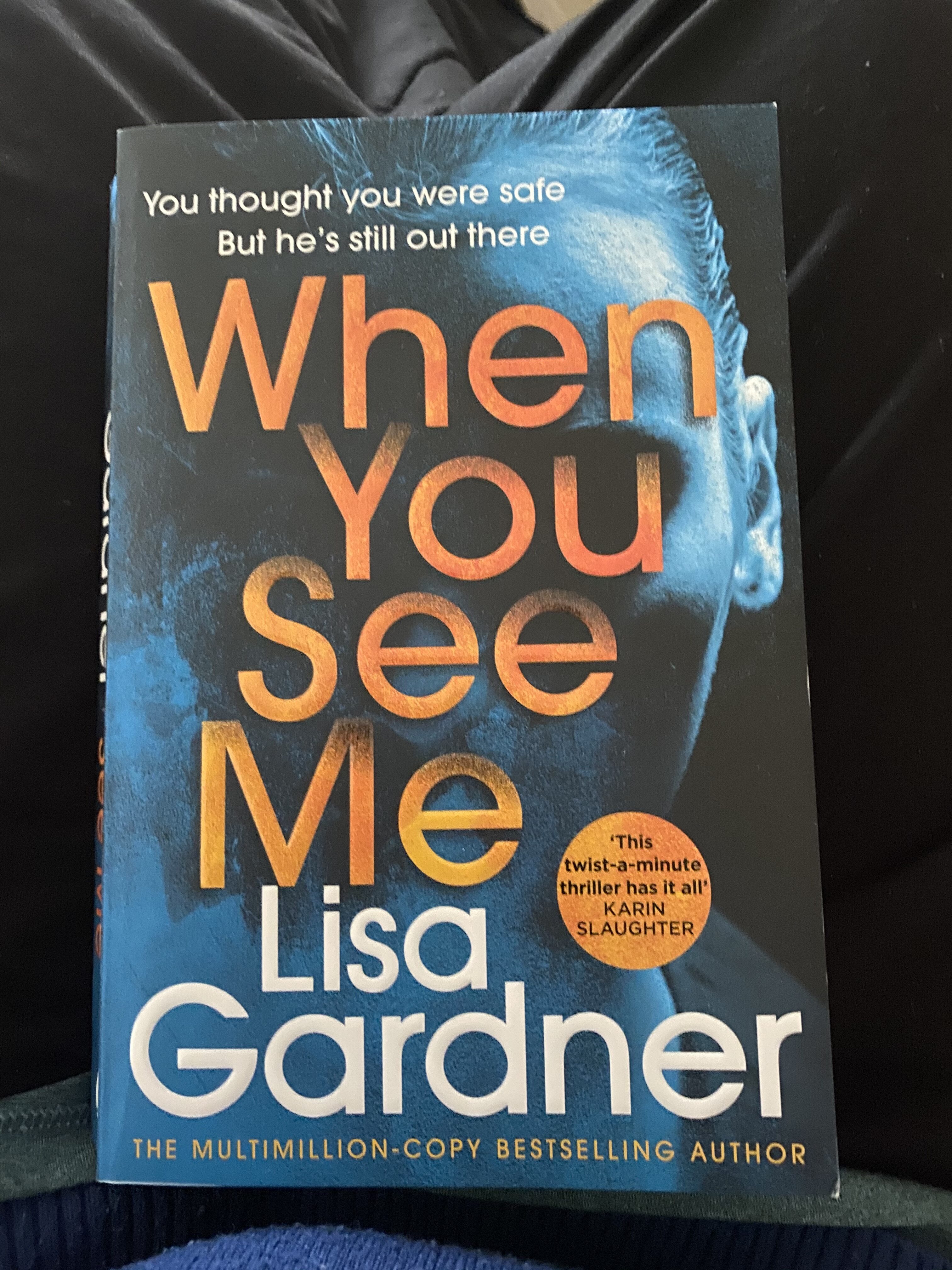
When You See Me by Lisa Gardner.

This is the first book I have ever read by Lisa Gardner and now I am wondering if I have been living underneath a rock. Wow. Just wow. What a writer, what a novel. I don’t usually read crime novels – I am a of a nervous disposition- but I will be seeking out Lisa’s other books now. It is no surprise Lisa is a New York Times bestseller. She sets the scene perfectly and her characters have so much depth. I also love that the FBI agents are female and their husband, also FBI agents, are taking care of the kids at home. Lisa Gardner is a much needed female voice in the world of thriller writers.
this time next year sophie cousens,

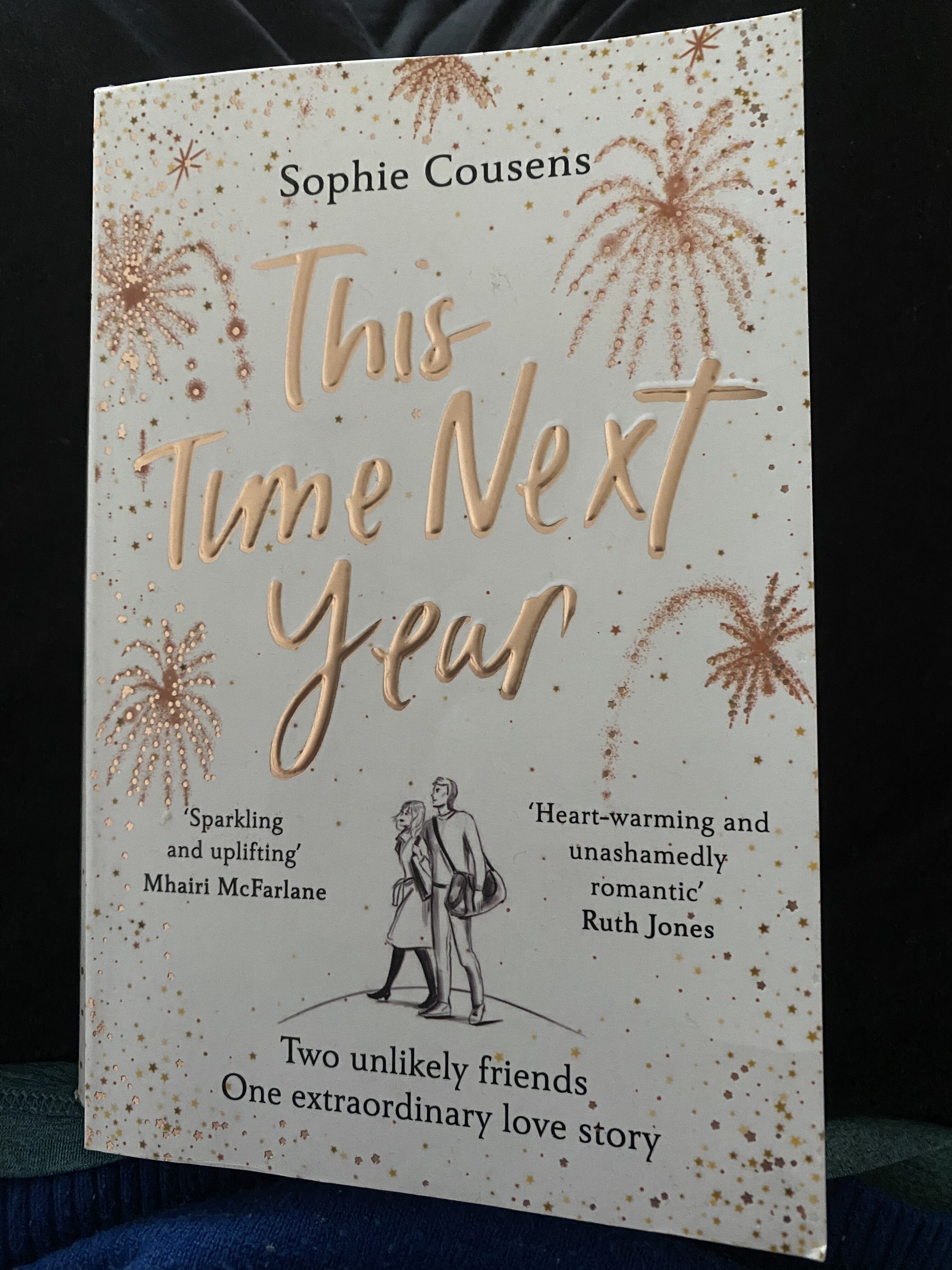
This Time Next Year by Sophie Cousens

This is a beautiful and brilliant novel. A romance novel with no hint of cliche. It has plenty to say and characters who are impossible to not fall in love with. Set in a 2020 where Covid 19 did not happen, this was the future we all deserved. I loved this book so much. It is so clever and pitch perfect. Sophie Cousens is one to watch.

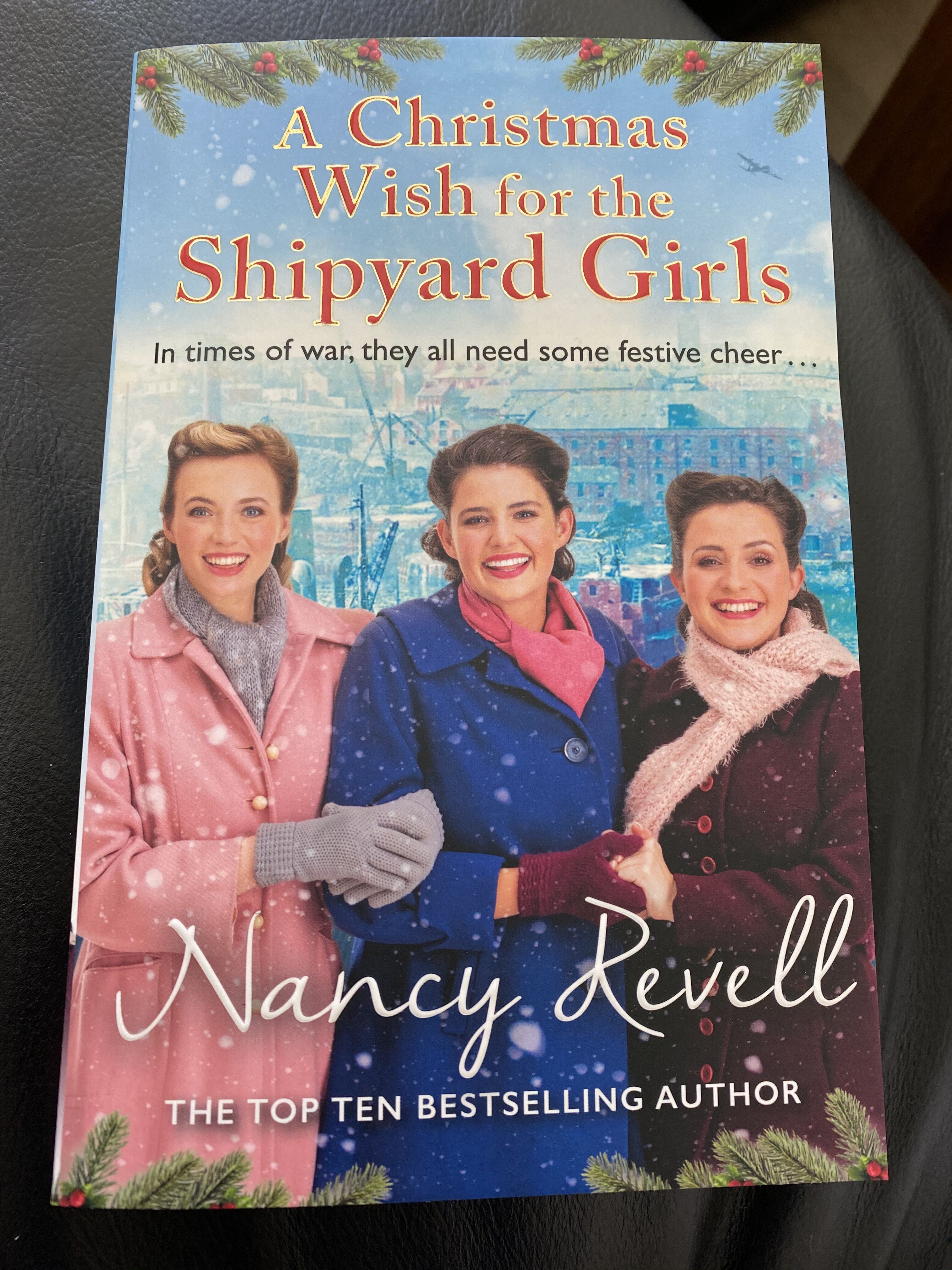
a wish for the shipyard girls

A Christmas Wish for the Shipyard Girls by Nancy Revell. 

A perfect historical fiction saga novel. Like a warm hug on a Sunday evening. Make yourself a cocoa and dive in. Brilliant.
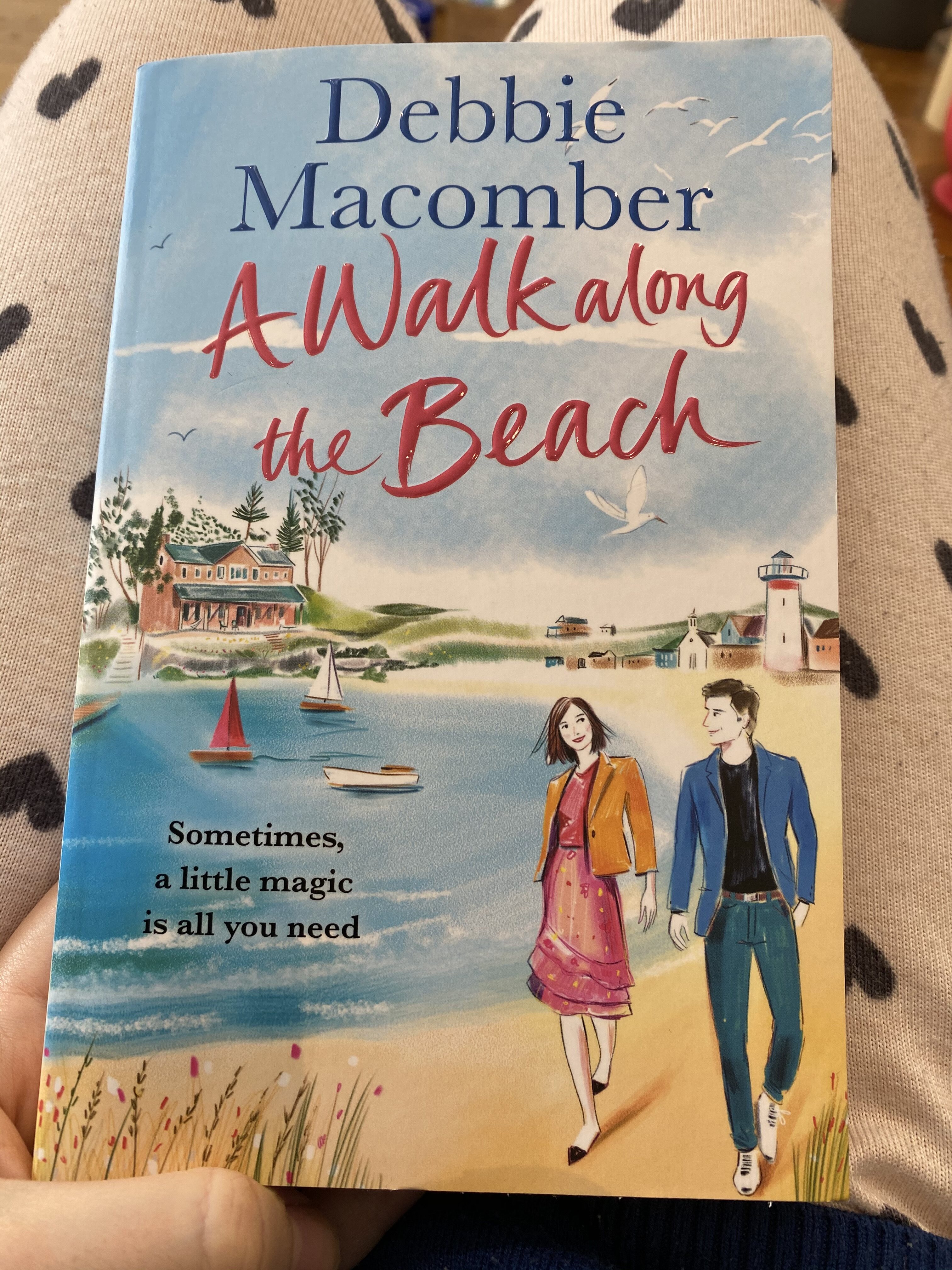
debbie macomber a walk along the beach,

A Walk Along the Beach by Debbie Macomber. 

Debbie Macomber is a New York Times bestseller and an author of over 100 books. There is a reason for her popularity, she is a master of her craft. This heart-warming tale of the love of two sisters has its sadness, but ultimately it is a story of love and beautiful rewards.

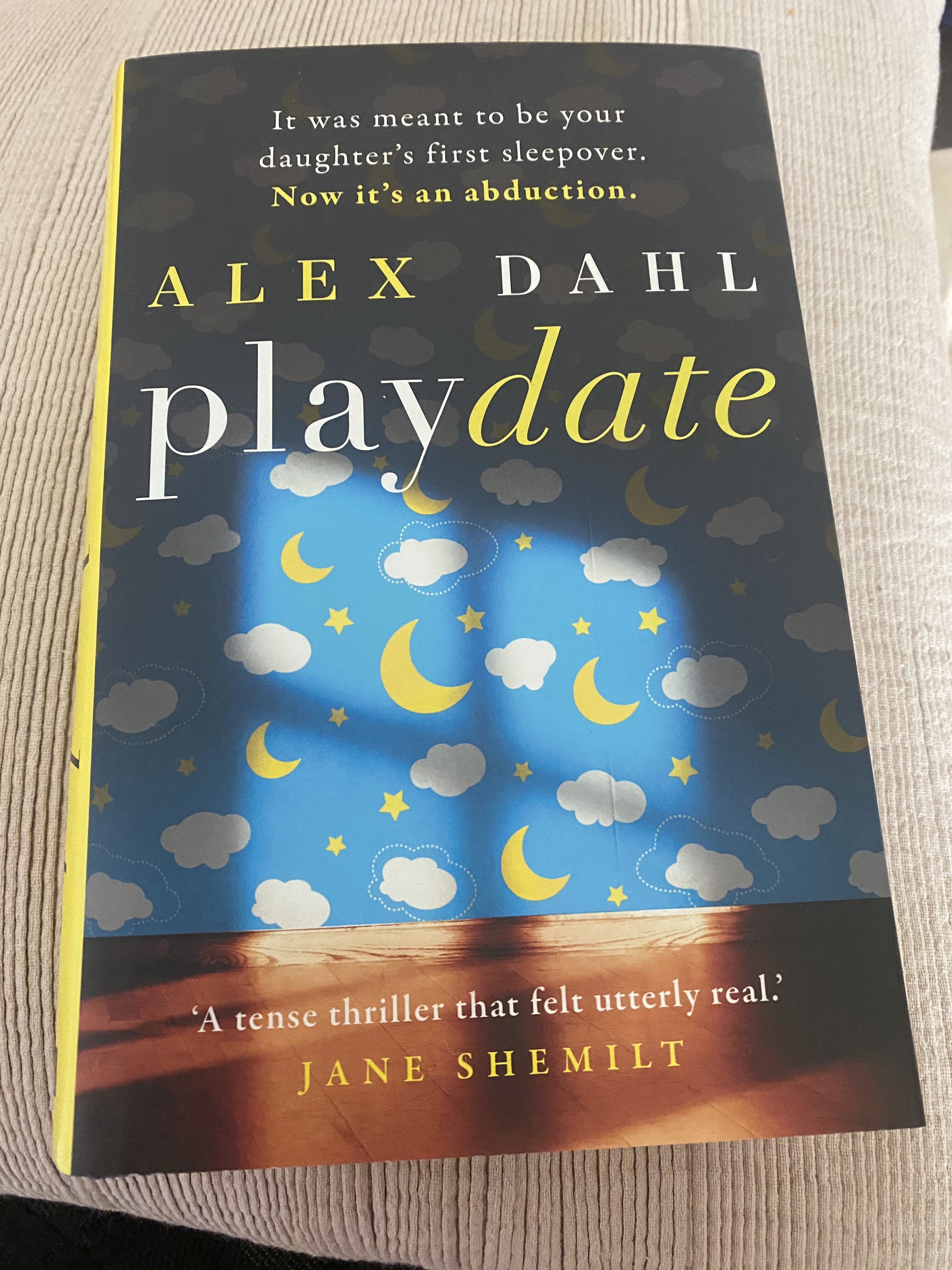
Alex Dahl, playdate

Playdate by Alex Dahl. 

Wow is what I want to say about this tightly wound thriller. The plot has you hooked all the way to the last page, your brain working the entire time. It is set in a sleepy Norwegian town, a perfect and atmospheric setting. I usually avoid books where a child goes missing like the plague, but this book is the perfect thriller. It captures the complexity of human behaviour so well. Sometimes you do not know who you should be rooting for.  Impossible to put down.

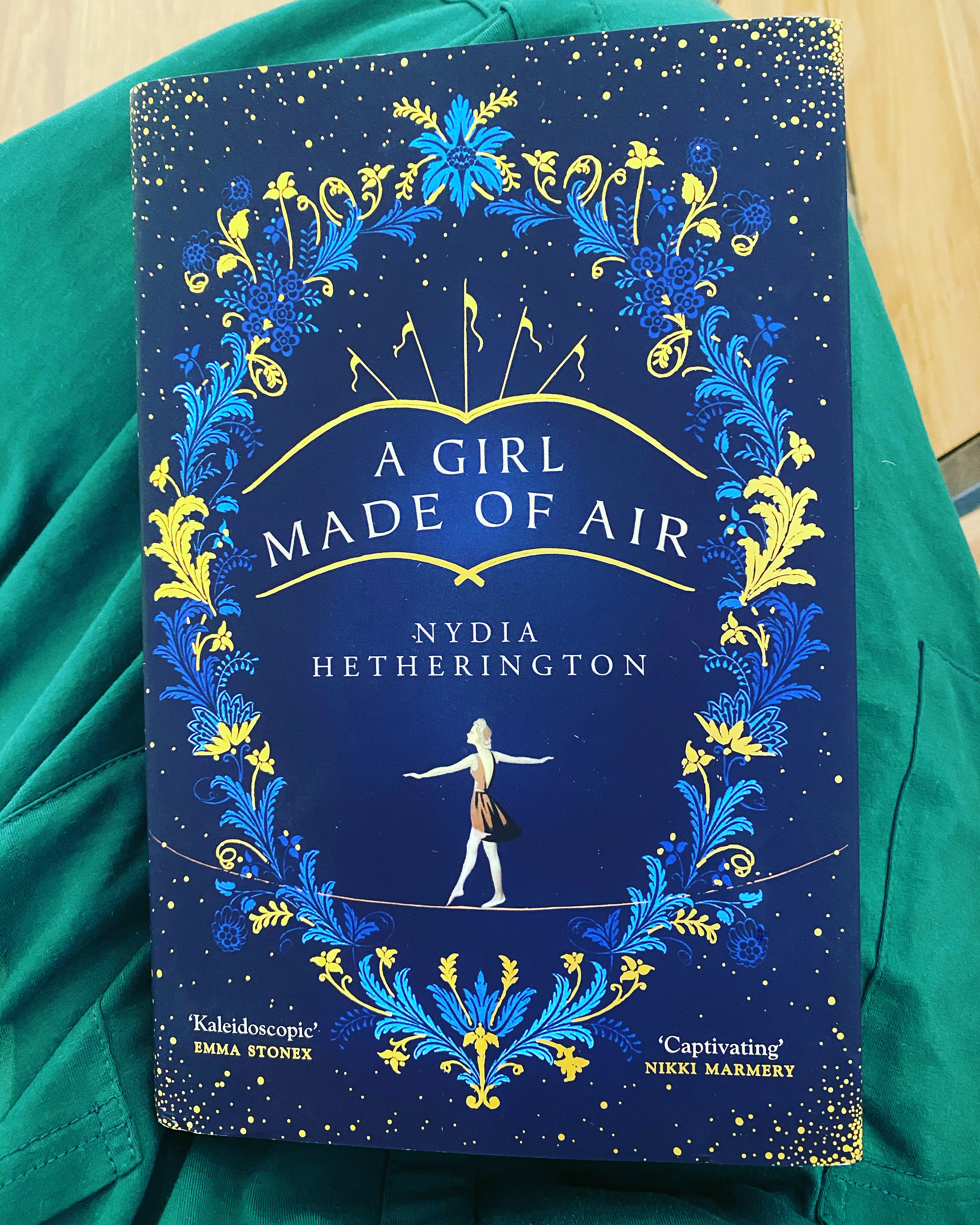
A Girl made of air, Nydia hetherington

A Girl Made of Air by Nydia Hetherington.

What an imagination Nydia Hetherington has. A Girl Made of Air is an outstanding novel. It has to hard know how a story about a circus funambulist is going to work and yet, it does. This is a vivid tale of regret and redemption weaved into a magical book of literary perfection. What a first novel, I cannot wait to see what Nydia Hetherington does next. She truly is one to watch. The unwanted dead by Chris LloydThe Unwanted Dead by Chris Lloyd. 

This is the first in a new WW2-set crime series. It is brilliant, rip-roaring stuff. Vividly written and pitch perfect. A great historical crime novel.

Books are available from waterstones.com, amazon.co.uk, dauntbooks.co.uk and independent book stores.

My Writing Process Alex Knight

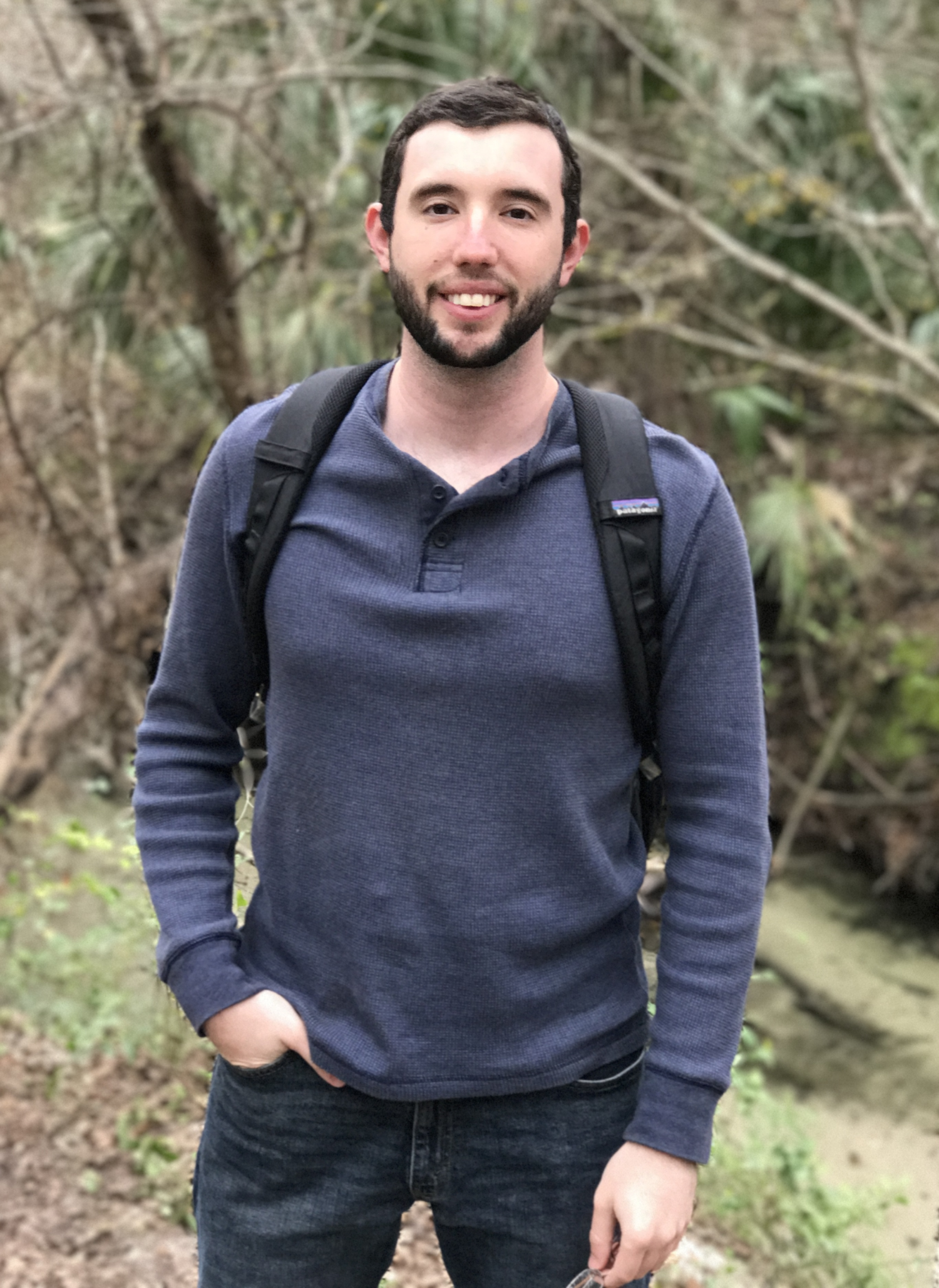
Howdy, all! I’m author Alex Knight — best known for my genre-warping fiction whose popularity commonly crashes global markets. Also, my humility. I used to be a ghostwriter for romance novellas and science fiction novels, but these days I write my own books, primarily in the genres of Fantasy and LitRPG. 

What I’ve written, past and present?

Aside from my ghostwriting work — which I can’t legally talk about — my work includes the Nova Online trilogy, a sci-fi, LitRPG adventure we like to bill as “Halo meets Ready Player One.” If you’re into science fiction, RPGs, and coming of age tales that pit their protagonists against tyrannical, dystopian governments, then you’ll probably dig it. Did I mention it takes place in the real world and a video game? I like to think it’s a lot of fun.

What you are promoting now?

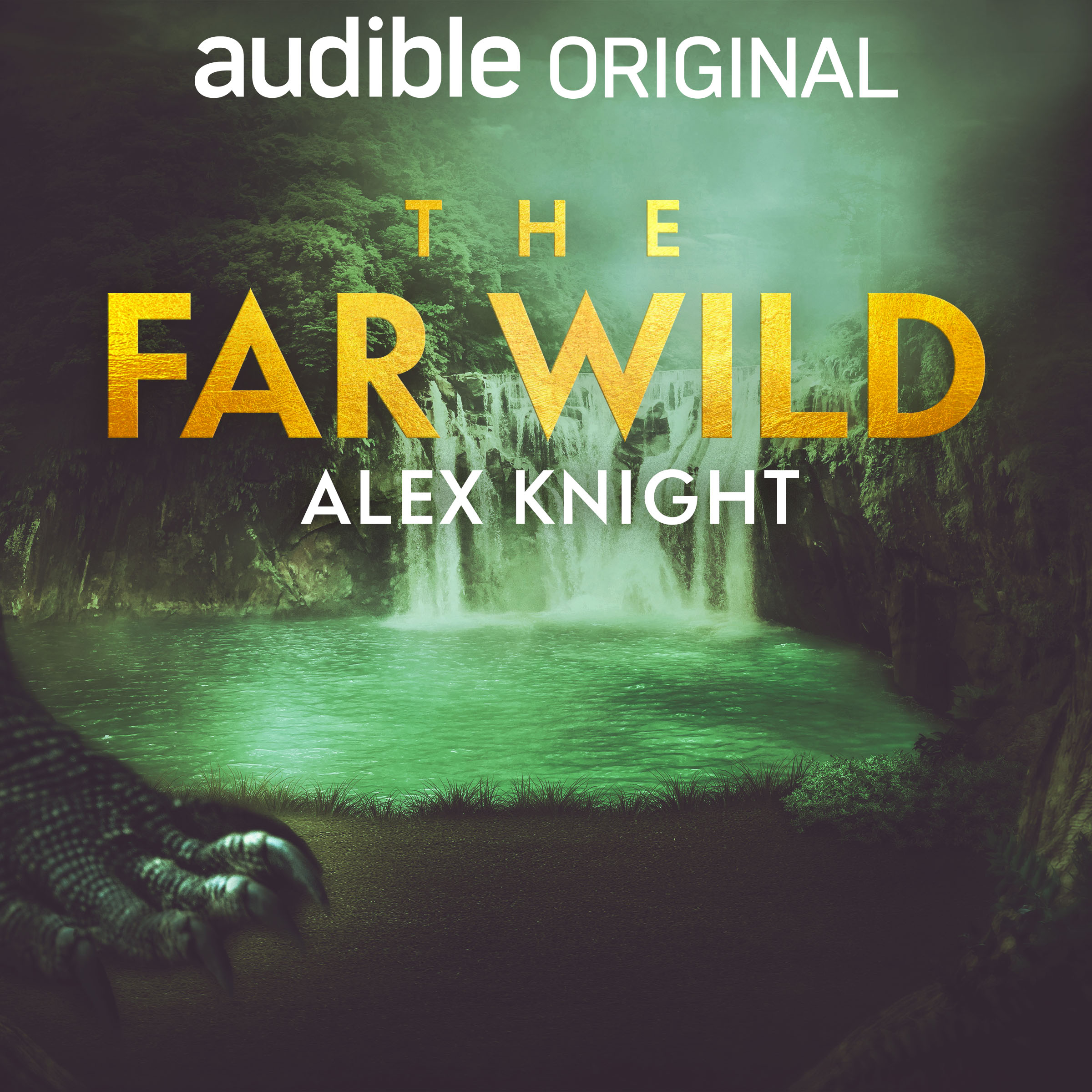
Most recently, I’ve taken a pivot into Fantasy with my debut fantasy thriller, The Far Wild. It’s a classic adventure story about skyships and expeditions gone awry in the most dangerous wilderness known to man. It’s full of beasties with too many teeth, bombastic characters, and beasties with too many teeth trying to eat bombastic characters. Of course, there’s a bit of espionage, too, and no story is complete without a dose of looming societal upheaval, right? I grew up loving Michael Crichton’s Jurassic Park and The Lost World, and The Far Wild is my love letter to those stories. It’s been released as an Audible Original, which means it’s an audiobook and Audible brought in an incredible cast to voice the main characters. I wrote the words, but my goodness did the narrators bring them to life!

A bit about your process of writing?

Consistent. Simplistic. A gift to all humankind — just a few descriptors I wouldn’t use to describe my writing process. Realistically, writing is a wild process and how I do it changes every couple of months. Some things stay the same (butt in chair, music up loud, world ignored), but I’ve found if I write in one place for more than a few weeks my creativity fizzles up. I like to bounce between writing on a desk at home, on the couch, out on the balcony. Or, better yet, in libraries and cafes. Of course, that hasn’t really been an option with Covid, so I’ve taken to placing a camp chair in different, odd places around the house and pretending I’m somewhere else. It’s amazing how well you can tune out your surroundings with the power of noise cancelling headphones and loud, loud music.

Do you plan or just write?

You know, I’ve experimented with both ways. When I was a ghostwriter, I had to plan ahead of time so the client could understand and write off on the story. With practice, though, I’ve found that planning too much ahead of time stifles creativity in a story. I now much prefer to write out a loose plot, then follow it vaguely as I write and make sure I let my mind go where it’d like. That’s where the magic is found in writing, in my opinion. Right on that line between what you planned and where your creativity wants to take you.

What about word count?

I aim for 2,000 words a day, which is a reasonable, sustainable rate for me, and track my progress via a project tracker spreadsheet. Lately, though, I’ve been finding it easier to simply paste chapters into a manuscript first draft document as I write them. This way, I have it to refer to for an up-to-date word count, chapter word count, and it’s super easy to make control + find changes. 

How do you do your structure?

I learned pretty much everything I know about structure and plotting from 1. reading books I enjoy and 2. K.M. Weiland’s website. There’s a bunch of great resources there and I recommend it for every aspiring author. There’s a particularly useful chart on the site that outlines the basic three act structure most stories follow. I like to put my own spin on this by weaving a lot of questions into the story, then answering them bit by bit as the plot progresses. This helps me keep the story moving quickly and make it satisfying as we’re on a constant drip feed of answers.

What do you find hard about writing?

The desire to do it as well as I can. There’s always that voice inside saying “you could do this better,” or “you should have written this this way.” Silencing that voice is key to finishing, well, anything you write. There’s always a compromise you must find between quality and speed. You could blaze the book out in a month or you could take forever doing edits and rewrites. The sweet spot lies somewhere between those, and finding it is a unique journey for each book.

What do you love about writing?

The act of doing it. Creation. I love nothing more than sitting down, cranking the music, and diving into a fantasy world to find out what happens next. Fingers tapping on the keyboard, cursor flying across the page — that’s what I live for. When you’re at that perfect spot between a tight plot and a loosely planned story, magic happens. You surprise even yourself, watching the plot unfurl in unexpected ways. In that way, I, as an author, get to experience the story in a fresh way. It’s much better than knowing every twist and turn ahead of time.

The Far Wild by Alex Knight is available exclusively on Audible now.


RNA 60: ALISON MAY SIGNS OFF ON BEHALF OF THE ROMANTIC NOVELISTS’ ASSOCIATION

Writing this piece for Frost turns out to be one of my very last duties as RNA Chair, as I’m standing down in January and handing over the reins. Being the Chair of the RNA is brilliant and overwhelming and challenging and wonderful and infuriating in roughly equal measures, and this year it’s been… well, it’s been 2020.

A year ago Bella Osborne and I shared some of our plans for the year with Frost readers. 2020 was the RNA’s Diamond Anniversary year and we had big ideas for a huge celebration event in June, alongside bigger and better versions of our regular conference, York Tea and Winter Party. As it turned out, of course, our awards ceremony at the beginning of March was our last physical event for the year, and probably our last event for a little while yet.

As Chair of the RNA the overriding feeling is that you’ve been handed custodianship of something very special, so the first priority is not to mess it up. There’s a rough calendar for the year that you expect to follow, and might then add to with special events for something like a big anniversary. When that calendar is suddenly completely empty and you know that the association has members across the country, and around the world, still keen to interact and develop as authors and network with industry professionals, the challenge of not breaking the organisation you’re charged with looking after can suddenly seem very large indeed.

But no good story reaches its resolution without some challenges and obstacles to overcome, and, in life as in writing, constraints bring forth creativity. So we might not have met up and celebrated 60 years of the RNA in the way that we hoped, but we did still hold our conference – albeit virtually -which opened up opportunities to members who might not normally be able to travel. In addition to our local chapter groups, many of whom have met up via Zoom during lockdown, we now have genre-based networking groups online to allow members to exchange ideas and get to know one another. And alongside our Rainbow Chapter, celebrating LGBTQIA+ romantic fiction and authors, we now have our DISCO Chapter, championing fiction from disabled and chronically ill authors, and representing disabled and chronically ill characters.

We presented our Joan Hessayon Award live in a webinar event, which means that our brilliant winner, Melissa Oliver’s, fantastic reaction is saved for posterity. We announced our Industry Award winners in a video presentation. We brought new opportunities for professional development to our members with the launch of our online RNA Learning programme. And we’ve continued to share ideas and articles on our blog and via our magazine, Romance Matters. Finally, in November we asked the wise people of Twitter to vote for their favourite romantic novel of the last 60 years. Take a bow Bridget Jones.

And our members have continued to write. Against the backdrop of 2020 it would be understandable to question whether telling beautiful stories really matters, but it does.

Romantic fiction is an escape. It’s an escape from a real world that can be overwhelming and unremitting. Romantic fiction is a place of safety. It offers the chance to cry your heart out within a bubble of an imaginary world. It offers catharsis and a space to explore fears and hopes. And, most importantly, romantic fiction is a promise. It’s a promise that obstacles can be overcome, that dark clouds will clear, and that better times will come.

Coronavirus will pass. The need for stories, and storytellers, never will.


Alison May is a novelist and short story writer and current Chair of the Romantic Novelists’ Association. Alison also writes as Juliet Bell (www.julietbell.co.uk and @JulietBellBooks).


REVIEW: Pinocchio, Chichester Festival Theatre

Photo credit: Manuel Harlan


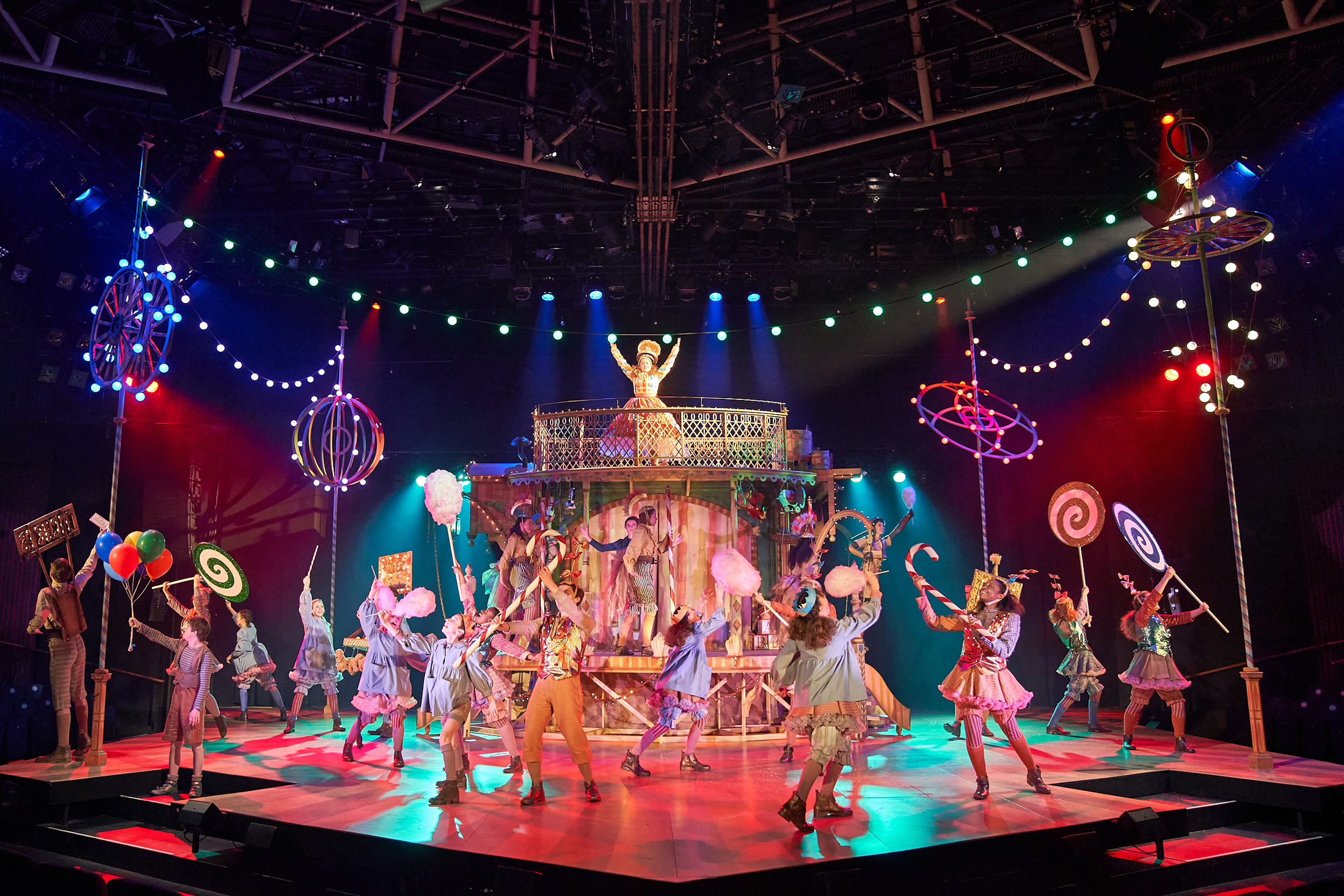
That any live theatre has gone ahead this December is a Christmas miracle in itself. In Chichester’s annual Youth Theatre production, however, there is a double dose of wonder; against all the virus-related odds the show has not only gone on, but it’s an absolute belter.

Usually boasting a cast of almost one-hundred, in order to manage social distancing this year’s CFYT offering is presented by two smaller teams of twenty-three, with Team Fox and Team Cat splitting the performances. (On Press Night Team Fox were performing, but I am reliably informed that Team Cat are every bit as accomplished.) Directing a full-scale production to meet the pandemic’s stringent safety measures, on and off the stage, is an extraordinary feat of choreography, and one that all those involved in achieving must be congratulated.

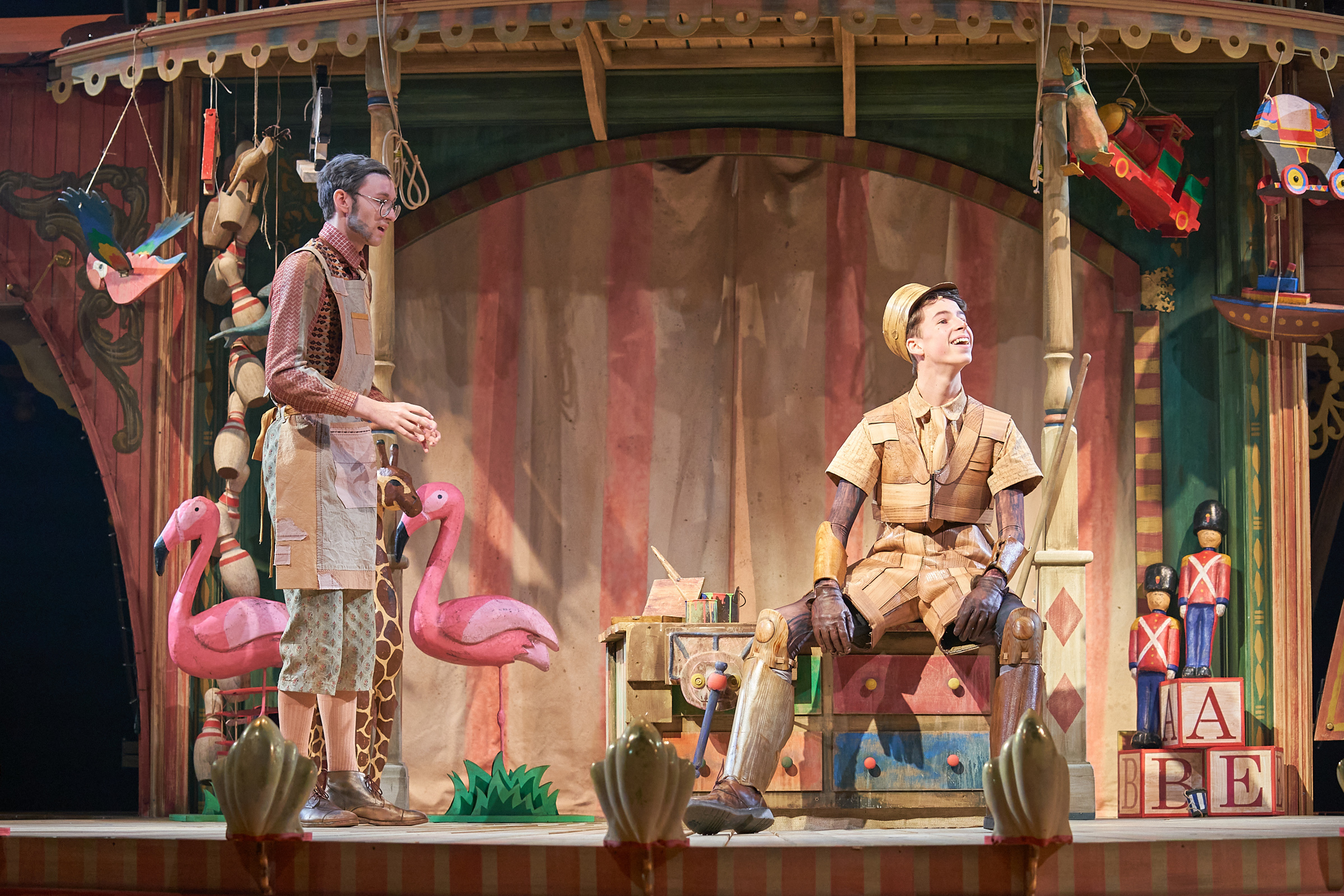
Hope, redemption and realising that our differences can be strengths rather than weaknesses are themes that run through this abridged version of Carlo Collodi’s original tale, which has been superbly adapted by Anna Ledwich. Managing to be gloriously heart-warming without straying into sentimentality, Director Dale Rooks has infused Pinocchio with emotions and moments that truly resonate. One such instance is when Pinocchio and Geppetto ‘hug’. Standing apart, they wrap their arms around their own bodies, bringing a lump to the throat and an ache to the heart – oh to hug again!

On stage there’s not a single below par performance. Archie Elliot (Lewis Renninson) in the title role plays the headstrong little puppet with absolute conviction. Pinocchio may be made from wood but he has guts, heart and spirit, ensuring that we are rooting for him all the way. Alfie Ayling (Jack Campbell) as Geppetto is warm and wistful, playing the lonely carpenter with a maturity beyond his years.

There is excellent work too from Meg Bewley (Molly Berry) as the Fairy and Annalise Bradbury (Olivia Dickens) as Cricket, her exasperated sidekick. Marvellous cameo gems include Alex Webb (Noah Peirson) as a chatty French poodle – très magnifique!

The ensemble work is extraordinary. Matching talent with energy,  it is ultimately in the production’s togetherness that its success lies. A masterclass in how a completely cohesive company can create something magical, the story flows perfectly, the singing and dancing are stunning and the set, simple but oh-so clever, is breath taking.

The overall effect is wonderfully uplifting. Moreover, there is a sense of the fantastic; a promise of enchantment. And it delivers. With Christmas bells on.

Vicky Edwards

SISTER SCRIBES: A LAST WORD FROM KITTY WILSON

As this is my last Sister Scribes post I thought I would use it to update you on where I am now in terms of my writing career and what I have learnt along the way.

When the Sister Scribes started writing for Frost I had just published my second book in The Cornish Village School series and signed a contract for three more. Truthfully, it still hadn’t sunk in that I was a published writer.

Now two years on, all five books in the series are published digitally, available on audible and the final book, Happy Ever After, will be joining the others in paperback next month. I have loved writing this series although am still a little stunned that what began as a simple experiment in my living room – writing what I knew – has taken on a life of its own and spans five books.

I have spent this year writing a new romantic comedy, centred around the city of Bristol where I now live. Currently I am tweaking it and don’t know what changes will be made once my editor has read it but I do know that I was worried that the strength of community I had created in Penmenna would be hard to recreate in a city. I am so pleased to have been wrong. Community is alive and well in the area in which I live, and I hope I have managed to do it justice.

This book is for a different publisher with a brand-new editor and I am so excited, though I can’t tell you who just yet. The Cornish Village School had three different editors and I have learnt that each one has different ways of working, different priorities and will therefore teach you something new. Each one helps you to refine your writing and being published is the start of learning to write professionally. I think so many aspiring authors see publication as the end goal, I certainly did, but it really is a beginning rather than a finish. I feel that my writing has improved with each story and I hope it continues to do so.

There are many things I wish I had known or been more secure in with my first book. But I am forever telling my children that we aren’t born knowing how to do things, that it takes time and patience and practice and the same is absolutely true of writing. I enjoy studying the craft and think it’s important to maintain. I am currently working my way through John Truby’s The Anatomy of a Story and whilst dense it’s remarkably helpful. For those starting out I highly recommend Emma Darwin’s This Itch of Writing blog and Jessica Brody’s Save the Cat Writes a Novel. Every other profession has Continuing Professional Development at its core and I think writing should be no different.

The other thing to learn is that writing is a business. You have not been published because people want to be your friend or are being kind, you have been (or will be) published because a publisher can see potential profit. Thus, rejections aren’t personal they are professional and the same applies for contracts. Make sure you recognise your own value and don’t put your success down to others just being nice. I’m giggling as I type this because I do it all the time. Maybe I’ll get better at that one in 2021.


Merry Christmas everybody, thanks so much for supporting all of us at Sister Scribes, we’re wishing you all a very happy 2021.

Kitty x


SISTER SCRIBES: OVER AND OUT FROM KIRSTEN HESKETH

My last ever Sister Scribes post – and what a blast it has been!

And, my, what a lot has happened in the two years since the five of us named ourselves the Sister Scribes and banded together as friends and fellow writers. We’ve written before about how we went to stay at a wonderful house – Darcy’s Abode! – in Bath and spent a few fabulous days writing, sightseeing, eating and getting to know each other better. Back then, getting published was just a twinkle in my eye –  a twinkle that I feared might be extinguished at any moment – and how in awe I was of my fellow Scribes with their launches and their multiple deals. Would it ever happen for me too?

Fast forward two short years – and so much has changed. My debut, Another Us, was published by Canelo this year. It came out in in ebook in May and I had the loveliest of Zoom launches, complete with dying my hair red to match the cover and to raise money for Mind. And then, in August, it came out in paperback. I originally had a digital only deal with Canelo and the fact they had enough faith in me and my book to then invest in a paperback in this most difficult of years really was the icing on the cake. Thank you so much, Canelo, you really have been fabulous to work with. As has my wonderful agent, Felicity Trew.

And, basically, it’s been brilliant ever since. Another Us (very briefly) had bestseller flags in the UK, Canada and Australia, which was totally beyond my wildest dreams. It’s been featured in Woman and Home, Women’s Weekly, Woman (there’s a theme here!) More, Pick Me Up, Waitrose magazine … the list goes on. It was longlisted for The Guardian’s Not The Booker Prize and was a contender for the RNA’s Joan Hessayon award. But best of all have been the dozens of messages I’ve received from readers all around the world telling me how much Another Us has touched, informed, amused or plain old entertained them. I think that has been the very best bit of all. That and getting to know a whole host of other debuts – including my lovely Sister Scribes – because no one understands quite what it’s like to have your debut come out in a global pandemic than someone who is going through exactly the same thing ….

And now it’s time to look forward. I have been lucky enough to secure a two-book deal with Hodder and Stoughton for a series set in London in WW1. The Post Office Girls follows the experiences of three girls who join the Army Post Office – in a huge, wooden, building which was been hastily thrown up in Regent’s Park to cope with the sheer volume of mail being sent to the various fronts. My grandfather – who himself served in WW1 – worked for the post office in London his whole life – and the first book is dedicated to him. It will be published in May next year and the second book – A Post Office Christmas – follows the November afterwards. I wrote the first 50,000 words of that during Nano (success – hurrah!) and am now feeling deliciously Christmassy – if absolutely exhausted!

So, all that remains to be said is a huge Merry Christmas to each and every one of you. Thank you for following our adventures over the past couple of years and best wishes for a safe and happy 2021.

Over and out x