HOW YORK LIBRARIES DIGITAL SERVICES ROSE TO THE CHALLENGE DURING LOCKDOWN

Gillian Holmes, Executive Assistant at Explore York Libraries & Archives, shares their fascinating story

From the onset of the lockdown in March, Explore York, which runs libraries and archives for the City of York in northern England, saw usage of its OverDrive e-library double showcasing a huge rise in digital reading whilst the physical library service was closed.

“We already had a well-established e-library in place, in terms of functionality and awareness, so we were ready,” said Helen Whitehead, e-services librarian for Explore York.

More than fifty percent of the users during lockdown were new to the OverDrive e-library. Comments received show customers were impressed with how easy the site was to use, and they spread the word to friends, increasing even more uptake. Usage increased in all categories, but especially in children’s e-books. During the Summer Reading Challenge for children, five times as many e-books were issued than in 2019. In total, for the period January 1st to December 1st 2020, the OverDrive e-library saw 77,000 checkouts against 41,500 checkouts for the same period in 2019 an 86% increase.

Generous donations from publishers, together with cash grants from City of York Council and Central Government, meant Explore York kept up with the increased demand for e-books. Having books available even when physical libraries were closed was so important for wellbeing. As one customer put it, “(OverDrive’s Libby reading app) has been a lifesaver for me during lockdown.”

“People are reading all kinds of publications, including some we could never have offered in hard copy,” Helen said of the staggering uptake.

We have had many comments from people expressing appreciation for PressReader, including a health worker at the local hospital: “I’ve downloaded the PressReader app and it looks awesome. Will give me something light-hearted and diversionary to read on a break at work!”

As well as providing online reading materials, Explore York moved quickly to create a virtual “Library from Home.” The website was updated so that customers would easily find what they needed. Archive and Family History sites such as Ancestry were offered from home. Librarians and archivists created new online resources to support home-schooling and reminiscence sessions. Explore York’s well-loved events programme moved to Zoom and has proved to be as popular as ever despite the virtual format. One example is a regular monthly poetry evening, which achieved a record audience with participants joining from around the world. Explore York also developed a number of new online platforms, including a Lego Club on Facebook, a volunteer programme via Flickr and curated watchlists on its YouTube channel.

As library services have been transformed in the last six months, Explore York staff have also been on a real journey of learning and discovery of all that can be achieved online. The experience of 2020 will inform the way library and Archive services are delivered in future.

The last word goes to one library user who speaks for many:

“When I look back over this difficult period, I hope I’ll remember the fantastic books that took me to a different place and helped me reflect on my place in this world. I’ve laughed out loud, I’ve cried and shouted at the iPad. I’m hooked!”


HOW AUTHOR LOUISE MUMFORD TURNED FORTY AND CHANGED HER LIFE

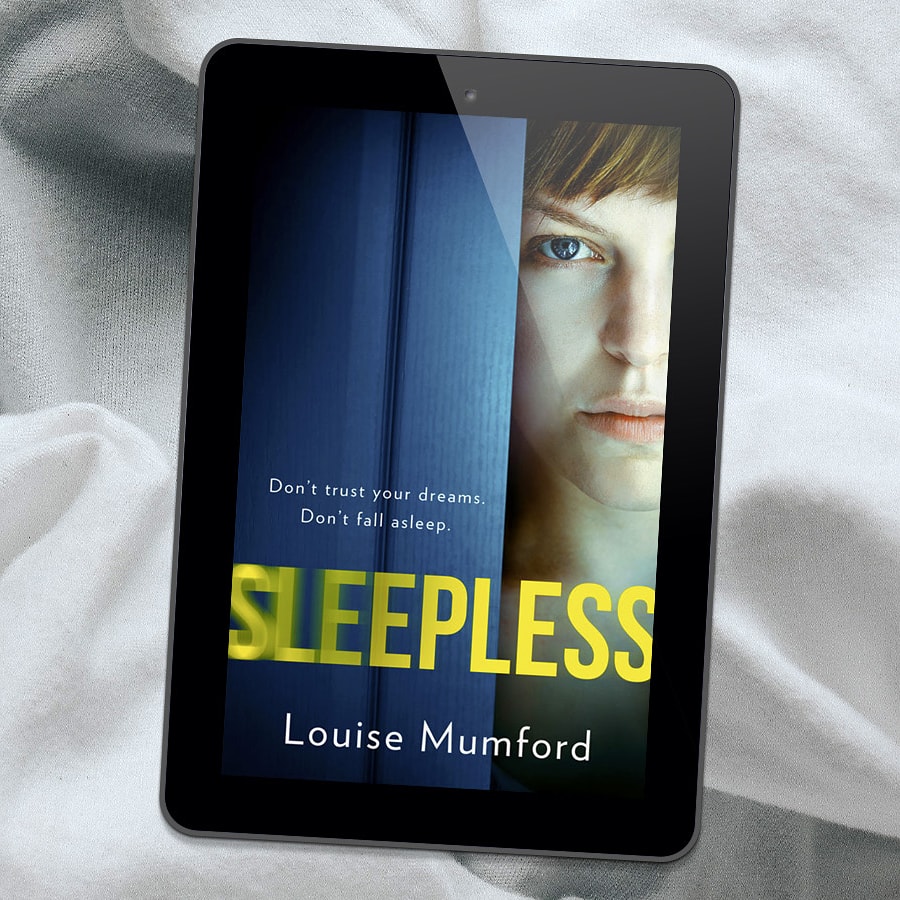
Guest article by Louise Mumford to celebrate publication of her debut thriller

You haven’t turned forty until you’ve turned forty at the start of a lockdown during the outbreak of a worldwide pandemic. It certainly added a level of drama: I started a new decade and the world stilled.

Forty is a milestone birthday, whether you get to party with a massive group of friends in your favourite pub or not. For me, it was doubly important because I’d made a promise to myself a few years before: by forty my life would be different.

It was a promise I kept.

I have never been able to sleep well. Insomnia has been my constant companion since I was a child. When I was young, I didn’t really see the point of sleep. Why would people do that and miss out on all the marvellous things that could happen whilst they were dozing? I couldn’t understand it. Fast forward a few years and I would be the one at house parties who would still be awake at 4 a.m. tidying up the kitchen and flicking through the books in an unfamiliar bookcase to keep myself entertained whilst everyone else slept. Now I’m much older I watch the way my husband drifts off to sleep within minutes of putting his head on the pillow and, to me, it is a magic trick I will never learn.

I’ve always thought that this never really affected my day-to-day life. I thought I coped. I was wrong.

In the opening chapter of my new book, ‘Sleepless’, the main character, Thea, has a car accident after yet another poor night’s sleep. They say write what you know. Well, I know that car accident very well. It is mine. I had got through my first day back in the new term as a teacher, a job I’d been doing for around ten years or so, and in the car I’d been congratulating myself about how well I’d coped, despite the lack of sleep. I was smug.

That was when I realised the car in front of me on the dual carriageway slip road had stopped. I crashed into it and another car crashed into me. Miraculously, nobody was badly injured. My own car was a crumpled thing and smoke wreathed around the twisted metal like a bad Eighties pop video. I remember sitting in the ambulance listening to the radio announce major tailbacks because of me and knowing that I had to change my life. I gave myself the deadline of turning forty to accomplish it.

I have always wanted to be a published author. So, I took a deep breath and left my teaching job, a job that was slowly eating away at me due to the early morning starts. My body clock eventually found a rhythm that had probably always been its own, but which modern working life didn’t allow for: a much later bedtime and a later morning. I’m a night owl at heart and, though the early bird apparently catches the worm, I’ve got myself something else, much better. I concentrated on writing and that book will be out on December 11th this year: ‘Sleepless’. I didn’t have to look far for inspiration.

Life begins at forty, so the greeting cards say, and my whole new life has just begun.


Louise’s debut thriller ‘Sleepless’ will be published on 11th of December as ebook and audio. Ebook is currently 99p on Amazon, Kobo and Apple. Paperback to follow in February.


Brave seven-year-old girl who survived meningitis features in calming Christmas storybook for children

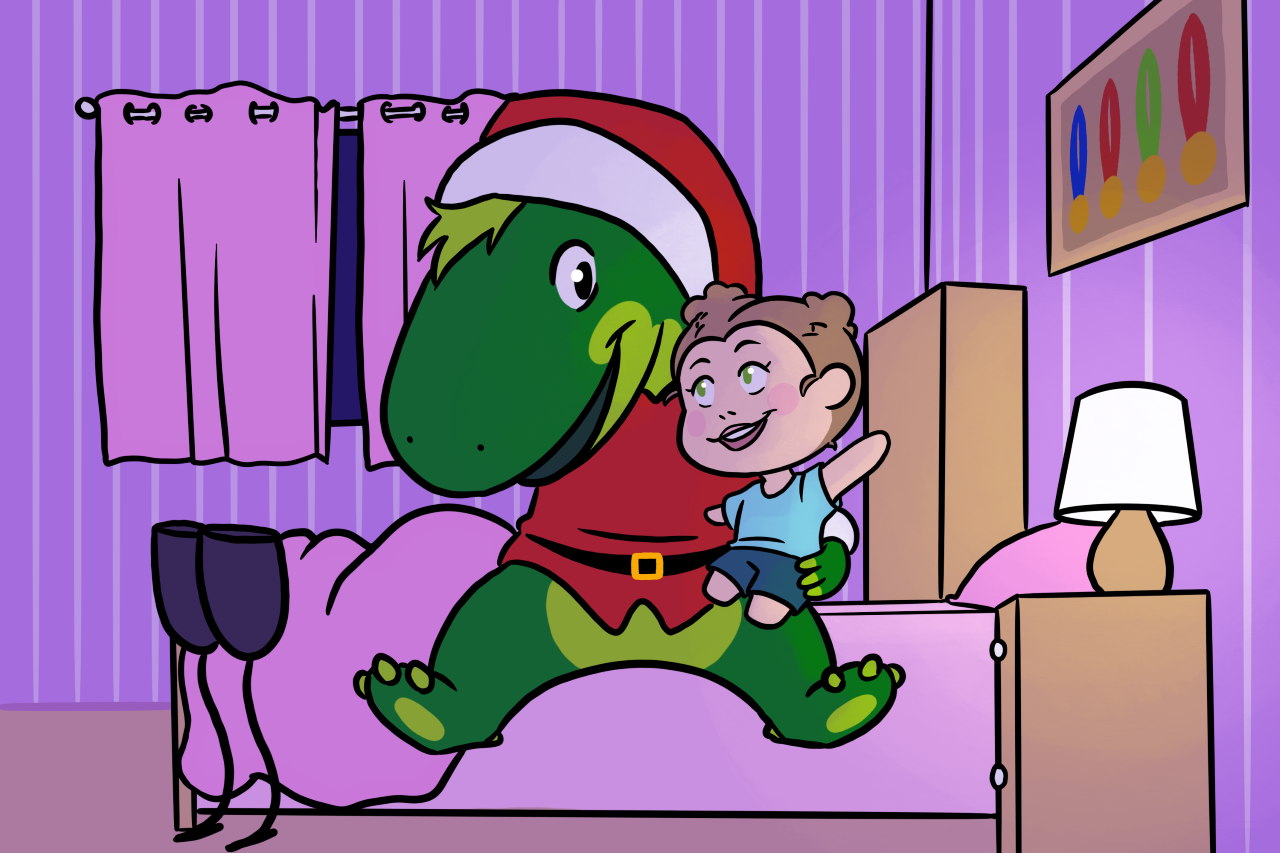
cove the Christmas dinosaur A courageous little girl who fought back after losing all her limbs to meningitis is to feature in a children’s storybook designed to provide comfort this Christmas.

Seven-year-old Harmonie-Rose Allen, of Bath, contracted meningococcal septicaemia as a baby and was given only a 10% chance of survival.

Her arms and legs were amputated, but she survived and now, thanks to prosthetic legs, she loves jumping and skipping and even completed a half-marathon in her home city when she was just five.

An ambassador for the charity Meningitis Now, Harmonie-Rose will feature in the children’s illustrated storybook ‘Covi, the little Christmas dinosaur!’ written by author Susie Cullen and illustrated by Chay Winter.

Harmonie-Rose meets Covi, who is a little green dinosaur sent by Santa to save Christmas. The book is the third tale in the series ‘The adventures of Covi, the little green dinosaur’.

‘Covi, the little Christmas dinosaur’ launched for pre-sales on November 24th.

Susie’s first two books – ‘Covi, the little green dinosaur’ and ‘Covi, the little seaside dinosaur!’ – proved hugely successful.

In the new book, Covi becomes a hero when he stands in for Santa to deliver presents to children during a Christmas lockdown.

When Covi visits Harmonie-Rose, the little girl is wide awake. He pops her on his knee to tell her a magical story of kindness and hope for the world.

Susie said: “Covi is a helpful little dinosaur who came to help the children when the world was stuck by Covid-19.

“As a T-Rex, Covi, like Harmonie-Rose, has limb differences that do not stop him doing anything he wants! As a strong supporter of inclusivity for all, I am thrilled that Harmonie-Rose’s parents agreed I could feature her in the Christmas tale.

“Her own story is such an inspiration, and I hope that other children (and adults) with limb differences will be as pleased as I am to see that dinosaurs and Santa do not discriminate!”

The latest book was commissioned by Singapore-based publisher British Theatre Playhouse in association with Worldwide Entertainment.

Cecilia Leong-Faulkner, chief executive of British Theatre Playhouse, said: “Covi the little green dinosaur is a fantastic character and it’s amazing that we can feature Harmonie-Rose in the story too.

“This year has been very difficult for children with the Covid-19 pandemic, schools being closed and families in lockdown but this story is uplifting and inspirational and can really show children that we can come through this if we are all brave and determined.

“We hope parents, teachers, and, of course, little readers will love Covi’s Christmas adventure as much as we’ve enjoyed producing it with Susie.”

For every book sold, 50 pence will be donated to Harmonie-Rose’s charity of choice.

The paperback is available on Amazon.

MULTI-TALENTED WOMEN’S FICTION AUTHOR CAROLINE JAMES ON MENTORING

I first started writing eight years ago and one of the biggest things that hit me was how lonely a business I’d chosen. Sitting on your own, hour after hour, day after day, was the most isolating thing I had ever done. I had a very busy time in my ‘other working life’ with lots of travel and constant client meetings. Motivating myself to work alone wasn’t easy, combined with internal fears that anything I wrote wouldn’t be good enough and no one would want to read it. It took me a year to write my first novel and as many authors know, the task of submitting with high hopes and expectation soon becomes humiliation. The manuscript was rejected by agents and publishers time after time.

In those days self-publishing was very new to me and I had to learn fast. It became the life-line that ultimately connected me to the publishing world. But I still found it a lonely experience in cyber space. How I longed to be part of publishing a team with meetings, mentoring and lunches and all the fun that other authors seemed to be experiencing once they’d signed that golden contract and committed to a book deal.

Sitting on your bum feeling sorry for yourself achieves nothing, as my mother always told me, so I decided to do something about it. My debut novel had done surprisingly well and reached #3 in women’s fiction on Amazon. This gave me confidence to contact other authors in my area via social media. We set up a group and met every month and the kindness and help I found there was like being wrapped in a warm writing blanket. My life changed and I moved away but I consider two of those authors as very close friends and we still meet to help each other.

The years have moved on and several novels later I am now both traditionally and self-published and during this time I have mentored other authors, who like me in the beginning, hadn’t a clue where to start. Little did I know the huge importance of for example, editing or of having a social media profile and the zillion things that a savvy author in 2020 needs to get a grip of.

It began with a couple of authors, through Facebook, asking for advice. The hand-holding process began and it felt good to be able to give something back and watch the blossoming process develop as they realised their writing dream and ultimately produced their very own novel. Now, I have put together a group of other like-minded writing professionals who want to give something back and through a small business community we mentor, motivate and give of our time to help authors who are in the very same position that I naively found myself in when I first started writing. It does surprise me that with all the information freely available on the internet that this is something that is in demand. But I know how it feels to be on your own, wondering if you are good enough to write and if you can trust your instincts. Having a comforting virtual hand on your shoulder saying, ‘Yes, you can and this is how you can do it,’ is a very empowering process and I am hugely humbled to be in a position where I can offer help to anyone who asks and has the determination to achieve their writing dream.


Find out more about Caroline at https://www.carolinejamesauthor.co.uk/


SISTER SCRIBES’ GUEST: MORTON S GRAY ON WRITING AS A MUM AND A CARER

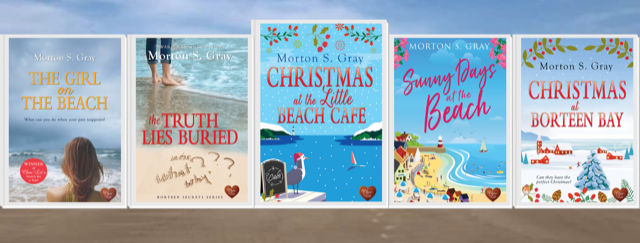
Today I’m joined by author friend Morton S Gray who writes romance with a mystery to solve for Choc Lit all set in her fictional seaside town of Borteen. The better I get to know Morton, the more we seem to have in common, but I am frankly in awe of her daily regime – it’s an absolute inspiration!

I often hear people say that they could write a book, but they’re too busy. So, how do you fit writing into a busy day? I thought I’d give blog readers an idea of how I personally do it. Don’t get me wrong, there are days when I don’t manage a word, but here is an example of a good day!

When I started to compose this post, I realised how important thinking time contributes to the number of words I manage to get down.

Alarm sounds at six o’clock, ten minutes thinking time about latest work in progress, book seven, a Christmas novella for November 2021 publication. Continue thinking in the shower where ideas really begin to flow stimulated somehow by the scents of the shower products. Dressing, I jot down ideas from the shower so I don’t forget, e.g. “dancing on the beach scene” “shock event near the Christmas tree”.

Drive son to station and on way back mull over how to write on from my earlier writing prompts. Breakfast, sit at pc and type. I’m now so ready to write that I can produce about 800 words really quickly.

Tidy house, washing, dishwasher. Early walk with homeworking hubbie. Maybe float a few ideas about my plot to see what he can add. He works in IT but can often give a different and male perspective. We once outlined a complete murder mystery on our walk, but I’m yet to write that one. Other ideas often come to me when walking too.

Back to computer and write. Around 400 words this time.

I visit my mother who has dementia every day after lunch. Sort out problems, shopping and tablets. Mom is a surprisingly good sounding board for my writing too. She’s usually reading one of my books and the plots are always new because she can’t remember the stories.

Once home I tackle admin, phone calls, tweeting, Facebooking and emails. If I’m lucky another quick writing session, let’s say100 words.

Back to station to collect son, listen to music on the way back as lyrics will jump out at me to use as writing prompts. I’ll make notes on my phone waiting at the station, but little time to write until after our evening meal.

Usually add another 300 words in the evening with my laptop on my knee and one eye on a television programme. After writing from notes on phone, I’ll review what I’ve written so far, add extra words and description.

So, by bedtime I should have an extra 1,600 words to show for my day. If it’s a good day sometimes nearer 2,000. Off to bed, but crucially before I turn out the light, I think about any sticky points in the manuscript and often have an answer in my head by morning.

Sleep and repeat.

Morton S Gray’s fifth book, Christmas at the Little Beach Café, was published in November. You can catch up with Morton, her blog and her books on her website www.mortonsgray.com


5 Books That Changed Me: CJ Daugherty

 CJ Daugherty The Secret History, by Donna Tartt

This fast-paced but dreamy novel set at a private university in the New England mountains, starts with a murder and tells the story of how it happened in reverse, as a group of elegant young friends obsessed with Greek mythology take everything too far, and close friendships fall to pieces. In her most restrained and elegant book, Tartt performs a magic trick by inventing fascinating characters who are capable of cold-blooded murder, and then making you like them. You know from the start they are killers, and yet you still want to be their friend. I re-read this book regularly.

The Likeness, by Tana French

This Irish crime novel by Tana French is one of my all-time favorite books. I’ve read it multiple times. It follows a female detective as she investigates a murder victim who looks exactly like her. Using their alikeness as a weapon, she takes over the dead woman’s life – moving in with her friends into a house in the countryside outside Dublin. She begins investigating them from within but then, slowly becomes seduced by them, and the rambling mansion where they live. Unfortunately, this is a very dangerous decision. Because one of them is a killer.

The Night Circus, by Erin Morgenstern

This is an elegant, wandering, multi-strand tale of a mysterious circus that travels in secrecy and arrives without warning. Nobody knows when or where it will appear, or how long it will stay. The tents are filled with magical, mysterious displays. People are obsessed with it, and for good reason. It could be dangerous or simply wonderful — even after reading the book it’s hard to know which. Either way it doesn’t matter. It’s so beautifully written, I long to wake up one morning, as dawn washes the dark from the sky, to find the circus has appeared in my town. 

Station 11, by Emily St John Mandel

I bought this book after everyone I trust in the world told me it was amazing, and they were ALL right. It starts in a pandemic apocalypse (sound familiar?) and then jumps forward in time to follow a group of survivors who are exploring the remains of America in a roving band of Shakespearean actors, travelling from settlement to settlement performing plays for people who can barely remember a time before life was like this. It’s both scary and thoughtful, and ultimately filled with hope. Maybe just skim the first chapter while we’re all locked in our houses, but the rest will lift you.

Circe, by Madeline Miller

This feminist reinterpretation of The Odyssey told from the perspective of the banished witch, Circe, is the most beautiful, heartbreaking, glorious look at the Greek myths in all of time. Circe’s story is bittersweet. She’s young and voiceless, expected to be nothing but beautiful and compliant. Because she isn’t either of those things, she’s punished by being banished to an island to live completely alone. There, in isolation, she finds herself. The tale is told with wonderful compassion. It’s funny and dry, and terribly poignant in places. I cried 3 times listening to the audiobook. Honestly, it’s so gorgeously written I don’t know why I bother.


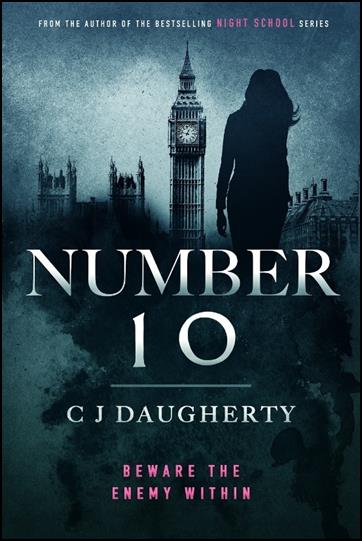
Number 10 by CJ Daugherty is out now, £9.99 from Moonflower Books available on Amazon here.


My Writing Process Leith MacArthur

Leith MacArthur, author, writerMy Writing Routine:

I write every day for 2-4 hours, from roughly 8am to 11am, depending on how open my creative flow remains. I consider the “flow” to be a kind of pathway or conduit to the Infinite, where all events, thoughts, problems, solutions, lives and deaths occur, whether past, present, or future.

A Bit About Me:

I began writing when I was about ten years old. Short stories, poems, and a children’s book about a germ who saves the world. When I was introduced to alcohol and drugs at the age of fourteen, I became instantly addicted and my internal writer went into a coma. I wrote not another word until my mid-thirties when a novel burst out of me. I continued to write novels, but everything I expressed, whether it was through writing or raging, was being forced through a translation device, fueled and energized by drugs and booze. I drank, drugged and wrote for a total of forty-seven years. When, at the age of 66, I finally got clean, my writing began to take on a life of its own: it began to mature in the process. In essence, the act of writing became “natural” and, for the first time in my life, I realized I had been born with the gift of expression. My recently released novel, The Death of Harry Crow, is my best work. I’m now hard at work on the sequel, and the writing continues to flow with ease and assurance. 

What I Have Written, Past and Present:

Various poems and short stories; a children’s book called, Gerry the Germ; a supernatural thriller called, The Duplicating Man;  a book specifically for women called How To Buy An Excellent Used Car; a biographical novel (part memoir) about my life called, An Artificial Life;  five novels in The William Snow Series, Beneath the Bridge, The Stones of Mirabella, The Barnes and Blackwell Affair, The Finding Man, and (the only one published from the series) The Death of Harry Crow. I am currently at work putting the finishing touches on the sequel to Harry Crow, called The Man in the Moon. It’s good stuff.

What I Am Promoting Now:

The Death of Harry Crow

A bit about the process of writing:

I write directly from my thoughts. No plan. If I don’t happen to have any interesting thoughts that are worthy of words, I put down words anyway. Random words. Misspelled words. Incomplete sentences. It doesn’t matter. Eventually, something readable comes out.

How Do I Do My Structure:

These days I write only novels. I have no plan and I use no outline. Because I write straight out of the Infinite, I have no real structure; I just write until the work announces to me that it’s done. However, because I write thrillers, I do prefer to write short, impactful chapters that keep the action going, a bit like a Gatling gun.

What Do I Find Hard About Writing:

The toughest thing for me is dealing with Creep, the ungrateful primate who lives in a cave at the back of my skull. When Creep comes lumbering out of his cave with his knuckles dragging along my brain pan, he has but one purpose: to keep me from becoming a self-supporting writer. Creep came close to killing me (his true objective) by convincing me, across a span of 47 years, that drugs were the only way to deal with pain. Creep almost won, but when I learned that expressing pain is the only way to heal it, he lost most of his power over me. He’s still there, but I know how to deal with him now: I write.

What Do I Love About Writing:

I love that I can leave. When I write, I leave the world behind me: it’s only me, the words, and the fantasy in my head. I have unlimited power. I can do anything.

Advice For Other Writers:

Do these three things: read, read, and read. If you are meant to write, the words will follow.

The Death of Harry Crow by Leith MacArthur available in paperback, £9.99, via Amazon or to order in any good bookshop. 


SISTER SCRIBES’ READING ROUND UP: NOVEMBER

Kitty

Our Story – Miranda Dickinson

How I loved this book and Otty and Joe. Miranda Dickinson writes with such heart that it spills over into her characters and I fell a little in love with both of them, was desperately willing them to get together and getting a little cross when they were making poor decisions. I love reacting this way, it means the author has completely pulled me into her world. Our Story is a wonderful novel to escape with. Fun, empathetic and engaging, it was delightful reading and an absolutely perfect rom-com.

Christmas Island – Natalie Normann

I have been so excited about this book. I read Summer Island earlier this year and fell in love with Natalie Normann’s writing style and the setting and could not wait to read this second in the series (which can easily be read as a stand-alone). As with the first, this book truly delivers on the cosy or Koselig and as Holly and Tor’s romance builds from their first meeting the reader is taken on a whirlwind tour of Norwegian Christmas food and traditions. I loved so much of the detail of this book and it provided me with the perfect Christmassy escape.

The Single Dad’s Handbook – Lynsey James

This book is the story of Evan – a widower bringing up his small daughter – and how his grief has, understandably, upended his life. He discovers a book of letters written by his wife before she dies to help him deal with the issues she anticipates once she is gone. The letters are poignant and witty, which is a fair summary of the book itself. I read it very quickly, fell utterly in love with Evan’s daughter Violet and thought the way that Lynsey James manages to combine this story of loss with comic moments and the hope that a new romance can bring was very skilfully done.


Susanna

The Ferryman’s Daughter by Juliet Greenwood

Wow! What a book. I was utterly caught up in this enthralling family saga set in rural and coastal Cornwall in the early part of the 20th century. In Hester, Juliet Greenwood has created an exceptionally strong and appealing heroine and I loved and admired her as she fought to follow her dream in spite of numerous setbacks that occurred thanks to the conventions and expectations of the day. This is a thoroughly engrossing and satisfying book, packed with drama and emotion and enhanced by a strong sense of time and place, all served up by a gifted writer.


Jane

Glynis Peters’ The Forgotten Orphan is about as far away from a traditional orphan story as it’s possible to be. For a start the protagonist, Maisie, is an older teenager, and secondly, she is in the middle of a world at war. That said, it is a story of friends, family and loves lost and found, and it doesn’t shy away from the harsh realities of life and death in World War Two.

From a personal point of view I loved the fact the book was set in Southampton, a city I know well. It was well researched and well written, with a host of characters I came to care about. Family saga, wartime tale, love story – this book was all of these and so much more than the sum of its parts.