DIAMOND DEAL AT THE HEART OF ROMANCE

Like to win sixty romance novels to celebrate RNA60? Jane Cable on how – and why – you can.

Those who follow Sister Scribes will know the Romantic Novelists’ Association is very close to my heart. After all, I’ve made so many friends through it and it’s a wonderfully supportive organisation. But how to give something back? I’m not a committee person… I invariably end up wanting to run screaming from the room… so what to do?

Over a year ago I had an idea. It stemmed from a conversation on the RNA’s private Facebook group and it dawned on me that the RNA had nowhere on the platform to communicate with readers. Surely lovers of romantic fiction would flock to a page to chat about – and with – their favourite authors, especially with the strength of the organisation’s brand behind it.

Several other like-minded people commented on the thread so we got in touch and wrote a proposal for the RNA committee to consider, the result of which was a pilot of the Romantic Fiction Book Club with invited volunteer authors, bloggers and readers. All went well and it made sense for the launch to be part of the celebrations for the RNA’s diamond anniversary. We were given a date at the heart of Romance Reading Month – 14th February – but how to make a splash?

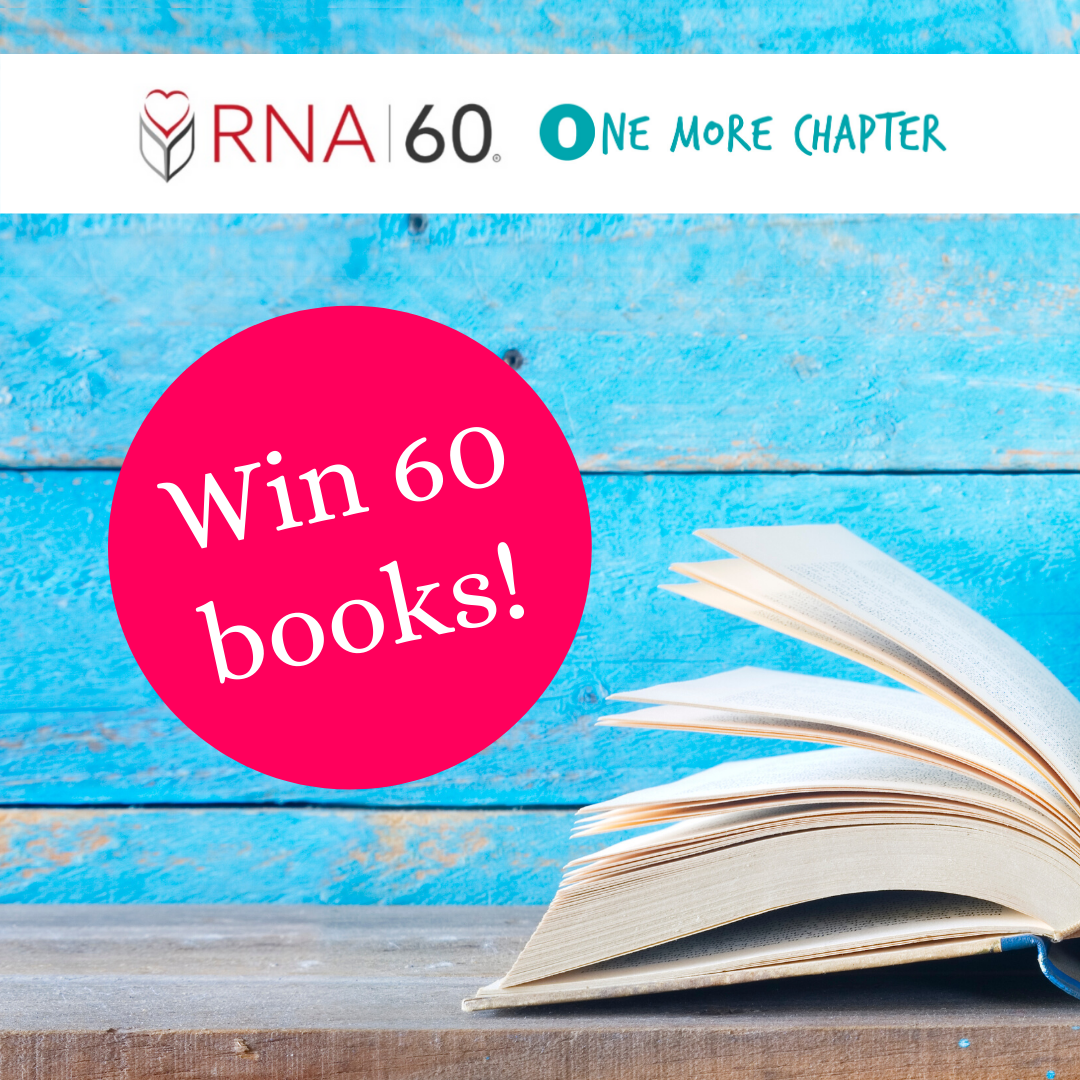
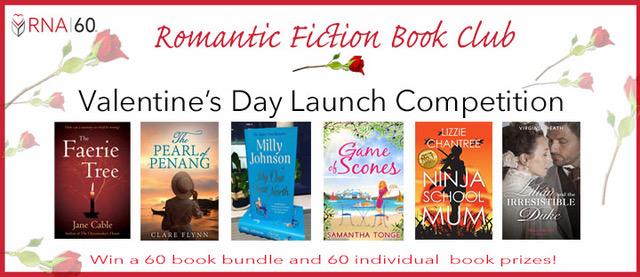
We toyed with Facebook live events and launch parties and various other concepts at the limits of our technical ability and then I came up with a crazy idea. What about a competition to win so many books it would make a massive splash? Sixty books, in fact. And sixty more for individual runner up prizes.

At the RNA last year conference I’d met Charlotte Ledger, editorial director of Harper Collins’ digital first arm, 0ne More Chapter. Heart in mouth I emailed her to ask if there was any chance at all they could provide sixty books. She came back within hours with a resounding yes, telling me her marketing manager would be in touch because she had some ideas.

Not just ideas, as it turned out, but expertise and enthusiasm. The competition could be hosted on their platform, they would administer it and provide promotional material as well as the prizes. I was practically dancing around the table with joy. Now all I had to do was find sixty RNA members willing to give a signed book as runner up prizes.

A post in the RNA’s private Facebook group and within twenty-four hours they were all pledged, which just goes to show what a fabulous organisation it is. As I write this the hard work is continuing behind the scenes to co-ordinate this aspect and the whole admin team is getting involved. The group is already open for new members but on launch day we can really start promoting it and the bookish chat should really take off.

“But how do I win sixty books?” I hear you cry. Simple… the link to the competition is here, and there are a number of ways you can enter. Just make sure one of them is to join the Romantic Fiction Book Club. https://gleam.io/EIObQ/one-more-chapter-and-rna-diamond-anniversary-book-giveaway

My heartfelt thanks go to the team at 0ne More Chapter and fellow admins of the Romantic Fiction Book Club, Lizzie Chantree, Julie Morris, Michele Josie and Ellie Henshaw who have worked so hard to make this competition happen.

SISTER SCRIBES: KITTY WILSON ON WRITING A SERIES

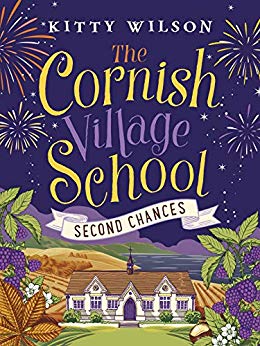
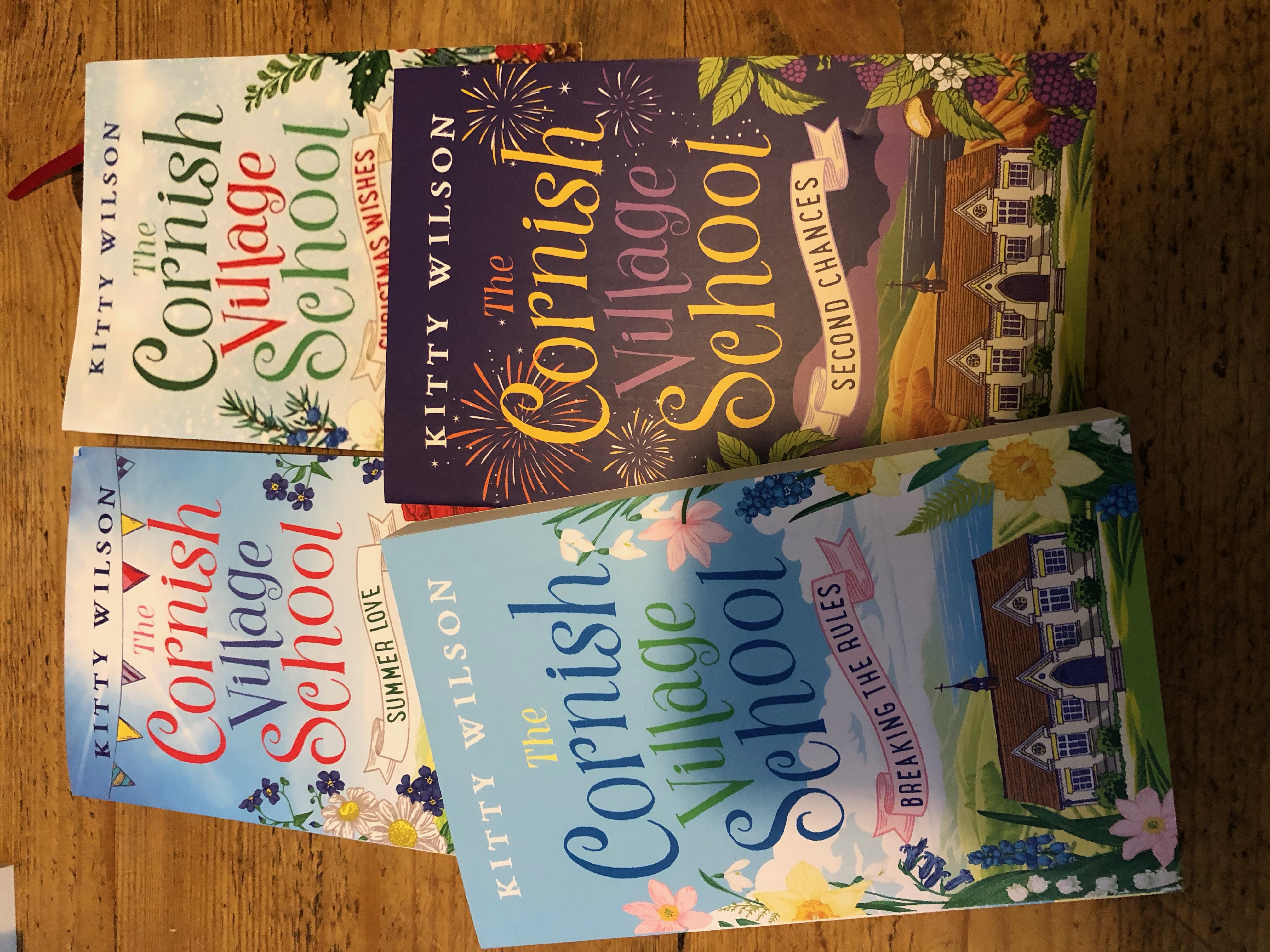
When I wrote the first book in The Cornish Village School I had initially intended for it to be a stand-alone. The thought of turning it into a series wasn’t something that had occurred to me, not for one moment. But my publisher suggested that this was a great idea and I happily agreed. Being a self-flagellating writer type – many of us are –  I was astonished at the suggestion that readers would want to read about Penmenna School more than once but was very willing to do as I was told (such a good girl). I was worried though about what I would write about, how many single teachers can one small school have?

I am currently finishing writing the fifth and final in the series and have loved every minute of my time in Penmenna. It has expanded from a tale of a headteacher to a series that has embraced the highs and lows of a whole community and I am saddened that this is my last foray into the village. It was my choice but is bittersweet all the same. On the other hand whilst it feels odd to be on the brink of creating a brand-new world – I have inhabited Penmenna for the last three years – it’s exciting too. A whole new blank sheet to fill with whatever and whomever I want.

As a reader, I read the most when I was an adolescent, before the responsibilities of adult life caught up with me and I loved a series, then they were often trilogies. I devoured everything I could find on my mother’s shelves, the Jalna books come to mind, Norah Lofts, and R F Delderfield.

Why did I enjoy reading these books so much? With a series each book feels like returning to good friends. The start of a new book within a series is both comfortable and exciting, you have created a bond with the characters, feel you know them, where they’re going, and it’s exciting willing them on. The end of a book often feels as if it’s come around too soon, you want more time with them, you’re not ready to say goodbye.

The same is true when it comes to writing. Currently I am finishing up Marion’s story. She began in the first book as a velociraptor draped in Cath Kidston and was the ultimate baddie, loathsome. Having a series means I have been able to develop her and turn her into a heroine. I am fully rooting for her now and really hope readers will do the same as her story finishes.

But it’s not all been plain sailing. The tricky thing with writing a series, unless you plan every last detail (and I am a planner), something will come back to bite you. I have had so many plot possibilities pop into my head, have written chapters and then realised I can’t use them because they contradict something miniscule I wrote in one of the other books. So, whilst you know your characters better – a bit like real people – certain things have happened in their world which prevent them from moving on in a way that would be helpful to your current plot. And you have no-one to blame but yourself.

Do keep your eyes peeled for the cover reveal of the final book in The Cornish Village School series, it will be coming on Valentine’s Day and I cannot wait to share it with you.


Cable Guys Device Holders: The Cable Guy Spyro Ice Holder

pyro cable guy device holder Meet Spyro the ice cool cheat code version of the protagonist. It’s the ideal gadget for gaming fans and collectors.

With Spyro’s striking ice blue hair and vibrant purple skin, it will look the part in any gamers room. At 8 inches tall, Spyro Ice cheat cold collectable charges and holds smartphones, gaming controllers and even holds TV remotes. Don’t worry Spyro won’t free any dragons in your home.

Cable Guys by Exquisite Gaming have a collection of these fun phone and device holders. They are approximately 20cm tall and crafted to perfection.

Compatible with PlayStation controllers, Xbox controllers and most smartphones. We love Spyro. He is well made and handy. A super cool addition to your home. 

The Cable Guy Spyro Ice Holder is available here.

A STUDY OF STUDIOS: AN INTERVIEW WITH ART AUTHOR ROSIE OSBORNE

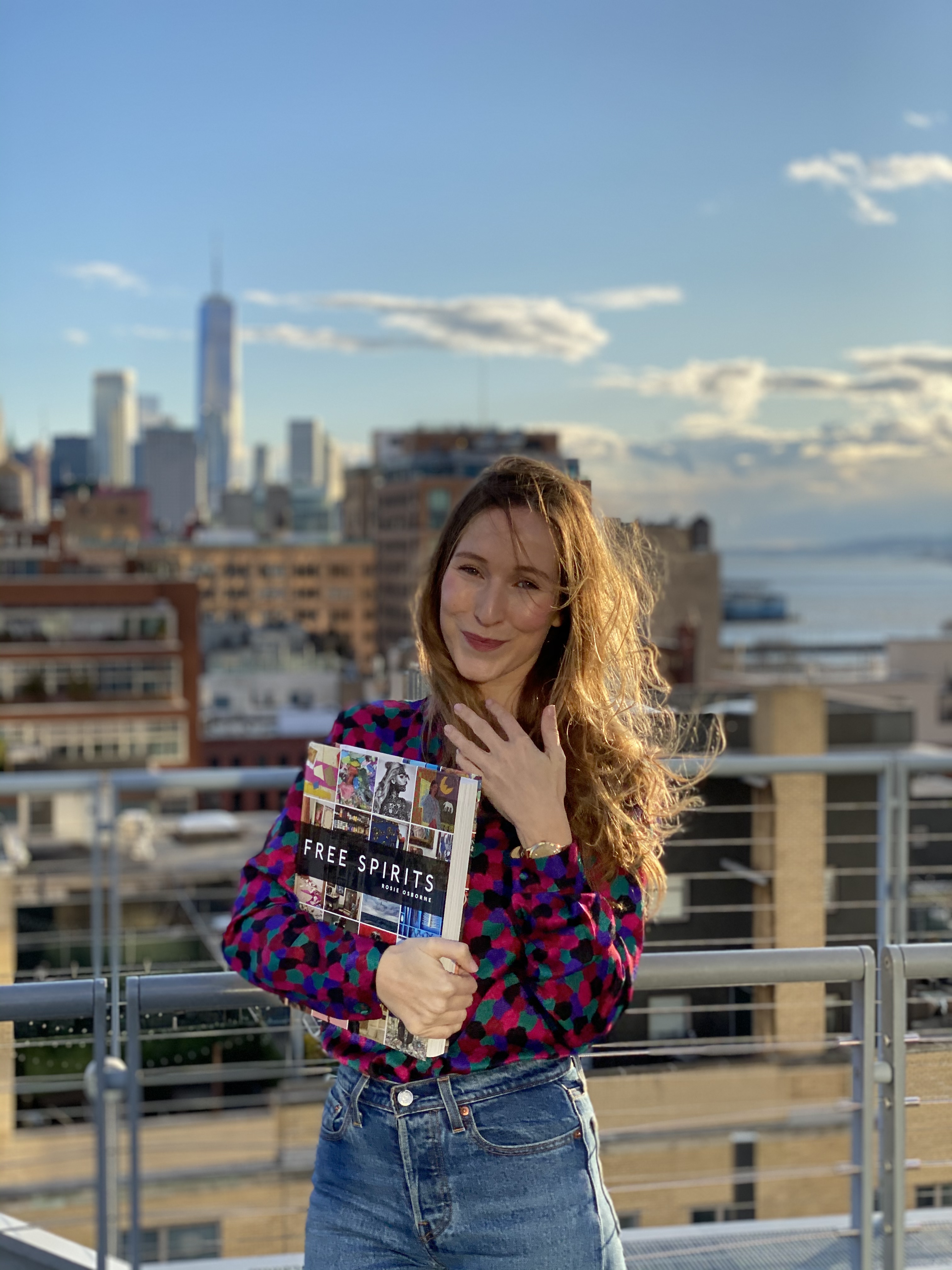
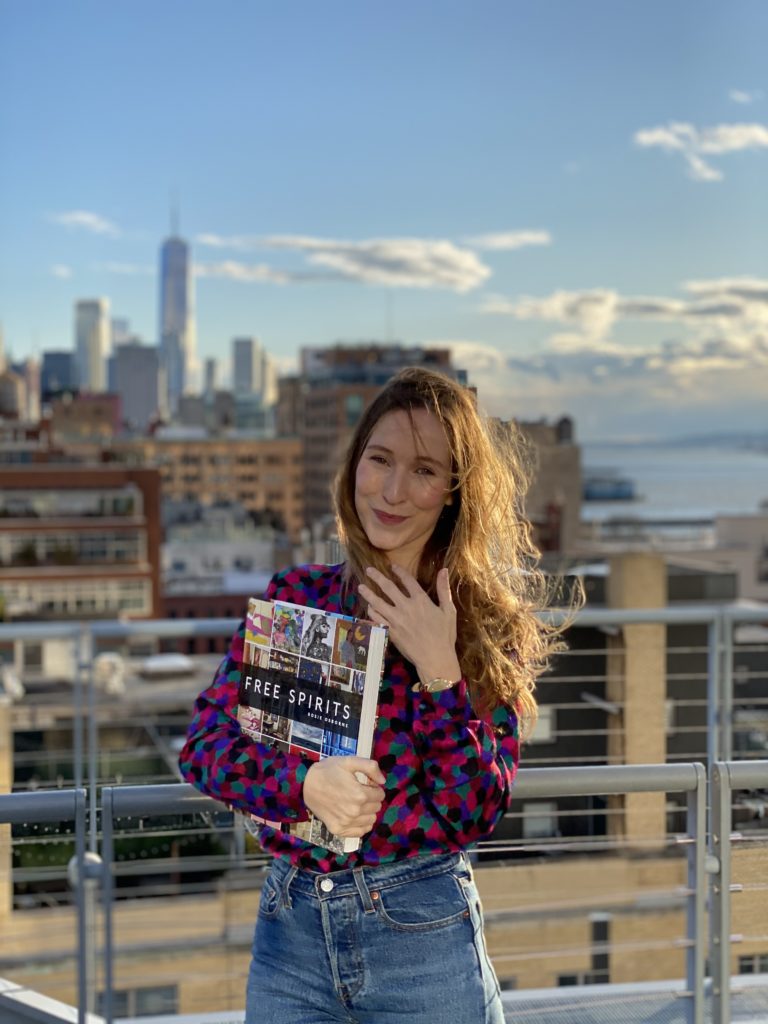
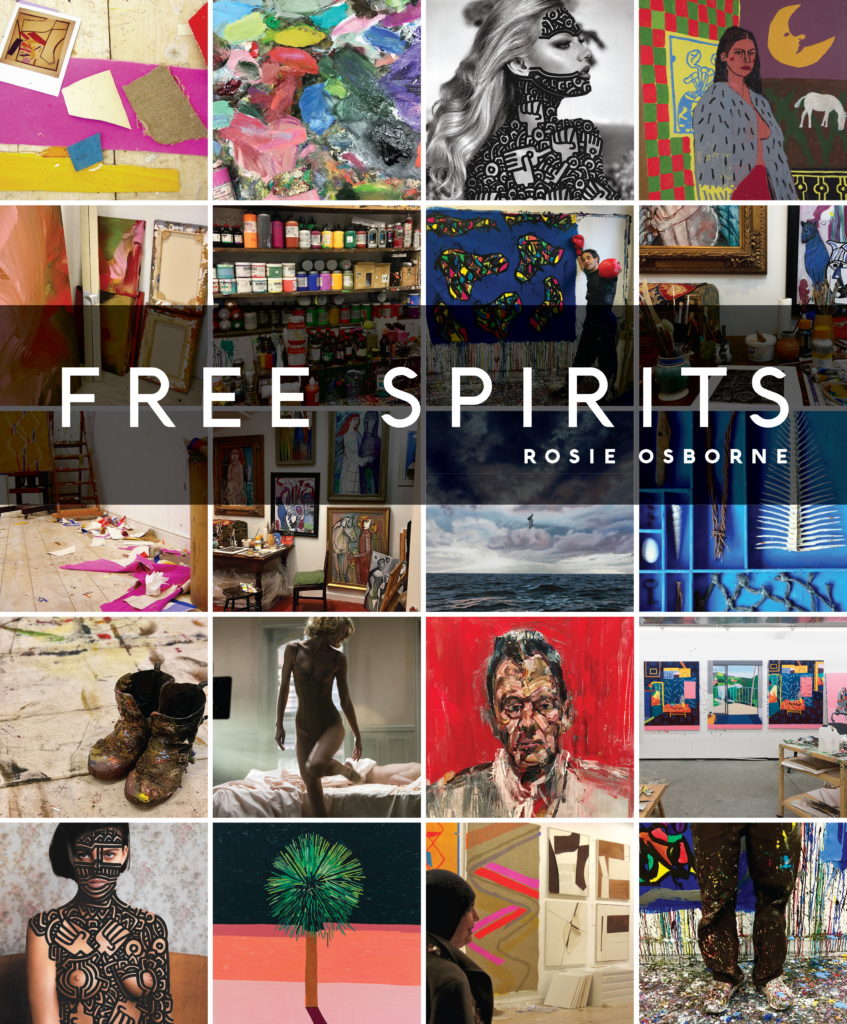
Rosie Osborne, author, While still in her teens, author and award-winning photographer Rosie Osborne made a vow to herself. She promised that by the time she turned 30 she would have published a book collecting her exclusive access-all-areas interviews with some of the UK’s most dynamic contemporary artists such as Sylvette David and Danny Fox. 

All those years later she achieved her ambition and the result is fascinating new coffee-table tome Free Spirits. We caught up with Rosie to find out more…

Q. Free Spirits is obviously aimed at art lovers, but what do you think is its unique appeal?

A. I hope that it offers an insight into the private side of artistic practice, and the everyday struggles and triumphs that artists experience. I think there’s a very human side of art that can sometimes be hidden by the polished gallery shows or the museum retrospectives and that’s what I have tried to delve into.

Q. All the interviewees must have been fascinating to speak with, but are there any that especially stand out to you?

A. Interviewing British artist Danny Fox last year was fascinating. Fox is a self-taught painter who grew up in St Ives, Cornwall, where I spent a lot of my childhood. As a teenager, he worked long hours in restaurant kitchens, washing up dishes to save up to buy paint. I remember him saying at the time that if he was offered a job with more responsibility, he’d turn it down, because he didn’t want to take up the mind space that he needed for painting. I went to his first exhibition in St Ives when I was 15 and was really moved by his painting style. Although Danny didn’t go to art school or have any contacts, he moved to London, where his work started to gain more and more recognition. Over the years following, his paintings were featured in shows all over Europe and America, and he is now based in Los Angeles, California. Danny’s work ethic from day one always inspired me, and his paintings are amongst my favourites, up with Picasso and Matisse. Last year, 15 years after attending his first exhibition, I interviewed Danny back in Cornwall. It was so interesting to discuss all of the years that had passed, especially back in St Ives, where it all started.

Q. You interviewed artists over a space of 17 years. Does this mean there are more interviews yet to be published and, if so, what are your plans in this regard?

A. Yes, I selected 13 interviews for Free Spirits, but I’ve got around a hundred interviews ready for publication. I publish some interviews on my website, but I hold on to lots in order to wait until what feels like the right time to release them.

A.  You were only a teenager when you started conducting the interviews. Did you find any resistance to your interview requests and how did you overcome this?

A. I’ve learnt that it’s really important to use rejection to propel you to move forward. Many of my requests to interview my favourite artists as a teenager were left unread, or I just never heard back from them. Over the years, I started to see it as a process of elimination. Four artists out of five may not have replied, but one often did. Putting everything into making that one interview as good as it could possibly be would mean that the likelihood of future artists saying ‘yes’ was much more promising. I saw it as a process, like any person learning to improve or perfect their trade. Nothing comes easy. I truly believe that if you can learn to take rejection on the chin, and turn it into a positive force, nothing can hold you back from getting to where you’ve always wanted to be.

Q. How would you describe the importance of contemporary art to those who may not be familiar with it?

A. I think that in order to attempt to understand contemporary art, it helps to look back to what came before it. Picasso said that, “Every act of creation begins with an act of destruction”. Everything in art is consciously, or subconsciously, a reaction to something that has come before it, so the symbolism or meaning of a piece of contemporary art can sometimes be linked to something that came hundreds of years before.

Q. If you could travel back in time, which one artist from the past would you like to speak with, and what would you ask them?

A. I’d love to interview Henri Matisse, towards the end of his life when he worked from his studio in a wheelchair. After undergoing surgery for cancer, he lost his mobility. Instead of giving up, Matisse drew incessantly and rediscovered the medium of paper cutouts. He talked about how he felt completely reenergised, and called the last 14 years of his life “une seconde vie” (his second life.) I’d love to ask him about this stage of his life, and how the work that he was able to do in the studio, in a sense, saved him.

Q. Your book features a wealth of photos with the artists in their studios. Why did you think this important to include?

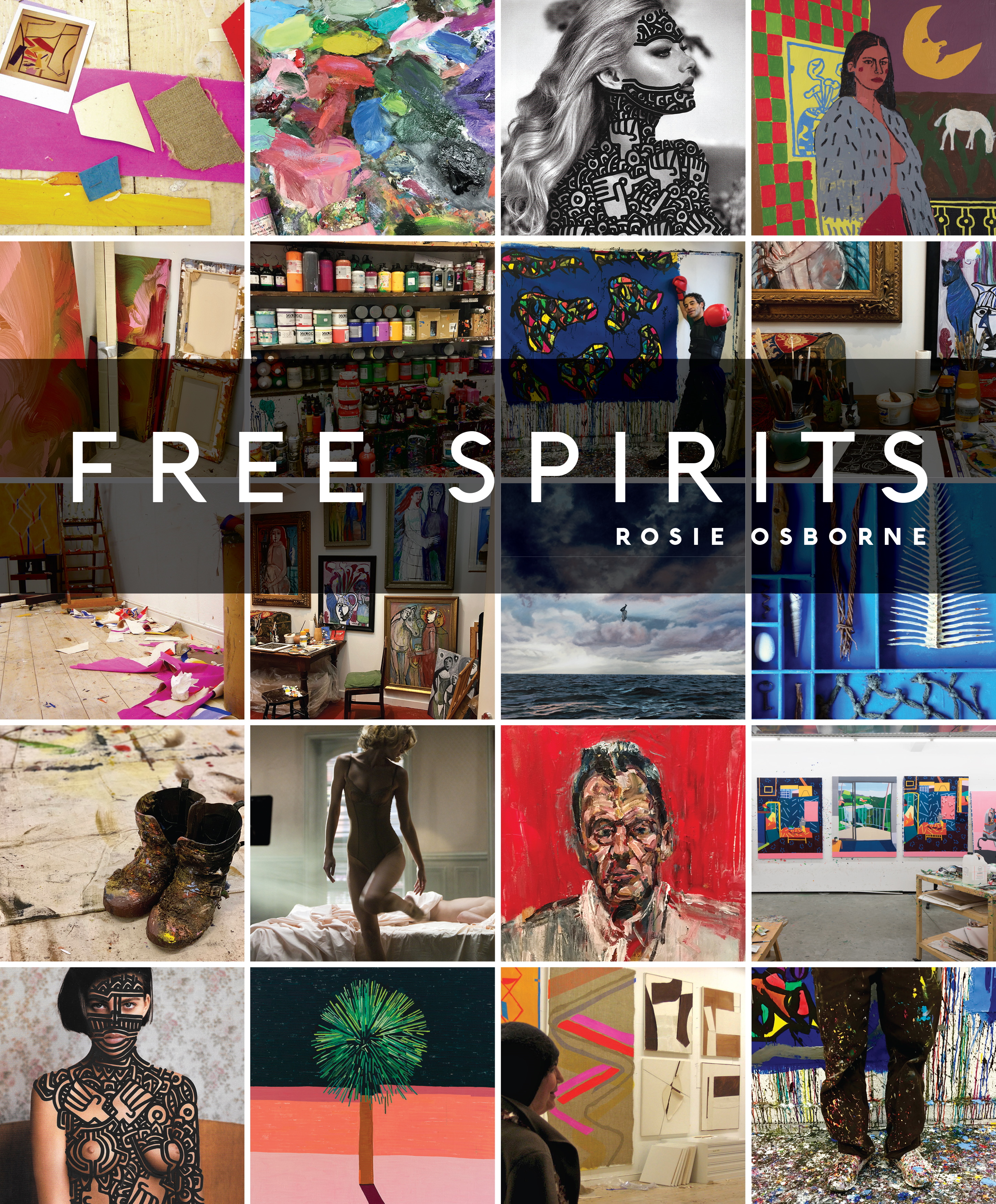
A. It’s impossible to describe some of the studio scenes in the book with words! They’re all completely different: some are orderly and tidy and some are filled floor to ceiling with collected objects and everyday items alongside art materials. A studio space that I really enjoyed documenting a couple of years ago belonged to Cornish artist Samuel Bassett. I tried to take photographs of his working space that were really honest, so that the reader feels as if they’re standing in the room, observing every detail. His small studio was filled with surfboards, crates of paint, sofas, packs of cereal, saucepans and all of his kitchen items, along with works in progress and paint dripped over absolutely everything. It was great fun spending time there. It’s honestly impossible to describe, but the images say it all! Artists’ working spaces are often very transient places. As Samuel no longer paints there, the room was painted white, ready for the next artist, and the spirit of that room has changed and become something else. That’s why I felt compelled to try to record the atmosphere in that room in some way.
Q. Free Spirits also serves as a memoir of your personal development. What achievements to date are you most proud of?

A. Getting the book out into the public sphere felt really significant to me. I promised myself at 17 years old that I’d publish the book before I turned 30. Free Spirits came out the day before my 30th birthday. It’s definitely the personal accomplishment that I feel most proud of.

Free Spirits by Rosie Osborne is available now, priced £30 in hardcover. Visit www.rosieosborne.com 

 

SISTER SCRIBES GUEST: JANE WENHAM-JONES ON THE BIG FIVE O

Following on from the RNA article in Frost last week I’m delighted to welcome Jane Wenham-Jones – novelist, columnist and presenter  – to Sister Scribes today. Thank you, Jane, for answering our many and varied questions.


First off the blocks. Plotter or pantser? Or does it vary by what you are writing (short story, novel, ‘how to’ book etc)?  

I started off as a Pantser, but I am now – through bitter experience ha! – a plotter. I plotted my last novel – The Big Five O – fairly forensically as it follows the stories of four different women and I needed to make sure it was balanced and the timeline worked. When I wrote a weekly column, however,  I would often just begin writing and see what came out… And I tend to write articles with just a vague idea of the content. I am on my tenth book as we speak and I have a one-sentence description for each chapter on a sheet beside me, but whether the novel will end up like that is another matter…

What, for you, is the very hardest part of writing?

Getting started. I am such a procrastinator. My son used to say he could always tell when the novel wasn’t flowing because even HIS shelf of the airing cupboard had been tidied…

And what is the most rewarding?

Writing “The End” (There’s nothing like it!!)

Photo credit Bill Harris

What do you see as the greatest success of your writing career? And what was the deepest disappointment?

One came from the other. When the publishing house that took my first two novels didn’t want the third (“too many serious issues”) it felt like the end of the world. I really thought it was all over. But this led indirectly to my writing Wannabe a Writer?, which in turn has led to many opportunities and has apparently, and gratifyingly, helped lots of writers (many of them now more successful than I am!) get published. I now have a patchwork ‘career’ which I love, and all the interviewing I do – I’ve done events with hundreds of top authors and celebs – which brings me great joy, started from one event for that small publisher who took me on for my third novel. As one door closes etc …

As you know, Sister Scribes is all about women writers supporting each other through their writing journeys. Do you have a ‘go to’ bunch of fellow female writers you value and rely on? If so, how did you meet them and how do you support each other?  

The RNA (Romantic Novelists’ Association) is a wonderful institution and I have made many terrific friends through it, who have been wonderfully supportive. I email often with Katie Fforde, Judy Astley, Janie Millman, and others and it is good to have someone at the end of a screen who knows what it’s like when one is only capable of pairing the socks…

What are your wishes and ambitions for this year and this decade?

My own chat show anyone?

And finally.  I LOVED the Big 50.  So funny and warm. How do you celebrate big birthdays yourself?

Ah thank you so much x It was fun to write. I love a party but I tend to cower when it comes  to  big birthdays. I spent 40 in a darkened room and ran away for my 50th. But now – having lost people far too young and had a life-threatening illness myself, I think how ridiculous that all was. If I haven’t been crushed by a passing bus by the time I’m sixty, I shall have a ball!


The Big Five-O by Jane Wenham-Jones is published by Harper Collins in paperback and in e-book formats. www.janewenham-jones.com @JaneWenhamJones

JANE WENHAM-JONES REFLECTS ON TEN YEARS OF PRESENTING THE ROMANTIC FICTION AWARDS

One of the most anticipated highlights of Romance Reading Month is when the announcement of the shortlistees for the Romantic Novel Awards is made which this year will be on the 3rd Feb. The awards themselves will be held on 2nd March 2020 at The Leonardo Hotel, Tower Hill, with prizes in nine categories of Romantic Fiction as well as the award for Outstanding Achievement.

Jane Wenham-Jones has hosted the RNA awards since 2011. Here she reflects on ten years of sparkly gowns, celebrity guests and Awarding Excellence in Romantic Fiction.

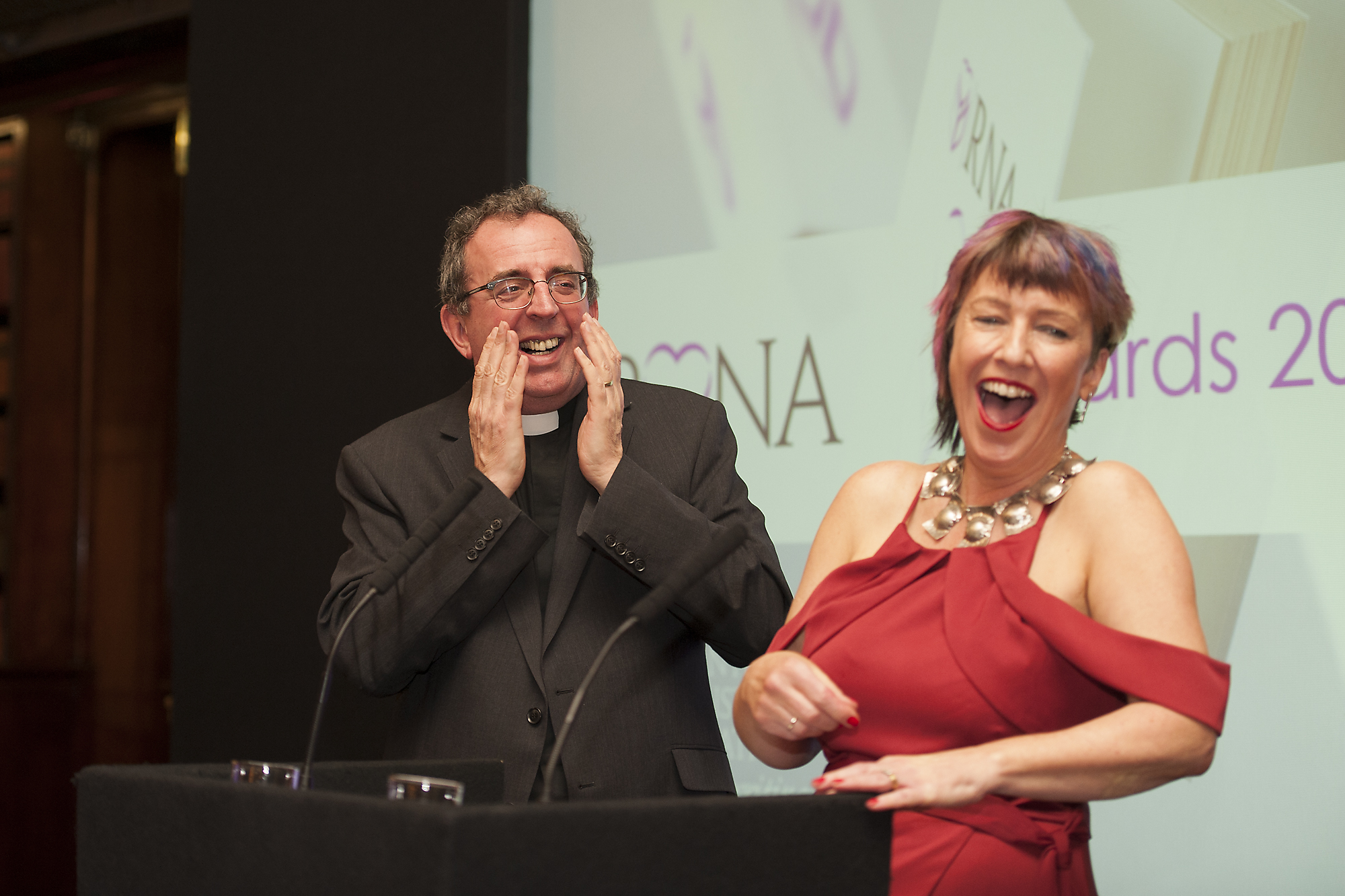
“It is usually around this time of year that I start spending an inordinate amount of time looking at frocks. When I first presented the Romantic Novelists’ Association Awards, it was with Tim Bentinck – David from The Archers – and I wore an over-the-top glittery affair in fuchsia, which set the pattern for the next ten years. In that time, I have got stuck in a dress, had to involve a veritable team to zip me up, and had the formidable Catherine Jones (ex-army) shove an authoritative arm down my front to tape up my cleavage so I didn’t do a Judy Finnegan. Who, as it happens, made the night when she gave out the awards with the lovely Richard Madeley a couple of years later.

Photo credit Marte L Rekaa

The award ceremony is one of the highlights of my year. It is glorious to celebrate the very best in romantic fiction – a massively-selling and important genre that warms hearts worldwide – and uplifting to see the very real joy on the faces of the winners. I usually mispronounce the name of at least one of these and quite often drop my notes, but thanks to our marvellous celebrity guests we laugh on.   I have choked with hilarity with the Reverend Richard Coles, developed a small crush on Barbara Taylor Bradford  and gazed in awe at the beauty and elegance that is Dame Darcey Bussell. Prue Leith, Fern Britton, Alison Weir and Peter James have done the honours too, and were all funny and as hugely supportive as you would expect.

The Romantic Novelists’ Association does much to dispel the image of the romantic author floating in a cloud of pink chiffon dreaming of tall, brooding, macho men sweeping small fluttery females off their delicate size threes and the annual awards are a celebration of the reality and diversity of writing about love, as well as a jolly good excuse to drink lots of champagne. The next one is going to be extra special as it falls in the year this brilliant organisation gets its bus pass. We have a famous guest to hand out the gongs, an exciting new award in memory of the late, great Jackie Collins and more on the various short lists than ever before. I’ve got the dress early. Bring it on and Happy Birthday RNA!”

www.janewenham-jones.com

To celebrate 60 years of the Romantic Novelists’ Association, Romance Reading Month will run throughout February #RNA60 #RomanceReadingMonth

Throughout the month the focus will be on different ways that readers can access romantic fiction and will be highlighting different sub-genres and authors as well as supporting libraries during #LoveMyLibraryWeek On Valentine’s Day the RNA will be launching a new Facebook Group, the Romantic Fiction Book Club. The group has been created by a number of RNA members to provide a safe and cosy place for romance lovers to chat about their favourite books. The RNA will also be championing romantic fiction from underrepresented authors. RNA Chairwoman Alison May said, “We have bursaries available for new and mid-career authors from under-represented groups. We invite authors and readers to share their diverse romance novels using the hashtag #RNADiverseRomance.”

If you would like more details about Romance Reading Month or the Romantic Novelists Association then please visit www.romanticnovelistsassociation.org


SISTER SCRIBES’ READING ROUND UP: JANUARY

Jane:

The last book I read in 2019 was Raynor Winn’s The Salt Path, a fitting end to the year. It was our book club choice, one we’d begged the library for after having suffered the poet laureate’s egotistical whinge about doing the same walk at roughly the same time.

Phrases such as ‘greatest surpasses least’ spring to mind. Raynor Winn and her husband Moth had nothing left to lose when they embarked on the South West Coastal Path in the summer of 2013; no home, no jobs, no money and in Moth’s case, having been diagnosed with a terminal illness, no future. And yet the book is a joy, well deserving of its award nominations and best-seller status.

That isn’t to say it sugar coats the pill. I felt desperate with them, thirsty with them – and mostly hungry with them. But I also saw the beauty that surrounded them, heard the wash of the waves, the weather howling in from the Atlantic as autumn started to bite. That is the genius of Winn’s writing, the power of her words. That and making an autobiography read and feel like a novel.

There is a lovely postscript to my review too: yesterday I went to hear Raynor Winn speak and had a long conversation with Moth, still very much alive. He told me she wrote the book as a gift for him, for when he can no longer remember the wonderful thing they did. Which makes it a love story as well.

When Kate Field found out I was reading The Salt Path she begged me not to read her new book next because she thought it would be an anti-climax. It is typical of her modesty, but wide of the mark. Hers is a completely different book and I wouldn’t even begin to compare them.

A Dozen Second Chances is just the sort of romantic fiction I like. The characters are real and relatable, mature and shaped by their lives. And being characters in a book Eve and Paddy have had plenty of history, which has done just that. The will-they-won’t-they story of their second chance made me unwilling to put the book down, with a clever and beautifully sewn up plot and satisfying ending.

On a personal note I loved the fact they are archaeologists. The heroine of my next book is as well and I could see Kate’s research had gone along similar lines to mine. I just hope she enjoyed it as much as I did.


Kitty:

January is the perfect time to catch up with my reading and I have read several books that I have absolutely loved.

Our Sister Scribe, Susanna, published her first book as Polly Heron – The Surplus Girls. Jane has already shared an extensive review on Frost but I have to add that I adored it and I urge saga lovers to give it a go.

I also raced through Mhairi McFarlane’s If I Never Met You and, true to form, it didn’t disappoint. I love everything about Mhairi’s writing, it’s always fast-paced, insightful and genuinely funny – guaranteed to make me cackle. In this one the heroine is in her mid-thirties when her life and expectations are thrown into disarray and she starts a faux-romance with the office Lothario. Truly fabulous.

And finally, Cathie Hartigan’s Notes From The Lost. A timeslip with part of the story set in wartime Italy and part set in modern-day Exeter. I fell so heavily in love with Alfie, an escaped POW hiding out in mountains and villages and found this book to be uplifting and restorative, with both parts seamlessly woven together. I cannot wait for some time to pass so I can have the pleasure of reading it all over again.


Are You Watching? Book Review

Are you watching bookThis crime thriller from Vincent Ralph is that publishers dream: a YA novel that adults will love too. It is a modern novel with mixes social media and crime, and then combines it with skill and excellent pace. I raced through this book, practically breathless to get to the end. Full stars. 

A page-turning new YA thriller for the social media age, perfect for fans of A Good Girl’s Guide to Murder and One Of Us Is Lying.

Ten years ago, Jess’s mother was murdered by the Magpie Man.

She was the first of his victims, but not the last.

Now Jess is the star of a YouTube reality series and she’s using it to catch the killer once and for all.

The whole world is watching her every move.

And so is the Magpie Man.

Are you Watching is available here.