SISTER SCRIBES’ READING ROUND UP: JANUARY

Jane:

The last book I read in 2019 was Raynor Winn’s The Salt Path, a fitting end to the year. It was our book club choice, one we’d begged the library for after having suffered the poet laureate’s egotistical whinge about doing the same walk at roughly the same time.

Phrases such as ‘greatest surpasses least’ spring to mind. Raynor Winn and her husband Moth had nothing left to lose when they embarked on the South West Coastal Path in the summer of 2013; no home, no jobs, no money and in Moth’s case, having been diagnosed with a terminal illness, no future. And yet the book is a joy, well deserving of its award nominations and best-seller status.

That isn’t to say it sugar coats the pill. I felt desperate with them, thirsty with them – and mostly hungry with them. But I also saw the beauty that surrounded them, heard the wash of the waves, the weather howling in from the Atlantic as autumn started to bite. That is the genius of Winn’s writing, the power of her words. That and making an autobiography read and feel like a novel.
There is a lovely postscript to my review too: yesterday I went to hear Raynor Winn speak and had a long conversation with Moth, still very much alive. He told me she wrote the book as a gift for him, for when he can no longer remember the wonderful thing they did. Which makes it a love story as well.

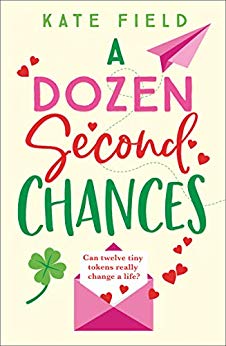
When Kate Field found out I was reading The Salt Path she begged me not to read her new book next because she thought it would be an anti-climax. It is typical of her modesty, but wide of the mark. Hers is a completely different book and I wouldn’t even begin to compare them.

A Dozen Second Chances is just the sort of romantic fiction I like. The characters are real and relatable, mature and shaped by their lives. And being characters in a book Eve and Paddy have had plenty of history, which has done just that. The will-they-won’t-they story of their second chance made me unwilling to put the book down, with a clever and beautifully sewn up plot and satisfying ending.

On a personal note I loved the fact they are archaeologists. The heroine of my next book is as well and I could see Kate’s research had gone along similar lines to mine. I just hope she enjoyed it as much as I did.


Kitty:

January is the perfect time to catch up with my reading and I have read several books that I have absolutely loved.
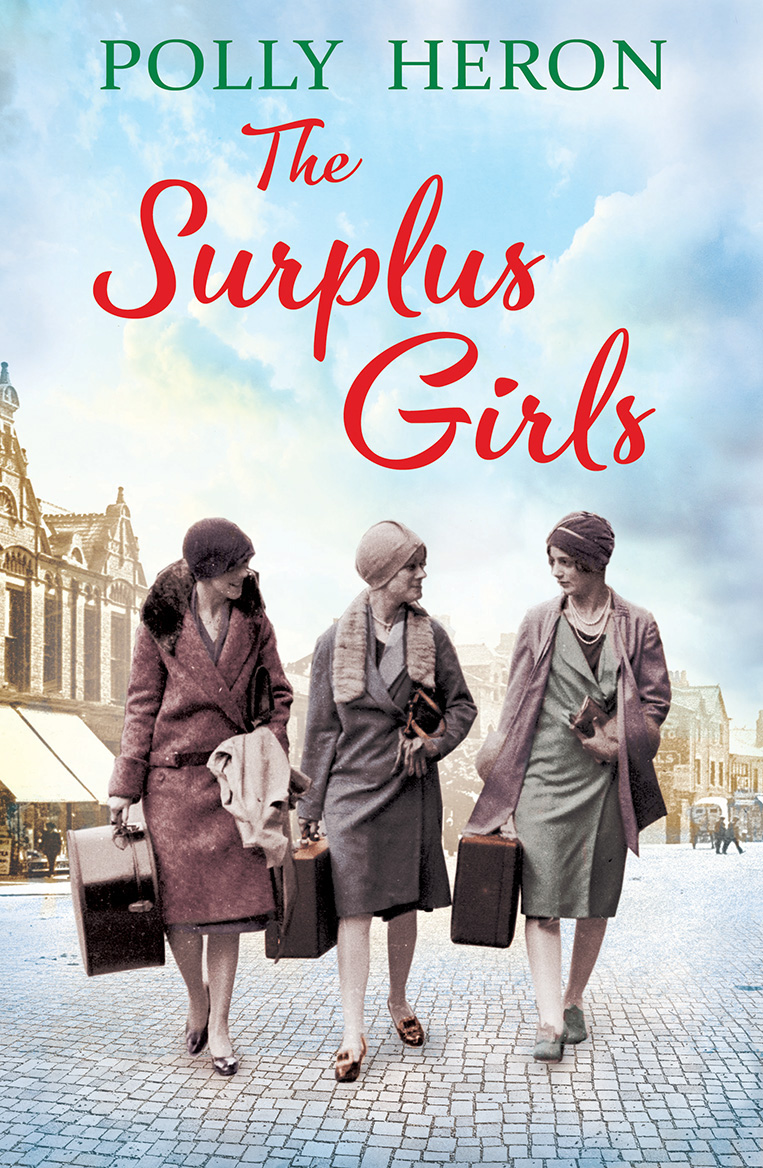
Our Sister Scribe, Susanna, published her first book as Polly Heron – The Surplus Girls. Jane has already shared an extensive review on Frost but I have to add that I adored it and I urge saga lovers to give it a go.

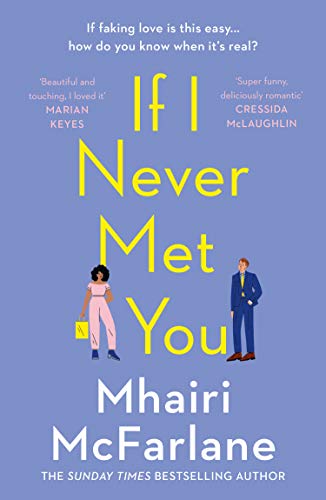
I also raced through Mhairi McFarlane’s If I Never Met You and, true to form, it didn’t disappoint. I love everything about Mhairi’s writing, it’s always fast-paced, insightful and genuinely funny – guaranteed to make me cackle. In this one the heroine is in her mid-thirties when her life and expectations are thrown into disarray and she starts a faux-romance with the office Lothario. Truly fabulous.

And finally, Cathie Hartigan’s Notes From The Lost. A timeslip with part of the story set in wartime Italy and part set in modern-day Exeter. I fell so heavily in love with Alfie, an escaped POW hiding out in mountains and villages and found this book to be uplifting and restorative, with both parts seamlessly woven together. I cannot wait for some time to pass so I can have the pleasure of reading it all over again.


Are You Watching? Book Review

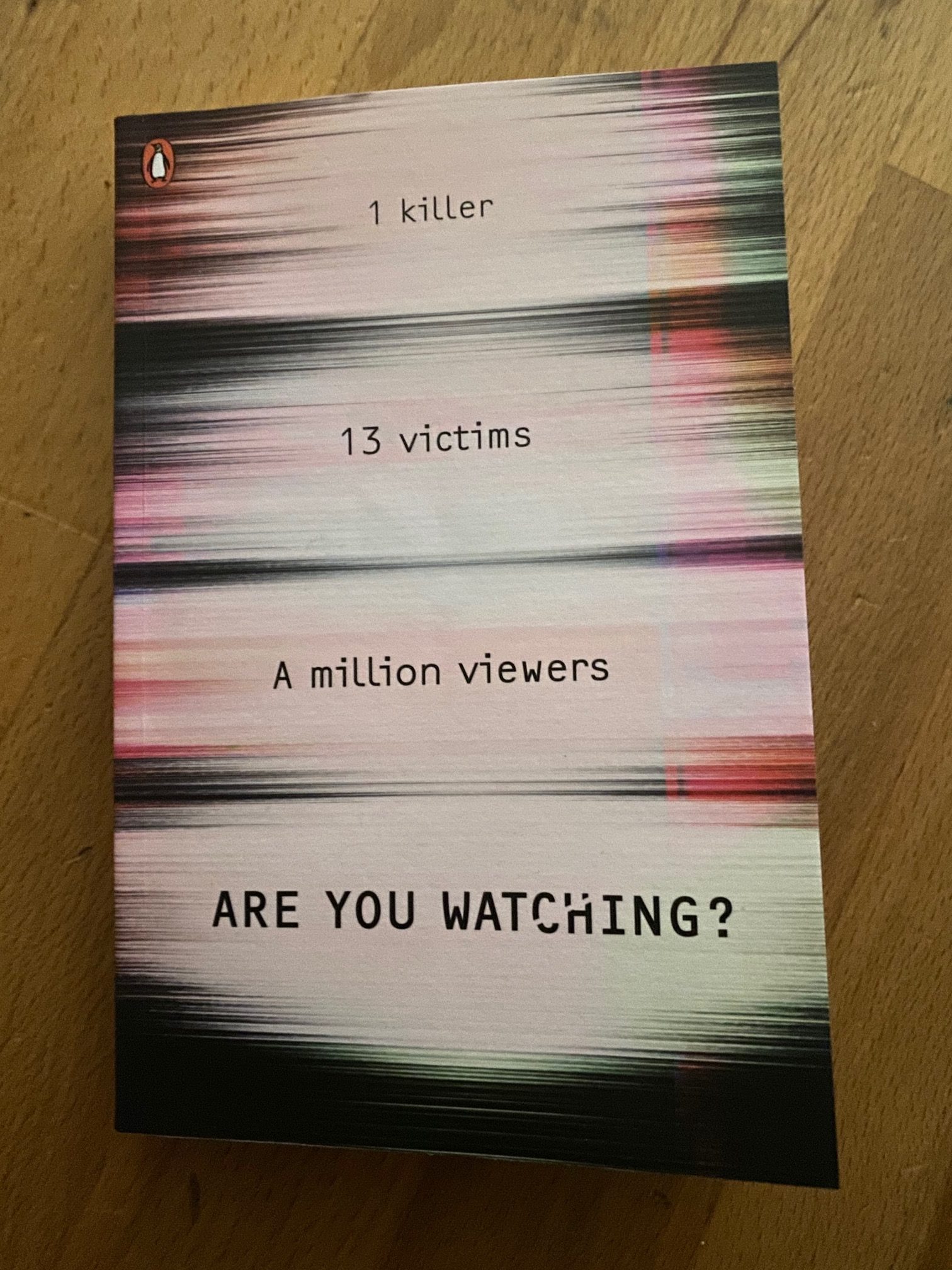
Are you watching bookThis crime thriller from Vincent Ralph is that publishers dream: a YA novel that adults will love too. It is a modern novel with mixes social media and crime, and then combines it with skill and excellent pace. I raced through this book, practically breathless to get to the end. Full stars. 

A page-turning new YA thriller for the social media age, perfect for fans of A Good Girl’s Guide to Murder and One Of Us Is Lying.

Ten years ago, Jess’s mother was murdered by the Magpie Man.

She was the first of his victims, but not the last.

Now Jess is the star of a YouTube reality series and she’s using it to catch the killer once and for all.

The whole world is watching her every move.

And so is the Magpie Man.

Are you Watching is available here.

SISTER SCRIBES: SUSANNA BAVIN ON THE APPEAL OF THE SHORT STORY

Hands up everyone who remembers the First, Second, Third etc Pan Book of Horror Stories, Edited by Herbert Van Thal. I loved those scary stories when I was in my early teens. Looking back, some of them weren’t entirely suitable for a young reader, though that didn’t stop me lapping them up. My favourite was a ghost story by E F Benson (who wrote the Mapp and Lucia books), called The Confession of Charles Linkworth. I had a phase of reading it every Sunday afternoon before tea and, even though I ended up practically knowing it by heart, it frightened me silly every time. The hero of my newest book, The Surplus Girls, is named Gabriel Linkworth, as a nod to that story.

That was the second E F Benson short story I had come across. The first was The Room in the Tower, which featured in a book called Ghosts! An Anthology, which I received as a Christmas present. Unfortunately, the story was rather wasted on me because I didn’t altogether understand it. It is, in fact, a vampire story and I sort of knew that when I read it, but I was a very literal-minded child and this was in a book of ghost stories and therefore Julia Stone had to be a ghost… didn’t she?

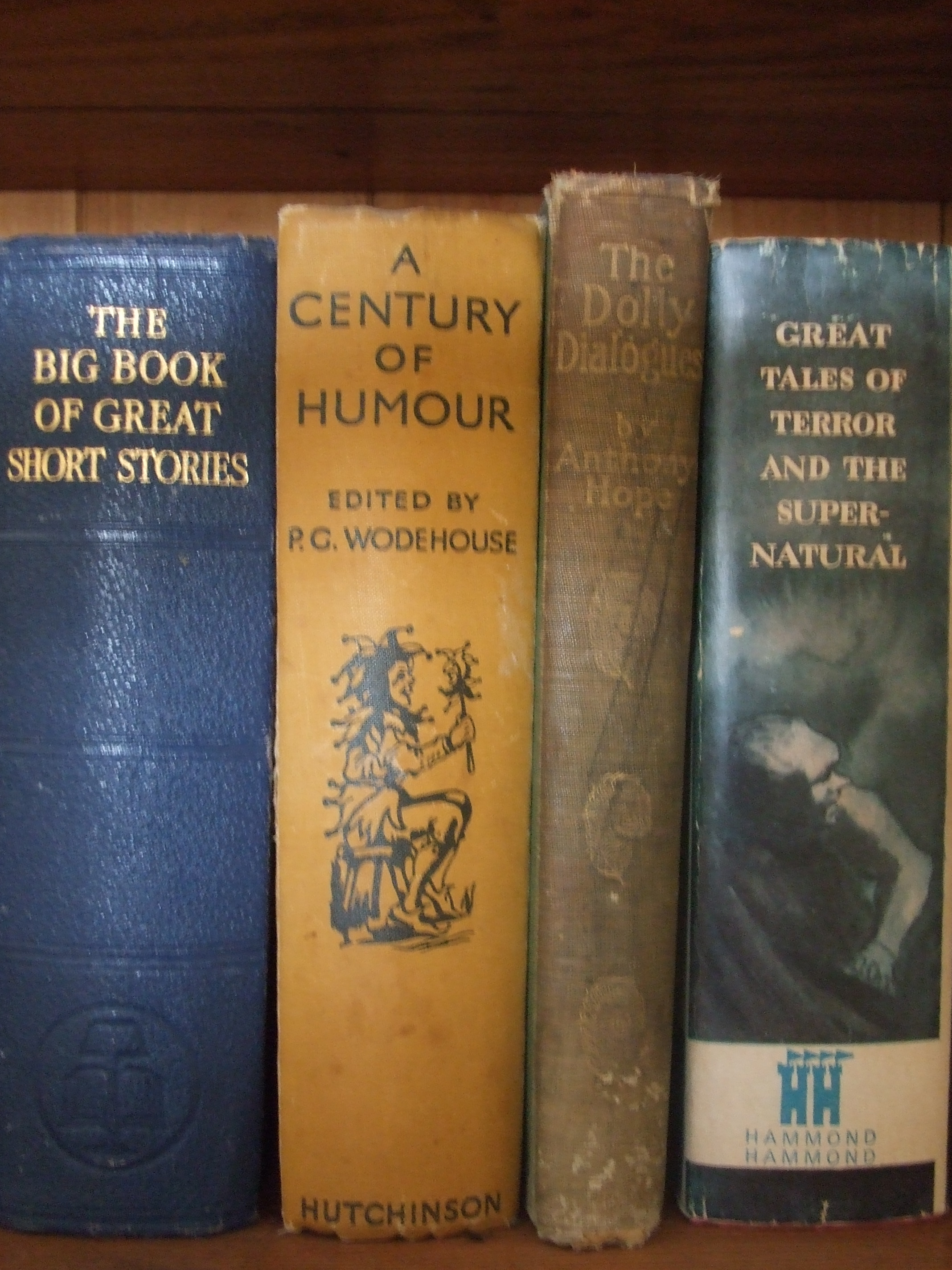
I have always been a reader of short stories. In particular I love the collections that were put together in 1930s, with titles such as The Mammoth Book of Thrillers, Ghosts and Mysteries and A Century of Humour, which was one of a series of A Century of… books. What better way to be introduced to writers such as Wilkie Collins, Guy de Maupassant, O Henry and W W Jacobs? My first taste of G K Chesterton was the wonderfully funny The Tremendous Adventures of Major Brown, which I re-read regularly. The Mammoth Book mentioned above even contained a ‘sealed section’ at the end, with stories to make you ‘glance over your shoulder and perhaps even start when there is a creak on the stair.’

A writer whom I came to love was A J Alan, whose wit and humour could find mystery in the most ordinary situations. It was often the style in these 1930s anthologies to top each story with a few sentences of author biography, beside which was a pencil sketch of the man (it was almost always a man) himself; but there was only ever a fancy question mark in the place where A J Alan’s portrait should be. He was famous for reading his stories on the wireless and his identity was a closely guarded secret, as befitted the mysterious nature of his tales.

And I adored Anthony Hope’s The Dolly Dialogues. I bought myself a first edition after enjoying the two chapters that featured in A Century of Humour. They are clever and teasingly romantic observations of life and love.

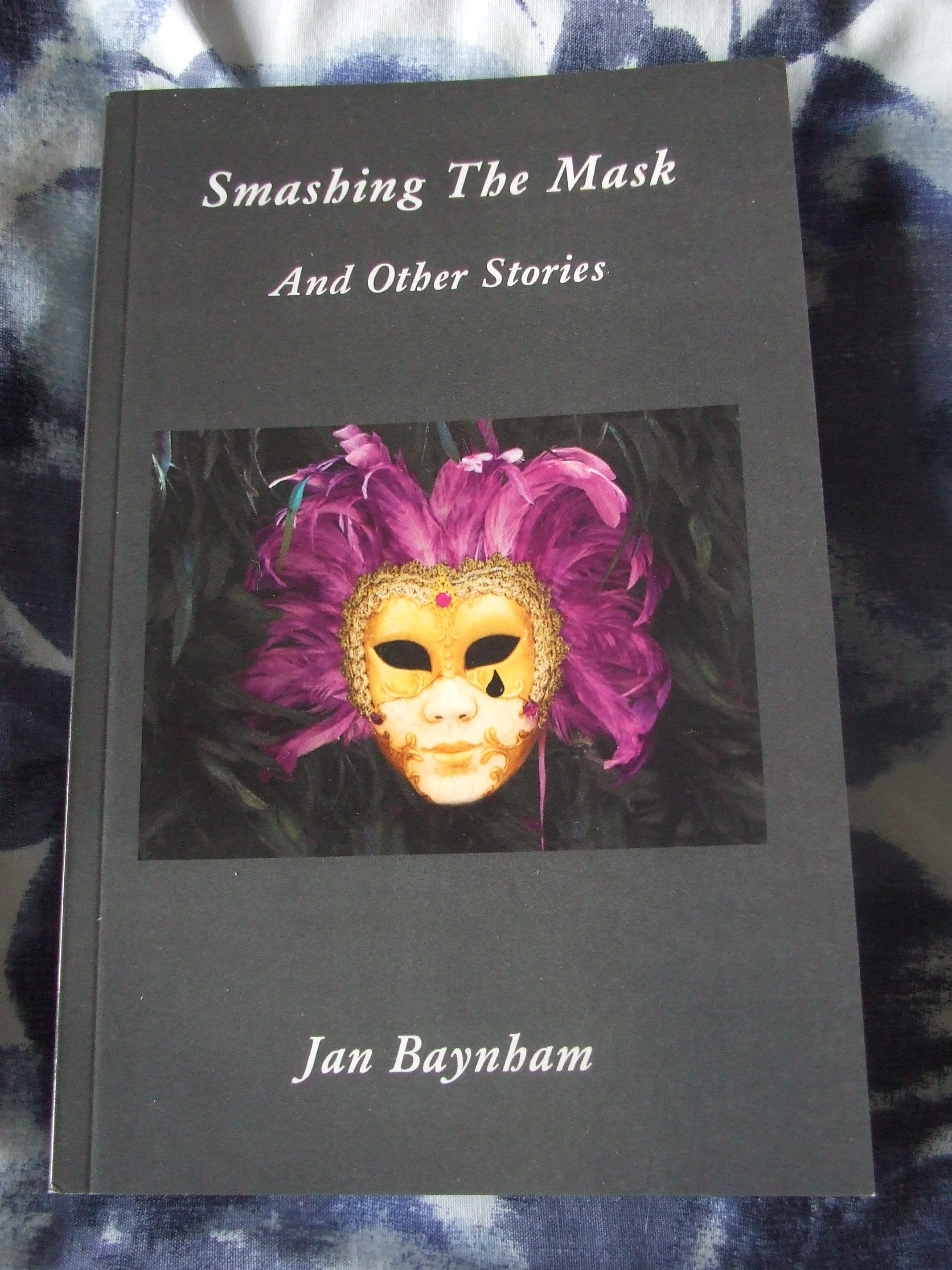
The most recent collection of short stories I’ve read is Jan Baynham’s Smashing the Mask and Other Stories. Although there isn’t an official theme to the book, a thread of the supernatural runs through several of the tales and in each one Jan creates a different sort of atmosphere, from the deep sorrow of a ghostly mother to the chilly horror of a long-ago murdered girl to the traditional creepiness of helping a stranger. She also uses painful directness to tackle the all too recognisable dilemmas of hoping against hope to meet a long-lost child and struggling to be brave in a situation of coercive control. Jan has produced an intriguing collection filled with insight, a variety of moods from the uplifting to the poignant, and more than one clever twist in the tale.


SISTER SCRIBES: CASS GRAFTON ON WHY WRITING IS A NEVER-ENDING ADVENTURE

For me, pursuing a career as a writer is not just a journey; it’s an expedition into a world I’m still discovering. It’s ‘the world inside my head’ meets ‘the world out there’, and they are only on their third date. It seems fair to say, therefore, that I’m not only a writer but also an explorer.

I’ve been published since 2013, a combination of solo and co-writing across seven novels, some indie published and some with a publisher, Canelo Escape. Everything I’ve written so far has had, at its core, a love story —I love romantic storylines.

So, how is my writing career now on its third ‘date’? It’s to do with the genre of romance and the many categories that further define it. I’ve published in two of these ‘sub’ categories: historical romance (Regency era) and time-travel romance. These were the first two ‘dates’, and they went quite well—I’m certainly going to be seeing them again—but for now I’m rather excited about my upcoming third. This date is with contemporary romance.

When I was young, I dreamed of writing love stories, but always in the present day. No breeches and fluttering fans; no flitting to and fro through the centuries courtesy of a charmed necklace. My dream was of writing modern romances—relatable, believable and with characters doing everyday things, but always, ultimately, falling in love.

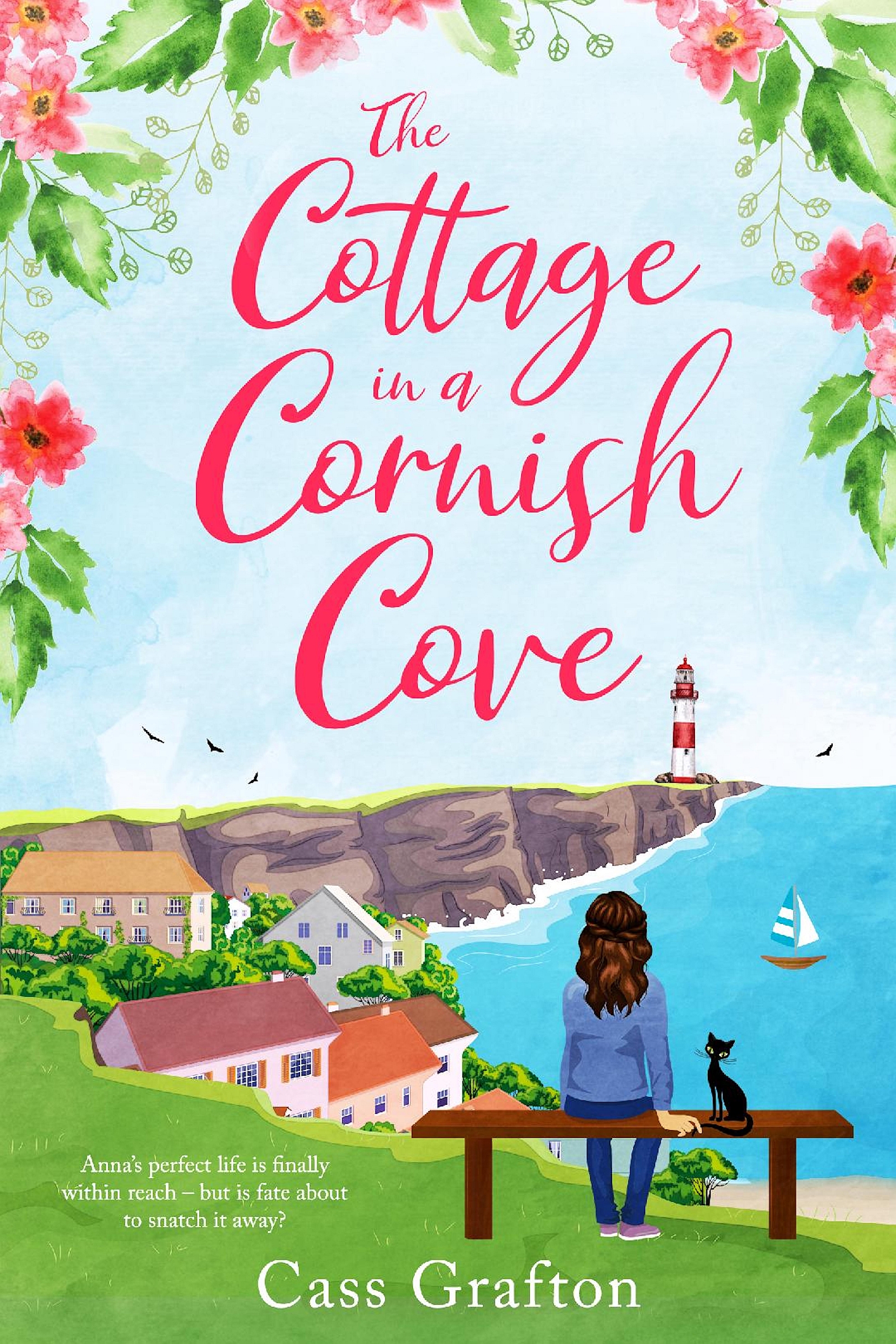
I’ve been toying with the idea behind The Cottage in a Cornish Cove since the days when my hair was a box-shaped perm, my shoulder pads needed scaffolding to support them and keeping in touch with non-local friends was done by a landline phone or with good old pen and paper.

Although the story I’ve now written bears little resemblance to those initial ideas other than the inciting incident that sets the plot in motion, I view it with the affection of an old friend, one of those worlds inside my head that simply took a long time to emerge and meet the world outside.

So what’s it about, I pretend to hear you cry?

It’s a heart-warming tale of discovering all you never wanted is exactly what you need.

Much of Anna Redding’s happiness as a child came from the long summer holidays spent with an elderly family friend, Aunt Meg, in the charming village of Polkerran.

With Aunt Meg’s passing, Anna is drawn back to the West Country, relocating to the Cornish cove where she was once so happy. Settling into her new life, and enjoying her work for the older, reclusive and—to be honest—often exasperating Oliver Seymour, Anna is delighted when Alex Tremayne, an old crush of hers, reappears in Polkerran and sweeps her off her feet.

The stars finally seem to be aligned, but just as Anna thinks all she’s ever wished for is within reach, a shock discovery reveals she’s living a dream that isn’t hers…


As for those other dates, is the adventure over? Definitely not! They are part of my on-going expedition, my journey as a writer, so I won’t be deserting them. Ada Bright (my co-writing partner) and I still have a third time-travel romance up our sleeves, and I have two Regency romances in the works, which I hope to finish soon.

In the meantime, though, if you’re up for a bit of eavesdropping on my third date, come and join us in gorgeous Cornwall, wallow in the quaintness of Polkerran, get to know the locals and fall in love with romance all over again.

The Cottage in a Cornish Cove will be released on 11th February 2020.


SISTER SCRIBES: JANE CABLE ON PLANNING FOR CREATIVITY

It’s the first morning of the decade and I’m making plans. Or rather I’m ordering dreams and prioritising my wish list, licking them into some sort of order. But shouldn’t the magic of creativity just be allowed to flow?

To my mind that’s a ridiculously self indulgent approach when you have chosen writing as a career. Having some sort of plan is so much better than sitting at a crossroads scratching your head. I have so many ideas for books I’ll probably never write them all – but which should I be following up? And what else needs to be done to make them successful?

Over the last few years I’ve developed a plan for planning – an easy ‘to do’ list for January 1st (or thereabouts), which keeps me on track.

  • Scrawl a quick review of the previous year in two sections – what went well, and what didn’t. Coming straight off the top of your head helps focus on what’s been important to you; what you need to do more of and what needs putting right.
  • Consider how you’d like to develop your writing life this year in each and every direction. For me the most important things are to understand more about (and hopefully write!) books with stronger hooks, and to find out more about winning at Amazon. Once you’ve worked out what your priorities are, allow yourself to dream a little – where would you like to be in five years’ time? How will this year’s plans help you to get there?
  • Now you have the basics you can set out your goals for the year. In my business life I had many clients who used the SMART system (specific, measurable, attainable, relevant and timely) and they’re a pretty good rule of thumb for writing too. Except I quibble a little with ‘attainable’ here, because I like to think in writing we continue to grow beyond our current skill sets – and what’s wrong with stretching ourselves anyway?
  • Next write down what you’re not going to do this year. It may sound a bit negative, but most people are prone to a bit (or a lot) of time wasting so cutting the draining tasks from your life is actually one of the most productive things you can do. One of my weaknesses is volunteering for too much so I’ve promised myself nothing new this year.
  • Then write down what you are going to do – the things that will make the biggest difference to your reaching your goals. What works in your writing life? What makes you feel good about it? What do you have to do more of to succeed?
  • The last part of my plan is to break down my goals and put them on a timeline. I do a rough quarterly guide, then an action plan for the first few months of the year. This will develop as projects move on. I also use quite small boxes for each month so I’m not tempted to overfill them and tackle too much too soon. I have a tendency to want everything to happen now, so this is very useful in spreading the workload. And, of course, it leaves room for some all important flexibility. Because even in the most ordered of worlds, real life happens.

So all this comes with a caveat: you can only plan everything when you are in control of everything. And in writing, as with most careers, you’re not. I was expecting my next book to be out by now, but it isn’t. Nobody’s fault – just one of those things. And I suspect when I look back this time next year there will be other things that haven’t happened too. But without any plan at all, I wouldn’t even know where to start.


The Surplus Girls by Polly Heron

I’ve been excited about The Surplus Girls ever since fellow Sister Scribe Susanna Bavin (writing for Corvus as Polly Heron) told me about the concept over a year ago. It is just such a brilliant idea to write about the lives of these neglected women, living in the aftermath of the first world war, in the form of a series of sagas.

The surplus girls were, quite simply, the women who lost fiancés and boyfriends (or even just potential partners) in the war. Whatever their class they had been brought up to expect marriage and children, but now there were not enough men to go around and they were ill prepared for any other sort of life. Most would need to find gainful employment with little or no training, and all would have to look for other ways to make their lives as fulfilling as possible.

The Surplus Girls is set in the suburbs of Manchester in the early 1920s, with a cast of characters from both working and middle classes. Belinda Layton, a mill worker, lives with her late fiancé’s family and after four years of deep mourning is beginning to feel a little smothered by their kindness and intense grief. Belinda’s own family is even further down the social scale, living hand-to-mouth as her feckless father drinks away what little they have.

When Belinda bumps into her old teacher she hears the term ‘surplus girls’ for the first time and is forced to consider her future, beginning to dream of leaving the mill and working in an office. At first this seems hopeless, but then she is introduced to spinster sisters, Prudence and Patience Hesketh, who have their own reasons for opening a business school for young ladies.

Polly Heron has a rare talent for portraying the atmosphere of a setting with a few carefully selected sentences, which never detract from the pace of the plot. And pacey plot it is, making The Surplus Girls hard to put down.  The detail of the era is there, forming a rich background tapestry, but I never once felt I was bogged down by it. While I could see, hear and breathe the world the characters inhabited, as I reader I was free to enjoy being transported there and immerse myself in their story. And it takes a great deal of skill for an author to achieve that.

A PUBLISHER’S YEAR: DECEMBER – PUBLICATIONS AND PROSPECTS

Hello and welcome to the final Sapere Books update of 2019! We’ve had a fantastic year and it’s all thanks to the incredible authors who have trusted us to publish their books. We aren’t signing up many new authors at the moment because we already have such a great list we are looking after, but we are leaving our submissions page open in case anything pops up that we just can’t say no to!

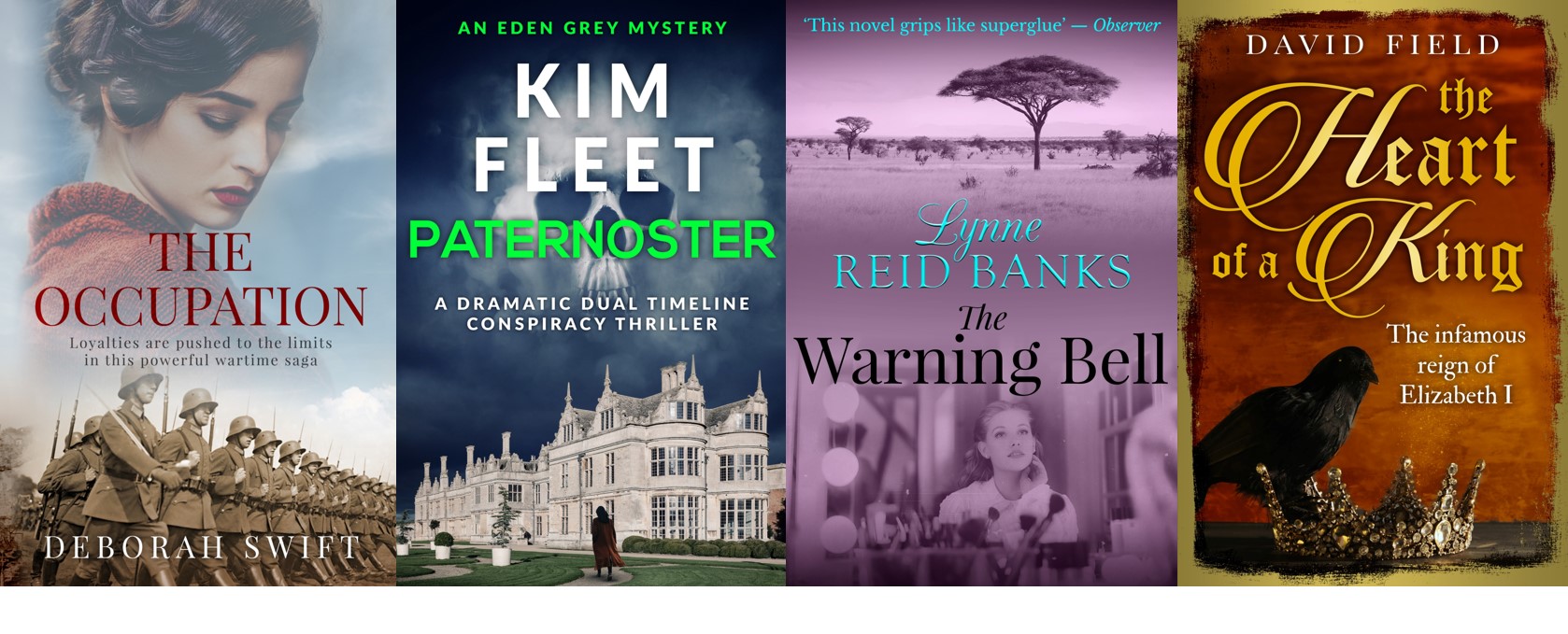
We are rounding up the year with the publication of some more brilliant fiction. Over the past few weeks we have reissued three of Alan Williams’ classic espionage novels, published THE OCCUPATION – a brand new Second World War saga by Deborah Swift, launched the last book in David Field’s Tudor series and republished PATERNOSTER – the first book in Kim Fleet’s time slip thriller series. We also reissued THE WARNING BELL – a historical novel by award-winning author Lynne Reid Banks.

All of our authors are busy with new works in progress and we have lots of exciting projects to launch in the new year. As well as our thriving fiction list, we will soon be launching our non-fiction list. Richard Simpson, one of my fellow co-founders is currently looking for military history books, in particular backlist titles, and he is preparing the first few to launch on our second anniversary next March.

Thank you to everyone who has been following these update, and to Frost Magazine for hosting us, and we hope you all have a wonderful Christmas and a prosperous New Year! We are very excited to see what will happen in 2020. Watch this space!


Amy Durant

SISTER SCRIBES’ WOMEN’S WRITING WISDOM 2019

During 2019 Sister Scribes were lucky enough to welcome women writers we admire and have some connection with to Frost and in the process we learnt a great deal. With a new year approaching, here as some of the choicest nuggets to mull over.


Alexa Adams: My network of women who I can depend on, confide in, and trust has exploded, and I have a hard time recalling how I ever got by without them. These friendships are the most unexpected gift that writing has bestowed on me, and for them I am immeasurably grateful.

Carol Thomas: Three top tips for working collaboratively:
1) Take a little time to find your way, but also be prepared to step up. Somewhat obvious but … the key to collaboration is collaborating.
2) Be prepared to compromise. Working as part of a group will require it at some point.
3) Be actively supportive of others; you’ll get more from it than you might think. Rightfully so, when it comes to working in a group, you tend to get out, what you put in.

Catherine Boardman: Telling stories is what I love to do.  The solitary nature of sitting down to write suits me perfectly.  Yet it is the support and friendship of fellow female writers makes the procrastination so much more fun.

Daisy Tate: THERE ARE NO FOES in the world of women’s fiction. Along this windy path I’ve walked, I have only met people who are there to help others.

Dr Gaby Malcolm: Ignore anything other than constructive criticism and admire your own work.

Jessica Redland: So far, our joint venture [The Yorkshire Rose Writers] has worked well and we love working together. We’re both excited to see where it could go in the future. My advice to anyone thinking about such a venture, though, is be really clear on your aims and your time commitment right at the start so you’re on the same page.

Maddie Please:  I try to keep the boxes of stationery under control but boxes of pencils, Sharpies and Post-it notes are like cat-nip to me!

Merryn Allingham: When several members of my book group announced recently they didn’t like historical fiction, I was disappointed. But stunned when one went on to say she couldn’t see the point of history. For me, discovering the past doesn’t just illuminate quirky corners of a bygone age but helps understand the world of today….. Researching history complicates that first simple ‘take’ on a culture and a period, changes our perspective, makes connections. And, crucially,  illuminates our own troubled present. Worth paying attention then!

Rachel Brimble: I could not write without women from the past, the present and undoubtedly, the future. Here’s to the strong women who have gone before us and who continue to walk with us today!

RL Fearnley: I realise that I don’t have to write ‘women’ in my stories, I just have to write ‘people’. It should not be a revelation to see that these two things are not mutually exclusive. After all, in worlds where anything is possible, why can’t the quiet, plain girl at the back of the class be the one who takes up the sword and slays the troll?

Tracy Rees: Exploring our dreams as far as possible makes us happier, fuller people, which in turn allows us to help and support others.