SISTER SCRIBES GUEST: TRACY REES ON WISE WOMEN

When I first met Tracy Rees on Twitter I had a real fan girl moment – The Hourglass was one of my favourite books. I plucked up courage to ask her to write a piece for Frost, little imagining that during the subsequent exchanges of emails, she’d turn out to be everything she writes about below and more.


I always imagined that if I were ever published, it would be with something niche, perhaps something literary or quirky. Instead I find myself writing commercial women’s fiction (historical so far, but watch this space…) and I feel incredibly lucky. It’s a wonderful genre: accessible, comforting, profound and escapist all at once. And it’s a wonderful community; there’s something very special about the bond between women writers, at any stage of their journey.

As women, we have particular challenges, I think, in addition to those of our craft. Even today – and I certainly consider myself a modern woman – there is something in women (Nature or nurture? Probably both) that constrains us to care for the needs of others before ourselves. I certainly don’t mean that men aren’t caring because I only have to look at my own father and partner to know how amazingly kind men can be. But in women there is something that makes us feel guilty and unbearably stressed if we:

  • switch off from thinking about other people
  • pursue a pastime that often seems to have no measurable purpose
  • turn the phone off and spend hours alone, staring into space

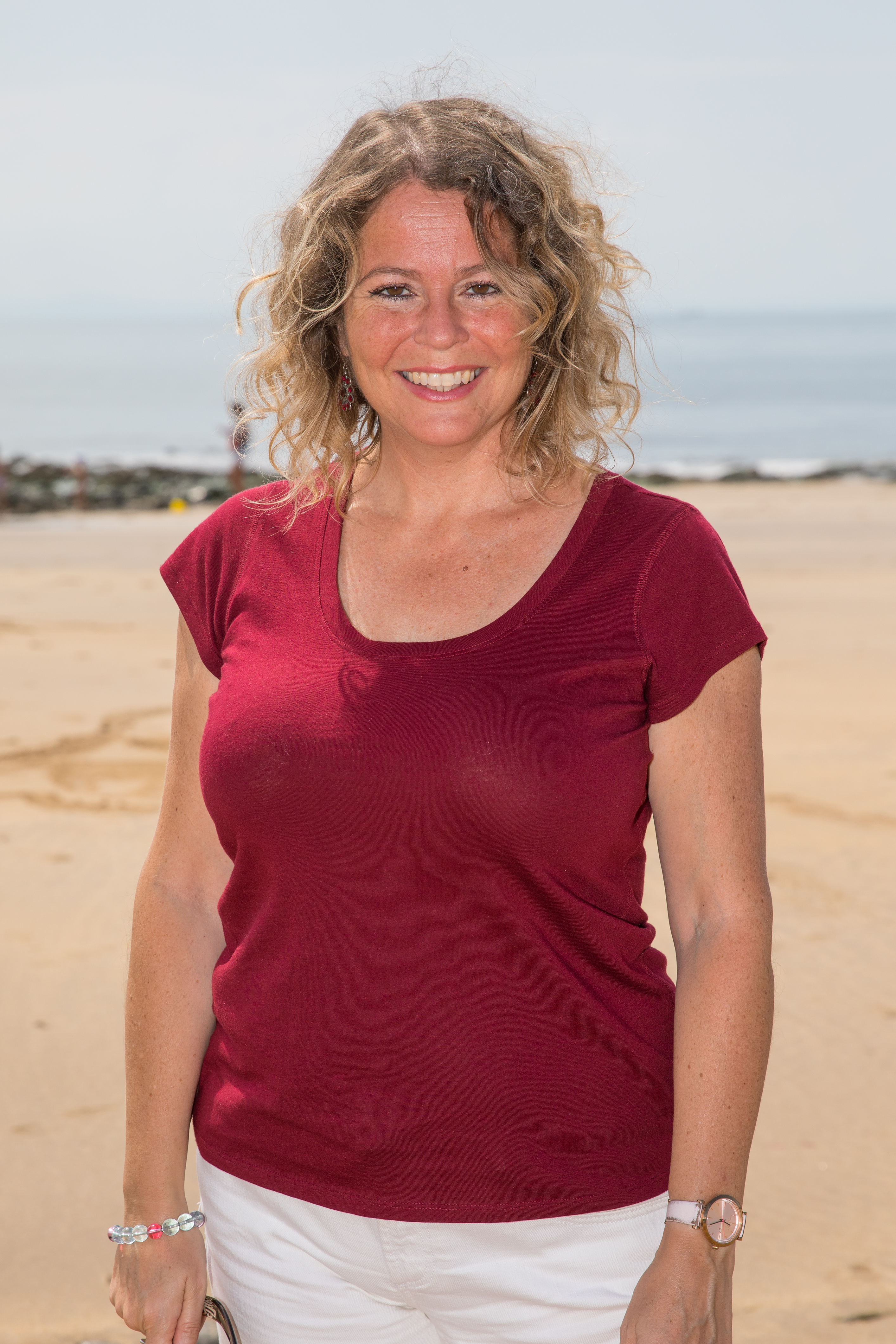
Photo credit: Phil Lewis

And what is writing if not a taskmaster that demands all of the above?

Yet if we don’t try, how will we ever know what we’re capable of? What our strange fragments of story ideas might become? How far along our writing journey we might go if we give it our best shot? Exploring our dreams as far as possible makes us happier, fuller people, which in turn allows us to help and support others.

My mother, a true-blue bookworm, was the earliest cheerleader of my writing dreams. But support from fellow women-writers comes in many forms, from comforting cuppas to celebratory glasses of bubbly, from long, in-depth conversations to a hastily dashed-off email in an hour of need. When I was first published I didn’t know any other authors and I felt desperate for people who understood. That’s all changed now and I value it more than I can say, so much so that I’ve launched an appraisal and mentoring service. I love helping people and it’s hugely satisfying to be part of that chain of experience and knowledge, one to another.

There are long-established writers who encouraged me early in my career when I was struggling with unfamiliar challenges. There are writers a few years behind me, coming to terms with the demands of being a professional author. And there are aspiring writers, still discovering all the joys of writing, as well as the more gruelling aspects (Chocolate biscuit, anyone?). We are all a community and the friendship of those who understand what we are trying to achieve is a magic that keeps us going.

There are wise women in all my books, from the alarming Mrs Riverthorpe in Amy Snow, to mystical Old Rilla in Florence Grace to Gwennan (aka Gran) in The Hourglass. In my latest book, Darling Blue, the three protagonists, Blue, Delphine and Midge, are each struggling to find their way. By pooling their wisdom and uniting in friendship, they are able to guide each other and achieve more than they ever could alone. Which is exactly what I’m talking about here.

www.tracyrees.com

Twitter @AuthorTracyRees

Instagram @tracyreesauthor

Tracy Rees always wanted to be a writer. She first worked in medical publishing, then as a counsellor for people with cancer and their families, but like many writers has had many other jobs along the way. A Cambridge graduate, Tracy lives on the Gower Peninsula but divides her time between Wales and London, where her partner lives.


SISTER SCRIBES GUEST: MADDIE PLEASE ON LIVING AND WRITING IN DEVON

I’m delighted to introduce my good friend Maddie Please. Maddie writes the most hilarious romcoms set in Devon and we met at one of the retreats she runs with Jane Ayres at The Place To Write. I visited her lovely house near Exeter and asked her what it’s like to live and write in Devon.

In May 2015 we moved into our lovely house on top of a hill midway between Exeter and Crediton. We were convinced we were downsizing. (It wasn’t until we actually moved in that we realised we hadn’t.) The house had remained empty for a year before we bought it, and the main decorating influence we inherited was wood chip wallpaper, painted magnolia and apparently stuck on with superglue.

The garden was overgrown and very neglected but we have never regretted the move, and the starry skies at night are wonderful.

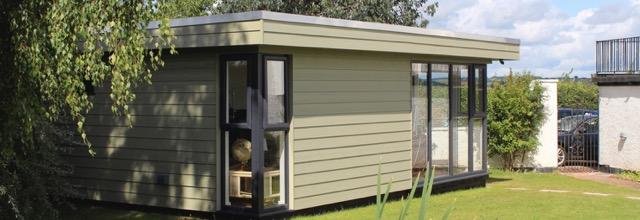
The first thing we did when we moved here was build a garden office, which I share with my husband. This means my daily commute is now twenty-five steps; I just counted them.

Occasionally we hear pheasants or pigeons trampling about on the roof. At this time of year the neighbouring fields are busy with the harvest and tractors and farm machinery trundle past our gate, something which is very exciting for our grandchildren when they come to visit.

In our garden office I have my own desk where I work just about every day.

I have s lovely hand painted cushion from my Bestie Jane to make life more comfortable. I am in charge of filling the stationery cupboard too! Any writer will know how much fun that is. I mean going into an office supplies superstore or Paperchase or Smiths and calling it work related is a dream!

Our makeshift shelving got a bit out of control last year so we replaced it with some industrial units from Big Dug. An excellent purchase. I try to keep the boxes of stationery under control but boxes of pencils, Sharpies and Post-it notes are like cat-nip to me!

I’m usually at work between 8 and 9 o’clock and unlike some writers who prefer to work without distraction, I have a wonderful view of the garden and beyond that the Creedy valley. I don’t like working in silence either, so I listen to BBC Radio Devon, which is my daily companion; I love it. Gordon Sparks and the Gordon Hour, David Fitzgerald and his Fighting Fitz competition or Janet Kipling and her Devon Debates – there are enough plot ideas there every day to keep any writer thinking.

I’m often to be found with a vacant expression as I do some important thinking and when I’m using earphones have been known to sing along. Much to my husband’s utter delight. Maybe that’s not the right word?

I occasionally go back into the house to make us coffee and usually by 3.30 in the afternoon, I’m done for the day.

Does the Internet distract me? Well of course. I am an avid Twitter and Facebook user and I have been known to check my Amazon reviews once or twice…

But I do regard writing as a job not a hobby.  My debut The Summer of Second Chances was based on this area with its winding lanes and fabulous views. So was my fourth book; The Mini-Break which takes successful writer Lulu out of her London comfort zone and into the muddy and glorious Devon landscape.

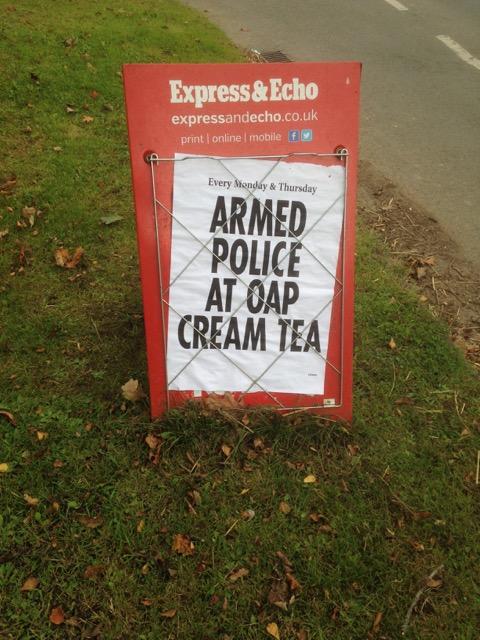
Living here is simply lovely, our local pub is the award-winning Beer Engine, and despite the headline story in the local paper, our neighbours are friendly and welcoming.

My husband has always been interested in researching his family history and found details of his ancestors who had lived nearby in 1674. Perhaps something called us back here?

To us this is the very best place to live and work.


SISTER SCRIBES GUEST: CATHIE HARTIGAN BEHIND THE SCENES AT CREATIVE WRITING MATTERS

I am so happy to introduce you all to Cathie on this month’s Frost. She is responsible for taking me under her wing at my very first RNA conference and was one of the very first people to ever read my work and encourage me to keep going. She is part of the Creative Writing Matters team who support writers in so many ways; mentorship, teaching, handbooks and the running of renowned competitions such as The Exeter Novel Prize.


Does creative writing matter? Yes, a great deal to us.  Margaret James and Sophie Duffy and I have been working together for nearly a decade now. As teachers of creative writing, and because a student’s success is as thrilling as one’s own – well, nearly – we encourage our students in any way we can.

What did they want in a textbook? What would really be useful for them? Would our experience as competition judges as well as teachers be of help? Margaret and I spent a year consulting them before we published The Creative Writing Student’s Handbook.

A dream for most novice writers, is that they should do well in a short story competition. I was thrilled when the first story I sent out bounded into a shortlist. What joy! More successes followed, but then, so did no listing at all. I soon discovered that just because it may not have done well in one competition, doesn’t mean to say it won’t succeed elsewhere. How many entries, who is judging, and whether there’s a strong entry or particular subject that resonates with the judge(s), all are factors.

During my years as a music teacher I was often charged with putting pupils through exams, and my sympathetic cup ran over on many occasions when I saw the terror with which many faced such trauma. But my goodness though, didn’t they all try harder when the exam loomed. Most got exponentially better!

On the back of my experience, I had the notion to hold a tiny competition in a creative writing class. The result was the same. Suddenly, all those last minutes unedited stories were tidied up. They took notice of the word count, the spelling and grammar, and familiar topics were rethought. I was surprised and delighted. Unlike music exams or driving tests though, entering a writing competition it isn’t a do or die situation. Okay, a particular judge may prefer another story, but it is possible to give of your best by crafting your story days or weeks previously.

Sophie won both the Yeovil Novel Prize and the Luke Bitmead Award, the latter leading to the publication of The Generation Game. Margaret was shortlisted for the RNA Romantic Comedy Award with The Wedding Diary, and for many years, had been the administrator for the Harry Bowling Prize. My short stories were being regularly listed and my debut novel, Secret of the Song was shortlisted for the Hall and Woodhouse Dorchester Literary Festival prize. Competitions were something we knew about. It wasn’t long before we realised that our fair city of Exeter was missing something – a novel prize. Seven years on, we can celebrate the publishing success of many fantastic writers who either won or were listed.

One of the lovely things about being a competition judge is being continually amazed by the extent of the human imagination. The sheer variety of subject matter that people choose to write about is extraordinary, but weird doesn’t necessarily triumph over the ordinary. The ability to move, surprise, make us laugh and/or cry will raise a story above the rest, but how or why isn’t easy to quantify.  Difficult choices have to be made. Sometimes there is a stand-out winner, but not often. Obviously, it’s nice to do well, but any listing is significant. A good record of success, at whatever level, shows commitment as well as quality.

Cathie Hartigan is a musician, novelist, and the founder of www.creativewritingmatters.co.uk and the creative director of www.exelitfest.com. Her second novel, Notes from the Lost will be published in October.


My Writing Process – Ada Bright

First, thank you very much to Frost Magazine for inviting me to be here, specifically during this week which is quite a big deal for me!

My name is Ada Bright and I am a writer born, raised, and still living in Southern California.  I make a point of it because I’ve learned that alot about me can be traced to this little factoid. I am laid back about life and stressed about that three pounds I gained in 2017, I don’t own a coat that can withstand temperatures below 68 degrees Fahrenheit, foodie menus float my boat, and I am very leary of how you store your dishes considering the fact that I’m ready for the earth to roll and shake beneath my feet at any moment. Also, I’m married to a very cute, blue-eyed guy who gave me no blue-eyed children (0/3), I have a photography following, and my mother lives with me and still does my laundry (but none of this stuff can be blamed on California living).

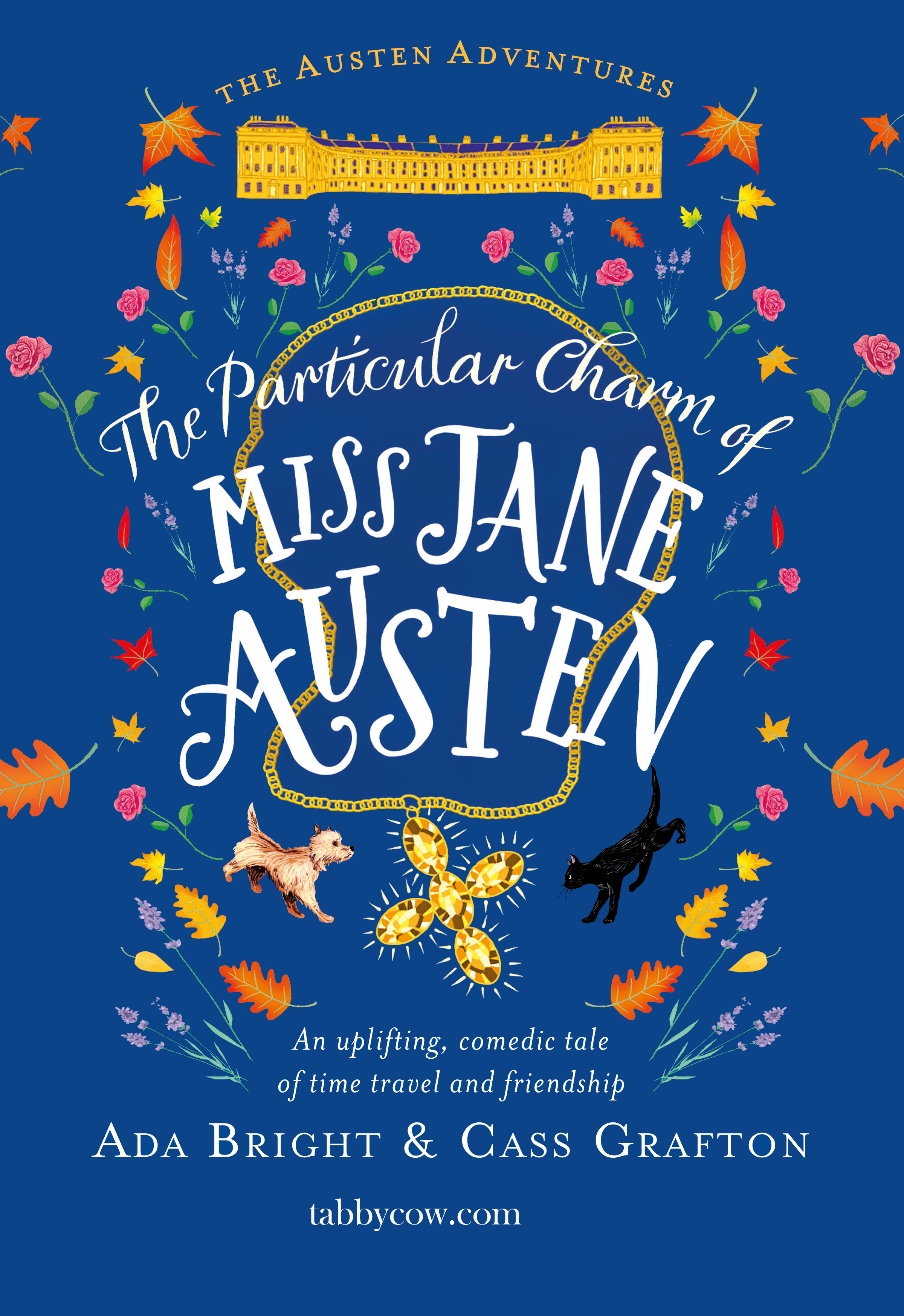
Today, September 12, Canelo Digital Publishing is releasing a book I wrote with British-born-and-raised Cass Grafton called The Particular Charm of Miss Jane Austen. It is the first book we’ve written together, but it’s sequel will follow shortly behind – being released in November of this year. The tagline for our first book is “a comedic tale of time-travel and friendship” and honestly, that about sums it up. Cass and I have been friends for nearly two decades and the many varied and often hilarious differences we’ve discovered in how our two cultures have shaped us is as much at the heart of this book as our love for Jane Austen’s novels.

Even as we work on the marketing for these novels (and start outlining a third in the series), I am also working on a romantic mystery set right in the US. This is quite a shift to try to work alone. I realize that what Cass does effortlessly (keep in mind the structure and order of the story throughout) I struggle with. My natural rhythm of writing is to compose a scene in my mind almost entirely, then write it all on the page in one quick lump of words (after that initial rush, I’ll slowly revise everytime I read through it). Therefore, I jump around from scene to scene as the inspiration strikes. Since I don’t have Cass to give me order, I’ve been meticulously writing scenes on sticky notes and moving them around on the floor to figure out the order they need to go in. It’s been fun and overwhelming and a bit of a housekeeping mess, but I think, in my own meandering way, I’ve found a way to thread it all together. 

Writing is like that for me. I write because the words give structure to my mind. I wrote as a child to understand my feelings and my choices. I wrote as a teenager to entertain my peers with “friend fiction” (Yes, that boy at the mall who took your lunch order did fall in love with you immediately! Or, even if he didn’t, I’ll write a story that will make you feel like he did). I write today because I hope that what makes me feel excitement, joy, and love will entertain others as well. 

Thank you again for having me, Frost Magazine! 


SISTER SCRIBES GUEST: ALEXA ADAMS ON THE GIFT OF TRUST

Meet Alexa, a fellow writer and Jane Austen fan who’s become a trusted friend and needs no better introduction than that.


For most of my life, I did not have many female friends. As the only child of a woman who prized sincerity above all else, many of the unwritten rules of girlhood were lost on me, and I often said things that offended others, never really understanding why what I perceived as honesty provoked such backlash. I was occasionally bullied, and the lesson I took away from those experiences was not to trust women professing friendship. Apart from a few, lifelong attachments, my friends were always mostly men. As I grew older and got married, this became more isolating. Inevitably, I would find myself at parties grouped together with a bunch of other women, nervously tottering through conversations, struggling to get through the evening without trespassing on those invisible boundaries established so many years ago on the playground.

I was often depressed in my 20s, but I had no idea the lack of a female support group contributed to the problem. I thought my career in sales and marketing was the driving issue. I wanted more purpose and independence, and in a leap of faith I am still amazed my husband supported, I quit my job to write. This was a whim; I had absolutely no idea what I was doing. It was other women writers who showed me my path through their guidance, support, and acceptance.

I truly was shocked by the kindness of the woman writers I met. I didn’t expect it, and it took me a long to time to trust it. I hid for years behind my pen name, using it as an excuse to keep all my authorly interactions online, dreading having to explain to someone I had now known for years that no, Alexa is not my real name, though my middle name is Alexandra, while I simply appropriated Adams from a few notable figures in US history. Perhaps by not acknowledging my real identity earlier in my relationships with these women, I had once again trod on one of those unspoken laws of female friendship?

Cass Grafton, the Sister Scribe who invited me to contribute these thoughts, was one of the first fellow writers whom I revealed my true identity to, and she took it in such stride that it taught me how paranoid I had been behaving. In the few years since, so many of my online relationships have been solidified into real-world friendships. My network of women who I can depend on, confide in, and trust has exploded, and I have a hard time recalling how I ever got by without them. These friendships are the most unexpected gift that writing has bestowed on me, and for them I am immeasurably grateful.


Biographical Info:

A devoted reader of Jane Austen since her childhood, Alexa Adams is the author of several Austenesque novels and short stories including Being Mrs. Bennet, Darcy in Wonderland, The Madness of Mr. Darcy, and Tales of Less Pride and Prejudice. Alexa is an American residing in Switzerland with her husband, daughter, and son. She blogs about Austen and Austenesque literature at alexaadams.blogspot.com, is a contributing member of AustenAuthors.net, and a founding member of the Jane Austen Society of Switzerland.


My Writing Process – Georgia Hill


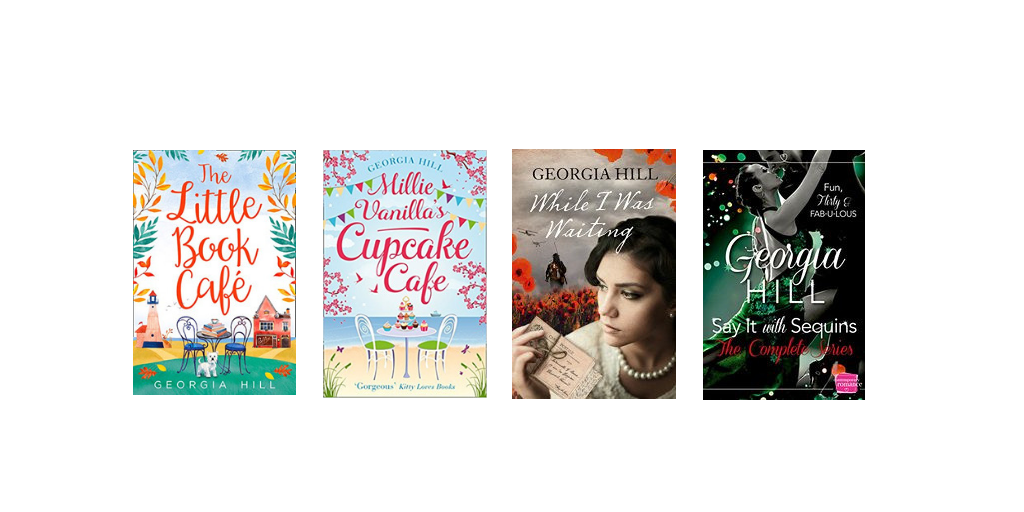
Huge thanks to Jane Cable for inviting me! I write romance – romcoms and historical. I live on the Dorset coast with my two beloved dogs (a sprocker and a delinquent cockapoo puppy) my husband (also beloved but not at all delinquent) and a ghost called Zoe. I love Jane Austen, elephants and Strictly Come Dancing. I’m also a complete museum geek and find inspiration for my writing from the folklore and history of the many places in which I’ve lived.

I’ve worked in the theatre, for a charity and as a teacher and educational consultant before finally acknowledging that making up things was what I really wanted to do. I’ve been very happily living in a fictional world ever since.

My writing

I began writing professionally in 2009, have had 6 novels published, a volume of short stories and have also written short stories for magazines. 

My writing process

I used to walk the dogs, then write throughout the day. Nowadays I find being glued to a screen for too long makes my eyes gritty and my shoulders stiff. I’m far more likely to write for an hour, put some washing in, write some more, make a cup of tea – you get the picture. I’m always thinking about the work in progress, so even when I’m not at the keyboard, I’m wondering about my characters. They become very real. There’s a certain amount of promo on social media to fit in too. Luckily I enjoy that.

Planner or ‘pantser’?

I’m a convert to planning – reluctantly! Using Post-its, I brainstorm the story, working backwards from the end listing the main plot points. Those are written up into bullet points as a crib sheet. This guides me through the story and avoids the ‘what was going to happen next?’ issue. However, characters often take on a life of their own and the crib sheet has to be rewritten as it’s scribbled over so much. If I’m writing one of my dual narratives, I have to plan out more carefully and often end up writing a chapter by chapter synopsis to help me keep track. Helps with the edits too.

Word count?

I keep a tally on the crib sheet when writing the very ‘dirty’ first draft. I tend to write that quickly and usually add about 20,000 words during the second draft so I usually know where I’m going.

Structure?

I have the three act structure in mind and occasionally have even been known to apply it! Instinct guides me more.

What’s hard about writing?

I love writing the first draft. It’s very rough and, as I’m not a skilled typist, has lots of strange typos and very little punctuation. I’m strong on dialogue so the first draft is often little more than that – with ADD DETAIL written in lots of places for the second! I love telling myself the story, which is why I’m a reluctant planner – I like to see where the characters are going to take me. Once their story is told, I lose interest and have to force myself to do the next round of edits – that’s when, for me, the hard work begins.

My advice to other writers

Keep abreast of social media, especially Twitter; you can pick up current trends, tips and useful features. Develop a writing community but choose your writing pals wisely and build up trust; they can be your most valued supporters. Read widely and often. Take a notebook absolutely everywhere. Do your research. And develop a very thick skin!

Links

www.georgiahill.co.uk

Facebook georgiahillauthor

Twitter @georgiawrites

Instagram @georgiahill5681


My Writing Process – Sue Kittow

I’m Sue Kittow, a Cornish author, freelance journalist, researcher and copywriter, been living in Falmouth for 25 years.

I have written five books on Cornish walks – Discover Cornwall, Walks in the Footsteps of Cornish Writers, Walks in the Footsteps of Poldark, Walks in the Footsteps of Daphne du Maurier and Walks in the Footsteps of Rosamunde Pilcher. I am also writing a novel set in Cornwall but don’t have an agent or publisher for that – yet!

As a freelance journalist I have interviewed many authors including Bill Bryson, Ian Rankin, Lionel Shriver and Rosamunde Pilcher. I have also written for Daily Mail, Cornwall Today, Writers’ Forum, Woman’s Weekly, Classic Boat and many other magazines.

I am currently promoting Walks in the Footsteps of Rosamunde Pilcher, published by Sigma Press August 2019.

Walks books need a lot of research and planning so my writing is quite structured – I write lots of notes for research then incorporate that into the walks as I transcribe them. It’s lovely playing the tape back and listening to the conversations we had, the birds and sea and whatever else going on. When I’m writing fiction it’s very different – I plot a lot and make notes on that but the writing itself is very free – I love the excitement of a first draft. Editing I find much harder.

As these are books on walks, a lot of planning and research goes into each one. My publishers like a geographical spread of walks around Cornwall, so I have to start off with ideas and make sure the walks are all over the county, not just focused on a few areas. Then research them, walk them, take photographs, transcribe them – it’s a lot of work!

My contract stipulates 35-45,000 words but that’s quite a loose guide.

The structure for each chapter is roughly the same so I’m used to it now – Introduction (about author, character, location), The Walk, incorporating more research as relevant, Factbox, Content, Photographs, Summing up.

The hard bit is always the editing, then the proofing and checking the maps. And self belief.

I love the physical part of writing – actually putting the words on the page and then transmitting the idea of the place – capturing the sounds, the sea, the birds, the trees etc, so that the reader can come on this walk with me while they read it.

Advice for other writers – find your voice. Read lots. Be realistic. Study agents and publishers carefully, see what’s happening online but don’t compare yourself to others – social media is full of people sharing their Amazon rankings, reviews etc. For every good review there is a not so good one (don’t read reviews!). Make sure your work is as good as it can be before you send it out – get advice from people you trust and listen to what they say. Good criticism can only improve your work. Persevere. This is a lonely business, so network with other writers. And write because you love it.


SISTER SCRIBES: JANE CABLE CATCHES UP WITH TAKE FOUR WRITERS’ LUCY AND ANGELA

Carrying on with our catch up with last year’s Take Four Writers, today it’s the turn of Lucy Coleman and Angela Petch.

Lucy:

This year has flown by and I can’t believe it’s August already – eight months since the last of Jane Cable’s series: ‘Take Four Writers’. As we all catch up, I suspect the main theme running through our updates will be that there are never enough hours in the day. But a writer’s life is never dull, and we are blessed!

Writing as Lucy Coleman, by the end of 2019 I will have had two new books out this year with Aria Fiction, the second of which is ‘Magic Under the Mistletoe’ due out on 5 September. Set in the hamlet of Porthkerry, near Cardiff, it begins in a snowstorm. It was inspired by the heavy snowfall in December 2017, which turned much of the UK into a winter wonderland.

A new publishing contract with Boldwood Books will see the first of six novels published over the next two years, beginning with the release of ‘A Springtime to Remember’ in December 2019. The story is set in Versailles, a place that is very dear to my heart.

I’ve also recently returned to blogging and my monthly feature ‘The Happiness Factor’ covers tips on motivation and generally surviving the ups and downs of a busy life. Also fun things – interior design tips, home spa pampering, the aesthetics of your workspace if you work from home, and my best buys. A treat doesn’t need to break the bank, but it can lift the spirits.

I don’t ‘endorse’ products, but share things I’ve purchased which make me smile, or have helped me. One of my best buys recently was a back brace I wear when typing, which has taken away my spells of backache!

If you get a moment, do drop by my website https://linnbhalton.co.uk/the-happiness-factor-blog/ and check it out.

Angela:

The Tuscan Secret was published by Bookouture on June 26th, after rigorous editing. At first I panicked at the structural changes suggested. I had written this book originally in 2012 and had to reacquaint myself with the story. But then I settled and began to enjoy the challenge. Today my editor told me it has sold just shy of 10,000. I could never have imagined that figure as a self-published author. (There’s also been a knock-on sales increase of my other books).

This week I sent my first draft to my editor of the second commissioned Tuscan novel, and the editorial roundabout will again whir into action. Hopefully, what I learned from the first round will ease the process.

Downsides:

  • I’m at least half a stone heavier from spending many hours sitting in front of my laptop.
  • I am developing bad posture.
  • My hubby says my head’s in another world half the time. (It is!)

Positives:

  • I’m loving what I’m doing. There was never enough time to concentrate on my writing before. It’s fun to live in a “what-if” world.
  • I have made great new friends in the writing community.
  • I’m gaining self-belief.
  • Far from being escapist, I firmly believe that writing helps me connect more with the world.

We all know that very few authors make a mint. It would be great to have more pennies and pounds in my bank account… but money is not the only measure of happiness. Connecting with readers (even with those who give less than shining reviews) makes all those hours of being hunched over my writing; all those hours of my head feeling it’s going to burst, my eyes squinty and itching — all worth it. Hand on heart.