SISTER SCRIBES: JANE CABLE CATCHES UP WITH TAKE FOUR WRITERS’ JACKIE AND CLAIRE

Everyone loved our Take Four Writers’ articles last year so I thought it would be really interesting to catch up with them. Writers lives have ups and downs, and in 2018 we shared them all. Here’s what Jackie Baldwin and Claire Dyer have been up to since – news from Lucy and Angela tomorrow.

Jackie:

Hello everyone,

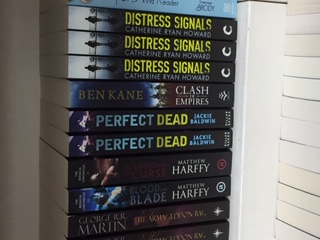
This year, a big thrill has been seeing copies of ‘Perfect Dead’ in The Works shops. It never gets old going seeing my book in the wild. I stroll past ‘casually’ whilst giving it an intense stare.

2019 has been dominated by writing my third DI Farrell book, ‘Avenge the Dead.’ This is the first time I’ve had a book published with the title I originally chose! I finished the first draft in seven months this time so I’m getting quicker with each book. The plot revolves around the Criminal Bar in Dumfries where I used to practice as a solicitor so I’m drawing on personal experience in some respects but the plot and characters are wholly fictional. Honestly!

In addition to writing and the day job I’m also in the process of moving closer to Edinburgh. We’ve found a house but it needs quite a bit doing to it so trying to organise all that has been a challenge. Hopefully, we’ll be installed before my first grandchild arrives in October!

I’ve completed my structural edit for Avenge the Dead. This is probably the stage that I most enjoy where you can fix errant plot lines and even insert new characters or subplots if the mood takes you. Currently I’m working on the Line Edit which is a complete nightmare. For example, you mention the word out three times on one page and need to change two of them.

Recently, I’ve realised that writing books is a lot like having babies. You have your baby and fall madly in love, forgetting the pain. You think it would be a great idea to have another baby. You get into the labour ward and yell, ‘WHAT was I thinking?’ And repeat…

Claire:

It’s a well-known fact that the writing life is not a simple one, and it’s easy to lose hope and/or struggle with doubt and this year I’ve been battling with both these things!

However, with the help of my amazing writer support network I am back on track. I have completed a rewrite, edited another novel and started a new one.

I’ve also celebrated my son’s wedding, am working on the draft manuscript of a poetry collection due for publication in 2021 and am planning a holiday to the ever-wonderful Kalkan in Turkey.

I also have my husband’s wise words to fall back on when things get tough. He’s not a writer, and has learnt from living with one that he has to tread carefully, and part of this is to remind me gently now and again that it all depends on the lens.

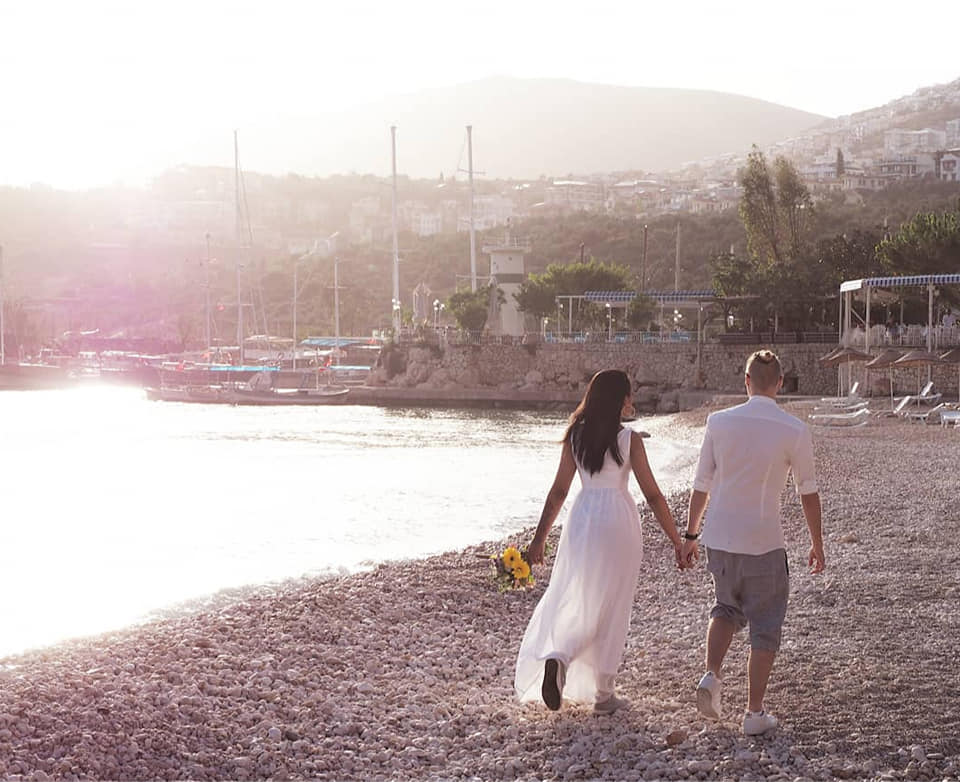
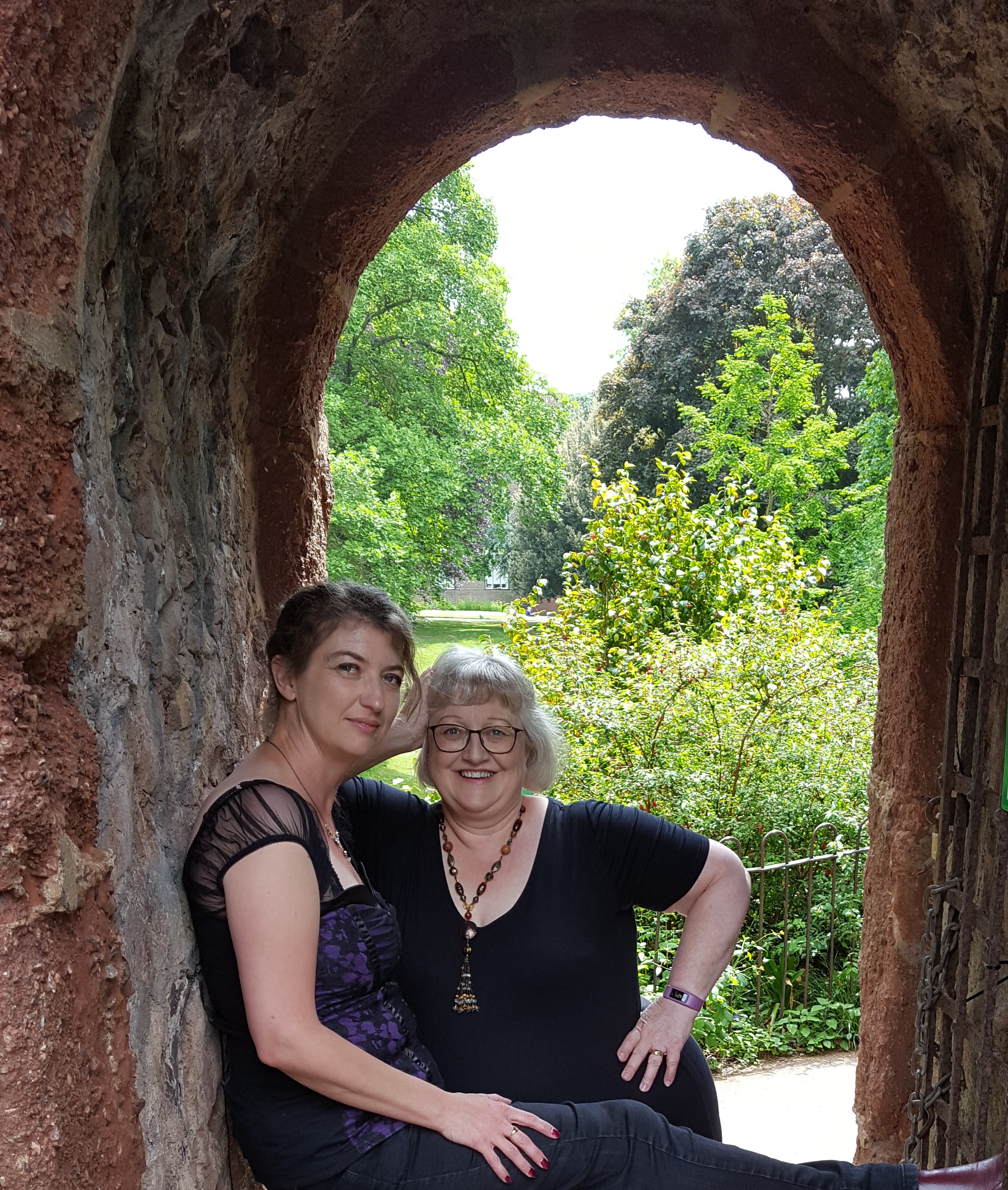
Yes, writing and getting published is a challenge, BUT I have had three novels and two poetry books published, with another on the way; I have a wonderful group of writer friends, I curate a monthly poetry night in Reading and I spend my days doing what I love. Moreover, my son’s wedding went well (see picture) and I still have writer-hope; it’s small and fragile but, using the right lens I can see it sitting next to my laptop, its bright eyes shining.


My Writing Process – Caryl Hart

I’m a children’s author and, over the past ten years, have published over 45 picture books and young fiction titles with seven major publishers. Several have been shortlisted for awards and I’ve won a few too. I run creative literacy workshops for schools, libraries and festivals and run teacher training and mentoring services.

Find out more here: www.carylhart.com

What have you written?

I have 45 published titles to date and around 15 books in production.

Next year celebrates the tenth anniversary of my Albie series, illustrated by Ed Eaves (Simon & Schuster), which includes the best-selling How to Grow a Dinosaur and Supermarket Zoo. We are currently working on book 11!

I also have a series of five feisty princess books, the most recent is The Princess and the Shoe – a book about following your dreams and believing in yourself, illustrated by Sarah Warburton and published by Nosy Crow.

Then there’s the Knock Knock series of crazy counting book capers, illustrated by Nick East and published by Hodder. The fourth book, Knock Knock Superhero is out in August. 

And Let’s Go.. a preschool series of first experiences, illustrated by Laruen Tobia and published by Walker books.  

My book Big Box Little Box, illustrated by Edward Underwood was shortlisted for the Klaus Flugge design award and is the first in a new series with Bloomsbury.

These are just a few of my titles. You can see them all here: www.carylhart.com/books
I’m very excited about the publication of Together We Can, a book about friendship, illustrated by Ali Pye and published by Scholastic. It’s a rhyming picture book that talks about what a friend is, how to make friends and, most importantly, how to be a friend. It is also a book about diversity as it features over 150 characters including children with different skin tones, hair styles, clothing, interests, mobility and other aids, prosthetics and cognitive and other physical difference.

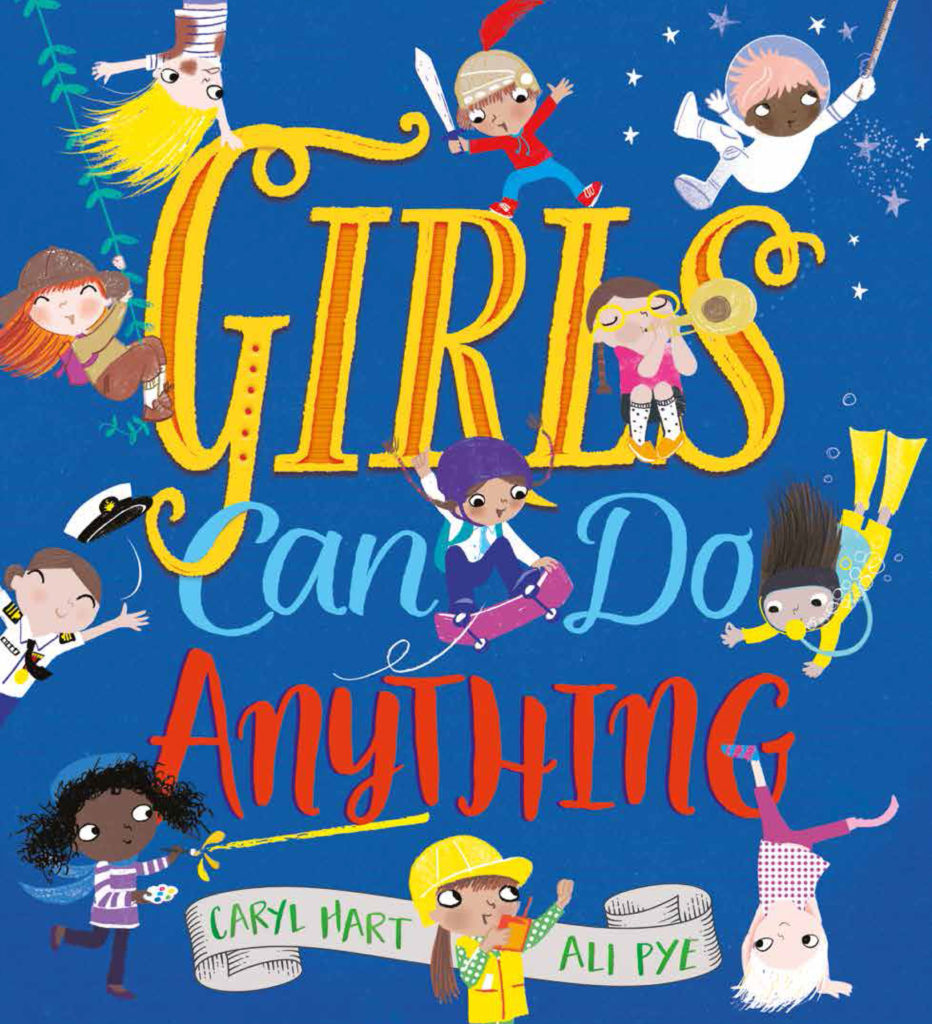
It follows on from the success of Girls Can Do Anything and has already received a lot of interest on social media.
A bit about your process of writing. 

Do you plan or just write?

Every book is different. Sometimes I create a proposal in which I outline my idea and write sample spreads, which I then submit to publishers.

Other times, I just start to write.  Sometimes I sketch out ideas too, it just depends on how my brain is working on a particular day!

What about word count?

This also depends on the book. The shortest book I have written is 50 words and the longest around 60,000. On the whole, picture books are around 600 -1000 words and titles aimed at preschoolers or babies are shorter.  I guess, as I’ve gained experience, I have developed a feel for how many words work on a double page spread.  

There’s always a lot of editing, both for the first draft and at various other stages during production.  For example, once the illustrator has created rough drawings, my editor and myself will work together to cut out unnecessary words, or re-write lines, so a text will often get sparer with each iteration until the final book is produced.

What about structure?

Once I’m ready to being writing, I lay my text out in spreads. A typical picture book has 12 -14 spreads so I just put the spread number as a subheading on my page and write the text to fit.  I find this helps me to evaluate word count and also to make sure that every page turn gives the reader something new and exciting to experience. 

What do you find hard about writing?

Getting the time to actually sit down and put words on a page can be hard. Working from home and being a mother and wife have their own distractions, but I also do a lot of school visits and workshops, so spend quite a lot of time planning timetables and creating activities to go with my books.  You can see some of these here: www.carylhart.com/about/book-activities

As a freelancer, I’m happiest when I’m busy and have several new projects on the horizon. There are times when I do worry that the next contract might never come, but have learned to push those worries to the back of my mind and trust that either I’ll come up with something, or a publisher will commission a new project. In reality I’ve never had a period when I’ve been without work, perhaps because I’m quite well disciplined and very self-motivated.

What do you love about writing? 

I love losing myself in a story and the discipline of writing, especially writing in rhyme. It’s very challenging creating a multi-layered story with appealing characters, a satisfying arc and clear meaning and also making the rhythm consistent and the rhyme solid.  It can take a day or more to write a four line verse so it can be very slow-going, but I get great satisfaction when I finally crack it. 

I also love getting the rough illustrations through as this is the point at which my stories really start coming to life. I’m so lucky to be working with lots of super-talented super-lovely illustrators who really do an amazing job, so it’s great seeing the books going from lines of text in a word document to bright, colourful, engaging  books that are just gorgeous to look at and handle.   You can meet all the illustrators I work with here: www.carylhart.com/about/illustrators

Advice for other writers. 

Writing for pleasure is a wonderful thing to do. It helps you, and others, work out how you feel and what your views and opinions, hopes and dreams are.  Writing can help you manage stress and take you to places you never thought you could go. Sharing your writing with friends, family or people online is a great way to feel validated, loved and appreciated.  There are now so many platforms out there where writers can share their work – social media, performance, blogs to name but a few. So if you love to write, WRITE!

If you’re hoping to get your work formally published as a printed book, set your bar high.  Remember that your work is competing for contracts with authors who already have a track record and relationship with their publisher, so your work really does need to shine.  

Publishers have to make money to survive and the industry is very competitive so your work needs to be commercial. That means that you have to take on board what editors and designers ask in terms of developing your texts. Publishing books is a team effort and if you are unable to stomach criticism then consider other platforms where you have total control over what gets published.

If you are writing in rhyme, make sure your rhythm is tight and your rhymes feel natural. Half rhymes work okay in song lyrics but aren’t ideal for children’s books.

If you are hoping to publish a picture book, go it alone. If you illustrate too, then by all means send some sample illustrations but don’t do the whole book unless you’re very experienced. Publishers will have their own ideas on how they want your text to be illustrated by, and rarely sign books that are submitted by a ready-made duo.

The more you write, the better you will become, especially if you are able to take on feedback from professionals in the industry.  Just because your mum or your children like your book idea, it doesn’t mean its commercially viable.  So if you get the chance to speak to someone with experience in publishing, do try to act on their advice – it’ll save you a lot of time and effort in the long run.

Above all else, write. Just write. And then write some more. You never know where it might take you!

My Writing Process – Helen Baggott

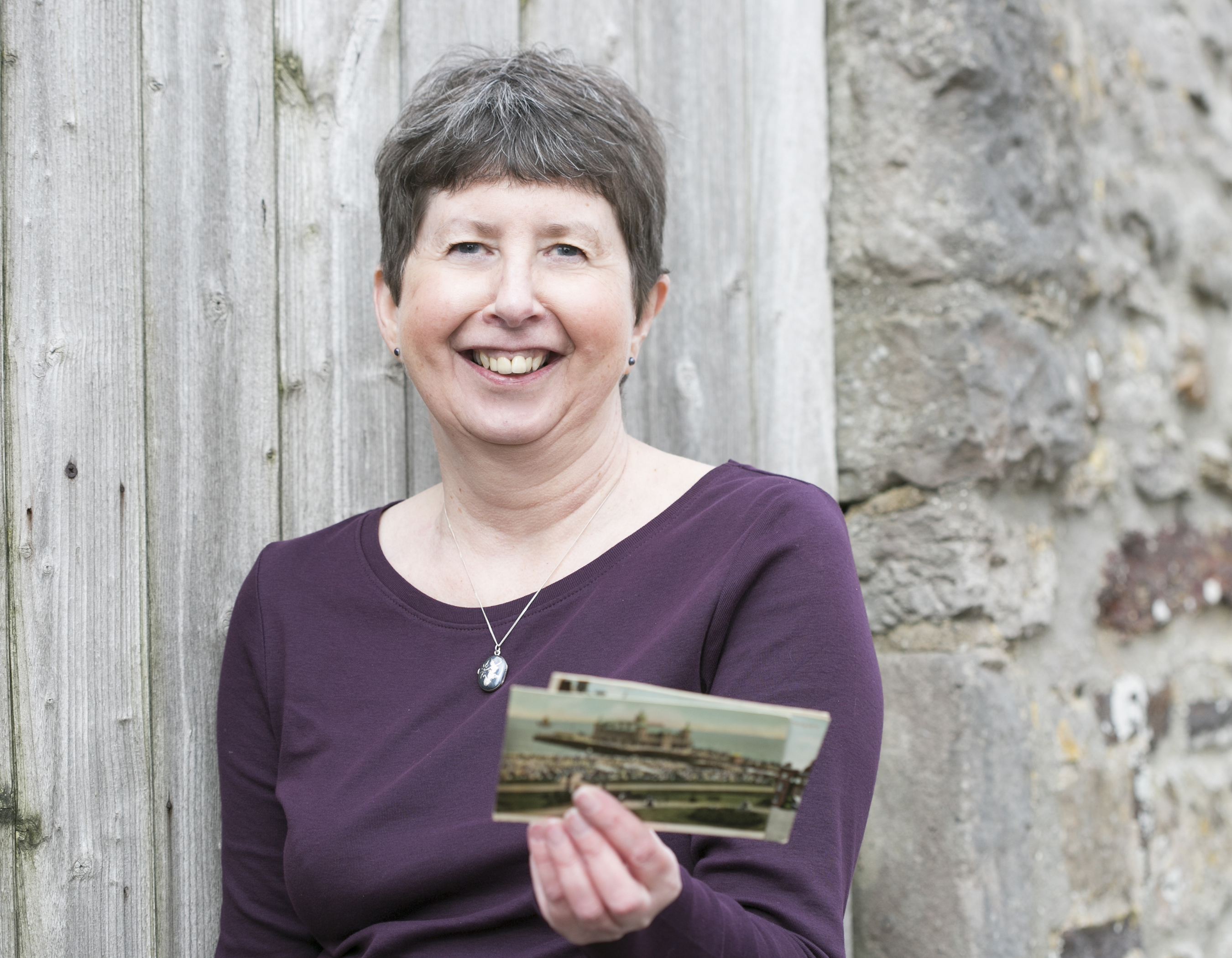
Helen Baggott is the latest author in the series How I Write, which gives readers, and other writers, an insight into the minds of writers. Not only how they think, but how they work. 

Helen Baggott


I grew up in Swanage and although I no longer live in the seaside town, home is still in Dorset. For as long as I can remember, I have always loved history and writing. Before I reached my teens, I recall creating my own magazine – and making my family read it. I even tried charging them to advertise!

I’ve always enjoyed writing both fiction and non-fiction. Despite having some success with short stories, I’m now focussing on non-fiction. I have written articles for local magazines and papers, and now my own book.

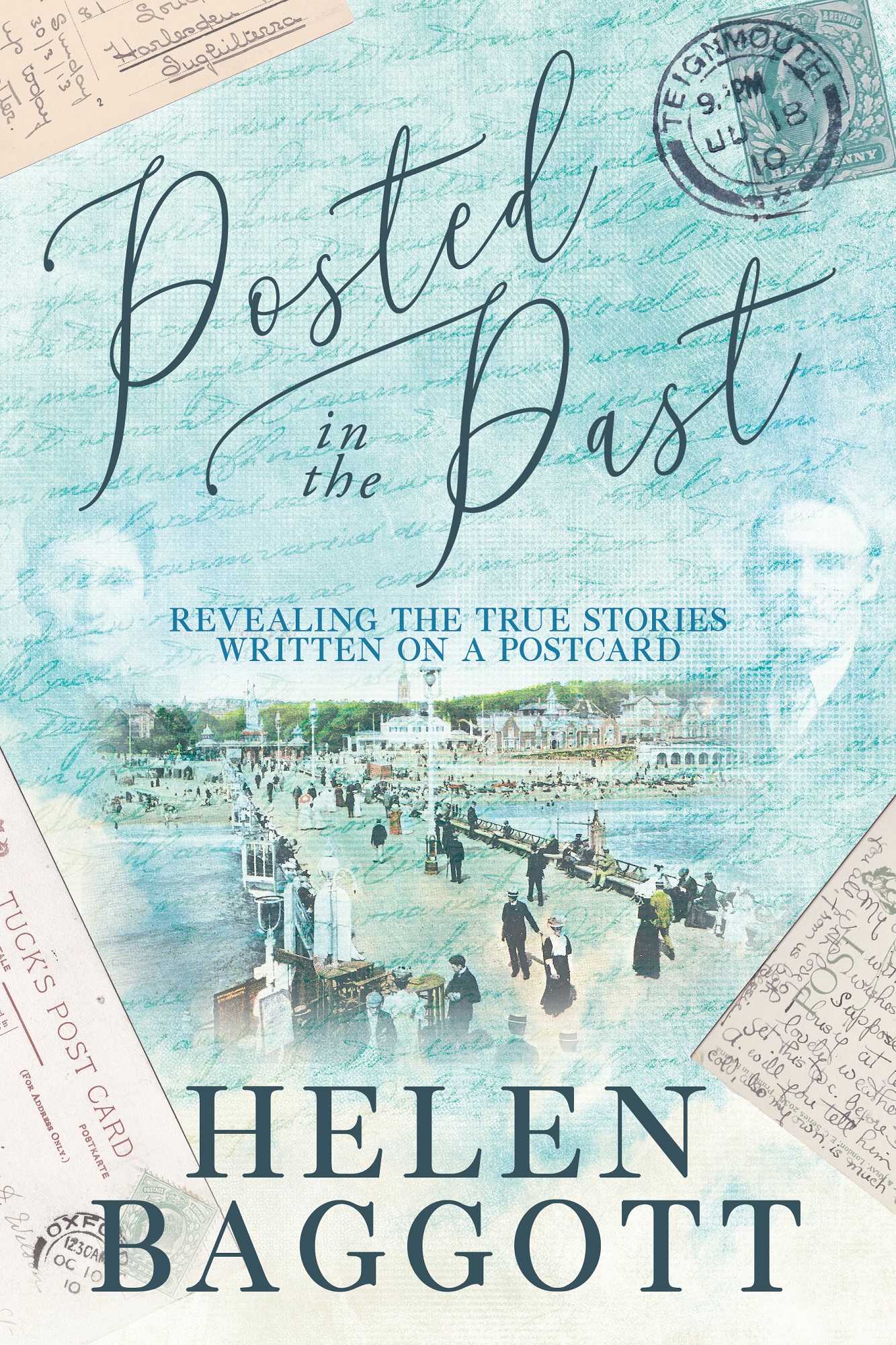
Posted in the Past was published in June and it’s the culmination of a project that was as much about research as writing. Through genealogy, I’ve researched the people who sent and received postcards more than a hundred years ago. The cards open the door to our pasts, but what was so surprising were the links I found to events of national and international importance. A housemaid who worked for Edward VII’s doctor was particularly exciting, not to mention discovering Arnold Schwarzenegger was linked to a postcard sent before the First World War.

What is your process of writing. 

Unless I’m in the right frame of mind – something that even I can’t describe fully – a blank page will remain blank. I possibly work best when a deadline looms.

Do you plan or just write?

When I was writing fiction I found that I would sift a story through my mind for days, if not longer, and then type it out. That first draft seemed to always work fairly well – although if you include those sifting stages, it was possibly version 20 that found its way onto paper.

What about word count?

With Posted in the Past I made a conscious decision to simply write each postcard’s story. The length was irrelevant – it was the story that mattered. I didn’t want to pad any of them – sometimes the shorter stories are just as interesting as the longer ones.

How do you do your structure?

I ask myself the questions that a reader might and I answer them on the page. A loose end is a distraction and tying everything together forms that structure.

What do you find hard about writing?

When the mood’s right, the planets are aligned, and I have the perfect cup of coffee, nothing is hard. Without the ideas, writing isn’t hard, it’s impossible.

What do you love about writing? 

Irrespective of whether it’s fiction or non-fiction, I love the escapism, living in another world and time.

Advice for other writers.

Have faith and confidence – to not write when you feel you should is the only time you will fail.


Posted in the Past is available on Amazon

www.helenbaggott.co.uk

www.stourcastle.co.uk

@SelfPubSupport

@PostedInThePast

SISTER SCRIBES GUEST: ALEXANDRA WALSH ON HER WONDERFUL FRIENDS

I’ve come to know Alexandra because we’re both signed to Sapere Books and when she told me how much her wonderful friends had helped her on her journey to publication I just had to ask her to write about it. It’s a proper Sister Scribe story.


“I’ll be there for you…” sang The Rembrants in the 1990s on the US sitcom, Friends. It was a great concept because friends are universal and I am very lucky to have some wonderful friends.

In June, Sapere Books, published my second novel The Elizabeth Tudor Conspiracy. It is part two of The Marquess House Trilogy and it is dedicated to four friends: Jo, Deborah, Gemma and Dawn. This particular four have been my lifeline while I have been writing this series. Their support has been invaluable but what they do not know is that it is their friendships that have formed the inspiration for the relationships in my historical novels.

During my research, one of my enduring irritations was the isolation in which historical women are portrayed. They are usually placed with people who are instrumental in their downfall. Yet, I find it hard to believe that women in the fifteenth and sixteenth centuries did not turn to each other as women do today.

In my first book, The Catherine Howard Conspiracy, the fifth bride of Henry VIII is my historical protagonist. The only women ever linked to Catherine are those who betrayed her. I created a group of close friends around the young queen, all of whom were real historical figures who had been part of her court. The core of their banter and support was inspired by Deborah, Gemma, Dawn and Jo.

The second book, The Elizabeth Tudor Conspiracy, has Elizabeth I as the driving force. She is often presented as being at odds with the women in her court. There probably were personality clashes but it seems unlikely that she  loathed her ladies-in-waiting as is often suggested. I re-imagined her friendships, particularly those with her Boleyn cousins who were with her throughout her reign, again based on the strength and support provided by my friends.

All four, I met at work: Jo and I became friends on the launch of the women’s magazine Now; Gemma and I met at more!, while Deborah, Dawn and I worked together on Chat and Pick Me Up!.

Each of them is wonderful and they all helped me to get through the many years of sitting alone, writing. First with endless encouragement, then in indignation on my behalf as my books were rejected, before the day I finally had a publishing deal. Cards, flowers and champagne arrived the following day!

Deborah, Gemma and I email each other nonsense most days. Dawn and I have long rambling conversations when she drags me back me from the brink of “I’m-so-rubbish-it’ll-be-a-massive-failure”. Jo and I have so many years history, we can ring each other and rant without even saying hello, while we calm each other down.

So, yes, I’ll be there for them, as they’re there for me and I hope hundreds of years ago, the women I write about were there for each other, too.

And, to all my other friends, I love you too. You bunch of awesome, incredible, wonderful, insane women. You make my life a brighter place!


Alexandra Walsh is the author of The Catherine Howard Conspiracy and The Elizabeth Tudor Conspiracy, published by Sapere Books. Alexandra was a journalist for over 25 years writing for a variety of publications including Cosmopolitan, Chat, more!, Now, Shine, The Daily Mirror, The Sunday Times, loaded and Goal. History is her passion and she loves exploring a good ruin or museum. She usually has her nose in a book but, if you can distract her, she does make a mean curry.

SISTER SCRIBES GUEST: ALISON KNIGHT & JENNY KANE ON CREATIVE CONFIDENCE

I’m so pleased to be able to welcome two fabulous writers to Frost today.  Alison and Jenny have come on to tell us all about their latest venture  Imagine, a creative writing business that encourages new writers to have confidence in their work. With a huge (and I mean huge) breadth of experience and wisdom, they are two of the nicest women you could ever hope to meet. 


Writing is a solitary occupation so it’s good to have a permanent cheerleader to help you through the bad days and celebrate the good days (and friends and relatives don’t count because they tell you what you want to hear). We’re really lucky because when we met at a Romantic Novelists’ Association meeting, we hit it off immediately and have since become business partners.

Imagine Creative Writing Workshops was born amid much laughter and copious quantities of mint tea and black coffee. For the past two years we’ve been teaching courses and workshops in Wiltshire, Somerset, Devon, Cornwall, Wales and London and have gathered together over one hundred regular students aged from six to one hundred and four!

Our aim is not just to teach people to write but to give them the confidence to write. So many talented people don’t follow their dream of being a writer just because they lack confidence. For us, there’s a certain magical quality in seeing our students develop their skills and produce work they can be proud of. It’s a privilege to be able to watch new writers go from their first writing exercise to completing the first draft of their novel.

The highlight of our year is our residential writing retreat every October at the splendid Northmoor House, a Victorian manor with lots of original features on the edge of Exmoor. There, everyone has the time and space to write with our support and the camaraderie of other writers as well as excellent food and visiting guest speakers.

Between the two of us we write nine different genres, including historical crime, contemporary fiction, YA adventures, family drama and romance. To avoid confusion (or is it to confuse ourselves?) we use five different pen names! We like to think that our broad range helps us to help our students.

When it comes to our own writing it’s nice to be able to depend upon each other for honest opinions, beta reading, and a firm kick up the backside as and when is necessary. We haven’t come to blows yet and are looking forward to the continuing Imagine adventure.


Alison’s Bio

I’ve always enjoyed writing and in my forties decided I wanted to learn more about the craft. I studied at Bath Spa University and Oxford Brookes University, achieving a first class degree and an MA in Creative Writing. I’ve been teaching for four years now and have had three books published – two contemporary romances and a YA time-travel adventure. I’ve two further books completed – a second YA book and a family drama set in 1960s London – and I’m currently working on more contemporary romances. I also work as a freelance editor. I live in Somerset, within sight of Glastonbury Tor.

Jenny’s Bio
Lucky enough to be a Costa writer in residence, I spend my days in Devon within easy reach of coffee, writing contemporary fiction, romance, and children’s picture books. I also write medieval mystery novels and audio scripts for ITV as Jennifer Ash. Occasionally I masquerade as award winning erotica writer, Kay Jaybee. Over the past 14 years I’ve accumulated over 200 publications, including 21 novels. I’m published by Accent Press, LittwitzPress, Mammoth, Penguin, and Spiteful Puppet.

Imagine: www.imaginecreativewriting.co.uk


SISTER SCRIBES GUEST: MERRYN ALLINGHAM ON HISTORY REPEATING ITSELF

“Researching history… changes our perspective, makes connections.” Historical novelist Merryn Allingham tells Susanna Bavin what she found by delving into the story of the Ottoman Empire.


When several members of my book group announced recently they didn’t like historical fiction, I was disappointed. But stunned when one went on to say she couldn’t see the point of history. For me, discovering the past doesn’t just illuminate quirky corners of a bygone age but helps understand the world of today. When I set out to research the background for A Tale of Two Sisters, a novel set in Constantinople 1905 – 1907, it was the nationalism of President Erdogan that I heard in my head, declaiming that Turkey had once been a great power and would be again.

So began my burrowing into the Ottoman Empire, a regime that lasted over five hundred years. The Ottoman Turks were indeed a great power, wielding influence over territories stretching from the Balkan States to the Horn of Africa. A multinational, multilingual empire, that  ended only after the Great War, when it was partitioned and its Arab region divided between Britain and France – helping to explain something of the Middle East today.

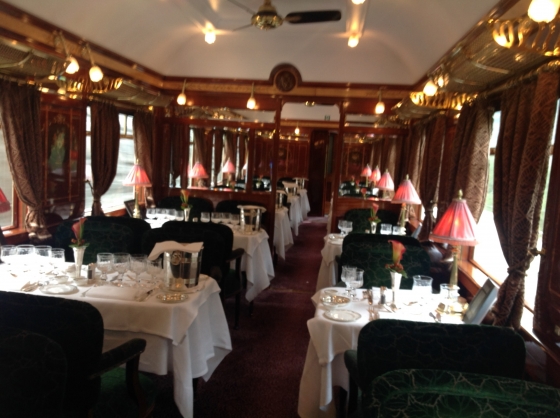
My research wasn’t all political. I had my characters travel on the Orient Express – I’d been fortunate to journey on the train myself, to Venice rather than Constantinople. Cocooned in gleaming blue and gold carriages, art deco compartments and mosaic-tiled bathrooms, I stepped back a century. Today the long journey to Istanbul is a once a year event, but in the early twentieth century it was part of the regular timetable and I gave my heroine the chance of travelling alone for the first time time in her life and to an unfamiliar, exotic destination.

I enjoyed researching old timetables, calculating how many days, how many hours, between one beautiful capital and the next – Paris, Munich, Vienna, Budapest, Bucharest – locomotives changing at every frontier, as one national railway system handed over to another. In all, the train covered a route of more than 1,700 miles before reaching Sirkeci station in Constantinople.

Topkapi Palace was my heroine’s destination and I still retain a vivid memory of my visit there. It was one of many Ottoman palaces in the city, sultans moving their court from palace to palace, often in response to external threat. Even though I saw only a small portion of Topkapi, I was overwhelmed by its opulence and beauty.

For this book, I wanted to dig deeper, wanted to know what life was like for the women who lived there around the  turn of the century. I’d read accounts by a number of intrepid female travellers to the Orient – Lady Mary Wortley Montague, Mabel Sharman Crawford, Mary Lee Settle – and been struck that, almost to the woman, their experience ran counter to the prevailing European stereotype of Turkish women as either decadent concubines or slaves.

Women spent most of their lives within the home, it was true, but within those four walls, they had absolute sovereignty. The harem was a sacrosanct space, not just a place where women were guarded, but a place of retreat to be respected. And if they ventured outside, always with a female companion, they were treated with courtesy. It was considered a sin to stare at women in public, for instance, and if a man behaved badly towards a woman, regardless of his position or religion, he would not escape punishment.

The truth, as always, is mixed. The Ottoman Empire was both civilising and brutal. Slavery continued until the last days of the empire, yet it was time limited for the individual and could be a means of social mobility. The children of the court were much loved, but in the early days of the empire, fratricide was frequent – the Ottomans did not practice primogeniture and male relatives seen as a threat to the potential sultan could be executed or imprisoned.

Researching history complicates that first simple ‘take’ on a culture and a period, changes our perspective, makes connections. And, crucially,  illuminates our own troubled present. Worth paying attention then!

THE TRUTH ABOUT BULLYING – ALEXANDER WALLIS

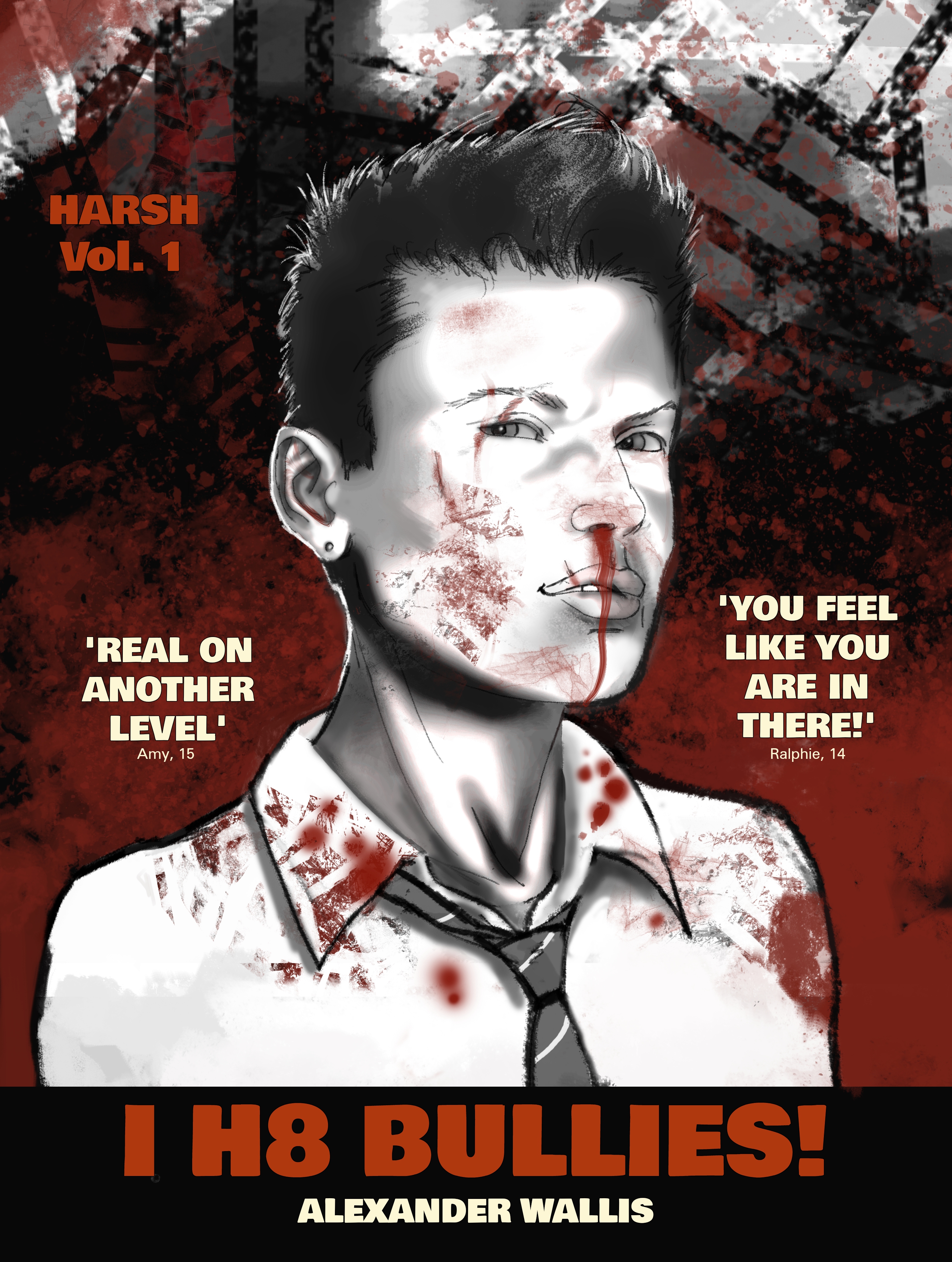
Jane Cable: Last week I received an email from an author I used to know when I lived in Chichester. I remembered him as a warm and principled man, a youth worker who’d written a fantasy book with a moral message. He’d contacted me to let me know he’d written a novel about bullying, aimed at teenagers and children. Not my normal read, but I clicked the link to I H8 Bullies anyway. Then I clicked on ‘look inside’. I read two pages and I was compelled, yes, compelled, to buy it.

It’s written from the point of view of a teenage lad in rich yet accessible language. The voice rings true. Alex’s blurb says it’s written for kids who don’t like books, and at only 66 pages short I can believe it. I also think it should be compulsory reading. Which is why I asked Alex to write this article for Frost.


The truth about bullying is that it can rarely be stopped.

The act of undermining others is a survival strategy – however maladaptive – which feeds vampiric ego at the target’s cost. Its excesses are applauded by those who don’t want to be next in the firing line and whose silence (or laughter) serve to timidly collude. Organisations enable rather than contain its flourishing, hierarchical lines supporting those who narcissistically abuse their power.

Nowhere can bullying be better studied than in a school, where adolescence stirs thicker the drama and thinner the consequences. A fully-stocked armoury is available to the teenager who bullies, from opportunity to physically aggress (within the relatively less punitive micro-society of the school discipline system), to ample places to regularly do it and the chance to capture and further torment on social media.

School anti-bullying programmes lean towards ‘awareness raising’, as if this phenomena is not already deeply understood. Since Goliath took up against David, humans have recognised that superior size, privilege or opportunity presents the risk of some throwing their weight around more than they should.

Interviewing students helped me to better understand the experience from the target’s view. Bullying somehow forces an intense self-examination, our own inner critic immediately jumping ship to add to the gang of detractors. Targeted students were not just conscious of the way they looked, but made to think deliberately of how they walked or talked. Thrown into a deep self-critique which often stemmed from an already sensitive and self-conscious life position.

When I began writing I H8 Bullies, my thoughts were initially on my own school experience, decades earlier. Old school bullying more often took the form of a thump to the ear, a pounding by some bigger boys (which we had sometimes provoked) and, at worst, the wave of a penknife.

Bullying feels more enduring and emotionally damaging now. Social media provides means to shame a person that is only limited by the imagination and which can endure long beyond the school bell. It can follow a person from place to place, preserving images better forgotten.

Sometimes the only factor under a target’s control is how they themselves react (or don’t). The quiet dignity of preserving your own values, even if you are still discovering for yourself what you think and feel. Bullying can rarely be stopped but it can be survived. It is about winning the battle within, and that is what the story of I H8 Bullies is all about.

Alexander Wallis is a youth worker for Sussex Against Bullying and the author of I H8 Bullies.


SISTER SCRIBES GUEST: R L FEARNLEY ON ELVES, ENCHANTMENTS AND EMANCIPATION

Becci is a sister scribe from Reading Writers  – as well as being on the committee together and going to  the regular meetings, we like to write together in local cafés. She writes under the name R.L. Fearnley and is a fantasy poet and novelist, performing her poetry all across the country and delivering creative writing workshops in a variety of settings. Her poetry collection, ‘Octopus Medicine’ was published under ‘Becci Louise’ by Two Rivers Press in 2017. She is working on her first novel.

Lonely children love other worlds. I know this because I was a lonely child. I found solace in alternative landscapes filled with dragons, wizards and magic. The idea of riding on the back of a fire-breathing monster was one of the few things that made me feel powerful. I loved the stories of dragon-riding heroes and farm-boys-turned-champions. It made me feel that anyone, no matter how humble and invisible, could have the potential for more. I devoured these stories with gusto; Christopher Paolini’s ‘Eragon’ was a favourite, as was J.R.R. Tolkein’s ‘The Hobbit’ and C.S. Lewis’ ‘Chronicles of Narnia’. Of course, I wrote my own stories too. Looking back on them now, I see a fatal flaw that I was, perhaps, too young or too socially conditioned to see.

Where are all the women in fantasy stories?

To be fair, they are there. You see them in the flowing golden locks of Tolkein’s Galadriel, the serious and distant personality of Paolini’s Aryen and Lewis’ stuck-up, lipstick-loving Susan, where liking make-up is apparently reason enough to get you thrown out of Narnia. Women in fantasy when I was growing up all seemed to look the same. You knew you were reading a ‘strong, fantastical female’ if she:

  • Was an elf of some description
  • Had almond-shaped eyes (whatever that means)
  • Had high cheek bones
  • Had full lips
  • Had ‘ivory skin’ (looked dead or never saw sunlight)
  • Had long flowing hair, usually black or blonde.

Normally, she was tall, aloof and had no sense of humour. She was ferocious with a sword but devoid of personality. She was almost always the motive for action or the trophy at the end of it. She was, actually, quite boring.

I notice, from my early teenage attempts to write fantasy stories, that all the ones with female protagonists were unfinished. I just couldn’t seem to write them. I thought, in my youth, that it was because I liked doing ‘boy stuff’, like climbing trees and hunting insects, so of course I empathised with male characters more. Now, I think I just read very few fantasy narratives in which women were written as if they were real people.

Fortunately, a recent flurry of phenomenal female fantasy writers is challenging this trend. Jen Williams’ brilliant ‘Copper Cat’ trilogy has a fierce, humorous central female character who knows what she wants and goes out to get it. N.K. Jemisin’s stunning ‘Broken Earth’ Trilogy is populated with female characters displaying the range of human strength and vice, and her female characters are almost exclusively of colour (another thing you rarely see in fantasy!) Naomi Novik’s brilliant protagonist in ‘Uprooted’, who’s growth is joyous to witness, also pushes female-centred fantasy to new heights. And I find, suddenly, that I have plenty of inspiration. I no longer read books where I, a woman, am irrelevant. I realise that I don’t have to write ‘women’ in my stories, I just have to write ‘people’. It should not be a revelation to see that these two things are not mutually exclusive. After all, in worlds where anything is possible, why can’t the quiet, plain girl at the back of the class be the one who takes up the sword and slays the troll?