THE BUSINESS OF BOOKS: THE KITCHEN CLASS OF 2017

Jane Cable catches up with RNA friends

There is a tradition at Romantic Novelists’ Association conferences that the really important stuff happens in the kitchens of the shared accommodation. And for me (and I’m sure I’m not alone) the really important stuff was making friends with other writers. Almost a year later most of us have kept in touch and there have been many successes to celebrate. To be honest, I haven’t had the best year of my writing career but being able to cheer on my new friends had been a pleasure which has kept me going.

Jan Baynham, another writer from my home city of Cardiff feels the same: “No exciting publisher or agent news from me, I’m afraid, but I’ve been delighted to read about others’ successes this year. There’s been so much to celebrate! I’ve spent the time since the Conference submitting my first novel to publishers. Two recent rejections have given me very encouraging feedback and spurred me on. One editor said my novel fell into ‘the nearly-but-not-quite’ category, telling me why, but said she would be happy to consider further submissions from me. A second was even more complimentary about the quality of the writing and has asked to see my second mother-daughter saga that’s partly set in Greece. I’m working hard to get Whispering Olive Trees ready to submit to her.”

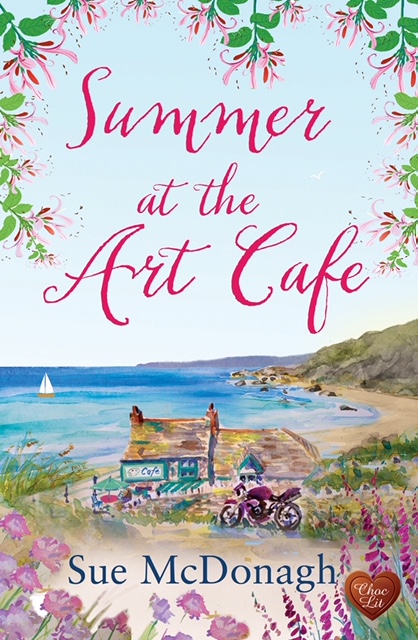
Jan’s travelling companion last year was Sue McDonagh whose debut novel has just been published by Choc Lit, but it hasn’t always been an easy road. “I wrote, learned and submitted until that magical ‘Yes’. There was joy – until the edits came in. Christmas to February, Writing Boot Camp, I rewrote almost every word, hacked back rookie errors of over-blown baddies and plot lines that went nowhere. My timeline was a joke.  I despaired that the ending would ever work. I couldn’t do it. I could, and it did, miraculously. I painted the front cover, another highlight. Published five days ago, Summer at the Art Café is already earning a slew of 5* reviews. I’m still learning – it’s a steep curve!”

Another kitchen compatriot discovering the joy of a publishing deal was Cornwall based Kitty Wilson. “My writing life has been a whirlwind since we all sat around the kitchen table at the RNA conference last year. I have gone from wannabe novelist used to micro-expressions that flashed sympathy and suggested delusion to fully fledged author. By January I had landed myself my dream agent, had to choose which publisher to go with and spent a lot of time pinching myself – it was all so dreamlike. With my first book coming out next month, the second nearly completed and a whole series to write, 2018 is going to be a very busy, but very happy, year.” The cover of the first of her Cornish Village School books has just been revealed, ready for publication next month.

When we met last year Susanna Bavin already had her deal with Allison & Busby, and her writing career is going from strength to strength: “It’s been a year of dreams coming true for me. My debut saga, The Deserter’s Daughter, has been published in hardback, e-book, audiobook, large print and paperback. My second, A Respectable Woman, will appear in the same formats; and I have a contract for another two. The best moment? Out of a year of ‘best moments,’ the very best was listening to The Deserter’s Daughter as an audiobook read by Julia Franklin. I’ve listened to audiobooks for years and Julia is one of my two favourite readers, so having her as ‘my’ reader is wonderful.”

Last but not least, Kirsten Hesketh feels she’s on the verge of something big too: “What a year! The main thing I have learned over the past year is not to submit your work too early to agents! After a round of ‘good’ rejections last September, I spent the next few months editing, restructuring, polishing and then getting a critique from the marvellous Alison May whose advice made all the difference. Then I did it all again!  The result is …. I now have an agent! I am thrilled to be represented by the wonderful Felicity Trew and have just had the excitement of having my book taken to the London Book Fair. Fingers crossed!”


A Day In The Life of Author Frances Colville

I’ve always been an organised sort of person; writing lists, making plans and generally achieving whatever I set out to achieve. Then I took early retirement and expected to devote hours to writing. But… But… There are, suddenly, all kinds of people making demands on your time. And there are so many things of interest calling to you.

All of this means I no longer have a typical day. But there are some typical elements.
I always make time to read. Have you ever worked out how very few books you can actually get through in a lifetime? A scary thought when there is so much wonderful stuff on my list and in my teetering pile. Then, if it is at all possible, I make time to walk down to the sea.

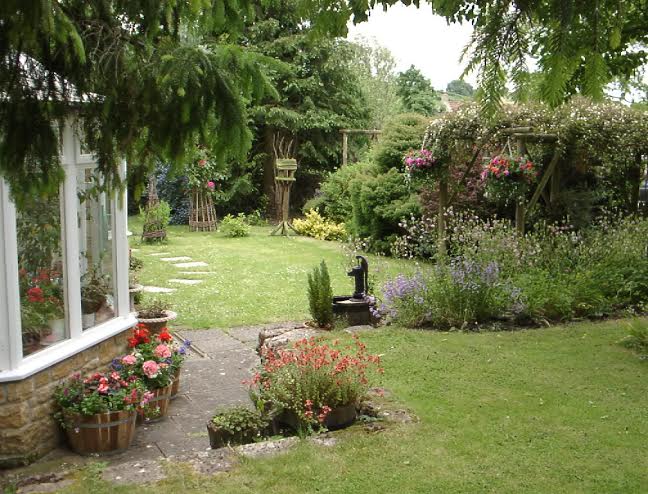
A DAY IN THE LIFE of author Frances Colvillepic1
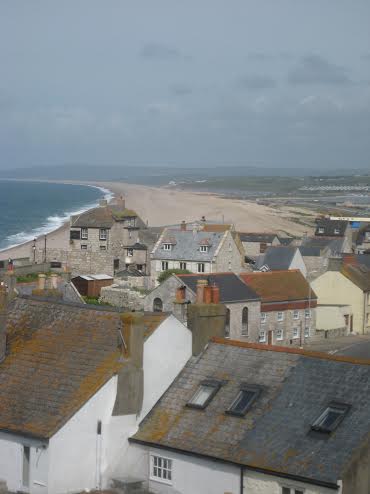
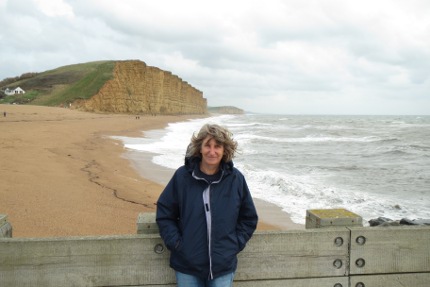
It takes me twelve minutes to reach my local beach of Seatown. I like it best when it is wild and stormy, when the waves crash in along the shore line and the cormorants have to battle to stay airborne. But whatever the weather, there is inevitably something different to see, something to provide writing inspiration.

And that is the other constant. I try each day to make time for whatever writing project is uppermost in my life This year there have been several main threads. I’ve organised a Story Slam in my local town of Bridport,

A DAY IN THE LIFE of author Frances Colvillepic2
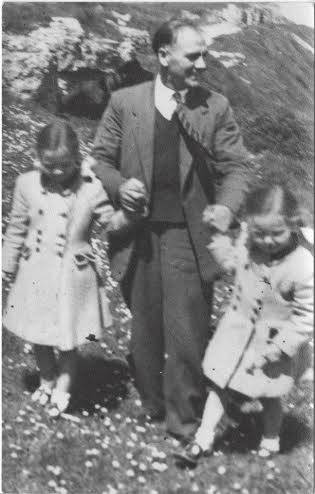
I’ve taken part in various performances and competitions, and I’ve been working on my Sixty List ( a project to do sixty new things in my sixtieth year and to write about them). But the biggest project and for me, the most satisfying, has been working on a local First World War story. I’ve researched it thoroughly, curated two exhibitions, talked about it on radio and TV, written about it for magazines and papers.

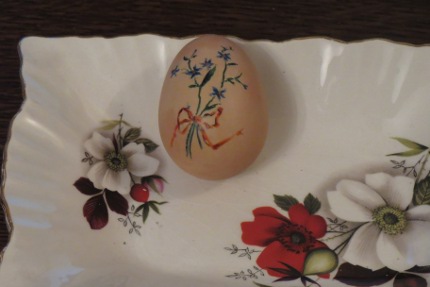
It’s the intriguing story of a young woman who contributed fresh eggs to the National Egg Collection for wounded soldiers and who decorated those eggs with paintings, poems and her name and address. In return she received thank-you letters from many soldiers. Now, as well as dealing with the factual aspects of the story, I’m trying to develop it as fiction.
A DAY IN THE LIFE of author Frances Colvillepic3

So far, a couple of short stories have been successful and I’m working on a novel. But there’s a long way to go yet. And never enough hours in the day!

© Frances Colville

BUSINESS OF BOOKS: FIRST, LAST, EVERYTHING – DEBUT NOVELIST & PERFORMANCE POET CLAIRE BALDRY

What was the first writing advice you were ever given?

The first piece of writing advice I was given goes right back to my early childhood. Not everyone can recall their primary schooldays in detail, but my memories of that stage in my life are crystal clear. The classroom environment suited me, and I wanted to please my teachers. I was, I think, destined at an early age to work full time in education.

So when my infant teacher told the ‘six year old’ me to think harder about who would be reading my work, and to stop starting every story with ‘Once upon a time’, I took her advice seriously. She had given me my first sense of audience. This was a major step forward in the life of a young writer who was beginning to develop her craft. That advice has lived with me ever since. Even when my job required me to deliver dry and often unemotional reports, I always tried to write in a way which would catch the reader’s attention. After all, if I couldn’t be bothered to interest my audience, then why should I expect anyone else to read my words?


What was the most recent writing advice you were given?

I would describe myself as a ‘half full’ person. I like to focus on the positive and build on my  experiences. I loved writing my first novel and was more than happy to receive feedback after publication to further develop my skills as a writer. However, I do sometimes fall in to the trap of focussing too hard on how I need to improve my work. This can very quickly turn into self-doubt and slow down, or even stop, the flow of my writing. The most helpful advice about writing, which I have received recently, was to remember to believe in my ability. Writing, for me, is a massively enjoyable activity, and the very best way to improve is simply to keep writing.


What is the piece of advice (writing or otherwise) you would like to pass on?

I’ll be sixty-three next month. I’ve had a professional career in education, run my own business, been married twice and brought up a family. I now use that experience to support my work in the voluntary sector, raise money for good causes and take on new challenges.  Sometimes friends of a similar age suggest I should slow down a bit. Although I have had to learn to say ‘no’ on occasions, my advice to anyone, who is polite enough to listen to me, is, whatever your age, stay active and keep embracing new challenges as much as you can. No one knows what lies ahead or how long their health will last. So set aside fear of failure and make the most of your abilities.  I wanted to write and perform poetry. I gave it a try and discovered I could do it. I wanted to write a novel, and, amazingly, I managed it.  Life is not a dress rehearsal. Jump over the obstacles and create your own opportunities. It is unlikely that anyone will create them for you.


Claire has self-published four booklets of lighthearted poetry and is a popular speaker and performer at clubs and other venues in the South East. Her debut novel ‘Different Genes was published by Matador in 2017. Claire’s next poetry booklet ‘Simply Modern Life’ will be published later this year. Claire and her husband, Chris, were awarded the Diabetes UK South East Inspire Award for their fundraising work in 2017.

www.clairebaldry.co.uk


BUSINESS OF BOOKS: FIRST, LAST, EVERYTHING – NOVELIST SANDRA DANBY

What was the first writing advice you were ever given?

As a young English graduate longing to be a journalist, I chose a bad time to graduate. It was 1982 and publishers were closing their training schemes. Only two courses existed; one at the London College of Printing, the other at Cardiff Journalism School. Out of the blue I received a job offer on a new graduate trainee scheme run by business publisher Benn Publications. It was there in September 1982, sitting around the boardroom table in the impromptu Training Room, that I was given the piece of advice I still remember today and still use. Training editor Val Williams taught us Rudyard Kipling’s quote: “I keep six honest serving men (they taught me all I knew); Their names are What and Why and When And How And Where and Who.” It has stood me in good stead whether writing a news story, a feature, a press release or a novel. And the journalist in Connectedness, Rose Haldane, uses it too when she gets stuck in her research.
What was the most recent writing advice you were given?

That’s easy, it is something that had never occurred to me before until my copy editor pointed it out to me during the editing of Connectedness. It applied to the name of a character, Maud Nettlebed. I realise now I chose Maud’s surname because of a liking for the word, Nettlebed, which goes back to my days as a reporter writing about a furniture company called Brights of Nettlebed. The name stuck. However Dea Parkin, my editor, said it was an unlikely surname that took her attention off the page every time she read it. And that, she said, is a cardinal sin. Avoid anything that distracts the reader from the page, which breaks their concentration, which returns them to the real world, which stops them turning the page and reading another chapter. I guess this is a subjective judgement, but it appeals to the journalist in me who dislikes embellishments and sub-clauses in long sentences. So, I changed Maud’s surname to Nettles.
What is the piece of advice you’d most like to pass on?

Listen to the advice you are given but do not blindly accept it or reject it without consideration. Evaluate it, then adopt or discard it. There is no ultimate template of how you should write, what you should write, the rules you should obey or break. But, and it is a big but, you must listen to the advice and consider it before rejecting it. You must know the rules, before breaking them. You will be a better writer for it. We are bombarded these days with writing advice, never have novelists been so vocal about how they write, when they write, at what time of day. There is no right way and wrong way; there is your way. Be true to yourself. Listen to feedback and suggestions, be polite, be prepared to offer positive feedback and suggestions in return, always give the person giving the advice the respect of considering it. I have participated in many writing classes – as student and teacher – and watched as some students, whose minds were closed to advice, simply did not hear suggestions that could help them. I’ve also watched other students writing copious notes about how their work should be changed and I worry they would subsequently make changes without analysing why. Knowing who you are as a writer, having confidence in what you write, is not easily earned. There is a truth in Malcolm Gladwell’s 10,000 Hour Rule.


Novelist Sandra Danby is a proud Yorkshire woman, tennis nut and tea drinker. She believes a walk on the beach will cure most ills. Unlike Rose Haldane, the identity detective in her two novels, Ignoring Gravity and Connectedness, Sandra is not adopted. Follow her on Twitter @SandraDanby


TAKE FOUR WRITERS: RECOVERING, COMPLETING, REVIEWING, CHARTING

ANGELA PETCH… RECOVERING

I spent time with my characters on their bench by the sea and they told me the rest of their stories. I’ve 95% finished the first draft of “Mavis and Dot” and very soon the editing slog will start. Beta-readers and illustrator are on board and deadlines are in place with blog tours and an author week arranged for mid-November. I’ve also booked a December 1st launch in Worthing (the location for my book) and contacted Cancer Research for support – (I am donating profits to this organisation, so fingers-crossed I make some.

In the midst of all this planning, I ended up in hospital with a warning. My memory disappeared for a few hours; a stroke or tumour was suspected. However, a brain scan revealed all was well (some would disagree!) I need to slow down. My writing is for fun – anything else is a bonus.

“If you listen to your body when it whispers, you won’t have to hear it scream.”


JACKIE BALDWIN… COMPLETING

Hello. This month I finished my line edit and answered all those squirmy plot questions. Things are starting to gather momentum now. I’ve been told that my cover reveal will be happening on the Killer Reads page at 8pm on Sunday 29th April which is exciting! I’ve had a few days off as I wait for the copy-edit to arrive. Once that is finished the book will be in its final form.

Tasting freedom, I’ve been gallivanting in the Lake District and up visiting The Kelpies near Falkirk.

I’ve also started planning my blog tour with Love Books Group. It will start on 15th June when the book is released and last two weeks. I’ll need to prepare guest posts and Q/A’s for that. The day after it ends I’m off to a Greek island to stitch my shredded nerves together with my long suffering husband.


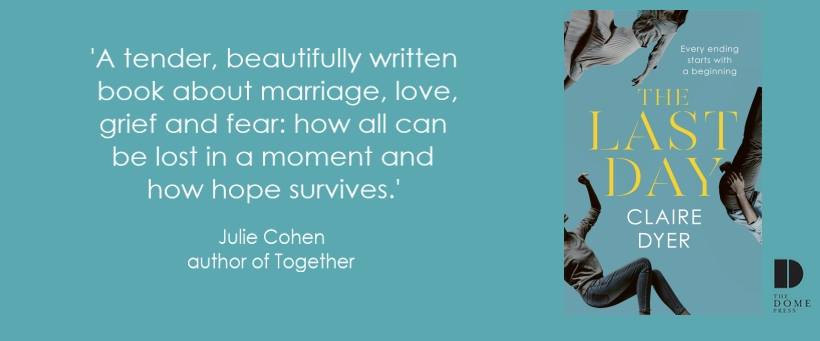
CLAIRE DYER… REVIEWING

So, after the launch and after the blog tour come the reviews!

I’ve long thought that writing is an odd thing to do. You spend a year or two writing a novel, editing it, rewriting it, editing it again, doing copy edits, checking covers, planning the PR and then there’s one glorious day when you hold the book in your hand and think, ‘Crikey, it’s a real thing and it’s going to go out into the world and (hopefully) be read by others.’ It’s a bit like hoping people will like your kids when they leave home and strike out on their own.

And, as much as we don’t like people passing judgement on our children, authors do need reviews of their books. I always do them for novels I’ve enjoyed and it’s a wonderful way to support authors and their publishers. Doing shout-outs on Twitter, popping up a 5* on Amazon and/or Goodreads is a lovely way to show support for the writing community. And, if I didn’t enjoy a book so much, I tend to keep quiet. Not because I don’t believe in freedom of speech, because I do, but because I don’t think giving a negative review is helpful. Reading tastes are so subjective, after all.

I would, however, like to thank all the lovely people who’ve left reviews of ‘The Last Day’ and who’ve messaged me privately to say they’ve enjoyed reading it. These are, naturally, the judgements I do like!


LUCY COLEMAN… CHARTING

It’s been a month of celebrating and being grateful for reader power. Amazon is only one of the online market places but it’s a useful measure. An eye-catching cover and a tantalising book blurb are essential, but reviews are a major influencer.

A reader apologised to me recently for the fact that she only writes very short reviews. Always five stars and a simple statement of appreciation. I wish I could have jumped through the monitor to hug her, because EVERY positive review is a blessing.

This month ‘The French Adventure’ soared up the charts and peaked at a dizzying #81 in the overall Amazon UK Kindle chart. Having passed that top 100 magical number before, I always wonder ‘Will the readers take me there again?’

As a reader, never underestimate YOUR power – your voice counts, so let your favourite authors know that and they will keep on writing.

THE BUSINESS OF BOOKS: FROM PITCH TO PUBLICATION

Jane Cable picks up a good book.

Doubts happen to every writer, at every level. For me, at this precise moment, it’s about whether I’ve written the right book. It’s a book I wanted to write, with characters I’m passionate about and a story I believe in, but as I begin the submission process the doubts have set in.

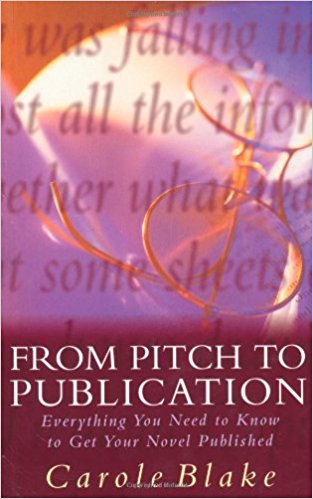
As ever, it was a writer friend who gave me a helping hand out of the hole I was rapidly digging for myself. Take a bow, Barbara Copperthwaite, for recommending an excellent book; From Pitch to Publication by the late, great literary agent Carole Blake. Barbara credits reading the book with helping her to land her agent and publishing deal. “Turns out I was doing it all wrong,” she told me. And because I know ‘all wrong’ was nothing to do with the quality of her writing, I downloaded the book straight away.

It isn’t a book you read cover to cover – you keep it by your side and refer to different chapters at different stages of your life as a writer of commercial fiction. And some of the advice seems just a tiny bit dated, written as it was in the days (not that long ago) before direct submission and digital only publishers became major players in the market. But the first chapter alone gave me plenty to think about.


So, what have I learnt from this wonderful tome?

What is the right book?

The very first pages start with the question that had been haunting me. And answered it from a very commercial angle. Yes, write what moves you but with an eye on the eventual market. Trends are impossible to spot but there are certain aspects of a novel you can build in from the start which will help it appeal to publishers; for example the right well-researched location, the right choice of profession for your protagonists. Both need a touch of glamour – or at least desirability. Keep the word ‘aspirational’ in mind and you can’t go far wrong.
Follow your genre’s rules

Genre is massively important in commercial fiction terms and you need to understand the rules of your genre inside out. To do that you need to read a lot of it. While your idea and your voice need to be sparkling and original, your story needs to meet your readers’ expectations. Romances have to end HEA or HFN (happily ever after or happy for now). Every genre has its optimum length. But never, ever, pick a subject because you think it’s going to be the next best thing – your lack of passion for it will show in your writing.
There is a checklist… a magical checklist

I’m not going to give the whole game away, because that wouldn’t be fair and if you’re serious about a career as a commercial writer then you need to buy this book. But here are just a few of the items on it which seemed most important to me:

Is the world where the novel is set one in which readers will want to spend time even before they have come to know the characters?

Is my central character fully developed and someone readers can readily identify with?

Are my plot strands so overly complicated that readers will get confused?

Can I sum up my storyline in one sentence?


And finally, the magical triangle

This had never entered my head but it makes the most sense of all. As a writer you need to be able to build and control the relationship not only between writer and character, but between writer and reader – and reader and character. Not just for one book, but in a way that will forge a lengthy career. It’s a huge question but one, as writers, we really need to ask.


From Pitch to Publication by Carole Blake is published by Macmillan

BUSINESS OF BOOKS: FIRST, LAST, EVERYTHING – CO-AUTHOR SUE FEATHERSTONE

What was the first writing advice you were ever given

Truthfully, I don’t remember who gave me my first writing advice or what advice was offered but the first piece of advice that stands out came from a chap called Frank Littlewood, a tutor at Richmond College in Sheffield where I did my journalism training. Frank was a plump former Yorkshire Post sub-editor, who always wore a grubby knitted yellow waistcoat, and was absolutely passionate about good writing and correct spelling and grammar.

He could be a bit long-winded sometimes but he knew his trade and every rookie reporter who sat in his classroom learned a lot from him. I can see him now, in that virulently-coloured waistcoat, wagging a finger and telling us: ‘News is people.’ In other words, stories are about people and what happens to them and why? That applies to novelists just as much as journalists: good characters matter and it doesn’t matter whether readers love them or hate them so long as they want to read about them.


What was the most recent writing advice you’ve been given?

That’s easy: show don’t tell.

Easy to say, not so easy to do but the trick which I’ve learned from Rebecca Carpenter, my copy editor at Lakewater Press, is to replace what she calls ‘weak’ verbs with ‘strong’ ones that paint word pictures creating heightened mood and tension.

What’s a weak verb? A really good example is the word ‘looked’, which it is really easy to overuse. For example, consider this sentence: Sally looked at her father. Here ‘looked’ is a weak verb because it tells the reader nothing about the scene or Sally’s mood or her relationship with her dad. But, replace ‘looked’ with a stronger, more descriptive verb, such as peeked, and the scene comes alive because the writer shows the reader how Sally is feeling – clearly she is apprehensive or afraid.

Think about it: Sally peeked at her father. You could change the mood again by using a different word: Sally stared at her father. This time, it’s obvious Sally is surprised or incredulous. It’s a small change but so effective.


What is the piece of advice you’d most like to pass on?

Oh dear! This is a really hard question because there are so many pieces of advice I’d like to pass on. These include: the harder I work, the luckier I get, which has been attributed to, amongst others former US president Thomas Jefferson and movie mogul Samuel Goldwyn.

I’ve also learned that achieving your dreams is a marathon and not a sprint and that your first job may not be your dream job but it will be good preparation for the dream job.

However, if pushed, the one piece of advice that has helped me in both my personal and professional life is: treat others as you’d want them to treat you. So be polite and considerate and don’t take advantage of other people. Never say something behind someone’s back you wouldn’t say to their face and if you make a mistake, apologise and move on. And never try and attribute blame. Mistakes happen, learn from them.


Sue Featherstone is a former journalist and public relations practitioner turned academic then author. Together with her friend and writing partner Susan Pape, she has written two successful journalism text books and their first novel, A Falling Friend, was published by Lakewater Press in 2016 and a sequel A Forsaken Friend is published on March 21, 2018.

They now write about books at https://bookloversbooklist.com/


TAKE FOUR WRITERS: CELEBRATING, TOURING, SPINNING & FACE-PLANTING

MARCH UPDATE FROM OUR FOUR WRITERS…

LUCY COLEMAN… CELEBRATING

March 1st began with a roar – the Beast from the East arrived but it just happened to be the day I started writing my fourth novel for Aria Fiction. Thankfully, after last month’s stressful IT problems, my new office set up is now working well.

The arrival of the snow was perfect timing, though, as my new WIP is a Christmas story and it helped set the scene perfectly!

I was also able to take time out to celebrate my first release with Aria. As the reviews begin to roll in this has been a month of counting my blessings. So many wonderful readers and bloggers have shown support for my first book writing as Lucy Coleman, that I have been overwhelmed.

But now my newest cast of characters are calling and I’m in writing heaven again. Have a lovely Easter and I hope to see you here again next month!  

CLAIRE DYER… TOURING

The two weeks after the publication of The Last Day saw myself and my book on tour.

Each day one lovely blogger would host us on their blog, either including a feature by me or a Q&A designed by them and answered by me. And each day I’d eagerly anticipate the tweet that would alert me to the fact that the post was public, click on the link and scroll down the page, my heart in my mouth, until I found their review of the novel.

I can assure you this was a really scary moment because their good opinion means so much. Bloggers are amazing people. They champion writers and novels and promote reading by their enthusiasm and love of all things book-related. Between us, The Dome Press and I were lucky enough to be hosted by 16 bloggers who each brought a unique insight into what The Last Day is about and how it resonated with them. I learned a great deal about my book by reading their reviews and am eternally grateful to them for each and every one.


ANGELA PETCH… SPINNING

You know that feeling when you are chasing your tail? It seems like you’re achieving zilch? “…Busy doin’ nothin’ working the whole day through…”? I have lots of plates spinning at the moment.

I’ve established “Write Away in Tuscany” for September 11th to 18th and found a fab tutor to run the morning classes for this course. I’ve scouted for help with covers that need revamping since Endeavour Press went into liquidation. People’s Friend encouraged me to write a serial and I had three more stories accepted. I’m co-writing a ghost book for Littlehampton Festival. I gave a talk to Ferring book club and accepted a bigger talk in Chichester in April. I attended the Southern Book Show and “networked”. And poor Mavis and Dot? They are sitting on a bench on the prom somewhere, waiting for me to write their fate in the last two chapters.

Oh yes – and I went to Snowdonia for five days to escape.


JACKIE BALDWIN… FACE-PLANTING

Hello, again. What have I been up to this month? Editing again! This time it is a line-edit where you really get down to the nitty-gritty. Repetitions are identified and eliminated. Very Special Forces! Someone goes to dinner and vanishes into a space time continuum for five days. Your characters leap to wild, insane conclusions and you have to go back and put the seeding in earlier on. You get the drift. The absolute opposite of fun! Right now, going to Tesco, doing the ironing, even cleaning the bathroom, seem sparkling with allure. Feeling the pressure as my book, Perfect Dead, is due out on 15th June and I still have a copy-edit to go through too. My mood was not improved by doing a total face plant in Dumfries High Street yesterday. I look like I’ve been in a bare knuckle fight and lost!