SISTER SCRIBES: KIRSTEN HESKETH ON NANOWRIMO TAKE TWO

I’m writing this on 30th October. It’s nearly a very important date … and one that has been eyeballing me from the calendar for weeks. No, not Halloween – with both children at uni (sob!), there seems little point in ‘celebrating’, (although we have been invited to Zoom into the wedding of the daughter of American friends in our finest Halloween regalia tomorrow!) Not even Firework Night which I do enjoy and which was An Important Social Occasion growing up (and I once got off with Paul Richardson from the swimming club at the Beaconsfield Firework Display in 1977) ….

No. November 1st marks the beginning of #NaNoWriMo …. and I can’t wait!

For the uninitiated, #NaNoWriMo stands for National Novel Writing Month and the challenge is to try and writing 50,000 words (the best part of a novel – or, at least, the first draft) during the month of November. Bonkers, but fun!!!
I’ve attempted – and completed – NaNo once before in 2017. I loved it – and I think it suits me and my writing very well. I have a terrible habit of ignoring the old adage ‘don’t get it right, get it written’ and I can spend hours – days – polishing and repolishing the same old passages or chapter – passages or chapters that never actually make it into the final cut!! What a monumental waste of time and effort that is! So, for me, there’s something very liberating about ‘having’ to write 1,667 words a day, come hell or high water (and there’s been a lot of that, lately, hasn’t there?!) No time to angst over the perfect word, the perfect phrase, the perfect cadence. All that can come later. Now is just the time to get the bare bones of the story down, to ‘tell it to myself’, to commit it to paper. Onwards, always onwards – no looking back – after all, you ‘can’t edit an empty page’! And, for me, all that striving forward makes me a better (maybe) – certainly a braver – writer. With little time to ‘vet’ what I am writing, now is the time to take risks, to go with the flow and to see where it takes me. After all, I can sort it all out later …

NaNoWriMo Mark Two is a different beast for me, though. When I attempted it three years ago, getting an agent – let alone a publishing deal – was just a twinkle in my eye. Now I am lucky enough to have my debut novel ‘out there’ as a proper book, thanks to Canelo. I also have a deal with Hodder & Stoughton for a saga series set in London in World War One. The first book in the series is done and dusted (and out next April) and I am due to start work on the second. To begin with, I dithered. Should I bash out a first draft during NaNo or make a start on the ghostly rom-com I’m dying to write? In the end, I wrote a couple of pages of the second saga book, fell in love with it – and now I want to keep going. So I’m good to go!

Five-page plan agreed with my editor – tick!

Online group of writing buddies – tick! If last time is anything to go by, I will really need them from days 17 to 20 and I’m ready to support them in any way I can too.

Are you doing Nano?

If so, good luck – and see you on the other side!


SISTER SCRIBES: SUSANNA BAVIN ON CREATING A SENSE OF TIME

In my previous article for Frost, I celebrated two novels, A Mother’s Secret and The Italian House, which are notable for their wonderful sense of place. In these stories, the authors, respectively Jan Baynham and Teresa Crane, created their settings so evocatively that they produced books of the type that make readers say, ‘It made me feel I was there.’

This time, I’m writing about novels that have a particular depth and interest thanks to the attention paid to the historical detail. Part of the authors’ skill in this is the way each of them has woven the details into the narrative with a deft touch. Their historical details are never popped in just for the sake of it, but always to enrich the story.

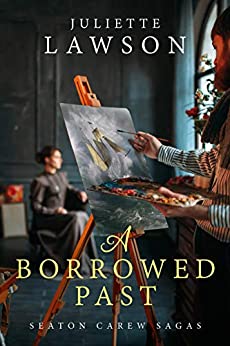
The first book is A Borrowed Past by Juliette Lawson, a clever and increasingly intriguing family mystery set in the Victorian era. A strong narrative is combined with  believable dialogue and a lively mixture of characters, not all of whom are what they seem. Add to this the many tiny details of life at the time and the result is an engrossing read.

Of one historical aspect of the book, Juliette says: “ Class distinctions were strong. Well-off families paid pew rents to reserve their seats in church (you can still see the brass name-card holders) and ran the Local Board to keep the village well-ordered. Children in poorer families were sent into service at a young age or they became mini-entrepreneurs, doing little jobs around the village for a few coins: blowing the bellows for the church organ, delivering meat for the butcher, carrying pails of sea water to the bath houses for visitors to bathe in, or baiting hooks on fishing trips.”

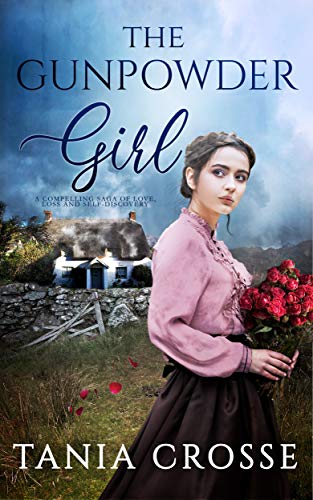
The other book I’ve chosen is the utterly wonderful The Gunpowder Girl (which was originally published as Cherrybrook Rose and A Bouquet of Thorns) by Tania Crosse. This book could just as easily have appeared in my previous blog about stories with a strong sense of place, but it also has its position here, thanks to the author’s characteristic attention to research. Tania Crosse has created an absorbing story laced with powerful themes, a relatable heroine and a gripping plot.

Tania says: “The rugged, savage beauty of Dartmoor is inspirational enough in itself, but its secret history has provided the basis for so many of my novels. In the case of The Gunpowder Girl, the discovery of the ruins of the 19th century Cherrybrook Gunpowder Mills drove me to write a story to illustrate what it would have been like for a beautiful, intelligent young woman to live at this remote, unforgiving location. The other element in the book, still very much in evidence and currently still in use, are the forbidding buildings of Dartmoor Prison. In Victorian times, life there could be hell, not just for the inmates – some of whom were guilty of what today would be considered relatively minor offences – but also for the prison warders and their families who were forced to live in the isolated and exposed prison settlement of Princetown.”

Both of these books drew me into their world. The stories are page-turners in which the characters face secrets and tragedy and both Juliette and Tania have have sprinkled historical details into their narratives in such a way as to make their books come alive.


MELISSA OLIVER ON WINNING THE JOAN HESSAYON AWARD FOR NEW WRITERS

When I sat down in front of my laptop on that sun-drenched September afternoon, to find out who the winner of the prestigious Romantic Novelists’ Association Joan Hessayon Award would be, I had no idea that by the end of the zoom presentation, the wonderful Katie Fforde would open the envelope and say my name.

It was quite a surreal moment and it was actually a blessing (for me) that the recording of the presentation didn’t include my initial utter disbelief. For a few seconds, after my name was announced, I felt that time had actually stood still as I blinked repeatedly, wondering whether there had been some sort of mistake. And then of course, I was to make a garbled speech and this time the speech in all its effusive glory was recorded. Here, not only do I forget to thank Dr Hessayon – who generously sponsors the award in memory of his late wife, Joan- a vehement champion of new writers but also my lovely editor, Charlotte Ellis at Harlequin, Mills and Boon. I had been convinced that I had thanked both only to realise my mistake on second viewing. Thankfully, I have since rectified that oversight.

The truth is that I was and still am so ridiculously happy to be the winner of this amazing award, especially in the RNA’s 60th anniversary year.

The New Writer’s Scheme (or NWS) is a unique scheme run by the RNA offering unpublished writers the chance to have their work critiqued anonymously by the RNA’s team of published authors. My own experience of getting detailed feedback of my work was both nerve-racking and stressful yet immensely valuable as well.

For writers to be able to pass through the scheme and achieve the Herculean feat of getting their books published, it’s such an amazing feeling of accomplishment. After all the years of hard work, determination and at times disappointment, it all becomes worth it and not only that but this book that you’ve written- your debut can then qualify for this award as well.

The nurture and support from the RNA and the New Writer’s Scheme helped me achieve that elusive dream of becoming a published author. From the chapters (shout out to the London Chapter), to the seminars, courses, talks, events- the fabulous summer conference (where I met my editor, at the one-to-one meeting last year), Winter Party and the industry award ceremonies- it is such an amazingly warm, welcoming professional body.

This year there was an unprecedented number of books (21) that went through the New Writer’s Scheme to publication with a huge variety of stories within the romantic fiction genre. From historical romance, heart-warming contemporaries, saga, festive romance, romance infused with a thriller element, a paranormal romance to romantic comedies and so much more. I’m still quite bewildered by how the judges managed to choose from such a dazzling list of books this year but the fact that my debut, The Rebel Heiress and the Knight was selected as the winner is an absolute honour for me and something I will always cherish forever.

Melissa x

Melissa Oliver is from south-west London where she writes historical romance novels. She lives with her lovely husband and daughters, who share her passion for decrepit, old castles, grand palaces and all things historical.
When she’s not writing she loves to travel for inspiration, paint, and visit museums & art galleries.

Check out Kirsten Hesketh’s review of The Rebel Heiress and the Knight in this month’s Sister Scribes Reading Round Up.


SISTER SCRIBES: KIRSTEN HESKETH ON WHAT NOBODY TELLS YOU ABOUT BEING PUBLISHED

I chose life as a writer because I love to write. Right? But I think I also chose it – or it chose me – because I can embrace my inner technophobe, my inner introvert and, frankly, my inner slob (my, I have a lot of ‘inners’!) I can sit in front of my ancient computer – using only the most basic of Word functions of course – wearing tattered old jeans and a dogeared sweatshirt and with a legitimate excuse to avoid talking to anyone for hours – days – on end!

Bliss.

But now the paperback of Another Us has been published and everything has changed. Suddenly I am being invited to appear on more panels and podcasts than you can shake a stick at. Well, at least three! The local WI want me to do a virtual talk, other debuts are inviting me to be interviewed alongside them and my friend’s friend’s book-group would love me to pay them a visit. Which is all lovely, really it is, and I am genuinely very honoured and flattered. But it requires me doing three things that don’t come easily to me – looking presentable, being sociable to order and mastering this brave new world of technology.

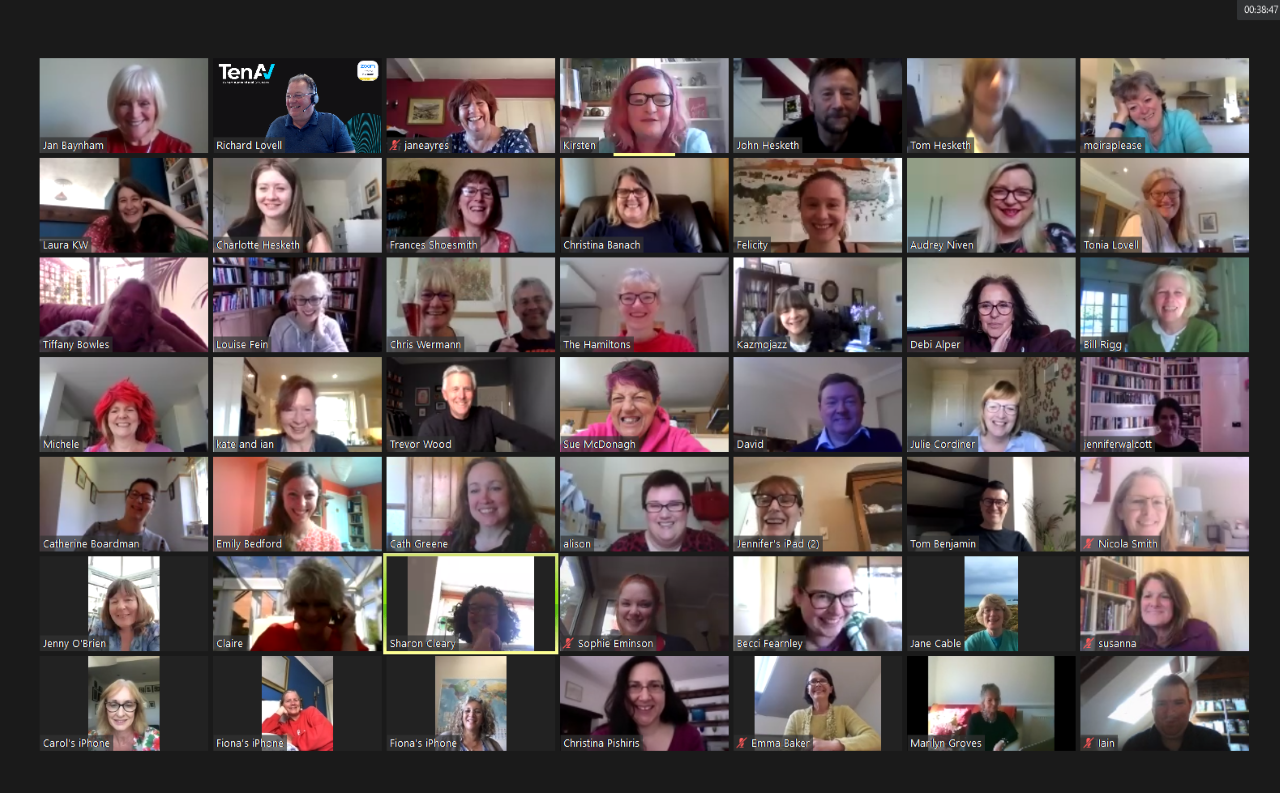
Reader, it has not been without its challenges. All this Zooming and the We-Meeting and the House-Party-ing. It’s all very confusing. The first panel I took part in, I hadn’t really thought through the set-up at all, and my face was barely poking above the bottom of the screen.  My lighting was also very gloomy, and I looked exactly like I felt – a startled little mole peering into the headlights. The next time, of course, I overcompensated – I bathed the room in bright light and stuck my laptop on a pile of jigsaw boxes, thus giving the poor viewer a birds eye view of my lockdown roots surrounded by a ring of the red hair dye – still there after I coloured it for the Ebook launch. Worst of all, I hadn’t realised when you’re on Zoom, people can still see you when you’re not talking. I wish I’d known this one in advance. That way, I might not have picked my nose, slurped my tea, checked my text messages and – at one point – vacated my seat entirely whilst I let the cat out and simultaneously  hollered to my husband to bring me a glass of wine ‘because I bloody need it’. Happy days!

Then there was the time that my arm got the shakes from holding my phone in front of me for what felt like hours while I chatted gaily; the bemused viewer probably wondering why I wasn’t seeking urgent medical help instead of wittering on about the inspiration behind Another Us; (yes, I know now you can purchase little tripod things designed for just such occasions.) The time my son and his friends were milling around in the hallway prior to a night out, demonstrating their extensive knowledge of very rude words. The time …

I finally sussed it all out. I got my roots done. I worked out the most flattering camera angles and lighting options. I learned to sit still with a sensible expression on my face. I bribed and blackmailed my family …

Now, of course, no one wants to interview me. The little hubbub of excitement around Another Us’ launch is over and my lovely editor is reminding me, ever so gently, that the edits on Book Two are due …

Happy days!

SISTER SCRIBES: KIRSTEN HESKETH ON REALISING YOU’RE A REAL WRITER

Much is written about imposter syndrome. When someone asks me what I do, I sometimes stumble over the word ‘writer’ and often followed it with a little self-deprecating giggle or downplay it by saying ‘I’ve only had one book published though.’ And I know I’m not alone.  Most writers I know seem to suffer from it – there are countless Facebook and twitter threads devoted not feeling like a ‘proper writer’ and many times I’ve been at lunch or away with lovely writer friends realise we are all self-deprecating for Britain.

Well, this week something happened which made me realise that nowadays I am very much a ‘proper writer’.

The first blog post I ever wrote was for my lovely friend and fellow Sister Scribe Susanna Bavin’s wonderful blog. This was when I was very much in the querying trenches and getting an agent, let alone a publishing deal, was just a twinkle in my eye and Susanna was kind enough host me for a series of musings on my embryonic writing life. I can remember the gist – if not the words – of the first post I wrote as if it was yesterday. My then-teenage son was having some problems and I explained how difficult, how wrong, how self-indulgent it felt to be ploughing on with polishing my turd of a draft when he was struggling. And, even if I did decide to press on, my creative juices and my writing mojo had totally deserted me, so there was little point in showing up the keyboard anyway.

I didn’t write anything for week. Maybe even months. And it was only when my son was back on an even keel that I could finish editing Another Us and start submitting it to agents.

Fast forward four years and everything is different.

I have an agent. I have two publishing deals. Another Us was published in ebook in May and the paperback is out on 20th August (do all rush!!) Reader, my writing dreams came true!

And, this week, the Hesketh household is once again in turmoil. My daughter needs an operation in the middle of the global pandemic and the whole family needs to shield beforehand. (Sad that we need to shield during my son’s 21st and miss our first break away in months, but needs must.) At the moment, it’s all hands on deck sorting out food deliveries and prescription pick-ups and everything else that needs to be done before we hunker down.

This time it is different though. My edits for Book Two are due back with the publisher at the beginning of August which, as I write, is – gulp! – three days away. But this time there is no deciding my writing mojo has deserted me or that my creative juices have decided to go on holiday instead of me. There’s no deciding to do nothing for a couple of months. The edits have to be done. I can – I have to – work fast and efficiently so that I can get them done to the best of my ability – and still be there for my family.

It all feels totally different.

To be fair, I’m sure my lovely editor would be absolutely fine if I was to ask for another week or two to finish the edits. A lot of the pressure to meet the deadline is coming from myself.

But the different to four years ago is stark.

And, in some ways, it reminds me how far I’ve come.

I’m a writer.


SISTER SCRIBES GUEST: KIRSTEN INTERVIEWS WRITER AND TUTOR CHRIS MANBY

Today I ask the questions of Chris Manby.  Chris was the tutor on my very first retreat and we have since become good friends. Over to you, Chris.

  • First off the blocks. Plotter or pantser?

Definitely a plotter! I used to be a pantser but a series of short deadlines meant I had to get a strategy. I use screenplay principles to work out what needs to happen when though of course I often stray from my plan

  • How do you organise your work?

I’m a real geek.  When I get my deadline, I work out a timetable with daily word count based on the average length of a novel.  I make sure I allow myself weekends off (though rarely take them).  Then I just get writing.  I don’t stick to rigid hours but I do stick to daily word counts.

  • What is the hardest part of writing?

Getting through the mid-section of a book without losing pace and enthusiasm. Plotting helps as it means I can write something from the end instead and often that will inform what needs to happen in the middle.

  • And what is the most rewarding?

Most rewarding is returning to a manuscript after a week or so away from it and thinking “that’s actually not so bad”.

  • How has your writing style developed over time?

Photo credit: Michael Pilkington

I’m not sure my style has developed much at all!  I still think the first short story I had published –when I was fourteen – is one of the most elegant things I’ve ever written.  But I do now avoid swearing in my books. American readers in particular don’t like it.

  • What do you see as the greatest success of your writing career?

In the noughties, I had a few top ten bestsellers. That was wonderful.  But what felt like real success was when my sister said she loved one of my novels! It was The Worst Case Scenario Cookery Club.

  • And what was the deepest disappointment?

Any book that doesn’t sell is a disappointment but after twenty years I’m learning not to equate sales figures with a book’s intrinsic merits. I know my best-selling books are far from my best work!

  • Talk us through how you develop your characters.

In the same way we get to know a new friend.  The more time you spend with them, the better you know their quirks, their hopes and their dreams. Sometimes characters surprise me.

  • Sister Scribes is all about women writers supporting each other. Do you have a ‘go to’ bunch of fellow female writers you value and rely on?

I met a wonderful bunch of women in 2000 when, together with Fiona Walker and Jessica Adams, I edited an anthology called Girls’ Night In for War Child. Lucy Dillon and Alexandra Potter are two great friends from those days.  They’re always up for a glass of fizz and a chinwag.  More recently, through the Place To Write I’ve made some fantastic new friends, who are always ready with a word of encouragement. I don’t often show writer friends my work in progress though. I’m easily discouraged by faint praise. Better not to risk it.

  • Can you tell us anything about your next project(s)

I’ve just finished a ghost-writing project and now have three months to write a novel.  Fortunately, it’s already planned to the “nth” degree.  It’s called “What the Heart Sees” and the hero is… well, he’s small, dark and very, very hairy.


SISTER SCRIBES GUEST: JAN BAYNHAM ON WRITING HER DEBUT NOVEL

Jan Baynham is a good friend to all the Sister Scribes and here she provides an insight into writing her debut novel, Her Mother’s Secret: The Summer of ’69. Susanna Bavin asks the questions.

You started out as a short story and flash fiction writer. What made you decide to write a full-length novel?

On retirement, I joined a writing group where I wrote my first short story. Very soon, I could see my stories getting longer and longer. After enrolling on a novel-writing course at Cardiff University, I enjoyed being able to explore characters in more depth and delve further into their stories. I still write shorts but now it tends to be when I’m editing or doing research for a novel. When writing a novel, I love getting to know my characters so well that I miss them when I come to the end and I enjoy visiting new locations with them. The length of a novel allows me to create more involved plots and sub-plots for the characters to experience than I’m able to do in a short story or piece of flash fiction.

What was the initial idea behind the story from which it all grew?

The novel started out as a short story. At the time, I’d been reading a novel where the rustling in the trees sounded like whispers and inanimate statues took on the form of the ghosts of people they represented. Combining both ideas, I asked myself what if the whispering could show the presence of a past family member. Always fascinated by family secrets and the bond between mothers and daughters, I knew I had the basis for a story. In both the story and the novel, I leave it to the reader to decide what the whispering represents. In the short story, Alexandra’s search for the truth was resolved quite quickly whereas in the novel there are many more twists and turns, obstacles and setbacks before the story concludes.

Tell us about the places that feature as the backdrops of the story.

Once I’d decided that my main character Elin would be an artist, I chose a setting where the surrounding colours would be more vibrant and intense than in her home country of Wales. Having visited many times and being struck by the wonderful palette of colours seen in every landscape, Greece was my choice of background. The island is not based on one particular place but is an amalgam of areas I’ve visited. Every holiday has contributed to the whole backdrop where I’ve tried to show the climate, the vivid colours of the sea and the flowers as well as the warmth of its people.

How important is the mother-daughter dynamic to the story?

The mother/daughter relationship is central to the novel. Alexandra is grieving after the untimely death of her mother, Elin. She experiences a whole gamut of emotions from deep loss and its accompanying sadness, through to anger that her mother has abandoned her. When she learns there is part of her mother’s life she knew nothing about, Alexandra goes to Greece with the hope of finding answers.

What have you learned about the writing/editing process? Is there a piece of advice you’d like to share?

Everything suggested by my lovely editor at Ruby Fiction was very clear and straight-forward, but one thing stood out. I hadn’t always got the dates or passing of time issues right. Elin’s story is interspersed with diary entries and these didn’t always tally! The way I dealt with these continuity edits was to have a calendar in front of me and highlight the dates as events happened. Although a diary may not feature in another novel, I will definitely use a calendar to check the passing of time in future.


SISTER SCRIBES: KIRSTEN HESKETH ON DEVELOPING AN UNHEALTHY AMAZON OBSESSION

I’m way behind the rest of the Sister Scribes in this publishing lark and my debut novel has just gone up for pre-order. Another Us isn’t being published until May 14th – indeed, it hasn’t even got a cover yet – and yet there it is, sitting pretty on Amazon with one of those big smiley faces where the cover illustration should be.

No one told me it was up there.

In fact, I would have been blissfully ignorant of all this, had a lovely lady in America not tweeted me to let me know she had just pre-ordered my book and how much she was looking forward to reading it.

Well, if she could only know what that has set in motion!

All I can say if that it was a good thing that my publishers didn’t let me know as soon as Another Us went up on Amazon because that would have meant I started the obsessive, frenzied, ridiculous checking of sales rankings even earlier. Does anyone else do this? Several times a day? First thing in the morning? Last thing at night? Or am I am just really, really weird?

But there is so much to check and it is all so really, really exciting (and nerve-wracking and depressing and thrilling depending on what I find.)

  • There’s the overall sales ranking itself – and a helpful little graph of how it changes over time. (My graph resembles a yo-yo on speed and probably correlates neatly with my blood pressure and heart rate.)
  • Then there are the sub-categories. Someone has put my book into the parenting and family humour, parenting and family relationship categories, which I would say is fairly spot on. For one heady moment, presumably when all my friends and family were busy pre-ordering Another Us, my book made it into top ten of a couple of these categories and my squeals of excitement could be heard from here to Timbuktu to be followed by groans of despair when it subsequently went into freefall.
  • As if the above wasn’t enough, within each category there is a ‘hot new release’ section. Doesn’t that sound brilliant – ‘hot new release’?  Another Us – currently the only one without a cover and looking a bit sorry for itself – has featured in the top ten there too and sent me skipping round the kitchen – which meant that when it invariably plummeted, I was handily placed to scoff a couple of soothing Curly Wurlies.
  • And don’t get me started on Amazon USA! That, of course, has all the same categories, which merely serves to double the joy – or pain (delete as appropriate).. Another Us in the ‘motherhood’ category over there as well, and I did have a little chuckle when I discovered it was a ‘hot new release’ – right next to ‘How to have a mindful epidural’! Fun, fun, fun …

Hubbie fails to share my enthusiasm about all this. When I told him I thought I was close to cracking Amazon’s algorithm, I swear I heard him mutter ‘obsessed’ and ‘addicted’ into his pinot noir. In fact, there may well have been ‘words’ after that and I might have told him I that I didn’t want to hear anything about his Fitbit and his 10k personal best ever again!

Marital harmony has since been restored and, my obsession with Amazon has subsequently waned. But heaven help us all when the book is launched!


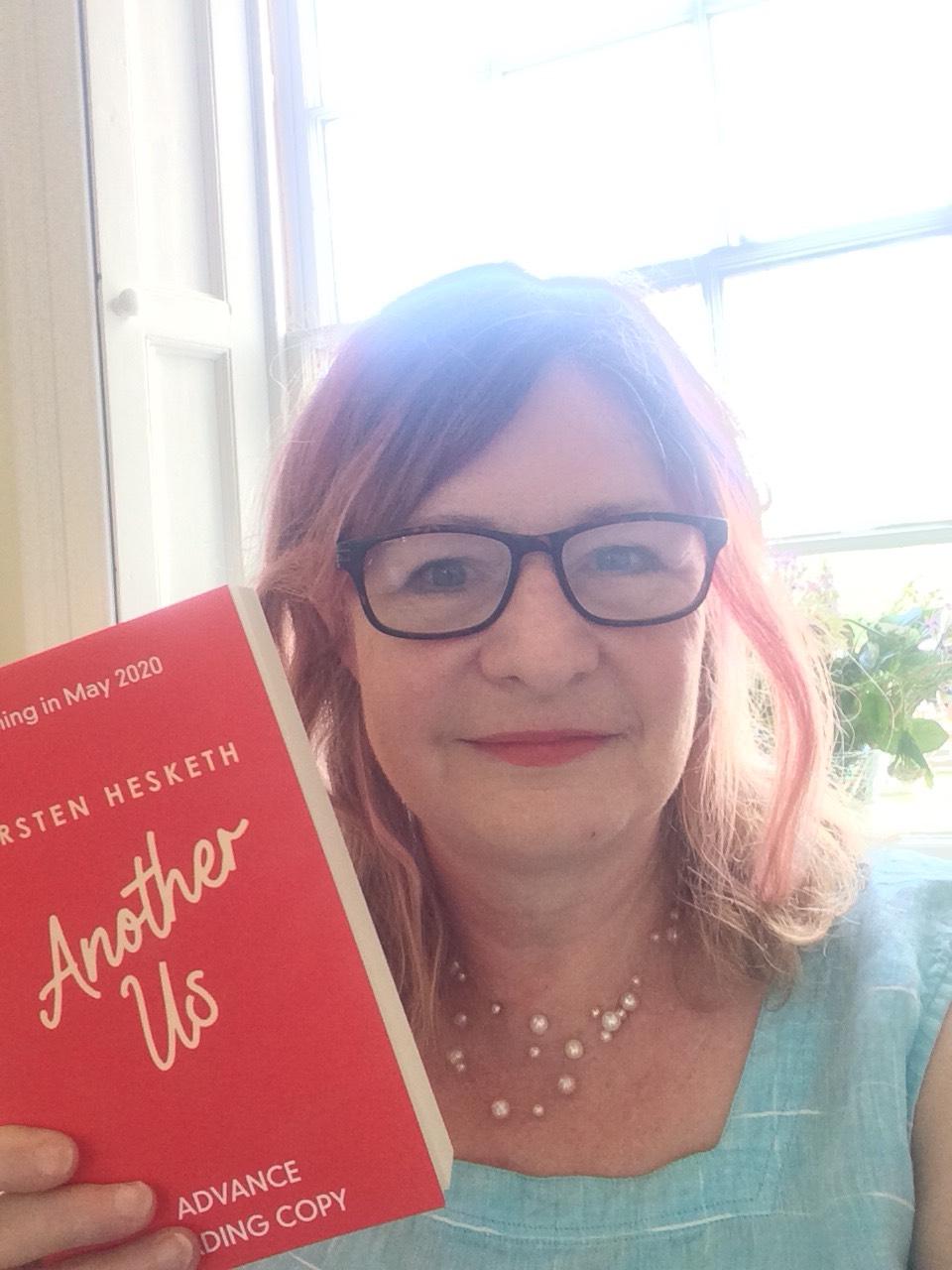
Kirsten Hesketh’s debut novel. Another Us, will be published by Canelo on May 14th and is now available for pre-order.