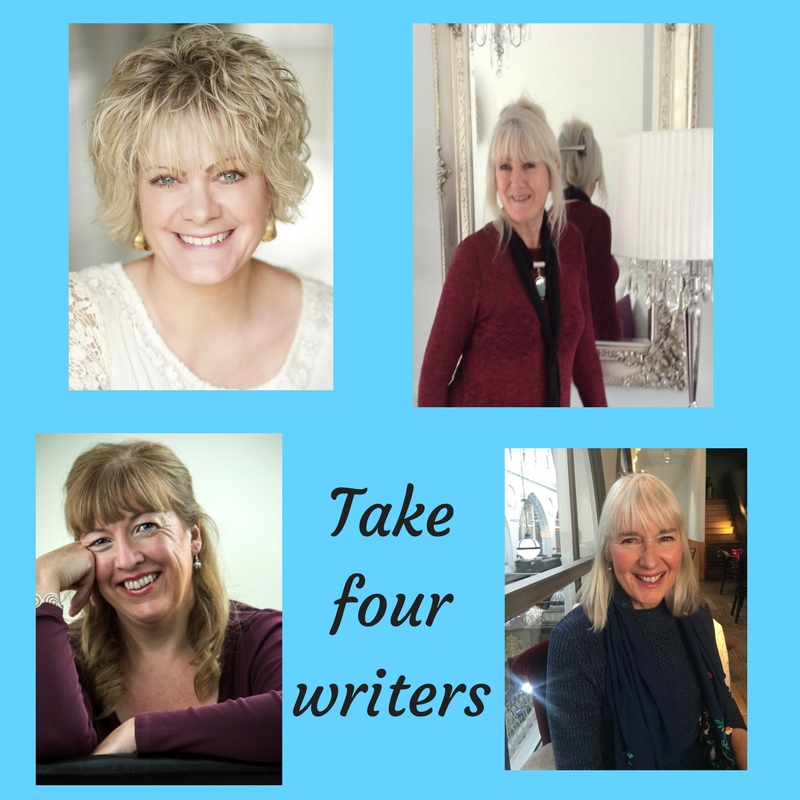
BUSINESS OF BOOKS: TAKE FOUR WRITERS – CONNECTING, SIGNING, RETREATING

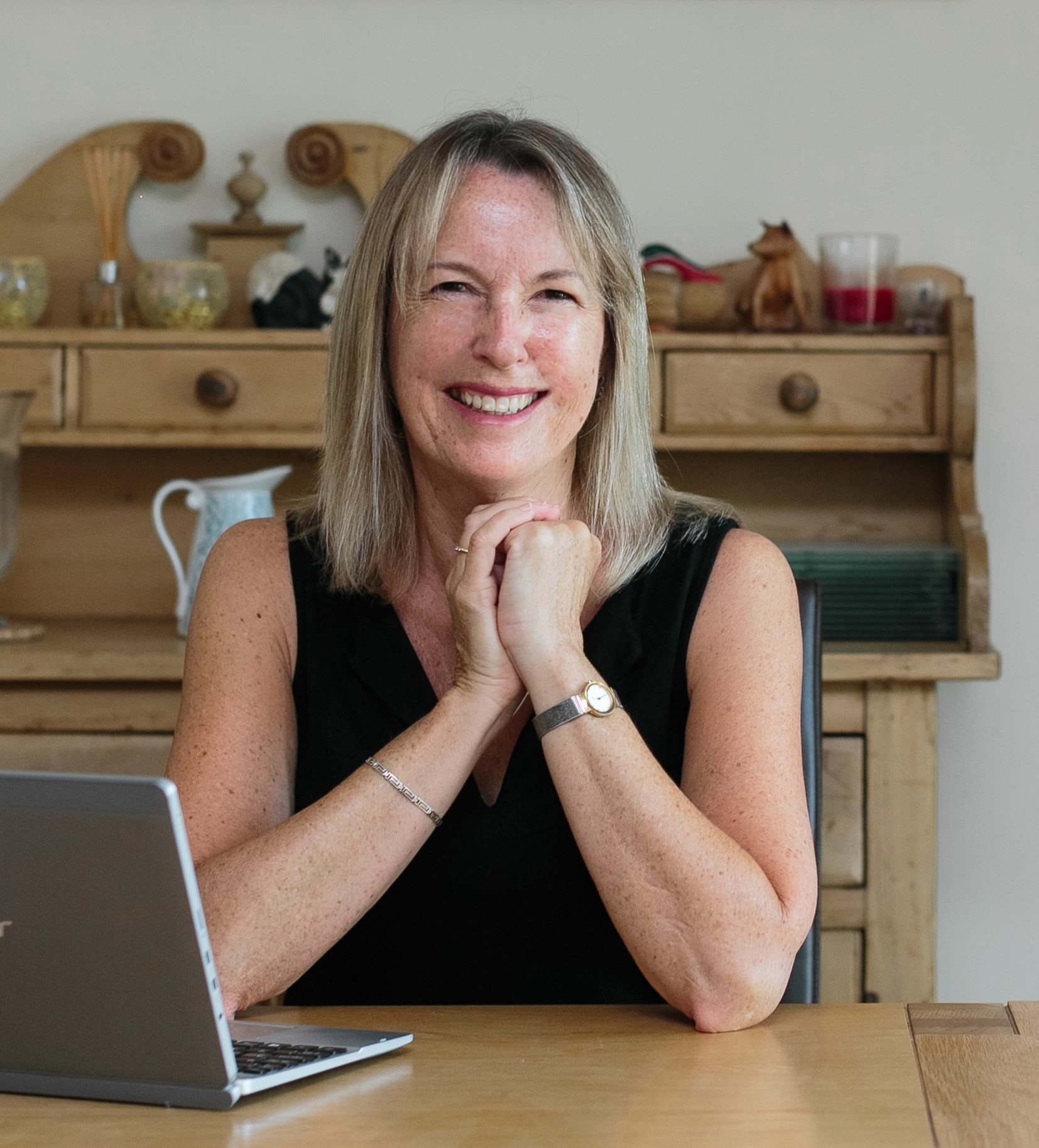
LUCY COLEMAN… CONNECTING

My second novel writing as Lucy Coleman for Aria Fiction is now staring back at me from my bookshelf. And I will admit that it’s still a huge thrill for me, even though it’s my thirteenth.

Snowflakes Over Holly Cove begins and ends at Christmas, but the year in between is an emotional rollercoaster.

The first reviews are in and one reviewer said it brought tears to her eyes. Why? Because of the mention of eggnog in one emotional scene.

In real life it’s the little memories that often attach themselves to the silliest of things. In this story, for the character Tia, it reminds her of her mother… and the sentiment and connection touched that reviewer’s heart, too.

An author can’t ask for any more than that. I’m feeling truly blessed and reminded why I write. And that is reader power. Reviews touch authors’ hearts, too!
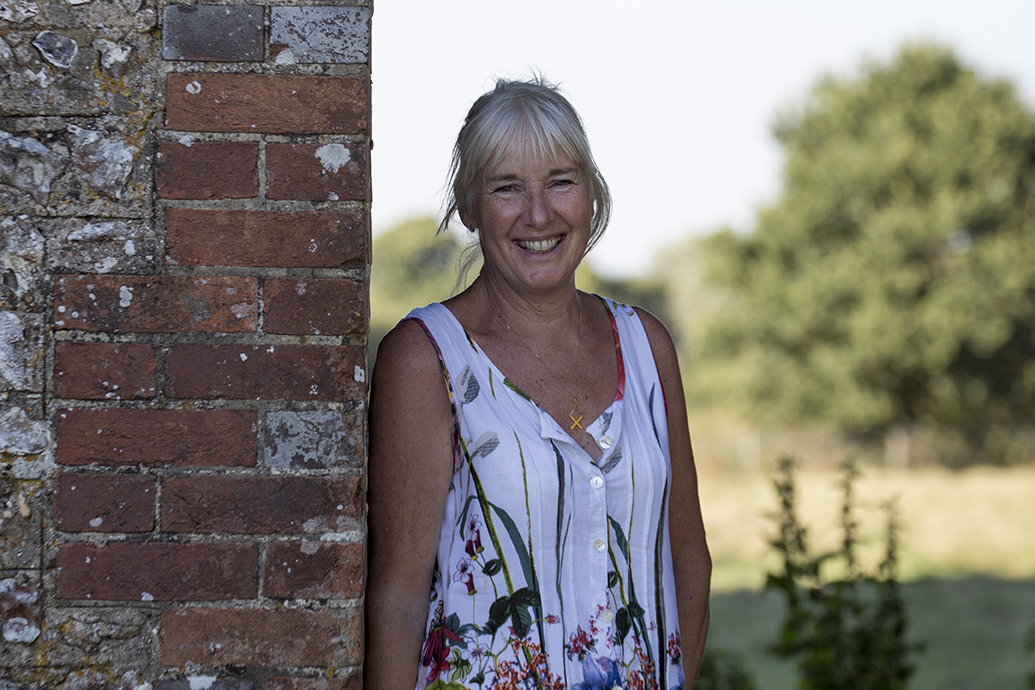
 

ANGELA PETCH… SIGNING

Whoops! It’s been quite a month and I almost missed my Frost deadline. (Visions of ed, visor pulled down to cover glower, tapping fingers on her desk…sorry!)

I’m now officially a hybrid author. I can’t explain how happy I feel to have signed a two-book deal with the Bookouture “family”, as they describe their publishing team. My first novel is to be edited and reissued June 2019 and a new Tuscan novel, released April 2020. They have been understanding about deadlines. How lucky am I?

I’m exchanging ideas with my cover designer for “Mavis and Dot”, but as soon as I self-publish and launch on December 1st, then it is action stations with Bookouture. I’m so excited.

Other news: a successful first “Write Away in Tuscany” ended five days ago – exhausting but exhilarating. Eight writers travelled to our corner of Tuscany and we shared scrumptious Italian food and writing sessions. We are running it next year with modified content. Bring on 2019…


CLAIRE DYER… RETREATING

Last month I went on a writing retreat at Tŷ Newydd in North Wales (http://www.literaturewales.org/our-projects/ty-newydd/). It was the sixth time I’d spent time there, having previously attended both poetry and prose tutored workshops. This one was slightly different in that there was no formal element to the week. Our facilitator, Julia Forester, gently guided us, provided the chance to have one-on-one chats with her and ran a couple of sessions on submitting work and managing our time. The rest of the week was spent blissfully either working on our current projects, walking the footpath down to the beach, visiting local places of interest, chatting to one another over cups of tea or swimming in the sea. The food and company were both delicious.

My aim in going was to work on some poems I hope will form the basis of a new collection. The subject matter was hard and painful. In addition, my home life, rather than retreating to a safe distance and leaving me alone, intruded when both of my children had issues they wanted mum-input on and, seeing that being a mum is my main job and being a writer is my second job, I had to respond.

And what did this prove? We may go on retreat but we take our real lives with us. The writer’s life means we have to fit our writing in around other stuff and that this other stuff informs our writing. An ivory tower might sound a nice idea, but I think one would be both impractical and uninspiring!


JACKIE BALDWIN… DRAFTING

Hello again! Another busy month. I’ve been getting on with the first draft of book 3 in my DI Frank Farrell series. It always takes me a while to get into the rhythm of writing a new book but I’ve settled into it now and at the exciting stage where I don’t yet quite know what’s going to happen!

On 5th September, I was up in Edinburgh to read an extract from my work at’ Noir at the Bar.’ It was a criminally good night with a great variety of crime writers both published and unpublished.

This weekend I was at ‘Bloody Scotland’ in Stirling. It provides a great opportunity to catch up with old friends and make some new ones in the crime writing and crime reading fraternities. A particular highlight was the Pitch Perfect Session where eight writers have exactly three minutes to convince a panel of agents and publishers that they must read their book.

See you next month!
BUSINESS OF BOOKS: FIRST, LAST, EVERYTHING – MAGAZINE FICTION WRITER WENDY CLARKE

My very first piece of writing advice wasn’t from a writer or about writing but it was advice that would one day help me in my writing career. I was twenty-two and had just taken up my first teaching position at a junior school with open-plan classrooms divided only by bookcases. Being very new to teaching, and still finding my feet (or my voice, if you like), I was always looking for ways to make my teaching more effective. In the classroom area next to mine was a more experienced teacher who, because of the way the classrooms were laid out, could easily be heard. I was impressed with her control of the class and the attention the children gave her. Realising it was something in her voice (her tone, her inflection, her choice of words) I decided that if I copied her style of teaching, I too would achieve success. How naïve! Of course, it was a disaster – a bit like being on stage and being cast in the wrong role.

Back in the staffroom at break time, the teacher I’d been trying to copy could tell something was wrong. When I told her what had happened, she was very kind, sitting me down and making me a coffee before telling me that no two teachers taught in the same way and the children wouldn’t expect them to. In time I would find my own voice. One that I felt comfortable with. One that would be true to me. When I started writing for magazines, I remembered this advice. I didn’t try to copy the style of any other authors, I just wrote stories I loved – in my own way. My first sale came quickly and I have that teacher to thank!

The most recent piece of writing advice I received was from the writing community on social media. It was during a period when I had become disillusioned with the long and tortuous road you needed to travel in order to get your novel published. With magazine writing, you write a story, sub it, forget about it and start on another. There is no middle man (the agent) and, because I have several stories being considered at one time, it feels as though things are always happening. With a novel, you submit to agents and then wait, sometimes many months, for the inevitable rejection. Even if an agent requests the full manuscript (which happened to me six times) it can be months before hearing anything… if at all. In fact, I am still waiting. The readers of my Facebook post heard my sorry tale. Their advice was to submit directly to the publishers who accept manuscripts without the need of an agent. I did and it’s the best advice I could have been given.

Finally, the piece of advice I’d like to pass on is easy. Be kind to yourself. Set reasonable goals (if that’s the type of writer you are) and don’t beat yourself up if you don’t manage to achieve them. Also have breaks from your writing. If I go on holiday, I leave my writing equipment behind. The rest recharges my battery and helps me put my writing into perspective. This doesn’t mean that my brain isn’t still working behind the scenes though. Often, when I switch off from writing, an idea for a story, or the answer to a difficult plot problem, will float into my head as if from nowhere. Writing isn’t something to be forced but to be enjoyed and, if it isn’t, maybe it’s time to ask ourselves why we’re doing it.


Wendy Clarke has had over two hundred short stories, and two serials, published in national women’s magazines such as The People’s Friend, Take a Break Fiction Feast and Woman’s Weekly. She lives with her husband in Sussex and has just finished writing her debut novel.


https://wendyswritingnow.blogspot.com/

BUSINESS OF BOOKS: FIRST, LAST, EVERYTHING – CHILDREN’S AUTHOR CHRISTOPHER JOYCE

What was the first piece of writing advice you received?

I armed myself with How Not to Write a Novel by Newman and Middlemark, which is both hilarious and packed full of tips, and The Art of Writing Fiction a rather more scholarly book by Andrew Cowan. 

The first book covers plot, character, style and much more. Each tip is accompanied by bad examples with headings such as ‘The Gum on the Mantelpiece’ where the author makes much play about said-piece of confectionery and then NEVER refers to it again. Anyone else guilty of that? Another of my favourites is a section entitled ‘Said the Fascinating Man” where the author tells the reader what you think of his writing. “Was it a fish?” the girl said eloquently.

The section on what not to name your cat in your story includes:

  • after a composer (Bartok, Mahler)
  • Mr + adjective + anatomical feature (Mr fluffy paws)
  • Magnificat – or similar pun

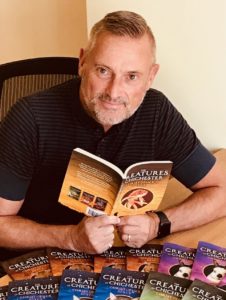
I think I got away with naming the cat in my book, The Creatures of Chichester – The One About The Smelly Ghosts. I decided on Purrcasso as she lives at the art gallery. What do you think? Did it stray into Magnificat territory?

Mr Cowan’s book is more learned with lots of writing exercises he used with his students at UEA, I believe. These include exercises on creating great dialogue, using all the senses and many more. I created a special notebook to do them all. It’s mostly still empty but – one day.


What was the most recent writing advice you gave or received?

Sometimes it really is okay to tell not show. Every course I’ve ever attended and blog you read talk about showing not telling. It can become obsessive. At some point, it’s better to just say: ‘it’s midnight’ rather than: ‘Bats passed silently by the ancient metal hands of the church clock as they moved into a vertical position.’ This is particularly true in children’s books where most kids want action. I am, however, a fan of using show not tell in dialogue though. Better to write His clenched fist was inches from her face, “I Hate you!” said Bob then “I hate you,” said Bob angrily. In fact, part of my editing process is to remove as many adverbs as I can.


What’s the piece of advice you’d most like to pass on?

Once you’ve written and edited your work get in proofread by a professional. This is not your sister, who is an English graduate; not your neighbour, who studied law and is very bright and NEVER yourself. It’s impossible. I would add that Grammarly is great at picking up many obvious errors, and it’s free too.

If you can afford an editor then this will also make a huge difference. There are lots of good books and courses on this but, like the proofreading tip above, it’s very hard to do this objectively yourself. reedsy.com is a great source of advice on what you need to consider and also provide experts who can do this for you.

Finally, if you decide to self-publish (as Mark Twain and the Bronte sisters did) then pay for a professional cover designer. If you’ve taken a year or more to write the best book you can, then surely this must be worth it? There are also lots of good books and webinars on this but it’s like me downloading a book on how to play the violin. All the information is there, but I can assure you that my mother would testify that even though I passed grade 1 at junior school, it does not make me a member of the orchestra. If you’re a good writer then write. Leave the editing, proofreading and cover design to somebody else.


Christopher Joyce has written six books in The Creatures of Chichester series and produced The Alien Cookbook with out-of-this-world recipes for kids of all ages. He also promotes self-publishing through CHINDI a group of independent authors in the UK. www.creaturesofchichester.com. www.chindi-authors.co.uk


BUSINESS OF BOOKS: FIRST, LAST, EVERYTHING – SAGA WRITER SUSANNA BAVIN

What was the first piece of writing advice you were given?

This wasn’t exactly writing advice as such. It dates back to when I was at grammar school and it was a regular feature of feedback on essays. I had a wonderful English teacher called Mrs Trueman, who taught me for five out of my seven secondary school years. From her I learned the importance of what she called elegant paragraph links – the natural flow of writing. To this day, if I am struggling to move along from one idea to the next, I can hear her voice in my head, insisting on, “Elegant paragraph links, girls.” It has also had an impact on me as a reader. I always notice a jerky transition between ideas. I hope my own writing is pretty seamless in that respect. If it is, it is thanks to Mrs Trueman!


What is the most recent piece of writing advice you gave or received?

Don’t get it right – get it written. I have joined in with the annual madness of NaNoWriMo several times and the advice there is all to do with getting the story down on paper – or on-screen – and worrying about perfecting it at a later date. I know there are plenty of writers who simply can’t do this. They have to get each section right before they can move on to the next; and there have been times when, instead of ploughing on, I have felt impelled to go back and change something in the WIP, because my brain refuses to carry on until I have done that tweak. But if you are able to produce a “dirty draft,” it makes a great starting point for the editing. I know plenty of writers hate the editing process, but I love it and find it rewarding.


What piece of advice would you most like to pass on?

I have offered this advice to a few writers and they have all told me it is a good idea, so I am happy to share it with you here: don’t stop writing today unless you know how you are going to start writing tomorrow. For me, being able to get going immediately is important, especially now that I am writing to deadlines. I recently gave up my day job, but when I was doing it alongside my writing, being able to switch into writing mode and get writing straight away was essential. I’m sure there are plenty of writers whose response to this advice will be to say that it wouldn’t work for them, because they want to be able to leave their writing when it is difficult, trusting that their subconscious will work on it and untangle the tricky bits. For me, following this rule means that, when I hit a problem and the writing becomes difficult, I always keep at it until I have got past the hard bit and things are flowing freely again… so that when I stop, I know how I’ll start again next time.


Susanna Bavin has worked as a librarian, a teacher, a carer and a cook. She lives in beautiful North Wales, but her writing is inspired by her Mancunian roots. Her sagas, The Deserter’s Daughter and A Respectable Woman, are published by Allison & Busby.

BUSINESS OF BOOKS: FIRST, LAST, EVERYTHING – FREELANCE EDITOR J L DEAN

What was the first publishing business advice you were given?

Be clear and be on time. There’s the myth of the maverick writer who delays and delays only to appear at the eleventh hour with a work of genius. Editors can’t do that. The role of the editor is to make a piece of writing the best piece of writing it can be. That can mean anything from a little judicious rephrasing here and there to hitting the alarm bell when a character inexplicably undergoes a personality change halfway through a novel. Editing is primarily a support role. Yes, it takes a lot of skill and yes, a good reputation will make for an excellent career. However, you’re not the star, the writer is. Editing someone else’s book is not an opportunity to rewrite it in your own writerly image. Respect their style and adapt your approach accordingly.

By being clear, I mean when the writer received their edited manuscript from you, the only queries should be regarding the suggestions you have made. It is fine if they disagree or want to challenge, but you should be concerned if they have to ask you to explain yourself. Again, you’re there for support. Don’t be cryptic, be helpful, encouraging and reassuring.


What was the most recent piece of publishing advice you gave or received?

I did a lot of academic proof-editing for German clients when I lived in Bonn. More often than not I’d have to go back to them and ask, “UK or US English?” A lot of the time, they wouldn’t know. I had a young client was writing an article on the Nuremberg trials for publication in England so I contacted the publisher directly and asked for their house style. My advice to him, at the beginning of his academic career, was always to ask the publisher or publication for which he is writing for a copy of their house-style. Most have them and failing to follow it can mean instant rejection or, if you’re lucky, a lot of extra work within a very short space of time. No editor, however brilliant, can save you if you overlook that piece of advice. Make life easier for yourself and make sure you get it right from the start.


What is the piece of advice you’d most like to pass on?

Graham Norton asked Michael Morpurgo the same question in an interview a couple of days ago. Michael’s response; “Live an interesting life”. That’s got to be my answer too. It seems to me that, at this point in time, there’s a lot of emphasis on academic qualifications in creative writing. Agents are even starting to ask for that information in submissions. I feel very uneasy about that; I think it’s the wrong route for the publishing industry to take but that’s another article! For me, writing comes from within and it needs to be fed from within.

So my advice would be; don’t rush to be the ingénue novelist who has known nothing but the inside of a university lecture hall. OK, you’ll look good in the publicity photos and the press will adore you for the full fifteen minutes, but what experiences are you drawing on. What are you really giving the reader, and therefore the world? Go out and live your life, meet people and challenge yourself. No matter if you want to write medieval crime thrillers or contemporary romance; stories are about people and people are the key to stories; even in their absence, there’s a story. You won’t learn about people in a classroom. Get out there, but take your notebook.


J L Dean is an a freelance editor and historical novelist, recently returned from three years living in Germany, she divides her time between work, law studies and that difficult second novel.


THE BUSINESS OF BOOKS: FROM PITCH TO PUBLICATION

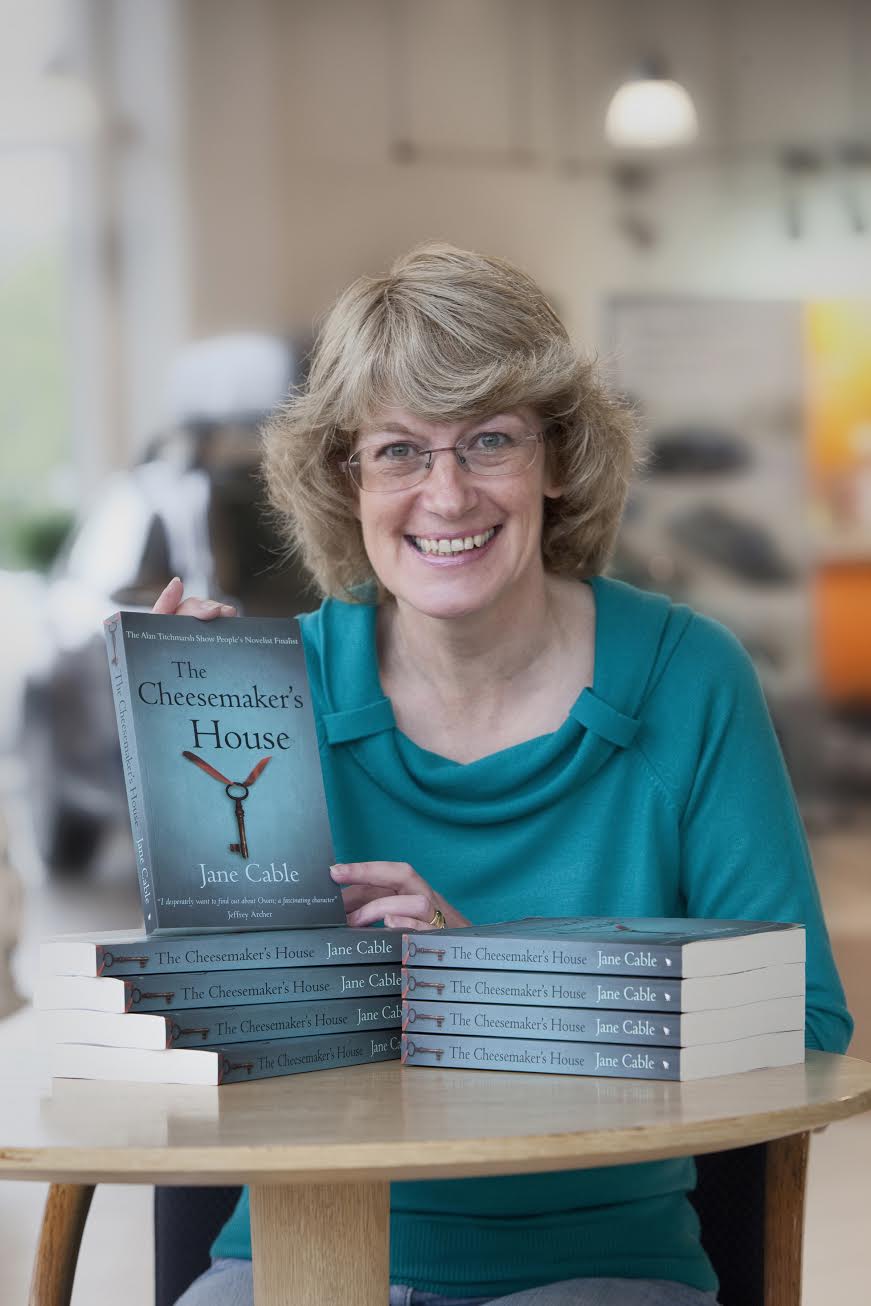
Jane Cable picks up a good book.

Doubts happen to every writer, at every level. For me, at this precise moment, it’s about whether I’ve written the right book. It’s a book I wanted to write, with characters I’m passionate about and a story I believe in, but as I begin the submission process the doubts have set in.

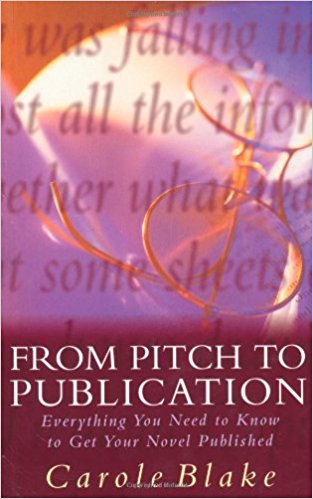
As ever, it was a writer friend who gave me a helping hand out of the hole I was rapidly digging for myself. Take a bow, Barbara Copperthwaite, for recommending an excellent book; From Pitch to Publication by the late, great literary agent Carole Blake. Barbara credits reading the book with helping her to land her agent and publishing deal. “Turns out I was doing it all wrong,” she told me. And because I know ‘all wrong’ was nothing to do with the quality of her writing, I downloaded the book straight away.

It isn’t a book you read cover to cover – you keep it by your side and refer to different chapters at different stages of your life as a writer of commercial fiction. And some of the advice seems just a tiny bit dated, written as it was in the days (not that long ago) before direct submission and digital only publishers became major players in the market. But the first chapter alone gave me plenty to think about.


So, what have I learnt from this wonderful tome?

What is the right book?

The very first pages start with the question that had been haunting me. And answered it from a very commercial angle. Yes, write what moves you but with an eye on the eventual market. Trends are impossible to spot but there are certain aspects of a novel you can build in from the start which will help it appeal to publishers; for example the right well-researched location, the right choice of profession for your protagonists. Both need a touch of glamour – or at least desirability. Keep the word ‘aspirational’ in mind and you can’t go far wrong.
Follow your genre’s rules

Genre is massively important in commercial fiction terms and you need to understand the rules of your genre inside out. To do that you need to read a lot of it. While your idea and your voice need to be sparkling and original, your story needs to meet your readers’ expectations. Romances have to end HEA or HFN (happily ever after or happy for now). Every genre has its optimum length. But never, ever, pick a subject because you think it’s going to be the next best thing – your lack of passion for it will show in your writing.
There is a checklist… a magical checklist

I’m not going to give the whole game away, because that wouldn’t be fair and if you’re serious about a career as a commercial writer then you need to buy this book. But here are just a few of the items on it which seemed most important to me:

Is the world where the novel is set one in which readers will want to spend time even before they have come to know the characters?

Is my central character fully developed and someone readers can readily identify with?

Are my plot strands so overly complicated that readers will get confused?

Can I sum up my storyline in one sentence?


And finally, the magical triangle

This had never entered my head but it makes the most sense of all. As a writer you need to be able to build and control the relationship not only between writer and character, but between writer and reader – and reader and character. Not just for one book, but in a way that will forge a lengthy career. It’s a huge question but one, as writers, we really need to ask.


From Pitch to Publication by Carole Blake is published by Macmillan

BUSINESS OF BOOKS: FIRST, LAST, EVERYTHING – INDIE AUTHOR JULIE STOCK

Julie Stock is an indie author of contemporary romance from around the world: novels, novellas and short stories. Her latest novel, Over You, is now available. Follow Julie on Twitter @wood_beez48

What was the first writing advice you were ever given?

The first writing advice I remember being given was in November 2013 when I attended a Festival of Romance in Bedford, near where I live. I’d been writing my début novel for about 8 months by then and I had about 80,000 words of my story written but I just couldn’t seem to finish it. I sought feedback from so many different places and my head was spinning from the conflicting advice I’d been getting.

I remember being so excited to find there was even going to be a Festival of Romance in Bedford, of all places! I went to a session in the morning where I saw Sue Moorcroft and listened to her reading from her latest book. Then I walked around the big hall in Bedford town centre, meeting romance authors who were selling their books. Straight after this, I sat down to listen to a panel of authors chatting about writing and publishing their books. Bravely at the end, I asked them for advice about my dilemma. That was when Phillipa Ashley and Rowan Coleman both advised me without a second’s hesitation to join the Romantic Novelists’ Association’s New Writers’ Scheme. I went on and joined in the January of 2014, and published that début novel the following year. I’m now an independent member of the RNA, and I wouldn’t have achieved that without their support.


What is the most recent writing advice you’ve been given?

Along with many writers, I suffer from doubts and insecurities about whether my writing is any good on a fairly regular basis! Usually, this happens when I’m struggling with a first draft or when I get feedback telling me that something in a book isn’t working. I find rewriting and editing the hardest job, and really have to force myself to do it. So, when I felt like this most recently and mentioned it to one of my writing friends, her advice was not to give up. She reminded me that I’d felt like this before and that I’d probably feel like it again.

It is hard to keep going when you’re finding it hard to write or to rewrite, but it is also true that you can find inspiration in the strangest of places. I know as well that rewriting has definitely made my books better, and sometimes this is all that keeps me going to get through to the end. Then when you publish and someone takes the time to tell you how much they enjoyed the book, it makes all the pain worthwhile!


What is the piece of advice you’d most like to pass on?

I didn’t start writing until I was in my late 40s. I was having a tough time in my job then and I began writing as a way of taking my mind off things. It became a form of therapy. When I started, I hadn’t even heard of self-publishing, although I had recently received a Kindle from my husband. Then I read Sealed With a Kiss by Rachael Lucas, and she explained how she’d self-published it. As I was approaching my 50th birthday by then, I didn’t want to waste any time approaching agents/publishers, I just wanted to get on and do it. And I did. So I think my advice is not to let yourself be put off from doing something you really want to do. Reinvent yourself if you want to – it’s never too late!


THE BUSINESS OF BOOKS: THE DREADED S WORD

Jane Cable tries to pick out the positives of writing a synopsis

Having completed the edits on one manuscript and having rescued my rights for Another You from Endeavour Press, this month has been all about considering submissions – which in most cases involves the bane of my writing life – the synopsis.

I’m not talking about the sort of synopsis you use as you create your novel, or to check structure and record plot points as you go along; I’m talking about that big, scary, one-and-only-chance-to-get-it-right document which accompanies your submission to agents and publishing houses. The synopsis as sales tool – in particular the short version – fills me with dread in a way no other blank page can.

This time, I thought I’d cracked it. Fellow RNA member and Choc Lit author Lynda Stacey very kindly sent me her template and using it made perfect sense. Like me, Lynda writes romantic suspense and has to shoehorn complex plots into a single page. I was happy with what I’d written, but when I showed it to Claire Dyer (an editor as well as an author) she drove a coach and horses through it. Clearly I need to improve.

So, what have I learnt from this sorry state of affairs.

A template to follow is really, really useful

When you are staring at a blank piece of paper there is nothing more helpful than something which lists the paragraphs you need and gives you some guidance about what to put in each. It helps you to have a method. For my short synopsis I set out the beginning of the book, then the end of the book, and filled in the middle last. It was also brilliant for pulling out the main plot strands and that focussed me through my final edits.

You’re going to need more than one carefully tailored synopsis

I’m concentrating on the direct submissions route for my novels and am hand picking the publishers I think would be right for them and who I’m really keen to work with. I don’t mean to sound arrogant, but I’m quite comfortable being an indie author if I can’t land that special deal. But what struck me when I was making my shortlist was that they all want something different; everything from a 3,000 word essay to a two paragraph blurb. It’s so important to tailor what you send to their requirements and to show you understand where your book would sit in their portfolio.

A synopsis is not a blurb It may be a selling document, but it’s not a blurb.

I was delighted when my first choice publisher asked for a blurb as I find them so much easier to write. Of course there are similarities – both have to grab the person reading it – but in different ways. A blurb entices, teases, reveals just enough. A synopsis tells the whole story. No surprises. The most important thing to bear in mind is that a publisher or agent will be thinking about how they can sell the story – a reader will be using the blurb to decide if they want to buy it.

Not everyone you submit to will need a synopsis

Yes. Really. But don’t use it as a cop out or to select who you submit to. Most agents require a synopsis, but the length varies. So will most publishers, but some have other priorities, such as finding out about your author brand – they will rely on your manuscript to see whether your book is worth taking on. You will need to become expert in selling your novel in all sorts of ways but one thing is certain: the better you become at all of them the more chance you have of landing a deal.