WELSH WRITING WEDNESDAYS: INTRODUCING CRIME WRITER GAIL WILLIAMS

I am a writer. That thought has been with me for as long as I can remember. I am a writer.

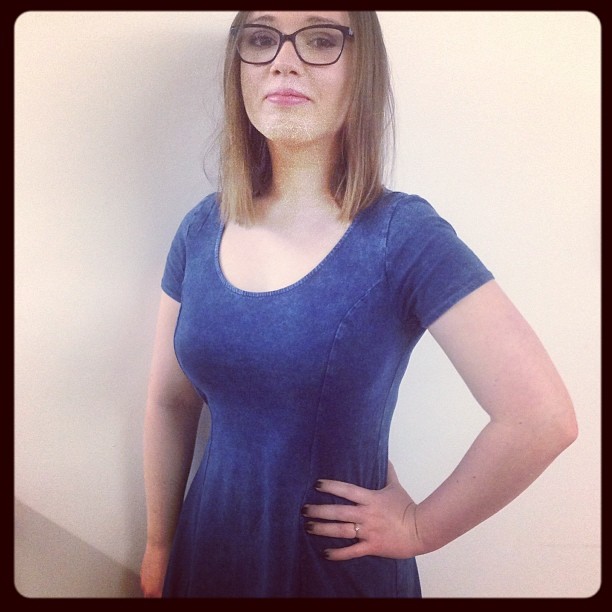
It’s not complicated, but it’s not something I was confident to say until fairly recently. So, hello, I am GB Williams, a crime writer. I have always known that writing is what I was supposed to do, though not what I’ve always done, still it’s what I’m here to talk about, I’m here to introduce you to my writing.

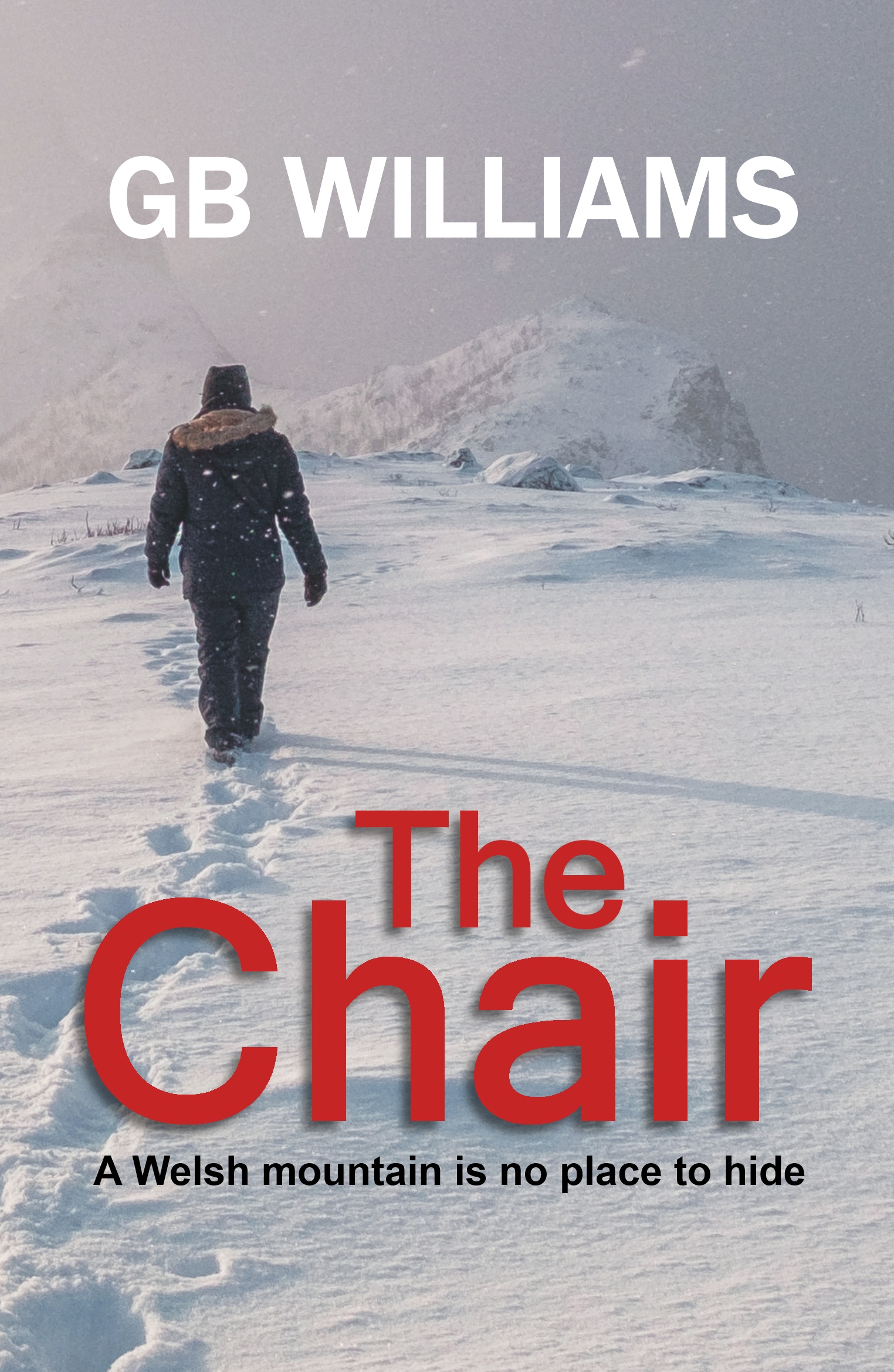
The Chair is a thriller-romance set on Cader Idris, in beautiful southern Snowdonia. The heart of the story starts with a hacker taking what he shouldn’t in London, and when cyber threats turn to physical threats, he has to run as far from the internet as possible. Remembering his parents’ complaints of no signal in north Wales is what brings him to Cadre Idris. Poor driving and the resulting crash is what keeps him there and draws local vet, Branwen Jones and the local hermit, Cobb, into his world of trouble.

Having grown up in the southeast and lived more than half my life in Wales, I know both sides of this story well enough to feel I can do justice to both worlds.

There are a lot of contrasts between London and Wales. Pace of life. Freshness of the air. The wide-open spaces, or lack thereof. But there are strong similarities too. We are all humans trying to survive after all.

That drive is what takes us all though life, and we discover different things alone the way, sometimes to find what we don’t know we’re looking for, we have to change trajectory.  That’s something I did, moved from a high-pressure office job, to writing and editing, and I love it, never been happier.

Changing trajectory is what I do with the characters in The Chair.

Cobb comes to Pen-Y-Cwm after tragedy changes his life. All he wants to be is alone to avoid heartache – only meeting Branwen threatens to drag him out of such splendid isolation. Branwen is looking to leave Pen-Y-Cwm because she can’t take the isolation and heartache of being there, a pain Cobb’s presence exacerbates. Jay is looking to make a quick buck in London, but to save his life he has to run, ending up in Pen-Y-Cwm. Baron works for money, inflicting pain isn’t what he enjoys, it’s just something he’s paid to do. He goes to Pen-Y-Cwm, because that is where he’s sent. He’d happily leave Branwen and Cobb alone, but they are between him and the mark.

This disparate group of people come together for a life-threatening climax, that you’ll just have to read to find out who survives, and decide for yourself if you think they should.


The Chair

Cobb retreated to Cadre Idris for a solitary life of peace and quite. It’s a bubble that bursts when he and Branwen Jones, the local vet, find an RTA victim during a blizzard and must shelter him in Cobb’s home.

When London’s underbelly reaches Wales, they discover that modern inconveniences persist, and this isn’t the uncivilization they know nor the one they expected. Their presence throws close-knit community life into stark relief.

Forced to help hide an injured hacker from people who will kill to stop the spread of stolen information, Cobb’s not sure he’s ready to rejoin the world when that means putting another woman in the firing line. Branwen’s not sure she can face the revelation of her darkest secret.

When they face the final showdown, they will all find that a Welsh mountain is no place to hide.


Author’s website: https://gailbwilliams.co.uk/


How I got a Literary Agent.

In January this year one of the most amazing things happened to me: I got a literary agent. Having an agent was always something beyond my wildest dreams, more than that, my agent is the amazing Susan Yearwood. Champagne popping time indeed.

I spent the months in the run up to Christmas researching agents and sending off submissions. I went through The Writers’ & Artists’ Yearbook with precision, choosing ten agents to send my book off to. I researched every agent heavily and Susan called to me. There are a few interviews I found in which Susan and her ethos resonated with me. I knew she was The One.  In fact, before her email asking to schedule a call with her, I had a dream she was my agent and we were being interviewed at a literary festival together.

In the end I sent my first novel off to a lot of agents and publishers. I got a lot of good feedback and a few full manuscript requests. I also got a wonderful rejection from Harper Collins, who read the entire thing and sent me four paragraphs of feedback. They even asked me to send them anything else I wrote. In the end Susan passed on my first novel, but she liked my writing enough to ask if I had anything else I could send her. Thankfully I did. I always write a first draft of a book and then get started on another one while I let the other one sit. Then I go back to it with fresh eyes, alternating my drafts. I did not think the other book was ready and had spent hundreds sending it off to a professional editing agency for feedback. By the time the feedback came back Susan had been my agent for three months! It may have been a waste of money, but I have no complaints.

Susan loved the book and took my on as a client after our phone call. I was a true pinch me moment. For anyone who wants an agent and does not have one yet I would say the following things:

  • Write a good book. Send off the first three chapters, along with a synopsis that really grabs.
  • Collate all of the writing you have done and any awards you have won. Write a paragraph about yourself that sells all you have to offer. Covering letters are important.
  • Get a copy of The Write”s and Artists’ Yearbook and research what agents work in your genre.
  • Start submitting.
  • Keep submitting.
  • Take rejection in your stride.
  • Listen to all feedback.
  • Redo your submission to suit various agents.
  • Start writing your new book.


Good luck!


WELSH WRITING WEDNESDAYS: INTRODUCING AUTHOR AND BLOGGER JESSIE CAHALIN

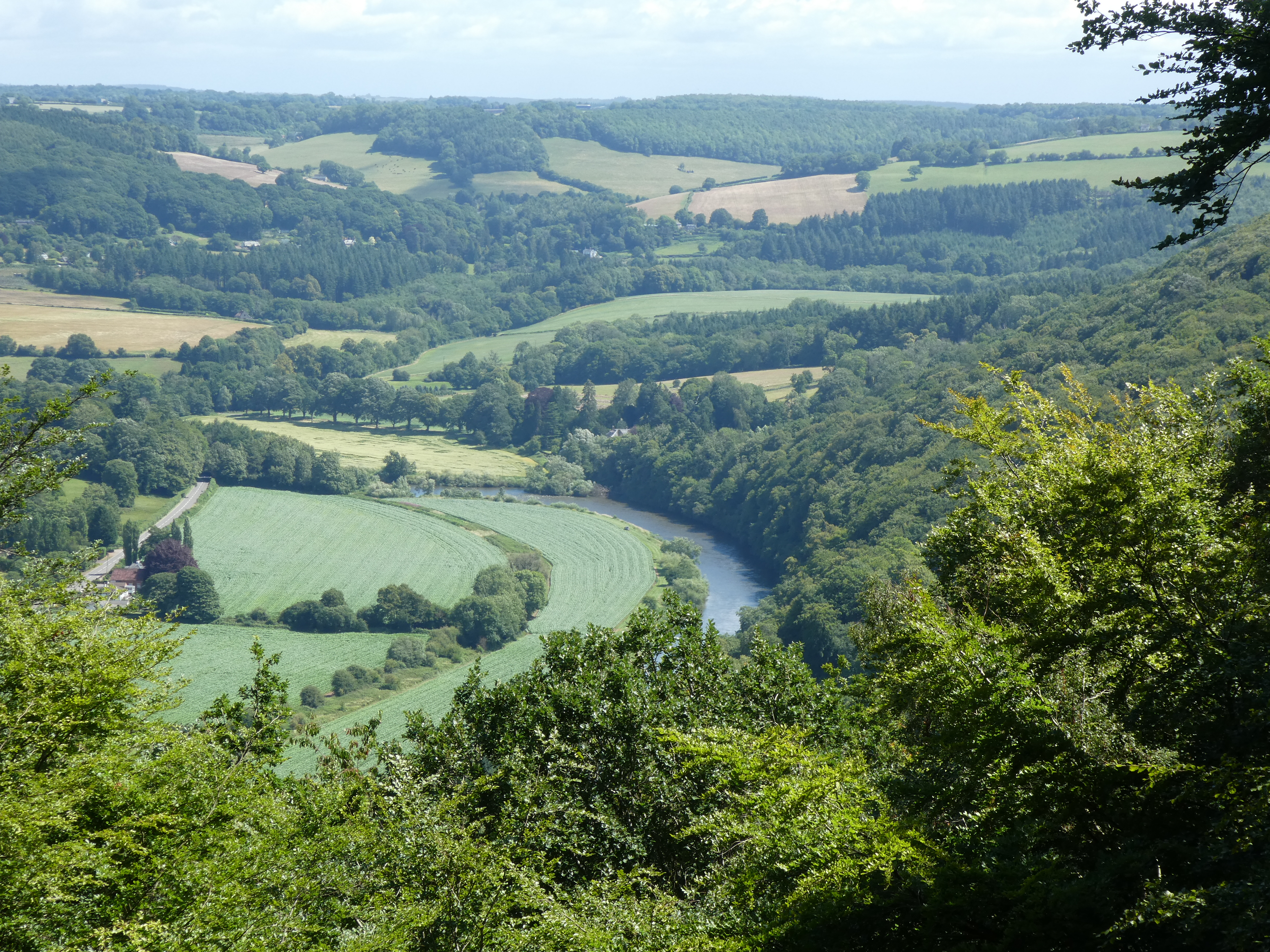
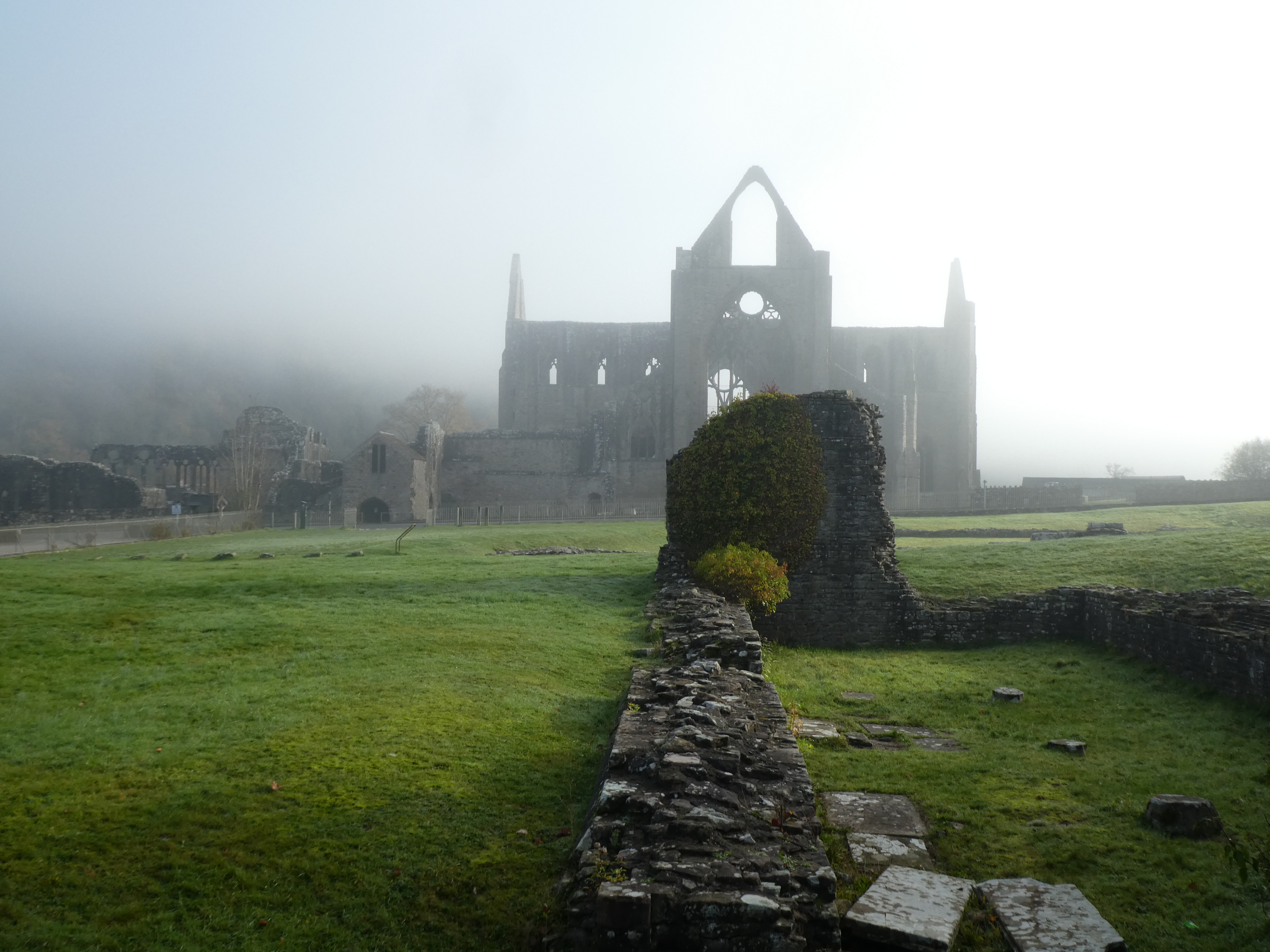
The tranquil, ancient setting of the Wye Valley always soothes me and encourages me to let my mind wander and have always felt at home there. I was in Tintern five years ago when I realised the need to connect with my dream to write. Indeed, William Wordsworth adored this spot, and his ballad, Lines Composed a Few Miles Above Tintern Abbey, captures the beauty of the setting we can still enjoy over two hundred years later.

These waters, rolling from their mountain-springs
With a soft inland murmur.—Once again
Do I behold these steep and lofty cliffs,
That on a wild secluded scene impress
Thoughts of more deep seclusion; and connect
The landscape with the quiet of the sky.

Tintern breathed life into the fictional setting of Delfryn in my work in progress, Loving You. Delfryn is a Welsh word for pretty view and the perfect place for my characters, Pearl and Jim, to seek sanctuary from the hustle and bustle of the town. Writing about Delfryn has also been a wonderful destination, particularly during lockdown.

Jim is a car mechanic who wants to be an artist and adores to visit his sister’s farm in Delfryn. Pearl is a seamstress who wants to sing. The landscape inspires Jim to paint and is also the romantic setting for him and Pearl. Alas, life in the country will not allow Pearl to fulfil her dream to become a singer.

Pearl and Jim fall in love but both want to follow their dreams. The novel is set in the seventies because I wanted to travel back in time to the decade I was born. Exploring the seventies was not as familiar as I thought it would be and the restrictive nature of society shocked me. During my research, I reflected on how my parents had very different opportunities to me and used this to add colour to my characters. Like Jim, my late father excelled at art but was from a working class, northern family and was expected to earn a living in a trade.

Despite their experiences, my parents always encouraged me to grab opportunities, pursue my dreams and celebrate creativity. I am also so grateful I can pinpoint the time and place where I chose to change the ‘what ifs’ into a destination. Ironically, I recently discovered that my ancestors hailed from Monmouthshire in the Middle Ages, so it feels as if I have gone full circle.

I will publish Loving You, a family saga, one day and discover whether Pearl and Jim will follow their dreams and their hearts. And the beauty of writing is you can provide the characters with opportunities, but they will still decide which paths they wish to take.


Contacts: 

Website:     http://jessiecahalin.com/

Facebook   https://www.facebook.com/people/Jessie-Cahalin/;  https://www.facebook.com/JessieCahalinAuthor/

Twitter        @BooksInHandbag


How I Got Published By Alec Marsh

Alec Marsh, writer, authorWhen I was 21 I started to write a novel. It wasn’t very good. I was working as a reporter for a local paper in Cornwall and my book… was about a reporter working for a local paper in Cornwall. 

Soon I moved to London to work for the Daily Telegraph and started writing a second novel. It was about a young journalist working for a newspaper in London. 

It wasn’t very good either. 

I met a top agent at a function and asked him if he’d see it. 

‘What’s it about?’ he asked.

After several seconds of flannelling he cut in: ‘If you can’t tell me in under 11 seconds then I’m not interested.’ 

I’d been introduced to the idea of the elevator pitch. If you can’t encapsulate your idea in a nutshell, you’ve had it.

I kept writing and the rejection slips (paper in those days) kept piling up.

Then one day a friend suggested I try my hand at historical fiction. ‘You’re obsessed about the past,’ he said. And it was true.

About a year later I read The Da Vinci Code, and was hooked. 

And I thought, “I can do that.”

So I started thinking about a historical mystery that could sit at the heart of a story, and some characters that would have sticking power.

That was around 2004. Before I knew it, I had started writing what would become my first novel, Rule Britannia. And I knew I was onto something, I could feel it in my fingertips. My characters – a historian and mountaineer Ernest Drabble and his pal, a journalist named Harris – were alive. And so was the story.

With a half-written book, I started polishing and went looking for an agent. Again the rejection slips piled up (still paper).

Then one day in 2008 an email landed at about 6pm on Saturday evening from an agent. Do you have any more, he asked?

I didn’t sleep that night. Soon I’d emailed the next three chapters, then we had a meeting. After that, I had an agent and went off to finish the book – armed with the self-confidence to finish it properly, to believe in myself and the benefits of his insights.

The agent then took it to market. But it was 2009 and e-readers, Amazon and the global financial crisis was hitting hard, and – for whatever reason – my book didn’t sell. After a dozen very polite rejections from major publishers, my agent suggested I try writing a different book. Which I did. 

For five years I wrote a book set in the First World War, but Drabble and Harris were still in the back of my mind, calling to me from the binary prison of a hard drive. 

By 2015 the First World War book was finished – but so was my relationship with my agent who finally spelled it out to me when he told me this was not a book that he could sell to his clients. We were finished.

Exhausted and disappointed, I stopped knocking on doors that wouldn’t open and focused instead on my day job. Every now and then someone would ask about Drabble and Harris; I would change the subject.

Then my son Herbie was born in 2016, and his arrival rekindled my ambition. So in the small hours, I dug out Rule Britannia and reread it, shook my head at parts that hadn’t aged well, and I polished it. And I pitched it again.

After a string of rejections (emails now), I went direct to publishers, finding an independent in Cardiff, named Accent Press. 

When the owner telephoned me and told me she’d take it – and she’d want two more books after – I was standing in a corridor at work. I didn’t punch the air, but a tear might have come to my eye. It had taken 20 years and I had endured numerous disappointments but it had finally happened. Drabble and Harris would get to their readers, and I was going to have a novel out. So what’s my advice for would-be authors. Don’t give up. And as Martin Amis once told me when I asked him for advice at book-signing: keep writing. After all, what else are you going to do?

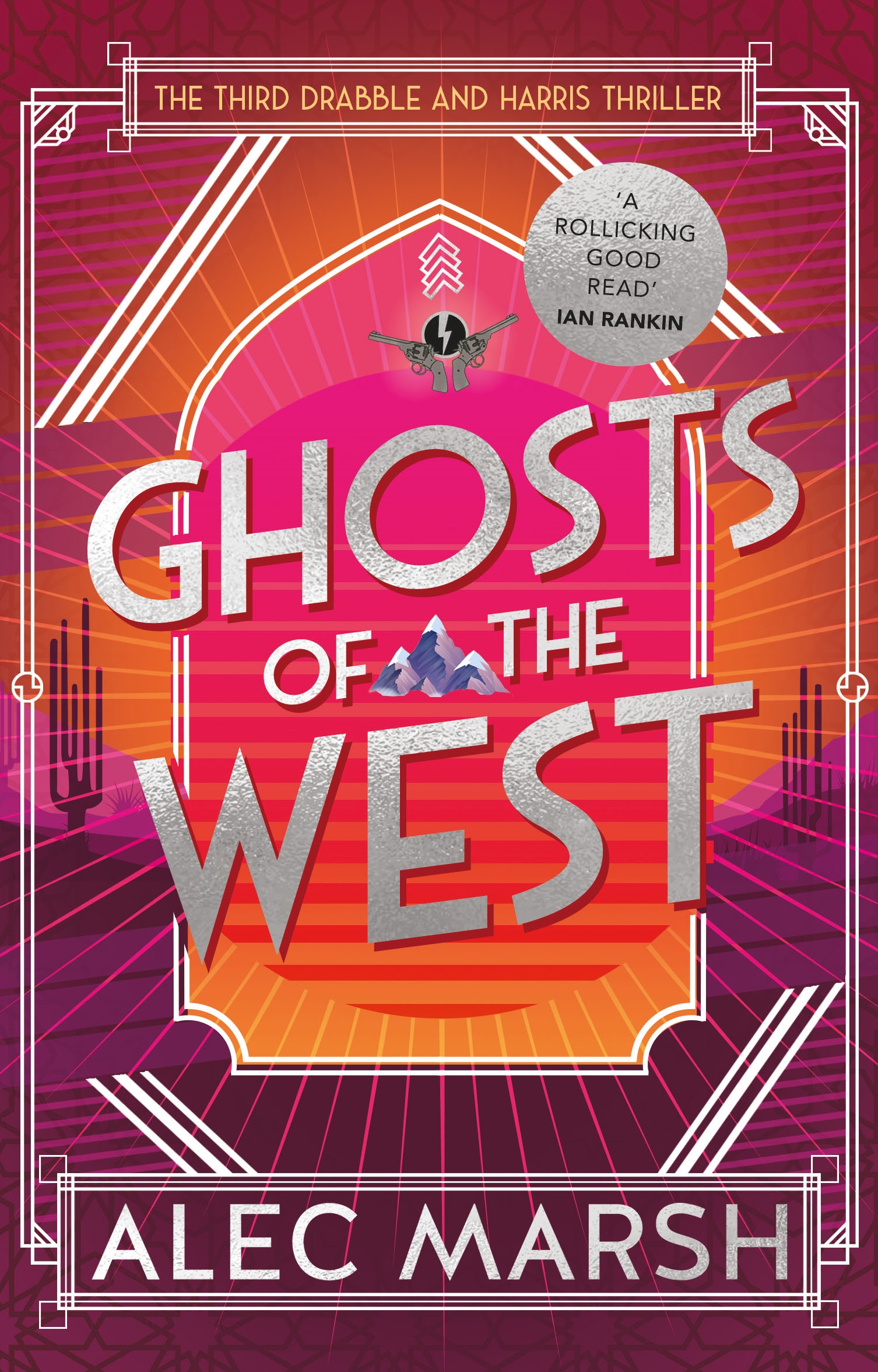
Alec Marsh is author of the Drabble & Harris novels, published by Headline Accent. The latest book, ‘Ghosts of the West’ is published in original paperback and ebook on 9 September


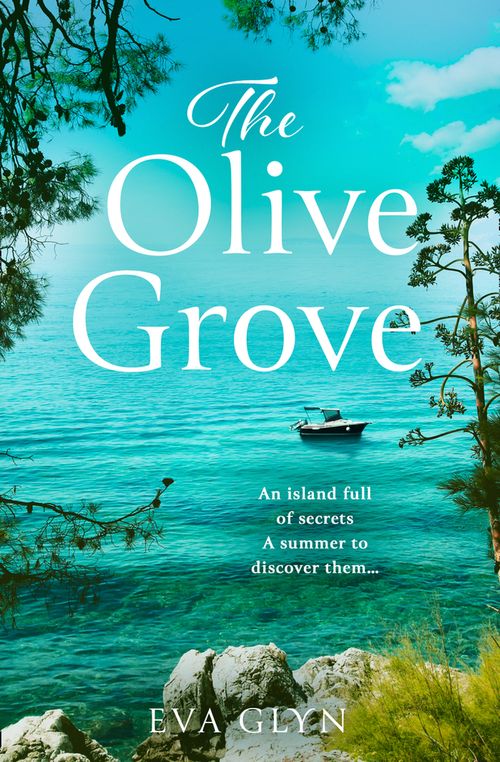
EVA GLYN ON THE INSPIRATION BEHIND THE OLIVE GROVE

Sometimes an idea for a book creeps into your heart and stays there. That was how The Olive Grove started for me, with a story told by our tour guide when we were on holiday in Croatia.

We were on a small-boat cruise that began in Dubrovnik and after visiting the main islands off the Dalmatian coast and some interesting places on the mainland, ended up in Trogir. And when we were on board travelling there were talks we could listen to and to make our experience complete we wanted to lap up every one.

The war in Yugoslavia was perhaps not a particularly enticing topic when the alternative was to sit on deck, watching the glistening sea ripple alongside the boat while soaking up some sun, but I remembered hearing about the war on the news at the time and was keen to know more. And then, somewhere between the dates, whys and wherefores, our guide Darko began to tell an incredible story. His own.

I suppose I had assumed Darko was Croatian, but he is in fact Bosnian and grew up in Mostar, one of the towns that was to be worst hit by the fighting. His father was a soldier in the Yugoslav army, but when everything fractured and splintered he followed his ethnicity and joined the Croatian side, having to leave his Serbian wife (and Serbia was now the enemy) at home with their sons.

I will never forget the silence in the room at the horror of what we were told. No electricity, no water, bombs raining down, queuing for food at the community organisation – life as we would all recognise it wiped out over the course of a few days in a war that would last for years. Darko’s life moved underground to the shelters, because they were the only safe place. And he was one of the lucky ones, because living in the army housing meant the shelters were purpose-built, deep and strong.

There were moments to awful to contemplate. Darko’s mother actually disappeared, as many people did during ethnic cleansing, but he was one of the few lucky ones because she actually came back. But there were moments of light too; finding a food parcel dropped by the UN and hoping it was one with chocolate inside.

These incidents and more form the kernel of The Olive Grove, but viewed through the prism of time by my proud Croatian character Damir. Orphaned during the war he was brought up by his aunt on the beautiful island of Korcula (which we visited during our trip); brought up to forget everything about his life before he came to the island. But when she dies, the past creeps back to find him.

While Darko wears his wartime past with relative ease (which is often the case when everyone around the child is having the same experiences, when the awfulness becomes a sort of normal), fictional Damir no longer can. And help comes from a surprising quarter. A middle aged English woman called Antonia who feels she has messed up her life so badly she takes a job on the island to take stock and to heal.

And that’s what The Olive Grove is really about. It’s about healing and friendship. Like Darko’s childhood memories there is sunshine and shade. And unlike them there is the most incredibly beautiful setting.

With Darko’s help over countless Zoom meetings during lockdown I have been able to create authentic Croatian characters and culture, so as well as the initial inspiration, there are many other reasons why The Olive Grove could not have been written without him. And what’s even better, we have become friends across the miles too.

How I Got Published Jenny O’Brien

There are many roads to publication. But as a forty-year-old with three kids of three and under, including twins and a busy job as a nurse, none of them were for me – or so I thought. Then a character popped into my mind. An earworm that wouldn’t go away. A little boy called Dai Monday. It took me a year to find the courage to pick up a pen. With no time to write at home and a busy day job, I took to carrying a notebook around in my scrub top. This notebook got filled during my 15 minute coffee breaks. Within 6 weeks I had a very poor, first draft of my first book.

Jenny O'Brien , author, writer, how I got published ,

Fast forward five years. I was still writing but with no thought of publishing until peer pressure and a bullying incident at school led me to self-publish Boy Brainy. Six more years quickly followed in tandem with a box full of rejection letters. I’m not sure how many rejections—too many to count but not so many as to blunt my determination to succeed.

It took twelve years to find a home for my writing. Twelve years when my writing improved, but also the quality of my query letters. Never underestimate the importance of a well-crafted query letter!

But, in the end, the years didn’t count for much. It was a few quirks of fate that pushed me over the finishing line. A change in genre from children’s books to romance and finally crime fiction. BookBub accepting me for a book promotion the first time I applied. One last push to secure a publisher and, finally, engineering the date of the BookBub promotion to coincide with my query letter arriving at HQ Digital, an imprint of Harper Collins.

I said at the start that there are many roads to publication. While I wouldn’t recommend mine to anyone, there are lessons to be learnt. If you are struggling to find the time to write, change how you view time. Chunk it into 15-minute sessions instead of hours. Those few minutes add up. It might mean writing in transit but that’s easily catered for with a notebook or even a mobile phone. To rephrase a well-known saying. There is always a way, but first you must find the will. My BookBub deal was a fluke, but what followed wasn’t. There’s nothing wrong with nudging luck along with a little gentle manoeuvring.

Good luck!

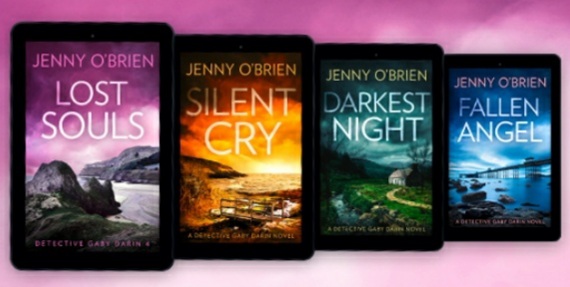
Jenny O’Brien is an Irish writer of the Detective Gaby Darin series published by HQ Digital.

My Writing Process Ray Star

Ray Star, author, writer, how I write, my writing processWhat you have written, past and present

I wrote my first story when I was ten, scribbled untidily onto folded green paper, unevenly stapled together with crayon illustrations on every other page. My teacher had tasked our class with writing a story to include three things: a waiting room, a light switch and a wish. I opted to write a tale of a young girl who found herself in a magic waiting room that gave those worthy a wish, if fate called upon them to use the light switch. I received my first A+ and have wanted to be an author ever since.

After my school years, I dabbled in freelance journalism, covering ‘real life’ stories for tabloids and the women’s weekly’s in my twenties but found this mind numbingly painful. To the point, it put me off writing for a while. I ended up starting my own PR firm and then, life got in the way, as it so often does, and my dream of one day becoming a successful author was lost to the 9 to 5 routine and all that falls in between.

It wasn’t until quite recently in 2018 that the idea for a story found me, and it wouldn’t let me be. It would find me just before I fell asleep at night, an array of nameless faces that needed their stories to be read, heard and understood. The title came to me when I was at lunch with my mother one afternoon, and a year later, my first draft copy of Earthlings – The Beginning was ready.

  • What you are promoting now

My debut novel Earthlings – The Beginning, is book one of a YA Fantasy trilogy with a message to the narrative, and launches on August 12th, this year.

Earthlings is the story of a young girl named Peridot, raised with the realities of her world hidden from her by an overbearing mother. One day, a young boy Euan unexpectedly comes into her life only for him to leave as quickly as he came, from that moment onwards, her world is never the same. Peridot leaves the clutches of her mother’s home in the hopes of finding her friend, only to discover all she believed to be true, to be something else entirely. 

We follow her journey into a world filled with magick (yes magick with a ‘K’), wonders and horrors that Peridot couldn’t have fathomed in her wildest dreams – or nightmares. For every step she manages to get closer to her friend, something new and unknown gets in her way. There are many twists and turns in the Earthlings tale but ultimately Peridot’s story is one of finding friendship against all odds and trying to do the right thing – no matter the consequence.

www.raystarbooks.com

  • A bit about your process of writing

I’m going to be completely honest with you – I have no process! I wrote most of Earthlings when I was pregnant with my first born, which was utter bliss. Just me and my bump and a fresh pot of tea, writing away by an open window with the breeze fluttering past to keep us company.

The remainder of Earthlings was written with a new-born, which never in my wildest dreams could I have fathomed would be as hard as it was, but I did it, and then, just to make things that little bit harder for myself, another bump came along. Bump number one is now aged two, and his brother, is eight months.

Writing time now, is done in the rare moments of quiet, which admittedly, are far and few, but when they find me, the story flows and I find ‘the zone’ as I call it, quite easily. Writing is the one thing in this world, other than my boys and a good strong cuppa coupled with dark chocolate digestives, that brings me peace.

  • Do you plan or just write?

Planning to write when you have children, is like planning to have an early night when you have children. It does not happen. It works in my favour to not make plans, and then by not making plans, enables the possibility of that plan taking place… if you follow!

  • What about word count?

For a story to be the best it can be, I have to allow it to flow naturally. If I force myself to write a set number of words, they become in danger of becoming precisely that – just words. I used to set the target of writing 200 words a day but by doing that, I did the opposite. Word counts seem to be counterproductive for my style of writing and I prefer to enjoy the story as I write it, whether its 50 words or 500. The story will write itself if you give it time.

  • How do you do your structure?

Alike the above, I had no set structure for Earthlings, I sat down and wrote the story as it came to me when I was in the moment. Although, Earthlings is book one of a trilogy and with book two, there are specific moments that needed to happen, so I made a point of having a list of key events that I ticked off as they were complete. 

Editing wise; I tend to write a chapter or two, read through and do a light edit, then keep writing. This way, when I come to edit properly when my first draft is complete, most of the leg work is done and the editing process isn’t as daunting.  

  • What do you find hard about writing?

The environmental cost of books plays on my mind a lot. Whilst I’m over the moon to finally be an author, it bothers me that my work comes at the cost of trees. Beautiful beings that have lived on this planet longer than I have are sacrificed for the literature we know and love. This bothers me more than I can put into words. 

My publisher, Chronos Publishing, thankfully, is very supportive of my concerns and has ensured that Earthlings, where possible, is to be printed on recycled paper. However, we were unable to get this secured with one distributor (Amazon) so I have recently launched the #ReadGreen campaign to hopefully encourage Amazon to offer sustainable printing options to the publishing industry.

You can support the Read Green campaign with a simple signature via www.change.org/read_green/ 

I have also pledged to plant 1 tree per book sale via Ecologi to combat any Amazon sales of my book, the Earthlings forest is available to view via my website.

  • What do you love about writing?

Everything. Writing to me, is as wonderous as magick. It is the ability to make your wildest dreams a reality. The ability to breathe life into beings, places and creatures that we dismiss as unbelievable. Pure escapism. If you’re a good enough writer. Anything is believable. If it harm none, so mote it be.

Love and light

Ray Star

@RayStarBooks

www.raystarbooks.com

Earthlings by Ray Star is out now by Chronos Publishing, £8.99

How I got published Dougie Brimson

Back in 1995, I had an idea for a book about the culture of football and after working on it for a while with my younger brother, started to think about how we could get it published.
Dougie BrimsonNever having written anything before, and not knowing any other authors, I walked into W.H Smiths, picked up a football book and wrote to the publisher who happened to be Hodder-Headline.

After a week or so, they wrote back and asked for a sample of our work and so we sent them 3000 words and waited. They came back and asked for some more and so we sent them another 3000.

This went on a few times and in the end, I said to them ‘either you want this or you don’t. If you don’t, then let us know and we’ll try someone else.’
Dougie Brimson
Within a few days, they’d made us an offer to publish which included a nice advance. It was only about a year later that we realised that it didn’t work like that for everyone.

The book was called Everywhere We Go. It was published in early 1996 and was a massive success. So much so that it kick started a career which has resulted in a further 16 books, sales of over 1,500,000 worldwide and being lead writer on three award winning feature films with more on the way.
Ironically, despite all that success, I’ve never been able to find an agent to take me on so have ended up doing it all myself.