Selina Siak Chin Yoke On Becoming a Writer

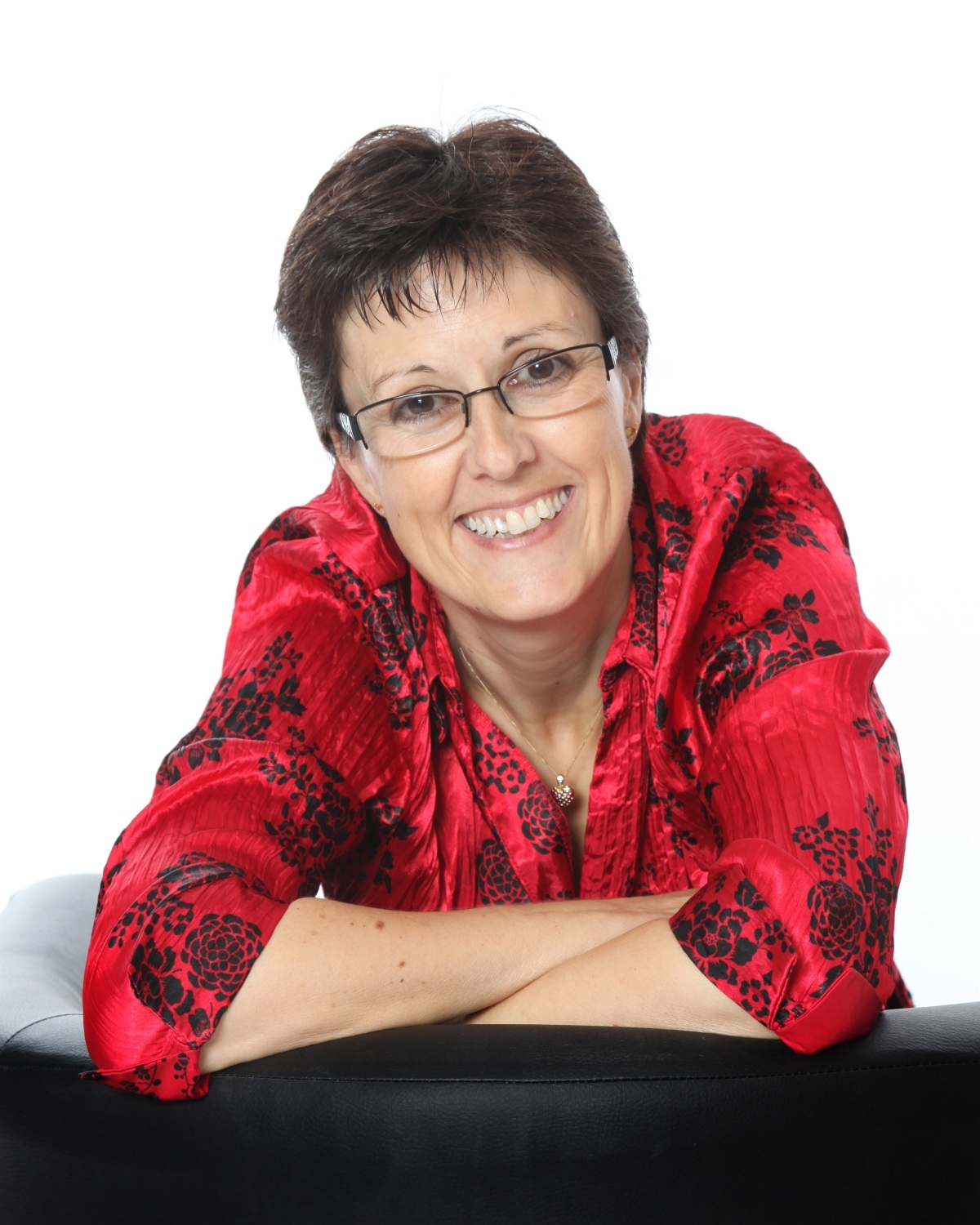
I began writing out of desperation and a cherished dream. While recovering from breast cancer, I went into a chemo-induced depression without realising it. I had no idea what was wrong, only that the ground beneath me seemed to have collapsed. Months passed. When I still found no equilibrium, I went to see a counsellor at the cancer charity, MacMillan, who suggested a bout of creative writing.

Not long afterward, I recalled a dream I’d once had – of writing a novel loosely inspired by my great-grandmother who I had never met. Stories were re-hashed endlessly in my family about this formidable woman who, despite being uneducated, started a business at a time when few women in Malaya did so. She always seemed larger than life – a true role model in a profoundly patriarchal culture.

I began my writing project by doing research. I knew that what I wanted to write was a novel based on real historical events, possibly even on events which my own family had experienced.

Armed with the detailed outline of a story, I planned a trip to Malaysia. I pored through newspapers in the National Archives and interviewed anyone who would talk to me about the old days. Some who gave their time were family members: aunts, uncles and cousins, but a few were people I barely knew. Amazingly, I came across people who had actually met my great-grandmother. Their anecdotes provided a wonderful tapestry which fuelled my imagination further.

Spurred on by Malaysia’s heat and its panoply of aromas, sounds and colour, I began writing the first draft of The Woman Who Breathed Two Worlds, my first novel. The story follows the life of a mixed-race woman during a time of rapid change in Malaya. It is a complex and rich story about cultural identity, set in my hometown, Ipoh. As I described the modernisation of the town and how the protagonist tries to retain her cultural traditions in her rapidly Westernising world, I realised I was telling not only her story but the story of her country, Malaya.

In this way, the Malayan Series was born. My new novel, When the Future Comes Too Soon, follows on from the first book, but the two can be read independently and are very different. In this second novel Malaya is at war. There is a new protagonist, Mei Foong (the daughter-in-law of the heroine in the first book), who is thrown into a world gone mad. Somehow, she must find ways to keep her family alive. How she goes about this and what happens to her and her family lie at the emotional heart of the novel.

Their story is as much about betrayal, in its many forms, as it is about survival and love and what courage means. Sometimes, it takes extreme circumstances for people to discover what they’re made of. This is the case for Mei Foong, who finds her inner steel through war and suffering.

Selina Siak Chin Yoke’s When the Future Comes Too Soon is published byhen the Future Comes Too Soon and out now


The Business of Books: Jane Cable talks to Choclit author and Romaniac Laura E James

THE BUSINESS OF BOOKS: Connect, engage – and write!

Jane Cable talks to Choclit author and Romaniac Laura E James

1: How much of your working life does the business of books take up?

I like to start the day by clearing my emails and writing my guest posts, updating the accounts, attending to social media – connecting with readers and writers, sharing book-related news, creating adverts – before settling into working on the manuscript, be that research, writing or editing. Quite often time will run away from me, so I’m attempting to stick to a plan of sorting out on what I loosely term admin, until 11:00, leaving the rest of the day for writing, which is anything from one to seven hours. It’s not an exact answer to the question because my working day depends on my health. I have autoimmune conditions, which can dictate my hours.

2: What’s your business model to earn a living from writing?

It’s only recently I’ve converted my way of thinking to writing as a business, so I’m learning and in the process of developing the business model. I write character and issue driven relationship novels, I engage on social media, run workshops and present talks to groups interested in writing and/or my books, take part in interviews, and network when possible. In its simplest form: keep writing, keep engaging, and keep building my readership.

3: What do you write and what do you consider to be your major successes?

I write commercial fiction, often centred on family relationships, with issues and moral dilemmas sending my characters down dark paths. There are strong elements of romance, so I will always guide my characters and my readers towards a happy or hopeful ending. I’m a Jodi Picoult fan and reading her books has had a major influence on what and possibly, how I write.

My first major success was being shortlisted for a short story competition run by Choc Lit (publisher), which resulted in my entry achieving the runner-up position. I repeated this with their second short story competition, and went on to have my debut, TRUTH OR DARE?, published with them.

FOLLOW ME FOLLOW YOU, my second book, was my first to go into paperback, large print, and audio, and the moment I received my author copies is one I cherish. In January 2017, the book was chosen by Apple to be the free iBook of the Week, and it hit the number one spot – my first number one. I was on a writing retreat with friends at the time. Celebrations were had.

My latest novel, WHAT DOESN’T KILL YOU, spearheaded a new imprint – Dark Choc Lit. I feel privileged to have had that opportunity and love that an imprint is in place for darker, harder hitting novels. This is the first of my novels to be sold through WH Smith, in the Travel shops, which is a dream come true.

The Romaniacs, an online blogging group of eight writers, formed in 2011, has to be one of my favourite successes, but it’s not my success, it’s our success. The support and friendship is phenomenal, as is the output – seven out of eight are published/to be published, and/or with agents. In 2015, we won the inaugural RNA Industry Media Stars Award for our work in promoting the romance writing industry. But the real success is how eight people, who met through the Festival of Romance and the Romantic Novelists’ Association’s New Writers’ Scheme, have formed solid friendships for life.

4: Tell me about your latest project.

I’m working on two projects – a mother-daughter relationship story, which has been planned, researched and mapped out on one of my white boards, but is hovering in the background, maturing, and a novel about rebuilding one’s life from the ground floor up, following an emotionally abusive relationship.

Laura E James writes romance without the soft edges.
For further information, go to: www.lauraejames.co.uk or www.theromaniacs.co.uk


Business of Books: So Much to Give – Part 1

Jane Cable on how authors get together to support charities

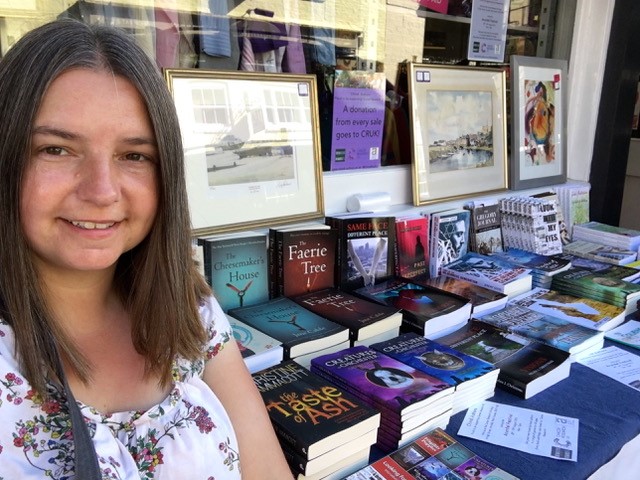
It’s that time of year again. The time when Chindi Authors stand outside the Cancer Research UK shop in Arundel for ten whole days during the town’s festival trying to sell books. Not an easy task when the second hand offerings inside are so much cheaper, but we stick at it because we can add to the coffers of this excellent cause, promote our own books and meet readers.

We know we’ll be well supported by our members and local people, but organiser romantic novelist and kidlit writer Carol Thomas was asked by author contacts up and down the country if they could donate too. While she did the charitable thing and set up a donation page – http://www.carol-thomas.co.uk/Chindi-cruk/ – her generosity simply got me thinking about how much writers achieve when they band together for good causes.

The most high profile recent example of this was the Authors for Grenfell online auction which attracted pledges of more than £150,000, over £30,000 of which was for Philip Pullman to name a character after one of the young victims of the fire. Quirky lots did well too, with conductor and writer Lev Parikian putting together a package which bridged both his worlds: “I offered signed books and (more importantly on this occasion, I think) conducting lessons. A bidding war between three people meant we raised £1,700.”


CLIC Sargent runs an annual ‘Get in Character’ eBay auction where authors such as crime writer E V Seymour and novelist and poet Claire Dyer have offered bidders a range of lots including – you guessed it – having a character in a book named after them. Critiques prove equally popular and previous Business of Books guest Karen King (https://www.frostmagazine.com/2017/04/how-to-have-more-than-100-titles-published/) offered one in the Authors for Refugees auction last year, an initiative which raised £22,000.


Another way of writers getting together to raise money is by giving their time to contribute to and to edit anthologies for causes as diverse as cancer and heart charities, earthquake appeals, women’s rescues and hospices. Some have very personal links to the cause, including saga writer Elaine Everest (also a previous Business of Books guest): “I organised and edited the anthology ‘Diamonds and Pearls’ (Accent Press) to celebrate my 30th anniversary of surviving breast cancer (7 years ago) with funds going to Against Breast Cancer.”


Crime & thriller writer Jane Risdon is a serial contributor to anthologies, supporting amongst others Women for Women, Breakthrough, Women’s Aid, The Norfolk Hospice, The Princess Alice Hospice and Save The Children. She was slightly upset when there was no thanks from certain charities, but would still do it again. Other authors say that smaller charities are more responsive than the larger ones so they prefer to work with these.


Some writers go the whole nine yards and get together to form charities of their own. A prime example of this is saga writer and Frost contributing editor, Margaret Graham, who together with Jan Speedie and Penny Deacon set up Words for the Wounded which exists to raise funds for injured service personnel through writing prizes and events. It’s a wonderful organisation and every penny goes directly to the people who need it. Authors can help in a variety of ways – Chindi raised almost a thousand pounds by organising a litfest, others give their time to speak at events or in my case I donate £1 for every Amazon review of my book Another You. Find out more about W4W here: http://www.wordsforthewounded.co.uk/.


Business Of Books: Jane Cable talks to publishing polymath, Liz Barnsley


BUSINESS OF BOOKS: LOVING BOOKS, LIVING BOOKS

Jane Cable talks to publishing polymath, Liz Barnsley

What is your book related job or business?

First of all I’m a reader and reviewer with my own website, Liz Loves Books  – all done for the love of it. On the professional side I work freelance as a submission reader for Orenda books and now as an Editor and Publicity Manager for Lisa Hall at Manatee, our new digital publishing venture. I also take on individual editing, first draft critique and proof reading amongst other things. I also have a “day job” which I’m loathe to give up as I love that too – so all in all it is a busy bookish life and a busy life life! Going into this venture with Lisa was a no brainer for me however – she is an incredible writer and a voracious reader and she knows what a good book looks like and how to get it out there. Who wouldn’t want to be part of that?


What is the most rewarding part of it?

Definitely the most rewarding part is seeing the book complete and published and finding a readership – every little that I do to help that happen gives me a huge buzz. I also like the collaborative side of editing when I’m excited about a story and the author is excited about their story – it is all hugely satisfying seeing that spark of an idea become a brilliant novel. I have to say I love reading the raw material before it goes through all the stages, seeing the talent and story emerge from underneath that first sprawl of creativity. I never tire of reading the same narrative during the tweaks because you get a whole different sense of it every time. Ultimately (hopefully!) the white noise disappears and you are left with a beautiful, readable, emotionally resonant or edge of the seat story that you can send out into the world.


What do you consider to be your major successes?

Manatee is in the very early stages at the moment so I don’t think we can claim any major successes just yet – although I’m very excited by the authors we have signed so far, all of whom are bringing something different to the table and are putting their trust in us. We focus on crime and women’s fiction – I look after the crime and Lisa looks after the women’s fiction and all our authors so far have written, in my opinion, absolutely excellent, engaging and addictive stories. Also it was somewhat of a confidence boost that bestselling crime writer Neil White had enough faith in Manatee to entrust to us his non crime novel Lost In Nashville. We have persuaded him he might want to write some more fiction for us – he is an incredible writer both within the crime genre and out of it. Watch this space. He will probably tell me off now as he’s busy with his next amazing crime novel for Bonnier Zaffre – but it had to be said that he is certainly not a one trick pony. Now he’ll tell me off some more…


Have you always loved books and what are you reading at the moment?

I have ALWAYS loved books. I’ve read many books a week every week since I was very young and I can’t see that stopping anytime soon even though I’m now rather older. Right now I’m reading a brilliant and highly atmospheric novel called “The Monsters Daughter” by Michelle Pretorius – look out for that one – but also several others as I multi read, they include The Innocent Wife by Amy Lloyd, Need to Know by Karen Cleveland, The Fate of the Tearling by Erica Johansen and Strange Practice by Vivian Shaw. Great books all.


Manatee Books focuses on quality, ethical, author focused digital publishing. Their aim is to bring a wide range of exemplary fiction to a broad readership, time and time again.

Find out more at www.manateebooks.co.uk.


The Diary of a Freelance Working Mother

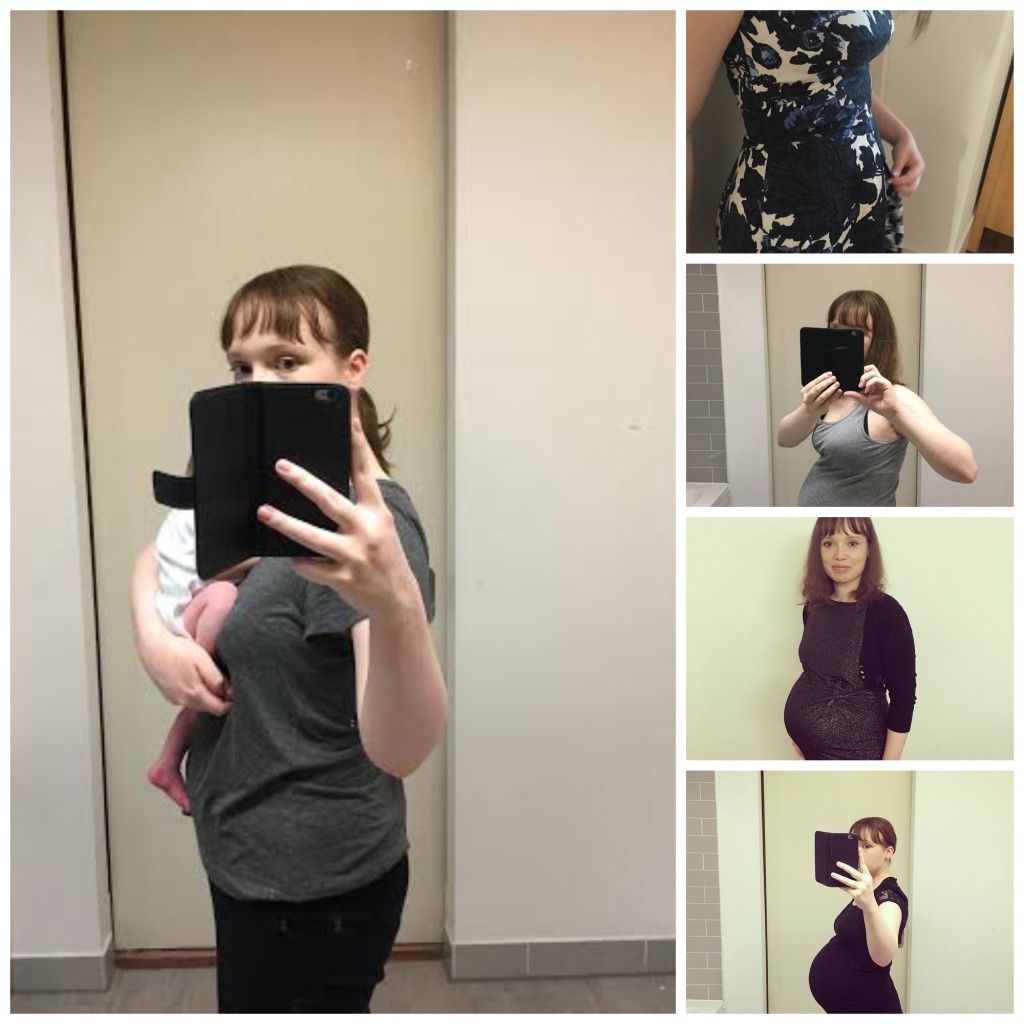
working mother, mother, working, freelance, blogger, mummy blogger, blogger, parenting blogger, blogger, writing, Hello Frost readers. Many of you will know me quite well, others will be be thinking, ‘Why is the woman being so arrogant to think that we know who she is?’ And you may have a point, so let me introduce myself properly: I am the editor and founder of Frost Magazine. I am also a writer, author, editor, filmmaker and actor. But above all of this I am a mother. Which is the hardest thing of all.

When I got pregnant I felt like I was in a good position as a freelancer. I could be a full time mother AND have a career. Sure it would be hard, but I was used to hard. It is hard not to laugh thinking about this now. Being a freelancer is hard, but the flexibility has always made it worth it for me. Looking back now I can see I was naive when I thought it would be easy. I did not realise just how hard being a mother would be. The funniest thing is that I breastfeed for over a year and I look back at those times when I had a breastfeeding newborn and think of them as the easy days because now I have a two-year-old. For all of those mothers who have babies, enjoy this time. Toddlers are really hard work. Even my sweet and loving son. I know others have it harder. Very much so.

I am going to start this as a column. I am heavily pregnant as I write this and I just want to share the craziness of life as a freelance working mother. The timing is not great. I will be trying my best to take a proper maternity leave and cut back on work. There will be days, weeks even, when I let myself just be a mother and not run myself into the ground. Something that I have been known to do a lot in the past. It has taken becoming a parent to realise that I am not invincible, That self care is important. So I will continue to write my books and run this online mag while I raise my children. But while I am doing that I am going to tell you about how I spend the days taking my son to toddler groups and playing lego, and then writing and answering emails in the evening. I will give you some tips on both parenting and work. I will share with you how I wrote my first fiction book. Spoiler alert: by walking my son around in his pram until he feel sleep and then banging out 2000 words a day on my iPhone. I will talk to you about the guilt and the stress. But most of all I will let you know that I have no regrets at the path I have taken. Being a mother is the best things that ever happened to me. Motherhood is hard and sometimes I feel I am not up to the task, and choosing to work (which I am fully aware is a privilege) gives me back my identity and my freedom. Writers write. So stay tuned. I hope you enjoy the journey.


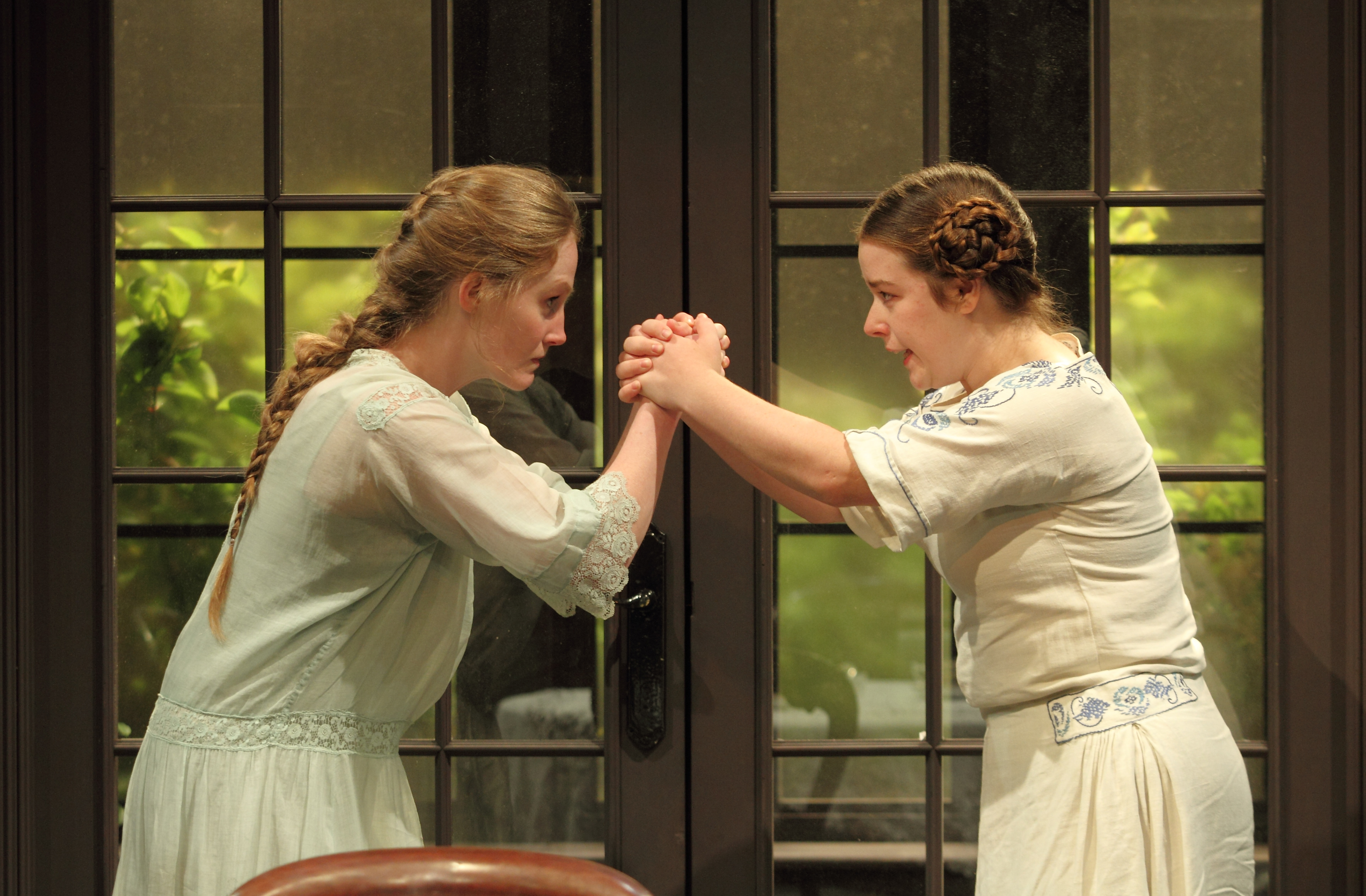
Review: The Stepmother

The Stepmother
Minerva, Chichester Festival Theatre
Until September 9

www.cft.org.uk
01243 781312

Photo credit: Catherine Ashmore

The words ‘seldom performed’ in a marketing blurb can trigger alarm bells. In many cases there’s a damn good reason why directors don’t dust down certain plays. In this instance, however, it’s an absolute mystery why it has taken so long to revive Githa Sowerby’s beautifully observed drama, in the experienced hands here of former artistic director of the National Theatre Richard Eyre.

Written in 1924, money, equality – or the lack of – and career are core themes. The setting is the home of widower Eustace Gaydon (Will Keen). A financial chancer lacking in integrity, kindness and sincerity, when he discovers that shy young Lois Relph (Ophelia Lovibond) is set to inherit his sister’s estate he promptly marries her, thus providing a stepmother for his two young daughters and shoring himself up financially. Ten years on and the shy young woman he married has become a successful society dressmaker, but Eustace’s dodgy deals have turned on him.

Keen is superb as Eustace. Shifty, sly, domineering and full of self-justification, he is irredeemably unpleasant.

Lovibond also convinces as the young girl who, as she morphs into a confident businesswoman, gradually comes to realise just what a ghastly situation she has signed up to.

A strong supporting cast includes Eve Ponsonby as stepdaughter Monica. Desperate to marry but constantly blocked by her father’s refusal to make good with an allowance, her youthful passion and increasing desperation are beautifully portrayed.

Historically fascinating, this stylish production deserves a life beyond Chichester.

Review: Grimm Tales, Chichester

Grimm Tales – For Young and Old
Adapted by Philip Wilson
Chichester Festival Youth Theatre at the Cass Sculpture Foundation, Goodwood
Until 19 August

Photo credit: Johan Persson

If you go down to the woods today… Just when it seems impossible for Chichester Festival Youth Theatre (CFYT) to achieve any greater heights they come along and smash it of the park. The sculpture park, in this instance.

The Cass Sculpture Foundation is the perfect setting for Grimm Tales. Woodland paths, tree-lined hollows and sheltered clearings provide a series of glorious natural stages. Greeted by a raggle-taggle band of minstrels beckoning us into the woods, the music throughout is evocative, catchy and haunting. All members of the Youth Theatre, these young troubadours are exceptional and add greatly to both the charm and continuity of the production.

Starting with Little Red Riding Hood and followed at different locations by Hansel and Gretel, Hans My Hedgehog, The Goose Girl at the Spring, The Three Snake Leaves, Rapunzel and The Juniper Tree, these yarns are grim indeed. Adultery, murder, child abduction, cannibalism – Mr Disney may have prettied some of them up for the big screen, but in their original form these fairy tales offer no trace of saccharine sparkle or Bibbidi-Bobbidi-Boo. Marvellously dark, but not without humour, Philip Wilson’s adaptations are magical, mysterious and utterly spellbinding.

Under the skilful direction of Dale Rooks the acting is uniformly superb. Remaining totally in character even when leading the audience from location to location, even those in minor roles demonstrate the discipline and focus of seasoned professionals. It would be grossly unfair (and almost impossible) to single out any one performance.

Testament to the excitement and enrichment of the experience, the smiles of the cast at the curtain call are wider than that of Grandma’s wolf. With satellite groups across the county, West Sussex children are so lucky to have CFYT available to them. Especially at a time when funding cuts threaten to hack drama and the arts down to almost nothing in some schools.

Ably supported by members of the Technical Youth Theatre, as darkness fell there wasn’t a star in the sky to outshine this supremely talented company.

Tickets: 01243 781312 www.cft.org.uk
There is no parking at the sculpture park, but a highly efficient system of park-and ride coach transport is in operation from Chichester College.

A Break From Business: Holiday Reading: Jane Cable on fiction from Cornwall, her adopted county

The question I’m asked most frequently since moving to Cornwall is ‘so are you going to write a Cornish book now?’ The answer is that I’m in no hurry to, but in that I seem to be alone and with so much fiction set in the county I thought I’d pick out a few which would make great holiday reading.

Old favourites

I would have to start with Daphne du Maurier’s Rebecca, in many ways the ultimate in romantic fiction with a seriously heavy twist of suspense. The beautiful house by the sea, the spooky aged retainer and the dear departed wife in the background, it has it all – especially as it didn’t resolve in the way I expected.

Also a classic is Rosamunde Pilcher’s The Shell Seekers which is in part set in Cornwall and known to readers of this column as my favourite book. The characters are so superbly drawn they could break – or make – your heart every time. But almost as good and often forgotten is Pilcher’s Coming Home, a saga which starts in Cornwall in the late 1930s and follows the heroine and her adopted family through the Second World War.

Another writer from my youth associated with the county is Mary Wesley. Camomile Lawn is her most famous Cornish novel and always a popular choice but I enjoyed Harnessing Peacocks far more. I like her heroine Hebe’s unconventional take on life – it seems especially suited to a backdrop in Cornwall.

In a totally different vein is Patrick Gale’s Notes From an Exhibition which perfectly captures (for me, anyway) the artist community at St Ives. The book tells the story of a family coming to terms with the dazzling genius of their late mother. At times a harrowing tale of depression, the wonderful language Gale uses lifts us and takes us to a completely different place.

New friends

Cornwall is now famous for chicklit and romcoms, a trend surely started by Judy Astley with her Just for the Summer, a sharp, witty read about Londoners who decamp to their Cornish second homes for the holidays.

Among those new out this summer, which means I haven’t actually read them but they may well appeal, are these:

Confetti at The Cornish Café by Phillipa Ashley – the third book in this hugely successful series sees the café become a celebrity wedding venue. Described as warm, funny and feel good by doyenne of romantic fiction Katie Fforde.

The Returning Tide by Liz Fenwick – the latest from a writer who has a built a career based on Cornish novels, this time with a saga of sisters and a wartime betrayal that spans the generations.

The Cornish Hotel by the Sea by Karen King – a heart-warming novel from my April Business of Books guest. Ellie returns to help her widowed mother keep the family hotel afloat, but will she succeed or will love intervene?

Dying to Take The Tour by Chrissie Loveday – a murder mystery set against the backdrop of a Poldark sightseeing tour. Cosy crime from a writer who I have to admit is a Cornish neighbour and is also published by Endeavour Press.