Words for the Wounded: Review of 2nd Place Winner

Words for the Wounded Independent Author Book Award 2016

Words for the Wounded: review of  2nd Place winner.

alisonclink

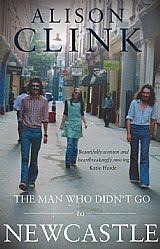
The Man Who Didn’t Go To Newcastle by Alison Clink

(published by Matador)


‘Lovely pace and voice… It’s a really moving exploration of siblings across their lives and most importantly, mortality.’

Felicity Trew (Caroline Sheldon Literary Agency)


‘In June 2007 whilst out walking my dog, I opened a text from my brother saying: Am in St Georges – Rodney Smith Ward. Ring me. A.’  Alison’s brother Adrian had been admitted to St. George’s Hospital in Tooting with a cut hand and low blood pressure. Tests had led to more serious concerns and he was calling on Alison to be with him when the consultant brought results of a biopsy on his lung. Alison heeded his call and took the train up to London the next day, only to find that the results weren’t available. She then went back to Somerset, with no idea of what the next few months would hold for them both. Whilst juggling her home life – at a time when her four children still lived at home – with long-distance hospital visiting, Alison tried her best to cope and make plans when Adrian eventually told her that, following the results, he’d been given a year to live. She had no idea then that he wasn’t being entirely truthful…

Judge’s comments: In The Man Who Didn’t go to Newcastle Alison Clink charts her care of her terminally ill slightly older brother, Adrian, with a lovely pace and voice and creates a really moving exploration of siblings across their lives and most importantly, mortality.  This is a situation which unearths not only memories of the past they have shared, but an awareness of their separate adult lives, especially as friends of his arrive to cheer him on. With each visitor it seems, another puzzle piece is put in place. Throughout this memoir Clink weaves the present and past together with a honesty which reveals the difficulties of caring for someone who is no more perfect than the rest of us.  There is not only sadness but humour, and implicit tension but it was felt that the diary structure was a little constricting. A more complex play with point of view rather than the date and time of the diary might have made it stand-out more.

It is interesting to consider how Clink’s undoubted and empathetic writing skills would be translated into fiction. She already writes short stories so let’s hope we don’t have to wait too long for an Alison Clink novel. Bravo. A worthy 2nd place.

alison-clink5

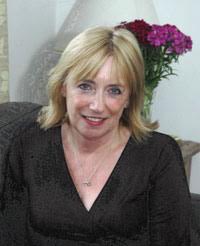
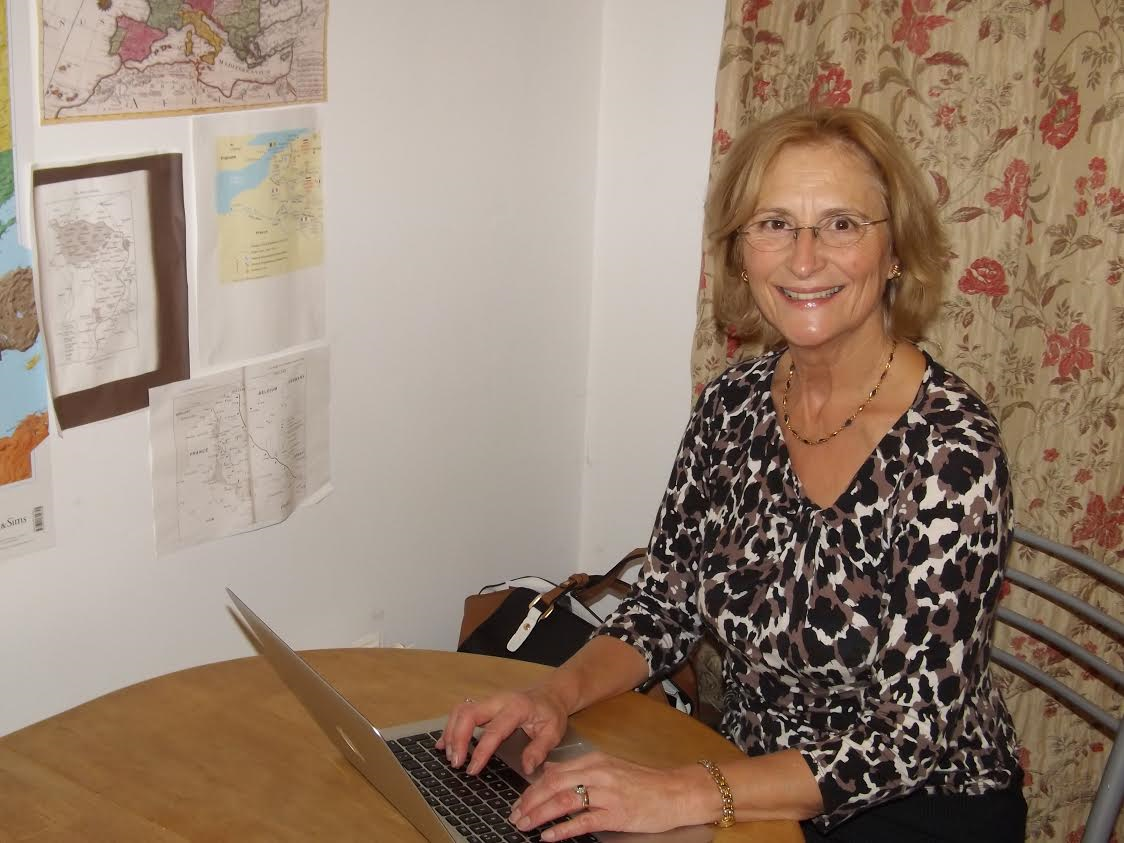
About Alison Clink:


Alison Clink
 is a writer and creative writing teacher living in Somerset.

Over fifty of her short stories have been published both in the UK and abroad. Several of her stories have been broadcast on Radio 4 and two short plays have been performed in Frome and Bristol.

Alison runs a drop-in creative writing group at Babington House near Mells, Somerset on Wednesday mornings 10am – 12.  This is for members of Babington House, guests of the house and my guests.

She also write critiques for aspiring writers, and gives talks to writing groups.

Her memoir, The Man Who Didn’t Go To Newcastle, is now published by Troubador and her first novel, Two Blackberry Lane is close to completion.  You can find her on facebook and twitter.
Alison says:


‘I am delighted to be supporting the ‘words for the wounded’ charity.’


www.alisonclink.co.uk


Words for the Wounded: Review of the First Place Entry

Words for the Wounded Independent Author Book Award 2016

1st place


Words for the Wounded- review of the First Place entry.


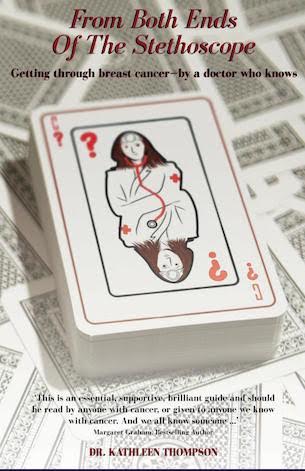
From both ends of the stethoscope:  getting through breast cancer by a doctor who knows. By Dr Kathleen Thompson.

(published by Faito Books)


‘Such a wonderful idea to bring doctor and patient together – like making a connection between the two worlds of Alice’s looking glass….  It is both accessible, well written and honest.’  Felicity Trew. (Caroline Sheldon Literary Agency)


Getting through breast cancer – by a doctor who knows


We forget, perhaps, that doctors can also become patients. Dr Kathleen Thompson suspected something was wrong. She hesitated – surely not her? Finally, and reluctantly, she sought a diagnosis. It was indeed breast cancer.


Kathleen looks back on her cancer with honesty, humour and compassion, and with the benefit of her medical understanding and knowledge of the system. She uses her experience to guide the reader through diagnosis and treatment, both when things go smoothly, and when they don’t.


She explains medical research and how to assess the credibility of the numerous treatment claims, and what we can all do to protect ourselves from cancer.


Judge’s comments: If you know anyone who has breast cancer, if you yourself are suffering, or if you just want to know more about the commonest UK cancer, then this could be the book you didn’t know you were looking for. It will give you the comfort of knowledge, of good advice, of reassurance that cancer is not an inevitable death sentence. It will also empower you to take control of your condition.

It is such a wonderful idea to bring doctor and patient together – like making a connection between the two words of Alice’s looking glass. As a doctor, Kathleen Thompson knows how to interpret medical information, how to challenge another doctor for answers and how to interpret what her body is telling her. Or so you would think. What made this book immediately appealing was the sheer humanity of her first reaction to discovering something ‘not quite right’ with one of her breasts. She ignored it. After that it was an easy step to  join her as she adjusted to being on the wrong side of the doctor’s desk and most people would want her to be with them in the consulting room at critical moments. Failing that, just take a friend and this book.

The book does not tell you what you should do or how you should feel. It offers strategies, explains what you can expect and what you can ask for – and what you should not tolerate. It clarifies jargon and gives you choices. It tells you what you can do to help yourself in terms of diet and exercise and rest, but does not make claims that any one thing will ‘cure’ you. It’s all right to be tired, and frightened and angry. It’s not all right for doctors to tell you ‘not to worry’.  And most breast cancer sufferers survive.

From Both Ends of the Stethoscope is both accessible, well written and honest. For someone who’s enduring the after-effects of chemo- or radio-therapy, it makes life a precious fraction of a degree easier.


All of which makes this book an unassailable 1st place winner.


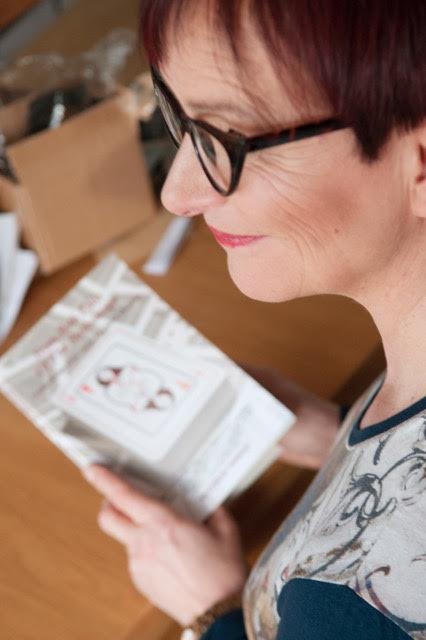
About Dr Kathleen Thompson:

Words for the Wounded- review of the First Place entry.kathleen

Kathleen is not only a writer but a physician, specialising in pharmaceutical drug research.

A few years ago her life changed completely, when she was diagnosed with breast cancer. This became the inspiration for her book, ‘From Both Ends of the Stethoscope’.

She has a passion for sharing her medical expertise and writes regular medical features for Frost e-Magazine. She has also written guest features for Fabafterfifty e-Magazine and a guest blog for Breast Cancer Care.

She learned a great deal from having cancer herself, and is keen to provide this insight to her readers.

She adores ballroom dancing and enjoys adventures. She has climbed Mount Kilimanjaro, walked the 500 mile Camino de Santiago and cycled through rural Rajasthan and in the mountains of Kerala.  During some of these activities she raised funds for Women v Cancer –which provides funding for three cancer charities, including Breast Cancer Care.

She has two long-suffering children, who tolerate their mother’s crazy projects, and regularly rescue her from IT catastrophes.

Kathleen is delighted to support Words for the Wounded which does such fabulous work.


Interview With Bestselling Author Margaret Graham

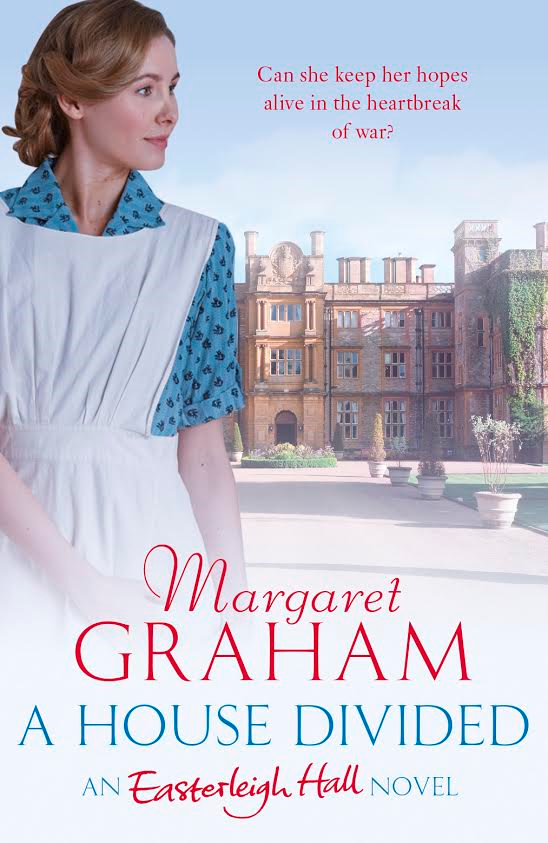
housedivided

What made you get into writing?

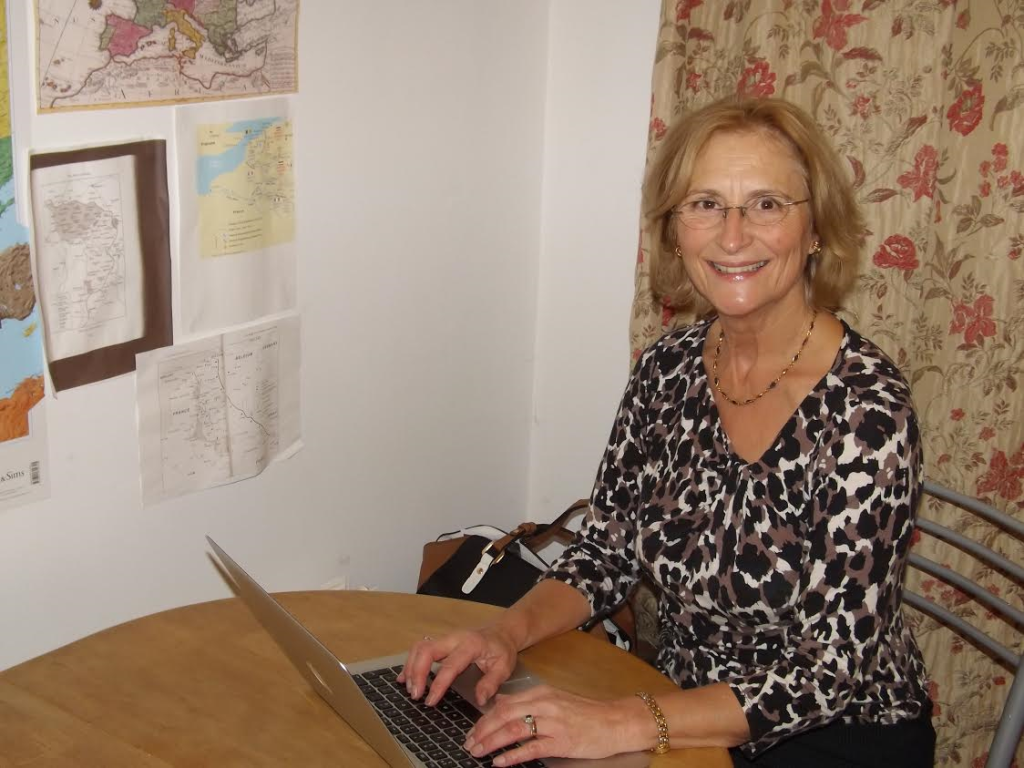
Having a 4th child. She was lovely but seldom slept and mithered a great deal. I needed to ‘get away’ even if only for half an hour. So I started writing a book about my mother’s rather interesting life growing up in the North East just after the 1st World War. Halfway down the first page I realised I didn’t really know my mum in that way, only anecdotes. So it became fiction, but based on her life. It’s called After the Storm.
margaretgraham

Did You find becoming a published writer easy?

Not at all. Having embarked on the novel I joined a writing class. I do wish more would these days, or at least learn the basics of structure, and how to edit one’s work. The class was not only crucial but also supportive, because I was working alongside like minded people, and it helped me enjoy the process. Mark you, my writing class had an excellent tutor, and you need to check this out. There are a lot of charlatans out there, selling their services when they know diddly-squat – and charge a lot. If you have the time, try ARVON and other residential courses. Also the weekend Winchester Writing Festival. That’s fantastic.

Then, of course, you reach the stage where you have a manuscript, finished. What next? How to get that publishing contract?

Try and find an agent. But how do you get the interest of an agent. I entered a competition and was one of the Best Entries. This helped when circulating the manuscript. I was finally taken by an agent who knew that Catherine Cookson, who wrote about the North East had just left Heinemann. Mine was a novel about the North East, and the publishers were immediately interested. Mark you, I then had to double it in length, put in a secondary character and sub plot, and do it all in 6 months. I was on my way.

So it is very much about what the publisher needs at a particular time. However, as you can see, the author does need to be flexible, and listen to the experts, and do as they want. Basically we are providing a product, which they have to need in the first instance. Then it has to be tweaked to be the best product you can create. They are invariably right. As a writer, you need patience. Learning to write well took me 4 years. Over those years I was serving an apprenticeship really, lhoning my skills, so that when the time came, I could do as they advised.

What else would you have liked to do?

Be a star. I feel the world has been deprived of a great talent!

What is your writing process?

Find that germ of an idea. Then think, think and think again, to see if it it will run as a novel. I work out the normal world, point of change, the tension, motivation, and totally getting to be the main and secondary characters. Alongside this, because I am invariably writing out of my time and place, I need to research, make notes, become so familiar with the context so that I can swim amongst the period, or situation, without overloading it with show-off details. Therefore I do a lot of reading, and that old chestnut – thinking again. Then, when I have a thorough plan, and by this I mean a chapter by chapter plan I get my head down and write hard for about 8 weeks. Because I’ve been doing it so long I have the experience to get it more or less right, and to create a sound structure. There is only one structure, you know. And it must be followed. It is the author’s ‘voice’ that makes a novel ‘different’. That’s the first draft, then I go through and alter, tweak, edit. So the second I usually sent into my publisher. Writers need to designate writing time. It’s a job, even if you already have a day job, so discipline yourself to create your writing time. You will find you do much of your thinking whilst traveling, driving, working, and at the end of the day you’re a bit further on.

A House Divided is the third Easterleigh Hall novel. How hard is it doing a series?

Hard in a way. You have to remember all the characters inside and out. What are their ages? Appearance, little ways, and then when you start the novel you have to try and make the novel stand alone, though it must also bring previous readers of the series up to date. I think that first chapter is the most difficult.

When can we expect another EH novel?

In a year.

Have you become close to the characters? Oh yes, I become all the characters really. You have to or it doesn’t work.

Can you tell us where the series is going next?

I would imagine into the 2nd world war. Perhaps Tim will go into the secret side of the war, but not quite sure about anyone else yet. It will come to me.
Lizy, me and Matt

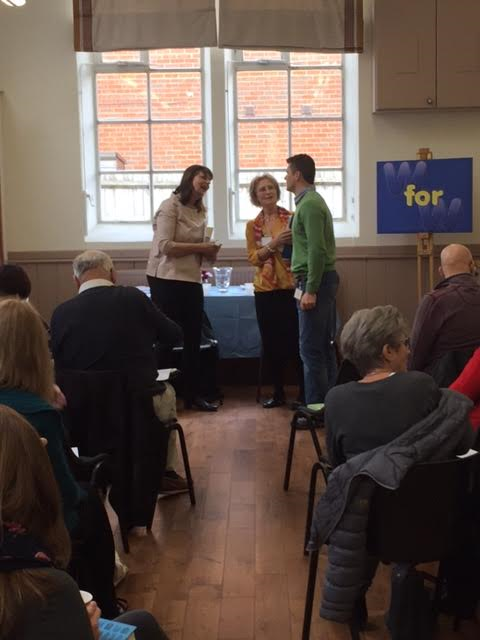
What do you like to do when you are not writing? I run my charity, Words for the Wounded, which raises money for the wounded through writing events. We have an annual Independent Author Book Award, and we also run workshops and an annual LitFest. We’ve helped a few writers along in this way. Last year’s winner was picked up by an editor, and others have found that the publicity of being placed has helped their sales. I love working with Frost, and reviewing books, and I do like to play truant and just have a good time.

Any tips for aspiring writers.

Work hard, go to writing classes, and literary festivals, listen to authors talking, and listen to a publishers’ or agents’ advice. READ books, learn how to write short stories, because publication in womens’ magazines promotes sales of your books. Most of all, don’t rush. Do several drafts, edit carefully, and enjoy it. Life’s too short not to.




A Day In The Life of CJ Carver

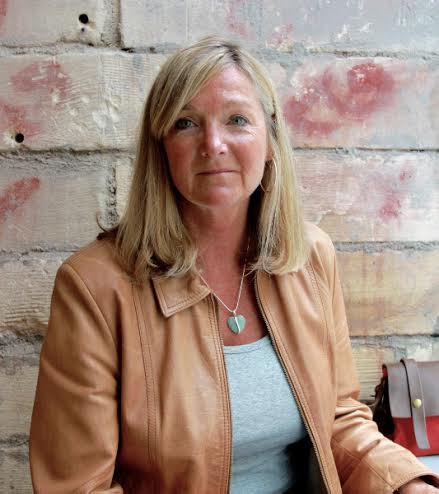
Being an author, people think I get up around midday, go for a long lunch and return home to bang out a few pages before pouring myself a glass of wine and finishing for the day.

Hmmm.  Nice thought.  If only it didn’t take me quite so long to bang out those pages . . .

A Day In The Life of CJ CarverToday I’m woken by the bin men at seven-thirty.  Eyes closed, I’m lying in bed listening to them crashing and banging down the road when, seemingly out of nowhere, an idea begins to form about the next book.  I let it drift.  I don’t try and pin it down.  Gradually it takes a firmer shape and I study it carefully before letting it drift again.

It is this state between waking and sleeping that I find the most valuable for creative thought.  It’s almost like meditation, but not quite, because instead of being clear of thought my mind is occupied with the story I’m trying to tell.  By the time I’m fully awake, I’ve made a handful of notes and am ready to leap into the day.

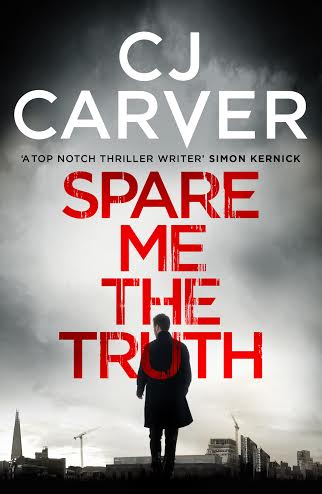
After a shower, breakfast and a brisk walk, I get stuck in to emails, wanting to clear my mental desk before I start writing.  I’m working on the sequel to Spare Me The Truth, or at least I was until my postie arrives and hands me three parcels, each containing a brand-spanking new hardcover book.  They all look fantastic and although I know I have to read them – I’m on several panels at CrimeFest in Bristol this year with the authors – I really shouldn’t start now.  Or should I?  I flick one open and am immediately captivated by the first page.  This sort of temptation is ever present being self-employed, and I have to force the books away and out of sight.

pic 2 Carver, Caroline 2 credit Steve Ayres

Credit: Steve Ayres

Soon, I’m completely absorbed in my work and don’t notice the time passing until my email pings.  It’s from a psychologist who is helping me research the psychopathology behind serial killers.  Another arrives, this one from a detective inspector in Manchester.  I know it drives the police crazy when writers get things wrong, so I do my utmost to get my facts right, but I have to be careful with research as it can be so riveting, I never get any writing done.

I work on my manuscript until early evening when I have a quick look at Twitter (another terrible distraction) before deciding whether it’s cold enough to light the wood burner.  Or shall I go to the pub?  Writing is a solitary occupation and aside from the postie, I haven’t spoken to anyone all day.  I’d better go to the pub, I decide, and talk to someone or I might go quite mad.


©CJ Carver 2016


Screenwriting Workshop with BAFTA Award winning writer John Foster

shot-at-dawn-poster

You may have had the opportunity to catch a performance of Shot At Dawn in Dorset over the last few weeks which has been earning fantastic reviews – and rightly so. Writer and Artistic Director, John Foster, kindly gave a pre-performance screenwriting  workshop for Dorset Writers Network  at Bridport Arts Centre.

John gave an overview of how to approach a project from a screenwriters’ point of view. An immense challenge to cover such a broad and detailed subject in an hour and a half but I came away with lots of useful insights that, even if I don’t use them myself, can pass on to other writers who may be in need of a few basic starting points.

The main difference I found was that, although structure, character and dialogue are as important as when writing a novel,  it pays to ‘think pictures’ and approach your idea from the visual aspect of telling your story. John provided a useful handout that presented the structure of a screenplay entirely in ‘pictures’ and it was quite easy to see from it how to build a story in this way.

For example:

                ‘Plump, juicy grapes growing up the wall.

                At the window. An elderly woman looking out.’  

And so on – I found that incredibly insightful, having zero knowledge of screenwriting.

Producers are always looking for people who can write pictures as opposed to dialogue. They are looking for unique writing ‘voice’ – basically an original way to tell a story. The main points I have taken away are:

If it is painful, write it.

If your ears are burning it’s a sign that you are writing something good.

Write about something that fires you up.

Who do I want the audience to really care about?

Can the story be told in sound and images? Do you have any sound motifs that give added depth?

Think camera. It is most important to think visually (but be careful how you put it on the page).

Invest in character and atmosphere and, as in all writing mediums – show not tell.

When you’ve finished your script make sure you are sending it out  to the right people. Do your market research.

I asked about his own writing practice and John described it as an organic process that grows and develops the more he writes. Ideas, he says, come from writing.

So there you have it. It’s no good thinking about it, get the words on the page, paint those pictures. Just do it.

john-foster

John Foster teaches screenwriting at Bournemouth University and Regent’s University, London. He has published fiction in the Guardian and Spectator and written for radio and theatre. Screen credits include many episodes for television drama series: Z-Cars, Softly Softly, Crown Court, Emmerdale, Juliet Bravo, Rockliffe, The Bill. John has written single dramas and dramadocs, including a BAFTA award-winning BBC Omnibus on Raymond Chandler. The movie of his screenplay Letters from a Killer featured Patrick Swayze in the lead role. He is contributor to the award-winning crime collection, Mean Time.  John is currently writing for the theatre, having helped found Doppelganger Productions, a theatre production company, of which he is Artistic Director.

www.dopplegangerproductions.com


Moment of Despair by Jenny Falcon

Moment of Despair by Jenny FalconpoemI know nothing of their lives

They know nothing of mine

I can try to imagine

They cannot even begin……

Big, beautiful beseeching eyes

Searching for comfort

Yearning without knowing it

For a life they will never have

Not without the love of parents,

Struggling to keep them alive

Beyond indignation, too tired

To question their destiny

Too hot, too cold, too hungry

No strength to play, to laugh

Just misery is the norm

How can this be? – what shame

Completely helpless I observe

Desperate to end their pain

Knowing with grim certainty

It would take a miracle

As Western life envelops

I know it can’t be right

The help that is in place

Will never ever be enough

I want to see them smile

Not in a newsreel pose

But with the joy of a child

Carefree, hopeful, cherished

I want them all to know

They have done nothing wrong

The world does not condemn

Their fragile innocence

Submissions Now Open For The 9th Luke Bitmead Writer’s Bursary

writing competitions, writing, competitions, novel, novel writingWe know a lot of writers read Frost so we wanted to bring this great competition to your attention. Submissions for the 2016 Luke Bitmead Writer’s Bursary are now open.

The award was set up shortly after Luke’s death in 2006 by his family to support and encourage the work of fledgling novel writers and the Bursary is now the UK’s biggest award for unpublished authors. The top prize is a publishing contract with Legend Press and a £2,500 cash prize.

Luke Bitmead was the first novelist to be published by Legend Press, his novel White Summer was released in 2006 shortly before his death. Two novels have been published posthumously – The Body is a Temple and Heading South (co-authored by Catherine Richards). Information about Luke can be found at www.lukebitmead.com.
This fantastic bursary for a ninth year, and hope to continue the success of our previous winners Andrew Blackman (On the Holloway Road), Ruth Dugdall (The Woman Before Me), Sophie Duffy (The Generation Game), J.R. Crook (Sleeping Patterns,) Joanne Graham (Lacey’s House), Jo Gatford (White Lies), Tara Guha (Untouchable Things) and Lyn G. Farrell (The Wacky Man) published today 2nd May 2016.

Only adult fiction is eligible for this bursary, no children’s books or non-fiction.

Tom Chalmers, Legend Press MD comments ‘We are delighted to be continuing this brilliant bursary for the ninth year. The prize is a fantastic way to find new, undiscovered writing talent, and we have found some of our most exciting authors through the prize. Luke was an amazingly talented young author, and it is an honour to be continuing the prize in his name.’

Submissions from writers will be accepted from Monday 2nd May until Friday 15th July 2016.

For information about how to enter visit: http://www.legendtimesgroup.co.uk/legend-press/365-luke-bitmead-bursary


The life of a Second Wife by Margaret Graham

Frost is so pleased to see Elizabeth Buchan’s novel, The Second Wife picked out by Daisy Goodwin in her feature in the Daily Mail: Second Marriages – key novels to help you through the trickier times in life.

The life of a Second Wife elizabethbuchan
Daisy Goodwin discusses Rebecca by Daphne Du Maurier, Before She Met Me by John Barnes, and Sunday Times No 1 bestselling author, and patron of Words for the Wounded, Elizabeth Buchan, and her novel The Second Wife.

The life of a Second Wife lizybuchan
The Second Wife explores the world of the mistress who becomes the wife – overtones of Sir James Goldsmith who did just that, and thereby created a vacancy. Ouch.
According to Buchan the second marriage is a world that can be less than appealing, full of pitfalls and  of course,  baggage. Elizabeth Buchan, who spoke recently at the Words for the Wounded LitFest at Downley, High Wycombe, (Frost’s editor, Catherine Balavage spoke later in the day) examines Minty’s experiences of a second marriage sympathetically, but with her usual incisive wit and elegance. It is a compelling and heart-warming novel, as are her others,  the most recent being the thought provoking and excellent I Can’t Begin to Tell You set in Denmark during the 2nd World War.

I can't begin to tell you
It’s great to see The Second Wife having another outing. Go on, give yourself a treat – it is very well worth reading.

Elizabeth Buchan’s latest book The New Mrs Clifton will be out in August 1016. Frost is looking forward to reviewing it.


The-New-Mrs-Clifton-380x609


The Second Wife                   published by Penguin
I Can’t Begin to Tell you        published by Penguin
The New Mrs Clifton             published by Penguin  August 2016