SUNDAY SCENE: RACHEL BRIMBLE ON THE SETTING FOR HER LADIES OF CARSON STREET TRILOGY

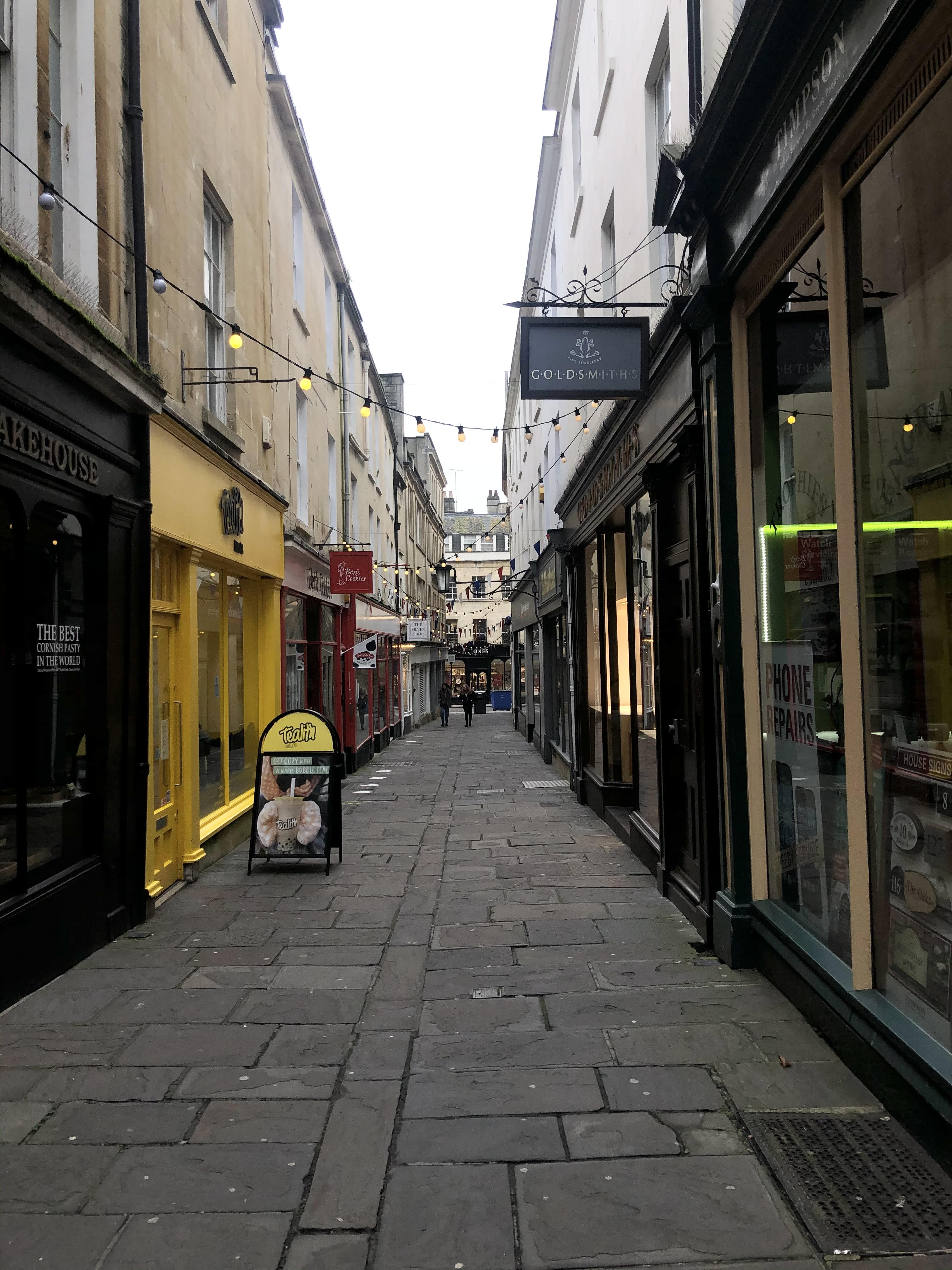
There are two reasons I have set all my historical romances in the wonderful city of Bath, England – one) I live just a short 30 minute drive away and 2) it is filled with the most beautiful Roman, Georgian and Victorian architecture, the most amazing side streets as well as a plethora of grand (and not so grand) buildings that I pretty much use as my imagination dictates.

As Bath is obviously a real place, you might be wondering how I can use some of its buildings however I see fit. The explanation is simple – I don’t tell readers which buildings are imaginary! Thankfully, unless I use famous Bath buildings like the Abbey, the Pump Room or Royal Crescent, my audience seem to be happy to follow my lead.

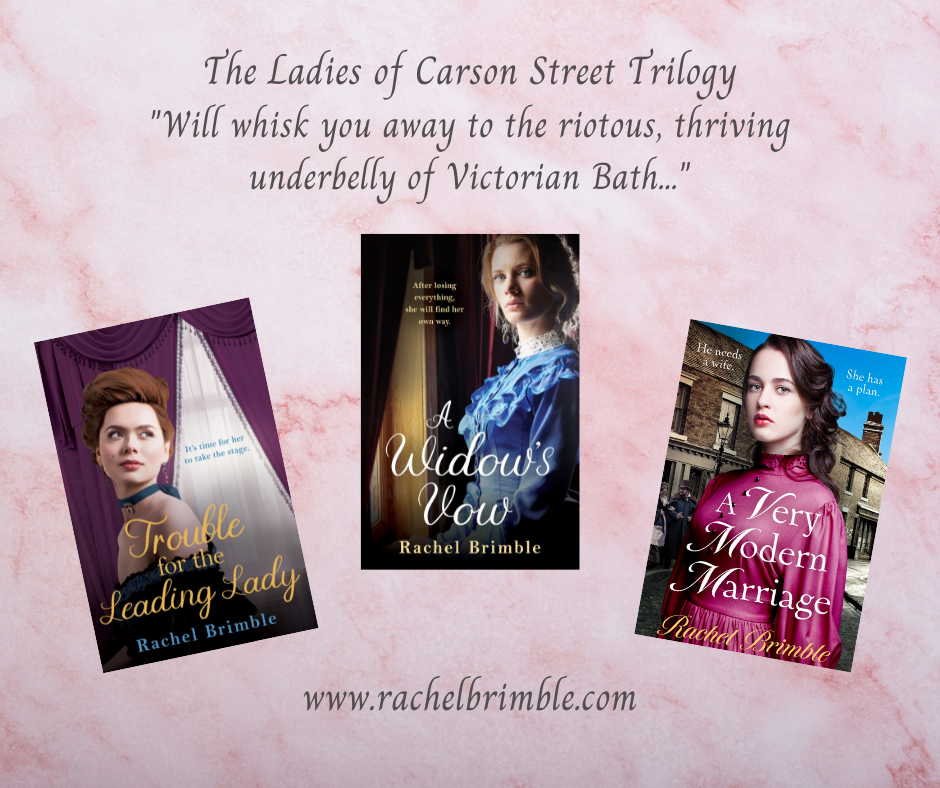
For my latest series, the Ladies of Carson Street, I once again return to Bath.

However, rather than spending time enjoying high tea in the Pump Room or dancing in the Assembly Rooms, you will find the heroines of the trilogy, Louisa, Nancy and Octavia, either living and working from their house on Carson Street, frequenting the backstreet taverns or watching an act at the Theatre Royal.

In book 1, A Widow’s Vow, Louisa and Nancy arrive in Bath from Bristol to start anew after Louisa is unexpected widowed and left with nothing more than the keys to a Bath property she had no idea existed…

They walked along the sweeping curved wall surrounding the gushing waters of the River Avon and a beautifully landscaped area known as, according to Louisa’s map, the Parade Gardens. The barren trees were interspersed with evergreens, the soil beds empty of flowers in winter but imaginings of how the gardens might look in the summer months gave Louisa a flicker of optimism.

Continuing to walk along the cobbled street, she and Nancy neared the row of terrace houses.

‘Carson Street.’ Nancy pointed to a sign bolted to one of the corner houses adjacent to a busy thoroughfare filled with carriages, horses and pedestrians. ‘This is it.’

Locating the right house wasn’t difficult as Louisa had memorised the deeds so often and so intensely, the pencilled sketch of Anthony’s property was clearly drawn in her mind. ‘Anthony’s house is—’

‘Ahem, your house.’ Nancy grinned.

‘My house is about halfway along the street.’ Louisa inhaled a shaky breath. ‘Come on. I want this over with.’

She marched ahead of Nancy, pulling a brass front door key from her purse. Purposefully, Louisa drew forth her anger at Anthony’s lies, betrayal and cowardice. Lord knew, she would have to take strength from somewhere if she was ever to believe such a property was now hers to do with as she would. Lifting her chin, she shrouded herself in an invisible layer of protection against whatever further hurts were to come in her uncertain future.

But once she was standing outside the residence, her bravado floundered.

The house was beautiful. Built in a butter-coloured stone, its sash windows were flanked with velvet drapery, the front door painted a dark grass-green, complete with brass knocker and a stone ornament decorating its step. The longer Louisa stared, the more strongly inevitability enveloped her. She had survived this long and she would continue to survive, come what may.


This extract perfectly introduces you to the tone of the series and to two of the main three characters in the trilogy. Gritty, sometimes tough, sometimes hilarious, the Ladies of Carson Street are an unforgettable trio!


Rachel’s Website: https://rachelbrimble.com/


SUNDAY SCENE: DEBORAH CARR ON HER FAVOURITE SCENE FROM THE BEEKEEPER’S WAR

I’ve always dreamt of owning a folly and specifically to have one as my writing space. I’ve also always loved the thought of having a walled garden where I could grow vegetables, fruit trees and flowers. I don’t have either of these and doubt that I ever will but there was nothing stopping me putting both of them in a book. It had to be the right book though and when I was writing my latest historical novel, The Beekeeper’s War I knew this was that book.

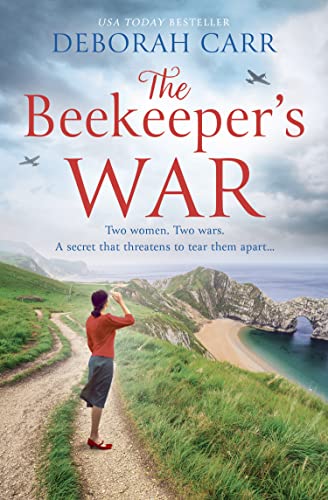
The Beekeeper’s War is set during the First and Second World Wars when Pru Le Cuirot, a young Jersey girl and her friend go to work as nurses in a beautiful manor house in Dorset being used as a hospital for recuperating injured soldiers. Later in the book Pru’s daughter Emma goes to stay at the manor and discovers an unfriendly beekeeper tending to his beehives in a beautiful walled garden. When Emma arrived she was told to enjoy the grounds but stay away from the folly, which is why she went looking for someone to speak to and ask where the folly is so she that could avoid it.

Not wishing to go where she shouldn’t, Emma decided to ask someone so that she could avoid the folly. She spotted a walled area to her right with a painted wooden door, so she doubled back on herself and went to look inside. It was slightly open so she entered, relieved to see someone working at the far corner. It was a beekeeper. He would know where the folly was, surely.

‘Hello?’ Emma called. He didn’t seem to hear her as he stood pointing a metal container with smoke coming out of it at one of the hives. She walked closer to him and called out to him once again. ‘Excuse me?’

The next thing she knew, she was being pushed roughly from behind. Emma shrieked as she fell forward, landing hard on the stone pathway. She gritted her teeth as pain shot through her right knee, and, sitting up, she turned to see who had attacked her.

‘Buddy!’ the man bellowed. ‘Get down, now!’

Emma saw a large bouncy dog that looked like a cross between a Labrador and something else.

The man tapped his thigh and the dog loped over to him. ‘Are you hurt?’ he asked, hurrying over to her.

Emma raised her hand. ‘I’m fine,’ she insisted, not sure that she was, and rubbed her sore knee. She got to her feet.

The man stared at her. At least she presumed he was staring at her. It was a little difficult to see though the beekeeper’s hat with the black mesh obscuring his face.

‘Did you want something?’ He didn’t seem all that friendly all of a sudden, which was odd, seeing as it was his dog that had pushed her over. Maybe he was simply surprised to see a stranger in the garden.

‘Um, I was wondering if you could help me.’

‘Should you be in here?’

‘Yes.’ She realised that entering the walled garden hadn’t been the clever idea she had imagined it to be.

‘Really?’

She wasn’t sure what business it was of his but, wanting his help locating the folly, decided to appeal to his friendlier side. If indeed he possessed one.


The Beekeeper’s War is out on July 21st. Find out more about my books at deborahcarr.org.

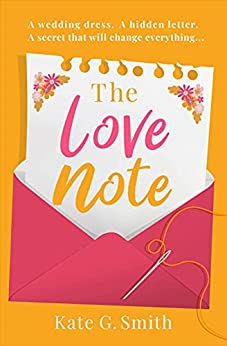
SUNDAY SCENE: KATE G SMITH ON HER FAVOURITE SCENE FROM THE LOVE NOTE

I grew up in Norfolk, so setting The Love Note here felt natural to me. It’s a beautiful county with rural villages and easy access to the vast stretches of glorious coastline.

Based in a fictional Norfolk village, The Love Note follows my main character, Maggie, as she sets about sorting the family home after her mother’s death. There, Maggie finds her mother’s wedding dress—which she’d been told was missing—and hidden inside are love letters written in French.

Maggie enlists the help of Nick, an old school crush, to help her decipher the letters and hopefully find her missing father. And one of my favourite scenes is where Nick asks for a favour in return.

He picks Maggie up in a battered old Volvo

‘So,’ I say, clicking my belt on, ‘where are we heading and what’s the big secret?’

Nick laughs and throws his arm over my seat to reverse back out onto the quiet country lane.

‘No secret,’ he says, his tongue between his teeth as he concentrates, ‘If there’s one thing you need to know about me, Maggie, it’s that I’m not a massive social communicator. No social media, very few texts.’

Nick winds down his window and I do the same. It’s the first week of September and the air is thick with the dust left behind from the combine harvesters. It whips through the car, sending my hair flapping all over the place.

As they drive on, Nick explains to Maggie that it’s his mum’s birthday, he needs help with the preparations, and they’re off to check out the venue.

He shifts gears and indicates to turn into an even smaller country lane where the grass verges seep onto the road and attack from both sides with long spindly fingers of soft wild wheat.

We park in front of an old barn with traditional Norfolk flint and red bricks which are somehow managing to hold themselves up despite their jaunty angle. A modern addition of floor-to-ceiling windows down one side give a view of the rustic interior.

When they head inside, Maggie gets carried away with ideas.

‘I can just imagine it lit up with a million fairy lights along the back wall, reflected in the window; tables with freshly picked wildflower bunches and candles in jars. I can picture your mum in a flower headdress like a giant daisy chain or a . . .’

I stop talking because in all my excitement of picturing the barn how I would love to see it, I realise I have no idea if Nick’s mum even likes flowers or if she gets bouts of hay fever that would mean she’d look like she was crying through her whole party if I cover the place in floral displays. Nick is staring at me, his face giving nothing away.

‘Sorry,’ I say, digging the toe of my ballet flat into a worn dip in the brick.

‘No, no that’s perfect. That’s exactly why you’re here.’ He is still watching me, and for a beat I watch him back.

He reaches into his pockets and hands me a small bag of pistachios.

He remembers.

I take them and thank him warily, remembering how I used to always have a bag of these with me at school to pick on throughout the day.


I love this scene, not only because I can lose myself in the Norfolk countryside, but also for the glimpse into the blossoming friendship between Nick and Maggie.


Find me in my Facebook group for writers https://www.facebook.com/groups/writingittoday

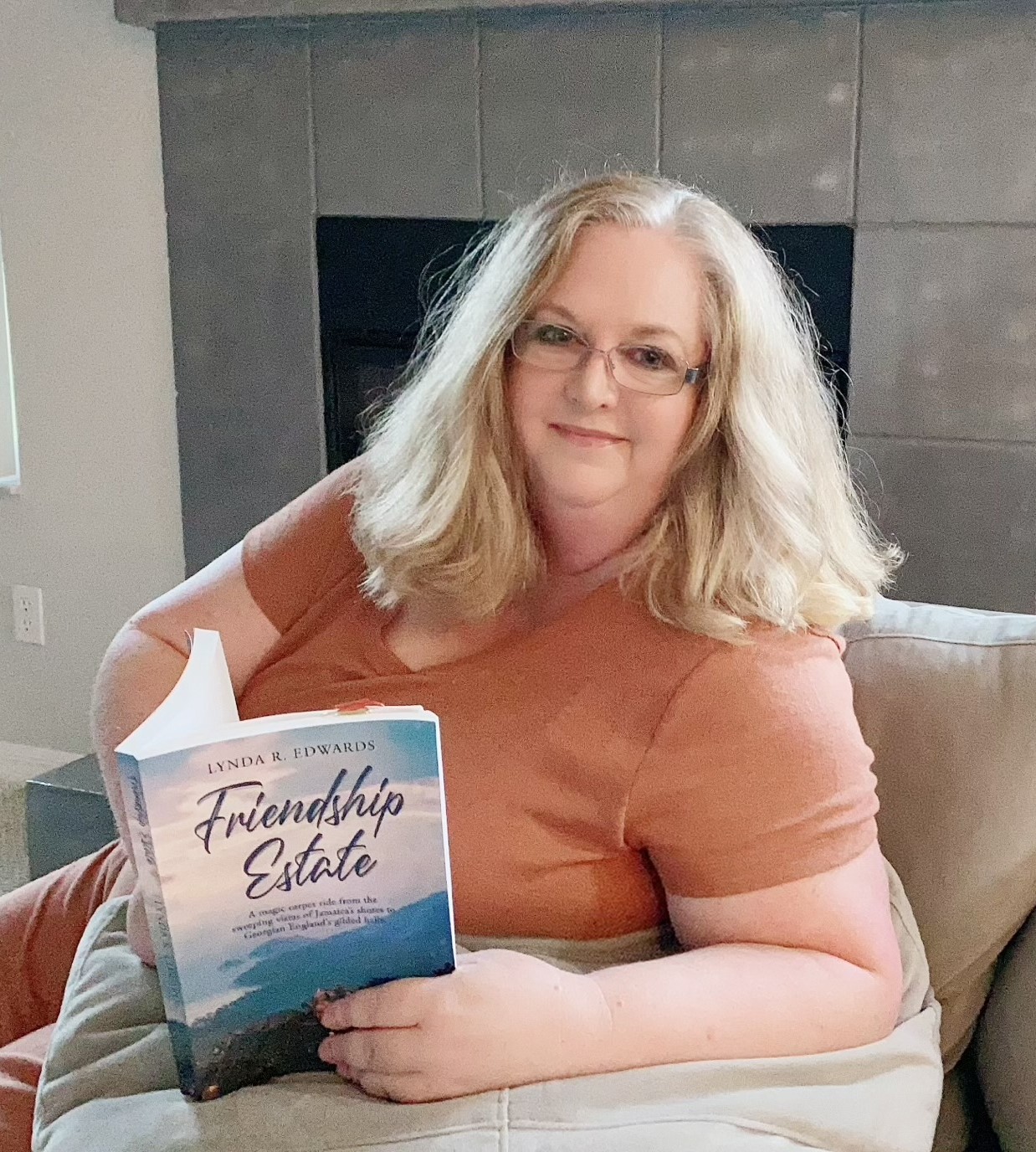
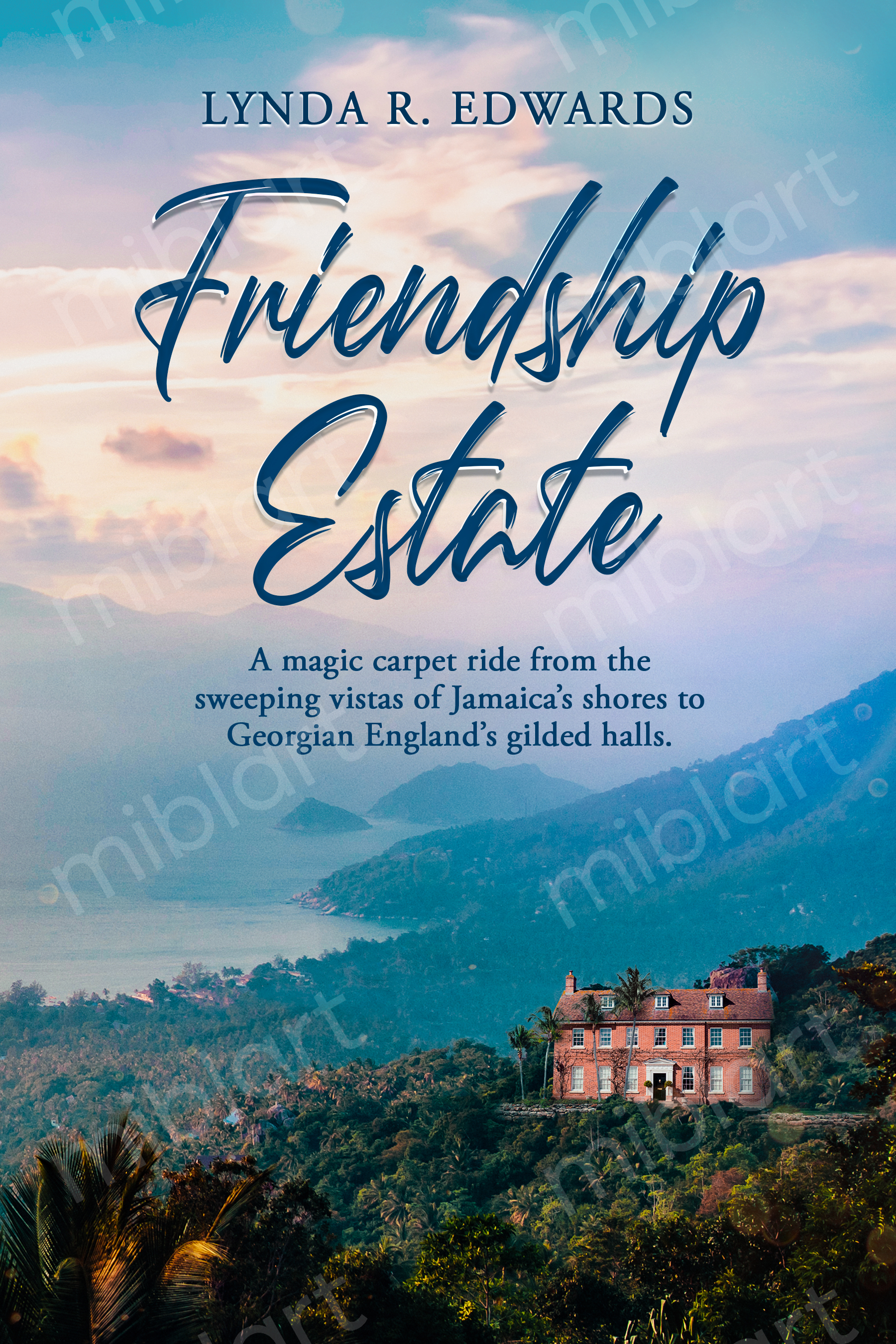
SUNDAY SCENE: LYNDA EDWARDS ON HER FAVOURITE SCENE FROM FRIENDSHIP ESTATE

My latest book, Friendship Estate, is set on the island of Jamaica, where I was born and raised.  In the late 1700s and early 1800s, the Caribbean Islands were at a crossroads.  The abolition of slavery was on the horizon.  In the colonies, the white and black races had been mixing for generations.  They had formed a new society with a culture born of oppression, harboring a deep desire to mix freely while charting a new course for themselves.  In Friendship Estate, we witness the intricate romances and elegant customs of a bygone age while meeting a captivating array of characters.

The story is very personal because eight generations of my family are buried on the island.  The story is based on one of many passed down through the generations.  But this one has always intrigued me, causing my imagination to take flight.

I loved writing this scene because I saw the scene unfolding in my mind’s eye.  I envisioned Sabine’s anger and felt her pain as she looked out at the beautiful scene unfolding in front of her, marred by the hatred she felt.  Sabine’s father is dying.  She is hurting and comes across her nemesis Brixton as he is swimming in the sea.

Sabine Holborn stood alone on the hill overlooking the white sand below her.  She watched as the sea turned from turquoise to dark blue.  The wind picked up the waves and crashed them against the shore, matching the anguish in her heart.  Her father was dying.  It was no longer if but when, and the unshed tears made the scene in front of her shimmer.  The loud sobs that racked her body had subsided as she rode to her favorite spot overlooking the endless expanse of the Caribbean Sea.  She loved Mount Sion, but it belonged to that hateful Brixton Dunbarton.

She had known Brixton Dunbarton all her life.  A few years older than she was, she watched as he flirted his way through all the eligible girls on the island.  All except her.  She had listened as her friends prattled on about how handsome he was, his blond hair kissed by the sun, they romanticized.  He was lean with long legs, hardened by years of riding and working his estate.  No one seemed to care that his clothes were last year’s fashions, slightly frayed and worn, or that his shoes were scuffed, and his dress stockings all had runs in them.  He was so beautiful; everyone overlooked his financial shortcomings.  As they grew older, a few girls had whispered of their romantic escapades with him.  He was always polite but never flirted with her and had proposed no romantic assignations.  It hadn’t taken long for her friends to notice.  They did not comment to her face, but she knew her standing with some of them had fallen, all because Brixton Dunbarton did not think she was important enough to flirt with her.  She hated him for it.

She watched as Brixton frolicked in the waves, not a care in the world.  He swam and splashed around, secure in his place in this world.  She did not have that luxury now, and it shook her natural confidence to its core.  She watched Brixton, and her resentment grew.  Why was his hateful father still enjoying his life while hers clung to his? 

Lynda Edwards is a Jamaican writer. To date, she has written two novels, Redemption Songs and her latest release, Friendship Estate.

Find out more about Lynda and her other books at www.lyndaredwards.com

The 5 Books That Changed Me by Jane Lambert

‘Rebecca’ by Daphne du Maurier: My mum gave me this book when I was about 15.

As a shy, gauche teenager I identified with the second Mrs de Winter. Her story taught me to not always take situations or people at face value, that being shy is not a sign of weakness, not to compare myself to others and to be true to myself.  

‘Bridget Jones’s Diary’ by Helen Fielding: Like Bridget, I used to want to be in a meaningful relationship, but would fall for the wrong guys. I eventually learned that I deserved better, to have self-respect and to stop putting up with bad behaviour – just as Bridget did. I too can be clumsy and say the wrong thing at the wrong time. Bridget taught me to laugh at myself and that I’m okay just as I am. 

‘The Understudy’ by David Nicholls: I was drawn to this book as I have been an understudy many (too many!) times. Though fiction, the authenticity of the narrative made me wonder if the writer was, or had been an actor. I was right, and it is his personal story which inspired me to take my writing more seriously and to aim high. As an actor you’re dependent on someone hiring you. You have no control. As a writer you produce your own work. It’s rewarding to be part of something you have created. I have ‘The Understudy’ to thank for leading me to David Nicholls, who set me on an alternative and more enriching creative path. 

‘The Curious Incident of the Dog in the Night-time’ by Mark Haddon: This book had a huge effect on me. The story is told through the eyes of 15-year-old Christopher, whose inability to tell lies, social awkwardness and logical take on the world give you an insight into being on the autistic spectrum and the effect it has on those around you. I could identify with some of Christopher’s thoughts, such as: “I find people confusing” and “I want my name to mean me.” Christopher’s story gave me an appreciation of how being “different” brings its own special gifts and should be celebrated. I was lucky enough to be involved in the London stage production.  I was lucky enough to be involved in the London stage production.

‘Big Magic’ by Elizabeth Gilbert: “The universe buries strange jewels deep within us all, and then stands back to see if we can find them.” When I was writing my first novel there was an annoying voice whispering in my ear that it was a waste of time. Who did I think I was? JK Rowling? ‘Big Magic’ taught me to believe in myself and not let fear stand in my way. Thanks to this book, I have learned to live alongside fear so I may strive to be better, but not let it control my mind. This has helped me in my acting career too. I still suffer occasionally from ‘Imposter Syndrome’, but dipping into this book gives me a dose of self-belief and puts me back on the right track. 

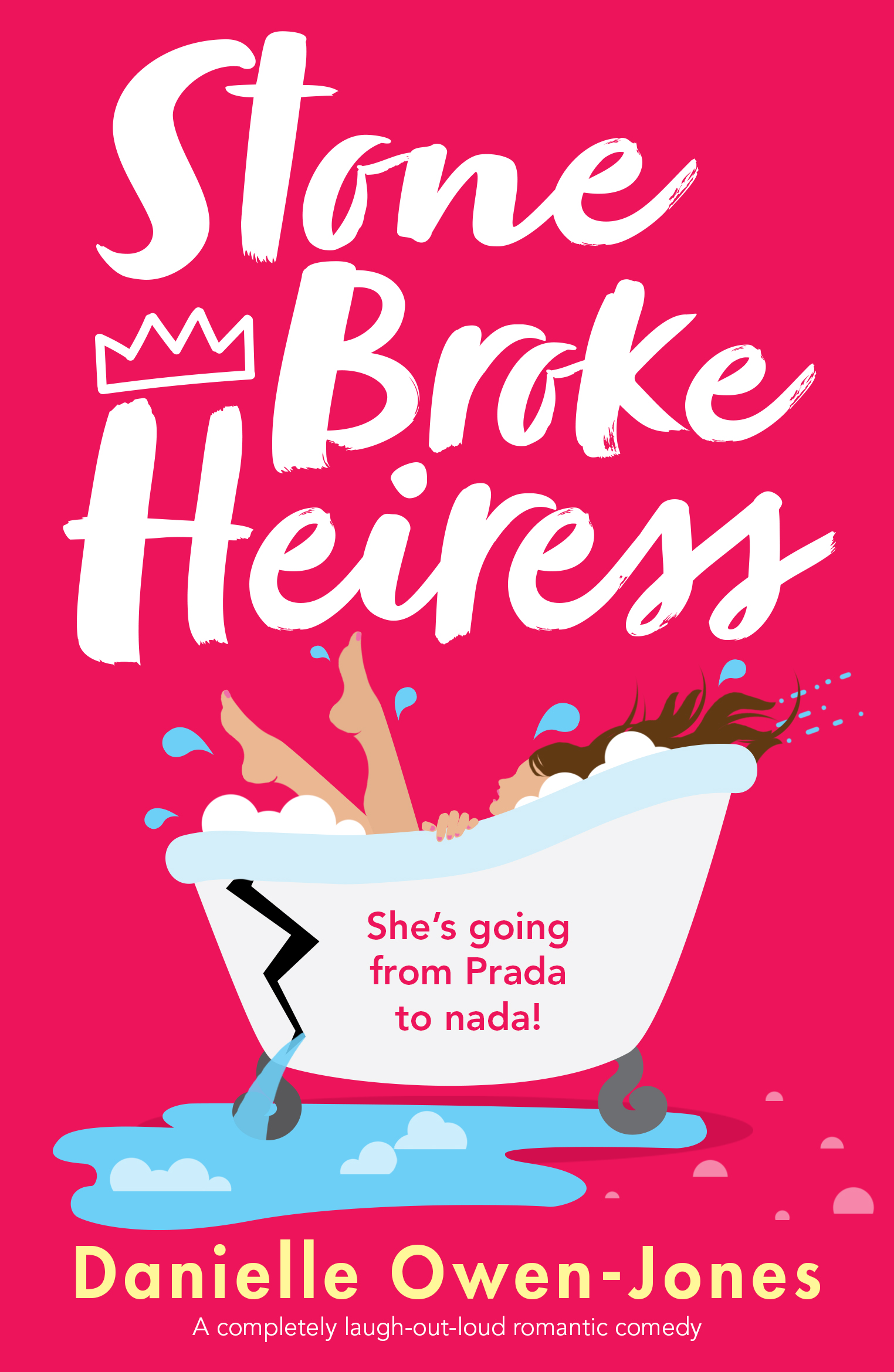
SUNDAY SCENE: DANIELLE OWEN-JONES ON HER FAVOURITE SCENE FROM STONE BROKE HEIRESS

It was as I walked along the tree-lined Princes Boulevard, a leafy avenue in the heart of Toxteth, while the warm sunshine dappled the emerald leaves, that I admitted defeat – I was seeing the area with new, sober eyes and I was ashamed of how fast I was to judge it at first.

The boulevard was a hive of activity on such a beautiful day. Cyclists pulled over from the designated cycle lanes and gulped from fluorescent sports bottles. Visitors stopped to marvel at the art installations and read the plaques that revealed the history of the area. I stood alongside the groups and pored over the amazing heritage. Each plaque explored a different topic – the religious buildings reflecting its multi-faith community, its once thriving nightlife, the history of activism and the legacy of Liverpool’s role as a major port city.

Through my ignorance, all I’d associated Toxteth with was the riots, but here it was, resplendent in its regeneration and the proud community basking in its glory.

An installation at one end of the boulevard – just before the inviting, gold adorned gates of leafy Princes Park – was especially eye-catching, with striking golden text and gilded patterns inscribed in the stone stating: ‘Our Home, Our Life, Our Future’. Would it be my home, my life and my future too?

The freshly laid, pastel grey pavement was decorated with the occasional mosaic showcasing inspirational quotes. I stood above the one featuring words once spoken by Nelson Mandela: ‘The greatest glory in living is not in never falling, but in rising every time we fall.’

I had my answer; Toxteth had given it to me. I turned and headed back to my flat – back home.

My debut novel, Stone Broke Heiress, was originally set in London. It was my agent’s brilliant idea during pre-submission edits to change the location to Liverpool, Toxteth specifically. It sounds like a total cliché, but that really was a lightbulb moment. The new, Northern setting that I knew so well transformed the book in every way. From a pitch perspective, it gave the book an interesting angle for publishers when Clare took it out on sub (it was picked up by Bookouture in a two-book deal). But the setting also affected every aspect of the book and the more I wrote about the city I loved, the more the ideas flowed and the story grew stronger.

There was something else important to consider too. Unfortunately, the first thought that springs to a lot of minds when people hear ‘Toxteth’ is the 1981 riots. When I was researching the area for my book, I knew I had to include a reference to the riots forty years ago, together with the challenging years the area experienced afterwards. However, Toxteth has undergone an exciting period of transformation over recent years and I made a conscious effort to highlight the positive changes when writing those scenes.

A significant development in the area is the £4million, newly renovated Princes Boulevard – a leafy, tree-lined avenue that runs through the centre of Toxteth. The history of the area, both good and bad, is told through installations and information plaques dotted along the stunning boulevard. This example of regeneration is a vital part of Toxteth – combining both its history and its future. That’s why I chose the boulevard as the backdrop to a key scene in my book, when the protagonist, Bella, sees the area through new eyes and regrets how fast she was to judge it based on first impressions.


www.danielleowenjones.com


How I Got Published by Jane Lambert

Isn’t it strange how sometimes you have to hit rock bottom to make a change for the better?

When I discovered that my husband had been having an affair my world fell apart. I could feel myself being dragged down a black hole, but instead of therapy, I turned to writing and began the first draft of a story I had been carrying around in my head for years.

It’s a romantic comedy, inspired by my rollercoaster journey from globe-trotting cabin crew to struggling actress.

It was my escape from all the sadness and drama of my divorce, giving me something positive and fun to focus on.

I self-published ‘Learning To Fly’ through Amazon, and I’ll never forget the feeling of holding my book in my hand. I felt like a cloud had lifted and that I was on a new and better path. The book got some great reviews and I was invited to speak about my writing journey at Blackwell’s Writers at the Edinburgh Fringe and on BBC Radio London.

I sent a copy to HQ HarperCollins, and much to my amazement, they offered me a contract!

I was asked to make some major changes to the story and they re-designed the cover, changing the title to ‘The Start of Something Wonderful.’  

I narrated the audio version for HarperCollins Audio and am now working on adapting it into a 6-part comedy drama for TV.

I’m also writing my second novel, ‘Marriage, Mafia & Mozzarella’, which was inspired by my rollercoaster marriage to my Italian ex-husband. So you see, life can have a funny way of working out, can’t it?


Mark Ellis My Writing Process


Q1: I took up writing when I sold my computer services business in the early 2000s, having always had an ambition to be an author. I have so far written 5 books in the DCI Frank Merlin World War 2 detective series. The four published books are Princes Gate (set in January 1940), Stalin’s Gold (September 1940), Merlin At War (June 1941) and A Death In Mayfair (December 1941). Merlin At War was nominated for a CWA Dagger in 2018. My aim is to continue to follow Merlin’s adventures through to the end of the Mark Ellis, author

Q2: The book I am promoting now is the 5th in the series, Dead In The Water, which will be published by Hachette (Headline) on May 19th. It is set in August 1942 and revolves around two artistic masterpieces stolen from an Austrian Jewish family before the war and which end up in London with fatal consequences.


Q3: As I am writing a historical series set in a specific period, my principal framework is the timeline. As you can see above, all books are separated in time by 6 to 9 months, so when I finish the latest I know roughly when the next one will be set.When I’m starting work on the new book, I focus intently on the exact time slot of the story. I research that heavily and that process often prompts plot ideas. I am already working on Frank Merlin 6, which I have decided to set in Spring 1943, and plot ideas are beginning to occur to me. When I have roughly formulated what ideas to pursue, I just start writingand see where they take me. I usually do not know who did what until I am about two thirds of the way through the book. I write a first draft straight off without stopping to edit. Then I do many edits before sending the manuscript off to the publishers. I did about 15 edits of Dead In The Water which is about the norm.


Q4: As is clear from above, I am not really a planner. I rather think of myself as a sculptor, except that I don’t have a piece of stone or marble to work with. My first draft is the working material. Once I’ve created that I start chipping away.


Q5: The word count of the new book is approximately 110,000. The word count of my first draft was over 200,000 so you can see a significant editing job was done. My plots tend to be quite complex and I don’t think I could manage anything much shorter but I think 110,000 to 130,000 is a good length for a thriller.


Q6: I am conscious as I write my first draft of teeing up various characters and situations but as I say don’t formally plan a structure in advance. After a while, I tend to find everything comes together in its own way. I seldom make major structural changes when I get down to editing.


Q7: I find writing the first draft very hard work. Also waiting for comments on the submitted manuscript is tough.


Q8: Editing is good fun. Also I love creating a fictional world all of my own and then sharing it with my readers.

Dead In The Water by Mark Ellis is out now in paperback by Headline Accent, £9.99.