When is the best time to get pregnant?

Trying to conceive or even planning when to get pregnant can be a difficult topic. But, why should it be? The Fertility Partnership (TFP), one of the UK’s largest IVF providers and fertility specialists, shares some insight into the best time to get pregnant and factors to consider when planning for a new addition to your family.

traveling in london while pregnant, traveling in london with pram, traveling in London with baby, with child, London, tube, step free access, babyonboardbadgetravelinginpregnantwhenpregnant

The best time to have sex in order to get pregnant is during a woman’s fertile window. This can last up to six days of every month, when the body is leading up to ovulation, and the day of, when the body releases an egg.

The egg survives for around one day once it has been released. However, sperm can survive inside a woman for up to a week, resulting in a six-day window for the sperm to meet an egg.

Women are most likely to conceive if they have sex within a day or two of ovulation. However, it can be difficult to know when ovulation is going to occur and therefore the days before it. Many women like to be precise and use calendars to help them work out when they will ovulate, but it’s healthiest to enjoy sex every two to three days for best results.

When a woman ovulates in any given cycle, it depends on a couple of factors:

  • The length of the woman’s menstrual cycle
  • How regular the woman’s periods are

A menstrual cycle can last between 21 and 40 days, though the average cycle is around 28 days. Regardless of how short or long a woman’s cycle normally is, ovulation will often occur around two weeks before her next period begins. If a woman has a 28-day menstrual cycle, she is likely to start ovulating around the middle of her cycle. Those with a short cycle can ovulate within days of her period coming to an end.

If a woman’s menstrual cycle is different from one month to the next, her fertile window is likely to vary by about a week between each period. This explains why it’s best to have sex every two to three days throughout a cycle. It has proven to be more effective than focusing only on the days of ovulation. Regular sex also improves the quality of sperm compared to daily sex.

How will you know when you are going to ovulate?

Many women are very aware of when they are going to ovulate, however others experience little to no changes at all. For women who are thinking about getting pregnant, it’s important to get in touch with your body and start looking out for and recognising signs of an approaching ovulation. These signs may appear around three weeks before a woman can expect her next period. Some common signs to look out for are:

  • Increased vaginal discharge (fertile mucus) that’s wetter and more stretchy than usual
  • Slight discomfort on one side of the stomach
  • Increased libido

Checking cervical mucus is one of the easiest ways to work out what days you will be most fertile. Changes to mucus are one of the easiest signs for women to spot.


What if you have irregular periods – will it be harder for you to get pregnant?

No, not necessarily. Irregular periods do not mean that a woman is less fertile than women with regular periods. However, if you are experiencing periods that are continuously irregular or more than 36 days apart, it is advised to see your doctor. Irregular periods can be caused by conditions like polycystic ovarian syndrome (PCOS) and thyroid disorders. Unfortunately, these conditions can affect a woman’s chances of conceiving, so it’s ideal to visit a doctor to obtain help and advice.

If you’re still experiencing issues with conceiving and think you need some extra assistance, The Fertility Partnership can help. Offering many different kinds of treatment including IVF, fertility preservation, fertility assessments and more it has over 200 fertility specialists within its nine clinics across the UK & Ireland.

To find out more about the treatments it offers, what would work best for you or simply to find your nearest clinic visit www.thefertilitypartnership.com.
 

How I Got Published Jenny O’Brien

There are many roads to publication. But as a forty-year-old with three kids of three and under, including twins and a busy job as a nurse, none of them were for me – or so I thought. Then a character popped into my mind. An earworm that wouldn’t go away. A little boy called Dai Monday. It took me a year to find the courage to pick up a pen. With no time to write at home and a busy day job, I took to carrying a notebook around in my scrub top. This notebook got filled during my 15 minute coffee breaks. Within 6 weeks I had a very poor, first draft of my first book.

Jenny O'Brien , author, writer, how I got published ,

Fast forward five years. I was still writing but with no thought of publishing until peer pressure and a bullying incident at school led me to self-publish Boy Brainy. Six more years quickly followed in tandem with a box full of rejection letters. I’m not sure how many rejections—too many to count but not so many as to blunt my determination to succeed.

It took twelve years to find a home for my writing. Twelve years when my writing improved, but also the quality of my query letters. Never underestimate the importance of a well-crafted query letter!

But, in the end, the years didn’t count for much. It was a few quirks of fate that pushed me over the finishing line. A change in genre from children’s books to romance and finally crime fiction. BookBub accepting me for a book promotion the first time I applied. One last push to secure a publisher and, finally, engineering the date of the BookBub promotion to coincide with my query letter arriving at HQ Digital, an imprint of Harper Collins.

I said at the start that there are many roads to publication. While I wouldn’t recommend mine to anyone, there are lessons to be learnt. If you are struggling to find the time to write, change how you view time. Chunk it into 15-minute sessions instead of hours. Those few minutes add up. It might mean writing in transit but that’s easily catered for with a notebook or even a mobile phone. To rephrase a well-known saying. There is always a way, but first you must find the will. My BookBub deal was a fluke, but what followed wasn’t. There’s nothing wrong with nudging luck along with a little gentle manoeuvring.

Good luck!

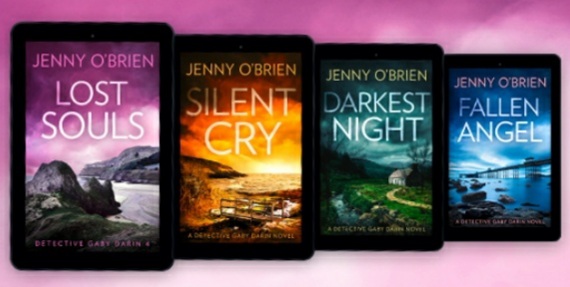
Jenny O’Brien is an Irish writer of the Detective Gaby Darin series published by HQ Digital.

What Do You Need to Become a Real Estate Agent? We Discuss

The real estate industry is growing in popularity. With its many attractive benefits and potential to make a healthy income, it is clear to see why so many people are keen to pursue a career in this field of work.

However, there are a lot of things to consider if you want a career in this industry. Today, we will be discussing what you need to become a real estate agent. 

Research Your Requirements

Depending on what state you live in, you must ensure that you are meeting their unique licensing requirements. Each state has specific requirements based on several different factors. This can be anything from age down to application process and fees, to name a few. If you are unsure where to start, then you should firstly look at your state’s real estate regulatory office website. Check out the Association of Real Estate License Law Officials (ARELLO)’s regulatory agency directory to help get you started. 

It is crucial that you make yourself aware of your states requirements so you can pursue your career on the right foot to avoid any disappointment. 

Take the Necessary Courses and Pass Your Exam

Depending on what state you live in, there will be a number of pre-licensure education hours required to become a real estate agent. Check out this article to find out more information on how many hours each state requires. Throughout these courses you will learn information on a number of important topics like real estate terminology and real estate ethics. After you have taken part in the necessary courses, you will then have to take a final licensing exam. Again, the rules of these exams will vary between states so it is recommended that you do your research to find out how many times you can retake the exams in the event that you may not pass first time round. 

Work For a Broker

In order to gain experience, it is recommended that you work under an experienced broker. When it comes to choosing your brokerage, you will have some things to consider. Working for a traditional brokerage will mean that you are placed on a team. This can have its benefits as you can learn a lot from your colleagues to help you propel your career forward in the future. However, there will also be nontraditional brokerages out there which allow you to work more independently.  

It is advised that you choose your brokerage wisely as the right organization can do a lot for your real estate career. Don’t hesitate to put time into research to ensure that you are making the right decision for your career. 

Acquire The Correct Cover

Like any business, you will need to acquire the correct cover if you are going to build your own real estate agency. Insurance will help to protect your business from accidents, injuries and legal fees and without it, you could be putting your finances at risk. Get real estate insurance in minutes, so you can quickly protect your business and stay safe. 

Insurance is an aspect of real estate that should not be overlooked. You will need to ensure that your policy provides adequate cover to help protect your business so you can continue to operate safely. 

Know Your Market

In the real estate market, there are always changes. As a real estate agent, you will need to know how to assess the value of a property whilst having the knowledge on how to negotiate effectively in an ever-changing market. To achieve this, it is advised that you get yourself out there and network in the local area. It is crucial that you know your market well and this is something that educational courses cannot teach you. 

If you need advice on how you can get to know your real estate market then you can conduct some online research of your own. It can help to give you the encouragement and advice that you need to help you get yourself out there and meet people in your local area who can help you become a better real estate agent in the long run. It will also help you enhance your interpersonal skills which is a vital quality to have in this field of work. 

Collaborative post with our brand partner.

My Writing Process Ray Star

Ray Star, author, writer, how I write, my writing processWhat you have written, past and present

I wrote my first story when I was ten, scribbled untidily onto folded green paper, unevenly stapled together with crayon illustrations on every other page. My teacher had tasked our class with writing a story to include three things: a waiting room, a light switch and a wish. I opted to write a tale of a young girl who found herself in a magic waiting room that gave those worthy a wish, if fate called upon them to use the light switch. I received my first A+ and have wanted to be an author ever since.

After my school years, I dabbled in freelance journalism, covering ‘real life’ stories for tabloids and the women’s weekly’s in my twenties but found this mind numbingly painful. To the point, it put me off writing for a while. I ended up starting my own PR firm and then, life got in the way, as it so often does, and my dream of one day becoming a successful author was lost to the 9 to 5 routine and all that falls in between.

It wasn’t until quite recently in 2018 that the idea for a story found me, and it wouldn’t let me be. It would find me just before I fell asleep at night, an array of nameless faces that needed their stories to be read, heard and understood. The title came to me when I was at lunch with my mother one afternoon, and a year later, my first draft copy of Earthlings – The Beginning was ready.

  • What you are promoting now

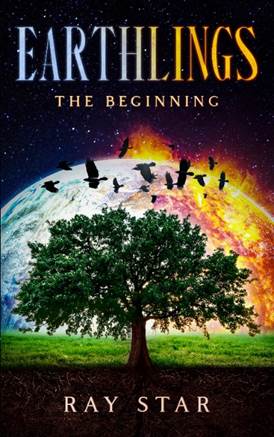
My debut novel Earthlings – The Beginning, is book one of a YA Fantasy trilogy with a message to the narrative, and launches on August 12th, this year.

Earthlings is the story of a young girl named Peridot, raised with the realities of her world hidden from her by an overbearing mother. One day, a young boy Euan unexpectedly comes into her life only for him to leave as quickly as he came, from that moment onwards, her world is never the same. Peridot leaves the clutches of her mother’s home in the hopes of finding her friend, only to discover all she believed to be true, to be something else entirely. 

We follow her journey into a world filled with magick (yes magick with a ‘K’), wonders and horrors that Peridot couldn’t have fathomed in her wildest dreams – or nightmares. For every step she manages to get closer to her friend, something new and unknown gets in her way. There are many twists and turns in the Earthlings tale but ultimately Peridot’s story is one of finding friendship against all odds and trying to do the right thing – no matter the consequence.

www.raystarbooks.com

  • A bit about your process of writing

I’m going to be completely honest with you – I have no process! I wrote most of Earthlings when I was pregnant with my first born, which was utter bliss. Just me and my bump and a fresh pot of tea, writing away by an open window with the breeze fluttering past to keep us company.

The remainder of Earthlings was written with a new-born, which never in my wildest dreams could I have fathomed would be as hard as it was, but I did it, and then, just to make things that little bit harder for myself, another bump came along. Bump number one is now aged two, and his brother, is eight months.

Writing time now, is done in the rare moments of quiet, which admittedly, are far and few, but when they find me, the story flows and I find ‘the zone’ as I call it, quite easily. Writing is the one thing in this world, other than my boys and a good strong cuppa coupled with dark chocolate digestives, that brings me peace.

  • Do you plan or just write?

Planning to write when you have children, is like planning to have an early night when you have children. It does not happen. It works in my favour to not make plans, and then by not making plans, enables the possibility of that plan taking place… if you follow!

  • What about word count?

For a story to be the best it can be, I have to allow it to flow naturally. If I force myself to write a set number of words, they become in danger of becoming precisely that – just words. I used to set the target of writing 200 words a day but by doing that, I did the opposite. Word counts seem to be counterproductive for my style of writing and I prefer to enjoy the story as I write it, whether its 50 words or 500. The story will write itself if you give it time.

  • How do you do your structure?

Alike the above, I had no set structure for Earthlings, I sat down and wrote the story as it came to me when I was in the moment. Although, Earthlings is book one of a trilogy and with book two, there are specific moments that needed to happen, so I made a point of having a list of key events that I ticked off as they were complete. 

Editing wise; I tend to write a chapter or two, read through and do a light edit, then keep writing. This way, when I come to edit properly when my first draft is complete, most of the leg work is done and the editing process isn’t as daunting.  

  • What do you find hard about writing?

The environmental cost of books plays on my mind a lot. Whilst I’m over the moon to finally be an author, it bothers me that my work comes at the cost of trees. Beautiful beings that have lived on this planet longer than I have are sacrificed for the literature we know and love. This bothers me more than I can put into words. 

My publisher, Chronos Publishing, thankfully, is very supportive of my concerns and has ensured that Earthlings, where possible, is to be printed on recycled paper. However, we were unable to get this secured with one distributor (Amazon) so I have recently launched the #ReadGreen campaign to hopefully encourage Amazon to offer sustainable printing options to the publishing industry.

You can support the Read Green campaign with a simple signature via www.change.org/read_green/ 

I have also pledged to plant 1 tree per book sale via Ecologi to combat any Amazon sales of my book, the Earthlings forest is available to view via my website.

  • What do you love about writing?

Everything. Writing to me, is as wonderous as magick. It is the ability to make your wildest dreams a reality. The ability to breathe life into beings, places and creatures that we dismiss as unbelievable. Pure escapism. If you’re a good enough writer. Anything is believable. If it harm none, so mote it be.

Love and light

Ray Star

@RayStarBooks

www.raystarbooks.com

Earthlings by Ray Star is out now by Chronos Publishing, £8.99

How Can Islington Residents Improve Their English?

Thanks to a population exceeding 215,000 inhabitants, Islington is one of the most diverse and eclectic boroughs within London. This area has seen a growing influx of individuals from other regions of the United Kingdom and many from abroad. This is great news for those who happen to be looking for new opportunities or who are simply hoping for a change of pace.

However, a number of challenges can still exist. Anyone who has not lived within the United Kingdom for an extended period of time may find it difficult to learn the language. After all, English is much different when compared to the languages spoken in other regions of the world such as Europe and the Middle East. If you are struggling, there are many options to consider. Let’s take a quick look at how you can improve your English in no time at all.

Online Tutoring

Let’s imagine for a moment that you are currently working a full-time job and there are not enough hours in the day to attend an English school. Why not instead use an online English tutoring service? These immersive sessions will provide you with a greater understanding of the language. Furthermore, they are also better if you are looking for more personalised interactions with the tutors themselves. Classes can be scheduled at the most convenient times and sessions can be targeted around your unique requirements. These are also some of the most cost-effective ways to begin fully appreciating the English language.

Professional English Schools

Most experts will state that the best way to learn English is to attend a professional language school. This is especially important when tackling more difficult concepts such as dialects, verb usage and grammar. The good news is that there are literally hundreds of English schools throughout London. Still, make it a point to look at their associated fees as well as what other students have had to say about their personal experiences. You can then make an informed decision.

Attending Local and Regional Public Events

Interacting with the local population is another excellent way to learn English while on the go. There are plenty of cultural events to enjoy throughout the year and as Islington is quite close to the centre of London, you always have opportunities to take a short journey in order to see what this international city has to offer. Navigate to the official Islington website to take note of any upcoming gatherings that you may be interested in.

Watch English-Speaking Films

While this final suggestion might come as a bit of a surprise, it is highly effective. One of the reasons why many Europeans (particularly those from the north) speak high levels of English involves the fact that they watched English-speaking films at an early age. In other words, common phrases and expressions became integrated into their grammar when they were still children. Not only is this a passive way to learn the nuances of English, but it can also be a great deal of fun!

Islington can provide you with numerous professional and social opportunities if you are able to obtain a firm grasp of the English language. Please feel free to bookmark this page or to print out this article for future guidance if needed.

Collaborative post with our brand partner.


Soothe the symptoms of teething with Ashton & Parsons

Teething can be a particularly trying time for both babies and parents. Most babies will begin teething around 6 months, however every child is different and teething symptoms can vary considerably.

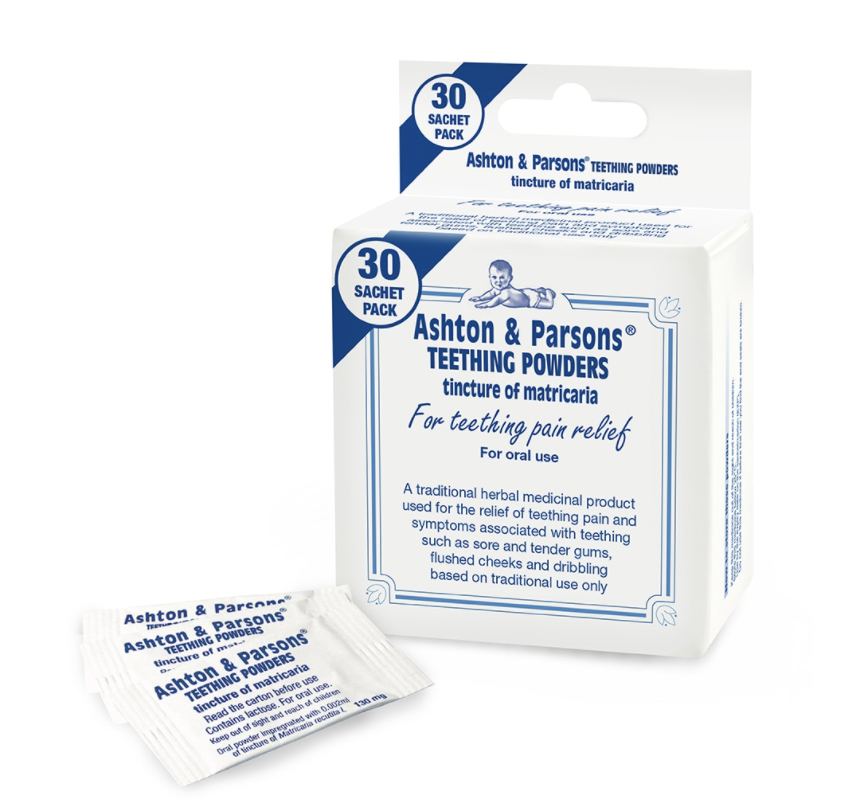
The good news is that parents can do something to help ease the discomfort of teething, as well as teething rings, toys and homemade remedies such as breastmilk lollies, there is also a gentle, natural remedy that has been trusted by generations of parents for over 150 years! The remedy is Ashton & Parsons Teething Powders (£7,00, 30 sachets, Boots) a UK-made, multi-award winning, traditional herbal remedy, containing tincture of Matricaria (a flowering plant related to Chamomile), used for the symptomatic relief of teething pain and the symptoms associated with teething.
teething

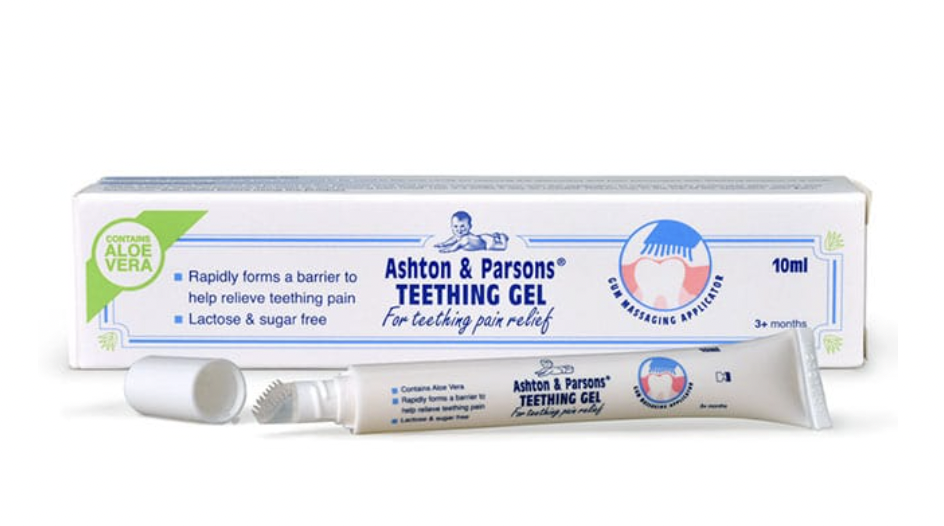
Ashton & Parsons have also launched a local anaesthetic-free Teething Gel (£5.00, Boots), with a specially designed soft brush applicator to help gently massage the gel onto baby’s gums. There it quickly forms a barrier to help relieve baby’s teething pain, help reduce discomfort and help lessen pain.
teething, baby

Both treatments are simple to use and apply and are easily portable, so whether you’re at home, out at the shops, or taking your baby on a playdate, you can keep these trusted remedies close at hand all the time, so you’re covered for whenever and wherever teething pain strikes.

Marriage rate at record low: 10 risks we take when we live together

  • The marriage rate of opposite sex couples was the lowest on record in 2018, with 20.1 per 1,000 unmarried men and 18.6 per 1,000 unmarried women.
  • In the previous 10 years, marriage rates had fallen most among those under the age of 20: down 57% for men and 63% for women.
  • The average age to get married is rising – in opposite-sex couples, men married at an average age of 38.1, and women 35.8 years.
  • There were 234,795 marriages in 2018 – down 3.3% from 2017.
  • Since 1972, the annual number of opposite-sex marriages has fallen 46.5%.

The Office for National Statistics has published marriage statistics for 2018 today.

wedding planning, wedding, weddings,

Sarah Coles, personal finance analyst, Hargreaves Lansdown

“Marriages hit a record low in 2018, as more people decided it was better to live with their partner first for a few years than live with a bad decision forever. But as more couples move in together for longer without tying the knot, they need to understand the ways it can make them vulnerable.

Separate ONS statistics show that among those under 30, more than two thirds of couples are living together without getting married, along with one in five couples in their 40s and one in ten people in their 60s.

There are all sorts of reasons why people choose to marry or live together, and nobody would suggest marrying for money. However, if you are living together you need to understand the financial risks you face. You could be in for a horrible surprise if you split up, or fall foul of rules you never knew existed if your partner was to die.

The good news is that you don’t have to rush into marriage to protect yourself, because there are steps you can take to cut your risks, whatever your marital status.

10 risks of living together

  1. If one of you dies without a will, the other could get nothing. If the home is in their name, you could lose your home too, because everything passes to your partner’s children. If they have no children, everything in their name will pass to their parents instead.
  2.  If you have a pension which is meant to pay out to a spouse when you die, some pensions don’t allow this to be left to an unmarried partner. Some will allow you to complete a ‘nomination of beneficiaries’ form, to ask for anything to pass to your partner, but if you don’t complete the form there are no guarantees that this will happen.
  3. If you have children, the father isn’t on the birth certificate, and the mother dies, the father doesn’t automatically have a right to care for the child.
  4. If one of you dies and leaves everything to the other, in a marriage or civil partnership this would all be free of inheritance tax. If you’re not married and you breach the inheritance tax nil rate band, there could be tax to pay. In some cases, this could mean you can’t afford to stay in your home.
  5. There are no inheritable ISAs. If your spouse holds an ISA on death, you will get an additional ISA allowance – called an Additional Permitted Subscription, which essentially means ISA assets they leave you can all be wrapped up in an ISA again without affecting your allowances. If you’re not married, you don’t get this extra ISA allowance.
  6. If you split up and one of you owns the house in their name, the other may have no right to live in it or to a share of the property.
  7. On the flip side, if the property belongs to one of you entirely, but the other has contributed towards it in some way – including paying a share of the bills or helping with home improvements, they can claim an ‘interest’ in it, and go to a court for a share of the property. It means couples who move in together may have made a bigger commitment than they appreciate.
  8. If you split up, and one of you has sacrificed their career for caring responsibilities, they have no right to spousal maintenance. On average, women’s pay falls 7% for each child they have – so without maintenance to make up the difference, this could leave them thousands of pounds worse off each year.
  9. In the event of a split, if one of you has a sizeable pension and the other has nothing, there’s no compulsion to share.
  10. There are tax disadvantages. We all have a personal allowance that’s not subject to income tax, a personal savings allowance, a dividend allowance and a capital gains tax allowance. Married couples can share assets between them to take advantage of both people’s allowances, and the lower taxpayer can hold the balance. If unmarried couples try to do this, sharing the assets could trigger a tax bill.

How to protect yourself

Make a will

The only way to ensure an unmarried partner inherits is to draw up a will so that your assets are left exactly as you want them. While it’s vital that everyone makes a will, the stakes for unmarried partners are even higher.

Think carefully about how all assets are owned

If one of you moved in with the other, and the home remains in their name, have you contributed financially? Financial contributions can be reflected by switching to own the property as tenants in common. This allows the financial contribution to be reflected accurately in the proportions of ownership. Also think before taking on any debt: if the loan is for the benefit of both of you, it should be in both names. And consider your savings, if you’re saving together, it should be in both names.

Consider a co-habitation agreement

This will lay out all kinds of things, from how you manage money between you to who owns what in the relationship. It can also iron out what will happen in the event that you split up.

Ensure both parents have parental responsibility

Fathers can protect themselves by being there when the birth is registered, and being on the birth certificate. If it’s too late for that, you can agree parental responsibility between you and complete the form . If you can’t agree, you may need to go to court.

Take out life insurance

Both of you should have enough insurance to ensure the children are provided for in the event you die. After a split, the resident parent should have cover and if one of you is paying child support, they should have cover that will replace it in the event of their death.

Build a nest egg for your child

One of the best ways to protect your child against whatever the future holds is for them to have savings and investments in their own name. The Junior ISA can be a really sensible option. Nobody can access the money until they are 18, and at that point it belongs entirely to the child. While the money is saved or invested it grows free of tax, and there’s no tax to pay when it’s withdrawn either.”

  • There were 6,925 marriages between same-sex couples, of which 57.2% were between female couples.
  • 803 same-sex couples converted their civil partnership into a marriage.
  • 21.1% of opposite-sex marriages in 2018 were religious ceremonies, the lowest on record.


A Narrow Door by Joanne Harris Book Review

Joanne Harris is one of our greatest novelists. It is hard for anyone to argue with this statement and A Narrow Door asserts her place once again.  Such is the richness of her language, and the mastery of her skills as a storyteller, that I could not put this book down. It is such a rich story of suspense and betrayal.  

You will never see the twists coming and they will take your breathe away. This is a stunning and clever book. I suggest you grab a copy as soon as you can, it is sure to be the hit of the summer. This is definitely one of my favourite books of the year. 

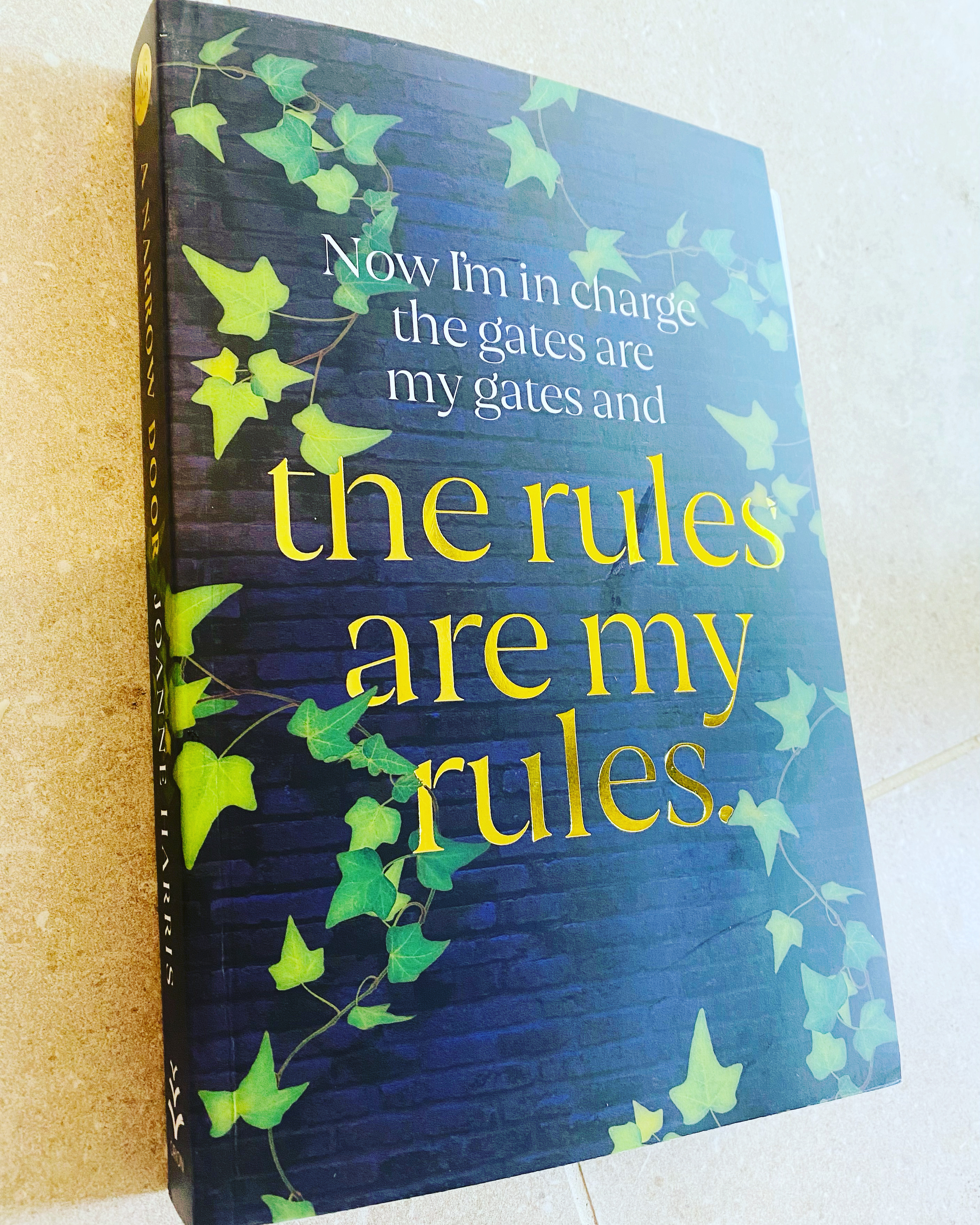
From the Sunday Times and internationally bestselling, multi prize-winning author Joanne Harris, comes A NARROW DOOR – an explosive psychological thriller about one woman who, having carved out her own path to power, is now intent on tearing apart the elite world that tried to hold her back . . . piece by piece.

A Narrow Door, Joanne Harris, Book, book review


Now I’m in charge, the gates are my gates. The rules are my rules. 
It’s an incendiary moment for St Oswald’s school. For the first time in its history, a headmistress is in power, the gates opening to girls.

Rebecca Buckfast has spilled blood to reach this position. Barely forty, she is just starting to reap the harvest of her ambition. As the new regime takes on the old guard, the ground shifts. And with it, the remains of a body are discovered.

But Rebecca is here to make her mark. She’ll bury the past so deep it will evade even her own memory, just like she has done before. After all…

You can’t keep a good woman down.

Available to pre-order now!

A Narrow Door is available here.