Hape Lucky Ladybug And Friends Train

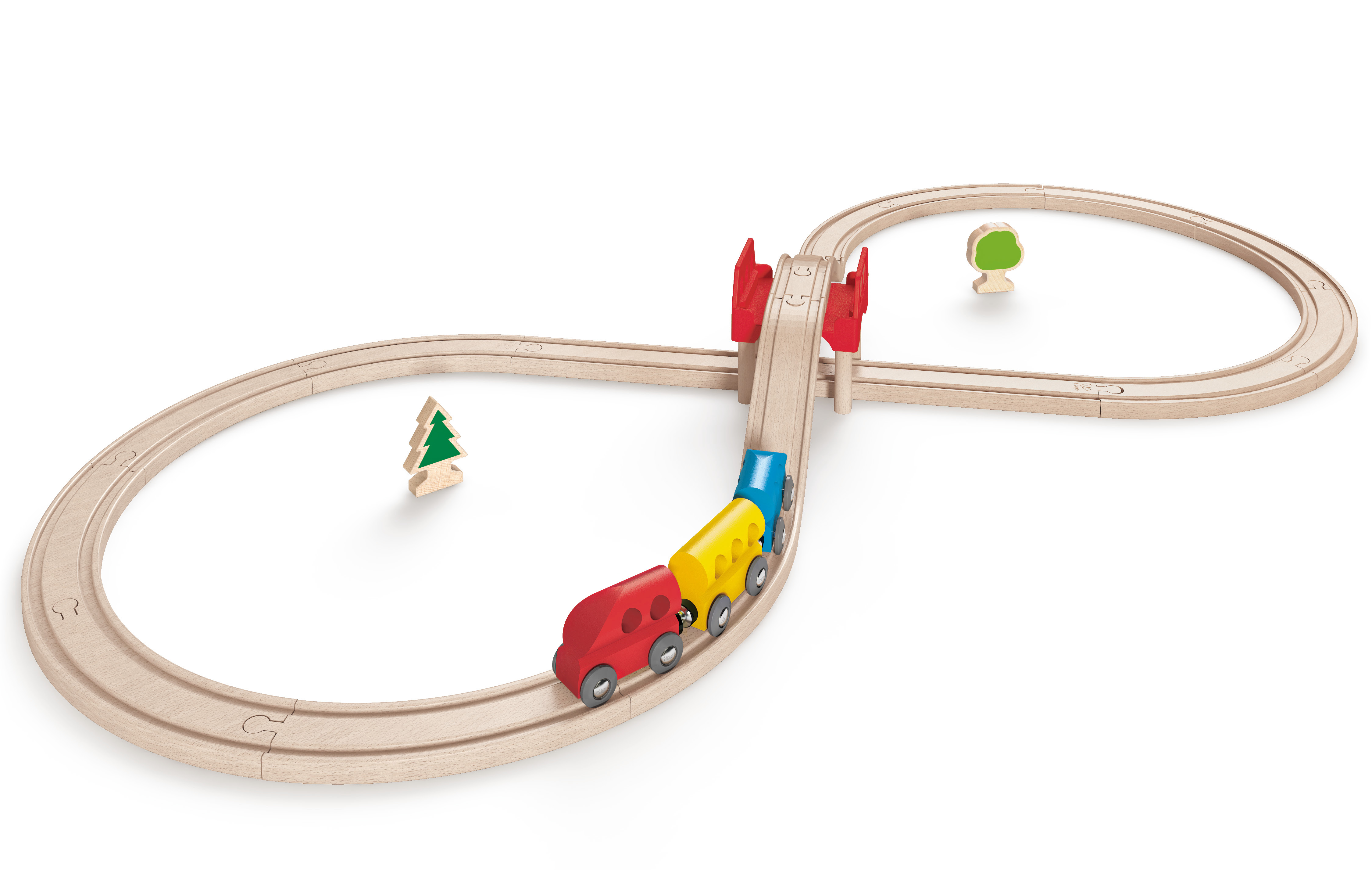
Hape make the most adorable trains and this trio of insect trains are no exception. This is a three piece set lead by an adorable ladybird train. The other two are a caterpillar and a bee. Children love them because they not only look fun, but are exciting. The ladybird has some fun little balls inside and the other two have fabulous wings. Fun and sensory: we can highly recommend this train set. It is just too cute for words. 

The Lucky Ladybug and Friends Train from Hape makes a lovely first train. The adorable ladybug theme, complete with magnetic pieces to connect together, is guaranteed to delight your toddler. A brilliant set that works with other Hape wooden train sets.


Fit and features

  • Wooden construction
  • Magnetic
  • 3 pieces
  • Encourages imaginative play
  • Works with other Hape train sets
  • Suitable from 18 months

Available from http://www.jojomamanbebe.co.uk


The Cottage Garden Society by Kate Hutchinson

I was a young fledgling gardener when I first came across The Cottage Garden Society. I can’t even remember where now. Maybe a magazine article or a piece on the telly box? I was in East London, in a tiny city garden, desperately dreaming of blowsy borders, gnarled old apple trees and roses around the door, and The Cottage Garden Society seemed like a place to plant my dreams.


Of course I soon found out that The hardly anybody has the ideal cottage around which to place their cottage garden, and most people are making do in narrow city spaces or dodgy plots around new builds. It turns out you don’t have to live in a cottage, or even in the country. The traditional, informal style lends itself to any situation, rural or urban, large or small. What we cottage gardeners all share is the same desire for colour and beauty, a love of plants and a certain sense of informality. (Possibly too much in my case, according to my husband).


The Cottage Garden Society (CGS) was founded in 1982 when cottage garden plants were becoming ‘unfashionable’. Those starting the Society wanted to protect this vanishing planting style.  They were concerned that, in the move towards easily maintained gardens, hard landscaping was becoming more important than the plants, still a potential worry today.

Interest in the Society soon grew and from small beginnings with the founders based in North Wales and Cheshire,  there are now about 3,000 members, and over 35 regional groups spread throughout the UK.  Most of these groups meet monthly for talks, garden visits, seed swaps and plant sales and to enjoy the extra benefits of mixing with like-minded gardeners in their own area. Some groups also have stalls at major shows.


The Society also has a great quarterly magazine full of inspiring (and often funny) articles and book reviews. Always a great joy the day it plops through the letterbox and everything is put aside for a cup of tea and a read. The Society also runs a seed exchange. There is something very special in sowing seeds generously collected by a fellow member you may never meet from hundreds of miles away, and then growing the flowers in one’s own garden.


I may never have a cottage in the country with roses round the door, but I am definitely a Cottage Gardener. Are you??


Join now and get two months free membership (renewal Oct 18).

thecgs.org.uk

https://www.facebook.com/cottagegardensociety/

https://twitter.com/CottageGardenSo


Take a Gastronomic Tour of Italy this week with Danilo Cortellini

Danilo Cortellini

The London Foodie Supper Club hosts an extraordinary and glorious tour around Italy this week and he wants you all to join him. For four days only, beginning on the 12th July, guests will be able to immerse themselves in 10 exquisite courses prepared by Danilo Cortellini, Head Chef of the Italian Embassy in London. The evening will be hosted by The London Foodie, Luiz Hara who himself is a cordon bleu chef and successful food writer who has a passion for gastronomy and a want to share the very best with the World.

Your evening will start at 6:30pm with Canapés and a welcome cocktail followed by dinner at 7pm. The dishes will be comprised of 10 small signature plates taken from Cortellini’s debut book and will pay homage to the dishes of Abruzzo region which represent Cortellini’s heritage.

To give you an idea of the banquet the menu includes;

A traditional Cocktail made with Pecorino wine from Abruzzo

Canapés of Sicilian red prawn tartare marinated with red sweet chili with fresh burrata mousse.

Marinated mackerel with fresh buffalo mozzarella and asparagus

‘Pallotte cacio e ova’ (rustic cheese and bread balls served with pepper and tomato sauce with grated cheese)

Veal cheeks ‘pizzaiola’

Tortelli Multicolore with tomato and fresh marjoram.

Tickets are priced just £50 and must be purchased directly through Luiz at luizhara@hotmail.com

www.danilocortellini.com

http://www.thelondonfoodie.co.uk

Cornish Writing Challenge 2017 Winner: Christopher Joyce

So The Cornish Writing Challenge 2017 is done and Frost wants to thank Vikki Patis for including us. Frost’s own Jane Cable and Catherine Balavage were two of the judges. Along with Vikki- of course, and Cornish author Angela Britnell. We are now proud to publish the winner: Christopher Joyce.


Christopher Joyce from Chichester in West Sussex has been a teacher, waiter, once made Venetian blinds and has worked in a steel works. He is best known for his series of children’s books, ‘The Creatures of Chichester’, where the city’s animals solve the problems created by the Twolegs living there. See www.creaturesofchichester.com for more information.

Read his excellent winning entry below.


Mama’s Gonna Float The Gypsum


“Hello, what service do you require?”

“All of them. Police, ambulance; there’s someone trapped in the car. Maybe fire brigade. I dunno – send them all!”

I slammed down the phone after giving my directions and threw up in the phone box. I was amazed it was still working as locals had turned it into a mini library. Thank God I was able to get through.

The stench of petrol filled the air mixing with the musty smell of autumn. They’d be here soon.

Breathe, relax.

It had started out quite a normal sort of day. I’d had a delicious lunch at the Waterside restaurant in Flushing, opting for the catch of the day as always. The plan was then to go for a walk along Trefusis Point. We had a lot to talk about.

Kelly was late. She was always bloody late. It drove me mad. After university we’d moved down to Cornwall to run a small pub. It failed miserably in the recession of 2017, but if I’m honest it would have failed anyway. We just didn’t want the same thing anymore. We tried running a mobile coffee shop that toured the festivals, which just drove us even further apart. Being with Kelly twenty-four hours a day was not the answer to resolve our differences.

I checked my watch. 2:35, Where the hell was she? The waiter brought me the dessert menu for the fifth time and I once again pushed it aside. He looked offended. Well, tough. Get over it. I’ve got more to worry about than your tip pal. He muttered to his manager and I wanted to go over and punch him in the face there and then. I counted to ten. Breathe, relax. That’s what the anger management person had taught me. She was as useful as a chocolate teapot. Kelly loved her of course. In fact it was Kelly’s idea. Typical of her new found, hippy-dressing, cosmic-ordering sort of view on life.

The spotty chinned waiter returned again. This time with a piece of paper folded in half. “There’s a message for you, sir,’ he said. I didn’t like the way he stressed the word sir, but I let it go. Another whinging apology from Kelly, no doubt. I opened it and read:

Mama’s gonna float the gypsum.

What sort of bollocks was that? I turned it over and even held it up to the light, half expecting to see a message from Kelly written on the other side, but that’s all it said. Mama’s gonna float the gypsum. Was she playing stupid games? We’d arranged this meeting weeks ago, after endless blocked text messages and unanswered calls she’d agreed to stroll around the headland to talk things through. I bet one of her trendy therapists had put her up to this. I could hear them whispering in her ear. Challenge him. Surprise him. They made me sick.

I didn’t have time for these stupid games. I had to get back to the garden centre. It’s not that I was the boss or anything, but since the break up I’d found some peace amongst the clematis and hydrangeas. I seem to remember that gypsum was a plant food of some sort. It was supposed to improve acid soil. Was she trying to make a reference to my work? That would be typical. She never wanted me to be successful. Ever since I got a first at uni and she got a Desmond. She hated me referring to her 2:2 like that. Yes, she’d studied soil sciences. I bet it’s something to do with that.

Or maybe it’s an anagram? When we first met we’d spend hours in bed going through the puzzle page in the local paper. I rummaged through my backpack for a pencil. There were so many zipped pockets. Why was it always the last one you looked in? I checked my mobile phone in vain. Still no sign of life. I shoved the half eaten peppermints and loose change back into the bag and drew a circle on the piece of paper. I arranged the letters in a random order around the circle. It’s just the sort of thing Kelly used to do. Oh God, I’ll be worshipping bloody crystals next.

After ten minutes of scratching my head. Nothing. Not a Scooby. I stormed out of the restaurant and headed for the woods. It was only when I was half way to the beach that I realised I hadn’t paid my bill. Well, sod him. He shouldn’t have brought me her ridiculous note in the first place.

I pulled up the collar of my down jacket as the ferry from Falmouth spewed out the last remaining emmets with their selfie sticks and iPads already in their hands. I strode on into Kilnquay Woods kicking up the beech mast and relaxing a little as the smell of pine needles and salty sea air filled my lungs. Before long I was clambering along the rocks on the shore line towards the cave where Kelly and I had frolicked in better days. My shoulders relaxed and I undid my jacket. The beach always had this effect on me. I felt at home. I pulled out the scrap of paper from my jacket and read the message again. Mama’s gonna float the gypsum. Was it an old folk song? I vaguely remember a school trip to a gypsum mine in Redruth. Were there once shanty songs sung by full-bosomed lasses as they loaded the gypsum on to boats bound for distant lands? I doubted it.

The sun was dipping below the horizon when I left the shore. The views of Falmouth across the crystal clear water and the sight of kids searching the rock pools for crabs had lifted my spirits. I didn’t care what the note was supposed to mean. I had to admit that although she drove me mad at times I still could not get her out of my head. I decided to stroll back into town and have a long cold pint of Gold Cyder at the Seven Stars.

The cold, golden liquid cleared my mind and I felt the happiest I’d been in months. It was time to put the past behind us and start again. I was on my second, or maybe third pint when I heard the screech of brakes followed by the unmistakeable thud of metal crushing bones. I leapt to my feet knocking the table and half finished cider on to the floor.

‘For God’s sake call an ambulance,’ I screamed at the top of my voice. Nobody moved. The red-headed barmaid continued to flirt with the young men at the bar. The family of four by the door carried on ignoring each other with their eyes glued to their mobile phones. The guys playing darts chalked up another score.

I ran out into the street alone. A woman’s body was crushed in the front seat of the mangled Fiesta. Just her legs with torn tights covered in blood were visible though the smashed windscreen. Another body was slumped beside her, a male in his late twenties, clearly dead at the scene. A young girl pushed her bike down the street as a lady in her later years nervously crossed the road hugging an ugly pug to her chest.

For Christ’s sake what’s wrong with these people. I dashed to the phone box hoping beyond hope that it was still working. It was piled high with books; there was a laminated note stuck to the wall.
This phone box was decommissioned in 2014. Please help yourself to these books dedicated to Kelly and Simon Edgerton, dear to this village. New books are added on a regular basis. This month:

Mama’s Misbehaving (not suitable for children) J Stone
Gonna Make You Mine (young adult) Kay Littleham
Float Fishing for Pike. S B Carter
The Gypsum Mines in the UK Andy McNarble


2017 Top Baby Name is Corbyn

Over half of parents vote for Corbyn as political baby names become hot new trend


  • 53% of parents find it ‘very hard’ to choose the right name for their baby – and a third disagree with their partner over what to pick


  • 70% believe children are judged by their name


  • 23% say political names are on the rise with Corbyn and Cameron the top picks


  • Surge in popularity of Muslim names used by non-Muslim families


  • Wacky new naming trends include ‘unicorn names’, ‘tough names’ and even ‘text message names’


  • 7% of families regret their child’s name


New parents are electing to name their children after politicians – with Corbyn the hottest new baby-naming trend, a new poll by video parenting website www.channelmum.com reveals.
After the Labour leader’s post-General Election popularity surge, over half of parents (52%) would consider using the name Corbyn for their child. The name has already soared 50 percent in popularity between 2014 and 2015, but is now expected to see an even sharper rise.

Overall, political names are one of the fastest-growing new UK baby naming trends with 23 percent of mums and dads seeing more politically-inspired names in their area.

Interestingly, while 38 percent of parents would consider the name May, only four percent would use Theresa for a newborn. Cameron was the next most popular, liked by a third of parents, followed by Jeremy, enjoying fresh popularity with 15 percent of families.


However, only five percent would name their baby Boris or Diane, six percent Donald and just one percent believe Nigel will become a fashionable name again. But Nicola was especially popular in Scotland, where 13 percent of mums and dads report its popularity is increasing, and 12 percent of Welsh parents are seeing more Leannes locally.


Across Britain, 1,305 parents were asked which names were increasing in popularity in their local area. The poll revealed a huge 70 percent of parents believe people judge a child by their name – and as a result, seven percent ‘regret’ their choice of baby name. However, three quarters of parents (75%) would be upset if their child wanted to change their name.


A third of couples quizzed admitted they disagreed and even rowed over naming their baby, with 53 percent admitting choosing a name is ‘very hard’.  And while two thirds (65%) eventually settled on a name while still pregnant, 19 percent wait until they see the baby’s face when born – and an indecisive four percent wait six weeks until the legal limit for registering the baby’s birth and name.


The study also found that while over a third (35%) of parents use family names to honour relatives, one in five (20%) opt for unique spellings no-one else has to ensure their child stands out.

And with over 62,000 different baby names used annually in the UK, there are a number of wacky new baby-naming trends starting to break through.


The fastest-growing up-and-coming trends revealed by the poll include traditional Muslim names going mainstream, with six percent of the parents quizzed seeing more non-Muslim families using Muslim names. The most commonly-used Muslim monikers include Zane, Zahra, Ayesha, Farah, Anila, Omar and Jana.


One in ten has seen an increase in babies with ‘tough names’ including Axl, Maverick and Diesel, and by contrast, Unicorn names including Rainbow, Twinkle, Sassy, Sparkle and Princess are also beginning to gain popularity (4%).


Football ace Paul Pogba and Towie star Sam Faiers have helped to repopularise the name Paul, with one in 25 parents seeing it used again. There is also renewed interest in 1970s names including Michelle, Susan and even Gary is making a comeback.  


And Viking and Scandi names are on the march, with Magnus, Agnes, Linnea, Freya, Annika, Astrid and Britta more popular, according to 13 percent of parents.


Meanwhile, the more bizarre name phenomenons include text message abbreviation names like Ily – meaning I Love You – spotted by one percent of parents – and three percent who have seen US place names including Texas, Miami, Arizona and Tennessee used as baby names.


However, the most common current trend is surnames as first names. Two thirds of parents report this is on the rise in their area, with top names including Cooper, Grayson, Parker, Quinn, Jones, Carter, Mason, Jackson, Hunter and Riley.


Traditional but not twee English names are undergoing a revival, with 61 percent of parents embracing monikers includingSarah, Penelope, Emma and Lucy.


The rise of gender-fluid culture means Gender Neutral names are becoming more popular. Alex, Charlie, Elliott, Ellis, Max and Sydney are among the names spotted more often by 41 percent of parents.


And while it may be the least-used letter of the alphabet, X names are in-vogue, with Jaxxon, Xanthe, Xander and Jaxton the most picked for new babies, and voted more popular by 35 percent of parents.


Meanwhile, 16 percent of mums and dads have seen a flood of babies with water names including River, Lake, Delta and Coast, while 13 percent report meeting tots named after the cast of the film Frozen, such as Elsa, Kai, Anna and Olaf.


However, the study also showed the most disliked baby name trend is text-message names, shunned by 71 percent of parents, followed by double-barrelled names such as Lily-Mae, which half of parents refuse to use.


A further 44 percent wouldn’t name their child after a sports team while 38 percent loathe unusual or unique spellings. And the Kardashian trend of using the same first letter for each child was turned down by 27 percent of families.


Siobhan Freegard, founder of ChannelMum.com said: “What’s in a name? Well rather a lot. Names reflect both changing fashions and our changing society, such as the rise in use of many beautiful Muslim names. With 70 percent of families believing their child is judged on their name, a vast amount of love, care and attention is poured into picking the right moniker.

“Corbyn is the stand-out naming trend this year, and we expect to see lots of babies conceived at Glastonbury or over the election period named after the Labour leader.


“But remember a week is a long time in politics and your child will have that name for a lifetime, so do consider the effects of naming a child after any politician.”


HOTTEST UP AND COMING TRENDS


  • Political names (23%)
  • Viking / Scandi names (11%)
  • Tough names (10% are seeing an increase in this)
  • Non-Muslim families using Muslim names (6%)
  • Unicorn names (4%)
  • 70s names (4%)
  • US place names (3%)
  • Text abbreviation names (e.g. ILY for I Love You) – 1%


MOST POPULAR CURRENT NAMING TRENDS


  • Surnames as first names (66% have seen an increase in this)
  • Traditional English names (but not twee) (61%)
  • Gender Neutral names (41%)
  • Names with X spellings (35%)
  • Water names (16%)
  • Frozen names (13%)


Now I am Alone – review  by Michael Rowan


Michael Rowan ventures South to The Bread and Roses Theatre, 68 Clapham Manor St, London SW4 6DZ,   in pursuit of the Bard


Not that easy to find and with soaring summer temperatures it has to be something special to get me to venture south of the River Thames. Fortunately, ‘Now I Am Alone’ was well worth the effort.’

50 minutes running time with no interval, there is plenty of time for a drink and perhaps a meal in the bar below. Special mention to the Bread and Roses bar which is trying to do something different.

This one man play is definitely one for us Shakespeare lovers – what a treat.

The simple set has the actor, Dori Engel running through his lines before his dressing room mirror as the audience take their seats. Over the sound system various lines from Shakespeare percolate, overlapping and running into each other, like the thoughts in the actor’s mind.


Shakespeare’s metre was clear in every speech and my main problem was trying to recognise each speech as they came thick and fast. Edmund railing against his illegitimacy, Helena debasing herself for love and Shylock pointing out Christian hypocrisy, lost none of their power as Engel stepped seamlessly between the characters, bringing them to life.

The common thread is that the characters are all outsiders and in a break from the Bard the actor steps down from the stage and addresses the audience explaining how Shakespeare was himself an outsider and for some time he lived amongst outsiders.

The show tells the story of these people and proffers up their unique viewpoint on life and as a result suggests the viewpoint of Shakespeare himself.

The show is a delight for any who love the poetry of Shakespeare, beautifully delivered even if like me you can’t place all the speeches.

The show ends on Saturday July 8th and will hopefully reappear but in the meantime if you can make it to Clapham – get thee hence.

The Bread and Roses Theatre, 68 Clapham Manor St, London SW4 6DZ

info@breadandrosestheatre.co.uk


Ah… Brilliant…. More about Idle Women of the Waterways.  by Milly Adams  


Idle  Women? When the 2nd World War came upon us, blokes signed up and women did their bit too. In time some robust women were recruited to join the Inland Waterways to help run the narrowboats and deliver supplies.


Inland Waterways badges were awarded once the girls were trained. IW was the basis for the ironic name, Idle Women, because of course they were anything but.


Instead they slogged in all weathers up and down the waterways delivering loads of coal, wood, wheat – whatever was needed, breaking through ice in the winter, shielding their eyes from glaring sun which beat off the cabin roof in the summer, lock-wheeling, eating at the tiller, loading, unloading then clearing out after the cargo, and generally earning their place in the closed and private boating community. Let’s not even mention the bucket, as loo facilities were a pipe-dream.


The original boating community had been forced from their houses by poverty, to live on the boats which provided their living. This boating community still lived and worked in this way.. They didn’t have time for education as they moved from pillar to post, living in their tiny back cabins because the hold must be as big as possible to allow as much of a load as possible.


How do I know so much about this world? Because I am writing a series of novels about The Waterway Girls for Arrow publishers  which is out on 7th September..


This is why I was so delighted to attend the launch of:


Idle Women of the Wartime Waterways with Frost Magazine’s drama critic, Paul Vates, some while ago at the Cruising Association at Limehouse. It was written and performed by Heather Wastie and Kate Saffin who  told the story of these women before  embarking on a tour along the Grand Union Canal in their narrowboat – to perform at canalside venues along the way. Paul and I had a fabulous evening: it was huge fun, and most informative too.


Heather has sent her latest blog on their progress along the canal. If you get the chance, you must see them in performance. So, over to Heather who is talking about The Bottom Road, which Verity, a character in my book, called the Brum Bum.


The women who hated The Bottom Road by Heather Wastie


When I was a child we owned a 70 foot narrow boat which was registered in 1913 and used to carry cargo for Fellows Morton & Clayton. My parents restored the tiny back cabin to its original state, with roses and castles on the doors, a stove to be blacked, brasses to be polished and a bed stored in a cupboard, and Dad built and fitted out a long modern cabin at the front, over the hold where the cargo would have been. As a family we started our boating adventures in the West Midlands in the 1960s and 70s when many of the canals were in a dreadful state, neglected, unloved and in many cases derelict. I remember what it was like travelling through Birmingham on a canal which was closed off with high walls – dirty, smelly and dark.


I have written poems and songs since I was very young, and remember writing a humorous song about all the rubbish you could find in the canal in those days. Little did I know that many years later I would write and perform a show about the canals, touring by narrow boat to canalside venues. The show is called Idle Women of the Wartime Waterways and is a double bill with writer and actor, Kate Saffin. Kate already had a theatre company, Alarum Theatre, and we met on Twitter in February 2016, quickly realising that we each had half a show. Within 2 months we had started our first tour.


During World War 2, cargo boats travelled from London to Birmingham to Coventry and back to London, and part way through the war, a new breed of boater joined the workforce. Women from mainly middle class backgrounds were trained up to operate pairs of boats – a motor boat towing an unpowered ‘butty’, each 70 feet long – carrying 50 tons of cargo from London up to Birmingham. Once the cargo had been unloaded, the boats travelled empty to pick up coal from the Coventry coalfields. ‘The Bottom Road’ is the nickname that was given to the route they took in the early days of the scheme, a route hated by trainees and working families alike. Up to that point, they had been operating wide locks into which motor boat and butty could fit side by side. Now they were faced with narrow locks which could only take one boat at a time, so they had to work the boats through separately and pull the butty by hand – known as bow-hauling. It was tough, dirty work. Here’s the chorus of a song I wrote for the show, all about The Bottom Road:


We all hate The Bottom Road,

Oil and grease and soot and muck.

We’d rather go back the way we came

Than work through dirt and single locks.


There was an alternative route which involved going back through the double locks but all the working boats were told to use The Bottom Road in order to save water. Towards the end of 1944 there was a sit down strike after which the boats were allowed to ‘go back the way they came’. The Idle Women tour (‘Idle Women’ is a nickname given to the trainees after the war) has been travelling since the end of April with two boats – a modern one and a historic boat very similar to the boats the women used. We decided we should include The Bottom Road in our tour in order to take the show to more places through which the trainees would have passed. It is no longer the filthy route it was; in fact much of it is in beautiful countryside.


Though I have been boating for most of my life, I struggle to remember which canal goes through which places. I remember The Bottom Road though, because I turned the place names into a section of the song! I will sing it at shows until we leave the Bottom Road next week and head back towards London where our tour ends on 5th August. As I write this, we have completed 34 out of 50 shows, having performed in pubs, pub gardens, a hay loft, an abbey, a church, community centres, historic waterside buildings, marquees, a cafe, a museum … in a variety of weather, from heatwave to rainstorm, and have developed a deep empathy for the wartime women whose stories we tell.


See www.alarumtheatre.co.uk for tour dates and further info.


The Waterway Girls by Milly Adams: pub Arrow. Out in pb on 7th September 2017


The Business of Books: Jane Cable Gets Distracted But Finds She is Not Alone

Jane Cable gets distracted but finds she is not alone

It’s a small miracle you are reading this article at all, to be honest – and great credit to writer friends who have rallied around to provide me with some content. The thing is, last week I moved house. Long distance and for the first time in over twenty years. Not only did time become an issue, but the mental effort turned my brain into a huge mass of Cornish clotted cream.

I am not the only author suffering from a life event at the moment. Frost’s own Margaret Graham has been in the wars but in typical fashion is seeing the positive: “Falling into a wall recently and breaking my shoulder not only put one hand out of use but a whole brain, it seems to me. I feel that actually giving it a rest is probably not a bad thing. You will find that creativity is better for a bit of a holiday.”

Writer of historical fiction, Rosemary Noble, is also good at seeing the upside of potentially distracting events. “Sometimes you can avoid the stress by burying yourself in writing. I’m thinking of trying to sell my mother’s flat to pay for her care home. The only way I got through that 12 months was writing,” she told me.

There are some everyday distractions which make the list too. Day jobs (most writers have them), family commitments, lack of sleep, paying the bills – even social media – all sap creative energy. Sometimes the good things do as well. Ghost writer and freelance wordsmith Sue Kelso Ryan cited her dog as the biggest culprit – and it was a great excuse to use her lovely picture as well.

Which just goes to show that good things interrupt our writing too. “Having twins,” says media medic and women’s fiction author Carol Cooper. “That knocked writing on the head for a few months. And illness/surgery. You resent having to rest or slow down because it stops you writing.” Although she did manage to create a top-selling practical parenting guide about her experiences once she was able to find the time.

Crises involving other family members which hit without warning seem to have the biggest effect, as fantasy & romance writer and brand strategist Amy Tipper-Hale has just found out: “My boyfriend breaking his leg in Milan after being run over by a motorcyclist, and me having to fly over to be with him so he wasn’t entirely stranded…I thought I’d have plenty of time to write, but it ended up being stressful and exhausting – my mind all over the place, and not a single word written…except this.” Luckily the patient is now at home – and hopefully Amy will get back to writing again soon too.

As for me, now I have unpacked my desk and settled it into its new location, I need to have a plan. I’ve been sitting on the edit notes for my current manuscript for a month or so and my brain is just starting to tick over them. And one thing this house move is meant to achieve is more time to write. Fingers crossed I can make it happen.

As well as those mentioned above, my thanks also go to Barbara Copperthwaite, Victoria Cornwall, Morton S Gray, Wersha Bharadwa, Carol Thomas and Clare Ruel for their contributions.