WELSH WRITING WEDNESDAYS: INTRODUCING DEBUT ROMANCE WRITER, HELGA JENSEN

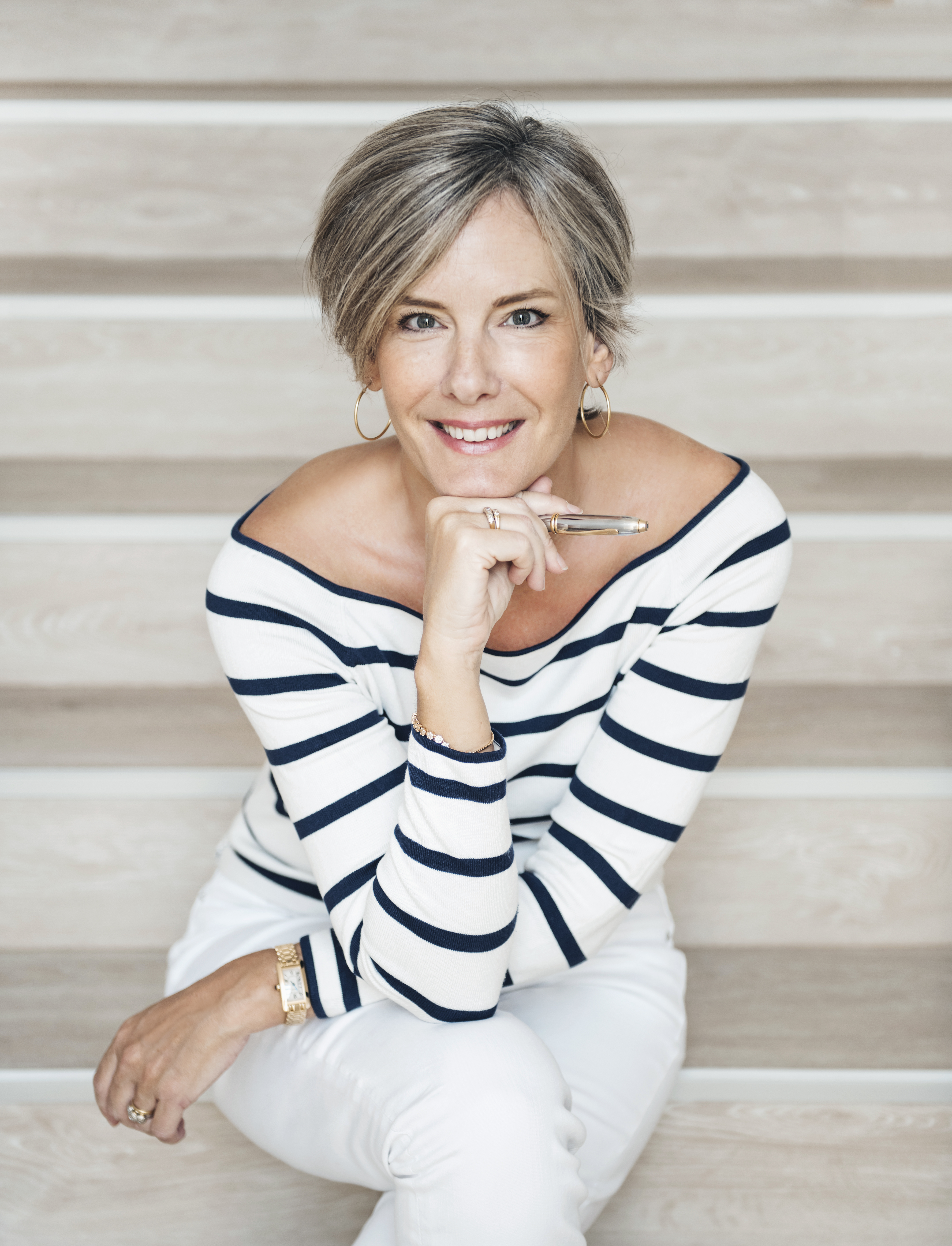
As a young child, I was an avid reader, and I was very fortunate that my mother bought me many books. They were beautiful hardback copies of books such as The Waterbabies, Enid Blyton classics, and many books by Hans Christian Andersen. I particularly loved The Princess and The Pea and The Little Matchmaker. Although I grew up in West Wales, as I am half Danish, I was privileged to visit Hans Christian Andersen’s house in Denmark (Odense) many times. It was always a magical feeling when you walked out of there with a new book stamped with the official stamp from his house.

With my love of books, I dreamed of one day becoming a writer, just ‘like Enid Blyton.’ However, there were two dreams I had and being cabin crew was my other dream. Therefore, as soon as I was old enough, I applied to a few airlines for a job. My first dream came true when I successfully got a position with a great airline in Bahrain called Gulf Air. They were some of the best days of my life. I also went on to fly on private jets for royalty which was a fantastic experience.

Having had these experiences, the writer within me started to niggle away at me. So, I did a journalism course through the London School of Journalism in 2002 and started writing. My dream was to write a book, but I thought perhaps if I had published work in magazines and newspapers, it would put me in good stead to get a book published. This led to a successful career as a freelance journalist and I still write for publications in the Middle East.

As I lived in Dubai for almost 25 years, I was extremely lucky to have access to the Emirates Literary Foundation and their annual Literary Festival. At the festival, you had the opportunity to enjoy meetings with prominent writers and agents. At one of the meetings, I met a fantastic agent who encouraged me to keep writing. So, I did, and the following year, the first chapter of my debut novel was a winning entry in the Montegrappa First Fiction competition. Winning this gave me the confidence to believe that I must be doing something right. I then embarked on a BA Hons in English Literature and Creative Writing, which I finished last year. As covid hit, my degree ended a little earlier than expected, which gave me the chance to edit and polish my debut and submit it to publishers. I was delighted when I received two separate two book publishing contracts! I chose to publish with Hera Books, and my debut, Twice in a Lifetime, was released on June 23rd 2021. I am now working on a Creative Writing MA at Bath Spa University, and my second book is due out around spring next year. Both books include settings in Wales. Twice in a Lifetime is set in Laugharne and New York, and my second book will be set possibly in Llanelli and Denmark. I have a few meetings with agents coming up through the Romantic Novelists’ Association, so I am unsure what I will do next, but I still have lots of ideas bubbling away!


Follow Helga on Twitter @HelgaJensenF


The Consequences of Love by Gavanndra Hodge reviewed by Kate Hutchinson


This is one of those memoirs where it’s really good to know at the beginning that the protagonist has turned out ok, or otherwise you might not be able to read it. I spent the entire read longing to reach in and hug her really tightly.

Gavanndra Hodge is the daughter of two reckless, alcoholic, drug taking parents. At the age of seven, she is staying up until the early hours making sure the junkies don’t set fire to the house with their falling cigarettes, turning off the TV and record player, and then wondering why the tooth fairy has forgotten her again. She does everything she can to protect her family, but her younger sister, Candy,  dies of a rare medical condition when Gavanndra is fourteen.

When she becomes the mother of two small daughters she realises that she cannot remember her own sister and, in an attempt to find Candy and deal with her own grief, she goes back to her childhood and those hidden memories of her chaotic, traumatic life with addiction, betrayal and philandering. But she also reveals her bravery, telling the policemen on a raid that they shouldn’t stand on her bed with their shoes on, managing to still get to Cambridge to study Classics, and coming to terms with her parents, who despite everything, very clearly loved her dearly.

Gavanndra Hodge is an experienced journalist and captures the ebbs and flows of the story brilliantly, moving between time periods to fit where she is in her process of discovery. I really enjoyed how she captures little details that reflect and contrast with the bigger picture.

So it’s a heart-rending tale, and if you are anything like me you may need tissues, but also funny, uplifting and optimistic with the ending you are definitely hoping for.

The Consequences of Love by Gavanndra Hodge £8.99

ISBN 978-1-405-94322-2 Penguin Books


Jason’s Sourdough – Proper Bread From A Master Baker – by Award Winning Author Dr Kathleen Thompson

In the UK bread has always been our staple, be it office sandwiches, kid’s parties, picnics or a quick lunch on the go.

It used to be a good and tasty food source, before the advent of the white sliced loaf, stuffed with preservatives – I remember keeping one for a couple of weeks as an experiment – at the end it looked and tasted just the same – white, bland and unpalatable – even the mould seemed to have given it a wide berth.

So how lovely that we are reawakening our love of true artisan bread – and turning to experts like Jason Geary. As a fourth generation master baker he’s skilled in the traditional (and not always straightforward) art of making a good sourdough.

Sourdough has become very popular over recent years, but what actually is it? It’s been around a lot longer than yeast-risen bread – since several thousand years BCE. A mixture of lacto-bacteria and wild yeast called a Starter is used to make the bread rise. This is clever, as the bacteria digest what the yeast cannot, and vice-versa – so they work together to produce a slow and effective rise. They also weakens the gluten in the bread, making it more digestible for us humans and the starter is more effective than pure yeast for raising rye grain. Starters are saved batch after batch and are prized for the distinctive breads they produce.

Jason sent me his Olive and Basil Sourdough to try – all I can say is, ‘WOW’. They say we eat with our eyes, and this loaf looked so attractive, with swirls of bright green, emulating extra virgin olive oil. In fact the green was a mixture of spirulina concentrate and safflower – both considered to have health benefits. Checking out the other ingredients – just wheat and rye flour, Nocellara olives, basil, sourdough starter and salt. It contains no artificial preservatives or flavourings.

The bread itself was simply delicious – I tried it fresh with San Manzano tomatoes and then later, toasted with butter – both worked extremely well. In fact it tasted just as if I’d added fresh olive oil and basil to the bread. And yes, it was more digestible – despite eating rather more than I should have (it’s downside is it’s impossible to stop at one slice) I had no unpleasant bloating afterwards.

The other big plus with Jason’s sourdoughs is that you don’t have to travel miles in search of an artisan bread maker – they’re available at Asda, Ocado and M & S. I strongly suggest you add this to your shopping list.

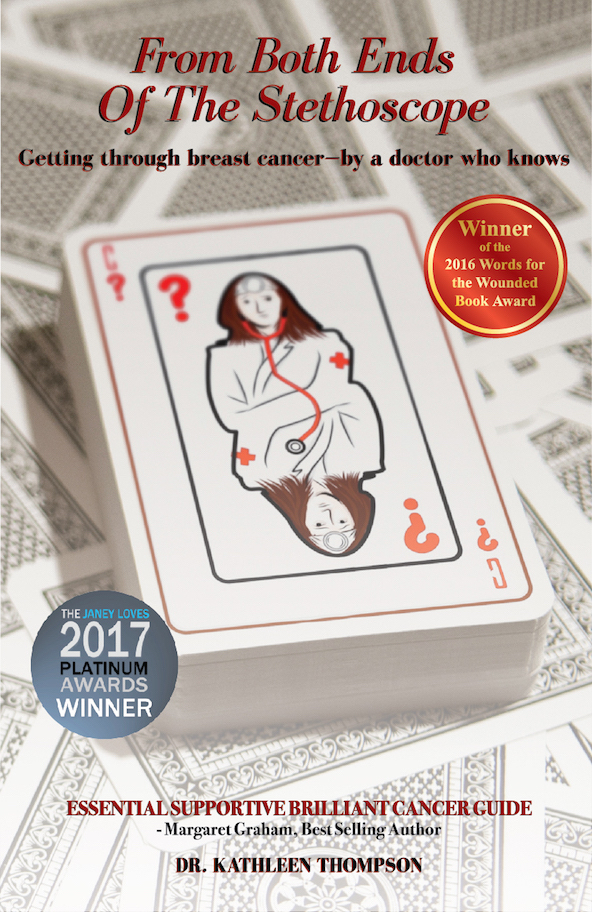
By Dr K Thompson, award-winning author of From Both Ends of the Stethoscope: Getting through breast cancer – by a doctor who knows

http://www.amazon.co.uk/dp/B01A7DM42Q

http://www.amazon.com/dp/B01A7DM42Q

http://faitobooks.co.uk

Note: These articles express personal views. No warranty is made as to the accuracy or completeness of information given and you should always consult a doctor if you need medical advice.

Susannah Wise: My Writing Process

  • Susannah Wise: My Writing Process
      What you have written, past and present

 Like so many authors, I have always written stories, poems, and the beginnings of ‘novels’ that remained forever unfinished. As a young child these were complete with messy felt-tip illustrations and growing up, pieces of my work would appear in the school magazine each term. I’m still not sure of their merit, but Mum always thought they were great, and she obviously wasn’t biased. 

    In my late teens, I found myself in a long relationship with a playwright and screenwriter, and encouraged by him, began a regular writing practice between acting jobs: short stories, plays, more poetry than I can recall; always poetry – I have an engraved Moleskine at home full of these personal noodlings. When I die, I dread to think of my family going through them. 

     In my thirties, frustrated with the quality of scripts I was reading (I am also an actor), I began to write screenplays and comedy pilots of my own. These would garner modest amounts of interest from the powers that be at television channels, but never reached fruition and they are now consigned to my ‘oh well’ drawer.

    In truth, it was only shock, when my father was given a terminal cancer diagnosis back in 2015, that propelled me into writing seriously. I think it made me reassess what my life and what I was waiting for. I tentatively started the novel that was to become This Fragile Earth, and discovered I loved everything about the daily practice of writing: the space and time long-form prose gave me in my head, the agency I had over my characters and the world-building. I haven’t stopped writing since.

     What are you promoting now?

    This Fragile Earth is my debut, and the hardback is out on 24th June of this year. It’s a post-apocalyptic survival story about a mother, Signy, and her six-year-old son, Jed, who following a tragic event, are forced to flee near-future London and travel to the Midlands to seek out the protagonist’s mother. When they get there, however, things are far worse than they could ever have imagined. The book is a grounded science fiction thriller, with at its centre, the beating heart between the two main characters.

If you’re a fan of John Wyndham, or perhaps Emily St Mandel’s Station Eleven, this is the book for you.

Susannah Wise: My Writing Process, my fragile earth

A bit about your process of writing, how do you do your structure, and do you plan or just write?

 I find it very hard to talk about ‘process’ when discussing art of any kind. I know some people are good at it, I’m not. I’ve written three books and for each one the process has been different. With This Fragile Earth the plot came to me quickly over the course of one night. With only a few small tweaks, I set about writing it directly from the ideas bubbling in my head. I already had a decent grounding in some of the themes in the book, although I made up almost all the ‘science’ myself. I even dreamt one of the main coding theories in there! In the course of completing it though, I did more research, attending lectures and reading books on the subject and so on. 

    My second novel, out next year, is a dark comedy about grief. When I set out writing it, I had no idea what it would be about, barring the bare bones. I had no plot, only two characters and not a clue what the ending would be. I took part in the Faber Academy novel-writing course over six months in 2018 and completed an entire first draft. I really loved the ‘pants-ing’ rather than ‘planning’ nature of this book, though it did mean rather a lot of editing once finished, of course!

    My third novel is set around some dodgy goings-on in a small village in Cumbria. Before I began, I had a plot, all the characters, and a location, and wrote out each point at the start. I did research on some elements in the book (I can’t say what they are here without giving the game away!), but the setting is a place very familiar to me, so that helped a lot. A few plot points have moved within the process of writing it, but basically, I am sticking to my initial ideas. I began during lockdown in April last year and am still going strong: I was hoping the first draft would be about 75K words, but I think it will be closer to 100K. Its completion has been hampered by home-schooling, preparing This Fragile Earth for publication, editing my second book, and the fact my partner has been away for seven months for work since January. It’s been slow-going, but I’m hoping the book is no worse for it. 

    I tend to write in the morning for two hours if I can, either at 9.30 straight after dropping my son at school, or after a walk or some sort of exercise, around 11. I find it very hard to write in the afternoon for some reason but will force myself to if I’ve been unable to complete my daily words beforehand. I’m also an actor, and auditioning and learning lines, as well as acting work itself, eats into a vast amount of writing time. Saying that, there is a lot of hanging around when one is filming, so I always take my laptop with me and use the time to catch up on my word count. It’s a brilliant and unexpected bonus and has made me far less resentful about all the ‘wasted’ hours actors endure.

Most of the time I am not filming and will write at the kitchen table (without music) or kneeling on the rug in our living room, using the coffee table as a desk. I get terrible dead feet after I stand up and will often hobble around comically for half an hour trying to eradicate the pins and needles. I have a special foam support for my wrists too, as I tend to get RSI after a long period of typing. My eyes do go a bit squiffy after a long session of intense focus. Basically, I’m falling to pieces.

What about word count?

    I tend to set myself a very achievable 500 words per day (five days a week) when I’m drafting. This will take me around an hour to an hour and a half. Then another hour perhaps of reviewing the previous day’s words. I prefer to set a low bar as I find I work better if I’m hitting my target than setting unrealistic goals, then spending the rest of the day beating myself up for my failures. This helps me stay motivated, which is important when undertaking such a vast piece of work. 

    When I’m editing a completed draft, I can easily spend three or four hours at my desk and hardly even notice where the time has gone. Even more if I have line edits back from my publisher. I once spent ten hours working on notes from my agent. I would strongly advise against this. 

What do you find hard about writing?

Ha. Well, this is a tricky one to answer, because without meaning to sound like a plonker, I really feel – for me at least – that writing is the best job in the world. I guess if I had to say a couple of things, one would be the loneliness (though ironically, this is also one of the things I love about writing). It can be a little isolating spending all day with only the people in your head for company, before going out for a walk alone. Sometimes 24 hours can pass and the only person I will have spoken to is my 11- year-old son. Love him as I do, he’s not a great dinner table conversationalist. 

The other thing I find difficult is the mental responsibility. By this I mean that like the expression ‘this book isn’t going to write itself’, the completion of any book is entirely in the hands of the author. The manuscript sits like a patient pet waiting for attention, but if there happen to be other things going on in life, it requires huge amounts of discipline and mental energy to carve out time to honour this. Some days the words fly out, some they are like sticks in a muddy dam. It’s important to know when to just close the computer and get one with something else

What do you love about writing?

What’s not to love?! I love that no one else is there making me write, it is entirely my own work, that ‘being left alone’ feeling. I love that it allows time for introspection. I gain a great sense of inner peace from its practice. On top of this, having a whole world in the palm of one’s hand is just the greatest feeling. There is huge satisfaction in putting words in order so that they have rhythm and cadence, just like music. The joy when one reads back a passage and thinks ‘hmm, that isn’t half bad,’ is like nothing else. 

More than this though, is the vast pride and sense of achievement from completing a novel, especially when one gets to see it type-set, or in its proof form, or better still the actual finished version. It is an object created outside oneself, to be held in the hands of others, taking them to new places, and will it live on long after the author is dead and gone. I still can’t quite get my head around this concept. 

This Fragile Earth by Susannah Wise is out now in hardback by Gollancz.


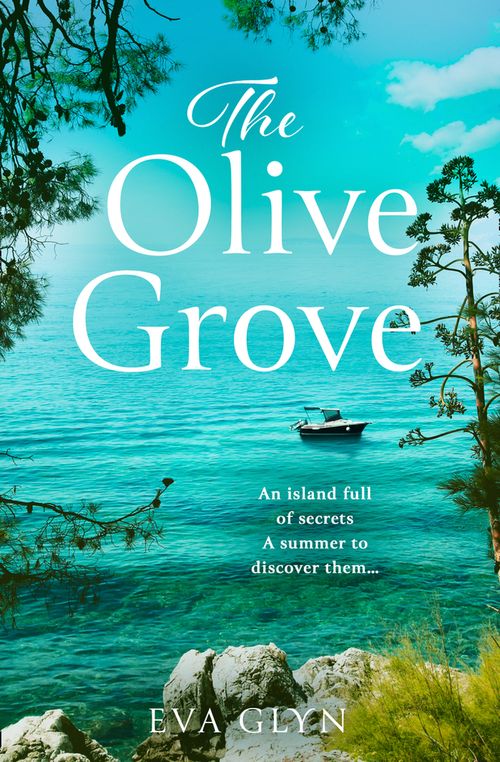
The Orange Grove by Rosanna Ley Book Review

It is fair to say that few of us will be going on holiday this year- thanks Covid!- but we have Rosanna Ley so all is not lost. The Orange Grove takes us to sunny Seville in all of its glory. This is a stunning book to get your teeth stuck into. With endearing characters and a plot that makes you hungry, you will not want to put this book down. It is a wonderful, sunny read of beautiful escapism. I loved it.

An unforgettable story of past love and family secrets, set in sunny Seville.

Holly loves making marmalade. Now she has a chance to leave her stressful city job and pursue her dream – of returning to the Dorset landscape of her childhood to open Bitter Orange, a shop celebrating the fruit that first inspired her.

Holly’s mother Ella has always loved Seville. So why is she reluctant to go back there with Holly to source products for the shop? What is she frightened of – and does it have anything to do with the old Spanish recipe for Seville orange and almond cake that Ella keeps hidden from her family?

In Seville, where she was once forced to make the hardest decision of her life, Ella must finally face up to the past, while Holly meets someone who poses a threat to all her plans. Seville is a city full of sunshine and oranges. But it can also be bittersweet. Will love survive the secrets of the orange grove?

The Stem launches Hydrophonic Herbs

The Stem launches Hydrophonic Herbs


Grow your own herbs from seed without soil, using these hydrophonic kits. Made in the UK using organic and recycled materials, this minimum waste kit contains everything you need to grow your own herbs.

  • These kits ensure successful growth from seed without soil – perfect for those without gardens, or those without space outside
  • Each kit contains step by step instructions to get growing. Seeds usually germinate within 7-10 days
  • Available as singles: basil, coriander, mint, rocket or thyme. Or a set of three: basil, coriander and thyme in a gift box
  • Previous City Worker James Folger has battled mental health challenges and set up The Stem after finding sanctuary in nature, with studies supporting the stress-busting power of plants


herbs, grow your own herbs,   

Each kit contains everything you need to grow your chosen herb from seed, without soil. Follow the instructions and within 7-10 days germination will begin. The herbs will need plenty of light to grow, and perhaps try giving them a few extra drops of nutrient solution to really encourage growth. Herbs should be ready to pick and add to your home-cooking after around 7-8 weeks. The plants should give you months of steady growth and the hydroponic solution should last around 2 years.


James Folger, Founder of The Stem says;


“Hydrophonics is revolutionising horticulture at home and is a fantastic option for urban living especially. The process of growing plants without soil, with roots that are directly suspended in nutrient-rich and perfectly pH-balanced water, allows those without gardens to grow food inside fuss-free, mess-free all year round. Hydroponic plants also grow faster, produce more herbs, you don’t have to worry about over or under-watering your plants: also great for those with little or no growing experience as the process is so easy.”


The delivery process is simple. Choose your preferred delivery day during the checkout process, and we will hand-deliver your order on the day you choose, to all Greater London postcodes – there is a postcode checker on site. The Stem are currently operating a contact-free delivery service. Note – AL, CM, SL postcodes are also covered. Deliveries are free (for all delivery slots) for orders over £50, and £5 on orders below £50.


Basil – £20

Coriander – £20

Mint – £20

Rocket – £20

Thyme – £20

3 pack, (Basil, Coriander, Thyme) – £50


All the parts are recycled (made with old wine bottles), recyclable or entirely biodegradable and from sustainable suppliers. The Jiffy pellets used within the kit are made of coir (ground coconut husk).


www.thestem.co.uk 


Hydrophonic Herbs: https://thestem.co.uk/accessories/hydrophonic-herbs 

The Stem have gorgeous plants. I want to fill my home up with them. There is even an unkillable section for those who, like me, are not green fingered.


Who Uses Online Lookup Tools?

When it comes to modern technology, both businesses and private users use a wide range of devices and services on a daily basis. There is no doubt that this technology now plays a huge part in our professional and personal lives, and there are many online tools and services that can be accessed from the comfort of your home or office. This includes email lookup tools, which are used by many people for a wide range of reasons.

There are lots of reasons why you might want to turn to these tools, and they provide a speedy and efficient solution to find out more about someone connected to a specific email address. You can also find out a wealth of information, such as the real name and age of the person, their social media profiles, any criminal history, and address details, to name but a few. As such, they can be used for a range of purposes by those looking to find out more information. In this article, we will look at who uses online lookup tools to search against an email address.

Some of the Purposes

There are various reasons why people use these tools, and many purposes for which they can be used and prove invaluable. Some of these include:

People Who Use Online Dating Sites

One type of person who might use these tools is something who uses online dating sites. Some people use these sites, and then decide to arrange to meet up with someone they have met via the site. However, naturally, most people want to learn more about the person and verify they are who they say they are. These tools can prove very useful, as they could provide access to the person’s social media profiles as well as their age and name. In addition, you may also learn of any criminal history by conducting one of these searches.


People Who Receive Malicious or Scam Emails

There are many people who receive emails that are malicious in nature or may be scams, and these can cause a lot of stress and problems. This is something that can affect both businesses and individuals but using these tools can hopefully tell you more about the person behind the emails. This then makes it easier for the person to take action and get something done to put an end to the issues.

These are some of the people who might use these online tools, and some of the key situations where they can come in useful. 
Collaborative post with our brand partner.

Alex Bannard’s Mindfulness Series Week 11: The Past and Future


We have talked previously of automatic pilot, which we can spend up to 46% of our time stuck in & of our innate negativity bias.

But did you know that we also spend approximately 50% of our time ruminating on the past or worrying about the future? Couple this with the time spent in automatic pilot there’s not a lot of time left for the only moment that really matters, the present moment, right here right now.

Many of us ruminate on past events but there is little point – the past has already gone we can’t change it. Similarly, obsessing about & trying to control the future is also as pointless. A certain degree of planning for future events such a big meeting is certainly beneficial. But how often have you churned over an important meeting going over every detail only to attend the meeting & for it to not go exactly as you planned it? I would hazard a guess at more often than not.

Something else to consider. Our brain is a product of our past experiences. These experiences also create emotions. If you experience a highly charged emotional event, good or bad, that moment becomes neurologically embossed into your brain as a memory. If you continually obsess about a certain event this hard wires your brain for the same patterns. By obsessing about the past you are in effect hard-wiring your future for the similar circumstances that produce the same emotions that you have already experienced.

Energy flows where your attention goes, so if you are continually ruminating on past event, your energy is in the past. If you then start obsessing about all the things you have to do & people you have to see, you are directing your attention & energy into a predictable known future that is based on your past. You are continuously keeping your life the same by keeping your attention (thoughts) & energy (feelings) the same.

This is why learning to be present in the here & now is so important. If we are constantly distracted by the past or obsessing about the future, we are directing our creative energy away to the outer world, leaving little energy for our inner world to create new something new in your life. And you will keep repeating the same patterns.

But by turning inwards, staying present, then we really have the potential to create, heal, grow & take action & that’s where our true power lies. Meditation allows us to take our attention away from all that’s going on in our outer world & turn inwards to change our internal state, which is where true healing occurs. Bringing your attention inwards as you stay grounded in the present moment, free from the constraints of your past & limitations of a future that is determined by past events & emotions, builds the energy you have available to create something new. And this is where the magic happens!

This week’s meditation is a past & future meditation – a visualisation, this meditation gives us the opportunity to release our past & our future & enjoy the liberation of being grounded in the present moment. To obtain your copy email Alex at alex@alexbannard.com quoting FROSTP&F.

Alex is based on the edge of the stunning Cotswolds & has been sharing her love for all things yoga & mindfulness for almost a decade, not just in the UK but also around the world. Her mission is to help everyone discover a more mindful way of living & to encourage them to embrace regular self-care practices for a happier & healthier way of being.

If you would like more information on how to practice mindfulness, meditation & yoga message her at alex@alexbannard.com.

For free resources check out her Facebook group: Mindfulness & Yoga for Self-Care, here is the link: https://www.facebook.com/groups/MindfulnessYoga4Relationships

Alternatively please check out her website: alexbannard.com