Lizi’s Low Sugar Maple & Pecan Granola – Honest, Tasty And Healthy – by Award Winning Author Dr Kathleen Thompson

Last week the National Food Strategy reported serious concerns over the very high sugar and salt content of the UK diet. Many of us are unaware of the sometimes scary amounts of hidden sugars in pre-produced foods – even some savoury foods. As a doctor this worries me, because, not only does this risk life-changing illness such as heart disease, cancer and type II diabetes, but the steep yo-yoing in our blood sugars makes us crave even more sugar – and so it spirals down, with weight gain, fatigue, and ill health. Depressing?

The good news is we don’t have to relinquish pleasure to eat healthily. With a few surprisingly small tweaks we can enjoy tasty and honest food, which makes us feel good – not bloated and sleepy.

This is why I’m passionate about companies like Lizi’s. Mick and Lizi – a married pair of science enthusiasts, organic farmers and country bed-and-breakfast owners, decided to use their knowledge to create high quality, tasty and satisfying cereals. They now have a fabulous range of granolas and mueslis, always from natural ingredients – mainly oats, nuts and seeds, but with numerous natural flavour combinations suitable for all ages, diets and lifestyles. Their current range includes High Protein, Digestive Health and Low Sugar options.

The key feature of all Lizi’s cereals is their low Glycaemic Load (GL). I’ve explained Glycaemic Load before – basically low GL foods release sugar slowly into our blood stream, which is very important for all the reasons I’ve discussed.

Unfortunately, over many years, the food industry has accustomed us to higher and higher sugar contents. If you’ve ever stopped eating sweet things for a few weeks and then gone back to them, you’ll have noticed how unbearably over-sweet they taste. Our bodies simply become desensitised to the unnaturally high levels of sugar in so many processed foods today.

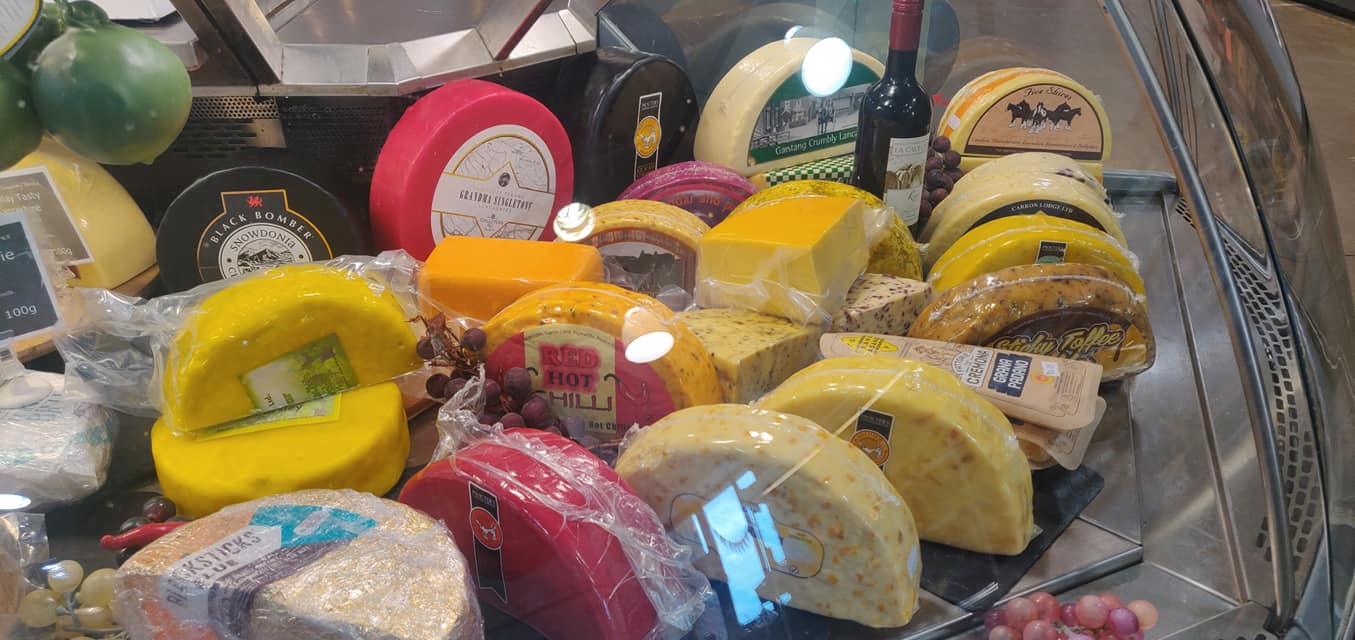
Companies like Lizi’s have proved that you don’t need excessive sugar to make something taste great, and their new Lizi’s Low Sugar Maple & Pecan Granola is a good example. A combination including wholegrain oat flakes, pecan nuts, almond pieces, walnut pieces, sunflower and pumpkin seeds, coconut, chicory fibre, and of course maple syrup – enough to make it delicious but without the over sweetness of less-healthy cereals.

For the full range, take a look at Lizis website, or you can buy their products at Ocado and Amazon.

By Dr K Thompson, award-winning author of From Both Ends of the Stethoscope: Getting through breast cancer – by a doctor who knows

http://www.amazon.co.uk/dp/B01A7DM42Q http://www.amazon.com/dp/B01A7DM42Q

http://faitobooks.co.uk

Note: These articles express personal views. No warranty is made as to the accuracy or completeness of information given and you should always consult a doctor if you need medical advice.

Ahead of Her Time By Judy Piatkus Book Review.

It is hard to think about now but female entrepreneurs used to be thin on the ground. Sure we are lucky to have Jo Malone, Anya Hindmarch, Natalie Massenet, Kelly Hoppen and Karen Brady, but before all of them came Judy Piatkus. A single mother-of-three who built a publishing empire with one hand behind her back. Well, almost.

Now Judy has written a book Ahead of Her Time; How a One-Woman Startup Became a Global Publishing Brand and it is the new bible to help other entrepreneurs and people who are interested in business. The book gives a fascinating insight for those who are interested in publishing. Judy did all of this while while taking care of her three children, one of whom is disabled.

I found this book so inspiring that it has made me drag out an old business plan I had and start work on a logo for that, and a new one for Frost. Piatkus books was built at a time when women were discriminated against. We still are, but it has got better.

I implore anyone who is interested in building a business, publishing, or even just loves a story about how someone built something amazing, despite the odds against them, to read this book. It really is brilliant. I will be handing copies out to my female friends. Judy Piatkus truly was ahead of her time.

Ahead of Her Time; How a One-Woman Startup Became a Global Publishing Brand  by Judy Piatkus is an incredibly inspiring book. 

Judy Piatkus did not come from a monied background and began her career as a secretary after failing to achieve a university place. By the time she founded Piatkus Books from her spare bedroom, she was married with a disabled small daughter and pregnant with her second child. Gradually she learned how to be both a publisher and a managing director and to combine that with her family life as she had become a single mother of three. A lot of mistakes were made but she also got a lot of things right. The company prospered, thanks to the risks Judy took in tackling new subjects in the marketplace and also her approach to running the company, which focused on transparency, honesty and trust and was rewarded by the loyalty of the staff, many of whom worked alongside Judy for upwards of twenty years.

In 1979, Judy Piatkus founded what would become a global publishing brand— Piatkus Books — from her spare bedroom.

A single mother, with a child with learning disabilities, at a time when being a self-made woman entrepreneur was rare, Judy defied expectations, influencing, shaping, and giving rise to a new industry of personal growth and development publishing.


Long before the bestseller charts were packed with mind/body/spirit, business, and relationship books, Judy created a platform for new, as yet unknown, voices and leading authorities and experts in their fields, including Jon Kabat-Zinn, Mary Berry, David Allen and Brian L. Weiss.


‘Ahead of her time’ goes behind-the-scenes and reveals the inner workings of book publishing. Judy details how her combination of financial risk taking, transparent approach in business, and courage to tackle new subjects in the marketplace rather than follow trends, led PiatkusBooks to become a leading global independent publisher.


Judy’s memoir is also a fascinating insight into building a company and brand identity and what enables a team and a business to succeed.


Judy details her learning experience as an entrepreneur — the triumphs and the pitfalls, what worked and what didn’t, how to reinvent through lean times, learning to be both a publisher and a managing director, and how it felt to overcame obstacles in order to build the career she wanted from the ground up, as a truly self-made woman.


‘Ahead of her time’ is published by Watkins Publishing, £14.99, and is available here and from all good bookstores.


THE QUEEN’S SPY – CLARE MARCHANT’S SUPERBLY CRAFTED DUAL TIMELINE NOVEL

Review by Jane Cable and a word from the author…

In her acknowledgements Clare Marchant describes The Queen’s Spy as ‘the difficult second novel’ – or words to that effect. Well she didn’t make it easy for herself, with an Elizabethan main character who is deaf and dumb and a modern day protagonist who is far from instantly likeable.

One of the triumphs of this book is how well the author pulls off both characters. We experience the Elizabethan world through Tom’s eyes, nose, hands… but not his ears. And despite this, it is a rich world indeed, brought vividly to life through the wonderful descriptive language. Despite the danger, intrigue and prejudice it was a world I wanted to return to again and again, which certainly kept me turning the pages.

Like all good dual timeline stories the links between present and past mirror each other well; both protagonists are outsiders, both gifted artistically and with herbs. There are other linking factors too, but to reveal them might spoil the story and I would hate to do that, because it is a book I would definitely recommend you read.


So fascinated was I by Tom’s story that I just had to ask Clare about him:

Over the course of my two books the character who has been my favourite is Tom. I always plan my work in great detail so I don’t have any shocks, and yet Tom arrived one day in the still room at Saffron Hall and took me completely by surprise. I’ve loved him from the first moment he appeared. At first he had no way of communicating but slowly he came out of his shell and as he did so, became more confident.

So, it was a no-brainer that Tom would be the main protagonist in my second book, The Queen’s Spy. He’s able to use his disability in a positive way spying for Elizabeth 1st but I won’t lie, it wasn’t easy writing a book where I had to tell his story through the other senses he had; sight, smell and taste. However I think it’s interesting to experience Tudor London as he would have done. With the heightened senses he has it meant the smells (quite often unpleasant!) would have been that much more pungent. And his intensified senses of smell and taste helps him as an apothecary, able to differentiate between and identify many varieties of herbs. I enjoyed him introducing vanilla to the court (in reality it was Hugh Morgan who was Queen Elizabeth’s apothecary) but it was a long time before horticulturalists knew the plants have to be pollenated by hand in the UK.

The fact he has this disability has always left Tom feeling it’s a weakness, a disadvantage, but it takes Francis Walsingham to recognise that Tom’s lip reading can be used as a skill and as the story develops, Tom’s self-confidence grows. For the first time in his life he feels properly valued and this just makes me love him move!


Publisher’s blurb:
1584: Elizabeth I rules England. But a dangerous plot is brewing in court, and Mary Queen of Scots will stop at nothing to take her cousin’s throne.

There’s only one thing standing in her way: Tom, the queen’s trusted apothecary, who makes the perfect silent spy…

2021: Travelling the globe in her campervan, Mathilde has never belonged anywhere. So when she receives news of an inheritance, she is shocked to discover she has a family in England.

Just like Mathilde, the medieval hall she inherits conceals secrets, and she quickly makes a haunting discovery. Can she unravel the truth about what happened there all those years ago? And will she finally find a place to call home?


Alex Bannard’s Mindfulness Series: let’s talk about self-compassion & the benefits of embracing being kind to ourselves.


We are usually harsher to ourselves than anyone else but we won’t spend any more time with anyone except ourselves, so applying the concept of making that space inside our heads a pleasant place to be, treating ourselves as we would a friend makes sense.

We are inherently really tough on ourselves but it doesn’t actually serve us or make us more efficient, productive, successful or accomplished. In fact, it can cause us more harm – the Buddhists call this the double arrow.

Something happens that causes us pain, we might not get the promotion we were hoping for, that first date with the guy we really thought we had a connection with was a disaster, we argued with our partner, snapped at our kids, whatever it is, that is the first arrow.

If we then go on to beat ourselves up about it, allow that inner critical voice to run riot berating ourselves all we are doing is hurting ourselves again, the double arrow. It doesn’t inspire us it just causes us more pain & suffering.

The problem with self-criticism is that judging & criticizing ourselves doesn’t make anything better – it’s the double arrow we talked about earlier. The best way to counteract self-criticism is to have compassion for it, replacing it with kindness & acceptance.

Self-compassion offers all the benefits of self-esteem without any of the drawbacks: people who practice self-compassion have just as high standards; they are just likely to be less hard on themselves & their goals are generally more learning orientated. They also tend not to compare themselves to others so much.

Whereas self-esteem can be a roller-coaster as our self-worth rises & falls inline with our latest successes & failures, often coinciding with self-criticism & is often linked to performance related goals & comparison with others.

There are 3 components for self-compassion:

First self-kindness – being gentle & kind to ourselves, treating ourselves as we would a friend.

This was a game changer for me: if we wouldn’t say that out loud to a friend why would we say it ourselves? I started to notice when that inner critical voice was getting on a roll & just stopped myself mid-self-beration, without judgment, just simply stopping & reminding myself if I wouldn’t say that to anyone else why would I say to myself & overtime I realized I was a lot kinder to myself.

Common humanity – a sense that we are all in this together.

Compassion literally means to suffer with. Everyone feels unworthy, disappointed, feels pain & suffering: the pain I feel in difficult & challenging times is the same as the pain you feel in difficult & challenging times, the triggers may be different but the basic experience is the same. When we remind ourselves that failure & / or hardship are part of the shared human experience we see that moment as one of togetherness not isolation.

Mindfulness – well we have talked about different aspects of mindfulness throughout is this series.

Mindfulness is the clear seeing & nonjudgmental acceptance of what is occurring at the present moment. Mindfulness helps us to recognize that we are suffering so that we can give ourselves compassion.

Self-compassion is a self-perpetuating virtuous circle – there is no finite amount of compassion so the more we express it, the more we cultivate more loving kindness, compassion & understanding for others, then the more we have for ourselves. The more we cultivate compassion, the more it grows & flourishes & the more we have for others & ourselves, often the hardest person to show loving kindness towards. A beautiful virtuous circle.

This week’s meditation is my interpretation of a Metta or loving kindness meditation. To obtain your copy email Alex at alex@alexbannard.com quoting FROSTLVG.

Alex is based on the edge of the stunning Cotswolds & has been sharing her love for all things yoga & mindfulness for almost a decade, not just in the UK but also around the world. Her mission is to help everyone discover a more mindful way of living & to encourage them to embrace regular self-care practices for a happier & healthier way of being.

If you would like more information on how to practice mindfulness, meditation & yoga message her at alex@alexbannard.com.

For free resources check out her Facebook group: Mindfulness & Yoga for Self-Care, here is the link: https://www.facebook.com/groups/MindfulnessYoga4Relationships

Alternatively please check out her website: alexbannard.com

Life begins at 60 in new drama – Invisible Me. 3rd to 11th September 2021


Sexual adventurism comes to the forefront in new play, Invisible Me, by Bren Gosling (Moment of Grace, The Actors Centre; PROUD, Studio at New Wimbledon Theatre).

Three Londoners on the cusp of their seventh decade thwart loneliness and sexual isolation by embracing a new lease of life, showing there’s fun to be had if you release your inhibitions.

Three very different individuals are united by sex: Lynn, a hotel cleaner, lives alone in her mother’s house; Jack, an HIV+ recent widower, struggles with the concept of digital dating; and Alec, a divorcee with an identity crisis, clutches at his youth. But despite their hardships there’s a prevailing message of optimism to be found in the most unlikely of situations.

Invisible Me explores the under-represented stories of older singles in London. This dramatic comedy seeks to open the doors on the inner workings of singledom as a sexagenarian. Directed by Su Gilroy (Moment of Grace, Bloomsbury Festival; Gaslight, Wolverhampton Grand Theatre), Invisible Me is a thought-provoking insight into the human condition and our need for connection, highlighting how we entwine with others on an emotional and physical level.

Writer Bren Gosling comments, I’m excited for audiences to witness the stories of these three compelling individuals, lifting the lid on sex and singledom in your sixties! Invisible Me is a play full of hope, not despair. I want to make people think about the diverse identities of the older people around us – there’s a generation out there still seizing life with lust and vigour, they don’t deserve to be invisible.

Friday 3 rd – Saturday 11th September 2021

Studio at New Wimbledon Theatre, 93 The Broadway, London SW19 1QG

Running time 60 minutes Age Guidance 16+ Tickets

Tickets are available from £17.60 and can be purchased at the Box Office, online https://www.atgtickets.com/shows/invisibleme/studio-at-new-wimbledon-theatre/

or via phone on 020 7206 1174

Writer Bren Gosling Director Su Gilroy

Lighting Design Chuma Lighting Design Producers Backstory Ensemble Productions Ltd.


The Dover Cafe on the Front Line by Ginny Bell has arrived in eBook – hurrah hurrah


The second book in an emotional and heartwarming WWII Series. For fans of Ellie Dean, Annie Groves and the Home Fires series.

Dover, 1940With the Battle of Britain raging overhead and the German guns firing across the Channel, the people of Dover find themselves on the front line. But despite the danger, Nellie Castle is determined that the café will remain open, no matter what happens.

For Lily Castle, it is an exciting time as she starts her nursing career. Though the work is demanding, there is romance on the horizon, and she still finds time to enjoy herself. Until a prisoner escapes from the hospital and suddenly everything she holds dear – including her freedom – is put at risk.

Meanwhile there are strange goings-on at the café: rumours are circulating and secrets are exposed. Secrets that could tear the Castle family apart once and for all . . .

The Dover Cafe on the Front Line is the eargerly awaited second novel  in the Dover Cafe series. The first, The Dover Cafe at War was a whopping success, and Frost Magazine sees an even bigger audience for The Dover Cafe on the Front Line.

Bell’s writing is full of energy and charm, and she handles her characters with gusto, creating a vibrant, tense but warm scenario which has us turning the pages quick as a flash, so eager are we to see ‘what happens’ next.  Will Lily be all right? Will the cafe survive? So many ‘ifs’ ‘buts’ and ‘maybes’ just as there should be. Read it, join the girls of the Dover Cafe, enjoy and then wait for the next, as there is one in the pipeline I hear.

The Dover Cafe on the Front Line by Ginny Bell is in eBook here with the paperback due in September.


Hadrian’s Wall Guided Walk with Shepherds Walks Holidays

Let’s walk the Wall, we said, to raise funds for Words for the Wounded, so I booked onto a guided  Hadrian’s Wall Walk with a friend. And then set about training, plod plod. It was as well we did. We joined a small but perfectly formed group led by the intrepid Patrick Norris, our guide for this 8 day walking extravaganza.

We met at the Hilton in Newcastle, and in the morning transferred to Bowness-on-Solway for the start of our adventure along the National Trail. It was flat, gloriously, gloriously flat –  from Bowness to Carlisle. Flat and beautiful – lots of bird life, and fishermen who  used a Haaf net to catch salmon, a method brought over by the Vikings more than 1000 years ago.

Pretty soon Penny and I were established as the rear guard, walking at our reasonably speedy pace while a few pathfinders strode out at a considerably faster speed. Patrick kept his eye out, and gathered us all up to talk us through the history as we met it. It was such a good idea to have a guided walk or we would have missed so much. We learned about the territory, and the Romans, and the countryside. The first two days were long, but easy. About 14 miles each, after all we had 84 miles to cover if we were to reach Wallsend. Each night we stayed at great hotels, and ate at similarly welcoming pubs and restaurants.

Then, as the days passed, our walks became lumpy, to use Patrick’s gift for understatement. To begin with the  wall is  sod  but here was the start of the stone.  There were many examples of turrets and mile castles until we reached Birdoswald Fort. This stands high above the River Irthing, It was an important base for about 1000 Roman soldiers. Then, onwards, and as the day wore on we spent time at Vindolanda Roman Fort, still being excavated. But just before we reached it, I chanced upon an itinerant metal worker. Yeah, really I did. He was waiting for a coach full of schoolchidren who he would escort around Vindolanda.

On our way we had walked amongsts hayfields of herbs, wild flowers, even orchids, or viewed them from above. The sun grew hotter. I grew more like á tomato with every step. We learned how the stones were chiselled to fit into the wall. I learned how Patrick could perform a magic trick with a cable tie, when my sole began to lift from my boot.


On we walked and the terrain became more challenging, with a number of sharp gradients and ascents eventually reaching Winshields Crag and the highest point on the Wall. Lordy it was hot. A glass of wine tonight at the pub, not the small I had been having but a schooner, thank you  very much.

And still Patrick was a bundle  of information, ‘See the kestrel, see how the Romans chiseled their marks on the stones. listen while I tell you about the make up of the Roman Army. ‘On and on we walked, travellers together now, not a group of disparate strangers. Patrick showed us one of the best preserved sections of the Wall: Clayton’s Wall after John Clayton of Chesters, a Newcastle lawyer who devoted every Monday to restoring the wall.

Well, Clayton was not alone, for the same restoration and care happens today. We met Alan, who has spent 15 years volunteering to keep the Wall and walkers safe. He was also drawing every single stone in the wall on ‘his’ patch as there is no written record. Patrick spoke often of Gary, whose job it was to facilitate passage alongside the wall and around the area. ‘We should see him soon,‘ Patrick would say. But no Gary.

‘Where’s Gary?’ went up the cry. We created a sign for Patrick to tweet to Gary ‘WHERE’S GARY?’ The next day we walked on, Patrick wearing an enigmatic smile. We crossed the road, then back. We crossed the road again, and there… there… Was it Gary!! Yes, Yes. But for social distancing Gary would have been mobbed. Patrick, typically wonderfully, had arranged for us to ‘bump into Gary’. Such happiness. A spring in the step of us all as we marched on.

We passed Housesteads which is the most complete example of a Roman fort in Britain, standing high on the Whin Sill escarpment, with fabulous views. It was once garrisoned by a cohort of around 800 infantry. And while on the subject of views – these were of a pastoral England that we remembered from our childhood: meadows, sheep seeking shade wherever they could find it. Cattle. Hay. Tractors taking in that hay meadow. And another. Again I say, there were orchids galore. Even a Roman altar still in place from Roman times.


Day 8, having stayed at a variety of wonderful hotels, (each of which gave me ice cubes in a polytheme bag for my feet), and eaten at pubs and restaurants, we reached Newcastle. We’d almost made it. The relief, the experience, the knowledge that had yet to sink in. Alongside  the Tyne we went, with its bridges.   We passed for the last time the four Geordie blokes who had been shadowing us, and in our turn we had shadowed them. We had stopped a man and his son on the third day, as they walked towards Bowness, the father wearing a Macmillan T shirt. They were raising money for Macmillan in memory of their wife and mother. We donated.  At a pub we had all given an pound or more for funds for the local primary school. Community lives in the north, alive and well. It began raining. I was humming to The Full Monty, and snapped about to launch into some sort of routine, in the welcome rain, I might add, wearing my sunhat to keep the rain off my glasses. The tomato in an action shot.

We had chatted to locals, and fellow travellers, and one another. We were a gang on a mission. And here it was, a signpost. 84 miles to Bowness, our starting point. We  just had a bit to go, until we reached Segedunum  Roman Fort on the banks of the Tyne in Wallsend, and the last outpost of Hadrian’s Wall. For almost 300 years, Segedunum was home to 600 Roman infantry. There we looked, listened and wondered, then had a cuppa and a cake. Of course we did, and said our goodbye as Penny and I were to be picked up by Dick.


Will my feet ever be the same? Of course. Have I missed out many things in this feature? Of course.

Such was the variety, the immensity, the history that it cannot be encasulated into one, two or more  features. So, tell you what, book on a walk with Shepherds Walks Holidays. Make sure you have Patrick Norris as your guide. Have a look at what other walks they do here:  Shepherds walks, and check out Patrick Norris’s Footsteps in Northumberland. He does some great walks in his beloved Northumberland.

Was it a good week, a memorable week? Of course it was.


Rider on the Rain by Sebastien Japrisot is back, after 20 years.

A lonely young woman, Mellie, in France, in a seaside town, and it’s raining when a bus arrives. Only one passenger alights. Where is he going, with his red bag, bright in the greyness? Mellie is alone in the house. The stranger forces his way in, rapes her. Why her? Why Mellie?  By midnight he is dead. Mellie, the victim,  has  killed the predator. The sea is the perfect place to lose a body.

Will it stay lost forever. Has she got away with it?

Later, Mellie is at a wedding. An enigmatic Harry Dobbs is there too. He is an American, and seems to know her secret, but not enough. He wants to know more. Hour by measured hour the man and the young woman circle one another, relentlessly, Who is the cat, who the mouse?

This is an extraordinarly novel. Written to a relentless rhythm, like a dance that can’t be brought to an end. The rhythm mirrors the strange hypnotic story, one which almost seems suspended in time. It has been made into a film several times, the first in 1970, starring Charles Bronson. The last, thus far  The Lady in the Car with Glasses and a Gun starring Charlize Theron. It was a Sunday Times Top 100- Crime Novel.

It is extraordinary. Put time aside, read it in one gulp, though that’s the wrong.. You need each word, each phrase, each image so clear, the language so economic.

Linda Coverdale has done a cracking job with the translation of Marseille born Sebastien Japrisot’s Rider on the Rain. Japrisot  died in 2003. He was a screen writer, author, and film director. He was nicknamed The Graham Green of France. His book is a masterpiece.

Rider on the Rain by Sebastien Japrisot. pub Gallic Books.. pback. £8.99. Translated by Linda Coverdale.