
My Writing Process – Emma Eker.

I’m a searcher – always have been, potentially always will be. I’ve questioned the status quo from the moment I had the capacity to do so – finding myself dissatisfied and unconvinced with the answers I was given. I mention this so you may understand that I spent my whole life pushing boundaries, rebelling against ‘the machine’ and searching for the Truth. This quest came with a restlessness that ensured I couldn’t stay still for any substantial amount of time, moving from place to place, job to job and person to person for as long as I can remember – I was always trying to get ‘there’… destination unknown. 

What you have written, past and present.

Apart from writing a teenage diary, essays for my psychology training, helping friends formulate emails and blogging through social media, my professional writing CV, up until this point, has been limited! Until recent years, although with a great love for writing, I am not sure that I considered utilising this in any particular way, either professionally or for any paid or altruistic offering – it simply wasn’t in my consciousness awareness to do so.

What you are promoting now.

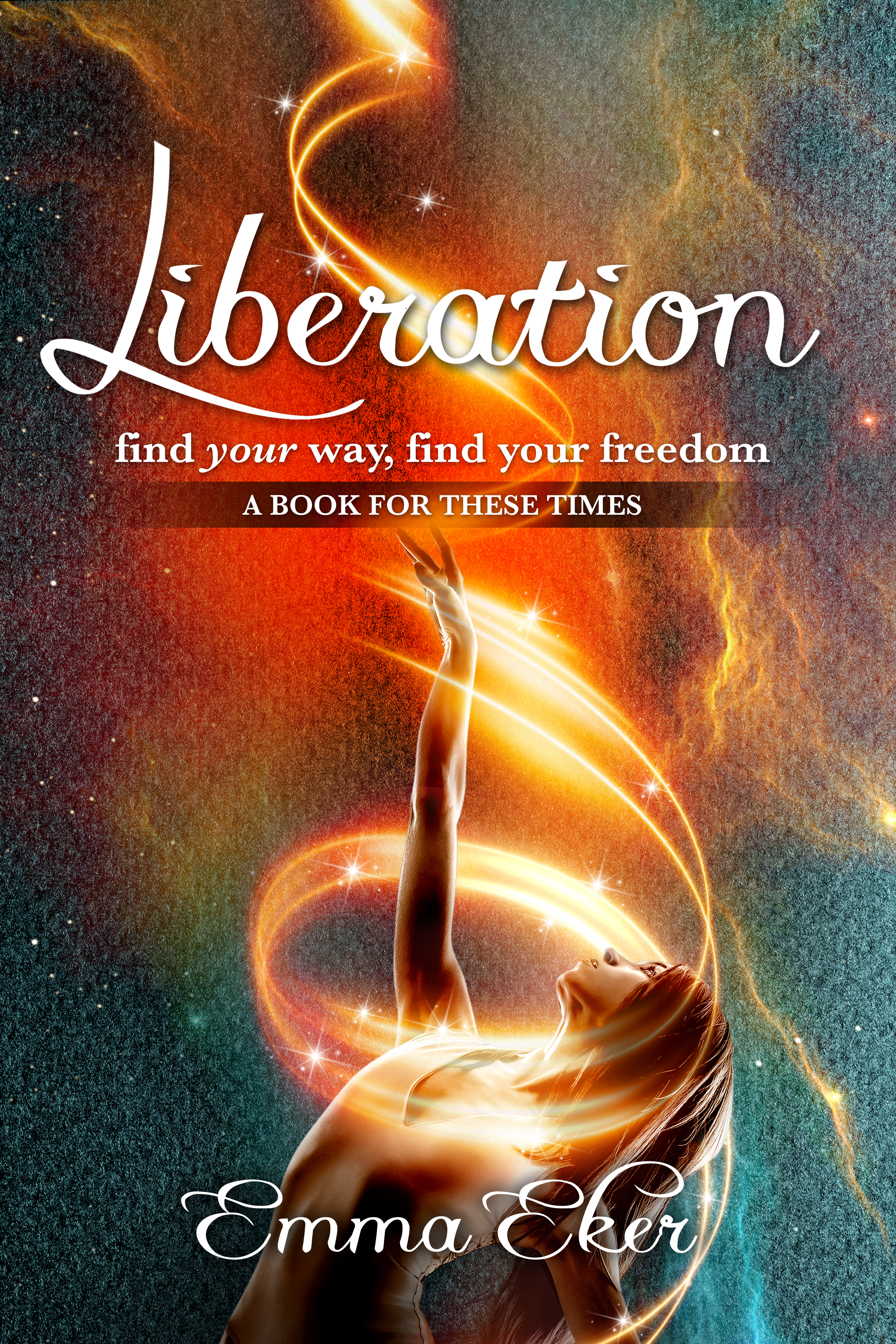
My book is called “Liberation”. It has been a labour of love and is predominantly a solution-based memoir, highlighting my journey through life – moving through addiction, heartache, temporary loss of Self and many of the trappings of the human experience. I have always been solution-based, always aware that life is magic and benevolent and therefore I could not, would not, write a book relating to struggle without presenting the reader with a solution. Too many books in the mainstream point to the ‘problem’, providing identification but little or no hope for the eradication of that which the reader may be battling with. I believe we are all whole and perfect, but for our belief systems and this is what Liberation allows the reader to see. 
3. A bit about your process of writing.

If anyone is looking for ‘good advice’ from me in this area, they may be disappointed! My writing process has been totally haphazard. Some days / weeks I would be in ‘the zone’, writing flowing, immersed in the creative process and other times, my laptop would be left unattended whilst I found it more important to do absolutely nothing at all! Many a time I have found myself in judgement around my process, but I have come to see that everything happens perfectly and in divine timing. What I will say is this, I have learnt to hear and to listen to the still quiet voice within me that taps gently in order to gain my attention and nudges me in the right direction. When the ‘knowing’ comes knocking, I know it’s time to put fingers to keyboard. 

4. Do you plan or just write?

Absolutely no planning whatsoever. I truly trust my writing process and I go with what feels right, rather than what I could have set out in black and white with regard to a structure. I have never worked logically, despite being thrown into a system that required it. I must be honest and say I don’t think I ever planned any of the book at all. Everyone’s process is different though and we need to find what works best for us which is simply a matter of trial and error. I know that when I sit down in front of my computer with the intention to write, the words will flow through me and if they don’t, I recognise it isn’t the right time. For me, the trick is to take my thinking mind out of it and go with the (creative) flow.

· What about word count?

With “Liberation”, there was no specific word count. I made the decision to self-publish rather than write for a traditional publishing house who may have required a certain length of manuscript.   

· How do you do your structure?

There was no specific structure, although, before I made the decision to self-publish, I was in discussions with a traditional publishing company who had asked me to draw up a synopsis and provide a rough chapter breakdown. I did, on some level, find this helpful to refer to as the writing process began. I held the structure loosely, understanding that the ‘story’ would unfold and become clearer as time moved on. Therefore, the format continually changed as the writing flowed and took on different directions, but it was useful to at least know the direction in which I was headed.  

· What do you find hard about writing?

At many times, thoughts, ideas and words would flow into my mind incredibly quickly and leave just as quickly making it difficult at points (not to mention incredibly frustrating) to grab hold of and capture them. Because I have a perfectionist within me, I would find myself continually editing, editing and re-editing some more which again, can be incredibly frustrating. I have however learnt, that if there is something that needs language which I temporarily ‘forget’, it will revisit me again to make its way onto the page. Moving out of my own way to make way for the creative process has also been a challenge for me, left vs right brain – practice is the name of the game. 

· What do you love about writing?

It’s an interesting question. Is it enough to say that it feels like an extension of who I am? I love putting words together and creating something that touches or resonates with another human being in order to gain identification and understanding. The ‘writing zone’ is a very real thing and I love getting lost in here.

· Advice for other writers.

If you feel there is something you have to offer and have a desire to write, trust it. Do not give up. It does not always feel easy to take what is inside of us and give language to it ‘out there’ and at many times you may feel you are in a battle with and up against yourself, but you must trust your heartfelt desire to do it. For if it wasn’t yours to do, you would not have the desire in the first place. And remember, everything has its ‘perfect’ time, so trust that too!


Liberation by Emma Eker is out by Spiffing Covers on 28 January. You can buy a copy of Liberation by Emma Eker via her website or Amazon.
 

WELSH WRITING WEDNESDAYS: SALLY SPEDDING ON LIVING OTHER LIVES

‘Write what you know’ is a common enough diktat for the newbie writer, but how about the more subtle ‘write what you sense’ which carries far more possibilities. Material delivered by mysterious inner forces, as opposed to merely outer observations. Why? Because I’m a believer in the transmigration of souls, whereby a departing spirit finds the first empty womb to inhabit, as espoused by the hounded, tortured Cathars particularly from that beautiful, historic Ariège region of France during 1294 – 1324.

To visit it, having read the historian, Emmanuel Le Roy Ladurie’s moving account of their lives in the hamlet ‘Montaillou’ and its seemingly still mediaeval surroundings, is to experience, like the shepherd Pierre Maury, mysterious timeslips. When interrogated under torture, as to where he’d been on a particular day, he replied, ‘out looking to find my shoe.’
‘What shoe?’ asked his interrogator.
‘One that I cast when I was a horse.’ Sealing his fate.

To read of these Cathars’ cruel deaths in Pamiers, Foix, and in Carcassonne’s ‘Tower of Justice’ during the early fourteenth century, is chilling, yet these gentle people who posed such a threat to the Catholic Church, will never be forgotten, and whenever I start new work, whether a poem, short story or novel, conflict between good and evil begins.

Having reluctantly moved from our cottage near the River Sawdde in Llangadog, to urban Northampton, because of my now late artist husband Jeffrey’s new post at its university, I felt bereft, so, using a ruler to find the nearest coast, found where the River Nene, dividing Norfolk and Lincolnshire, meets the North Sea. Even now, that sense of death lurking in its silence, still lingers. I soon began ‘digging’ then writing the first few chapters of a part-contemporary/part-historical novel provisionally entitled, ‘Snare.’

Imagine my surprise having discovered Hilaire Belloc’s vivid collection of essays, ‘Hills and the Sea,’ in which he describes how once a newly-cleaned footbridge was re-opened in Sutton  Bridge, those who’d been waiting then walked across it ‘into the Wringland.’ This name intrigued me, but learning it had evolved from ‘wrungo’ the old High German for ‘snare’ added to the weirdness. I met several people living on the Fens who wouldn’t allow their children to go out after dusk because of ‘evil spirits.’

‘Wringland’ was the first in a two-book deal with PanMacmillan in 2001. Here, the ghost of Martha Robinson – one of the last to be publicly executed in 1862 – tells a fragment of her story before each chapter, in which young, keen Abbie Parker, a saleswoman in a new housing development, arrives at its Show Home to find the door already unlocked, the alarm disabled, and a strange, black-clad woman sitting by her desk demanding Plot 2 be reserved for her. Someone badly wronged, seeking justice. But at what price for Abbie, with her new career?

While looking for a holiday home in France, we’d stopped by the Grotte de Lombrives near Tarascon, where I immediately began shivering with fear and begging Jeffrey to drive on. Only afterwards did I learn from my Dutch aunt how Frenkel – my middle name – evolved from those Franco-Raphaelite Jews, purged by the Spanish Inquisition. Many of whom were walled up alive in that very same grotto. This might explain my claustrophobia. I still can’t use the Underground, lifts or aeroplanes. Meanwhile, France with its relatively few cremations, although harbouring so much dark history, continues to inspire my later books.


http://www.sallyspedding.com


She Hot Pepper – And Now They Have Home Delivery And Curb-side Collection – by Award Winning Author Dr Kathleen Thompson

She Hot Pepper Bundles

Exciting news – do you remember the Frost feature on She Hot Pepper Sauces – those delicious home-made, authentic Trinidadian sauces – Trini Pepper, Lime Pepper and Tamarind? You know, the ones made with only real ingredients?

Well The Doubles Kitchen now have a full menu to get you through lockdown, and wow, it looks good.

The menu showcases traditional Trinidadian cuisine. Taking you on a trip to the Caribbean with every bite, touch and smell of their delicious food. Every dish is hand-made just like one would have in Trinidad. For some, it’s a memory of childhood, whereas for others it’s an exciting journey for their tastebuds.

So if you live in Enfield Borough, Southgate, Leyton, Leytonstone, Walthamstow or Chingford, take a look at the home delivery menu, otherwise curbside-collection is available from Sittingbourne Avenue, EN1. Just check out Double Kitchen on Facebook or Instagram or this link for current menu.


                                                                              She Hot Pepper Bundles

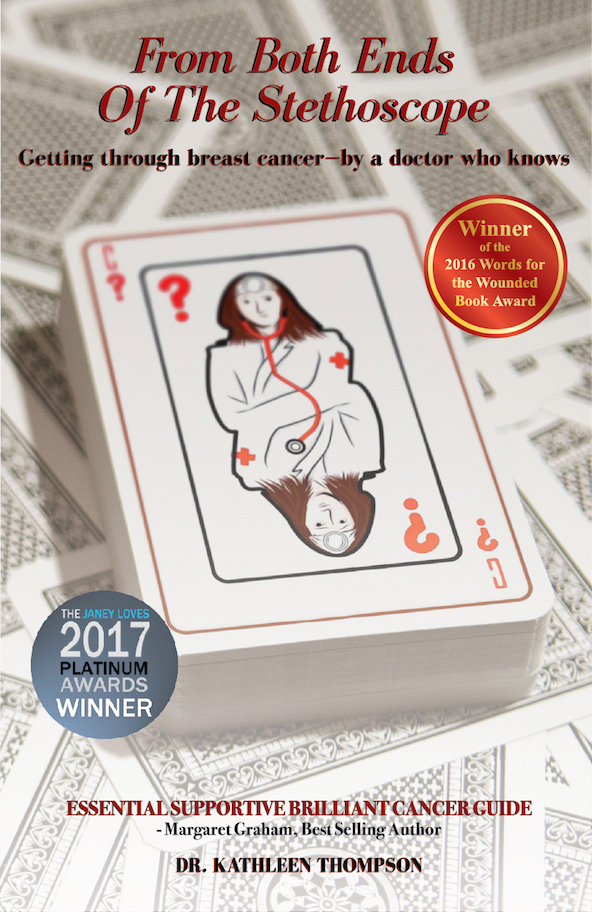
By Dr K Thompson, award-winning author of From Both Ends of the Stethoscope: Getting through breast cancer – by a doctor who knows

http://www.amazon.co.uk/dp/B01A7DM42Q http://www.amazon.com/dp/B01A7DM42Q

http://faitobooks.co.uk

Note: These articles express personal views. No warranty is made as to the accuracy or completeness of information given and you should always consult a doctor if you need medical advice.

28 Days to Find your Bliss – in conversation with Alex Bannard by Annie Clarke

Frost Magazine is invested in promoting every possible way to help everyone through lockdown, but not just lockdown, for we encourage ways and means to good health on all its levels – all the time.

So, Alex, let us know about yourself and the help you can provide to our readers:

I am a yoga teacher & a mindfulness coach & I have been sharing my passion for both of these practices for several years & been blessed to be able to do so all over the world, which is why I am so happy to be writing this for Frost Magazine, and  even happier to be writing  a mindfulness series for Frost readers in the near future.

So why are you so committed to yoga and mindfulness, Alex?

I believe whole-heartedly in the physical, mental, emotional & spiritual benefits these practices create because, well they have changed my life. Catch me on a melodramatic day & I’ll happily announce ‘They saved my life!’ always one to relish  theatrics.

I have used both practices to help me navigate the choppy waters of: mental illness (breakdowns, hospitalization, more breakdowns & eventually utter rock-bottom to precipitate the spiritual awakening that was the breakthrough – hurrah at last!); divorce (toxic nasty business, is there any other kind?); menopause (ghastly business, horribly similar to mental illness or such was my experience with the added extra of a hefty dose of anxiety & panic attacks…all very ‘normal’ apparently, who knew?); and then  lockdown & global pandemics. But combined with daily practices of gratitude & nature, I have found mindfulness & yoga are the cornerstones of my wellness & wellbeing.

So self-care, Alex? Tell us more.

I am a huge believer in the many benefits of self-care because I was so bad at practicing it myself, and consequently  my mental health took a battering. Self-care is the care we take of ourselves to nurture & nourish our physical, mental & emotional wellbeing, our mind, body & spirit. I believe that it is not a luxury but a necessity. I also believe that it’s not all chocolates in the bath & massages. Or self-indulgent, time consuming or expensive. But more of that later.

Self-care has a number of benefits. It builds resilience, our ability to bounce back from adversity because when we have taken time to look after our self. we are less likely to be floored by normal daily setbacks. It improves our sleep & our relationships because  our energy isn’t always going out, some of it is coming back inwards. It becomes clear that attending to our own needs  gives us more energy & time for others. Think of it like this: you can’t pour from an empty jug.

Self-care is an act of self-love, it reaffirms our sense of self, building our self-esteem, a sense of ‘I deserve’ this simply because we have taken the time to invest in ourselves. Our self-awareness improves as we become better at identifying stressors & what we can do to limit or offset them. Of course this all has a knock on effect making for a happier & healthier outlook.

But establishing a daily practice of self-care is not as common as you would belief with almost three quarters of adults not practicing any self-care rituals. The common excuses include lack of time & energy, guilt & finances.

Time & energy I get but what I have found by slowing down & investing in myself for a few short minutes every day, is that I am more productive & efficient,  & fulfilled. Self-care doesn’t have to be time consuming…surely we are all worth ½ hour of each day just for us, to nurture, nourish, rest & replenish ourselves?

Guilt – why would we feel guilty for taking care of ourselves? Surely we care enough about our self, not in a narcissistic, self-absorbed fashion, to spend a few minutes on our self everyday? I also believe that when we model self-care to our family, not only do they learn to respect those few moments we devote to our own wellbeing but they start to practice it themselves…what a gift to give to our nearest & dearest.

Finances – well yes, but as I’ve said before it doesn’t have to be expensive. And the longer term cost of not practicing self-care financially, emotionally, mentally…well I have experienced them first hand. My mental illness was the direct result of not making myself a priority in my own life. If you’re not a priority in your own life, how can you be a priority in anyone else’s?

So, from working with yourself, how did you move on to helping us?

It was with this idea of how can I help my tribe establish their own self-care practices & because I know how much I (& my family indirectly) have benefited from my own self-care practices that I set up my ‘couch to …’ programmes. So, think of  a more nourishing & nurturing version of my ‘couch to 5k’ and you come up with ‘couch to yoga mat or meditation cushion’.   These programmes are aimed at anyone who has heard about all the wonderful benefits of yoga & meditation: physical, mental, emotional, spiritual but just don’t  know where to start. These programs guide you from the basics, establishing a good solid foundation in your practice so that you have the skills & confidence to go to any class online (or in person) & to cultivate your own regular, daily even, practice in yoga or meditation in the comfort of your own home, which is ideal in lockdown.

You can also join this programme if you have done some yoga or meditated a bit, this programme will help you fine-tune, finesse your practice & guide you towards establishing a a regular meditation or yoga ritual of self-care.

Alex, that’s all we have time for but next week, tell us more about these courses, and we look forward to your mindfulness series starting in  Frost Magazine  in February.

Alex is based on the edge of the stunning Cotswolds & has been sharing her love for all things yoga & mindfulness for the last 8 years, not just in the UK but also in Thailand & Germany. Her mission is to help everyone discover their bliss within & to encourage them to embrace self-care.

Alex tells us that if you would like more information message her at alex@myananda.co.uk.

For free resources check out her Facebook group: Mindfulness & Yoga for Self-Care, here is the link: https://www.facebook.com/groups/MindfulnessYoga4Relationships

Alternatively check out the website: www.myananda.co.uk

Alex will return on Monday 1st February.


CARIADS’ CHOICE SAINT DWYNWEN’S DAY REVIEW SPECIAL

Most people probably know that St Valentine is considered to be the patron saint of love, but did you know that Wales has its own equivalent? St Dwynwen’s day is celebrated on 25th January in the same sort of ways as her more famous counterpart – sending cards, giving flowers, having a special meal – anything in fact that says ‘I love you’. St Dwynwen’s own story is a sad one, told with an overlay of traditional folklore elements – beautiful princesses, thwarted lovers and people being turned into blocks of ice. Ill-fated in love, Dwynwen became a nun, founding a convent on Anglesey, and generously praying that true lovers should have better fortune. Frost magazine is marking her special day with some reviews from Welsh authors of romance books that have a Welsh connection.

Trisha Ashley A Leap of Faith, reviewed by Evonne Wareham

I’m an Ashley fan, and she has been one of my go-to feel-good reads in lockdown. That said, I had mixed feelings about this one. It has familiar ingredients – a slightly older heroine, with a biological clock ticking, a bit of mystery, some infuriatingly arrogant and entitled ex boyfriends and husbands, a supporting cast of eccentrics, crafts and baking and recipes. I loved the fact that it’s set in Wales, in an imaginary community on the Gower and has a rather gorgeous hero called Nye, who speaks with a Welsh lilt, although he was brought up in Manchester and his looks are more Viking than Celtic! On the down side, the book is twenty years old and has not been significantly updated and there are a couple of episodes of harm to animals that I found upsetting. With those caveats, I did enjoy the book. Probably one to choose if you have read her others and are completing your collection, as I was. If she is new to you, it may be better to begin with something more recent. Those involving chocolate are particularly scrumptious.

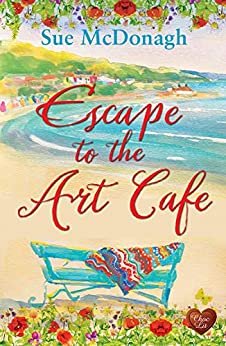
Sue McDonagh Escape to the Art Café, reviewed by Jan Baynham

The third in a series, Escape to the Art Café is another feel-good, uplifting novel that may also be read as a stand-alone. The author writes with pace and humour to keep the reader turning the pages. However, for me, her strength is in the characterisation. She creates multi-layered characters whom you care about. Both Flora and Jake are ones I really warmed to and as their backstories are revealed, I came to understand more about them. Set against the backdrop of the beautiful Gower peninsular and with a great twist towards the end, the theme of strong community so often found in Wales runs through the whole novel. I enjoyed it immensely.

Tracy Rees The Hourglass, reviewed by Jill Barry

Two different eras spring to life in this poignant story of youthful dreams and cold reality. We meet the competent Nora in 2014 at an unhappy time for her. In 1953, schoolgirl Chloe lives for her annual visit to Tenby, a town to which the troubled Nora is also drawn. But the two are linked by more than the Welsh seaside resort which, as the novel progresses, is viewed in all its colourful splendour through the main characters’ eyes. You’ll relive simple pleasures and wonder about the power of love and positive thought.

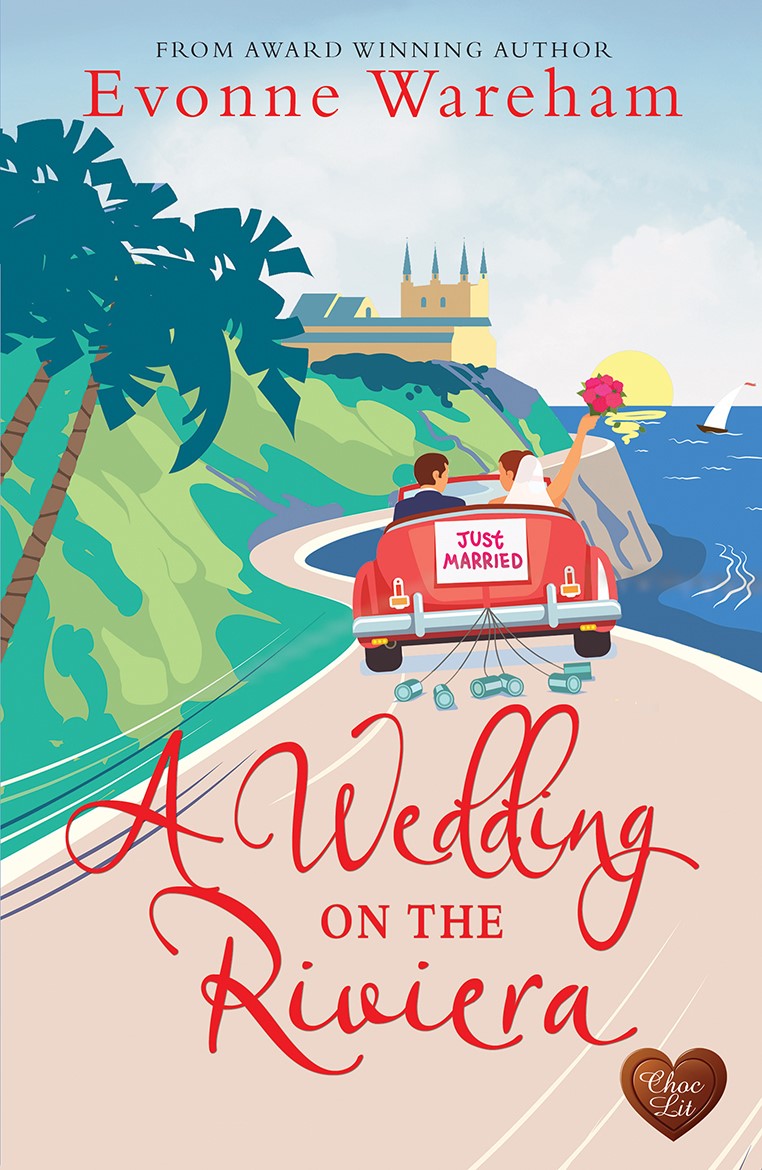
Evonne Wareham A Wedding on the Riviera, reviewed by Jessie Cahalin

A Wedding on the Riviera is a smoking hot romance entangled with an intriguing mystery. The runaway groom hooked me from the outset. An intricately woven plot ensured I escaped to the Riviera, Cardiff, Bristol and Bath.  Wonderful writing took me into the heart and soul of Nadine and Ryan and made me yearn for their happiness. I absolutely loved the tension created by the dubious dealing of Thackery. Drama, romance and glamour are packed into the novel. Will the perfect plan to catch a thief be thwarted?


Joffe Books, short listed for Independent Publisher of the Year 2020, is a triumph of independent entrepreneurial publishing: reviewed by Annie Clarke

“In the end, everything comes down to great books by great authors. We just make sure the amazing readers discover them.”  JASPER JOFFE, ceo

Joffe Books pride themselves on  innovative publishing, an approach that has built a reputation for crafting great books for readers, long-term relationships with authors, and fleet-footed marketing of the books they love. How refreshing, and how well deserved that Joffe Books was  shortlisted for Independent Publisher of the Year 2020 at the British Book Awards.

Joffe Books are renowned for discovering new talent, and – hooray – bringing overlooked books springing back to life, and to the audience they deserve.  In 2019, Joffe acquired the Robert Hale backlist from Crowood Press and extended their core list of crime and mystery to include sagas, historical and romance. In 2020, they  acquired the rights to the ever popular Nicholas Rhea’s Constable Nick series.

Murder Squad founder Margaret Murphy’s critically acclaimed backlist of gripping thrillers joined Joffe Books, and the whole of Faith Martin’s romance list, written under the pseudonym Maxine Barry are on board too.  Excitingly, Joffe Books also began a partnership with Severn House to bring the likes of New York Times and USA Today bestselling author Stella Cameron and Judith Cutler to a whole new audience.

Behind the scenes Joffe Books are  invested in creating and maintaining their existing and new authors’ careers as writers,  ‘Each new title is edited with passion and each new cover is designed with a keen eye on how the book will reach its readers.’ And as writers ourselves, the Frost Magazine team feel that Marketing is crucial – after all, it is the cover that makes a reader reach out for a particular book,  Apart from needing to be attractive, it must identify the genre but not slavishly follow what has worked with one, and therefore, so the tired strategy goes, it will work for them all. But where’s the individuality? A book cover should say, Read me. I am what you’re looking for. 

As a result of reaching for excellence in all spheres, say Joffe, they are proud that their authors have become some of the most read in the UK, consistently topping the Amazon Kindle and Audible charts for weeks at a time.

It does seem a partnership set to endure, as authors love to work closely with committed editors, love to have a marketing programme, a good cover, social media promotion on top of their own efforts, and on, and on. They love … well, for their babies to reach their readers, and new readers too, and then to build a following.

So …  for authors with that manuscript or out of print novel  head to Joffe Books Submissions page. For readers, head for Joffe Books to receive their regular news letters, and while you’re there, have a look at the books on offer.

Remember: “In the end, everything comes down to great books by great authors. We just make sure the amazing readers discover them.”

— JASPER JOFFE, CEO

But for now let’s look at a few books out within the last few weeks.

Winter sunrise over stream on the Lincolnshire Wolds

CHAIN REACTION BY Bill Kitson Out now. 99p/99c Two severed fingers have been discovered. Detective Mike Nash is back to uncover the grisly goings – on at the Harland Estate.
‘An author who has expertly carved himself a niche in the crime thriller marketplace… ‘ he knows how to twist the corkscrew.’  Scarborough Evening News. 

THE CHORISTER AT THE ABBEY  by Lis Howell  – 99p / 99cA cozy winter murder mystery set in a picturesque Cumbrian Village.  A victim has been found dead in the music department at the local collage. He was a grumpy old sod but surely that’s not enough to get you killed?Once again, Suzy partners up with Robert Clark as they find themselves drawn further and further into this mystery.

I love cosy crime. Sound great.

DARK COUNTRY by T.J. Brearton  – 99p / 99c

5 page turning crime thrillers on one bargain box set. A good idea for lockdown?

‘So good, I couldn’t just read a chapter at night!’ Amanda

‘Fantastic read with brilliant characters’  Sue Wallace

Next week we will be featuring  EMMA GRUNDY HAIGH   COMMISSIONING AND MANAGING EDITOR of Joffe Books

And catching up on crime and other genres.

Until then, from the Frost Magazine team, keep safe, keep well.

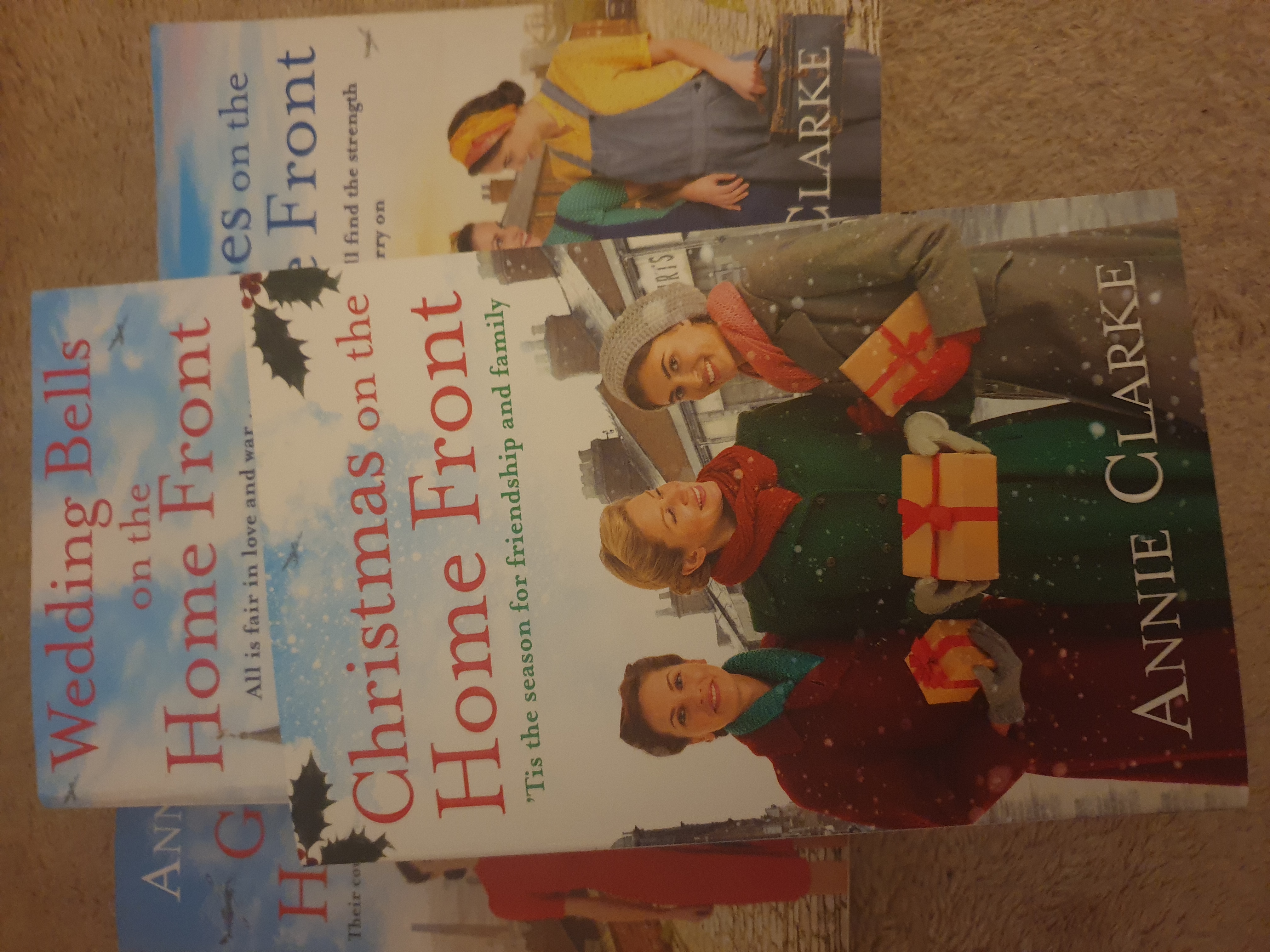
Annie Clarke is the author of the Home Front series

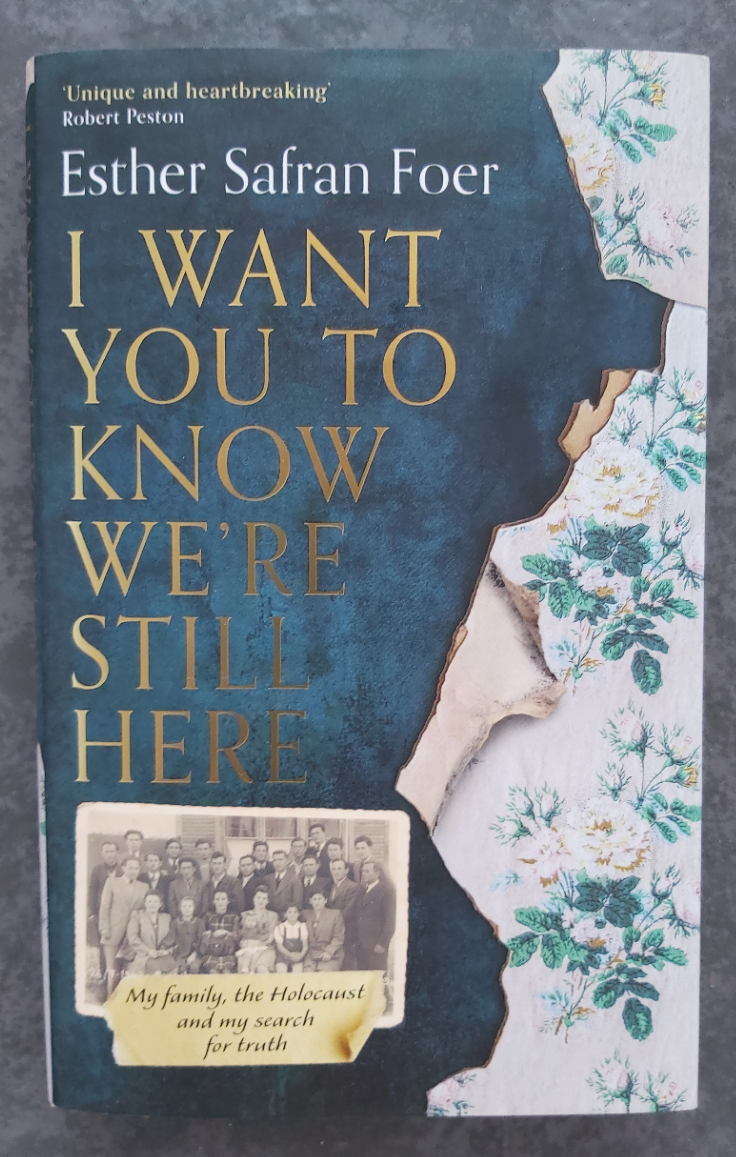
I Want You To Know We’re Still Here by Esther Safran Foer. Review by Annie Clarke

How do you remember someone who has left no trace?


Esther Safran Foer grew up in a family where the past was too terrible to speak of. Her parents, the only members of their families to survive the Holocaust, never shared the horrors they had suffered.

There was silence where the past should have been.

So when Esther’s mother makes an astonishing revelation about her father, Esther resolves to follow the trail, wherever it may lead.

This is a powerful memoir of one woman’s extraordinary journey to find answers to the burning question about her past, her ancestors, what they endured and how they survived – that could never be asked until now…

So, let me gather my thoughts, for this is Esther’s story that she has shared with us, revealing her determination to remember those she’s lost, and find kinship after tragedy.   This is a memoir that draws a distinction between memory and history, and then attempts to make a cohesive whole of the two.

Like all of us, Esther’s mother remembers in fragments. As we revisit and revisit the fragments more details might emerge, are they imagined, or factual? Where does it leave the search for a personal history, perhaps though, more than personal, but the history of a region, a town, a tribe. It entails paperwork, travel, searching, always searching, matching memory to history.

And how well this is conveyed in this memoir. The search – was memory true, was it factual?

I have experienced this to some extent. My maternal grandma died when mum was two. There are no photos. Mum remembered her in fragments, but spoke of it only when asked, and that as we were adult. Was it because it hurt, made the loss, the aching vacuum,  real?  But those fragments she began reveal were the memories of others.. Were they accurately remembered by the teller? Had mum remembered accurately  what she had been told? Who knows, after much investigation we were none the wiser. So we are left with fragments, and these have begun to fade.

In this zigzag of a book, with memories, and history intermingling, double backing, rushing forward, we learn about life in Kolki, Ukraine, home to Esther’s family, a shtetl, where so close are the kinship bonds that your best school friend, is likely to be the child of your second cousin, for this is where  your tribe has lived for generation, after generation. It is more than a town, it is your world, your friends, your family.

You hear that the Nazis are coming. You believe the horror stories you have heard perhaps because you are a young adult. Others don’t leave. It’s nonsense, or, this will pass. You leave the safety of the shtetl , you leave your mother without saying a proper goodbye. Your sister gives you a spare pair of shoes. You drop one as you flee. These two incidents haunt on. You didn’t say goodbye, you dropped a shoe, a gift from a sister.

You are just  in time, because soon armed Nazis anti-semites enter your shtetl, your world.  Perhaps they pack  up inhabitants  take them to nearby fields, (march or lorry, babies being carried, children clutching skirts) where they must dig great ditches, into which they tumble when shot; men women children. All Jews. Or perhaps to a camp. Not just one shtetl, but all the shtelts.

There is no-one left to tell the history of your family’s shtetl, or the neighbouring shtetl’s history. Where is your mother who you did not bid farewell, the sister whose shoe you dropped?

What about other survivors. They can remember their own stories, in the turmoil, fear shock, perhaps,but can only surmise about the fate of families.

This book really, though about one family, is about all families.

I Want You To Know We’re Still Here is unique. It is a evocation of a lost world, of an unimaginable sin, of the annihilation of history from the perspective of the victims, so that it is the survivors who pursue the memory to reach the town, to locate the truth. to tell the truth, to show that ‘We’re Still Here.’

Esther Safran Foer goes on that journey.

Heartbreaking, perhaps best read in small doses,a journey into memory and the past in the search for truth.

I met a friend in London  a very few years ago, who had returned to the UK from her ‘now’ home abroad. She wore a necklace, a Star of David. I could see it over her clothing as she walked up the platform towards me, a broad smile on her face. She reached out to me.  ‘Wear it inside your clothes,’ I said. ‘Just to be safe.’

She said, sad despair in her voice, ‘You are the second who has warned me of this, a stranger on the train as we approached London, and you, my friend. My mother would have been packing our cases, leaving them in the hall, ready for flight, again.’

Read this, feel it, applaud the author. You will not forget it. Indeed it must be remembered.

Hardback and e-Book  available now.  Paperback 16th April.   Pub HQ.

Annie Clarke is the author of the Home Front series.


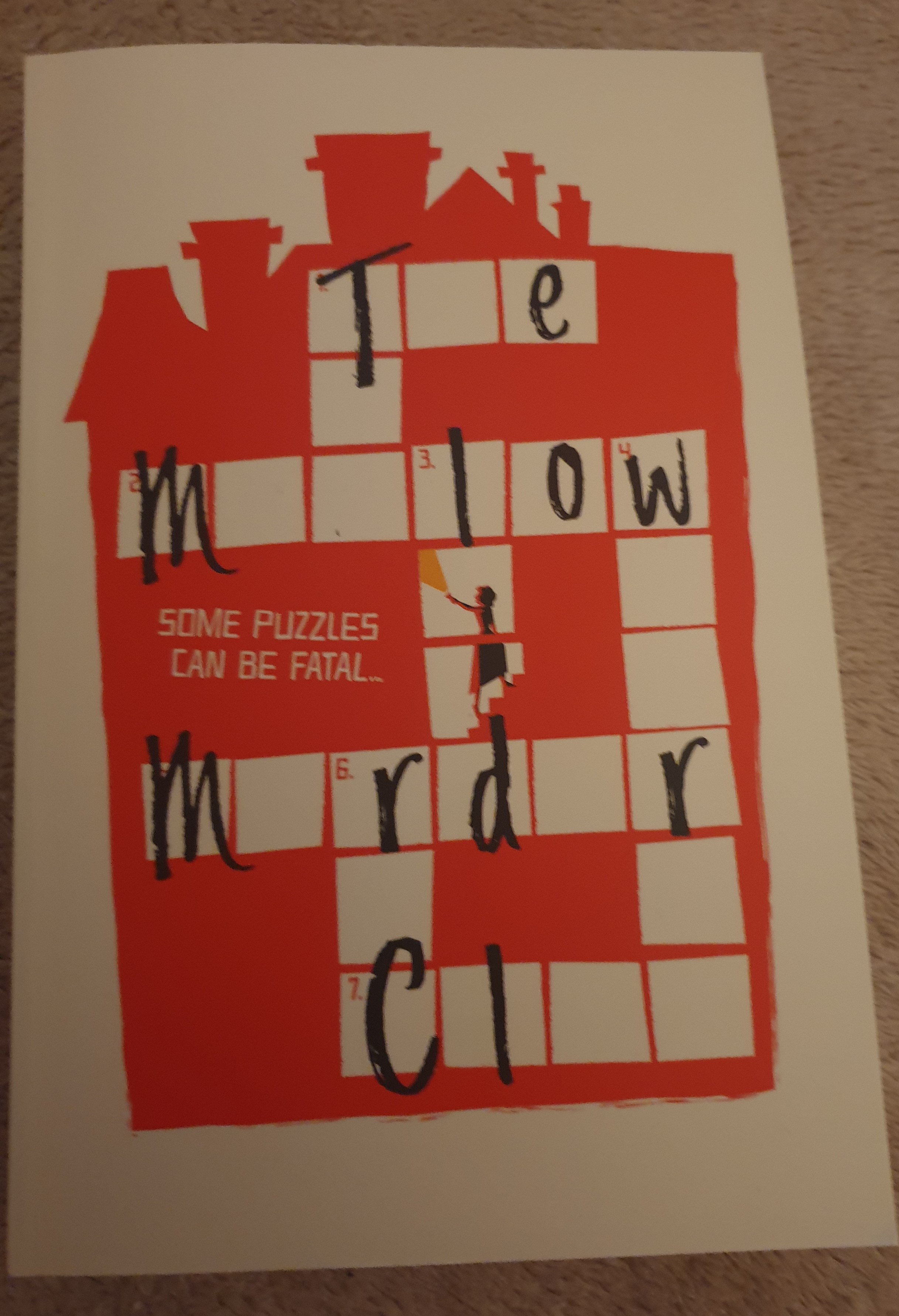
The Marlow Murder Club  by Robert Thorogood, creator of Death in Paradise: Reviewed by Natalie Jayne Peeke, West Country Correspondent.

From the creator of the BBC One hit TV series, Death in Paradise

To solve an impossible murder, you need an impossible hero…

Judith Potts is seventy-seven years old and blissfully happy. She lives on her own in a faded mansion just outside Marlow, there’s no man in her life to tell her what to do or how much whisky to drink, and to keep herself busy she sets crosswords for The Times newspaper. 

One evening, while out swimming in the Thames, Judith witnesses a brutal murder. The local police don’t believe her story, so she decides to investigate for herself, and is soon joined in her quest by Suzie, a salt-of-the-earth dog-walker, and Becks, the prim and proper wife of the local Vicar.

Together, they are the Marlow Murder Club.

When another body turns up, they realise they have a real-life serial killer on their hands. And the puzzle they set out to solve has become a trap from which they might never escape…

I am a huge fan of the hit show Death in Paradise, so you can only imagine my excitement when I heard about The Marlow Murder Club.  I devoured the book in a couple of sittings. Not only is it mysterious and thrilling but  heartfelt and amusing. It truly is like nothing I have ever read before.

Similar to the TV show, nothing is as it seems and you are always guessing about who the killer is.

I adore the lead character, 77 year old Judith Potts who is a key witness. She is unflappable, spritely, amusing, confident, relentless and absolutely amazing, I would love to meet her.

The Marlow Murder Club is a delightful tonic and has brightened these dreary days and I am eager to read the next book in the series.

So if you’re a fan of Death in Paradise, Agatha Christie, especially the Miss Marple series, then I highly recommend you pick up a copy of The Marlow Murder Club.

Available in Hardback, Ebook and audio