Natalie Jayne Peeke discovers from her mother what it is like to be diagnosed with Dyslexia and Dyspraxia in your 50s.


According to NHS.co.uk Dyslexia is defined as : a common learning difficulty that can cause problems with reading, writing and spelling.It’s a specific learning difficulty, which means it causes problems with certain abilities used for learning, such as reading and writing.

Unlike a learning disability, intelligence isn’t affected.It’s estimated up to 1 in every 10 people in the UK has some degree of dyslexia which is a lifelong problem that can present challenges on a daily basis. Support is available, however,  to improve reading and writing skills and help those with the problem to thrive at school and work.

According to NHS.co.uk.  Dyspraxia, also known as developmental coordination disorder (DCD), is defined as:   a common disorder that affects movement and coordination.

Dyspraxia does not affect your intelligence. It can, however, affect your coordination skills – such as tasks requiring balance, playing sports or learning to drive a car. Dyspraxia can also affect your fine motor skills, such as writing or using small objects

Growing up I always thought that my dear dear mum was a clumsy and forgetful person, and I remember that when I was at school studying for my GCSE’s she would often ask me to check her spelling.  I just thought she wasn’t confident that  her spelling was correct, after all we all have those words we find difficult to spell,  mine is “Receive”. Thank God for spell check and autocorrect.  But what do you do when not one but two different people ask if you are Dyslexic ?

 Following her diagnosis earlier this year I asked my beautiful mother what it was like finally finding out in her 50s she is not only Dyslexic but has Dyspraxia. 

Mum works as a Clinical Pharmacy Technician, helping to  support GP surgeries and nursing homes with their medicine management. When dealing with drugs on a regular basis it is absolutely vital that the correct medicine and amount is dispensed, and of course, there is no room for error. So how does someone with Dyslexia ensure that she doesn’t make any mistakes? What prompted her to get tested? How does she feel about her diagnosis? What help is available to fellow dyslexics? I asked Mum all of this and more.

What prompted you to get tested for Dyslexia?

‘4 years ago my then line manager asked if I was Dyslexic and they even offered to pay for the test to find out. This test would have set the NHS back roughly £500 and I did not want them wasting that money as I had always assumed I was just thick. However, at this point,  I took it upon myself to go to night school to improve my language as I was only using simple words in my work,  and my punctuation was very poor. Then at the beginning of 2020 someone else asked me again if I was Dyslexic. I then went online and discovered that I did in fact show signs of Dyslexia and I found a woman who offers private assessments. I  wanted to find out one way or the other and at least this time it was coming out my pocket and not the NHS’s.

What was the testing process like?

‘I was asked questions about my childhood and about what school was like when I was younger. She also asked if I was clumsy which made me chuckle,  as any member of my family will tell you that I am known for always bumping into things or stumbling. With that said she  explained that she was going to test me for both Dyslexia and Dyspraxia.

With one test there were various shapes that she had made up from a number of squares, I then had to mimic these. I did struggle to make up some shapes. Another test required me to read a passage from a book and then she questioned me about about my understanding of the passage, particularly certain words.

One test which I found very difficult was where she would say a sequence of numbers and letters, for example “1C2D4H7F3K” and I would then have to repeat it back to her but backwards.

In another test she would tap out a rhythm which I would then have to copy, I found this fairly easy.

Finally after an assessment that lasted nearly 3 hours she revealed that I did in fact have Dyslexia and Dyspraxia. Which did come as a bit of a shock to me and I was concerned that others would say that I was not fit to do my job anymore. And then the imposter syndrome set in, how did I get here if I couldn’t read properly?

And whats more I was not just Dyslexic, but  I also had Dyspraxia…  Until  that day I had never heard of Dyspraxia let alone what it was, but once she explained  the condition, my clumsiness started to make sense.

Looking back on everything you have achieved ( a degree and NVQ) despite your undiagnosed Dyslexia, are you proud?

‘I wouldn’t say proud, I am however surprised that I have been able to achieve so much. I had to work extremely hard to achieve my NVQ and degree, graduating from Portsmouth University in 2012 with a foundation degree in Science.I poured my heart and soul into achieving my qualifications. and as I am very slow at reading  I had to keep re-reading things to make sure I understood them properly and if I had been diagnosed earlier and  had the help one can receive now, my life would have been considerably easier. So, not proud, but frustrated that it was harder than it had to be.’ 

Tell us what help is  available now?

‘Work is wonderfully supportive, and I also have an array of practical support: one piece of software converts my speech to text which is a great help and then there is a different piece of software which will read any documents for me, making my working life so much easier. I am also getting a dictaphone so i will be able to record meetings and then my computer will convert it to text for me.

What was school like for you?

‘Junior school was absolutely awful for me, I was called names and always lacked the confidence to ask questions on things that I didn’t understand. I was even held back a year. At the time Dyslexia wasn’t heard of so the teachers just treated me as if I was slow and not very bright. Luckily these days learning difficulties such as dyslexia are usually  understood, and children are diagnosed at a young age.’

What advice would you give to others who are struggling with Dyslexia, or at least think they might have it?

‘I would say: get diagnosed, and then accept all the support offered. Do not be afraid to accept the help that is available to you. Make ‘to do’ lists to help organise your day. I am also a member of a Facebook group called Dyslexia UK which is a great support to me and I find that it is a relief to talk to fellow sufferers.

When Mum told me her diagnosis I was so surprised.

I have always been so proud of her, of everything that she has achieved whilst juggling her career and her family, but on learning that she did all of that whilst being dyslexic just blows me away: ‘Caryn Peeke you are one phenomenal woman and I am very proud to call you my mother.’

Margaret Graham, editor of Frost Magazine says, ‘Yes, indeed, Caryn Peeke is so inspiring, and with a mother like that, no wonder her daughter, our Natalie – West Country Corespondent,  is so remarkable.

Things to do in Lockdown: Chocolate Making Kit by the Raw Chocolate Co. 


We’re almost half way though lockdown part 2, weheyyy, and we wanted to find you something inspiring and creative to do as we start to run out of treats to make and things to bake. We promise it will be a truly scrumptious experience for all. 

Thanks to the Raw Chocolate Co.  we tried our hand at making our very own chocolates using the bumper chocolate making kit. What’s great about this kit is that the instructions are very easy to follow, the quality of the ingredients  are high and you can add your own little twists to your chocolate and really make them as bespoke as you like. We tried adding a little chilli to the mix for a spicy kick and also added some coffee to another batch but believe me, the possibilities are endless. These little chocolates are not only a luxurious treat to indulge in but as we approach gifting season, these would make the best gift to any chocolate lover. The ingredients are organic and vegan so lots of attention has been paid to what goes in. We had to mention the smell of the Cocoa Butter which spills out of the tub as soon as you open it which is a treat for the senses. Whats more, it will definitely make you want to pay attention to what goes into chocolate and find out more.

What’s in the box;

2 x Organic Cacao Powder

2 x Organic Cacao Butter

2 x Organic Coconut Sugar 

You will also need chocolate moulds.

The process itself is super easy. We recommend softening up the cocoa butter before adding in the other ingredients but once everything is melted in, you’re good to go!

The standard of the chocolate at the end will make anyone think you’re a top Chocolatier, as you can see above. The kit provides you with the essentials but you can be as creative as you like and make yourself a box of bespoke chocolates. 

The kit is priced at £24.65 which will make you more than enough chocolates to dish out to all your loved ones this Christmas. 

To find out more check out; 

www.therawchocolatecompany.com 

Michael Rowan finds himself seduced, by more than just the Rowan berries, as he dons his scarf and savours the wild botanicals from Caoruun, the hand crafted, small batch Scottish Gin.


It might just be me, but the onset of autumn, makes me appreciate all things Scottish and although Caorunn (pronounced Ka roon) was launched in 2009, it is high time that it was better known amongst us gin drinking aficionados, south of the border, of whom, I count myself one.

Produced in the Scottish Highlands, hand crafted in small batches, and quadrupled distilled, it has a uniquely vibrant flavour profile, gained from hand- picked, Coul blush apple, Dandelion, Heather, Bog Myrtle and the aforementioned Rowan berries.

The name Caorunn originates from the Gaelic name for Rowan berry.

This gin is an expert infusion of five locally foraged botanicals, six traditional gin botanicals and natural Scottish water.

Caorunn is clean, crisp, sweet, full bodied and aromatic, no wonder that it is so versatile, (of which more later), with a long, refreshing, slightly drying finish.

Caoruun Gin is perfect for a variety of delicious cocktails including one that mixes Caoruun gin with Campari, Kombucha, apple and sugar syrup garnished with a Blackberry

This is a distinctly tasty gin and I strongly suspect that I will be enjoying it far beyond autumn.

As with all good Gins, the garnish is important and not merely decoration to be ignored. It is recommended that Caorunn Gin is served with a good tonic with plenty of ice and a slice of red apple.

I make no apologies for eating the gin-soaked apple slice once the gin has been drunk, I like to think of this as my just dessert.

Caorunn Gin is available from selected Waitrose, Sainsbury’s and Tesco stores, The Whisky Shop and other specialist spirit retailers- RRP £29.00.


SISTER SCRIBES’ GUEST: ALISON LARKIN ON WHY SHE WRITES

Welcome to Alison Larkin, bestselling author of The English American, award-winning Austen narrator and now the narrator of The Particular Charm of Miss Jane Austen and The Unexpected Past of Miss Jane Austen. 

I’m with Dorothy Parker who said “I hate writing. I love having written.”

I was born in Washington DC, adopted by English parents and raised in England and Africa and I’ve written for as long as I can remember – poems and plays mostly. But they were usually pretty surreal.

Then something happened that changed everything. Including the kind of writing I did.

It was the early 1990’s. I’d recently left drama school and was playing Flora Poste in Cold Comfort Farm in Newbury when the ‘phone rang back stage and I learned that the birth mother I knew nothing about and had been searching for was alive and well and keen for me to come and visit her at her home – in Bald Mountain, Tennessee.

So I went to Tennessee to meet her. Then I moved to New York and became a stand-up comic, because what else do you do?

Growing up, we didn’t talk about feelings in my family, which was helpful I think because the. absence of any other outlet meant I had to write, even though I hated it. I’m sure I never would have written the stand-up comedy act that led to the one woman show that led to my novel The English American if I hadn’t had to.

Photo credit Sabine von Falken

But I did have to. Why? Because people kept asking me what it was like meeting my ‘real’ mother and every time they used those words I felt as if I’d been punched in the heart. Because, to me, my ‘real’ mother was the mother who had raised me. And yet I had needed to find my birth mother and people didn’t ‘get’ why.

So I decided to combine stand-up comedy and theatre and show people through a one woman show in which I played myself, my English mother, and my American birth mother who were diametrical opposites in every way. The show was a hit and led to sitcom development deals in Hollywood and a run in LA and London. And then I had children and stopped performing comedy because I wanted to hang out with my kids while they still wanted to hang out with me.

But then I started to get really annoyed with the way adopted people were portrayed in books and on TV as eternally damaged victims at best, or serial killers. So I thought that maybe if I could put an authentic adopted heroine at the center of the kind of novel that I like to read  then maybe people on a beach or a plane would understand why someone from a very happy adoptive family would need to find the people she came from. And maybe, just maybe, instead of having to go through the whole thing every time someone said “What was finding your birth mother really like” I could say “It would take a book to explain. Oh! Wait! I’ve written one.”

After The English American came out I was rescued from writing by the audiobook industry who set me up with my own studio and hired me to narrate the first of over 200 audiobooks I’ve narrated to date. And I was so busy raising my children there was no time – or need – to do any writing.

My handsome, brilliant Indian fiancé, Bhima, loved my writing. “Why don’t you write more,” he pressed me four months ago. “Because I’m happy,” I said smiling again at the first man I ever dared to fully love. I’d spent a lifetime looking for him. And finally, in my 50’s, there he was.

Then he died. So maybe I will be writing again after all.


Between now and Christmas, for every audiobook downloaded directly via www.alisonlarkinpresents.com one will be donated to people in need.


My Writing Process CJ Daugherty

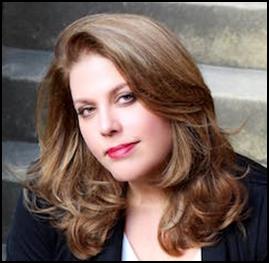
I’m a former journalist and ex-Whitehall civil servant. I was raised in Texas, but have lived in Britain most of my adult life. 

I’m the author of the boarding-school thriller series, Night School, and the US-based crime series, The Echo Killing, set in the southern town of Savannah. 

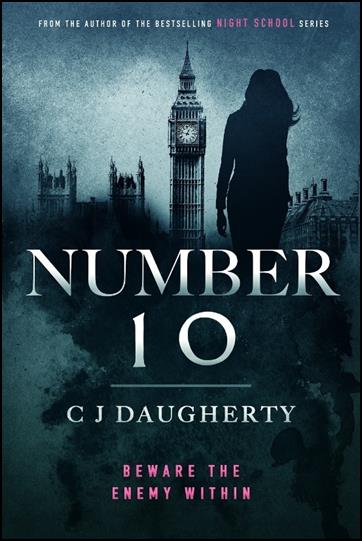
My new novel, Number 10, follows the 16-year-old daughter of the new prime minister as she rebels against the constraints of living in Number 10 Downing Street, and the intense security that surrounds her. When she stumbles across a Russia-led plot to kill her mother and replace her with a puppet prime minister, she’s determined to stop it. But will anyone believe her? 

 A bit about your process of writing. 

I discovered long ago that trying to write in the morning was pointless for me. I use mornings for admin and other work, and I usually settle down to write at about 3pm. I turn off the internet and the phone, and I write for four hours straight, stopping at around seven. If the writing’s going well, I often pick it up again after dinner and write until midnight. 

 CJ Daugherty

Do you plan or just write?

I plan a moderate amount. My first step is always a one-page synopsis, which I share with my agent. If she likes it, I expand it to two pages, and then to eight. My theory is, if I can’t get eight pages out of the plot, I don’t have a big enough of an idea for the book. Once I do have that much material, I sit down to write chapter one. 

What about word count?

Word count for me is a tale of three halves, basically. In the first 10 chapters of the book, I’m happy if I reach 500 words a day. From chapter 10 to chapter 20, I expect 1200 words a day. After chapter 20, if I don’t reach 2,000 words a day, it’s a bad day.

 How do you do your structure?

My structure is freeform, but I shoot for a W-shape to every plot. Start on a high. Then develop character and explore the plot. Build to a mid-book crescendo. Then dip the pace a little as the characters investigate the main incident and I thread in b-plot and c-plot. End on a high. One of my books (A Beautiful Corpse) ends with the main character deploying a baseball bat against a murderer. Nothing like a fight scene to get the story moving.

 What do you find hard about writing?

It’s very hard for me to be patient with the amount of time it takes to conceive of and create each book. Even once I’ve got the idea and it’s begun to take shape, there’s still months of thought and planning that has to happen before I can build flesh and blood around the basic bones of that first idea. Taking the time to methodically go over and over the same content requires real effort.

 What do you love about writing? 

The magic of it. The moment when I can hear my characters’ voices in my head. The way I can see the locations in the book in vivid, three-dimensional form, as if I’ve been inside their houses. Stood on those porches. Walked through their woods. I spent so much time inventing the inside of Number 10 Downing Street for my latest book, I felt as if I’d lived there myself. It’s an extraordinary illusion, and it comes from taking the time to build those places in your mind, and on the page.

 Advice for other writers. 

To get through the start of a book it helps to know what the ending will be. When you begin planning, think it through all the way. Once you have a beginning and an ending, then you can spend time on the rest of the journey. I think most writers give up when writing because they get stuck, and I think they get stuck because they don’t know exactly where they’re going. Find your ending, and the rest may fall into place.

 Number 10 by CJ Daugherty is out now, £9.99 from Moonflower Books available on Amazon here.


JANE CABLE INTERVIEWS CAROL THOMAS ABOUT HER CHRISTMAS BOOK FOR CHILDREN

In a year where kindness and thinking of others have been brought to the fore, I am delighted to be chatting to Carol Thomas about the release of her latest children’s book, Being a Friend at Christmas. You may be more familiar with Carol as a romance writer, but her children’s books are wonderful too.

In this, the second in her Little Pup series of books, Little Pup is looking forward to his first Christmas in his new home, but he also remembers the dogs he left behind in the shelter and wants them to have a happy Christmas too. Little Pup has an idea, but he needs Father Christmas’ help to make his wish come true.

I love the premise of the book and the fact it carries a message of thinking about others, what inspired you to write it?

Having seen Little Pup settle into his forever home in the first book, I couldn’t resist revisiting him at Christmas. I had the idea for the story soon after writing the first. As a teacher and a mum of four, I think children are good at grasping concepts, such as empathy, kindness and generosity, from the books they read. Stories can be enjoyable and fun, as well as inspiring a conversation, and I believe that’s what this book does.

I know you illustrated the book too, which do you prefer illustrating or writing?

Writing definitely, but I did love drawing the pictures for Being a Friend at Christmas. I drew them during lockdown while homeschooling my son and supervising my two high school aged daughters with their studies. It was quite therapeutic. I love dogs, so bringing Little Pup to life was a lot of fun.

How did you manage to keep the creativity going during lockdown?

There are five of us at home, and it was actually lovely to find our own rhythms for the day. We started work at times that suited us, went for walks, and did things like sit down and eat together – something usually prohibited by getting to various after-school clubs. I think focusing on those positives and not putting pressure on ourselves really helped.

I wasn’t the only one who got creative in our household, either. My daughter started making bracelets, earrings, bead art and keyrings and opened an Etsy shop. She’s had some lovely, positive feedback and I think it’s great to see a teenager being creative and using their initiative. You can check out her crafts here: https://www.etsy.com/uk/shop/RedDaisyCrafts

 As people turn their attention to buying for Christmas, I am sure they will make great stocking fillers, as will your book.

Thank you. I hope so. I love to share Christmas stories with my own children and hope others feel the same. There is something very special about sharing a book, and snuggling up in the winter months complete with pyjamas, slippers and a heartwarming story; it’s is a real treat!


And with being a friend and thinking of others in mind, between now and Christmas, Carol is raising funds for Angel’s Garden, dog shelter, in Xanthi, Greece on all purchases of Being a Friend at Christmas, made from this link: https://www.carol-thomas.co.uk/blog-dogs-at-christmas/

Snakes and B…….s what utter joy to read the commemorative issue of M.C Beaton’s first Agatha Raisin novel: Quiche of Death

‘Commemorative? you ask. Sadly yes.

M C Beaton (1936-2019) was the author of both the Agatha Raisin and Hamish Macbeth series, as well as numerous Regency romances. Her books have been translated into seventeen languages and have sold more than twenty-one million copies worldwide. She is consistently the most borrowed UK adult author in British libraries, and her Agatha Raisin books have been turned into a TV series on Sky.

She is one of my favourite authors, I laugh, I try and work out ‘who dun it’, I love Aggie, with a passion. And what’s more, I fear Agatha Raisin is rather like me. She seems not to have a filter on her mouth.  She says things  I would indeed think, and probably even say, in a similar situation.

I absolutely adore her, though she can irritate, manipulate, behave rather badly but finally unearth the truth, though scattering her love life in bits around her.  In fact, even as I’m writing this, I am thinking of that other hilarious character DI Frost created by R D Wingfield. Both authors so clever, both who created characters we love, both whom we miss beyond measure.

Stuart MacBride has written a warm and evocative introduction, revealing that Marion was just as fascinating as I suspected, and had lived a full and fascinating life. He shares anecdotes, and laughter. A perfect shoehorn into Quiche of Death, which is presented in a commemorative cover, and which anyone would love for Christmas, something naughty but oh so  nice.

Quiche of Death takes us into the world of a successful PR doyen, Agatha Raisin who is gathering up her togs and retiring to a quiet (you’ll be lucky) Cotswold village – dear old Carsely  – which we have come to know so well over the years. To help herself settle in and become one of the community, this great non-cook decides to enter the village quiche competition, and win. This is Aggie we’re talking about, who can stuff a ready made meal in the microwave but little else, so she cheats. Of course she does. Off she goes to her old haunt, London, and sorts out a deal with a deli.

And it all goes dreadfully wrong, of course… To clear herself of the consequences  she has to find the real baddie. And hence, in this debut Agatha Raisin novel, our unique sleuth is born.

I miss M C Beaton, I longed to receive my review copy, and would even have bought one, in hardback. Unheard of for me. Treat yourself for Christmas. Join those like the St. Petersburg Times. ‘[Agatha] is a glorious cross between Miss Marple, Auntie Mame, and Lucille Ball . . . She’s wonderful’ 

Or the Chicago Sun-Times: ‘Beaton has a winner in the irrepressible, romance-hungry Agatha’

And what about another favourite of mine, Lee Child, that well know thriller writer, and author of the Jack Reacher novels: ‘Full of perfectly pitched interest, intrigue, and charm’

One of my favourites and oh so true Daily Mail: ‘A Beaton novel is like The Archers on speed.’

Catch up on this commemorative copy of Quiche of Death by M C Beaton  28 years after it was first published and which started one of the most popular crime series of a generation. Give yourself a treat in your Christmas stocking, but buy one for everyone else in the family – a copy each, or they’ll pinch yours, and it’s so attractively jacketed, it’s one to keep pristine: howzat?

Quiche of Death by M C Beaton with an introduction by author and her friend, Stuart MacBride, publisher Constable. hardback @ £20

5 Books That Changed Me by Michael Rowan

1 Coral Island by R.M.Ballantyne 

The first ‘proper’ book that I read as child.  I could read the standard text that we were taught at school, but there was little plot, no discernible theme or character development. Coral Island was loaded with all three, this little book captivated me, as this was the first time that I could see the pictures they conjured up of the three shipwrecked boys having adventures in a lagoon. I would pretend that I was one of the two older characters every time I swam in any municipal swimming pool and even today at 64, I can’t resist imagining myself back there, as I duck beneath the surface in our local Lido though these days it is more Moby Dick than Coral Island.
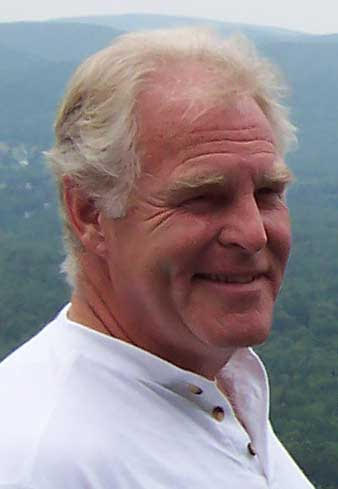
Michael Rowan, writer

2) Merchant of Venice – Willian Shakespeare

As a 10 year old at St Wilfrid’s, I looked forward to our weekly reading sessions. One week there was a change of format, as our teacher explained that he was going to read us a story from a few hundred years ago. He didn’t read it as a play, but as a story, in parts over several weeks. He told us of a man who was in love (Yuck) and who needed money to impress the girl’s father. There was a riddle which I recall was a cliff hanger and then there was the cutting of a pound of flesh, ‘nearest to the heart’ which enthralled this 10 year old bloodthirsty boy. It was the beginning of a love affair with Shakespeare that continues to this day.

3) Lady Chatterley’s Lover- D H Lawrence

As a pupil at an all boy’s grammar school around 1971, I had been identified as a keen reader. Whilst most of my fellow pupils trudged through one book a term, I returned each week for a new book. This interest delighted a series of English teachers, until in the fourth year, Mr W gave me a special ticket to use the sixth form library. The keys to the sanctum of knowledge. As I perused the shelf containing the works of D H Lawrence, I discovered Lady Chatterley’s Lover, which was soon hidden beneath my blazer as I marched back to my class, about to become the hero of the fourth year. The look on Mr W’s face as he confiscated the book, my special library card and delivered his ‘you have let me down and yourself down speech’ will never leave me, but I did go on to read all of the works of D H Lawrence, albeit after I had left that particular school.

4) The Return of the Native – Thomas Hardy

In the summer of 1975, I found myself on an 18 30 holiday, now famed for high jinks and alcohol but then a travel company in its second or third year and virtually unknown. As a keen reader I ensured that along with my sun- tan lotion and coolest threads, I packed an ample supply of books. Evenings were spent in Spanish discotheques, whilst the afternoons were for laying on the beach recovering from a hangover. I however, was to be found reading about Eustacia Vye in The Return of the Native. How I was mocked by the other lads on the holiday, that is until a young and very pretty English Teacher lent over and asked me what I was reading. It was the beginning of my love of Thomas Hardy, and the start of my first holiday romance.

5 Contented Dementia – Oliver James. 

I was in my 50s when both of my parents developed dementia, a cruel illness of which, at the time there was limited information written.  

The demands of the illness kept growing, but there was little advice and I clearly recall thinking, if only there was the equivalent to a car manual, a book that explained in simple easy to understand language, what to do. A chance review brought this book to my attention, crammed with excellent advice, with its three golden rules, never ask direct questions, never contradict, and learn from the person with dementia. This book became my bible throughout my parents’ final years, and I went on to become an advocate for Contented Dementia. No one, no matter who or where, could have a conversation that used the word dementia, without me elbowing my way in and recommending the book. Over the years 100s of people have looked on me as some eccentric but quite a few of those have thanked me afterwards.