The sun’s over the yard arm, so bring on the Gin Lane 1751 Victoria Pink Gin by Annie Clarke

Currently in the best-selling category Gin Lane 1751 Victoria Pink Gin is in the pink. Oh, I’m sorry, this pink gin truly doesn’t deserve flippancy, but it’s a pink gin that hits the spot, and having sampled, and then again, I’m feeling full of beans.

So, why Gin Lane – 1751?

The British Gin Act of 1751 is an important landmark in the history of gin production, marking the beginning of the long journey towards becoming the reformed spirit of the 21st century. Basically, gin was – shall we say – being over consumed. The act was brought in to solve this problem. It restricted those who could sell it, and raised the tax on gin, and therefore the price. At the same time the drinking of tea was encouraged. Well… Tea? TEA?

However, it did indeed cut the out-of-control (hence the nickname – mothers’ ruin) drinking.

But time moved on, and in the 19th century bitters were given to sailors in the RN as a treatment for sea sickness. As you can imagine bitters might actually add to the problem unless – yes, you’ve got it, they were made more palatable –  tra la la… bring on the gin.

So, let us raise a glass to the seasick sailors who unbeknown to them created the classic pink gin cocktail.

I can remember it as a drink my parents enjoyed but then its popularity lapsed until – here we are again, enjoying today’s popular pink gin trend.

GIN LANE 1751: ‘VICTORIA’ PINK GIN is of a well crafted Victorian style originating in an age when there was a predominance of juniper berries with hints of liquorice. Add to that other botanicals: cassia bark, angelica, Sicilian lemon, coriander, orris Root, seville orange, star anise, blend well and here you have it, this deliciously smooth uplifting gin.

Try it over the Bank Holiday.

Blended by the eighth generation London distiller, Mr Charles Maxwell.

Let’s hear it for Mr Charles Maxwell – very well done, sir, the sailors on the Royal Naval ships would have been delighted, but not as much as we are at Frost Magazine.

www.ginlane1751.com

Available from Aldi, Amazon, Co-op, thedrinkshop.com, Selfridges.  RRSP: £19.99

Annie Clarke’s novel (pub Arrow) will be published on 29th May: Girls on the Home Front

Parenting is Not a Spectator Sport

Dear readers: rant alert.

Sitting in a cafe I am trying to relax but I cannot. There is a group of older women staring and talking about me and my two young children. Occasionally they point or make a gesture. I am fuming. Who the hell do they think they are? A few weeks later the same thing happens. And then again, and again. You see, there are people who think that a women (or even a man, I am sure) taking care of her children, or, God Forbid, relaxing while they play with a toy or colour in, is a spectator sport. Some kind of zoo animals to watch and make comments about. If it has been an isolated incident it would have been fine. Just a table full of rude women who think they can loudly talk about us and stare. The entertainment of the afternoon. Do not get me wrong. People are not always being insulting. They are mentioning how cute the children are, talking about what they are doing. Asking questions or talking about their own experiences. But that does not make it okay. We are taught at a young age that staring is rude, because it is. We are taught at a young age that talking about people is rude. As is pointing at people. So why do people think they have carte blanch when it comes to little children and their parents?

I remember being on holiday once when the two women at the next table made nasty comments all through our meal that our baby son should be in bed. It was 7pm and the first day of our holiday. When they had finished their food they came over and cooed over my infant son. Making nice comments and saying he was gorgeous. This after bitching for hours and ruining our meal. Once in the Waitrose Cafe I had two women turn their chairs around to stare at us. I was enjoying myself and my children were behaving. A rare moment of peace. I gave them an evil look, downed my drink and left. Full of rage. Being a parent is hard. Any downtime that is taken from you feels like a theft.

We seem to live in a world where it is becoming harder for people to mind their own business. The truth is: I am sick of being nice to these people. I have been so British about it and just ignored it. Occasionally I have given a look at the very rude people. The ones who do not get the message. Being the bigger person is emotionally and physically draining. So I think that the next people who want to stare at my family and/or make comments will be told where to go. Only when people get called out on their behaviour do they think about what they are doing. Hell, they may even change and become more polite. It is worth a chance.

Has this ever happened to you?

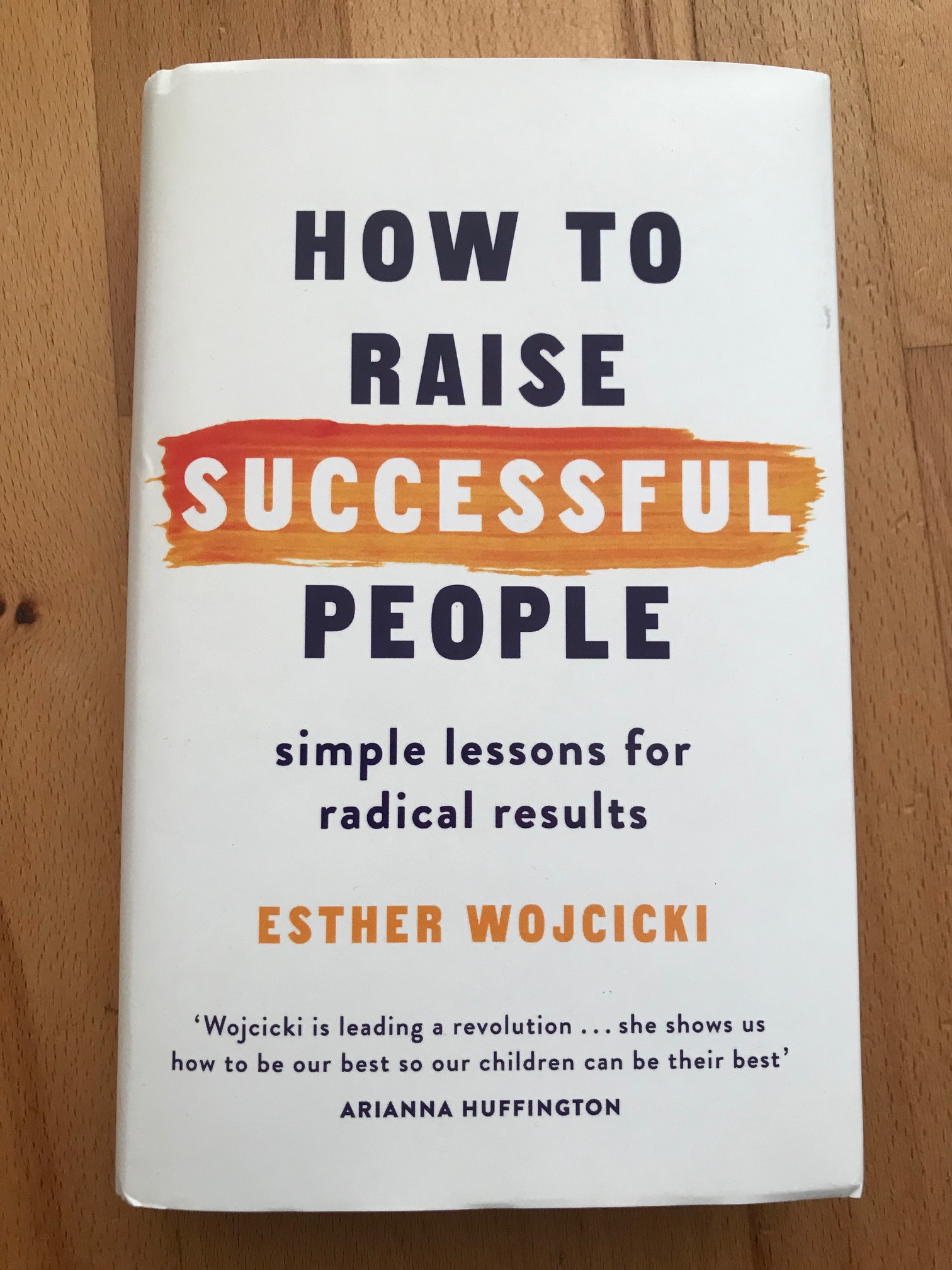
How to Raise Successful People: Simple Lessons for Radical Results Esther Wojcicki

Being a parent is complicated – but the trick to succeed is simpler than you think.

It would be an understatement to say that parenting is hard. It is, by far, the hardest thing I have ever done. It is also the most wonderful and rewarding. But that is another story. I was interested when How to Raise Successful People: Simple Lessons for Radical Results by Esther Wojcicki arrived at Frost HQ. I do not tend to read parenting books. This one comes with some good credentials. Esther Wojcicki- known as Woj- has three wildly successful daughters: YouTube CEO Susan Wojcicki, 23andMe Co-Founder and CEO Anne Wojcicki and Fulbright Scholar and professor of Paediatrics at UCSF Janet Wojcicki. So far so impressive. Woj is a teacher and has taught many children to reach their full potential. She is certainly well-connected and a lot of what she says is spot on. Woj says that we tend to parent the way we were parented. Making the same mistakes as our parents is damaging to our children. We need to learn how to break the cycles of negativity and bad parenting. How To Raise Successful People is a brilliant book. It should be on the bookshelf of every parent. That does not mean I agree with it all. Woj thinks it is easy to put children to sleep. It is not, and if she disagrees she can come and take care of my daughter for a couple of nights. She also says people should stay married. Even forgiving infidelity. I think staying in a bad marriage is more harmful to children than getting divorced. We have come a long way from women having to stay in bad marriages because they have no rights and no freedom. That said, I did find so much excellent stuff in this book that I do not mind the occasional disagreement. Such is life, after all.

There are no Nobel Prizes for parenting or education, but if there were, Esther Wojcicki would be the bookies’ favourite. Known as the Godmother of Silicon Valley – or simply Woj – Esther’s three daughters have all gone on to huge success in their professional fields and, more importantly, their personal lives. What’s her secret?

As we face an epidemic of parental and childhood anxiety, Woj has the advice every parent wants to hear: climb out of that helicopter and relax.

Her tried and tested TRICK system will help you:

· Let your child discover their own passions
· Move on from past parenting mistakes
· Build rock-solid foundations for a lifelong relationship
· Be brave enough to give your child freedom
· Work with your children, not against them
· Set healthy relationships with technology

Your children are the future. If you change your parenting, you can change the world.

How to Raise Successful People: Simple Lessons for Radical Results by Esther Wojcicki is available here.

A PUBLISHER’S YEAR: APRIL – AWARDS, AGENTS, SERIES

We have been very busy at Sapere Books in March and April. At the beginning of March, Catherine Isaacs was announced as the winner of the Romantic Novelists’ Association Popular Fiction Award, which we sponsored, for her absolutely brilliant novel, YOU ME EVERYTHING. We were thrilled to be involved with the award and we have agreed to sponsor it for at least two more years.

A week later we were at London Book Fair, catching up with all of the literary agents we currently work with and meeting with plenty of new ones to discuss what we are looking for. I can’t reveal the outcomes just yet, but we mentioned that we were looking for nautical fiction to one agent and she told us she has an author who has planned a 20-book series of naval thrillers! She is currently discussing the offer with the author, so fingers crossed we will be announcing our first nautical fiction writer very soon!

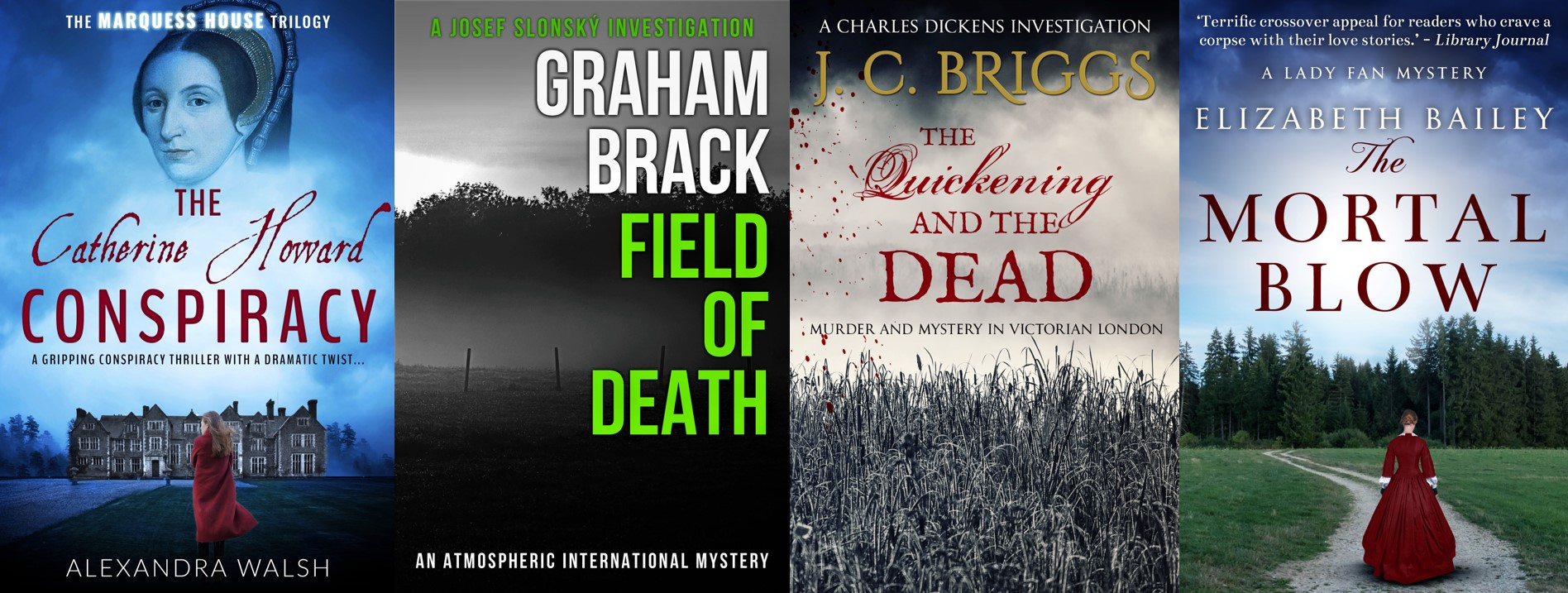
March saw the release of Alexandra Walsh’s debut thriller, THE CATHERINE HOWARD CONSPIRACY, which has been racing up the charts, as well as the fourth book in Graham Brack’s Josef Slonsky series – FIELD OF DEATH – which readers have completely fallen in love with. April also saw the release of new titles in two more of our most popular series: The Lady Fan Mysteries by Elizabeth Bailey and The Charles Dickens Investigations Series by J C Briggs.

We are preparing lots of fantastic titles for release over the summer, and we have realised that we do not have as many contemporary romantic fiction titles as we do crime and thriller, so we are about to start scouting for romance authors who are writing heart-warming British-set romances, which have the potential to become three or more book series – in the style of Debbie Johnson’s ‘Comfort Food Café’ series and Hannah Ellis’s ‘Hope Cove’ series.

Our most exciting news for April is that we have just officially offered someone our Editorial Assistant job and she accepted! I can’t give any more details just yet, but in next month’s blog post I will be able to introduce her properly!

Amy Durant

A Crime Round up as April ends by Annie Clarke


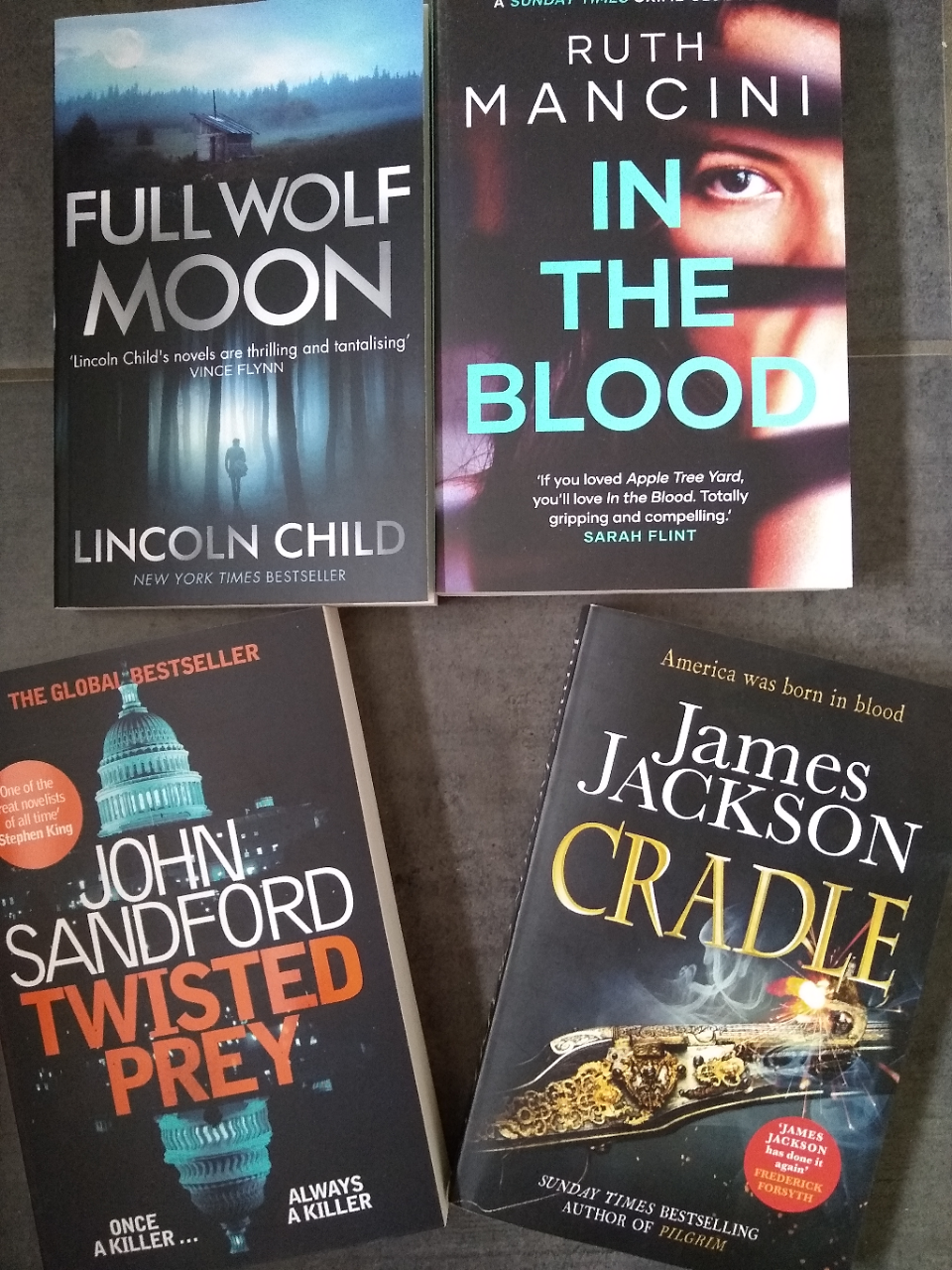
In the Blood by  Ruth Mancini

A new voice in crime fiction published by Head of Zeus

A new mother is accused of poisoning her own child, and leaving him to die. But though Ellie is a difficult person, after a troubled upbringing, is she capable of murder? Well, is she?

Sarah Kellerman, a criminal defence lawyer with her own child – one who is disabled, sets out to answer this question. But strangely, her own child becomes unwell. So what exactly is Kellerman caught up in?

This is not unlike a Wire in the Blood I caught up with last night, which I had to watch between my fingers. I find fiction of any sort involving the harming of children not my thing, but others on the team enjoyed this novel and declared it a page turner. So, here we have a page turner from an author who ‘knows of which she speaks’ for Ruth Mancin is a criminal defence lawyer, with a disabled son. Good luck to her as her writing career progresses.

In the Blood. Ruth Mancini. pub Head of Zeus. pb £8.99


Twisted Prey by John Sandford.

I more than enjoyed this latest in the Prey series. Lucas Davenport – such an engrossing lead character, so human – confronts an old nemesis, now a powerful U.S. senator. They’ve met before, oh yes, indeed. Taryn Grant is a psychopath who slots effortlessly in to the Senate, (well a psychopath would into the political world) and Lucas expects another murder from her, to add to the three he is convinced she has already committed.

And, readers, there is… Roll of drums.

I long – as I review crime novels – to find an author as richly erudite as Reginald Hill (Dalziel and Pascoe), and as amusing, and quirky, who creates characters so real you know them. And do you know, I am increasingly feeling with John Sandford I might have found one. I sank into it, turned the pages, grinned, turned a page and needed to turn the next one – quick as the tension built. Read it – I insist.

Twisted Prey by John Sandford. pub Simon and Schuster UK


Cradle by James Jackson

An historical crime set back in America, Virginia, in 1608.

An intriguing novel, as Intelligencer Christian Hardy protects this new possession on behalf of Prince Henry, heir to the English throne.

But he faces not only the natives, but internal sabotage, and the forces of King James 1 and his spymaster Robert Cecil, desperate to prevent war with Spain.

Add to all this, the starvation the settlement is having to endure, then you have a live or die battle on your hands.

This area of conflict seems popular at the moment, and Cradle not only has a great jacket, but historical knowledge and a whacking pace. Enjoy.

Cradle by James Jackson. pub Zaffre. pb £7.99


Full Wolf Moon by Lincoln Child

This New York Times bestselling author is back with a new thriller, which finds Jeremy Logan, the renowned investigator of the supernatural and fantastic on the trail of a killer, who cannot exist.

The first question is, do werewolves exist as a mauled body is found on Desolation Mountain when Jeremy Logan joins a writers’ retreat to finally get to grips with his book? But he has to get to grip instead, with a real life mystery. Well, that’s procrastination for you.

With the discovery of the body, the question is posed – has the savagery proved that the legend has been made manifest – that werewolves abound?

Child packs in action, tension, interesting locales, controversial science so strap on your seat belt as the roller coaster of a ride takes off. Not a dull moment. Give it a go.

Full Wolf Moon by Lincoln Child. pub Corsair. £8.99

Milly Adams, writing Annie Clarke has a new novel Girls on the Home Front pub by Arrow  out on 30th May.


SISTER SCRIBES: APRIL READING ROUND UP

Susanna:

Have you ever read a book that was so good that, while you looked forward to reading more by the same author, at the same time you couldn’t help feeling a bit wary of doing so – you know, in case the next book didn’t live up to expectations..? For me, psychological thriller writer Linda Huber is one of these writers. Since reading The Cold Cold Sea, I’ve never been able to open another of her books without that little iffy moment of wariness.

Linda Huber’s strength lies in her ability to build a creepy atmosphere that creates a thread that runs throughout each book, growing stronger the further you get into the plot. Her latest book, Stolen Sister, is billed as a ‘gripping family drama,’ but it is much more than this. It is a well-crafted, psychologically complex story that is fueled by strong characterisation. It is a chilling tale of ordinary people in what they gradually realise is an extraordinary situation and I wanted to reach inside the story and tell them what was really going on. A thoroughly gripping read.


Jane:

The first of my holiday reads followed me around for a while after I’d finished it – always a sign of a great book as far I as was concerned.

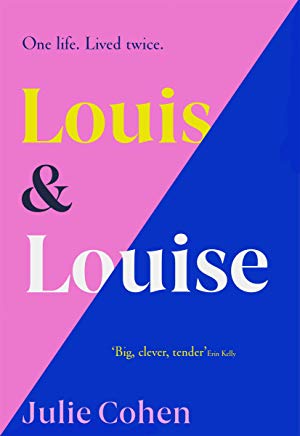
I was absolutely fascinated by the premise of Julie Cohen’s Louis and Louise; one life lived twice in a different gender. As well as being a satisfying story it made me think long and hard about gender identity and how it is shaped from childhood and the choices we make – often unwittingly – because of it.

Julie Cohen is a great storyteller and the small town in Maine where most of the book is set came to life in her skilled hands. It takes Louis and Louise from birth until their early thirties, flashing between the present and the defining moments of their childhoods. I found their relationship with their twin friends (a boy and a girl) echoed their own gender identities beautifully.

One thing that jarred a little was the few paragraphs – one quite early on – where the author ‘stepped in’ and explained to the reader what was happening and this really wasn’t necessary.  To me it smacked of over zealous editing on the part of the publisher and was quite annoying being treated like an idiot. Otherwise a great book I’d thoroughly recommend.

Also on holiday I struggled through Jane Austen’s Sense and Sensibility (sorry Cass!), mainly for research purposes, and read Angela Barton’s Magnolia House. This romance has received a ton of five star reviews and tells the story of Rowan, whose life spins apart just after she moves to London and how her new housemates and old friends help her to pull it back together.

But my most amazing holiday read of all was Madeleine Bunting’s Island Song. I’m a fussy reader at the best of times, but this marvellous novel drew me in right at the beginning and held me there until the end. The writing is so natural, so clever, I don’t even really know why it is so effective, but it carried me into a world of wartime Guernsey and 1990s London I was reluctant to leave.

The premise is not an original one; mysterious mother dies leaving daughter to uncover the truth about her life, but the richness of the storytelling and the layers of complexity made it an absolute joy to read. Easily my book of the year so far and I recommend it without reservation.


SISTER SCRIBES GUEST: R L FEARNLEY ON ELVES, ENCHANTMENTS AND EMANCIPATION

Becci is a sister scribe from Reading Writers  – as well as being on the committee together and going to  the regular meetings, we like to write together in local cafés. She writes under the name R.L. Fearnley and is a fantasy poet and novelist, performing her poetry all across the country and delivering creative writing workshops in a variety of settings. Her poetry collection, ‘Octopus Medicine’ was published under ‘Becci Louise’ by Two Rivers Press in 2017. She is working on her first novel.

Lonely children love other worlds. I know this because I was a lonely child. I found solace in alternative landscapes filled with dragons, wizards and magic. The idea of riding on the back of a fire-breathing monster was one of the few things that made me feel powerful. I loved the stories of dragon-riding heroes and farm-boys-turned-champions. It made me feel that anyone, no matter how humble and invisible, could have the potential for more. I devoured these stories with gusto; Christopher Paolini’s ‘Eragon’ was a favourite, as was J.R.R. Tolkein’s ‘The Hobbit’ and C.S. Lewis’ ‘Chronicles of Narnia’. Of course, I wrote my own stories too. Looking back on them now, I see a fatal flaw that I was, perhaps, too young or too socially conditioned to see.

Where are all the women in fantasy stories?

To be fair, they are there. You see them in the flowing golden locks of Tolkein’s Galadriel, the serious and distant personality of Paolini’s Aryen and Lewis’ stuck-up, lipstick-loving Susan, where liking make-up is apparently reason enough to get you thrown out of Narnia. Women in fantasy when I was growing up all seemed to look the same. You knew you were reading a ‘strong, fantastical female’ if she:

  • Was an elf of some description
  • Had almond-shaped eyes (whatever that means)
  • Had high cheek bones
  • Had full lips
  • Had ‘ivory skin’ (looked dead or never saw sunlight)
  • Had long flowing hair, usually black or blonde.

Normally, she was tall, aloof and had no sense of humour. She was ferocious with a sword but devoid of personality. She was almost always the motive for action or the trophy at the end of it. She was, actually, quite boring.

I notice, from my early teenage attempts to write fantasy stories, that all the ones with female protagonists were unfinished. I just couldn’t seem to write them. I thought, in my youth, that it was because I liked doing ‘boy stuff’, like climbing trees and hunting insects, so of course I empathised with male characters more. Now, I think I just read very few fantasy narratives in which women were written as if they were real people.

Fortunately, a recent flurry of phenomenal female fantasy writers is challenging this trend. Jen Williams’ brilliant ‘Copper Cat’ trilogy has a fierce, humorous central female character who knows what she wants and goes out to get it. N.K. Jemisin’s stunning ‘Broken Earth’ Trilogy is populated with female characters displaying the range of human strength and vice, and her female characters are almost exclusively of colour (another thing you rarely see in fantasy!) Naomi Novik’s brilliant protagonist in ‘Uprooted’, who’s growth is joyous to witness, also pushes female-centred fantasy to new heights. And I find, suddenly, that I have plenty of inspiration. I no longer read books where I, a woman, am irrelevant. I realise that I don’t have to write ‘women’ in my stories, I just have to write ‘people’. It should not be a revelation to see that these two things are not mutually exclusive. After all, in worlds where anything is possible, why can’t the quiet, plain girl at the back of the class be the one who takes up the sword and slays the troll?

Michael Rowan gets hot under the collar as he invites you to come to the Cabaret at Bernie Dieter’s Little Death Club.


But suggests that maybe you should leave your maiden aunt (or uncle) behind


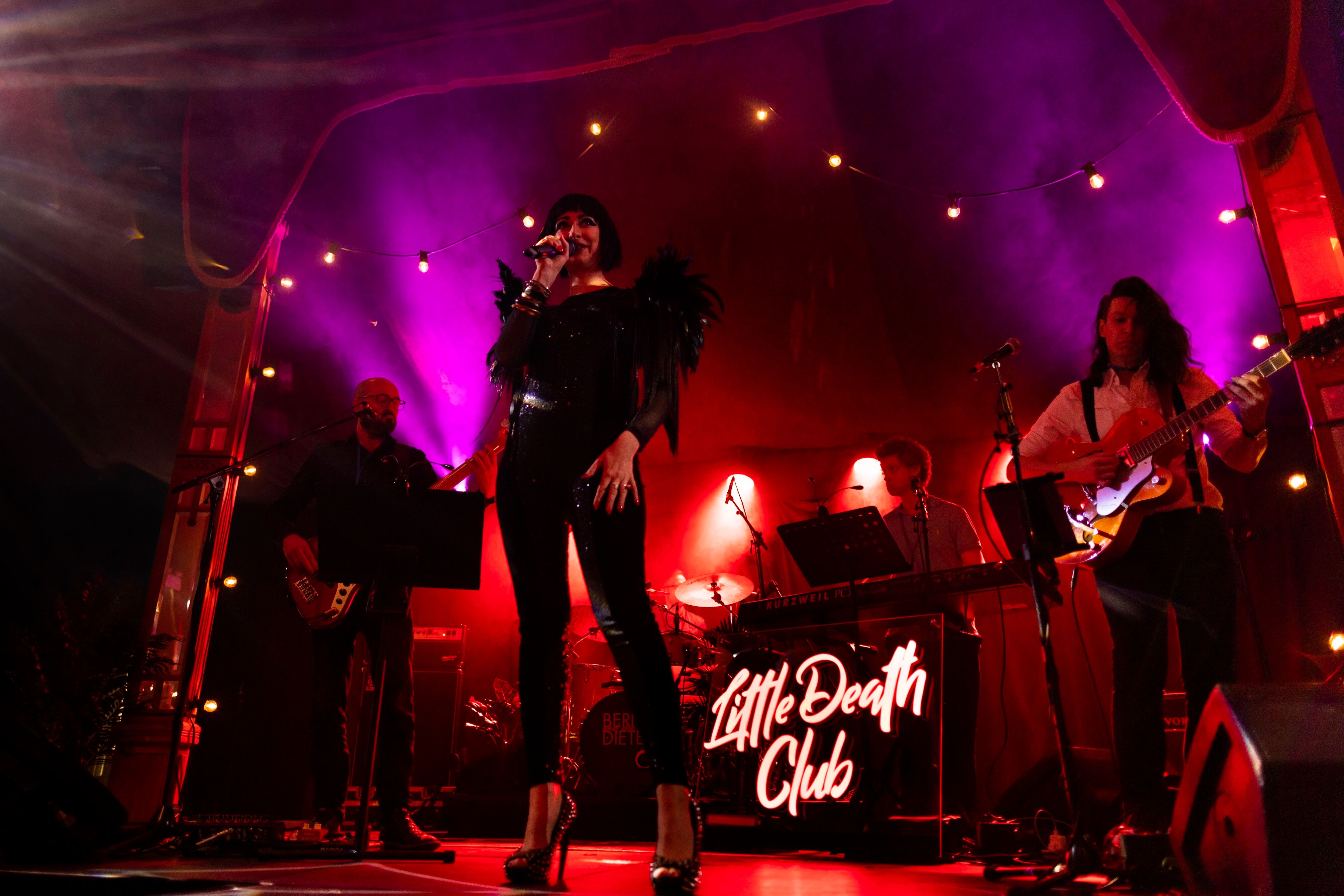
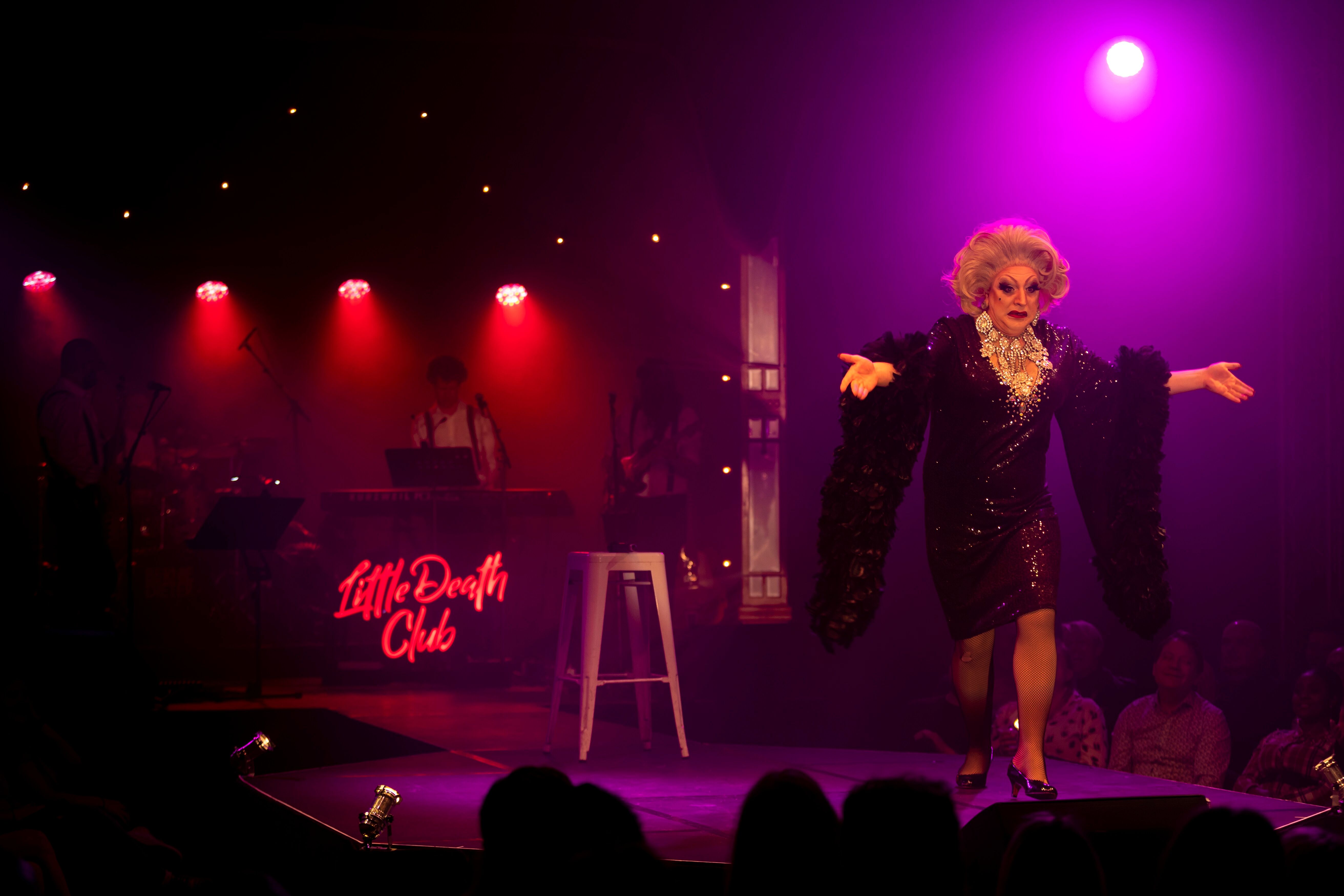
If Lisa Minnelli wearing a bowler hat and heavy eye liner is your idea of Cabaret, then be prepared to think again, with a stunning show entitled Bernie Dieter’s Little Death Club, running at the Underbelly on the South Bank, London until the 23rd of June.

Transforming a Circus Tent into a sensuous art nouveau performance space is no mean feat, but only the first of many such feats that skilfully creates the kind of show that is more often associated with the Weimar Cabaret of the 1930s in the heart of Berlin.

In the true spirit of cabaret there are several acts: musical, comedic, artistic and downright mind blowing.

MCeed by the talented Bernie Dieter, whose fantastic voice is matched only by her wicked sense of humour, completely sets the scene. Not only that, but she has written all the original songs which she delivers with a fabulously dry wit.

The evening is an exotic mix of eye-liner, feathers and furs, veils and sequins and yes, a degree of partial and full nudity, but always tasteful, never salacious.

There is a frisson of danger, as some of the acts select members of the slightly petrified if enthusiastic audience, to become a part of the show, but it is done with such good nature that no one seems to object.

Miss Myra Dubois, a drag queen who takes no prisoners, plays with her audience, first with some well- timed banter and then to encourage an inspired  sing a- long of an Elaine Paige/Barbara Dickson duet.


The contortionist gymnast, Beau Sargent, wearing spangled shorts and little else, performed an eye watering athletic and balletic routine that had many gentlemen in the audience sucking in their stomachs.

Later an aerialist, swathed with gossamer wings performed a seamless routine suspended only by her hair as she twirled above our heads. Shedding her wings, she appears naked in a series of breathtakingly beautiful movements, set seamlessly to the music. A special mention here to the house band, ‘Little Death Club,’ a running gag on ‘La Petite Mort’


The Mime artist who did so much more than break the fourth wall, had all of us in fits of laughter as he discussed his performance angst.

If you have ever been on a Roller Coaster ride that lasts a couple of minutes, but feels as though the world has just flipped upside down, this could well be the theatre experience for you. With a running time of only an hour there is time to have a meal afterwards and I guarantee there will be plenty to discuss.

Images courtesy of Alistair Veryard Photography

All details:


Presented by: Underbelly and Dead Man Label
Price: Tickets from £21.50(includes £1.50 in fees per ticket)
Venue Duration: UnderBelly Festival – Southbank.

60 minutes

Advice: This performance contains real flame. Contains adult language, nudity, smoke effects. Recommended for ages 18+.


http://www.underbellyfestival.com/whats-on/little-death-club