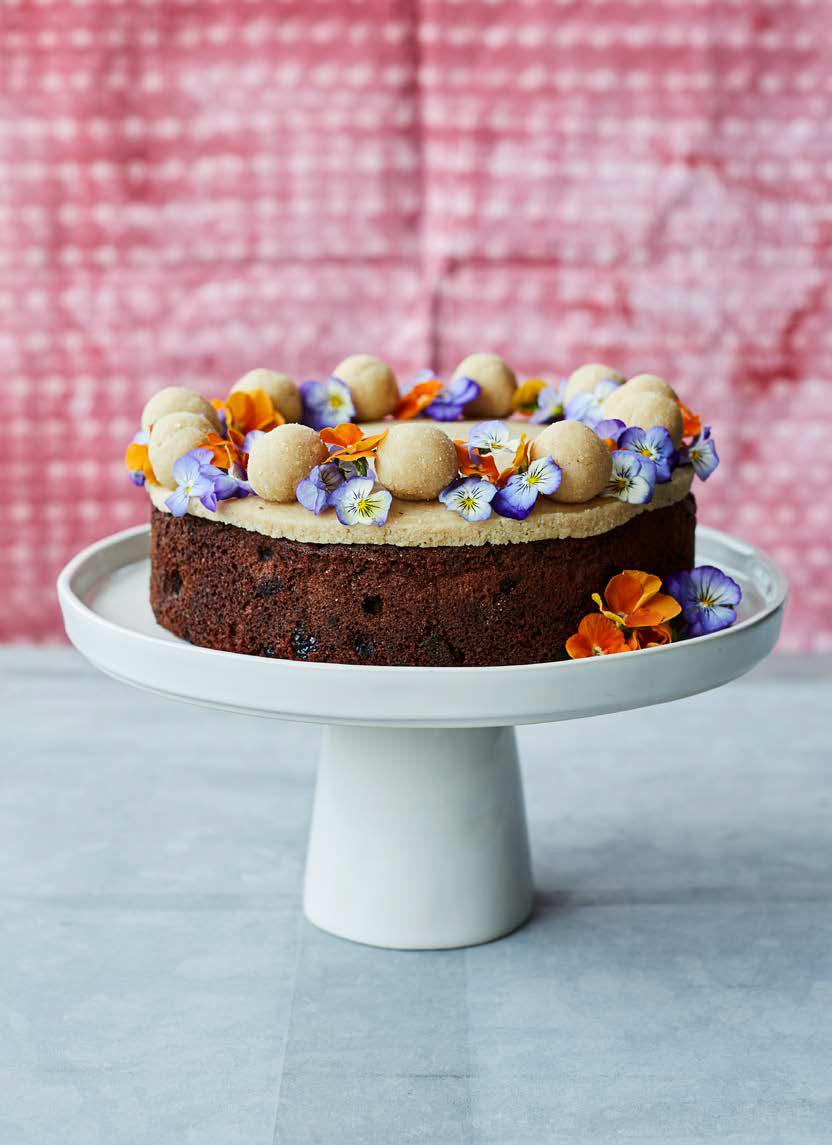
Simnel Cake Recipe

Makes: 1 x 20 cm round cake

Equipment: 20 cm round, deep, loose-bottom cake tin

This Simnel cake goes down a treat in the lead up to Easter. Apart from upgrading many of the ingredients for better health, our twist is the addition of goji berries and a few of our favourite spices. The use of dried berries and fruits adds chew and important fibre. Don’t put too much on your plate – this is a rich one!

175 g unsalted butter

175 g coconut sugar

3 eggs

175 g spelt flour

175 g sultanas

90 g dried cranberries

30 g dried goji berries

zest of 1 lemon, grated

2 tsp baking powder

1 tsp mixed spice

½ tsp ground turmeric

½ tsp ground ginger

½ tsp ground cinnamon

½ tsp freshly ground black pepper

pinch of salt

To Decorate

Raw marzipan (see below)

Honey or melted butter, for brushing

Edible flowers, such as nasturtiums and

violets, to decorate

1 Preheat the oven to 170°C/fan 150°C/

Gas mark 3–4 and line a 20 cm round, deep,

loose-bottom cake tin with baking parchment.

2 Put all the ingredients into a large bowl.

With an electric whisk, beat them together

until well combined.

3 Pour the mixture into the prepared tin and

smooth the top. Bake for 1V–2 hours until

a skewer inserted into the middle comes

out clean.

4 Leave the cake to cool in the tin for 10 minutes

and then turn out onto a cooling rack.

5 Once it’s cool, use the cake tin as a template

to cut out a round disc of raw marzipan.

6 Brush a little melted butter or honey over

the top of the cake and lay the marzipan

disc on top.

7 Use the remaining marzipan to make

11 equal-size balls to decorate the top of

the cake. You can use honey to stick these

on as well.

8 Top the cake with edible flowers such

as nasturtiums and violets.

raw marzipan

Raw Marzipan

GF, DF, V

Our raw marzipan is quick and easy to make, with the maple syrup helping to keep the delicious almond flavour. If you particularly like your marzipan, and I really do, you can also add a few drops of almond extract.

340 g ground almonds

3–4 tbsp maple syrup

1 tsp vanilla extract

2–3 drops of almond extract (optional)

1 Mix all the ingredients together to form

a dough. Wrap in greaseproof paper and chill

until ready to use.

2 Roll out the dough between two sheets of

baking parchment to 2–3 mm. You don’t want

to use flour to stop it sticking to the surface,

and the paper will also make it easier to

pick up.

Modern Baker: A New Way To Bake by Melissa Sharp with Lindsay Stark (Ebury Press, RRP £26). Photography by Laura Edwards. Available from amazon.co.uk 

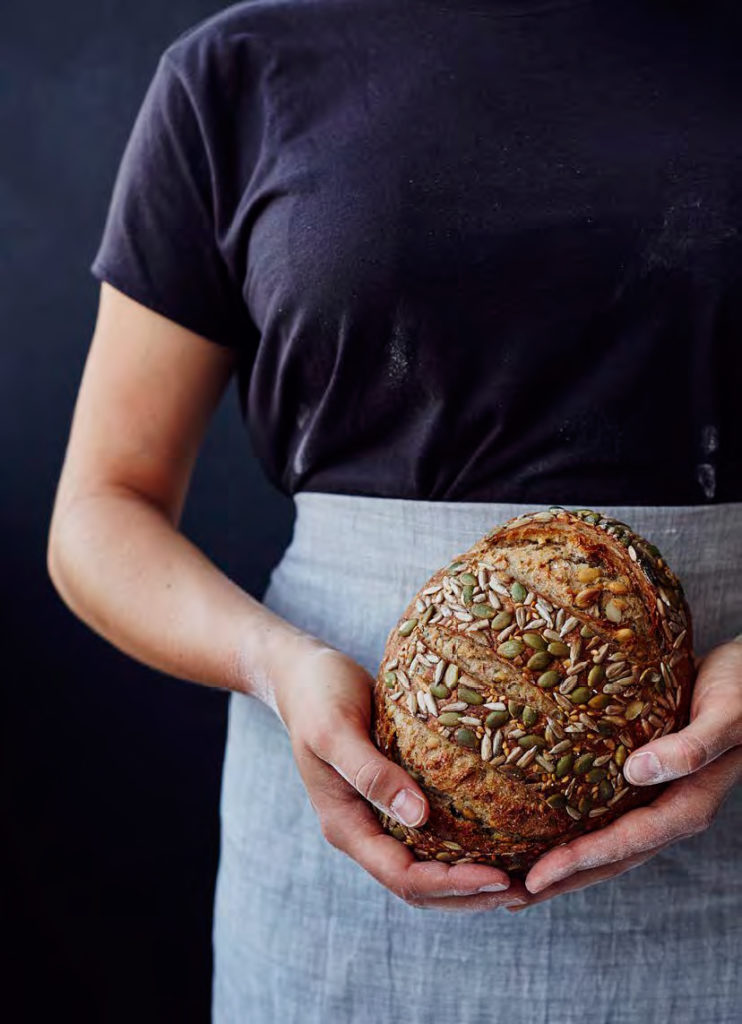
Multiseed Sourdough Recipe

Makes 1 loaf

Equipment round proving basket

DF, V+

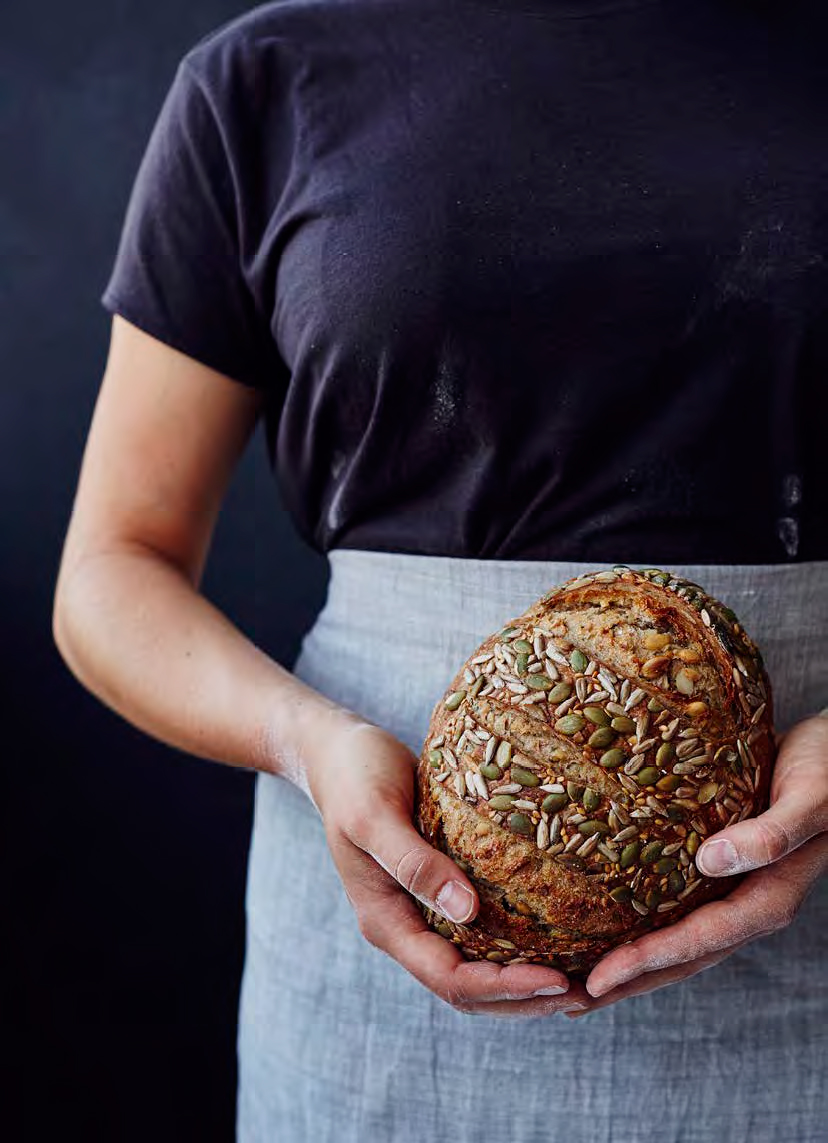
This is the most popular loaf at the bakery. It has a devoted following among regular customers – one family buys ten at a time for their freezer! – and the most frequent first loaf for new customers. It’s also popular with the restaurants we sell through. It is earthy and honest with primal qualities, no doubt the second leavened bread made by man. Under any analysis, made with well sourced ingredients this loaf is as healthy as it gets, with the seeds providing a protein

hit as well as extra fibre and layers of extra flavours. Yet despite all this goodness and history, it’s still an everyday loaf that every member of your family will enjoy. We make this in both a tin and a round shape. These instructions are for the round loaf, but you can use any of the alternative shaping instructions from other recipes.

Day 1

50g strong white flour

50g water, at hand warm temp (32–37°C)

Active wheat starter (see below)

Mix the flour and water with the whole

quantity of the starter and leave loosely

covered at room temperature overnight.

35g sunflower seeds

35g pumpkin seeds

35g golden flaxseeds

15g sesame seeds

335g water

Soak the seeds in the water and leave at room

temperature overnight.

Nutrition Note:

We soak the seeds for a couple of reasons. The first is to do with the bread-making process. If you don’t soak the seeds they will absorb water from the dough, resulting in a drier dough and a heavier texture in the bread. So soaking the seeds guarantees a much more consistent loaf. The other benefit is that you activate them, which makes them release additional nutrients so that they are easier for your body to absorb.

Day 2

100g recipe starter made on Day 1

Water and seed mix from Day 1 (above)

335g strong white flour

40g rye flour

8g salt

Extra seeds for topping

1 In a large bowl combine the recipe starter with

the water and seeds and mix gently.

2 In another bowl combine the two flours and

the salt.

3 Add the flour mix to the first bowl and mix

using one hand until a dough forms. This takes

only a couple of minutes. It’s a good idea to

use only one hand, leaving the other one clean

for using utensils, etc. Use a plastic dough

scraper around the bowl to make sure all the

flour is mixed in. Cover the bowl with a shower

cap or damp tea towel and leave it to rest

at room temperature.

4 After 5–10 minutes, give the dough a fold in

the bowl. Use slightly wet hands to prevent

the dough sticking to them. Pull a section

of the dough out to the side and fold it into

the middle of the ball. Repeat this going

around the ball of dough until you get back

to the beginning (four or five folds). Use the

scraper to turn the dough upside down, cover

the bowl and leave for another 5–10 minutes.

Repeat this three times. After the final fold,

cover the bowl again and leave to rest for

1 hour at room temperature.

5 Turn the dough out of the bowl onto a lightly

floured surface. Stretch out one side of the

dough and fold it into the middle. Repeat

this with each of the four ‘sides’ of the dough.

Put the dough back in the bowl upside

down and leave to rest for another hour

at room temperature.

6 Shaping a round loaf: Once the dough

has rested, turn it out onto a lightly floured

surface. Stretch one side of the dough out

and fold it into the middle. Repeat this all

around the outside of the dough until you

get back to your starting point. Flip it so the

seam side is facing down. Use your left hand

to hold the dough in place and use your right

hand to rotate the dough, tucking it under

and tightening it as you go around (if you are

left-handed you might want to use your right

hand to stabilise and your left hand to rotate).

The idea here is to increase the strength of

the dough without tearing it. The final surface

of the dough should be taut to the touch.

7 Put the remaining seeds in a bowl. Brush the

top of the dough with water and dunk it in the

seeds so that they are evenly spread over the

top. Place the dough so that the seam is facing

up and the seeds face down in a round proving

basket. There is no need to flour the basket

as the layer of seeds will prevent the dough

from sticking.

8 In the bakery at this point we put the dough in

our cool retarder cabinet for it to prove slowly

overnight. This helps it to develop more flavour

and become even healthier as it ‘pre-digests’

more of the gluten and ferments even more

probiotic qualities. Your version of our retarder

is your fridge – and you can leave the proving

basket in it overnight, covered with the tea

towel or shower cap. Take it out as you are

heating the oven. It’s fine for it to go in cold.

However, if you would prefer to speed things

up a little, at this stage you can simply leave

the dough in a warm place (ideally 24°C) until

it has more or less doubled in size. This should

take 2–4 hours. To test when the dough has

proved enough, press your finger about 2–3 cm

into it, then remove. If the dough pushes back

out slowly it is ready. If it springs back quickly

it is under proved; if it doesn’t spring back at

all, it is over proved. There isn’t much you can

do about that. The bread will be edible, but

more liable to collapse.

9 Preheat the oven to 250°C/fan 240°C/

Gas mark 10 or the highest temperature on

your oven. Place a roasting dish in the bottom

of the oven to heat up. Fill a cup with water

and place to one side ready to use. Also put

a flat baking tray in the oven to heat up.

10 When the oven is up to temperature, take the

hot baking tray out, lightly dust it with flour

and then turn the dough from the proving

basket out onto the tray. Slash the dough with

a sharp knife. Make sure that when you slash

you use one quick, smooth action, do not saw

at the dough. This will give you a much cleaner

line. In the bakery we use a single diagonal

slash down the loaf, but there are endless

variations you could use – be creative, define

your own distinctive pattern.

11 Place the baking tray in the oven and pour

the glass of water into the preheated roasting

dish at the bottom of the oven. The moisture

from this makes the dough lighter, helps

to set the crust and gives it a lovely sheen.

12 Turn the temperature down to 240°C/

fan 220°C/Gas mark 9 and bake for

approximately 30 minutes. To check if the

bread is baked through, tap the bottom –

it should sound hollow.

13 Leave the bread to cool for at least an hour

before eating. If you eat it when it’s still hot,

it will not have settled and so will be more

difficult to digest.

Making Your Sourdough Starter

A sourdough starter is how we cultivate wild yeast in a form that can be used for baking and has been done for thousands of years. The easiest way to make one is simply to combine flour and warm water and let the mixture sit for several days. In theory, you will only need to do this once in your life and it is unique to you.

The start is the magic, the genius, at the heart of everything we do and everything in this book. It’s an ancient technology, discovered by accident and passed from generation to generation. It forms the basis of transformation foods with unbelievable powers of preservations and flavour.

A lot of people are intimidated by the idea of making and keeping a starter, but it really doesn’t need to be daunting and is in fact something a child could do, getting a starter going takes 2 minutes a day, over 5 days. It’s really not that much effort at all. If you use it on a regular basis, maintaining it just becomes part of your bread and baking routine, and if you do not use it as regularly, or you’re going on holiday and are worried about leaving it for a while, don’t be. It can cope!

Keep your starter in the fridge unless you are using it every day. Bring it out to top it up, then return it when you have finished using it in your recipes. It will be fine there even for a few months without being used. It may separate in the meantime, but don’t panic, just mix it back together. To get it going again you want to really overwhelm it with food. So throw half of it away and add 100g flour and 100g warm water. Leave it overnight at room temperature and the next day it should be active again, i.e. bubbling away. It really is that straightforward.

At this stage you could use it, but we would actually recommend throwing half of it away again and topping it up with however much you need for your recipe. We find that by taking that one extra day with a rejuvenated starter you get a much more active starter, resulting in a better flavour and rise in your bread.

A sourdough start is also known as a ‘levain’, and sometimes a ‘mother’ (because it keeps producing babies).

In the bakery, we have three bread starters: wheat, rye and brown rice for gluten-free baking. For our basic sourdough, we use the wheat starter. This has an almost cheesy smell to it and a slightly more mellow flavour than the rye starter.

Wheat Starter

Equipment A container with a lid or a clean jam jar

Day 1

  • 1 tsp strong white flour
  • 1 tsp water, at hand warm temp (32-37oc)

Mix together the flour and the water in a container with a lid. We recommend mixing with your hands rather than a spoon. As disgusting as it might sound, we all have naturally occurring yeasts on our hands, so this can give your starter a real boost.

Leave the mixture overnight at room temperature. Cover it with the lid but do not make it airtight. A screw-top jar with the lid partly done up is perfect. You want the yeasts in the air to get in, but you also want to stop the mixture drying out.

Day 2

  • Wheat starter made on Day 1
  • 1 tsp strong white flour
  • 1 tsp water, at hand warm temp (32-37oc)

Throw away half of the mixture from Day 1. This is because you want to almost overwhelm the bacteria/yeast in the starter with food, by adding more flour than the weight of the original mixture. You could do this by adding more flour and warm water and not throwing any away, but you would very quickly end up with an excessively large amount of starter.

Stir the flour and water into the remaining mix and leave again at room temperature overnight.

Days 3 and 4

Repeat Day 2

Day 5

By now you should notice your starter has bubbles in it. This means it is ready! Don’t worry if it smells acidic or cheesy, this is completely normal and each starter will create its ow unique fragrance. Now you have your own living, bubbling jar of healthy microbes that you’ll be using for years to come.

How to use your starter in baking

Now you have your active starter you’re ready to start sourdough baking. The first thing to remember is that to make sourdough recipes you will need to build up your active starter (using all of it) the day before your bake. How to do this is detailed in each recipe under the heading on Day 1.

Having built your starter up, you will need to use most of it for the recipe (in the recipe we refer to it as the Recipe starter). What you don’t use, you retain as your ongoing active starter for your next recipe – you don’t want to have start from scratch each time! This all sounds more confusing that it really is.

Trouble-shooting

If the starter isn’t obviously bubbling, keep repeating Day 2 until it starts to. Quite a few factors can affect how long it takes a starter to activate, temperature being one of the main ones. If you begin your starter in cold conditions it may take longer to get going. Also, the general environment can have an impact. In the bakery, as we are making bread every day, there is so much yeast in the atmosphere that we find starters can take just a few days to get going, whereas if a kitchen is more sterile, it’s likely to take much longer.


Modern Baker: A New Way To Bake by Melissa Sharp with Lindsay Stark (Ebury Press, RRP £26). Photography by Laura Edwards. Available from amazon.co.uk
 

MIND YOUR LANGUAGE: HARNESSING THE POWER OF THE SPOKEN WORD TO SPARK POSITIVE LIFELONG CHANGE

By James Carré-Rice

For better or worse our potential is shaped, and indeed kept in check, by the things we believe about ourselves. Let me give you an example of how this is plays out.

Many years ago, while serving time in Borstal, an officer took us outside to play football on the yard. Then, while standing alongside me before kick-off, he casually spoke about having watched ‘Last Night at the Proms’ on TV the night before. “Wonderful those young people,” he muttered, “educated, dignified, the future of our great land.” Then, giving me a sidelong glance, added, “unlike scum like you,” and wandered away. His words stung, but sadly, I figured that on the balance of it, he was probably right.

The damage caused by such condemnation comes partly in the saying, but primarily in the believing. Years later, after transforming my life through meaningful therapy, those past self-beliefs tried to hold me back at key moments of opportunity. For instance, on the eve of my driving test, which secured me a great job and helped provide my first mortgage, I came under a vicious emotional attack. Sickening waves of negativism arose, as if from nowhere, trying to stifle my progress. ‘Who on earth do you think you are?’ they demanded, trying to belittle me. ‘You’re not like decent people, now get back where you belong.’ Emotionally, it made me feel uncomfortably out-of-place and unworthy. However, having previously engaged in meaningful therapy and gained a firm understanding about my true worth, I was able to overcome that spiteful attack and prosper.

From an early age our personalities are affected by the things others say but primarily by the conclusions we reach about ourselves. No sooner do we bloom into the fullness of childhood than the process of maturity arises to cover most of it up. At that time, a powerful element known as the ego sets to work, shaping its opinion about who it thinks we are. The ego accepts that which we believe about ourselves and forms it into an internal model.

For instance, in the case of a little girl being utterly neglected by her father (a common story), her inner ego is likely to be self-critical about why that has happened. The usual conclusion reached by a young mind is, ‘I’m not good enough.’ Such an emotional belief, no matter how inaccurate, will damage her prospects in many areas of life; not least when dealing with men. Nobody, not even she, will understand why she went on to accept second-rate options and lived way below potential.

So, what can be done? In the case of self-limiting beliefs, it’s hard to avoid the prospect of therapy, in which the root of the storyline can be re-visited in safety. Egoic beliefs are like hardy bushes that survive trimming, being ignored and severe pruning. Therefore, in order to be rid of them, we have to get down to the roots.

Those with the wherewithal to confront deep-seated trauma discover something remarkable at the point of contact. Far from the trauma overwhelming us, our conscious observation neutralises it. Yes, there will be a fearful moment of intensity, and perhaps a few tears, but our very open-eyed awareness will diminish its power.

The reward for taking such a brave course of action is to break the chains that bind and go forth to leave our mark upon this life. As described in my own story, rooting out damaging internal narratives, unleashes our true potential.

James Carré-Rice is a bestselling author, a renowned life coach, and a sought-after public speaker. But his life was not always so successful. As a young man, he was sentenced to a total of more than seven years at Her Majesty’s Pleasure for a string of violent offences. James, now 57, turned his life around and used his negative experiences of the penal system to develop a pioneering rehabilitative system for the New York State Criminal Justice Department that helped US gang members re-join society. Over 200,000 copies of his first book, Within These Streets, are in prisons here and abroad.

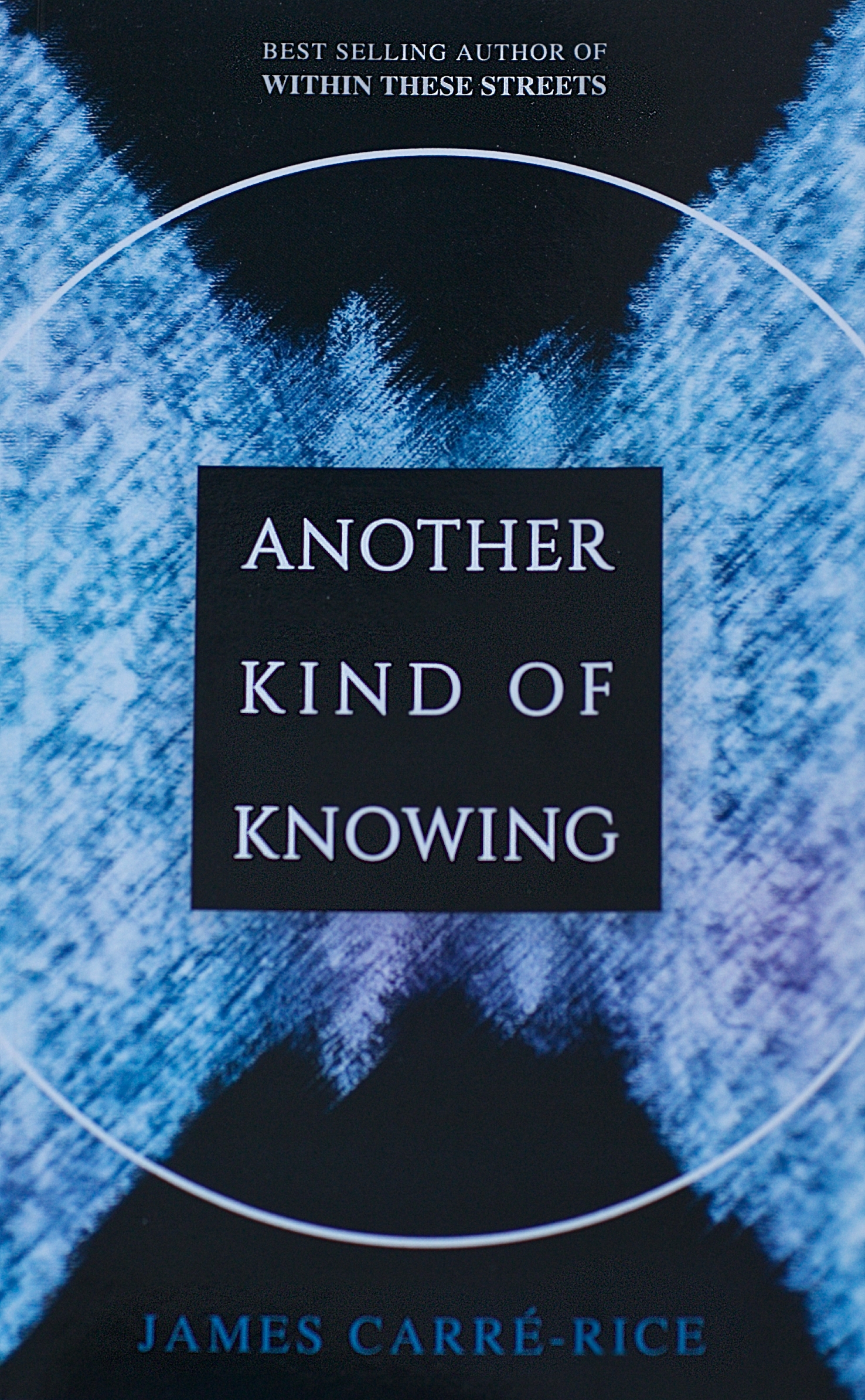
His new book, Another Kind of Knowing, is out now priced £7.99 from Amazon UK. For more information about James’ work, go to www.jamescarrerice.com

Celebrate Valentine’s Day with Viña Real Wines.

The look of love is in the air and we think Valentines is the perfect reason to wind down with a delicious dinner paired with a superb wine. Whether you’re sharing the day with a loved one, celebrating Galantines or just spending the evening enjoying your own company, Viña Real wine will not disappoint. Now we must admit, we were sent this wonderful package of wine weeks ago but with dry January in full tow we didn’t want to leave out any folk so here’s why Viña Real should be your top choice this week.

The award winning Spanish wine brand CVNE have continued to supply us with a wide range of quality Rioja wines since 1879. With age only comes wisdom and the winery, which is split into four, include Viña Real. The wines we tried were Viña Real Crianza and the Viña Real Barrel Fermented White but the brand also stock four other wines including a Rosado and a Gran Reserva.

First up the Viña Real Crianza, this is a charming red with a flavour of deep dark berries. This is a spicy red perfect for the Winter months and great for sipping with roasted meats. This wine is very easy to drink and can be found in Gordon’s Wine bar in London for £28 per bottle buy you can get this for a fraction of the price from a good wine retailer. This bottle certainly delivers much more than it’s modest price tag. Great value and great all rounder we think this would suit even the most discerning palette.

If it’s a quality white you’re after than the Viña Real Barrel Fermented white comes highly recommended. This wine is made up of 100% Viura or Macabeo grape which has become increasingly popular and is usually used to make up Cava wines. The barrel fermentation means that the wine is fermented in smaller oak barrels as opposed to large stainless steel and helps to highlight the texture which is creamy and light and helps preserve the fruit aromas, in this case gooseberry and honeysuckle. Again a moreish and fantastic value wine with an average price of £10.95

To find out more about CVNE and Viña Real wines visit www.cvne.com

Guess what – first dates are as thrilling as sky diving – oh yeah?


Really, it is apparently so.

A University study proves dating increases heart rate to the same level as skydiving.

Well, if we grannies who run our charity: Words for the Wounded had known that, we’d have tried the date, rather than leap out of a plane to raise funds for our veterans…

So, what’s this all about – on Valentine’s Day?

Apparently Lovelorn Brits find the thrill of a first date as adrenaline inducing as jumping out of a plane, according to scientific research.

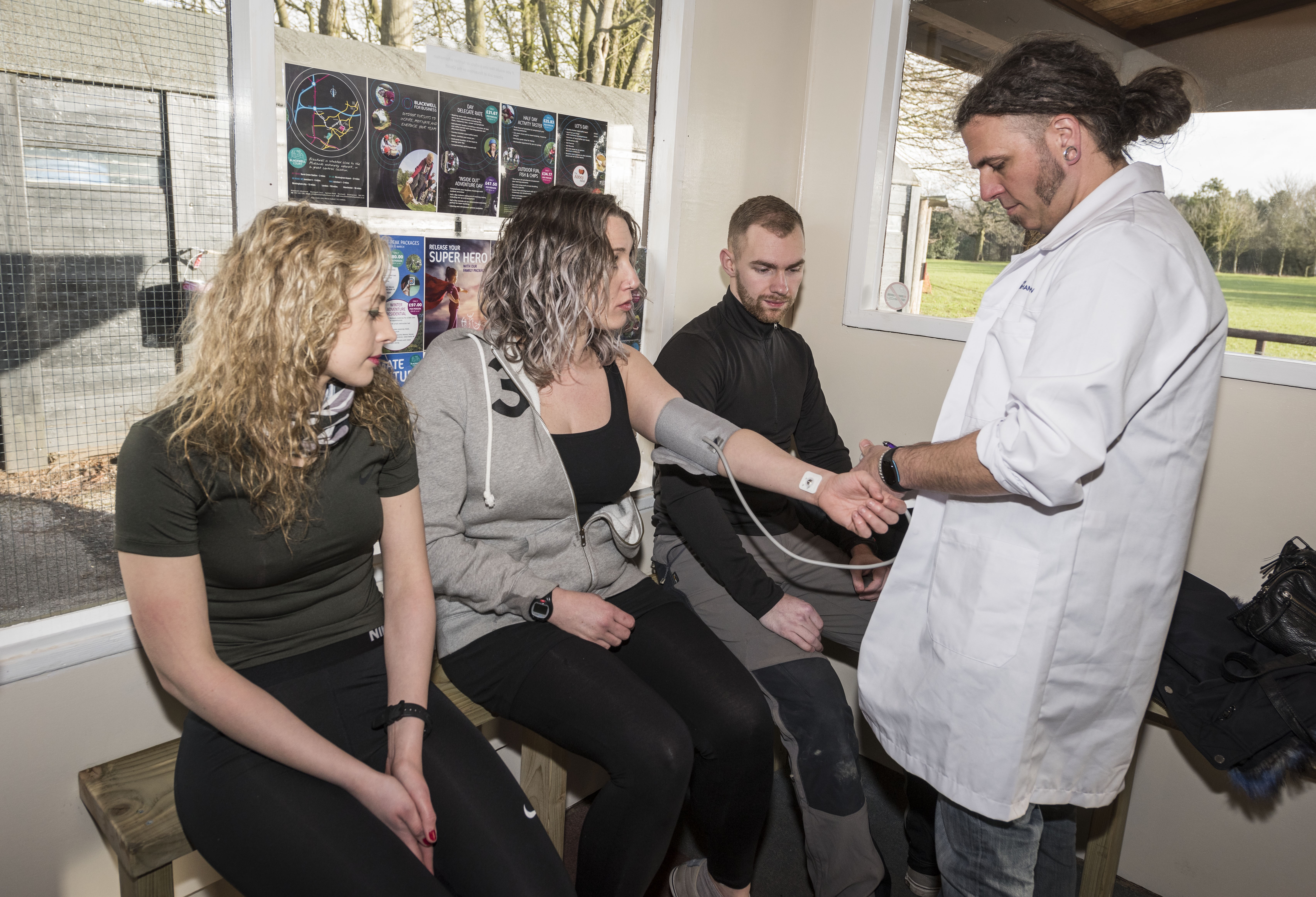
The Bear Grylls Adventure in partnership with the University of Wolverhampton found that the average heart rate while indoor skydiving was 111 BPM, almost identical to that of a blind date experience, 106 BPM – proving that the excitement of a romantic encounter is the same as freefalling.

The research by the university cardiology department put participants through a number of experiences including indoor skydiving, a zip wire course, and a first date while wearing heart rate monitors to measure pulse fluctuations.

In support, a survey of 2,000 UK adults found more than half (54%) of Brits consider going on a first date a thrilling experience, and 1 in 6 confessed to enjoying the rush of the initial encounter.

The survey of the nation’s daters also found a third of Brits had considered leaving or not turning up to a date due to nerves, and 45% have stuttered and lost their trail of thought. Ooops.

General Manager, James Thomas said: “First dates sure are a thrilling experience, the fear of the unknown in any circumstance gets the heart racing, and the heart rate research we’ve undertaken backs this up. The results of our research proved that the UK is a nation of thrill seekers who want to be pushed to the limit and the attraction is set to test just that.

“The Bear Grylls Adventure has been designed to encourage people to test their boundaries, overcome their fears and experience some of the world’s most thrilling experiences all in one place.”

Bear Grylls said: “Facing our fears is the only way to truly conquer them. Our heart rates fall the more we undertake different challenges, as we know what to expect and we have overcome the initial leap. Avoiding fears only makes them bigger and causes them to root themselves even deeper.’

One of our Words for the Wounded grannies had a total fear of heights, and it changed her to have to actually a) go up in a tiny plane, and b) jump from it. Arghhhh. However, she strode away, looking very much as though she could kick ass, if a future situation ever warranted it.

Dr Martin Khechera, Senior Lecturer in Biomedical Science at the University of Wolverhampton, said: “…When approaching a nerve-racking experience, our bodies usually experience a ‘fight or flight’ response, whereby we notice a rapid increase in heart rate due to an adrenaline rush. Once the initial thrill has taken place, heart rates start to steady, and this is when we get a chance to enjoy and improve our skydiving and even dating skills. The more we get used to pushing ourselves out of our comfort zone the better we get in handling stressful situations. It’s valid to conclude that the more we push ourselves out of our comfort zone by skydiving or taking on heights or even the exhilarating rush of a zip line the better we get in dating.

The adventure park which opens in Birmingham in 2018 will replicate some of Bear Gryll’s most incredible adventures, including skydiving, rock climbing, military ropes course and diving.

I’m beginning to wonder if the grannies should be launching themselves along a zip wire in the autumn, instead of walking Hadrian’s Wall. Much quicker and if it equals the excitement of a first date, bring it on.


For more information please visit www.beargryllsadventure.com

www.wordsforthewounded.co.uk for details of our writing award, LitFest, and in due course, Hadrian’s Wall, or will it be something else… We’ve done a military assault course, sky diving… zip zip perhaps.


Strictly Come Dancing star’s debut novel (guess who) has been acquired by Bonnier Zaffre: by Dr Kathleen Thompson

I can’t wait any longer to give you the answer – it’s the fabulous Anton Du Beke.

Isn’t Strictly Come Dancing marvellous? We gawp as some celebrities morph into graceful swans, whilst others splash and sink into the mire of Craig’s scorn.

Ballroom and latin dancing is beautiful to watch –exquisite dresses, sparkling Swarovski crystals, glamorous make-up, stunning hair-styles, all showcasing the graceful fusion of two people gliding across the dance floor as one.

But it is an illusion, which melts like the stage makeup when cold cream is applied (now I am showing my age), once the performance is over.

As an amateur dancer  myself I can assure you that there is a very different world behind the glamour – a world of alliances, politics and sometimes, foul play.  I know of a world champion who regularly had her bra stolen from the changing room whilst she was competing –and that was in the days when au natural was definitely not fashionable.

So I for one am waiting with unashamed excitement for the debut novel of the fabulous Anton Du Beke, who has hung up his Werner Kerns at least long enough to pour his creativity onto pages instead of the dance floor.

His novel, entitled One Enchanted Evening, will be set around a London hotel ballroom in the lead up to World War II and is set to publish in Autumn 2018 by Bonnier Zaffre. Will he let us into some secrets of the real ballroom world? Oh, I think so …

One Enchanted Evening: pub Bonnier Zaffre. Autumn 2018.

From Both Ends of the Stethoscope by award winning author, Dr Kathleen Thompson


THE BUSINESS OF BOOKS: ONLY TAKE IT ON IF YOU CAN SEE IT THROUGH

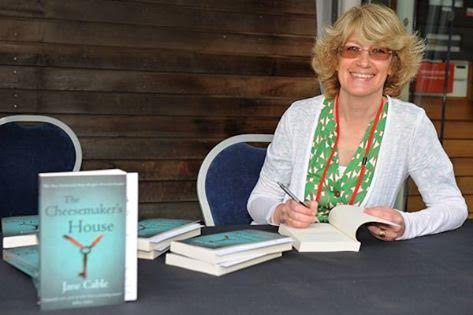
Jane Cable considers what it takes to organise a successful event

Never one to ask others to do what I won’t myself, I thought that this year I would focus my own articles on advice given and received as well. Except as I have the privilege of writing my own column once a month I’m planning to focus each article on something relevant to my writing life.

So let’s start with writers’ events. I don’t know whether it’s because I’m willing, or I’m bossy, or I forget to duck below the parapet, but very often it seems to be me doing the organising. Last week I was at a library in Cardiff with two other Welsh authors, talking about routes to publication. It was a bitterly cold evening and it had snowed during the day. We’d already cancelled the afternoon event due to low bookings but were determined this one should go ahead. Perhaps, between us, we did know a significant number of people in the audience, but that was probably because they were writers yet to get a book out there and wanted to pick our brains. That said, we all enjoyed the evening and the library reported enthusiastic feedback from our guests.

So, what did I learn? And what advice would I give other writers looking to try their hand at connecting with their audience in this way?

  1. Only take it on if you can see it through If you initiate an event it is down to you to finish it. You may have a helpful venue (as we did in Cardiff last week), but if you promise something you have to deliver or your reputation will be at stake. This can mean finding other writers willing to take part, pulling together publicity material, sorting out IT and refreshments. If you can’t give it the time and the energy, don’t go there.
  2. Know your audience Think about who you would like to attend and find a venue, time and topic to suit them. Sometimes at least one of these will be fixed (eg a library or a festival) but there will always be something you can control to entice people in. Last week in Cardiff we over-estimated the appeal of an afternoon discussion about favourite books aimed at readers of romance. We were targeting retired people, thinking they would enjoy the interaction and not want to be talked at. What we didn’t factor in was the weather – the same event in the summer might well have been popular.
  3. Know when to quit We had six people signed up to that afternoon event and there were four presenters so it was a no brainer that it had to go. We, and the library, tried everything to up the numbers but to no avail so we pulled the plug and made sure everyone knew about it. But quitting isn’t always the right answer. A couple of years ago Chindi Authors organised a mini litfest to raise funds for Words for the Wounded. Tickets sold slowly for the main lunchtime event and I was ready to pull the plug, but the wonderful children’s author Christopher Joyce refused to let me and as it happened we would have struggled to fit another person in – and the weekend as a whole raised almost £1,000 for the charity.
  4. Only do it if you’re going to enjoy it There is no point putting all this effort in if, on the day, you’re going to be a gibbering wreck. If you hate public speaking then find another way to raise your profile. Nothing is compulsory. Play to your strengths.

Thandie Newton: ‘Lost Work For Revealing Hollywood Sexual Abuse’

thandie-newton-reveals-hollywood-sexual-abuseBrave and stunning actress Thandie Newton has spoken out about sexual abuse in Hollywood. The actress revealed in July that she was abused by a director when he put a camera between her legs during an audition, she even found out later that he had been playing the tape at private parties. She was also told by a director he would film above her bare breasts, but he didn’t. She says she also suffered “serious sexual abuse” from an ex-lover.

The 43-year-old claims Hollywood covers these incidents up. She told The Guardian:“Here’s the thing. I am so grateful for all that: ‘Zip it, Thandie! Zip it! Zip it!’ Because it made me more angry, made me want to talk more,”

She says that she won’t take the director to court at the moment. “You know, maybe that will happen. But he’s one person. I’m out for the whole f**king industry. I go for big. I’m not small. I’m vast.”

She refuses to be quiet about the experience “and sometimes it p**ses people off and they disinvite me from their lives. But I would rather lose friends for that one seed of doubt that might be in their minds.” She has also lost work because she spoke out about it. She said “there’s more infrastructure to cover up than there is to protect.” Thandie said she was recently diagnosed with endometriosis “And I really do think it was (down to) fury.”

What do you think?