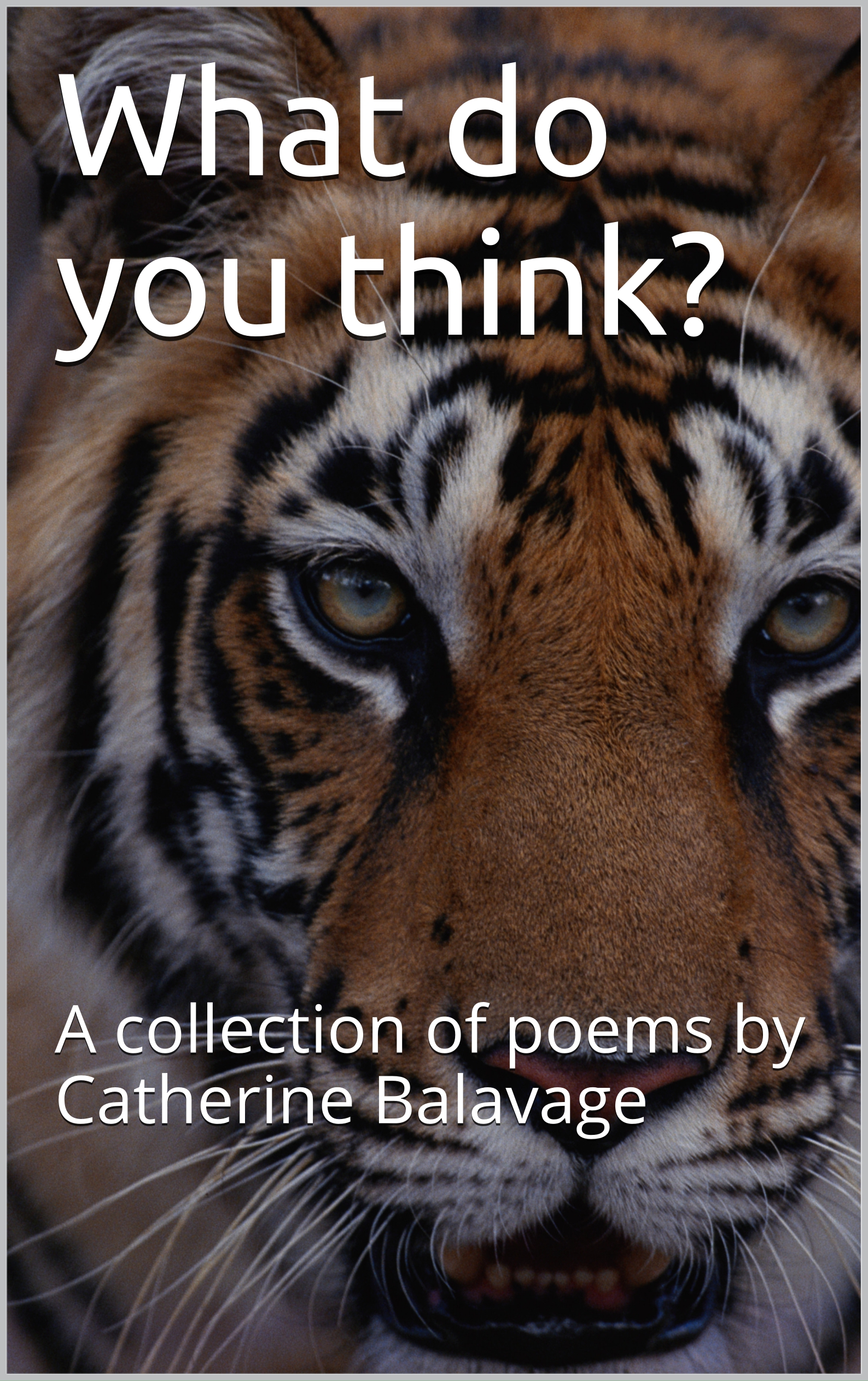
What do you think?: A Collection of Poems Extract #nationalpoetryday

poetry, poetry book, poems, women authors, Scottish writers, poetry book, female writers,To celebrate National Poetry Day here is some extracts from my poetry book What do you think?: A collection of poems. I hope you enjoy them.


Thieves

Littered broken hearts

One million men

Tearing me apart

Vestiges of

What I used to be

Leaving behind

All different parts of me

Traces

Chunks

Bits

Intellectual property

All stolen from me

And I will never be complete again

And the waiter came around with decapitated roses


When women are mean girls

Another barb

To bring a smile to your face

You think it wounds

Not quite

But I will confess it grates

How a woman can act like a mean girl

Time and time again

Her insecurity and bitterness

Coming out in bitchy comments

I guess I should feel sorry for you

That your life has led you to this

Vile and wrapped up in your own bitterness

But woman like you give women a bad name

Lashing out, attacking, trying to cause pain

I know you just don’t like my happiness

That it causes you pain

That your jealousy is like your other face

Sneering, ugly and plain

I take it as a compliment

That you can’t just keep quiet

That you cannot become the adult you are

That you have to let your hate perspire

I move on, of course

And I smile as I do

Because although you bore me and disappoint me

I am happy, because I am nothing like you

(This was written in 2016. I wish it wasn’t as relevant as it is. I do have to point out that men can be bitchy too, but sometimes it just hurts more when it comes from another woman).


Motherhood

They say that after this I will be a woman

But I feel I already earned that long ago

Long before the waves and the pain

My dues long paid up

Unlike those other dues

This one will be worth it

They say this will change me.

And it irks me that they are not wrong

One bouncing baby

To change the melody of the song

Half a stone of giggles and crying

To bring a joy

That could bring back the dying


Loved person

Broken promises I knew you could not keep

You only ever tried to love me and in gratitude I lay at your feet

Because I was in love too, but my love was different

My love was the notion of life, a good one

All I wanted from ear to ear; a smile from my own mouth

It did not work

You loved me so selflessly I could not leave

Although I know now it was only through your love for me that I loved you

You lost your own identity

You chose mine but I wanted mine to keep

Still. Here I am

This time only crying at your ever loving feet

I owe you too much to leave

So for the rest of my life. If I never find the courage

I will be the living, loved dead

Even though I see

Your love in an otherwise cruel world binds me

Forgive me. I doubt for all that I was ever worthy


All poems taken from What do you think?: A Collection of Poems by Catherine Balavage is available from Amazon. 


National Poetry Day Kicks off with new BBC poetry festival and report of boom in poetry book sales

National Poetry Day, the world’s greatest celebration of poetry, will see a mass outbreak of verse today. The BBC is celebrating National Poetry Day across all its channels, as are Visit England, Art UK, Virgin Trains, Royal Mail, Twitter, the V&A and thousands of schools, libraries, pubs, bus routes, museums and railway stations: the celebrations will be impossible to ignore.


Poetry is booming! This year marked the best sales on record for poetry books in both volume and value: since January, sales are up by 10 per cent on the same period last year, driven by a new appetite for the work of living poets with strong online followings, including Rupi Kaur and Hollie McNish. Poetry, according to Nielsen BookScan, is now challenging prose on the bestseller lists, boosted by the popularity of both live and recorded performances and strong followings on Instagram and Twitter. In May, Manchester’s resilience under attack found voice in a much-shared spoken-word poem by “Longfella”, in June, thousands cheered Kate Tempest at Glastonbury: poetry, whether provocation or consolation, has never felt so present.


National Poetry Day also sees the launch of a major new four-day poetry festival (Contains Strong Language) in Hull 2017 UK City of Culture, a partnership with the BBC, Hull UK City of Culture, Humber Mouth, Arts Council England, British Council, National Poetry Day and other poetry organisations. The festival stars a line-up of 17 innovative poets, the Hull 17, and will feature more than 50 events across 8 venues, including performances by the BBC Philharmonic Orchestra, John Cooper Clarke, Kate Tempest and a mammoth washing line of poetry created from 2017 new poems about city landmarks written by Hull residents.


There will be hundreds of events across the UK and Ireland including many responding to the invitation to ‘share a poem’ on social media.


For a second year running National Poetry Day has partnered with BBC Local Radio. Taking their cue from National Poetry Day’s 2017 theme – Freedom – BBC Local Radio stations across England called on listeners to ‘Free the Word’ by nominating a distinctive local word that deserves to be better known nationally. The final selection was made with the help of lexicographers from the Oxford English Dictionary, on the look out for new definitions and usages to fill the gaps in the dictionary’s overview of the English language.


12 local words are now the inspiration for 12 new local poems, to be broadcast across the BBC network today: among the words selected are cheeselog, meaning a woodlouse (Hollie McNish, BBC Radio Berkshire) and bobowler, a West Midlands’ word for a large moth (Liz Berry, BBC WM) and mardy (moody) from Leicester listeners (Toby Campion, BBC Radio Leicester). BBC Radio Cumbria chose to twine (to complain) for their poet Kate Hale. BBC Radio Leeds’ poet Vidyan Ravinthiran, will take a poetic walk down a ginnel (alleyway), BBC Radio Devon’s listeners chose an evocative word to describe twilight – dimpsy – for local poet Chrissy Williams. Finally, the capital’s first Young People’s Laureate Caleb Femi has turned fam, the street slang address for a friend, into a poem for BBC Radio London.


Poet Isaiah Hull has woven all 12 words into a bravura poem-of-poems, commissioned and broadcast as part of the Contains Strong Language festival.


BBC Radio Wales and BBC Radio Scotland are also joining in the fun. BBC Radio Scotland’s Poet in Residence Stuart Paterson has penned a poem Here’s the Weather which contains a flurry of the 700 words nominated by listeners, as well as the word topping the poll – dreich – meaning dreary weather; while the word cwtch, a hug in Welsh, was chosen by Sophie McKeand, Young People’s Laureate for Wales, for her poem.


National Poetry Day has also announced its first ever dedicated book trade promotion highlighting 40 inspiring poetry books in four wide-ranging categories: anthologies, children’s poetry, current collections and poetry for book groups. The campaign’s aim – to enable all to enjoy, discover and share poetry and titles include William Sieghart’s The Poetry Pharmacy: Tried-and-True Prescriptions for the Mind, Heart and Soul (Penguin Press), Plum (Picador) by Ted Hughes Award-winning Hollie McNish and Milk and Honey by bestselling insta-poet Rupi Kaur.

Visit England is focussing its ‘Literary Heroes’ campaign on poets and poetry this month, commissioning poets Andrew McMillan and Remi Graves to rework much-loved classics for the 21st century. Andrew has transplanted Wordsworth’s daffodils to urban Manchester and Remi will use Blake’s London to explore Kings Cross. Films of their new poems are released today for National Poetry Day.


Art UK, the online home for every work of public art in the UK, announces the winner of its Art Speaks competition, open to young poets aged 13 to 24, for a filmed poem about any picture in public ownership: Matthew Arnold Bracy Smith’s The Disrobing (Despoiling) of Christ (after El Greco) at Scarborough Art Gallery was the inspiration for 22 year-old civil servantAmani Saeed’s winning poem “Jesus Christ Goes Clubbing”; while poet and DJ James Massiah has created a 1 minute poem for giffgaff, the youth-focused mobile phone network which is cheap, flexible and speaks to “freedom”, fitting perfectly with this year’s theme. At the V&A in London the visitor experience team will be reciting poetry alongside relevant art works throughout the day.


On board staff of Virgin Trains will be including poetry in their announcements on the day and Poet in the City presents Sound of the Underground: 9 poets across 5 London Underground stations reading poetry exploring this year’s theme of freedom and travel; while Royal Mail is postmarking millions of items of mail nationwide with National Poetry Day 28 September: an honour reserved only for special occasions and significant events.


Glasgow will mark the day with pop-up poetry events across the city; in Yorkshire, the number 59 bus route from Wakefieldto Barnsley will be taken over by poets and musicians, while Bradford, Unesco City of Film, will feature poems on its Big Screen. St Pancras Station, the Old Vic Theatre, Soho’s L’Escargot restaurant and Cassandra Goad’s jewellery shop on Sloane Street are just four of many London venues putting poetry before the public in surprising and delightful ways.


Susannah Herbert, National Poetry Day says: “A poem gives people the freedom to play with words, to rub off the dull tarnish until they’re fresh as new pennies. That’s why the BBC’s push to get poets to celebrate the nation’s favourite local words has struck such a chord with the nation. Everyone who shares a poem today, whether in a tweet, a nursery rhyme or a note on the fridge, is pushing back against the deadening regime of prose and striking a blow for the imagination.”


Expect impromptu pop-up poetry festivals in thousands of unexpected places, from shops, streets and offices to doctors’ waiting rooms and postal sorting offices. Ricky Gervais, J K Rowling, Paul McCartney, Stephen Hawking, George RR Martin and Ellen DeGeneres are among the hundreds of thousands of poetry-lovers who have shared poems they love on past National Poetry Day via Twitter.  Last year the hashtag #nationalpoetryday had a 520 million reach, trending #1 across the globe on the day.


National Poetry Day is co-ordinated by the Forward Arts Foundation, an Arts Council National Portfolio Organisation that celebrates poetry and promotes it as part of everyday life.


With Macmillan Children’s Books, it has nominated 18 poets as National Poetry Day Ambassadors, with special responsibility for igniting enthusiasm nationwide by visiting schools, organizing events and competitions and writing new work on the theme of Freedom. Their new poems have been collected as a free downloadable eBook Freedom: A National Poetry Day Book available from the National Poetry Day website, alongside posters, lesson plans and ‘freedom’ images from artist/poet Sophie Herxheimer.


For further information, visit http://nationalpoetryday.co.uk

Follow on social media using #NationalPoetryDay

 

Advice on still being a socialite when quitting smoking

If you’re in the process of quitting smoking but class yourself as a socialite — this quiz to discover your smoker profile from Nicotinell should help establish if you are indeed a social smoker — you may find yourself questioning what this will mean for your social calendar.

This guide will explain how you can continue to be a socialite without the need to smoke:

There are links between smoking and alcohol

Before we advise you about how you can continue to socialise while being smoke-free, it is important to point out the close link between smoking and drinking alcohol.

At the extreme, government data has found that up to 90 per cent of people who are addicted to alcohol will also smoke. Furthermore, smokers have been found to be more likely to drink and have a 2.7 times greater risk of becoming dependent on alcohol than non-smokers do.

In general, it is important to understand that both alcohol and nicotine act on common mechanisms found in the human brain.

When it comes to nicotine, the chemical compound will enter the bloodstream as soon as you smoke a cigarette and rapidly get transported to your brain. Once there, the nicotine will stimulate the brain by creating receptors which release chemicals that give a feeling of pressure. These receptors will increase in number as smoking becomes prolonged and your brain will become reliant on nicotine in order to release these feel-good chemicals.

However, the nicotine supply in your bloodstream will drop within 72 hours of your decision to quit smoking — those receptors won’t disappear that quickly though, so your brain’s chemistry will react to cause powerful cravings and strong emotional reactions. Persistence is key, as nicotine receptors will go away with time and your brain chemistry should be back to normal within three months of a quit.

In regards to alcohol, researchers believe this substance fosters feeling of pleasure. If true, this reinforces the effects of nicotine on the brain. There are suggestions that nicotine and alcohol will moderate each other’s effects on the brain due to the fact that nicotine stimulates while alcohol sedates.

Tips for socialising when on a quit-smoking journey

So, you have taken the first step and stopped smoking, but now face the dilemma of socialising in a scenario where you would have previously had a cigarette. Here’s how to stick to your goals and still have a good time:

Don’t put it off

You shouldn’t delay going out for a drink because you’re having doubts. Everything you did as a smoker, you can do as a former smoker. Holding off too long from social drinking after quitting can create a sense of intimidation. Plus, socialising with friends is an important part of your life. The sooner you teach yourself how to enjoy a drink or two without a cigarette, the sooner you’ll feel like your life is back to normal.

Have a pep talk with yourself

Where you go to enjoy a drink could very well trigger your smoking cravings. Before leaving the house or in the car, be mentally prepared by saying aloud, “I’m a former smoker.” Or try, “I don’t smoke. I’m healthier and happier without cigarettes.” The main point is to remind yourself that you’re a former smoker and that you don’t need to light up anymore.

Aim to have a social get-together where no smoking is involved

Instead of going to a place where people are likely to be smoking, why not invite your group of friends to your house instead? You can celebrate your smoke-free success with them. You’ll be able to control what is served which can help stop those triggers and completely avoid cigarettes in your smoke-free home.

Enjoy time with non-smokers

Non-smokers and friends who will be supporting your decision to stop smoking will definitely help. Who you choose to hang out with can help support your ex-smoking status. Slip-ups can occur when quitters are in the company of other smokers who may not be aware of how to support their quit attempt.

Invite a quit buddy to join you

A friend or family member can prove a huge helping hand as your quit buddy, so be sure to invite them along to whatever social event you’re attending. A quit buddy is someone who supports your quit. Should you encounter old smoking friends who ask you to join them, make sure they are aware of your situation so they can be respectful. Not only that, you’ll also have your quit buddy to hang out with.


The Business of Books: Blending Fact and Fiction – Jane Cable meets GP turned author Carol Cooper


1) How much of your working life does the business of books take up?

About half my working hours are now taken up with book-related activities. It’s not all writing, as there’s social media, marketing, research, and the rest.

The other half of the time, I teach medical students, do some journalism, and fit in a spot of charity work. I’m involved with Tamba (Twins & Multiple Births Association), Lucy Air Ambulance for Children, and APEC (Action on Pre-Eclampsia). I have more time these days because I’m taking a sabbatical from seeing patients. After three decades as a family doctor, it’s lovely to have a break. Before that, writing had to be done during evenings and at weekends, but now my writing doesn’t just get the ‘tired me’.


2) What’s your business model to earn a living from writing?

Like most journalists who fell into writing books, I didn’t set out with a business model. My dozen or so non-fiction books bring in more income than my two novels. But journalism is still a more important revenue stream for me than books. Then there are activities like TV and radio appearances, and occasionally work for PR companies. I could earn more if I did more doctoring, but I enjoy the change of pace that I’ve allowed myself.

While I don’t normally spend much on book marketing, I did engage a publicist for my second novel, Hampstead Fever. That probably helped get it into bookstores. It certainly spared me a lot of time and footwork.

3) What do you write and what do you consider to be your major successes?

I’m now concentrating on fiction. My first two novels, One Night at the Jacaranda and Hampstead Fever, are contemporary tales about dating, relationships, and family life. Set in London, they feature multiple viewpoints. Think of the film Love, Actually, and you’ll have good idea of the structure.

My non-fiction books are mostly on child health and parenting, but there are also two textbooks on general practice, co-authored with medical colleagues. I’m not ruling out writing another health book, but publishing has changed, especially for non-fiction because there’s now so much web-based information.

My major successes include writing for The Sun newspaper for the last 18 years as the Sun Doctor. My role is to write fast authoritative copy as needed when a health story breaks. I know some people are sniffy about tabloid journalism, but it’s a real skill being able to get ideas across in just a few words, and I work alongside some of the best in the business.

I’m also proud of my book Twins & Multiple Births: the essential parenting guide from pregnancy to adulthood. The first edition came out 20 years ago and the title is still going strong. It was also very gratifying when General Practice at a Glance received a British Medical Association book award.

With my fiction, I was thrilled this year when WH Smith picked Hampstead Fever for a front-of-store promotion in their travel bookstores. There’s nothing like your novel being in airports and stations to make you feel you’ve arrived!


4) Tell me about your latest project

The novel I’m now working on is a new challenge. It’s set mainly in Egypt where I grew up. While story covers nearly 70 years, and there’s only one point of view, it is still mainly about relationships. It’s the book I want to write.

Carol Cooper is a doctor, journalist, and author who turned to fiction after writing a string of popular health books. She lives in North London and Cambridge, and has three grownup sons. Find out more about Carol here:

Blog Pills & Pillow-Talk

Website drcarolcooper.com

Twitter @DrCarolCooper


The Holiday Home Industry and Brexit

Greenway – Agatha Christie’s holiday home

Whether you are new to the market or a holiday letting expert, you should be aware of the changes in the political arena that have resulted in a decline in the purchase of family homes abroad.

Staycation is the new vacation as booking a lodge in the lakes or renting a flat it Manchester replaces the annual trip abroad. But combined with increasing competition from owners renting, in order to offset mortgage and maintenance cost, getting those bookings has never been so important in the holiday home industry.

Commercial gas retailers Flogas, give us an insight into the holiday home market and what holiday home owners can do to maximise their profits.

How Brexit has affected the holiday home market.

With the current Brexit vote and negotiations are well underway with the European Union, attitudes towards holidays and purchasing homes abroad are changing.

Homeowners and Brexit

With this country being always welcoming and accommodating to Brits, Spain always appears to be a first choice when UK residents decide that they want to purchase a holiday home. In 2016, UK buyers made up 19% of home purchases in Spain by non-Spaniards – it’s quite an impressive figure considering how many nationalities choose to go there for their holiday. However, this figure has almost halved since 2008 when it stood at 38%, which begs the question why?

With economic and political uncertainty in mind, Brits are becoming more reluctant to take the plunge and relocate abroad. It’s found that recently, the decline of pounds has meant that people cannot afford to buy the holiday home that they’ve had their eyes on.

Holidaymakers and Brexit

The decrease of the pound has also influenced the attitudes of holiday makers. More people of Britain are opting to take a holiday within the country to save money. Although research showed that they are spending less money on their staycations that what they’re use to, so the income is coming in elsewhere. Foreign tourists are coming over to take advantage of the lower rate of the pound and boosting the UK economy in that way.

Because the implications of Brexit haven’t been fully covered yet, holidaymakers are feeling unsure in other areas too. As of now, Brits are free to travel throughout Europe without restrictions and with access to healthcare. However, this could all change and it will further affect our holiday habits.

How can you get more visitors to your holiday home?

If you already own a holiday home abroad, you may be witnessing visitor levels slowing. What can you do to encourage visitors to come and stay in your home?

Online Visibility

If you don’t have a website or blog, you could be losing out on many customers from around the globe that didn’t know about your site. Even a basic website that includes photos, customer reviews and contact information could boost your online presence and revenues.

Consider social media, as it’s  quite a successful way to show off your holiday home and increase interest, you can offer promotions such as competitions to get people ‘sharing’ and engaging with the company.

Creating memories

The atmosphere when a customer enters your holiday home is an important element because it’s something that stays with them and this is often mentioned in online reviews. To improve this; greet guests at the accommodation if you live nearby to provide them with keys and show them around the area, offer complimentary wine and provide a map of the local area and any tips for their trip.

Maintenance cost management

You may be weighing up your options for purchasing a holiday letting property or maybe, you are looking to remain profitable. Either way, it is important to consider the costs involved with maintaining a holiday home. Of course, utility bills and mortgage payments are often considered top of the list however, there are some that are often forgotten about: cleaning fees can be between £40 – £80 per booking, a welcome kit costs £10 – £15 an agency may charge you 20-25% of your monthly income and there are gardening and window cleaning costs on top of these too.

It seems that if you are aspiring to own a holiday home, you should invest in a home in the UK – where tourism is on the rise from both foreign tourists and UK residents. For holiday home owners abroad, ensure you are maintaining your online presence and managing your costs as effectively as possible. Hopefully the effects of Brexit will become clearer soon enough and the holiday home industry will know where they stand.

Sources

http://www.lowlandlettings.co.uk/what-are-the-weekly-running-costs-of-a-holiday-let/

http://www.telegraph.co.uk/business/2017/08/27/staycations-foreign-visitors-provide-brexit-boost/


The Deferred Academic By Richard Warburton

This summer I am awaiting the result of my MA dissertation.  It has been a testing year academically, a serious step up from the BA I completed last year.  Life as a student has come to an end.  My young colleagues will be starting out in their careers, but when I graduate I will be 45 years old.

The decision to resurrect my aborted academic pursuits came after redundancy and a long summer of doing little else but painting the house and listening to test matches.  Job hunting was arduous and unsuccessful.  My wife suggested some education and within five minutes of idle googling I had spotted an undergraduate course at the University of Portsmouth in film studies and creative writing – perfect.  Term began in less than a month and I had serious doubts whether they would be interested in a middle-aged man with a mixed bag of exam results and two hedonistic years in the early 90s at Swansea University.

Nevertheless they accepted me straight away.  I simply had to find some evidence of my A-Level results, apply for funding and buy an A4 pad and a pen.

Induction day was weird.  Suddenly surrounded by hordes of nervous and excitable teenagers I felt every inch the outsider.  Over the three years I watched them slouching about campus guzzling energy drinks and very occasionally visiting the library.  I had dreaded rubbing shoulders with today’s much-maligned youth but I found they were largely a delightful, if somewhat sensitive, bunch.  I became something of an essay guru and found much of my free time was spent reading their work providing advice, and correcting their free spirited approach to grammar and punctuation.

The academic life suited me and I did well from the start.  I had advantages though, including decades of watching and reading about film as well as more life experience to bring to the creative writing work.  The lecturers were awe-inspiring although not all of their audiences were so appreciative.  Attendances were poor in the mornings and I saw two people actually nod off in class.  My other key asset was a renewed fervor for learning.  When I dropped out of Swansea I was weary of lessons and timetables and the real world beckoned with its allure of independence and grown-up city life.  Twenty years later I was hungry again.

Lectures and seminars were the highlight of my week.  I contributed, took notes and asked pertinent questions.  The library was incredible with thousands of books on cinema.  Online resources were equally staggering and I immersed myself in as much of it as I could.  The student paper provided me with a useful outlet for decades of cinematic ruminations that manifested itself in over forty articles and reviews.  The editor was grateful for anyone who could write and published everything I sent him.

When I handed in my bound dissertation on The Existential Hollywood Hero I felt mildly bereaved.  Without any vital research to do or articles to write I felt distinctly uneasy at the prospect of re-joining the real world that had looked so enticing in my youth.  So with the blessing of a very understanding wife I applied for an MA in Film and Philosophy at King’s College London.  The work was much more demanding and the students all exceptionally bright.

Now I am sated.  No PhD for me, tempting as it is.  Other projects await.  Throughout my time at university, puzzled contemporaries would nod politely at my descriptions of the course then ask, “But what are you going to do with it?”  They are missing the point.  I’ve just spent the last four years having the most fun in my life.  Beat that.


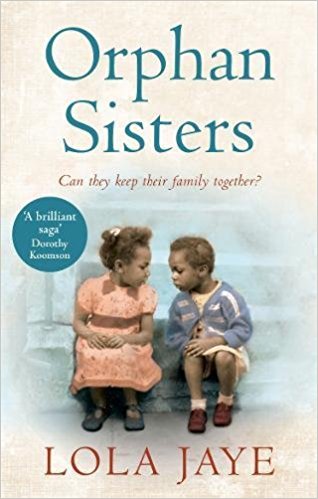
Orphan Sisters by Lola Jaye


Reviewed by Jan Speedie


Lola Jaye’s emotionally moving story traces the life, tragedies and survival of the orphaned Cole sisters in the unfriendly world of London in the 1950s – No Blacks, No Irish, No Dogs.

Tayo Cole and his family are excited at the prospect of a new life in London which is very different from their village in Nigeria. Tayo is hard working and provides well for his family but tragedy strikes with his unexpected death leaving his inexperienced young wife to cope. Their circumstances change and the sisters are sent to a cold, uncaring children’s home. Can the sisters stay together and surmount all the problems that lie ahead and make a new happy life for themselves?

Lola Jaye grew up in South London and has also lived in Nigeria and America. She has written four novels and a self help book which have been translated into several languages. She loves watching soaps and reality television which she believes helps with her writing.


Published by Ebury Press on 21st September 2017 in paperback at £5.99


The Soft(er) Side of Stephen King By Richard Warburton

Via YouTube.

Many of you will have noticed the posters for the latest adaptation of Stephen King’s It.  Some feature a sinister red balloon being proffered to a small boy while others show the eponymous killer clown’s grotesque face – a malevolent grinning monster.  This sort of thing sends me bolting to the nearest Cineworld while others avert their eyes and try to think nice thoughts.  However, for all you cinephiles who don’t ‘do’ horror, then Stephen King’s cinematic canon does offer pleasures that are not so reliant on scares and gore.

It was probably the success of The Exorcist that gave King his break.  William Friedkin’s occult shocker was the second most popular film of 1974 eventually becoming the ninth highest grossing movie of all time.  Publishing houses took note and signed the likes of Anne Rice and James Herbert.  Over sixty cinematic adaptations of his work have been filmed which have varied wildly in terms of quality and revenues.  Nevertheless, amongst the horror classics like Carrie or The Shining there are several sensitive and thoughtful films that may interest viewers put off by the King brand.

Discussions of this subject usually begin and sometimes end with prison drama The Shawshank Redemption.  No supernatural monsters here, just the human variety in a film that accents perseverance and hope in the face of institutionalised brutality.  Instead, I would consider Stand By Me, a tale of four young boys who set out into the woods to search for the body of a missing child.  The film captures something that Stephen King renders so well in his prose, that is the exhilaration, vulnerability and confusion of what it is to be a kid.  Ironically King masters these themes in It and the latest film does a solid job of conveying childish camaraderie in the face of undiluted evil.

Of course It is not for the squeamish so next I would turn to Hearts in Atlantis which stars Anthony Hopkins as an elderly psychic who becomes the confidante of his landlady’s son.  It’s a curiously old fashioned film that played poorly in cinemas and divided critics.  However, its whimsical charms should win over the less cynical while its supernatural elements never dominate what is really a simple coming-of-age story.

Dolores Claiborne is a sombre and profound psychological mystery starring Jennifer Jason Leigh as the daughter of the eponymous Dolores played by Cathy Bates.  Dolores is the prime suspect in the suspicious death of her frosty employer and her estranged daughter is not convinced of her mother’s innocence either.  The mother / daughter relationship is delicately teased out.  King’s empathetic depictions of women, something rarely appreciated in his writing, are on show here.  And, despite the gothic gloom, Dolores Claiborne tightens its grip over two mesmerising hours.

Horror fans would no doubt be disappointed if they watched these films based on their familiarity of King’s signature output.  They might take some solace from another prison drama, The Green Mile, with its graphic execution scenes but the film spends more of its time examining humanity and dignity than revelling in shock and gore.

There is more diversity to Stephen King than his reputation suggests.  If you are willing to dip your toe into an unfamiliar genre then reading the long and terrific novel of It would be a rewarding starting point.  The film adaptation is the first of two with the second part due to go into production next year.  And, if you are curious as to why horror is such a popular genre then the upcoming book Why Horror Seduces by Mathias Clasen should provide the answers.