Advice on still being a socialite when quitting smoking

If you’re in the process of quitting smoking but class yourself as a socialite — this quiz to discover your smoker profile from Nicotinell should help establish if you are indeed a social smoker — you may find yourself questioning what this will mean for your social calendar.

This guide will explain how you can continue to be a socialite without the need to smoke:

There are links between smoking and alcohol

Before we advise you about how you can continue to socialise while being smoke-free, it is important to point out the close link between smoking and drinking alcohol.

At the extreme, government data has found that up to 90 per cent of people who are addicted to alcohol will also smoke. Furthermore, smokers have been found to be more likely to drink and have a 2.7 times greater risk of becoming dependent on alcohol than non-smokers do.

In general, it is important to understand that both alcohol and nicotine act on common mechanisms found in the human brain.

When it comes to nicotine, the chemical compound will enter the bloodstream as soon as you smoke a cigarette and rapidly get transported to your brain. Once there, the nicotine will stimulate the brain by creating receptors which release chemicals that give a feeling of pressure. These receptors will increase in number as smoking becomes prolonged and your brain will become reliant on nicotine in order to release these feel-good chemicals.

However, the nicotine supply in your bloodstream will drop within 72 hours of your decision to quit smoking — those receptors won’t disappear that quickly though, so your brain’s chemistry will react to cause powerful cravings and strong emotional reactions. Persistence is key, as nicotine receptors will go away with time and your brain chemistry should be back to normal within three months of a quit.

In regards to alcohol, researchers believe this substance fosters feeling of pleasure. If true, this reinforces the effects of nicotine on the brain. There are suggestions that nicotine and alcohol will moderate each other’s effects on the brain due to the fact that nicotine stimulates while alcohol sedates.

Tips for socialising when on a quit-smoking journey

So, you have taken the first step and stopped smoking, but now face the dilemma of socialising in a scenario where you would have previously had a cigarette. Here’s how to stick to your goals and still have a good time:

Don’t put it off

You shouldn’t delay going out for a drink because you’re having doubts. Everything you did as a smoker, you can do as a former smoker. Holding off too long from social drinking after quitting can create a sense of intimidation. Plus, socialising with friends is an important part of your life. The sooner you teach yourself how to enjoy a drink or two without a cigarette, the sooner you’ll feel like your life is back to normal.

Have a pep talk with yourself

Where you go to enjoy a drink could very well trigger your smoking cravings. Before leaving the house or in the car, be mentally prepared by saying aloud, “I’m a former smoker.” Or try, “I don’t smoke. I’m healthier and happier without cigarettes.” The main point is to remind yourself that you’re a former smoker and that you don’t need to light up anymore.

Aim to have a social get-together where no smoking is involved

Instead of going to a place where people are likely to be smoking, why not invite your group of friends to your house instead? You can celebrate your smoke-free success with them. You’ll be able to control what is served which can help stop those triggers and completely avoid cigarettes in your smoke-free home.

Enjoy time with non-smokers

Non-smokers and friends who will be supporting your decision to stop smoking will definitely help. Who you choose to hang out with can help support your ex-smoking status. Slip-ups can occur when quitters are in the company of other smokers who may not be aware of how to support their quit attempt.

Invite a quit buddy to join you

A friend or family member can prove a huge helping hand as your quit buddy, so be sure to invite them along to whatever social event you’re attending. A quit buddy is someone who supports your quit. Should you encounter old smoking friends who ask you to join them, make sure they are aware of your situation so they can be respectful. Not only that, you’ll also have your quit buddy to hang out with.
 

The Business of Books: Blending Fact and Fiction – Jane Cable meets GP turned author Carol Cooper


1) How much of your working life does the business of books take up?

About half my working hours are now taken up with book-related activities. It’s not all writing, as there’s social media, marketing, research, and the rest.

The other half of the time, I teach medical students, do some journalism, and fit in a spot of charity work. I’m involved with Tamba (Twins & Multiple Births Association), Lucy Air Ambulance for Children, and APEC (Action on Pre-Eclampsia). I have more time these days because I’m taking a sabbatical from seeing patients. After three decades as a family doctor, it’s lovely to have a break. Before that, writing had to be done during evenings and at weekends, but now my writing doesn’t just get the ‘tired me’.


2) What’s your business model to earn a living from writing?

Like most journalists who fell into writing books, I didn’t set out with a business model. My dozen or so non-fiction books bring in more income than my two novels. But journalism is still a more important revenue stream for me than books. Then there are activities like TV and radio appearances, and occasionally work for PR companies. I could earn more if I did more doctoring, but I enjoy the change of pace that I’ve allowed myself.

While I don’t normally spend much on book marketing, I did engage a publicist for my second novel, Hampstead Fever. That probably helped get it into bookstores. It certainly spared me a lot of time and footwork.

3) What do you write and what do you consider to be your major successes?

I’m now concentrating on fiction. My first two novels, One Night at the Jacaranda and Hampstead Fever, are contemporary tales about dating, relationships, and family life. Set in London, they feature multiple viewpoints. Think of the film Love, Actually, and you’ll have good idea of the structure.

My non-fiction books are mostly on child health and parenting, but there are also two textbooks on general practice, co-authored with medical colleagues. I’m not ruling out writing another health book, but publishing has changed, especially for non-fiction because there’s now so much web-based information.

My major successes include writing for The Sun newspaper for the last 18 years as the Sun Doctor. My role is to write fast authoritative copy as needed when a health story breaks. I know some people are sniffy about tabloid journalism, but it’s a real skill being able to get ideas across in just a few words, and I work alongside some of the best in the business.

I’m also proud of my book Twins & Multiple Births: the essential parenting guide from pregnancy to adulthood. The first edition came out 20 years ago and the title is still going strong. It was also very gratifying when General Practice at a Glance received a British Medical Association book award.

With my fiction, I was thrilled this year when WH Smith picked Hampstead Fever for a front-of-store promotion in their travel bookstores. There’s nothing like your novel being in airports and stations to make you feel you’ve arrived!


4) Tell me about your latest project

The novel I’m now working on is a new challenge. It’s set mainly in Egypt where I grew up. While story covers nearly 70 years, and there’s only one point of view, it is still mainly about relationships. It’s the book I want to write.

Carol Cooper is a doctor, journalist, and author who turned to fiction after writing a string of popular health books. She lives in North London and Cambridge, and has three grownup sons. Find out more about Carol here:

Blog Pills & Pillow-Talk

Website drcarolcooper.com

Twitter @DrCarolCooper


The Holiday Home Industry and Brexit

Greenway – Agatha Christie’s holiday home

Whether you are new to the market or a holiday letting expert, you should be aware of the changes in the political arena that have resulted in a decline in the purchase of family homes abroad.

Staycation is the new vacation as booking a lodge in the lakes or renting a flat it Manchester replaces the annual trip abroad. But combined with increasing competition from owners renting, in order to offset mortgage and maintenance cost, getting those bookings has never been so important in the holiday home industry.

Commercial gas retailers Flogas, give us an insight into the holiday home market and what holiday home owners can do to maximise their profits.

How Brexit has affected the holiday home market.

With the current Brexit vote and negotiations are well underway with the European Union, attitudes towards holidays and purchasing homes abroad are changing.

Homeowners and Brexit

With this country being always welcoming and accommodating to Brits, Spain always appears to be a first choice when UK residents decide that they want to purchase a holiday home. In 2016, UK buyers made up 19% of home purchases in Spain by non-Spaniards – it’s quite an impressive figure considering how many nationalities choose to go there for their holiday. However, this figure has almost halved since 2008 when it stood at 38%, which begs the question why?

With economic and political uncertainty in mind, Brits are becoming more reluctant to take the plunge and relocate abroad. It’s found that recently, the decline of pounds has meant that people cannot afford to buy the holiday home that they’ve had their eyes on.

Holidaymakers and Brexit

The decrease of the pound has also influenced the attitudes of holiday makers. More people of Britain are opting to take a holiday within the country to save money. Although research showed that they are spending less money on their staycations that what they’re use to, so the income is coming in elsewhere. Foreign tourists are coming over to take advantage of the lower rate of the pound and boosting the UK economy in that way.

Because the implications of Brexit haven’t been fully covered yet, holidaymakers are feeling unsure in other areas too. As of now, Brits are free to travel throughout Europe without restrictions and with access to healthcare. However, this could all change and it will further affect our holiday habits.

How can you get more visitors to your holiday home?

If you already own a holiday home abroad, you may be witnessing visitor levels slowing. What can you do to encourage visitors to come and stay in your home?

Online Visibility

If you don’t have a website or blog, you could be losing out on many customers from around the globe that didn’t know about your site. Even a basic website that includes photos, customer reviews and contact information could boost your online presence and revenues.

Consider social media, as it’s  quite a successful way to show off your holiday home and increase interest, you can offer promotions such as competitions to get people ‘sharing’ and engaging with the company.

Creating memories

The atmosphere when a customer enters your holiday home is an important element because it’s something that stays with them and this is often mentioned in online reviews. To improve this; greet guests at the accommodation if you live nearby to provide them with keys and show them around the area, offer complimentary wine and provide a map of the local area and any tips for their trip.

Maintenance cost management

You may be weighing up your options for purchasing a holiday letting property or maybe, you are looking to remain profitable. Either way, it is important to consider the costs involved with maintaining a holiday home. Of course, utility bills and mortgage payments are often considered top of the list however, there are some that are often forgotten about: cleaning fees can be between £40 – £80 per booking, a welcome kit costs £10 – £15 an agency may charge you 20-25% of your monthly income and there are gardening and window cleaning costs on top of these too.

It seems that if you are aspiring to own a holiday home, you should invest in a home in the UK – where tourism is on the rise from both foreign tourists and UK residents. For holiday home owners abroad, ensure you are maintaining your online presence and managing your costs as effectively as possible. Hopefully the effects of Brexit will become clearer soon enough and the holiday home industry will know where they stand.

Sources

http://www.lowlandlettings.co.uk/what-are-the-weekly-running-costs-of-a-holiday-let/

http://www.telegraph.co.uk/business/2017/08/27/staycations-foreign-visitors-provide-brexit-boost/


The Deferred Academic By Richard Warburton

This summer I am awaiting the result of my MA dissertation.  It has been a testing year academically, a serious step up from the BA I completed last year.  Life as a student has come to an end.  My young colleagues will be starting out in their careers, but when I graduate I will be 45 years old.

The decision to resurrect my aborted academic pursuits came after redundancy and a long summer of doing little else but painting the house and listening to test matches.  Job hunting was arduous and unsuccessful.  My wife suggested some education and within five minutes of idle googling I had spotted an undergraduate course at the University of Portsmouth in film studies and creative writing – perfect.  Term began in less than a month and I had serious doubts whether they would be interested in a middle-aged man with a mixed bag of exam results and two hedonistic years in the early 90s at Swansea University.

Nevertheless they accepted me straight away.  I simply had to find some evidence of my A-Level results, apply for funding and buy an A4 pad and a pen.

Induction day was weird.  Suddenly surrounded by hordes of nervous and excitable teenagers I felt every inch the outsider.  Over the three years I watched them slouching about campus guzzling energy drinks and very occasionally visiting the library.  I had dreaded rubbing shoulders with today’s much-maligned youth but I found they were largely a delightful, if somewhat sensitive, bunch.  I became something of an essay guru and found much of my free time was spent reading their work providing advice, and correcting their free spirited approach to grammar and punctuation.

The academic life suited me and I did well from the start.  I had advantages though, including decades of watching and reading about film as well as more life experience to bring to the creative writing work.  The lecturers were awe-inspiring although not all of their audiences were so appreciative.  Attendances were poor in the mornings and I saw two people actually nod off in class.  My other key asset was a renewed fervor for learning.  When I dropped out of Swansea I was weary of lessons and timetables and the real world beckoned with its allure of independence and grown-up city life.  Twenty years later I was hungry again.

Lectures and seminars were the highlight of my week.  I contributed, took notes and asked pertinent questions.  The library was incredible with thousands of books on cinema.  Online resources were equally staggering and I immersed myself in as much of it as I could.  The student paper provided me with a useful outlet for decades of cinematic ruminations that manifested itself in over forty articles and reviews.  The editor was grateful for anyone who could write and published everything I sent him.

When I handed in my bound dissertation on The Existential Hollywood Hero I felt mildly bereaved.  Without any vital research to do or articles to write I felt distinctly uneasy at the prospect of re-joining the real world that had looked so enticing in my youth.  So with the blessing of a very understanding wife I applied for an MA in Film and Philosophy at King’s College London.  The work was much more demanding and the students all exceptionally bright.

Now I am sated.  No PhD for me, tempting as it is.  Other projects await.  Throughout my time at university, puzzled contemporaries would nod politely at my descriptions of the course then ask, “But what are you going to do with it?”  They are missing the point.  I’ve just spent the last four years having the most fun in my life.  Beat that.


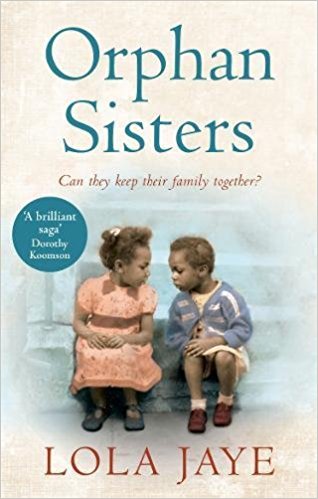
Orphan Sisters by Lola Jaye


Reviewed by Jan Speedie


Lola Jaye’s emotionally moving story traces the life, tragedies and survival of the orphaned Cole sisters in the unfriendly world of London in the 1950s – No Blacks, No Irish, No Dogs.

Tayo Cole and his family are excited at the prospect of a new life in London which is very different from their village in Nigeria. Tayo is hard working and provides well for his family but tragedy strikes with his unexpected death leaving his inexperienced young wife to cope. Their circumstances change and the sisters are sent to a cold, uncaring children’s home. Can the sisters stay together and surmount all the problems that lie ahead and make a new happy life for themselves?

Lola Jaye grew up in South London and has also lived in Nigeria and America. She has written four novels and a self help book which have been translated into several languages. She loves watching soaps and reality television which she believes helps with her writing.


Published by Ebury Press on 21st September 2017 in paperback at £5.99


The Soft(er) Side of Stephen King By Richard Warburton

Via YouTube.

Many of you will have noticed the posters for the latest adaptation of Stephen King’s It.  Some feature a sinister red balloon being proffered to a small boy while others show the eponymous killer clown’s grotesque face – a malevolent grinning monster.  This sort of thing sends me bolting to the nearest Cineworld while others avert their eyes and try to think nice thoughts.  However, for all you cinephiles who don’t ‘do’ horror, then Stephen King’s cinematic canon does offer pleasures that are not so reliant on scares and gore.

It was probably the success of The Exorcist that gave King his break.  William Friedkin’s occult shocker was the second most popular film of 1974 eventually becoming the ninth highest grossing movie of all time.  Publishing houses took note and signed the likes of Anne Rice and James Herbert.  Over sixty cinematic adaptations of his work have been filmed which have varied wildly in terms of quality and revenues.  Nevertheless, amongst the horror classics like Carrie or The Shining there are several sensitive and thoughtful films that may interest viewers put off by the King brand.

Discussions of this subject usually begin and sometimes end with prison drama The Shawshank Redemption.  No supernatural monsters here, just the human variety in a film that accents perseverance and hope in the face of institutionalised brutality.  Instead, I would consider Stand By Me, a tale of four young boys who set out into the woods to search for the body of a missing child.  The film captures something that Stephen King renders so well in his prose, that is the exhilaration, vulnerability and confusion of what it is to be a kid.  Ironically King masters these themes in It and the latest film does a solid job of conveying childish camaraderie in the face of undiluted evil.

Of course It is not for the squeamish so next I would turn to Hearts in Atlantis which stars Anthony Hopkins as an elderly psychic who becomes the confidante of his landlady’s son.  It’s a curiously old fashioned film that played poorly in cinemas and divided critics.  However, its whimsical charms should win over the less cynical while its supernatural elements never dominate what is really a simple coming-of-age story.

Dolores Claiborne is a sombre and profound psychological mystery starring Jennifer Jason Leigh as the daughter of the eponymous Dolores played by Cathy Bates.  Dolores is the prime suspect in the suspicious death of her frosty employer and her estranged daughter is not convinced of her mother’s innocence either.  The mother / daughter relationship is delicately teased out.  King’s empathetic depictions of women, something rarely appreciated in his writing, are on show here.  And, despite the gothic gloom, Dolores Claiborne tightens its grip over two mesmerising hours.

Horror fans would no doubt be disappointed if they watched these films based on their familiarity of King’s signature output.  They might take some solace from another prison drama, The Green Mile, with its graphic execution scenes but the film spends more of its time examining humanity and dignity than revelling in shock and gore.

There is more diversity to Stephen King than his reputation suggests.  If you are willing to dip your toe into an unfamiliar genre then reading the long and terrific novel of It would be a rewarding starting point.  The film adaptation is the first of two with the second part due to go into production next year.  And, if you are curious as to why horror is such a popular genre then the upcoming book Why Horror Seduces by Mathias Clasen should provide the answers.


Living with less: Do you Dare?

The decision to downsize never comes easy, but luckily, almost always it turns out to be the greatest thing. The mere thought of moving is horrifying enough, not to mention the planning, organization, and decision making along the way. Scary as it sounds, it is a venture that many people undertake for a reason and, as you can guess already, it is worth it. Same as for any big change in life, it is a process that is complicated and even exhausting, but on the other hand, a change of lifestyle in ‘’less’’ direction will turn out to be liberating and rewarding in so many ways.

Before the move

Moving starts weeks ahead, even months in some cases. Organizing a project big as this takes the time to make a detailed plan, especially when downsizing. Go through the rooms and slowly begin to say good bye by choosing the stuff that will not end up in your new home. If you are moving with your family, make sure you have an agreement on downsizing goals so that you could avoid misunderstandings and hurt feelings. Now is the time to picture the style of new home and to move forward by eliminating the stuff which will not fit in.

Determine your needs

Know your needs and decide on the spot what goes and what stays. For example, if you are moving from a house with three bedrooms to a condo with one, the math is simple. Assuming you know the measurements of a new home, make sure that your belongings will fit the place, especially big pieces of furniture. Make an inventory of essentials that you will require in your new place and get rid of the all the rest. Cruel thing to do, but if downsizing already, why not doing it right. Downsize on everything you own, including furniture, clothes, accessories or home appliances.

Monetize your efforts

One of the obvious benefits of ‘’less’’ is the lower cost of living in general. Since it is one of the most important motifs of downsizing, take a step further and earn some money by organizing a yard sale and cash in all the unwanted items. Being reasonable and consistent with this exhausting process deserves a reward, so treat yourself with some extra pocket money that you can wisely invest in your new home. Donate some stuff to charity and remember that your junk will bring a smile to someone’s face.

Assess new storage area

People often overlook or overestimate new storage area ending up with more stuff than planned in a less place than previously thought. By knowing measurements of storage places in the new home, you will know how many things to dispose of and avoid cluttering the space. However, it is possible that there won’t be enough room for all of your possessions. For that matter, consider renting a storage where you’ll store your belongings away, but still in the reach, if needed. Before you rent a storage check on their standards and safety issues, but rest assure that the most of the best affordable storage solutions provide good storing conditions as well as video surveillance.

Move

Make sure to move the furniture first and put it in its designated place. That way you will deal with the heaviest pieces in the very beginning and still have the energy for the rest of the stuff while at the same time you’ll get a better indication where the smaller items will go. Moving the furniture first will give you an immediate a sense of home plus, it will be easier to organize the rest of incoming stuff. Label the boxes while packing so that you can put them in their respective rooms when moving. Organize things as you unpack which won’t be much of the trouble if you bring only essentials.

Spruce up your new place

The new home is a chance for a completely new style and interior design. Now is the time to make your home functional and sophisticated by going minimal. Repurpose old furniture or have a new one that will be a better match. Make sure to get pieces with hidden storage, such as coffee tables, couches, etc. A clever use of space is a must so go vertical when storing things and install some nice shelves.

Make room bigger

Use tricks to make the room more spacious than it is. Uncover the floor and place smaller rugs. Uncover windows too and allow as many natural lights as possible. Place the mirrors on the walls and use lighter colors of fabrics. Choose stripes or some geometrical patterns since they elongate the space. A proper lighting will give a room completely new look in the evening hours. Avoid excessive accessory and beautify the room with minimal and tasteful decoration.

Conclusion

While still in the process of downsizing, no matter how scary it seemed at first, you will soon realize the advantages and the truth that lies behind the ‘’less is more’’. Changes are inevitable so why not changing for the better. Downsizing brings a relief regarding the expenses and provides a new opportunity to start over again somewhere else. Not to mention the joy of cleaning and simplicity of maintaining order in much smaller space. Whatever the reasons for downsizing are, be an optimist, embrace the change and take this chance to improve the quality of life.


By Ian Pearson


The Business of Books: A Sense of Place – Jane Cable on how fact and fiction can easily blur

Writers are inspired by many different things but for me it always starts with a place. A little over two years ago I found myself in the middle of the steam punk festival in Lincoln. People in amazing costumes were everywhere, breathing life into the city’s cobbled climbs and quirky coffee shops. It felt as though I had walked into the beginning of a novel and very quickly I realised that I had. It was just down to me to write it.

Last week I went back. The latest round of editing is almost complete – it won’t be the last, but I’m finally satisfied that the manuscript is almost in good enough shape to be found a home. I have a couple of agents in my sights and a shortlist of three publishers who take direct submissions and whose criteria it fits. This time I’m going to be very careful.

The story has two main locations, the city of Lincoln itself and the picturesque village of Winteringham on the banks of the Humber. I construct the settings for my stories very carefully; I know where the characters’ houses, flats – and barges – are; the places they work; the bars and restaurants they frequent and where my heroine Rachel goes running. In my own mind I create details so rich I inhabit the settings myself – so it comes as something of a shock when they are not quite as I remembered.

Much of the Lincoln part of the story takes place along the Fossdyke Navigation which joins the heart of the city to the River Trent. I think I surprised my husband by saying, “That’s Rachel’s flat” – and surprised myself by having forgotten it has a balcony overlooking the canal. But the story doesn’t need a balcony so I won’t be adding one. The apartment in my mind is so very real it would feel uncomfortable anyway.

I don’t think this is especially strange or odd – no more than is normal for writers anyway. The best of fiction is so much about the richness of the characters, to create them I think you need to actually walk in their footsteps, inhabit their world. For me, once I’ve grounded them in a physical setting, everything else falls into place. I am completely in awe of authors who can imagine and populate whole new worlds.

But I’m having to accept that my memory is far from perfect. I needed a male character who was a without doubt a local man so I picked an unusual surname from Winteringham’s war memorial. On a return visit to the museum in Lincoln I thought it such a co-incidence a Daubney was quoted on one of the display panels. When we arrived in Winteringham, the name wasn’t on the memorial at all. I read it three or four times with growing disbelief. Was another of my characters, the enigmatic Nick, up to his tricks again?

It seems so… either that or subliminal recall is far stronger than we think. I needed to name one of the properties close to the village centre. Not anything too twee, but something comfortingly rural, so I decided on Bramble Cottage. This visit I noticed that the alleyway running up the side of the houses is called Bramble Lane. I leave you to draw your own conclusions.