National Beer Day

It is National Beer Day, well across the pond in the USA it is, but I rarely need a reason to celebrate with a beer or cooking with one. Don’t be afraid to cook with beer, the Belgium’s have made an art of using beer much as the French would use wine. I think almost all aspiring food led pubs have included deep-fried fish in a beer batter or a steak and ale pie on their menus at some stage, and very nice they are too, more recently beer bread, ice cream and beer can chicken recipes have become popular with cooks and foodies. Virtually any recipe that calls for a liquid of any sort can be substituted with beer.

As a marinade for meat, fish or seafood, beer penetrates, flavours and tenderizes, it is less acidic than wine so the food can be left in the marinade longer, without cooking, and so increasing the flavour. In roasting or braising, beer used to baste the foods or as an ingredient in the basting sauce imparts a rich, dark colour as the sugar caramelise.

Beer is often thought of as a poor relation to wine but it is a complex drink made with up to twelve main ingredients, without including many additional aromatics. This leads to an incredible range, with around one hundred and thirty different styles of beer available to cook with and match with your food. So how do you pair food and beer? As with choosing a suitable wine you should try to complement with, contrast with or cut through the food flavours.  Complementing matches similar flavours like the slightly sour, dark crust of a pizza can be complemented by the traditional toasted malt flavours of a Pilsner style lager. Pilsners also complement spicier foods and drink well with Mexican style salsas.

If you want to try contrasting the food and beer flavours try a really good quality dark chocolate with a glass of Belgium cherry or raspberry Kriek, fruity lambic beers originally brewed by monks. The last way to pair beer is cutting, in which the carbonation levels of the beer, can lift flavours and cut through rich creamy dishes, try a really hoppy English style IPA with a chicken korma. Beer and cheese are perfect companions, the famous Welsh Rarebit is little more than melted cheese and beer on toast and Beer and Cheese Soup is delicious. In batter a live ( not pasteurised ) beer can be substituted for yeast and water in the result is a crisp flavoursome coating for deep-fried cod, salmon, and squid.


As the choice at first might feel a little confusing it really is down to your own palate, treat blonde/golden beers and lagers as you would white wines and the darker, stronger bitters and porters as reds. As with wine when you boil and reduce beer you will increase some of the flavours and loose others, you will also evaporate off all of the alcohol. If you are using beer as a substitute for stock remember reducing a strong, intensely hoppy beer will leave a bitter residue. A sweetish mild or stout with little hopping will produce a fine gravy. A top tip is to reserve a little beer and add it when the cooking is finished to lift and enhance the beer flavours. A final note never cook with a beer you would not drink.


Light Larger style beers – are ideal for batters as the carbonation produces a light, airy result and the sugars caramelise to a deep golden colour.

IPA Indian Pale Ales – When pairing IPA with food there are three flavours to match your food to; the bitterness,  the herbaceous hoppy notes and the rich caramel. Hoppy flavours are great with spices and at the opposite end of the flavour profile light fruits. Bitterness amplifies salty and umami flavours and has a cooling effect making a terrific match for spicy Asian cooking. The caramel flavours will compliment inherent sweetness in a dish like caramelized onions or the crispy skin of roast chicken. The hop acids and carbonation make IPA’s great palate cleansers to take on even the fattiest deep-fried dishes.

Traditional Ales – use in bread, pies and stews, the Belgium classic Carbonnade Flamande is very similar to a Beef Bourguignon with beer substituted for wine.

Stouts and Porters – Stout is often used in rich flavoured mustards and steamed steak and oyster pudding is a classic made with Guinness. Porters are dark brown in colour, sometimes almost black in the heavier roasted versions, their depth of rich flavour, medium body and lower level of bitterness mean they are a perfect match for grilled and barbecued food ( be it burgers, steaks, chicken, any kebabs or even seafood) will pair perfectly with a porter where the roasted notes in the beer really match up with any charred and caramelised flavours produced when cooking.

Pilzners – Pilsner is perhaps the most versatile beer to match food with. It has the strength of flavour to pair with Mexican, Thai and other fiery Asian foods, but it won’t overwhelm more delicate dishes like shellfish or fresh goat cheese. It’s great with burgers or barbecue and perfect with pizza. The hops and carbonation work to keep your palate clean and it can also be a wonderful accompaniment to very light desserts. 

Wheat Beer – traditionally used in Waterzooi, a fish stew from the Flanders region of Belgium thickened with egg yolks and cream and the favourite of Charles V, the Holy Roman Emperor, born in Ghent. Wheat Beer is also ideal for batter mixes.

Speciality Beers – fruity lambic beers in chocolate cakes and puddings and raspberry or sour cherry kriek beers with roast duck and fowl.

This lovely recipe pairs two fantastic flavours with fresh mussels and is perhaps my favourite of all the mussel dishes I regularly cook. There is something about the combination of the pungent braised chorizo and aromatic, slightly bitter, beer with the cooking liquor of the mussels which creates a wonderful broth in which to dip great chunks of freshly baked crusty bread. For the beer I would naturally recommend Liberation IPA here in the Channel Islands but Adnam’s Broadside, Fuller’s London Pride or Moorland Old Speckled Hen all give great results.
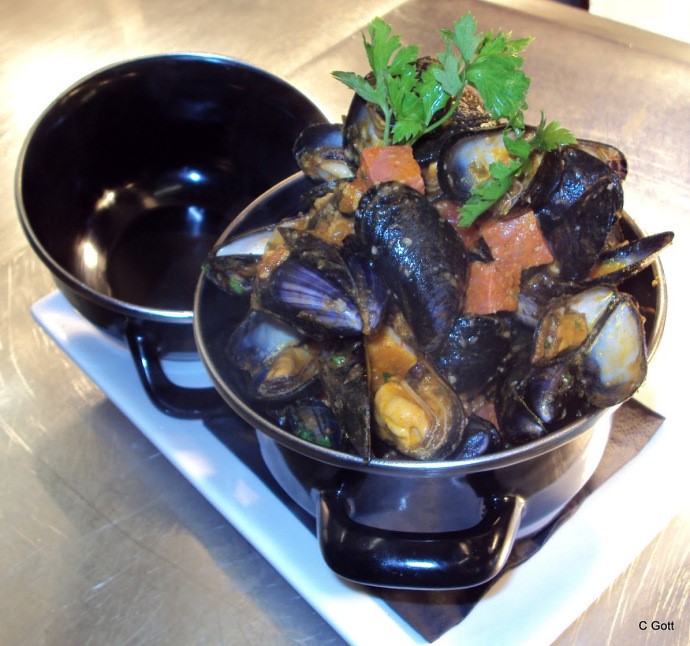
 Mussels and Chorizo 

Mussels with Beer and Chorizo Sausage                            generously serves 6 people

2 kg fresh Mussels
140 gr Braised Chorizo
A good sized nugget of Butter
A slug of quality Olive Oil
6 large Shallots, peeled and thinly sliced
3 cloves of Garlic, peeled and crushed

300 ml of deep flavoured Beer
2 tablespoons Tomato Puree
A good handful of Parsley, washed and finely chopped
The juice of 1 freshly squeezed Lemon
Freshly ground Black Pepper


Allow 500 gr to 750 gr of mussels per person for a generous portion. To prepare your mussels first rinse them in plenty of cold running water and throw away any mussels with cracked or broken shells. Give any open mussels a quick squeeze, if they do not close immediately, throw away as well as they are dead and not to be eaten. Then using a small knife scrape the shell to remove any barnacles or dirt and pull out any beards by tugging towards the hinge of the mussel shell. If you intend to cook later that day, store in a plastic container in the bottom of your refrigerator covered with a damp tea towel.

In a large, heavy bottomed pan melt the butter and add the olive oil. Add the shallots and sauté for about ten minutes until they are soft and gently coloured. Turn up the heat and add the garlic, tomato puree, chorizo and a generous few turns of the pepper mill. Stir well and cook for two minutes. Pour in the beer, stir and bring to the boil before tipping in the mussels. Cover with a tight fitting lid and steam for five minutes until the mussels are all open. Remove the lid and simmer for two more minutes to slightly reduce the cooking liquor. I like plenty of the cooking juices to mop up with lots of crusty bread. Finish the mussels with the lemon juice and lots of parsley and serve.

Divine Chocolate & Christian Aid launch their 15th annual Poetry Competition for children

poetry competition, childrenDivine Chocolate, the Fairtrade and farmer-owned chocolate company, has launched its 15th annual national Poetry Competition in partnership with Christian Aid. The poetry competition aims to take young people on a voyage of discovery about the world of chocolate, cocoa farmers and Fairtrade, firing their imaginations and encouraging their creativity.

The theme for 2017’s competition is ‘Sharing tastes Divine’, encouraging entrants to think about the joy of tasting and sharing chocolate with friends, and the fair price and a share of the profits farmers receive too.

Leading the judging panel is Laura Dockrill, author of the Darcy Burdock book series and a young and talented performance poet, author/ illustrator and short story writer.

Laura says; “I adore original writing. I look for poems that take brave risks, where an idea jumps off the page and is explored through beautiful language, description and form. Poems that come from the heart, that are full of feeling. I feel so privileged to be reading new work for the Divine Chocolate & Christian Aid Poetry Competition and can’t wait to read the submissions with a lovely cup of tea!”

Leading the judging for the Welsh language panel is Anni Llŷn, Children’s Poet Laureate for Wales.

As well as cherishing chocolate, the competition encourages young people to develop a greater understanding of where their food comes from, the people behind it and the potential challenges facing our food industry. Educational resources are available from Trading Visions, the sister charity of Divine Chocolate including lesson plans, videos and more, including a day in the life of Raphael, the son of a cocoa farmer in Ghana.

The judge’s pick of the best poems in each category will win a selection of gifts including book tokens and tasty treats from Divine. For more information on the competition and Divine’s story visit www.divinechocolate.com/uk/poetry


The Divine Poetry Competition is open to UK&I residents aged 7+ years. Closing date 30.04.17. Terms and conditions apply.

Entry forms and poems must be returned by 30th April 2017 to:

  • English poems by emailpoetry@divinechocolate.com
  • English poems by post: Poetry, Divine Chocolate, 4 Gainsford Street, London, SE1 2NE
  • Welsh poems by emailcymru@cymorth-cristnogol.org
  • Welsh poems by post: Cystadleuaeth Barddoni Divine, Cymorth Cristnogol, Llys Porth yr Eglwys, 3 Heol yr Eglwys, Yr Eglwys Newydd, Caerdydd CF14 2DX

The winners of the competition will be announced and read by Laura on Divine Chocolate’s YouTube channel after the closing date of the competition.

Laura Dockrill was named as one of the top ten literary talents by The Times and one of the top twenty hot faces to watch by Elle magazine. Her sassy and unique way with words has captivated audiences everywhere from gigs and festivals including Glastonbury and Latitude, to radio and TV programs such as Woman’s Hour, Newsnight and BBC breakfast. As well as performing, Laura now as an impressive eight books under her belt, including the Waterstones shortlisted Darcy Burdock series which has been translated into 12 languages. Currently she is working on a script for a film, writing a new YA novel, and has even taken her hand to songwriting. In the words of Vogue magazine, ‘Everyone’s falling for Laura Dockrill.’

Find out more about her at www.lauradockrill.co.uk. Follow her on Twitter at Twitter.com/LauraDockrill.


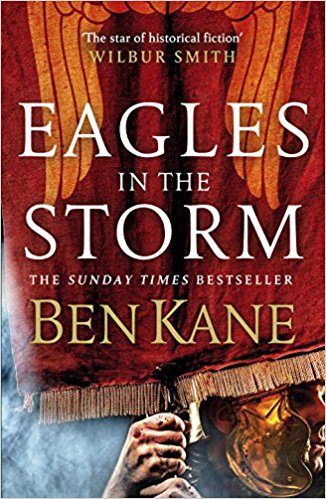
Eagles in the Storm By Ben Kane. Review – Jan Speedie


pic 1This is the final part of Ben Kane’s trilogy about the Roman invasion of Germany in AD15. Centurion Tullus will not rest until Arminius is dead and his old legion’s eagle is liberated.

Arminius, the crafty and charismatic tribal leader is determined to raise another large army to fight and destroy Germanicus and his Roman Legions. Can he use all his charm and resourcefulness to persuade the tribes to agree to another battle against the Romans?

The huge Roman army is frustrated by the long, cold wait for the planned spring invasion of Germania. Germanicus and Tullus carefully plan their strategy for the defeat of Arminius and being reunited with the 18th legion’s eagle – a perilous and bloody mission for all.

Once again Ben Kane is a master storyteller, the historical detail is amazing – death, destruction and bloodshed are everywhere.

Ben Kane was born in Kenya but educated in Ireland. Following University in Dublin he travelled the world extensively enjoying his passion for ancient history. He lives with his wife and two children in North Somerset.


Published by Preface in hardback, priced £12.99


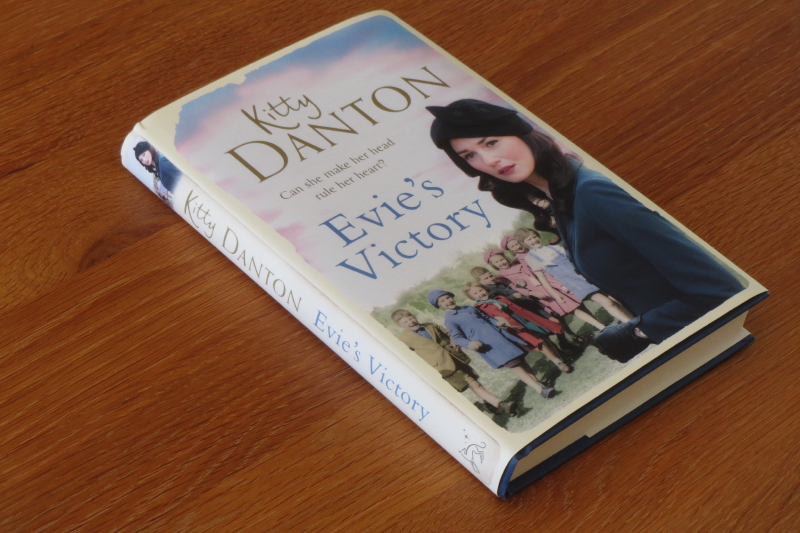
Review of Evie’s Victory by Kitty Danton


pic 1. Frances 

Last year I reviewed the first two books in The Dartmoor Chronicles trilogy and finished up by saying I was looking forward to reading the third book in the series. So I’m happy to see that Evie’s Victory by Kitty Danton (published by Orion) will now be available in hardback priced at £19.99 from 6 April 2017.


As I said before if you like the idea of reading about everyday life in a small Devon village during the second world war, then you need look no further than this trilogy. Kitty Danton was born and grew up in Devon, knows the location well and captures the atmosphere of village life brilliantly. Her portrayal of life on the home front with its deprivations, its highs and lows, and its small victories is also well done.


Again as I said before, I’m less convinced by the author’s need to detail every last thought process, decision and action of the main character Evie. Less would definitely be more in this book, as in the previous two. And yet, it is so easy to identify with Evie, to wish her well and to want to read to the end to see whether everything works out or not.


Evie’s Victory, like its predecessors Evie’s War and Evie’s Allies is a heartwarming read and full of nostalgia for a period which is not far short of 80 years ago.

Evie’s Victory by Kitty Danton (published by Orion) £19.99.


Debra Messing ‘Pressured’ to Go Nude in A Walk in the Clouds

Debra_Messing_at_the_2009_Tribeca_Film_FestivalDebra Messing has revealed she was “pressured” to shoot a nude scene in 1995 film A Walk in the Clouds by the director Alfonso Arau and the film’s producers.

The Will & Grace star starred opposite Keanu Reeves in the film, it was her first major film and was not a pleasant experience. She also said that she contacted her agent about the directors request and was then informed she would likely be fired if she said no.

She went on to say that she was berated after approaching Arau about the scene. “Your job is to get naked and to say the lines. That’s it,” he reportedly said. When the time came to film the scene the filmmaker made her feel uncomfortable “He lifts (the sheet up), scans my naked body, then drops the sheet on top of me like a used Kleenex,” she said at the MAKERS conference in California, “He walks away without a word…The whole thing was a power play, a game. And the goal, to demean me, to strip me of my power and make me feel on a cellular level his dominance over me.”


In the end only her back was exposed in the film. The 48-year-old actress also reportedly had issues with Alfonso after he berated her for how she looked.

“How quickly can we get a plastic surgeon in here’, ‘Her nose is ruining my movie! I can’t do this! Look at this!”‘ Alfonso reportedly said.

Messing was “frozen, horrified, mortified” and “felt deep shame” about her Jewish heritage after his comments.

How To Have More Than 100 Titles Published

the-business-of-books-interviewswithjanecable
This week I talk to multi-published and multi-talented author and writing tutor, Karen King.


How much of your working life does the business of books take up?

The short answer is all of it! Writing – and teaching writing – is how I earn my living.  So every day I’m either writing, visiting schools to talk about writing, running a writing course, marking writing students’ assignments or doing social media about my books.


What’s your business model to earn a living from writing? 


Keep writing. Be flexible. Be aware of the market. Be dedicated. I’ve often worked to commissions so I’ve had to be adaptable, to work to publishers’ briefs and keep track of current trends. As I earn my living from writing it’s a priority for me. Writing comes first, ironing and cleaning is way behind. I had four young children when I first started writing so worked around them, early in the morning, evening and late at night. Writing for magazines meant I had deadlines to work to and, at first, this was the days before email so I had to write up my story/article or whatever, and get it in the post often within a few hours.

karenking How To Have More Than 100 Titles Published

What do you write and what do you consider to be your major successes?
I’ve been a published writer for over thirty years now and for the first twenty years I wrote solely for children. I started off my writing career writing for teen magazines like Jackie, Patches and Loving then moved on young children’s magazines such as Thomas the Tank Engine, My Little Pony, Barbie and Sindy. I wrote photo stories, comic strips, short stories, articles, puzzles, the lot. I even wrote a horoscope page and a problem page. Alongside this, I wrote children’s books. Now I tend to write mainly YA and chicklit. I was really delighted when Accent Press contracted me for three chicklit novels, and offered to republish my backlist too. They have such a great reputation and are a delight to work for. That’s my major success so far.

Tell me about your latest project.

I’ve just finished my third chicklit for Accent Press. The second one comes out in July, it’s called The Cornish Hotel by the Sea, and the cover is so lovely I keep looking at it. Accent are also republishing my YA Perfect Summer on 10 May. It’s got a fab new cover and has been completely revised. I’m really excited about it as it deals with two themes close to my heart, the pressure society puts on people to have perfect looks and how people with disabilities are treated. The tagline is ‘In a society obsessed with perfection, being different is a crime’ so that gives you a big clue to the plot.


Author Bio

Karen King is a multi-published author of children’s books, YA and romantic fiction. She has had 120 children’s books published, three romantic novels and several short stories for women’s magazines. She is also a writing tutor. Her YA Perfect Summer is released on 10 May and her second chicklit, The Cornish Hotel by the Sea will be released in July.

Contact links

www.karenking.net

Amazon Author Page

Karen King Children’s Books Facebook

Karen King Romance Author Facebook


All the world’s a stage but there’s nothing like home grown and local. by Maya Pieris


And not just food! Plays and poetry, in playwright David Edgar’s opinion, are natural bedfellows and I would agree, as for this article I’m deserting my preferred area of poetry for plays, in particular the community play. And where I live we are not short of excellent examples.

Having just been at a NODA awards dinner, where the Marine Theatre, Lyme Regis, won a regional award for its 2016 community production of The Tempest of Lyme, I’d say the amdram world is very much alive and high kicking.


The community play owes a debt to Ann Jellicoe, actor, writer and director, who inspired the community play concept in London before moving to Lyme Regis with her artist husband Roger Mayne. For Jellicoe, the community play had to be the result of a long period of research with the chosen community in order to artistically embed the subject matter of the play, with the people who were to perform it and in the location. And the female perspective is often central, as in her play Western Women, which looked at the role of women in the Siege of Lyme during the Civil War.

At this very moment, cast members from Dorchester: to Lyme, taking in Bridport on the way, are at some stage in production for three community plays, a scene no doubt repeated around the country. The Lyme Regis and Dorchester plays are using community histories as their starting points. For Lyme’s Marine Theatre this is to be the Monmouth Rebellion, a pivotal period in West Country history especially in Devon, Dorset and Somerset, and one which still lingers in folk memory and in place names. A lot of scene setting is being done beforehand, both for the theatre community and the potential audience through talks, workshops and other theatre-based events which allow funds to be raised as well as raising a wider awareness of the play. And the local press are helping to get the town in the “mood” by running a series of food related columns devoted to 17th century recipes.


The Bridport play has taken as its story the idea of a flea circus led by Madame Celine and has ukuleles at the musical heart showing how varied the subject matter can be for a community play but all sharing community as the starting point. For more information about these three community plays look on their websites. And come to all if you can.


www.crowdfunder.co.uk/monmouth-lyme-regis-community-play-2017

www. ukuleleopera.org.uk

www.dorchestercommunityplay.org.uk


British Book Awards: Books of the Year shortlists announced

thebritishbookawardsThe six category shortlists for the 2017 Books of the Year Awards were announced at the 2017 London Book Fair by Chair of the Judges and Contributing Editor of The Bookseller Cathy Rentzenbrink who said “there’s innovation, experimentation, good old-fashioned story-telling and beautiful production values.”


2016 marked a step-change in the British Book Industry Awards.  A complete revamp of the Books of the Year, creating four new categories – for Children’s, Début Fiction, Fiction and Non-fiction – with an overall Book of the Year winner, was introduced to celebrate the books that best demonstrated the real value of publishing; a close collaboration between publisher and author that culminates in something extraordinary for the reader. This year, industry magazine The Bookseller, which runs the awards has acquired the British Book Awards, meaning that it will run as a unified event for the first time since 2004. Now known as The British Book Awards (or “Nibbies”), the 2017 ceremony is further expanded to include additional book awards:Crime and Thriller titles will have their own category, while non-fiction is split into Narrative and Lifestyle.


The winners will be revealed at a glamorous awards ceremony on Monday 8 May at Grosvenor House in central London which will bring together authors, publishers, booksellers, librarians and literary agents for a night celebrating the entire book industry.

The shortlists, which consist of six books in each of the six categories and which uniquely honour not just the author and illustrator of a title but the entire publishing team, are:

Books of the Year – 2017 shortlists

Fiction BOOK OF THE YEAR

Days Without End by Sebastian Barry (Faber & Faber)

The Sellout by Paul Beatty (Oneworld)

The Muse by Jessie Burton (Picador)

Cartes Postales from Greece by Victoria Hislop (Headline Review)

This Must Be the Place by Maggie O’Farrell (Headline)

The Essex Serpent by Sarah Perry (Serpent’s Tail)


Debut BOOK OF THE YEAR

The Trouble with Goats and Sheep by Joanna Cannon (Borough Press)

The Girls by Emma Cline (Chatto & Windus)

My Name is Leon by Kit de Waal (Penguin General)

What Belongs to You by Garth Greenwell (Picador)

Five Rivers Met on a Wooded Plain by Barney Norris (Doubleday)

Golden Hill by Francis Spufford (Faber)


Crime and Thriller BOOK OF THE YEAR

The Widow by Fiona Barton (Bantam Press)

Dodgers by Bill Beverley (No Exit Press)

Night School by Lee Child (Bantam Press)

Lie With Me by Sabine Durrant (Mulholland Books)

Conclave by Robert Harris (Hutchinson)

I See You by Claire Mackintosh (Little, Brown)

Non-fiction: Narrative BOOK OF THE YEAR

Mad Girl by Bryony Gordon (Headline)

When Breath Becomes Air by Paul Kalanithi (The Bodley Head)

The Outrun by Amy Liptrot (Canongate)

East West Street by Philippe Sands (W&N)

The Good Immigrant, ed by Nikesh Shukla (Unbound)

Born to Run by Bruce Springsteen (S&S)


Non-fiction: Lifestyle BOOK OF THE YEAR

Hello, is this Planet Earth? By Tim Peake (Century)

Sidemen The Book by The Sidemen (Coronet)

The Unmumsy Mum by Sarah Turner (Bantam Press)

Five on Brexit Island by Bruno Vincent (Quercus)

Lean in 15: The Sustain Plan by Joe Wicks (Bluebird)

The Little Book of Hygge by Meik Wiking (Penguin Life)


Children’s BOOK OF THE YEAR

The Christmasaurus by Tom Fletcher, Shane Devries (illus) (Puffin)

Oi Dog! Kes and Claire Gray and Jim Field (Hodder)

Nadiya’s Bake Me a Story by Nadiya Hussain, Clair Rossiter (illus) (Hodder)

The Girl of Ink and Stars by Kiran Millwood Hargreave (Chicken House)

Harry Potter and the Cursed Child by J K Rowling, John Tiffany and Jack Thorne (Little, Brown and Pottermore)

The World’s Worst Children by David Walliams and Tony Ross (Harper Collins Children’s Books)

The category winners will be decided by six panels of judges, and a separate panel will go on to choose the overall Book of the Year. The category winners and the Book of the Year will be announced at the awards ceremony on 8 May 2017.

Comments from the judges:


Cathy Rentzenbrink, chair of the judges said: “What a delight it is to be celebrating the huge variety on offer from UK publishing. Our shortlists are full of unleashed imaginations, smart ideas, brave new worlds and personal stories tamed on to the page. There’s innovation, experimentation, good old-fashioned story-telling and beautiful production values. It is a joy to judge this prize and to be able to consider every part of the journey from the author’s mind to the readers’ hands.”


Sarah Shaffi, Online Editor at The Bookseller and deputy chair of judges said: “At the core of the 36 fantastic books on our shortlist are great writing and great stories, which are illuminated by passionate authors, agents, publishers, retailers and more who help get the book from dream to reality. Celebrating the work of an entire team is key to our awards, and it’s wonderful to be able to shine a light on the many people involved in helping a book succeed.”


Produced by leading industry magazine The Bookseller, the British Book Awards represent a high point in the book trade’s calendar, with winners including Publisher of the Year, Book Retailer of the Year, and Independent Bookshop of the Year. TheBooks of the Year awards recognise the publishing as well as the books, with both author and publisher as recipients of the prize.