What Essential Things Actors Can Learn From My Acting Novel, Where The Light is Hottest.

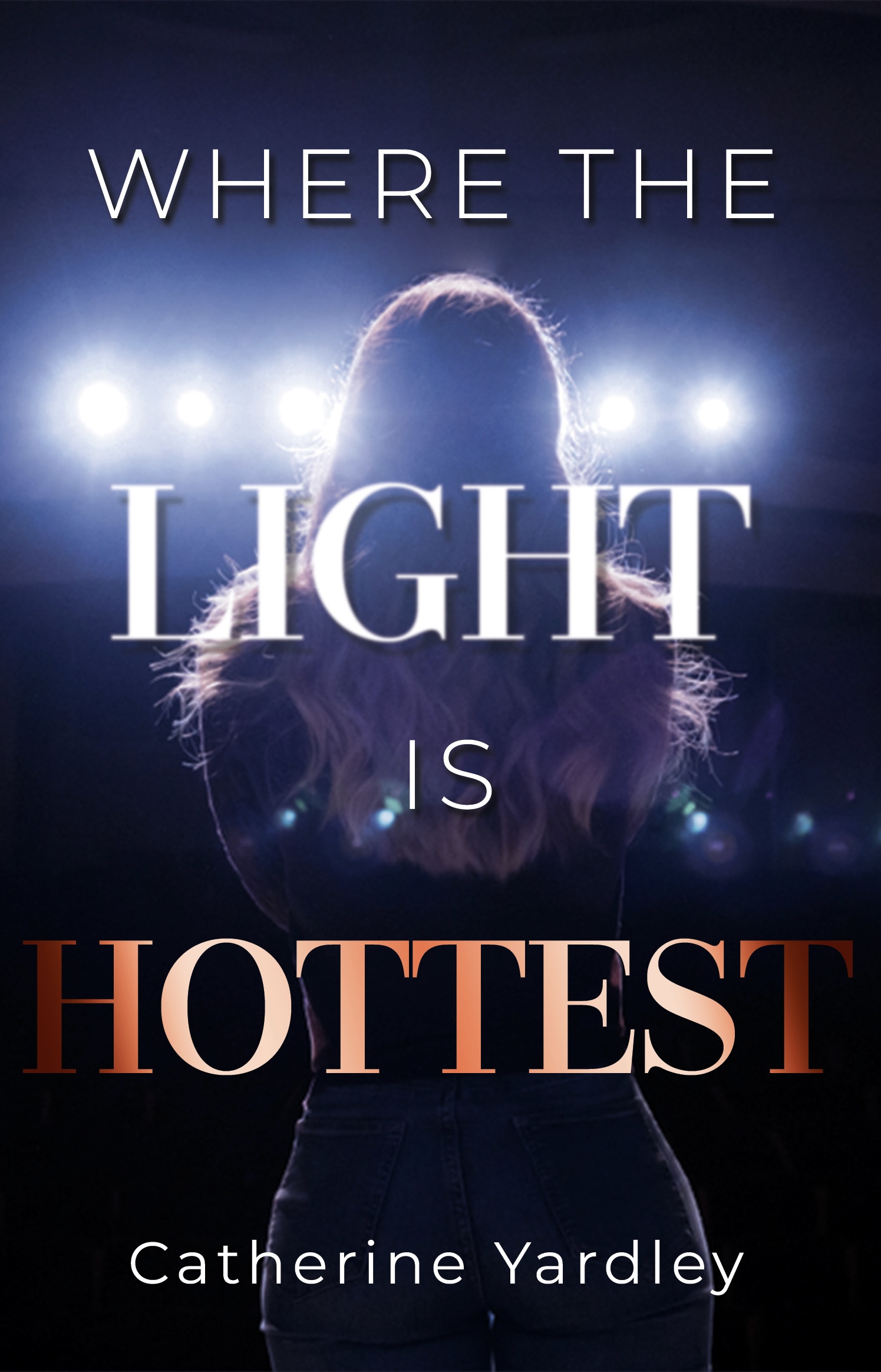
In my novel, Where The Light is Hottest, Natasha Jones makes it as an actor. Going from small-town Scotland to big-time Hollywood. I was an actor for over fifteen years. I acted opposite Eddie Marsan in Junkhearts and performed on the West End in And Then They Came For Me. A play based on the life of holocaust survivor, Eva Schloss, who sadly passed away recently.

My own journey as an actor is similar to Natasha’s journey as we were both born in small towns in Scotland and moved to London to ‘make it.’ The difference is that I did not become a Hollywood superstar! You can read about why I put acting on the back burner here. I also worked as a director, casting director and producer. I still have a toe in the industry in general. Here are the essential things actors can learn from my true-to-life novel. If you want to know the truth about the film industry and acting then I recommend that you read it. It is available from Kindle Unlimited, paperback, ebook and from your local library.

Natasha’s persistence.

Natasha does not give up. That is what makes her successful. Most people who fail at acting do so because they quit. Especially as people get older and get sick of the erratic lifestyle. You lose 100% of the chances you do not take. The best way to become successful is not to quit. You can take time out, but get back to it.

Where The Light is Hottest, Catherine Yardley, Balavage

Keeping her goal in mind.

Natasha focuses on the win. She knows what she wants and what she needs to do to get there. When you focus on a goal it stays in your mind. You work towards it without even knowing sometimes. Read the trades like The Stage, know what is being cast. Network.

Perfecting her RP accent.

You need to be able to do a good RP (received pronunciation) accent. You should also be able to do a good American accent. I was once at an audition and they saw I put that I was good at an Australian accent on my CV. I had never done one before, but I had to do it on the spot. Thankfully, I passed, but it is better to be prepared.

Putting herself out there.

You should be proud at your courage. To choose a creative life is brave. It can be a hard life and a lot of people would never put themselves out there. It is hard to be on stage and make yourself vulnerable. To go to auditions and face rejection again and again. Do it, and be proud. Putting yourself out there is the only way to become successful.

Making her own work.

Natasha starts a production company and starts making films with her friends. Even the best, and most successful, actors can be out of work for years. We live in a new world and making your own work on TikTok and Instagram can get you seen and make you money. YouTube is another great option. I made a comedy web series which a casting director saw and then they cast me in a few things. Acting has never been more democratic than it is now. It is not easy to make successful social media accounts, but it is possible. My socials are below if you want to follow me. I will follow you back.

Not forgetting to actually live.

Being an actor is all-consuming. It feels like if you step off the treadmill then you might miss an audition or a job. I certainly thought that and I put my life on hold too much. I remember I went skiing once and my agent called me when I was up a mountain. I seriously considered jumping on a plane home, after skiing down the mountain, of course. I am glad I saw sense and turned the job down. Life is for living. Life experience also makes you a better actor.

I also wrote a book on how to become a successful actor. It has lots of great information. You can buy it here or get it on kindle unlimited. Thank you for reading.

Tweets by Balavage

@catherineby.bsky.social

https://www.instagram.com/frostmag

https://www.threads.net/@frostmag

https://www.facebook.com/profile.php?id=100063463605581

When your child is diagnosed with epilepsy you feel that the bottom has fallen out of your world

‘When your child is diagnosed with epilepsy you feel that the bottom has fallen out of your world…’ 

Finding a diagnosis for your child, particularly for complex neurological conditions, such as epilepsy, can be a long and arduous process for many families in the UK.  

Highlighting the desperate need for more information and support for those facing a new epilepsy diagnosis, one mother, Sarah, has bravely shared her reaction to finding out her young daughter has the condition in a heart wrenching open letter to the families of other children and young people dealing with the same. 

‘I know that you may feel that the bottom has fallen out of your world and to an extent it has, but there’s a safety net. Don’t lose sight of your child throughout all of this…their diagnosis is a part of them but not all of them.’ Sarah, Lexi’s mum

There are more than 100,000 children and young people living with epilepsy in the UK today, and for many, support at the point of diagnosis is crucially lacking. National charity, Young Epilepsy, aims to change that by providing tailored information and support to children, young people and their families in the UK at the point of diagnosis. 

For Sarah, finding out her daughter had epilepsy was a moment of mixed emotions: ‘When the consultant told me she has epilepsy it was a combination of feelings from ‘Oh my gosh, my child’s got this diagnosis’ to vindication, I was right! 

When you’re saying these things and people are almost persecuting you and saying that you’re parenting poorly to actually have an answer to what is happening with your child it was like all of the things slowed into place.’ 

Around 8,500 children and young people are diagnosed with epilepsy each year in the UK. Receiving an epilepsy diagnosis can be frightening, isolating and overwhelming. Children and young people, along with their families and carers, need help and support understanding their new diagnosis and how it will impact their lives. A key barrier many will face is a lack of information following their epilepsy diagnosis, often leading to fear, worry and anger and adversely affecting coming to terms with the diagnosis. 

The road to an epilepsy diagnosis for Sarah and her daughter Lexi was sadly filled with uncertainty, ‘I knew something was wrong with Lexi for a long while before I was taken seriously by professionals.’  

‘I kept taking Lexi to the doctors because I felt that I had observed some absences. Each time I was told there was nothing wrong and I worried too much. One day I got a panicked telephone call from the school. I was told to pick her up and take her to the doctors immediately and demand that further tests were undertaken. 

Months later, we were told there was a confirmed epilepsy diagnosis. The consultant carried on speaking, but I didn’t hear anything. I felt my world falling away around me.’ 

For many an epilepsy diagnosis can feel frightening. Sarah described being told her young daughter had the condition in the midst of a busy clinic appointment without the right support leaving her feeling scared and confused, ‘my first question, I’ll be very honest, was is she going to die?’

When a child is diagnosed with epilepsy, families can often feel overwhelmed and unsure about the future. Trusted information and guidance are essential for newly diagnosed children, young people, and their families. Young Epilepsy strives to develop easy-to-use, accessible, relevant, and evidence-based information to ensure no child or young person feels alone when they receive their diagnosis.  

Lexi is now 14 and continues to have frequent absence seizures, which affect her schooling and daily life. Sarah explains: It often feels like we’re navigating this journey alone, which is why the support we’ve received from Young Epilepsy has been crucial. They’ve provided us with the resources, community, and understanding that we needed during some of the hardest times.’

For any family who’s just received an epilepsy diagnosis, my advice is to reach out for support. Find organisations like Young Epilepsy, connect with other families, and never stop advocating for your children.’ 

National charity, Young Epilepsy, is there to help support families receiving an epilepsy diagnosis and this Christmas, they are raising money to develop new, vital resources with information and support specifically designed for children and their families dealing with a new diagnosis of epilepsy. 

This vital support will help provide a lifeline of vital, relevant and timely support about epilepsy, diagnosis and living with the condition helping to support self-management and confidence and ultimately reducing the fear a diagnosis can bring. 

Thanks to the Young Epilepsy Big Give campaign, for this week only (3-10 December) every pound donated is worth DOUBLE! To double your donation visit Help for children newly diagnosed with epilepsy 

Young Epilepsy provides a host of information and advice for young people, families, clinicians and more on their website www.youngepilepsy.org.uk 

Interview With The Commuter Author Emma Curtis

I finished reading The Commuter in a day. I raced through it. It’s a brilliant domestic thriller which had me hooked from the very first page. Here’s my interview with Emma.

The Commuter is your seventh novel. How does that feel? It’s a huge achievement.

It feels like a huge achievement! I started writing, submitting and getting rejections when I was in my late twenties, found an agent in my late forties and published my debut when I was fifty, so I definitely put the work in. I still sometimes pinch myself. 

Does the writing get easier?

I think the writing does, the editing doesn’t. It’s a long hard slog full of dead ends, frustrations and moments when I want to run away from it all. But when it’s finally signed off the satisfaction is huge. Writing the first draft is such a pleasure. If only the first draft was the last!

Where did the idea for come from?

I’ve lived in London and used the tube all my life and I’ve always enjoyed the free newspapers. The Rush Hour Crush feature in the Metro is so intriguing. When I was a teenager I used to look for Mr Darcys, now I scan faces and wonder what I’d write if I fancied someone. No one so far! It seemed like there could be a thriller in there somewhere.

What is your writing routine?

I get up early, ideally around 6am, have breakfast and start work. Then I work fairly solidly until twelve, have lunch and go for a long walk to mull over what I’ve done and set up the next chapter for the next morning. I like routine and deadlines and I’m not very flexible. But it gets things done.

Do you have a favourite novel that you have written?

Yes, my favourite is Keep Her Quiet which came out in 2020. One of the protagonists is an arrogant male author. I loved writing him!

What books have you read recently that you loved?

The Paper Palace by Miranda Cowley-Heller. I recommend it to anyone who asks me what to read next.

Do you have any favourite authors?

Loads! JP Delaney for quirky concept thrillers. Stephen King for lessons in story-telling. Celeste Ng is fantastic for family based noir. Robert Galbraith because I adore Cormoran Strike and need to know what happens between him and Robin. I like American literature too. AM Homes is a favourite. I wish Chimamanda Ngozi Adichie would publish another novel!

How did you get published?

Since it took me such a long time, that is a very good question. I had given up for a few years, then my oldest child went off to University and I felt like I had to have another go. I wrote two novels, both rejected, then started writing short stories and entering them in online competitions. These did well. I had about a 25% hit rate of first, second and third prizes and those gave me credibility in the eyes of agents. I needed that because I had zero connection to the publishing industry. I turned one of the prize winning stories into a novel and this time, instead of sending it out to a handful of agents, getting rejections and losing heart, I sent it to thirty within three weeks so that I wouldn’t give up at the first No Thanks. That worked. I had twenty-six rejections, four requests for the full manuscript and an offer. One of the best days of my life. My agent at the time, Victoria Hobbs at AM Heath, secured a deal with Transworld.

What advice would you give other writers?

Mark out your time, even if it’s only half an hour a day. Stick to a routine and write even if you don’t feel like it. 

Learn to properly critique and edit your own work before you give it to anyone else – I did a course on this and it was invaluable (Jericho Writers). 

Don’t give your MS to friends and family to read and comment on. It puts them in a difficult position. Instead, if you’re serious start saving up for a professional critique from a reputable company like Cornerstones, Jericho Writers or The Novelry. But don’t send them anything until you’ve gone the extra mile. (see learn to critique and edit your own work!)

Also, interrogate your ego. It could be getting between you and representation. There’s the ego that will organise a professional edit but not take the advice because it doesn’t agree. There’s the ego that has that one precious pearl of a book and can’t move on from it despite repeated rejections. There’s the ego which will only write ‘what I want to write’, and won’t look for the space where what it wants to write dovetails with what people want to read. 

What’s next for you?

Next is a thriller about the devastating aftermath of a lie told by an angry and embarrassed teenage girl. That’s coming out in October 2025 and I’ve just sent a draft to my agent to take a look at before it goes to my editor. I have everything crossed! I heard today that she’s read a third of it and loves it. Hopefully the next two-thirds won’t change her mind.

The Commuter is out on October 10th.

Efficient Household Management: How to Save Time and Money

Effective household management, often referred to as housekeeping, is about more than just cleaning and organizing your home. It also involves ensuring that household finances are well-managed to save your family valuable time and money. Whether it’s budgeting for groceries or reducing energy consumption, efficient household management allows you to successfully manage your family’s resources to meet your daily needs. 

Ensuring proper maintenance to avoid costly repairs, negotiating insurance costs, or shopping prudently, household management requires strategy, planning, and discipline. Here are some helpful tips on how to manage your household efficiently to save time and money.

Establish a Budget 

Setting up a household budget is the cornerstone of efficient household management, and it can do wonders for saving both time and money in the long run. A well-planned budget gives you a clear picture of where your money is going, allowing you to make informed decisions about expenditures. 

For instance, opting for a higher mileage, affordable car could lead to savings not only in terms of fuel efficiency but also in terms of insurance costs. Many families have saved a substantial amount of money by choosing Toyota insurance for their vehicles due to its reasonable rates. It is important to note that every dollar saved through wise decision-making can add up to significant annual savings.

Reduce Energy Consumption

Energy-saving practices are not only beneficial to the environment but also result in significant reduction in household expenses. By implementing measures such as using energy-efficient appliances, reducing water consumption, using LED lights, and insulating your home, you can save a substantial amount of money over time. Turning off unused electrical appliances, utilizing natural light during the day, and maintaining an energy-conscious mindset can also greatly contribute to reduced energy bills. 

Plan and Cook Meals at Home 

Eating out frequently or getting takeout can quickly add to your expenditures. A more cost-effective solution is planning and cooking meals at home. Meal planning allows you to use your grocery shopping time more efficiently and prevents wastage of food. Additionally, home-cooked meals are usually healthier and more nutritious compared to fast foods. When possible, buying groceries in bulk could deliver significant savings.

Embrace DIY and Maintenance

Adopting a do-it-yourself attitude toward home repairs and maintenance can save you a lot of money usually paid to professionals for minor repairs. Moreover, regular home maintenance can prevent future headaches and expensive repairs. For example, regularly servicing your car, checking for leaks, maintaining your home appliances, and cleaning your home regularly can extend the life of these items, saving you both time and money. 

Automate Bill Payments 

Automating your bills reduces the risk of late payments and the exorbitant fees that come with them. Most banks offer free online bill pay services. You can set up automatic withdrawals to cover your mortgage, utilities, car payments, and other regular expenses. This not only guarantees timely payments but it also saves you the time and effort of keeping track and writing out checks.

Negotiate

Never shy away from negotiating prices or contracts. This includes everything from your cable bill to your gym membership. Large corporations have some flexibility in their pricing structures and would rather give a discount than lose a customer. It’s definitely worth a call to ask if any discounts or promotions are available. 

In conclusion, efficient household management entails a well-planned budget, energy-saving practices, meal planning, DIY maintenance, automated bill payments, and the ability to negotiate. By applying these principles you can save a lot of time, while also preserving your family’s financial health. Essentially, managing a home effectively is similar to running a business, requiring both strategic planning and the discipline to follow through.

93% Of Brits Rightly Believe That Problems With Sight Can Affect Wellbeing: Experts Share Nutrition Advice To Help Support Eye Health

As one of the five senses, vision is pivotal to a happy and comfortable life. But eye-opening new 2024 data, part of a new report tracking the UK’s eye nutrition knowledge and habits – SEEING SENSE: The Nation’s Eye Health Knowledge And The Impact Of Diet1 and commissioned by MacuShield,[2] – has raised concerns around the nation’s eye health dietetics. The same MacuShield report also brings to light how much importance Brits place on their eyesight and their perceived negative impacts of poor eye health.

The report data found that a high 93% of Brits1 believe that a problem with sight can affect other areas of wellbeing. Nearly three quarters (73%) say sight problems lead to headaches, 67% report stress or anxiety, 54% say mood or mental wellbeing issues and 40% say increased risk of falls.[3]

Optometrist Francesca Marchetti and co-author of the new MacuShield report says: “The nation clearly knows the dreadful impact of poor eyesight. In fact, the MacuShield report data has revealed how 28% of Brits admit that vision is their most ‘important area of health’ and 84% believe that their vision deteriorating would impact their everyday lives.”[4]

But, according to the New MacuShield report: “SEEING SENSE: The Nation’s Eye Health Knowledge And The Impact Of Diet,” despite 63% of Brits saying a good diet can support eye health,[5] only 9% admit to actually eating a healthy diet.[6] What’s more, 42% are unaware how to eat to support their eye health[7] and 10% wrongly believe there is nothing you can do to support eye health.[8]

Clinical Nutritionist and co-author of the new MacuShield report, Suzie Sawyer explains: “There has been a slight improvement in some areas of the nation’s knowledge; when MacuShield shared the same data in 2023, 12% of respondents said they didn’t believe it was possible to help support eye health.”[9]

But more needs to be done. 

Public Health Nutritionist and one of the MacuShield report co-authors, Dr Emma Derbyshire notes: “We need to ensure that our diets contain the correct nutrients from a young age. Leaving it too late can have a big negative impact on eye health. The latest data from MacuShield has already found  that 70% of respondents admit that they’ve noticed their eyes deteriorating with age[10] and a high 91% of Brits would be more likely to look after their eye health if they thought they were losing their vision, rather than putting practices in place all the time to keep their eyes healthy.”[11]

“Dietary advice is extremely valuable, but it can only work if people are able to follow it,” adds Dr Emma Derbyshire, noting further, “Only a third (33%) of adults aged 19 to 64 are achieving their 5-A-Day of fruit and vegetables, according to the UK National Diet and Nutrition Survey (NDNS[12]), meaning two thirds of the nation could be short of nutrients including essential vitamins and minerals for eye health. But bridging gaps with the appropriate targeted eye supplements maybe worth considering alongside a healthy diet with at least 5 fruit and vegetables a day as well as following a healthy lifestyle.” 

Knowing our eyes

 The macula is part of the retina right at the back of the eye. “It is only about 5 mm across, but it is responsible for our central vision, most of our colour vision and the fine detail of what we see,” adds Francesca Marchetti. The macula has a very high concentration of photoreceptor cells – the cells that detect light. 

Francesca Marchetti explains: “The macula is the most sensitive part of the retina and gives us sharp central vision essential for activities like reading and driving. The pit or depression within the macula, called the fovea, provides the greatest visual acuity.”

The Macular Pigment

Francesca Marchetti notes further: “Most people don’t know that the macula has a pigment – the macular pigment – which looks like a yellow spot at the back of the eye. This macular pigment is composed of three macular carotenoids – lutein, meso-zeaxanthin and zeaxanthin. The highest concentrations of macular pigment and hence of the three macular carotenoids are found in the fovea.”

Nutrition Know How

Speaking of the three macular carotenoids – lutein, meso-zeaxanthin and zeaxanthin – Public Health Nutritionist Dr Emma Derbyshire says: “When it comes to knowing a little about lutein, meso-zeaxanthin and zeaxanthin, our knowledge of these macular carotenoids is sparce. In the latest MacuShield eye tracker data detailed in the new report: SEEING SENSE: The Nation’s Eye Health Knowledge And The Impact Of Diet – only 19% of people know what lutein is.[13]

“But the foods that pack in the highest amounts of these nutrients aren’t being eaten regularly by us Brits. Just 46% of people eat nutrient-dense green vegetables such as kale weekly, 13% eat it daily and 10% never do.”

Suzie Sawyer adds: “The macular carotenoids are found in vegetables and fruit, in particular dark green vegetables and orange and yellow fruit and vegetables. Meso-zeaxanthin is found in some fish and seafood, such as trout and shrimp.”

 All the products in the MacuShield rangecontain LMZ3 – a nutrient blend of the three macular carotenoids: lutein (10 milligrams (mg), meso-zeaxanthin (10 mg) zeaxanthin (2mg).  

Omega 3 DHA is another beneficial nutrient for vision. We need 250 mg daily for beneficial effect for maintaining vision. Oily fish such as sardines and mackerel  provide this nutrient but just 40% of Brits eat oily fish twice a month and 18% just a few times a year![14]

Other vitamins and minerals also play a key role in eye health by helping to protect the eye tissues from oxidative damage linked to blue light (such as sun and digital screen) exposure. These nutrients include vitamin C, E, B2 and the minerals zinc and copper.[15]

Zinc is involved in retinal function[16] as it helps contribute to the maintenance of normal vision, while vitamin B2 supports eye health and is important to help maintain opacity and clarity of the lens which contributes to the maintenance of normal vision.[17] Foods such as berries, citrus fruits, vegetable oils, sweet potatoes, liver, kidneys, red meat and dairy products offer these nutrients.

“It is worrying that around 20% of people haven’t heard of vitamin C[18] and 33% don’t know what zinc is,”[19] notes Dr Emma Derbyshire. 

Bridging Gaps 

In the UK, too many of us are not getting the key nutrients we need that help support our eye health nutrition needs. In fact, two thirds of the nation could be short of nutrients including essential vitamins and minerals for their eye health because of failing to consume  5-A-Day of fruit and vegetables. That’s according to data from the UK National Diet and Nutrition Survey (NDNS[20]; aged 19 to 64).

Bridging gaps with the appropriate targeted eye supplements such as those in the MacuShield range[21] maybe worth considering alongside a healthy diet with at least 5 fruit and vegetables a day as well as following a healthy lifestyle. 

New MacuShield Original+ Omega 3™ contains a blend of all three macular carotenoids – lutein, meso-zeaxanthin, and zeaxanthin. Suitable for vegetarians and vegans, the same supplement also includes vitamin B2 and a daily dose of 250mg of DHA – which each help to maintain normal vision with just one capsule daily.[22]

Dr Emma Derbyshire notes further: “The UK’s NHS recommends that  everyone eats one portion of oily fish (140g) a week[23] but, the government’s NDNS data has found that among 11 to 18-year-olds, oily fish intake is 21g weekly and in adults is only 56g weekly,[24] so many of us are not only short of vital nutrients like vitamin B2 and Zinc according to the government’s nutrition survey (NDNS), but also omega 3.” 

Francesca Marchetti says: “For those people struggling to get their five fruit and vegetables into their daily diets, there’s another way to help top up the eye nutrient levels and bridge dietary gaps – and that’s taking a targeted eye health supplement, together with a healthy lifestyle makes good eye health sense to me.

“Let’s take action now to help support our vision down the line as we age.”

Interview With Author of Swim And Star Survivor Lisa Brace

When did you realise you wanted to be a writer?

I’ve written since I can remember. I wanted to be a journalist from about 6yo and my passion for telling stories has continued since then! It was lockdown that gave me the time to write my first book, it gave me a chance to escape

Where do you get your inspiration from?

Oh everywhere! For my romcoms it’s a mixture of people watching (listening!) and dreaming of exotic places. For the historical ones I have a real passion for telling forgotten women’s stories, particularly from the early 20th century so I’m often on the lookout for the next story. Swim was inspired by something I saw on the Antiques Roadshow, whilst the one I’m working on at the moment was influenced by an advert I saw!

What’s your writing routine?

I don’t know if it’s a routine to be honest. I’d love to say I have a special desk with a view where it’s all peaceful, like the writers of yesterday, but mainly it’s write whenever I’m free. Sometimes I can get a chapter down first thing in the morning, other times it’s much later in the day. If I’m writing a book I do tend to try and get a chapter down a day as a minimum, so I don’t lose the momentum.

You also write novellas as Holly Green which is very cool. Can you tell us more about that?

The novellas were a way for me to dip my toe into writing romcoms, but I thought it best to write under a pen name whilst also bringing out the other books (it’s been a busy ten months), to prevent confusion. I like the novellas as they’re all around 40k, they’re all marketed as fun, light reads, and I love the response I’ve had to them! They’re called the Secret Series, but can be read in any order.

You have written for twenty years, what advice would you give to aspiring writers?

Write the thing. I know it’s tempting to go on loads of courses and read lots of advice, but honestly, the two things are write the thing you want to say, and make sure you read loads too, whether that’s in your genre or the magazine you want to write for. You’re not a writer if you’re thinking about writing a book…but you are if you’re actually putting words down on paper!

You write both historical and contemporary fiction. Do you have a favourite?

That’s like trying to choose a favourite child… I love them both equally because they do different things for me. I love writing commercial and romantic fiction because I love telling a fun story, I love bringing the way I view the world to paper, whereas with historical fiction it needs so much research and can be a slog to get it to work, but once I’ve got under the skin of the character and can say what I want to say, something clicks and the words flow.

Star Survivor is based on reality television. Did the drama those shows have make it easier or harder to write the book?

To be honest, reality TV isn’t just about the drama on screen, it’s as much about whatever is happening off screen too. Take Love Island, we see what’s on screen, then we discuss it all on social media and make judgements, and then afterwards we dissect relationships and people as though they’re characters. It’s too easy for us to forget they’re real, that’s part of the reason I wanted to write SS.

You write about a real life Olympian, Lucy Morton, in Swim. How did you weave fact and fiction together so well?

I wanted to celebrate Lucy’s story, I was surprised noone had before. But I realised that it couldn’t be a book ‘just’ about swimming, there needed to be things other people could be interested in. That’s where the fiction came into it. I wanted to talk about what was happening in those times in the context of a woman’s place. I love Swim, and am thrilled at the reception it’s getting.

I love your social media posts. Especially TikTok. Do you have any advice for writers who want to put themselves out there?

To be honest, all authors need to be on social media, unless you’re Margaret Attwood! I’d recommend choosing one or two channels and sticking with them. The most important thing is to be real. Don’t try and be someone you’re not, or follow trends. It’s all well and good trying to go viral, but most of the times there’s no real rhyme or reason to a successful sm post. Be yourself and have fun. If you don’t want your face on there, don’t do it. Post about the themes of your books, or your research but mainly try and engage with people.

What’s next for you?

Lots! The third in the Secret series is out September, Secret Crush. I’m working on a second historical fiction novel set in the same era as Swim, and have a couple of other projects in the pipeline too. Though three novellas and two books in 11 months is enough for this year…

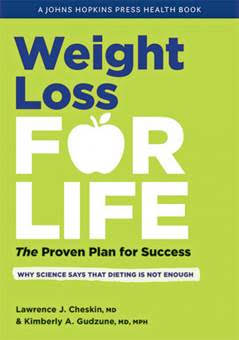
Major new book – Weight Loss for Life, from Johns Hopkins University

I have had three children and my weight has fluctuated after every one of them. My third is almost one and now I want to lose the weight so I was interested in reading this book. I am glad I did. It is a comprehensive and non-judgemental plan backed by the latest, and best, science. I found it easy to read and follow. I highly recommend it.

Major new book – Weight Loss for Life, from Johns Hopkins University’s Healthful Eating, Activity & Weight Programme

Weight Loss for Life

The Proven Plan for Success

By Lawrence J. Cheskin, MD, And Kimberly A. Gudzune, MD, MPH

This is not a fad diet book. This is the most comprehensive, scientifically based-programme to lose weight and keep it off, with practical details about diet and nutrition, movement and motivation, medications, supplements, surgery, and more.

In Weight Loss for Life, two experts from the Johns Hopkins Healthful Eating, Activity & Weight Programme provide you with all of the information you need on your weight lossjourney. They bring together leading experts in behavioural health, nutrition, exercise, and nursing to help you develop a plan that works best for you—and one that’s not just focused on just restricting calories or certain foods. Anyone struggling with unwanted weight gain or obesity will find this programme to be helpful, compassionate, and clear.

A central feature of the programme is a Personal Plan of Action to help you set up reachable goals, plan your meals, and make time for movement. All the recommendations are customisable based on your personal health and needs. You’ll find interactive features too, with surveys throughout asking you to reflect on your own eating habits as well as barriers to success. And unlike other books Weight Loss for Life covers it all: supplements, prescription medications, med spas, and surgical options. If you struggle, it can help you get back on track. Throughout, testimonials from others who have followed the programme along with hundreds of photographs and drawings will help educate and keep you motivated along your weight loss journey.

Weight Loss for Life is the guide to the science and art of achieving and maintaining a healthful weight.

“This evidence-based, easy-to-understand approach to weight loss provides readers with the appropriate tools they need to be successful long term in reaching their own individualized goals. More comprehensive than other weight loss books on the market, this book is a valuable resource for anyone wanting to lose weight safely and effectively.” – Virginia Quick, PhD, RDN, Rutgers University

Lawrence J. Cheskin, MD, is Adjunct Professor of Medicine at Johns Hopkins School of Medicine and Professor and Chair of Nutrition and Food Studies at George Mason University. Kimberly Anne Gudzune, MD, MPH, is Associate Professor of Medicine at Johns Hopkins School of Medicine, where she is the director of Johns Hopkins Healthful Eating, Activity & WeightProgramme.

Hardback, 400 pages, 131 colour photos, 10 colour illus., 9781421441948, £22.00

https://www.press.jhu.edu/books/title/12203/weight-loss-life


How I Got Published By Alec Marsh

Alec Marsh, writer, authorWhen I was 21 I started to write a novel. It wasn’t very good. I was working as a reporter for a local paper in Cornwall and my book… was about a reporter working for a local paper in Cornwall. 

Soon I moved to London to work for the Daily Telegraph and started writing a second novel. It was about a young journalist working for a newspaper in London. 

It wasn’t very good either. 

I met a top agent at a function and asked him if he’d see it. 

‘What’s it about?’ he asked.

After several seconds of flannelling he cut in: ‘If you can’t tell me in under 11 seconds then I’m not interested.’ 

I’d been introduced to the idea of the elevator pitch. If you can’t encapsulate your idea in a nutshell, you’ve had it.

I kept writing and the rejection slips (paper in those days) kept piling up.

Then one day a friend suggested I try my hand at historical fiction. ‘You’re obsessed about the past,’ he said. And it was true.

About a year later I read The Da Vinci Code, and was hooked. 

And I thought, “I can do that.”

So I started thinking about a historical mystery that could sit at the heart of a story, and some characters that would have sticking power.

That was around 2004. Before I knew it, I had started writing what would become my first novel, Rule Britannia. And I knew I was onto something, I could feel it in my fingertips. My characters – a historian and mountaineer Ernest Drabble and his pal, a journalist named Harris – were alive. And so was the story.

With a half-written book, I started polishing and went looking for an agent. Again the rejection slips piled up (still paper).

Then one day in 2008 an email landed at about 6pm on Saturday evening from an agent. Do you have any more, he asked?

I didn’t sleep that night. Soon I’d emailed the next three chapters, then we had a meeting. After that, I had an agent and went off to finish the book – armed with the self-confidence to finish it properly, to believe in myself and the benefits of his insights.

The agent then took it to market. But it was 2009 and e-readers, Amazon and the global financial crisis was hitting hard, and – for whatever reason – my book didn’t sell. After a dozen very polite rejections from major publishers, my agent suggested I try writing a different book. Which I did. 

For five years I wrote a book set in the First World War, but Drabble and Harris were still in the back of my mind, calling to me from the binary prison of a hard drive. 

By 2015 the First World War book was finished – but so was my relationship with my agent who finally spelled it out to me when he told me this was not a book that he could sell to his clients. We were finished.

Exhausted and disappointed, I stopped knocking on doors that wouldn’t open and focused instead on my day job. Every now and then someone would ask about Drabble and Harris; I would change the subject.

Then my son Herbie was born in 2016, and his arrival rekindled my ambition. So in the small hours, I dug out Rule Britannia and reread it, shook my head at parts that hadn’t aged well, and I polished it. And I pitched it again.

After a string of rejections (emails now), I went direct to publishers, finding an independent in Cardiff, named Accent Press. 

When the owner telephoned me and told me she’d take it – and she’d want two more books after – I was standing in a corridor at work. I didn’t punch the air, but a tear might have come to my eye. It had taken 20 years and I had endured numerous disappointments but it had finally happened. Drabble and Harris would get to their readers, and I was going to have a novel out. So what’s my advice for would-be authors. Don’t give up. And as Martin Amis once told me when I asked him for advice at book-signing: keep writing. After all, what else are you going to do?

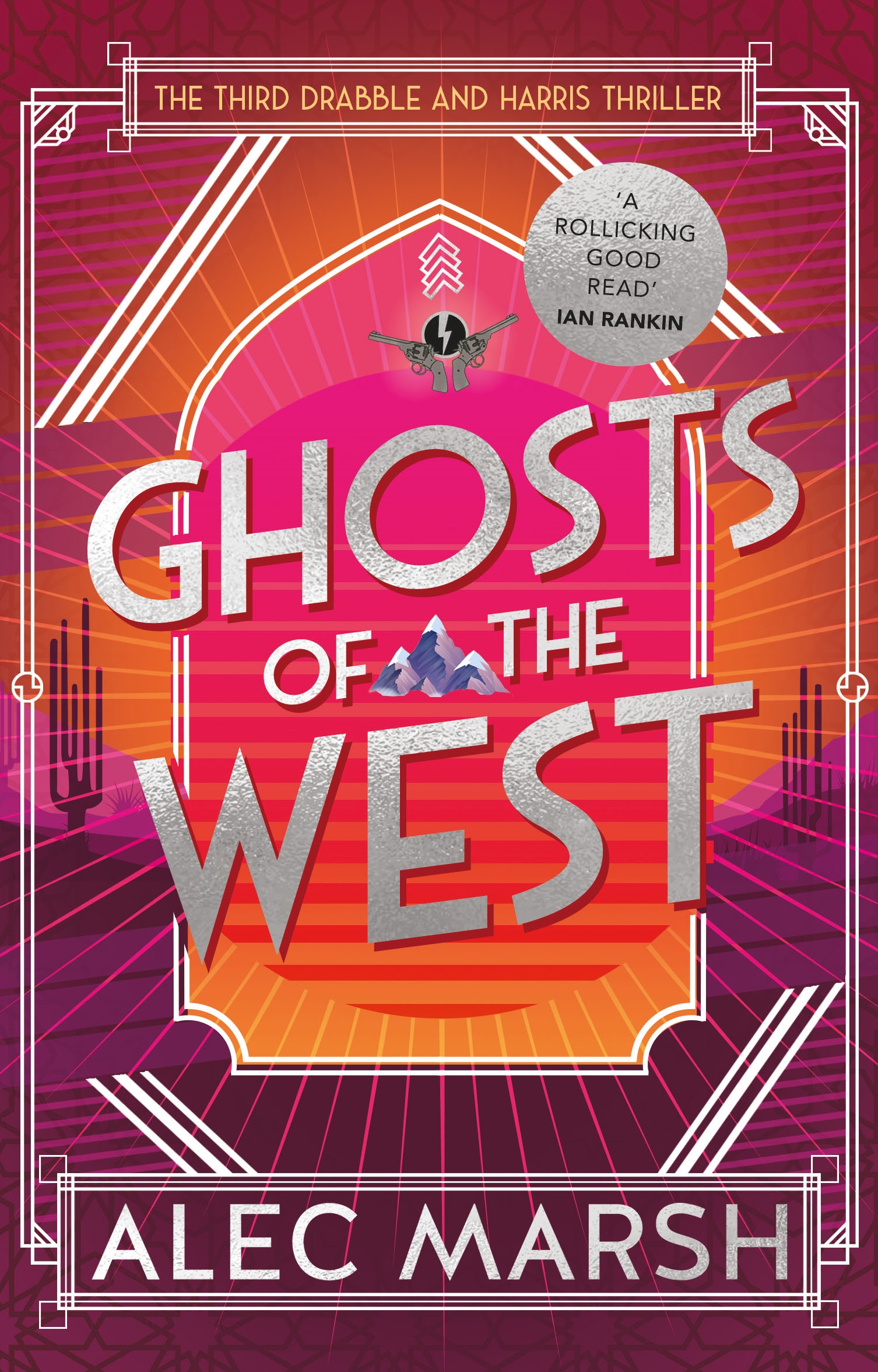
Alec Marsh is author of the Drabble & Harris novels, published by Headline Accent. The latest book, ‘Ghosts of the West’ is published in original paperback and ebook on 9 September