THE BUSINESS OF BOOKS: THE DREADED S WORD

Jane Cable tries to pick out the positives of writing a synopsis

Having completed the edits on one manuscript and having rescued my rights for Another You from Endeavour Press, this month has been all about considering submissions – which in most cases involves the bane of my writing life – the synopsis.

I’m not talking about the sort of synopsis you use as you create your novel, or to check structure and record plot points as you go along; I’m talking about that big, scary, one-and-only-chance-to-get-it-right document which accompanies your submission to agents and publishing houses. The synopsis as sales tool – in particular the short version – fills me with dread in a way no other blank page can.

This time, I thought I’d cracked it. Fellow RNA member and Choc Lit author Lynda Stacey very kindly sent me her template and using it made perfect sense. Like me, Lynda writes romantic suspense and has to shoehorn complex plots into a single page. I was happy with what I’d written, but when I showed it to Claire Dyer (an editor as well as an author) she drove a coach and horses through it. Clearly I need to improve.

So, what have I learnt from this sorry state of affairs.

A template to follow is really, really useful

When you are staring at a blank piece of paper there is nothing more helpful than something which lists the paragraphs you need and gives you some guidance about what to put in each. It helps you to have a method. For my short synopsis I set out the beginning of the book, then the end of the book, and filled in the middle last. It was also brilliant for pulling out the main plot strands and that focussed me through my final edits.

You’re going to need more than one carefully tailored synopsis

I’m concentrating on the direct submissions route for my novels and am hand picking the publishers I think would be right for them and who I’m really keen to work with. I don’t mean to sound arrogant, but I’m quite comfortable being an indie author if I can’t land that special deal. But what struck me when I was making my shortlist was that they all want something different; everything from a 3,000 word essay to a two paragraph blurb. It’s so important to tailor what you send to their requirements and to show you understand where your book would sit in their portfolio.

A synopsis is not a blurb It may be a selling document, but it’s not a blurb.

I was delighted when my first choice publisher asked for a blurb as I find them so much easier to write. Of course there are similarities – both have to grab the person reading it – but in different ways. A blurb entices, teases, reveals just enough. A synopsis tells the whole story. No surprises. The most important thing to bear in mind is that a publisher or agent will be thinking about how they can sell the story – a reader will be using the blurb to decide if they want to buy it.

Not everyone you submit to will need a synopsis

Yes. Really. But don’t use it as a cop out or to select who you submit to. Most agents require a synopsis, but the length varies. So will most publishers, but some have other priorities, such as finding out about your author brand – they will rely on your manuscript to see whether your book is worth taking on. You will need to become expert in selling your novel in all sorts of ways but one thing is certain: the better you become at all of them the more chance you have of landing a deal.
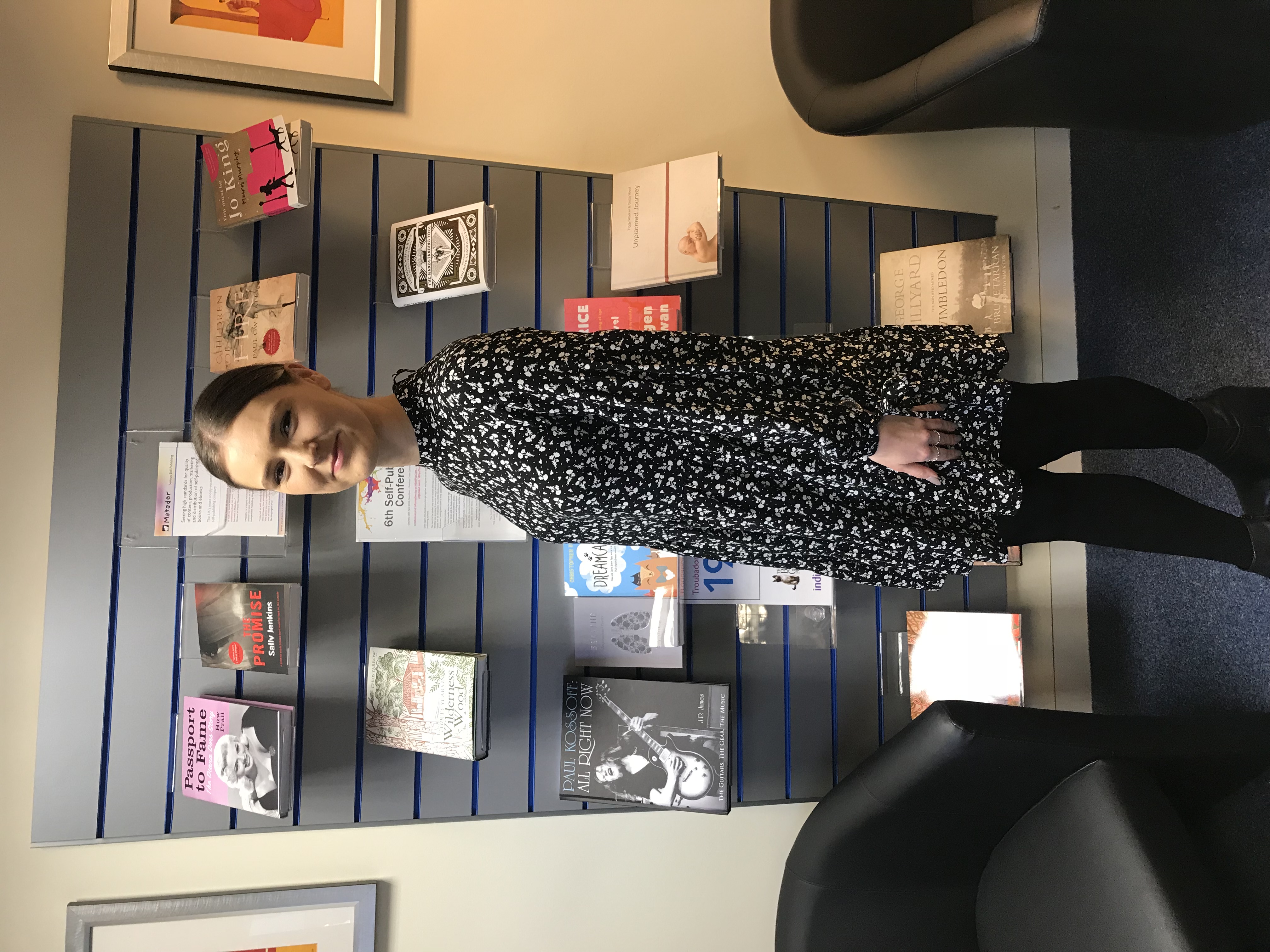
 

BUSINESS OF BOOKS: FIRST, LAST, EVERYTHING – EBOOK PROGRAMME MANAGER MEGAN LOCKWOOD-JONES

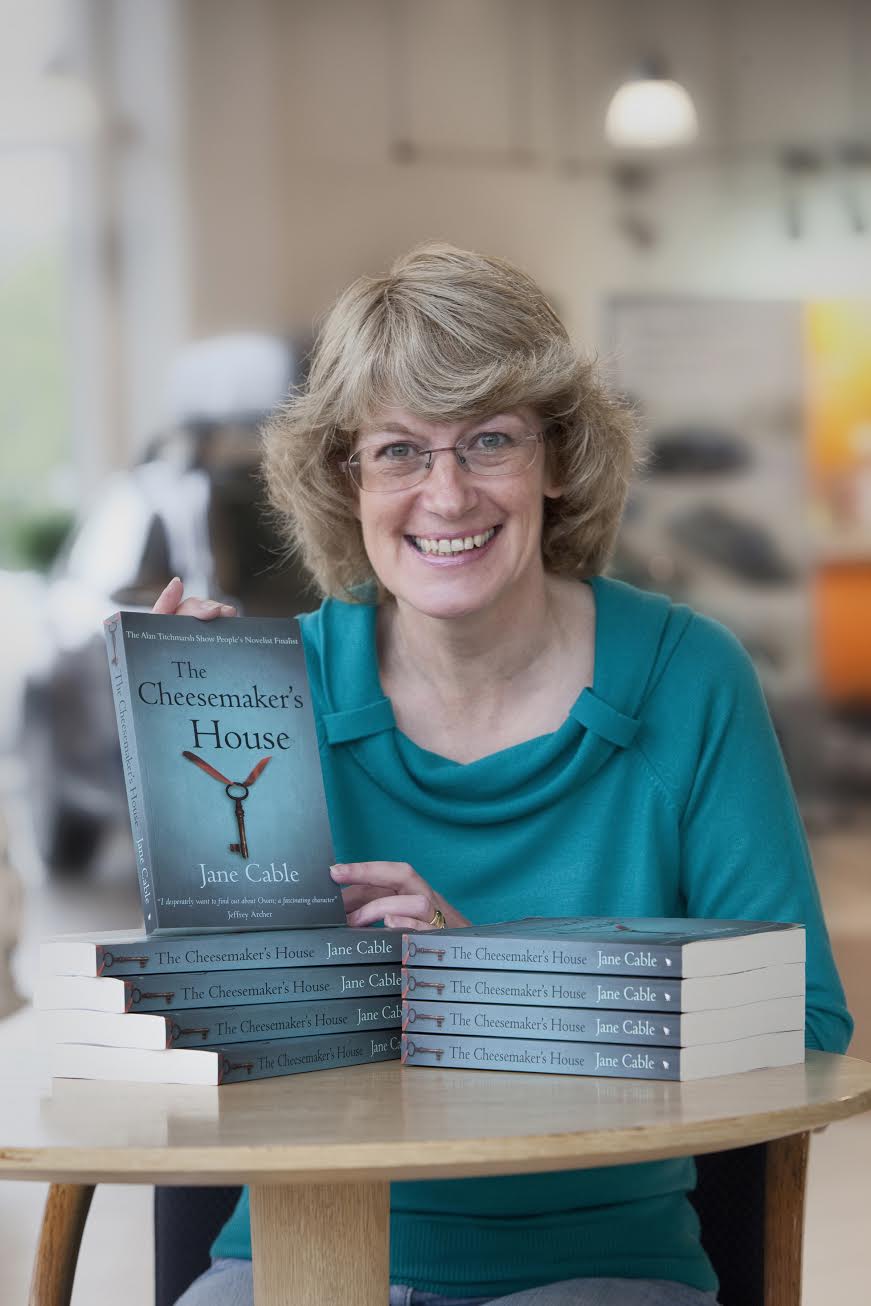
Megan Lockwood-Jones is the Ebook Programme Manager at my favourite assisted publishing house, Matador. She is the first point of contact for ebook authors and her knowledge is second to none. 

What was the first piece of publishing advice you were given?

The first piece of publishing advice I was given was to ensure self-publishing authors are choosing the right company and right services for them. At Matador we assist over 500 authors a year to publish physical and ebooks. However, it is important that authors do their research to ensure that they are using a reputable company and that the company they choose can offer the services that are right for them – not every author will have the same requirements or aims when publishing. Some may only want a few copies of a book for family and friends, others want to see their book stocked in bookshops, others only want an e-version. Read testimonials to find out what other authors’ experiences with that company were like. If you are new to the world of publishing then you’ll want to find a company that are easily contactable via telephone rather than one that can only be contacted by email – as a first time author, you may not even know the kinds of questions you should be asking so sometimes a phone call can be more reassuring.

What was the most recent piece of publishing advice you gave?

I spend the majority of my day talking to authors about ebook publishing options – as well as speaking at events such as The Self-Publishing Conference and the Experience Days we run at our offices.

The most recent advice I gave was in regards to ebook distribution. There are many different routes that authors can take, for example if you have a non-fiction ebook, why not consider making it available for pre-order? Readers are more willing to pre-order and wait for an ebook on a subject that interests them, rather than a fiction ebook where they can simply browse and select ebooks in similar genres that are already available. If you make a lot of sales during a pre-order period then these accumulate and count towards the total number of sales made on the release date, which boosts your ranking on retailers’ sites, in turn making your ebook appear earlier in search results.

If you’re interested in making your ebook available for free for a short period of time, Amazon’s KDP Select programme could be a good option for you. To be eligible, your ebook has to be exclusive to Amazon for 90 days, so it’s worth bearing this in mind if you’re considering selling the ebook through other retailers too. During the KDP Select period, you can make your ebook available for free for up to five days, and any downloads during this time can increase your ranking in the Free charts!


What is the piece of advice you would most like to pass on?

One of the aspects of my job I enjoy the most is cover design but if designing your own cover, think about how it’s going to be viewed by customers. Ebook jackets will be seen as thumbnails on retailers’ sites so you need to ensure that the title can still be read. A small, thin font in a colour that doesn’t stand out isn’t the best and don’t clutter your cover – try to keep it simple and avoid too much text.

If you’re paying for a professional cover design, be open-minded about the designer’s ideas. Designers spend a lot of time researching trends and amazing covers can be created if they are given a little freedom. As the author, of course you know the book best so do share any ideas or thoughts with the designer so that they can incorporate them, but let them use their expertise! Remember, you’ve paid for a professional designer for a reason, so have faith in them and trust that they aren’t going to design a cover that will be detrimental to sales.


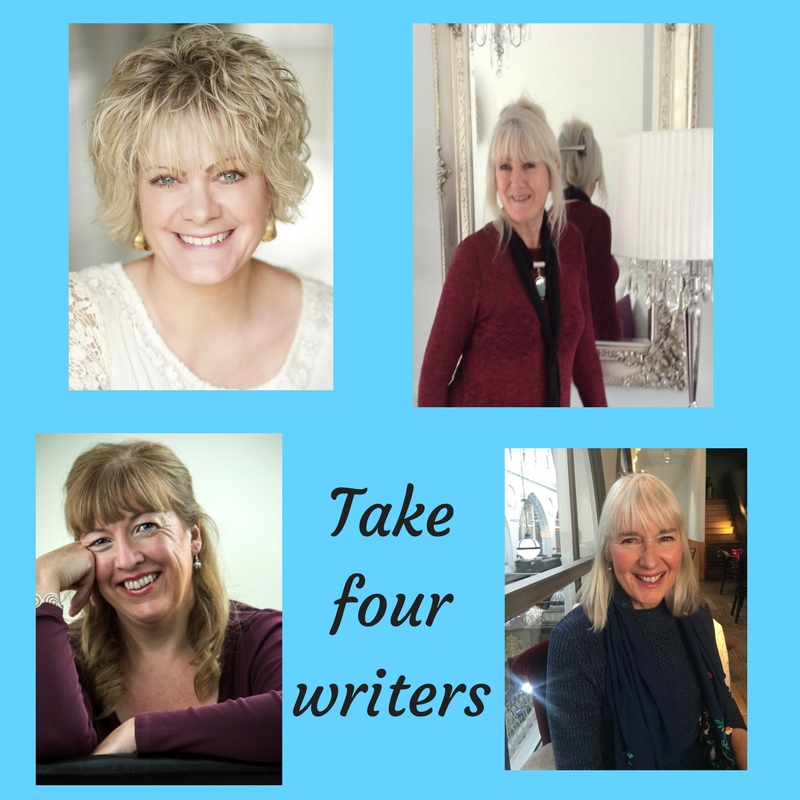
TAKE FOUR WRITERS: LAUNCHING, DRAFTING, EDITING & MULTI-TASKING

FEBRUARY UPDATE FROM OUR FOUR WRITERS…

CLAIRE DYER… LAUNCHING

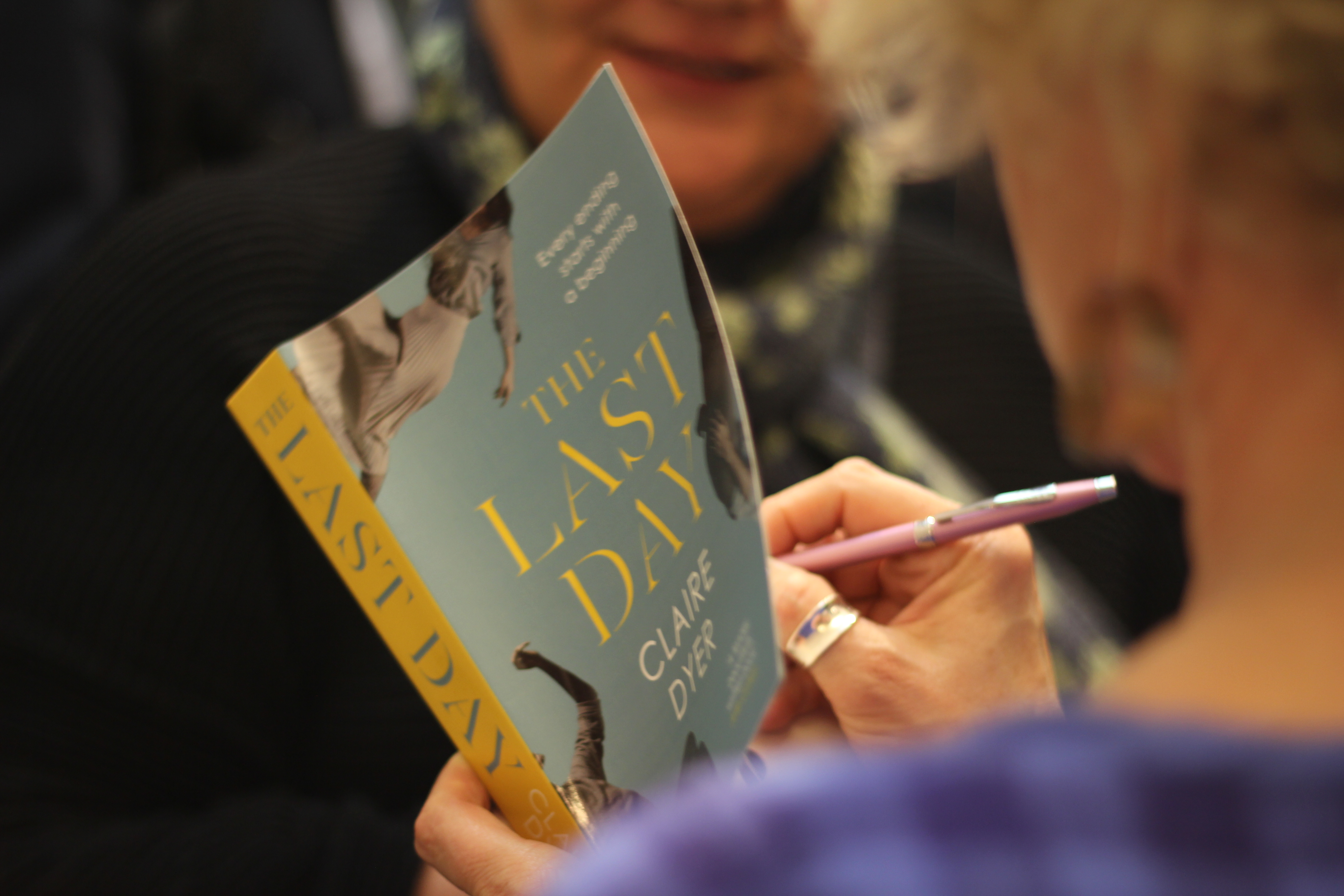
January and February have seen much excitement in the run up to and the actual launch of ‘The Last Day’. I have been overwhelmed by the love and support of my publishers, bloggers and fellow authors during this time, especially as no one knows the joy and despair of times like these like they do.

I’ve come to learn that it’s all about letting go. We tend to write in the privacy of our own homes and, for a long while, it’s all about just the two of us: ourselves and our book. And then if we’re lucky, we send it to our agent and, if we’re even luckier, thence to a publisher and eventually, if we cross our fingers and toes tightly enough, it goes out into the big wide world.

And this is where the joy and despair comes in. Will the world like it? That’s the despair. And, the joy? Well, that’s easy: the book I wrote is an actual real thing with pages and a cover and everything!

.

ANGELA PETCH… DRAFTING

I am almost three quarters through my writer’s draft of “Mavis and Dot” and I use walks along the sea to plan out the final chapters. There is something scary about finishing off a novel. In the meantime, I have been busy hunting for an illustrator. Unfortunately, my first three candidates dropped out, for reasons varying from cold feet and time factors. I hope I have at last found someone to work with. She is a very supportive editor of a local magazine and after tea and cakes (and discussion), she is on board. I am trying not to be too distracted from M & D but the publisher of my two first novels recently went into voluntary liquidation. It means a return to indie publishing but there is relief in the return of control. However, it entails more work. My other concern is to which cancer charity I should donate my profits. A writer’s work is never done…


JACKIE BALDWIN…EDITING

Hello, February has been a rather grim month. I have been completely immersed in my structural edit. Day after day I have sat at my desk from first thing in the morning until last thing at night editing. Then, eat, sleep, repeat. You get the idea! It’s a bad state of affairs when your characters have a better social life than you do. However, by the time you read this, I will be done! Hurrah!

I did get one overnight pass which was a wee trip to Newcastle to read at Noir at The Bar. It was the first time I had read the prologue from Perfect Dead. I also met loads of new crime writers and readers which was fun. During the day, I edited at the Lit and Phil which is a fab library. It even sells cake!

See you next month!


LUCY COLEMAN… MULTI-TASKING

February TO DO list:

Set up new office and new computer equipment in new house.
Online celebrations for launch day of first book with Aria Fiction, under new pen name.
Daily social media activity to support TWO book tours running concurrently for new arrival.
Produce new graphics to celebrate latest book baby.
Complete and submit Aria book no. 3 manuscript to my agent for comments.
Complete round one of structural edits for my other publisher.
Action suggested revisions by my agent for book no. 3.
Keep up with normal daily social media for my other books and write blog posts etc.
Get through February with your sanity intact.

Okay, so I’m exaggerating a little because I did survive the month, but only just! My new laptop seemed to get slower by the day after its first round of software updates. If I action a retweet on Twitter it times out! The battle continues.

If only it was JUST about the writing …

BUSINESS OF BOOKS: FIRST, LAST, EVERYTHING – WRITER CLARE SWATMAN

Clare Swatman spent almost 20 years working in women’s weekly magazines. Her debut novel Before You Go was published last year, and her second, The Mother’s Secret, is published by Pan Macmillan on 22 February. She’s currently writing her third novel.

What was the first writing advice you were ever given?

‘Write about what you know’ is the advice most people give, and I was no exception. But for me it really did ring true, especially the first time round. When I started writing Before You Go it was with the idea that I just wanted to write something. I wanted to be able to say I’d given it a go, and never regret not having tried; I had no expectation that anyone would ever read it, or want to read it, so I was really writing it for myself, with the hope that some day, something might come of it – but it might not. And so, while concentrating on the plot and developing the characters, I found it really helpful to write about places I was familiar with; Newcastle, where I went to university, Crouch End, where I used to live, Doncaster, where my best friend lives. It meant there was one less thing to worry about getting right, and I could concentrate on the story in hand. I also used my experience of writing true life stories to develop the characters and the situations they find themselves in. Years of interviewing people about the things that have happened to them has given me a good insight into how people respond to happiness, heartache and difficulties – and it’s not always how you’d expect!

What was the most recent writing advice you were given?

There’s no magic bestseller formula (if there were we’d all be making millions of pounds!) – all you can do is write the best book you can. That’s it. And if you try and write to be a bestseller you’re more than likely going to set yourself up for disappointment. It’s a tough one to swallow, because of course as a writer you dream of selling lots of books and of everyone loving what you’ve spent years writing, but it’s easier to expect smaller things, and be pleased by them, otherwise you’d live in a perpetual state of disappointment and anxiety! So now I try to remember how pleased I am to be published and keep trying to write the best stories I can.

What Is the piece of advice you’d most like to pass on?

Don’t compare yourself to others. This has been a big hurdle to overcome, and I have to admit I’m still working on it! I love my social media, and think it has great value in my life. But there are times when I think it can work against you, and the publication of a new book can often be one of those times. I’ve found it always feels, rightly or wrongly, as though every other book being released, read or even written is mentioned all the time on Twitter, Facebook, Instagram – except mine! It also feels as though everyone else is selling hundreds of thousands of copies and getting huge success within days of publication. Of course this probably isn’t true, but as with everything, social media takes the shiny parts of people’s lives and magnifies them. So comparing your own life and career to the life and career of someone else portrayed online is not only pointless but can be damaging. So I’ve had to learn to stop – and I would definitely give this piece of advice to anyone starting out in writing or any other career. Just do you own thing, enjoy it, and stop worrying about everyone else!


THE BUSINESS OF BOOKS: ONLY TAKE IT ON IF YOU CAN SEE IT THROUGH

Jane Cable considers what it takes to organise a successful event

Never one to ask others to do what I won’t myself, I thought that this year I would focus my own articles on advice given and received as well. Except as I have the privilege of writing my own column once a month I’m planning to focus each article on something relevant to my writing life.

So let’s start with writers’ events. I don’t know whether it’s because I’m willing, or I’m bossy, or I forget to duck below the parapet, but very often it seems to be me doing the organising. Last week I was at a library in Cardiff with two other Welsh authors, talking about routes to publication. It was a bitterly cold evening and it had snowed during the day. We’d already cancelled the afternoon event due to low bookings but were determined this one should go ahead. Perhaps, between us, we did know a significant number of people in the audience, but that was probably because they were writers yet to get a book out there and wanted to pick our brains. That said, we all enjoyed the evening and the library reported enthusiastic feedback from our guests.

So, what did I learn? And what advice would I give other writers looking to try their hand at connecting with their audience in this way?

  1. Only take it on if you can see it through If you initiate an event it is down to you to finish it. You may have a helpful venue (as we did in Cardiff last week), but if you promise something you have to deliver or your reputation will be at stake. This can mean finding other writers willing to take part, pulling together publicity material, sorting out IT and refreshments. If you can’t give it the time and the energy, don’t go there.
  2. Know your audience Think about who you would like to attend and find a venue, time and topic to suit them. Sometimes at least one of these will be fixed (eg a library or a festival) but there will always be something you can control to entice people in. Last week in Cardiff we over-estimated the appeal of an afternoon discussion about favourite books aimed at readers of romance. We were targeting retired people, thinking they would enjoy the interaction and not want to be talked at. What we didn’t factor in was the weather – the same event in the summer might well have been popular.
  3. Know when to quit We had six people signed up to that afternoon event and there were four presenters so it was a no brainer that it had to go. We, and the library, tried everything to up the numbers but to no avail so we pulled the plug and made sure everyone knew about it. But quitting isn’t always the right answer. A couple of years ago Chindi Authors organised a mini litfest to raise funds for Words for the Wounded. Tickets sold slowly for the main lunchtime event and I was ready to pull the plug, but the wonderful children’s author Christopher Joyce refused to let me and as it happened we would have struggled to fit another person in – and the weekend as a whole raised almost £1,000 for the charity.
  4. Only do it if you’re going to enjoy it There is no point putting all this effort in if, on the day, you’re going to be a gibbering wreck. If you hate public speaking then find another way to raise your profile. Nothing is compulsory. Play to your strengths.

BUSINESS OF BOOKS: FIRST, LAST, EVERYTHING – AUTHOR JOHN JACKSON

Kicking off a new series for 2018, Jane Cable talks to romantic novelist and former seafarer John Jackson

What was the first writing advice you were ever given?

The first piece was one I worked out for myself before starting to write fiction.

In a previous life, I spent many years preparing safety manuals, policies and procedures. In the main, these were for non-native English-speaking ship’s crew, from the Philippines, Burma, Poland and the like.

Back in the day, companies, especially shipping companies, all thought that the only good manual was a BIG one. This saw many shipping lines having massive and all-encompassing manuals that nobody read. These weren’t written to help seafarers be better at their jobs, they were written with the sole aim of stopping the Company being sued.

To me, it soon became clear that “It’s useless writing something that nobody can read and understand.”

So, clarity is everything – and it’s a trait that I hope I bring to my fiction writing. Certainly, a feature of Heart of Stone’s reviews is that it is a “fast read” and a “real page turner”

I got into writing fiction at the behest of some friends who happened to be members of the Romantic Novelists Association. Their advice to me, to try and get onto the RNAs “New Writers Scheme” was certainly the best advice I received. As a man trying to make it in a genre dominated by women writers, I can only thank the RNA and its members for the unconditional help and support I have been given.

What was the most recent writing advice you were given?

With just one published book to my name, I know I am still “learning my craft.” Publishing, with all the ancillary professions, such as editors and agents, is an enormous and diverse business.

It is also a business that is changing and changing fast. Writing is a famously lonely occupation. In many ways, we are the bottom men on the totem pole. It is also very easy to forget that this is a BUSINESS. We might write because it’s just something that we want or have to do, but for everyone else, it’s a business, and their only decision is “can they make money from your work.”

This might not be advice that anyone would give you directly, but it is true, nonetheless.

Self-publishing and the rise of Amazon has also shrunk the market for the other professionals; it has made them even more reluctant to take on any but the most immediately marketable authors. The days of a publisher taking on a young author and nurturing their career in the hope of a bestseller down the line are long gone. Self-publishing is no longer considered vanity publishing. It is a valid and popular method of getting your work to market.

What is the piece of advice you’d most like to pass on? (writing or otherwise!)

Every manuscript needs a good editor. It is someone else’s eyes giving a professional and fresh look at your work. So many self-published books show very early in the read that they have never been properly edited.

I am very lucky in that Sue, my editor, is also a friend, and we work together well. Other friends are not so lucky, especially when contracted to one of the major publishing houses. Sometimes you may have to fight for what you want, but always remember – this is YOUR story, You have to have faith in it.

That’s what we are doing Telling a story – and everything you write should be towards that end. We are not writing textbooks or reference works, we are STORYTELLERS!

Keep the faith! Your writing WILL get better, and you WILL succeed. Sometimes this is hard but you need to believe in yourself.

Keep up with John on Twitter @jjackson42


How To Make Your Blog Posts Go Viral Part Two

blogIn the first post on how to make your blog, and your blog posts, go viral we covered content, social media sharing, titles, tags and keywords. Next up we have more advice for helping your hard work pay off.

Post at The Right Time

Doing a post on Christmas Day probably won’t get a lot of hits. Posting on a Friday evening is not ideal either. Have a think when people will be more likely to be online. You can research when people are on Twitter and Facebook. Use your Google analytics to find out when the ideal time is to reach your readers.

Share your post in your Newsletter

A newsletter is a brilliant way of making sure your great posts get another chance. Even your most loyal readers may miss a post or two. Build up the people on your newsletter list by doing competitions and having one of the entry requirements signing up to your newsletter.

Press Release

Writing a press release, and distributing it to the media, is a great way to get traffic and build on your reputation. The way to do this is to have an angle and then write about 500 words on that, along with a good pictures and then sending it out to the media. Channel Mum do this well by doing surveys and then releasing the results to the media, along with a statement. A lot of companies and publications do this. You could also write about a relevant subject, or have a personal story. It is all about the angle. Start building a media list. You can do this by signing up for Gorkana’s Consumer Alert or the Diary Directory. You can also find out who the editor of each publication is by looking on Twitter, the actual publication or websites. Getting a copy of the Writers and Artists Yearbook is also a good idea. It will be full of contacts.

Create Evergreen Content

One of the best ways to turn your blog into a success is to write evergreen posts. What is an evergreen post? It is a post that keeps getting hits. Even years later. These kind of posts tend to be informative or educational. Frost has a number of posts that are still getting hits up to seven years later. Imagine if you wrote an article and it still got thousands of hits years later. That is a great source of traffic and the only effort you had to put in was writing the initial post. Win win.

Get creative with Design

Creating pictures and graphics to go with your post is a great way to market them and improve engagement. Graphically engaging people can be done in many ways.  You will get more pins on Pinterest and more clicks on other social media too. Frost writer Jane Cable uses Canva to great effect. Canva is a free design tool which is easy to use. You can also create banner ads, headers, marketing material, ebooks and documents with it. Other design tools to use include PiktochartVenngage, Infogr.am and Visual.ly

Optimise Your Images

Optimising your images is one of the easiest ways to get more traffic and also one of the most effective. Give your images a title using relevant keywords before you upload them, then add in a few more for good measure. Fill out the Title and Alt Text. This will optimise your images and you will get a lot of traffic through sources like Google Images.

Write Long Form Content 

Apparently long form content gets more shares than short form content according to Blog.visme.co in their article 10 Ways to make your content go viral. BuzzSumo did a study in which they found out that posts between 3,000 to 10,000 words were shared the most, while posts that were 1,000 words or less were shared the least. I am quite surprised at this but it is worth thinking about. It is a good idea to make most of your posts over 500 words.


I will be telling you all you need to know about blogging in a series of articles. You can also check out my book, The Ultimate Guide To Becoming a Successful Blogger which is available in ebook and print. 


BUSINESS OF BOOKS: TAKE FOUR WRITERS – INTRODUCING ANGELA PETCH

Hi! … can’t believe I’m on here. I’m excited, apprehensive and honoured to share in this venture.

I love reading. I don’t think you can be a writer without being a bookworm. I panic if I’m coming to the end of a good book and feel bereft until I’m lost in another story. Although I loved English at school, my degree is in Italian. I lived in Rome as a child, worked in Sicily, met my half-Italian husband there and now, in our retirement, we spend six months of each year in Tuscany, where we run a small holiday business. Although I’ve always written, only now that our three children are independent have I been able to settle seriously to the craft. I self-published two novels set in Tuscany and they’ve been taken on by Endeavour Press. Last year I had seven stories accepted by women’s magazines and I enjoy the discipline of this genre too, so hopefully I will sell more in 2018.

However, this year I am becoming a hybrid author and returning down the indie route to self-publish “something completely different”.

In 2006 my best friend discovered she was suffering from ovarian cancer. We did lots together, including hunting for bargains in charity shops and at auctions, nicknaming each other Mavis and Dot. She was extremely brave, but she had her darker moments too and I tried to cheer her up by writing silly stories about Mavis and Dot. They made her laugh and she drew cartoon sketches of the characters, which I still have hanging on the back of our loo door. Sadly, she didn’t recover from this silent killer and I filed away my anecdotes. A couple of years ago I pulled one out to read at a writing group and raised a laugh. So, I decided to develop the stories and put together a novella. There will be illustrations and I’m busy searching for the right artist as I type.

I feel rather wobbly about Mavis and Dot, but I dearly want them to succeed as I intend to donate any profits to Cancer Research. Humour is notoriously hard to pull off and my usual style is literary, so I have to banish the goblin from my shoulder telling me I am writing drivel that nobody will find amusing. My launch date is mid-November, but I know time whizzes by faster than a bargain snatched off a charity shop shelf. So, I need to get down to business. And that is the main cause of my wobbles. Going indie again means getting my act together with social media and marketing. When I see telecom engineers at the side of the road working on control panels, plugging wires into holes, it makes me think of me procrastinating over algorithms, metadata, BISAC codes, author platforms and networking. Which hole should I connect with, – when and how? However, I have also made virtual friends on-line with a whole bunch of supportive authors and bloggers in the past months and, although there’s a mountain to climb, I want to scale this peak.

Time is the thing, isn’t it? And discipline. We are blessed with three children and four very young grandchildren (with another on the way), and when we are in England during our six winter months they keep us busy.   I will stop bleating about that because I know there are many authors who burn the midnight oil and squeeze their writing into fewer hours than I have. Wish me luck, nevertheless. “Live where you fear to live”, said the 13th century poet, Rumi.