Month 3 of My Reading Challenge By Frances Colville

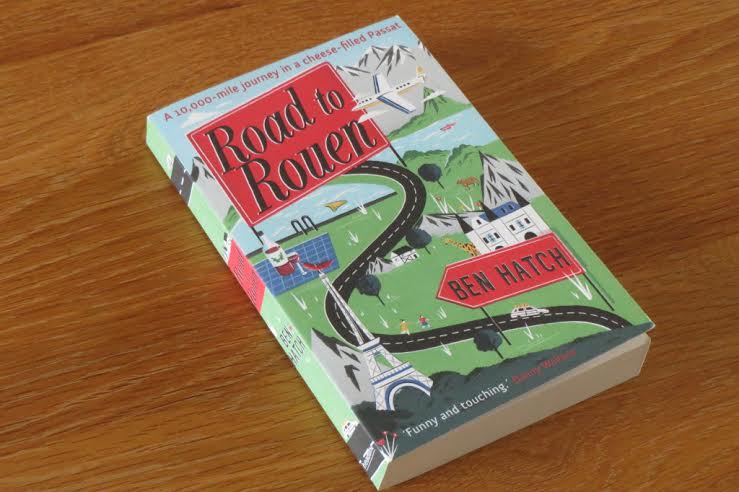
Travel writing is one of my favourite genres so I was happy to see that Road to Rouen by Ben Hatch had arrived at the top of my pile.  In fact the book is more about family life and relationships than about travelling, but is none the worse for that.  It tells the story of his journey around France in a Passat, which smells strongly of French cheese, with his wife and two young children and is by turns funny, poignant and insightful.  A good follow-up to his earlier book Are We Nearly There Yet? – surely a question that every parent has heard far too often.

reading, reviews, book, review,

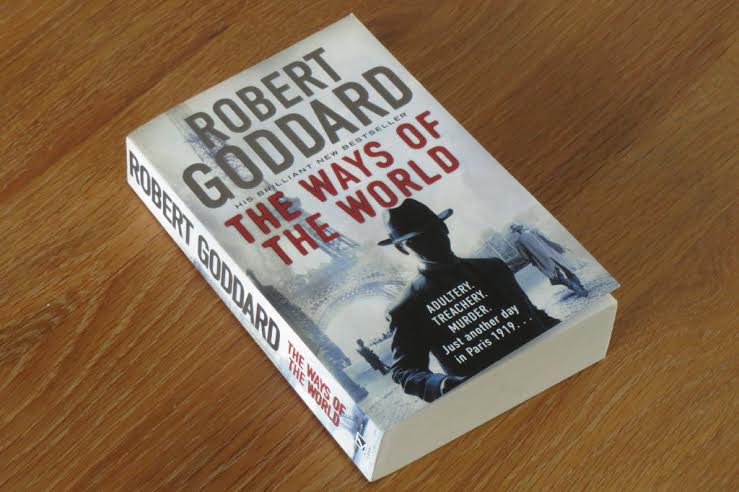
Second up this month was The Way of the World by Robert Goddard a thriller set in the immediate aftermath of the First World War, and the first part of a trilogy.  I always enjoy his books and I think I’ve read most, if not all, of them.  I’d be hard put to it though to distinguish one from the other in retrospect, and I’m fairly sure I’ll have to re-read this one in a year’s time before moving on to the second in the series.  But I’d still rate it as an interesting and well-put-together book.  And if you haven’t discovered Robert Goddard before, this is a good place to start.

MONTH 3 OF MY READING CHALLENGE by Frances Colville books

The Bees by Laline Paull has left me feeling confused.  It’s most certainly a very original and well written debut novel, but I find myself at the end with a vague suspicion that it doesn’t work quite as well as it should.  I wonder whether others have the same reservations as I do, and whether this dystopian tale of a totalitarian bee-hive really works on levels other than a fairy tale.  But highly recommended if you want something different.  Good books are supposed to leave you wondering,  aren’t they?

Next I picked up The Minaturist by Jessie Burton. Another debut novel, this is a fascinating mix of history (17th century Amsterdam), intrigue and a coming of age story.  A real page-turner.  I couldn’t put it down. But yet again I was left feeling dissatisfied.  I don’t think all the questions posed were fully answered, and I don’t think the plot quite held together.  But perhaps I read it too quickly and missed vital information.  I’d better go back for another look.  I’ll enjoy doing that!

MONTH 3 OF MY READING CHALLENGE by Frances Colville bookreview

No quibbles about the next book Elizabeth is Missing by Emma Healeyand no hesitation at all in recommending it.  Yet again a debut novel, this one taps into a situation with which more and more of us are becoming familiar – how living with dementia feels, or how you cope with having a relative with dementia.  The central character Maud is totally believable and the struggles she faces daily are sympathetically portrayed.  And there is an intriguing storyline in here too. Ultimately, despite what you might expect, this is an uplifting and positive book.  I loved it.

MONTH 3 OF MY READING CHALLENGE by Frances Colville delicously ella

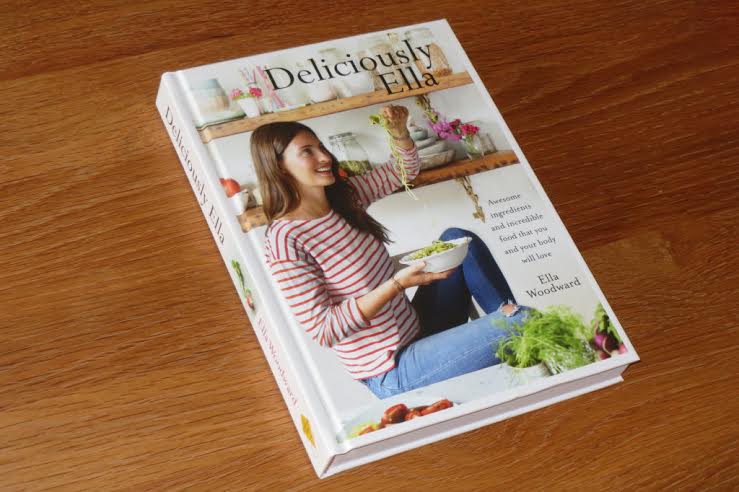
I don’t normally read cookery books from cover to cover.  But Deliciously Ella by Ella Woodwardis a cookery book with a difference.  It’s the inspirational story of how one young woman changed her way of eating to enable her to cope with massive health issues, devising a gluten and dairy free plant based diet.  It’s a fascinating read from beginning to end – and the recipes I’ve tried so far work well too.

It occurs to me now that all of my chosen books this month have been recent ones.  Not that there is anything wrong with that.  In fact it’s an indication of just how much good new stuff there is out there. But perhaps next month I’ll try to redress the balance.


Top Books: What To Read

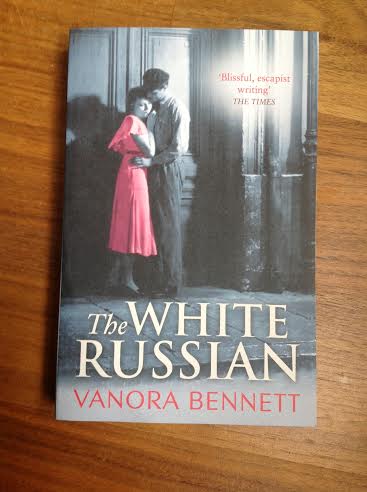
thewhiterussian

Now in paperback, The White Russian by Vanora Bennett is a deeply romantic and escapist read. It is well-researched and is a book which gives hours of enjoyment.

From the author of Midnight in St Petersburg, a novel of love, art, music and family secrets set amongst the Russian émigré community of Paris in 1937.

Evie, a rebellious young American leaves New York in search of art and adventure in jazz-age Paris, where her grandmother lives. But on arrival, her grandmother’s sudden death leaves Evie compelled to carry out her dying wish: to find a man from her past called Zhenya.

The quest leads Evie deep into the heart of the Russian émigré community of Paris. With the world on the brink of war, she becomes embroiled in murder plots, conspiracies and illicit love affairs as White faces Red Russian and nothing is as it seems.

With Jean, a liberal Russian writer by her side, Evie finally seems to have found the passion and excitement she’s yearned for. But is she any nearer to discovering the identity of the mysterious Zhenya, or the heartbreak of her grandmother’s past?

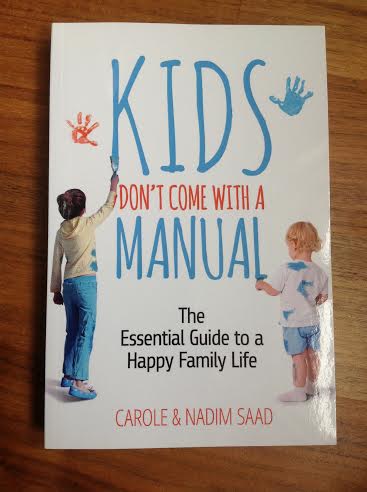
kidsdon'tcomewithamanual

Kids Don’t Come With a Manual – The Essential Guide to a Happy Family Life is a brilliant all-round book which is easy to read and is based on hard evidence and the latest research. It offers a fresh perspective and practical tools. It is a brilliant parenting book which is easy to digest. A good, pragmatic and fun read.

Parenting is an important job, yet parents receive little to no training. Since most of our experience is based on our own upbringing, we can feel uncertain as to whether we are doing the right thing. To complicate things further, our partner is likely to have a different parenting style to ours. Drawing on their experience in early childhood education, as Parenting Coaches, and as parents, Carole and Nadim have helped thousands of parents with their programme of practical tools designed to empower parents to:

1. Deal with everyday parenting challenges without confrontation or anger;
2. Help children to become happy, fulfilled and self-reliant adults;
3. Maintain a strong and loving connection with children throughout their lives;
4. Agree on a balanced and more enjoyable approach to parenting

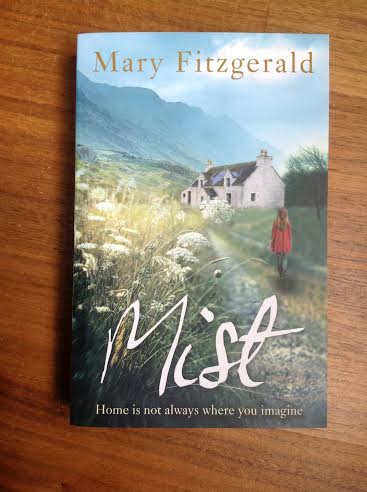
mistmaryfitzgerald

Mist By Mary Fitzgerald is an escapist, interesting and different read. Engaging and enjoyable. This is the second book from Mary Fitzgerald we have reviewed. Recommended.

A girl with no home, a house in need of love… A beautiful romance set in the breathtaking Welsh mountains

Lark has been wandering the country for many years, with no real place to call home. Until she meets Matthew Williams, a Canadian who has inherited a run-down hill farm in North Wales. Young and enthusiastic, Matthew has no knowledge of farming and no experience of living in the countryside.

Entranced by the beauty and wildness of the place, Lark agrees to help, and together they throw themselves into getting the farm back onto its feet.

Until a terrible accident brings Matthew’s father over from Canada, and suddenly none of their lives will be the same.


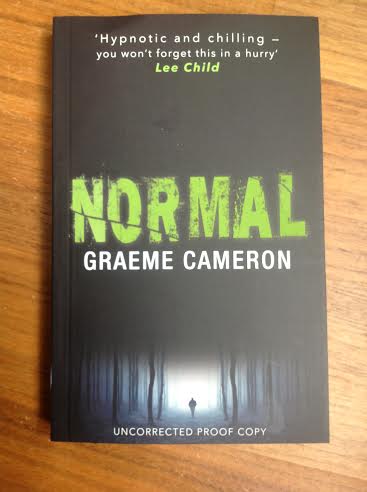
normalgraemecameronbookreview

 Normal By Graeme Cameron is compelling and unforgettable. There are some comparisons with TV serial killer Dexter in this book of a ‘normal’ and likeable serial killer. The book is good and is engaging enough to be read in one sitting. Different and well-written.

“Hypnotic and chilling — you won’t forget this in a hurry.” – Lee Child, Sunday Times #1 bestselling author
He lives on your street, in a nice house with a tidy garden.

He shops at your local supermarket. He drives beside you, waving to let you into the lane ahead of him.

He also has an elaborate cage in a secret basement under his garage.

The food he’s carefully shopping for is to feed a young woman he’s holding there against her will – one in a string of many, unaware of the fate that awaits her.

This is how it’s been for a long time. It’s normal…and it works. Perfectly.

But this time it’s different…

Dark, twisted and compelling, this is the most exciting and original thriller of the year


 What are you reading this month?


Expecting Better: Why The Conventional Pregnancy Wisdom Is Wrong Book Review

Expecting Better: Why The Conventional Pregnancy Wisdom Is Wrong Book Review, pregnancy, advice, eating, drinking, Expecting Better: Why The Conventional Pregnancy Wisdom Is Wrong created a huge amount of buzz when it was released, and rightly so. Women’s bodies are always political minefields. Everything from our breasts to our rights to abortion are subject to scrutiny and sexism. No more so is this true than when a woman is pregnant. Everyone has an opinion on what you should eat, on what you should do. The amount of unsolicited advice is irritating and the amount of judgement from the conception all the way to how you give birth can be overwhelming. God forbid that people live and let live.

Which is why I love this book. Emily Oster is an associate producer of economics at the University of Chicago Booth School of Business. She has done her research and has the facts. That is the thing with facts: you can’t argue with them. I mean, people will try but the truth is the truth. Let’s start with caffeine and alcohol. Women are told to limit caffeine and not drink during pregnancy. Coffee allegedly causes a rise in miscarriage. But as Oster says:

“Women who drink coffee tend to be older so is it the coffee or is it the maternal age?”

On alcohol she says: “In continental Europe women drink wine when pregnant and there is no evidence at all that there children are not as smart as American children or have any other health problems. In fact there is no evidence of more foetal alcohol syndrome in continental Europe; if anything, rates are higher in the United States. This is interesting as any drinking is frowned upon in the US whilst in continental Europe before are less judgemental.

Ultimately I concluded that these recommendations were not just very cautious, they were too cautious. In moderation, pregnant women should feel comfortable with both alcohol and caffeine.

For alcohol, this means up to one drink a day in the second and third trimester, and a couple of drinks a week in the first. In fact, for the most part studies fail to show negative effects on babies even at levels higher than this. By a drink here I mean a standard drink – 120 millilitres of wine, 30 millilitres of hard spirits, 350 millilitres of beer.”

Considering that a recent legal test case brought by a council tried to pass a law in the UK to make it illegal for women to drink in pregnancy at all, that speaks volume. Women are not trusted with their own bodies and decisions. As Oster puts it “This feels like pregnant women are not given any more credit than children would be in making important decisions.” Quite.

My review of Osters book could go on for thousands more words. Instead I will say: buy it. If you are pregnant, buy it. If you have a pregnant friend, buy if for them. It is the essential pregnancy book. Emily Oster should be applauded for her excellent work and research. This book is groundbreaking, fascinating and practical. I loved it and I could not recommend it more. Steven D. Levitt, the co-author of the brilliant Freakonomics, said this book ‘may be the most important book about pregnancy you read.’ There is no ‘may’ about it. Read it.

Expecting Better: Why the Conventional Pregnancy Wisdom is Wrong and What You Really Need to Know is available here.


Emma Dyson Interview: Acting Advice From Spotlight’s Career Expert

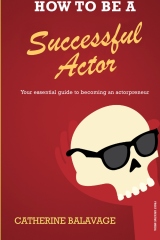
acting tips, acting career, acting, advice, book, how to be a successful actor, quit, Catherine BalavageI interviewed a lot of great casting directors, actors, directors and experts in the acting industry for my book How To Be a Successful Actor: Becoming an Actorpreneur. One of those interviews was with Emma Dyson who gives actors career advice for Spotlight, the main casting site for actors and casting directors. Spotlight is also the essential casting site for actors, if you are not in it, you are invisible. An extract from the interview is below. Read it and learn.

Emma Dyson works for the main casting website for actors in the United Kingdom, Spotlight. She also does one-on-one talks for Spotlight members to give them career advice.

So tell us about you.

I’ll tell you a bit about my background. I trained as an actor at the Guildford School of Acting in the 1990s and then, having got the training out of my system, I quickly realised I couldn’t be an actor. I probably didn’t have the talent or the perseverance or the backbone. Then I was an agent for six years. Then I left being an agent thinking that I would go into a different career, something entirely different, but every job that I was getting was pulling me back to the business so first of all I was working at my old drama school back at Guildford, I was the personal assistant for Peter Barlow who was the then assistant director, and then I left two weeks into the job because he was leaving. Subsequently a casting director put me in touch with Thea from United Agents, and I was temping at United Agents sort of off and on for about six months which is when I got the job here at Spotlight being the PR manager.

I used to do castings within the agencies and get the Spotlight breakdown and put roles and the actors that fit them together. It was interesting, having worked in an agency, because the first point of contact that you do in casting work is Spotlight. Now I am very happy here as PR manager and I go to the drama schools and talk about acting and Spotlight member benefits. How to get a good CV and photo, what type of letters to write to casting directors, agents. Time and time again they are incredibly green. They are in their final year of drama school and have hardly written any letters to agents or casting directors. They leave thinking ‘Here I am, come and get me!’ it just doesn’t work out like that. It’s really important and I empathise that it is very important to write letters, to hopefully reach your future employer, who will, across the course of your career, become your friends, and keep re-employing you.

acting, acting advice, acting book, how to be a successful actor, actorpreneur, auditions, castings, casting breakdown, how to be an actor, It is such a shock when people leave drama school. They don’t really know what to do.

I know and it is such a shame. They go to Central, LAMDA and RADA. Those are very central London schools. They get so spoilt for choice because it’s awash with agents and casting directors, it carries the kudos of being at the best drama school. Where I was at Guildford  we were terribly cut-off  despite the facts it’s only a twenty minute train journey, but, we felt very cut-off.  It’s a shame that schools that are not in central London get kind of left out and not thought of. There are some interesting actors in regional schools. The Welsh college is a very good school with a lot of good courses and a brilliant reputation. Conversely Rose Bruford has some really good students and that is in Kent.

I think you have got to train, you have got to workshops, you have got to keep classes going. Try to teach yourself as many skills and techniques as possible because the more skilled you are as an actor the more you should work. I always like the actors who go into musical theatre, straight theatre, film and do a bit of everything,  And what we are noticing is that there is more of a vogue for musical theatre and films are being made from those musicals. I know of a few film directors who are making films which are musicals. It is kind of a renaissance or a nod to the 1950s. The MGM sort of musicals. Musicals are very popular.

So learn to sing

Learn to sing if you can, and if you can dance then I think you will probably work all the time.

Daryl Eisenberg, an American casting director, told me two things when I met her: One, you are not special. Don’t think you are more special than anyone else and are just going to make it,  and two, whatever is stopping you from getting a job, remove it.  So if you can’t dance then learn to dance, etc.

I think that is just a roundabout response to what I just said. If you do just keep yourself as skilled and as tuned in as possible then you will get work. You have to do as much theatre as you can and as much film as you can. Not only that but I extend it to: if you are a London actor or a London based actor see as much art as you can, culturally exploit everything which is on your doorstep. Because I think that tunes you in to everything. It keeps you aware of what is current. You pick up on working trends and that reflects across the arts.

Tell me about Spotlight events,

Yeah, we do events. Being PR manager. ..We did one in October in conjunction with the London Film Festival. I got three casting directors. I got Karen Lindsay Stewart and Lucinda Syson. It was held at the British Film Institute and it was chaired by Pippa, my boss, and myself, it was just about how to become a working actor, keeping your CV up to date, how to get an audition, and also I do seminars where I talk a lot about being a working actor, how to network, all of those things, and at Spotlight offices on every Monday we have Spotlight Mondays where I operate 20 minutes chats with people who are stuck in their careers. They are incredibly popular. They always sell out very, very quickly. And the seminars are sometimes in conjunction with Actors Expo or other bodies. We just hold little seminars in house.

How do you break through?

I think it depends because some actors burn out very quickly, and other actors, they see an opportunity and they become very successful and popular when they are in their forties. So I think it just depends because there is so much reliance on good luck and you have to have a lot of charisma, a lot of talent. But then the rest of it is luck. I think you can make your own luck, but a lot of it is out of your control. Probably one of the reasons that I didn’t become an actor was because I couldn’t stand being in a career with no control.

To answer your question, I think it depends on many things. They have to have a good agent behind them and the rest of it I think is luck.

What is the most common mistakes actors make?

Not being proactive, not writing letters to casting directors. Even with a good agent you should still do your own work. Not looking after themselves, not working out, not eating well, not networking, I think all of these things, the actor has to do that. It is part of their homework.

How many actors are on Spotlight?

Just over 40,000


For the rest of the interview, and great interviews from our acting industry professionals get your hands on a copy of How To Be a Successful Actor: Becoming an Actorpreneur now.


Chuffing brilliant! The Railway Children Theatre Producer Tristan Baker Talks

The Railway Children on stage at Kings Cross, London

The Railway Children on stage at Kings Cross, London

Theatre producer Tristan Baker talks about the show where the West End’s heaviest leading lady is not only delighting audiences of all ages, but is also inspiring marriage proposals …

Take one of the best loved books and films of all time. Add a vintage steam engine, a superb cast and mix well. While the ingredients are blending, crack on and build a theatre from scratch, including a railway track, against the clock. Add a dash of blind panic and garnish with lashings of Edwardian style. Serve to critical acclaim and enchanted audiences of all ages.

That’s the simplified version of how The Railway Children came to life at its new home in London’s Kings Cross. The unabridged version involves so many technical challenges that you could travel from London to York on old rolling stock in the time it would take to tell. Certainly one of the show’s producers reckons that the team who made it happen deserve their share of the five- star reviews.

“I am very proud of the team,” says Tristan Baker, with feeling. “In five weeks they built a one-thousand seat, purpose-built, theatre from the ground up, including laying a train track. It meant working around the clock to get the show on – they were sometimes laying track in the rain at 2am – but they did it.”

And when he says it’s a purpose-built theatre Tristan isn’t exaggerating. Walking around the venue on King’s Boulevard with him, the detail is extraordinary; from the state of the art heating system (to ensure maximum audience comfort), to the unique railway platform stage. Located behind King’s Cross Station, the site has been loaned by Google and will one day be Google HQ. But for now it is home to The Railway Children – “a steam engine rather than a search engine,” laughs Tristan, explaining that the objective was to create not just a show, but an experience.

“It is very site specific. From the moment you arrive and pick up your tickets you are in Edwardian England.” Bang on cue a group of costumed front of house staff surge forwards to greet members of tonight’s audience, directing them to the foyer, which is a perfect replica of an Edwardian station waiting room.

“Our front of house team are all carefully selected and trained to give the audience a really wonderful and authentic experience,” says Tristan, navigating a path through an excited party of teenagers and a group of middle-aged ladies who have come up from Cambridge for a day of shopping, lunch and theatre.

Undoubtedly it is a show with universal appeal. An average audience comprises dating couples, families (from toddlers to great grandparents and all the generations in between), tourists, students, WI ladies, book clubs, Guides and Scouts – people of all ages.

“They are all transfixed,” says Tristan, adding: “I think adults experience it on a different level. Maybe they remember the film from when they were children, or perhaps reading the book, but as adults they realise the political and emotional aspects of the story.” Leaping nimbly up the steps of the bridge that separates the two platforms (the audience sit either side of the track) he stops and looks fondly up at the hefty leading lady, her paintwork gleaming under the lights. “And who can fail to be excited by a three-hundred ton steam train arriving on stage?”

He’s got a point. The magnificent engine is breath-taking. Dating back to 1896, complete with a vintage carriage, this grand old lady is, quite literally, the West End’s biggest diva. Transported from the National Railway Museum in York on a low loader, even her arrival was the kind reserved for superstars as, like the most illustrious celebrities, she arrived with a police escort.

Adapted by Mike Kenny, The Railway Children was first produced by York Theatre Royal at the National Railway Museum, York in 2008. Two sell-out seasons were followed by a transfer to Waterloo Station, where it opened in the former Eurostar terminal and again enjoyed smash-hit success, bagging the 2011 Olivier Award for Best Entertainment along the way. And steaming into Toronto in 2011, Canadian audiences also fell in love with this stage version of Edith Nesbit’s classic story.

Telling of three children whose lives change dramatically when their father is mysteriously taken away and they are forced to relocate from London to a cottage in rural Yorkshire with their mother, the book was first published in 1906. Exciting, with plenty of adventure and drama at its heart (“what happens to the children is quite awful but they are resilient and make the best of their situation”), heading the current cast is Caroline Harker as Mother and comedian and actor Sean Hughes as Mr Perks.

“Sean has just joined us and he brings a joyous warmth to the role,” says Tristan, agreeing that ‘joyous warmth’ pretty well sums up the feeling that audiences go away with.

And it seems that The Railway Children also inspires romance. “We do get a lot of couples coming to the show on date nights and we have recently received a request for permission to make a marriage proposal from the train,” smiles Tristan, as we take our seats.

Long before we reach the end of the last act, with the heart-rending ‘Daddy, oh my daddy!’ line, the reasons for the production’s success are abundantly clear. With ‘wow!’ factors at every turn, this much-loved classic story has been transformed into chuffing brilliant theatrical experience. Whether you’re eight or eighty, it’s one that should not be missed.

Come on now! All aboard!

Vicky Edwards

THE RAILWAY CHILDREN

King’s Cross Theatre, Goods Way, King’s Cross, London N1C 4UR

Currently booking until 6 September 2015

Box Office 0844 871 7604

Website www.railwaychildrenlondon.com

Facebook www.facebook.com/railwaychildrenlondon

Twitter @TRCKingsCross

Google+  plus.google.com/+RailwayChildrenLondon

Independent Bookshop Opens Doors to Independent Authors

by Catriona Troth.

Foyles on London’s Charing Cross Road, is playing host to The Indie Author Fair (IAF) on Friday 17th April 2015.

IAF 2015 Flyer Front

When we wrapped up the Indie Author Fair 2014, most of us assumed that would be it for another year. That was before the Alliance of Independent Authors (ALLi) approached us to run their Member Showcase at the London Book Fair Indie Author Fringe Festival, run by The ALLi /Indie ReCon.

indiereconalli-logo

IndieReCon is a free online writers’ conference, which has been running since 2013. This year, they are working with ALLi to run a live event at Foyles, London’s largest indie bookstore, with the support of London Book Fair’s Book and Screen Week.

To follow this, Triskele Books are organising a second Indie Author Fair – a pop-up bookshop at which more than fifty of ALLi’s members will be represented. The Fair is being sponsored by XPO North, who are bringing with them an exciting group of emerging writers from the Highlands and Islands.

publishing, book, books, writing, authors, festivals

“Bringing writers and readers closer together is a core part of ALLi’s mission,” said Orna Ross, Director of ALLi (Alliance of Independent Authors). “We are delighted that the Indie Author Fair will showcase the talent and enterprise of so many ALLi members and look forward to fostering new author-reader bonds at the fair.”

Indie Author Fair 2015 will take place from 16.30–19.30 and is FREE to the public with drinks reception, goodie bags and personalised signed copies available.

You can read about the full collection of books and authors on show at the Fair here.

Organiser Catriona Troth said, “The Indie Author Fair is an unmissable event for readers, writers, publishers and observers of the publishing scene, providing an opportunity to meet the best indie authors in the business, talk to experts and discover great new books.”


Five Things Aspiring Actors Should Do

acting tips, acting career, acting, advice, book, how to be a successful actor, quit, Catherine BalavageTake Advantage of Your Novelty Value.

You are new and shiny. Take advantage of this. Casting directors will give you an audition just because they have never seen you before. Not so much after you have been auditioning for years. Getting noticed when you are new can really give you a foothold into the industry as every agent, producer and casting director wants to discover the Next Big Thing. You have about six months until the next wave of graduates enter the ring. Sounds brutal and unfair? That’s because it is.

Get An Accurate Headshot.

I cannot stress this enough. Get a headshot that looks like you. I have been on the other side of the casting divide and have always been shocked when an actor comes in with a headshot that is either ten years old or airbrushed into oblivion. You are an actor, not a supermodel. The key to a good headshot is to look like yourself, only better. Have spots and dark circles removed, nothing else. Actors are hired to play real people, not robots (usually). Not looking like your headshot is also the quickest way to upset a casting director. They will look bad in front of the producer or director. Many productions also cast from pictures and, if like the women who was hired to play 1980s era Madonna on a production I was also cast in, you now look completely different than you do in your picture that casting director will never hire you again.

Write To Every Casting Director Who Ever Lived.

Slight exaggeration but you get my point. Start your research. Watch TV and film and write down who the casting director is. Do the same for theatre. Do not just throw mud at the wall however, don’t contact casting directors who only do kids TV shows if you are 30. The key is to contact casting directors who cast your type. Be concise and to the point and remember to include your headshot and contact details. This brings me to my next point…

Know Your Type.

I know, I know. You are an actor dahling. You can play any role. But the acting industry does not work like that. Casting directors have to put you somewhere and the brutal truth is that the acting industry is probably the only industry that can actually discriminate on how you look. And it will. Catherine Zeta Jones may be a lass from the Welsh valley but she is frequently cast as Italian or Spanish because, in a superficial stereotypical world, that is what they think she looks like. I get cast in period roles a lot because I am slim and pale. So work out your type. Ask friends and family. Make a list of who you are and who you are not and market yourself accordingly. It is not all bad however, getting typecast means getting work, and you can always branch out into other roles later.


Catherine Balavage has been an actor for over ten years. Her book on acting, How To Be a Successful Actor: Becoming an Actorpreneur, has gotten numerous five star reviews and has been called the ‘best advice available’ by numerous sources.


Carole & Nadim Saad Authors of Kids Don’t Come with a Manual Interview

Carole & Nadim Saad Authors of Kids Don’t Come with a Manual Interview, parenting, kids, book, tips, advice, Tell us about your own parenting experience.

As a couple with conflicting parenting styles, we were torn between the gentler ‘laissez-faire’ approach and the more disciplinarian ‘tiger parent’ philosophy. What we really wanted was a way of parenting that could fit with our two different personalities, and allow us to parent in harmony, and raise our children to become happy and fulfilled adults.

So casting the parenting fads to one side, we turned to the latest research in child psychology and neuroscience and devoured hundreds of the world’s leading parenting books to find practical, tried and tested evidence. And we were delighted to discover that there really are clear, straightforward methods for achieving what we call a ‘balanced’ approach to parenting.

How is your book different from other parenting books?

Our book is different in that it gives the perspective of two different parenting styles, which removes the guilt associated with having to fit into an ‘idealised parenting mould’. It also equips parents with specific step-by-step tools that are based on the latest scientific and psychological research in childhood development. These tools are designed to support you through the immediate challenges of everyday parenting, whilst also meeting your long-term goal to raise children to become happy, self-reliant and responsible adults.
Interview With Carole & Nadim Saad Authors of Kids Don’t Come with a Manual parentingexpert

What are the biggest parenting challenges?

It’s difficult to answer this as it largely depends on your child’s temperament/personality and our own personality, as well as our individual style of parenting. We all encounter challenges so the key thing is to learn how to prevent such issues from happening in the first place, which is one of the key objectives of our book. Learning how to anticipate challenges before they happen allows us time to think, so that we can respond rather than react to our children’s misbehaviour. So we’d say that one of the biggest challenges that parents face is learning to be more strategic in their approach to parenting.

Is there ever a right way to raise children?

We are under no illusions about the reality of family life and have no wish to make it ‘perfect’. The fact is that there is no magic wand to make a family life perfect! However, with a bit more awareness of our children’s needs, combined with some simple practical trouble-shooting tools, we can go a long way to making a real difference to our children’s, our family’s and our own lives.

What are the dangers of over-praising our children?

Research suggests that overpraising our children and particularly using evaluative praise with statements such as “You’re smart” or “You’re good” can create a fear of failure, because children become afraid to do anything that could expose their ‘flaws’ and call into question their ‘talent’. This type of praise results in children becoming less likely to try new things or taking risks for fear of not getting it ‘right’ and so they end up missing out on essential opportunities to develop their confidence and sense of self.

How do you stop other relatives becoming too involved?

We think that other relatives will always get involved and we need to accept this as they think that they are doing this to help us. However, if we are more confident in our parenting and we demonstrate that we can manage our kids without overreacting, etc. then other relatives tend to find it impressive, then start making compliments and ultimately become much less involved.

Top parenting tips.

1. Focus on planning and prevention – instead of always being reactive.
2. Give empathy as often as possible – and do not discount feelings.
3. Model any behaviour you want to instil in your children – starting with respect and joy.
4. Use encouragement and descriptive praise – instead of general or evaluative praise.
5. Focus on what you can control – and don’t undermine your authority with empty threats.
6. Allow your children to have some control over their lives – offer them limited choices and ask them questions.
7. Allow mistakes to happen – they are opportunities for learning.
8. Coach your children to own and solve their problems – and they will become self-responsible.
9. If you have to deliver consequences, do it with respect and empathy – and delay them when needed.
10. When you say or do something you regret, ‘Rewind and Replay’ and ‘Repair’ – to keep a strong connection with you children.

What is the biggest mistake people make when raising children?

This is another challenging question as it’s difficult to identify one key mistake! However, one that is really common and can really affect children as they grow up is for their parents to frequently discount their feelings. This is something that parents do, often without even realising it. We tend to either reassure our children or try to ‘toughen them up’ – whichever approach we use, the message they hear is that they’re not supposed to feel the way they are feeling.

They grow unable to trust their feelings and cannot manage their emotions well, and this is an essential life skill. It’s far better to use empathy as a way of establishing and nurturing a bond with your child than try to ‘make light’ of their feelings, as this simply undermines their innate need to be listened to and have their feelings acknowledged.

Can parenting be made easier?

Our book ‘Kids don’t Come With a Manual – The Essential Guide to a Happy Family Life’ is designed to help empower parents to deal with most situations effectively. So that misbehaviour and the challenges that your children throw your way become opportunities for learning and growing rather than being stressors or negative experiences. Our main goal is to empower parents to deal with everyday parenting challenges without confrontation or anger, and raise their children to become the happy and confident individuals that they deserve to be.

Kids Don’t Come with a Manual by Carole and Nadim Saad, Best of Parenting, £12.99, www.bestofparenting.co.uk/books

Kids Don’t Come With a Manual – The Essential Guide to a Happy Family Life is available here.