Reasons My Kid Is Crying by Greg Pembroke Review

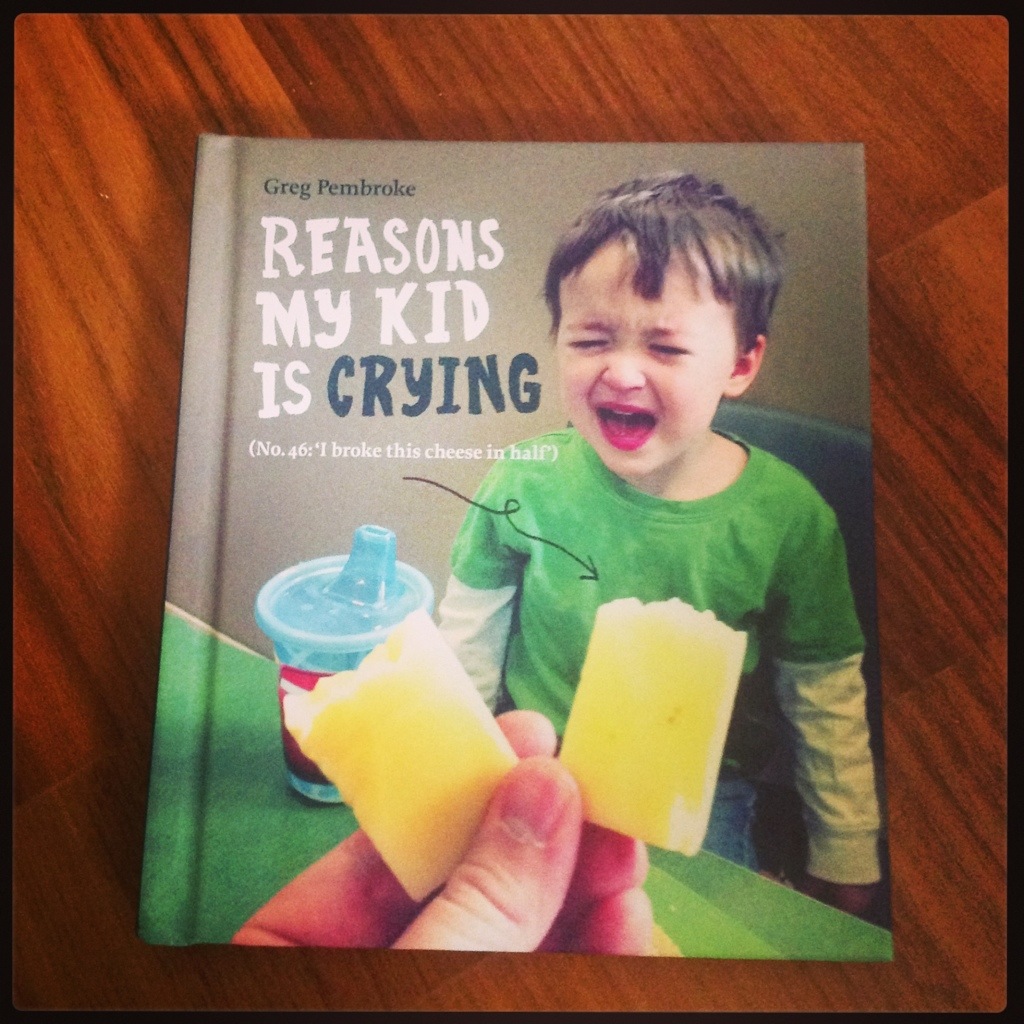
20131101-144258.jpg Every now and then we get sent something at Frost Magazine that changes our way of thinking. For me Reasons My Kid is Crying was one of those things. I don’t have any children, and, boy, did this make me happy about that.

Ingenious and hilarious, possibly inappropriately so. This is the funniest book I have read since ‘Who Moved My Blackberry?” which was YEARS ago. Buy someone this for Christmas, they will love you forever.

It all started when busy father Greg Pembroke posted a few pictures online of his three-year-old son, mid-tantrum, alongside the reason his son was crying: He had broken his bit of cheese in half. This book collects together photos sent to Greg from parents around the world, documenting the many, completely logical reasons why small children cry. (‘I let him play on the grass’ . . . ‘We told him the pig says “oink”’ . . . ‘The neighbour’s dog isn’t outside’). Together, they are both a fond portrait of the universal, baffling logic of toddlers – and a reminder for burned-out parents everywhere that they are not alone.

I love this book and I if I never procreate, this is why. Check out Greg’s Tumblr here.

Buy Reasons My Kid is Crying here.

New Study Highlights Crucial Role of Red Meat in Plugging The Nutrition Gap

Millions of people in the UK are putting their health at risk because of inadequate intakes of vital vitamins and minerals, a new study has revealed. But the research also highlights just how important the role of red meat is in the diet in helping to cover this nutrition gap.


Meat has been a staple part of the human diet since the dawn of mankind, but in recent years there has been some debate over whether too much red meat can raise the risk of health problems. Now a team of researchers has studied the issue of meat in the diet to help gauge just how important it is for a healthy mind and body – as well as the crucial nutrients that red meat in the diet brings.


The latest study found that data from dietary surveys indicates that UK diets for people of all ages can be worryingly low in nutrients normally found in meat, such as vitamin A, vitamin D, iron, magnesium, zinc, selenium and potassium. The researchers say that integrating red meat into diets across the age spectrum, from infanthood to old age, may help to narrow the present gap between vitamin and mineral intakes and recommended levels. In addition, there is emerging evidence that nutrients commonly found in red meat may play a role in supporting cognitive function, immune health and addressing iron deficiency.


Independent dietician Dr Carrie Ruxton, together with Emma Derbyshire, Senior Lecturer in Human Nutrition, Manchester Metropolitan University and Prof Robert Pickard, Emeritus Professor of Neurobiology, University of Cardiff, studied data from 103 previous scientific research papers. Many of the previous studies drew from the UK National Diet and Nutrition Survey (NDNS) – now an annual rolling programme which provides a valuable insight into the nutritional quality of modern diets. The new paper – entitled Micronutrient challenges across the age spectrum: Is there a role for meat in the diet? – is just published in the British Nutrition Foundation’s Nutrition Bulletin.1


The role of red meat in the diet

Red meat – defined as beef, veal, pork and lamb, which is fresh, minced or frozen – is a source of high quality protein and important micronutrients. Beef and lamb are classed as a ‘rich source’ – more than 30% of the recommended daily allowance (RDA) – of vitamin B3 (niacin), B12 (cyanocobalamin) and zinc. It is also a ‘source’ – 15% or more of the RDA – of iron, potassium and phosphorous. Pork is also a ‘rich source’ of vitamin B1 (thiamin). Meat, particularly from grass-fed animals, can be a valuable source of long chain (LC) n-3 polyunsaturated fatty acids (PUFA) such as omega 3 fatty acids. Research shows that these fatty acids support normal foetal development as well as help lower the risk of inflammatory conditions, depression and dementia in later life. Red meat is also an important source of haem iron – a type that is readily absorbed – and data shows that average iron intakes in the UK are inadequate, especially among females in general and during pregnancy.


UK nutrition – the seven ages of mankind


  • Infants and pre-school children – studies show that diets in this age group are low in vitamin A, vitamin D, iron, zinc.
  • Pre-pubescent children – diets were found to be low in vitamin A, magnesium, iron and zinc. Boys tended to have higher intakes of iron and thiamin than girls.
  • Teenagers (13 to 18 years) – diets are low in many key nutrients – including vitamin A, vitamin D, iron, magnesium, zinc, selenium and potassium.
  • Adults of reproductive age (19-50 years) – diets, particularly for females, fall short in magnesium and iron, as well as zinc, selenium and potassium.
  • Pregnancy and lactation – Women on average fail to get enough calcium, magnesium, iron, iodine, selenium and potassium and vitamin D.
  • Middle-age and older age (50 years and above) – while this group have better quality diets, there are still shortfalls in intakes of magnesium, zinc and potassium.
  • Older-age (75 years and beyond) – data shows that in adults aged over 85, intakes of magnesium, zinc and potassium are below the recommended nutrient intake.


How meat affects health – latest investigations

While some studies have linked high levels of meat consumption with health issues, the evidence is inconsistent and the research varies in its quality – for instance one paper that found a link between meat and obesity included pies and pastries as well as lean cuts of meat. Indeed, other research found that lean meat consumption does not impact on risk of chronic disease. Chemicals called heterocyclic amines may be produced when meat is cooked or charred and these have been linked with an increased cancer risk. However, there is also evidence that meat contains nutrients with anticancer properties, such as LC n-3 PUFA, conjugated linoleic acids, vitamins B6, B12, D and selenium. In addition, older studies may not be so relevant today as the fat content of meat has reduced considerably over the past few decades as a result of changes in breeding and animal feeding practices.


In terms of heart health, a study showed that eating red meat (lamb) three times a week had no effect on low-density-lipoprotein levels – the so-called bad cholesterol – or triglycerides, both factors for cardiovascular disease, when compared to white meat. In another study of patients with high cholesterol levels, those who ate red meat every day were found to have fewer markers for heart disease. Studies have indicated that meat protein could help delay or reduce the gradual loss of muscle mass – a condition known as sarcopenia. Diet when younger may play a part in mental ability when older – data from a Chinese study found that adults aged 50 years and over who ate meat in childhood had improved memory recall. The Scientific Advisory Committee on Nutrition (SACN) – made up independent experts and which provides advice to the Department of Health – recommends that adults should consume a balanced diet with up to 70g of lean red meat per day and up to 500g per week.


Independent dietician Dr Carrie Ruxton, who led the study, says: “Meat has long played a central role in the human diet and is now recognised as an important source of high-quality protein and essential micronutrients. The research indicates that even in developed countries such as the UK, with a plentiful food supply, there is evidence of under-consumption of key vitamins and minerals which support long-term health. It is notable that many of these are present in red meat, such as iron, vitamin A, vitamin D, selenium, magnesium, potassium and zinc.


“Integrating red meat into diets across the age spectrum, from infanthood to old age, may help to narrow the present gap between intakes and recommendations. In addition, there is emerging evidence that nutrients commonly found in red meat may play a role in supporting cognitive function, immune health, and addressing iron deficiency. While concerns have been raised about the potential impact of meat on the risk of chronic disease, there is little evidence and may be triggered by meat cooking methods or other dietary factors.


“Moderate amounts of lean red meat provide a wide range of important nutrients, without substantially increasing intakes of energy and saturated fat. When consumed in moderate amounts as part of a balanced diet, lean meat is unlikely to increase the risk of chronic disease yet provides an important source of micronutrients. In addition, people who eat lean meat regularly tend to eat more vegetables, fruits, low-fat dairy products and have a higher intake of nutrients overall, suggesting that inclusion of red meat does not displace other important foods.”


Dr Ruxton adds: “Meat had a central role in the diet of early man and continues to do so in modern times. When eaten as part of a balanced diet, red meat represents an important source of protein and essential nutrients, which may contribute towards improving diet quality from weaning to old age. Recommended intakes for red meat – up to 500g cooked weight per week – would appear to be safe and most UK adults are within this range.”

Christine Bleakley Talks Marriage & Babies

Christina BleakleyCHRISTINE BLEAKLEY FIGHTS ACCUSATIONS OF A CAREER CRISIS AND FINALLY REVEALS HER WEDDING DATE

In an exclusive interview and photoshoot with The Sun’s Fabulous Magazine on Sunday October 27, Christine, 34, sets the record straight on a whole host of rumours.

Dismissing claims that her long-awaited wedding to footballer fiancé Frank Lampard is never going to happen, the Northern Irish presenter reveals exactly when she’s going to tie the knot. And talking about her very public departure from the doomed Daybreak she says: “I don’t think I was ever as down as people thought I was.”

Derry-born Christine, whose new travel show starts on ITV1 next week, also hints at her future baby plans.

She says: “Children would be a complete and utter blessing. I just know I’m not 18 any more, so I’m always wary about talking about it too much because I don’t want to tempt fate. It would be a lovely thing.”

Fabulous magazine is available free in The Sun every Sunday.

“When I Was a Lad…” Britain’s Favourite Childhood Memories

“When I Was a Lad…” Britain’s Favourite Childhood Memories


Growing up, you tend to go through spells where you have your favourite cartoons that you never miss, the weekly kick around with friends after school, your favourite computer game and the CDs you would spend hours listening to. As you get older however, these trends change, new activities take their place and you outgrow certain things – that’s life and it’s part of growing up.


In just about every room in the house, you probably had things that you loved at the time, but cringe about now. Possessions can be just like fashion and hairstyles: they’re great at the time, but horrendous when they go “out of style.” Betta Living, the home retailer, have performed a survey recently that involved asking people from around the UK about their favourite childhood memories from around their homes, and you can find out more by visiting their page.


childrenOver the years, different items have been classed as “must haves” while others have been popular for years, only going out of style because another manufacturer has come along with a new “must have”. There are items on the list that just about everyone has owned at some stage in their life. For instance, one of the most popular childhood items was the lava lamp, which had people captivated for hours on end, while magnetic fridge letters were both fun and educational, allowing you to spell out words on the fridge while waiting for dinner to cook after a long day at school!


Different regions also have different favourite possessions, as you might expect. Quite often what’s ‘cool’ in London might not be cool in Manchester, for example, while Scottish women might have different tastes to Scottish men. It’s all down to interpretation and personal choice, and that’s what made our childhoods so different. If we all had the same things, played the same games, listened to the same music and shared the same pastimes, we wouldn’t be the people we are today.


A lot of our development will have been affected by the kind of possessions we had around the home or at school growing up. Whatever the circumstances, we probably all sat down at the same time in the evening, ate similar meals and watched the same television shows – so we’re not completely different after all!

Michael Finnegan tops parent poll of most irritating nursery rhymes of all time

Campfire singalong ‘Michael Finnegan’ has been named by parents as the most irritating nursery rhyme of all time.

The tune and its lyrics were said to be so “utterly catchy” that mums and dads found it impossible to stop humming it for the rest of the day.

It has 10 known verses but continues on a perpetual loop. Parents say this puts them in an impossible position of either starting again or ending it abruptly and sparking a tantrum.

Old MacDonald, meanwhile, was voted the nation’s parents’ favourite nursery rhyme, beating Row, Row, Row Your Boat, She’ll Be Coming Round the Mountain and Pop Goes the Weasel to the top spot.

The farmyard classic was said to strike “the perfect balance” between educational benefit and adult interaction.

Unlike Michael Finnegan, which was said to wind kids up “into a frenzy” just before bedtime, Old MacDonald was found to have a surprisingly soothing and soporific effect.

The research was carried out by AudioGO to mark this week’s release of its new ‘Wheels on the Bus Singalong’ audiobook.

It polled 1,000 parents with children aged five and under, and asked them to name their 10 favourite and 10 most irritating pre-school songs.


The Top 10 Most Irritating Nursery Rhymes

10. Miss Polly Had a Dolly

9. Humpty Dumpty

8. She’ll Be Coming Round the Mountain

7. Mary, Mary, Quite Contrary

6. Rain, Rain, Go Away

5. Pop Goes the Weasel

4. Pat-a-Cake

3. London Bridge is Falling Down

2. Polly Put the Kettle On

1. Michael Finnegan


The Top 10 Favourite Nursery Rhymes

10. Humpty Dumpty

9. Hey Diddle Diddle

8. Polly Put the Kettle On

7. Cockles and Muscles

6. Pop Goes the Weasel

5. This Old Man

4. Row, Row, Row Your Boat

3. The Big Ship Sails

2. She’ll Be Coming Round the Mountain

1. Old MacDonald

The Pre-Baby List: Things To Do Before You Have Children

gorgeousbabyA pre-baby what? A pre-baby list. Not for women who are pregnant and the dad-to-be, but for people who haven’t had children. Kids might be great but you can’t say they don’t cramp your style. My nephew is now two-years-old and has expanded my brothers life, but also allowed him less freedom. So I am not only compiling a list of things to do in your pre-baby years, but I am also writing a book on it, and I would love you to contribute. Just comment below on the things you think everyone should do before they have children. I have a few of my own below to start things off. I will be adding to the list and also keep you updated on the book. Here goes!

1) Go to Paris on the Eurostar.

2) Go to a music festival.

3) Go to London Fashion Week

4) Go scuba diving.

5) Get your driving license and have a roadtrip around America.

6) Have a roadtrip around Europe.

7) Spend weekends sleeping in late and doing absolutely nothing.

8) Read books

9) Buy the Sunday papers and read them (almost) cover to cover.

10) Learn a new skill

What do you think should be added? Comment below.

Katy Perry teams up with UNICEF and visits children in Madagascar

Beautiful and talented singer/songwriter Katy Perry has visited Madagascar to bring attention to the situation of children in the tropical island country, one of the poorest in the world and still recovering from a political crisis that began in 2009.


“In less than one week here in Madagascar, I went from crowded city slums to the most remote villages and my eyes were widely opened by the incredible need for a healthy life – nutrition, sanitation, and protection against rape and abuse – which UNICEF are stepping in to help provide,” Perry said.

NYHQ2013-0166 NYHQ2013-0174


“I am grateful to UNICEF for giving me the opportunity to see first-hand how their programmes make a real difference in children’s lives. Support for UNICEF is saving children, I am a witness to it.”

On her first visit in support of UNICEF, Perry saw a full range of programmes, from education, nutrition, health and child protection to water, sanitation and hygiene.

Beginning her trip in a slum area of the capital Antananarivo, she visited a child protection centre and met abused and abandoned children and young mothers receiving support and counseling. More than three out of four children in Madagascar live in extreme poverty, making them vulnerable to exploitation.

Most international donors have frozen development aid following the 2009 crisis, forcing the government to make drastic cuts in public spending and resulting in large parts of the population not having access to basic health care and primary education. Perry visited a UNICEF supported pre-school and a primary school built to enable children to go back to school.

At the Sahavola pre-school, 117 boys and girls between the ages of 3 and 6 receive a quality early education and learn the importance of thinking creatively and working collaboratively. They are also encouraged to participate in health and hygiene practices at an early age. To promote proper hygiene and sanitation, UNICEF constructed latrines and sinks at the pre-school, where Perry took in hand washing with the children.

The old village primary school, made from sticks and with a thatched roof, was destroyed by one of the tropical cyclones that hit the island every year. It was replaced by UNICEF with a solid, cyclone-resistant building.


Schooling rates in Madagascar are alarmingly low. Only three children out of every 10 who start primary school complete the cycle. Two-thirds of teachers have not received any formal training.


UNICEF and national school authorities are working to improve the situation through school construction and providing learning materials, training for teachers and supporting community action plans for education.

“An education is an incredible opportunity here. I visited a very remote community, where children and teachers walk for 45 minutes just to get to school. This is a testament to how appreciative they are about their education,” said Perry in the UNICEF- supported primary school in the village of Ampihaonana.

In the nutrition centre in Androranga village, Perry learned about UNICEF’s efforts to tackle another serious problem of the country – chronic malnutrition. Half the children in Madagascar are chronically malnourished, putting the country among the six worst in the world for chronic malnutrition.


Poor maternal nutrition, poor feeding practices and poor food quality contribute to the failure of these children to reach their full potential mentally and physically. The centre, run by a community health worker, identifies cases and works with village mothers to improve children’s nutrition, including focusing on the importance of exclusive breastfeeding during the first six months of a child’s life.

The Five Worst Things A Woman Can Do

GillianPublicityShotPeople can be their own worst enemies sometimes, and women are no exception. In fact, I believe women can be very hard on themselves. So I have made a list of the top five worst things a woman can do to damage her life.

Settling Down With Someone You Do Not Love.

The biological clock is probably the worst thing that ever happened to a woman. It can make us go a bit crazy. A male friend once described woman in their mid-thirties as ‘terrified and terrifying’. Quite unfair and he was about the same age himself. Worst than that, it can make some woman settle for a man they do not love so they can get married and have children. I completely understand this, I really do. Even in 2013 there is a ‘status’ thing between married and unmarried woman, and there certainly is one between the childless and those with children.

The media is full of stories about leaving it too late and this can cloud a woman’s judgement. But deep down, you always know whether or not you love someone. Relationships are hard enough if you do love someone. A relationship chosen because of your biological clock fears will never be a happy one, nor last.

It can also be hard to end a relationship with someone you do not love anymore. The fear of being single is a very real one for a lot of people, but it is only fair on you and the person you are dating. You will both find partners that you are meant to be with.

I came across this amazing quote from Kelly Brook in Easy Living magazine: “I’m not scared to walk away when things aren’t working. I’m not scared of being single, of not having kids. What I am scared of is being stuck in something negative. That is what I am most proud of: having the confidence to know I deserve everything.”

Starve Herself

The pressure to be thin can be tremendous. This pressure comes from the media and other women. It rarely comes from men. If a man loves you he won’t mind if you pack on a couple of pounds.

When I was in drama school I heard stories of women eating cotton balls soaked in orange juice to stay thin. The very idea of it is insane. If you starve yourself your body will not get any nutrients. You will damage your fertility, your health and your hair will fall out. I have heard way too much about starvation diets, that is not a diet, it is anorexia. Let’s stop it now.

Another thing: The whole Curvy versus Skinny thing is a war that should never be waged. Different people are supposed to be different sizes. Diversity is beautiful.

Let a Man Pay For Everything

There is nothing wrong with the man paying for the first date in my opinion. Especially as the women has already probably spent a fortune on a new dress and beauty treatments. However, letting a man pay for everything gives him the control in the relationship. It also makes it harder to walk away if the relationships stops working and you are not financially stable. A woman should always have a means of making money. If not, she has no control of her own future. Virginia Woolf has a famous quote that ‘A woman must have money and a room of her own’. I could not put it better myself.


Judge Another Woman’s Choices.

Woman can be really hard on each other. The truth is that sometimes when we judge it is actually a mixture of envy and admiration. Life does not give everything to one person. When you make a choice another option ends. The grass can seem greener on the other side. When women judge each other it holds us all back. It is time to live and let live.


Take Her Foot Off The Pedal

Another thing that some woman do is slowing down or quitting, even before they realise they have done so. When you start to think about children you can take your foot off the gas pedal. This can manifest in not applying for promotions, not going after something with a passion or not following a dream. The expectation of getting pregnant can stop you in your tracks, but do not let it. You never know what will happen in life and maybe you will not want to be a stay-at-home mum. Stay passionate and go after what you want.

What do you think women do to sabotage themselves?