Asda has launched a UK 1st for the sun-care market with its own brand ice-cream scented sun lotion for kids. In an effort to help make applying children with suncream fun and easy, the lotions and creams feature a delicious vanilla scent and are priced a just £3.50. All products featured in the range are highly water resistant, 24 hour moisturising and have been dematologicaly tested. You can also get two for £6.
We tested them and…yes, they do smell like ice cream. Not in a sickly way, but in a nice way. Hopefully the smell will make your little ones stay still long enough for you to get the lotion on them. Some of the sun protection even comes in a handy spray container. They are water resistant and protect little ones skin well. Recommended.
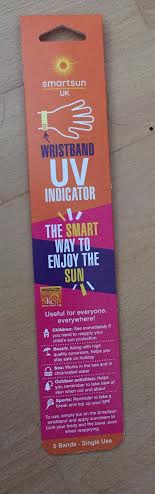
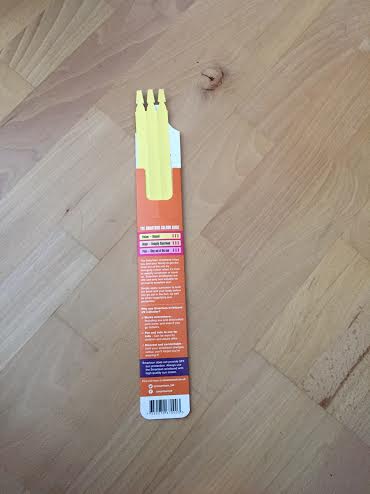
We reviewed the SmartSun Wristband. An ingenious way of keeping safe in the sun for children and adults. They are very easy to use and they work well. The bands are single use and come in a pack of 5. These bands can be used by all ages to protect your skin from the sun’s harmful rays. Especially useful given the rising skin cancer figures.
Fresh air and warm weather are healthy for children and, and small doses of Vitamin D from the sun’s rays are good for baby’s skin. Children have delicate and sensitive skin however, so it is important to make sure their SPF is topped up at all times when outside in the sun.
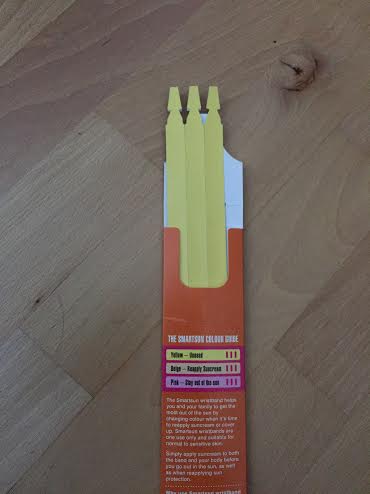
It is easy to forget about reapplying sun cream when you are out having fun, but the SmartSun wristband provides an easy to read indicator of how much UV radiation they have been exposed too. It works by measuring the amount of UV radiation, and lets you know when to reapply sun cream and when they have had too much sun.
With two colour changes – one to tell you when your children’s sun cream needs reapplying, and one to tell you when to avoid the sun, you can enjoy the time spent outside by using the Smartsun wristband to accurately time the next sun cream application. The band is discreet and comfortable to wear for either adults or children and can be used in and out of both pool and sea water.
This famous mom photographer shares her secrets with Frost Magazine and SmugMug.
Last year, Elena Shumilova took photos of her sons as they played by the Russian countryside. She uploaded the photos online, they started getting shared, and shared again… until they became a viral sensation, with over 60 million views.
These photos hit something magical all across the Internet — a sense of nostalgia for a childhood past. She even started getting letters from people in their nineties, saying the photos moved them to tears.
As parents, we instinctively want to take photos of our kids. We’re trying to preserve this brief slice of time before they grow up. But when we take our kids to professional photo studios, the results can end up looking stilted and unnatural.
We want to remember our kids as they actually are — not with the forced smile a stranger coaxed out of them at the studio, but with the real smiles and giggles they share with us every day.
How can we capture natural photos of our kids, the kind Elena seemingly has a magic touch for?
Elena has mostly been quiet since her photos have gone viral, undistracted by all the media attention. Instead, she focuses on raising her kids and continues to photograph them every day.
Given how quiet Elena has been, we are excited to share a behind-the-scenes look at her in action.
5 Tips to Get Better Photographs of Your Kids
1. How to get your kids to look natural, not “posed.”
So you catch your kids in the perfect moment — they’re outside playing and laughing, the lighting is just right, and you see this perfect picture you want to capture. You rush to get out your camera, but then…
They see the camera. They stiffen up. They start posing. The moment is lost.
What do you do?
When photographing children, the single most important thing is to photograph them often — every day.
You can’t just do it sporadically, or they’ll freeze up as soon as the camera comes out. Consistency is key. That way they’ll be comfortable around the camera.
It’s these everyday scenes that you want to capture — the ones you’ll remember best when they grow up.
To get the most genuine photos, I try to catch them in the moment — when they’re playing with each other and have completely forgotten about the camera.
Here they’re playing “airplanes,” a game we also play together at lunchtime when they’re feeling picky about their food.
2. The types of clothes that work the best.
I follow a pretty simple rule: clothes shouldn’t be distracting. They shouldn’t take attention away from what’s happening in the photo.
For such a simple rule, it’s harder to follow than you might think. Kids’ clothes today are designed to grab your attention—with bright colours, cartoon characters, and writing all over them. In photographs, all this takes attention away from your kids.
When I started pursuing photography seriously, I actually replaced all their outfits. This took quite a while to do, but now I know that anything I pull from their closet won’t interfere with the photo.
3. How to best capture kids of different ages.
Newborns A lot of parents have asked me about this photo — how did you get your one-month-old to look so calm? Infants are notoriously difficult to photograph because they’re often crying or fidgeting.
Here you’ll have an advantage as a parent. I’m his mom. I’m around him 24 hours a day, and I know when he cries and when he doesn’t. Let your parenting instinct help you choose the right moment.
The Golden Age: Ages 2–4 Something I noticed while photographing many children, including my own, is that there seems to be a universal age when kids are the most photogenic.
That seems to happen between ages two and four.
Kids around this age behave very naturally. They don’t care that someone is looking at them, they don’t care what others think, and they don’t care that a camera is pointed at them.
They aren’t yet self- aware. And so, they’re free.
Ages 5 and Older It gets a bit more difficult when they’re older. As early as age five, they start to become more self-conscious when the camera comes out. They start to pose.
The key here is to be very patient. Let them play while you disappear into the background. My best photos always happen at the end of a photo shoot, when my kids have forgotten all about the camera.
4. How to get good photos of your kids with pets.
Just like people, every animal is different. Some pets like to be photographed, and others don’t.
Because every pet is different, there isn’t a magic formula for this. I spend hours observing our farm animals, figuring out how they move and what angles work best for them — just like I would for people.
I’ve also tried bribing pets with food, but it doesn’t work. It’s almost impossible to get a good picture when they’re chewing or licking their paws. So I’ve learned the hard way not to feed our pets during photo shoots.
With animals, you have to rely on a bit of luck — and constant patience.
5. Don’t give up.
This is the most famous photo I’ve taken. It’s been viewed over 10 million times — but I almost didn’t bring my camera that day.
Before I took this photo, my confidence was at a pretty low point. I had tried for a photo of my son and dog 14 other times — not 14 other photos, but 14 full photo shoots, all failures.
I was convinced that my hands were too clumsy, or my dog was not the right dog for it, or my kid was not the right kid for it. I was just feeling desperate that day and didn’t even want to bring my camera.
But something told me to bring it. And on that fifteenth day, it all just came together.
This dog of ours is now famous — but he’s not all that photogenic from most angles. He’s actually a pretty difficult dog to work with. From the previous 14 photo shoots, I’d learned what angles and body compositions work for him and my son.
It‘s easy to get discouraged. It’s easy to think, “Oh, why bother, it won’t work anyway.” And it may not for the first 14 times. Those 14 photo shoots weren’t failures though, because I learned from them. And they’re what made the fifteenth one possible.
Don’t give up.
Rather than creating high-pressure elaborate setups, observe your kids in everyday simple situations. Do it every day. Bring your camera along.
And then — when the right moment comes along — you’ll be ready.
As a couple with conflicting parenting styles, we were torn between the gentler ‘laissez-faire’ approach and the more disciplinarian ‘tiger parent’ philosophy. What we really wanted was a way of parenting that could fit with our two different personalities, and allow us to parent in harmony, and raise our children to become happy and fulfilled adults.
So casting the parenting fads to one side, we turned to the latest research in child psychology and neuroscience and devoured hundreds of the world’s leading parenting books to find practical, tried and tested evidence. And we were delighted to discover that there really are clear, straightforward methods for achieving what we call a ‘balanced’ approach to parenting.
How is your book different from other parenting books?
Our book is different in that it gives the perspective of two different parenting styles, which removes the guilt associated with having to fit into an ‘idealised parenting mould’. It also equips parents with specific step-by-step tools that are based on the latest scientific and psychological research in childhood development. These tools are designed to support you through the immediate challenges of everyday parenting, whilst also meeting your long-term goal to raise children to become happy, self-reliant and responsible adults.
What are the biggest parenting challenges?
It’s difficult to answer this as it largely depends on your child’s temperament/personality and our own personality, as well as our individual style of parenting. We all encounter challenges so the key thing is to learn how to prevent such issues from happening in the first place, which is one of the key objectives of our book. Learning how to anticipate challenges before they happen allows us time to think, so that we can respond rather than react to our children’s misbehaviour. So we’d say that one of the biggest challenges that parents face is learning to be more strategic in their approach to parenting.
Is there ever a right way to raise children?
We are under no illusions about the reality of family life and have no wish to make it ‘perfect’. The fact is that there is no magic wand to make a family life perfect! However, with a bit more awareness of our children’s needs, combined with some simple practical trouble-shooting tools, we can go a long way to making a real difference to our children’s, our family’s and our own lives.
What are the dangers of over-praising our children?
Research suggests that overpraising our children and particularly using evaluative praise with statements such as “You’re smart” or “You’re good” can create a fear of failure, because children become afraid to do anything that could expose their ‘flaws’ and call into question their ‘talent’. This type of praise results in children becoming less likely to try new things or taking risks for fear of not getting it ‘right’ and so they end up missing out on essential opportunities to develop their confidence and sense of self.
How do you stop other relatives becoming too involved?
We think that other relatives will always get involved and we need to accept this as they think that they are doing this to help us. However, if we are more confident in our parenting and we demonstrate that we can manage our kids without overreacting, etc. then other relatives tend to find it impressive, then start making compliments and ultimately become much less involved.
Top parenting tips.
1. Focus on planning and prevention – instead of always being reactive.
2. Give empathy as often as possible – and do not discount feelings.
3. Model any behaviour you want to instil in your children – starting with respect and joy.
4. Use encouragement and descriptive praise – instead of general or evaluative praise.
5. Focus on what you can control – and don’t undermine your authority with empty threats.
6. Allow your children to have some control over their lives – offer them limited choices and ask them questions.
7. Allow mistakes to happen – they are opportunities for learning.
8. Coach your children to own and solve their problems – and they will become self-responsible.
9. If you have to deliver consequences, do it with respect and empathy – and delay them when needed.
10. When you say or do something you regret, ‘Rewind and Replay’ and ‘Repair’ – to keep a strong connection with you children.
What is the biggest mistake people make when raising children?
This is another challenging question as it’s difficult to identify one key mistake! However, one that is really common and can really affect children as they grow up is for their parents to frequently discount their feelings. This is something that parents do, often without even realising it. We tend to either reassure our children or try to ‘toughen them up’ – whichever approach we use, the message they hear is that they’re not supposed to feel the way they are feeling.
They grow unable to trust their feelings and cannot manage their emotions well, and this is an essential life skill. It’s far better to use empathy as a way of establishing and nurturing a bond with your child than try to ‘make light’ of their feelings, as this simply undermines their innate need to be listened to and have their feelings acknowledged.
Can parenting be made easier?
Our book ‘Kids don’t Come With a Manual – The Essential Guide to a Happy Family Life’ is designed to help empower parents to deal with most situations effectively. So that misbehaviour and the challenges that your children throw your way become opportunities for learning and growing rather than being stressors or negative experiences. Our main goal is to empower parents to deal with everyday parenting challenges without confrontation or anger, and raise their children to become the happy and confident individuals that they deserve to be.
Kids Don’t Come with a Manual by Carole and Nadim Saad, Best of Parenting, £12.99, www.bestofparenting.co.uk/books
We are not surprised at the news that mothers work so hard that they are in breach of Articles 3, 5 and 6 (b) of 2003 of the of EU Working Time Directive. Mums caring for a baby full time exceed maximum working hours, are not given adequate rest periods and do not receive paid annual leave from their baby employers
The number of hours each week that British mothers spend looking after their children would be in breach of the European Union’s Working Time Directive if this work were to be treated in the same way as paid employment, research by leading greeting card and gift retailer Clintons has revealed.
The Working Time Directive states that employees should work no longer than 48 hours per week. Workers are also entitled to a rest period of eleven consecutive hours in every 24-hour day, a rest break every six hours of work; an uninterrupted rest period of 24 hours in every seven day week, and paid annual leave of at least four weeks every year. Employees who work night shifts have extra protection and cannot be asked to work more than eight hours in a 24-hour period.
Baby experts recommend that a baby between the ages of 12-18 months should sleep for around 14 hours a day, meaning a parent is actively looking after their child for the remaining ten hours. Across a 7-day period, this comes to a minimum of 70 hours a week, exceeding the maximum limit of a 48-hour working week specified by Article 6 (b) of the Working Time Directive by a shocking 22 hours. On top of this 70-hour minimum, mothers also have several hours of ancillary work each day and are constantly “on call” to respond to any emergencies, meaning their actual rest period is often reduced to six hours a day.
Of the 14 hours of sleep a baby should get each day, around three hours come in the form of daytime naps, and the remaining 11 hours come at night. Article 3 of the Working Time Directive states that workers are entitled to a “minimum daily rest period of 11 consecutive hours per 24-hour period” and therefore getting up in the middle of the night if the baby starts crying would be in breach of this rule.
Looking after a baby for seven days a week is also in breach of Article 5 which specifies that “per each seven-day period, every worker is entitled to a minimum uninterrupted rest period of 24 hours plus the 11 hours’ daily rest referred to in Article 3.”
Article 7 of the 2003 EUdirective states that “every worker is entitled to paid annual leave of at least four weeks.” A Clintons survey of babies found that 0% of them had made provisions to fulfil this requirement.
Tim Fairs, director at Clintons, said: “Parents put in a huge amount of work, week in and week out, looking after their kids. Often this work goes completely unrewarded. Mothers’ Day is an opportunity to say thank you for everything mums do, but we shouldn’t wait for just one special day every year to acknowledge their hard work. We should celebrate mums every day of the year.”
Mother’s Day originated in the United States in 1908 when Anna Jarvis from West Virginia held a memorial for her mother. During the Second World War, American soldiers brought the celebration to the UK, where it merged with the older religious festival of Mothering Sunday when people would return to their mother church for a service held on the fourth Sunday of Lent known as Laetare Sunday.
Introduced in 2003, the European Union’s Working Time Directive (2003/88/EC) gives workers within the EU certain rights relating to numbers of hours worked each week, annual holiday entitlement, rest breaks and days off.
In the UK, workers have the option to work in excess of the 48 hours specified by the working time directive if they choose to, however this option does not apply to employees in all sectors. The statutory leave period in the UK is 5.6 weeks per year.
Tim Fairs, added: “Many mothers work incredibly hard all year round and never have a day off. No matter how old you are, take a moment this Mothers’ Day to let your mum know how much you appreciate her.”
While some people say having a child ruins your career Sienna Miller has told the Observer magazine that having a child improved hers. A combination of showing up for meetings with executives underprepared and an affair with married actor Balthazar Getty in 2008, which was reported in the tabloids in excruciating detail, all affected her career. “Quite chaotic,” is how Miller sums up her 20s.
Studio decision-makers read papers and care about how actors come across to the public. The article says: ‘The thinking among certain casting agents, Miller once said, is that “People don’t want to see films with people they don’t approve of in them.” She took a break from screen work, performing in plays in London and New York.”
She was the heroine of hackgate and then hooked up with actor Tom Sturridge. In 2012 the couple had a daughter, Marlowe.
“And I think having a baby really changed everything, if I’m honest, I think that’s where it began.” Miller says. “The stakes are higher. You have someone that you want to be proud of you eventually.” And on the other hand she says: “You’re aware of your own mortality. For me, as soon as I had a baby I had a vision of my life – and what was left of it.”
Miller also says that executives and casting directors think differently of her now “I’m sure that factors. People who read the negative things [about me], the people who need persuading, are probably ignorant enough to assume, ‘Well she’s got a kid so she’s serious now.’ Which, of course, isn’t the case. I’m still whoever I was. Maybe more mature, but the same. So amongst that ignorant, ridiculous area of my industry, I’m sure opinions of me have changed because I’m a mother now.”
What do you think? Do you agree with Sienna Miller?
Late November I attended a very interesting event at The Ivy, Mind The Nutrient Gap: Hidden Health Risks. Apart from having lots of fun chatting to amazing journalists and eating an extraordinary lunch (I would not have expected anything less), I found out some interesting facts. many of which I found shocking. Leading dietitian Dr Carrie Ruxton, top nutrition specialist Miguel Toribio-Mateas, and regulatory expert TC Callis, all gave excellent talks and revealed exclusive research into the growing and hidden nutritional gaps in the UK and its wider impact on health.
DID YOU KNOW?
Almost 40% of Brits admit that they do not know what nutrients can help them to support heart health, immune health, bone health, eye health, energy, nail or hair health
A third of Brits state that they do not have time to prepare home cooked meals
77.7% of Brits reveal that they do not get their five fruit and vegetables a day
Over half of us say we don’t understand the benefits of vitamins and minerals
Obesity figures in England have more than tripled over a period of 25 years. Over 30% of children (aged 2-15) are overweight or obese
More than a fifth of Brits in their 40s and 50s do not know how best to adjust their eating habits to support their nutritional needs
There is some controversy on whether people should be taking vitamins but the truth is our diets are just not good enough. The evidence that some of us should take vitamins is insurmountable. We don’t all need a daily multivitamin but we all have gaps in our diet that need filled in.
The Health Supplements Information Service unveiled new research on our diets, the nutritional gap we face, and its wider impact on long-term health sorting fact from fiction. If I wasn’t convinced to take vitamins before, I certainly was after. A shocking two out of three adults don’t hit their five-a-day target of fruit and vegetables. To make matters worse, intake has actually fallen over the last four years. More than a quarter of calorie consumption comes from crisps, treats and drinks which have minimal nutritional value. Even more worryingly, 57% of people thought that children did not need to take supplements. Despite the fact that the Chief Medical Officers of England, Wales, Scotland and Northern Ireland have repeatedly reminded parents and health professionals that all children under the age of five need supplementary vitamin D unless they get a sufficient intake from fortified formula milk.
It is not just during pregnancy and childhood you need vitamins, many people start taking vitamins in their forties and fifties but by this time you can already be paying the price of a bad diet. Leading dietitian Dr Carrie Ruxton notes: “The lifestyle choices you make during your middle years are incredibly important. When you’re younger, you have resilience and are physically at your peak, but by 40-50-something years you begin to pay the price for any bad habits or nutritional shortfalls. Your nutritional needs also change, and certain nutrients, including vitamins B12 and D, calcium, potassium and fibre become increasingly important.”
The so-called sandwich generation, those ages 30-55 years, have the highest stress levels of any other age group. Sandwiched in-between their children and sick or elderly parents, they also have the early development of health problems to deal with and it is the peak time for career achievement. Women in the latter end of the spectrum also have the menopause to deal with and both genders have to maintain a home. According to Age and Ageing 2014, persistent job strain in middle age may lead to longer hospital stays later in life. Vitamins D intake is particularly important. We do not get enough sun in the UK and the evidence for vitamin D usage mounts all of the time. Dr Carrie Ruxton said that the recommended dosage was going up. Not only is vitamin D safe, it also stops infection. Women are apparently more likely to take vitamins than men and multivitamin use peaks at 30-44 years.
The truth is: our diets are just not good enough. We should eat more fruit, veg, lean red meat, low fat diary and oily fish. We should also drink healthy drinks. Any gaps should be filled in by vitamins or we will pay the price as we age. Most vitamins are safe and you would have to take a lot to overdose. Vitamin D is very safe, vitamin A becomes toxic over 3000mg, especially to pregnant women and over 5mg of copper is toxic as the body stores certain vitamins and our bodies also store minerals. It takes a lot to overdose on vitamins and keeping within the RDA and filling in our bad diet habits will pay off in the future.
On starting acting: “I had no confidence. I think because I started so low. I had quite low expectations. I felt one step behind, and it’s always been, ‘I can’t believe they actually chose me’. I went for small parts because I thought that was probably the only thing I would get. I never auditioned for leads. I just assumed I wouldn’t get them.” That is said with so much self-parody that I feel like I’m allowed to ask: “Do you think you missed out because of that?” Huge eyebrows: “Well… ya think? But you live the life you’ve lived, don’t you? I didn’t have that God-given confidence you get from going to a public school and going to Rada. I went to a comprehensive and felt lucky if I got a job in the chorus. But the upside is I was never disappointed.”
If the industry has gotten better for women in the past 20 years: “I did hear something alarming the other day, I bumped into a friend at an audition, another girl my age. I asked if she was still doing this show – I can’t tell you what it is – and she said, ‘No, it was cancelled. The reason they gave was that they already had a female-driven programme.’ Wow. Because you can’t have two female-led dramas on telly. How awful would that be! So we’re still not there. I don’t know if we’ll ever be equal. We’ve still got an old-fashioned way of receiving female characters. They’ve got to be the wife, or they’ve got to be nuts.”
On the charity she and her husband, James Murray, set up; the Murray Parish Trust: “It’s in memory of Ella-Jayne, our first daughter.” [She died of congenital heart failure at eight months old] “It’s a terrifying and traumatic time [when your child is ill], you just want to be there all the time. They really, really need this hospital. The accommodation they’ve got for parents at the moment is so sad. £70 million it’s going to cost. Our charity is the little Jack Russell that goes down the hole and scoops everybody out. The big money willcome in afterwards.”
Second daughter Nell gets in the way of her career: “My agent will say, Darling, you’ve got to do a play’. I don’t want to do a play. Why do I have to do a play? You have to go off and do your time in a play to remind a certain genre of people that you’re still an actor. It’s a ball ache. I don’t want to have to leave my daughter and go to London every night.”
On pilot season: “If there was a little room you could go in beforehand where you checked in your dignity, your soul and your pride, that would be fine. But unfortunately you have to go into pilot season as a whole person. Every day you drive around with your clothes in the back of the car, you sit in rooms full of people as sad and as desperate as you are, with so much make-up on they could sink the Titanic, tiny little thin people. Sometimes casting directors might look at you, sometimes they might be on the phone, sometimes they’ll talk over you. And more often than not, you’ll hear nothing. I have got jobs out of it before, but it’s just not worth it. We tape all our [audition] stuff in our garden shed, now. Having a shed in our back garden has made us a lot of money, me and Jim.”
On the pressure on men: “You have to have a six pack, you have to have a pair of glutes, you have to wax your chest. You have to sign a contract saying you will show your bum. You see these poor guys right before a scene, doing press-ups, when they should be thinking about their character. That’s what we’ve come to expect from men on screen now. It’ll be from up there [she gestures to some nameless authority]. Hot, young people with perfect bodies. That’s what people want to see. And of course it actually isn’t what people want to see. I want to see interesting faces. I want to see different bodies. I want to see people I can relate to. There’s nothing attractive about knowing a man has been flexing in front of a mirror five minutes before a scene. When did that become sexy? And I don’t want to see a woman looking starved to death. When did that become sexy? These are first world problems, It’s very easy as an actor to live in a bubble and think that life is about acting, and of course it’s not. It can turn you into a bit of a monster.”

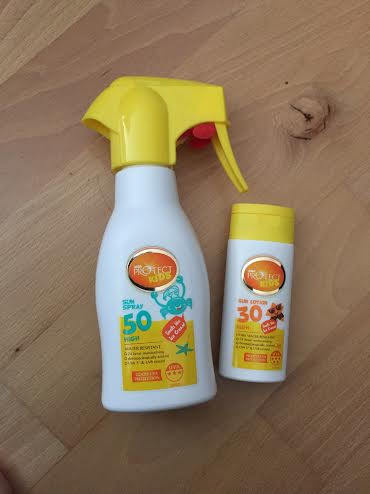 Asda has launched a UK 1st for the sun-care market with its own brand ice-cream scented sun lotion for kids. In an effort to help make applying children with suncream fun and easy, the lotions and creams feature a delicious vanilla scent and are priced a just £3.50. All products featured in the range are highly water resistant, 24 hour moisturising and have been dematologicaly tested. You can also get two for £6.