UK Under-5s At Risk Of Becoming Generation D-

mapRecent findings reveal six in ten (60%) UK parents are unconcerned about the risk of insufficient vitamin D levels in their child. The new findings have raised concerns among health experts, who fear the UK’s under-5s may be missing out on the essential vitamin, due to a lack of awareness of its benefits and the potential health risks associated with vitamin D deficiency.


Parents in the dark about vitamin D


The Generation D- report, commissioned by new public health awareness campaign Vitamin D Mission, reveals that despite its importance for childhood development, parents are not fully informed when it comes to their child’s need for this important vitamin.


A cause for concern is that despite its crucial role in ensuring the healthy growth and development of children’s bones and teeth, more than three quarters of parents (77%) are unaware of their child’s daily dietary requirement of vitamin D, with more than a third (35%) stating they have never received information about their child’s specific needs.


All children living in the UK are at risk of not getting enough vitamin D, with research revealing the average toddler is only getting 27% of the daily dietary vitamin D they need[1]. However, a lack of education about the risks associated with vitamin D deficiency means a fifth of parents (20%) remain unaware that under-5s rank among the most at risk of low levels of vitamin D (See appendix 1).


Parents in the UK are largely oblivious of the major health issues associated with low levels of vitamin D, with many unaware of the potential link to multiple sclerosis (95% unaware), osteoporosis (91% unaware), diabetes (95% unaware) and rickets (62% unaware). Furthermore, studies have also shown deficiency can cause poor growth in children and heart muscle disease and hypocalcaemic seizures in infants[2], as well as muscle weakness at any age.


The survey found that, despite a recent rise in cases of rickets in the UK, parents ranked low levels of vitamin D among the least worrying issues when it came to their child’s health. Meningitis topped the poll when touching on matters of most concern, with common child illnesses and conditions, such as flu and asthma, ranking higher than insufficient levels of vitamin D (see appendix 2).


Clinical consultant for the Vitamin D Mission and paediatrician, Dr Benjamin Jacobs, comments: “As a paediatrician at the Royal National Orthopaedic Hospital, I see first-hand the health impacts of low levels of vitamin D in children living in the UK. From poor growth, soft bones and seizures, to heart disease and rickets, not getting enough vitamin D can result in a range of serious health issues in children and adults.


“Many parents are still not getting the message about this vitamin and its importance for child health so children are missing out on the vitamin D they need for healthy growth and development.”


Fortification and supplementation


The Generation D- report found that despite government recommendations, only one in seven (16%) parents provides their child with a daily vitamin D supplement, with three in five (60%) admitting they never give their child vitamin supplements at all.


Younger parents, aged eighteen to twenty-four, were found to be most likely to give their child cod liver oil or a vitamin supplement (47%) compared to just over a third of parents (35%) aged thirty-five plus.


Family GP, Dr Ellie Cannon, comments: Labels like Generation Z and Alpha have been thrown around, but as this report reveals, the next generation is, in fact, set to be Generation D-.


“With parents lacking awareness of the vitamin’s role and therefore the need for supplementation, the UK’s under-5s are at risk of being vitamin D deficient. The Vitamin D Mission aims to raise awareness of this issue and end deficiency in our nation’s children, once and for all, to help ensure our kids grow up healthy and strong.”


Diet without the D


Worryingly, all children in the UK are at risk of not getting the vitamin D they need to support their growth and development, with findings from the report revealing over a third of parents (35%) are not aware their child needs a daily dietary source of vitamin D.


This is reflected in mealtime offerings, with the most popular kid’s meals containing next to no dietary vitamin D. Of the top seven meals, which includes firm favourites such as spaghetti bolognese (46%) and fish fingers (43%), only one was found to add to a child’s diet with vitamin D; scrambled eggs (41%) (See appendix 3).


One in five parents (22%) believe they meet their child’s specific vitamin D requirements through a healthy balanced diet. However, while the intention is good, the report reveals mums and dads are not always informed which foods contain vitamin D. A fifth of parents incorrectly think oranges (20%) and carrots (18%) contain the essential vitamin, with more than one in ten (11%) mistakenly saying cows’ milk is a source of vitamin D.


Furthermore, the survey also reveals that a quarter of under-5s (26%) are fed oily fish once a month or less, with one in seven (15%) never being fed this rich source of vitamin D. Half of parents (50%) have never fed their child liver, another good source of the vitamin.


The Generation D- report has been released to support the launch of the Vitamin D Mission, a campaign that aims to eradicate vitamin D deficiency in UK under-5s. As part of the campaign, the Mission has launched an online test which allows parents to estimate how much vitamin D their child is getting as well as offering helpful tips and hints on how they can include more sources of vitamin D in their child’s diet. For more information visit VitaminDMission.co.uk

Reasons Under-5s are at Risk of Vitamin D Deficiency

1) The Sun In the UK, our skin isn’t able to make vitamin D from winter sunlight (November to March) as the sunlight hasn’t got enough UVB (ultraviolet B) radiation. 

In the summertime, children are outside less and when they are playing outdoors many parents are concerned about sun safety, therefore putting lots of sunscreen on them, which makes it even harder to synthesise vitamin D. Just ten to fifteen minutes without sunscreen during the summer months (April to October) can help provide a child with the vitamin D they need.

2) Food Not all children receive a varied diet and foods rich in vitamin D, such as oily fish.
3) Supplementation Low uptake of vitamin D supplementation is also a factor. In fact, a report from the Vitamin D Mission reveals less than one in five (16%) parents provide their child with a daily vitamin D supplement.


Appendix 2: Health Issues of Most Concern to Parents

Rank(1=most important) Health concern
1 Meningitis
2 Obesity
3 Childhood diabetes
4 Childhood cancer e.g. skin cancer
5 Whooping cough
6 Flu
7 Asthma
8 Low or insufficient levels of vitamin D
9 Getting their five-a-day
10 Allergies


Appendix 3: Top seven meals served to UK children

Rank Meal %
1 Spaghetti bolognese 46
2 Fish fingers 43
3 Scrambled eggs 41
4 Pasta with sauce 36
5 Roast Dinners 32
6 Baked beans on toast 32
7 Chicken nuggets and chips 29

Nicki Waterman’s Sport Relief 7 Day Diet Plan

Sport Relief is back again in March 2014 and promises to be even bigger and better. For the first time ever the Sainsbury’s Sport Relief Games will take place from Friday 21st to Sunday 23rd March 2014.

The public can join in with the fun and games by running, swimming or cycling their way to raising cash at over a thousand venues around the country, including the landmark events at Queen Elizabeth Olympic Park. Celebrity fitness expert Nicki Waterman has created a diet plan to help those training for the Games.

For those wanting to prepare for the Games, whilst sporting the new look in the kitchen, the specially designed Emma Bridgewater apron as worn by The Great British Sport Relief Bake Off ‘Star Bakers’ is available to buy from HomeSense and TK Maxx stores, for £12.99 with at least £6.50 going to Sport Relief.

Celebrity fitness expert Nicki Waterman says, “All the money raised from Sport Relief will be spent helping some of the most vulnerable people in the UK and across the world’s poorest countries – who wouldn’t want to be part of such a brilliant charity.”

nikkiwaterman
Emma Bridgewater has created two limited edition aprons for Sport Relief available from HomeSense and TK Maxx stores

Main meals need to be based on slow release energy foods. These help to provide the energy needed to re-fuel exercised muscles.

In practice this means having things like porridge for breakfast, or other oat cereals like, sugar-free muesli or a couple of slices of granary bread with two boiled or poached eggs and a glass of fruit juice.

For lunchtime, it is a good idea to use tortilla wraps and pitta bread as the basis of your meal, adding to them some lean fillings like roasted chicken, reduced fat hummus or some avocado or cottage cheese; all with lots of salad.

At dinner-time, pasta and noodles or new potatoes make a great base to your meals. To these you can add some baked or grilled fish, lean meat like grilled steak or vegetarian options, or stir-fries with a meat substitute.

The next part of the plan is to ensure that you have the right snacks before, during and after you exercise.

About an hour to 30 minutes before you train, try to have a banana and a glass of juice or a handful of dried fruit and some water or a cereal bar.

When you are actually exercising, have another small snack once you are 30 minutes in. This can be an isotonic sports drink, which will give you a little energy boost to keep going beyond an hour.

Once you have finished, try to have another snack like a banana sandwich or a cereal bar within 30 minutes of finishing. This will start the process of beginning to refuel your muscles.

This may sound like a lot of food and if you try this pattern and find that you are actually putting on weight, then cut back on serving sizes at main meal times.

If you find on the other hand that you are shedding too much weight, have slightly larger servings at meal times.

Remember, it is quite common for female runners, cyclists or swimmers to end up with iron-deficiency anaemia. Try to include foods like bran flakes, baked beans, wholemeal bread, prunes, cashew nuts and lean red meat.

If you know that you do not eat these foods regularly, it may be worth considering a multivitamin and mineral supplement with around 10mg of iron a day to help keep levels topped up.


Survey Reveals Men Are Healthier Than Women

Men are healthier and happier than women in general according to a new survey. 

battle of the sexes

Health and Happiness, a nationwide study of 2,000 men and women found that men reported a higher rate of happiness when it came to their weight, shape, appearance, and the way they are perceived by others (55%). Women, on the other hand, were more self-conscious and slightly less satisfied with their happiness levels at around 49%. Women are also much more likely to try dieting (71%) compared to men (47%).

Men don’t feel stressed as often either. Almost 60% of male respondents said they only felt stressed once a month, whereas 60% of women said they felt anxious once a week or more.
Over 70% of men also claim they rarely felt depressed or had mood swings, compared to half of women (50%) who admitted to feeling low or unhappy at least once a month, if not more.

Male respondents reported that they were less likely to have trouble sleeping at night – 51% said restless sleep occurred around once a week or more, compared to 60% of women.
Headaches, bloating or poor digestion were less of a problem among men. Almost half (49%) said they rarely got headaches, compared to 64% women who said they experienced them at least once a month or more. For 70% of men, bloating and poor digestion would only occur once a month or less, but almost half (43%) of women said it was a weekly or daily problem.
Men also reported higher satisfaction levels when it came to their professional lives, from job security (51%) and salary (45%) through to career prospects (46%) and overall finances (50%).


Londoners rate themselves the healthiest
Londoners rate their city the health capital of the UK, with 59 per cent of people describing themselves as ‘healthy’, the highest proportion in the UK and above the national average of 54 per cent.   The average units of alcohol consumed per week was relatively low at 5.5 units, compared to Manchester, which saw the highest average of 6.7 units. 79 per cent are non-smokers, and only 12 per cent classed themselves as regular smokers.  Londoners are also keen exercisers, with half doing at least 20 minutes of exercise twice a week or more. They have a high sleep average of 6.7 hours per night and get their serving of five a day an average of 3.16 times per week, compared to the lowest average of only 2.6 times a week in Belfast.


Sleep leads to happiness in Sheffield
Sheffield has been revealed as being home to the happiest residents, probably because they are most likely to get the right amount of sleep. 40 per cent said they get a healthy average of seven hours sleep per night, compared to the national average of 34 per cent. Under half (48 per cent) said they were only likely to experience difficulty sleeping once a month or less.  That might be why one in ten said they never feel stressed or anxious. They were also happiest  in the country with their  family life (75 per cent), where they live (66 per cent), shape and weight (54 per cent), and appearance (55 per cent), compared to their respective national averages of 69 per cent, 62 per cent, 52 per cent and 52 per cent.


Feeling glum in Brum
Birmingham was revealed as the unhappiest and most stressed city in the UK. The city had the highest number of smokers and its residents suffered the most ailments in the country.  Brummies had the lowest average when asked to rate their happiness in terms of their relationships (56 per cent), family lives (63 per cent) overall health (55 per cent) and their appearance (50 per cent), below the respective national averages of 60 per cent, 69 per cent, 60 per cent and 52 per cent.


Over 30% are smokers and the city has the second lowest quitting rate.  When it came to stress and anxiety, 62 per cent said they experienced one or the other once a week or more. Jobs were cited as the biggest cause of stress (31 per cent) closely followed by money (29 per cent). Brummies also suffer the most ailments, with 48 per cent experiencing bloating and poor digestion, 44 per cent having headaches, and 47 per cent complaining of low moods once a week or more. Nearly half (44 per cent) reported difficulty sleeping most nights.


Unhealthy but loved up in Belfast
Almost half (46 per cent) of respondents from Belfast described themselves as ‘unhealthy’ when asked to rate their current health status – the highest percentage in the country.  Over half (53 per cent) complain of difficulty sleeping once a week or more and one in ten say they get daily headaches. More than one in four (27 per cent) experience low moods or depression once a week or more, and 37 per cent admitted that they would only do 20 minute workout sessions once a month or less. They were also the least likely to get their portions of five-a-day each week.


Although Belfast had the fourth highest number of smokers in the UK, it also had the best quitting rate, with a quarter of people saying they have given up smoking – the highest in the country. They also came top of the poll when questioned about how happy they were in their relationships and love life, with an average happiness score of 67 per cent. They also reported the most satisfying sex lives, with an average happiness rating of 55 per cent – above the national average of 51 per cent.


Cardiff is the capital of cardio
People living in Cardiff are the exercise pros of the UK with over half (54 per cent) doing at least 20 minutes of exercise twice a week or more, the highest percentage in the country. But despite high levels of exercise, Cardiff residents are the least content with their shape and weight, with an average happiness score of 49 per cent, just below the national average of 52 per cent.
When it came to money, however, the city was the happiest with their overall finances, with an average happiness rating of 52 per cent, compared to the national average of 49 per cent.


Sleep deprived Scots
Edinburgh is home to anation of sleep deprived residents with nearly 1 in 10 people only getting up to four hours sleep a night, a good two and half hours below the national average. When they do sleep, over 70 per cent said they have restless nights or difficulty sleeping. Feelings of stress and anxiety were a weekly occurrence among 47 per cent of respondents and money was cited as being the biggest cause of stress (39 per cent). The city also experienced a high proportion of daily ailments with one in five suffering from arthritis and joint problems every day – the most in the country.


Manchester drinks the most

Manchunians have admitted to being the biggest drinkers in the UK with the highest weekly average units of alcohol consumed. Residents admitted to drinking an average of 7 units of alcohol per week, compared to the national average of 5 units, and 15 per cent disclosed that they consume on average over 15 units per week.

Despite this, almost half (49 per cent) of residents described themselves as healthy when asked to rate their health status. Manchester was also revealed to be the second keenest city when it comes to exercise. Nearly one in four claim to do at least 20 minutes of exercise four times a week or more, closely behind the highest which was Cardiff at 26 per cent.

There is also a relatively low rate of smokers, with only 12 per cent of people regarding themselves as regular smokers.
Bristolians best at beating the bulge
Bristol is the city of successful dieters, with 42 per cent saying they have tried dieting and that it has worked for them. 17 per cent of respondents said they hadn’t tried to diet but would be willing to give it a go. They get their serving of five a day on average three times a week but happiness levels are below the national averages when it comes to their salary, career prospects, appearances, job security and overall finances.


Liverpool high anti-diet rate
Liverpool has the highest rate of anti-dieters with a quarter of residents saying they would be reluctant to try one – the highest in the country. Only 14% who had never tried one before said they would be open to the idea, still the lowest percentage in the country.  They are also one of the least likely cities to get regular exercise with 36 per cent reporting 20 minutes of exercise once a month or less.  76 per cent said they felt stressed once a month or more, the second highest in the country after Birmingham.


Leeds stressed and losing sleep
Over half of Leeds residents (54 per cent) experience stress once a week or more. Money was cited as the biggest cause of stress (34 per cent), followed by jobs (24 per cent) and then family (14 per cent). Leeds also experiences frequent levels of sleep difficulty, with 64 per cent saying they have trouble sleeping once a week or more.  Over one in ten admitted to only getting up to 5 hours of sleep a night.


One In Three In The UK Can’t Afford To Eat Healthily

appleMore than a third (39 per cent) of people in the UK – around 25 million – say they do not eat healthily because it is too expensive to do so.   One in seven people (14 per cent) said they do not have time to prepare healthy food, and one in ten (10 per cent) said they do not know how to eat healthily.


These are the findings of new research out today from UK health charity Nuffield Health, who questioned more than 3,100 UK adults.  The figures provide a snapshot of the UK’s views on obesity and healthy lifestyle choices.  Experts say the findings are concerning, and show poor understanding about healthy living and an acceptance that obesity has become the norm in society.


The research, carried out to support National Obesity Awareness Week, highlights the urgency for effective obesity prevention strategies.  Of those polled, a third of people said they had noticed a rise in obesity in the area they live.  40 per cent of people said that seeing obese adults in the area they live in is common, with almost the same number – 38 per cent – saying that childhood obesity is now the norm.


The figures back up research released this week by the National Obesity Forum which shows that current strategies are failing to halt the rise in obesity, and a 2007 prediction that more than half of people in the UK will be obese by 2050 will in fact be exceeded.


Of the respondents, a further 550 people who were measured as obese – with a Body Mass Index of more than 30* – were questioned about their views on weight management.

Of this group:

  • Nearly half (48 per cent) are resigned to remaining obese due to a lack of willpower
  • 17 per cent said they had never attempted to lose weight
  • One in five (20 per cent) would rather be overweight than watch what they eat.


When questioned about attitudes towards exercise, the figures showed:

  • 40 per cent said they find exercise boring
  • A quarter (25 per cent) do not have time to exercise
  • One in seven (14 per cent) would rather be overweight than have to exercise.


When questioned about the Government’s response to tackling the problem, almost half (45 per cent) said that GP referrals for exercise should be considered. 40 per cent would like to see increased funding for recognised weight management programmes, 43 per cent want stricter regulations on ‘unhealthy’ food and drink chains from sponsoring high profile events and 40 per cent said that school meals should be regulated as a matter of urgency.


While the majority of respondents (81 per cent) said obesity is the fault of the individual, when questioned about contributing factors to the UK’s obesity epidemic, more than half (55 per cent) said the blame lies with the food industry.


Jackie Donkin, Nutritional Therapist at Nuffield Health, said; People who are trapped in the rut that is obesity need to take a step back and really think about the food they are eating.   As a nation, if we continue in this way we are heading for not only an obese population of children and adults, but a chronically ill population.  The key to success is not just dieting, it is long-term lifestyle changes that people need to adopt and which will only work if taken in small steps over a long period of time.


Eating more fruit and vegetables, cutting down on takeaways, or eating food in its natural state, rather than covered in rich sauces, will drastically reduce the amount of fat and sugar we eat.  Increasing day-to-day activity; walking up the stairs instead of taking the lift; walking those short distances instead of taking the car; going for a walk around the block in the evening, will all contribute to a healthier lifestyle, which once adopted will become much easier to maintain over time.”


10 tips on fighting the festive flab in the New Year

getfit lose weight10 tips on fighting the festive flab in the New Year By Garry Kerr, Head of Training and Operations at British Military Fitness

Nom, nom, nom…extra eating: During the winter and especially over the festive

season we typically eat more than we would normally and exercising is a great way

to burn those extra calories and keep yourself in shape so when spring finally arrives

you’re in tip top shape! Here are some tips to help you beat the Christmas flab!


1. Keep a fitness journal


A workout log can help keep your exercise routine on track when you’re

struggling to stay motivated because it will show you how far you’ve come

since you started, and therefore how worthwhile it is to keep going.


2. Commit yourself.


Get moving! Just do it! There is no time like the start of a New Year. You’ve

got the indulgences of Christmas behind but it’s important you commit. Why

not write all the classes you can attend in your diary so they are viewed as

actual appointments and you’re less likely to cancel.


3. Set short-term goals


Having something specific to aim for, such as losing a certain amount

of weight or entering a race / marathon for example the Major Series

in the Spring will help you stick to your training

plan. But make sure your goals are achievable. Setting and failing to reach

outlandish targets will put you off.


4. Find the fun in it


Exercise should not feel like torture. After all, you have made a conscious

decision to do it. You can take great pleasure from overcoming challenges

and progressing with your fitness alongside other people.


Does that mean that it will be easy? No. In order to change your body, you

need to experience ‘overload’. This means that you need to keep challenging

your body in order to increase your fitness levels. You will however improve

your fitness levels if you rest and recover properly after each workout.


5. Reward yourself


Once you’ve hit one of your targets reward yourself. By training and

committing to your training you’ve earned the right to spoil yourself. Whether

it’s a new item of clothing or fitness-related gadgets or clothing – enjoy your

achievements.


6. Use visualisation


If you don’t believe that you can do that final burpee or make it through

those final reps, you certainly won’t be able to but by picturing yourself doing

it before you try it, you’ll create a mental template that can translate into

success.


7. Eating right


Food is 90% of the health and fitness battle. You can make great changes

just through making small adjustments to your eating habits alone. While

changing any habits may seem like a daunting task, there is a wealth of

resources available to guide you. By eating a regular mix of proteins, fats and

carbohydrates you will reap the benefits of your physical training routine. You

will have both the energy to perform and the nutritional foundations needed

for recovery. This exercise and nutrition relationship will help you to achieve

your goals


8. Be realistic


Rome wasn’t built in a day. Unfortunately, while over-used, there is some truth

in that saying.


A healthy approach is to aim to improve on yesterday. By repeating this

process you will start to feel like you have made great improvements over a

course of weeks, months and years. It is also important to consider where you

want to be.


9. There is gain without pain!


While exercise should be challenging in order to encourage the body to adapt

and therefore improve, it should not lead to any injuries.


Many people, particularly those new to exercise can become over enthusiastic

because of the physical changes that they experience. Our bodies can only

truly complete exercises at 100% intensity for a number of seconds. Exercises

completed over the course of an hour-long session are performed below

maximum intensity. You should therefore focus more on your technique and

try to work as hard as possible but not push yourself to the point of nausea.


10. Abandon an all-or-nothing attitude


Don’t think of exercise with an all-or-nothing approach. If you unexpectedly

miss a session, don’t beat yourself up. Just get back on track tomorrow.

Remember; exercise and fitness is a way of life, it’s not a destination.


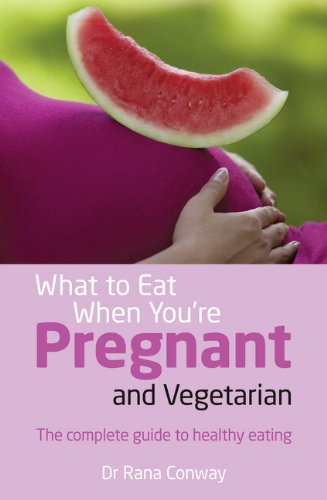
What To Eat When You’re Pregnant And Vegetarian | Book Review

pregnancy, health, diet, food, what to eat, vegetarian, The phrase, ‘You are what you eat’, is never truer than when pregnant. In fact, both you and your baby are what you eat. If you are vegetarian, or just want to cut down on meat, then this book calls itself the ‘complete guide to healthy eating’. We put it to the test.

This book is an excellent guide. It has a handy reference of vegetarian-safe food and drink, checklists for pregnancy and post-conception, guidelines on caffeine and alcohol, tips on handling morning sickness, how to achieve a healthy weight, and then lose it again, advice on getting enough nutrients, advice on allergy-proofing your baby, food that affects a babies development and what you should eat when breastfeeding. Phew. That is quite a lot of information.

With its menu plans and tips for planning meals, the wealth of information in this book is vast. It even has graphs of how much you should weigh and what food you should eat, it makes a complicated time easy, at least when it comes to nutrition. I also thought the chapter on getting enough iron and avoiding anaemia is great for any mother-to-be. The common complaints during pregnancy and how to deal with them is great too. It covers most health complaints that occur in pregnancy.

What to Eat When You’re Pregnant and Vegetarian: The Complete Guide to Healthy Eating is a great book. A must buy if you are planning to get pregnant or already are.

Time To Give Up Sugar? Mentor Me Off Sugar Day 28: It’s Over!

Well, I have finished. At midnight on Sunday I was no longer on a low/no sugar diet. Did I binge? No and I am as proud of that as I am of doing the programme. I cannot believe I got all the way to the end.

Yesterday I had some tea with sugar. One with two and the other two cups of tea with half a teaspoon of sugar. I also had a few pieces of dark chocolate. I had toast for breakfast, a cheese sandwich for lunch and a chicken roast for supper. No cake and no fizzy juice. Even the tea and the chocolate tasted sweeter than ever before. The thing I have to watch out for is eating a lot of vegetables.

I had my final call with Laura on Sunday evening and she is proud of me. In fact everyone I know is both proud and shocked. Going forward, Laura has given me a goal setting worksheet and I don’t want to ever fall into my previous sugary ways. Although I need to add a correction pointed out by Laura. I was told a homemade Gin & Tonic doesn’t have any sugar. It does! My own fault and the tonic water I bought would have had a lot of sweeteners instead, which I hate and think cause cancer and other nasty diseases.

Even too much fruit is bad for you. Laura sent me this  interesting article by Dr Mercola on fruit.

My energy level has really improved since I cut out sugar and I am completely converted. Give it a shot. I will be adding lots of low/no sugar recipes to Frost.

Meanwhile, have a look at Laura’s meal suggestions for a day.


Meal Ideas


Breakfast |  Keep it simple with two boiled eggs, a kiwi and a few nuts. Add a slice of toast if you want.


Lunch |Try a green lentil, beetroot and feta cheese salad with olive oil.


Snack | Chicken shavings and sliced avocado on a rice cake


Dinner |A slow cooked warming beef stew with swede or squash mash. Homemade popcorn to celebrate!


Check out Happysugarhabits for more info.

20130903-111808.jpg

Time To Give Up Sugar? Mentor Me Off Sugar Day 27

Yesterday my fiancée went to play poker with his friends. Usually this is an excuse for me to eat something he would not approve of. Instead, this is what I had:

20130901-142209.jpg

20130901-142234.jpg

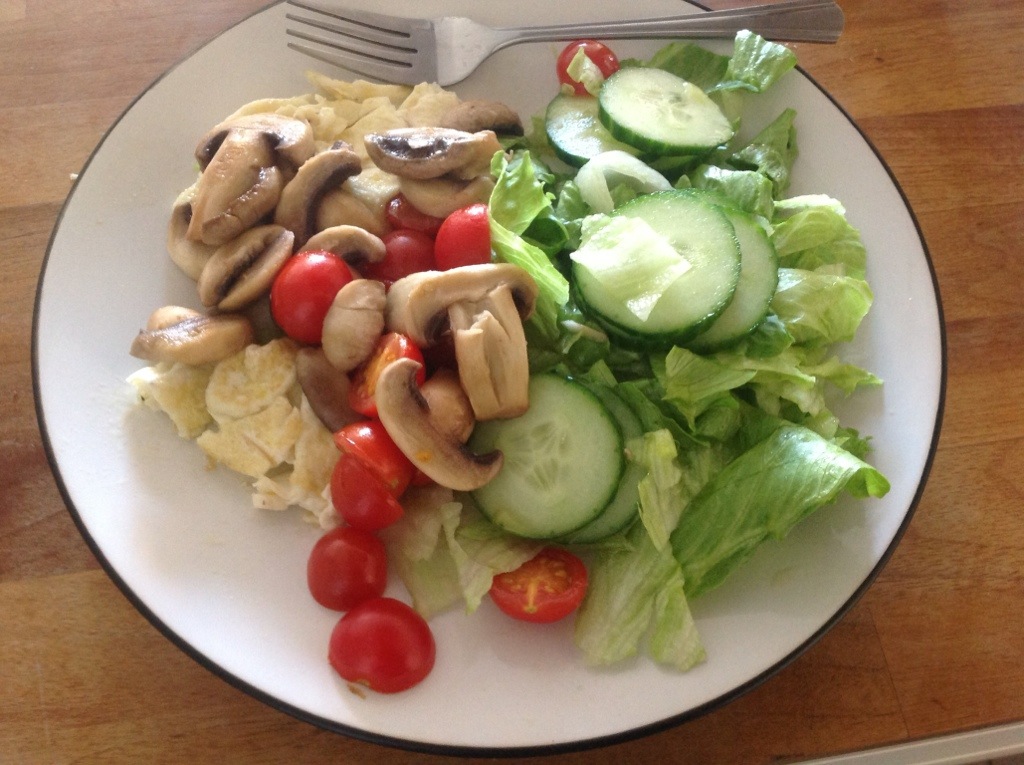
Lunch was a giant fried egg that was supposed to be an omelette (This was my second attempt and the first one obviously made me too cocky), mushrooms, tomatoes, cucumber and iceberg lettuce with olive oil. Dinner was a tricolore: avocado, tomato, mozzarella with boiled egg, cucumber, lettuce and more olive oil. I am not sure what has happened to the old me but if you see her, dust her off and give her a light slap because she will be in shock.

No fizzy juice, no fruit juice, no chocolate and no sweets or cakes. My only vice the occasional tea with a little bit of sugar when the headaches and nausea gets too bad.

I have always eaten healthily but have the occasional binge and too many sugary drinks. Today is the last day and I have my last call with Laura tonight. My fiancée says he is proud of me and that I look healthy and that I am ‘glowing’. I am glad I did the diet even though it was hard. It has certainly paid off. My last post in the diet will be up soon but I will post some great low/no sugar recipes and facts for you. I hope you feel inspired to cut down your sugar intake. For me, it was definitely worth it.