Neilston War Memorial By Mary Cooper


There is a village near Glasgow which, one hundred years after the event, is erecting a monument to the war dead. Some think it is too much, that we don’t need this monstrosity to remind us.


But memory is fallible and we are, after all, only human and, in times of war, are capable of terrible deeds, mostly driven by fear. Those who have lived through war will have seen the worst that we can be. The first world war is a perfect example: bloody battles, torture and not least the terrible hardship our fathers, husbands, brothers and sons had to endure in the trenches and tunnels which became home as war dragged on; terror, horror and boredom in equal measure while, at home, mothers, wives, sisters and daughters pulled together to keep everything running so that those who came back when it was all over would know that the sacrifices had been worth everything.


The monument is well under way and should be ready by the summer of this year; we stood in the rain and biting wind last Sunday and watched the first stone being laid. A lone piper played a melancholy drone as we stood huddled while the speeches were given; the cold wind driving the needles of rain into our faces stinging our eyes, a stark reminder of what those men in the trenches had had to endure, not only for ten minutes but for months at a time in the bloody fields of battle.

We retired to the cafe afterwards for a warm drink, rubbing our cold hands and wiping the tears from our eyes; not so for those gallant men, there had been no respite from the bitter wind of war.


It is going to be the grandest thing in the village, some think too grand. But I believe it should be grand just as the sacrifices were and still are, something to stand out so that people passing will stop and take notice, read the names of those who died to keep us safe and remember that they are the reason we live the lives that we live, free and safe.

Freedom is a hard fought battle which never ends. The monument will be built, lest we forget.


The Words for the Wounded Litfest – Review by Pat Heath

What a brilliant day at Downley Community Centre, 18th April 2015.

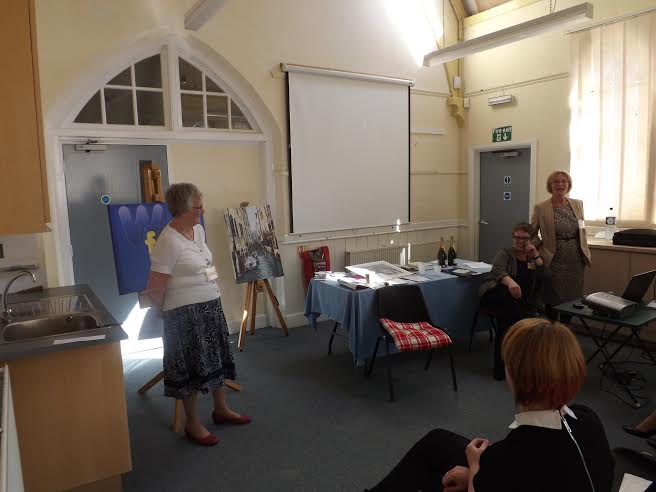
This inaugural one-day opportunity for new and established writers, and for readers, did what it said on the packet. We laughed with, learned from, and mingled amongst, experts in the world of writing at the Words for the Wounded (WforW) LitFest. It was organised by the ‘Writing Grannies’ who run the charity.

The Words for the Wounded Litfest  -  Review by Pat Heath

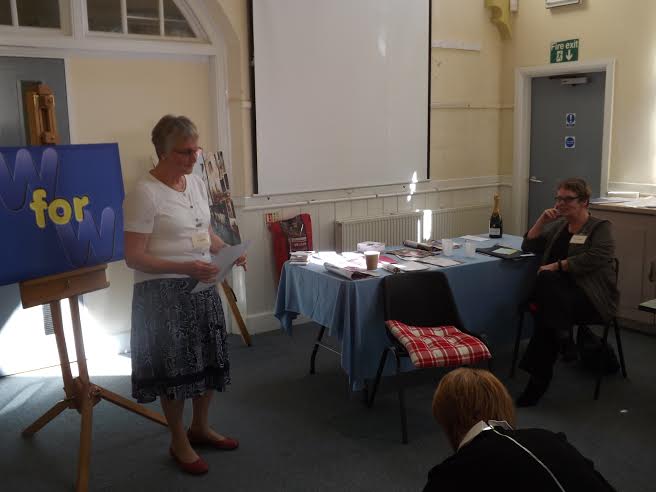
To open the day, Matt Pain, Trustee, reminded us that the average age of wounded soldiers is 25 years old, which proved thought provoking.

The Words for the Wounded Litfest  -  Review by Pat Heathwelcome

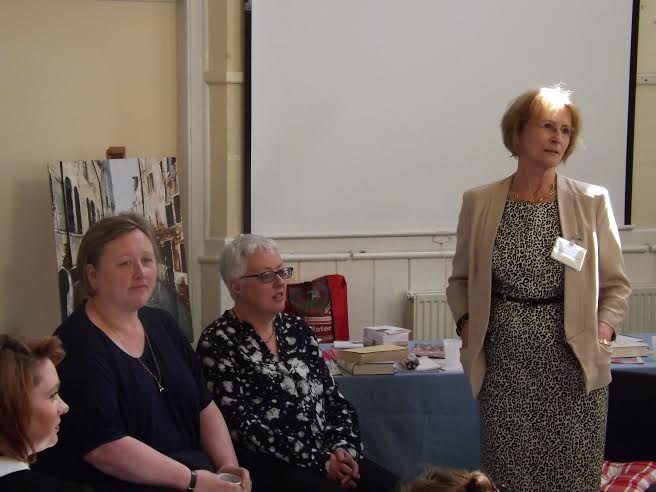
Margaret Graham (‘writing grannie’) and Katie Fforde (WforW patron) opened the day with conversazione. These two bestselling authors covered key aspects of fiction writing, including sub-plots, the need to inhabit your characters and how to deal with a ‘soggy middle’. Something that troubles many of us – writers or not.

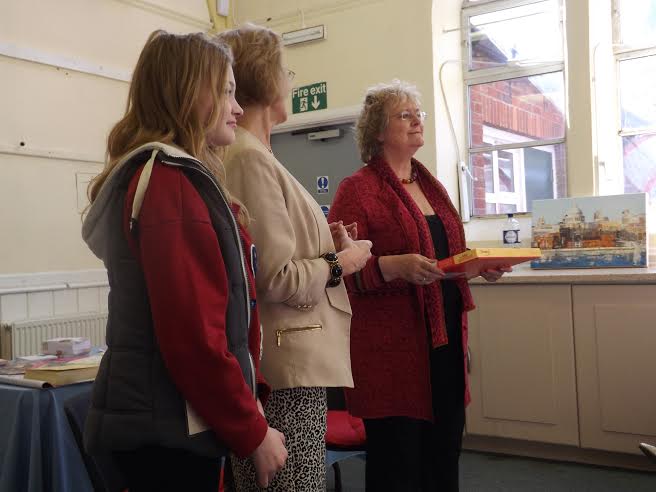
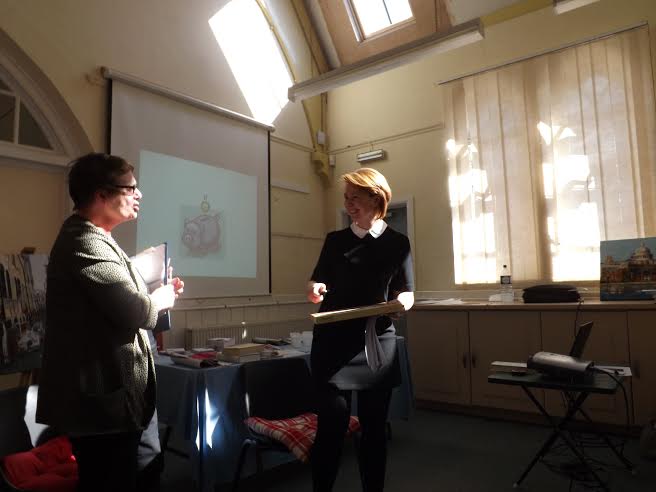
A massive amount of invaluable information was delivered with quick fire wit, during this hilarious and valuable session. Meg Cannell presented chocolates to Katie.

The Words for the Wounded Litfest  -  Review by Pat Heathkatiemegmg

After book signing and coffee it was time for some murder and mayhem, with two ‘Midsomer Murders’ TV writers, Rachel Cuperman and Sally Griffiths. Rachel and Sally explained the practical aspects of TV play-writing, punctuated with their own amusing anecdotes.

The Words for the Wounded Litfest  -  Review by Pat Heathrachelsally

Lunch followed, with wine and coffee, organised by Jan Speedie (‘writing grannie’), Margaret’s family and Josh Edwards. It was partially sponsored by Tesco, Morrison’s and Starbucks. A feast, it must be said, and the team did a fantastic job. Seamless.

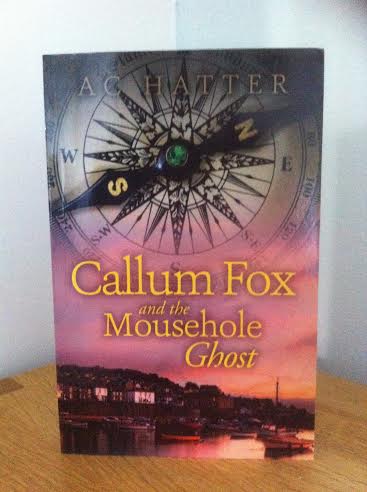
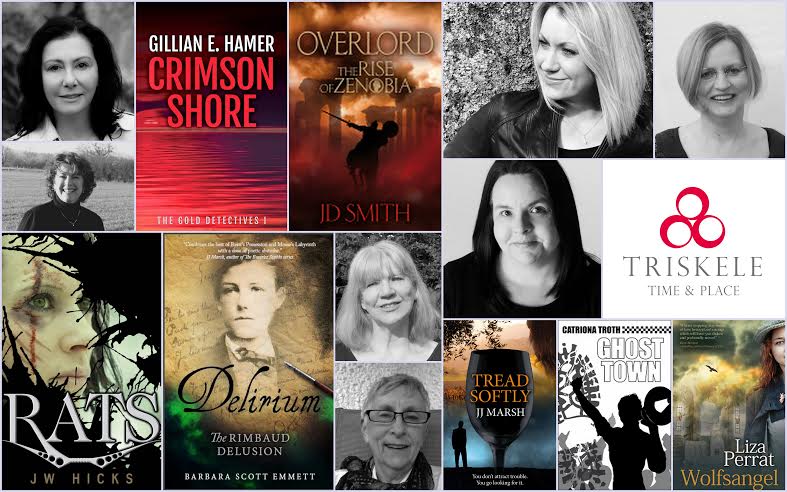
Many authors choose the Independent Author publishing route and successful ‘Indie’ writers, Amanda Hatter and Catriona Troth, chaired by Penny Deacon, (writing grannie) described how to produce a high-quality self-published book,. This time Penny Deacon (writing grannie) chaired the session as Amanda gave many useful marketing tips, including how to penetrate large chains such as Waterstones, and Catriona explained the advantages of working as part of a writers’ collective, such as Triskele Books.

The Words for the Wounded Litfest  -  Review by Pat Heathcallum The Words for the Wounded Litfest  -  Review by Pat Heathtriskele

Felicity Trew, from Caroline Sheldon Literary Agency was introduced by Penny Deacon and gave a power-point presentation in which she explained the role of literary agents: negotiating publishing deals, making sure the contract protects current and future income opportunities, and chasing payments/royalties.

The Words for the Wounded Litfest  -  Review by Pat Heathpdprojector

She also advised on how writers should approach agents, using amusing spoof emails to illustrate her points, and she reminded the audience to check agent’s submission instructions. Her agency’s website has a useful list of ‘pet hates’ including applicants omitting the requested information and obvious ‘carpet bombing’ applications.

Felicity was at the LitFest all day, and was enormously generous with her time.

Finally, Jan Speedie introduced Penny Deacon who talked about why she ‘turned her back on romance and took to murder’. She compared her experiences of writing Mills and Boon to that of crime fiction. This was a relaxed and amusing end to an inspirational, funny, information-packed day.

The Words for the Wounded Litfest  -  Review by Pat Heathjan=pd

Prizes, donated by artist Sharon Bennett, Tesco, (Bollinger champagne) The Wellington, and Katie Fforde were raffled for WforW. Speakers were given boxes of chocolates, partially funded by Thornton’s and delegates were given books donated by Random House. Penny Gerrard made biscuits from heaven and Susan Atkins’ chocolate cake was seriously good.

One clever touch was the notepads and biros on every seat, for invaluable notetaking. Everything was so carefully thought out. It makes a difference.

Next year’s LitFest line up of speakers will include Elizabeth Buchan, bestselling author (patron of WforW) Jemima Hunt, Literary Agent, Catherine Balavage, e-magazine owner (Frost Magazine), and Tracy Baines, successful genre short story writer.

A total of £1,500 was raised by the inaugural LitFest for the rehabilitation of the wounded.

http://www.wordsforthewounded.co.uk


The Forge Boutique By Marie Cato

For the men, the view down Wendover High Street towards the clock tower and beyond to the Chiltern Hills is truly magnificent.  For the women, there is an equally magnificent view, called The Forge.  I left my man to “stop and stare” while I pushed open the door to the sound of a tinkling cow bell and stepped over the threshold into this much talked about dress and accessories shop.

THE FORGE BOUTIQUE  BY Marie Cato1

I was greeted by a friendly smile from the assistant.  Her shiny white bob, silver rimmed spectacles and matching jewellery against her black clothes made for an elegant combination.  She was sitting behind an antique retro desk instead of the expected counter.  No till either, just an invoice book and pen.  This lack of modernity was no indication of what was to be found on the rails.

THE FORGE BOUTIQUE  BY Marie Cato8

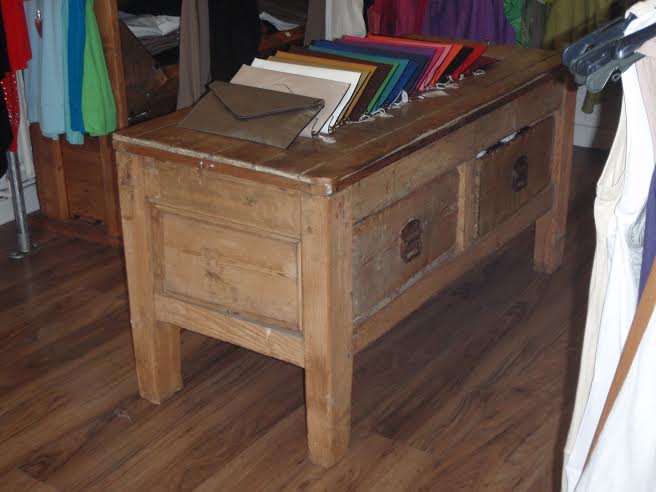
Linda Moda was the label and the clothes were both timeless and fashionable in beautiful fabrics of jersey, chiffon and silk. Think:  Italian style clothing. Think: affordable prices. The obligatory leggings were available in shiny black, along with a variety of jeggings displayed in a cobbler’s bench.  Blouses, dresses, skirts and trousers all hanging on industrial steel rails.

THE FORGE BOUTIQUE  BY Marie Cato7 THE FORGE BOUTIQUE  BY Marie Cato9

Clean fresh whites at one end of the rail transcending into buttery creams at the other end. Sky, aqua and petrol blues trailing into merchant navy.  Sunflower yellow mellowing into primrose and lemon. I turned 360 degrees, checking for all the colours of the rainbow, to find that orange was the only one missing.

Above the rails, on wooden slats, there were large handbags, which I mistook for leather.  However, the assistant explained they were a soft man-made fibre and they felt beautiful to the touch.  On closer inspection, I noticed they had a smaller matching handbag inside, very convenient.  As the ceiling is low, the bags are within easy reach.  Again, any colour your heart desired, including lollipop orange.

THE FORGE BOUTIQUE  BY Marie Cato2

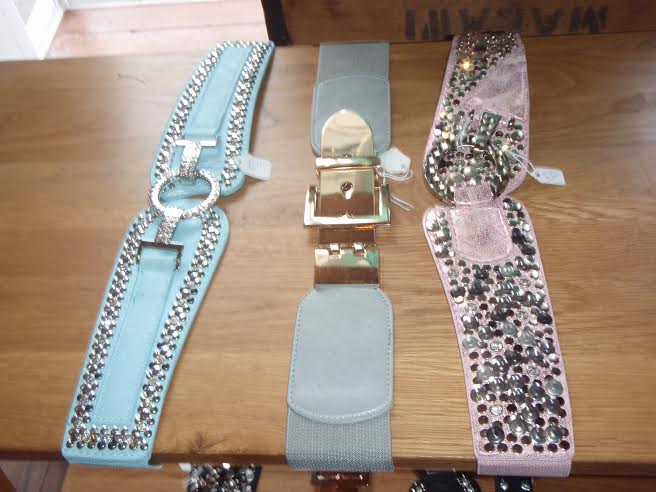
A small step at the rear of this eighteenth century building, takes the shopper into an Aladdin’s cave of footwear.  Boots with shiny buckles, diamante sandals, ballet pumps and much more.  This is where I found the sale rail.  All items knocked down to half price but, unfortunately, nothing in my size.

THE FORGE BOUTIQUE  BY Marie Cato4 THE FORGE BOUTIQUE  BY Marie Cato5

A cherry pink dress with raspberry ruffles on the yoke caught my eye and I draped it across my already heavy laden arm and headed to the changing rooms.  No electronic tags here or plastic tags with numbers.  The room was spacious, with heavy drapes giving complete privacy.  The mirror was sparkling clean and the lighting flattering.

Unfortunately, there weren’t enough hooks for the six items I had brought in, so I resorted to hanging some of them from a water pipe running along the top edge of the ceiling.  I hoped it wouldn’t burst.  Twenty minutes later with no water sprung I opted for two items instead of the one I had intended  – always a sign of a well managed shop.

THE FORGE BOUTIQUE  BY Marie Cato6 THE FORGE BOUTIQUE  BY Marie Cato3

The assistant complimented me on my purchases and with old fashioned courtesy and no pushiness, suggested some jewellery to compliment the outfit.  I won’t tell you whether I succumbed.  I watched enchanted as she hand wrote my invoice with great care and then, unexpectedly, produced the latest technology from under the table.  I handed over my credit card and at £77 for two pieces I was very pleased.

I’ll definitely be going back and, believe it or not, my husband was still there when I came out, taking in the view.

3 The High Street, Wendover, Bucks HP22 6DU  Tel: 01296 623154

Opening Hours: 

Monday – Saturday 9.30 am to 5 pm

Sunday 11 am to 4 pm

There are two further stores at;

280 High Street, Berkhamsted, Herts.,  HP4 1AH

Tel: 01442 862255

32 Station Road, Gerrards Cross, Bucks SL9 8EL

Tel: 01753 887577

www.forgeboutique.com


Visit The London Gin Club – Go On – Dare Ya By Michael Rowan

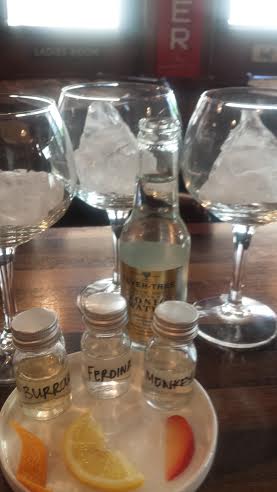
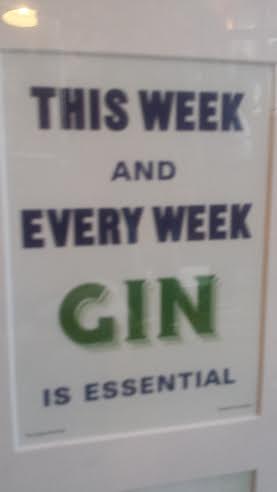
With ice cubes capable of sinking the Titanic, I could only be in one of my favourite watering holes, The London Gin Club.

MRpic A

This gin lover’s paradise is situated 100 metres off Oxford Street, equidistant from Oxford Circus and Tottenham Court Road tube stations, essential knowledge, as driving is not an option following a visit.

Reminiscent of a discreet 1920s speakeasy, it hides behind the facade of a typical London boozer named The Star, on the corner of Great Chapel Street and Hollen Street. People scurry by without a second glance, but when this temple to gin opens its saloon doors, the London Gin Club signs are put in place, to alert those of us in the know.

MRpic1

Despite its name you don’t need to be a member, but you do need to love gin, which fortunately for your reviewer is no hardship. Booking whilst not essential is advisable, particularly Thursday to Sunday and you will be asked for how long you wish to reserve the table. A weeks’ notice is sufficient for small groups and 2 weeks’ notice for larger gatherings would be my top tip, but I have been known to pop in alone, on the off chance of finding a seat.

MRpic2

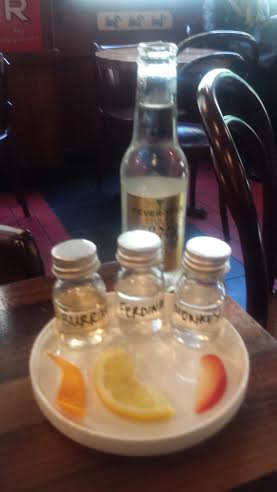
Being faced with a choice of 190 different gins can be intimidating, but the friendly team behind this venture are on hand to guide you through the menu depending on your tastes.

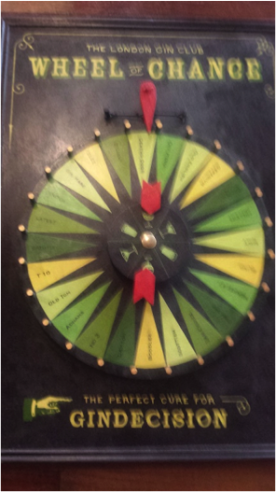
For the less risk averse, there is the Gin Wheel of Fortune which purports to take the angst from ‘Gindecision.’ A spin of the wheel will decide the type of glass and another, the type of gin.

MRpicB.pn

Inside the ground floor continues the typical London boozer look, wooden tables and chairs and walls covered with enamel advertising signs from the 1930s and 40s, but walk down the spiral staircase and you are presented with a modern basement area replete with clean lines and modern seating.

MRpic3

The staff dressed in black, bustle between tables delivering drinks and advice on gin in equal measure amidst the hubbub of conversation and the jazz playing in the background. The enthusiasm for gin is infectious and it is difficult not to covet the gin being brought to neighbouring tables.

Gin in all its botanical, spicy glory comes in a huge balloon glass, imported from Spain, big enough both to allow flavours to mingle and to swirl satisfyingly in the hand.  Garnished with orange peel, thyme or a myriad of other colourful additions and sparkling with carefully selected tonic water, at £8.00 to £9.50 a glass, this is gin to be savoured.

MRpic4

Some food is available, but this is more to soak up the alcohol. Here gin is the thing.

My favourite? Well I haven’t had time to sample them all, but a man should have an ambition.

To date I’d choose the ‘Sacred Cardamom’ which comes replete with a thick slice of blood orange, though I am told that this is an acquired taste.

Thankfully I seem to have acquired it.

MRpic5.j

For details of booking and opening time please visit http://thelondonginclub.com


A Doll’s House, Read Again And Again By Paul Vates

A Doll’s House, read again and again By Paul Vates1

When a theatre invites you to produce a play of your choice because of the success of your previous production, you don’t take it lightly.

A Doll’s House, read again and again By Paul Vates2

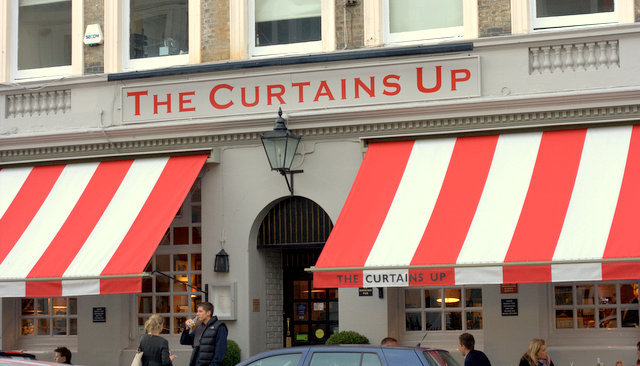
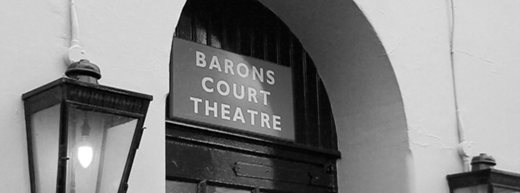
So, after innumerable drinks in The Curtains Up pub (the one upstairs from the Barons Court Theatre), director and producer Kevin Russell announced he fancied doing a classic for a change. The discussions lasted weeks.


The process truly began when I received a text from Kevin. He had found the play and was extremely excited. It touches on feminism, equality, obsession and, even, violence in the home. Written in 1879, Henrik Ibsen’s A Doll’s House centres around something unthinkable in its day: a woman putting herself first – above family and faith.


The central issues of the story have long resonated with the public, and still do today. News from the theatre owner saying it had never been performed there meant it was suddenly all systems go – the first step was to decide upon which version to perform.

I have a copy which has been gathering dust since my student days. It was translated by Michael Meyer nearly fifty years ago. It was a perfect starting point. Meyer’s is a blank canvas upon which we can perhaps add our own touches, as we needed to adapt the play to work in the venue’s intimate space.

A quick scan of bookshelves both real and virtual immediately provided other translations. Copies were borrowed from friends and libraries, some purchased from bookshops or discovered in charity shops.

We devoured them all and it was no surprise to discover that each version had a visceral effect upon us both – the Marmite test so to speak. Did we like it or loath it?

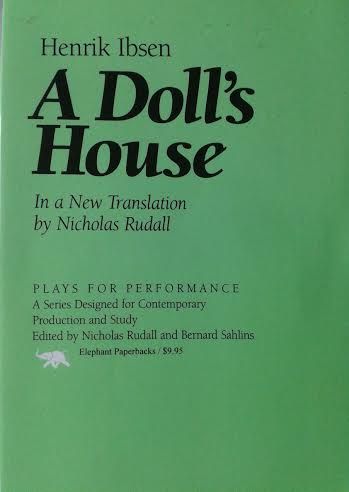
This was the pattern by the end of last year; each translation was debated every time we met, for consistency, at The Curtains Up. Most were shelved leaving us with three versions for serious consideration: Simon Stephens’ from 2012, Bryony Lavery’s from 2004 and Nicholas Rudall’s from 1999.

A Doll’s House, read again and again By Paul Vates5

We applied for the performance rights for all three. Rudall’s came through first and, after demanding details about ourselves, (feeling like we’re auditioning for her) Bryony Lavery is now offering her version. Although more versions do keep grabbing our attention, this part of the process is coming to a close. The focus now is meeting designers and searching for the image for the poster…

Looking back over the last few months, though, I have found the experience exhilarating and educational. Who knew there were so many translations? I have critically appraised ten versions with ten different visions. The tables will be turned later this year when all eyes will be upon us.

A Doll’s House, read again and again By Paul Vates6

New Dreams Theatre’s production of A Doll’s House will be at The Barons Court Theatre in London from 3rd to 22nd November 2015. Further details can be found at https://www.facebook.com/newdreamstheatre – Twitter: @kevinnewdreams


Time to Make a Choice By Mary Cooper

Time; the hardest of all dimensions to come to terms with. It is limitless, yet defines our limits. It is invisible, yet we see it’s visible effects. We all know what it is, yet if asked to define it, we can’t. Even if we stand still, time continues to move forwards; it is relentless and when it has passed it is gone forever.

Time to Make a Choice.  By Mary Cooper

There is a theory that at the moment of the Big Bang, 14 billion years ago when our universe was blasted into existence, time was born and has been moving relentlessly forward ever since, but go back just one second before the Big Bang and bang goes that theory.

Time to Make a Choice.  By Mary Cooper 2

At the instant of our conception we are allotted our quota of time – of which we are ignorant. We let it slip away, till one day we have to face the fact that we have been constantly moving away from our beginning towards our end, and that time, as it always has, will continue without us.

Time to Make a Choice.  By Mary Cooper 3

I now have less time before me than I have behind me. My past is gone, seemingly, in the blink of an eye and even though there is plenty of time, it isn’t mine and I cannot access it.

I wonder, how should I spend the last of my time; this priceless commodity? At least in that I have some control – the choices are limitless …

Time to Make a Choice.  By Mary Cooper 4


It Takes Two – The Idea Behind KISHBOO by Sharon Boothroyd

It was my husband Keith who had the idea of producing an e-magazine in the summer of 2014. He has pro web design experience and I had written all the text for his corporate client websites, so we were used to combining our skills and working together as a team.

We called our publishing brand Ryecorn Digital Publishing, after Ryecorn, the fictional Yorkshire town in my kindle chick- lit novella.
Keith designed all the unique graphics for the chapter headings and he also designed the book cover for me, too. I was really pleased with his design. The free android app version looked great too.

To keep costs down, we set up a free website to help promote it: www.ryecorn.orgfree.com

We had already enjoyed minor success with another online project of ours called ‘A quick read.’ This entailed uploading stories onto our website and onto the accompanying free android app.

We didn’t charge writers a fee for publication, and the website cost around £60 a year. Even though we were overwhelmed with work, as time passed, we couldn’t see how the project could develop, so sadly in 2014, after two years, we decided to close it down.

So – we had published online,on kindle and on the android app format. We both really warmed to the idea of publishing an e-mag on 3 digital platforms.

It Takes Two - The idea behind KISHBOO by Sharon Boothroyd


What could we call our magazine though? We thought of hundreds of names, but the domain names were all taken, so we hit upon the idea of blending our names to create something truly different. We really hoped that the name ‘KISHBOO‘ would stick in people’s memory.

It would be non- profit making project. We’d fund the competition prizes through the competition entry fees, and we now realised that we could use online advertising to help cover the cost of our website.

pic.KISH_2In August 2014, we were ready to launch the project! However, the actual magazine wasn’t published until October, as we needed stories and articles to fill it.

I began to send press releases out and my network of writer friends helped spread the word  for us via social media. Keith worked hard on search engine optimisation, and I began to tweet for the first time in my life.

I was worried that we would receive no articles at all because at the moment, we are unable to pay writers. However, we can offer them free promotion of their kindle books and blogs within their articles. I wasn’t even sure we would get anyone entering our competition. I needn’t have worried – the comp entries and articles began flooding in!

Back issues are easily available – here’s what the first KISHBOO looked like:

pic.KISH3Here’s the cover of the second issue, which was published in January 2015: pic.KISH4

We are now very working hard on our third issue, which will be published in April 2015. It’ll be packed with even more features.

Please visit: www.kishboo.co.uk
Find us on facebook: www.facebook.com/kishboo.mag
Follow us on Twitter: @KishbooMag


Easter by Gem Blaney | Poetry Corner

easterbunnyphotocredit-wikipediaEaster, by Gem Blaney: Gem is a talented young poet from the West Country. Frost asked her to write about Easter especially for us. Here it is:

A man rises;
not from slumber,
but from days of death
behind two stones.

His human body was no longer
still, on a bed of concrete
skin tinted blue,
lips with no breath to pass through.

See modern world
dressed up as a hare
hiding shells of chocolate
for children to find.

Voices squealing, bellies aching,
church bells ringing
forcing the past
back onto the present.

Unintentionally, but successfully
with each generation,
the fascination with egg shaped sweets
overcomes the past.

Bank holiday Monday,
adults sighing and bank accounts stretching
hot cross buns, chocolate and animal shaped snacks
because it’s easter easter easter.

A Christian holiday
for those who believe
in the dead man who rose
and shifted two stones

For children today it’s another
‘off school’ to celebrate.
It is not their fault,
they don’t understand it’s about a profound mystery.

Not a day as grandiose as Christmas
(a man’s birth)
this is a man dead and reborn–
Surely more earth moving than chocolate eggs

Don’t you think?