Words For The Wounded Writing Prize

walking wounded competitionFrost Magazine has came across a very worthy charity thanks to Jane Cable: Words For The Wounded was launched by Margaret Graham, an author at Random House.

Margaret said; “I launched the charity Words for the Wounded  last year and we raise money via writing competitions and donations to help in the recovery of our wounded service personnel. This year we are supporting the Creative Arts Unit at Tedworth House Recovery Centre. Every penny from the entry fees and donations goes to the wounded. We raise money for the prizes in other ways. My son and son-in-law have been noble and done various Ironman marathons and Triathlons for us but this year my colleague and old school friend, Jan Speedie, and I are giving them a break and doing a tandem sky dive. Yes, I know. My grandchildren say the same, ‘You’re mad.’ But needs must.  My agent despairs of the lengths to which I will go to be strapped to a handsome young man.

Words for the Wounded has a 1st prize of £250, 2nd £100 and 3rd £50, and publication in Writers’ Forum magazine. Entry fee is £4.50. We ask for poetry, non-fiction or fiction up to a maximum of 400 words on the subject of The Journey. It can be physical, emotional or both. The closing date is 11 March.”

Margaret also has a W4W blog which includes writing tips www.wordsforthewounded.blogspot.co.uk. 

Margaret went on to say that “the majority of those injured are under 25. These are life changing injuries and they will need help to recover their self-confidence and independence to get the best from their long lives.”

I am sure you will agree this is a great charity and an equally great competition. Enter now and spread the word.


Call For Entries: The International Nelson Mandela Poetry Tribute

Nelson Mandela, quote, quotes, death

Credit: Wikipedia Commons

To mourn his death and celebrate his life, Poetry Zone have opened the International Nelson Mandela Poetry Tribute, as a fitting way to gather poetic tributes from around the world in an online collection – accessible to all. They welcome all contributions and would appreciate your support in alerting people to this global poetry initiative.

Nelson Mandela was a man to whom poetry and the poetry of words mattered. There’s the legend of his reading of Invictus to his fellow prisoners on Robben Island, but in every speech Mandela worked language to leverage its impact. He may not have formally published poetry, but Mandela was a poet.

On his death, the US State Department issued a poem by Maya Angelou in memory of Nelson Mandela and there have been earlier tributes by Thabo Mbeki and Tupac Shakur. At his memorial on Tuesday his Grandchildren showed the power of poetry, rousing the crowd with short electric stabs in a call and response tribute to Mandela’s modesty and power.

For the many people who write poetry around the world, an opportunity now exists to contribute their own poetry; to write a poetic tribute on the passing of a great historical figure. Sorrow, Gratitude, Appreciation, Love, Respect… You don’t need to be a poet laureate to take part – and it’s not a competition. It’s about personal responses. What did Nelson Mandela mean to you? How did his message affect the world? What do you feel on learning of his death? What are your personal memories and reflections? Did he inspire you? Maybe you took part, in any small way, to help end apartheid. Or you played an important role… How do you think his legacy will endure?

Nelson Mandela was a global figure who brought a message of reconciliation rather than retribution, despite his own suffering and the nature of the apartheid regime which he’d opposed. It was this that made Nelson Mandela a true inspiration to millions around the world, a man who was prepared to lay down his own life to affect the change needed to rectify the glaring abomination of apartheid.

It is free to post poems at www.PoetryZoo.com, or simply email poems to Mandela@poetryzoo.com and they will be included in the anthology .

As the world reacts, we are glad to be able to provide a fitting international tribute in poetry to Nelson Mandela: Madiba, Tata.

Q&A With The Springheel Saga Creators Robert Valentine and Jack Bowman

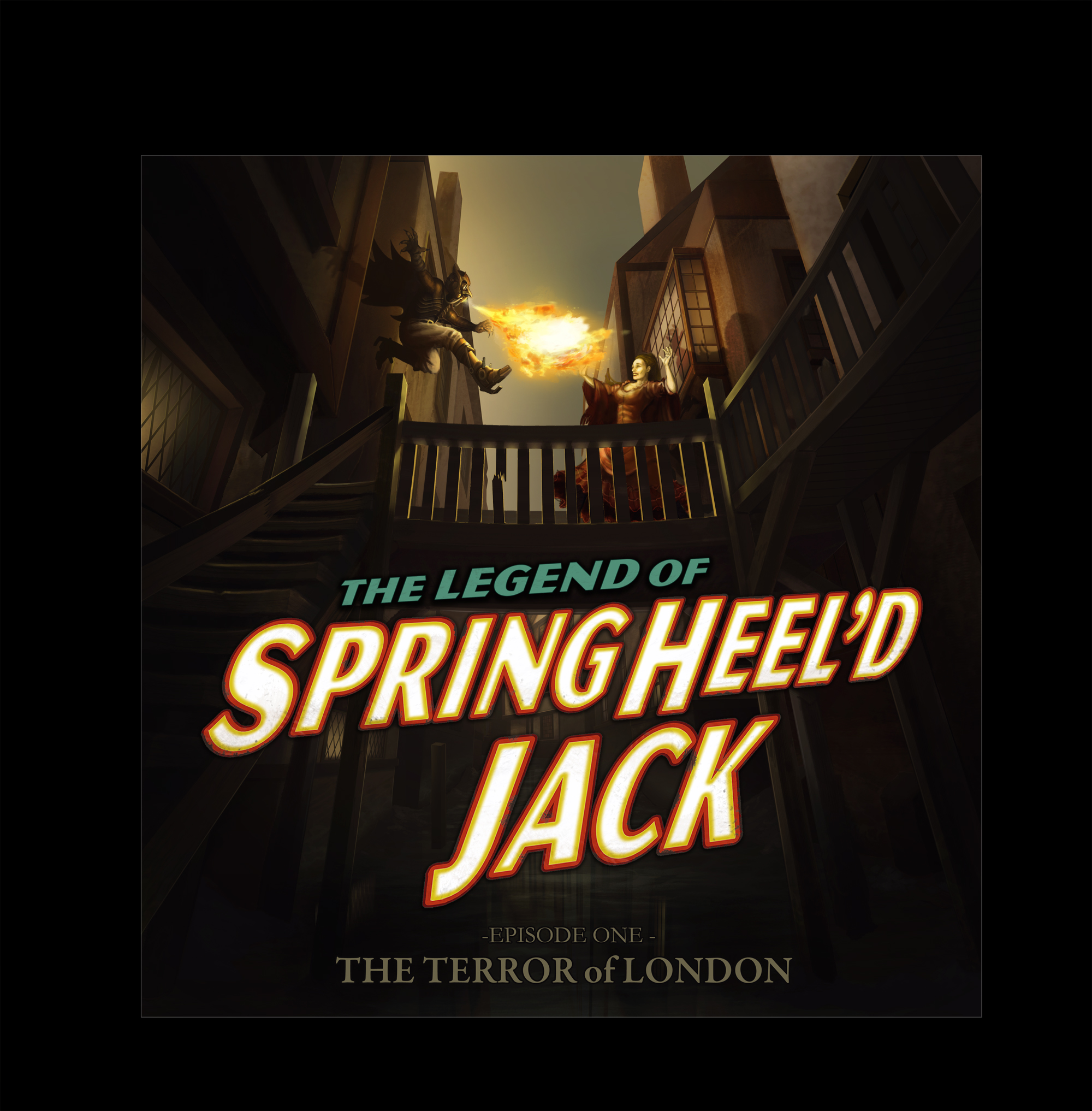
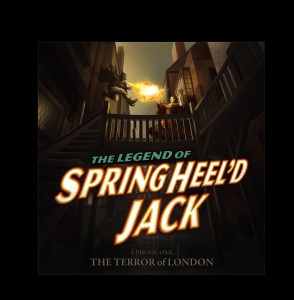
The Springheel Saga interviewThis interview with Robert Valentine and Jack Bowman*, writers of The Legend Of Springheel’d Jack, was conducted over a quiet pint in The Ostrich Inn, Colnbrook.

RV = Robert Valentine
JB = Jack Bowman (who uses the pen name “Gareth Parker”)

Q. So, the second, three-part series of The Springheel Saga: The Legend of Springheel’d Jack – is under way. Where and when does the story continue from Series One, in The Terror Of London?

RV: The Springheel Saga: The Legend Of Springheel’d Jack, picks up seven years after the events of Series One [The Strange Case Of Springheel’d Jack], with the murder of thirteen-year-old pickpocket Maria Davis, who was long said to have been the only person who Springheel Jack ever killed. By this time Springheel Jack is no longer just a London phenomenon but is being seen up and down the country.
JB: And by this point, by the time of The Terror Of London, you’re more likely to see him appearing on stage in a Penny Gaff than in a dark alleyway. It’s 1845, Queen Victoria is well-established in her position as monarch, and Victorian society as we tend to think of it is taking shape. The new series is going to take Jonah Smith into some much darker places.
RV: Starting with the stench and gloom of Jacob’s Island, Bermondsey…

Q. The first series was very faithful to the history of the 1837-38 attacks and sightings. Is this also true of The Legend Of Springheel’d Jack, or have you developed the story with more creative freedom this time?

RV: Our mission statement has always been to follow the history, whether documented or apocryphal, as closely as possible. The Maria Davis incident is a part of the Spring-heeled Jack mythology rather than the true history, but we thought it was important to honour it anyway. Also, it was supposed to have occurred in 1845 and we were very excited to explore Jack’s transition into a folk character around this time. So I wouldn’t say we’ve had more creative freedom on Series Two because we’ve always had that, but I would say we’ve had fewer historical incidents to act as our guide-rope; the original case included an awful lot of solid sightings, but by the 1840s Jack had become a less tangible figure. So rather than a string of attacks, his increasing fame as a pop culture figure is the historical development we explore in this series; the case is over but the legend is growing. Hence the title!
JB: Certainly this time around, the history and the mythology becomes a little less specific; The Strange Case Of Springheel’d Jack dealt with a very strict series of recorded historical events and we took the decision to follow them reasonably accurately. This time, we were slightly freer to tell our story without the need to hit so many historical points.
RV: As long as our story kicked off with Maria’s murder, and took place under the umbrella of 1840s ‘Springheelmania’ – so penny gaffs, penny dreadfuls, Victorian journalism, Jack usurping the Devil’s role in Punch and Judy shows, etcetera – we were otherwise free to continue the story of Jonah Smith’s obsessive quest.
JB: Indeed. Last time we said Smith was going to enter his Ahab phase, and here it starts to happen.

Q. What other cultural influences are felt on this series, both in the series and on your approach to writing it?

RV: Peter Ackroyd’s fantastic book, ‘London: The Biography’ was a big influence on us again. The first series portrayed London as a vision of hell, and had a very infernal image system. This time around we try to present London as a theatre, and everything is given that slant. Also, last time the story was a police investigation and this time – without giving too much away – it’s a more Hitchcock-esque ‘Wrong Man’ thriller. If our audience spots one or two hints of ‘The 39 Steps’ or ‘North By Northwest’ as we go along, that’s not a coincidence!
JB: A few of our personal cultural concerns also remain; there’s our continued love of the British pub in there, and a celebration of London. There was also a lot of fun debating what historical elements could come into play; for example, the now lost Bartholomew’s Fair becomes a very important backdrop in Episode Two, while the breaking of the Portland Vase in the British Museum was part of the original treatment, as was Chough and D’Urberville. But sadly, we couldn’t make those elements work and they got dropped. RV: Interestingly, when we sat down to work out the details of Series Two, our early assumptions were that the story would take place in a theatre, and we were were quite worried that it would end up too much like the brilliant 1977 Doctor Who serial, ‘The Talons of Weng-Chiang’, which takes place at the very end of the 19th century and involves sinister goings on in a Victorian music hall. Luckily, we were rescued by history because in 1845 we were too early for the music hall; this was the time of the Penny Gaff, or Victorian pub theatre. Nevertheless, we remained wary of including anything that might evoke ‘Talons’. It was an anti-influence!

Q. Were you surprised by the response to the first series?

RV: Yes, it was lovely!
JB: Oh yes. That was amazing, and we’re thankful for it every single day.
RV: To be quite honest, I was surprised Series One turned out as well as it did; it was everything we’d hoped it would be back when we didn’t realise what big a task it was going to be!

Q. What was the writing process like this time around?

RV: The writing process differed slightly on Series Two and Three, mainly because Jack was directing Andrew Shepherd’s play, The Shakespeare Conspiracy, and overseeing the remixes of Series One, which was a mammoth project, so he had less time on his hands. We wrote the treatment as before, but I wrote the first draft of most scenes and then sent them to Jack and we did the back-and-forth that way. They were a lot faster to write than Series One because by that time we’d more or less perfected our formula.
JB: We also had the outlines for Series Two and three mapped out before they were commissioned. In fact, it’s fun looking back on the original outline for them, just a few lines long, written in 2008. All of this meant it made the process more efficient, and we’ve slightly tweaked the formula for Series Two because our aim was to tell a bigger story than Series One but with the need for fewer actors. Having said that, our cast was still huge on this one! I feel we made Mariele [Runacre Temple, Producer]’s brain explode last time with the size of the cast, and either we made her head explode a little less on Series 2 or by now she was used to it. Anyway, Rob hit on a brilliant idea that not only helped tell the story, but made it far easier to write, and that was to employ a narrator… James M. Rymer, played by John Holden-White.

RV: Which in a funny way brings us back to the history again, as we wanted a narrator and sidekick character to represent all the Victorian journalists who essentially created the legend of Springheel Jack. Rymer – who was in real life not only a journalist but also the creator of ‘Varney the Vampire’ and ‘Sweeney Todd’ – is the embodiment of all that. He was also meant to be a little bit like the writer Beauchamp in the Clint Eastwood western ‘Unforgiven’; a man steeped in the legend of his own time who suddenly finds himself face- to-face with the reality. As a device, having a narrator really helping the theme of storytelling that permeates Series Two. Whether it helped keep the cast numbers down is another matter!
JB: I saw no evidence of Mariele’s brain exploding this time, so I think we did good!

Q. How different is the world of 1845 London to 1837 Clapham?

RV: The Great Famine is going on in Ireland, so there’s a great Irish influx. And the telegraph has recently been instrumental in the arrest of a murderer called John Tawell. So times are definitely a’changing.
JB: The Metropolitan Police, and the idea of there being police in London at all, starts to feel like it’s an everyday, normal thing – which it wasn’t in 1837. Even the City Of London now has it’s own police force. Everything is creeping towards the London we know today; railway stations, trains, the birth of a metropolis.
RV: But there’s still a long way to go!
JB: As you’ll see when we get to Series Three.

Q. You had an amazing cast in the first series; who is returning, who is new?

RV: We’re delighted to have Christopher Finney return as Smith, who is now a Detective Inspector and a darker, more obsessed figure than he was the first time around. Also, Jessica Dennis returns as Charlotte Fitzrandolph which is wonderful. It would have been awful to bring Charlotte back and then not have Jessica be free to play her!
JB: Yes, she drops back into things when Smith least expects it, as only Charlotte can! This time around though, we’ve lost Hooks, so Smith is more of a lonely figure, but there are many new faces, including his sidekick Rymer (John Holden-White), the tough, gruff Inspector Garrick (Neil McCormack), magician Cuthbert Leach (Nicholas Parsons), magical assistant Lizzie Coombes (Josephine Timmins), impresario Oscar Snitterfield (Jeremy Stockwell) and the mysterious Punch and Judy man, Elijah P. Hopcraft (Andrew Shepherd). Sadly, as I said, we had to lose Chough and D’Urberville, who were the only other characters we planned to bring back, but that doesn’t mean you won’t be hearing Ben Whitehead return at some point…

Q. What was it like to work with Nicholas Parsons?

RV: It was an honour, and we were extremely fortunate to get him.
JB: I was directing another Wireless Theatre production called We Are The BBC in which Nicholas appeared with Stephen Fry, both playing themselves. It was during the talks with Mariele about that, that he asked if we had any other dramatic roles he could sink his teeth into, and Mariele immediately offered him this. And yes, he’s seen as the host of Sale Of The Century, and the chairman of Just A Minute, but to me, he was the doomed Reverend Wainwright in Doctor Who [The Curse Of Fenric]. A wonderful dramatic performance there.

RV: We had desperately hoped to get him in for Series One, so it was lovely not only to finally get our man, but also give him a meatier role than we originally had in mind. I can’t think of anyone better to play a Victorian stage magician, to be honest.
JB: It was a very straight forward day – first, I directed him for We Are The BBC, then Rob took over for The Legend Of Springheel’d Jack. It was a very efficient two and bit hours – as that’s all he was free for – as you’d expect from a National Treasure.

Q. Jeremy Stockwell appears to be channelling the spirit of Ken Campbell in his performance as Oscar; what was the thinking behind this? Was it his idea, or yours?

RV: The ghost of Ken Campbell has loomed large over the project; I just have a feeling it would have been something he might have enjoyed. Had he not passed away suddenly in 2008 we would have tried our darnedest to find a part for him somewhere.
JB: I knew Rob had always wanted to cast Ken Campbell in SHJ; however, he passed away before we even got close to finishing scripting Series One. However, I know Jeremy Stockwell very well, and I also knew he’d been directed by Ken. He tells such wonderfully silly stories about that man! And while we were filming a documentary together for BBC Four, it was then I discovered Jeremy could not only channel a flawless Ken Campbell, but was also planning a stage show where he would be playing him. So I pulled him to one side, mentioned the idea of him ‘being Ken’ in Series Two, and he loved the idea. I love working with Jeremy, and Jeremy loves playing Ken, and Rob got a Ken Campbell performance for SHJ, and Mariele laughed like a drain. It was perfect. I think you’ll love him.

Q. Finally, The Legend Of Springheel’d Jack launches with along with the new-look Wireless Theatre; what was the thinking behind that?

JB: Wireless Theatre has always continued to grow and expand, and it’s reached a point now where it has to find new ways to keep going for the years ahead. Everyone at Wireless Theatre prides themselves on producing and broadcasting modern Radio Drama for a modern world. And because of that, we are determined to keep audio theatre alive and well by creating original, exciting radio productions through fresh new writers and acting talent, and to do so, the model of Wireless Theatre has to change. However, it was Mariele’s idea to put The Legend Of Springheel’d Jack right at the heart of it all – and we couldn’t be more excited for The Springheel Saga and Wireless Theatre. Roll on the 6th December!

Our The Springheel Saga – Series 2: The Legend of Springheel’d Jack Review is here.

Points Of You Web Series | What To Watch

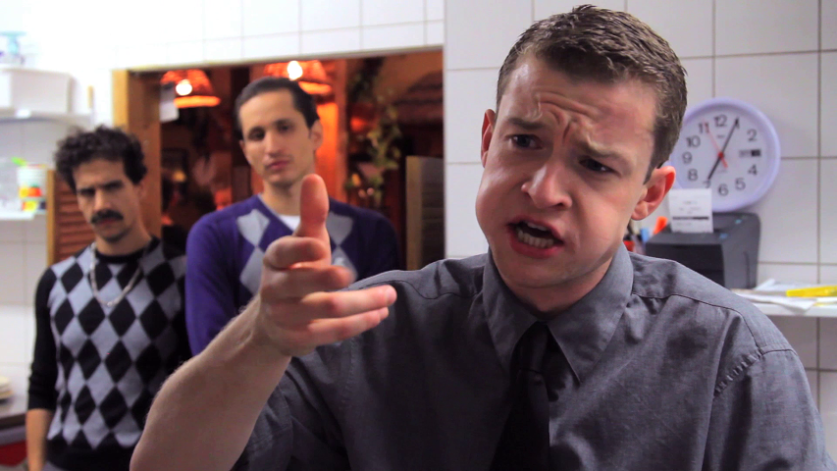
Point of you We have come across a very different, and very brilliant,  web series: Points Of You is about 4 friends from 4 countries with 4 very different personalities – all living a very chaotic life in Berlin:

RYAN (UK) – An actor, hobby chef & part-time womaniser

ELODIE (France) – An environmentally friendly seductress on bad terms with Cupid

BASTIAN (Germany) – A highly neurotic computer expert with a penchant for pot plants and French girls

SOFIA (Italy) – A rather individual science student who might or might not be working for the US government

Points of You will have you being confronted with cross dressing actors, spy gadgets, international conspiracy theories, love inducing plants and an amateur medical team saving a tree.

pointsofyou

Here are some cool facts about the series:

  • The series has to date involved over 115 people from 14 different countries
  • Shot on location in Berlin
  • Produced by: Ryan Wichert, Kathrin Benoehr, Sebastian Hasse
  • Written by: Ryan Wichert, Nikolaus Buchholz
  • Idea: Sebastian Hasse, Ryan Wichert
  • Cast: Ryan Wichert, Sebastian Hasse, Sara Manni-Malas, Kim Zarah Langner
  • 18.5 shooting days at 10 locations.
  • 4 main cast and 20 supporting cast so far
  • Subtitles in 8 languages: German, English, French, Italian, Spanish, Portugese, Russian, Polish

They have also been selected for the finals of The Giant Web Series Competition which is hosted by Alex Zane. A new episode airs every Sunday.

Frost Interview | Novelist Hannah Fielding

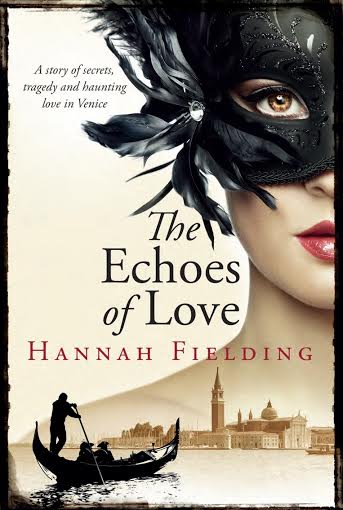
We were very excited to interview The Echoes of Love: A Story of Secrets, Tragedy and Haunting Love in Venice
author Hannah Fielding. Hannah is a great writer and is very well travelled. Read on for her thoughts on her novel, getting published, her writing routine and her favourite places. Portrait of Hannah Fielding and photos of where she writes.

Tell us about your novel

Seduction, passion and the chance for new love is at the heart of The Echoes of Love.

Set in the romantic and mysterious city of Venice, the beautiful landscape of Tuscany and the wild maquis of Sardinia, The Echoes of Love is a touching love story that unfolds at the turn of the new millennium.

What is your writing routine?

I have a very rigid routine which has served me well. Having researched my facts thoroughly, I plan my novel down to the smallest detail. Planning ahead, I have found, makes the writing so much easier and therefore so much more enjoyable. Then, when I am ready to begin writing, I settle into a regular routine – writing each morning andediting the previous day’s work, taking a break for lunch, writing a little more and then going for a walk somewhere inspirational, like the woods or the beach.

How hard was it to get published?

This only gets more difficult. As readers move from paperback to ebooks, publishers are developing new business models and nothing stays the same. My new publisher resulted from the very positive reception of my first book, Burning Embers, which was published by Omnific in the USA. Working with a London publisher and a younger team is very different, but just as enjoyable.

Why did you choose Venice as a setting for your novel?

I first visited Venice as a young child. Then, as now, I was wide-eyed and enchanted by the beauty of the city. I distinctly remember standing in the main square, the Piazza St Marco, gazing up at the stunning architecture of Saint Mark’s Basilica, and feeling I had somehow entered another world – a fairytale world. Then I looked down, at the square itself, which was overrun by hordes of pigeons. There was nothing beautiful about those birds. They were quite spoiling the place. And it struck me then that Venice is a city of two faces: that which the tourists flock to admire, that makes the city the capital of romance, that breathes new life into the imagination and leaves a permanent, inspirational impression. And the other side, the darker side, that which is concealed in what Erica Jong called ‘the city of mirrors, the city of mirages’.

When I returned to the city as an adult, I became quite fascinated by the concept of Venice – what it means to be Venetian; what the city really is beneath the layers of history and grandeur and legend. Frida Giannini wrote, ‘Venice never quite seemsreal, but rather an ornate film set suspended on the water.’ I understand this quote – there is something fairytale about the place, and with that comes some reluctance, perhaps, to see the realism beyond.

Venice so captured my imagination that I knew some day I would write a romance novel set in this most elegant and fascinating of cities. But it had to be the right story to fit the place. For me, that meant a story that reflected the two faces of Venice – the mask she wears, and the true form beneath.

Tell us about your characters

Venetia Aston-Montagu is a young architect in her mid-twenties who has already suffered heartbreak and loss. Brought up by a despotic father and a weak mother who always deferred to her husband, she can’t wait to leave home and work in Venicein her Italian godmother’s architectural practice. Her past experience has left her reserved and wary of men, but deep down she is a romantic who dreams of meeting the man of her dreams.

Paolo Barone is a millionaire Italian entrepreneur in his mid-thirties who has also had his share of suffering, which makes him at times taciturn. The affinity he feels for Venetia is instant. To start off with, like Venetia, he is afraid of the power of the emotions. Still, Paolo’s past and present are filled with secrets that he jealously keeps locked up in his heart, even from Venetia.

Is Venice the most romantic city?

Italy, for me, is the most romantic country in the world, and Venice is the best of its many ancient and beautiful cities. That is why time and again it tops the polls as the most romantic city in the world.

There are so many reasons I can give for this: the stunning architecture, the sense of history all around, the romantic music, the sublime cuisine, the colours of the buildings and their reflections in the water, the Casanova connection, the passionate

Venetians and their beautiful language, the dreamy drift of the lagoon, the blend of hubbub and calming serenity, the exciting Carnival, the gondolas that bear you around the city in such a timeless, gliding fashion…

You were born in Egypt and have travelled a lot. Where are your favourite

places?

1. Aswan, Egypt

One my favourite places in the world is the Old Cataract Hotel in Aswan in southern

Egypt. Built on a granite promontory in the Nubian Desert on the banks of the Nile,

the dark pink edifice, in the style of Belle Époque villas of the 19th century, has

retained all the beauty and splendour of yester-years.


2. The Rift Valley, Kenya

I set my debut novel, Burning Embers, in Kenya because after visiting the country

as a young woman I was captivated by the scenery and the people. The Rift Valley,

in particular, took my breath away, and I could not resist writing a balloon ride into

Burning Embers to allow my heroine, Coral, to take in the magnificent landscape.


3. St Paul de Vence

A beautiful hilltop village in Provence, and one of the oldest – founded in the ninth

century. It is known as Le Bijou de la Côte d’Azur (The Jewel of the Côte d’Azur).

The French painter Marc Chagaechoesoflovehannahfieldingll made the village his home for 20 years, and here he

painted wonderfully warm pictures that pay homage to love, some of which can be

viewed at La Fondation Maeght , 623 Chemin des Gardettes.

Your first novel was published last year. Was this one harder to write?

Yes. Because Burning Embers had such a good response, I found The Echoes of

Love a much more challenging experience because I wanted to live up to my readers’ expectations.


What next?

I have written a trilogy set in Andalucía, Spain, spanning three generations of a

Spanish/English family, from 1950 to the present day.

Greece is also on the map for a new Hannah Fielding romance novel. I am now in the process of researching and planning a very dramatic love story that takes place on one of the many Greek Islands. I chose Greece because I know that captivating country and its people well – I have good Greek friends. I bought my wedding dress in Athens and my husband and I honeymooned on Rhodes Island. Greek mythology was part of the literature course I read at university and Greece is not far from Alexandria, where I grew up.

Jura Launches Search for the World’s Best Stories


writing competition, writing, Jura Whisky has launched a search for the world’s best stories, with the chance to win two all-expenses paid trips to the 2014 Jura Whisky Festival.


Jura Whisky is calling on all budding storytellers to submit a story in 1,000 characters or less. Every fortnight for ten weeks Jura Whisky will provide a different story theme for inspiration. The themes kick off this week with Travel Adventure, followed by Day Dreams, A Brush with Death, Into the Wild and Happily Ever After.


Art Wednesday will provide further inspiration by producing a series of videos which tell the stories of interesting, influential creatives and their work. The first two videos will feature writer Marcel Theroux and musician Nick Mulvey (previously of Portico Quartet), with more to follow.


From the competition entries, three stories will be chosen each week and turned into bespoke illustrations by creative agency Holler which will be posted on to jurawhisky.com.  At the end of the ten weeks, each of the 30 winning stories will be put to the public vote to find the favourite. Voting will remain open for two weeks.


The winner with the most votes will have a once in a lifetime opportunity to enjoy an all-expenses paid trip to Jura for the 2014 Whisky Festival to help select the new special edition festival bottling which will be launched at the 2015 Festival. Staying in the luxurious Jura Lodge, the winner will be treated to a VIP tour, taking in all of Jura’s ‘must sees’, including a speedboat trip to the Corryvreckan whirlpool, tea on the beach and a visit to Barnhill where Orwell wrote 1984.
The competition will run right through until Friday, 10 January 2014, is part of Jura Whisky’s new ‘Story Season’ campaign. The competition is open to entrants from all countries.


Brian Yuzna Interview | Film

Brian Yuzna , interview, horror, filmBrian Yuzna (pictured left) is one of the world’s most prolific and respected genre film-makers and on the eve of RETURN OF THE LIVING DEAD 3 receiving its network TV premiere on the Horror Channel, Yuzna gives us some insight into the making of the film, news on the SOCIETY sequel and why he thinks Horror has gone too mainstream.

RETURN OF THE LIVING DEAD 3 is broadcast on Saturday Nov 2, 10.40pm.


Q: Did you know from a young age that you wanted to work in the movie industry?


BY: No, I didn’t.  Like most kids, I loved movies; and I saw some scary ones at a young age that really disturbed me.  That gave me an interest in horror for the rest of my life.  But I never imagined that you could actually make a living making movies.  Back then there were no dvd extras and tv shows demonstrating how movies were made. While in high school I had fooled around with a friend’s 8 mm camera and we mostly shot special effects but it wasn’t until I saw Truffaut’s Day For Night that I had an idea of how a movie crew worked.  Many years later I was vacationing with my girl friend and we rode past a big encampment outside of Cartagena, Columbia and I recognized that it was a film shoot.   That evening we left our modest quarters and were eating at a restaurant on the beach when a couple of jeeps drove up with the rowdy actors etc from the shoot.  As they drank and ate and partied I realized that I was on vacation and they were on a job – but they were having more fun than I was.  That’s when I thought maybe making movies was a desirable job!  Cut to a few years later when I was working as an artist and had an art supply store.  I acquired a 16mm Bolex wind up camera and started making a short film – a short film full of fx that turned into a feature.  Although I never took a film class, I learned how to make a movie just by doing it with people who did know how.  The process fascinated me – it was exciting and satisfying.  The movie I made was pretty bad, but I was hooked.  I moved to Los Angeles to make movies.


Q: How did the Return Of The Living Dead III project come together?


BY: Joel Castelberg and Danica Minor contacted me about directing Return 3 – they said they had the rights and thought that I would be a good collaborator.  I was thrilled because I loved both Return of the Living Dead as well as Night of the Living Dead.  In order to set it apart from the plethora of zombie movies that had been made (even back then!) I decided that a zombie should be the main character.  They found a company to finance it and we began listening to pitches from potential screenwriters.  However, when the time came to formalize a deal it turns out that Joel and Danica’s agent was wrong about the rights being in their control – so it all fell apart.  Soon after I mentioned this to Mark Amin, the ceo of Trimark Pictures, and somehow he acquired the rights and offered me the job of directing and producing.  Again, the process of interviewing writers began, but this time it was Trimark who lined them up.  When I met John Penney and heard his pitch, I was immediately sold.  He was the guy.


Q: What did you think of the script the first time you read it?


BY: There never was a first time that I read the script.  John had a ‘pitch’, which was a basic ‘take’ on the movie.  His idea had to do with kids on the run, kind of a Romeo and Juliet, in a world in which the military is experimenting with the living dead as weapons.  I don’t remember exactly the details, but my obsession with having the main character be a zombie fit right into that.  The next step was for John to write a ‘treatment’ to base the screenplay on.  John and I brainstormed the ideas and John organized them into characters and a story.  Then the Trimark development folks would review it.  By the time we got to the screenplay John and I were collaborating very effectively.  John was seamlessly able to satisfy his storytelling ideas as well as mine – and Trimark’s as well.  In fact, for the only time in my moviemaking experience, I had the screenwriter (and co-producer) on the set with me throughout the shoot.  During pre-production John Penney was there to rewrite the script according to the cast, the locations that we found and the ideas that came up with the storyboard artists and fx artists.  So during the filming we were literally shooting the script.


Q: Was it a difficult movie to cast?


BY: It wasn’t a difficult movie to cast because of the support of Trimark.  I feel like they were able to access excellent options for each of the roles.  They were very involved with the casting and fortunately we seemed to be very much on the same page as them regarding the casting ideas.  Trimark had strong ideas about the casting, but never did I feel like I was obliged to accept an actor that wasn’t my choice.  They really were good to work with.  The biggest role of course was Julie – and we were all pretty blown away by Mindy Clarke.  But Trimark was most helpful, I think, with the secondary roles for which they brought in really quality talent.  It is really great that the cast, in my opinion, is uniformly good.


Q: How much of the budget went on special effects?


BY: Not that much – but working with my producing partner Gary Schmoeller (to whom is due a great deal of the credit for the success of the movie) we used an approach for producing the effects that had worked well for us in the past.  Typically fx horror films of that era would hire one fx company to produce all of the fx – the theory being that by giving them all of the fx budget they would be able to dedicate more of there time to your production.  Our approach was the opposite – with limited funds it is better to break the fx down into categories and hire various companies with different strengths.  This meant hiring an fx supervisor (Tom Rainone in this case) to find the appropriate fx artists, make the deals and supervise the work.  Paying a top fx artist for a key fx makes sense – paying the same artist to create background zombies may not be cost effective – a newer fx company might put extra effort into the effect in order to show there stuff.  Some fx artists are experts in prosthetics and others in mechanical devices.  We tried to get the most bang out of our fx budget.


Q: Was it a difficult shoot?


BY: It was a difficult shoot in that we were trying to make a bigger and better movie than we were budgeted for (we always aim higher than our budget).  But the shoot was so well organized (kudos again to Gary Schmoeller), and Trimark were so supportive, and our Director of Photography (Gerry Lively) was so tirelessly resourceful that everything went more or less according to plan.  It was very hard, exhausting work – but the whole crew seemed to be pulling in the same direction, so I really would not categorize it as a ‘difficult’ shoot.


Q: Why do you think the film has built up such a loyal following?


BY: Because it is a really good zombie movie.  I say that as someone who has made a lot of horror movies that I wouldn’t characterize as ‘really good’.  Return 3 has a good clear story and satisfying horror.  Mainly what sets it apart in my book is the love story at the center of it all.  I think it is very romantic, you really feel for Julie and sympathize with Curt’s determination to not let go of her.  I feel like it is a goth romance, a heavy metal tragedy, a young love in a corrupt world.  As a life long horror fan I think that Return 3 holds up as an example of good ‘90s horror.


Q: Horror Channel has also shown films from The Dentist and Re-Animator series of movies, do you think its times these characters came back?


BY: Yes, I do.  Corbin Bernson has tried to get the rights to do a third Dentist – he loves playing that character.  And it would be good see Jeffrey Combs get out the re-animating syringe one more time.  And I have been asked many times about a Re-Animator re-boot.  Problem is, as always, financing.  The business has changed considerably due to the digital revolution.  There just aren’t many Trimarks out there any more. 


Q: Have you ever been tempted to make a follow up to your astonishingly original shocker, Society?


BY: I am actively working on it.  Once again it is all about the financing.  My idea for a sequel is to have it take place in these super exclusive late night clubs that they have in Hollywood.  Once you get in there is always a VIP room or a VVIP room that is off limits…


Q: What state do you think the horror movie industry is in at the moment? A victim of its own success, perhaps? 


BY: Horror has become so mainstream that it seems to have mostly lost that transgressive creativity that used to make it so exhilarating. Now that Zombie movies have hit the mainstream (the modern equivalent of the ‘Western’?) they have mostly lost the element of the macabre, the disturbing sense of dead things coming wrongly to life, and are now mainly action films about disease and overpopulation.  Vampires are more romantic than horrific.  And extreme violence is the norm almost as an end in itself.  I think that we are at the end of a cycle and that a new kind of horror will grow out of the new production and distribution digital technologies.  We seem to have reached the limit of what the screenplay structure formulas (popularized especially by Syd Field) of the last decades can give us.  Whereas these ideas began as a way to identify the structure of successful movies and learn from them, they have inevitably led to a be treated as a set of rules to follow, rules that can lead to a sameness in screenplay structure that makes you feel like you know what is coming in a film from the early scenes.  The horror genre has a relatively rigorous structure and it may be time for new filmmakers to develop it into more effective directions.  One of the most interesting horror films for me recently was Cabin in the Woods.  It wasn’t very scary, but the way it deconstructed the horror tropes made me think that after that you just cannot make a teenagers in the woods movie again.  The times dictate our fears, and these times are definitely very different from the last few decades.  I am waiting for the new classics to emerge – horror with the effectiveness and artistry of Rosemary’s Baby, The Omen, The Exorcist, The Shining – and the devastating impact of Night of the Living Dead and Texas Chainsaw Massacre.


Q: You’re a multi talented person but are you happiest directing, producing or writing?


BY: I am happiest when I am giving form to something I have imagined.  It is the most exhilarating to direct – but if the director is doing stuff that surprises and delights you it is fantastic to produce.  Writing is the fun of brainstorming the original ideas.  When you produce you can stay with the movie for a long time after everyone else is gone. And with producing you can get so many more movies made.  I love collaborating and am happy to take whatever role is available as long as I feel like I am a real member of the creative and organizational team.


Q: So what projects are you working on at the moment?


I am working on the sequels we mentioned above – but also have very interesting multi platform project with John Penney called The Pope.


Brian Yuzna, thank you very much.


TV: Sky 319 / Virgin 149 / Freesat 138

 www.horrorchannel.co.uk | twitter.com/horror_channel

Get Rich Blogging | Book Review

get-rich-bloggingI met Zoe Griffin at a fundraising event for cervical cancer which was hosted by Jo’s Trust. Zoe is very vivacious and it is hard not to notice her as she is a social butterfly. I chatted to her on the night and said I would review her book, “Get Rich Blogging”. Zoe was the Sunday Mirror’s showbiz gossip columnist. She bravely left her job to start her blog, Livelikeavip. She did this three years ago and now earns a six-figure income and gets 80,000 hits a month. An impressive achievement. But what about the book? Here is my opinion….

Part one lets you know all about blogs and what Zoe wished she knew when she started hers. The book also has great exercises to get your business brain into gear. You may think you know all about blogging and what a blog is but Zoe leaves no stone unturned.

The section on making money will be popular – obviously, otherwise why would you have bought the book- and it does have a lot of great information on Skimlinks, google adsense, link-based advertising and other ad networks. This information is valuable and took me a lot of research to find when I started Frost. I do have to say that earning money from some of these is not as easy as you think, in the three years I had Skimlinks on my blog I made £32, and only $50 per year from infolinks. It is hardly setting the world on fire, and barely covered the cost of running the site. Zoe’s book has given me lots of ideas for other revenue streams though, and I was lucky enough to become a member of Handpicked Media.

The income section is separated between direct and indirect revenue. The above is direct while the indirect is things such as speaking arrangements, public appearances, collaboration and freelance contracts.

The other great thing about the book is that it helps you find the marketplace, and therefore the readers, of your blog. It is full of exercises, tips and quotes. The end of each chapter also has a checklist. The book then talks you through design, preparing for business, getting images and building your brand.

It also has a great chapter on social media: very important in these times. Building a loyal readership and boosting your income are also covered.

Part II is a great chapter of interviews with other bloggers, sectioned into their niche area. Along with tips of each niche area.

This book is an essential resource for those who are not only starting a blog, but also those who already have one. A great book. Five stars.

You can buy Get Rich Blogging here

I will be interviewing Zoe soon so check back for that,