Ian Thornton On The John Thornton Young Achievers Foundation

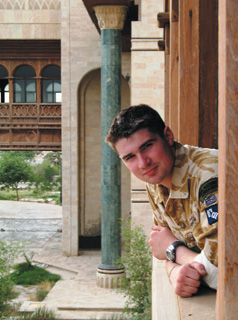
johnthortonThe John Thornton Young Achievers Foundation (JTYAF) supports young people in a wide range of youth organisations and provides them with scholarships to support their personal development and the pursuit of their ambitions. It was established following the death of my younger brother, John, on active service in Afghanistan in 2008. John, a Royal Marines officer, achieved an incredible amount in his short life and so the provision of opportunities for young people to live their dreams, like he was able to do, seemed the perfect way to honour such an inspirational person. Since its formation we have made awards totaling nearly £250,000 to over 550 young people. A legacy that John would be both amazed by and proud of.

There are a wide variety of ways in which people can help or contribute. We have an amazing network of volunteers, without whose help our numerous fundraising events wouldn’t get off the ground. The amount of people who have also helped through organising sponsored events is also overwhelming; from tea parties in local care homes to successfully summiting Mount Everest, our supporters have completely blown us away with their imagination, commitment and passion for this cause. People can also simply donate via our website www.jtyaf.org, or can follow links to fundraising webpages set up by those who are supporting us. Every penny truly helps and, with no premises to fund or paid staff to take into account, very nearly all of every pound donated goes directly towards the young people that we provide opportunities for.

The JTYAF certainly does keep the spirit of John alive. By the age of 22 he had climbed Mount Kilimanjaro, flown with the Red Arrows, qualified as a free-fall skydiver, travelled across New Zealand, learnt musical instruments and played a wide variety of sports, and had worked in both Iraq and Afghanistan as a Royal Marines officer. He achieved more in such a short space of time than many do by the time they reach old age, and being able to help others realise their ambitions and conquer their own personal challenges is so fitting. The sheer scale of the support we receive really is testament to the uniquely inspirational person that John was more than anything else.

Putting together “Helmand” was hard in that it revisited a truly traumatic moment in my life in it’s references to my brother’s death. That said, it was also a therapeutic experience as it gave me the opportunity to look in detail at how he spent the final weeks and months of his life, and to learn about how his experiences fitted in with those of the Officers and Marines that he was deployed alongside. Including my own diary of my time in Afghanistan, some 4.5 years later, was something I was not initially comfortable with as I only ever wrote for my own benefit and to keep a record of everything that my Platoon and I went through together. It was never meant for anyone else’s eyes. However, in hindsight, to have the opportunity to hopefully do justice to the experiences of the soldiers I fought alongside is both rare and an honour, and at the same time I think the ability to contrast my tour with that of John gives the reader a true sense of the incredible progress that was made by the British Armed Forces in Afghanistan in those few short years.

I would like to write another book at some point in the future, but think that it may have to wait until my career in the Army has ended…I doubt I’d have the time to do so until then!

It’s difficult to say whether or not military personnel get the treatment they deserve on returning to civilian life as I am yet to make that jump. I certainly hope that they do. I think that the public perception of the Armed Forces is the most positive it has been for a long time, due largely to a respect for our sacrifices in Iraq and Afghanistan, and I hope that this manifests itself in the upholding of the military covenant for those who make the big decision to return to civilian life.

When I deployed to Afghanistan I felt so many emotions. In the time leading up to deployment excitement gradually gave way to apprehension about the unknown and ultimately a sense of fear prior to stepping out of the gate on patrol that first time. That fear however was not of personally dying or being injured as, ultimately, your training gets you so used to the idea of both that you kind of expect it to happen. The fear that I felt was of letting those around me down, and of what it would do to my family if the worst would have happened again. Letting people down is something on the mind of, I believe, everyone experiencing combat for the first time. Until you have been shot at for the first time you have literally no idea about how you will react. For me personally, the fear of putting my family through another loss so soon after we lost John was something that was on my mind constantly. I know that both of my parents struggled with me being away and spent the entire 6 months hoping and praying that lighting wouldn’t strike twice. To me though they were so supportive – despite their fears they knew that it was the only thing I wanted to do and as my Mum said, “as a parent all you want is for your children to be happy”. Before I deployed I remember saying: “Mum, this is my World Cup”. I wanted to make sure that if the worst did happen, she would know that my time came when I was doing something that I loved.

The best advice I have ever been given came from John, which was simply: “Don’t worry, everything will turn out for the best – because it always does”. I think that’s a good outlook to have on life.

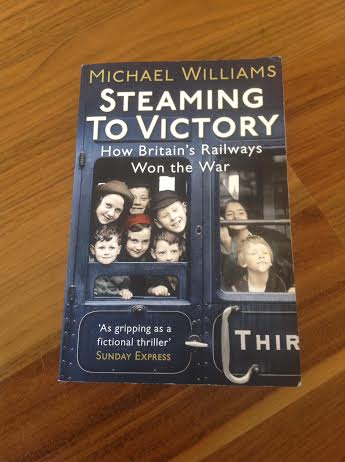
Steaming To Victory: How Britain’s Railway Won The War Michael Williams Book Review

steamingtovictorybookreview My grandfather was a railway man for years. It left him with a lifelong love of the railway. He was also in the RAF during World War II, which veers off topic from this book, although the obvious love and respect Michael Williams has for the railwaymen and women who won the war for Britain is obvious on every page.

This books is riveting and well researched. It is a compelling book that is easy to read, full of information and yet also manages to give a brilliant overall of the war and it’s lasting effect on the people who lived through it. Another thing I learned from this book is that in 1936 a train raced from London to Glasgow in less than six hours, seventy-eight years later, it takes just under five and costs an extortionate amount of money. This book harked back to an amazing period for trains and the railway, it is sadly a long-forgotten period for the British railway industry, let’s hope it can become great again.

In the seven decades since the darkest moments of the Second World War it seems every tenebrous corner of the conflict has been laid bare, prodded and examined from every perspective of military and social history.

But there is a story that has hitherto been largely overlooked. It is a tale of quiet heroism, a story of ordinary people who fought, with enormous self-sacrifice, not with tanks and guns, but with elbow grease and determination. It is the story of the British railways and, above all, the extraordinary men and women who kept them running from 1939 to 1945.

Churchill himself certainly did not underestimate their importance to the wartime story when, in 1943, he praised ‘the unwavering courage and constant resourcefulness of railwaymen of all ranks in contributing so largely towards the final victory.’

And what a story it is.

The railway system during the Second World War was the lifeline of the nation, replacing vulnerable road transport and merchant shipping. The railways mobilised troops, transported munitions, evacuated children from cities and kept vital food supplies moving where other forms of transport failed. Railwaymen and women performed outstanding acts of heroism. Nearly 400 workers were killed at their posts and another 2,400 injured in the line of duty. Another 3,500 railwaymen and women died in action. The trains themselves played just as vital a role. The famous Flying Scotsman train delivered its passengers to safety after being pounded by German bombers and strafed with gunfire from the air. There were astonishing feats of engineering restoring tracks within hours and bridges and viaducts within days. Trains transported millions to and from work each day and sheltered them on underground platforms at night, a refuge from the bombs above. Without the railways, there would have been no Dunkirk evacuation and no D-Day.

Michael Williams, author of the celebrated book On the Slow Train, has written an important and timely book using original research and over a hundred new personal interviews.

This is their story.

Steaming to Victory: How Britain’s Railways Won the War is available here.

The Saatchi & Saatchi Guide To Mobile Marketing By Tom Eslinger Review

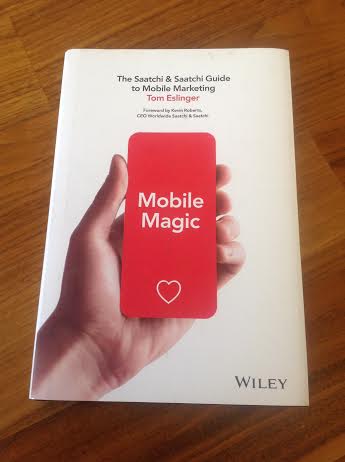
The Saatchi & Saatchi Guide To Mobile Marketing By Tom Eslinger is worth it’s weight in gold. It’s actual weight in gold, because it is basically free marketing advice from Saatchi & Saatchi. Mobile is the way forward: 50 per cent of all unique e-mail opens now occur on mobile devices, one half of all local searches are done on mobile devices and mobile commerce accounted for an estimated 15 per cent of total e-commerce sales in 2013. It is fair to say that if you are not utilising the mobile version of your site you are missing out, losing visitors and sales.

mobilemarketing

This book is useful and practical. It is not text-heavy and full of jargon, it is easy to read and navigate. Above all, this book leaves you educated instead of adrift. The mobile market is no longer a strange place, this book demystifies everything and leaves you with the knowledge to make the most out of your business. Essential reading.


Mobile phones and tablets aren’t like computers or TV or any other media channel or hardware technology that came before them. They’re personal—your mobile device is yours alone, the place where you go from work to play to socializing with the swipe of a finger. They’re portable—your mobile device goes wherever you go, and can connect you to almost anything, anywhere. Put together, these features come together to make mobile powerful—the most potent communication and marketing channel available to marketers today. How do you get onto your audience’s mobile, deeply engage them and have the privilege of staying there? Mobile Magic, by mobile marketing expert and Saatchi & Saatchi’s Worldwide Director of Digital & Social Tom Eslinger, takes you from the practical points of development and through to production, content strategy, content management and how to market your digital and social campaigns. You’ll learn how to understand your audience and how to maintain your mobile initiatives. This book will guide you in executing winning mobile strategies for your business. Written especially with marketers new to mobile in mind, Mobile Magic is your key to the wide world of apps, mobile websites, integrated campaigns, social media and cross-platform thinking and strategies that every marketer needs to know.


Mobile Magic: The Saatchi and Saatchi Guide to Mobile Marketing and Design is available here.


Ecover Launch Bottle Made From Ocean Plastic

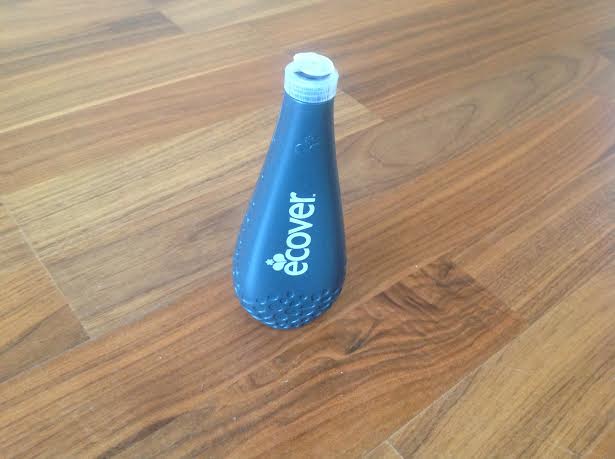
We love environmentally friendly products here at Frost and this bottle of washing up liquid, made from Ocean Plastic, certainly fits the bill. There is a huge island of plastic in the middle of the pacific ocean and something must be done about that, and the waste in the ocean in general. ecoverEcological cleaning pioneer Ecover has launched its first ever bottle made from waste plastic fished out of the ocean. The Ecover Ocean Bottle, which holds Ecover’s washing-up liquid, is made entirely from recycled plastic, with 10 per cent of that plastic coming from the sea. The washing-up liquid itself has been developed with a special ‘sea lavender and eucalyptus’ fragrance – bringing the scent of the sea to homes across the UK without compromising on performance.

Ecocover.Photo: Professional Images/@ProfImages

The company’s ultimate aim is to create the conditions for a systematic clean-up of the huge amount of waste plastic in the sea. Not only does the reduction of waste plastic in the ocean make for healthier, happier fish and sea mammals, it also has a direct impact on us humans as it would ultimately reduce the levels of microplastics in food, drink and other products, meaning we would eat more fish, and less plastic.


The new limited edition Ocean Bottle will be available from Tesco for £2, while stocks last.


• Fish in the middle depths of the Northern Pacific Ocean are ingesting as much as 24,000

tonnes of plastic each year3

• Reducing the amount of waste plastic in the sea would reduce the levels of microplastics in

food and drink

• Ecover wants to stop any more plastic from getting in to the sea, as well as creating the

conditions for a systematic clean-up of the waste that’s already there


Ecover will be using one tonne of ocean plastic, which it aims to increase to three tonnes next year.


“The scale of the ocean plastic problem is enormous – around 46,000 pieces of plastic are swirling around every square mile of ocean, and every year at least a million sea birds and 100,000 sharks, turtles, dolphins and whales die from eating plastic. There is no choice – we simply have to aim to clean up ocean plastic for good,” said Philip Malmberg, CEO of Ecover.


“Our ocean plastic bottle is just one small step on the way to solving the problem, but you’ve got to start somewhere – what we need now is to create a wider network of fishermen, recycling facilities and manufacturers to really make this happen. We also have to exploit existing supply chains and make it as easy as possible for manufacturers to use ocean plastic. At the moment the will is there but it’s just too much effort for many manufacturers to make it work.”


Red Bull Music Academy Sound System Series Announced

redbullcarnival

The Red Bull Music Academy Sound System series will bring a roaming pulpit of sun-drenched rhythms, triumphant beats and street-party antics to three UK cities this summer. Kicking off the mini tour in Bristol on July 5th, the series then veers North for a stop off in Manchester on the 19th, before a boomerang swing down to London’s illustrious Notting Hill Carnival on Monday 25th August.

Launching the tour, Bristol’s St. Pauls Carnival sees the Red Bull Music Academy Sound System stage graced by the inimitable king of house-kissed R&B, Jazzie B presenting ’25 years of Soul II Soul’. Formed initially as a sound system spinning records at house and street parties, it’s fitting that swift-fingered founding father tops the bill. Local boy Redlight goes b2b with Toddla T for a dancehall via 2-step special, self-confessed “Riddim Obsessives” Jus Now let loose some bass-laden Soca beats and Reprazent player DJ Krust knocks out his signature Bristol drumfunk. They’re joined by Black Butter boys My Nu Leng , Mensah’s dubsteppin’ alter-ego New York Transit Authority, house duo GotSome, and Débruit popping out the synth-heavy syncopated beat brawl that’s won him fans the world over.

redbullacademy

Onto the Manchester brigade, headed up by an exclusive carnival set from king of (the) jungle and Kiss FM heavy DJ Hype, who’s unrelenting torrents of drum’n’bass, breakbeat and hip-hop have made him one of his generation’s dancefloor pioneers, alongside local bass cartel lynchpins Murkage and Jamaican/Glaswegian outfit Mungo’s Hi Fi. Ninja Tune’s urban electrosmith and 2010 Red Bull Music Academy graduate Poirier, Levelz, grime fusion mechanic Chimpo and Sheffield’s reggae record mecca Sama Roots step in, with many more yet to be announced.

Completing the Carnival circuit, the Red Bull Music Academy Sound System stage touches down in London, bringing its Notting Hill throwdown back to the Westway. With the line-up set for release in early August, expect that same mashup of luminaries, legends and new blood to soundtrack the capital’s ultimate celebration of summer.

Find out more at redbull.co.uk/rbmacarnival 

Jah Wobble Presents Jasmine Flower Fusion

Event Date: Saturday 12th July 2014

Venue: Pagoda Arts Centre, Henry Street, Liverpool, L1 5BU


Presented by global music collaborationist extraordinaire Jah Wobble, the Pagoda Chinese Youth Orchestra and Liverpool Signing Choir come together in a fusion of Chinese folk, dub, grime and reggae.

Jasmine Flower Fusion

Six years ago, Jah Wobble’s Chinese Dub enthralled audiences all over the UK with its hugely successful fusion of Eastern and Western music and dance.  Inspired by this unique project, the Pagoda Chinese Youth Orchestra worked with Jah Wobble to create Jasmine Flower Fusion, an unprecedented mix of Chinese folk song and grime.  Little did Jah Wobble realise that this acorn project would continue to grow and thrive, and five years on, he returns to witness the progress of the youth orchestra, leading the evening performance with award winning songs from Chinese Dub, Jasmine Flower and something new to the young people – Reggae!


The International Festival For Business, hosted in Liverpool this year, is funding Jasmine Flower Fusion.  Liverpool’s Resonate Music Education Hub and Our Big Gig, a national celebration of music are also at the heart of the event as Jah Wobble and the Pagoda Youth Orchestra invite the public to join them in the creation of Chinese Music.  The workshop, to be held at the Pagoda Arts Centre, Liverpool runs on July 12th from 2-3pm where people are invited to learn how to make Chinese music on Western instruments and try some of the Chinese instruments for themselves.


The evening performance, also at the Pagoda Arts Centre, begins at 7.30pm.  Tickets for each event are £10, admittance to both events costs £15.


Commenting on the performance, Jah Wobble promises a heady brew of East-West fusion as Chinese music gets the dub treatment”.


Artistic Director of the Pagoda Arts Centre Zi Lan Liao said Everyone at Pagoda Arts is very excited about this project and looking forward to bringing the orchestra into a new musical phrase.”


First World War For Dummies Book Review

firstworldwarfordummiesbookreview The First World War has been an endless source of fascination for decades now. The inhumanity, the loss of life. To a lot of people war seems unfathomable, it is not really something that has happened to my generation.


This book is brilliant. Well-researched and full of anything you would want to know about World War 1. Dr Seán Lang certainly knows his stuff, and we will have an interview with him soon.


The books gives an amazing overall education on the complex causes that led to war, the key battles, the Generals and how the war changed the world, along with the lasting effect. This book has everything you could ever want to know about World War 1. I learned a substantial amount and the book also pieces everything together beautifully, leaving you with an overview of the whole war and the key players. Even though this book has a ton of information and some harrowing history, it is always easy-to-read and the format makes retaining the information easy. Good for learning.


I also loved the Part of Tens section, with its list of wartime writers and poets, along with a list of films about World War 1. Over 380 pages of well researched and enjoyable to read, if sometimes sad, history. A must for history buffs.


First World War For Dummies is available here.


Dawn O’Porter Interview | On This Old Thing: The Vintage Clothes Show

Dawn O’Porter is back on our screens this summer with a new show, This Old Thing: The Vintage Clothes Show, all about the world of vintage clothing, and how to make the most of it. Here, she expands on what the series is about, why she believes looking back is the way forward, and how she may be the first presenter in history to make a financial loss presenting a series.
dawnoporter
Your new series is called This Old Thing: The Vintage Clothes Show. What’s it all about?
It’s about trying to get people to step away from the mass-production of the high street and incorporate some of the old with the new, so that they’ll not only be a bit more stylish and stand out, but it’ll also do something to combat this throwaway culture where people buy clothes and then chuck them away the next season. I want people to fall back in love with clothes like they did in the old days, and value what they buy a little more, and look after clothes better.

Why is vintage stuff less likely to be throwaway? Is it because it’s better made, or because it doesn’t go out of style, or is it something else?
I think it’s the fact that the styles are timeless, because they’re old-fashioned. So many designers now look to the past for their inspiration when creating new looks, but if you get one from the past, it won’t go out of fashion. Also, it’s not necessarily that they’re always better-made, but the styles are quite exciting, and I like the idea that I’m spending my money on clothes that not everybody else has. It allows you to have your own style without being dictated to by the fashion industry, and to have a style that doesn’t change so quickly. And another thing we focus on in the show is that women in the past used to make a dress, or have a dress made, and then if they put on weight they’d have it taken out, if they lost weight, they’d have it taken in, and they looked after their dresses and tried to keep them for life. So it’s the way that the clothes were made, and the way they were looked after. Plus the styles were great – you can sometimes buy modern versions of them on the high street, but they’re not really like the originals.

Your passion absolutely comes across in the programme. When and how did you first become interested in vintage clothing?
I think it’s always been there. My aunt and uncle, who bought me up, were big players in the fashion industry in London during the 60s. They were furriers and designers, and my aunt dressed some of the major windows on Oxford Street. So it was always talked about at the dinner table – the way clothes used to be made, how the fashion industry used to be, the importance of well-made clothes and style. And they’d talk to me about the old designers, the characters that they were, and the revelations that they came up with in the world of fashion, how they changed the way women dressed for ever. This was just a continuous conversation in our house, so it was always there. And I’ve always loved clothes, but in my early 20s I bought everything from the high street, but I couldn’t really get it right. I couldn’t keep up with trends, I couldn’t really be fashionable. But I really loved clothes. And then I discovered a vintage shop, and realised that I could dress for myself rather than for an industry or trend. I did a lot for my confidence, for the way that I felt about clothes and the way that I looked. It’s the feeling of “I’m wearing what I love,” rather than “I’m wearing what you love,” that I think is so great about vintage.

In the series, you had to convince vintage-sceptics to buy into the idea. What were their objections, and what are the objections that people in general have about vintage clothing?
Well, first of all, they think that someone died in them. To which I would say who cares? As long as they’re not still dead in them, it doesn’t matter.” Also they think it’s unhygienic, but if you go into a vintage shop and something is really stained, or it smells, don’t buy it. It doesn’t mean that it’s all like that. A small proportion of it is, but most vintage shops have carefully selected their stock. So it as about getting people over the fear and presumption that everything stank. And another thing that put people off was all the rummaging. What’s great about the high street is that you can go out in your lunch hour and buy a red dress in your size and everything’s very easy. And the thing about vintage is, you have to put the time in to buy stuff. But if you put the time in to buy the right stuff, your wardrobe is going to be full or stuff that you love, and getting dressed is going to be less stressful each day. I met people who were in full scale meltdown the whole time, because they had so many clothes but no defined style, and they didn’t know what to do with it all. I told them to have a wardrobe that was half the size, spend their money better, and take time to choose what they wanted.

How successful were you? Were there any real tough nuts to crack?
Yeah, there were two very tough nuts to crack – one woman called Lisa and one called Elissa. Lisa was 44, dressing like a 25-year-old, obsessed with standing out, wearing stuff that nobody else had. So she never shopped in the high street, but shopped in these boutique places, but all of these dresses were just wrong, they were too young for her. She wanted to dress more for her age, still fun, but just more suitable. But she hated the idea of vintage so much that I had to literally drag her into the shop. She thought it was disgusting – the idea of wearing something that somebody else had worn made her physically sick. She actually said it made her want to sick up in her own mouth. But by the end, we found this incredible blue chiffon dress that she couldn’t have looked more incredible in. She was totally transformed, it became her favourite dress.

Where should people shop for vintage clothing? Is it as simple as going to your local Oxfam store and rooting about, or should you go to a specific vintage clothes shop?
It’s very different from charity shopping. Much as I love charity shopping, vintage is a different thing. Vintage is at least 30 years old. The shops are like little boutiques, and the owners are people who have travelled the world looking for the items they stock. So it’s all been very well-edited by the time it’s in here. We filmed all over the country, and we found one of these shops in every town we visited, and found good stuff in every shop. So find your local vintage boutique and go and see what there is. Also, I love eBay. I’ll put in “vintage 70s red dress” and search, and loads of vintage 70s red dresses will come up. The chances of finding something are just limitless.

A lot of people have the impression that vintage is a great deal more expensive than high street stuff. It’s not necessarily, is it?
No. I bought the most amazing dress yesterday – full maxi-dress, 100 per cent cotton, really gorgeous, with pockets, and it was £24. Like all types of shop, some vintage shops are expensive, and some aren’t expensive. You just need to do a little research.

You visit loads of vintage stores during the series. Did you spot anything while you were filming and buy it?

Every. Single. Day. I’m addicted to it, I can’t help myself. I came home with bagfuls every day, and I’ve nowhere to put it. It’s all over the floor. But I like organised chaos.

Do you think it’s possible you’re the first presenter in TV history to have made a loss filming a series?
I think that’s very possible, yes!

How much time do you spend shopping?
Well, I’m buying now because I’ve got my own vintage business, so I have an excuse to do it all the time. I do a lot online, I do a lot on eBay. I suppose, when I’m not writing or filming or doing other jobs, I do about two-days-a-week. But it’s not all for me, it’s for the business.

Does Chris come with you, or would he rather pull his own teeth out?
He’s really good! He’s a good personal stylist, and he loves vintage shops too, so he’ll be in the men’s section, I’ll be in the girls’ section. It’s good.

Tell me about the business. What’s happening with that?
It’s called Bob, and it’s a vintage business. Well, it’s sort of half-and-half. I’m launching with 400 pieces of vintage that I’ve found all over the world, from my travels. And it encompasses all price ranges and all sizes. And then the other half of the business are my favourite dresses, that I’ve loved and I know I’ll never finmd again. And I’ve remade them in lovely fabrics, but they’re all very distinctly vintage styles. And there will be limited numbers of each one ever made. So it’s a mixture of the old and the new, which I think is the key. I’m not trying to get people to move away from buying new clothes altogether, I just think we should be incorporating some of the old stuff that already exists as well.

Did you learn anything while filming the series that might help you in your new venture?
So much, yeah. I learned a lot about how to dress different body shapes, and about quality of clothes. What I want to do is make a dress that will last a lifetime rather than a season. So I put seam allowances in the dress, which means that if she pits on an inch, she can take her dress out. It’s those little touches that vintage clothes have that the high street doesn’t, that I’m putting into Bob. It’s just about bringing back charming little touches like that.

You’re a TV-presenter, journalist, author and now dress designer and businesswoman. Is there any limit to your ambitions? Do you fancy becoming an astronaut or playing in goal for England?
Actually, it’s funny you should say that, that is my next ambition. I want to play for England. It’s just a matter of time… No, I want a life that is about books and dresses, and then I’ll be very happy, so I’m working my arse off at the moment trying to create that existence.

This Old Thing: The Vintage Clothes Show starts on Channel 4 Wednesday 25th June at 8pm.