CARIADS’ CHOICE: BANK HOLIDAY REVIEW SPECIAL

Kitty Wilson’s Every Day in December, reviewed by Jane Cable

I always feel August is a little early to read a Christmas book, but so evocative were the descriptions of sledging on tin trays and making snow angels I actually felt cold!

Christmas, however, is just the backdrop to this heart-warming story and the characters are just wonderful. If I felt for Belle, and wanted to scream at her awful parents in anguish, I seriously fell in love with Rory; he too has heavy baggage to carry but it doesn’t follow him around like a thundercloud and you know from the start he is still capable of love and lightness.

Being Kitty Wilson, this is a funny book and will make you laugh out loud… Chardonnay and her pilot… Belle’s unusual ally when she has to play Christmas fairy… all beautifully crafted moments. But the love story takes centre stage; believable, real and flawed. I absolutely loved it.


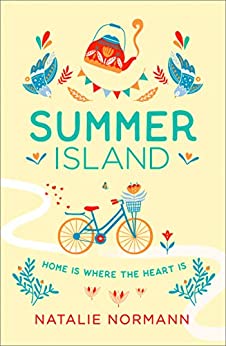
Natalie Normann’s Summer Island, reviewed by Jessie Cahalin

A gorgeous, joyful novel that made me want to ‘enjoy the silence and the wind – the smell of the {Nordic} island and take a deep breath.’ Perfect.

‘There’s more to life than a broken heart’, declares Ninni. At the end of a relationship with a pilot, she escapes to the family holiday home on a Norwegian island. Of her former lover, she mused, ‘if he were here, she would simply push him into the sea.’ And when you get to know Ninni, you really believe this would be possible.

There are sparks between Jack, the Englishman and Ninni, but you need to read to find out more. It was so much fun to experience Jack’s perspective as he learnt the Norwegian way of life on the island and dealt with the close knit, nosy community.

Gentle humour bubbles throughout the novel and it is a perfect escape.


Shelley Parker-Chan’s She Who Became The Sun, reviewed by Kitty Wilson

This story was a reimagining of the rise of a young girl from a famine-stricken village in Fourteenth Century China; described as a cross between Mulan and the Song Of Achilles, it certainly lives up to this high praise. It is a truly epic tale, filled with love, loss, and betrayal and I absolutely loved it. We see Zhu rise from almost certain death as she decides to take on the fate ascribed to her brother and escapes her village to a nearby monastery by hiding the gender assigned to her at birth and training to become a monk. The story follows her life as she moves from monk to warrior, using her keen intelligence to rise to prominence. The world building is intricate and beautifully done, the characters are flawed and real and the story itself is utterly absorbing. It manages to combine tender moments with brutal ones and weaves themes of war, love, duty and identity throughout.


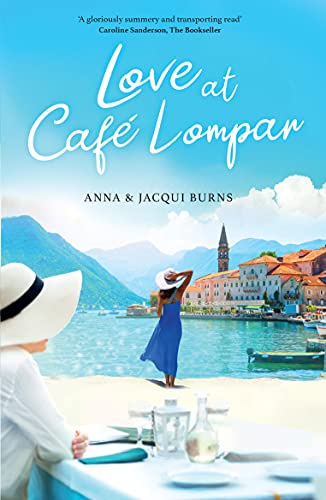
Anna and Jacqui Burns’ Love at Cafe Lompar, reviewed by Jill Barry

This debut novel written from individual viewpoints, by mother and daughter team Jacqui and Anna, is a total delight. Coming to terms with the death of a husband and father is difficult in itself. But when Dan Lompar’s widow unlocks Pandora’s Box, the lives of family members are changed for ever. Reading the novel’s sparkling descriptions of both scenery and local food delicacies left me feeling I wanted to hop on the next flight to Dubrovnik. But it’s the characters who held me most of all. And the fallout from what must have been an intensely difficult secret to keep for many years. Whether the action takes place in and around Bath or the Bay of Kotor, the emotional impact is huge, especially as Grace and Kat learn more about beautiful, dignified Croatia. They find their attitudes changing as they follow in Dan’s footsteps and embrace the changing patterns of family life.


How I Got Published Jenny O’Brien

There are many roads to publication. But as a forty-year-old with three kids of three and under, including twins and a busy job as a nurse, none of them were for me – or so I thought. Then a character popped into my mind. An earworm that wouldn’t go away. A little boy called Dai Monday. It took me a year to find the courage to pick up a pen. With no time to write at home and a busy day job, I took to carrying a notebook around in my scrub top. This notebook got filled during my 15 minute coffee breaks. Within 6 weeks I had a very poor, first draft of my first book.

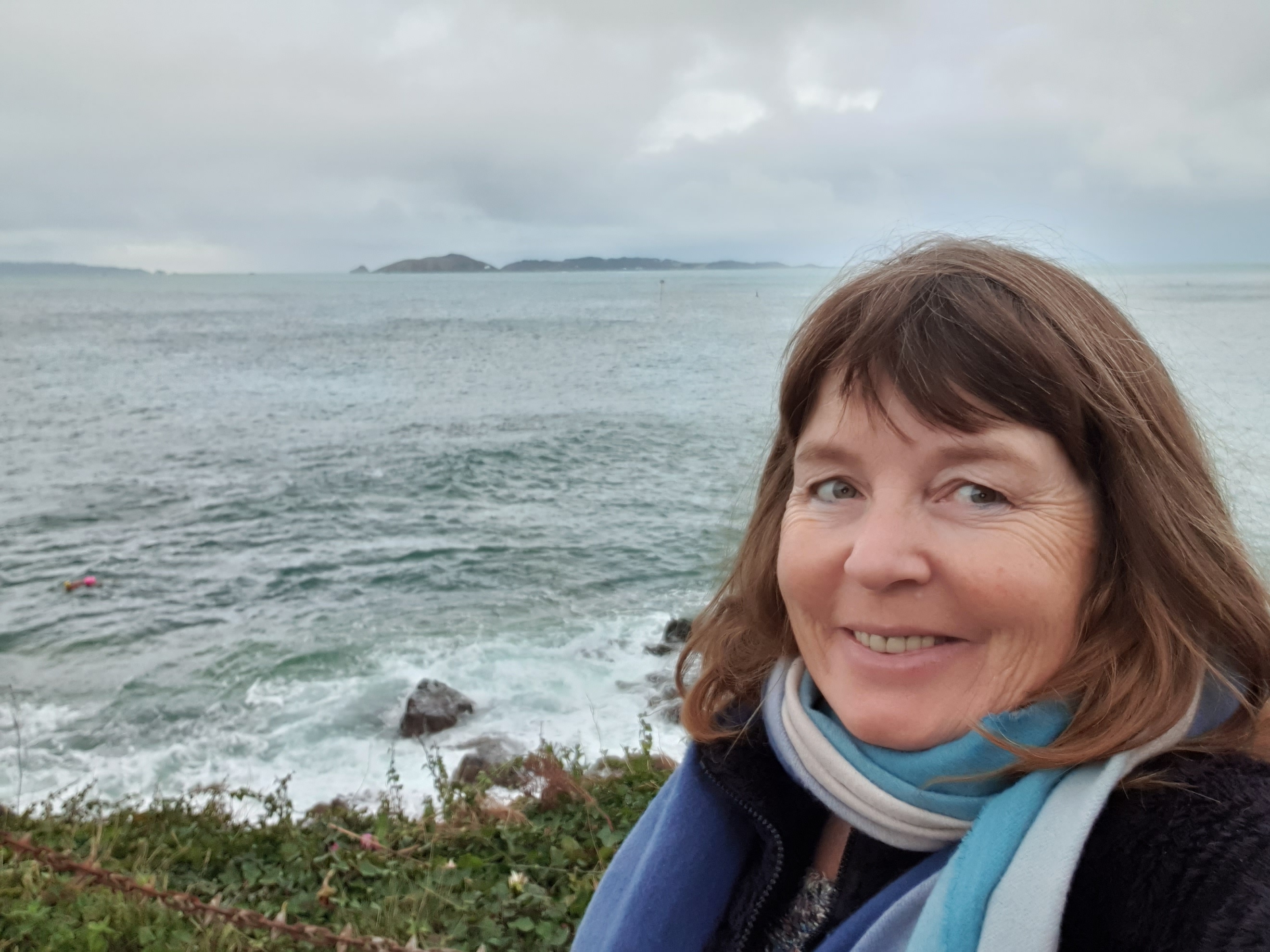
Jenny O'Brien , author, writer, how I got published ,

Fast forward five years. I was still writing but with no thought of publishing until peer pressure and a bullying incident at school led me to self-publish Boy Brainy. Six more years quickly followed in tandem with a box full of rejection letters. I’m not sure how many rejections—too many to count but not so many as to blunt my determination to succeed.

It took twelve years to find a home for my writing. Twelve years when my writing improved, but also the quality of my query letters. Never underestimate the importance of a well-crafted query letter!

But, in the end, the years didn’t count for much. It was a few quirks of fate that pushed me over the finishing line. A change in genre from children’s books to romance and finally crime fiction. BookBub accepting me for a book promotion the first time I applied. One last push to secure a publisher and, finally, engineering the date of the BookBub promotion to coincide with my query letter arriving at HQ Digital, an imprint of Harper Collins.

I said at the start that there are many roads to publication. While I wouldn’t recommend mine to anyone, there are lessons to be learnt. If you are struggling to find the time to write, change how you view time. Chunk it into 15-minute sessions instead of hours. Those few minutes add up. It might mean writing in transit but that’s easily catered for with a notebook or even a mobile phone. To rephrase a well-known saying. There is always a way, but first you must find the will. My BookBub deal was a fluke, but what followed wasn’t. There’s nothing wrong with nudging luck along with a little gentle manoeuvring.

Good luck!

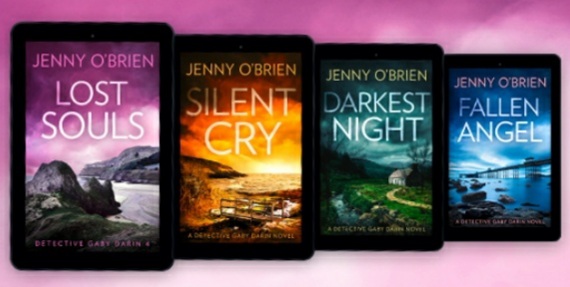
Jenny O’Brien is an Irish writer of the Detective Gaby Darin series published by HQ Digital.

My Writing Process Ray Star

Ray Star, author, writer, how I write, my writing processWhat you have written, past and present

I wrote my first story when I was ten, scribbled untidily onto folded green paper, unevenly stapled together with crayon illustrations on every other page. My teacher had tasked our class with writing a story to include three things: a waiting room, a light switch and a wish. I opted to write a tale of a young girl who found herself in a magic waiting room that gave those worthy a wish, if fate called upon them to use the light switch. I received my first A+ and have wanted to be an author ever since.

After my school years, I dabbled in freelance journalism, covering ‘real life’ stories for tabloids and the women’s weekly’s in my twenties but found this mind numbingly painful. To the point, it put me off writing for a while. I ended up starting my own PR firm and then, life got in the way, as it so often does, and my dream of one day becoming a successful author was lost to the 9 to 5 routine and all that falls in between.

It wasn’t until quite recently in 2018 that the idea for a story found me, and it wouldn’t let me be. It would find me just before I fell asleep at night, an array of nameless faces that needed their stories to be read, heard and understood. The title came to me when I was at lunch with my mother one afternoon, and a year later, my first draft copy of Earthlings – The Beginning was ready.

  • What you are promoting now

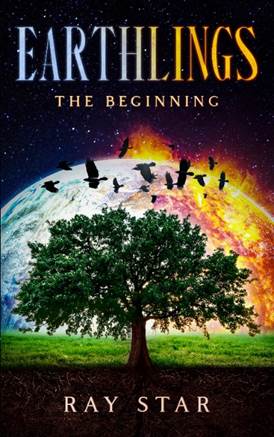
My debut novel Earthlings – The Beginning, is book one of a YA Fantasy trilogy with a message to the narrative, and launches on August 12th, this year.

Earthlings is the story of a young girl named Peridot, raised with the realities of her world hidden from her by an overbearing mother. One day, a young boy Euan unexpectedly comes into her life only for him to leave as quickly as he came, from that moment onwards, her world is never the same. Peridot leaves the clutches of her mother’s home in the hopes of finding her friend, only to discover all she believed to be true, to be something else entirely. 

We follow her journey into a world filled with magick (yes magick with a ‘K’), wonders and horrors that Peridot couldn’t have fathomed in her wildest dreams – or nightmares. For every step she manages to get closer to her friend, something new and unknown gets in her way. There are many twists and turns in the Earthlings tale but ultimately Peridot’s story is one of finding friendship against all odds and trying to do the right thing – no matter the consequence.

www.raystarbooks.com

  • A bit about your process of writing

I’m going to be completely honest with you – I have no process! I wrote most of Earthlings when I was pregnant with my first born, which was utter bliss. Just me and my bump and a fresh pot of tea, writing away by an open window with the breeze fluttering past to keep us company.

The remainder of Earthlings was written with a new-born, which never in my wildest dreams could I have fathomed would be as hard as it was, but I did it, and then, just to make things that little bit harder for myself, another bump came along. Bump number one is now aged two, and his brother, is eight months.

Writing time now, is done in the rare moments of quiet, which admittedly, are far and few, but when they find me, the story flows and I find ‘the zone’ as I call it, quite easily. Writing is the one thing in this world, other than my boys and a good strong cuppa coupled with dark chocolate digestives, that brings me peace.

  • Do you plan or just write?

Planning to write when you have children, is like planning to have an early night when you have children. It does not happen. It works in my favour to not make plans, and then by not making plans, enables the possibility of that plan taking place… if you follow!

  • What about word count?

For a story to be the best it can be, I have to allow it to flow naturally. If I force myself to write a set number of words, they become in danger of becoming precisely that – just words. I used to set the target of writing 200 words a day but by doing that, I did the opposite. Word counts seem to be counterproductive for my style of writing and I prefer to enjoy the story as I write it, whether its 50 words or 500. The story will write itself if you give it time.

  • How do you do your structure?

Alike the above, I had no set structure for Earthlings, I sat down and wrote the story as it came to me when I was in the moment. Although, Earthlings is book one of a trilogy and with book two, there are specific moments that needed to happen, so I made a point of having a list of key events that I ticked off as they were complete. 

Editing wise; I tend to write a chapter or two, read through and do a light edit, then keep writing. This way, when I come to edit properly when my first draft is complete, most of the leg work is done and the editing process isn’t as daunting.  

  • What do you find hard about writing?

The environmental cost of books plays on my mind a lot. Whilst I’m over the moon to finally be an author, it bothers me that my work comes at the cost of trees. Beautiful beings that have lived on this planet longer than I have are sacrificed for the literature we know and love. This bothers me more than I can put into words. 

My publisher, Chronos Publishing, thankfully, is very supportive of my concerns and has ensured that Earthlings, where possible, is to be printed on recycled paper. However, we were unable to get this secured with one distributor (Amazon) so I have recently launched the #ReadGreen campaign to hopefully encourage Amazon to offer sustainable printing options to the publishing industry.

You can support the Read Green campaign with a simple signature via www.change.org/read_green/ 

I have also pledged to plant 1 tree per book sale via Ecologi to combat any Amazon sales of my book, the Earthlings forest is available to view via my website.

  • What do you love about writing?

Everything. Writing to me, is as wonderous as magick. It is the ability to make your wildest dreams a reality. The ability to breathe life into beings, places and creatures that we dismiss as unbelievable. Pure escapism. If you’re a good enough writer. Anything is believable. If it harm none, so mote it be.

Love and light

Ray Star

@RayStarBooks

www.raystarbooks.com

Earthlings by Ray Star is out now by Chronos Publishing, £8.99

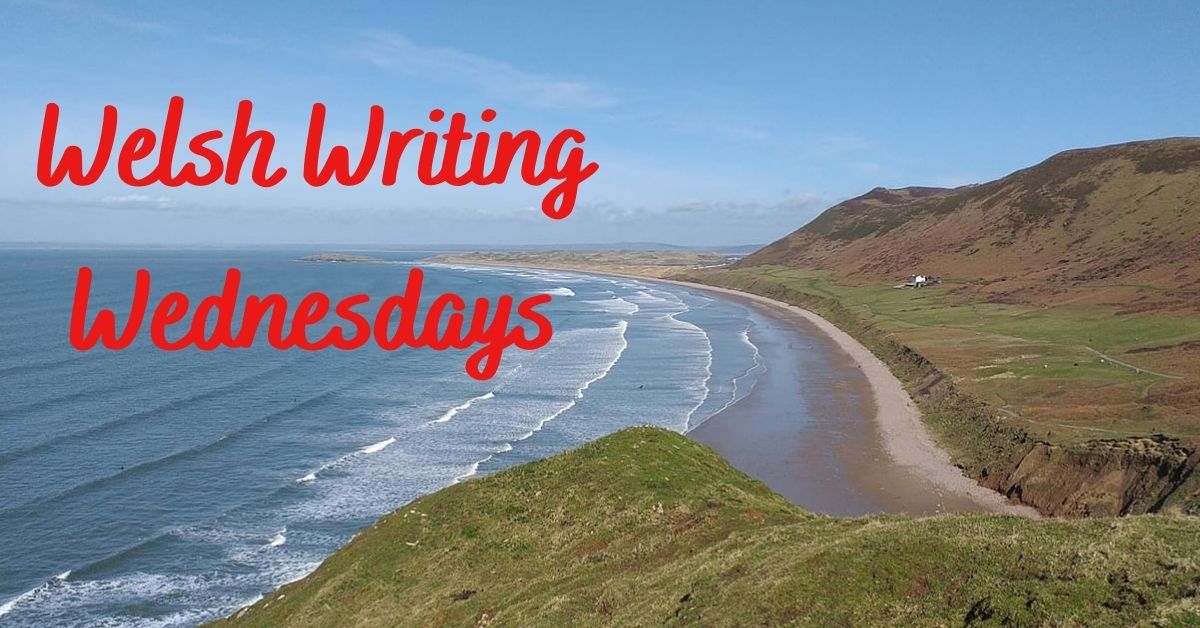
WELSH WRITING WEDNESDAYS: JAN BAYNHAM ON CONTEMPORARY NOVELIST CAROL LOVEKIN

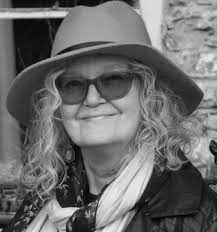
I first met author, Carol Lovekin at Tenby Book Fair in 2015. We’d been following each other on Twitter and it was so good to meet in person. It was just six months before her wonderful debut novel, Ghostbird, was published by Honno, the Welsh Women’s Press. A feminist writer based in west Wales, Carol writes contemporary fiction exploring family relationships and secrets, but for me it’s the fact that her writing is interwoven with myth, fairytale, ghosts, and mystery that makes her novels so special.

‘My stories touch on the Welsh Gothic & its most powerful motif: the ghost. They concern the nature of magic & how it threads through the fabric of our lives. I explore possibilities: the fine line between the everyday & the time-shifting world of enchantment. My books are also firmly rooted in reality. I write about family relationships: how people, women in particular, respond to loss & how they survive. I set my stories in Wales, where I’ve lived for several decades: a place whose legends & landscapes inform my writing.’

Carol’s own words sum up the very essence of her writing. When reading her novels, there is no doubt as to where they are set and she takes you into the innermost thoughts of her characters. I love the poetic nature of the prose and its figurative language that does not in any way detract from the plot and pace of the novels.

Carol’s next novel will be published by Honno in 2022. Entitled Only May, she describes it as her ‘lockdown novel’ when she said writing kept her sane. ‘With no distractions, I listened for the word birds, cracked on and wrote it.’ It’s written in the first person present and involves a girl who could tell when people lied to her. If, when they looked her directly in the eye and told lies, she knew.

‘I’m the girl who sees beyond the glint in your eye, around your over-confidence and through to the truth and I can hear the earth hum, the way the bees do. Ever since I was a tiny baby and they started talking to me, it’s seemed rude not to take notice.
Bees don’t lie.’


Published works:

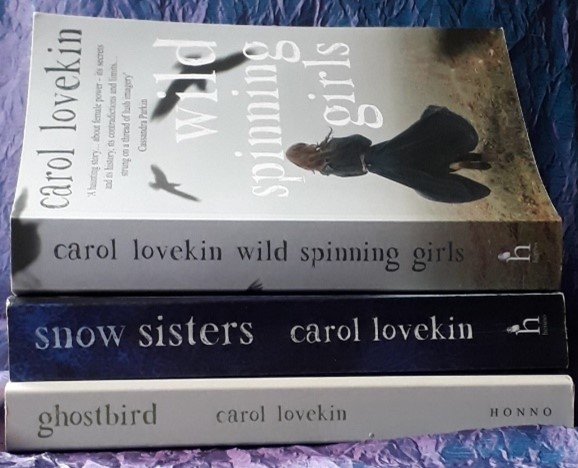
Ghostbird (2016)

Described as ‘Charming, quirky, magical’ ~ Joanne Harris, the book was chosen as Waterstones Wales and Welsh Independent Bookshops ‘Book Of The Month’ for April 2016. It was longlisted for the Guardian ‘Not the Booker’ prize 2016 and nominated for the Guardian Readers’ Book of the Year 2016.

Snowsisters (2017)

Author, Louise Beech, said of this novel, ‘Lovekin’s words soar like the birds, who see everything’. It was selected by Books Council of Wales as their October 2017 Book of the Month.

Wild Spinning Girls (2020)

‘A timeless tale of grief and belonging… haunting and hopeful.’ ~ Mags Phelan Stones. This third novel was selected as Books Council of Wales Book Of The Month for March 2020 and was shortlisted for Literature Wales Book of the Year/ Rhys Davies Fiction Award 2021. This was a huge accolade for not only for Carol and her fellow Honno author, Judith Barrow who was also shortlisted alongside her but for Honno itself. Congratulations!


How I got published Dougie Brimson

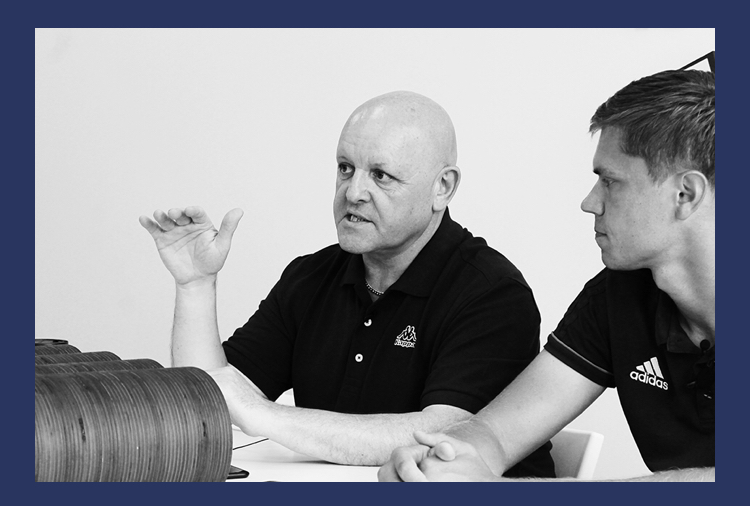
Back in 1995, I had an idea for a book about the culture of football and after working on it for a while with my younger brother, started to think about how we could get it published.
Dougie BrimsonNever having written anything before, and not knowing any other authors, I walked into W.H Smiths, picked up a football book and wrote to the publisher who happened to be Hodder-Headline.

After a week or so, they wrote back and asked for a sample of our work and so we sent them 3000 words and waited. They came back and asked for some more and so we sent them another 3000.

This went on a few times and in the end, I said to them ‘either you want this or you don’t. If you don’t, then let us know and we’ll try someone else.’
Dougie Brimson
Within a few days, they’d made us an offer to publish which included a nice advance. It was only about a year later that we realised that it didn’t work like that for everyone.

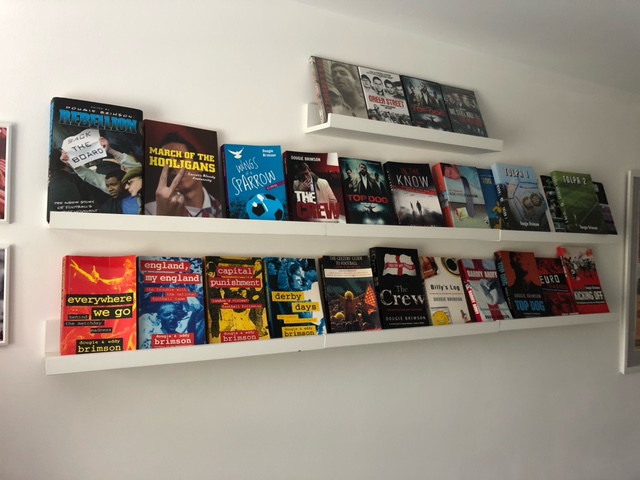
The book was called Everywhere We Go. It was published in early 1996 and was a massive success. So much so that it kick started a career which has resulted in a further 16 books, sales of over 1,500,000 worldwide and being lead writer on three award winning feature films with more on the way.
Ironically, despite all that success, I’ve never been able to find an agent to take me on so have ended up doing it all myself.

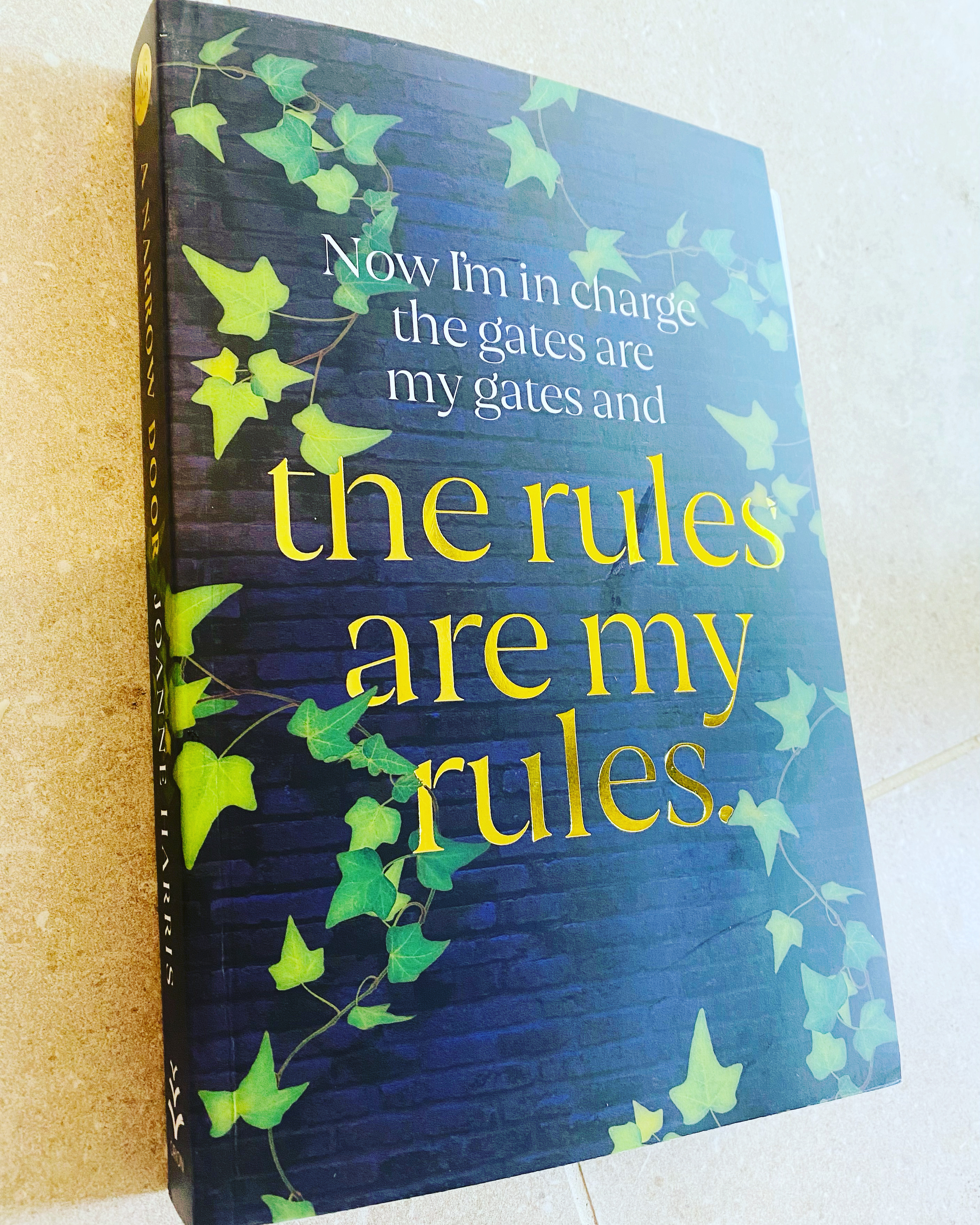
A Narrow Door by Joanne Harris Book Review

Joanne Harris is one of our greatest novelists. It is hard for anyone to argue with this statement and A Narrow Door asserts her place once again.  Such is the richness of her language, and the mastery of her skills as a storyteller, that I could not put this book down. It is such a rich story of suspense and betrayal.  

You will never see the twists coming and they will take your breathe away. This is a stunning and clever book. I suggest you grab a copy as soon as you can, it is sure to be the hit of the summer. This is definitely one of my favourite books of the year. 

From the Sunday Times and internationally bestselling, multi prize-winning author Joanne Harris, comes A NARROW DOOR – an explosive psychological thriller about one woman who, having carved out her own path to power, is now intent on tearing apart the elite world that tried to hold her back . . . piece by piece.

A Narrow Door, Joanne Harris, Book, book review


Now I’m in charge, the gates are my gates. The rules are my rules. 
It’s an incendiary moment for St Oswald’s school. For the first time in its history, a headmistress is in power, the gates opening to girls.

Rebecca Buckfast has spilled blood to reach this position. Barely forty, she is just starting to reap the harvest of her ambition. As the new regime takes on the old guard, the ground shifts. And with it, the remains of a body are discovered.

But Rebecca is here to make her mark. She’ll bury the past so deep it will evade even her own memory, just like she has done before. After all…

You can’t keep a good woman down.

Available to pre-order now!

A Narrow Door is available here.


WELSH WRITING WEDNESDAYS: JANE CABLE ON HER FATHER POET, MERCER SIMPSON

As I have written in Frost before, my formative years were spent in and around the vibrant Anglo-Welsh poetry scene. Writers such as Tony Curtis, Dannie Abse and Gillian Clarke were taking over the mantle from the Dylan Thomas generation and my father Mercer Simpson was in the thick of it.

First as an expert on the genre – he wrote the section on it in The Bloomsbury Guide to Literature – and a reviewer. Then as poet himself. Except he wasn’t Welsh by birth – he was English, although in the end he lived in Cardiff for the last 55 years of his life. His first – and last – collections were through Rockingham Press in East Anglia, but I think the one of which he was always most proud was Rain From a Clear Blue Sky which was published by Gomer with the help of Welsh Arts Council funding.

Having a poet as a father gives a unique insight into their lives. This is not to say all poetry is autobiographical – it’s certainly not – but my father was very clear that some of his were and there is a section in Rain From a Clear Blue Sky that deals with childhood memories. All this was easy to accept as my father’s past, but when the present reared its head, it could be harder. Or simply incredibly beautiful, like these lines about a rose bush that stood in my parents’ garden.

Fruhlingsgold
shakes her
curling-papered head,
the wind’s
premature blow-drier
scattering news
of dispersed beauty,
the white petals
leaving the golden heart
on each stem…

But there were certainly times when the insights seemed far too close to home and I still find parts of his last two collections difficult. Not just because I helped him to correct the proofs of the last one when he was in a nursing home, dying. It wasn’t a bad time – apart from the obvious – we became even closer over those galleys – and we were able to discuss what was going to happen surprisingly easily.

Six months before the Welsh Academy had put on an eightieth birthday reception for him in the Norwegian Church in Cardiff Bay. For him it was the pinnacle of his acceptance as an Anglo-Welsh poet and I will never forget how much it meant to him. I was more than proud to be at his side as we listened to Tony Curtis, Ruth Bidgood and others read from their own work and celebrate my father’s. And he read himself – of course he did – he had been a lecturer, had even taught public speaking, so he was a consummate performer.

There was a humour in his work, even in the most serious of subjects, particularly in Honest to God, a poem he read that night and I read at his funeral. And pathos too. As the child of a poet, there are times you get to look inside your parent’s soul.

Dear God
I hope I’ve got your correct address:
with so much mail going astray these days I wouldn’t want this letter
to get lost in the post.

I hope you don’t mind me leaving the writing of it rather late
but I felt I had to thank you for letting me stay in your house for so long.
I know I haven’t been the easiest of guests,
stealing your son’s bread and helping myself to his wine…

…Now that my time is nearly over
I insist on having the last word which must be gratitude:
gratitude for the miracle of your world that I, who might have died at birth,
was spared to live in…

…So please forgive me if I seem impertinent
in asking if I may come back and visit you again some time?


Anna Kent My Writing Process

Anna Kent, author, writer, What you have written, past and present?

I was a journalist before I became an author, so I’ve written an awful lot of articles for publications in the UK and the UAE, and I was also a columnist for The Telegraph for six years and for Stylist Arabia for a year.

In terms of fiction, I have four psychological suspense novels out under my own name, Annabel Kantaria. They are Coming Home, The Disappearance, The One That Got Away and I Know You.

My fifth novel, called The House of Whispers under the pen name of Anna Kent, is due to be published on August 5.

I’m currently writing my sixth novel. It’s yet to get a title but I’m really excited about the premise!

What you are promoting now?

I’m promoting The House of Whispers by Anna Kent.

Tell us a bit about your process of writing?

I try to treat writing as I would an office job, so I have a strict routine: I put in about three or four solid hours in the morning, then I try to go to the gym or do an exercise class before lunch, then I fit in another hour or so of writing before it’s time to pick up my son from school. 

If I can, I’ll work again in the afternoon but it’s not always possible. I never work at night and I try not to work at the weekend, too.

In terms of the writing process, every book begins with the seed of an idea: sometimes it’s the ending, sometimes the twist, or, in the case of the book I’m currently working on, it was the inciting incident – the event that kicks off the whole story. I try and flesh this out, sketching out how the character will change throughout the story, and working out a plot that will carry that internal change and also allow room for a few duplicitous scenes, red herrings and twists.

I try to use a system where I write scenes on index cards and move them about but, generally, once I’ve got a foggy idea of the story in my head, I just want to start writing. It’s a mistake to start too soon, though, as I invariably then get stuck about 20,000 words in because I haven’t planned enough.

There’s always a point, about halfway or three quarters of the way into a manuscript that I lose faith and start to doubt myself. Writing is a solitary process and it can be a challenge to keep up both the momentum and the self-belief. You just have to push on through and trust the process. Having a good support network of friends and family really helps.

How do you do structure your books?

They’re all different. Most of them have multiple viewpoints because I love seeing events through different people’s eyes. 

In The House of Whispers, interviews with one of the characters are interlaced throughout the narrative, only you don’t know who is interviewing the person, nor why – you just know that something major has happened. The Disappearance started half-way through then tracked back, and it also had two timelines set about 50 years apart. I Know You was told with the benefit of hindsight, which allowed me to do a lot of foreshadowing to keep up the suspense, and The One That Got Away had alternate chapters from the points of view of a husband and wife. 

I do love a clever structure, but they can be very tricky to pull off.

What do you find hard about writing?

The hardest thing for me is trying to come up with that million-dollar best-selling idea: the high-concept story that becomes the most talked-about book of the year!

I also hate it when I get stuck in my plot. It happens at some point in every book, and I’m antsy and stressed until I get through that block and start writing properly again.

Other than that, just trying to be creative, day in, day out, with little or no feedback on how I’m doing, and no colleagues to bounce ideas off. Keeping faith in myself that I can do it. Not knowing if my book is any good or not until I submit it to my agent when it’s finished. That’s tough. 

What do you love about writing?

I love the creative freedom at the start of a new book, when the world really is your oyster. It’s like playing God. You have the power to create a whole world, and to populate it with whomever you like, and to make whatever you want happen to those people. There’s nothing like starting a fresh story. Even better if you know it’s a really fabulous idea! 

Days when the words flow and the story just comes flying out through my fingers are also fabulous. There’s no feeling like it.