JANE CABLE INTERVIEWS CAROL THOMAS ABOUT HER CHRISTMAS BOOK FOR CHILDREN

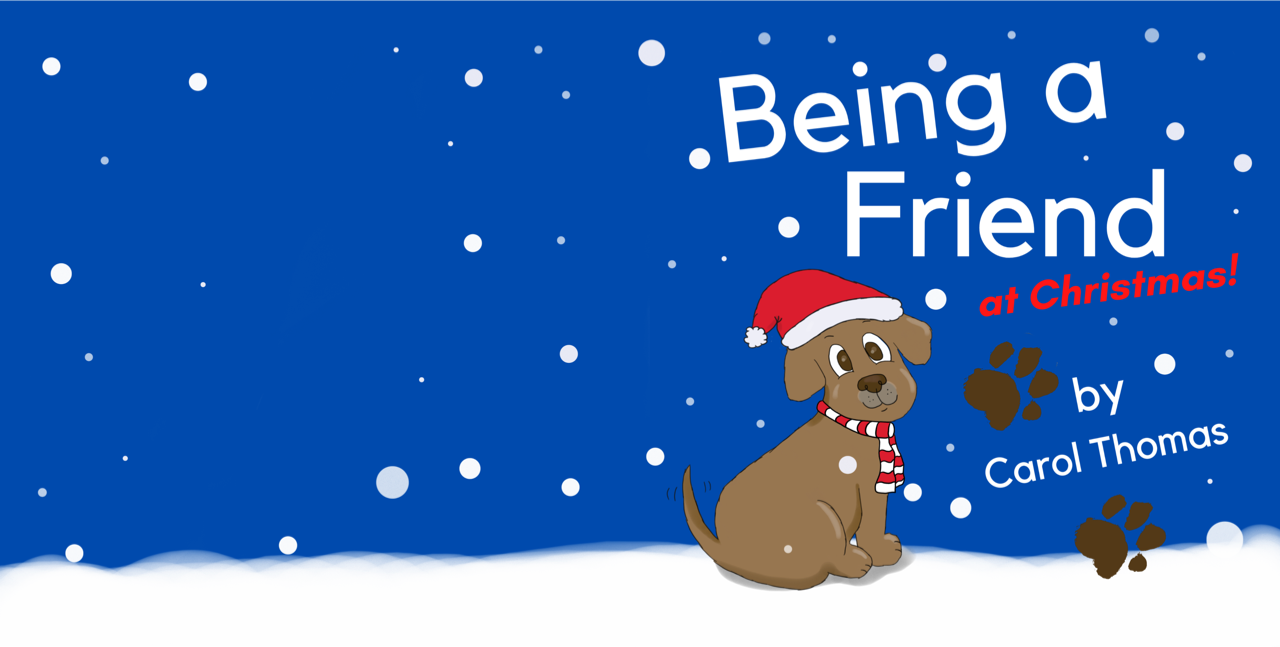
In a year where kindness and thinking of others have been brought to the fore, I am delighted to be chatting to Carol Thomas about the release of her latest children’s book, Being a Friend at Christmas. You may be more familiar with Carol as a romance writer, but her children’s books are wonderful too.

In this, the second in her Little Pup series of books, Little Pup is looking forward to his first Christmas in his new home, but he also remembers the dogs he left behind in the shelter and wants them to have a happy Christmas too. Little Pup has an idea, but he needs Father Christmas’ help to make his wish come true.

I love the premise of the book and the fact it carries a message of thinking about others, what inspired you to write it?

Having seen Little Pup settle into his forever home in the first book, I couldn’t resist revisiting him at Christmas. I had the idea for the story soon after writing the first. As a teacher and a mum of four, I think children are good at grasping concepts, such as empathy, kindness and generosity, from the books they read. Stories can be enjoyable and fun, as well as inspiring a conversation, and I believe that’s what this book does.

I know you illustrated the book too, which do you prefer illustrating or writing?

Writing definitely, but I did love drawing the pictures for Being a Friend at Christmas. I drew them during lockdown while homeschooling my son and supervising my two high school aged daughters with their studies. It was quite therapeutic. I love dogs, so bringing Little Pup to life was a lot of fun.

How did you manage to keep the creativity going during lockdown?

There are five of us at home, and it was actually lovely to find our own rhythms for the day. We started work at times that suited us, went for walks, and did things like sit down and eat together – something usually prohibited by getting to various after-school clubs. I think focusing on those positives and not putting pressure on ourselves really helped.

I wasn’t the only one who got creative in our household, either. My daughter started making bracelets, earrings, bead art and keyrings and opened an Etsy shop. She’s had some lovely, positive feedback and I think it’s great to see a teenager being creative and using their initiative. You can check out her crafts here: https://www.etsy.com/uk/shop/RedDaisyCrafts

 As people turn their attention to buying for Christmas, I am sure they will make great stocking fillers, as will your book.

Thank you. I hope so. I love to share Christmas stories with my own children and hope others feel the same. There is something very special about sharing a book, and snuggling up in the winter months complete with pyjamas, slippers and a heartwarming story; it’s is a real treat!


And with being a friend and thinking of others in mind, between now and Christmas, Carol is raising funds for Angel’s Garden, dog shelter, in Xanthi, Greece on all purchases of Being a Friend at Christmas, made from this link: https://www.carol-thomas.co.uk/blog-dogs-at-christmas/

5 Books That Changed Me by Michael Rowan

1 Coral Island by R.M.Ballantyne 

The first ‘proper’ book that I read as child.  I could read the standard text that we were taught at school, but there was little plot, no discernible theme or character development. Coral Island was loaded with all three, this little book captivated me, as this was the first time that I could see the pictures they conjured up of the three shipwrecked boys having adventures in a lagoon. I would pretend that I was one of the two older characters every time I swam in any municipal swimming pool and even today at 64, I can’t resist imagining myself back there, as I duck beneath the surface in our local Lido though these days it is more Moby Dick than Coral Island.
Michael Rowan, writer

2) Merchant of Venice – Willian Shakespeare

As a 10 year old at St Wilfrid’s, I looked forward to our weekly reading sessions. One week there was a change of format, as our teacher explained that he was going to read us a story from a few hundred years ago. He didn’t read it as a play, but as a story, in parts over several weeks. He told us of a man who was in love (Yuck) and who needed money to impress the girl’s father. There was a riddle which I recall was a cliff hanger and then there was the cutting of a pound of flesh, ‘nearest to the heart’ which enthralled this 10 year old bloodthirsty boy. It was the beginning of a love affair with Shakespeare that continues to this day.

3) Lady Chatterley’s Lover- D H Lawrence

As a pupil at an all boy’s grammar school around 1971, I had been identified as a keen reader. Whilst most of my fellow pupils trudged through one book a term, I returned each week for a new book. This interest delighted a series of English teachers, until in the fourth year, Mr W gave me a special ticket to use the sixth form library. The keys to the sanctum of knowledge. As I perused the shelf containing the works of D H Lawrence, I discovered Lady Chatterley’s Lover, which was soon hidden beneath my blazer as I marched back to my class, about to become the hero of the fourth year. The look on Mr W’s face as he confiscated the book, my special library card and delivered his ‘you have let me down and yourself down speech’ will never leave me, but I did go on to read all of the works of D H Lawrence, albeit after I had left that particular school.

4) The Return of the Native – Thomas Hardy

In the summer of 1975, I found myself on an 18 30 holiday, now famed for high jinks and alcohol but then a travel company in its second or third year and virtually unknown. As a keen reader I ensured that along with my sun- tan lotion and coolest threads, I packed an ample supply of books. Evenings were spent in Spanish discotheques, whilst the afternoons were for laying on the beach recovering from a hangover. I however, was to be found reading about Eustacia Vye in The Return of the Native. How I was mocked by the other lads on the holiday, that is until a young and very pretty English Teacher lent over and asked me what I was reading. It was the beginning of my love of Thomas Hardy, and the start of my first holiday romance.

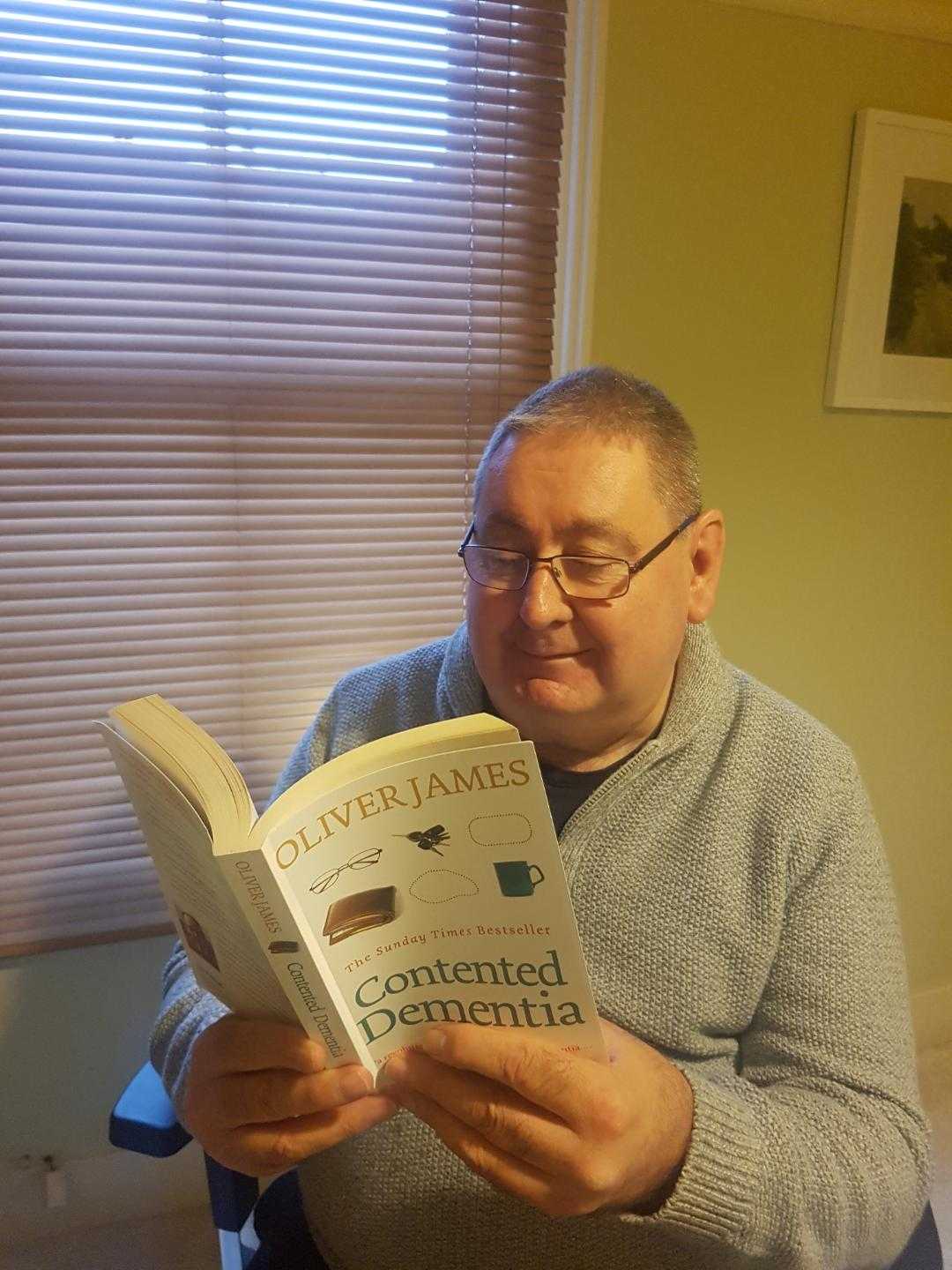
5 Contented Dementia – Oliver James. 

I was in my 50s when both of my parents developed dementia, a cruel illness of which, at the time there was limited information written.  

The demands of the illness kept growing, but there was little advice and I clearly recall thinking, if only there was the equivalent to a car manual, a book that explained in simple easy to understand language, what to do. A chance review brought this book to my attention, crammed with excellent advice, with its three golden rules, never ask direct questions, never contradict, and learn from the person with dementia. This book became my bible throughout my parents’ final years, and I went on to become an advocate for Contented Dementia. No one, no matter who or where, could have a conversation that used the word dementia, without me elbowing my way in and recommending the book. Over the years 100s of people have looked on me as some eccentric but quite a few of those have thanked me afterwards. 


SISTER SCRIBES’ GUEST: ALISON KNIGHT ON WRITING A VERY SPECIAL BOOK

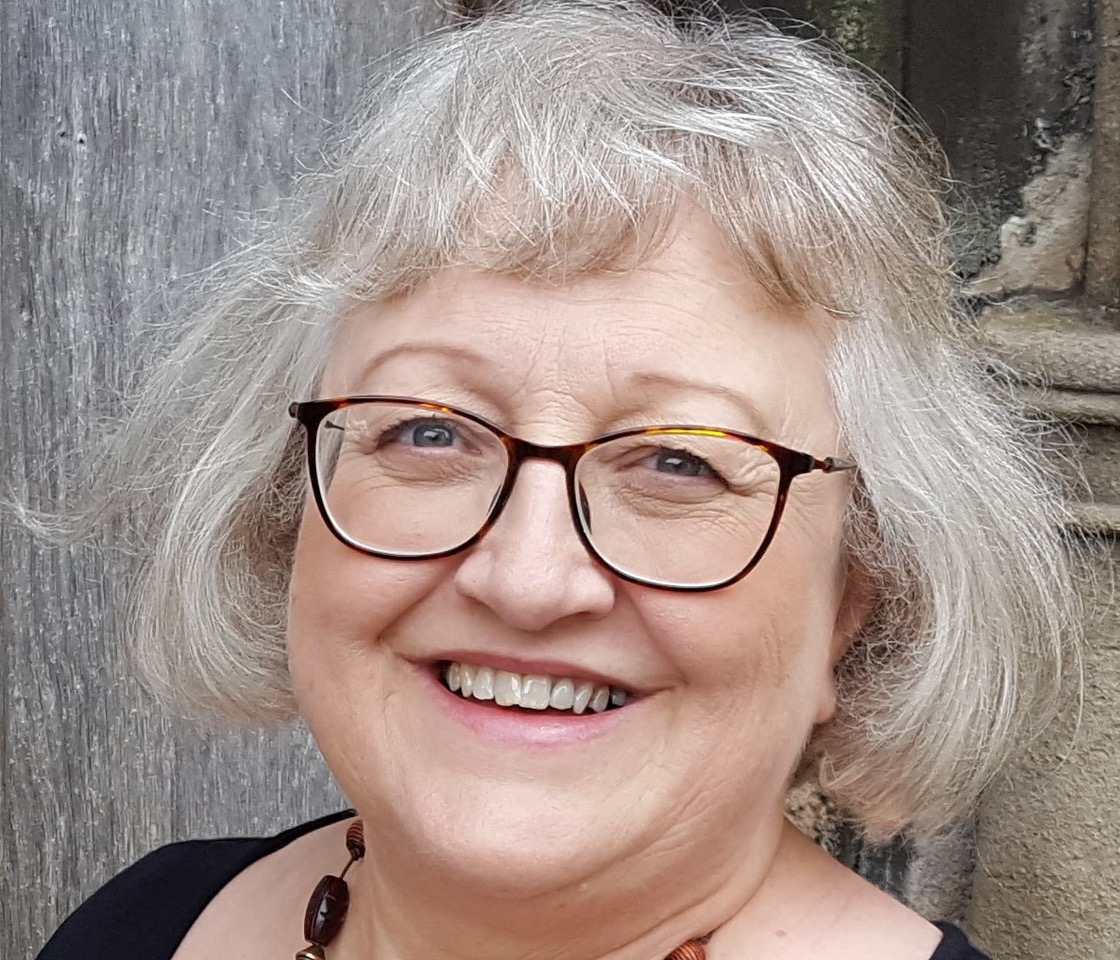
Alison Knight is a writer, teacher and editor living within sight of Glastonbury Tor. She is a member of the Society of Authors and The Romantic Novelists’ Association. She carries the dubious distinction of having introduced Kitty and Jane at an RNA conference.

I’ve always found entertainment, wisdom and solace in reading. When times are tough, it’s good to be able to escape into a story that takes you away from your everyday life and worries. So I suppose it was natural for me to become a writer.

Creating a legacy

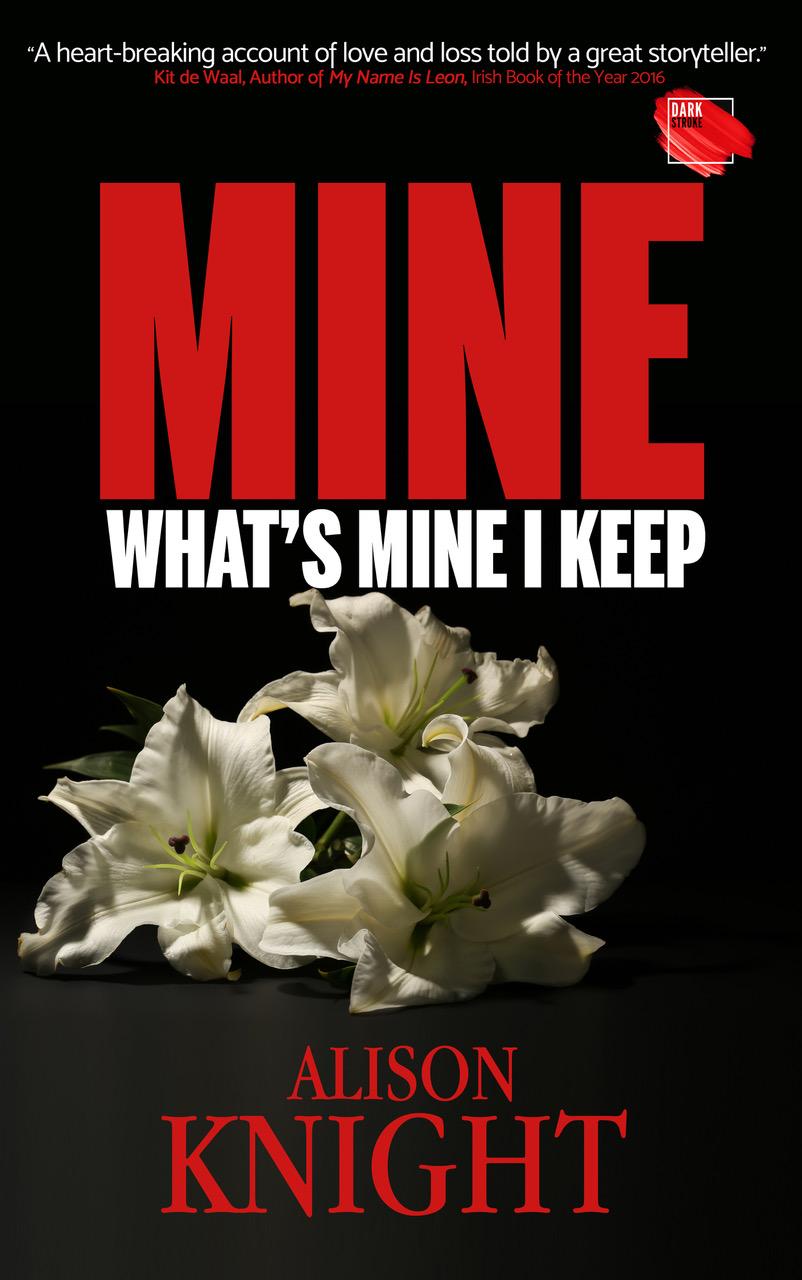
My latest book, Mine, which is published by Darkstroke Books, is my fourth novel and a project that is very close to my heart because it is based on real events that happened in my family in the late 1960s. I’m the only one left who can tell this story and it was important to me to wrote it in order to introduce my children, nieces and nephews to people that have gone before. It’s my legacy to them, helping them to understand that the world was very different fifty-odd years ago and the people I portray in Mine were driven by the attitudes of society at that time. If the same things happened today, the outcome would be very different.

Understanding why

I also wanted to write Mine for myself. My memories of that time were stuck in the mind of a ten-year-old child. By putting myself into the minds and shoes of the main characters, I was finally able to understand what happened with an adult’s perspective.

I’ve written it as a novel rather than a memoir because I didn’t want it to be all about me. Instead, I wanted to explore how ordinary people made decisions that led them into an extraordinary situation. I was also aware that I would never be able to find out exactly what happened as the people who could tell me are not longer here. Instead I used my memories, conversations with family members, newspaper reports and official documents to piece together the story. Where there were gaps, I used what I knew and took into account the culture of the times and used my imagination to fill them. It soon became clear that the guiding themes were class, ambition and sexual politics.

Getting published

It has been an interesting journey to publication. At first, the book was far too long at 140,000 words for any publisher to take it on. A rewrite reduced it by over 20,000 words. Some agents and publishers suggested I give it a happier ending or turn it into a psychological thriller. If Mine had been pure fiction, I’d have considered these suggestions. But because it is based on real events, there were some things I simply couldn’t do.

The question of genre was a problem too. It’s a love story, but not a romance with a happy ever after. It was turned down several times because publishers weren’t sure how to market it. When asked to categorise Mine, I describe it as a family drama, or domestic noir.

But then I found Darkstroke Books, an excellent small publisher with a reputation for hard-hitting fiction. After years of rejection, Darkstroke’s acceptance happened quickly and Mine is finally being launched in November 2020. The editing process was fairly painless – my brilliant editor totally ‘got’ what I was trying to do and Darkstroke have been wonderfully sensitive and supportive.

So, how do I feel about finally sending this story out into the world? I’m excited, but also slightly terrified. It’s not often a writer is featured as a character in her own novel!


Find out more about Alison at www.facebook.com/alison.knight.942


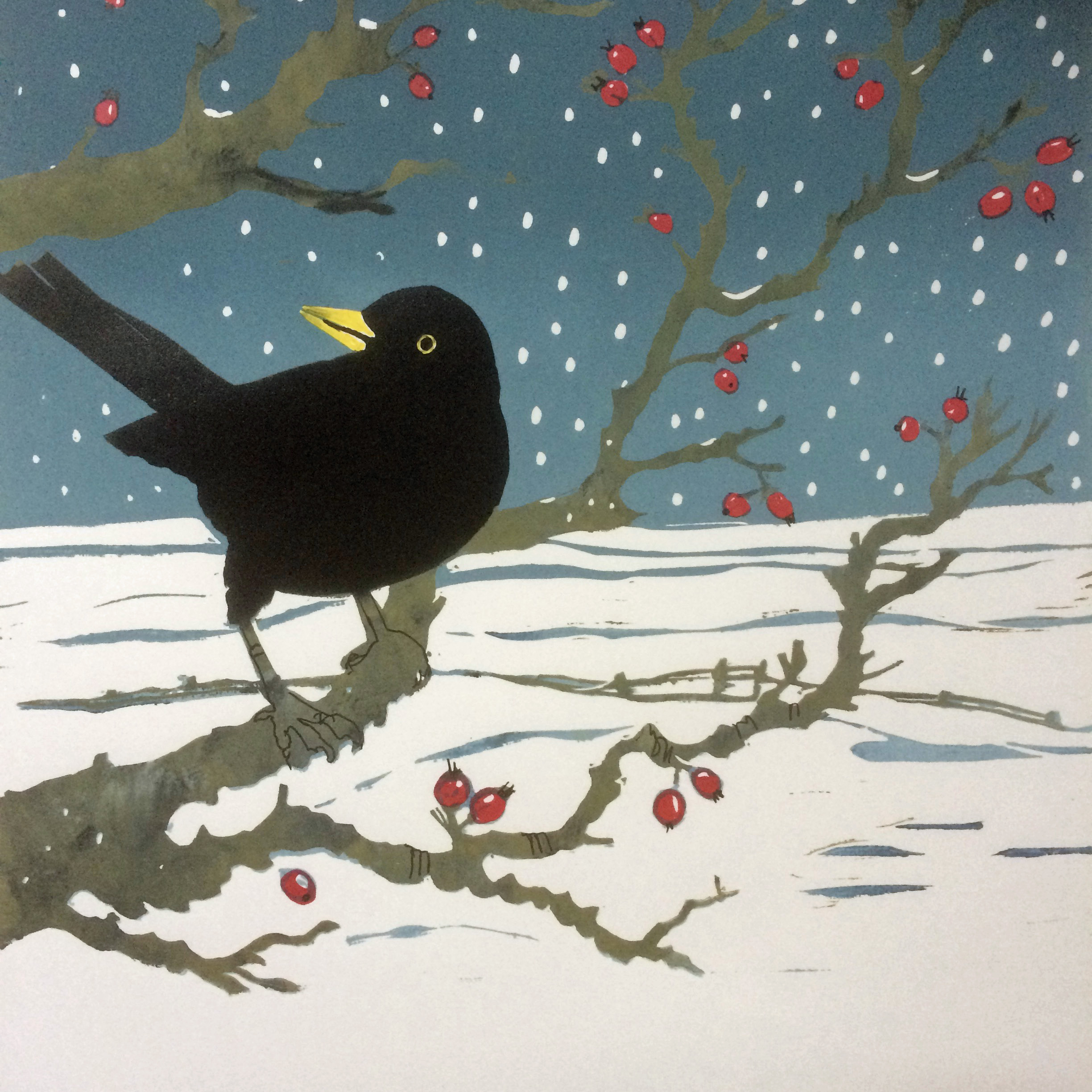
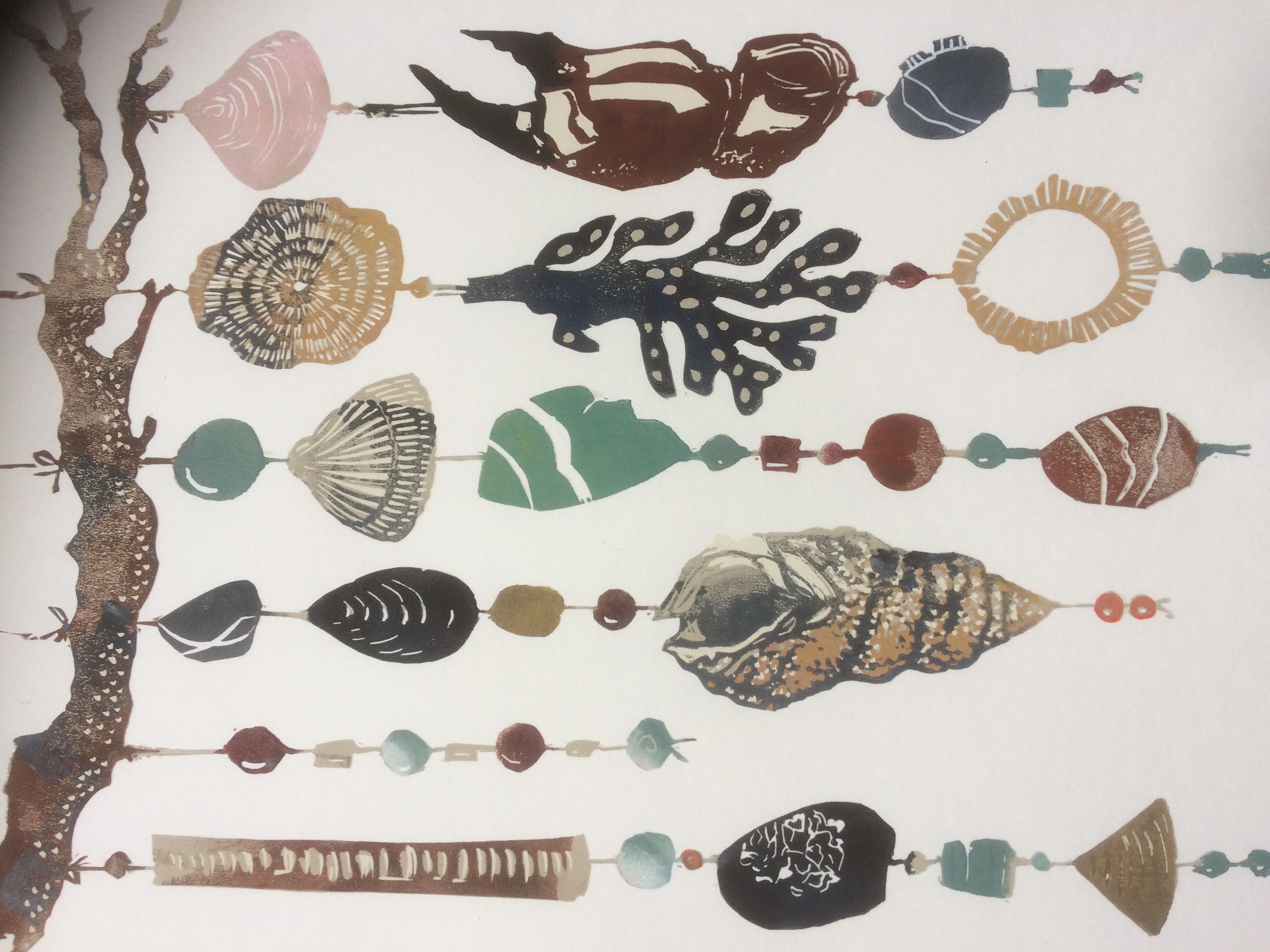
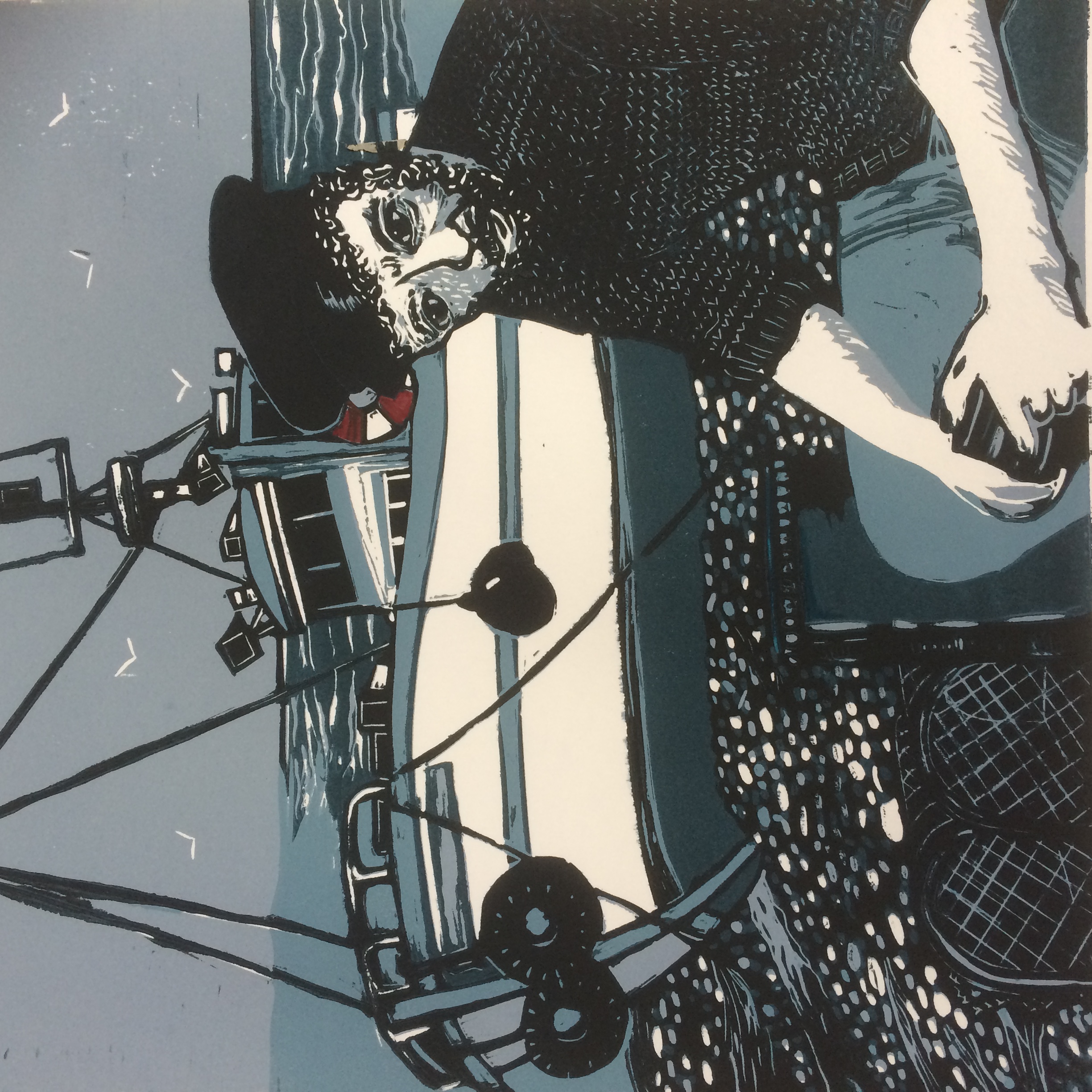
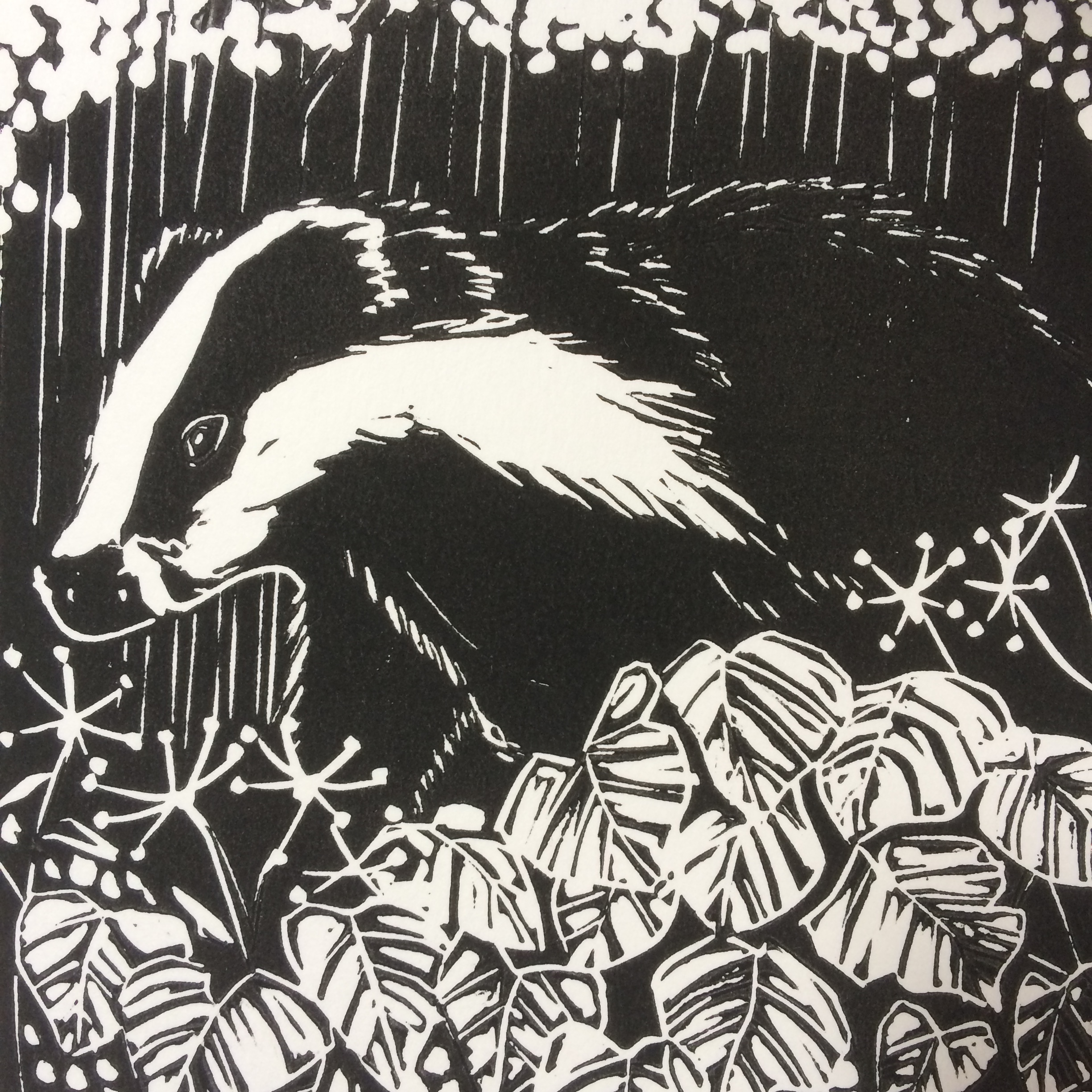
INTRODUCING NORFOLK ARTIST AND PRINTMAKER, SUE WELFARE

I‘m an artist, printmaker and writer living and working in West Norfolk. I’ve got no formal arts training and only began working full time as an artist in my very late 50’s after a career as a freelance writer.  I think one really helped the other – I’m used to being self-employed, self-starting and self-motivating, and I’ve always been very visual – when writing I could always see and hear what was happening to my characters, and I think that visual imagination has really helped me develop as an artist.

I live in a little market town in Norfolk and love the diverse nature of the Norfolk Countryside, its amazing unspoilt coast line and its wildlife – as some-one pointed out recently, I’m all about Birds, Boats and Beaches!

Before becoming a printmaker I tried lots of other arts and crafts. I’ve worked with mosaics, stained glass, wet felting, papercutting – all of that experience and experimentation was really worthwhile, helping to build up skills in composition, mark making, colour, handling tools, finding out about inks and blades and glue. And along the way I’ve also met some amazing people who have been prepared to show me, teach me and share their knowledge.

I now work primarily as a linocut printmaker, which for me is the perfect balance of art and craft. I love working out the composition and drawing the blocks, but then also love the carving and the technical challenge that comes with creating a print.

I also love, and have missed, going to fairs, workshops and exhibitions this year – I enjoy the village feel of events, and showing and explaining to people what I do –  while lockdown may have curtailed the trips and adventures I had planned it hasn’t stopped me enjoying the garden, walking the dogs or imagining trips to favourite places.

Those things have kept me going over the last few months and inspired lots of new work.


You can find me on Etsy:  www.etsy.com/uk/shop/SueWelfareArtist


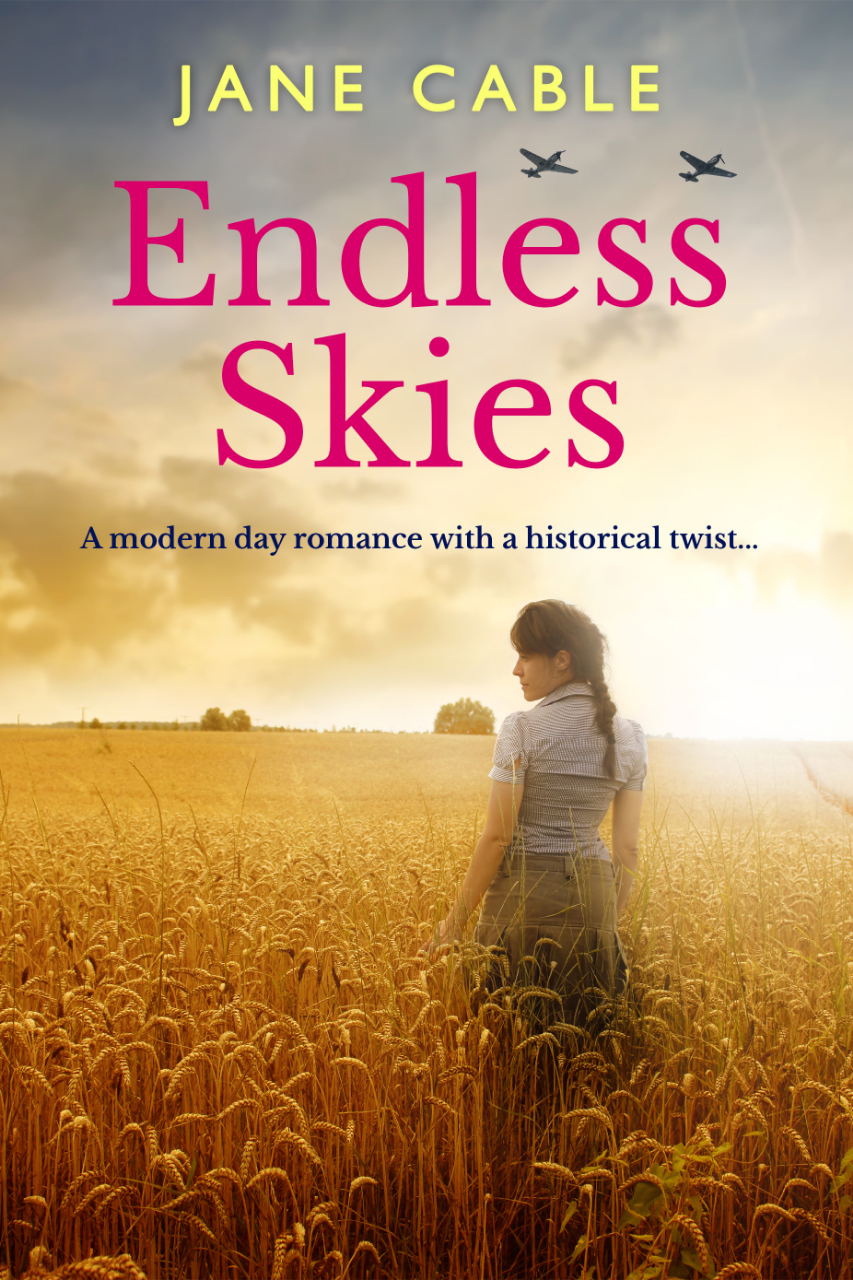
Endless Skies By Jane Cable Book Review

I have read all of Jane Cable’s books. I love them all but this one is my favourite. The character of Rachel is such a wonderful, complex, multi-dimensional character, written with such skill and grace that you have no choice but to love her. This is a modern love story set in sumptuous Lincoln. It has a clever historical twist that works beautifully.
Between the set and the characters; Endless Skies is an atmospheric novel with a story that draws you in and does not let go.

If you want to move forward, you have to deal with the past…

After yet another disastrous love affair – this time with her married boss – Rachel Ward has been forced to leave her long-term position in Southampton for a temporary role as an Archaeology Lecturer at Lincoln University.

Rachel has sworn off men and is determined to spend her time away clearing her head and sorting her life out.

But when one of her students begins flirting with her, it seems she could be about to make the same mistakes again…

She distracts herself by taking on some freelance work for local property developer, Jonathan Daubney.

He introduces her to an old Second World War RAF base. And from her very first visit something about it gives Rachel chills…

As Rachel makes new friends and delves into local history, she is also forced to confront her own troubled past.

Why is she unable to get into a healthy relationship? What’s stopping her from finding Mr Right?

And what are the echoes of the past trying to tell her…?

ENDLESS SKIES is thought-provoking contemporary women’s fiction novel with a heart-warming ending. It merges moving World War Two historical events with modern day drama to reveal a relatable love story.

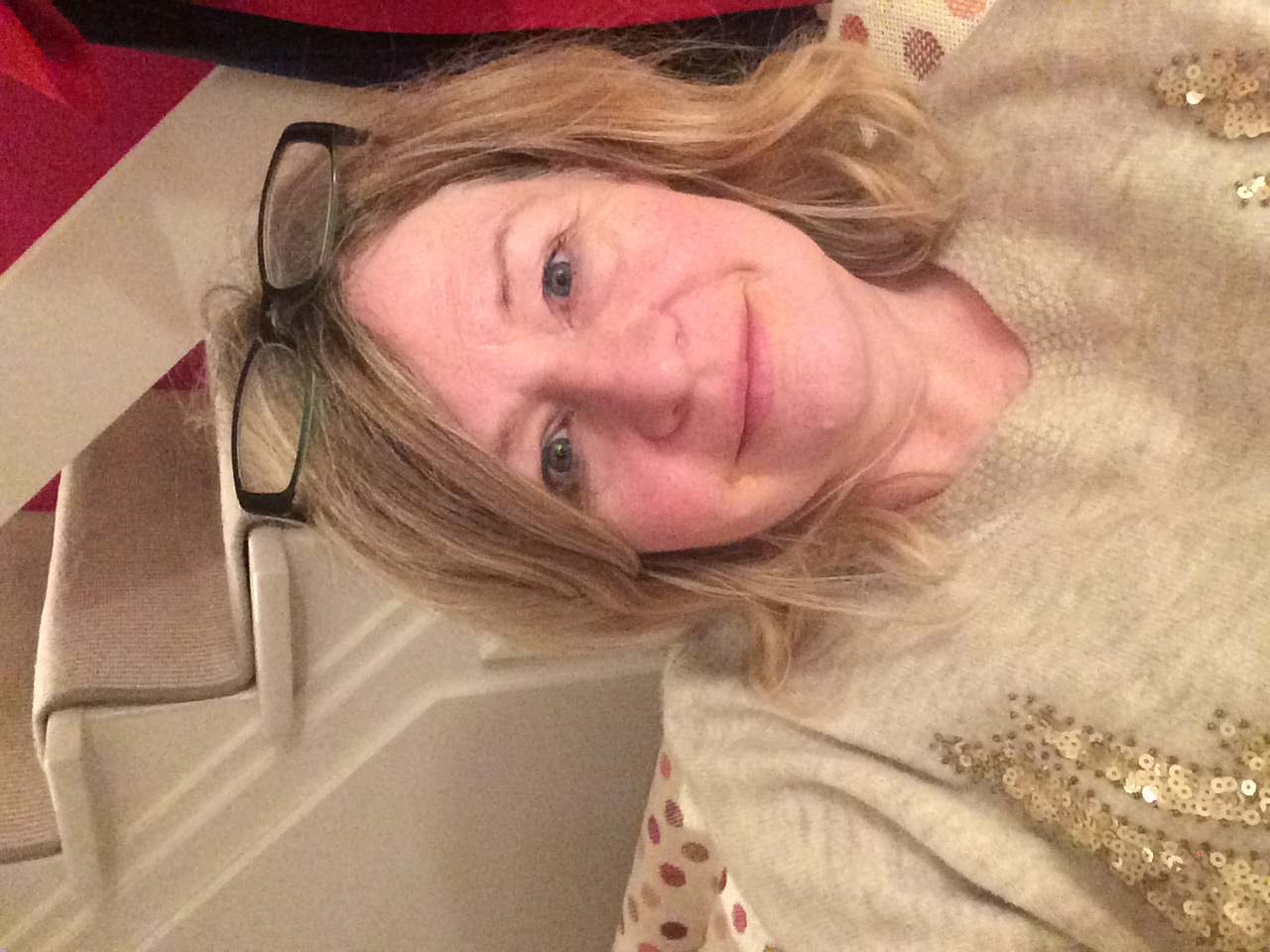
SISTER SCRIBES: KIRSTEN HESKETH ON NANOWRIMO TAKE TWO

I’m writing this on 30th October. It’s nearly a very important date … and one that has been eyeballing me from the calendar for weeks. No, not Halloween – with both children at uni (sob!), there seems little point in ‘celebrating’, (although we have been invited to Zoom into the wedding of the daughter of American friends in our finest Halloween regalia tomorrow!) Not even Firework Night which I do enjoy and which was An Important Social Occasion growing up (and I once got off with Paul Richardson from the swimming club at the Beaconsfield Firework Display in 1977) ….

No. November 1st marks the beginning of #NaNoWriMo …. and I can’t wait!

For the uninitiated, #NaNoWriMo stands for National Novel Writing Month and the challenge is to try and writing 50,000 words (the best part of a novel – or, at least, the first draft) during the month of November. Bonkers, but fun!!!

I’ve attempted – and completed – NaNo once before in 2017. I loved it – and I think it suits me and my writing very well. I have a terrible habit of ignoring the old adage ‘don’t get it right, get it written’ and I can spend hours – days – polishing and repolishing the same old passages or chapter – passages or chapters that never actually make it into the final cut!! What a monumental waste of time and effort that is! So, for me, there’s something very liberating about ‘having’ to write 1,667 words a day, come hell or high water (and there’s been a lot of that, lately, hasn’t there?!) No time to angst over the perfect word, the perfect phrase, the perfect cadence. All that can come later. Now is just the time to get the bare bones of the story down, to ‘tell it to myself’, to commit it to paper. Onwards, always onwards – no looking back – after all, you ‘can’t edit an empty page’! And, for me, all that striving forward makes me a better (maybe) – certainly a braver – writer. With little time to ‘vet’ what I am writing, now is the time to take risks, to go with the flow and to see where it takes me. After all, I can sort it all out later …

NaNoWriMo Mark Two is a different beast for me, though. When I attempted it three years ago, getting an agent – let alone a publishing deal – was just a twinkle in my eye. Now I am lucky enough to have my debut novel ‘out there’ as a proper book, thanks to Canelo. I also have a deal with Hodder & Stoughton for a saga series set in London in World War One. The first book in the series is done and dusted (and out next April) and I am due to start work on the second. To begin with, I dithered. Should I bash out a first draft during NaNo or make a start on the ghostly rom-com I’m dying to write? In the end, I wrote a couple of pages of the second saga book, fell in love with it – and now I want to keep going. So I’m good to go!

Five-page plan agreed with my editor – tick!

Online group of writing buddies – tick! If last time is anything to go by, I will really need them from days 17 to 20 and I’m ready to support them in any way I can too.

Are you doing Nano?

If so, good luck – and see you on the other side!


HISTORICAL NOVELIST NICOLA PRYCE ON HOW SHE APPROACHES HER RESEARCH

My books are set on the south coast of Cornwall, 1793-1800, so it’s wonderfully fitting that Cornwall’s new archive centre has moved to the old Redruth Brewhouse, built in 1792. The former Brewery has been transformed and incorporated within it is Kresen Kernow which houses 1.5 million records, covering 850 years of Cornish history. I believe there are fourteen miles of shelving!

I loved the Records Office in Truro, but this new centre is fabulous. Starting with the user friendly catalogues, the e-mail lists of chosen archives, the spacious research rooms, and the efficient and charming archivists, it adds to the serious problem of deciding when to stop researching and start writing!

But I’m getting ahead of myself. Other writers tell me they start with a kernel of an idea, a spark that fires their interest, and they expand it from there. I, however, like to start with the whole picture, gradually narrowing it down to the themes I want to explore.

I began my journey into historical fiction knowing the place I wanted to set my stories in – an area I have loved for thirty years. The date was an easy decision because since my Open University degree I’ve been mildly obsessed with the end of the Eighteenth Century, and as the books were to be set on the coast I had a community of shipbuilders, fishermen, clay speculators, merchants, and landowners around whom I could weave my stories.

Hoping my books might make a series, I decided to keep separate areas of research for each book and not cram everything into the first. It was a matter of holding back. Britain was at war with France and the areas I wanted to research were the high levels of bankruptcy among shipbuilders, raising the Volunteer Militia in the face of the very real threat of invasion, the patent row between the engine builders Boulton and Watt and how it impacted Cornish mining, the influx of French prisoners into the prisons, and building the new Infirmary. So much, and yet there is still so much I haven’t mentioned.

We are spoilt for on-line information. The touch of a key brings facts, dates, names, portraits, maps. We can access academic research papers detailing the lives of shipbuilders, midshipman, physicians tackling tropical fevers and the stories in my head slowly become plausible. But I need to know what I say happens could have happened. Every detail is checked – every inn, every stagecoach, every boatyard, even evidence of a French dressmaker in Truro.

I march round the area. I have a plot that could have happened to people who could have lived in the houses I identify. I have the setting, the time, the characters but missing is the most vital aspect of all – authentic voices of people living at the time.

And that’s where the days previously spent in the Records Office are now spent in the stunning Kresen Kernow. I only feel able to start a new book when real voices jump at me from the pages of primary sources – the threat of invasion, the woeful state of the sea defences, the lists of returns in case of subscription. The writs and legal wrangling that kept the price of tin high. The building of the sea-lock, details of rents charged to the tenants in the new harbour, Charlestown. The shambles at Pendennis Castle. The Naval ships awaiting orders in Falmouth.

The words they use, their tone, their sense of urgency or frustration leap from the pages. I can hear my characters and I can finally start writing.


Find out more about Nicola and her novels at: https://nicolapryce.co.uk/


VIRGINIA HEATH TAKES US BEHIND THE SCENES OF THE ROMANTIC NOVELISTS’ ASSOCIATION’S LEGENDARY PARTIES

When we are not in the midst of a global pandemic, the Romantic Novelists Association parties are the focal point of our calendar. Members travel the length and breadth of the country, and even further, to attend so they expect a good show. That’s my job. As the Events Co-ordinator, I organise all of the behind the scenes stuff to ensure everyone has a wonderful time.

We host two massive parties in central London every year. The Romantic Novel Awards in early March, which celebrates the best of romantic fiction in all its many genres in glittering splendour, and the eagerly anticipated jewel in the crown—the Winter Party which usually includes the prestigious Industry awards. Planning for both starts a good two years prior when I source the venues. As the RNA has grown in size, the needs of the venue become more specific. We require somewhere with the space and capacity to hold 300 plus romantic novelists, keep them majestically fed and watered and comfortable. However, that isn’t the only consideration. With people travels from all corners of the British Isles, it needs to be central, close to public transport and be fully accessible to all members of our wonderfully diverse institution. I also negotiate the contracts to ensure the best value for money.

A few months before each party, the serious work starts. Tickets have to be sold so I personally run all the marketing for the party and invite the dignitaries and press. Menus have to be organised; the free-flowing booze has to be chosen. I liaise with the venue on all aspects of this, from the number of bottles of prosecco to the individual dietary requirements of our guests. As the big day gets closer, I work with the AV technicians to select the correct music and lighting to create the perfect ambience. Then, on the day, I normally arrive at the venue first thing in the morning to consult with the hospitality managers and catering staff. I oversee the set-up, the rehearsals and run throughs, double check the layout, the seating plans for the awards and the green rooms for the nominees and VIPs.

Finally, I’ll man the reception desk and issue all the partygoers with their branded RNA scarlet lanyards which is their golden ticket to the fun. At the designated time I’ll throw the doors open and enjoy the oohs and ahs as everyone pours into the room. Once I am certain everyone has a glass in their hand and that the buffet is laid out, I’ll have a glass of something sparkly and pat myself on the back. Then I’ll enjoy the party myself and forget about all the organisation and hours it took to create it. Until the next party looms and off it all goes again.

Being the RNA’s Events Co-ordinator is a huge and often exhausting responsibility on top of my writing career, but when it all comes together and I see the how delighted it makes everyone who attends, it’s worth it.


Virginia Heath writes slightly racy Regency Romcoms which are published in many languages all across the globe. Amongst them are her critically acclaimed Wild Warriners and King’s Elite series for Harlequin Historical. She has two Romantic Novel of the Year Award nominations and cannot wait to launch NEVER FALL FOR YOUR FIANCEE, the first book in her upcoming Merriwell Sisters trilogy with St Martin’s Press loose into the world.

You can find her procrastinating online on her busy Facebook page and at www.virginiaheathromance.com