SISTER SCRIBES: SUSANNA BAVIN ON A SPOT OF ARMCHAIR TRAVEL

I look for various things in a book – well-rounded characters and a gripping plot are the two obvious ones. I’m sure many other readers require the same of their reading. But there is another feature that I don’t regard as an essential, although when I come across it in a story, it is, for me, quite simply the cherry on the cake – and that is a strong sense of place. There are some writers who possess the ability to create the setting of their story in a vivid way that makes the reader experience the place where the story is happening to a degree that transcends the story itself.

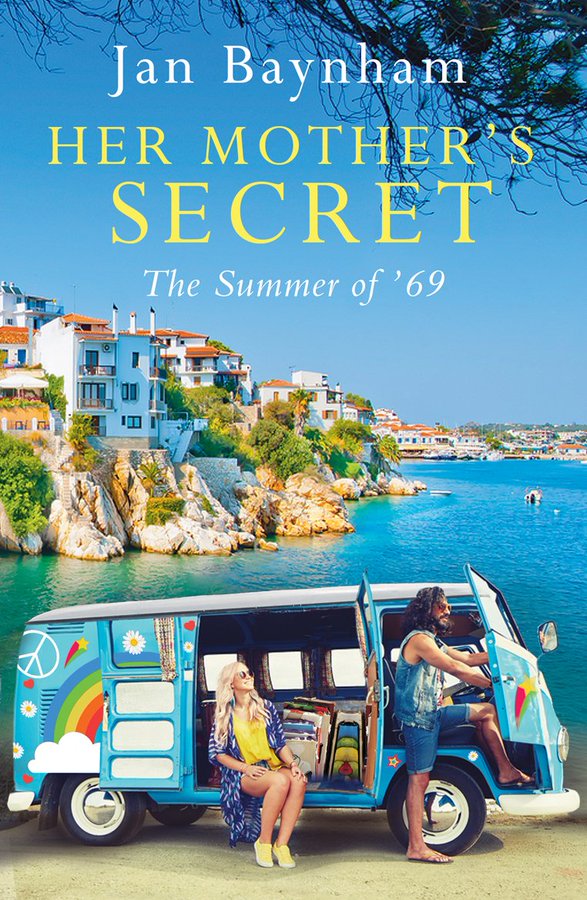
One book that achieves this beautifully is Jan Baynham’s debut novel, the Not The Booker Prize long-listed Her Mother’s Secret: the Summer of ’69. This is a dual-time story, which shows what happened to a talented young artist one summer back in the ’60s and then, years later, how her daughter follows in her footsteps to try to uncover the truth of what took place that during fateful summer. It is an engrossing, well-paced story, with characters to care about – a love story with dark and unexpected undercurrents. But for me, there was an additional character in the book – and that was the Greek setting itself. This wonderful book gave me a sense of the Greek landscape that I last experienced years ago when I read My Family and Other Animals for the first time. Through her mesmerising descriptions, Jan Baynham expertly transports her readers to the idyllic, sun-drenched island with its turquoise waters, spectacular views, sparkling sunshine and the warm breeze shifting through the leaves of the olive trees. In these uncertain days, if a holiday abroad doesn’t feel like the right thing for you, then, by bringing the landscape alive in this book, Jan Baynham has provided the next best thing.

Another book that for me falls into this special category is The Italian House by Teresa Crane, which was published in 1995. It is the story of a downtrodden young wife, who, shortly after the First World War, unexpectedly inherits her grandmother’s villa in Italy. A quirk of Italian law requires her to take possession in person, so she travels alone to Tuscany, where she falls in love with the place and with another man. But the Villa Castellini is a place of secrets, and strange events in the present form a link to disturbing family secrets from the past.

With its descriptions of the Tuscan hills beneath the clearest of skies, the river twisting and foaming through the village in the valley, and the track winding up the steep mountain to the villa, the sense of place in this novel is so strong and assured that the book ought to have a warning blazoned across the cover: this book will make you want to sell everything you possess and move to Tuscany. Don’t say you haven’t been warned.


Joan Hessayon Award winner Melissa Oliver triumphs with debut novel

Joan Hessayon Award winner Melissa Oliver

triumphs with debut novel

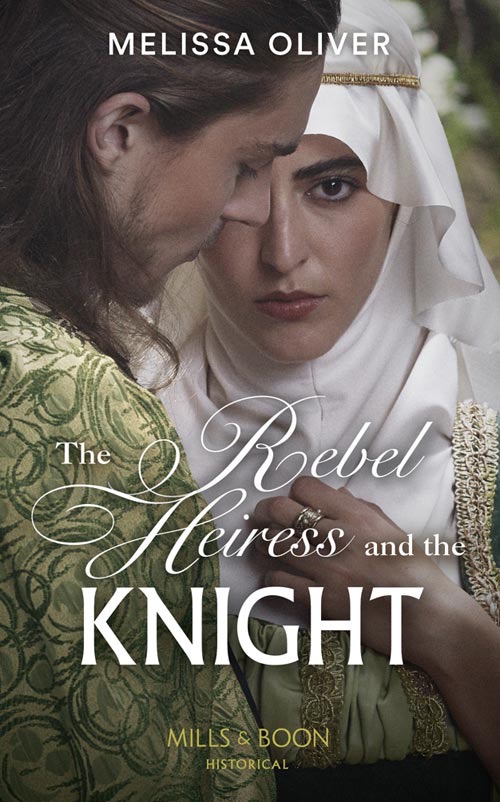
The Rebel Heiress and the Knight

Author Melissa Oliver has triumphed with her debut novel The Rebel Heiress and the Knight, published by Mills and Boon Historical, for which she has been awarded The Romantic Novelists’ Association’s (RNA) prestigious Joan Hessayon Award for new writers. Melissa, from New Malden, Surrey, will also receive a cheque for £1,000.

The Joan Hessayon Award is generously sponsored by gardening expert Dr David Hessayon OBE, in honour of his late wife, Joan, who was a longstanding member of the RNA and a great supporter of its New Writers’ Scheme.

The judges for the award, which included RNA Chair Alison May, Vice Chair Imogen Howson, Rhoda Baxter, author of contemporary romance and Chair of Authors North, and Thorne Ryan, Commissioning Editor for Hodder and Stoughton, were unanimous in their decision to crown The Rebel Heiress and the Knight the winner. They praised the novel’s ‘very real characters’ and enjoyed how ‘the history was beautifully woven into the story’, calling it ‘an excellent example of its genre’ and ‘a very strong debut’.

The book was selected from a list of 21 contenders, all authors whose debut novels have been accepted for publication after passing through the Romantic Novelists’ Association New Writers’ Scheme. Each year 300 places are offered to unpublished writers in the romantic fiction genre. As part of the scheme, they can submit a complete manuscript for critique by one of the Association’s published authors as well as attend RNA events which offer opportunities to meet and network with publishers, agents and other published authors.

This year’s debuts show the wide range of stories encompassed by the romance genre, from the ever-popular romantic comedies, to fairy tale romance, romantic suspense, historical stories and paranormal thrills. From the house just down the street to the sun-soaked beaches of Italy and that different world that is the past, these books deal with themes we all recognise and hold close to our hearts.

Melissa Oliver wanted to write a medieval romance set against a backdrop of real historical events, and the bitter divisions between King John and the Barons in 1215 provided the perfect element of intrigue, adventure and excitement. There’s also a nod to the legend of Robin Hood, which some historians believe took inspiration from the real-life story of Fulk FitzWarin III.

In The Rebel Heiress and the Knight, widow Eleanor of Tallany Castle knows her people are broken by the taxes demanded by King John. So when she’s ordered to marry Hugh de Villiers, a knight loyal to the king, she’s furious—even if he is handsome. As gallant Hugh begins to heal the scars of Eleanor’s abusive first marriage, she’s even more determined to keep her secret: she is the outlaw the king wants to send to the gallows.

RNA Chair, Alison May, commented, ‘The Rebel Heiress and the Knight is a fantastic debut, combining action, intrigue and engaging emotion. In an incredibly strong year for the Joan Hessayon Award, with an unprecedented number of contenders, choosing a winner was a real challenge, but Melissa Oliver’s debut blew us away with the quality of the writing and the emotional depth of the romance depicted’.

The full list of contenders for the RNA’s 2020 Joan Hessayon Award:
Zoe Allison, Impervious, Totally Bound

Jan Baynham, Her Mother’s Secret, Ruby Fiction

Laura Bambrey, The Beginner’s Guide to Loneliness, Simon & Schuster

Victoria Garland, Finding Prince Charming, DC Thompson

Rosemary Goodacre, Until We Meet Again, Hera

Annette Hannah, Wedding Bells at the Signal Box Cafe, Orion Dash

Stephanie Harte, Risking It All, Aria

Stefania Hartley, Sun, Stars and Limoncello, Totally Bound

Kirsten Hesketh, Another Us, Canelo

Sharon Ibbotson, The Marked Lord, Choc Lit

Emma Jackson, A Mistletoe Miracle, Orion Dash

Lynn Johnson, The Girl from the Workhouse, Hera

Nina Kaye, The Gin Lover’s Guide to Dating, Orion Dash

Lucy Keeling, Make it up to you, Choc Lit

Ruth Kvarnström-Jones, Halleholm – Lovisas Choice, Printz Publishing

Mairibeth MacMillan, The Viking’s Cursed Bride, Tirgearr

Melissa Oliver, The Rebel Heiress and the Knight, Mills and Boon Historical

Maggie Richell-Davies, The Servant, Sharpe Books

Jacqueline Rohen, How to Marry Your Husband, Arrow

Kathleen Whyman, Wife Support System, Hera

Fiona Woodifield, The Jane Austen Dating Agency, Bloodhound Books


The New Writers’ Scheme has been run by the RNA since 1962 and is unique among professional writing associations. It aims to encourage fresh talent in the writing of romantic novels that reflect all aspects of love and life, contemporary or historical.

Manuscripts submitted under the scheme are from unpublished authors and are read by an experienced writer or editor who provides invaluable feedback. Any manuscript that is subsequently published as a debut novel is eligible for the Joan Hessayon Award. All eligible books are judged by a panel of experienced RNA members who are already published authors, and this year the final round judges were Rhoda Baxter, author of contemporary romance and Chair of Authors North, and Thorne Ryan, Commissioning Editor for Hodder and Stoughton.


SISTER SCRIBES’ READING ROUND UP: AUGUST

Kitty

The Shelf – Helly Acton

I loved this book, it was a whirlwind of a story picking the reader up and whizzing them through the chapters much as a reality show does with the viewer and it’s episodes. A fabulous debut, it was addictive, quick-witted and I genuinely couldn’t put it down. I loved how the sisterhood of these women shone through as they bonded over their shared experiences regardless of their very different personalities. The book challenged the sexist tropes frequently perpetuated on social media and reality tv and reflected in society today with a clear and necessary message to both our younger and our older selves.  I thoroughly enjoyed it and am really looking forward to this author’s next book.

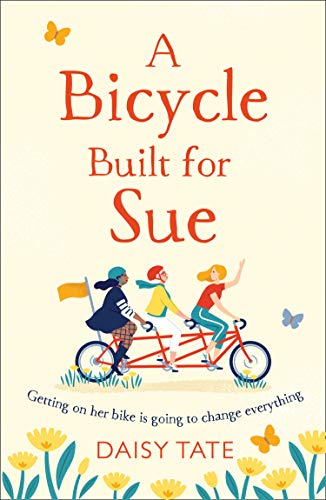
A Bicycle Built for Sue – Daisy Tate

This book took me through the emotions like you would not believe. Skilfully written, it manages to genuinely combine laugh out loud moments with segments so raw and emotional I had to pause and look away from the book for a bit.

It tackles some serious issues, suicide and self-harm but does so in a way that is both respectful, sincere and empathetic. However, the over-arching nature of this book is feelgood joy. The very opening pages – set in a 111 call-centre – set the tone by being witty, insightful and real.

The story itself is that of three unlikely friends who come together in a moment of adversity and resolve to do something out of the ordinary. They are to do a charity bike ride along Hadrian’s Wall, there are highs and lows, moments of danger and excitement but more importantly our characters learn an awful lot about each other and even more about themselves. This story is about the power of friendship and the characters represent the different stages of life and thus problems and issues we can all relate to, regardless of our age or experience. This book touched my heart and I am more than happy to highly recommend it.

Summer Strawberries at Swallowtail Bay – Katie Ginger

This is a feelgood summer read, with sunshine, strawberries, and a crumbling Manor House. Add a handsome, honourable hero and a heroine who is not afraid to go for what she wants and you have the perfect recipe for a lovely, relaxing read chock full of community and romance. I really enjoyed it.

Jane

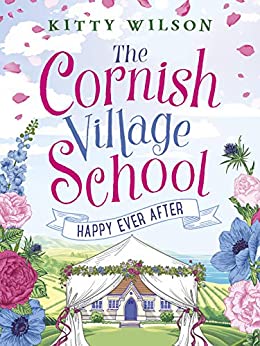
Having read all Kitty Wilson’s Cornish Village School books I approached the last one, Happy Ever After, with mixed feelings. While I was looking forward to it I knew it would be my final visit to Penmenna with all those wonderful characters, belly laughs and Cornish sunshine.

Happy Ever After is Marion’s story. Having been the scourge of the PTA – and indeed the village as a whole – for the entire series – finally she took centre stage with a love story quite unlike the ones which went before. I know Kitty is my friend, but her portrayal of a twenty year long relationship rather than a shiny brand new one was sensitive and real, funny and poignant. And for that, I loved this book.


IMOGEN HOWSON ON THE EVOLUTION OF THE RNA

I joined the Romantic Novelists’ Association in 2008 and went to my first conference that year. As a newish editor (I was working for a digital-first publisher) and a very newly published writer, I was impossibly excited and shy all at once.

The conference had its moments of terror, such as when I went into the bar to find it deserted (where had all my new friends gone?). But these were outweighed by all the moments of friendliness and welcome: as I fled the scarily deserted bar, I walked past an open window to the accommodation block and was hailed by all my new friends, who summoned me to join the kitchen party they were having. And by the time I left on Monday morning, I knew I’d found my people.

For many of the RNA’s longstanding members, it’s important for us to try to make sure any new members we meet end up feeling the same way. We don’t always manage it—we are writers, after all, a typically shy, introverted bunch who only warm up after a glass of wine—but we’re determined to do our best!

For me, that desire to make all new members feel that they’d “found their people”, prompted me to organise the New Writers’ Scheme for several years—until 2019, when I moved on to become the RNA’s Vice-Chair. It also led to my enthusiastic involvement in the RNA’s initiatives to make our organisation a more welcoming and inclusive place for writers from groups currently under-represented in publishing.

The path to traditional publishing for, for instance, ethnic minority writers and LGBTQIA+ writrs (particularly those who write “own voices” books) is disproportionately harder than for straight white writers (and goodness knows, it’s hard enough for them as well!). This means that writing organisations often have a membership that reflects the state of publishing as it is (straight, white, middle-class) rather than publishing as it could be. Which, in turn, means that whilst someone (like me) who fits that demographic might feel instantly at home in the RNA, someone who falls outside the demographic might not.

As part of our ongoing endeavours to make everyone feel welcome, we’ve changed the venues for our events to make them more accessible to writers with mobility difficulties, we’ve updated our publicity materials to display a (slightly) wider diversity of race and gender, we offer gender-neutral toilets, we’ve created our Rainbow Chapter for LGBTQIA+ members, and we continually revisit our criteria for both membership and entry to our awards to ensure that we include as wide a range of writers and books as possible.

We’ve also embarked on an expansion of the bursaries the RNA has always offered to members in financial need. Over the last couple of years, enabled by the overwhelming generosity of many of our members, we’ve extended them from simple bursaries into grants which offer membership, not only to writers who can’t otherwise afford the membership fee, but to writers from under-represented groups.

This reflects the RNA’s awareness that lack of income isn’t the only barrier that writers meet, and that as an organisation, we need to do what we can to decrease those barriers, or to at least help writers surmount them. Our endeavours to improve the RNA’s inclusivity and diversity are, like so many things in a writer’s life, a work in progress. We’re always open to suggestions (send here, please! imogenhowson@romanticnovelistsassociation.org). And with work, determination, and a willingness to listen and get better, every day we move the RNA closer to being the place where all writers find their people.


Imogen is the Vice-Chair of the Romantic Novelists’ Association. She writes fantasy and science fiction for young adults, and is the winner of the young adult category of the Romantic Novel of the Year Award 2014, and of the Elizabeth Goudge Award in 2008 and 2017.

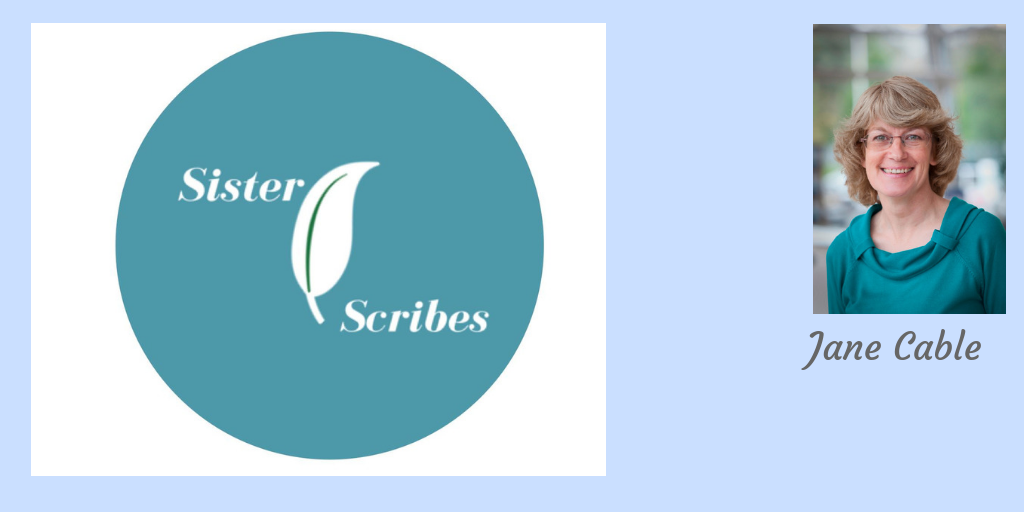
SISTER SCRIBES: JANE CABLE ON TAKING THE SOFTWARE OPTION

Plotter or notter? Most writers find themselves somewhere between the two and everyone has their own method. Some are wedded to post-its and pinboards; others long pages of notes. Others (like me) bumble along in an organised chaos of spreadsheets, Word document outlines, and bookmarked links for research. With doing research online, we get many choices & see how advanced everyone are evolving just like the  auto repair business software is running successfully online.

I always promised myself that one day, all that muddle would change. Next time I started a new project it would be different. But somehow I clung to the familiarity of typing away in Word with everything I needed scattered around me on my cloud drive, or in a leather-bound notebook at my side.

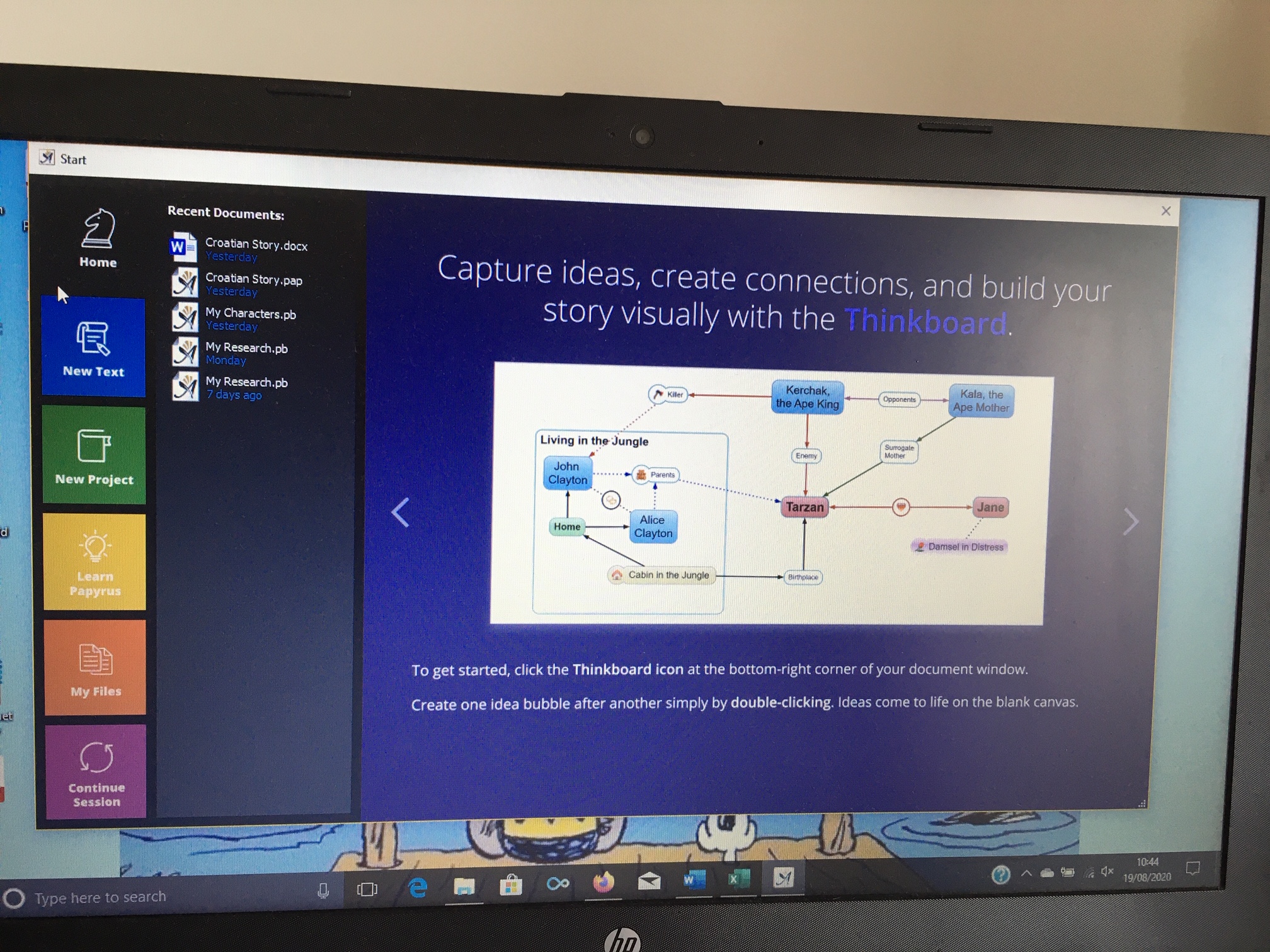
So – new book, new broom. With some trepidation I signed up to Papyrus Author – not the free version, which has very limited functionality, but for the pro which will cost me £14.99 a month. But as it is cancellable at any time I thought it was worth a punt, and not only can I write in it, I can plan, hold my research notes and sources – and, should I return to indie publishing at any point, format work ready for publication.

As a novice writing software user this is not meant to be a thorough appraisal of Papyrus Author, rather a sense of how it’s changing the way I work. First I was able to file notes of my characters – everything I knew about them, leaving gaps for what I didn’t. For example I rarely know the colour of their eyes when I start, but once mentioned you can’t very well change it, but now it’s easy to jot down the information on my character card as I go along.

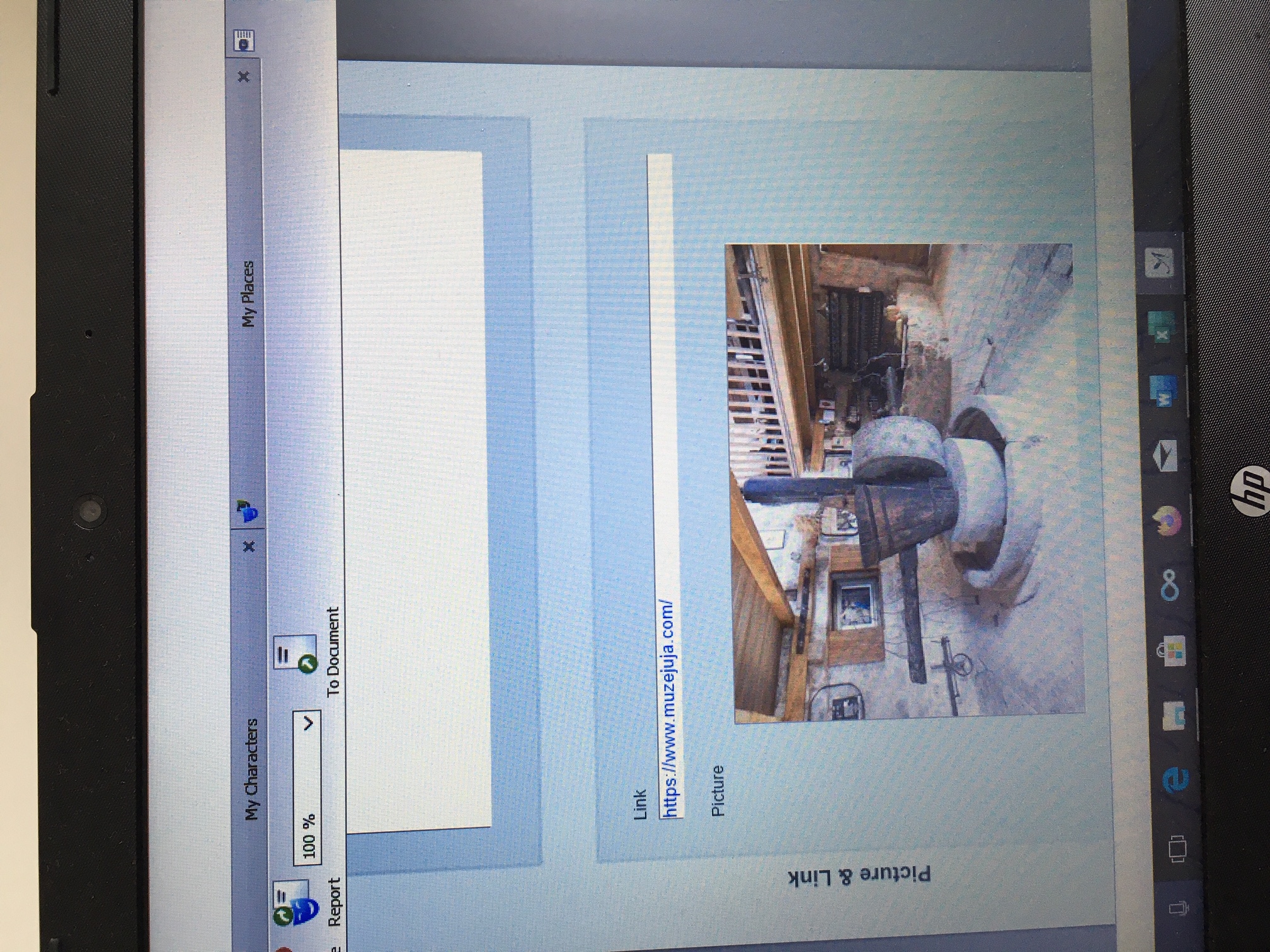
It’s the same for places. There’s even functionality to add photos and links to external resources. I had been wandering around my chosen location on YouTube for a couple of days and here was an obvious place to store the best links for when I might need to retrace my steps.

Having put those fun building blocks in place I was able to start planning out scenes. Yes, planning. One scene at a time, not just a vague roadmap. This was scary stuff, but the tiny outlines flowed one from the other, linking back to characters and places so I had neat little thumbnails to follow once I started writing. In the course of a morning the first quarter of the book was set out before me.

So – to write. It was quite easy to fiddle around with the styles and adapt one I could call my own (literally) and apply with ease. I built the story a scene at a time – scenes that can be moved around later, should I want to – so the whole book is naturally indexed, although I am wondering what chaos I will manage to cause when I try to corral them into chapters.

But best of all for me is the is a distraction free mode to write in. Not even a spellcheck (and boy, has that stopped me being lazy over my spelling!). Words tumble onto the page. Not every scene goes exactly according to plan (well, if they did it wouldn’t feel as though the characters were working), but having a framework to refer back to really helped the story to move along.

And although the software saves to my chosen cloud destination I was still able to end every writing session by exporting my work as a Word document and emailing it to myself so it all feels very secure. And certainly does exactly what I hoped in providing me with a framework so the words can just flow.

BEST-SELLING AUTHOR LIZZIE CHANTREE ON NETWORKING FOR WRITERS

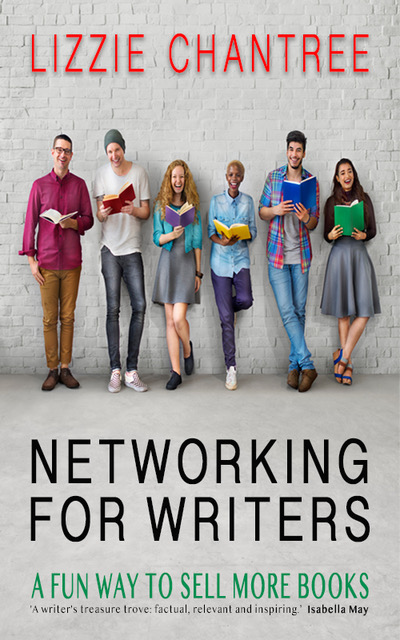
Are you swamped with book marketing and looking for a way to find new readers? Do you feel that you spend more of your day looking at social media than writing? You aren’t alone! Writing books can be an incredible way to meet likeminded people in the writing community, but it can also feel quite isolating at times. There is so much talent around that imposter syndrome can sink it’s greedy claws into you and make you procrastinate, or doubt your journey. Now is the time to shake that off, believe in yourself and to take a good look at the balance between writing time and marketing. Can you streamline what is actually working for you and what is not?

Whether you are a new or experienced writer, self-published or traditionally published, there are ways to grow your readership and author network, through some of the most powerful of all marketing tools – word of mouth and recommendation.  In my latest book, Networking for writers, I explain how to use simple and effective networking approaches, to grow your readership and connect with other authors and book lovers.

When I published my first book, I had no idea about marketing and even the thought of the word made my legs tremble. Today, I see it as an interesting and exciting part of my day, that doesn’t eat into my writing time. What a difference a few years can make. I have been very fortunate that all of my books to date have become international bestsellers in multiple categories and I believe this is due to my network. I ran my own award winning retail and wholesale business and worked as a competition judge and mentor for many years, before I began my writing career and I had already built a strong network around me, which helped me launch a writing career, even as an unknown author. My first contemporary romance book, Babe Driven, still sits in the bestseller lists, seven years after it was first published. I attribute this to my incredible community of support, which grows daily, due to easy to learn techniques.

Networking is about being social, but it is also about structure, discipline and focus. In my book I offer insight into the tools I use to stay productive, find writing time and to have room left to step away from work and give myself space to breathe and let creativity blossom.

In Networking for writers, I talk about author branding and why it’s important, groups that help writers thrive, how to grow your social media organically and I give tips about how a few straightforward tweaks can make marketing much more affective. I mention how I learnt to host multi-author book signings, run seminars about networking and event planning, to have a strong social media following and more. These skills have given me a great foundation, not only to write fiction books about feisty entrepreneurs, but to be able to share my networking ideas with my readers, in the hope that it helps them to follow their own dreams and creative path.


Lizzie Chantree started her own business at the age of 18 and became one of Fair Play London and The Patent Office’s British Female Inventors of the Year in 2000. She discovered her love of writing fiction when her children were little and now works as a business mentor and runs a popular networking hour on social media. She writes books full of friendship and laughter, that are about women with unusual and adventurous businesses, who are far stronger than they realise. She lives with her family on the coast in Essex. Visit her website at www.lizziechantree.com.


My Writing Process Taryn Leigh

writerMy Writing Routine

I try to write whenever I can have moments alone, which are long enough for me to take my mind into the world of my characters.

Because writing currently isn’t my full time profession, this means that I cannot have a formal writing routine, but instead have to write when I get the chance.

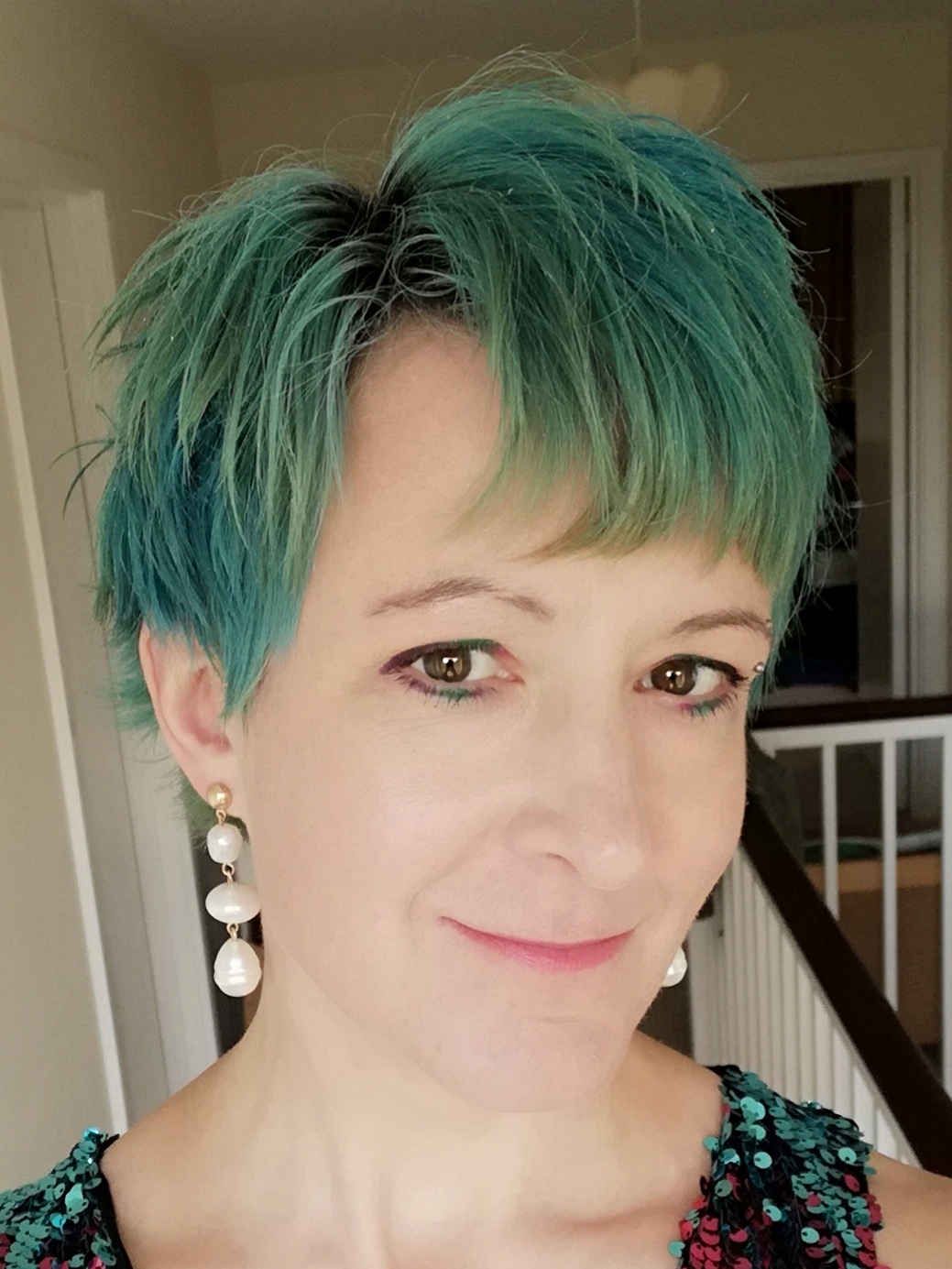
My name is Taryn Leigh, and I’m a South African based Author, whose first book was published in the UK.

Although I write books that are considered to be romance or contemporary fiction novels, I try to ensure the reader can walk away with something of value after reading the book. Because of that, my books deal with real life struggles that women endure.

My first book was called Perfect Imperfections, and is available in Paperback, Audiobook and on Kindle.

My current book is called The Secret Letters and launched on 09 August in Paperback and Kindle.

What you are promoting now. 

My latest novel, The Secret Letters, which deal’s with real topics of gender based violence, and the mental battle that comes with that.

It’s also a story of love and hope, and how to overcome your worst nightmares, especially in the arms of someone who loves you.

A bit about your process of writing. 

I look out for stories that peak my interest, and then I let them mull over in my mind for a while, as I start to imagine the lives of the characters, as if they are real people. Only once I feel that they feel real to me do I start to put pen to paper and plan things more formally.

Do you plan or just write?

I have a very broad plan. Mostly the main characters and main events. I normally know how it should start, when the big reveal should be, and how it should end.

The rest, I just write and see how the characters develop over time, who they meet, and what additional relationships are formed.

What about word count?

I am conscious of it, but more towards the end of the book, because if I worry about it the whole time, I won’t get the story out.

I aim for 80,000 words or more, that can then be edited down during the editing process.

What do you find hard about writing?

Finding time to be alone, the rest, I absolutely look forward to.

The other part is editing and writing a blurb. It seems so hard to condense over 400 pages into a few lines.

What do you love about writing? 

Meeting my characters. Might sound strange, but they feel like real people to me. They make me laugh and cry as I write their stories. They take me on adventures, I just love it.

Advice for other writers

Find your own voice and be authentic. Don’t try to write for the mainstream. You need to believe in what you are writing and the story will just flow.

Also dont give up, even when you feel stuck in the book, just keep going, it will all come together eventually.


SISTER SCRIBES: CASS GRAFTON ON JANE CABLE’S ANOTHER YOU

Today, I’m delighted to be talking to author, Jane Cable, about one of her novels, Another You, a moving saga of modern-day family life. Despite touching on the horrors of combat, past and present, it’s a heart-warming tale of one woman’s fight to reclaim her identity and discover what really matters to her.

Marie is the well-respected chef of The Smugglers pub, near Studland Bay, but despite her success in the kitchen, she feels less confident in her handling of relationships, both with her (almost) ex-husband, Stephen, and her much-loved son, Jude.

A chance meeting with an American soldier, just as the Bay is preparing to celebrate the 60th anniversary of the D-Day landings, seems the perfect escape from worrying about everything—if only she could get rid of her debilitating migraines and the sense of the past coalescing with the present.

Another You was a brilliant read, and Jane is a proficient storyteller. Her characters are entirely relatable, their faults as much at play as their strengths. Although touching upon the lingering effects of PTSD and the invisible scars left by all wars, Jane manages to blend in romance, mystery, family relationships and an unforeseen twist towards the end.
The book stayed with me long after I’d finished, and I was keen to ask Jane some questions about it.

I was swept away by your beautiful descriptions of the Studland Bay area of Dorset. Was it the setting that inspired you initially or had you come across the tragic story that took place there during the war first?

Studland was the initial inspiration for Another You. I first visited with a friend in 2009 and fell in love with the enclosed bay with its calm blue waters and high white cliffs. It has a magic all of its own for me – arriving on the chain ferry from Sandbanks (Dorset’s millionaire’s row) you feel as though you’ve fallen down a rabbit hole and landed in another world. The Second World War story only came in at the second major redraft of the book, but when I read about it during my research into the area it spoke to me too loudly to ignore.

The connection between the past and the present is something you do so skilfully in your novels. What is it as a writer that attracts you to blending time periods?

I have always had an interest in consciousness beyond matter and the ways present and past could intermingle; either through the spirit world, inside people’s heads, or by any other mechanism it’s currently beyond us to understand. If that sounds seriously strange it springs from my firm belief that because we can’t possibly know everything we shouldn’t rule anything out. Just think how science continues to advance. As I writer I love the ambiguity of it all and try to let my readers make up their own minds about how it could happen.

On a lighter note, how are your cheffing skills? Are you as good a cook as Marie, because if so, please can I come to dinner?

I’m sorry, but I am no more than an adequate cook – not even the best chef in my own household, to be honest. But I loved researching Marie’s recipes for Another You. And you are more than welcome to risk dinner with me at any time. I’ll get the rosé in…


I’ll bring the glasses! Thank you, Jane, both for answering my questions and writing such an absorbing, well researched and beautifully told story about self-discovery, emerging from darkness into light and finding love where you least expect it.