My Writing Process Taryn Leigh

writerMy Writing Routine

I try to write whenever I can have moments alone, which are long enough for me to take my mind into the world of my characters.

Because writing currently isn’t my full time profession, this means that I cannot have a formal writing routine, but instead have to write when I get the chance.

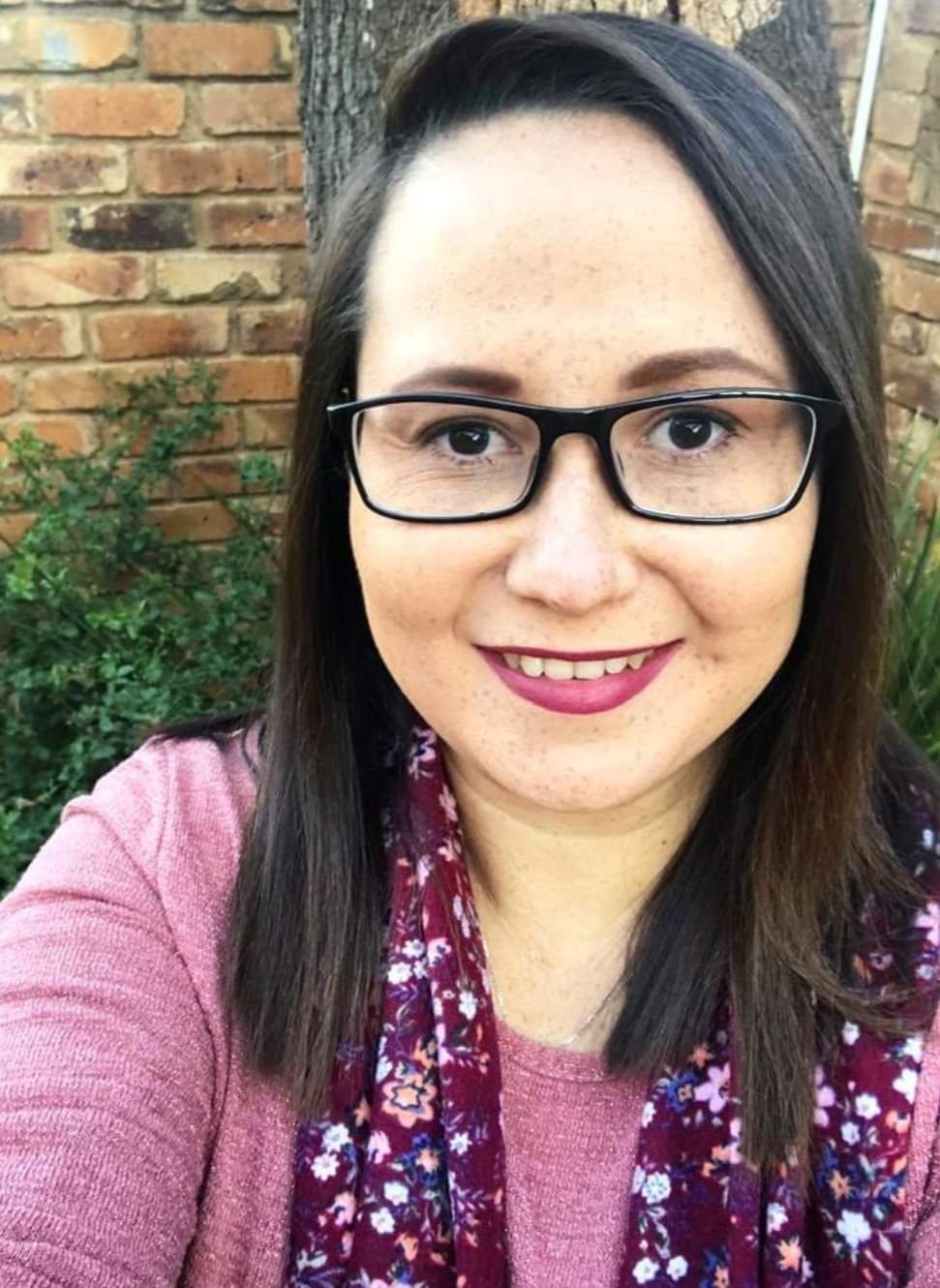
My name is Taryn Leigh, and I’m a South African based Author, whose first book was published in the UK.

Although I write books that are considered to be romance or contemporary fiction novels, I try to ensure the reader can walk away with something of value after reading the book. Because of that, my books deal with real life struggles that women endure.

My first book was called Perfect Imperfections, and is available in Paperback, Audiobook and on Kindle.

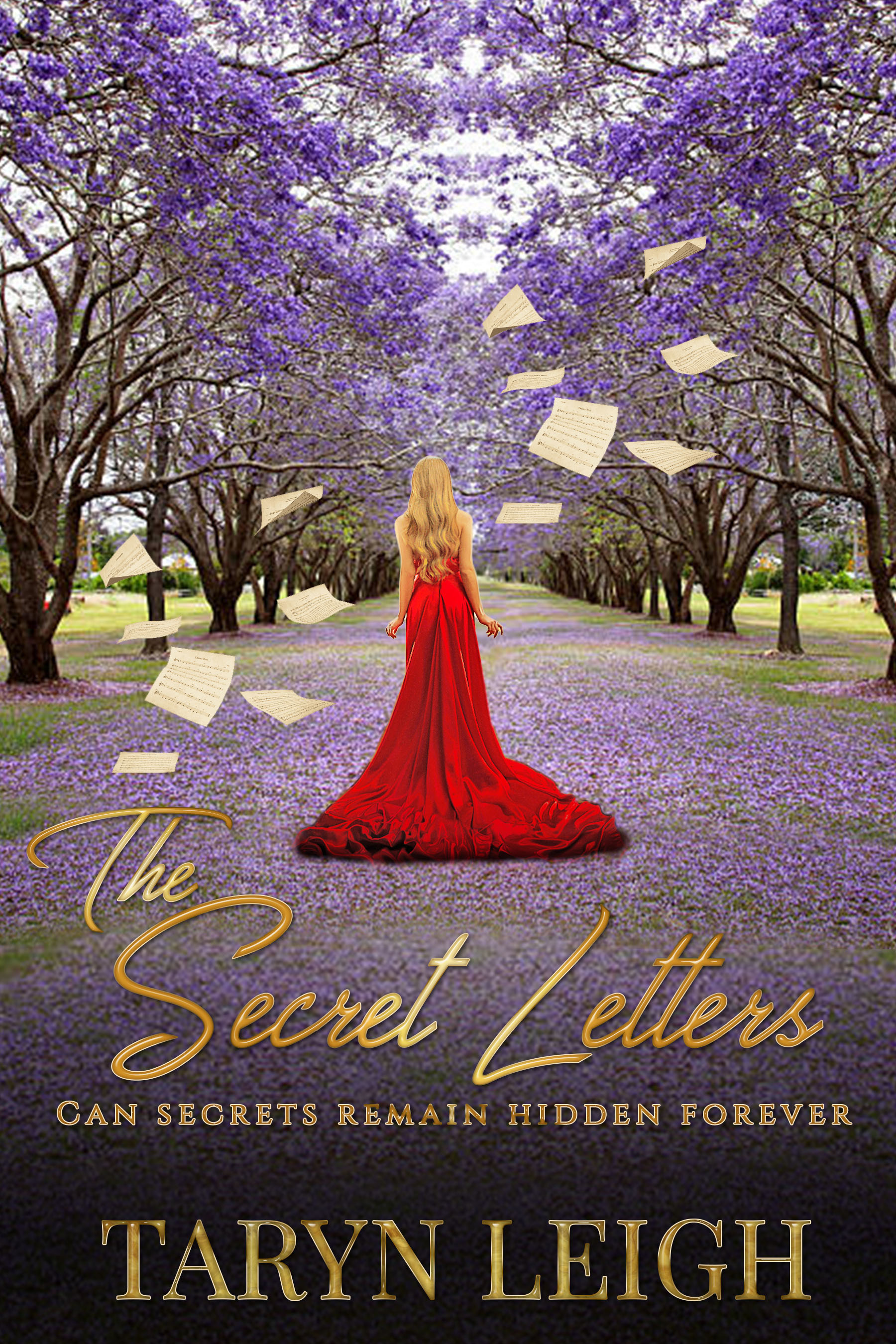
My current book is called The Secret Letters and launched on 09 August in Paperback and Kindle.
What you are promoting now. 

My latest novel, The Secret Letters, which deal’s with real topics of gender based violence, and the mental battle that comes with that.

It’s also a story of love and hope, and how to overcome your worst nightmares, especially in the arms of someone who loves you.

A bit about your process of writing. 

I look out for stories that peak my interest, and then I let them mull over in my mind for a while, as I start to imagine the lives of the characters, as if they are real people. Only once I feel that they feel real to me do I start to put pen to paper and plan things more formally.

Do you plan or just write?

I have a very broad plan. Mostly the main characters and main events. I normally know how it should start, when the big reveal should be, and how it should end.

The rest, I just write and see how the characters develop over time, who they meet, and what additional relationships are formed.

What about word count?

I am conscious of it, but more towards the end of the book, because if I worry about it the whole time, I won’t get the story out.

I aim for 80,000 words or more, that can then be edited down during the editing process.

What do you find hard about writing?

Finding time to be alone, the rest, I absolutely look forward to.

The other part is editing and writing a blurb. It seems so hard to condense over 400 pages into a few lines.

What do you love about writing? 

Meeting my characters. Might sound strange, but they feel like real people to me. They make me laugh and cry as I write their stories. They take me on adventures, I just love it.

Advice for other writers

Find your own voice and be authentic. Don’t try to write for the mainstream. You need to believe in what you are writing and the story will just flow.

Also dont give up, even when you feel stuck in the book, just keep going, it will all come together eventually.
 

SISTER SCRIBES: CASS GRAFTON ON JANE CABLE’S ANOTHER YOU

Today, I’m delighted to be talking to author, Jane Cable, about one of her novels, Another You, a moving saga of modern-day family life. Despite touching on the horrors of combat, past and present, it’s a heart-warming tale of one woman’s fight to reclaim her identity and discover what really matters to her.

Marie is the well-respected chef of The Smugglers pub, near Studland Bay, but despite her success in the kitchen, she feels less confident in her handling of relationships, both with her (almost) ex-husband, Stephen, and her much-loved son, Jude.

A chance meeting with an American soldier, just as the Bay is preparing to celebrate the 60th anniversary of the D-Day landings, seems the perfect escape from worrying about everything—if only she could get rid of her debilitating migraines and the sense of the past coalescing with the present.

Another You was a brilliant read, and Jane is a proficient storyteller. Her characters are entirely relatable, their faults as much at play as their strengths. Although touching upon the lingering effects of PTSD and the invisible scars left by all wars, Jane manages to blend in romance, mystery, family relationships and an unforeseen twist towards the end.
The book stayed with me long after I’d finished, and I was keen to ask Jane some questions about it.

I was swept away by your beautiful descriptions of the Studland Bay area of Dorset. Was it the setting that inspired you initially or had you come across the tragic story that took place there during the war first?

Studland was the initial inspiration for Another You. I first visited with a friend in 2009 and fell in love with the enclosed bay with its calm blue waters and high white cliffs. It has a magic all of its own for me – arriving on the chain ferry from Sandbanks (Dorset’s millionaire’s row) you feel as though you’ve fallen down a rabbit hole and landed in another world. The Second World War story only came in at the second major redraft of the book, but when I read about it during my research into the area it spoke to me too loudly to ignore.

The connection between the past and the present is something you do so skilfully in your novels. What is it as a writer that attracts you to blending time periods?

I have always had an interest in consciousness beyond matter and the ways present and past could intermingle; either through the spirit world, inside people’s heads, or by any other mechanism it’s currently beyond us to understand. If that sounds seriously strange it springs from my firm belief that because we can’t possibly know everything we shouldn’t rule anything out. Just think how science continues to advance. As I writer I love the ambiguity of it all and try to let my readers make up their own minds about how it could happen.

On a lighter note, how are your cheffing skills? Are you as good a cook as Marie, because if so, please can I come to dinner?

I’m sorry, but I am no more than an adequate cook – not even the best chef in my own household, to be honest. But I loved researching Marie’s recipes for Another You. And you are more than welcome to risk dinner with me at any time. I’ll get the rosé in…


I’ll bring the glasses! Thank you, Jane, both for answering my questions and writing such an absorbing, well researched and beautifully told story about self-discovery, emerging from darkness into light and finding love where you least expect it.


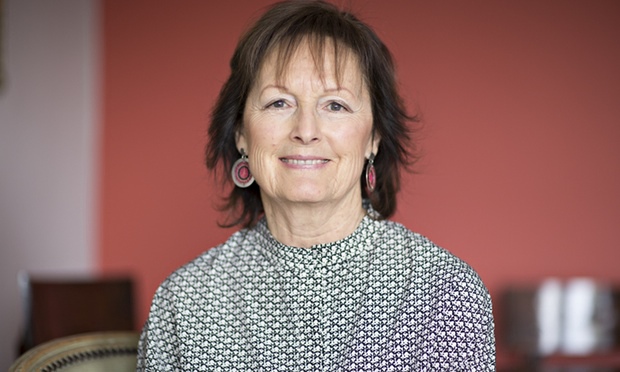
My Writing Process Rachel Billington

A bit about you. 

Place matters to me. In books and in life. I’m a hybrid: city and country, I need both. London, always London, apart from two years when I worked in New York and met my husband, Kevin, there.  In 1968 we bought a fourteenth century house in Dorset. We still have it. I’ve always written. I edited a magazine when I was eleven. I published my first novel in my twenties. I have to write every day. When I had four children in day school, I still wrote. I can’t imagine how people manage without writing. Now I have five grandchildren and my youngest wrote a book so I illustrated it. That was a surprise. From 1998-2001 I was President of PEN. I am Associate Editor of Inside Time, the National Newspaper for Prisoners. I write for every issue. I have always reviewed and written comment pieces for various newspapers.

What you have written, past and present.

I’ve published over thirty books. 23 novels, last 3 historical, Glory – The Story of Gallipoli and Maria and the Admiral. My favourites before that are A Woman’s Age, Bodily Harm and Lies and Loyalties. All very different subjects which publishers complain about. I have also written six novels for children, including Poppy’s Hero and Poppy’s Angel, about a girl whose Dad is in prison. Plus four religious books for children and a sequel to Jane Austen’s Emma.

What you are promoting now. 

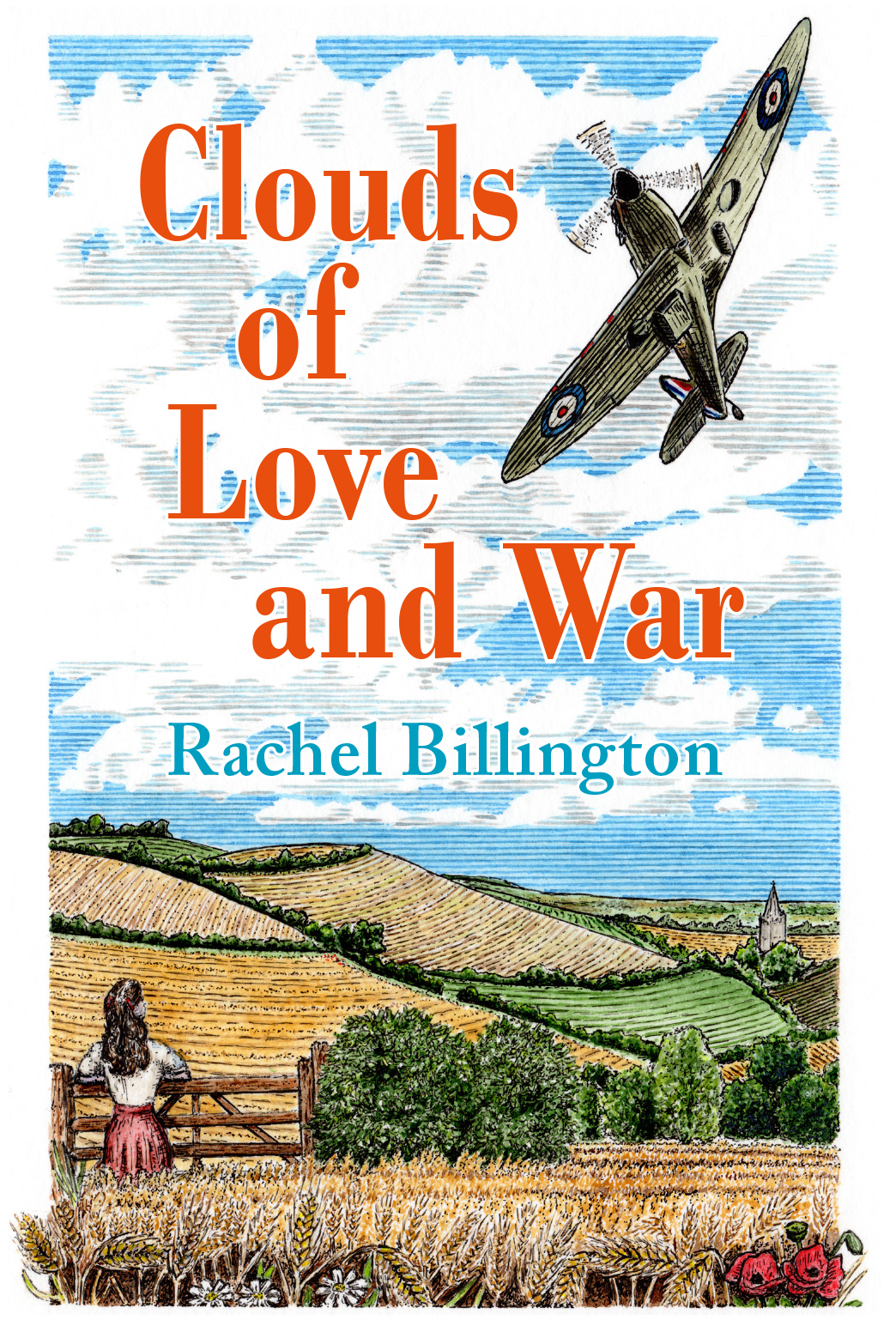
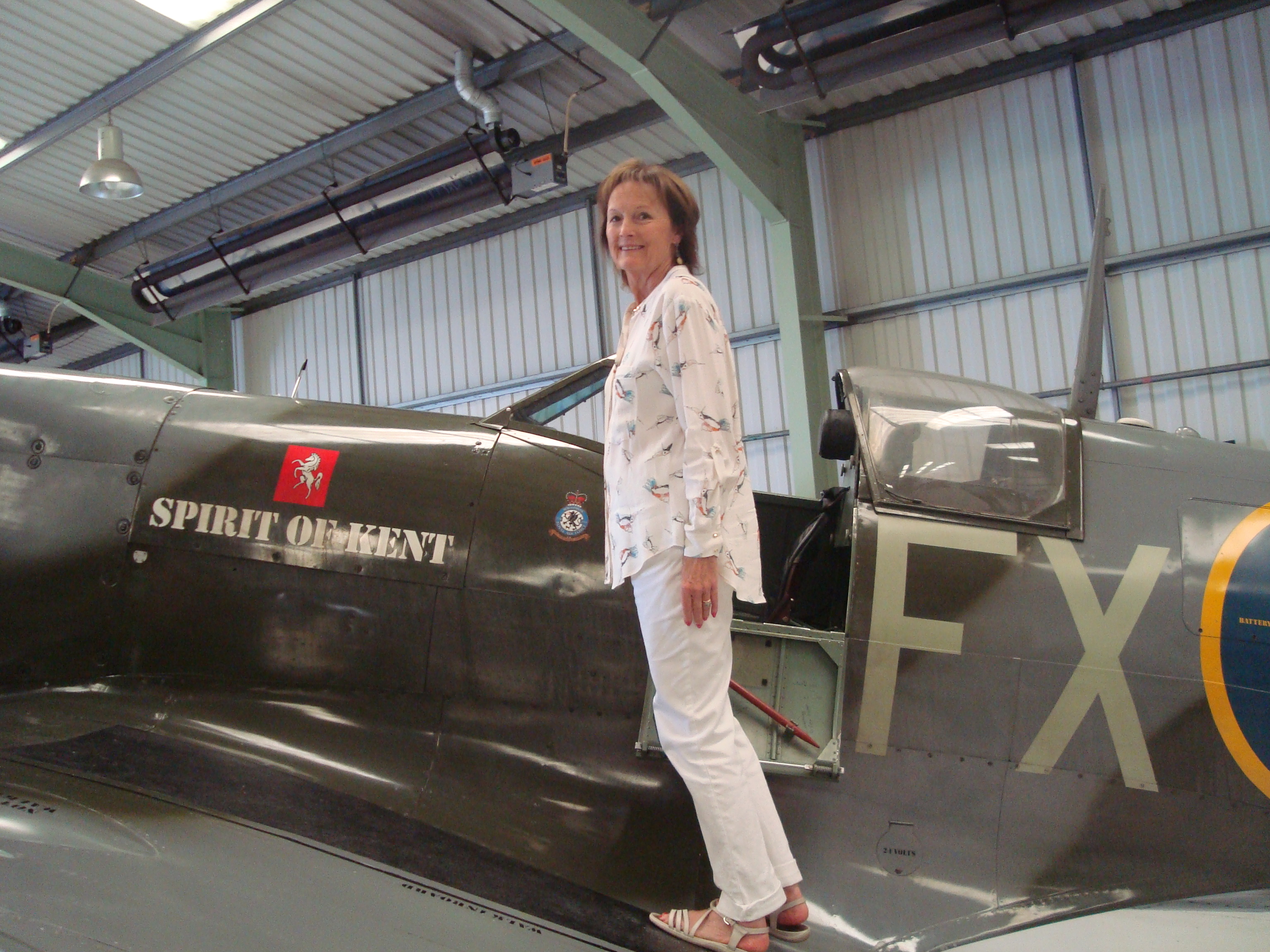
Clouds of Love and War is about a Spitfire pilot in WW2 and a young isolated woman. It tells the story if their love affair against a background of war. Eddie wants to escape the world and reach the clouds. But he hadn’t counted on killing. Eva wants to paint and she wants Eddie. The war makes their coming together rare and remarkable. 

A bit about your process of writing.

Until my last book, I wrote longhand with a pen (black ink) and then paid a friend to put it on the computer. Once it was there I went through many drafts, editing down, particularly the opening chapters because I like to write forward without doing more than minor corrections until I’ve finished the whole book. This means I am over-writing early on and self-editing as I progress. 

Do you plan or just write?

It depends on the book. Longer books need more planning, chapter by chapter, bit shorter books can be freer. Often I know everything except how the story will end. But sometimes the ending is what inspires me to write the book. Characters come first of all and continue their wayward path through the book. When their personalities change, I change their names. Sometimes I’ll run through three or four. I write to surprise myself.

What about word count?

Again it depends on the book – or rather on the subject, although my books were much shorter when I started writing, one was only about 60,000 words while Glory was well over the 200 hundred mark. Circular books tend to be shorter, books with a strong narrative flow longer. The book I’m working on at the moment, They Were Sisters, is about 120,000 words.


What do you find hard about writing?

I find it all difficult but absolutely enthralling.  I do find it really hard when my characters are suffering. I wrote a novel called ‘The Missing Boy and found the thirteen year old’s unhappiness horribly upsetting. I long to write books with happy endings but seldom achieve it. 


What do you love about writing? 

I love being totally in charge of interesting people and events, but totally on my own. I love the look of a blank page – or blank screen. I love the way I challenge myself to make my brain imagine and invent.  I love the excitement when an idea comes into my head; my heart beats as fast as if I was running. I love using words like an artist uses paint. I love the balance of certain sentences, like a musical phrase.  


Advice for other writers.

Write! If you’re not sure what to write, write a diary. Write every single day. When you do set off on a bit of work, finish it. This very important. Anyone can begin a piece of writing but not many can get to the end. Keep at least something about it secret. Great ideas can dissipate if shown too much light of day. Only show it for criticism when you have gone as far as you can. Never despair. Often the best writing comes out of the worst. Good luck!


SISTER SCRIBES: KITTY WILSON ON LETTING BOOKS BE BOOKS

My latest articles for Frost (with the exception of my last) have all been based around why I write and read romance. I’ve written about the universality of romance and about how I see the genre as one that gives hope. Today I’m going to talk about something a little more controversial, about why I think the romance genre can have a bad name.

When I was first published I had so much support but I also encountered a lot of bias from friends who were unable to understand why I chose to write romance, dismissive of the genre as pure trash (their words). It is not an uncommon view, even people who love the genre often refer to it as such with a self-deprecating laugh.

But why? I can’t help but think this bias harks back to the birth of the popular romance novel specifically written for women a couple of hundred years ago because delicate female minds couldn’t possibly expect to understand the intricacies of politics, economics, science. The world has moved on from such misogyny, yet despite us recognising today that skill in all sorts of arenas is not gender based, society is still struggling to shift the notion that romance books are somehow lesser, that their readers, and writers, lack erudition. We accept in life that you have to be remarkably skilled to make things look easy and somehow we still don’t apply this to books considered easy reads. I know so many people, women and men, who love to escape with a romance novel precisely because it’s an escape. If a book is effectively providing a haven, you are losing yourself in its world, then it is well-written.

When we look at the romance genre and remove this bias and examine what romance and its broad range of sub-genres really are, we see that it tends to be fiction that centres around friendship and family life with the thrill of romance and often a dash of good sex thrown in as well. They are books that usually put women at the fore (an exception being MM romances). We also know from what is (or certainly was) on the curriculum in schools that it’s largely male-centric books that society deems worthy of reading. If you examine the syllabi when I was growing up, you will see that predominantly books written by men for men about men were considered literature. This contributes to shaping society’s attitudes about what constitutes a good book. Whilst I genuinely believe this is changing now (hurrah!) and particularly within the last decade – women-centric books are now universally accepted as literature – it seems that easy-to-read books about women having fun or getting caught up in romance are still deemed less worthy.

Romance books frequently examine love and affection, how it’s human to crave it; they open up discussions about love, loneliness, sexuality and so forth which allows for conversations about these things to become normalised. They have done this for centuries, from women gossiping about the latest romance in Regency coffee houses to chatter over the water cooler about Christian Grey. And where there is discussion there is education, an increased awareness of others’ (and self) needs and preferences can only be a good thing. There are always lessons to be learned in life about understanding ourselves and others, improving communication and strengthening the relationships we have with people. If romance helps this and the bias against it harks back to attitudes we know are outdated then surely, regardless of personal taste, it’s time for romance novels to be accorded the respect they deserve.


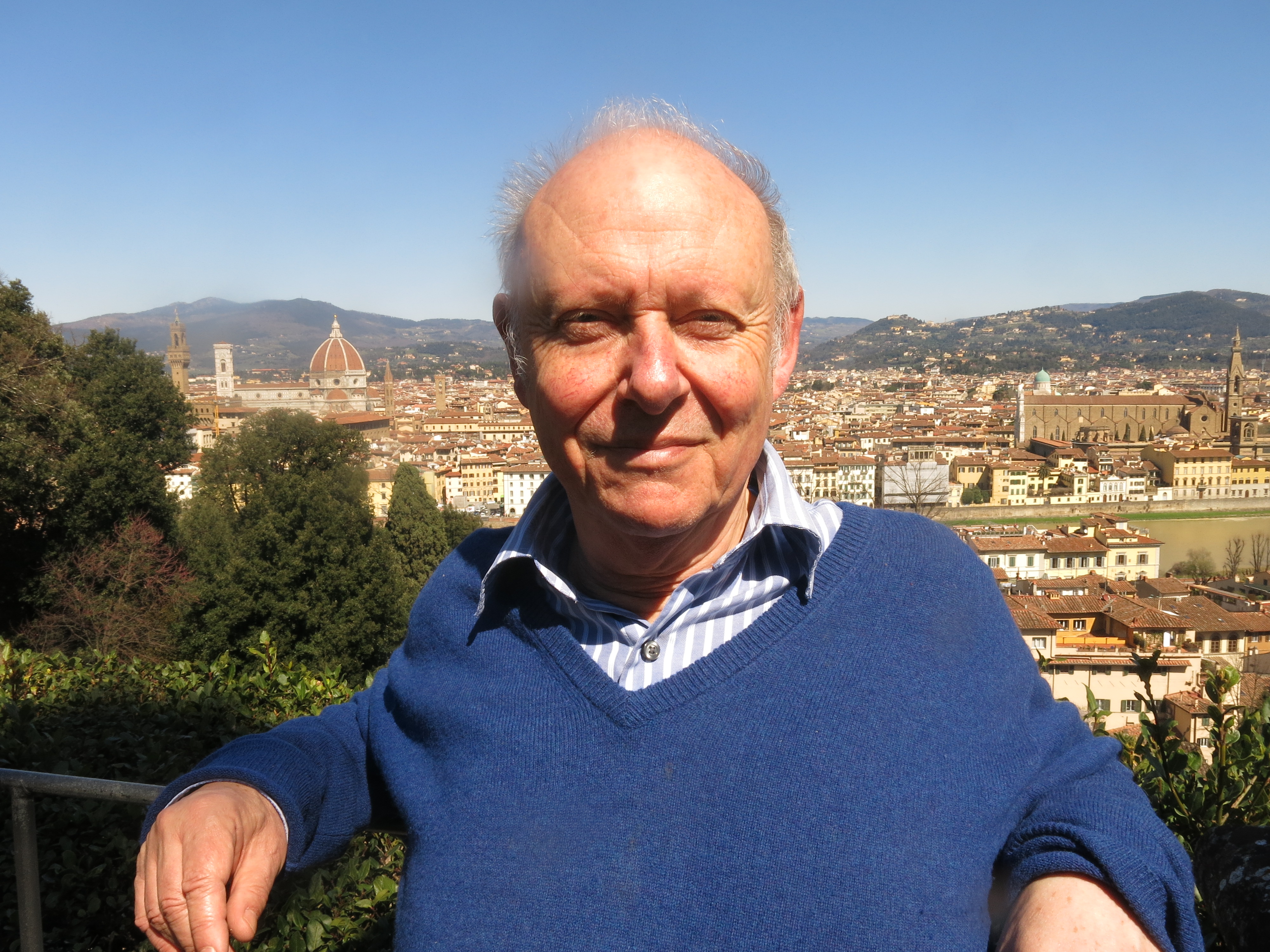
My Writing Process Charles Freeman

charles freemanWhat you have written, past and present.

I am a historian with a keen interest in world history. For many years I taught history courses with the International Baccalaureate. My first book came out in the late 1970s when I was writing for schools on such issues as terrorism and human rights.
In 1990 I got a big writing contract to work on a world history project. They ran out of money after three years but I rewrote the first three volumes as one, Egypt, Greece and Rome, Civilizations of the Ancient Mediterranean and it was taken by Oxford University Press. I have a longstanding interest in ancient history from my childhood and I loved working on this. It has sold well in the US and opened the doors to a lot of new contracts. The sort of lucky break all writers need.

What you are promoting now.

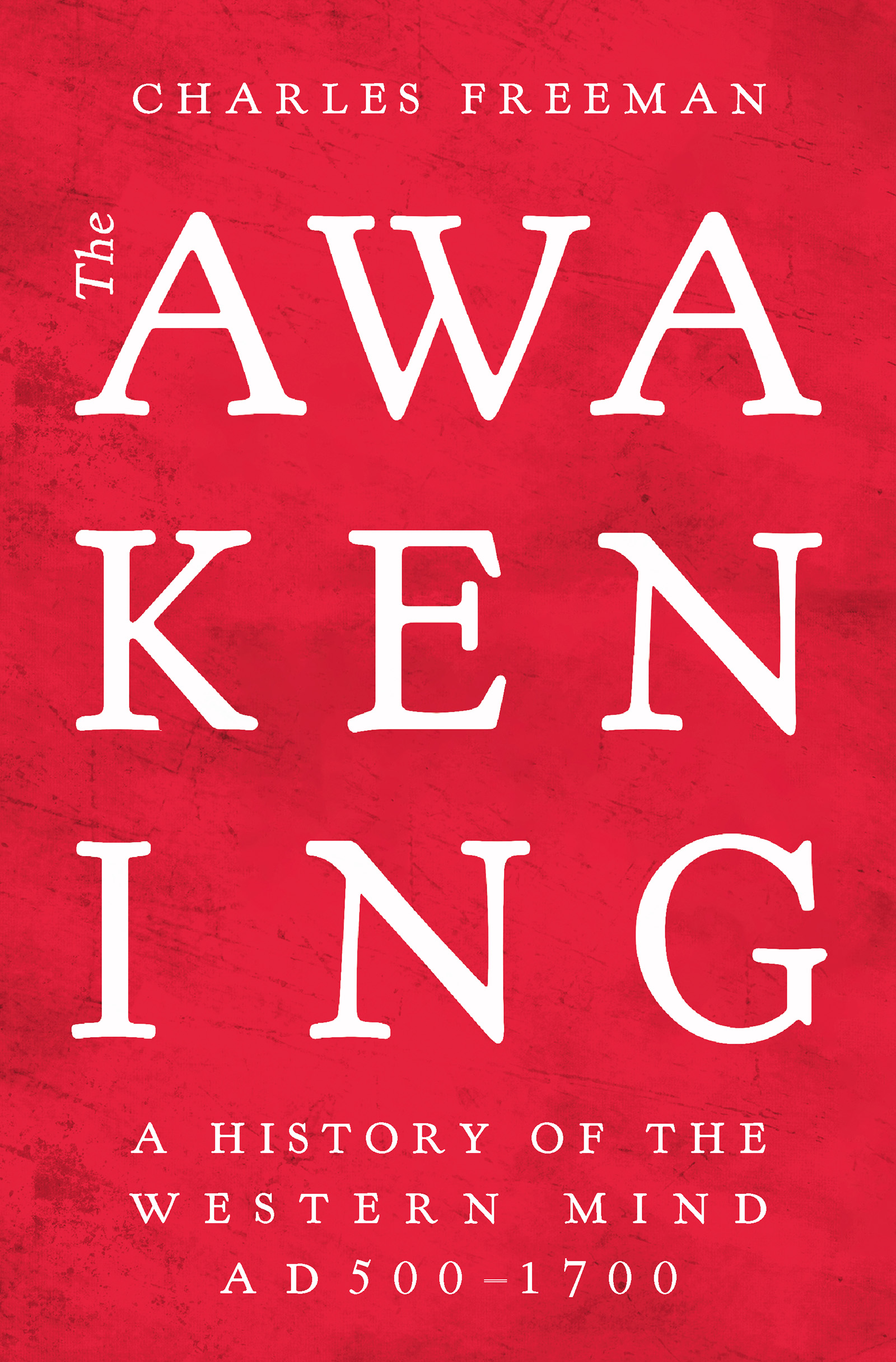
My new book, out on August 6th, is The Awakening, A History of the Western Mind AD 500—AD 1700, published by Head of Zeus. It is an ambitious book but it brings together of a lot of reading and travelling I have done over the past twenty years. So it deals with the survival of Greek and Roman culture into the Middle Ages, the ways in which Christianity developed over the centuries and the emergence of philosophy and science. It took four years to write.
Head of Zeus have illustrated it beautifully and so it is pricey at £40! I am encouraging my friends who can afford to buy the hardback to go to their local bookshop to help get them on their feet again.

A bit about your process of writing.

I am driven by interest in what I am writing. I pick subjects that I would enjoy learning more about and go from there. The trouble is that I am easily waylaid by exploring things that I cannot possibly fit into a book! (My middle name is serendipity –browsing around haphazardly to see what interests me.) I do not use time very efficiently but often I find what I need in odd places in books or on the tours I run in the Mediterranean.
On an actual text I rewrite continuously. A chapter might be rewritten twenty times, often with small changes but sometimes with a complete reordering of the material.
A good tip is to read aloud what you have written. You can then spot if the rhythm of a sentence is wrong and if you need to break up a sentence or insert or take away commas!
Zadie Smith once said that once you had finished a book you should lock it in a drawer for a year. I would not go so far but it is extraordinary what problems you can find if you reread what you have written three months later! Never try to rush a book. Let it mature. Once it is out you can’t change it and if it is not as good as it should be you might never get another contract.
It pays to have a set piece opening, something from anywhere in the book that draws the reader in and leaves them wanting to read more.
I look out for the best history writing on whatever topic in the hope that it will influence my own style. I always have a pile of well-reviewed books waiting to be read. However, you must find your own voice and that takes time. The reader likes to feel that there is a real person there even in a history textbook.
I was once described in a school report as a ‘harum-scarum character’ (those were the days when they told you it straight). I know what the teacher meant when I get back a book with a copy-editor’s corrections on it!

Do you plan or just write?

I need to have a clear idea in my head, an end point towards which the book will lead. I map out a book in advance so as to keep a balance between chapters. After I have done this I let myself be flexible.
Usually once you are into a subject you develop completely new ways of looking at it. Once I had to go cap in hand with my agent to a publisher to say that I had decided to write a completely different book from the one I had signed up for. One of my planned chapters needed to be the whole book! We did persuade him and the book, The Closing of the Western Mind, sold well.

What about word count?

My longest book, the third edition of my Egypt, Greece and Rome, is 345,000 words- it was more than we agreed but they did not notice and the printer had to diminish the script to fit it all in. I don’t work by daily word count, one good page is worth twenty rambling ones.

How do you do your structure?

For a historian much of this is set within a chronology so you need to fix a starting date and an end date. Then you have to find links between each chapter so that the reader has a feeling that it hangs together. Sadly you might then have to dump a chapter that does not work.

What do you find hard about writing?

The problem of selling a proposal and making any money from it is one that makes life hard for most writers. I have spent a lot of time on proposals that no one wanted -I even have a complete book that my agent has put through twenty publishers without success.
Personally I would find it difficult to be a full time writer. It can cut you off from people and the real world too much, so I organise study trips to the Mediterranean in the spring and autumn and then write largely over the winter. It helps to have a break from a text. See Zadie Smith’s recommendation above.
It is also important to have some other way of making some cash if you want to be a writer! So I do lectures, tours and act as consultant for the Blue Guides, cultural travel guides. And now at last I have my pension to help keep me going!
On a day to day basis the hardest is to ditch a piece of writing which might have taken some weeks of research but which just does not fit into the narrative.
When I am stuck I go for a long walk. I have a theory that the human brain works at its best when it is travelling horizontally at 2 ¾ miles an hour (even better when it is pulled along by a lively border terrier). It is amazing what gets untangled on a walk.

What do you love about writing?

It’s a peaceful and satisfying way of living and you can fit other things in around it. As a historian I am always finding out new ideas and authors that I would not come across otherwise so I feel that, even in my seventies, my mind is still developing. I often find that the research for a new book leads to all sorts of new interests.
Don’t write for money, write for the pleasure it gives you. Writing is in itself therapeutic. Don’t expect too much. I have seen too many friends assume that once their first book is out everyone will notice and applaud it and the money will come pouring in. Then it gets a couple of nice reviews and that’s it. Within six months it is way down on the Amazon bestsellers list along with thousands of others. It is a jungle out there and it is a long haul to get noticed, let alone make any money. (Only two of my twenty published books have made me more than the basic hourly wage.)
Publicity. I decided, with powerful support from my wife, that it might not be a good idea to pose naked behind a pile of my books as one female historian did- but her subject was a naughty eighteenth century duchess so perhaps it worked for her.
I don’t have a website. A good history book spreads by word of mouth. If you want to know more about me, then ‘Charles Freeman, Yale University Press’ has all the details and links to reviews of two of my books with them.
I worry that many good and committed writers get missed by publishers but there are other books so badly written that one wonders why they ever got published. The same as with artists. Standards of editing have gone down a great deal since I started writing.
Don’t try and copy a genre or theme. By the time you have finished the reading world will have moved on. It’s an original voice that matters, especially in fiction.
Keep at it. It’s about the fifth book that you write that you begin to get the hang of it! I think hopeful writers still underestimate how difficult it is to write well- it is a craft and needs thought and time. No easier than being an artist.
I have never done a creative writing course and I am sure they will help but there is no substitute for reading widely (the thriller writer Lee Child says that the only way to learn how to write is to read for forty years), experiencing the world and just getting down to actually doing it!
Support your local bookshop if you can. At the least they might give you a launch and put your book in the window!

Further details about Charles Freeman can be found at Charles Freeman.
Yale University Press.

The Awakening will be published by Head of Zeus on 6 August

SISTER SCRIBES: KIRSTEN HESKETH ON REALISING YOU’RE A REAL WRITER

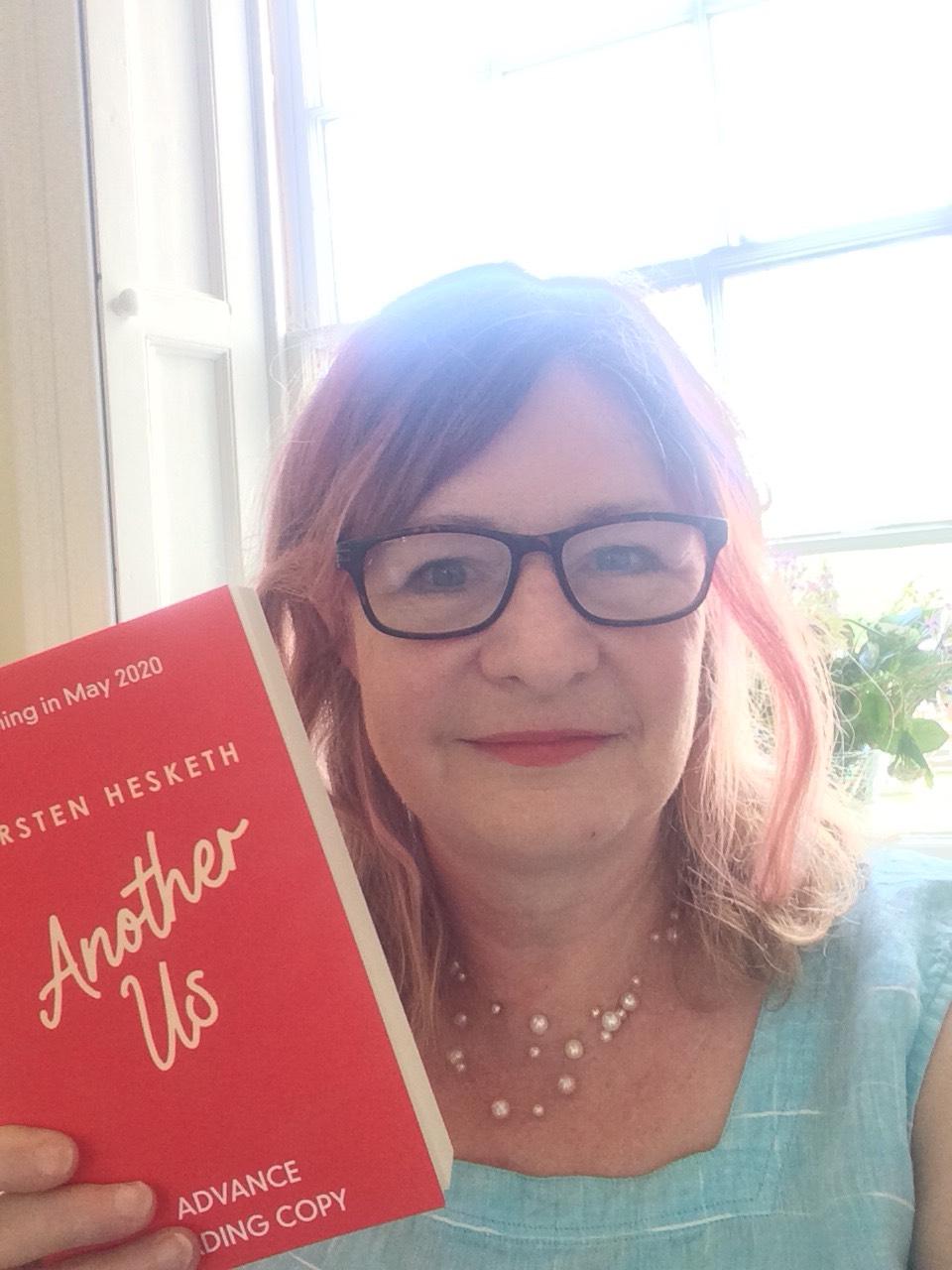
Much is written about imposter syndrome. When someone asks me what I do, I sometimes stumble over the word ‘writer’ and often followed it with a little self-deprecating giggle or downplay it by saying ‘I’ve only had one book published though.’ And I know I’m not alone.  Most writers I know seem to suffer from it – there are countless Facebook and twitter threads devoted not feeling like a ‘proper writer’ and many times I’ve been at lunch or away with lovely writer friends realise we are all self-deprecating for Britain.

Well, this week something happened which made me realise that nowadays I am very much a ‘proper writer’.

The first blog post I ever wrote was for my lovely friend and fellow Sister Scribe Susanna Bavin’s wonderful blog. This was when I was very much in the querying trenches and getting an agent, let alone a publishing deal, was just a twinkle in my eye and Susanna was kind enough host me for a series of musings on my embryonic writing life. I can remember the gist – if not the words – of the first post I wrote as if it was yesterday. My then-teenage son was having some problems and I explained how difficult, how wrong, how self-indulgent it felt to be ploughing on with polishing my turd of a draft when he was struggling. And, even if I did decide to press on, my creative juices and my writing mojo had totally deserted me, so there was little point in showing up the keyboard anyway.

I didn’t write anything for week. Maybe even months. And it was only when my son was back on an even keel that I could finish editing Another Us and start submitting it to agents.

Fast forward four years and everything is different.

I have an agent. I have two publishing deals. Another Us was published in ebook in May and the paperback is out on 20th August (do all rush!!) Reader, my writing dreams came true!

And, this week, the Hesketh household is once again in turmoil. My daughter needs an operation in the middle of the global pandemic and the whole family needs to shield beforehand. (Sad that we need to shield during my son’s 21st and miss our first break away in months, but needs must.) At the moment, it’s all hands on deck sorting out food deliveries and prescription pick-ups and everything else that needs to be done before we hunker down.

This time it is different though. My edits for Book Two are due back with the publisher at the beginning of August which, as I write, is – gulp! – three days away. But this time there is no deciding my writing mojo has deserted me or that my creative juices have decided to go on holiday instead of me. There’s no deciding to do nothing for a couple of months. The edits have to be done. I can – I have to – work fast and efficiently so that I can get them done to the best of my ability – and still be there for my family.

It all feels totally different.

To be fair, I’m sure my lovely editor would be absolutely fine if I was to ask for another week or two to finish the edits. A lot of the pressure to meet the deadline is coming from myself.

But the different to four years ago is stark.

And, in some ways, it reminds me how far I’ve come.

I’m a writer.


No Regrets by Tabitha Webb Book Review

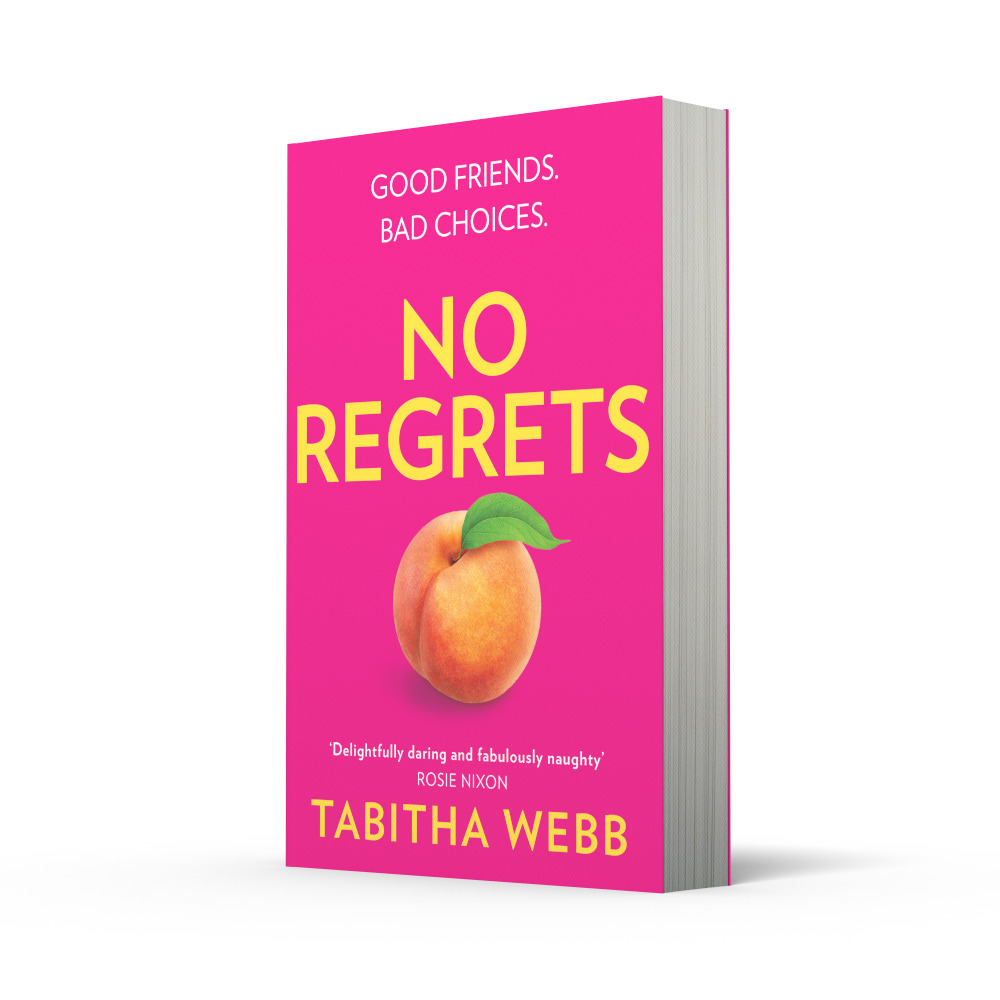
Tabitha webb, No regrets, book, Ah, No Regrets. What a book you were. I enjoyed every minute of reading you. Most books have women as meek, mild little things. Not Tabitha Webb, though. She lets her characters roar. No Regrets follow three girlfriends as they fail, flounder and make bad decisions. Sometimes they are good, sometimes they are very, very naughty, but they are never not entertaining.

I saw Tabitha Webb talk about her book at a Harper Collins New Voices event at the beginning of the year and she was completely charming and funny, noting that she always thought her sex scenes were ‘PG, but turns out that is not the case.’

I only wish now I had elbowed my way in to have a chat with her. I reckon she makes the most fun, and loyal, friend ever. Anyway, back to the book: it is Jilly Cooper times ten. It is Jackie Collins and Helen Fielding rolled into one. It is both funny and outrageous and I cannot wait until I can read Tabitha Webb’s next book. Get it now, this is the perfect summer read. It will not fail to cheer you up in these covid times.


No Regrets is an outrageously funny, filthy and fabulous debut, focusing on the lives of three friends in their thirties and forties– Stella, Ana and Dixie. With shades of Sex and the City, this is the perfect summer read and carefree antidote to these troubled times.

Tabitha Webb was born in Ireland and grew up in Chicago, before being sent back to boarding school for her teenage years. She survived one term at university before packing her bags and chasing a hot surfer to America. During this period she was a rollerblading extra in the Robin Williams film The Birdcage, a dancer in a German pop video, and got held up at gunpoint.

After careers in TV and advertising, she made her first foray into fashion and now runs her eponymous fashion label, is happily married and has two daughters.

No Regrets was inspired by the love lives of women around the globe, coupled with a vivid imagination, and she can’t wait to shock and delight readers everywhere.

The Life We Almost Had by Amelia Henley | Book Review

the life we almost had, Amelia Henley , book, book review,

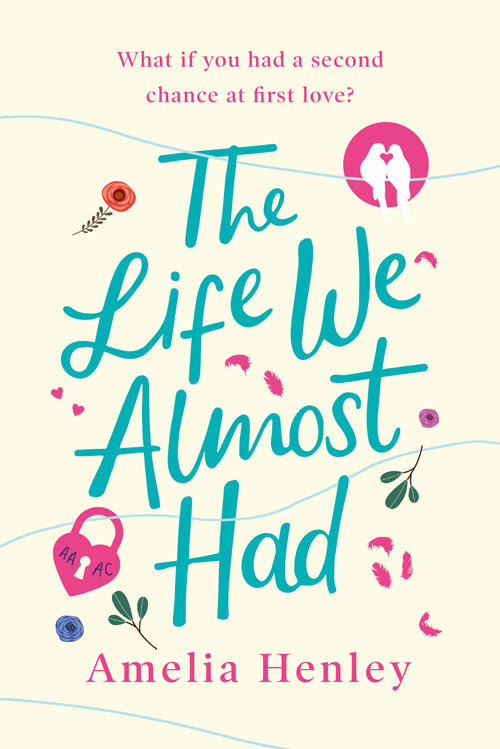
The Life We Almost Had has the twist least likely to be guessed of any book I can think of. The book is clever and well done. Of course the book is a love story, but it is a unique one. The book is unbearably sad in places, yet it pulls you up. It keeps you guessing all of the way to the end. Highly recommended reading, this book is a triumph for Amelia Henley. 

Anna wasn’t looking for love when Adam swept her off her feet but there was no denying their connection, and she believed they would be together forever. Years later, cracks have appeared in their relationship. Anna is questioning whether their love can really be eternal when a cruel twist of fate delivers a crushing blow, and Anna and Adam are completely lost to one another. Now, Anna needs Adam more than ever, but the way back to him has life-changing consequences. Is a second chance at first love really worth the sacrifice? Anna needs to decide and time is running out…

A beautiful and emotional love story that asks, how far would you go for a second chance at first love? Perfect for fans of The Man Who Didn’t Call and Miss You.

Amelia Henley is a hopeless romantic who has a penchant for exploring the intricacies of relationships through writing heart-breaking, high-concept love stories. Amelia also writes psychological thrillers under her real name, Louise Jensen. As Louise Jensen she has sold over a million copies of her global number one bestsellers. Her stories have been translated into twenty-five languages and optioned for TV as well as featuring on the USA Today and Wall Street Journal bestsellers list. Louise’s books have been nominated for multiple awards. The Life We Almost Had is the first story she’s written as Amelia Henley and she can’t wait to share it with readers.