Exclusive Paddy Ashdown Interview ‘I Am Devoted To The Liberal Democrats’

Here is part three of our exclusive Paddy Ashdown interview. Take a look at part one and two.

That’s a good answer. In your diaries you are clear about how close you were to Labour before and after the ’97 election, and that PR was the price of coalition. Given that the Lib Dems eventually went into coalition with the Tories, with just a promise of a referendum on AV, how do you think events would have unfolded if you’d accepted a similar deal in ’97?”

I don’t know. I mean I can’t take you through the what would have happened parts of history. I suspect the circumstances would have been very different if we also had the referendum on a sensible system rather than a lesser sensible one. I don’t think you would have had the leading party in the country at the time deliberately doing what they could at the time to destroy the motion and the national newspapers at the time supporting them. That is the ‘what would have happened’ bits of history and we could all spend hours deciding how the world would be different  if Britain hadn’t won the battle of Waterloo; It’s very interesting but it doesn’t bear much relevance.

Paddy_Ashdown_3You also said in your diaries that you were worried that the party would start with Gladstone and end with Ashdown, what do you think was your greatest achievement as the Liberal Democrat Leader?

I have never ever believed that I am a good judge of my own achievements, I leave that to others to decide on what your achievements are. I was very proud to lead the Liberal Democrats for eleven years, I loved it, I am devoted to them. I was also very proud to be the International High Representative in Bosnia for the British Government.  No doubt I made mistakes in both of those jobs, probably quite a lot of them. When you have the privilege of doing jobs like that you can use it to your advantage and I quickly realised what I was good at and what I was bad at.

What do you think will happen with the Liberal Democrats in 2015?

I actually think all the polls now are wrong. I have to rely, as I always have done, on the good judgement of the british electorate, I think we have a good story to tell, we have been in government, everyone said we couldn’t do it. I think we have been more united than the Tories, tougher than the Tories, and played a really serious role in bringing our country through a crisis. If I know the British electorate at all well, when the moment comes, I think we’ll reap the dividends of that. I also think that the British electorate probably, having had the benefit of the coalition may not be very happy returning to absolute power in anybody’s hands. Also, having a coalition of some sort forces people to work together instead of spending all their time scratching each other’s eyes out. Maybe that is a much better system than what we had in the past. Those two things will help us I think.
Who Is Your Favourite Politician?

I think as someone said to me; ‘Who is my hero?’ and I said William Wilberforce who is as unlike me as you could possibly get, apart from Gladstone of course, who is the greatest Prime Minister this country has ever had both internationally and domestically, he was a man who said, “We did not march across the law of anti-slavery, we did not march towards a monument in the distance, we gathered friends like flowers along the way.” and I think he was an extraordinary politician.

Do you think we should have intervened in Syria?

No, I don’t. I’m against intervening in Syria while the opposition is so fractured and defused. Anyways, they’re being funded by extremist elements and encouraging extremist elements so, no, I thought that would lead us towards an engagement in what I think is a widening religious war. I did however think we should intervene in defense of one of the principles pillars of international law; a prohibition on the use of chemical weapons that has stood since 1926 and strained even Hitler and Stalin, and I thought that unless we were prepared to show strength to Assad, not by intervention because we wouldn’t have done, but there was a price to pay that was painful for breaking this principle of international law, then it would only have encouraged the wider spread of chemical weapons. So, no, I don’t think we should have intervened in Syria but I do think we should defend International Law and indeed one of the most important pillars of the international law that preserves some semblance of civilised behaviour in the prosecution of wars.

You testified against Slobodan Milosevic. Was that scary?

No, it wasn’t scary. It was more scary being bombarded by his troops. I mean, I testified about being in the middle of the Albanian villages when they were being bombarded by the main battle units of his army, that was much more scary.

I can understand that. You have done a lot of different things in your life. What is your favourite?

I think there is nothing I’ve done that will match my sense of pride of being a member of parliament for my own community of Yeovil. There is no thing you could ever do that matched being the representative in Westminster of the community you live in and love. So if somebody said you can have one line to put on your gravestone it would be ‘Member of Parliament for Yeovil’.

What was it like being an intelligence officer?

I was a perfectly ordinary diplomat

What is the best advice you have ever received?

Never stop learning.

Thank you Paddy.

 What do you think?
Exclusive: Paddy Ashdown On Clegg, The Tories, The Liberal Democrats & The NHS

Part two of our Interview with Paddy Ashdown. Here he talks about politics. Part three will be up tomorrow. Let us know what you think. Part one, where he talks about writing and his books,  is here.

Do you mind if I ask you some political questions as well?

No, go on.

Would you prefer the Liberal Democrats to side with Labour at the next election?

That is a matter not for me or my preference but it is a matter for the British electorate voting in the ballot box.

Do you think Nick Clegg has been true to liberal values?

Absolutely. I think he is remarkable. I think he is…I am devoted to the man, I think he is one of the most brilliant politicians in Britain today. Hugely, publicly, under-rated. He’s got very, very good judgement. He’s got extraordinary courage and he is a liberal down to the marrow of his bones. So I think he’d undoubtedly make the best Prime Minister that you could have today.

He has a very hard job. Doesn’t he? 

It’s a thankless job. I did it for eleven years and let me tell you it is the most thankless job  because you represent the only philosophy: liberalism, that makes any sense.

He has it tough because generally people don’t seem to like the Tories

No they don’t like the Tories and I don’t like them either. I spent my life fighting them. If the public elects a coalition where the only coalition that can have a majority in the House of Commons inherently, mathematically, adds up to ourselves and the Tories do they really want people that don’t listen to them?, the public democratic view. And you better ask yourself what they like best. Do they really like the complete and utter corrupt mess this country was left in by Labour, which would have bankrupted young people for the next twenty years or do they like two parties that put aside their differences for the national interest and work together to get us out of the worst recession we have had since the 1930s and back on the path of growth. Which of these two would you prefer?

I agree with that, Labour left the country in a very big mess.

Absolutely. People have likes and dislikes in politics and what I’m interested in is doing what’s right for my country. That is what I have always been interested in and if the Liberal Democrats pay an electoral price for that, and I think they will by the way, if they did, if I was doing what I believed to be right for my country and helping it out of a crisis then I am proud of that and that’s what politics is for.

Do you think the Liberal Democrats made an error over tuition fees?

Yes, they made an error by promising it when it couldn’t be delivered. We’ve been in opposition for a hundred years, we haven’t been in government, so of course from time to time decisions which were driven to a certain extent by opportunism. I said at the time that we were making a promise that I didn’t think in the economic climate could be delivered. If we had been in government by ourselves I think we might have decided to sacrifice other things in order to deliver what we promised but we weren’t in government, we were in coalition. So, no, neither parties manifesto has been in operation. Both parties have had to make some compromises. I don’t call that anti-democratic. I call that the operation of democracy.

Do you think the NHS is being privatised?

What concerns me more than anything else isn’t who owns the NHS but how the public is served. How the citizen is served. For instance, even under the last government, under Mr Blair’s government, I had to have some health checks done and I went to a private organisation run under contract from the health service as an alternative means of delivering health services, that is; free at the point of delivery health services, and they did a wonderful job. Now I could have gone to a health service hospital, it’s all paid out of our taxes, it’s all paid by the national health service. One of those organisations was privately run, one was publicly run. It doesn’t matter who runs it. I don’t believe in private health but if there is a private provider providing to the health service under health service conditions and they can do it better for the costumer, then that is surely what you want. I mean I don’t believe the argument that says private/public is the necessary argument. I am strongly in favour of public services being offered free at the point of delivery and paid for on taxation, but who actually runs the organisation that delivers it is far less important to me than how well the citizen is served.

I agree with that. That is a question we get asked a lot but I got an MRI on my back and it was done through the NHS via a private company and they did an amazing job. Very professional, very quick.

Yes, that’s right. If you had a monopoly public service I don’t even think it would be a better public service. It needs competition. It makes people live up to the mark. I bet you there were more people abused and receiving bad service and ignorant service when the NHS was a public monopoly. I don’t believe in public monopoly. I believe in things being paid for either by taxation, free at the point of delivery but then who does that?, providing it is subject to inspection and national control is a matter of irrelevance.


Exclusive Paddy Ashdown Interview: On His Books

Paddy Ashdown has been a Royal Marine, the leader of the Liberal Democrats for eleven years, High Representative for Bosnia and Herzegovina, and is a life peer in the House of Lords. On top of that he has written 8 books, with the 8th coming out on the 5th of June. I can’t wait as I have loved all of his other books. I interviewed him about his books and politics. Here is part one.

Did you get the idea for A Brilliant Little Operation: The Cockleshell Heroes and the Most Courageous Raid of World War 2 while you were a member of the Royal Marines elite Special Boot Squadron?

No, my publisher approached me and said ‘it’s the 70th anniversary how about writing the book’. Which is my seventh book. I am just about to produce my 8th so it was a natural subject really.

What is your 8th book about?

The 8th book is about the largest resistance battle with the Germans in the Second World War. It is called A Terrible Victory, about the Vercors plateau on June 1944 and it was the biggest resistance German battle in Western Europe. [Learn more about the book here. It is about the chronicle of the French Resistance during World War Two]

That sounds fascinating. You have written quite a lot of books. Do you have a favourite?

I think the one I am working on now is always my favourite. I love writing books and whatever you’re working on consumes your mind so it is always the one you are most thinking about.

You’re books are very good. They are always very factual and have lots of history in them. How do you go about writing them. What is your writing schedule?

Writing The Brilliant Little Operation, and the one I am going to produce, Harper Collins will publish it on the 5th of June, takes me about three years of research. I mean, I start writing before then and overall I don’t like writing unless I have all of the research it is possible to get. Normally the whole process will take my three and a half to four years. Of which three years is spent on research. Going to the wonderful archive museum in Britain, the National Archives in Britain. In the case of both of my most recent books, to the Château de Vincennes in Paris, In France there are three key archives you have to go to. And also the Bauhaus-Archiv in Germany.

I spend a lot of time in archives. In writing my present book I have read sixty other books on the subject, all of them in French. In writing a Brilliant Little Operation I have read four books before and a lot of research. So research is very important.

You can really tell that when you read your books.

Thank you, that’s kind. That’s very generous.

Tomorrow: The Liberal Democrats, the Conservatives, Nick Clegg, Labour and the NHS: Exclusive interview.


BUSINESS OF BOOKS: FIRST, LAST, EVERYTHING – BEST OF THE BEST, PART 2

We’ve been given some wonderful advice from our First, Last & Everything guests this year, so here’s the best of it:

ON WRITING

Don’t get it right – get it written. Susanna Bavin

Sometimes it really is okay to tell not show. Every course I’ve ever attended and blog you read talk about showing not telling. It can become obsessive. At some point, it’s better to just say: ‘it’s midnight’ rather than: ‘Bats passed silently by the ancient metal hands of the church clock as they moved into a vertical position.’ This is particularly true in children’s books where most kids want action. Christopher Joyce


ON EDITING

I went on an editing course recently and was advised to highlight the different points of view in my manuscript using different colours. The idea being that the distribution of the colour throughout the manuscript enables you to see if the balance between each characters’ points of view is even. This is an invaluable tip, as often I get fixated on one character’s view point and this enables me to present a balanced piece of work. Morton Gray

I printed my novel on A4 paper and began to read it. This was a pivotal moment in my writing career. Multiple small errors, which were mysteriously invisible before, began to jump out at me. It was a valuable lesson and now I always edit a paper version at some point during my self-editing phase. Victoria Cornwall


ON PUBLISHING

Phillipa Ashley and Rowan Coleman both advised me without a second’s hesitation to join the Romantic Novelists’ Association’s New Writers’ Scheme. I went on and joined in the January of 2014, and published that début novel the following year. Julie Stock

Put a name to a face quickly and always have a smile. Publishing is still quite a small world and conducting yourself in the right way will really keep your options open. You never know when you may need somebody’s help in the future! James Faktor

If you’re going to self-publish, it’s important to go through the same steps as a mainstream publisher would prior to publication. Think carefully before using free resources unless you’re convinced about the result. It’s usually worth paying professionals for edits, proofing and cover design.  Cathie Hartigan


ON READING

I think everyone should make friends with their local bookshop.  Booksellers have a wealth of knowledge that they love to share, and bookshops are such beautiful places to spend time in. Cressida Downing

If you’re not enjoying a book, don’t struggle through it and make the whole process horrible. There are so many amazing books out there for a variety of tastes, passions and interests – find something that sparks a light in you and devour it! There will be a book out there for you, I can guarantee it! Lara Marshall


ON LIFE

Comparing your own life and career to the life and career of someone else portrayed online is not only pointless but can be damaging. So I’ve had to learn to stop – and I would definitely give this piece of advice to anyone starting out in writing or any other career. Clare Swatman

In the famous words of Antoine de Saint-Exupéry, “All grown-ups were once children… but only few of them remember it.” Yasmin Thornber

You won’t learn about people in a classroom.  Get out there, but take your notebook.

Julia Dean


BUSINESS OF BOOKS: FIRST, LAST, EVERYTHING – BEST OF THE BEST, PART 1

We’ve been given some wonderful advice from our First, Last & Everything guests this year, so here’s the best of it:

ON WRITING

There’s no magic bestseller formula (if there were we’d all be making millions of pounds!) – all you can do is write the best book you can. That’s it. Clare Swatman

Listen to the advice you are given but do not blindly accept it or reject it without consideration. Evaluate it, then adopt or discard it. There is no ultimate template of how you should write, what you should write, the rules you should obey or break. Sandra Danby

I have offered this advice to a few writers and they have all told me it is a good idea, so I am happy to share it with you here: don’t stop writing today unless you know how you are going to start writing tomorrow. For me, following this rule means that, when I hit a problem and the writing becomes difficult, I always keep at it until I have got past the hard bit and things are flowing freely again… so that when I stop, I know how I’ll start again next time. Susanna Bavin


ON EDITING

Once you’ve written and edited your work get in proofread by a professional. This is not your sister, who is an English graduate; not your neighbour, who studied law and is very bright and NEVER yourself. It’s impossible. Christopher Joyce

I follow a lot of writing blogs on Twitter, and many of them have wonderful snippets of advice, one of the most practical of which in recent months was about removing redundant words from your manuscript. I discovered there were plenty of lists out there, once I’d put ‘redundant words in your novel’ into Google, and soon I was working my way through my extremely long manuscript and culling them (thank you, Word, for the Search and Replace function). In the end, nearly 10,000 redundant words sailed off into the blue yonder; not one of them was missed! Cassandra Grafton

Two author friends, at separate times, said they were listening to their manuscripts for errors and suggested it was a good way to edit. It is easy to read what we expect to see rather than what is truly there. Our hearing is very sensitive. A misspelt word, repetition or a sentence that is far too long, is more obvious to our ears. Victoria Cornwall


ON PUBLISHING

Ebook jackets will be seen as thumbnails on retailers’ sites so you need to ensure that the title can still be read. A small, thin font in a colour that doesn’t stand out isn’t the best and don’t clutter your cover – try to keep it simple and avoid too much text. Megan Lockwood-Jones


ON LIFE

The one piece of advice that has helped me in both my personal and professional life is: treat others as you’d want them to treat you. So be polite and considerate and don’t take advantage of other people. Never say something behind someone’s back you wouldn’t say to their face and if you make a mistake, apologise and move on. And never try and attribute blame. Mistakes happen, learn from them. Sue Featherstone

Be kind to yourself. Set reasonable goals (if that’s the type of writer you are) and don’t beat yourself up if you don’t manage to achieve them. Also have breaks from your writing. Writing isn’t something to be forced but to be enjoyed and, if it isn’t, maybe it’s time to ask ourselves why we’re doing it. Wendy Clarke

It is never too late to begin to write. Morton Gray


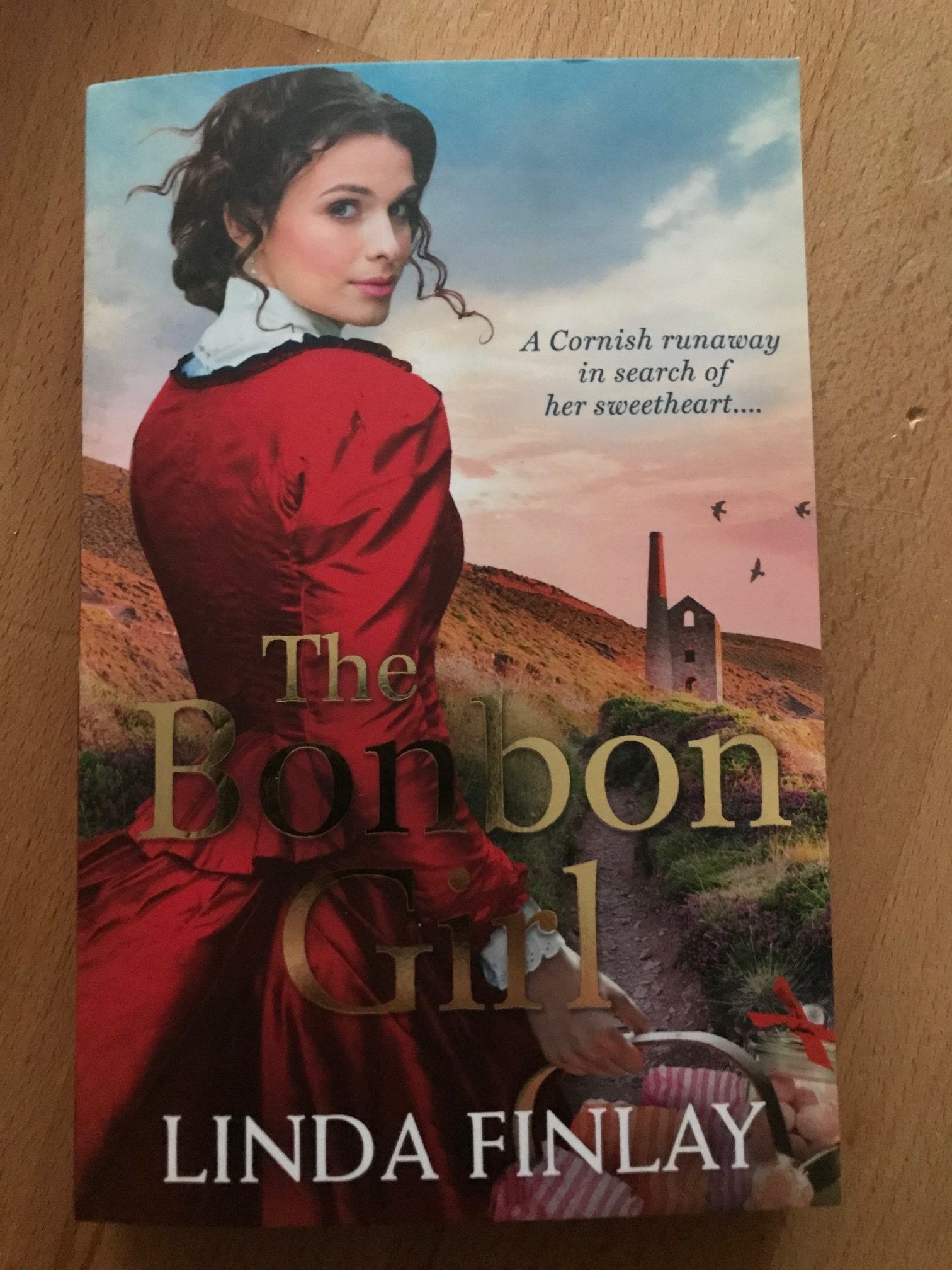
The Bonbon Girl By Linda Finlay | New Books

An absorbing read. Highly recommended.

In a tumbledown Cornish cottage, with an alcoholic father, Colenso Carne works with the Serpentine stone from the local mine. When she catches the eye of the new factory manager, her father insists she rejects her beloved Kitto in order to marry Fenton.

Forced to flee the village when Fenton turns nasty, she is taken under the wing of wise woman Mara and travels to local fairs, learning to make bonbons to pay her way.

But she never gives up hope of being reunited with Kitto…

Set against the dramatic Cornish coastline, this tale of triumph and tragedy will delight fans of Rosie Goodwin and Dilly Court.

Available here.

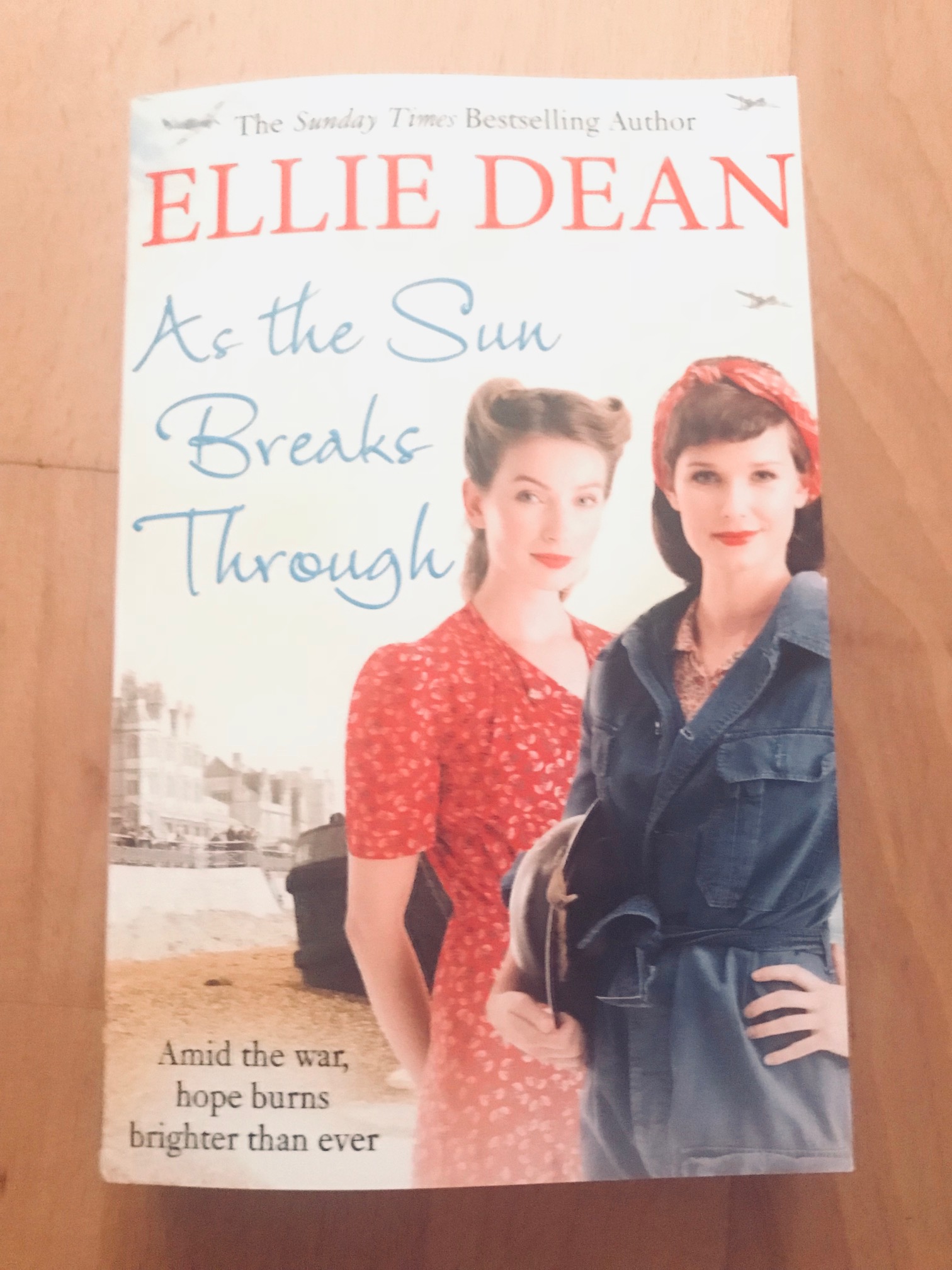
As the Sun Breaks Through By Ellie Dean | Recommended Reads

ellie dean as the sun breaks throughTHE FIFTEENTH CLIFFEHAVEN NOVEL BY SUNDAY TIMES BESTSELLING AUTHOR ELLIE DEAN

Cliffehaven, June 1944

As the planes continue to circle over Cliffehaven, Peggy Reilly’s sister Doris must seek refuge after a V-1 blast destroys her home. Rita, Sarah and the other residents at Beach View Boarding House quickly find their peace disturbed and it’s not long before even Peggy loses her patience. But with more bad news to come, will Doris finally be forced to swallow her pride?

Meanwhile Peggy’s father-in-law Ron Reilly is delighted when his sweetheart Rosie returns home. Until a heart-breaking confession suggests things may never be the same between them.

With loved ones scattered far and wide across the globe, and tensions running high, the end of the war feels somehow further than ever. And yet with the long-awaited Allied invasion in sight, a glimmer of light is starting to break through…

A fabulous, heart-warming Second World War novel in Ellie Dean’s bestselling Cliffehaven series (previously called the Beach View Boarding House series).

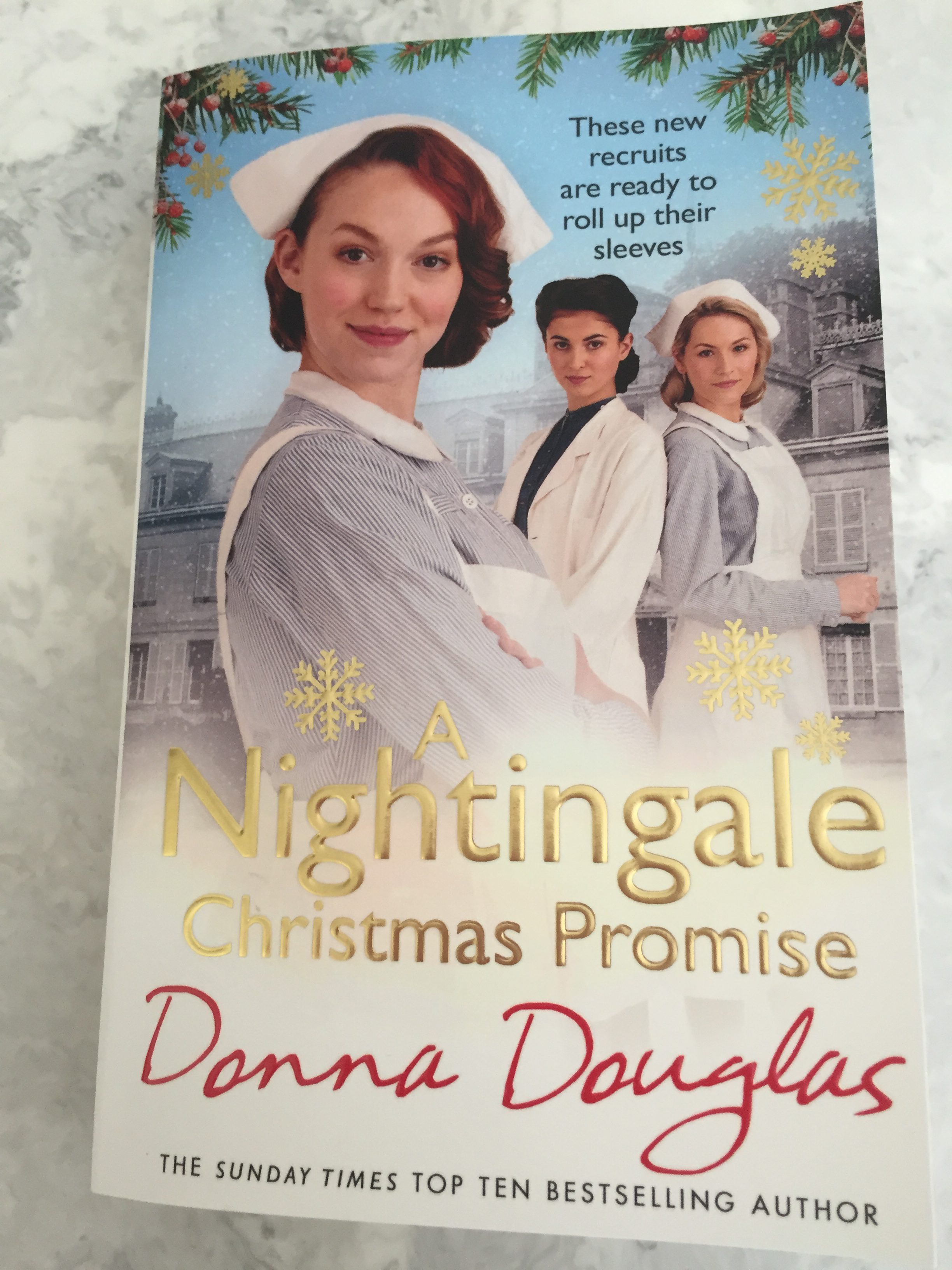
A Nightingale Christmas Promise by Donna Douglas |

A Nightingale Christmas Promise by Donna Douglas

This fun and comforting read is perfect for Christmas.

For the first time, a Nightingale nurses novel set during the First World War. Follow the senior staff as they overcome the trials of their training years. From Sunday Times top ten bestselling author, Donna Douglas.

East London, 1914: Britain is preparing for war. As young men queue up across the country to enlist, the Nightingale Hospital has its own set of new recruits…

Anna has had a happy upbringing in her parent’s bakery in Bethnal Green. But as war descends her family’s German roots will wrench them apart in ways Anna never could have imagined.

Kate dreams of following in her father’s footsteps and becoming a doctor. With female doctors virtually unheard of, it will take courage to face off the prejudice around her.

Sadie joins the Nightingale Hospital for a new life away from her mother’s interference. But the legacy of her family may not be so easy to escape…

As the shadow of war descends, will the promise of Christmas help to bring the students together?