BUSINESS OF BOOKS: DIGGING AROUND

Jane Cable leaves the comfort of her desk

Authors do many things in the name of research and some of them are definitely more fun than others. To be honest, most research these days is carried out hunched over a laptop, flicking from website to website, desperately trying not to be side-tracked. How historical novelists manage it I’ll never know, but I take my hat off to them.

The manuscript I’ve been struggling over for what feels like (and may even be) years has an archaeologist as its heroine. At the moment it’s undergoing a major, major rewrite – which started after a research visit to an antiques centre at a former RAF base – and Rachel’s job is actually less important, but I still wanted to know how it felt to be working in a trench.

Step in DigVentures. For those who don’t know it’s a social enterprise that designs and delivers collaborative archaeology projects using community involvement, crowd funding and digital technology to enable public participation at every level. Including with a trowel. Which is mighty unusual as volunteers at many other digs are restricted to moving barrow-loads of earth or washing finds.

My husband’s always been interested in archaeology so when the call went out on Facebook for volunteers for a dig on the edge of Bodmin Moor we signed up with alacrity. Just as well we did, because there were very few places available. With mounting excitement we read the brief about a Bronze Age/Iron Age settlement, bought ourselves lightweight gardening gloves and packed enough picnic food to last a week.

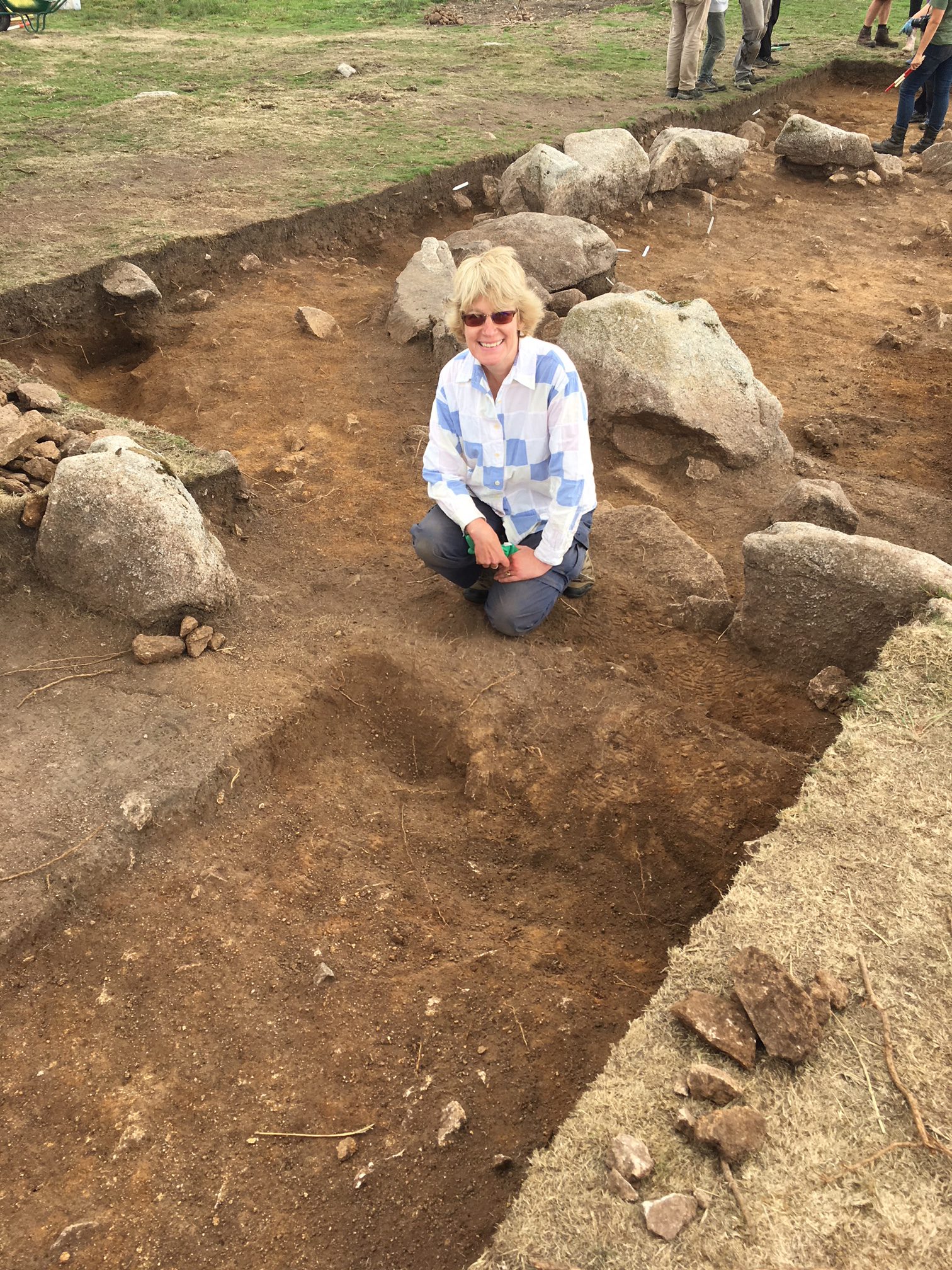
Our fellow diggers and the professional archaeologists were a friendly lot, and most of them had already been at St Neot for almost two weeks. We were coming in right at the end of things, so after a briefing we were taken to a trench and set to work cleaning a small section. Looking back this could have been a test just to make sure we weren’t too cack-handed – a real possibility in my case – then we were moved to our very own area.

This was exciting. Under the watchful eye of trench supervisor Indie and constant visits from Bronze Age specialist Ed we were to scrape through an unusual hard, grey deposit and collect it in bags to be sampled. Indie explained that back in the lab it would be separated and tested in the hope that particles of vegetation or valuable dating evidence would be found.

The area we were digging was part of the bank surrounding the settlement and had a large ditch on the outer side. Behind us in the main trench were the clear remains of a roundhouse, marked out by stones. The earth there was a completely different colour – the orangey-brown ‘natural’ that we would need to scrape down to find. We filled our three bags and the charcoal we kept coming across took me back to my mother taking the ashes from the fire out and spreading them on the garden. It gave me goosebumps that people could have been doing the very same thing for thousands of years.

I learnt a great deal about archaeology. As Ed told us, we went straight from level one to level five in one fell swoop. But what did I learn of value for my book? Tiny things, but important things. How the rain soaks through your gloves and your fingers chafe. Which parts of your body ache the most. The dust that fills your nose and coats your hair. So many things that will help to make Rachel real.

As I shared the experience on social media many friends expressed envious interest, but really, DigVentures makes it possible for anyone to join in. We’ll certainly be back again. And again. And again.

Find out more about DigVentures and St Neot here: https://digventures.com/st-neot/


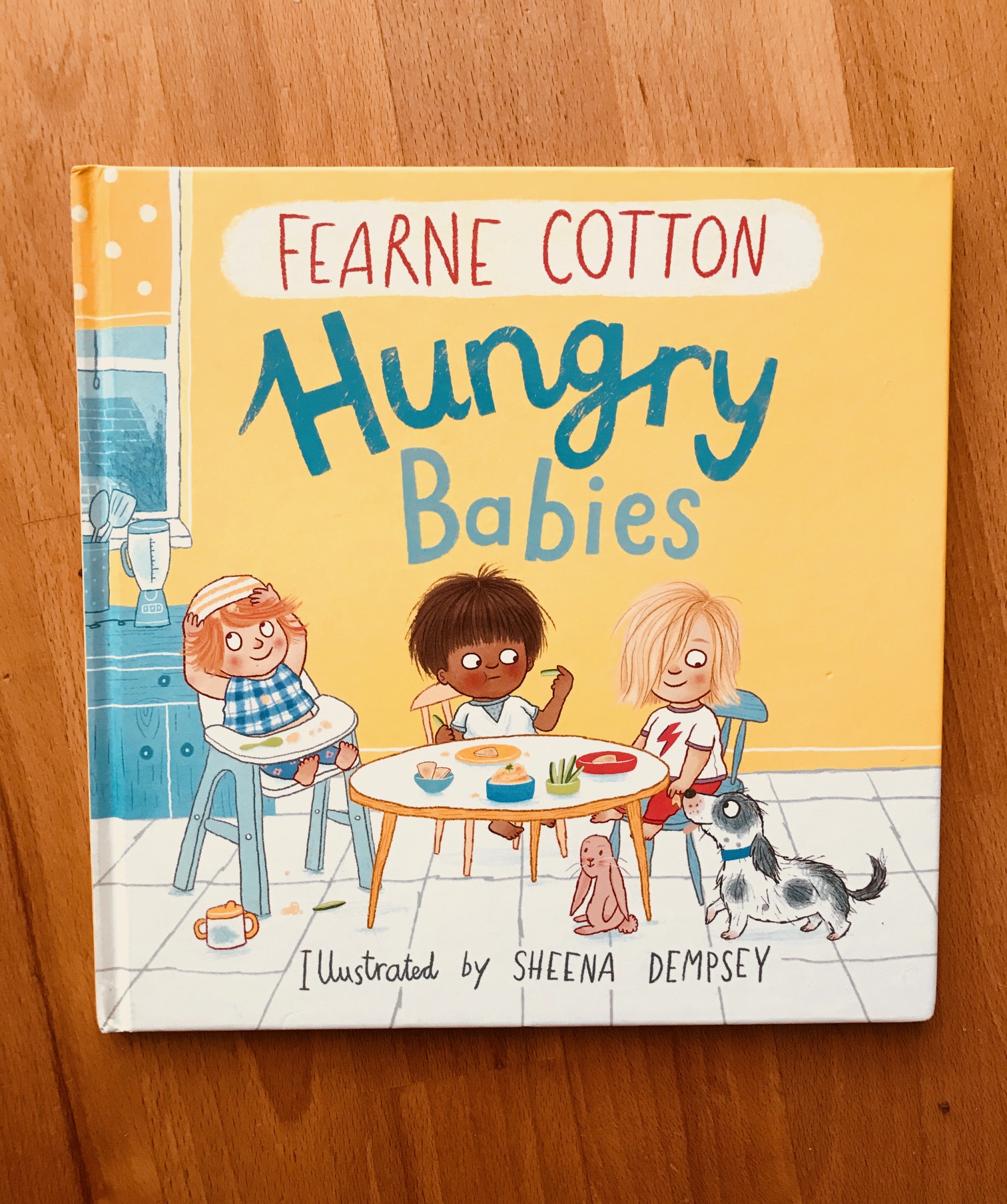
Book of The Week: Hungry Babies By Fearne Cotton

hungry babies fearne cotton book

This highly anticipated sequel to the best-selling Yoga Babies was a huge hit with my son. He loved the book and it is easy to see why. The book has a great storyline for children and glorious illustrations. There is so much to see in every page. The Hungry Babies story will also -hopefully!- get your child interested in some different foods. It is our well deserved book of the week.


Broadcaster, author and mum Fearne Cotton has revealed her brand new children’s picture book Hungry Babies to her millions of social media followers.


Once again illustrated by Sheena Dempsey, Hungry Babies follows the same set of children from Yoga Babies as they go through the many perils of meal times – from big eaters to fussy eaters, breakfast at home to eating on the go, Fearne’s warm, funny rhyme reflects all aspects of eating with little ones. Sheena Dempsey has snuck in a few familiar faces and places if you follow Fearne’s Instagram – with her kids Honey and Rex, Fearne’s kitchen and even the children’s wendy house making an appearance!


On creating Hungry Babies, Fearne has said:


“Being a mother you realise how fussy or strange kids can be around food. My two have very specific favourites and dislikes and it can be challenging at meal times. Sometimes it’s a joy but it is also hard work in producing new foods to reluctant participants.


Meal times in our house are usually pretty hectic! The kitchen floor looks like the Monday after Glastonbury Festival and I’m sweating. I try to get my kids to try new things. Rex is very good at this and loves the challenge where as Honey takes a little more work. Some days they eat every thing I put in front of them and other days not so much so I try not to worry too much.


I think the book will deliver hope that kids will eventually try new foods, but also that it is OK if there is a meal time that goes a bit wrong. Food on the floor, kids spitting new foods out – I think the book is a fair reflection on a plethora of possible outcomes.”


2018 has been an incredibly busy year for Fearne so far, including the launch of her chart-topping podcast Happy Place.


Hungry Babies is published in hardback, £10.99

ISBN. 9781783446858


BUSINESS OF BOOKS: FIRST, LAST EVERYTHING – EDITOR AND READING RETREAT ORGANISER CRESSIDA DOWNING

What was the first piece of book business related advice you were given?

I was told to read widely, but it wasn’t advice I needed to be honest, I’ve been a voracious reader since my early years.  When I was starting out as an editor, I learnt that a book has to be more than just ‘good enough’ to be taken on by agents and publishers.  It needs a spark or something just that little bit more for them to get enthusiastic about it.


What was the most recent piece of bookish advice you gave or received?

I was talking to a young person who wanted to get into publishing, and I suggested they try and get a job in a bookshop.  There is no better training ground for understanding the book industry today and for meeting readers.  Readers should be at the heart of everything publishers do, but they can get side-lined!

I think everyone should make friends with their local bookshop.  Booksellers have a wealth of knowledge that they love to share, and bookshops are such beautiful places to spend time in.


What piece of advice would you most like to pass on?

Never have a reading pile bigger than your head – actually I can’t say I follow that!  Prioritise reading, it’s really good for your health (many studies have shown) and it’s one of the first things that gets put aside in busy lives.  It can be as simple as setting aside an hour at the weekend as your own personal book moment, and you’ll find it spreads!  Of course if you’re struggling, you can always come on a Reading Retreat…


Biography – Cressida Downing is a freelance editor who has worked in bookselling and publishing for over 25 years.  She runs www.readingretreat.co.uk with her business partner, Sara Noel, dedicated to taking readers away and letting them fall back in love with reading again.

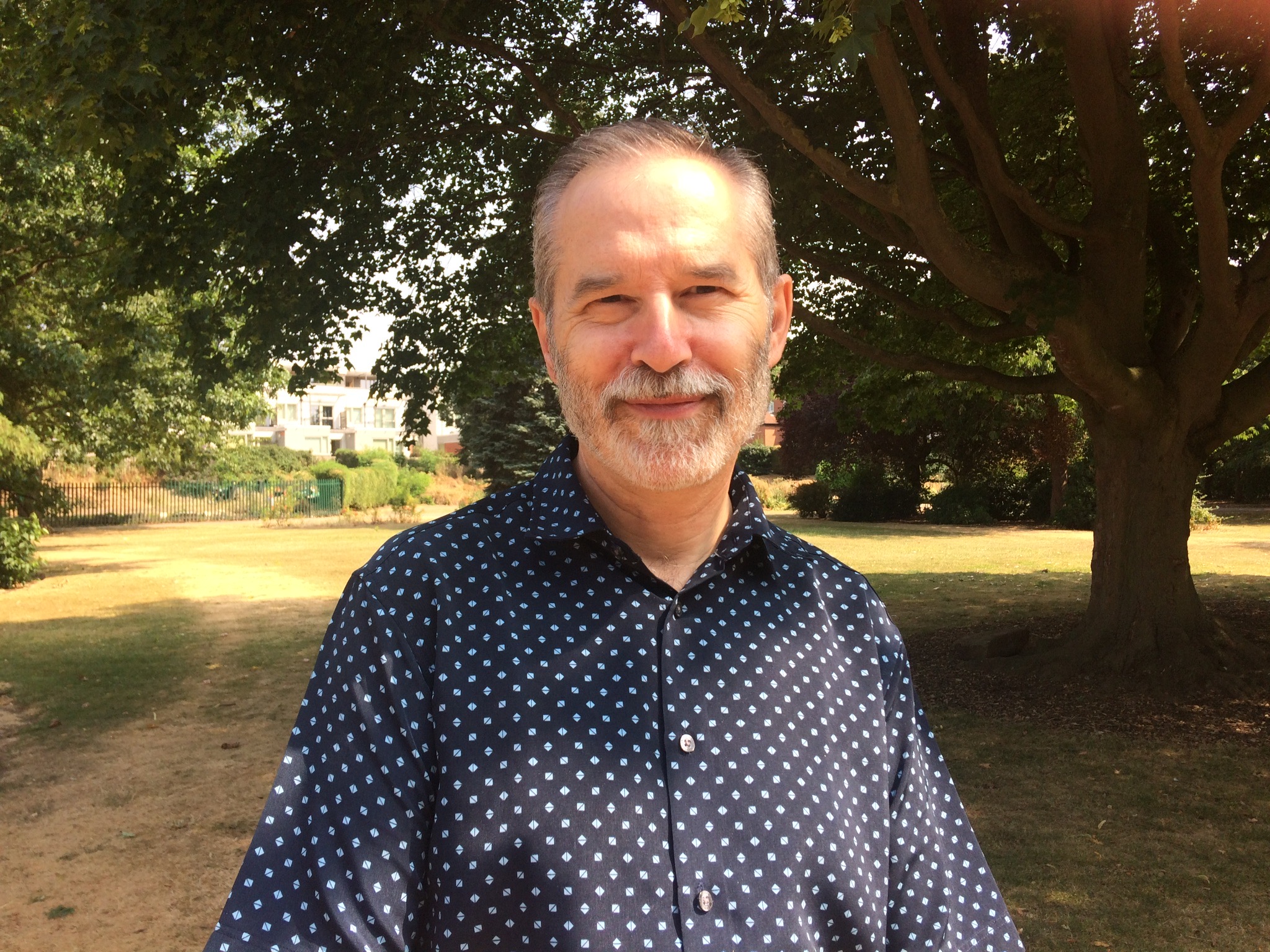
Interview with Brilliant Author Jack Messenger

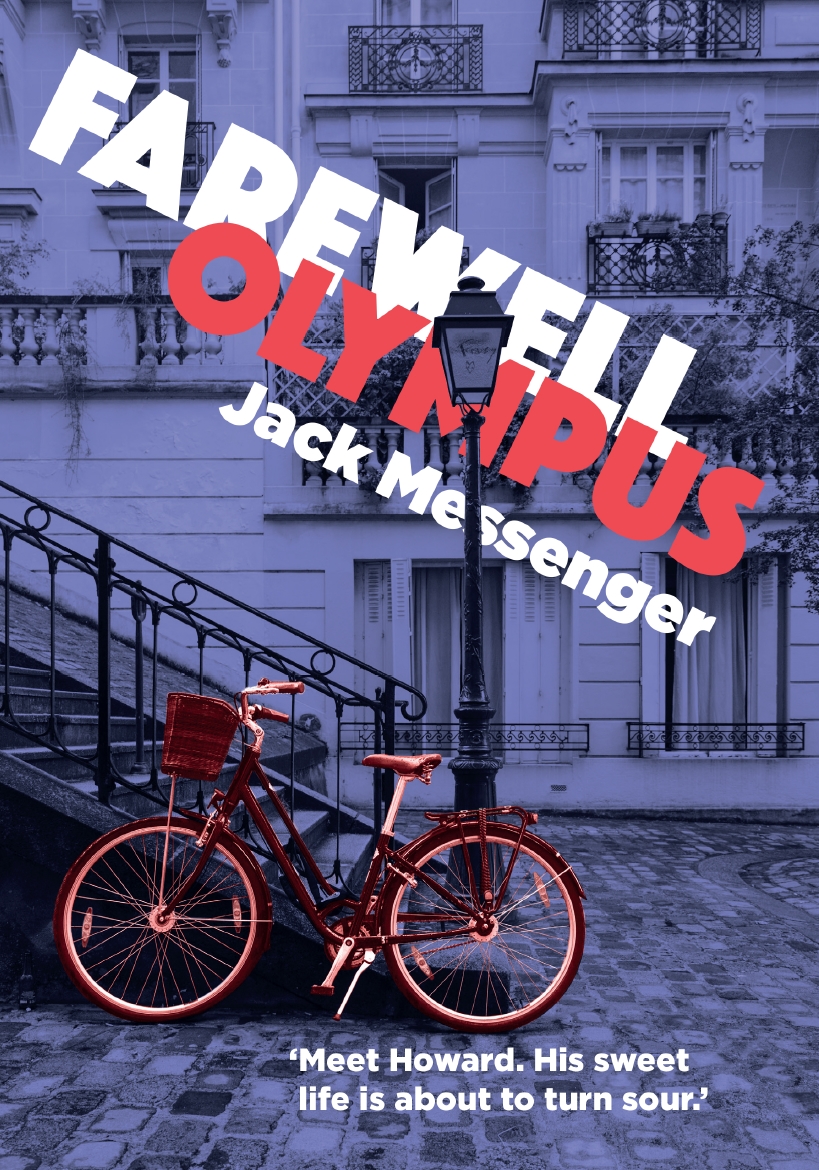
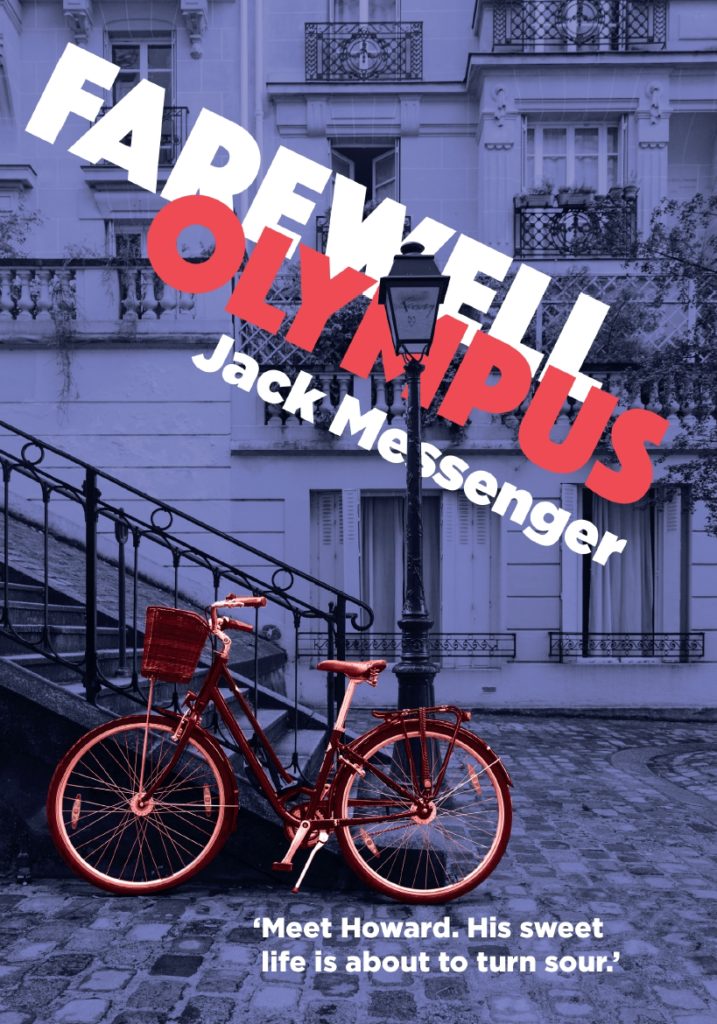
His debut novel, Farewell Olympus, might be a “laugh-out-loud” read but its humour belies Jack Messenger’s fierce battle with depression. In a candid Q&A, he tells Frost Magazine about the sadness behind the jokes and the inspiration for his wonderful work.

Q: Tell us about your book and who it will appeal to.

A: My new book is an outlandish novel called Farewell Olympus. Set in Paris, it’s about love and rivalry, ambition and morality, Armageddon and the quest for the perfect croissant. It will appeal to readers who enjoy a fascinating story with lots of twists and turns, bizarre characters, and, of course, humour. There’s a mystery to unravel, but mostly it’s the story of two half-brothers who drive each other mad.

Q: What inspired you to write the novel? 

A: My wife and I spent some years in France, where I also learned the language. It was partly a desire to process that experience which led me to write Farewell Olympus. It seemed to me that a brilliant novel could be written about British people abroad who were trying to work out the complexities of a different culture. I had always assumed there was so much in common between the UK and France that it would be easy to make the adjustment. While that is true in many ways, I was taken aback by the differences, which were all the more perplexing for being subtle and unexpected. Attitudes and assumptions, ways of looking at the world, are often dissimilar, especially when it comes to harvesting your leeks. And, at a practical level, some conventions were potentially deadly, such as the rule that a vehicle joining a road from the right had priority over vehicles already on the road. Tractors and combine harvesters would pull out from nowhere, regardless of traffic and speeds. My life flashed before my eyes on more than one occasion.
Q: Do you have a particular writing schedule and how strict or otherwise are you in this respect?

A: I like to relax in the evenings, so I don’t want to set myself an arbitrary target each day; I write as much or as little as I feel inspired to, and will often spend time reworking material until I’m happy with it.

Q: You’re a copywriter and editor by profession. You’ve also written a number of Berlitz travel guides. To what extent, if any, did your professional background help in the crossover into writing a novel?

A: It helped enormously. Many inexperienced writers have a surprisingly blasé attitude towards errors and inconsistency, for example; consequently, they don’t have their books copyedited or proofread. I am asked to review a great many books which turn out to be riddled with basic spelling and grammatical errors right from the first page. Readers notice these things and are put off reading because it 

shows a casual indifference to their intelligence. Travel writing was also a helpful discipline, as I had to produce a book to a specified word count by an agreed date – no exceptions. A writer has to be organised and care about every last detail in their work. There is no such thing as an unimportant sentence; every sentence, every word, has to be thought about. This is my mantra.

Q: What challenges did you face bringing the book to market, and what advice would you give to other aspiring authors to help them avoid a similar fate?

A: I decided to publish my book independently, so that I could control every aspect of the process. This entailed a great deal of learning by trial and error – everything from setting up a website to completing tax declarations. Marketing proved to be the hardest aspect by far. There is a great deal of useful marketing advice available online, but there is also a lot of stuff that is out of date. Social media use, for instance, grows in sophistication year by year, often outstripping our ability to keep up with the changes. As a result, my social media experiences were hugely disappointing. Nothing beats an organized publicity campaign run by professional people who know what they are doing and who have the necessary contacts. My advice to myself and others would be to produce the best work you can – that’s why you’re writing, after all. Make sure it’s copyedited and proofread, give it a professionally designed cover, publish it as widely as possible, and give the major marketing and publicity to someone you can trust.

Q: Did you base the central characters on anyone you know – and have you told them?!

As far as I know, I didn’t. If I had, I probably wouldn’t have told, just in case they were offended. My nose bleeds easily.

Q: What three words would you use to describe yourself?

A: Hirsute, indolent, callipygous.

Q: You’ve suffered with depression for some time; what effect has this had on your writing?

A: Humanity’s need for stories is all about broadening our experiences in an attempt to understand ourselves and our world. My writing is largely concerned with people rather than plot – with the ‘why’ rather than the ‘what’. I think my mental health problems have led me to take an interest in the complexity of people and the situations life puts them in, how they cope with themselves and interact with others. I am attracted to eccentricity as a form of personal defence, which often leads to humour and misunderstanding.

Q: Writing is said to be a form of catharsis. Is this true in your case?

Until recently, I would have said not, but Farewell Olympus was cathartic in a strange way I still don’t understand. It was written at a time when I was

dangerously unwell, yet it is full of humour and hope. I enjoyed writing it because characters and their words arrived easily. Readers find it amusing, which is great. I can also see my own sadness in it, lurking behind the jokes. There is a lot of me in Howard, who is perpetually thwarted by his misperceptions. 

Q: What plans do you have for the future?

A: I have an idea for a science fiction novel that I’d like to write under a pseudonym. It takes me a long time to come up with ideas, but I’ve had a lot of fun inventing a biography for my alter ego, and a title for the book. Many of the characters and incidents are already there, but one major thing still eludes me. If I can get that, I’ll start to write. I love stories set in confined spaces, so I am thinking of a space station or craft of some kind. In addition, I have other novels already written that I really should get around to publishing. Their characters keep badgering me to let them out.

Jack Messenger is a British author whose debut novel, Farewell Olympus, is a laugh-out-loud witty and intelligent farce about sibling rivalry, love and ambition set in the heart of Paris. It is out now through Greyhound Press on Amazon UK priced £8.99 in paperback and £3.99 in eBook.



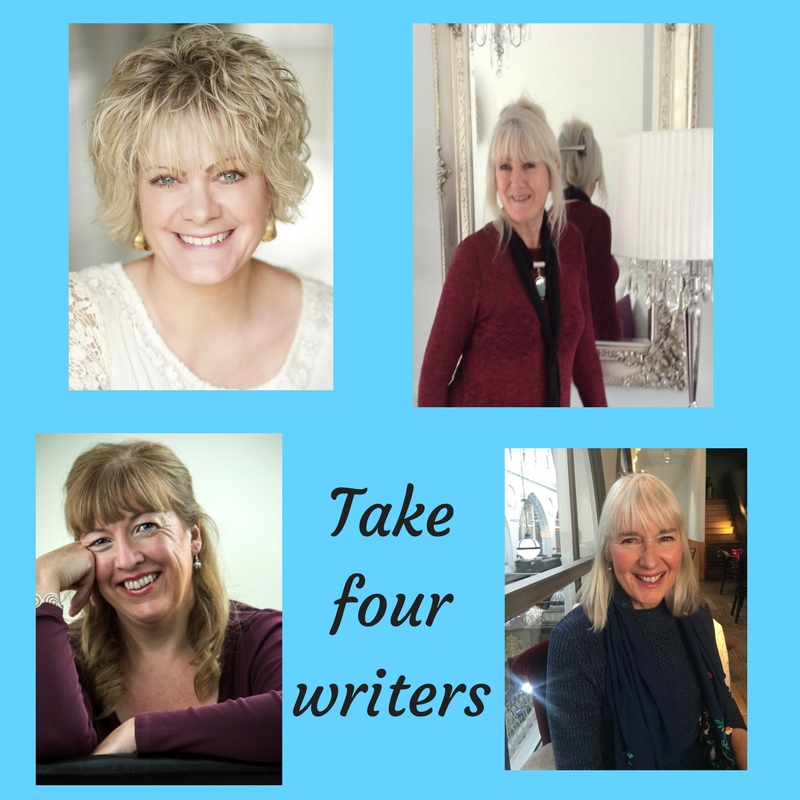
BUSINESS OF BOOKS: TAKE FOUR WRITERS – EVENTING, TALKING, PLAYING, UPLIFTING

JACKIE BALDWIN… EVENTING

Hello, again! This month has been super busy as my son got married on the 11th August. The week before I was so stressed I thought I might spontaneously combust but the day itself was utterly magical! I am now trying to keep the peace between my son’s cat and our two dogs who are not his biggest fans.

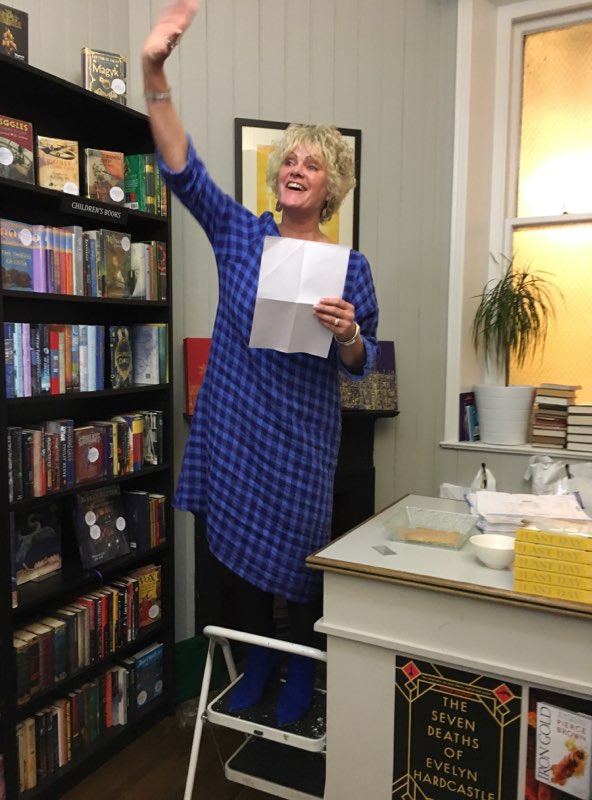
On the writing front, the paperback of Perfect Dead will be released on Thursday 23rd August. I am not having a launch as the day before that I am doing an event in Waterstones, Dumfries, with the fabulous Lin Anderson, who is ‘Tartan Noir’ royalty. The event has only recently been confirmed, so imagine my shock when I was meandering along the High Street in Dumfries and came face to face with a large poster of myself and Lin Anderson out on the pavement!

After that, it will be time to knuckle down and get on with the next book in the series.

Have a great month!


CLAIRE DYER… TALKING

This month I want to talk about talking. I don’t mean chatting to our friends over coffee or a nice cool glass of Chablis but talking about our books on our hind legs in front of other people.

It’s a very odd thing to do. After all, most writers are notoriously private people and so, to be exposed to actual readers and other writers is odd. Well I find it so anyway.

Why should this be so? Well, I’ve grown used to my books. They are incredibly special but it’s kind of embarrassing to talk about something so familiar, it’s like describing an old pair of jeans, you wonder whether anyone else will really be interested.

After all, by the time a book is published, its author has read it about a million times (OK, I might be exaggerating, but it feels like it), it has been pulled apart, put back together, tweaked, cajoled, buffed and polished to within an inch of its life and therefore, when asked, ‘What’s your book about?’ or ‘How did you think up your main character?’ or ‘Why did you end the book that way?’, it is, strangely, sometimes hard to find the right words.


ANGELA PETCH… PLAYING

This month, after the excitement of RNA Conference, I moved south to the Sussex Downs to stay with our eldest daughter, waiting for the birth of her third child. The heat was comparable to our hot weather in Tuscany but the surroundings very different. I had no time for writing, immersed as I was in the world of two and four-year old toddlers. Lego, cars, story reading, bottom wiping, cooking and washing filled my time. We played pretend games, which is not a million miles from being a writer, and all the while, I stored snippets in my head for future stories. It was a privilege to be in England when baby Finn arrived on August 1st.

Instead of creative writing, I’ve managed to squeeze in admin for the first Write Away in Tuscany that takes place at our Tuscan home from September 11th – 18th. I’m back in Italy now, finalising details. Mavis and Dot are being honed in the meantime and Cancer Research is supporting my campaign for funds for the launch of these two ladies.


LUCY COLEMAN… UPLIFTING

The arrival of the school holidays means coping with weekly sleepovers, then frenetically trying to catch up with a growing ‘to do’ list. But it’s important to me to grab as much quality family time as possible.

Writers spend a lot of their time living in a world they’ve created. I’m lucky in that I write about life, relationships and the pursuit of a happy ending. I set the mood by playing soft music and having an essential oil diffuser wafting out rose geranium and lavender. It’s uplifting.

This month has been all about preparing for the release of Lucy Coleman’s ‘Snowflakes Over Holly Cove’ on the 18 September 2018. But it’s also a nervous time for an author.

It’s a story about loss and finding love, and as cosy as a mug of hot chocolate! Set in Caswell Bay on the stunningly rugged Gower Coast, it’s one of my favourite places to walk…


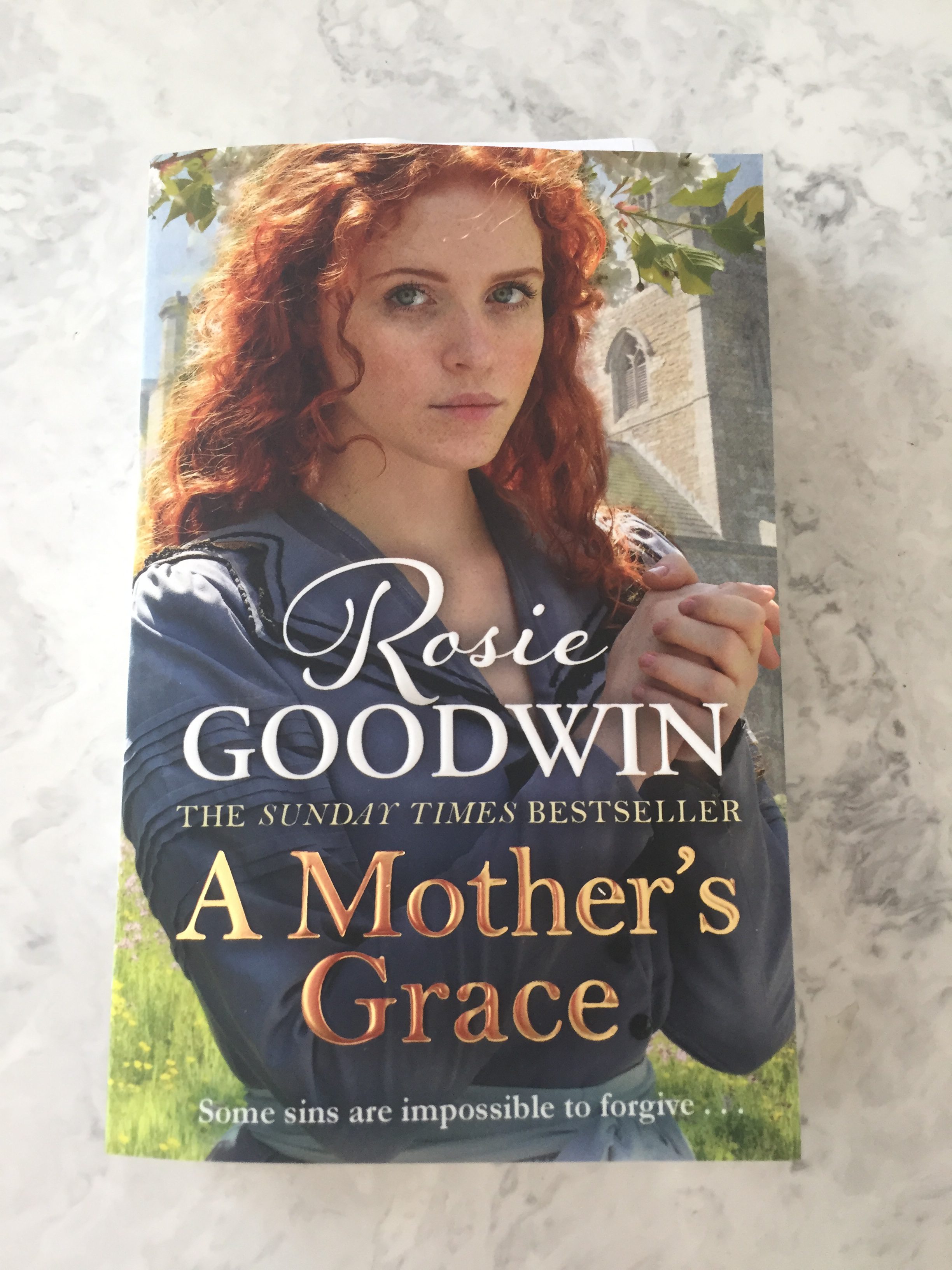
A Mother’s Grace by Rosie Goodwin


A Mother's Grace by Rosie Goodwin

This, the  third novel in the Days of the Week collection by Rosie Goodwin, turns its focus on why Tuesday’s child is full of grace.

A Mother’s Grace  follows the story of Grace Kettle who longs to escape her bullying, controlling father. She becomes devoutly religious and goes off to Wales to take holy orders and become a nun. But there she meets the dashing and devout Father Luke and things don’t go as Grace had hoped. She is forced to make a difficult and life changing decision, one that she will spend the rest of her life seeking forgiveness for.

Some of the characters from the previous two novels in the series make an appearance in this book but you don’t have to have read them to enjoy A Mother’s Grace.

If you love riveting, heart-warming saga then you will not be disappointed. A Mother’s Grace has all the elements of a good page-turning novel and is a ‘curl up in a chair’ read for autumn.

Rosie Goodwin’s books have  sold over a million copies and she has written over thirty novels. She’s been described as the Catherine Cookson for a new generation.

Rosie is also the only author to ever be allowed to follow three of Catherine Cookson’s trilogies with her own sequels.

www.rosiegoodwin.co.uk

Published by Bonnier Zaffre £7.99

Review: Copenhagen, Minerva Theatre, Chichester

Box Office: 01243 781312 www.cft.org.uk
Until 22 September

Photo credit: Conrad Blakemore

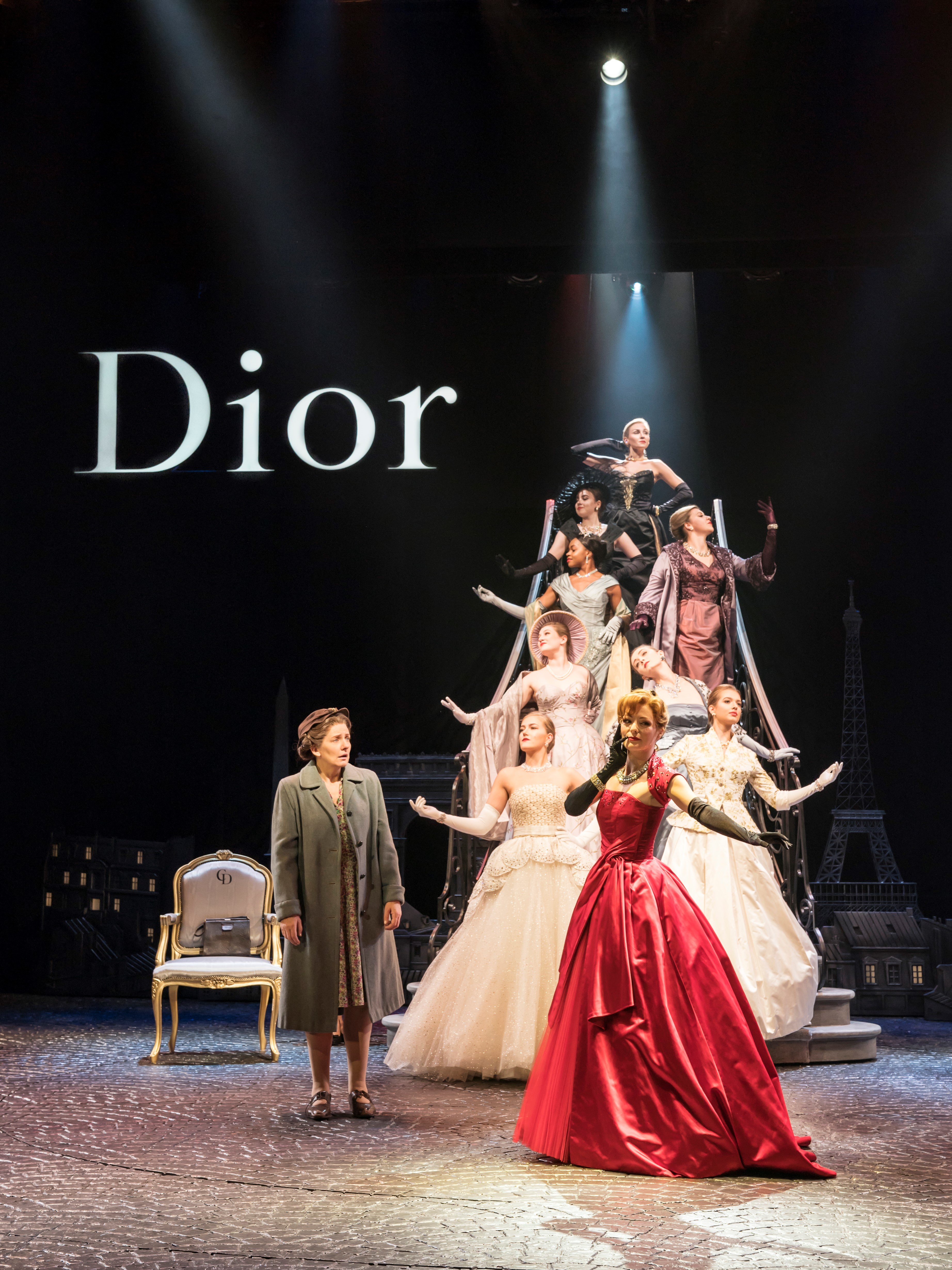

What was the purpose of the visit made by German Werner Heisenberg (Charles Edwards) to his friend Danish physicist Niels Bohr (Paul Jesson) as the Second World War raged? The answer is by no means swift in coming, but it is a compelling journey. Which is just as well; this is not a play that allows for wandering concentration.

The ghosts of Heisenberg, Bohr and his wife Margrethe return to the night of Heisenberg’s visit in 1941 to scrutinise the intent and rationale behind the house call. Eminently bright and highly respected, the younger man’s nation has occupied his elder’s country, thus thorough examination of several theories is necessary.

With a shared passion for scientific certainty the coals are raked over with forensic-like attention to detail, stirring human nature into technical hypotheses. Tempered by Margrethe’s perceptiveness and calm, blistering disagreement between the two men is revealing, but while such convulsions are fascinating it is the historical element that gives the play ominous depth: the creation of the atom bomb and its monstrous impact.

Director Michael Blakemore succeeds in maintaining a fluidity that is almost balletic. With a small cast and a stark set the focus on the trio is as intense as the play itself, but they impress throughout.

Patricia Hodge as Margrethe is breathtakingly good; elegant, circumspect and sharp. Charles Edwards as Heisenberg and Paul Jesson as Bohr are equally excellent, both absolutely convincing as boffins who, despite their scientific and mathematical prowess, are nevertheless vulnerable to human frailty.

Michael Frayn’s play is as much about morals as it is the quest for knowledge and you are likely to come away as many questions as answers. Oddly, this is strangely satisfying.

THE BUSINESS OF BOOKS: TRAVELS WITH MY BOOK

Jane Cable shares her experience of a blog tour

It sometimes surprises me when other writers ask me what a blog tour is – but then maybe it shouldn’t, because when I started out I didn’t even know book bloggers existed.

So, for the uninitiated – what is a blog tour? Put simply, your book does the travelling. From one book blog to another, over a short space of time, with reviews, guest posts and giveaways. A brief burst of promotion designed to boost its visibility.

It is perfectly possible to arrange a blog tour yourself, especially if you’re hot on social media and have been meeting bloggers online and looking after them. But many publishing houses now include blog tours as a matter of course for launch activity which means bloggers are very busy and if you’re a debut or indie author it can be hard to get your foot in the door.

From my point of view most of the bloggers I know reviewed The Cheesemaker’s House when it first came out so arranging a celebration tour for its fifth birthday was always going to be a big ask. I needed help, so I decided to enlist the services of a paid expert, Rachel Gilbey of Rachel’s Random Resources. A book blogger herself, Rachel has set up a business to help authors promote their books and she’d received good results for authors I know so I decided to give it a whirl.

From the outset Rachel was super-professional and she had the tour filled in less than eighteen hours. I was flabbergasted – this wasn’t even a new book. And all but Anne Williams of Being Anne (who I couldn’t do any tour without) were people who hadn’t reviewed the book before. Rachel had their requirements impeccably organised and communicated to me in good time – whether they wanted paperback or ebook review copies, a guest blog, a Q&A, pictures… all set out in one easy to follow email.

I’ve written in detail about planning the tour before so let’s skip to the big day – August 1st – with a blitz of seven bloggers primed and ready to go. Actually, they weren’t. One blog never appeared and another, where I’d prepared an excerpt and lengthy Q&A, caught up only a few days later by just bunging the blurb on her blog.

It was actually just as well because the others came to the party in spades – on Twitter especially – and I had so many notifications in my feed from the bloggers and their street teams I found it hard to keep pace with thank yous and retweets. A hint here – it’s actually quicker to do this on an ipad or phone because it takes you back to the right place in your feed and not to the top where you have to scroll down to find where you were again.

For the rest of the tour, most of the other bloggers delivered. Some just put up the blurb but perhaps they didn’t like the book and at the end of the day that’s their prerogative. But in the main the reviews were really positive – glowing, in fact – and I really felt its visibility improved over the week of the tour.

My author profile was definitely raised too. A cannily organised giveaway increased my Facebook page likes and the general activity on Twitter tipped my followers over the 2,000 mark. I met new readers and bloggers online too – and I know that when I have a new book out there will be more open doors to push on for reviews.

So what of sales? Yes – there was an increase – definitely. I won’t know until I get my royalty statement whether it was enough to pay for the tour, but that wasn’t the point. In terms of profile it worked – in spades. And I would certainly use Rachel’s Random Resources again.

Find out more about Rachel’s services at https://www.rachelsrandomresources.com/