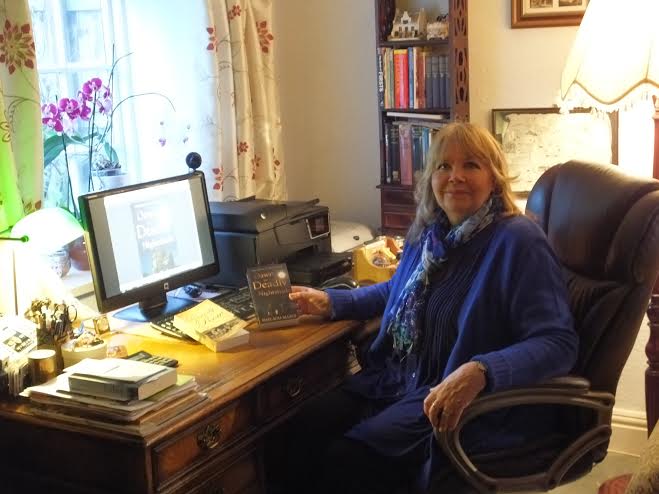
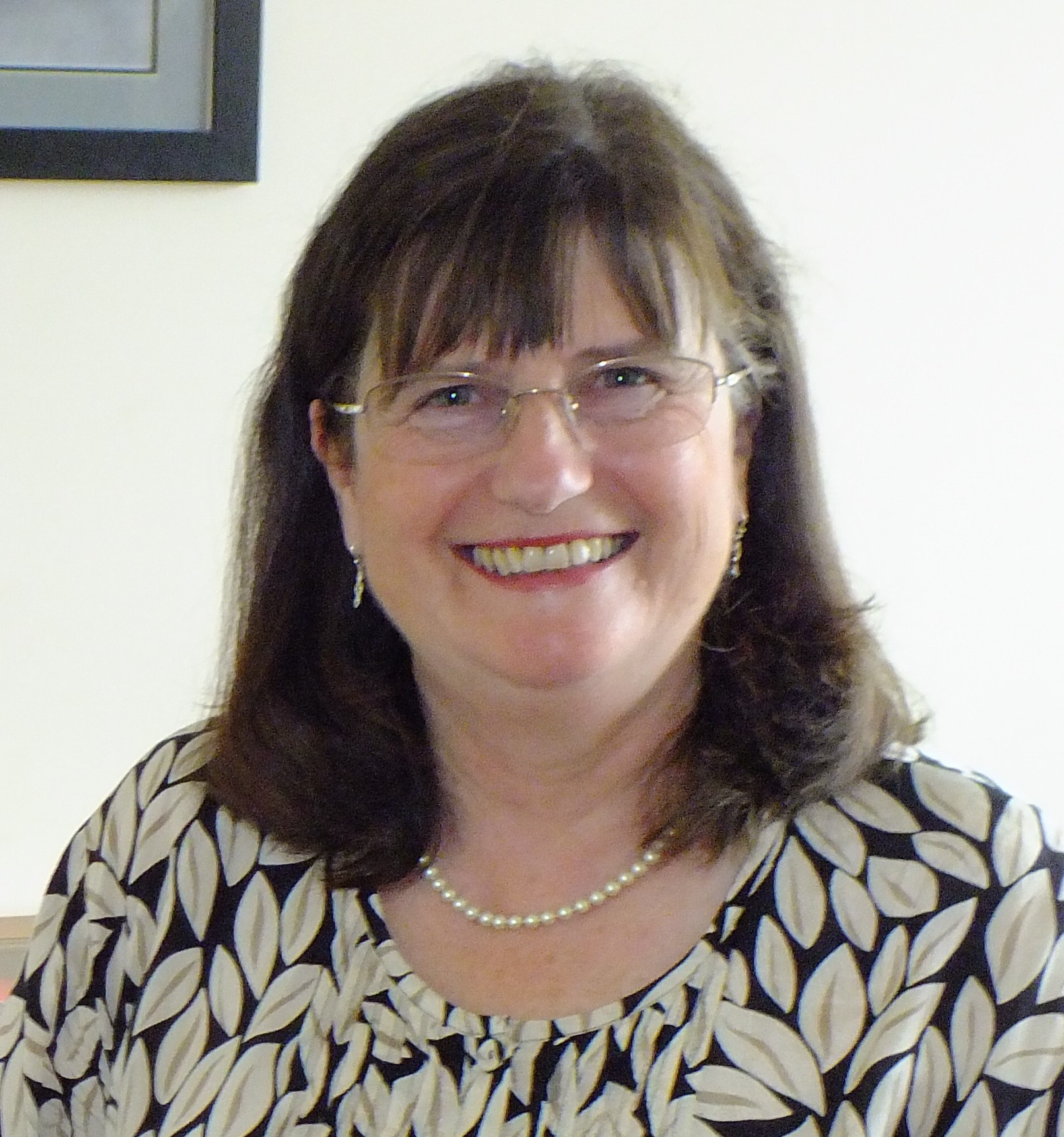
A Day in the Life of Sharon Bennett

I have always enjoyed making things; getting messy and creating atmosphere, whether with paint, fabrics, light or furniture. I am inspired by beautiful countryside, buildings, colour, water and places that I love!

A Day in the Life - Sharon Bennett

As a child I continuously annoyed my younger sisters by trying to capture them on paper with my pencils. After that I mostly drew and painted flowers in watercolour. More recently I joined an Art Group where I eventually developed a style of painting with which I am very happy.  Also I have a great love of photography, my recent works merge photos with collage, acrylic pallet, watercolour and pen work.


For texture in my work I often use different types of paper, including tissue, corrugated and foil.  One of my artworks ‘The East London Skyline’ was created during the 2012 Olympics. I incorporated cuttings about the Olympics from London newspapers into the painting itself. In my Venice paintings I have used handmade Venetian paper, tickets from train and boat trips! The painting then becomes alive and personal!

A painting will begin by the taking of an inspiring photograph. While out walking, holidaying or just shopping, beautiful buildings, waterways, boats, countryside, simply demand to be photographed! I take many – thank heavens for digital photography.


The next job is to search through the photos to see which will work well with my style of pallet knife painting and collage. The selected photographs are then enlarged, pixilated and often form a part of my paintings and become merged with collage, mixed media and acrylic pallet knife painting. I also usually include newspaper cuttings, tickets, wood, paper, anything which makes the picture more personal and unique! The result of these combinations create some powerful pieces of work. By using collage and many different textures it helps me to capture the vibrancy and atmosphere of the scene. I always like to work from my own photographs although I have created a couple of commission pieces.


I photographed St Paul’s from the Tate Modern on one of those perfect winter days. My daughter had bought me ‘high tea at the Tate’ as a birthday present last year. The weather was a perfectly crisp and sunny February day! A very rare treat in the middle of an awfully wet winter. I took the photograph from the restaurant on the top floor of the Tate. The resulting photograph was stunning and I hope you like the painting that emerged too! Margaret Graham did, and bought it when Easterleigh Hall was published. This is what she does – buys paintings to celebrate.


Six nights booked in Venice. We hoped for lovely weather as we were going in February! The first three days we had non-stop rain!  This did not stop me taking tons of photos and the results were stunning. The rain just seemed to enhance the colours of the beautiful Italian buildings and made the water a very deep green.


I was very pleased with the resulting painting, which also incorporated collage of matchsticks, our ticket from Venice to Verona and pieces of handmade Venetian paper.

I have lots of gorgeous atmospheric photographs to work with. A very familiar sight of a gondola full of Japanese tourists. The buildings over this canal are such a beautiful colour and I have tried to, and hopefully have, captured that! This is one of my most recent paintings.


I have some work going into a new pop up shop in Maidenhead called Craft Coop, located in Nicholsons Centre,  in an ex jewellery shop, across from Icelands, from 22nd Nov till the 4th January 2015.


For a further look at my work:


Website: www.mashup-designs.co.uk……..then…….Sharon’s Art.


My contact email is shazben58@gmail.com


THE BUSINESS OF BOOKS: THE KITCHEN CLASS OF 2017

Jane Cable catches up with RNA friends

There is a tradition at Romantic Novelists’ Association conferences that the really important stuff happens in the kitchens of the shared accommodation. And for me (and I’m sure I’m not alone) the really important stuff was making friends with other writers. Almost a year later most of us have kept in touch and there have been many successes to celebrate. To be honest, I haven’t had the best year of my writing career but being able to cheer on my new friends had been a pleasure which has kept me going.

Jan Baynham, another writer from my home city of Cardiff feels the same: “No exciting publisher or agent news from me, I’m afraid, but I’ve been delighted to read about others’ successes this year. There’s been so much to celebrate! I’ve spent the time since the Conference submitting my first novel to publishers. Two recent rejections have given me very encouraging feedback and spurred me on. One editor said my novel fell into ‘the nearly-but-not-quite’ category, telling me why, but said she would be happy to consider further submissions from me. A second was even more complimentary about the quality of the writing and has asked to see my second mother-daughter saga that’s partly set in Greece. I’m working hard to get Whispering Olive Trees ready to submit to her.”

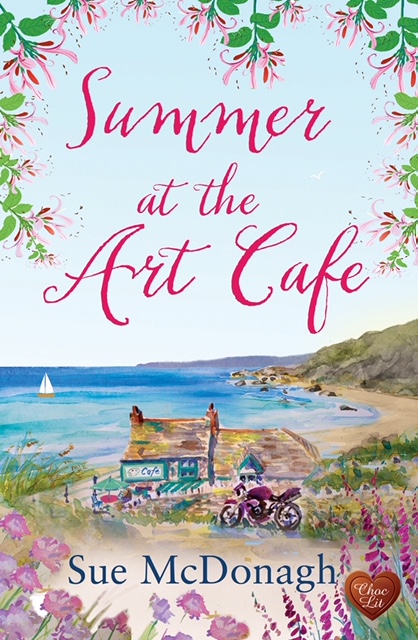
Jan’s travelling companion last year was Sue McDonagh whose debut novel has just been published by Choc Lit, but it hasn’t always been an easy road. “I wrote, learned and submitted until that magical ‘Yes’. There was joy – until the edits came in. Christmas to February, Writing Boot Camp, I rewrote almost every word, hacked back rookie errors of over-blown baddies and plot lines that went nowhere. My timeline was a joke.  I despaired that the ending would ever work. I couldn’t do it. I could, and it did, miraculously. I painted the front cover, another highlight. Published five days ago, Summer at the Art Café is already earning a slew of 5* reviews. I’m still learning – it’s a steep curve!”

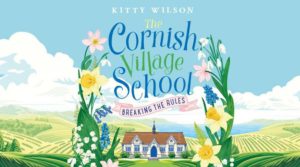
Another kitchen compatriot discovering the joy of a publishing deal was Cornwall based Kitty Wilson. “My writing life has been a whirlwind since we all sat around the kitchen table at the RNA conference last year. I have gone from wannabe novelist used to micro-expressions that flashed sympathy and suggested delusion to fully fledged author. By January I had landed myself my dream agent, had to choose which publisher to go with and spent a lot of time pinching myself – it was all so dreamlike. With my first book coming out next month, the second nearly completed and a whole series to write, 2018 is going to be a very busy, but very happy, year.” The cover of the first of her Cornish Village School books has just been revealed, ready for publication next month.

When we met last year Susanna Bavin already had her deal with Allison & Busby, and her writing career is going from strength to strength: “It’s been a year of dreams coming true for me. My debut saga, The Deserter’s Daughter, has been published in hardback, e-book, audiobook, large print and paperback. My second, A Respectable Woman, will appear in the same formats; and I have a contract for another two. The best moment? Out of a year of ‘best moments,’ the very best was listening to The Deserter’s Daughter as an audiobook read by Julia Franklin. I’ve listened to audiobooks for years and Julia is one of my two favourite readers, so having her as ‘my’ reader is wonderful.”

Last but not least, Kirsten Hesketh feels she’s on the verge of something big too: “What a year! The main thing I have learned over the past year is not to submit your work too early to agents! After a round of ‘good’ rejections last September, I spent the next few months editing, restructuring, polishing and then getting a critique from the marvellous Alison May whose advice made all the difference. Then I did it all again!  The result is …. I now have an agent! I am thrilled to be represented by the wonderful Felicity Trew and have just had the excitement of having my book taken to the London Book Fair. Fingers crossed!”


A Day In The Life of Author Frances Colville

I’ve always been an organised sort of person; writing lists, making plans and generally achieving whatever I set out to achieve. Then I took early retirement and expected to devote hours to writing. But… But… There are, suddenly, all kinds of people making demands on your time. And there are so many things of interest calling to you.

All of this means I no longer have a typical day. But there are some typical elements.
I always make time to read. Have you ever worked out how very few books you can actually get through in a lifetime? A scary thought when there is so much wonderful stuff on my list and in my teetering pile. Then, if it is at all possible, I make time to walk down to the sea.

A DAY IN THE LIFE of author Frances Colvillepic1
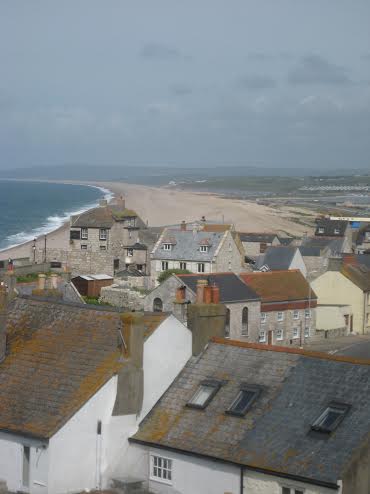
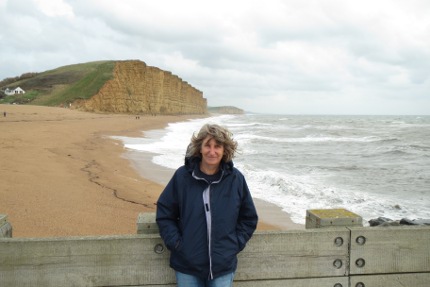
It takes me twelve minutes to reach my local beach of Seatown. I like it best when it is wild and stormy, when the waves crash in along the shore line and the cormorants have to battle to stay airborne. But whatever the weather, there is inevitably something different to see, something to provide writing inspiration.

And that is the other constant. I try each day to make time for whatever writing project is uppermost in my life This year there have been several main threads. I’ve organised a Story Slam in my local town of Bridport,

A DAY IN THE LIFE of author Frances Colvillepic2
I’ve taken part in various performances and competitions, and I’ve been working on my Sixty List ( a project to do sixty new things in my sixtieth year and to write about them). But the biggest project and for me, the most satisfying, has been working on a local First World War story. I’ve researched it thoroughly, curated two exhibitions, talked about it on radio and TV, written about it for magazines and papers.

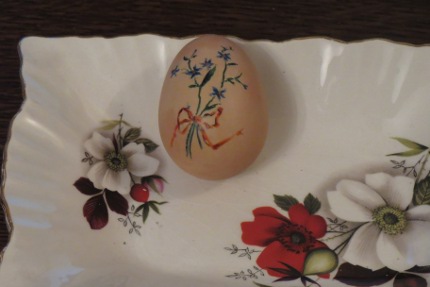
It’s the intriguing story of a young woman who contributed fresh eggs to the National Egg Collection for wounded soldiers and who decorated those eggs with paintings, poems and her name and address. In return she received thank-you letters from many soldiers. Now, as well as dealing with the factual aspects of the story, I’m trying to develop it as fiction.
A DAY IN THE LIFE of author Frances Colvillepic3

So far, a couple of short stories have been successful and I’m working on a novel. But there’s a long way to go yet. And never enough hours in the day!

© Frances Colville

NEW BLOOD BOOSTS BRITAIN’S GOTHIC FANG CLUB

From Bram Stoker’s Dracula to Mary Shelley’s Frankenstein, Britons have been devouring gothic literature for over 200 years. But after more than two centuries is our appetite for the gothic finally starting to wane? To hell it is, writes novelist Katja Brown – it’s more alive than ever.

I’m often asked why the gothic still appeals. The genre is a creation that compels everyone from a lover of romantic fiction to a lover of blood and guts. Whilst it doesn’t hinge on these elements they add to it and create something that is constantly reinventing itself. The gothic is essentially the presentation of a ‘terrible beauty’, a collection of literary conventions that come together beautifully to scare, entrance and hook the reader. In what other genre could a character such as Dracula exist? He is a character you love to hate, the greatest anti-hero that has been thought up and is so loved by readers and authors alike that he has been revived ever since in one incarnation or another.

The gothic appeals because inside every reader there is still a spark, a need, a deep desire to be scared by something beautiful, something obscure and otherworldly. I think this genre inhabits the part of your imagination that wants to see the world differently, that imagines alternate possibilities to the norm and much like a vampire it doesn’t stay down for long. Once you pick up a gothic book it’s like a budding romance: you feel as if you have to know how it ends and the truth is… no one really knows why. It happens with other genres, sure, but the gothic has something special about it. You’ve heard that girls are attracted to the bad boys? Well it’s the same idea.

Throughout history the gothic has been the mother of great tomes and literary works of genius, manipulated and reshaped to fit the changing times. From Bram Stoker’s famous fanged fiend Dracula, to Mary Shelley’s Frankenstein, we’ve watched as this genre has survived the stress of time and made it here to 2018. Thanks to a wealth of fabulous new gothic books, and also to the Twilight series, I’ve no doubt that it will keep kicking long after. 

It has endured because we as humans want a thrill, we actively seek out the new and terrifying because we want to feel our hearts quicken, our palms get sweaty and the hairs on the back of our neck stand on end. It is the gothic that provides those sensations, every page walking the razors edge between dream and reality.

What’s so loveable is that behind the things that go bump in the night, behind the sublime descriptions, the complicated characters and the narrations I guarantee there will always be something to learn – from a moral lesson to something more practical (‘don’t go down the scary-looking corridor by yourself late at night). The gothic has and will probably always be used to impart some sort of wisdom from one person to the next and it doesn’t matter what piece of gothic literature you pick up, it’ll be there between the lines. All you have to do is look.

The gothic helps define us as people, understand our own identity by understanding what we are not. We are not immortal, so, unlike Dracula, we learn to live like there’s no tomorrow. We shape ourselves based on what knowledge we assimilate, but the gothic gives us imagination and way to step out of our lives for a few hundred pages, a chapter each night, a page between coffee and cake. That is why it appeals, why it still appeals, why it always will.   

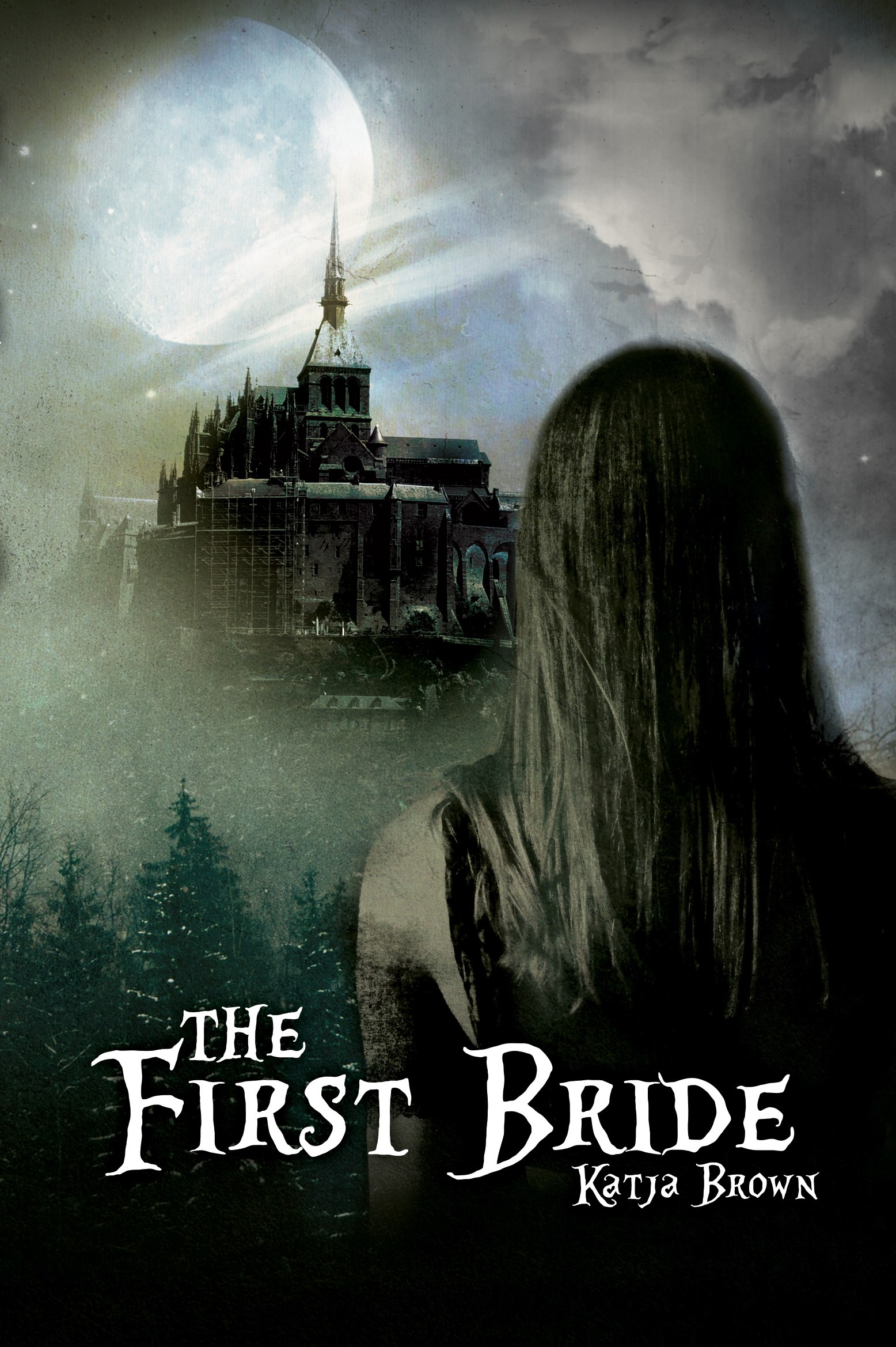
Katja Brown is an acclaimed gothic novelist. Her seat-of-the-pants debut novel, The First Bride (Austin Macauley) is out now in paperback and eBook from Amazon UK.


Book of The Month: Love on the Waterways By Milly Adams

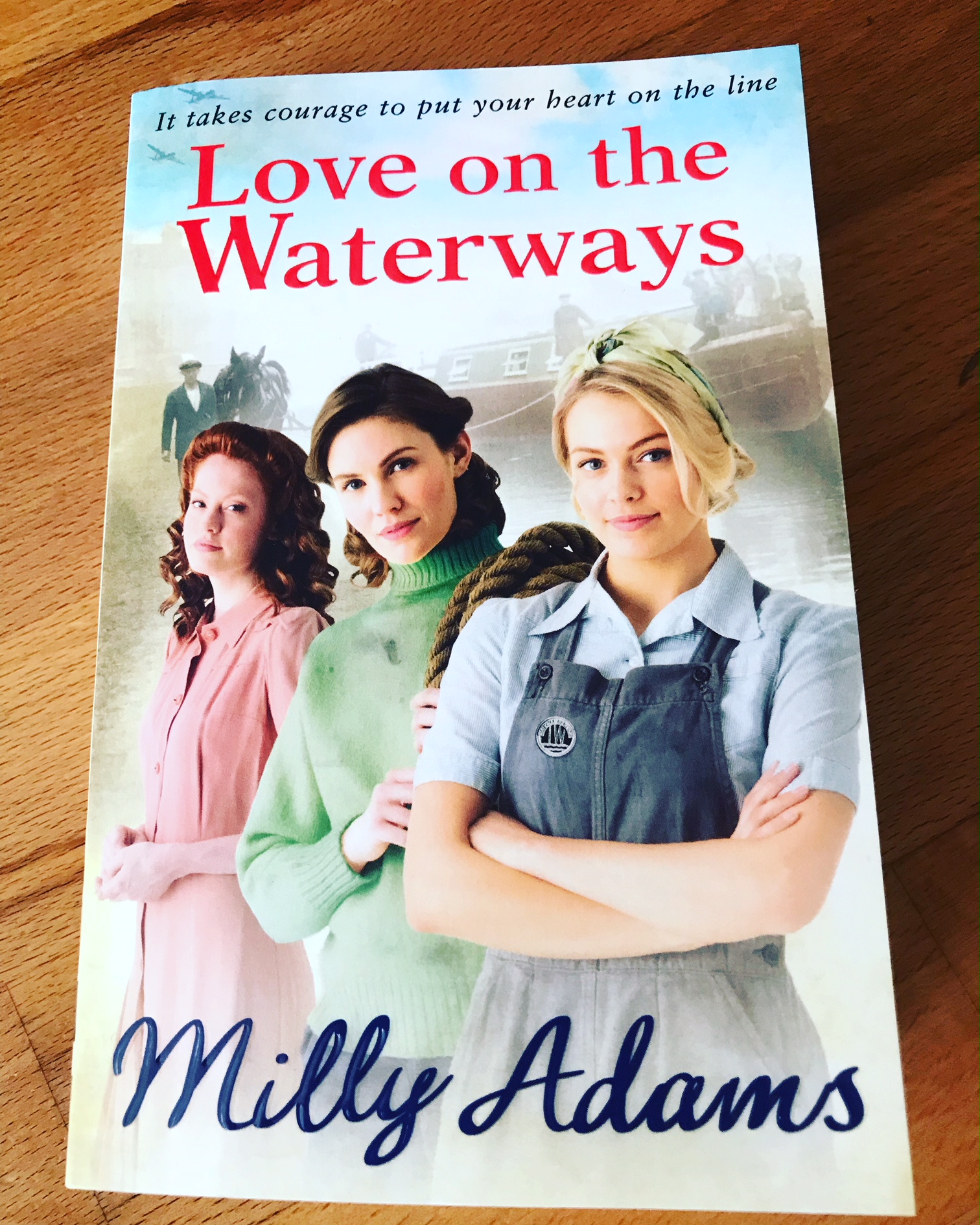
New to Frost is the Book of The Month. We review a lot of books at Frost so picking one will be hard but we do not mind. It is our job to bring the best to our readers. The first ever book of the month is the latest from Milly Adams. The second book in her new saga, it is yet another corker. love on the waterways, milly adams

THE SECOND NOVEL IN MILLY ADAMS’ BRAND NEW SAGA SERIES. Perfect for fans of Daisy Styles and Nancy Revell.

March 1944, West London: it’s been five months since Verity Clement fled home for a life on Britain’s canals and she could never have imagined how tough it would get. Yet hauling cargo between London and Birmingham is far easier to face than the turbulence she’s left behind.

When Verity’s sweetheart returns unexpectedly from the front line, she dares to dream of a brighter future. But life aboard the Marigold is never smooth sailing. New recruit Sylvia is struggling with demons from her past while crewmate Polly must carry on in the wake of devastating news. Verity does her best to help, but a shocking discovery is about to turn her own life upside-down.

As the realities of war begin to take their toll, the waterway girls will have to pull together if they are to survive the uncertain times ahead…

Available from Amazon.


BUSINESS OF BOOKS: FIRST, LAST, EVERYTHING – DEBUT NOVELIST & PERFORMANCE POET CLAIRE BALDRY

What was the first writing advice you were ever given?

The first piece of writing advice I was given goes right back to my early childhood. Not everyone can recall their primary schooldays in detail, but my memories of that stage in my life are crystal clear. The classroom environment suited me, and I wanted to please my teachers. I was, I think, destined at an early age to work full time in education.

So when my infant teacher told the ‘six year old’ me to think harder about who would be reading my work, and to stop starting every story with ‘Once upon a time’, I took her advice seriously. She had given me my first sense of audience. This was a major step forward in the life of a young writer who was beginning to develop her craft. That advice has lived with me ever since. Even when my job required me to deliver dry and often unemotional reports, I always tried to write in a way which would catch the reader’s attention. After all, if I couldn’t be bothered to interest my audience, then why should I expect anyone else to read my words?


What was the most recent writing advice you were given?

I would describe myself as a ‘half full’ person. I like to focus on the positive and build on my  experiences. I loved writing my first novel and was more than happy to receive feedback after publication to further develop my skills as a writer. However, I do sometimes fall in to the trap of focussing too hard on how I need to improve my work. This can very quickly turn into self-doubt and slow down, or even stop, the flow of my writing. The most helpful advice about writing, which I have received recently, was to remember to believe in my ability. Writing, for me, is a massively enjoyable activity, and the very best way to improve is simply to keep writing.


What is the piece of advice (writing or otherwise) you would like to pass on?

I’ll be sixty-three next month. I’ve had a professional career in education, run my own business, been married twice and brought up a family. I now use that experience to support my work in the voluntary sector, raise money for good causes and take on new challenges.  Sometimes friends of a similar age suggest I should slow down a bit. Although I have had to learn to say ‘no’ on occasions, my advice to anyone, who is polite enough to listen to me, is, whatever your age, stay active and keep embracing new challenges as much as you can. No one knows what lies ahead or how long their health will last. So set aside fear of failure and make the most of your abilities.  I wanted to write and perform poetry. I gave it a try and discovered I could do it. I wanted to write a novel, and, amazingly, I managed it.  Life is not a dress rehearsal. Jump over the obstacles and create your own opportunities. It is unlikely that anyone will create them for you.


Claire has self-published four booklets of lighthearted poetry and is a popular speaker and performer at clubs and other venues in the South East. Her debut novel ‘Different Genes was published by Matador in 2017. Claire’s next poetry booklet ‘Simply Modern Life’ will be published later this year. Claire and her husband, Chris, were awarded the Diabetes UK South East Inspire Award for their fundraising work in 2017.

www.clairebaldry.co.uk


THE BUSINESS OF READING: JANE CABLE TAKES A HOLIDAY WITH A FEW GOOD BOOKS

I’ve just been half way around the world on holiday, but visiting Cambodia and Vietnam it actually felt further than that. Intense heat, spicy food, incense drifting from temples and a recent history which shocked and disturbed me. Strange or inevitable then, that my choice of holiday reading was firmly fixed back home in Cornwall.

For a long while I’ve been promising myself I’d read some of Winston Graham’s Poldark novels. I can barely remember the 1970s TV series starring Robin Ellis and I’ve never watched the current BBC dramatization, but I wanted to read the books. And I was entranced to find that they were set exactly in my part of Cornwall, and in the limited gaps between excursions, I devoured the first three.

But the first book I read, at the beginning of the holiday, was Cornish writer Liz Fenwick’s latest and it was anything other than what I was expecting…
Jane Cable’s review of One Cornish Summer by Liz Fenwick.

Book marketing can sometimes be a slightly disingenuous thing. The cover and the blurb promise one thing, but the story inside delivers quite another. Sometimes this can lead to disappointment, but at others the opposite is true. And this is very much the case with Liz Fenwick’s latest novel. It isn’t a light and fluffy holiday read – it’s brilliant and challenging and altogether so much more.

To me it seems a shame that the publisher wasn’t entirely as brave as the author. The blurb describes Hebe as having ‘a life changing diagnosis’ and ‘memories slipping away’, but shies from actually mentioning the ugliness of Alzheimer’s.  From very early on in the book it’s clear Hebe has early onset dementia. And what’s more, she is written in the first person, something only a truly accomplished writer like Fenwick can pull off.

Hebe is every inch a full and rounded character, and one I sorely missed once I’d finished the book. To chart the cruel descent of her illness in such a way as to carry the reader with her must have been a serious challenge and I asked Liz Fenwick why she chose to do so.

“My best friend’s sister has early on-set Alzheimer’s and it has been sitting in the back of my mind waiting for me to find the story to write…in a way so that I could work through my own grief. And that leads into research…first hand, reading a great deal through the various support groups and finally my mother is in the early stages…so although not the same I was living it.”

One Cornish Summer is actually set over the course of a Cornish autumn and winter but the title is not a misnomer, even if the cover image might mislead. Hebe and her niece Lucy’s days in the damp and draughty ‘Hell House’ are contrasted with the former’s memories of a bright and colourful summer just the previous year when she was able to share Cornwall with the love of her life before her memories of it completely dissolved away.

As Hebe’s condition worsens, parts of the book are heart-breaking to read, for example when she answers the door without her trousers on. But there are thoroughly heart-warming parts too, as ‘Hell House’ reveals its secrets and Lucy, at least, is finally able to move forwards. Thought-provoking and ultimately life affirming, One Cornish Summer is an excellent read.


BUSINESS OF BOOKS: FIRST, LAST, EVERYTHING – NOVELIST SANDRA DANBY

What was the first writing advice you were ever given?

As a young English graduate longing to be a journalist, I chose a bad time to graduate. It was 1982 and publishers were closing their training schemes. Only two courses existed; one at the London College of Printing, the other at Cardiff Journalism School. Out of the blue I received a job offer on a new graduate trainee scheme run by business publisher Benn Publications. It was there in September 1982, sitting around the boardroom table in the impromptu Training Room, that I was given the piece of advice I still remember today and still use. Training editor Val Williams taught us Rudyard Kipling’s quote: “I keep six honest serving men (they taught me all I knew); Their names are What and Why and When And How And Where and Who.” It has stood me in good stead whether writing a news story, a feature, a press release or a novel. And the journalist in Connectedness, Rose Haldane, uses it too when she gets stuck in her research.
What was the most recent writing advice you were given?

That’s easy, it is something that had never occurred to me before until my copy editor pointed it out to me during the editing of Connectedness. It applied to the name of a character, Maud Nettlebed. I realise now I chose Maud’s surname because of a liking for the word, Nettlebed, which goes back to my days as a reporter writing about a furniture company called Brights of Nettlebed. The name stuck. However Dea Parkin, my editor, said it was an unlikely surname that took her attention off the page every time she read it. And that, she said, is a cardinal sin. Avoid anything that distracts the reader from the page, which breaks their concentration, which returns them to the real world, which stops them turning the page and reading another chapter. I guess this is a subjective judgement, but it appeals to the journalist in me who dislikes embellishments and sub-clauses in long sentences. So, I changed Maud’s surname to Nettles.
What is the piece of advice you’d most like to pass on?

Listen to the advice you are given but do not blindly accept it or reject it without consideration. Evaluate it, then adopt or discard it. There is no ultimate template of how you should write, what you should write, the rules you should obey or break. But, and it is a big but, you must listen to the advice and consider it before rejecting it. You must know the rules, before breaking them. You will be a better writer for it. We are bombarded these days with writing advice, never have novelists been so vocal about how they write, when they write, at what time of day. There is no right way and wrong way; there is your way. Be true to yourself. Listen to feedback and suggestions, be polite, be prepared to offer positive feedback and suggestions in return, always give the person giving the advice the respect of considering it. I have participated in many writing classes – as student and teacher – and watched as some students, whose minds were closed to advice, simply did not hear suggestions that could help them. I’ve also watched other students writing copious notes about how their work should be changed and I worry they would subsequently make changes without analysing why. Knowing who you are as a writer, having confidence in what you write, is not easily earned. There is a truth in Malcolm Gladwell’s 10,000 Hour Rule.


Novelist Sandra Danby is a proud Yorkshire woman, tennis nut and tea drinker. She believes a walk on the beach will cure most ills. Unlike Rose Haldane, the identity detective in her two novels, Ignoring Gravity and Connectedness, Sandra is not adopted. Follow her on Twitter @SandraDanby